
Yantai Nanshan Scenic Area
1. Introduction
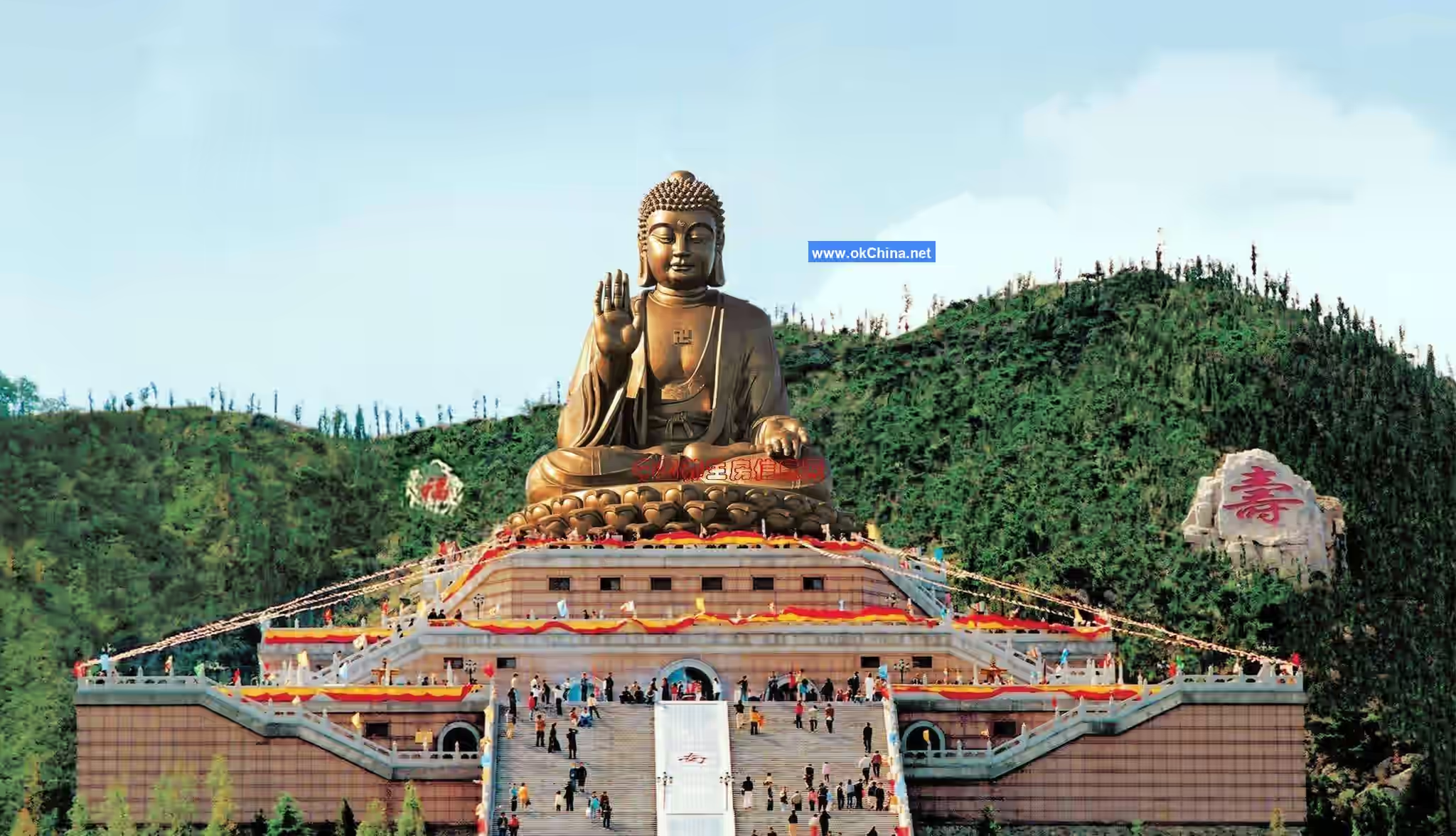
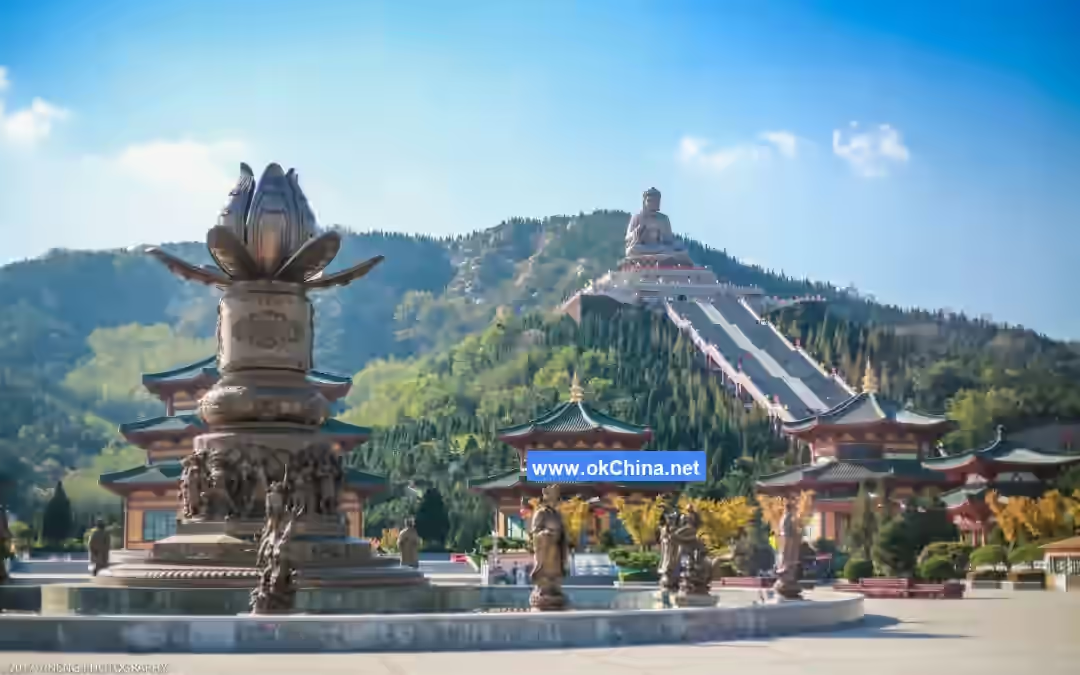
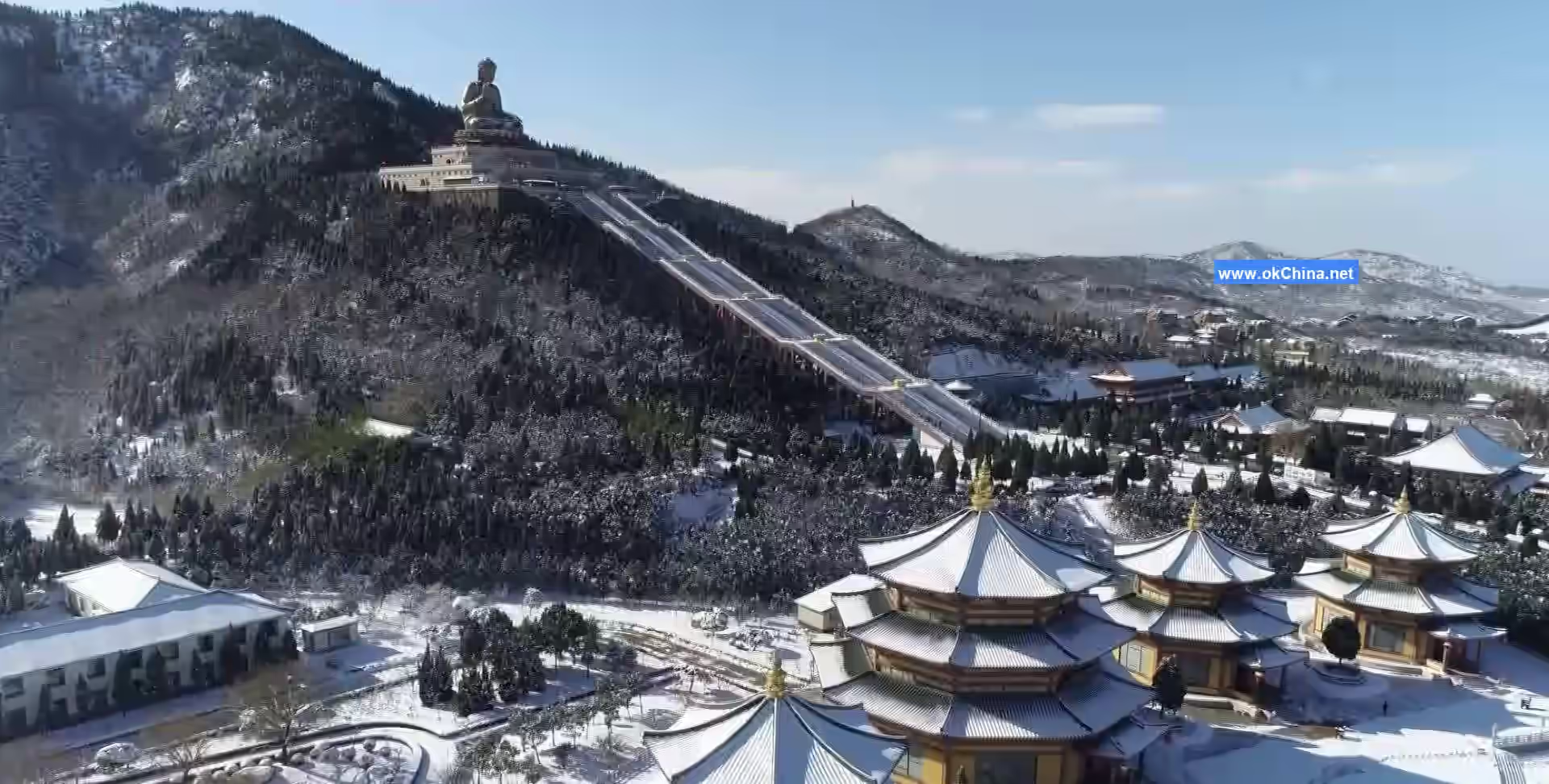
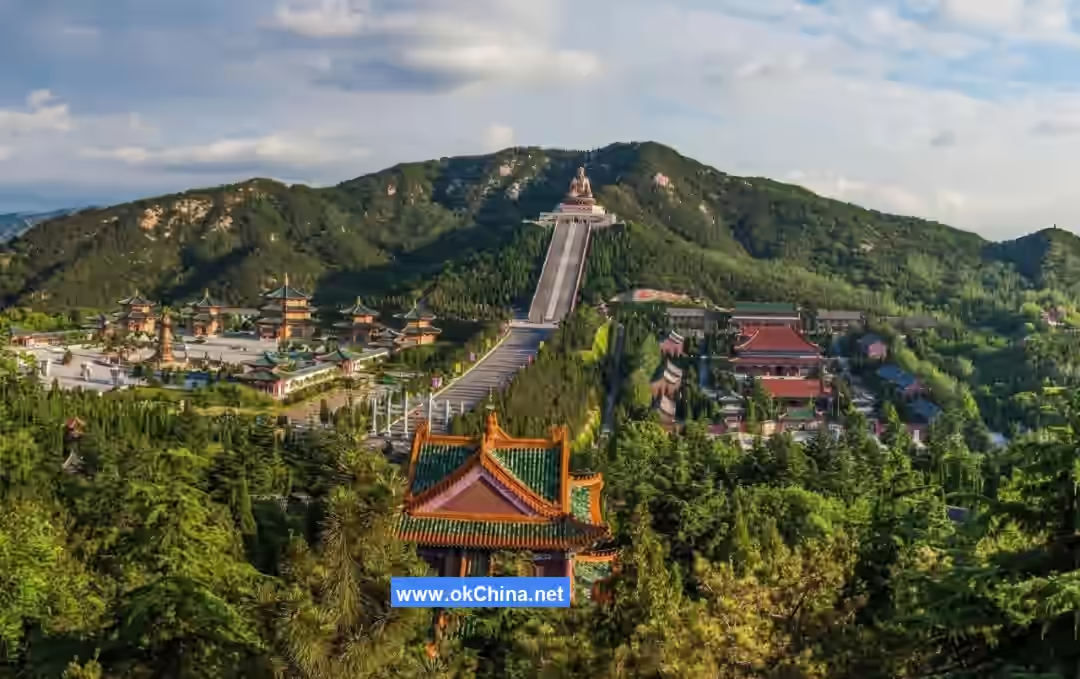
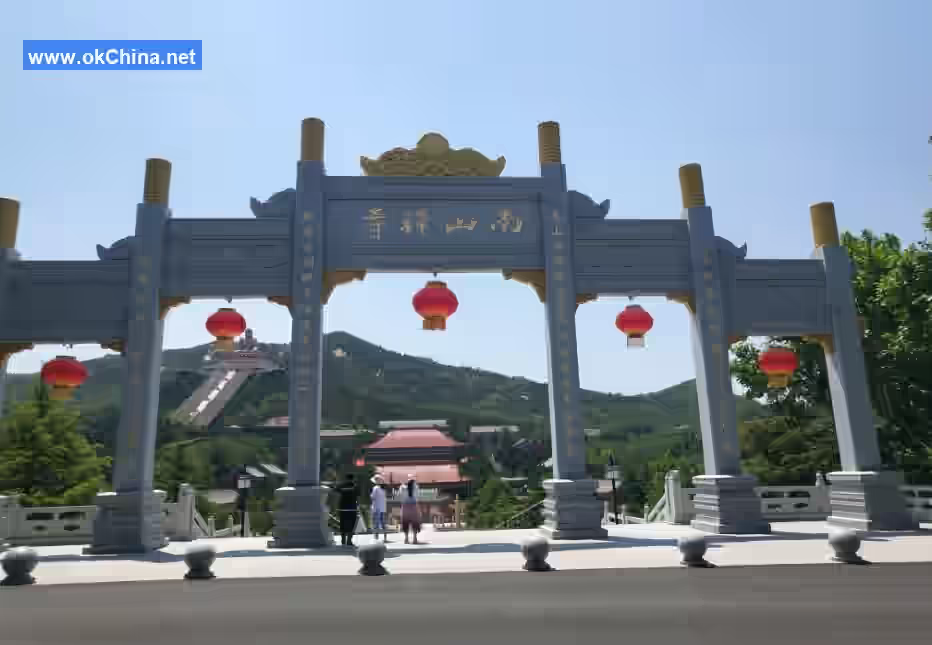
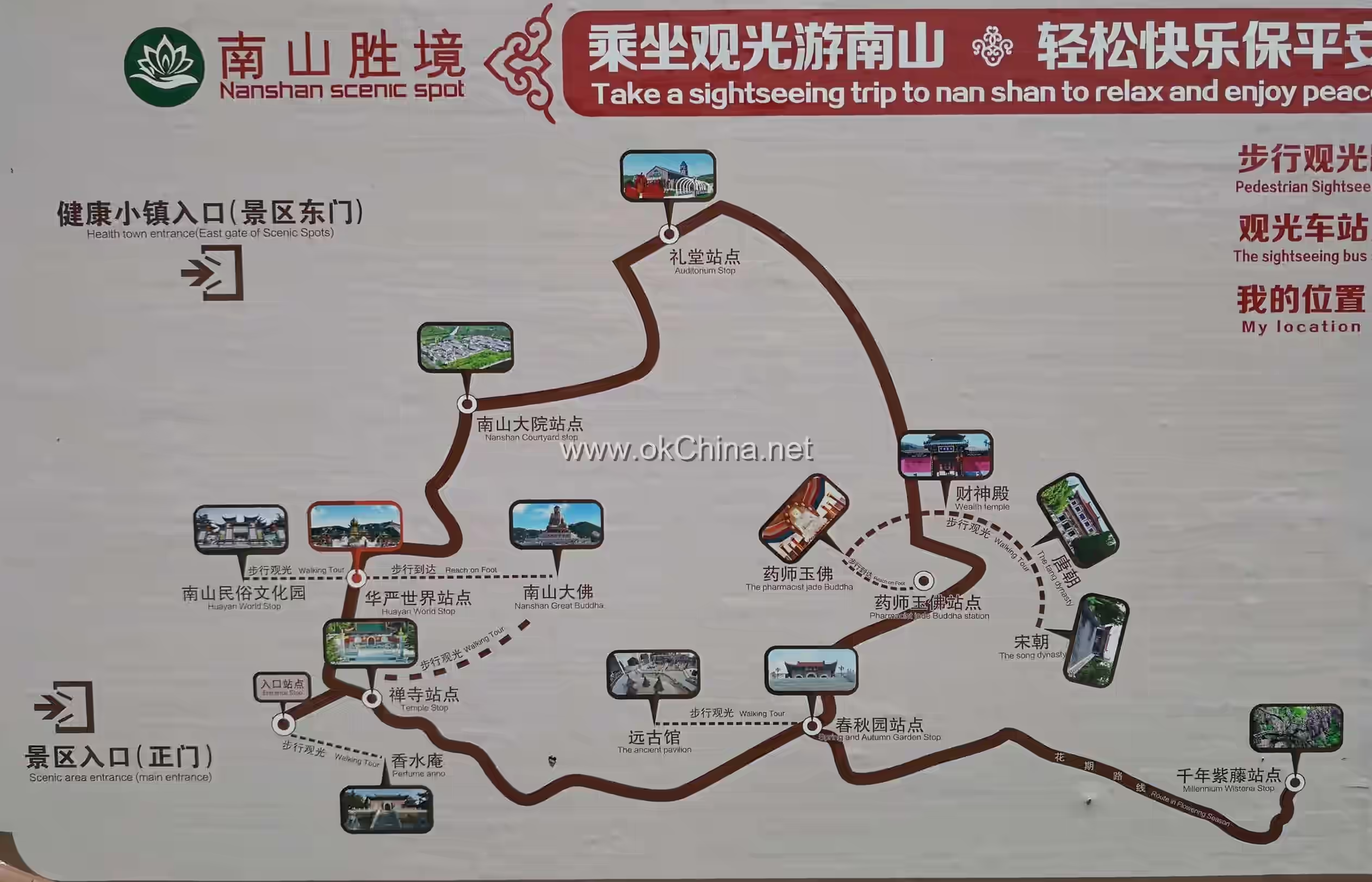
The Yantai Nanshan Scenic Area is located in Dongjiang Subdistrict, Longkou City, Yantai, Shandong Province. The scenic area is divided into three main parts: the Religious History and Culture Park, the Theme Park—Happy Canyon, and the Donghai Tourism Resort. Major attractions, including Nanshan Chan Temple, Xiangshui Nunnery, Nanshan Taoist Temple, and Lingyuan Taoist Temple, are all relics from the Jin and Tang Dynasties. The world's largest tin-bronze seated Buddha, the Nanshan Great Buddha (statue height 38.66 meters, weight 380 tons), and China's largest indoor jade Buddha, the Nanshan Medicine Master Jade Buddha (statue height 13.66 meters, weight 660 tons), are the two highlights of the scenic area. Supporting facilities include the five-star Nanshan International Convention Center, the five-star Donghai Moon Bay Sea View Hotel, the three-star Nanshan Hotel, the comprehensive wellness and recuperation project Nanshan International Leisure and Recuperation Center, the internationally standard 279-hole Nanshan Golf Course, as well as service facilities such as the Nanshan Cultural Center, Nanshan Grand Theatre, and Nanshan Manor Wine Castle.
2. Main Attractions
2.1 Religious Culture Park
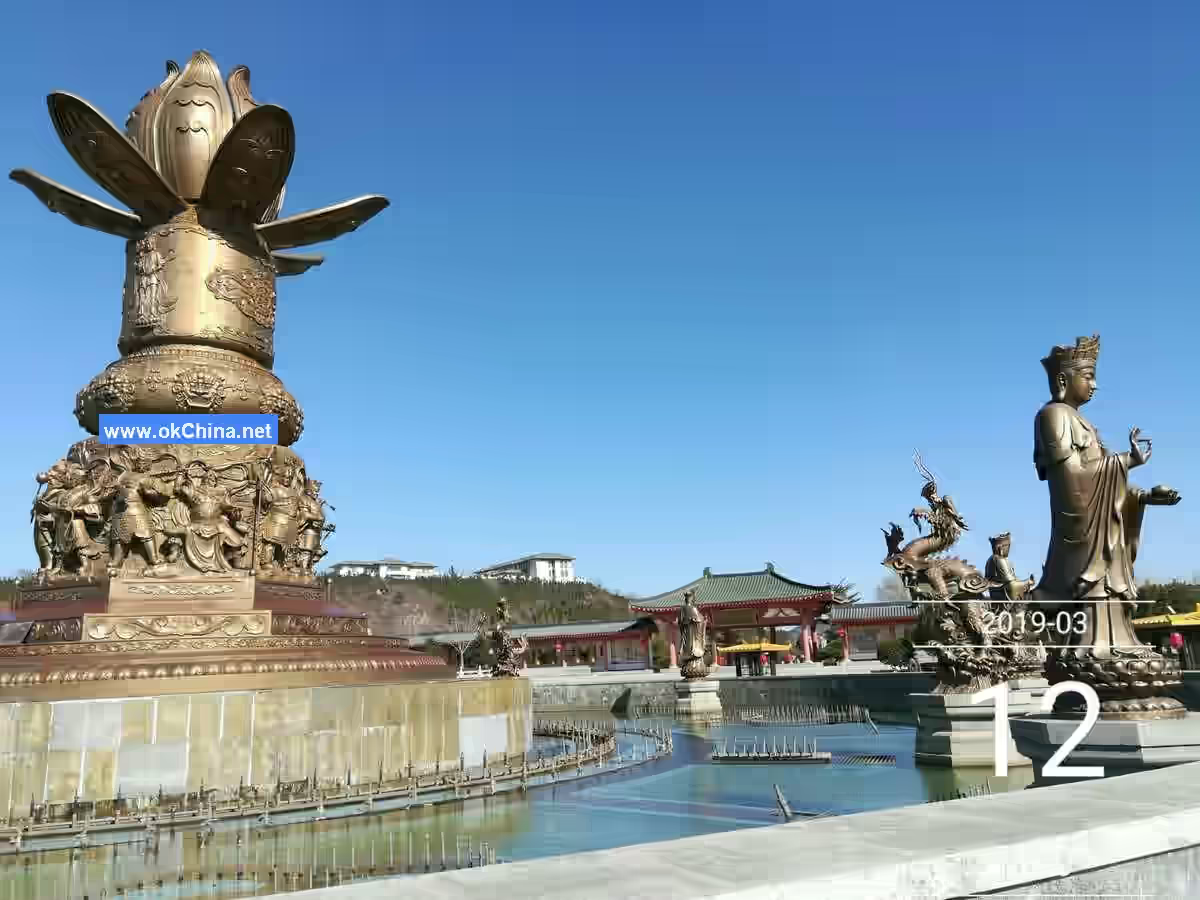
Within the park, Nanshan Chan Temple, Xiangshui Nunnery, and others are relics from the Jin and Tang Dynasties. The world's largest tin-bronze seated Buddha (statue height 38.66 meters, weight 380 tons)—the Nanshan Great Buddha, and China's largest indoor jade Buddha (statue height 13.66 meters, weight 660 tons)—the Nanshan Medicine Master Jade Buddha, are the two highlights of the scenic area. The newly completed Nanshan Huayan World, including the Five Directions and Five Buddhas Hall, the Medicine Master Praise Dynamic Musical Fountain, and the Prayer Wheel Corridor, adds another religious and cultural attraction to the Nanshan Tourism Area.
2.1.1 Nanshan Great Buddha
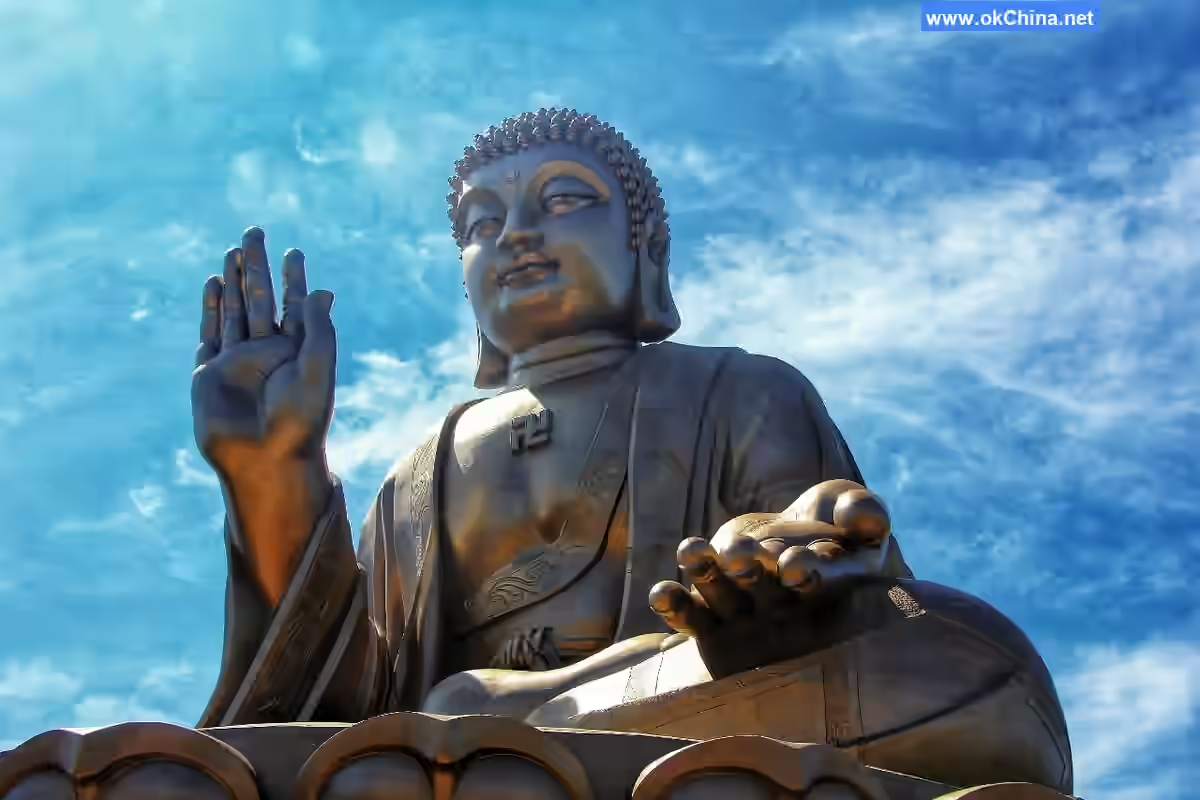
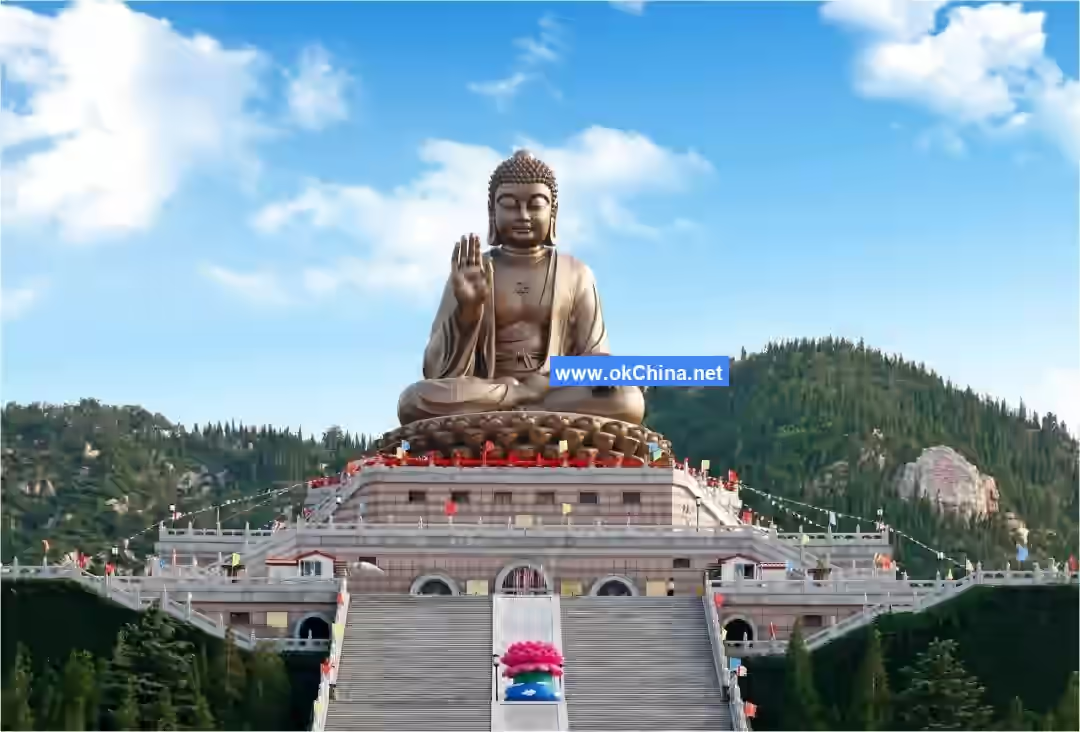
The Nanshan Great Buddha is a tin-bronze cast seated statue of Sakyamuni, standing 38.66 meters tall and weighing 380 tons. It was welded together from 232 copper plates, 108 lotus petals, and 302 hair buns. The Buddha's right hand forms the "Abhaya Mudra" (gesture of fearlessness), and the left hand forms the "Varada Mudra" (gesture of granting wishes), symbolizing the Buddha relieving sentient beings of suffering and bestowing happiness.
2.1.2 Merit Hall
The Merit Hall is a hall for recording the merits of devout donors who contributed to the construction of the Buddha and the temple. Any benefactor who donated 1,000 RMB or more can have their name inscribed in the hall. The venerable monks of Nanshan Chan Temple also regularly perform blessings and dedications for the benefactors. The hall contains 31 purple-gold copper relief murals depicting 24 stories of the Buddha's transformations.
2.1.3 Ten Thousand Buddhas Hall
This hall enshrines 9,999 small true-body Buddha statues cast from the leftover copper material used for the Nanshan Great Buddha. Together with the Nanshan Great Buddha, they form ten thousand Buddhas, embodying the meaning of "Ten Thousand Buddhas Paying Homage," hence the name Ten Thousand Buddhas Hall. The small true-body Buddha statues in the hall can be invited for worship or have names dedicated to them.
2.1.4 Museum
The museum is built within the base of the Nanshan Great Buddha, covering a total area of 1,800 square meters. Using the periods of Indian Buddhism, the introduction of Buddhism to China, its growth, maturity, and fruition as the main exhibition themes, it comprehensively displays the historical origins, spread, evolution of Buddhism, and its profound influence on Chinese culture and art through various display forms such as text introductions, cultural relics, pictures, and multimedia. It creates an ethereal and uniquely Zen-like Buddhist cultural space. The museum houses precious art collections worth nearly 100 million RMB, including wood carvings, stone carvings, and bronze-cast Buddhist statues from various dynasties.
2.1.5 Nanshan Chan Temple
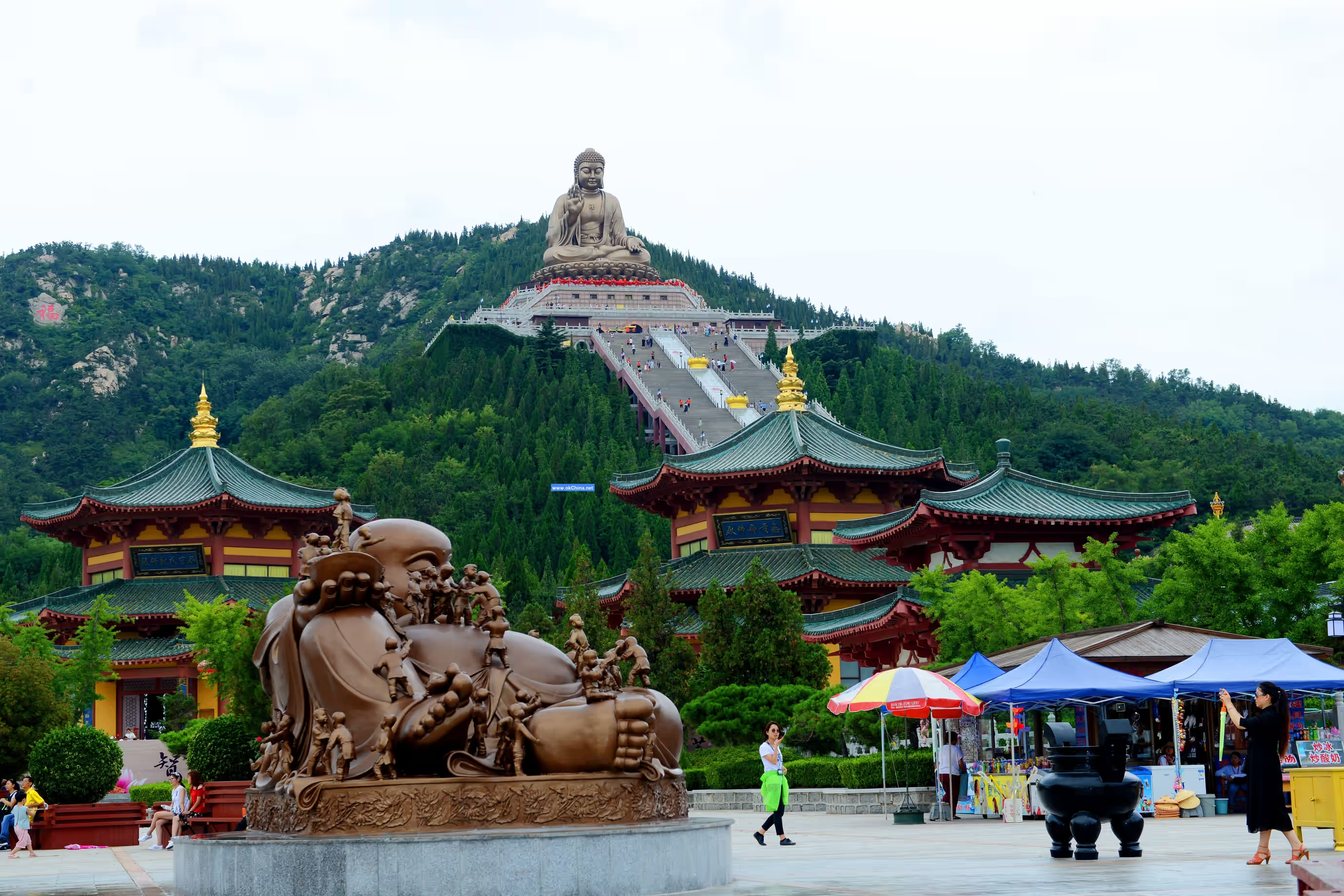
Nanshan Chan Temple is a Buddhist Chan (Zen) temple. Its predecessor was the oldest and most famous Shi Quan Temple in Longkou City, founded during the Zhenguan period of the Tang Dynasty. In 1999, Shi Quan Temple was renovated and renamed "Nanshan Chan Temple." Nanshan Chan Temple covers an area of 40,000 square meters with a building area of 9,800 square meters. Its central axis features five main halls: the Mountain Gate, Maitreya Hall, Mahavira Hall, Yuan Tong Hall, and Scripture Repository, all with gilded Buddha statues. On both sides, there are over ten auxiliary halls such as the Sangharama Hall, Patriarch Hall, Manjusri Hall, and Samantabhadra Hall, with painted and gilded statues. The entire temple complex is vast and magnificent, ranking as one of the largest monastic forests in northern China.
2.1.6 Xiangshui Nunnery
Xiangshui Nunnery was originally named Xiangshui Nunnery and was first built during the Tianqi period of the Ming Dynasty. In 1999, it was renovated and renamed "Xiangshui Nunnery." The renovated nunnery covers an area of 8,438 square meters with a building area of 5,620 square meters. It includes multiple halls such as the Mountain Gate, Heavenly Kings Hall, Mahavira Hall, Scripture Repository, Hundred Children Hall, and Response Body Hall. The Mountain Gate houses the Vajrapani and Narayana Vajra. The Heavenly Kings Hall houses the Big-Bellied Maitreya Buddha and the Four Heavenly Kings. The Mahavira Hall houses the Buddhas of the Three Periods. The Response Body Hall houses the 12 response forms of the female body of Guanyin Bodhisattva. The Hundred Children Hall contains over 100 statues of mischievous children in various forms. All statues in the halls along the central axis are gilded.
2.1.7 Nanshan Medicine Master Jade Buddha
The Nanshan Jade Buddha Hall is overall a golden-womb combined mandala of the Medicine Master. The Medicine Master Tathagata is the lord of the Eastern Buddha Land in Buddhism, capable of eliminating disasters, prolonging life, increasing blessings, generating wealth, satisfying people's material needs and physical well-being, as well as fulfilling their spiritual needs. The Nanshan Jade Buddha Hall consists of the Jade Buddha Main Hall, the Medicine Master Mandala, and the Relic Hall. The Burmese jade Medicine Master Tathagata enshrined in the Jade Buddha Hall stands 13.66 meters tall and weighs over 660 tons. It is currently the largest and tallest jade Buddha statue in China. Surrounding the Medicine Master Jade Buddha are statues of the Six Medicine Master Tathagatas in different colors, which together with the jade Buddha form the Seven Medicine Buddhas mentioned in the Medicine Master Sutra. The Medicine Master Mandala consists of two three-dimensional mandalas: the Vajradhatu Mahamandala and the Garbhadhatu Mahamandala. The Relic Hall displays over a thousand Buddhist cultural relics from the three major language traditions of Chinese Buddhism. Among them, the most precious are the Buddha's tooth relic enshrined in the golden reliquary stupa and the eminent monk's relics enshrined in the jade reliquary stupa, regarded by the Buddhist community as rare treasures and devoutly worshipped.
2.1.8 Nanshan Huayan World
Nanshan Huayan World is located northeast of the Nanshan Great Buddha Square, covering an area of 115,000 square meters with a building area of 5,500 square meters. Construction began at the end of 2008 and was completed in mid-September 2009. It mainly includes the "Five Directions and Five Buddhas Hall," "Medicine Master Praise Dynamic Music Square," and "Prayer Wheel Corridor." Upon completion, this project added another religious and cultural attraction to the Nanshan Tourism Area, further enhancing its religious and cultural atmosphere and depth.
2.2 History and Culture Park
The History and Culture Park is a large-scale theme park constructed in chronological order of historical dynasties, featuring architectural complexes of different styles and rich cultural content. The park covers an area of 6 square kilometers, comprehensively showcasing the breadth and depth of Chinese civilization and the diversity of ethnic cultures. It has been designated by Yantai City as a "Historical Teaching Immersion Base."
2.3 Donghai Tourism Resort
With a coastline stretching 20 kilometers, it is divided into seaside tourism areas, recuperation and leisure areas, villa residential areas, commercial service areas, and cultural education areas. It is a comprehensive tourism resort integrating living, tourism, leisure, and humanistic education, characterized by high technological content, a good ecological environment, and harmonious development between humans and nature.
2.4 Nanshan Folk Culture Park
The park covers an area of 100,000 square meters with a building area of 8,200 square meters, integrating folk culture, deity culture, and Taoist culture. The eastern route includes the Three Stars Hall, Guan Sheng Hall, Yuan Chen Palace, God of Wealth Hall, Pagoda Courtyard, Tongxuan Pavilion leading to Qingshou Palace. The central route includes the Screen Wall, Wanghe Tower, Three Sovereigns Pavilion, Holy Mother Hall leading to Qingshou Palace. The western route includes the Eight Scenes Palace, Medical Sage Garden, Xu Gong Shrine leading to Qingshou Palace. The 13 building complexes follow the mountain terrain, appearing and disappearing amidst it. The 25 halls, towers, and pavilions, along with 20 pagodas, corridors, pavilions, and gazebos, are grand, majestic, simple, and elegant. The 198 statues are vivid and full of charm. The mountain forests and water systems are fresh, tranquil, charming, and beautiful.
Comments
Post a Comment