Nanshan Daxiao Dongtian (Fairy Caves)
1. Introduction
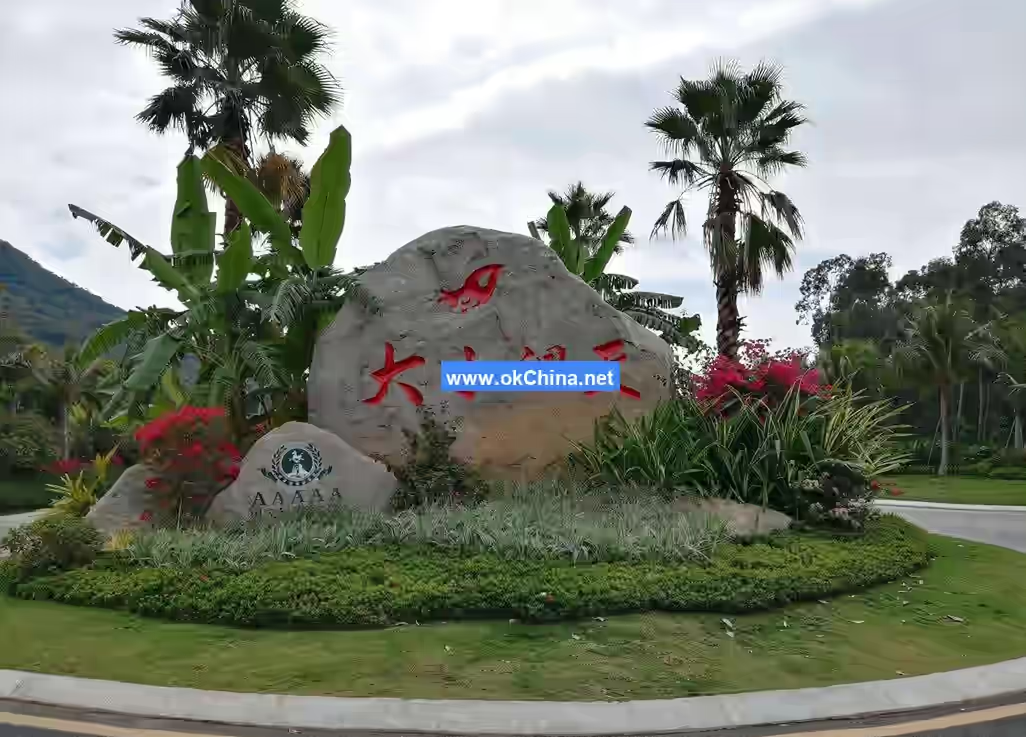
The Nanshan Daxiao Dongtian Tourist Area in Sanya City, historically known as Aoshan Daxiao Dongtian, is located on the northwestern side of Nanshan Mountain, approximately 40 kilometers west of Sanya City, Hainan Province. It lies between 109°09′–109°13′ east longitude and 18°17′–18°19′ north latitude, covering a total area of 22.5 square kilometers. It is a comprehensive tourist area themed around "Fairy Caves and Blessed Lands, Marvelous Seascapes and Mountain Views," with Taoist culture, longevity culture, and South Sea Dragon culture as its main threads. It integrates wedding services, science education and research, coastal leisure, aerial tours, and maritime experiences.
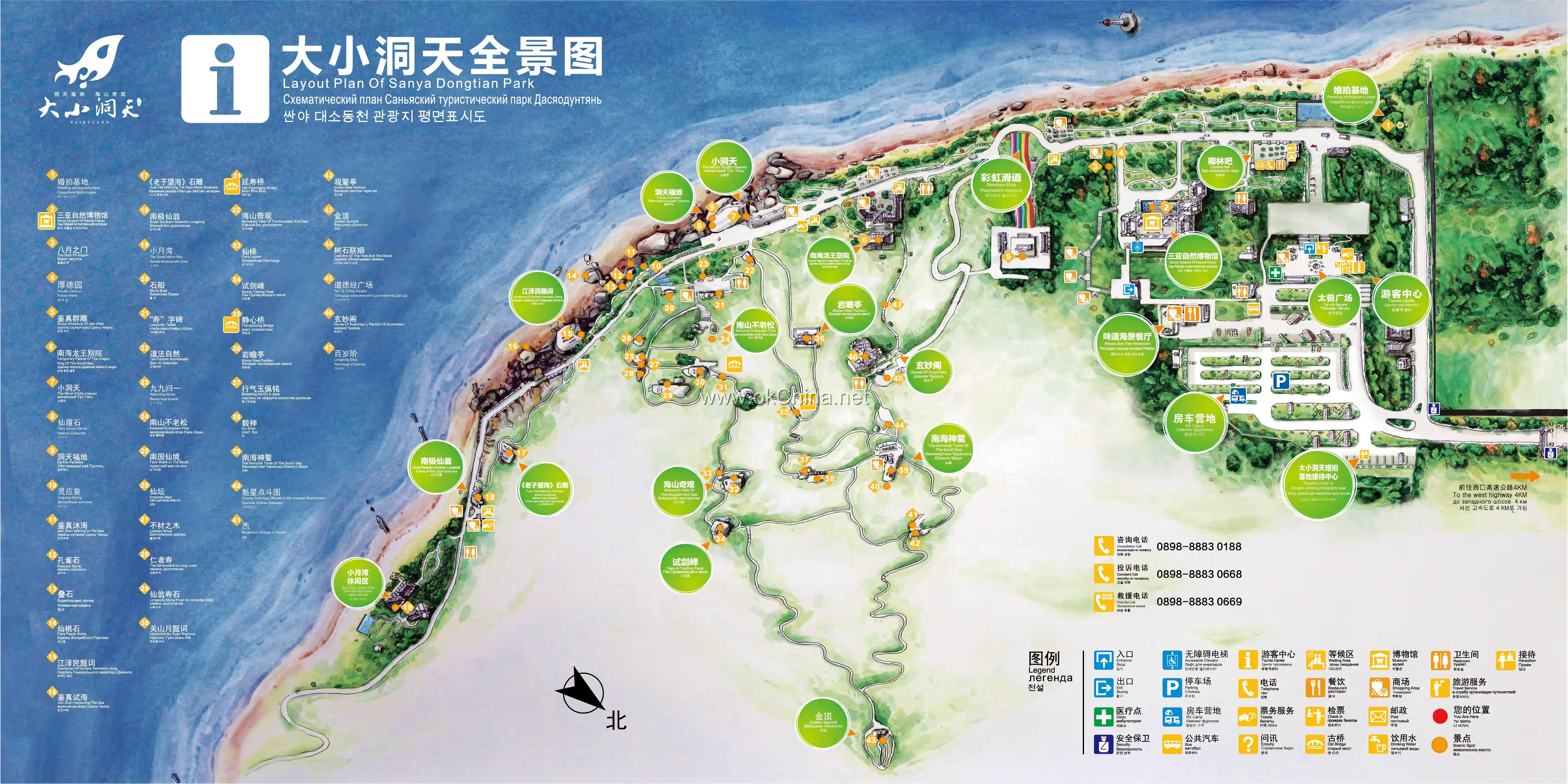
The Nanshan Daxiao Dongtian Tourist Area in Sanya City builds its scenic spots around tropical coastal ecological resources, natural environment, landscapes, cultural atmosphere, Taoist cultural elements, and historical cultural connotations. Based on this, it has formed six touring zones: the "Fairy Caves and Blessed Lands" zone, the "Blessings and Longevity Nanshan" zone, the "South Sea Dragon King" zone, the "Cliffside Inscriptions" zone, and the "Mountain and Sea Marvels" zone, featuring over 50 scenic spots in total.
2. Geographical Environment
2.1 Location and Territory
The Nanshan Daxiao Dongtian Tourist Area in Sanya City covers a total area of 22.5 square kilometers. It is located on the northwestern side of Nanshan Mountain, approximately 40 kilometers west of Sanya City, Hainan Province. It faces the sea to the south, borders the Nanshan Cultural Tourism Zone to the east, neighbors the Yazhou Ancient City to the west, and is close to the West Line Expressway to the north. Its geographical coordinates are between 109°09′–109°13′ east longitude and 18°17′–18°19′ north latitude. It is about 40 kilometers from downtown Sanya, approximately 30 kilometers from Sanya Phoenix International Airport, and about 3.5 kilometers from the entrance of the West Line Expressway.
2.2 Topography and Landforms
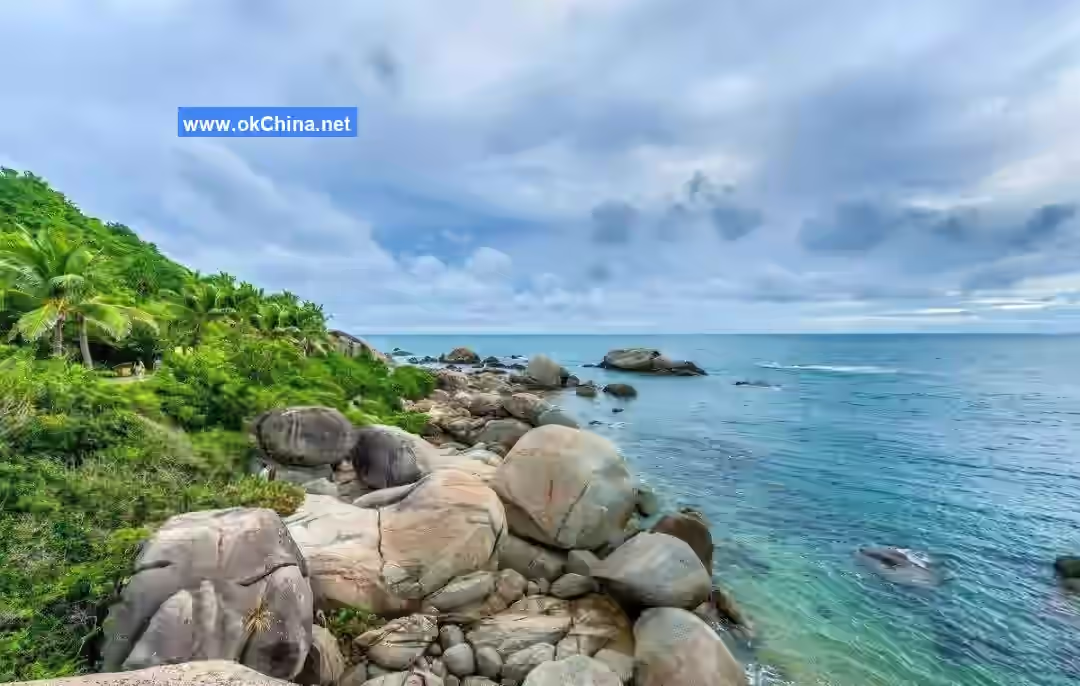
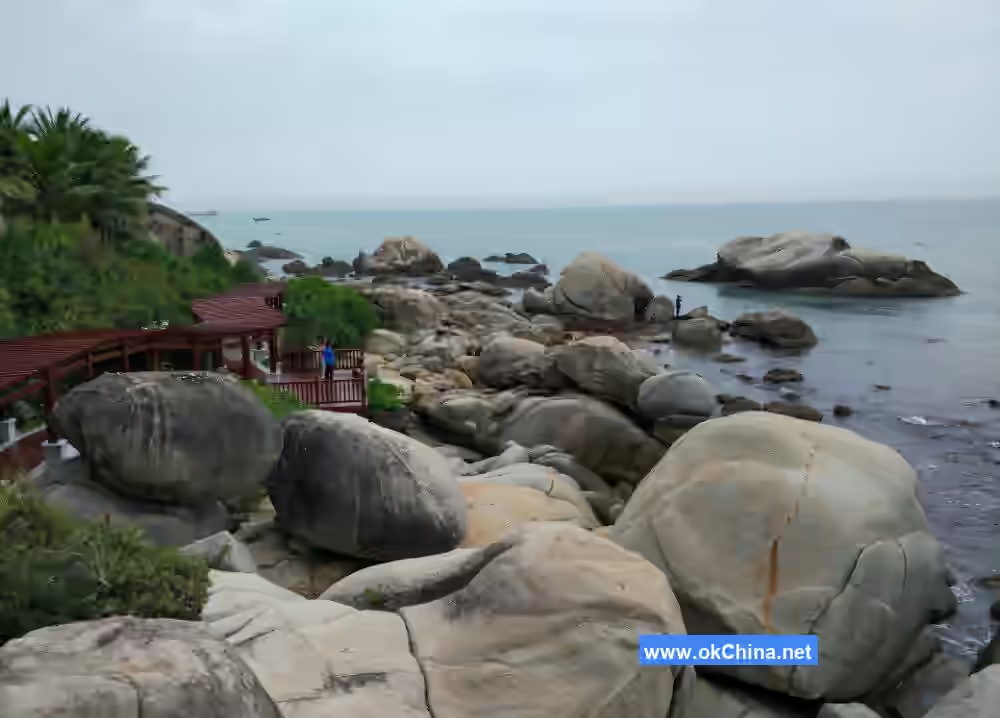
The overall terrain of the Nanshan Daxiao Dongtian Tourist Area in Sanya City is generally lower in the west and higher in the east. The maximum elevation is 432.2 meters, and the minimum elevation is 1.27 meters, mostly above the average tide level of 1.03 meters. The scenic area is backed by Nanshan Mountain to the north and faces the South China Sea to the south, with landforms primarily consisting of natural mountains and rocky coastlines. The overall terrain is predominantly mountainous areas above 100 meters, accounting for 54.09% of the total area. The coastal areas in the northern and southwestern parts of the scenic area are mostly below 100 meters in elevation, accounting for 45.91% of the total area. Nanshan Mountain, historically known as "Aoshan," is a branch of the Wuzhi Mountain range. Its main peak is Nanshan Ridge, with an altitude of 479.6 meters. The mountain is dignified, elegant, and lushly vegetated. The main peak and the foot of Biziling extend into the sea, forming a rocky cape and marine erosion landform. The coastline is dotted with bizarre rocks and large boulders. Between the two capes lies Xiaoyue Bay Beach. The total coastline of the scenic area is 3.2 kilometers long, featuring diverse coastal landforms.
2.3 Climate and Hydrology
The Nanshan Daxiao Dongtian Tourist Area in Sanya City is located at the southern tip of Hainan Island. Climatically, it belongs to a tropical maritime monsoon climate, characterized by year-round warmth and distinct wet and dry seasons. The annual average temperature is 25.4°C, with a summer average of 28.2°C and a winter average of 20°C. The hottest month is June, with an average temperature of 28.7°C; the coldest month is January, with an average of 21.4°C. Annual sunshine duration is 2563 hours. The rainy season lasts from June to October each year. The annual average precipitation is 1347.5 mm, and the annual evaporation is 2273 mm. The average annual relative humidity is 79%. Southerly or southwesterly winds prevail from May to July. August to October is the frequent typhoon period. Northeasterly winds are common from November to March of the following year. The annual average wind speed is 2.9 m/s. The area is affected by an average of 1.8 typhoons per year. The tidal pattern is an irregular diurnal tide, primarily diurnal. There are 14 days of diurnal tide per month. During diurnal tides, the highest tide level is 2.2 meters, lasting 16 hours; the lowest tide level is 0.6 meters. The average tide level is 1.03 meters. The maximum tidal range is 2.26 meters, and the minimum is 0.06 meters. The average tidal range is 0.79 meters. The ebb tide duration is 8 hours.
3. Main Scenic Spots
The Nanshan Daxiao Dongtian Tourist Area in Sanya City builds its scenic spots around tropical coastal ecological resources, natural environment, landscapes, cultural atmosphere, Taoist cultural elements, and historical cultural connotations. Based on this, it has formed six touring zones: the "Fairy Caves and Blessed Lands" zone, the "Blessings and Longevity Nanshan" zone, the "South Sea Dragon King" zone, the "Cliffside Inscriptions" zone, and the "Mountain and Sea Marvels" zone, featuring over 50 scenic spots in total.
3.1 Natural Landscapes
3.1.1 South Sea Gate of Blessings
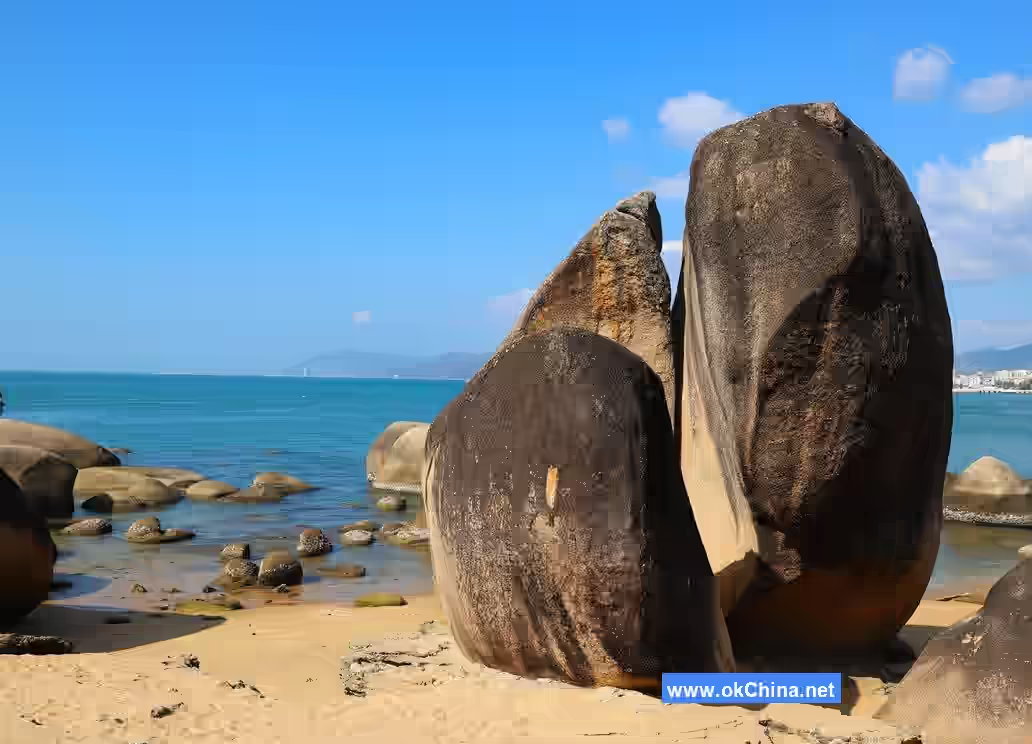
This Taoist cultural landscape, known as the "Gate of All Mysteries," is situated at the foot of Aoshan Mountain by the South Sea coast. It is a popular photo spot blending Taoist and traditional culture, and also a wedding photography location in Sanya. The two gates stand facing each other like hands. When open, they seem to reveal heaven and earth, symbolizing the Taoist concept of perceiving the grand through the small and the principle of non-action (wu wei). When closed, they stand on the water, echoing each other vertically, symbolizing harmony, auspiciousness, beauty, and happiness.
3.1.2 Coconut Grove Bar
This is the area with the most coconut trees in the scenic area and the largest leisure spot overall. It features not only pavilions and rocking chairs but also coconuts and various local Hainan snacks.
3.1.3 Sanya Natural Museum
The Sanya Natural Museum officially opened to the public on September 9, 2007. It is a paleontological fossil museum and a national science education base, with a building area of 2400 square meters. Its collection includes over 2000 exhibits, such as Jehol Biota fossils from western Liaoning, Archaefructus liaoningensis, Confuciusornis sanctus, Sanya Pterosaur, and other paleontological fossils from across China, as well as unique animal and plant specimens from Hainan. Among these, more than 800 are national treasure-level items. It is a modern museum integrating appreciation, exhibition, collection, scientific research, and science education.
3.1.4 Dragon Head Stone
This is a reef rock on the coast of Daxiao Dongtian, shaped like a dragon's head, hence the name "Dragon Head Stone."
3.1.5 South Sea Dragon King's Retreat
The South Sea Dragon King's Retreat consists of auxiliary halls and a main hall, with three gates leading inward. Ascending the steps, one finds a "龍" (dragon) character on the wall, written by Emperor Kangxi. The murals on the right and left walls inside depict the South Sea Dragon King paying homage and "Laozi as a Dragon," respectively. The beach facing the retreat is called Dragon King Beach.
3.1.6 Hundred-Year Steps
The Hundred-Year Steps consist of five stone tablets, each representing health preservation principles for different age decades. Each segment represents ten years. Walking upward, one encounters steps named for ages: sixty (Qi), seventy (Lao), eighty (Mi Shou, rice character symbolizing 88), ninety (Mao), and one hundred (Qi Yi). Walking upward symbolizes prolonging life, while walking downward symbolizes rejuvenation.
3.1.7 Small Fairy Cave (Xiao Dongtian)
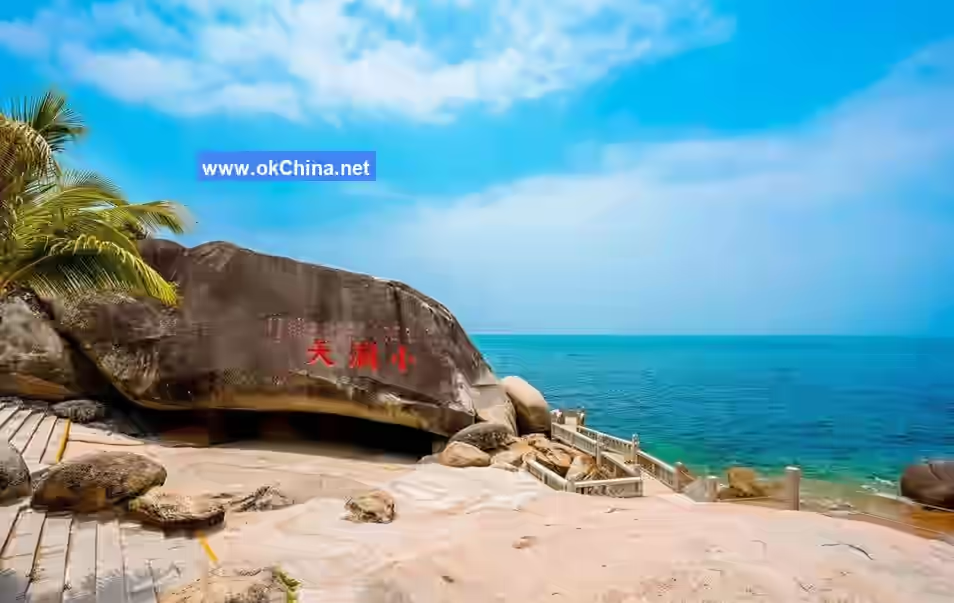
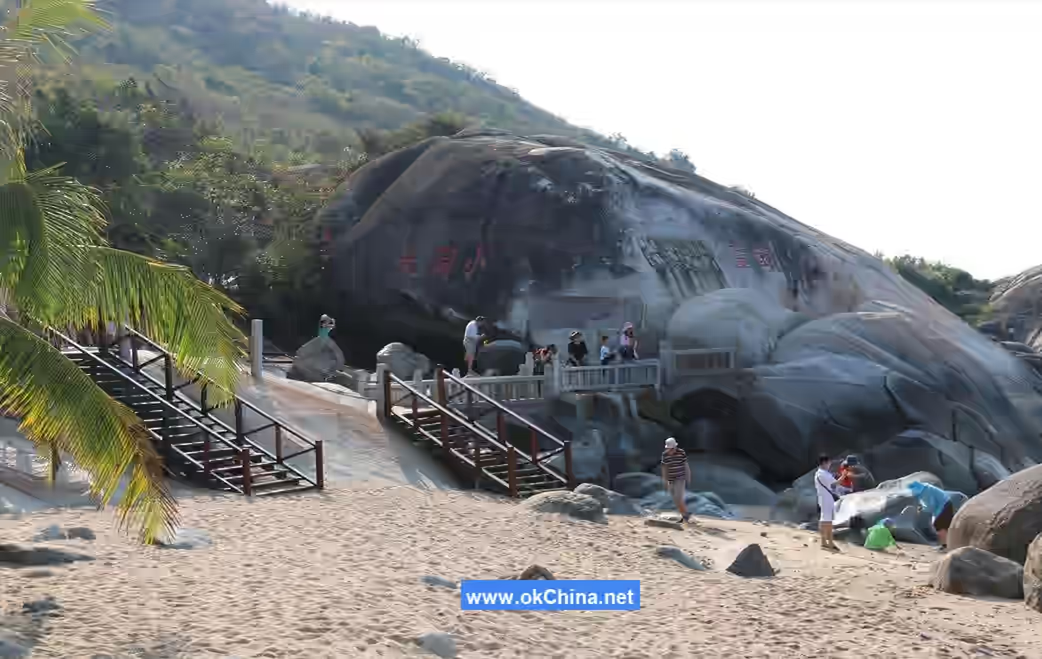
The Small Fairy Cave is formed by rugged rocks rising abruptly from the seaside, sculpted by millennia of seawater erosion. It resembles a cave but is not entirely enclosed. The cave is over 20 square meters in area and 28 meters deep. In the Dingwei year of the Chunyou era of the Southern Song Dynasty (1247), the then-prefect of ancient Yazhou, Mao Kui, discovered the "Small Fairy Cave" while climbing Nanshan Mountain. He identified it as a "Fairy Cave and Blessed Land" and inscribed the three characters "小洞天" (Small Fairy Cave) at the cave entrance.
3.1.8 Fairy Caves and Blessed Lands (Dongtian Fudi)
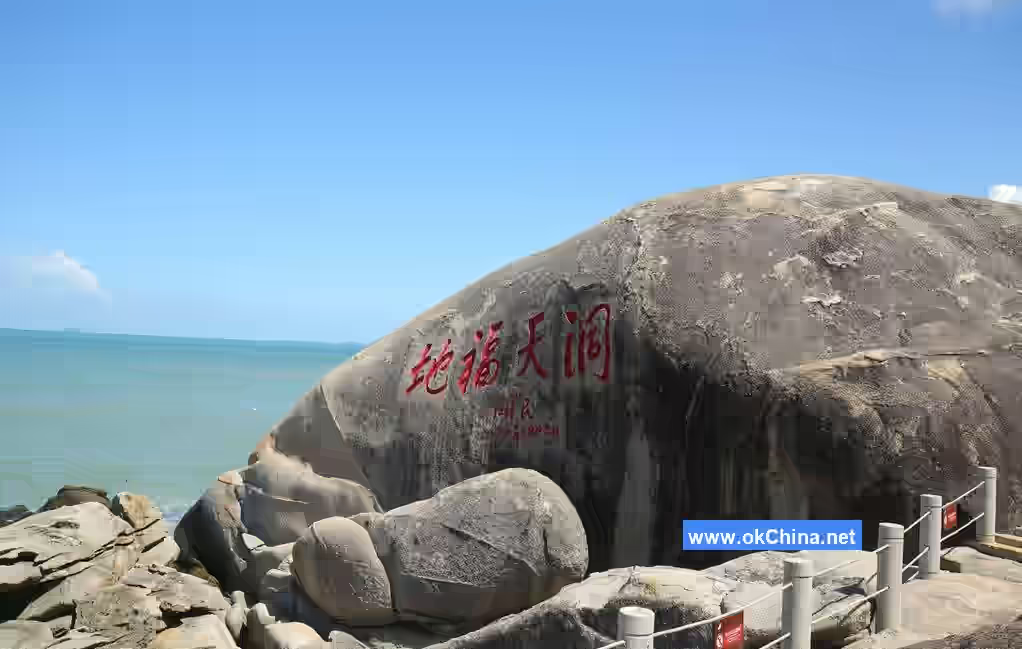
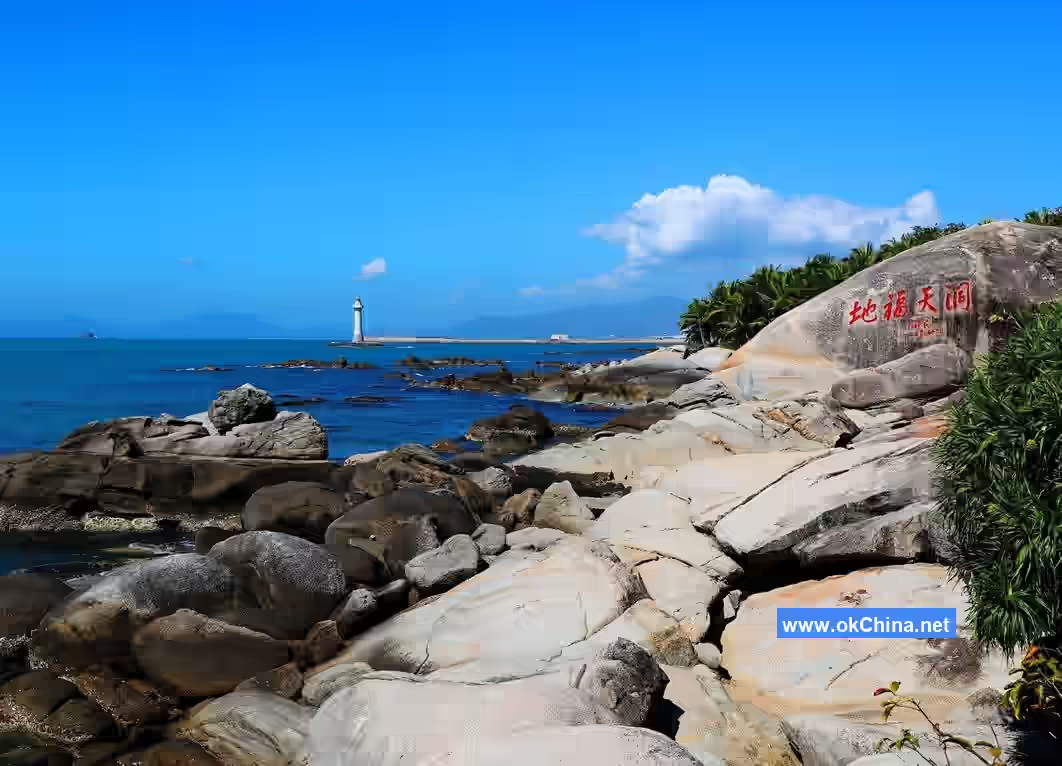
On April 17, 1993, after attending the 5th-anniversary celebration of Hainan Province's establishment, Comrade Jiang Zemin visited the Nanshan Daxiao Dongtian Tourist Area in Sanya City and inscribed: "The blue sea connects with the distant sky; all of Qiongya (Hainan) is filled with spring." On April 26, 2014, Comrade Jiang Zemin visited the scenic area again and inscribed "洞天福地" (Fairy Caves and Blessed Lands).
3.1.9 Numinous Response Spring / Prayer Stone
In his Travel Notes on Daxiao Dongtian, Pei Chongli, a Ming Dynasty local official, recorded: "In front of the pavilion straight out from the cave gate by the seaside, there is a huge rock like an overturned boat. Under the rock is a hole from which clear, light spring water flows, inscribed as 'Numinous Response Spring.'" Later generations observed that the water flowing from among the nine dragon formations was spring water originating from Aoshan Mountain, converging to form the "Numinous Response Spring." Beside the spring, there is a large stone shaped like clasped fists, as if praying to the heavens, called the "Prayer Stone."
3.1.10 Jianzhen Bathing in the Sea
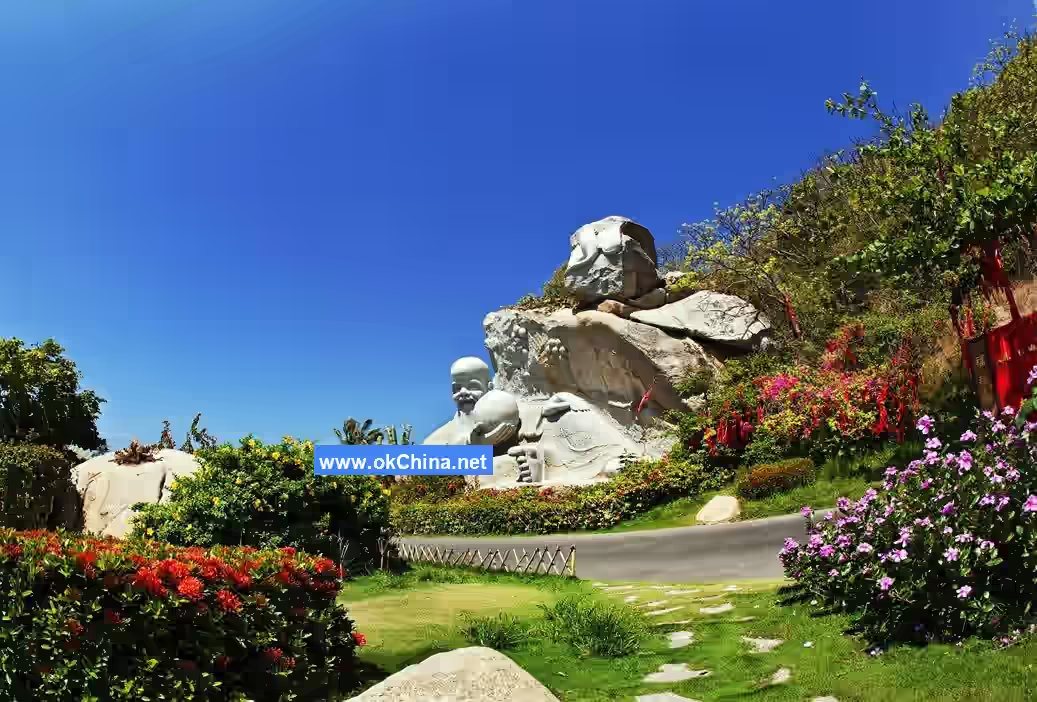
The entire rock formation resembles the Buddhist monk Jianzhen lying peacefully by the sea, listening to the waves, his Zen mind settled. This inevitably reminds one of the legendary experience over 1200 years ago when Monk Jianzhen and his disciples, after arduous and perilous journeys, landed on the treasure island of Hainan.
3.1.11 Immortal Peach Stone
The "Immortal Peach Stone" is a huge rock shaped like a celestial peach. It appears to float in the sea at high tide but connects to the land at low tide. Not far away is a large rock shaped like an ox head floating on the water, facing the Immortal Peach.
3.1.12 Xiaoyue Bay (Little Moon Bay)
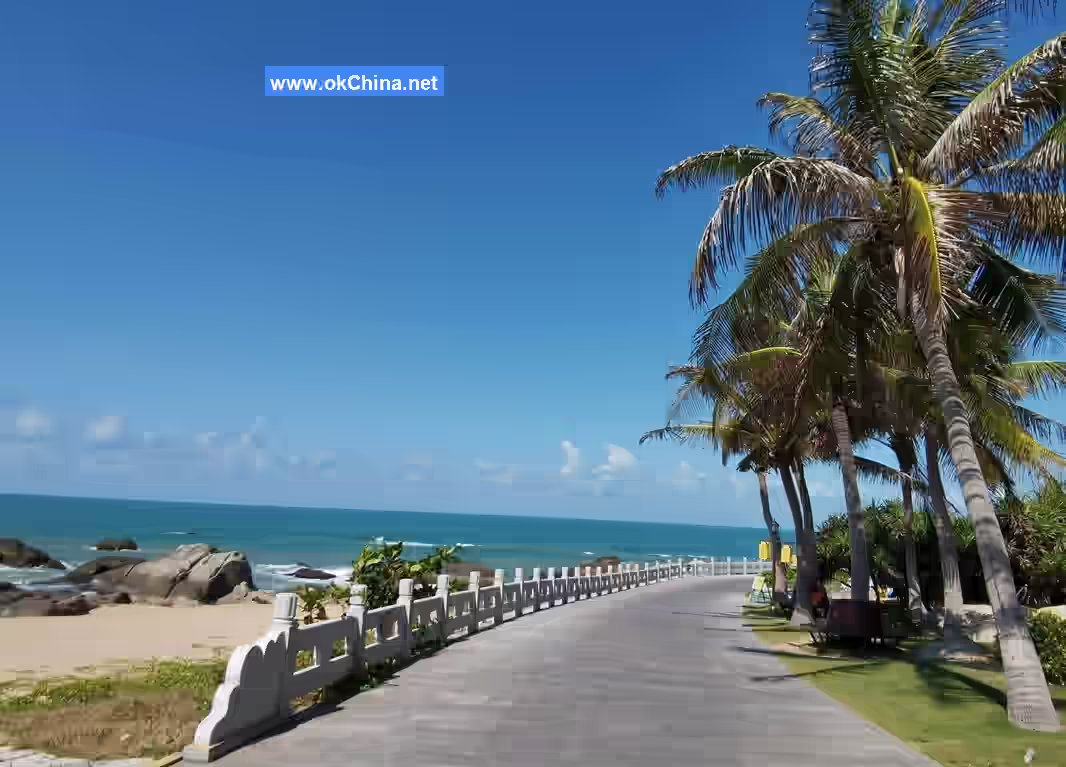
Located on the southeastern side of the Daxiao Dongtian scenic area, Xiaoyue Bay is backed by Aoshan Mountain and faces the South China Sea. It extends forward in a crescent moon shape, with a beach of crushed shell sand. This area features lush natural vegetation, distributed beaches, and rock formations along the coast. The seawater quality is Class I, hosting over 600 species of marine life. Various marine entertainment activities are available here, including diving, underwater sightseeing boats, flyboarding, banana boats, jet skis, and beach buggies.
3.1.13 Duke Zhou's Stone Boat
Duke Zhou's Stone Boat is 4.5 meters long and 1.9 meters wide at the stern. Inscribed on the stone boat is the handwriting of Prefect Zhou Kang: "Zhou Kang of Hailing, with his righteous purpose, came with his colleagues Wang Peiran Ze and the neighboring official Zhou Picheng Shiwu on the Double Ninth Festival of the Bingwu year of the Chunxi era to view the stone boat, thereby admiring the wonders of the mountains and waters, which can be considered a supreme scenic spot of the maritime region." The inscription dates from the 13th year of the Chunxi era of the Southern Song Dynasty (1186 AD).#### 3.1.14 Longevity Rivals the Southern Mountain Within the scenic area, there is a large rock known as the Stone Chamber. Beside it stands a stele inscribed with the character "寿" (Shòu, meaning longevity). This stele, bearing the imperial handwriting of Empress Dowager Cixi, is a key protected cultural relic in Sanya. It measures 2.76 meters in height, 1.1 meters in width, and 0.3 meters in thickness. The character "寿" is carved in intaglio in the center of the stele, itself measuring 1.45 meters in height and 0.68 meters in width. Centered at the top of the character is a five-cun square imperial seal of Empress Dowager Cixi, also carved in intaglio. To the right of the "寿" character is an intaglio inscription: "Imperial Brush of Empress Dowager Cixi, of the titles Duanyou Kangyi Zhaoyu Zhuangcheng Shougong Qinxian Chong, on the occasion of her 60th birthday, 28th day of the 9th month in the 29th year of the Guangxu reign (1903)." To its right is the character "赐" (cì, meaning bestowed). Below the "寿" character, the full text of the stele record is carved in intaglio. In the lower left corner of the character, the signature is carved: "Your subject, Wang Gen." The characters "南山" (Nán Shān, Southern Mountain) beside the longevity stele were inscribed by Zhao Puchu.
3.1.15 Immortal Elder Longevity Stone Inscription
This character was written by the Taoist priest Chen Tuan. Viewed as a whole, it is a traditional cursive script character for "寿" (longevity). Upon closer inspection, the upper part of the character is composed of the characters "人" (rén, person) and "年" (nián, year). The middle section forms the character "丰" (fēng, abundant). Combined, it can be interpreted as one character concealing the four characters "人寿年丰" (rén shòu nián fēng), wishing people longevity and a bountiful harvest in the coming year. Simultaneously, it can also be seen as the upper part being the character "富" (fù, wealth), the middle part being "弗" (fú, which sounds like "佛" fó, Buddha), and the lower part being "林" (lín, forest). Combined, it can be interpreted as one character concealing the four characters "林富佛寿" (lín fù fó shòu), implying that planting forests well can lead to prosperity.
3.1.16 South Sea Divine Ao
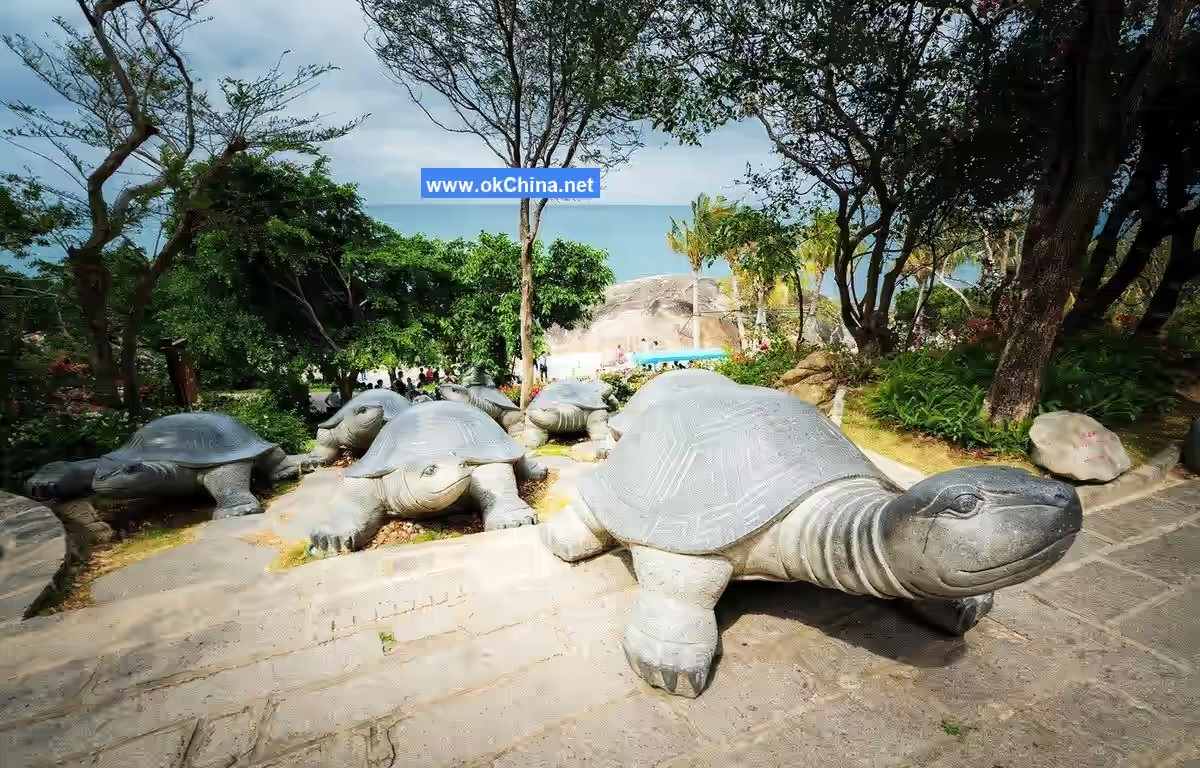
The location of the South Sea Divine Ao is the very head of the entire Ao Mountain within Nanshan. Its form combines a dragon's head, a turtle's body, and a qilin's tail (The Divine Ao is entirely cast from bronze, measuring 2.9 meters in length, 1.5 meters in width, weighing 1.5 tons. Its body is adorned with Bagua trigram patterns, its head encircled by coiled whiskers, and its gaze is spirited, looking directly towards the South Sea). Above it stands the Guan'ao Pavilion. Behind the Ao deity is a stone wall carved with an image of the Kuixing Star. This figure, which seems both like a painting and not, both human and not, is depicted stepping on the character "鳌" (Ao). This represents the legendary Kuixing Star.
3.2 Other Attractions
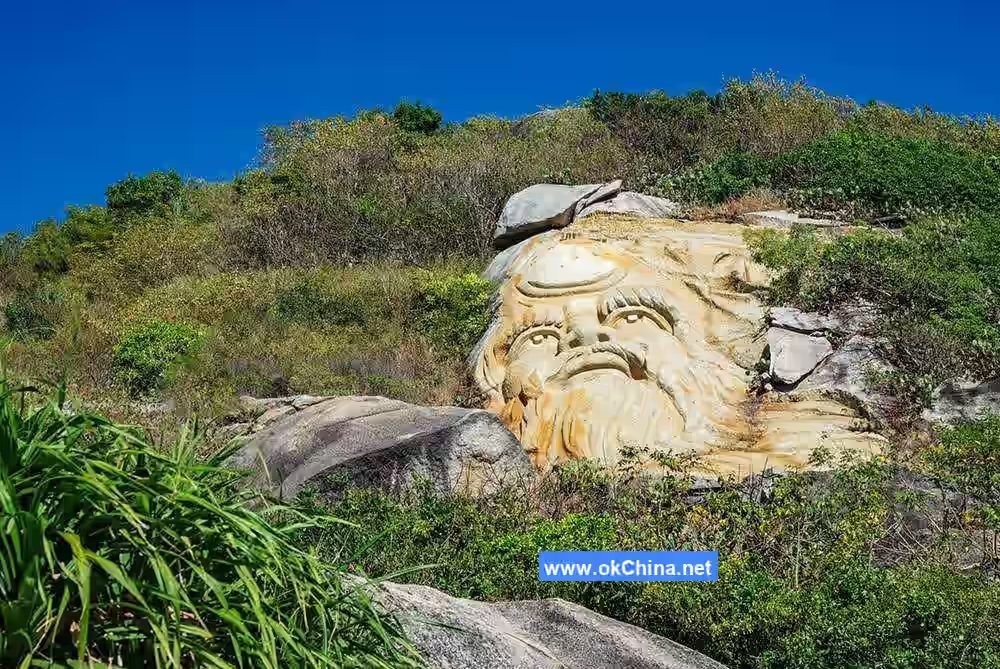
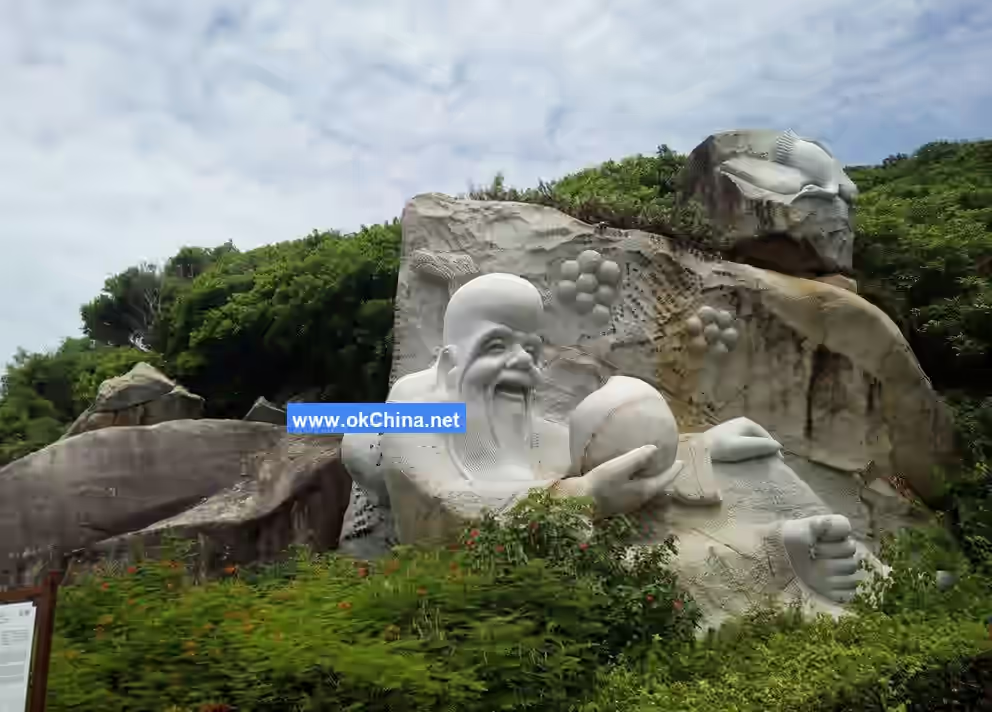
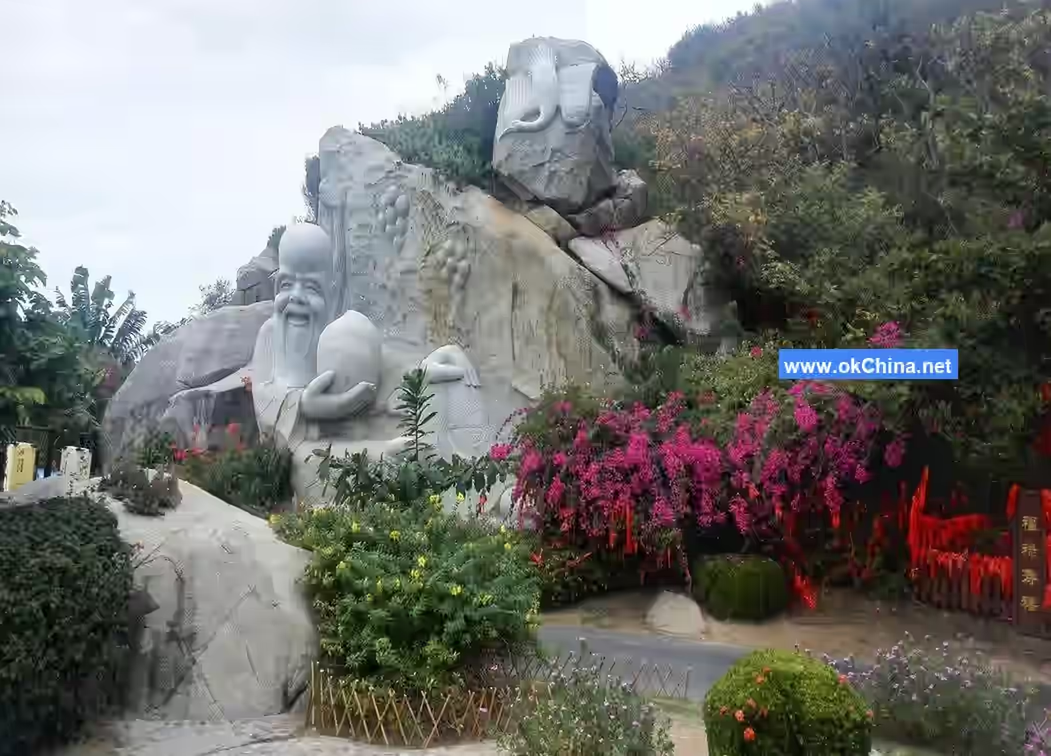
The Nanshan Mountain and Nanshan Cave Tourist Area in Sanya City also features attractions such as the Nanshan Immortal Pine Stone Inscription, the Benevolent Person's Longevity Stone Inscription, the Southern Wonderland Stone Inscription, the Nanshan Immortal Pine, the Ninety-Nine Bows for Longevity, Laozi Gazing at the Sea, the Antarctic Immortal Elder, Malachite, Jianzhen Bathing in the Sea, the Jianzhen Group Sculpture, and the Territorial Sea Base Point Tower.
3.3 Recreational Activities
3.3.1 Rainbow Slide
The Rainbow Slide consists of three parallel slides, each 110 meters long, extending from the heights of Nanshan down to the shore of the South Sea. The wave-shaped slides have a total drop of 20 meters. Sitting on a sliding ring, one can speed down from the colorful slide.
3.3.2 Helicopter Low-Altitude Travel Photography
Take a helicopter ride to overlook the Nanshan Mountain and Nanshan Cave, view Ao Mountain, gaze upon the South Sea, and experience a panoramic tour. There are six flight routes and eleven video shooting styles to choose from.
4. Cultural Resources
4.1 Historical Development
During the Southern Song Dynasty, the local military commanders of Jiyang, Zhou and Mao Kui successively developed the "Ao Mountain and Nanshan Cave" into a scenic area. In the 13th year of the Chunxi reign (1186), Zhou Kang led his subordinates to visit the landscape here, toured the "Stone Boat," and inscribed cliff carvings titled "Record of the Stone Boat" and "Record of the Cave Entrance." In the 7th year of the Chunyou reign (1247), Mao Kui again led his subordinates to construct the "Eight Scenes of the Cave Heaven," inscribing the sights such as "Fishing Platform," "Gazing at the Cliff," "Cave Gate," "Immortal's Ladder," "Small Cave Heaven," and "Marvelous View of Mountains and Sea." He also inscribed "Record of a Visit to the Nanshan Cave" and "Poem of the Nanshan Cave," along with a "Postscript." In the 8th year of the Chunyou reign (1248), the Jiyang military commander Wang Zan also led his subordinates on a mountain tour and inscribed a travel record at the site of Mao Kui's poetic inscription.
In 1962, the archaeologist Mr. Guo Moruo visited Ao Mountain (Nanshan Cave) for investigation. He greatly admired the marvelous view of mountains and sea in the Nanshan Cave scenic area and composed the poem "Visiting Yaxian's Ao Mountain," praising it as the "Wonderful Land of the Southern Sea."
In early February 1992, the Sanya Municipal Party Committee and Government decided to develop the Nanshan Cave scenic spot into a tourist attraction. The Sanya Tourism Bureau established the "Sanya Marvelous View of Mountains and Sea Tourist Area Management Office." They restored major attractions like the Small Cave Heaven, Marvelous View of Mountains and Sea, Stone Boat, and Sword-Testing Peak, built the Gazing at the Cliff Pavilion and the sculpture group "Jianzhen Landing," and developed attractions including "Longevity Rivals the Southern Mountain Immortal Pine."
In 1994, the Marvelous View of Mountains and Sea Management Office was approved by the State Council as part of the Sanya Tropical Coast National Key Scenic Area.
4.2 Cultural History
As early as the Southern Song Dynasty, Zhou Kang, who served as the prefect of Yazhou, and Mao Kui, who served as the military commander, successively opened up the mountains and expanded the scenery, developing it into a tourist destination. This site is also an ancient tourist spot valued and developed by government officials of that time. The seat of the Yazhou administration was located in the present-day Yazhou District of Sanya City, only about ten li away from this place. According to records, they did not travel by land but sailed around the sea by boat before disembarking. Mao Kui developed a deep affection for Nanshan. After leaving his post, he did not return to the court to report on his duties nor go back to his hometown to reunite with his family. Instead, he retreated into Nanshan and spent the rest of his life there. Later generations built a temple here to worship him. Since the Yuan, Ming, and Qing dynasties, visitors have continued to come here, leaving poems and writings all over the mountains. It was esteemed as the top of the Eight Scenes of Yazhou and was once hailed as the premier landscape attraction of Zhuya. It is said that Bai Yuchan, the fifth patriarch of the Southern School of Taoism, also once lived in seclusion at the Nanshan Cave.
Comments
Post a Comment