Nanshan Cultural Tourism Zone
1. Introduction
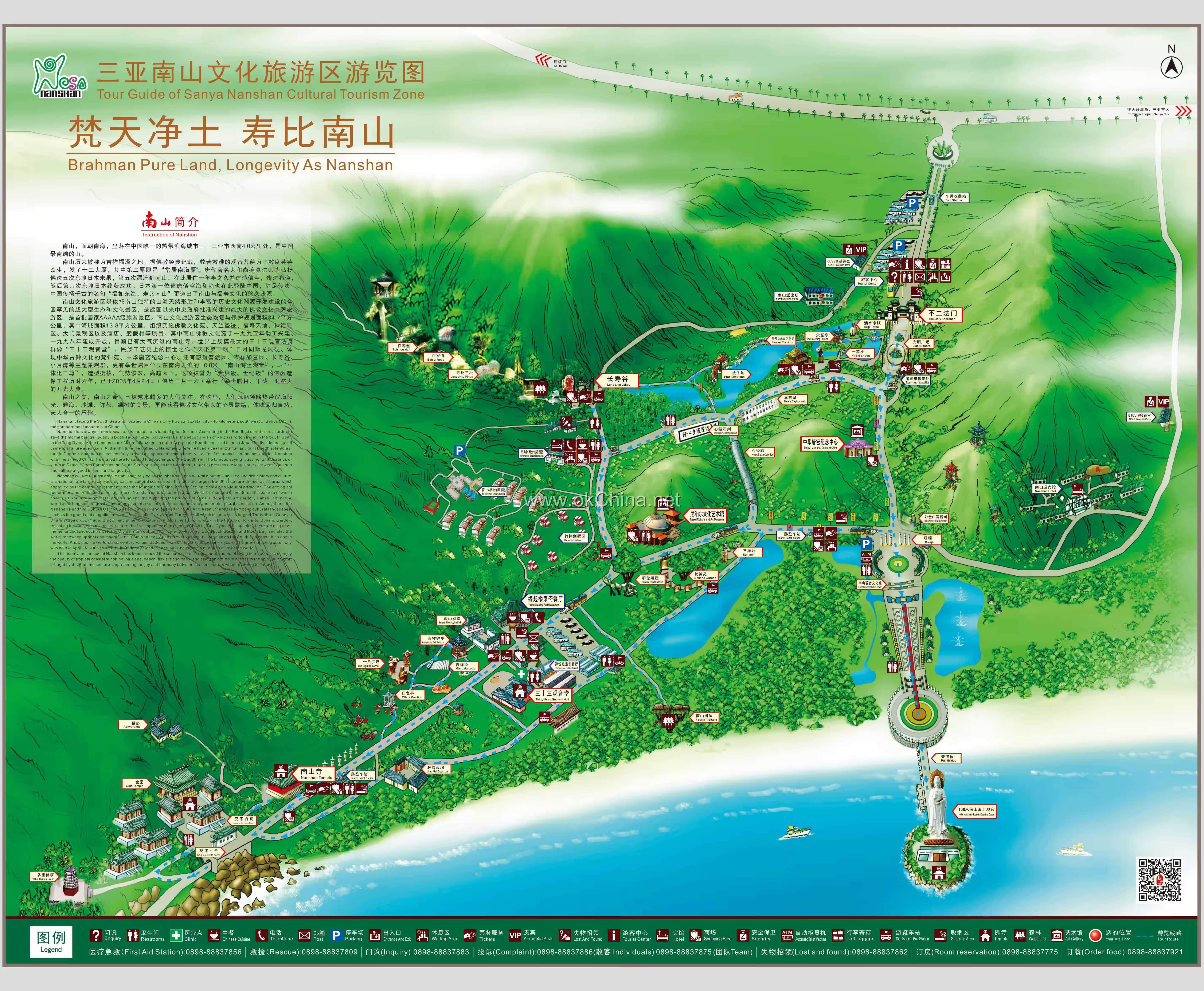
The Nanshan Cultural Tourism Zone is located 40 kilometers southwest of Sanya City, Hainan Province. It has a planned area of 34.7 square kilometers, including a sea area of 13.3 square kilometers.
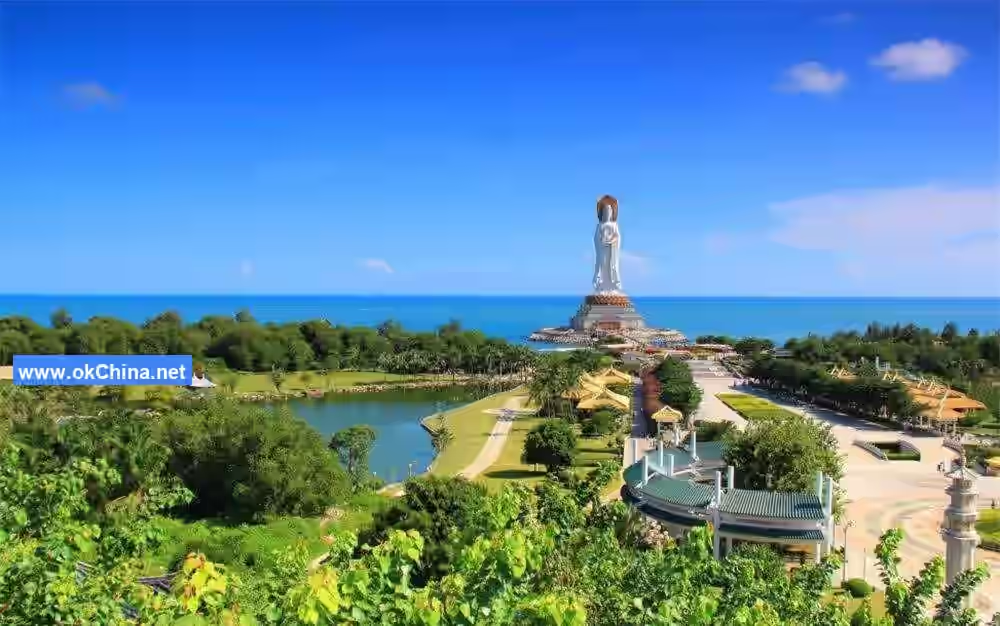
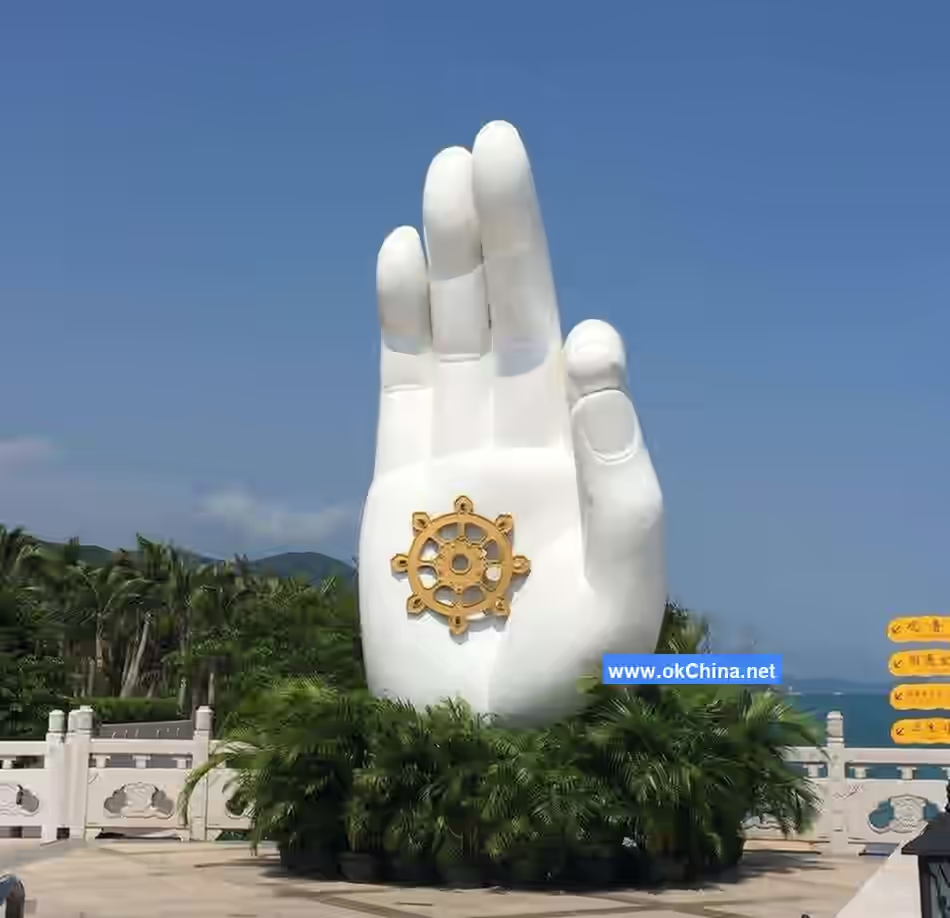
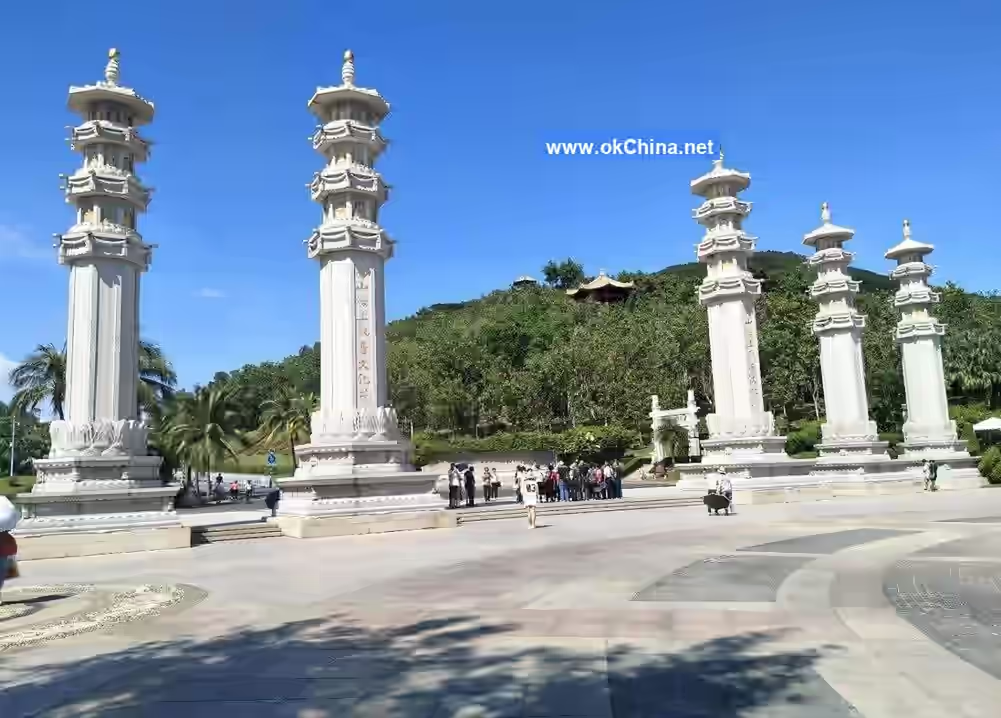
The Nanshan Cultural Tourism Zone features a tropical marine monsoon climate, with an average annual temperature of 24.5°C. Its air and seawater quality rank first in the country. The forest coverage rate in the zone is 97%, and its zonal vegetation type is tropical sparse shrubland within the tropical semi-evergreen monsoon rainforest, primarily composed of tropical flora. The Nanshan Cultural Tourism Zone project was approved in 1995 and opened to the public in 1998. Currently, it has formed a tourism landscape cluster consisting of one temple (Nanshan Temple), one garden (Nanshan Sea Guanyin Garden), two parks (Cihang Pudu Park and Jixiang Ruyi Park), one valley (Longevity Valley), and one bay (Xiaoyue Bay), along with the national treasure "Golden Jade Guanyin," which is recorded in the Guinness World Records. Within the zone, the Nanshan Sea Guanyin Statue is located in the Nanshan Guanyin Jingyuan Garden area, and China's largest golden jade Buddha statue, the Golden Jade Guanyin, is enshrined in the "De Zai Zi Zai Guanyin Pavilion." The Thirty-Three Guanyin Hall rests against the twin peaks of Nanshan, embraced by hills on the left and right, forming the center of Nanshan's dragon vein. Longevity Valley extends over 2,000 meters in length with a vertical height of about 200 meters. Based on orientation and landscape features, it is mainly divided into the gate landscape area, the source landscape area, and the scenic route along the valley. It includes numerous attractions such as mango forests, century-old ancient trees, the Three Pines of Longevity, the Hall of Hundred Longevity, and the Hundred-Year Steps. The colorful tourist passage between Nanshan Temple and Xiaoyue Bay is called Nanshan Yuewan Road, also known as Xiaoyue Bay.
2. Geographical Environment
2.1 Location and Territory
The Nanshan Cultural Tourism Zone is located 40 kilometers southwest of Sanya City, Hainan Province. It has a planned area of 34.7 square kilometers, including a sea area of 13.3 square kilometers.
2.2 Topography and Landforms
The Nanshan Cultural Tourism Zone is situated on Nanshan, the southernmost mountain in China. Nanshan is an extension of the Wuzhi Mountain range, with an altitude of 487 meters. The mountain range is winding and covered in lush greenery. The topography of the Nanshan Cultural Tourism Zone in Sanya is primarily composed of low mountains and hills, transitioning from low mountains and hills through piedmont terraces to coastal sandy land. The low mountain and hill area consists of dry red soil derived from granite parent rock.
2.3 Climate
The Nanshan Cultural Tourism Zone features a tropical marine monsoon climate, with an average annual temperature of 24.5°C. Its air and seawater quality rank first in the country.
2.4 Natural Resources
The forest coverage rate in the Nanshan Cultural Tourism Zone is 97%, and its zonal vegetation type is tropical sparse shrubland within the tropical semi-evergreen monsoon rainforest, primarily composed of tropical flora. Significant variations in topography and landforms result in considerable differences in soil and vegetation types across different areas. Transitioning from the coastline to the ridge, the soil and vegetation each have distinct characteristics. Except for some trees distributed along the coastal sand barrier and near Yatang Village, the native vegetation in the entire area has been damaged. The large banyan tree currently surviving on the summit of Nanshan Ridge is an indicator plant of the original native vegetation. In the low mountain and hill area, the soil layer is thin, and organic matter content is mainly distributed on the surface. The soil has high base saturation but poor overall fertility. Coupled with concentrated annual rainfall distribution and a long dry season, the overall vegetation consists of drought-tolerant species, with trees sparsely distributed, often forming shrub communities.
Within the Sanya Nanshan Buddhist Cultural Garden, there is a rare coastal sand barrier in the world. On this 7-kilometer-long sand barrier stand over 3,000 tamarind trees, forming the largest and most numerous primitive tropical coastal tamarind forest discovered in China to date. This is also a rare world wonder. The American Hawaiian Treehouse Company has built several treehouses on the tamarind trees, shaped like bird nests, unique and extraordinary.
3. Important Attractions
3.1 Guanyin Statue
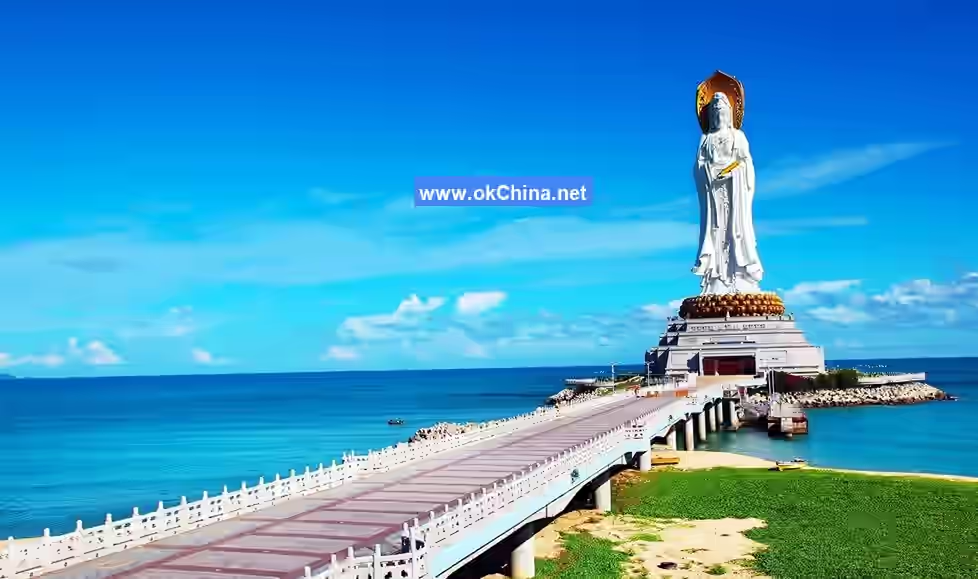
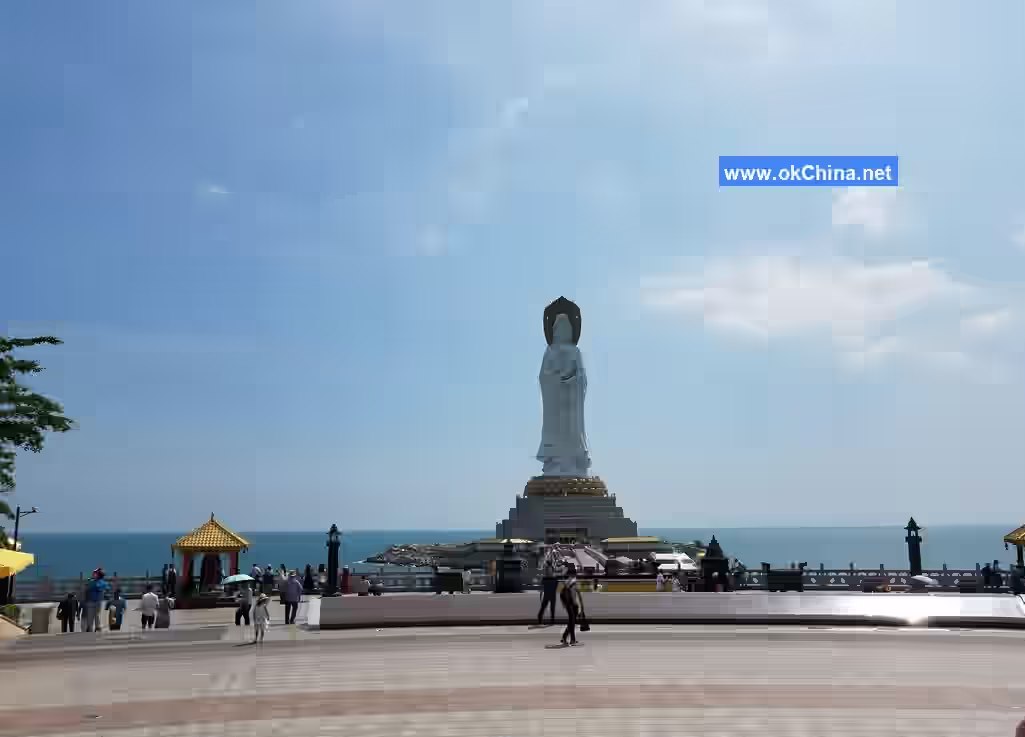
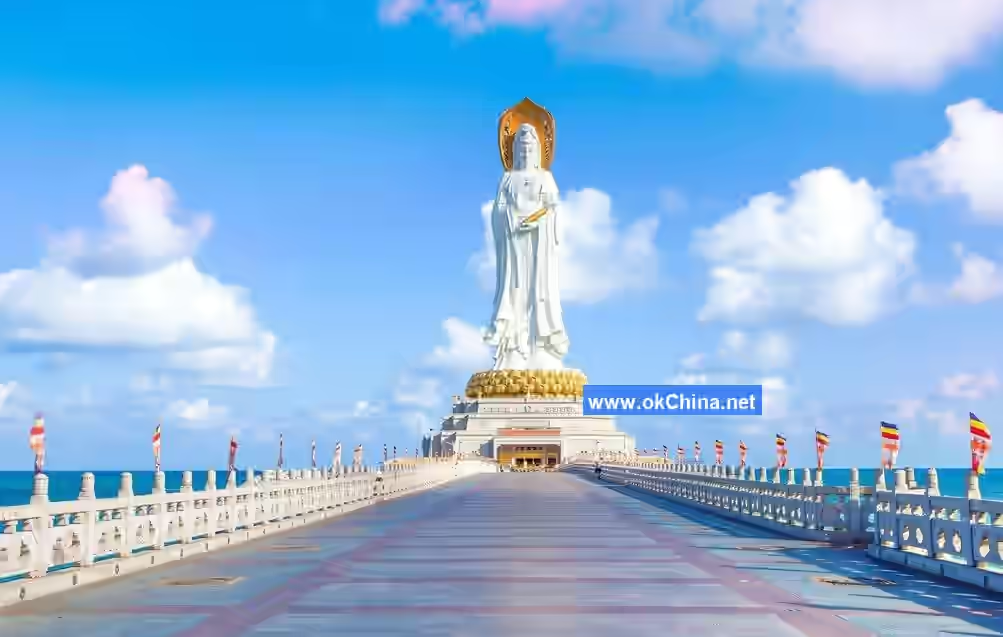
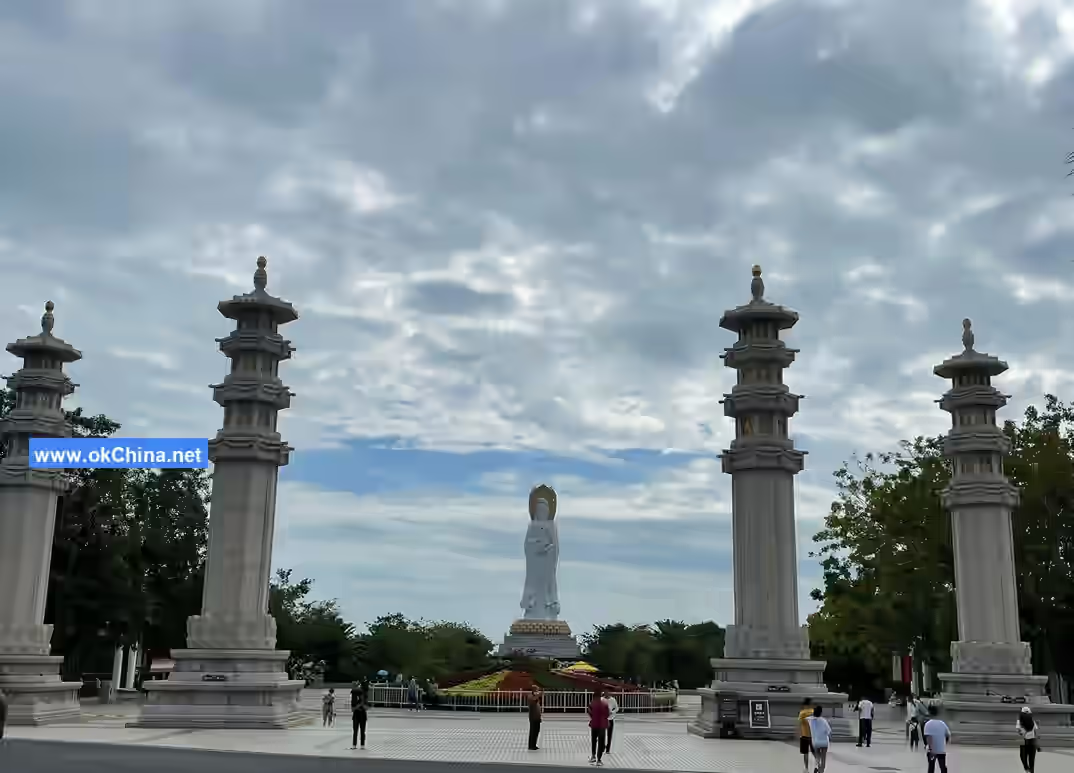
The Nanshan Sea Guanyin Statue is located on Guanyin Island, with a diameter of 120 meters, within the Nanshan Guanyin Jingyuan Garden area of the Nanshan Cultural Tourism Zone in Sanya City, Hainan Province. The statue weighs approximately 2,500 tons and stands 108 meters above sea level, 20 meters taller than the 88-meter-high Lingshan Grand Buddha in Wuxi and 12 meters taller than the Statue of Liberty in the United States. It is the tallest sea Buddha statue in China and the world. Construction of the Nanshan Sea Guanyin Statue began in 1999 and was completed on April 21, 2005. It is an integrated three-faced statue: the east-facing statue holds a lotus, symbolizing peace; the north-facing statue holds a sutra box, symbolizing wisdom; and the west-facing statue holds prayer beads, symbolizing compassion. Each of the three Buddha heads is 16 meters high and 10.1 meters wide.
3.2 Golden Jade Guanyin
Within the Nanshan Cultural Tourism Zone in Sanya, there is also China's largest golden jade Buddha statue, the Golden Jade Guanyin, enshrined in the "De Zai Zi Zai Guanyin Pavilion." It consists of four parts: the golden body of Guanyin, the Buddha's halo, the Thousand-Petal Treasure Lotus, and a rosewood-carved Sumeru base. The statue is 3.8 meters tall and was crafted using over 100 kilograms of gold, more than 120 carats of South African diamonds, thousands of rubies, sapphires, emeralds, coral, turquoise, pearls, and over 100 kilograms of jadeite, among other rare treasures.
3.3 Thirty-Three Guanyin Hall
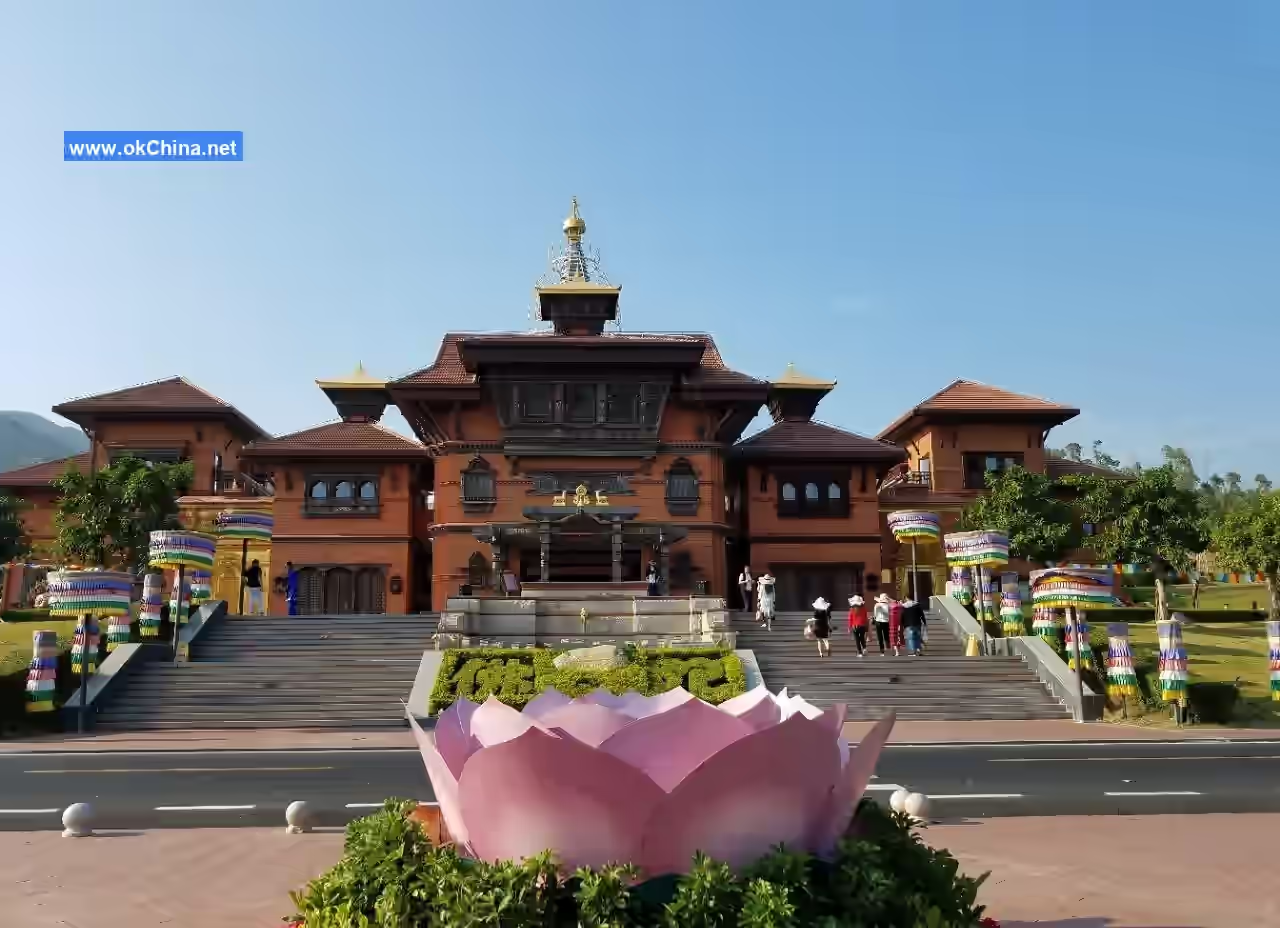
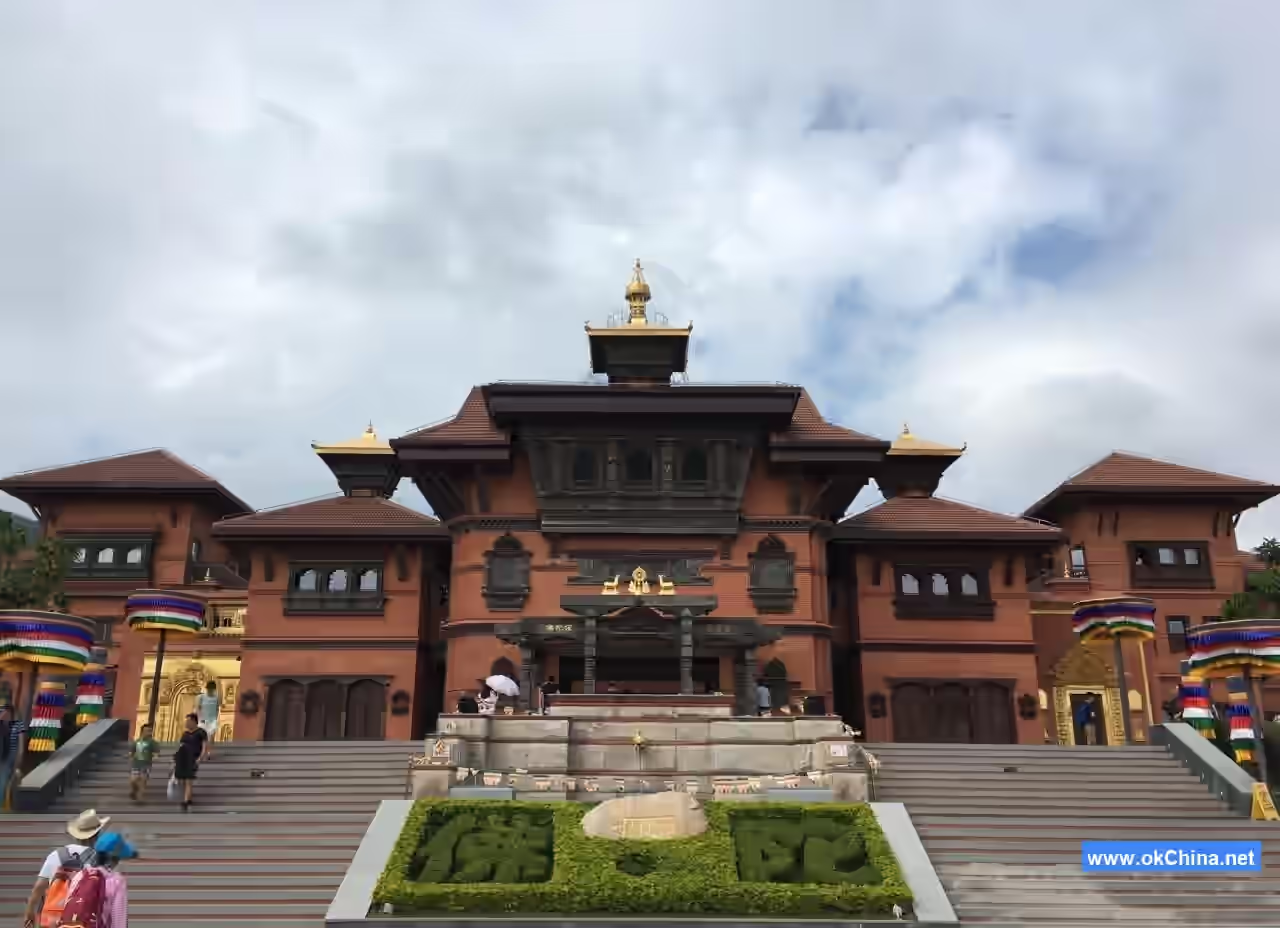
The Thirty-Three Guanyin Hall rests against the twin peaks of Nanshan, embraced by hills on the left and right, facing the vast expanse of blue waves. It is the center of Nanshan's dragon vein and a feng shui treasure land. It is a Buddhist cultural site integrating the display of Guanyin culture, the Dragon Fifth Master wealth god culture, and folk culture. Covering an area of 3,300 square meters, it was built with an investment of over 60 million yuan and meticulously crafted by more than 130 artisans. The hall mainly enshrines the group statues of the thirty-three manifestations of Guanyin Bodhisattva, the relief depicting Guanyin Bodhisattva overcoming three calamities and eight difficulties, the world's first wealth god Dragon Fifth Master, and the world's first treasure-gathering basin. Among them, the "World's Largest Group Statues of Thirty-Three Guanyin" and the "World's First Treasure-Gathering Basin" have been recorded in the Guinness World Records as world heritage treasures.
The group of thirty-three Guanyin statues is 50 meters long and weighs 15 tons, making it the largest and most exquisitely crafted indoor Guanyin group statue in the world. The thirty-three statues of Guanyin's manifestations stand majestically above a 50-meter-long flowing colored water system, each with a different posture, solemn yet benevolent, as if the true form of the Bodhisattva has appeared in the world to benefit sentient beings and save all beings.
The thirty-three manifestations of Guanyin Bodhisattva represent numerous different wishes in the human world. Devotees pray for Guanyin Bodhisattva's protection to bring peace and happiness to the people, social harmony, happiness, and national prosperity. The cultural projects within the Thirty-Three Guanyin Hall are rich in profound philosophical meanings. While visiting, people can gain enlightenment, receive life teachings, elevate their thoughts, purify their hearts, and feel joyful.
3.4 Nanshan Temple
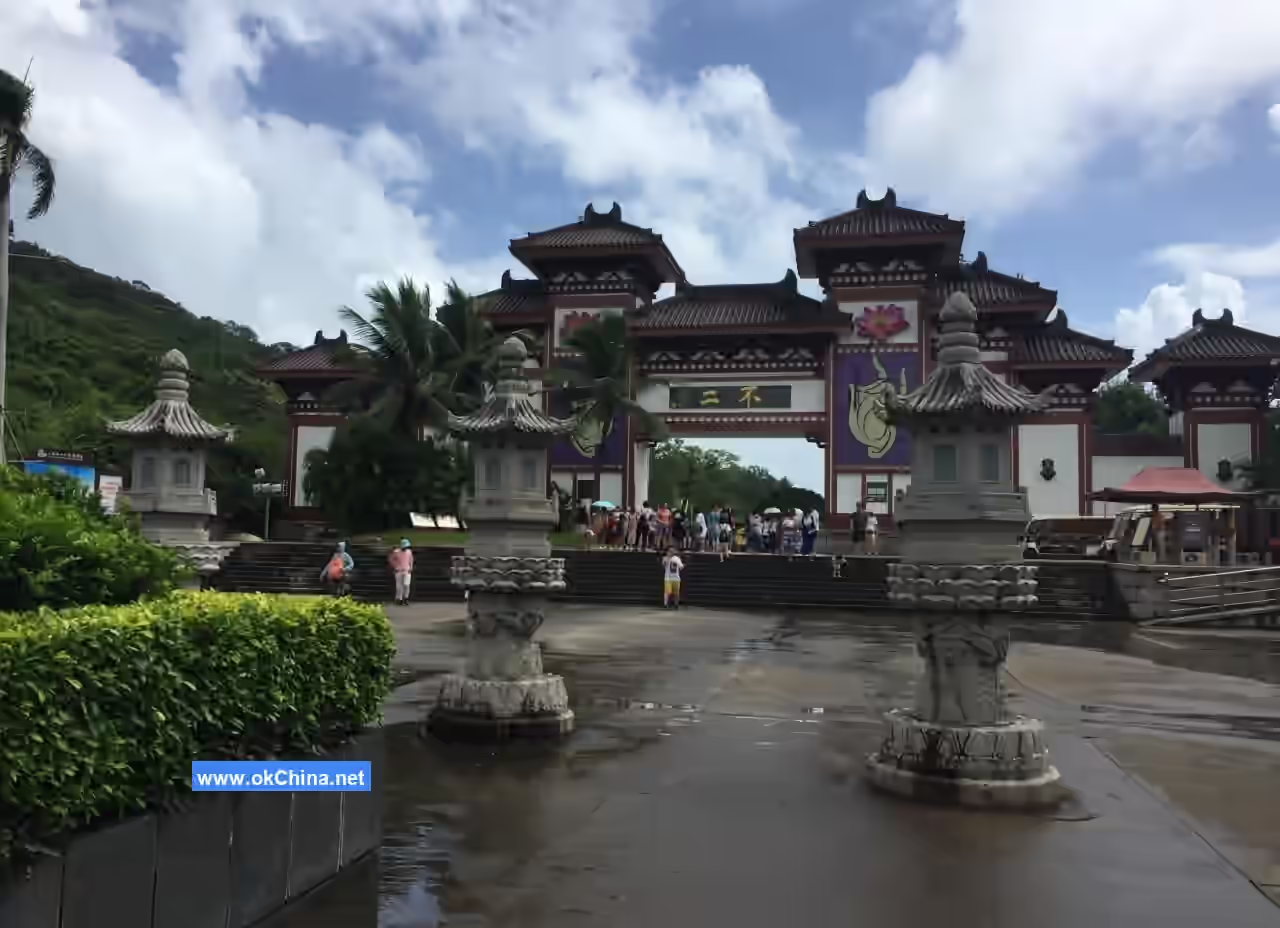
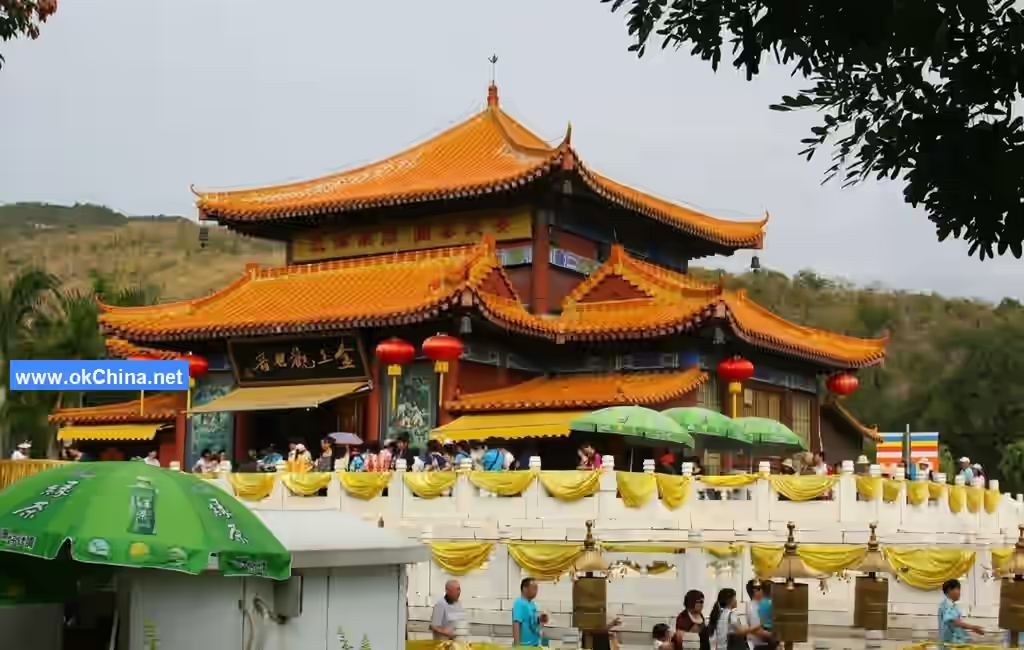
Nanshan Temple is located within the Nanshan Cultural Tourism Zone in Sanya. It is a large monastery built in the style of the High Tang Dynasty, situated on a mountain facing the sea. Nanshan Temple was personally selected by the late President of the Chinese Buddhist Association, Zhao Puchu, and was approved by the State Administration for Religious Affairs. Its foundation was laid on November 11, 1995, and it was completed on April 12, 1998. After completion, layman Zhao Puchu personally inscribed the names "Nanshan Temple" and "Haitian Conglin." The existing Tang-style architectural complex includes the Renwang Hall, Heavenly King Hall, Bell Tower, Scripture Repository, East and West Climbing Corridors, East and West Side Halls, and the Golden Hall, with a total construction area of 5,500 square meters. The entire complex is grand and majestic, making it the largest newly built Buddhist site in China in the past fifty years and also the largest temple in southern China.
3.4.1 Renwang Gate
Nanshan Temple is divided into three main halls. The Renwang Gate is the first hall, equivalent to the "Three Gates" in general temples. It enshrines the Vajra Guardians, the guardians of the temple. According to the Buddhist sutra "Renwang Huguo Bore Boluomiduo Jing," the two Vajra Guardians were granted the title "Renwang" for their merit in protecting the Dharma. Therefore, Nanshan Temple, in imitation of Tang style, does not call it the "Three Gates" but names it the "Renwang Gate" after the two Vajra Guardians.
3.4.2 Tusita Inner Court
The Tusita Inner Court is the second hall. "Tusita" is the name of a realm or heaven, translated as "satisfied," "wonderfully satisfied," "knowingly satisfied," or "joyfully satisfied." It is a heavenly realm within the desire realm. In Buddhism, it is considered the fourth of the six heavens in the desire realm, divided into an inner court and an outer court. The inner court is the pure land of Maitreya Bodhisattva, while the outer court is the place of heavenly beings' pleasures. Here, seven Buddha statues are enshrined. The main statue is the Crowned Maitreya, flanked by the Great Wonderful Appearance Bodhisattva and the Dharma Garden Forest Bodhisattva, with the Four Heavenly Kings as protectors surrounding them.
3.4.3 Golden Hall
The main hall of Nanshan Temple is called the Golden Hall. The three main statues enshrined in the Golden Hall represent the "Horizontal Three Buddhas" in terms of space. The central statue is Sakyamuni, the founder of Buddhism in our present world, the Saha World. His left attendant is Manjusri Bodhisattva, and his right attendant is Samantabhadra Bodhisattva. The main statue on the left is the master of the Eastern Pure Lapis Lazuli World, Medicine Buddha. On the halo behind Medicine Buddha are three Buddha statues, symbolizing the Three Saints of the East, with Medicine Buddha as the master. His left attendant is Suryaprabha Bodhisattva, and his right attendant is Candraprabha Bodhisattva. In past lives while practicing the Bodhisattva path, Medicine Buddha made twelve great vows to fulfill all wishes of sentient beings, relieve them from all sufferings, and grant them liberation. The main statue on the right is the master of the Western Pure Land of Ultimate Bliss, Amitabha Buddha. On the halo behind Amitabha Buddha are three Buddha statues, symbolizing the Three Saints of the West, with Amitabha Buddha as the master. His left attendant is Guanyin Bodhisattva, and his right attendant is Mahasthamaprapta Bodhisattva. The Western Pure Land of Ultimate Bliss is the blissful paradise that people aspire to. On both sides of the Golden Hall are the Sixteen Arhats, known as the Sixteen Venerable Ones at that time, which is the earliest group of Arhats circulated in China.
3.5 Longevity Valley
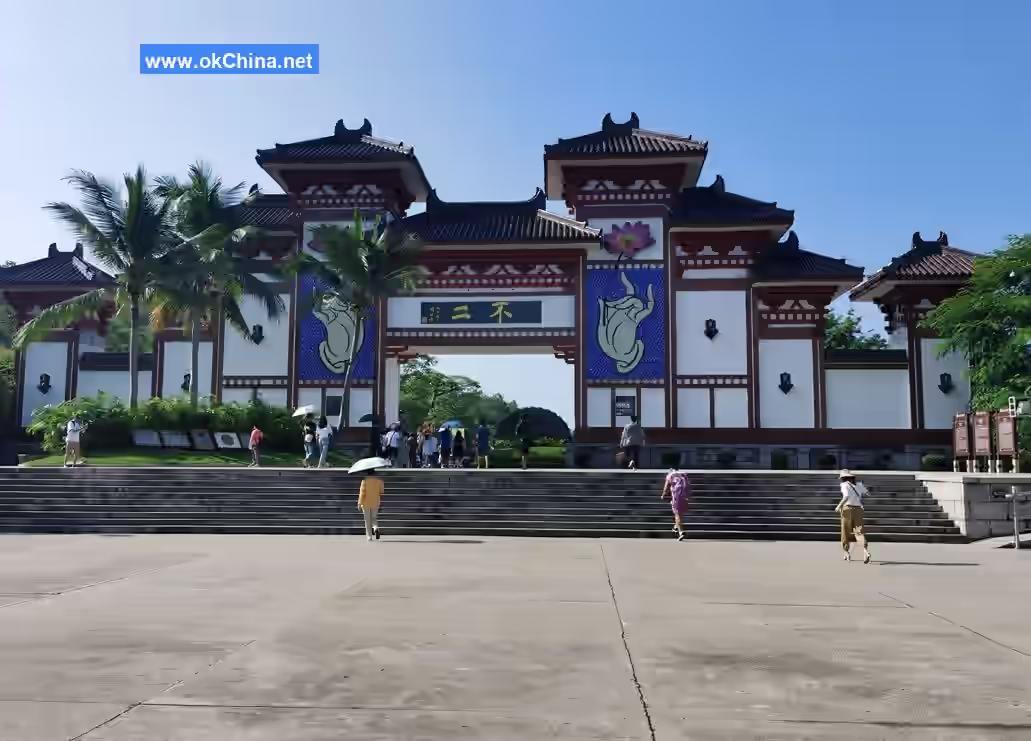
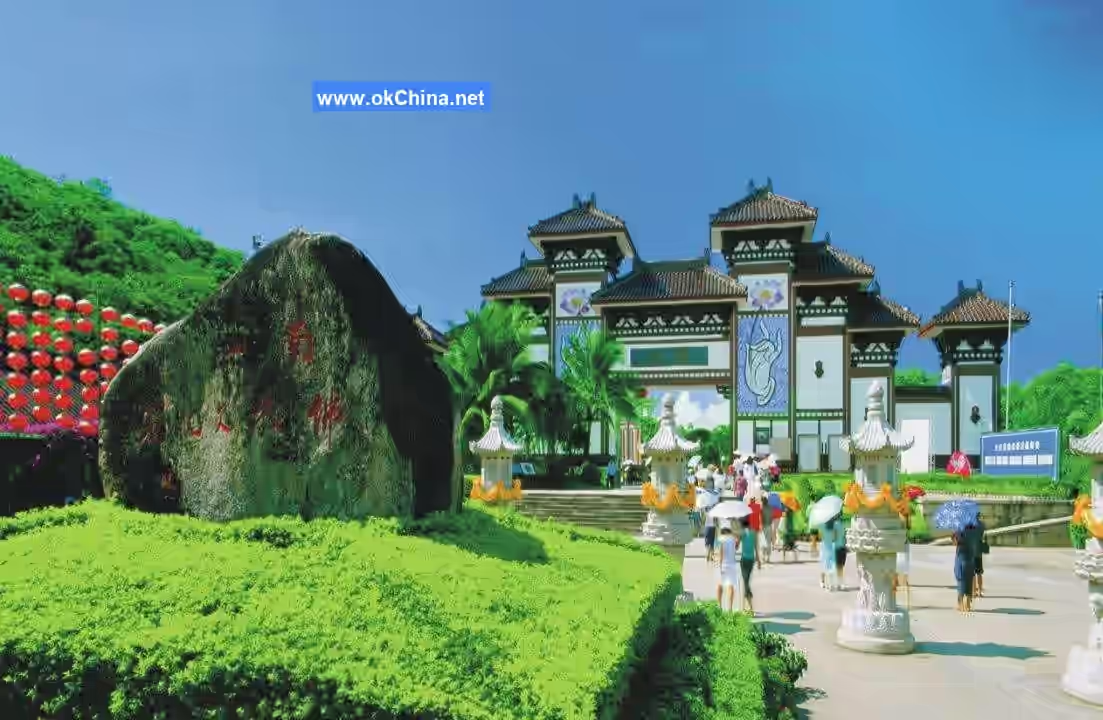
Longevity Valley extends over 2,000 meters in length with a vertical height of about 200 meters. The valley is rich in natural plant types, with numerous strange rocks standing tall, presenting a charming tropical rainforest landscape. Based on orientation and landscape features, it is mainly divided into the gate landscape area, the source landscape area, and the scenic route along the valley. It includes numerous attractions such as mango forests, century-old ancient trees, the Three Pines of Longevity, the Hall of Hundred Longevity, and the Hundred-Year Steps.At the entrance of Longevity Valley stands an archway in the Ming and Qing architectural style, simple yet elegant in design. The four large characters "Ao Shan Shou Gu" (Mount Ao Longevity Valley) inscribed on it were written by Mr. Wu Dongming, a renowned calligrapher from Hainan. Legend has it that the giant turtle, the mount of Guanyin (the Goddess of Mercy), arrived at the shores of Nanshan and discovered this paradise—a land of outstanding natural beauty and talented people, where the inhabitants lived to a ripe old age. The giant turtle then drank deeply from the waters of the South China Sea and settled in this blessed land, forming what is now Nanshan. When viewed from above, Nanshan resembles the shape of a turtle. In ancient times, Mount Ao was regarded as a symbol of longevity, hence the name "Ao Shan Shou Gu." The spring water from the eastern foothills of Nanshan flows gently down, irrigating the land below. Those who drink the water and live on the land of Nanshan are known for their longevity.
3.6 Wishing Tree
In the blessed land of Sanya Nanshan, making wishes is a beloved folk custom. At the "Elephant Sculptures" attraction, twelve lifelike stone elephants, each with a unique posture, provide enjoyment for both adults and children. According to Buddhist scriptures, before becoming the Buddha, Shakyamuni was once a six-tusked white elephant. Thus, elephants have long been regarded as auspicious symbols in Buddhism. Here, the twelve elephants represent the twelve months of the year, symbolizing good fortune every month.
The place where these auspicious elephants reside has gathered the spiritual energy of heaven and earth for over a century. Here grows a lush forest of tamarind trees, each robust and vigorous, resembling a web that showcases the vitality of life. Beneath this web, travelers from all corners of the world pass by. After visitors leave, they often leave behind their thoughts and wishes. Over time, the century-old tamarind trees have become wishing trees. On a "Wishing Tree" symbolizing good blessings, numerous prayer plaques inscribed with blessings by tourists hang, accumulating thousands of stories and becoming a cultural attraction over time.
3.7 Little Moon Bay
Nanshan Moon Bay Road is a colorful tourist pathway located between Nanshan Temple and Little Moon Bay. Nestled between mountains and the sea, it is secluded and mysterious. The pristine ancient trees and giant rocks are well-preserved, and a winding sea corridor leads to exquisite pavilions on the reefs. The sea breeze rustles through the tropical rainforest, where animals roam and birds fly, creating a magnificent tropical coastal landscape.
4. Related Culture
4.1 Cultural Background
The Nanshan Cultural Tourism Zone in Sanya has a long historical origin. According to Buddhist scriptures, Guanyin Bodhisattva made twelve great vows to save all living beings, with the second vow being the "Vow to Reside Permanently in the South Sea." During the Tang Dynasty, the renowned monk Jianzhen, on his eastward journey to Japan, and the Japanese monk Kukai, on his westward journey to study Buddhism, were both stranded in Nanshan due to typhoons. After resting and recuperating there, they successfully spread Buddhist teachings and pursued their studies. Due to the auspiciousness, spirituality, and miraculous nature of Nanshan, Buddhists have long regarded it as a blessed and sacred land.
4.2 Folk Culture
Every year on the fifth day of the Lunar New Year, it is traditionally believed to be the birthday of the God of Wealth, and people observe the custom of welcoming the God of Wealth. On this day, the Nanshan Cultural Tourism Zone in Sanya hosts a grand event to welcome the God of Wealth, attracting large numbers of tourists who come to pray for wealth and prosperity. The day features folk cultural activities such as lion dances, Qiong opera performances, Qiong theater exhibitions, lighting "gold ingot lanterns," and distributing God of Wealth posters and grains.
4.3 Buddhist Culture
Buddhism was introduced to Sanya over a thousand years ago. Since the Tang Dynasty, temples such as "Dayun Temple," "Guangdu Temple," "Tianyuan Temple," and "Tianning Temple" were built in the Sanya area. Legend has it that the waters around Nanshan have long been regarded as the patrol grounds of Guanyin. In local folklore, Wuzhizhou Island in the eastern sea was formed when Guanyin transformed a divine ox; the "Southern Sky Pillar" at Tianya Haijiao (the End of the Earth) is said to be the silhouette of Guanyin rescuing fishermen at sea; Dongmao Island and Ximao Island to the southeast of Nanshan are believed to be two baskets of soil spilled when Guanyin’s carrying pole broke while she was moving earth to fill the sea and save people from disasters; and the stone pillars and wells in Longqi Bay in western Meishan are remnants of Guanyin’s divine traces.
In September 1992, Sanya collectors Yuan Jinming and Yuan Jinhua discovered a peculiar stone on the eastern foothills of Nanshan. The stone measures 30 cm in length, 11 cm in width, and 3 cm in thickness. It is inscribed with the Tibetan six-syllable mantra "Om Mani Padme Hum" in both raised and sunken relief. After examination, it was identified as a "Sutra Stone" from the Tang Dynasty, used by monks to recite scriptures or as a temple treasure. The discovery of this "Sutra Stone" confirms that Tibetan Buddhism was introduced to Nanshan before the Tang Dynasty, demonstrating the historical connection between Nanshan and Buddhism.
5. Cultural Activities
5.1 Nanshan Temple Fair
The Nanshan Temple Fair is held annually from April to June in the Gregorian calendar at the Nanshan Cultural Tourism Zone in Sanya. It is a large-scale folk cultural event that integrates tourism, Buddhism, and local customs.
5.2 China Nanshan Cultural Longevity Festival
The China Nanshan Cultural Longevity Festival is held annually on the ninth day of the ninth lunar month (the Double Ninth Festival) at the Nanshan Cultural Tourism Zone in Sanya. The festival organizes diverse cultural activities centered on themes such as "longevity, health, life, sports, and tourism." The most influential events during the festival include centenarians hiking up Nanshan, photo exhibitions of elderly people, and large-scale cultural performances.
5.3 Ringing the Auspicious Bell to Welcome the New Year
At the Nanshan Cultural Tourism Zone in Sanya, an event to ring the auspicious bell and welcome the New Year is held annually at the end of the year. During the bell-ringing activity, the Auspicious Bell is struck 108 times, symbolizing the removal of 108 kinds of human troubles and the attainment of good fortune, peace, and harmony. Each of the 108 bell strikes carries a meaning and brings auspiciousness. As stated in Buddhist scriptures: "Hearing the bell, worries lighten, wisdom grows, and enlightenment increases." The 108 bell strikes represent people’s wishes for peace and safety.
5.4 Guanyin Bodhisattva Blessing Ceremony
On the nineteenth day of the second, sixth, and ninth lunar months each year, which respectively mark Guanyin Bodhisattva’s birthday, enlightenment day, and ordination day, grand blessing ceremonies are held at various Buddhist sites within the Nanshan Cultural Tourism Zone in Sanya.
Comments
Post a Comment