Nanhu Tourist Area in Jiaxing City
1. Introduction
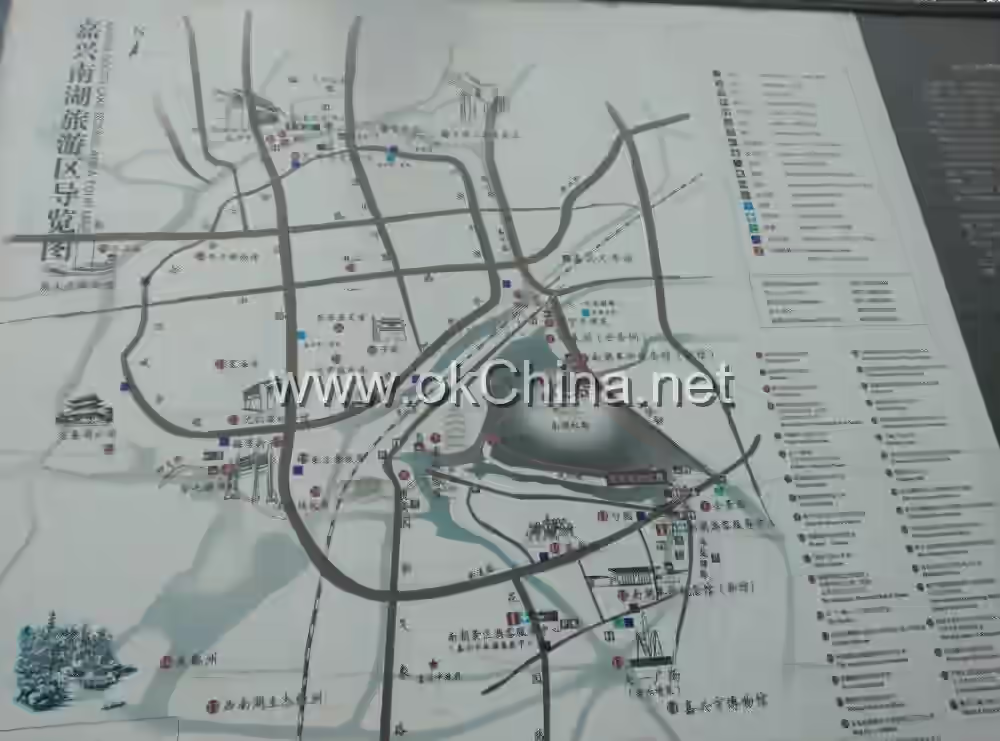
The Nanhu Tourist Area in Jiaxing City, abbreviated as Nanhu Tourist Area, is located at No. 1 Nanxi Road, Nanhu Street, Nanhu District, Jiaxing City, Zhejiang Province.
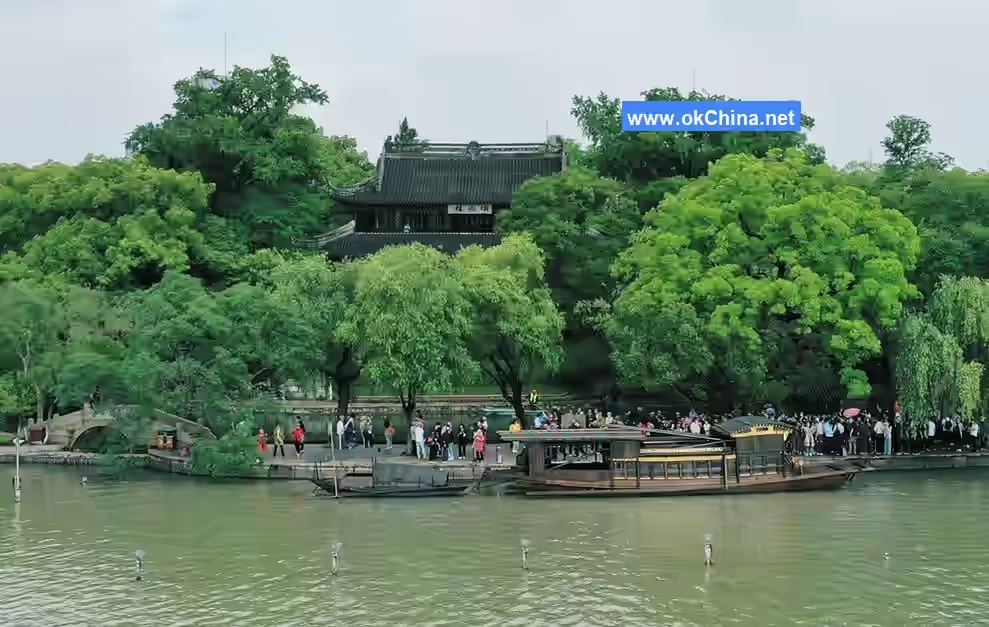
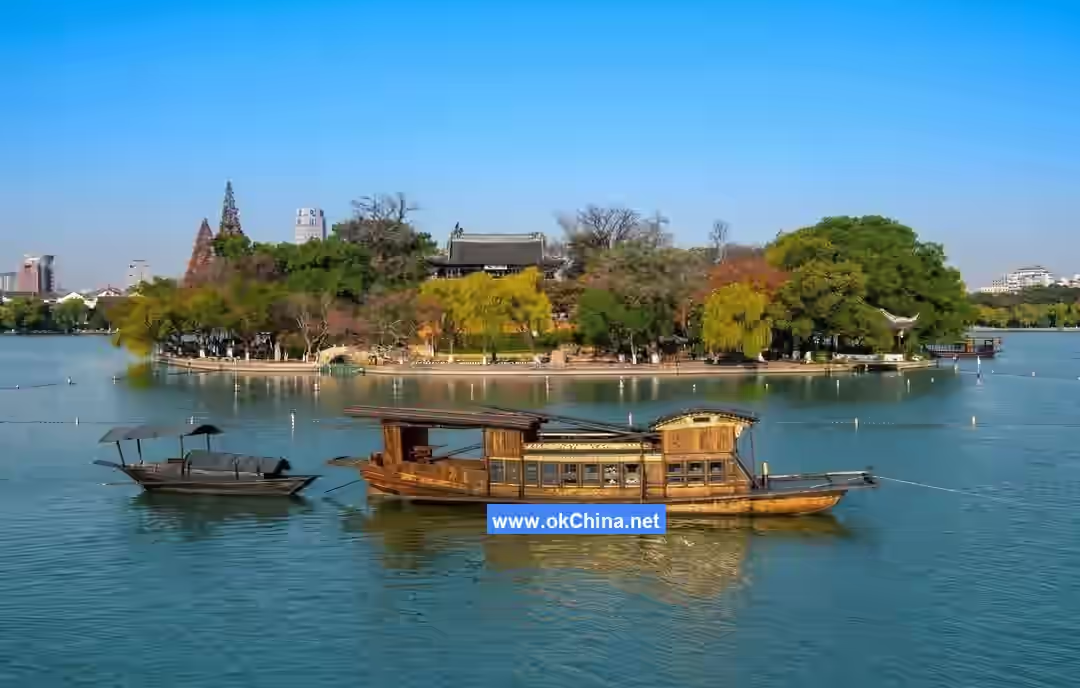
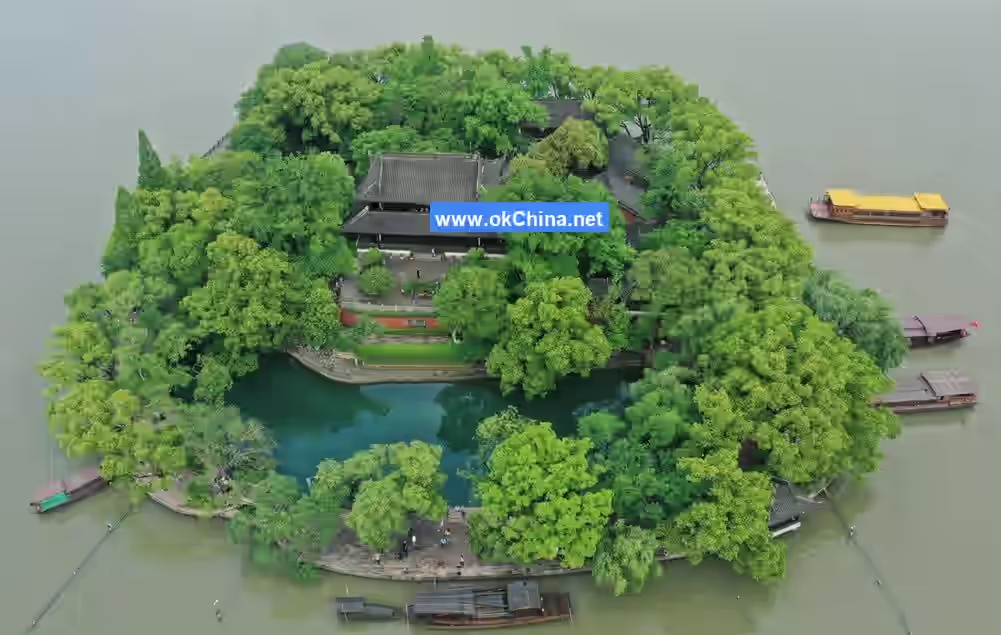
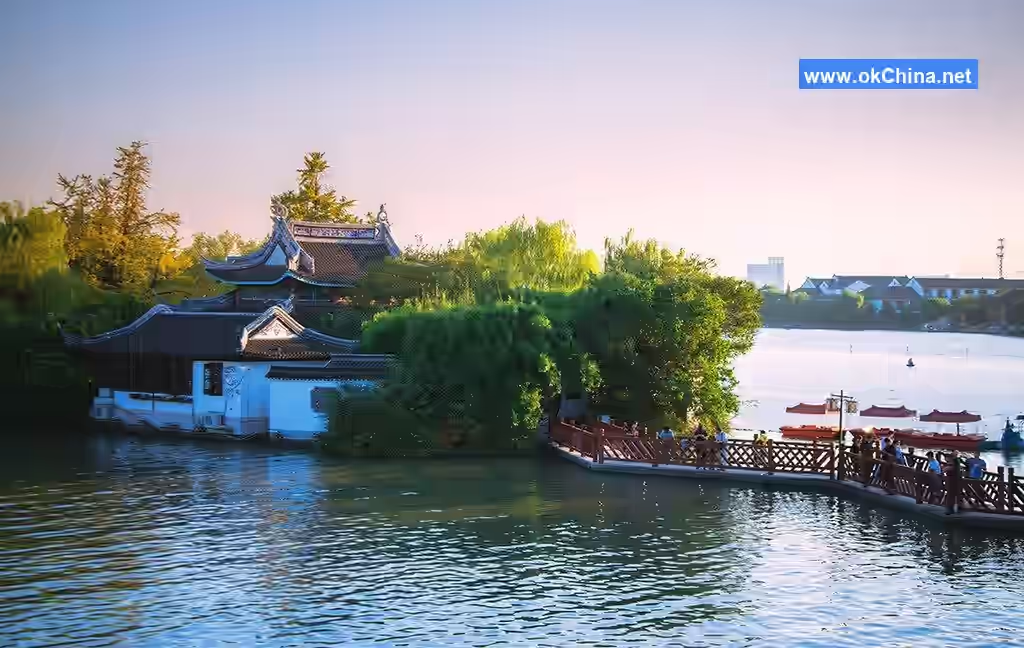
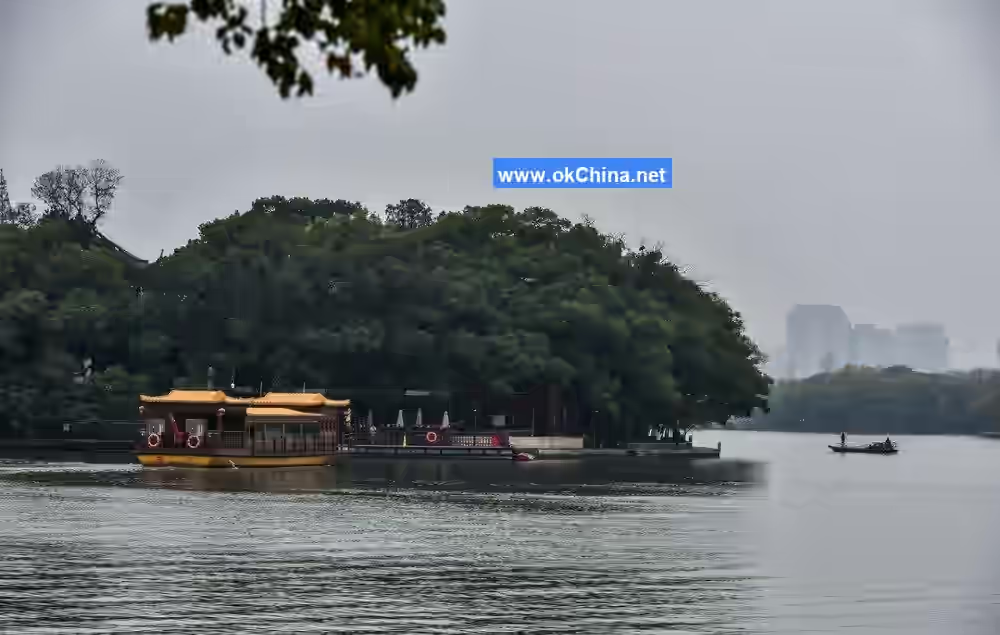
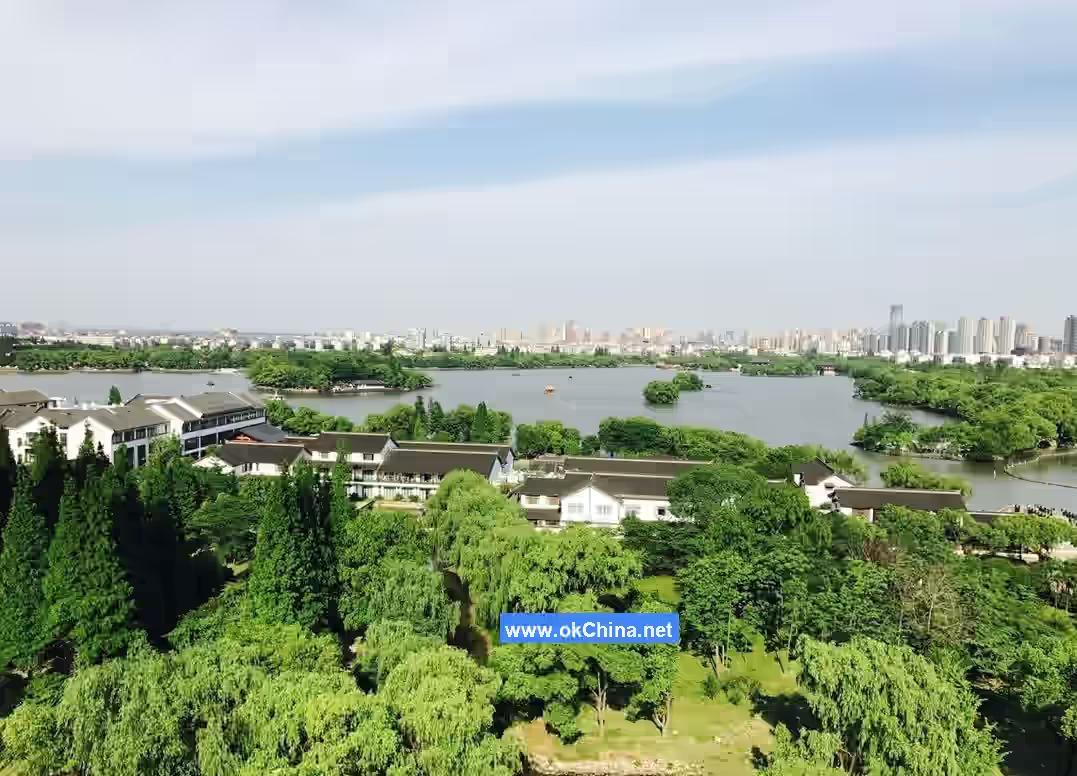
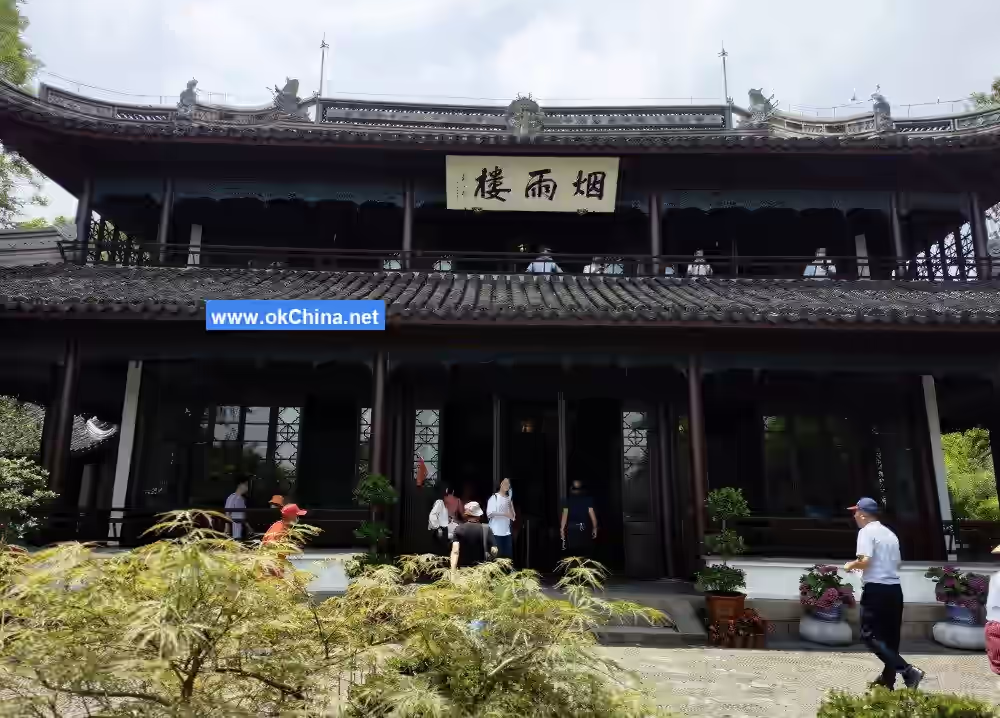
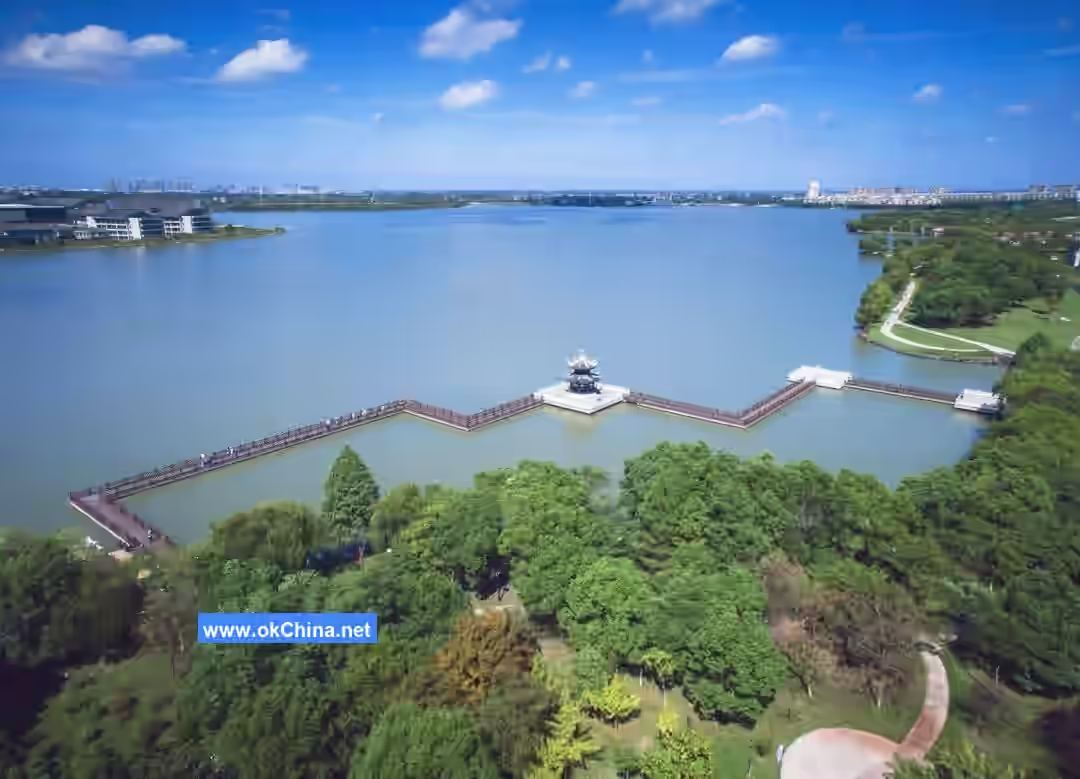
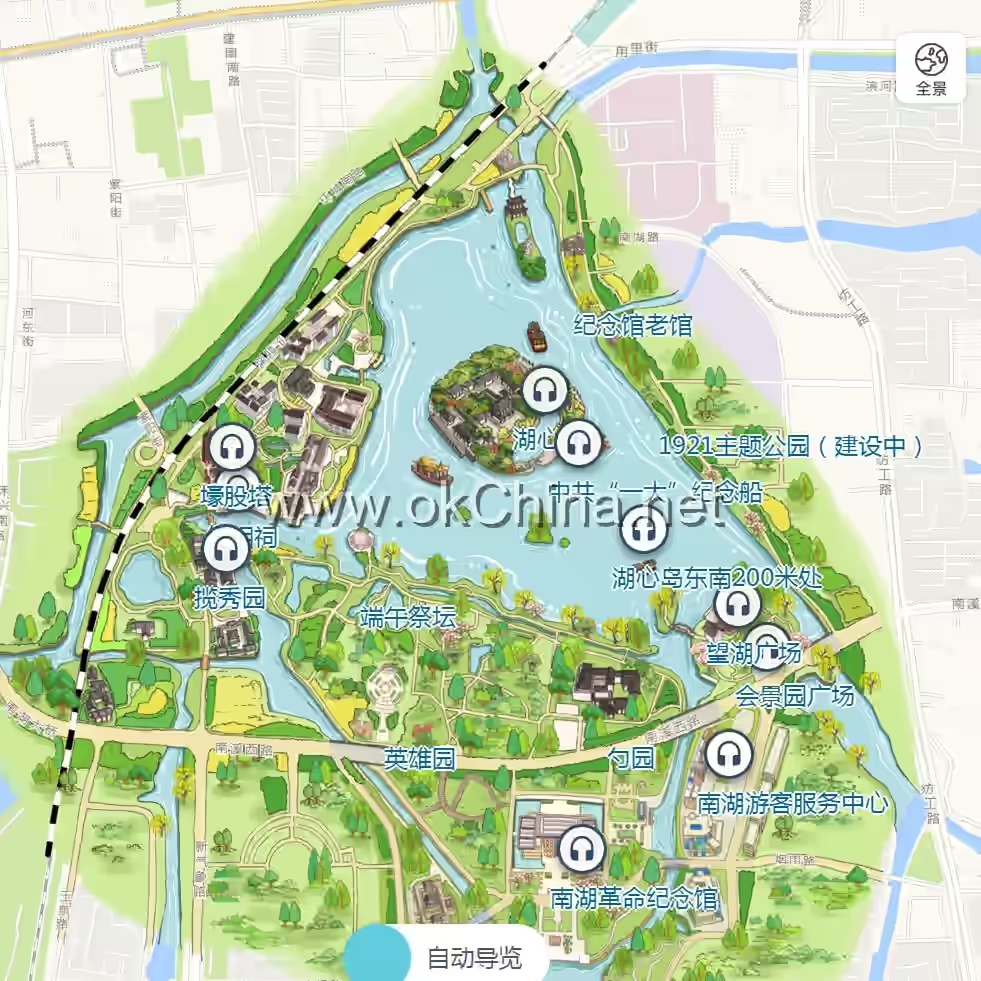
Jiaxing Nanhu, along with Nanjing's Xuanwu Lake and Hangzhou's West Lake, is known as one of the three famous lakes in the Jiangnan region. It has long been renowned worldwide for its enchanting scenery described as "light mist caresses the islets, a gentle breeze is about to arrive." Jiaxing Nanhu gets its name from its location south of Jiaxing city. Originally named Biao Lake, Machang Lake, or East Lake, and with a Southwest Lake (originally called Mandarin Duck Lake) located southwest of Jiaxing city, after Nanhu became a tourist destination, people often refer to it as Mandarin Duck Lake. The Nanhu Scenic Area is situated within the urban area of Jiaxing, with a total planned area of 276.3 hectares, of which 98 hectares is water area. Nanhu currently covers an area of over 600 mu (approximately 40 hectares), with two artificial islets in the lake. One is the Lake Center Islet, covering less than 18 mu (about 1.2 hectares), featuring ancient garden architectural complexes such as the Misty Rain Tower, along with pavilions, terraces, towers, artificial hills, and winding corridors, arranged in a balanced and picturesque manner, like a brilliant pearl set in Nanhu. The other small islet, located in the northeast corner of Nanhu, is the Cangsheng Shrine, also known as the Small Misty Rain Tower.
On September 6, 2011, the National Tourism Administration approved the Nanhu Tourist Area as a National AAAAA-level Tourist Attraction.
2. Development History
Nanhu is one of the three famous lakes in Zhejiang, named for its location south of Jiaxing city. It was originally called Biao Lake, Lu Wei Pond, and Machang Lake. Nanhu is divided into East and West Lakes, resembling a pair of mandarin ducks with necks intertwined. In ancient times, mandarin ducks often inhabited the lake, hence its alternative name, Mandarin Duck Lake. Situated in the water network area of the Taihu Lake basin, the surrounding terrain is flat with crisscrossing rivers and harbors. The lake receives water from Changshui Pond, Haiyan Pond, and Hangzhou Pond, and discharges into Pinghu Pond, Jiashan Pond, and Suzhou Pond. Its terrain resembles the Bagua (Eight Trigrams), earning it the elegant title "Land of Beautiful Waters and Good Fortune." Since the Tang Dynasty, Nanhu, with its captivating scenery of "light mist caressing the islets, a gentle breeze about to arrive," has become a famous tourist destination in Jiangnan. From the Song Dynasty onwards, Jiaxing Nanhu became renowned alongside Hangzhou's West Lake and Shaoxing's East Lake as one of Zhejiang's three famous lakes. During the Ming Dynasty, with the prosperity of commerce in Jiangnan, Jiaxing was hailed as a major metropolis east of the Yangtze River, and tourism at Nanhu flourished even more.
For thousands of years, Nanhu has attracted visitors from all directions with its unique charm. Scholars and literati throughout history have left countless moving poems and exquisite paintings inspired by Nanhu. Today, the islets still preserve many inscriptions and stone carvings of high cultural value, including: a genuine poem stele by Mi Fu, one of the Four Great Masters of Song Dynasty calligraphy; the "Horse Voucher Stone Carving" by Song Dynasty poet Su Dongpo; the "Bamboo in the Wind Painting" by Wu Zhen, one of the Four Great Masters of Yuan Dynasty painting and calligraphy; the "Land of Fish Happiness" stele by the great Ming Dynasty calligrapher Dong Qichang; and the handwritten "Misty Rain Tower" inscription by Qing Dynasty calligrapher Ji Yinglong, among others. The famous Song Dynasty poet Su Dongpo visited Nanhu three times and composed four poems, leaving behind the exquisite lines: "I hear of the bends of South Lake, where lotus blooms like brocade unfold. How comes that after one night's rain, only vast water meets the eye?" The renowned Qing Dynasty scholar Zhu Yizun wrote over one hundred "Mandarin Duck Lake Boat Songs" about Nanhu's water, boats, and beautiful scenery, vividly depicting its charm. Emperor Qianlong of the Qing Dynasty made six southern tours and personally visited Nanhu eight times (twice revisiting on his return journey to the capital). Two imperial steles remain on the islet, inscribed with fourteen poems left by Qianlong.
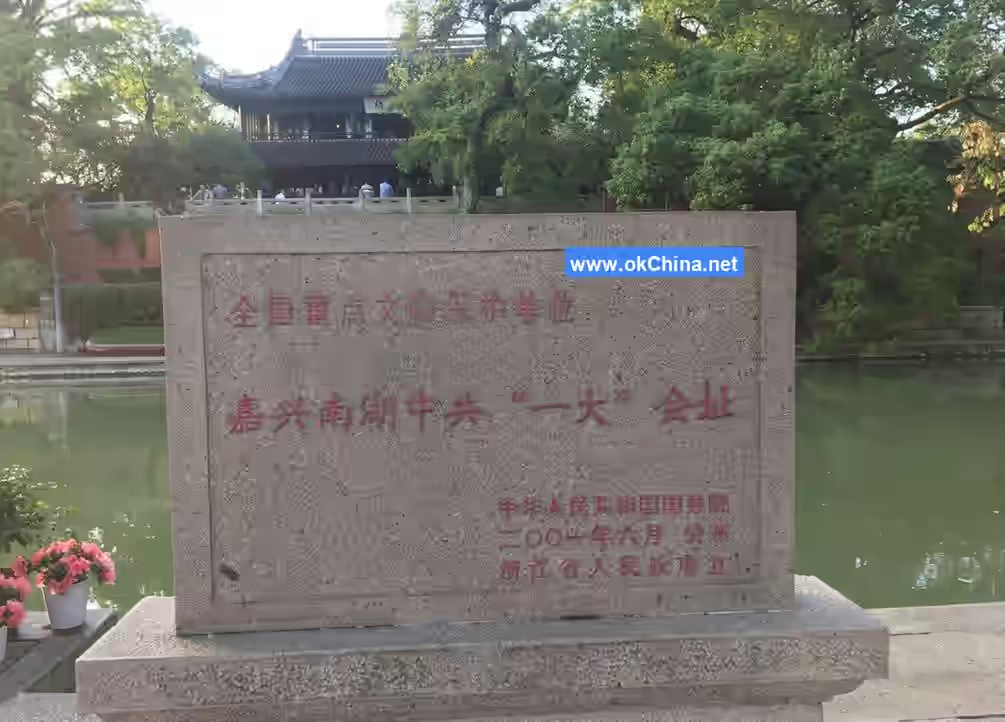
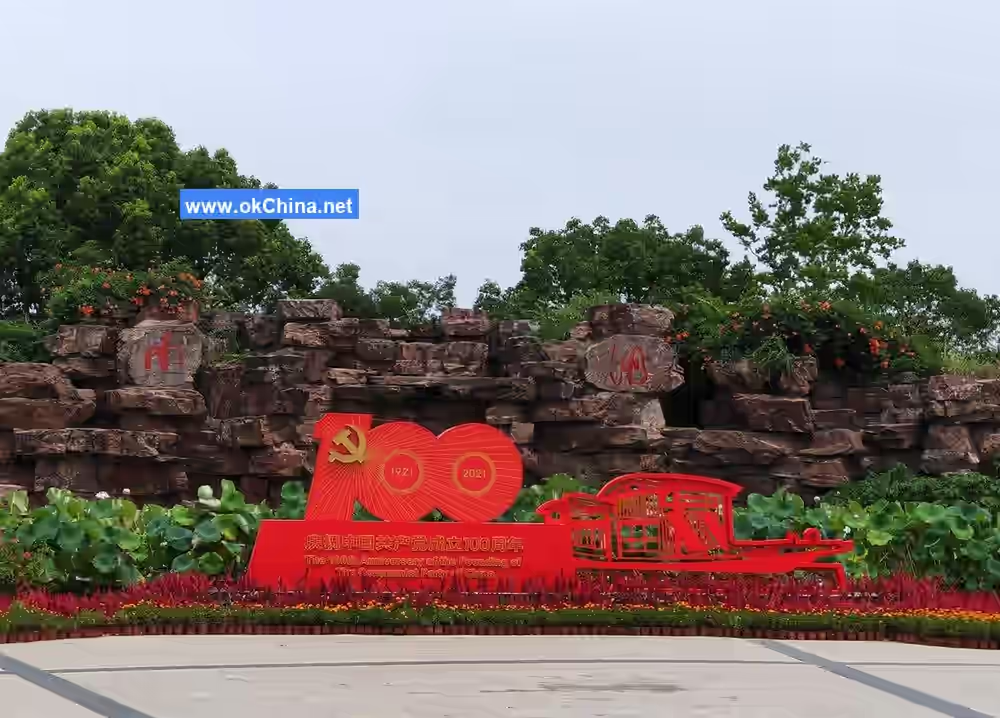
However, the more significant reason for Nanhu's widespread fame and global attention is that a groundbreaking event in modern Chinese history occurred here—the continuation of the First National Congress of the Communist Party of China on an ordinary pleasure boat on Jiaxing Nanhu, where the final agenda was completed, solemnly proclaiming the birth of the Communist Party of China to the world. The ship of the Chinese revolution set sail from here. Jiaxing Nanhu is immortalized in history as part of the site of the First CPC National Congress and the birthplace of the Communist Party of China, renowned both domestically and internationally, becoming a revolutionary sacred site yearned for by people across the nation.
The Nanhu Scenic Area is a National AAAAA-level scenic spot, a national classic red tourism attraction, a famous tourist area on the East China tourism route, and one of the national hundred patriotic education demonstration bases. Simultaneously, the Nanhu Scenic Area is also a Party member education base, a clean government culture base, and an integrity scenic area in Zhejiang Province.
3. Geographical Environment
3.1 Location and Territory
The Nanhu Tourist Area is located at No. 1 Nanxi Road, Nanhu Street, Nanhu District, Jiaxing City, Zhejiang Province.
3.2 Topography and Landforms
Nanhu covers an area of just over 800 mu (approximately 53 hectares). It was formed by the confluence of various canals, receiving water from Changshui Pond and Haiyan Pond, and discharging into Pinghu Pond and Changqian Pond. The terrain around Nanhu is low and flat, with a network of rivers and harbors.
3.3 Climate Environment
Nanhu District is located on the southern edge of the northern subtropical zone, within the East Asian monsoon region. It experiences significant alternation of winter and summer monsoons, distinct four seasons, moderate temperatures, abundant rainfall, and ample sunshine. It features spring humidity, summer heat, autumn dryness, and winter cold. Due to its mid-latitude location, the hot, humid, and rainy summer weather is much shorter than the dry winter weather.
3.4 Hydrological Characteristics
Nanhu was formed by the confluence of various canals, receiving water from Changshui Pond and Haiyan Pond, and discharging into Pinghu Pond and Changqian Pond. The terrain around the lake is low and flat, with a network of rivers and harbors. The lake is long from north to south and narrow from east to west, with a water area of about 624 mu (approximately 41.6 hectares) and a depth of 2 to 4 meters.
4. Main Attractions
4.1 Nanhu Revolutionary Memorial Hall
4.1.1 Overview
The Nanhu Revolutionary Memorial Hall was established in 1959 as the protection and management institution for the Jiaxing Nanhu site of the First CPC National Congress. In September 1985, Comrade Deng Xiaoping personally inscribed the name of the memorial hall. In June 1991, the people of Jiaxing raised over 3.6 million yuan to build a new Nanhu Revolutionary Memorial Hall on the shore of Nanhu. Viewed from above, the memorial hall resembles a large Party emblem pattern. It covers an area of 3,800 square meters with a floor area of 1,980 square meters. The exhibition halls display the basic historical exhibition "The Epoch-making Event: The First National Congress of the Communist Party of China," supplementary thematic exhibitions, and some revolutionary relics. In 1997, the Nanhu Revolutionary Memorial Hall was named one of the national hundred patriotic education demonstration bases by the Publicity Department of the CPC Central Committee.
4.1.2 Historical Retrospective
After its establishment, many central leaders and prominent figures visited Nanhu. On April 5, 1964, Dong Biwu inspected Nanhu, boarded the revolutionary memorial boat, and inscribed a poem for Nanhu. On May 19 of the same year, Guo Moruo inspected Nanhu and also inscribed a poem. In 1961 and 1981, the Nanhu Revolutionary Memorial Hall twice solicited inscriptions and works from central leaders, calligraphers, and painters. In August 1963, Soong Ching-ling sent an inscription. Later, revolutionary veterans such as Nie Rongzhen and Xu Xiangqian also sent inscriptions. In September 1985, Deng Xiaoping inscribed the name for the Nanhu Revolutionary Memorial Hall. The hall currently treasures over 300 pieces, including inscriptions by central leaders and works by famous calligraphers and painters such as Liu Haisu and Sha Menghai.
4.2 Huijing Garden (Scenery Gathering Garden)
4.2.1 Overview
During the Jiading period of the Southern Song Dynasty, Pan Shidan, a Minister of the Song court, had a private garden by Jiaxing Nanhu called "Huijing Pavilion" (Scenery Gathering Pavilion), from which Huijing Garden gets its name. Pan Shidan served as the prefect of Xiuzhou in his early years. He fell in love with the beautiful scenery of Nanhu and, before reaching old age while serving as a Minister, resigned his official post to build pavilions and gardens by the lake. There were ten scenic spots: South Dock, Crabapple Pavilion, White Lotus Pond, Peach Blossom Pavilion, Red Rose Path, Tea Stream, Crane Pavilion, Lotus Pond, White Ramie Bridge, and Fishing Inlet. Based on the names of these ten spots, one can imagine the scale of this garden in its time. Zhang Yaotong, a contemporary of Pan Shidan, wrote in his "One Hundred Poems of Jiahe - Huijing Pavilion": "Scenes beyond words to tell, one must come to this water's edge. The full color of flowers and birds, gathered into a pavilion of spring." From the poem's description, it seems the scenery of Nanhu was monopolized by Huijing Pavilion, truly a riot of color and a scene of radiant spring.
4.2.2 Attraction Introduction
Designers and builders of classical Chinese gardens have always emphasized using various techniques in garden construction and scenery creation to represent nature, aiming to achieve an ideal realm of gradually entering a beautiful scene, seeing the grand in the small, and experiencing changing views with every step. These techniques include screening views, leaky views, opposing views, and borrowed views. Many traditional gardens often use rockeries, screen walls, and other landscaping techniques at the entrance to suppress the view first before revealing it, allowing visitors to gradually enter the beautiful scene inadvertently, thus achieving the excellent effect of "mountains multiply, streams double back—I doubt there's a road; willows darken, blossoms brighten—another village appears." The rockery at the entrance square of Huijing Garden cleverly employs the "view suppression" technique from Jiangnan garden landscaping. The rockery at the entrance square is piled up using over 300 tons of yellow stone, with the characters "Nanhu" (South Lake) on it inscribed by Guo Moruo.
4.3 Lake Center Islet
4.3.1 Overview
The Lake Center Islet is located in the center of Nanhu, covering an area of 17 mu (approximately 1.13 hectares). In the 27th year of the Jiajing era of the Ming Dynasty (1548 AD), Zhao Ying, the prefect of Jiaxing, organized the dredging of the city river and used the silt to build up the islet. The following year, the Misty Rain Tower was relocated to the islet. After the Qing Dynasty, structures such as the Qinghui Hall, Solitary Cloud Lodge, Little Penglai, Laixu Pavilion, Jian Pavilion, Treasure Plum Pavilion, East and West Imperial Stele Pavilions, and Fangzong Pavilion were successively built, forming an ancient garden architectural complex centered around the Misty Rain Tower. Pavilions, terraces, towers, artificial hills, winding corridors, ancient trees, and stone inscriptions are arranged in a picturesque disorder, making it a typical Jiangnan garden.
4.3.2 Attraction Introduction
Having a nearly natural lake within a city is truly precious. And the most important building on the Lake Center Islet is undoubtedly the Misty Rain Tower. Located beside the Red Boat on Nanhu, the Misty Rain Tower is, in fact, the core and symbol of Nanhu. The Misty Rain Tower was first built during the Later Jin period of the Five Dynasties, initially on the shore of Nanhu. It was not until the Jiajing era of the Ming Dynasty that it was relocated to its current position on the Lake Center Islet.### 4.4 The Red Boat on South Lake
4.4.1 Overview
Jiaxing South Lake is renowned not only for its beautiful misty and rainy scenery but also for being the site where the First National Congress of the Communist Party of China successfully concluded, making it a significant revolutionary memorial site in modern Chinese history. On July 23, 1921, the First National Congress of the Communist Party of China was secretly convened at No. 106 Wangzhi Road (now No. 76 Xingye Road) in the French Concession of Shanghai. Thirteen delegates attended the meeting, representing seven early communist organizations across the country with over 50 members. The meeting was forced to adjourn midway due to a raid by French Concession police.
4.4.2 Historical Retrospective
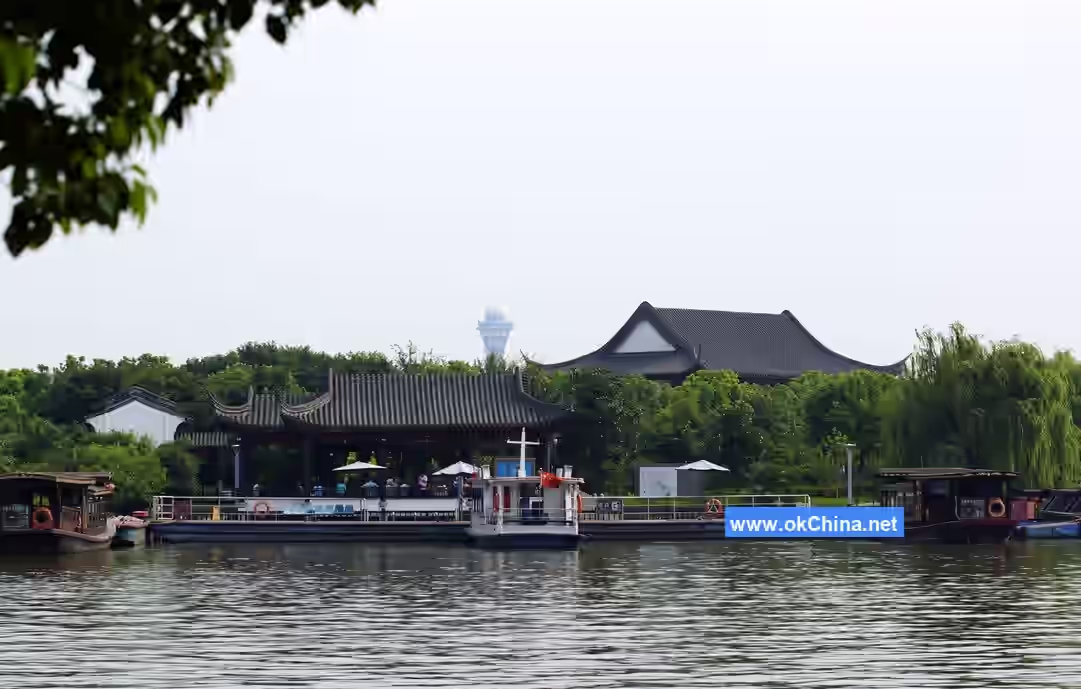
Following the suggestion of Wang Huiwu, wife of Shanghai delegate Li Da, the Congress relocated to a pleasure boat on Jiaxing South Lake to continue its proceedings. Wang Huiwu, a native of Wuzhen, Tongxiang, Jiaxing, had studied at Jiaxing Women's Normal School and was very familiar with Jiaxing and South Lake. She also arranged the logistics for moving the Congress to South Lake. In early August, the delegates took an early morning train from Shanghai North Station to Jiaxing. Led by Wang Huiwu, they took a ferry to the lake's central island and then transferred to a small towboat that brought them to the pre-booked pleasure boat for the meeting. This boat was a single-aisle silk-net boat (made in Wuxi), approximately 16 meters long and 3 meters wide, with a broad, flat bow. It contained a front cabin, central cabin, room cabin, and rear cabin, connected by an aisle on the right side. The meeting was held in the central cabin, while Wang Huiwu kept watch at the bow. Under the pretext of sightseeing, the delegates had the boat owner anchor in a quiet area about 200 meters southeast of the Misty Rain Tower. Around 11 a.m., the South Lake session of the First Congress officially began. The meeting first reviewed and adopted the first program and the first resolution of the Communist Party of China. Through a secret ballot, Chen Duxiu, Zhang Guotao, and Li Da were elected to form the party's national leading body—the Central Bureau, with Chen Duxiu as its secretary, Zhang Guotao in charge of organization, and Li Da in charge of propaganda. Around 6 p.m., the meeting completed all its agenda items and successfully concluded, solemnly proclaiming the founding of the Communist Party of China. At the closing of the Congress, all delegates softly voiced the strongest call of the era: "Long live the Communist Party! Long live the Third International! Long live Communism!" After the meeting, the delegates quietly left the boat one by one and dispersed from Jiaxing that night, carrying the spark of revolution across the country. From then on, Chinese history entered a completely new chapter.
4.5 Heroes' Garden
4.5.1 Overview
The Jiaxing Revolutionary Martyrs Cemetery, also known as the Heroes' Garden, was first built in 1969. Its original site was at the Three Pagodas in the city center, constructed after the founding of the People's Republic to commemorate the revolutionary martyrs who heroically sacrificed their lives for the liberation of Jiaxing. Due to urban planning, it was relocated to the South Lake Scenic Area in May 1996. Situated within the Nanxi Garden of the South Lake Scenic Area, it covers an area of 30.1 mu. To better commemorate the martyrs, educate future generations, enhance the memorial, commemorative, and educational functions of the cemetery, and improve the overall image of the South Lake Scenic Area, a comprehensive renovation of the cemetery began in December 2005. Lasting over four months with an investment of more than 6 million yuan, the project was completed and opened to the public before the Qingming Festival in 2006.
4.5.2 Attraction Introduction
The renovation of the entire garden area is divided into five parts: the entrance, the monument, the square, the martyrs' tomb area, the exhibition hall, and the surrounding environment.
4.6 Lanxiu Garden
4.6.1 Overview
Lanxiu Garden is located on the west side of Jiaxing South Lake, covering an area of over 11,300 square meters. The name "Lanxiu" (Grasping Elegance) comes from The General Annals of Zhejiang: "The Xiushui River meets the Hudu in the east, controls the Yuxi in the west, embraces the Juqu region, uniquely grasping its elegance." It is a thematic park focusing on cultural relics and stone inscriptions within the South Lake Scenic Area. Many inscriptions in Lanxiu Garden are by famous calligraphers and painters from various dynasties, such as Wen Zhengming, Zhao Zhiqian, He Shaoji, Wu Changshuo, and Ren Bonian, possessing extremely high historical research and artistic appreciation value. Among them, the stone carving of "Guanyin Going to Sea" hand-drawn by Wu Daozi of the Tang Dynasty is serene, natural, and vivid. The stele inscription "Record of the Reconstruction of the Minglun Hall of Jiaxing Prefectural School" by the great Ming Dynasty calligrapher and painter Dong Qichang contains over 1,100 characters, with smooth brushwork and an elegant, refined style, considered the treasure of the garden. The unique stone inscription relics of Lanxiu Garden embody deep historical, cultural, and artistic connotations, making it a key cultural relics protection unit in Jiaxing City.
4.6.2 Attraction Introduction
To the east of the inscription corridor is the garden area, featuring the Lingxiang Pavilion, Sanguo Pavilion, and Fishing Pond. The Sanguo Pavilion was built to commemorate the great Song Dynasty literary figure Su Dongpo's three visits to the Benjue Temple in Jiaxing. Originally located in Doumen Town, Xiuzhou District, it was reconstructed in recent years. The inscription corridor south of the pavilion preserves the stele record of the reconstruction of the Sanguo Hall. Southeast of the inscription corridor is the Lingxiang Pavilion, a Ming Dynasty structure. Climbing the pavilion offers a distant view of the misty, rainy South Lake, with the small Yingzhou Isle faintly visible amidst the green trees. East of Lanxiu Garden, the Wenxing Bridge is a three-arch stone ring bridge built in the sixth year of the Tongzhi reign of the Qing Dynasty, with a span of 38 meters, a width of 3.5 meters, and 50 steps. Between the north and south gardens at the bridgehead lies a street of Ming and Qing Dynasty architecture, with all buildings relocated from the city center. The street houses shops selling famous Jiaxing specialties and tourist souvenirs.
4.7 Wu Xiang Shrine
4.7.1 Overview
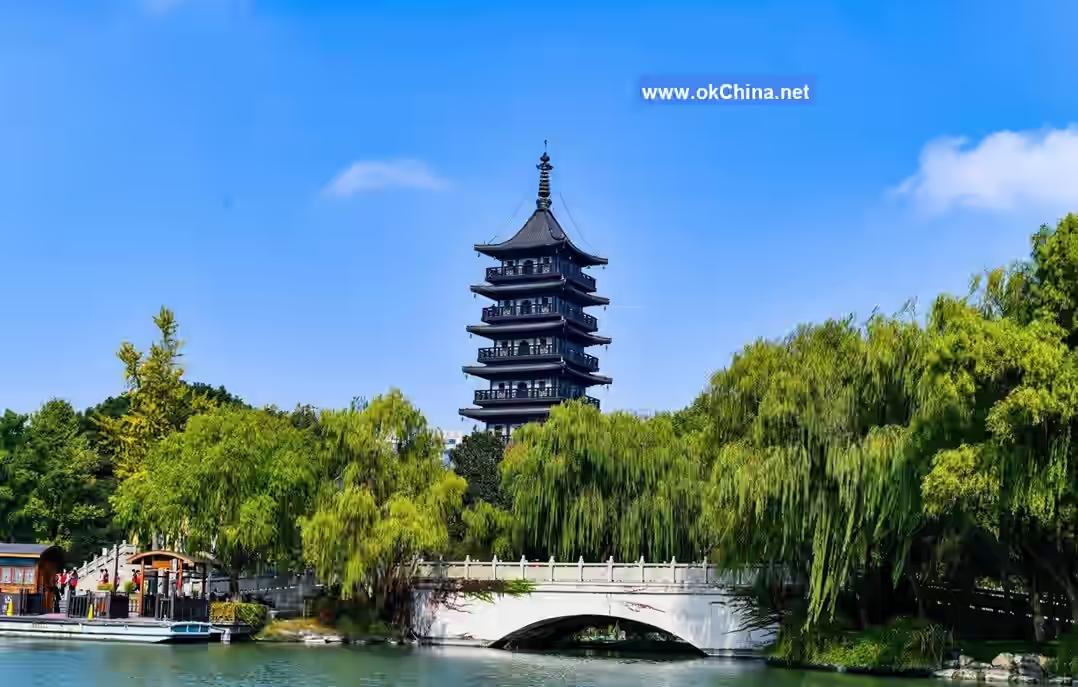
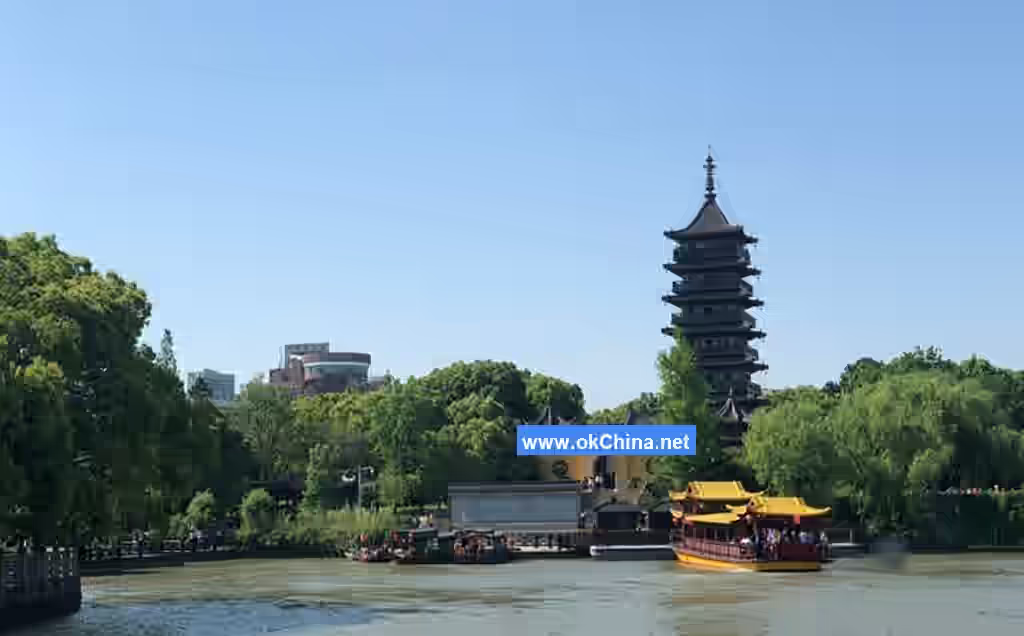
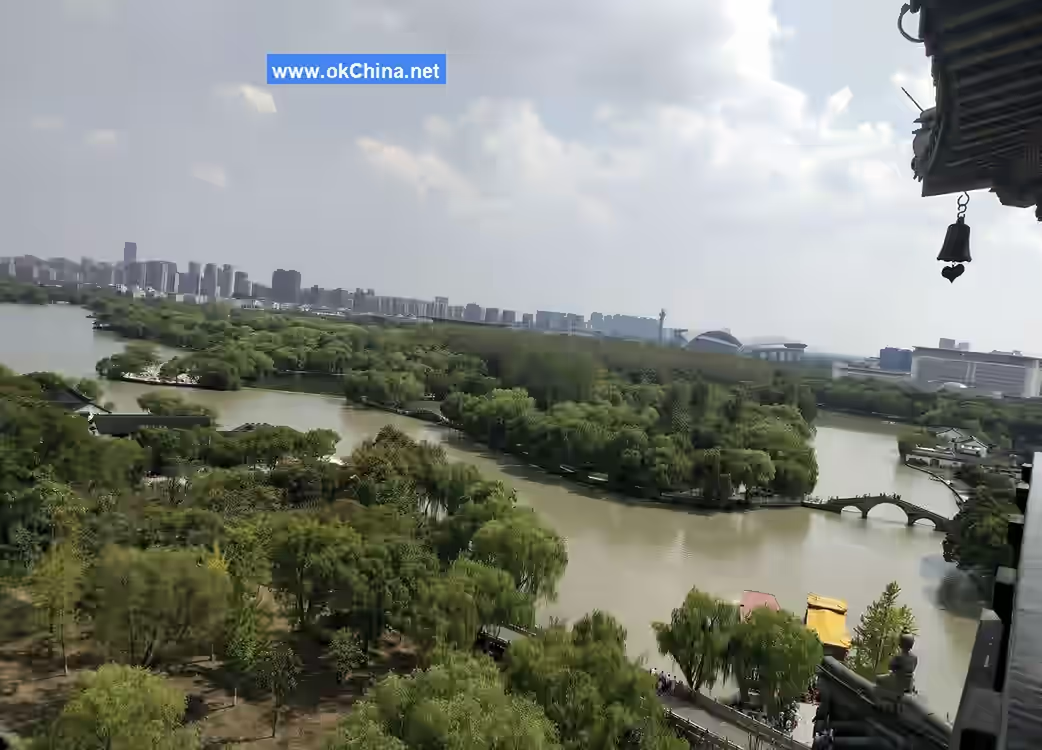
Haogu Pagoda was one of the seven pagodas and eight temples in ancient Jiaxing, named for its location north of the city moat, where the water curves like a thigh. The reconstructed Haogu Pagoda is now located within the South Lake Fishing Village on the west side of South Lake. The pagoda is 63.36 meters high with seven stories, a building area of 600 square meters, and a pagoda courtyard area of 200 square meters. The pagoda body is pavilion-style with surrounding corridors, following Song Dynasty architectural style. Each of the four upturned eaves on every floor holds an exquisite Buddha statue, below which hang simple and elegant wind chimes, creating the意境 of "shadows shatter like glass, wind chimes sound high beyond the willows." The pagoda finial is made of pure copper gilded with gold, a rare feature in China, using three kilograms of pure gold. Haogu Pagoda is the only climbable pagoda in Jiaxing City. Ascending the 179 wooden steps inside offers a panoramic view of South Lake and the entire cityscape of Jiaxing. In 2010, the Haogu Pagoda building was renamed "Wu Xiang Shrine."
4.8 South Lake Fishing Village
4.8.1 Overview
South Lake Fishing Village is located northwest of South Lake, on the former site of the Shao Garden from the Ming Dynasty. It was built during the Jiajing reign by Wu Changshi, a member of the Ministry of Personnel. According to Wu Outing's Historical Anecdotes of the Misty Rain Tower, when Shao Garden was first built, its area was not large, but it was filled with towers, pavilions, terraces, and gazebos, with steep artificial hills, verdant pines, and reddened autumn maples; lotuses in the pond and willows on the banks; facing Biao Lake to the north and backed by the city moat, with the Misty Rain Tower nearby. The garden and tower faced each other, forming an architectural complex linked by water systems, creating a quite elegant environment. After the completion of Shao Garden, famous scholars such as Qian Qianyi and Wu Weiye visited. During the Chongzhen reign, the famous Jiangnan courtesan Liu Rushi came to Jiaxing to recuperate in Shao Garden, which became the place where she pledged her love to Qian Qianyi, creating a romantic tale of a talented scholar and a beautiful woman for a time. However, the good times did not last long. With the execution of Wu Changshi, Shao Garden began to fall into neglect. When the great poet Wu Weiye (Meicun) visited South Lake, he could only gaze at it from a boat on the lake. Upon returning, he wrote "Song of Yuan Lake," leaving behind a vivid and emotionally rich "Picture of the Rise and Fall of Shao Garden" for posterity. After Shao Garden was abandoned, its site was turned into a fishing village during the Qianlong reign of the Qing Dynasty, later known as Xujia Village, where winding paths and ponds still faintly recall the former scenery.
4.9 Shen Junru Memorial Hall
4.9.1 Overview
The Shen Junru Memorial Hall is located in the southern part of Jiaxing City, Zhejiang Province. It was built to commemorate the great patriot and outstanding democratic fighter Mr. Shen Junru and is housed within his former residence. Shen Junru (1875–1963), courtesy name Bingfu, art name Hengshan, was a native of Jiaxing, Zhejiang. He evolved from a Jinshi (a successful candidate in the imperial examinations) into a staunch democrat and further became a close comrade-in-arms of the Communist Party of China and an outstanding non-Party communist fighter. After the founding of New China, Shen Junru served as the first President of the Supreme People's Court, Vice Chairman of the First, Second, and Third National Committee of the Chinese People's Political Consultative Conference, Vice Chairman of the Standing Committee of the First and Second National People's Congress, and Chairman of the Central Committee of the China Democratic League, among other positions. He was one of China's highly respected elder statesmen.
4.9.2 Attraction Introduction
Shen Junru's former residence was built in the late Qing Dynasty, featuring characteristics of the traditional architectural cultures of both the Taihu Lake Basin and the Xin'an River Basin. With white walls and black tiles, it is simple, elegant, and possesses certain historical and artistic value, making it a key cultural relics protection unit in Zhejiang Province. At the end of 1996, based on suggestions and proposals from municipal people's representatives and political consultative conference members, the Jiaxing Municipal Party Committee and Municipal Government decided to restore Shen Junru's former residence and submitted a request for approval to the General Office of the Central Committee of the Communist Party of China. On February 2, 1997, the General Office of the Central Committee replied, "Agree to establish Shen Junru's former residence in Jiaxing City, Zhejiang Province." On August 1, 1997, the restoration project of Shen Junru's former residence officially commenced. By May 1998, the first phase of the restoration was completed, covering a building area of 740 square meters, including the ceremonial gate, front hall, rear building, and east and west wing-rooms. From July to December 1999, the Jiaxing Municipal Government invested additional funds to restore the main gate of the residence, which had been destroyed by Japanese aerial bombing during the War of Resistance Against Japan. This brought the total area of the residence to 2,100 square meters, with a building area of 1,200 square meters.
4.10 Fanghezhou (Crane-Releasing Islet)
4.10.1 Overview
Fanghezhou is located by the Southwest Lake on the south road of Jiaxing City, facing the Southwest Lake Ecological Oasis across the water. During the reign of Emperor Dezong of the Tang Dynasty, the virtuous Prime Minister Lu Zhi built a residence garden on Fanghezhou. Because there was a Crane-Releasing Pavilion in the garden, it was called He Zhu (Crane Islet). During the reign of Emperor Wenzong of Tang, Prime Minister Pei Xiu built a villa on the islet and renamed it Pei Island. During the Southern Song Dynasty, the famous ci poet Zhu Dunru lived in Jiaxing and developed Pei Island into Fanghezhou. In the late Ming Dynasty, Zhu Maoshi, the prefect of Guiyang, reconstructed Fanghezhou. By the mid-Qing Dynasty, Fanghezhou gradually declined.#### 4.10.2 Attraction Introduction In 2004, the South Lake Scenic Area reconstructed Fanghezhou, making it another important cultural and leisure attraction within the South Lake scenic zone. The reconstructed Fanghezhou covers an area of approximately 52,000 square meters, including a water area of 9,714 square meters. The site preserves the natural topography of being surrounded by the lake on all sides, featuring meandering waterways within and scattered trees along flat shores. Its primary function is for quiet repose and scenery appreciation, supplemented by lotus ponds, water chestnut ponds, fish ponds, orchards, etc. Archways, pavilions, and towers are dotted along the lake, with their layout following the natural terrain to strive for an ecological feel. Danranju, Guiliguan, and Jiafutang are the most prominent antique-style garden buildings within Fanghezhou, reflecting the architectural styles of the Tang and Song dynasties.
4.11 Xiaoyingzhou
4.11.1 Overview
Xiaoyingzhou is located in the northeastern part of South Lake. It is a small island in the lake, facing the Misty Rain Tower on the Lake Center Island from north to south. It was historically called Xiaoyingzhou, commonly known as Little South Lake or Little Misty Rain Tower. During the Qing Dynasty's Kangxi period, the city river was dredged, and the silt was piled here, forming a separate water area of about 8 mu. It was initially a place for fishermen to dry their nets, gradually becoming a scenic spot for visitors.
4.11.2 Attraction Introduction
At the northern end of the island stands a building named Cangsheng Ci (Temple of the Sage Cang). It is said that Cang Jie created Chinese characters, hence the legend of "Cang Jie Creating Characters," and he is revered as the "Sage of Characters." During the Guangxu period of the Qing Dynasty, there was a folk organization in Jiaxing called the "Character Cherishing Society." Cangsheng Ci was built at that time with funds raised by this society. The temple has three bays and houses a statue of Cang Jie. Local literati would regularly gather here to pay homage, commemorating this "Sage of Characters."
4.12 Ecological Oasis
4.12.1 Overview
The Southwest Lake Ecological Oasis covers 30 hectares. The area boasts over 100 species of trees, shrubs, and ground cover plants, distributed across more than 30 botanical gardens including vineyards, loquat orchards, mulberry orchards, bamboo forests, ginkgo forests, camphor forests, and fir forests. Visitors can enjoy the charming scenery described as "viewing peach and plum blossoms in spring, admiring lotuses in summer, harvesting various fruits in autumn, and anticipating spring in winter." It is a rare natural wetland park. Whether for outings and spring excursions, rustic leisure, or serving as a field classroom for children's biology education, Southwest Lake offers people pastoral joy and relaxation for the soul.
4.13 Meibwan Old Street
4.13.1 Overview
Jiaxing's Meibwan Street is named after the legend that people planted plum blossoms here in ancient times and its location near a bend of the Beijing-Hangzhou Grand Canal. It is one of the few remaining traditional residential and commercial districts in Jiaxing that embodies Jiangnan local characteristics, with a strong late Qing and early Republican era style. Since ancient times, benefiting from inherent advantages of both water and land routes, Meibwan Street was historically a hub where merchants gathered in Jiaxing. The city's main rice and silk markets were once concentrated here. "Merchants and travelers coming and going, ceaseless on the road" is a true portrayal of Meibwan Street's bustling scene. It is also a place where culture and prominent figures converged. Residences with traditional characteristics and historical relics are clustered here, including the former residence of Mr. Zhu Shenghao, a master translator of Shakespeare's works; the refuge of Mr. Kim Gu, the founding father of South Korea; the site of the Korean Provisional Government; and the former residence of Mr. Wang Huzhen, the father of water conservancy in New China. Meibwan Street reflects the changes in Jiaxing's history and culture, gathering the essence of its traditional historical culture.
4.13.2 Attraction Introduction
In the process of promoting the "Jiangnan Water Town Historical and Cultural City," building a "City of Culture," and creating a "Cultural Jiaxing," the Jiaxing Municipal Party Committee and Municipal Government prioritized the protection and development of Meibwan Street as a practical and key project on their important agenda. The newly opened Meibwan Street district, with a total investment of 480 million yuan and covering 100,000 square meters, consists of Meibwan Food City, Meibwan New World, Meibwan Commercial Street, Meibwan Old Street, and the Meibwan Business District. The old street still retains a number of classical buildings with strong Jiangnan charm. The ancient houses built by the lake not only offer views of the water scenery of Southwest Lake but also become a beautiful sight for visitors. Meibwan Street also preserves many famous historical and cultural relics and former residences of notable figures, such as the Shen Junru Memorial Hall, the Chu Fucheng Historical Materials Exhibition Room, the Kim Gu Refuge, the refuge site for important members of the Korean Provisional Government, as well as the soon-to-be-restored former residences of Shakespeare translator Zhu Shenghao and water conservancy engineer Wang Huzhen. Meibwan Street has now gathered over 100 businesses, including shops with century-old brand names like silk stores, antique shops, and handicraft stores. It has also introduced tourism projects such as a Wedding Customs Museum, Root Carving Museum, Shadow Puppetry Museum, and Pingtan storytelling halls. It is the largest historical and cultural leisure district in Jiaxing. The Meibwan Business District is scheduled to be completed and open to the public in October 2007.
5. Cultural Activities
The 24th day of the sixth lunar month is designated as Lotus Birthday, commonly known as "Lotus Flower Birthday." On that day, people can worship with incense while also escaping the heat and viewing lotuses. Later, "Lotus Viewing" gradually formed into a tourist festival activity, hence the "Lotus Viewing Festival." During the Lotus Viewing Festival, Jiaxing gradually developed the folk custom of holding an annual "Lotus Lantern Festival," which became an important holiday for people to relax, entertain themselves, express emotions, and place their wishes. At that time, there are song and dance performances, various operas, and city-wide celebrations. Water-based activities include floating lotus lanterns, water tug-of-war (grabbing lotuses), Ta Bai boat races, and rowing performances. During the tourism festival, folk activities such as the Zongzi Festival, peasant painting exhibitions, folk art exhibitions, and photography and calligraphy exhibitions are also held.
Comments
Post a Comment