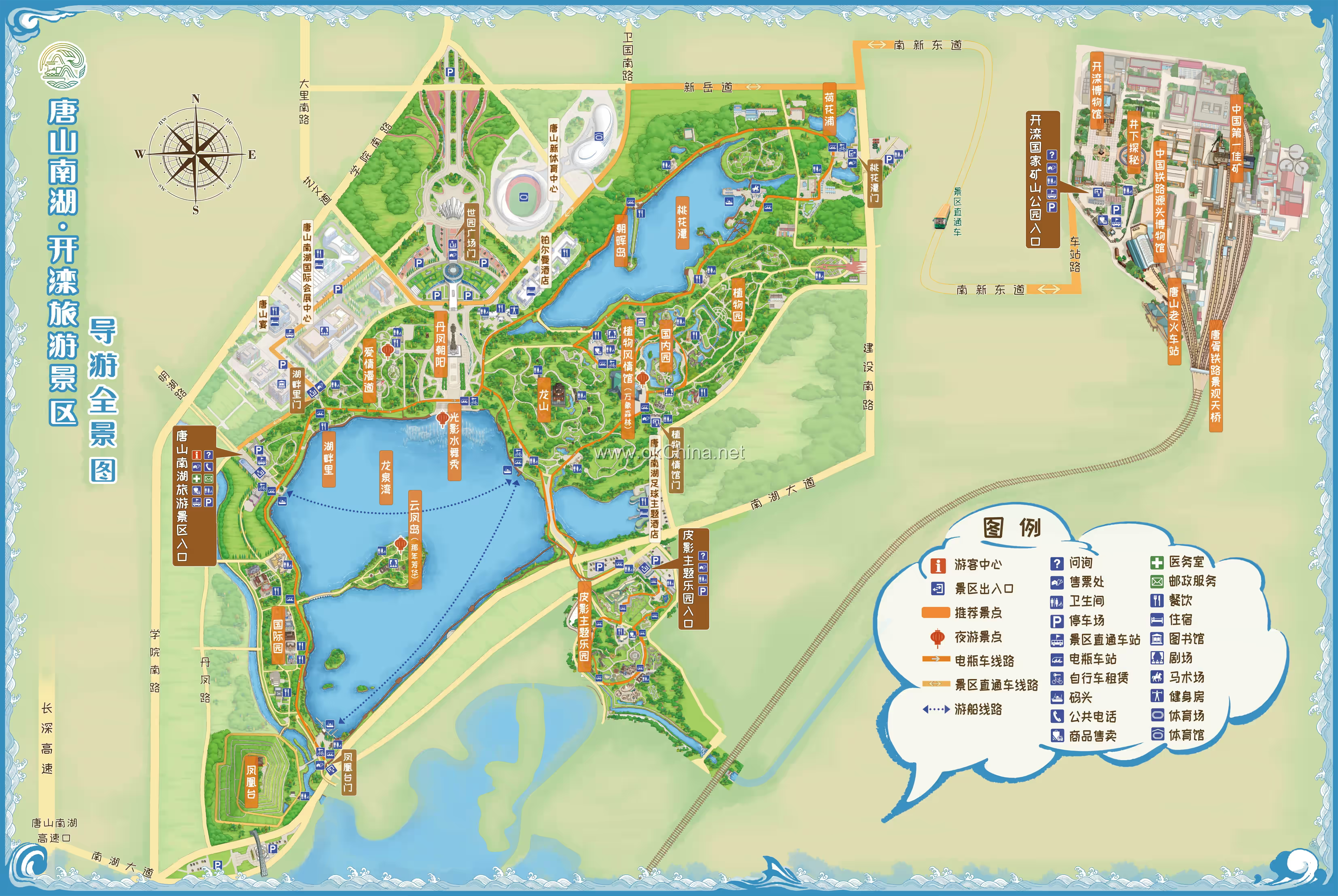
Tangshan Nanhu Scenic Area
I. Introduction
Nanhu Park is located in the center of Tangshan City, Hebei Province, covering an area of 5.4 square kilometers. Originally a coal mining subsidence area of the Kailuan Coal Mine, it has been transformed through years of ecological restoration into a beautiful "city living room," creating an ecological civilization achievement that "turns decay into magic."
Before its transformation, Nanhu Park was a coal mining subsidence area formed by over 130 years of mining at Kailuan, and the 1976 Tangshan earthquake further exacerbated the subsidence. At the end of 1996, adhering to the principle of "turning disadvantages into advantages and decay into magic," Tangshan City decided to implement a large-scale ecological greening project. Through extensive engineering efforts, the original garbage pit was ultimately transformed into a central urban ecological park.
In July 2004, Nanhu Park was awarded the "Dubai International Award for Best Practices in Improving the Living Environment." In 2009, it was designated as one of the first "National Ecological Culture Demonstration Bases." In February 2024, Nanhu Park was awarded the National AAAAA-level scenic area status.
II. Historical Development
Before its transformation, Nanhu Park was a coal mining subsidence area formed by over 130 years of mining at Kailuan, and the 1976 Tangshan earthquake further exacerbated the subsidence.
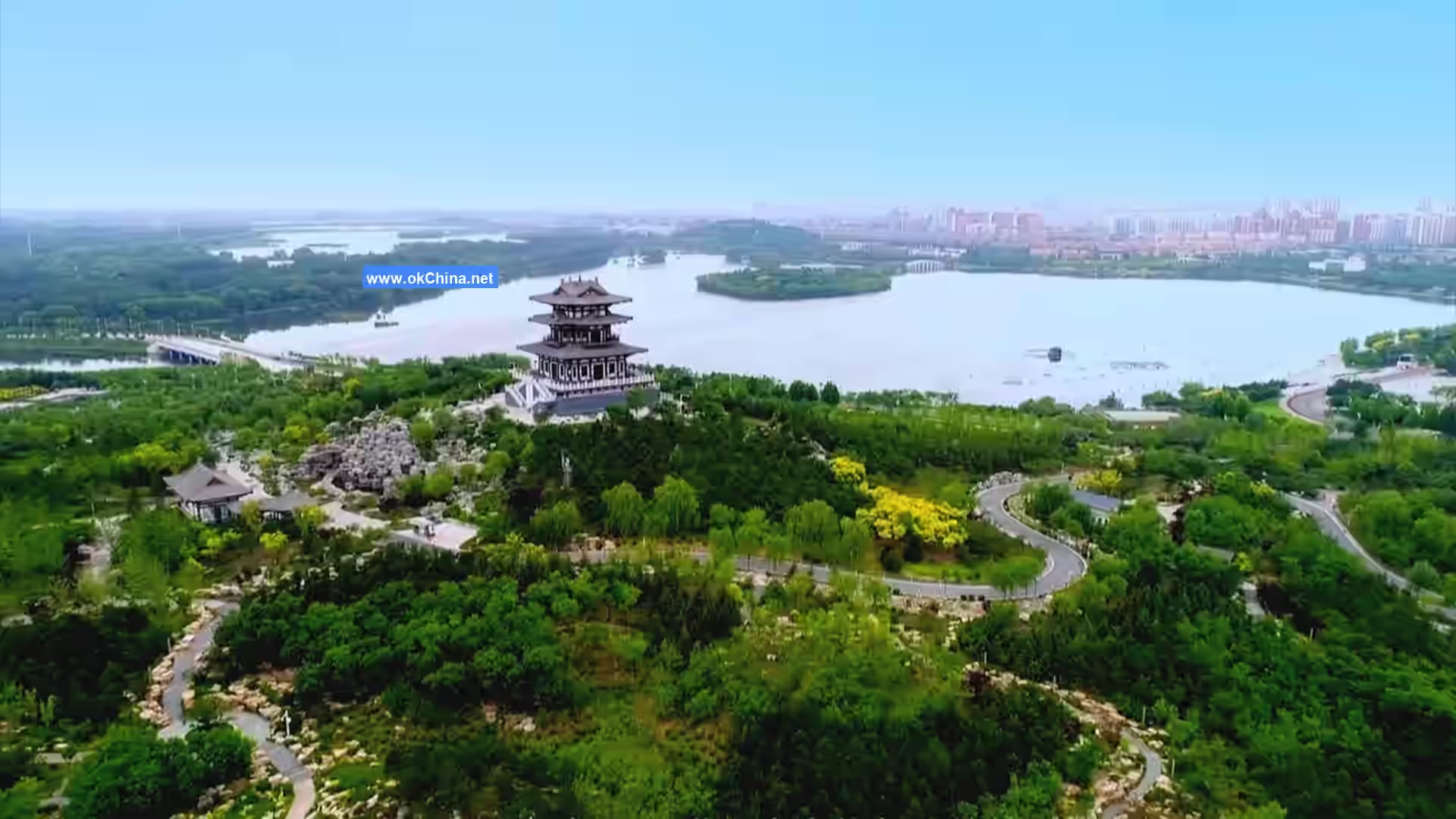
At the end of 1996, adhering to the principle of "turning disadvantages into advantages and decay into magic," Tangshan City decided to implement a large-scale ecological greening project. This included the completion of a simple peripheral loop road, the construction of a hilltop garden, the extension of rockery slopes, the connection of lake surfaces, and the building of boat docks and a horse racing track. The hilltop garden was originally a garbage mountain of domestic waste. After being covered with high-quality soil and stacked with rocks, its previous state became hard to imagine. Combined with carpet-like lawns and various shallow-rooted flowers and trees, Fenghuang Terrace became the freshest and most beautiful high point in Nanhu Park.
Through large-scale tree planting, the closure and greening of garbage mountains, the construction of scenic roads, landscape lighting projects, and lake expansion and water diversion projects to ensure ecosystem stability and continuity, the original garbage pit was ultimately transformed into a central urban ecological park.
III. Scenic Area Layout
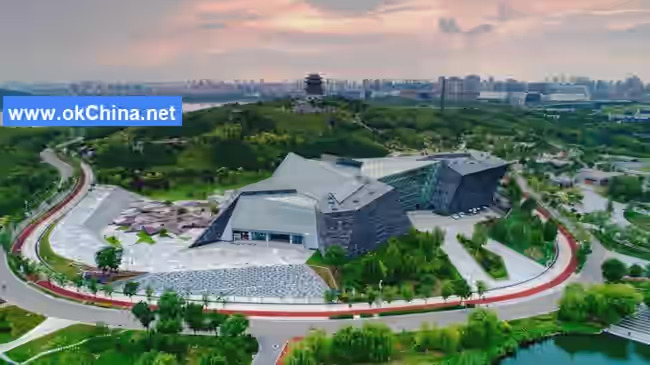
The planning structure of the Nanhu Park area is divided into six functional zones: Nanhu Landscape Functional Zone (Little Nanhu), Garden Expo Functional Zone, Historical and Cultural Functional Zone, Urban Tourism Functional Zone, Sports Functional Zone, and Ecological Functional Zone. Public facilities are planned based on traffic conditions, regional location, spatial structure, and landscape connotations, with service centers, service stations, and service points set up at three levels.
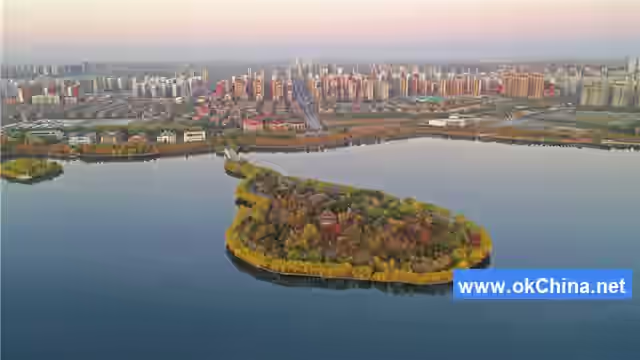
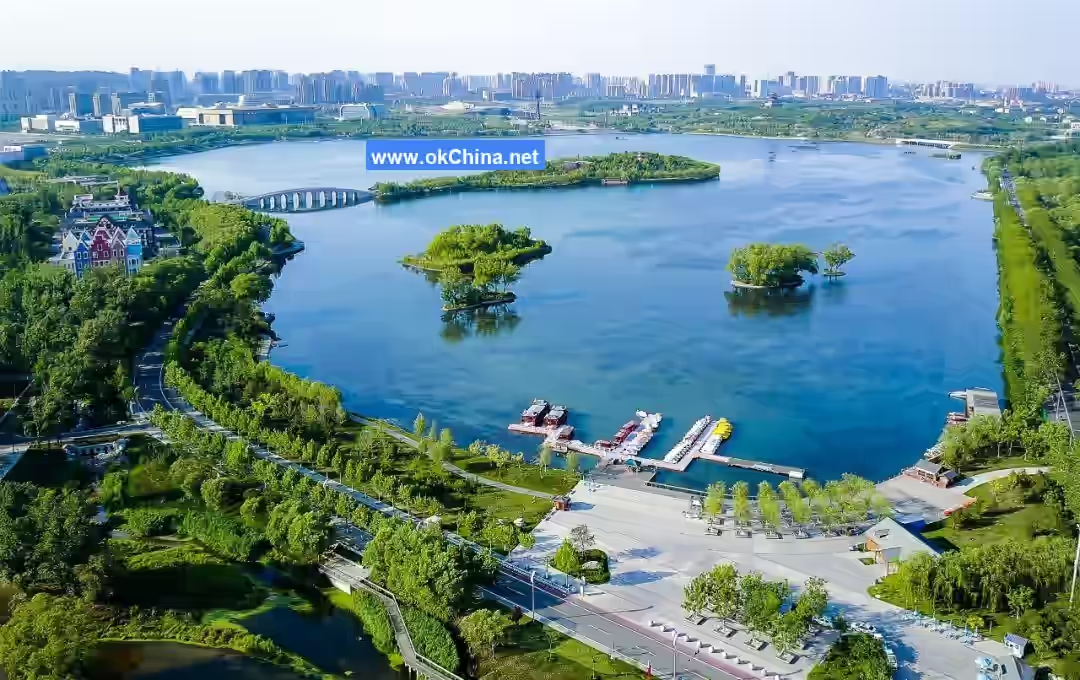
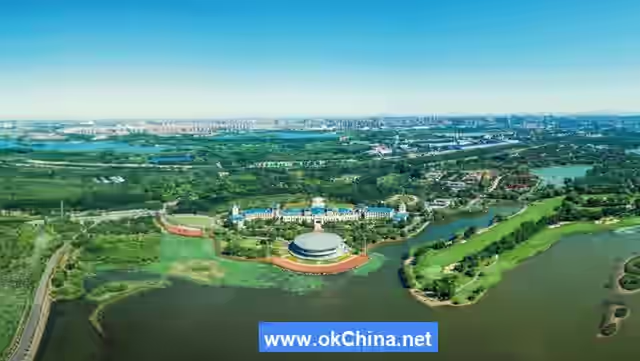
Nanhu Park features nine lakes, including "Peach Blossom Pond" and "Longquan Bay," five islands such as "Yunfeng Island" and "Xiangming Island," and over 120 attractions like Cherry Blossom Avenue, Fenghuang Terrace, and the Musical Fountain.
IV. Landscape Introduction
Phoenix Nirvana
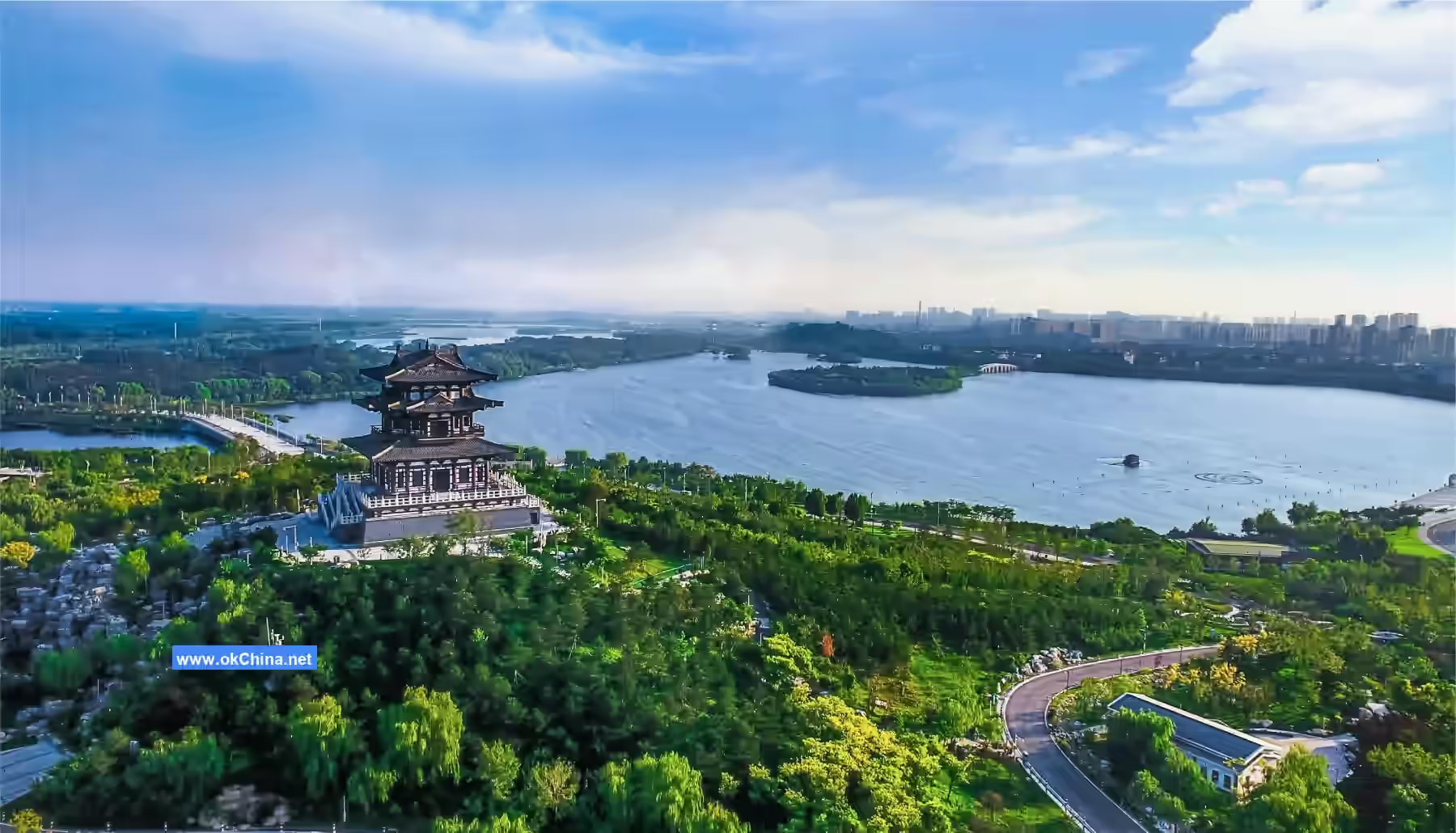
Fenghuang Terrace covers an area of 13.2 hectares, with its core hill reaching a height of 53.56 meters. Fenghuang Terrace is a viewing platform surrounded by green trees and flowers, hailed as "a magical stroke that turns decay into magic." The Fenghuang Pavilion is built on the terrace, designed with a clever and transparent architectural style that harmonizes with the magnificent landscape. Inspired by the phrase "When the music of Shao is performed nine times, the phoenix comes to pay homage," it symbolizes the hope for Tangshan's peace, prosperity, and flourishing.
Three Isles Combined
Three small islands resemble three green oases in the lake, and together they form a shape reminiscent of the He Shi Bi jade. This evokes the典故 of Lian Po and Lin Xiangru, symbolizing unity and cooperation, and echoes the "Three Pools Mirroring the Moon" of West Lake.
Phoenix Hairpin Gathering Fragrance
The nine-arch bridge connecting the islands to the mainland is named Xiangshuiwan Bridge. From a distance, the bridge's railings resemble a woman's hairpin, and with 932 phoenixes carved on it, it is called the Phoenix Hairpin. Standing on the bridge, one can see the rising skyscrapers of the city in the distance and lush lotus ponds nearby. Walking across the bridge in summer, one can smell the fragrance of flowers. The character "香" (fragrance) not only describes the beauty of the scenery from an olfactory perspective but also playfully corresponds to the name "Xiangshuiwan Bridge."
Ping Opera and Shadow Play
Ping Opera, Shadow Play, and Leting Drum are known as the "Three Flowers of Eastern Hebei Art." "Ping" refers to Ping Opera, and "Pingqiang" means the singing style of Ping Opera. "Yueying" refers to Leting Drum and Shadow Play, with "乐" pronounced as "yuè" but hinting at "laò," specifically referring to Leting Drum, also implying "the dance of opera charm under the moon." The island is a paradise for opera and performance enthusiasts, where one can sing, watch shadow plays, and listen to storytelling.
Exotic Charm
This includes exhibition halls from 10 countries, such as the United States, Italy, and the United Kingdom. Among them, the Hungarian Pavilion has been transformed into a Budapest restaurant, the German Pavilion into a Munich beer restaurant, and the Japanese Pavilion features a Kaiseki restaurant, each with its unique charm. These restaurants blend traditional cultural heritage with new techniques, materials, and concepts, showcasing the harmony between urban and natural environments based on Nanhu's unique resources and cultural characteristics.
Winding Paths and Clear Lotuses
The winding boardwalk meanders over the lake, lined with lush green lotus plants. Standing on the boardwalk with the lake breeze filling one's sleeves, one cannot help but think of the elegant fragrance of the lotus flowers.
Lake Light and Screen Shadows
"Lake" refers to Nanhu, and "lake light" describes the shimmering reflections when the water screen movie is played. "幕" (screen) is a pun, meaning both "twilight" and "screen curtain." The water screen projection and laser performance system are built in the lake, south of the fountain, capable of screening water screen movies and displaying two-dimensional and three-dimensional laser effects. It organically integrates water movements, music, colors, and visual sensations, creating breathtaking scenes synchronized with the rhythm of the music.
Red Phoenix Facing the Sun
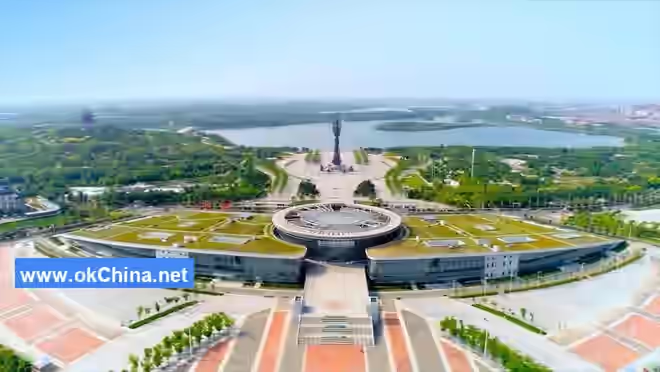
The central sculpture, named "Red Phoenix Facing the Sun," was designed by the renowned Chinese master of arts and crafts, Han Meilin. It stands 68 meters tall and weighs 447 tons in total. The name is derived from the Book of Songs: "The phoenix sings, on that high ridge. The parasol tree grows, facing the morning sun." It symbolizes perfection, happiness, auspiciousness, and a bright future, making it a monumental copper sculpture of profound significance. The sculpture features phoenixes, symbols of nobility and auspiciousness, composed of two groups of phoenixes connected vertically. The lower group of phoenixes huddle closely together, gazing in all directions, while the central sphere represents the "sun,"寓意 that places touched by sunlight will thrive with vitality. Looking further up, a golden phoenix perches atop, raising its head to the sky, transforming into the theme sculpture of the Red Phoenix Facing the Sun, embodying infinite vitality and hope! The base of the sculpture is adorned with eight copper lions, symbolizing majesty and auspiciousness.
Dragon Pavilion Gazing at the Moon
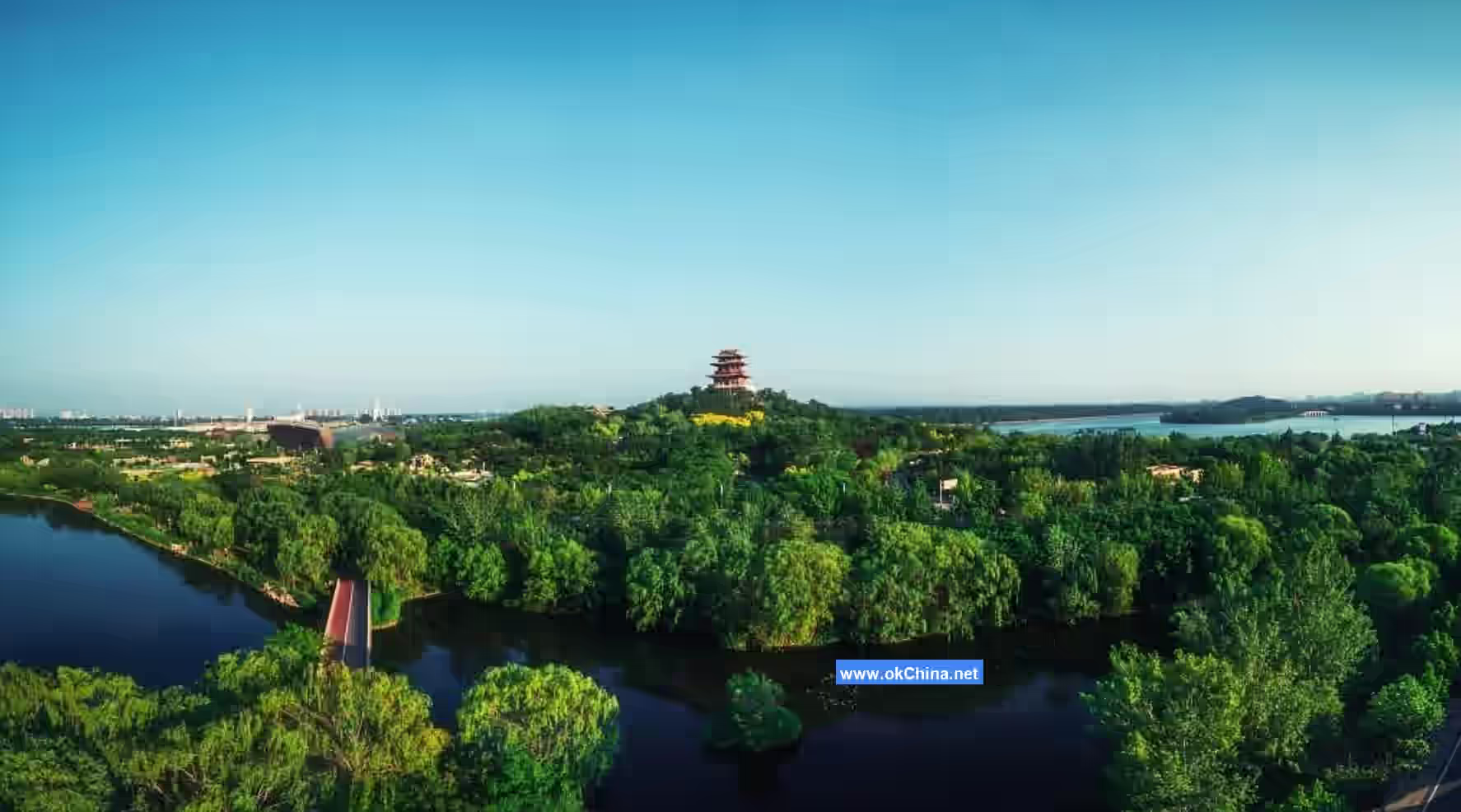
Longshan (Dragon Mountain) and Fenghuang Terrace are separated by water, echoing each other and forming a pattern of dragon and phoenix auspiciousness. This symbolizes the immortal legend of harmony between humans and nature in Tangshan, a heroic city reborn like a phoenix from ashes, and预示着 a brighter future for the people of Tangshan who have risen from the ashes. The Dragon Pavilion on Longshan is a high point in the Nanhu Scenic Area. When the lights come on at night, the scenery here is exceptionally beautiful, making it the best vantage point for literati and artists to admire the moon.
Grand View of Yan and Zhao
With the design theme of "At the Foot of the Great Wall, Grand View of Yan and Zhao," this area extracts elements such as northern water towns, Hebei residential architecture, and industrial civilization. It showcases the horticultural characteristics and cultural heritage of various prefecture-level cities in Hebei Province, highlighting the essence of Hebei's traditional culture. Strolling through this garden is like entering the "Grand View Garden" described by Cao Xueqin in Dream of the Red Chamber. At the same time, it integrates economic, political, cultural, social, and ecological civilization construction, reflecting the融合 of traditional culture and contemporary spirit.
Jade Cup Holding Dew
This includes exhibition gardens from Hong Kong, Macau, Shanghai, Tianjin, and Qingdao, and is also one of the Sixteen Scenes of Nanhu, known as "Jade Cup Holding Dew." The classic design lies in the碗-shaped structures above, which catch natural rainwater, resembling jade cups holding sweet dew.
Fond Memories of Jiangnan
With the design theme of "Recalling Jiangnan," this area is based on the private gardens of Jiangnan, such as the Humble Administrator's Garden and the Master-of-Nets Garden. It is an experiential garden integrating garden architecture, small bridges and flowing water, Taihu Lake embankments, and the refined tastes of literati. Here, visitors can not only appreciate the beautiful landscapes of Jiangnan but also feel the sentiments of scholar-officials, hence it is also called the "Scholar-Official Garden."
Imperial City Zen Path
With the design theme of "One Pond and Three Hills," the pond refers to Taiye Pond, and the three hills are Jinghua Pavilion, Daojun Stone, and Chenxiang Pavilion. Centered on the theme of "泽" (beneficence), water "moistens" all things,寓意 "benefiting all generations." The main structure, Jinghua Pavilion, adopts the form of "round heaven and square earth," reflecting the profound traditional Chinese culture.
Fish Leaping over Willow Embankment
Inspired by the actual scenery, the long embankment is lined with graceful willow trees, and the lake is teeming with carp leaping and splashing on both sides. Combined with the典故 of "the carp leaping over the dragon gate," it蕴含 auspicious and harmonious meanings.
Peach Blossom Spring Morning Glow
The Peach Blossom Pond embraces Zhaohui Island. In this beautiful peach blossom paradise, the morning light is faint,光影弥漫, and colors are斑斓, presenting a warm and beautiful picture that sparks infinite imagination.### The Red Boat Sets Sail
By the shore of South Lake, there is a red-painted boat, similar in shape and size to the Red Boat on South Lake in Jiaxing, Zhejiang. Like the Red Boat of Jiaxing's South Lake, it carries the red memories of Tangshan's older generation of revolutionaries, such as Li Dazhao, Yang Xiufeng, Yang Shisan, and Jie Zhenguo, who devoted themselves tirelessly to the revolutionary cause. It also bears witness to their great mission of seeking happiness for the people and rejuvenation for the nation.
V. Cultural Activities
In May 2024, the "Blossoming All the Way, Blooming in Tangshan" 2024 Tangshan South Lake Large-Scale Outdoor Live Show will be staged at the Tangshan South Lake Tourist Scenic Area, offering a cultural and tourism feast for the general public. In October of the same year, the "Chinese Dream · Ode to the Motherland" Tribute to Classic Symphony Concert will be held at Tangshan South Lake Park.
In November 2023, the 2023 First Tangshan Intangible Cultural Heritage Music Carnival took place at South Lake Park.
Comments
Post a Comment