Nalati Tourist Area

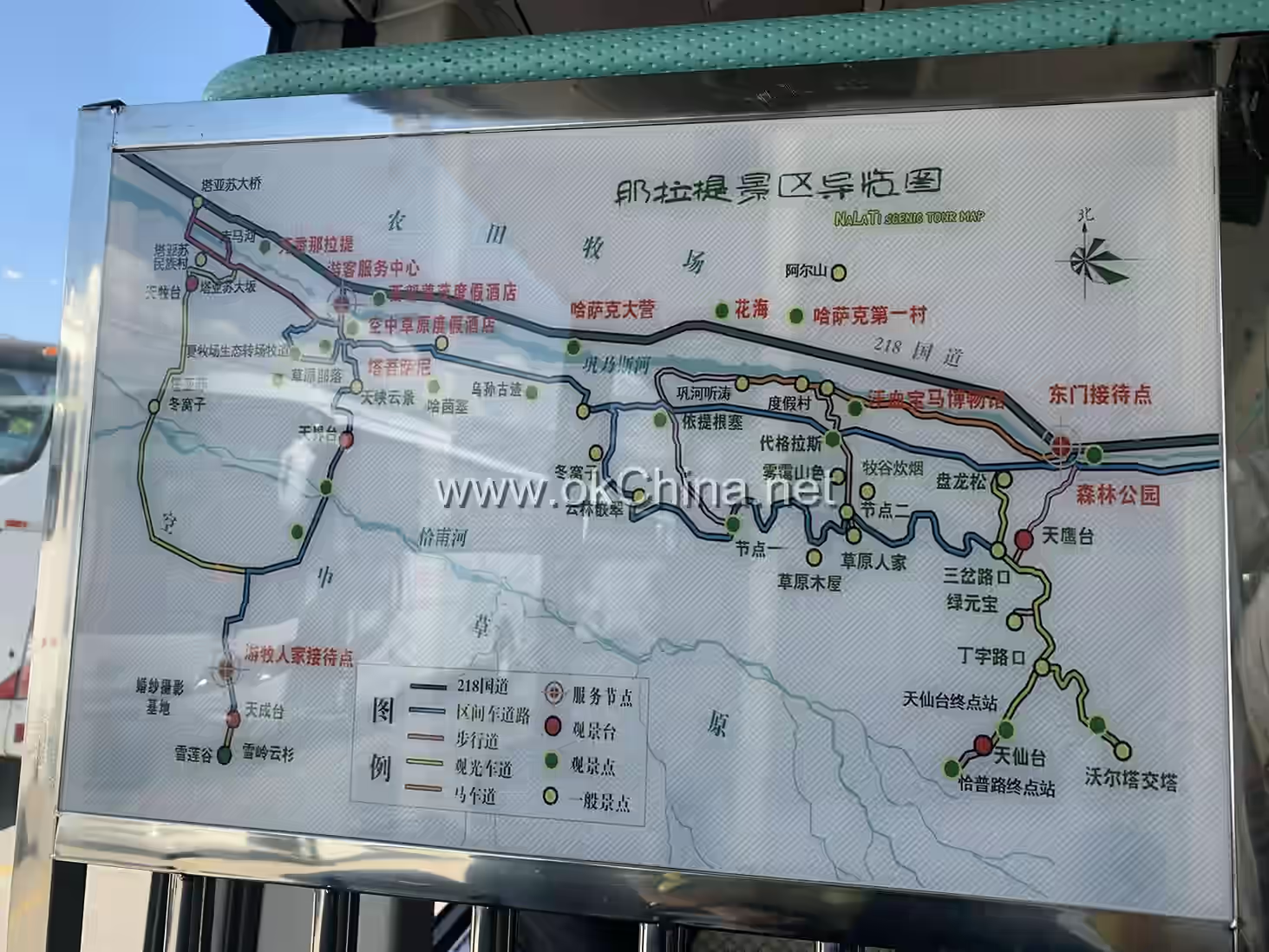
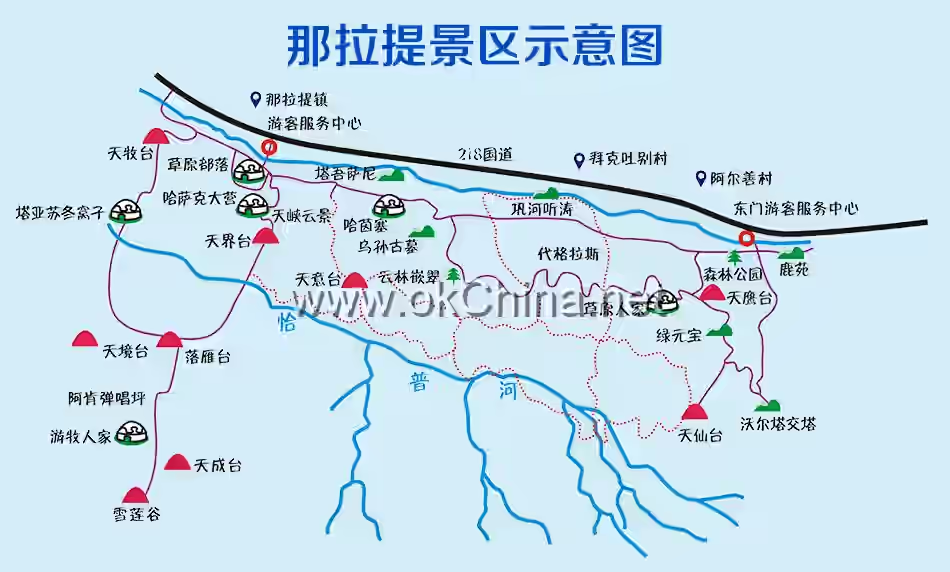
Location Map

Map of Nalati Tourist Area

Ticket Price

Ticket Prices

(I) Standard Ticket Price

95 yuan/person

(II) Shuttle Bus Standard Prices

  1. Air Grassland Route: Round trip 40 yuan/person.
  2. Valley Grassland Route: Round trip 24 yuan/person.
  3. Snow Lotus Valley Route: Round trip 60 yuan/person.

(III) Premium Optional Routes

  1. Panlong Valley Route: Round trip 40 yuan/person;
  2. Woltagiaota Route: Round trip 120 yuan/person.

Preferential Policies

Opening Hours

Business Hours

May 1 - September 30: 08:00 - 20:30;
October 1 - April 30: 10:00 - 19:30.

Recommended Duration

Duration of Visit

It is recommended to spend 2 days for a more comfortable experience, as 1 day would be quite rushed.

Best Time to Visit

Best Season

The ideal time to visit is from June to September. June, July, and August are the most beautiful months in Nalati, as Xinjiang enters summer during this period, with pleasant temperatures that are neither too hot nor too cold. By September, autumn scenery unfolds across the Nalati grasslands, where golden and green hues alternate. Although not as spectacular as the lush greenery of summer, the crisp autumn breeze and falling petals create a unique and captivating beauty. However, the editor still believes that summer is the best season for traveling to the Nalati grasslands. In fact, it can be enjoyed year-round.

Official Phone

Scenic Area Contact Numbers

Nalati Tourist Inquiry and Complaint Hotline: 0999-5291888
If you notice any suspicious individuals during your visit, please promptly call the Nalati Town Anti-Gang and Anti-Evil Reporting Hotline (Nalati Scenic Area Police Station 24-hour Duty Phone: 0999-5268595);

Duku Highway Road Condition Inquiry Numbers

Dushanzi to Qiaoerma Section: 0992-3353000;
Dushanzi District Traffic Police Brigade: 0992-3864122;
Nalati Traffic Police Squadron: 0999-5290111;
Qiaoerma to Bayinbuluke Section: 0999-8196130

Transportation

Transportation Guide

By Air

Urumqi → (Flight) Nalati Airport → (Direct bus 1 hour) → Nalati Scenic Area.

By Train

Urumqi City → (Bus 9.5 hours / Train 8 hours / Bullet train 5.5 hours) Yining City → Yili Prefecture Passenger Transport Center → (Car or bus) → Nalati.

By Public Bus

Urumqi City → (Bus 11.5 hours) Xinyuan County Passenger Station → (Bus 1 hour) Nalati.

Classical Route

Travel Routes

1. Sky Grassland

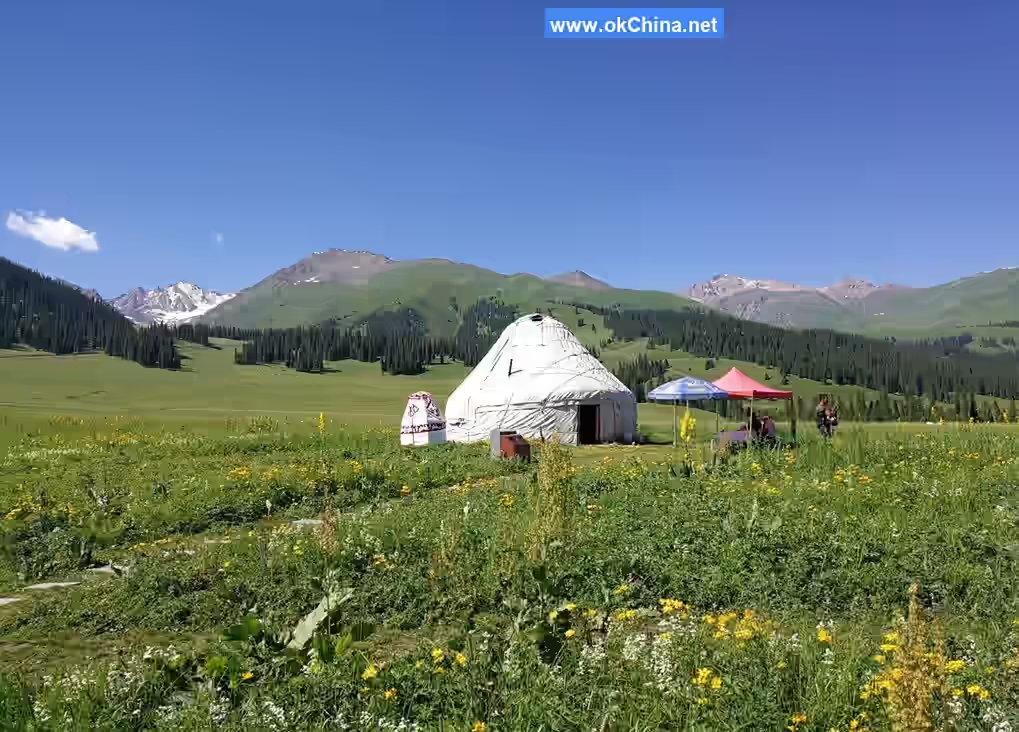
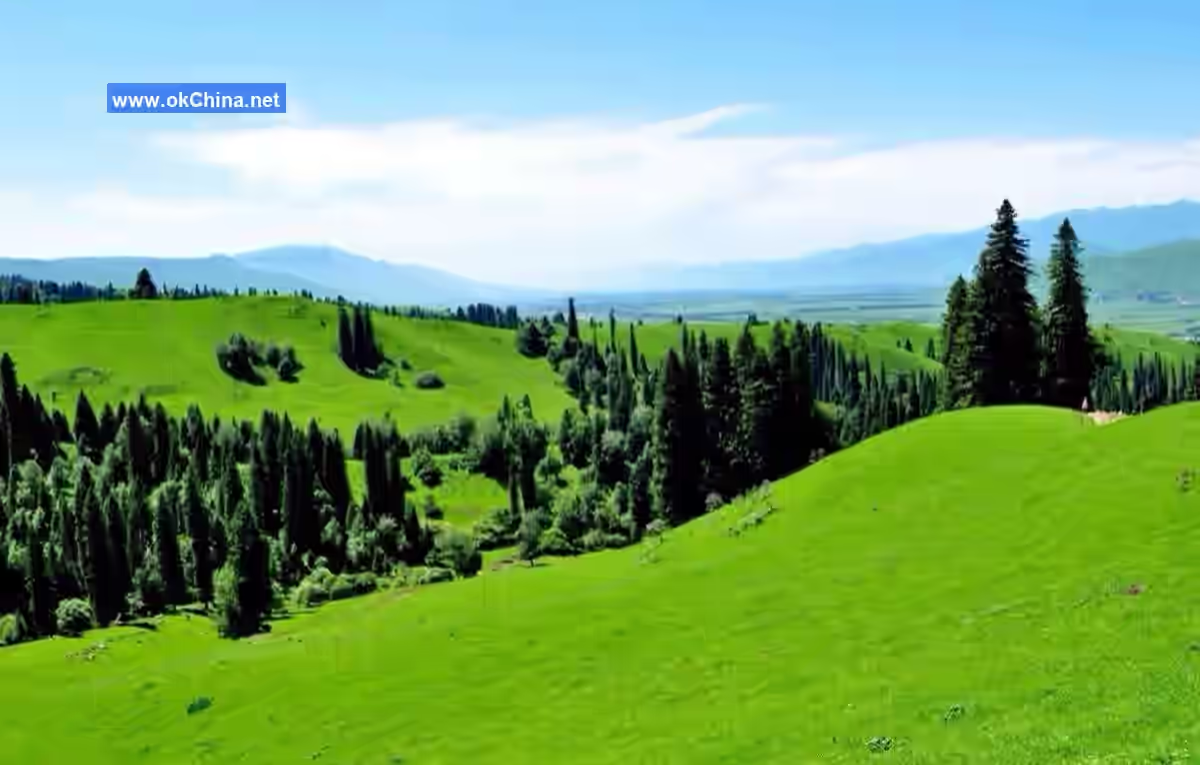
Sky Grassland is the most classic route in the Narat Grassland scenic area. Located at a higher altitude in the mountains, it feels closer to the sky than the Valley Grassland, offering a serene experience of watching clouds drift by. Stay in a yurt at the Nomadic Family site, feed horses, chop wood, herd sheep, and live a day as a shepherd.

Shuttle Bus Fare: 40 RMB/person
Tour Route: Tourist Service Center → Tianfeng Platform → Tianyun Platform → Tianjie Platform → Tianmu Platform → Nomadic Family → Tourist Service Center
Recommended Photo Spots: Tianjie Platform, Tiancheng Platform, Tianshen Platform

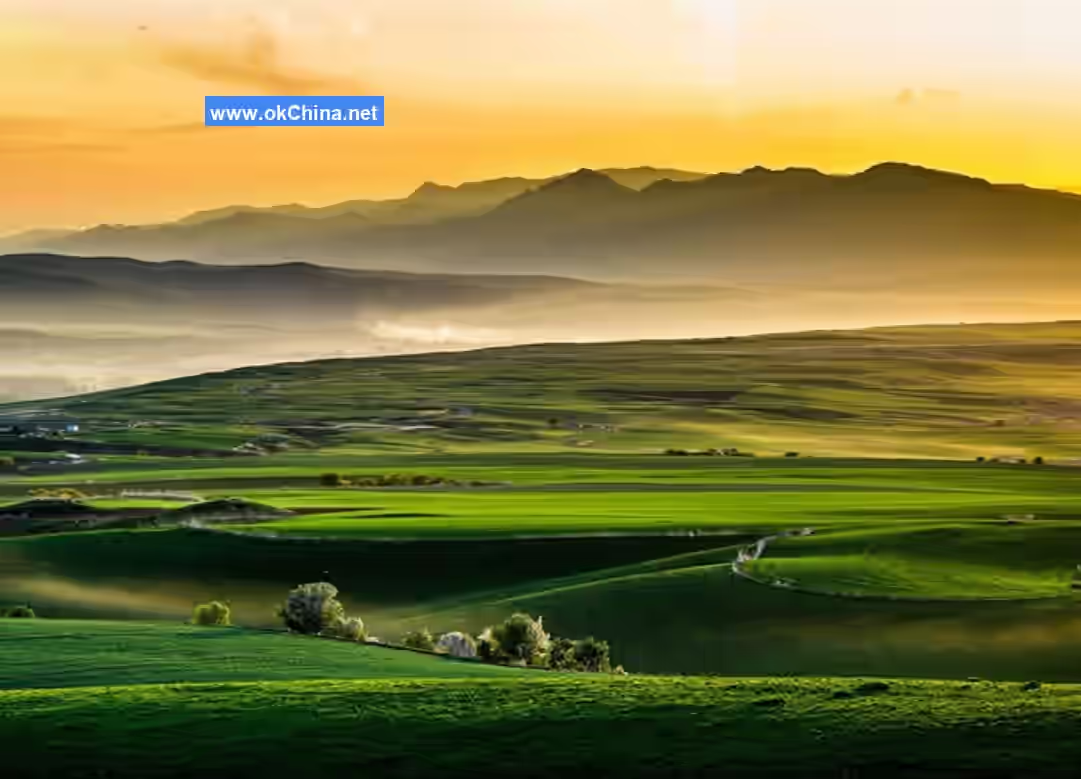
The flowers on the Sky Grassland are quite concentrated, featuring Ashan Golden Lotus, tulips, and various wildflowers. Tianjie Platform, with forests on the right and grasslands on the left, is the best vantage point for viewing the Sky Grassland and also the optimal spot in Narat for photographing sunrise and sunset. From Nomadic Family, you can continue on the Snow Lotus Valley route, passing Tiancheng Platform to reach Tianshen Platform (Snow Lotus Valley).

2. Valley Grassland

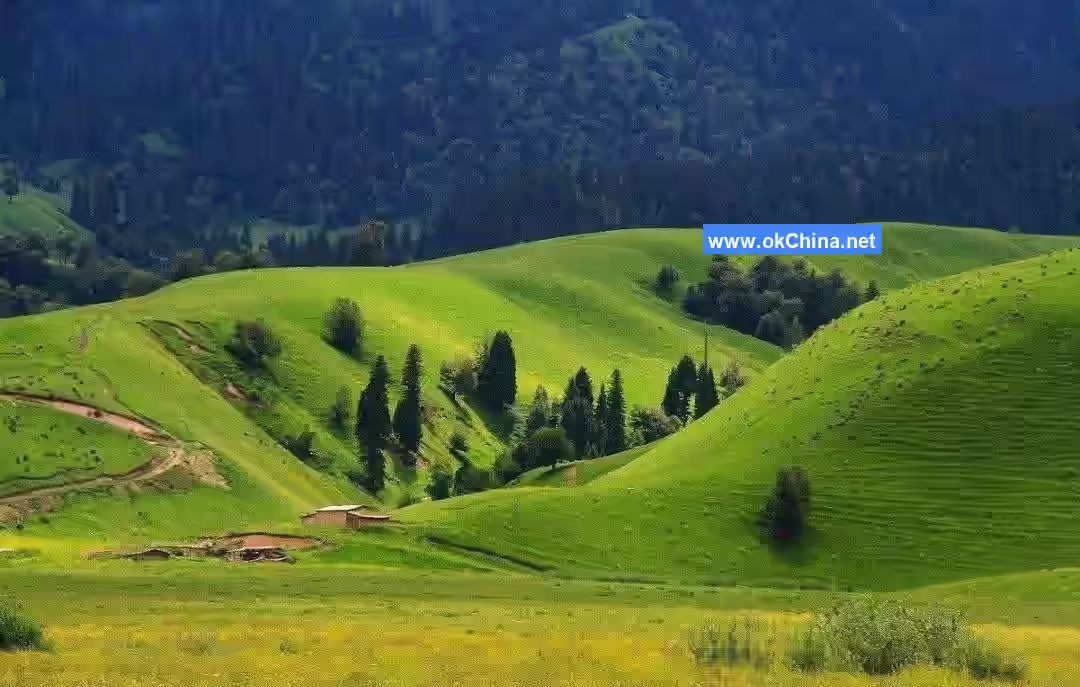
This route primarily showcases the charm of valley landscapes. The grassland here is flatter than the Sky Grassland, mainly reflecting grassland culture and historical heritage. It is a comprehensive tourist attraction integrating ethnic history, culture, and folk customs, suitable for activities like walking and picnicking.

Shuttle Bus Fare: 40 RMB/person
Tour Route: Tourist Service Center → Grassland Tribe → Tawusani → Wusun Ancient Site → Yitigensai → Forest Park → Tourist Service Center
Recommended Photo Spots: Tawusani, Wusun Ancient Site, Yitigensai

Yitigensai is the folk culture interactive experience area of the Narat scenic spot, where the Panlong Valley Road route diverges from the Valley Grassland route. The air in the Forest Park is exceptionally fresh. If you enjoy water sports, you can also experience the thrill and excitement of rafting.

3. Panlong Valley Road

Panlong Ancient Road is the first ecological model road in a scenic area in Xinjiang. Here, you can enjoy both the grassland scenery of Narat and the beauty of the primeval forest.

Round-trip Fare: 40 RMB/person
Tour Route: Tourist Service Center → Tawusani → Wusun Ancient Site → Yitigensai → Shilaiyunzhuan → Jiaolongchuhai → Woniugang → Tiaoshigang → Daigelasi → Tourist Service Center
Recommended Photo Spots: Tawusani, Wusun Ancient Site, Yitigensai, Jiaolongchuhai

Jiaolongchuhai and Woniugang are the most stunning and leisurely spots along the Panlong Valley Road. The Panlong Valley offers a "4+2" self-driving and cycling tour project, divided into an eastern route (sightseeing bus line) and a western route (cycling line). If you want a different viewing experience, take the western route, starting from the Yitigensai node deep into the Panlong Valley Road for a romantic and leisurely forest ride.

If time permits, you can explore all three routes. If time is tight, you can choose one or two. The Sky Grassland is classic and awe-inspiring, so it's highly recommended. The Valley Grassland and Panlong Valley Road have some overlap, so you can choose one of them to visit.

Self-Driving Guide

Narat Grassland is located at the intersection of National Highway G217 and G218, a必经之地 (must-pass place) on the self-driving Duku Highway. When traveling to Yili in spring or summer, Narat is one of the essential destinations.

Scenic Area Opening Hours: 8:30-20:00

When visiting Narat in early April this year to see the顶冰花 (ice-top flowers) by car, I learned about the scenic area's ticket and self-driving policies as follows:

Off-peak Season: April 1st - May 31st: Free entrance ticket
In April and May, self-driving vehicles entering are charged 100 RMB per person, with a minimum of two people per vehicle.

Peak Season: June 1st - September 30th: Entrance ticket reinstated
In June, self-driving vehicles entering are charged 200 RMB per person, with a minimum of two people per vehicle.
In July, self-driving vehicles entering are charged 300 RMB per person, with a minimum of two people per vehicle.

One-day Tour Route Suggestion:
Arrive at the scenic area's Tourist Service Center before 8:30 to complete self-driving procedures. Drive to the Sky Grassland in the morning and the Valley Grassland in the afternoon. Have lunch at Nomadic Family (recommended to bring your own).

This is a one-day self-driving itinerary designed by the scenic area. If you need to enter again on the second day, you will need to purchase tickets again.

Currently open routes: Sky Grassland, Valley Grassland. Panlong Valley Road is temporarily closed and is estimated to open in mid-to-late May.

Set Navigation Destination to: Narat Scenic Area

Road Instructions: Coming from the direction of Yining City, it's mostly highway all the way.

Suitable Vehicle Types: Suitable for all vehicle types.

Self-Driving Route Suggestion:

Best self-driving time: Mid-to-late May (personal opinion, fewer crowds, better scenery).

Combined Routes in the Surrounding Area:

Route A: Duku Highway + Narat
Route B: Duku Highway + Tangbula, Fairy Lake + Narat

Note: Narat in May can be very cold in the morning and evening. It is recommended to bring at least a fleece or a thin down jacket.

Special Reminder: Pack and take back all trash generated during the self-driving trip, and avoid using disposable tableware as much as possible!

Important Notes

nix

Important Child Sites

Scenic Spots and Attractions

Grassland Tribe

"Where to find the ancient kingdom of Wusun? Herders point to the distant Ili River." The Grassland Tribe, established in June 2006, recreates the Wusun tribe from over two thousand years ago, making it the world's first comprehensive attraction reflecting the history, culture, and folk customs of the Kazakh ethnic group. The Wusun Golden Dome Tent within the tribe is hailed as the "First Tent of Northwest China." Here, visitors can witness the grand scene of the Wusun king marrying a Han princess and experience traditional Kazakh cultural scenes such as wedding ceremonies and folk production and daily life.

Flying Horse Team

Founded in 2014 with the support of the Nalati Scenic Area Management Committee, the Flying Horse Team is a cooperative formed by local herders. It provides horse rental services for tourists to experience the joy of Kazakh seasonal migration. It serves as a demonstration site for tourism-driven poverty alleviation, helping local herders increase their income and achieve prosperity.

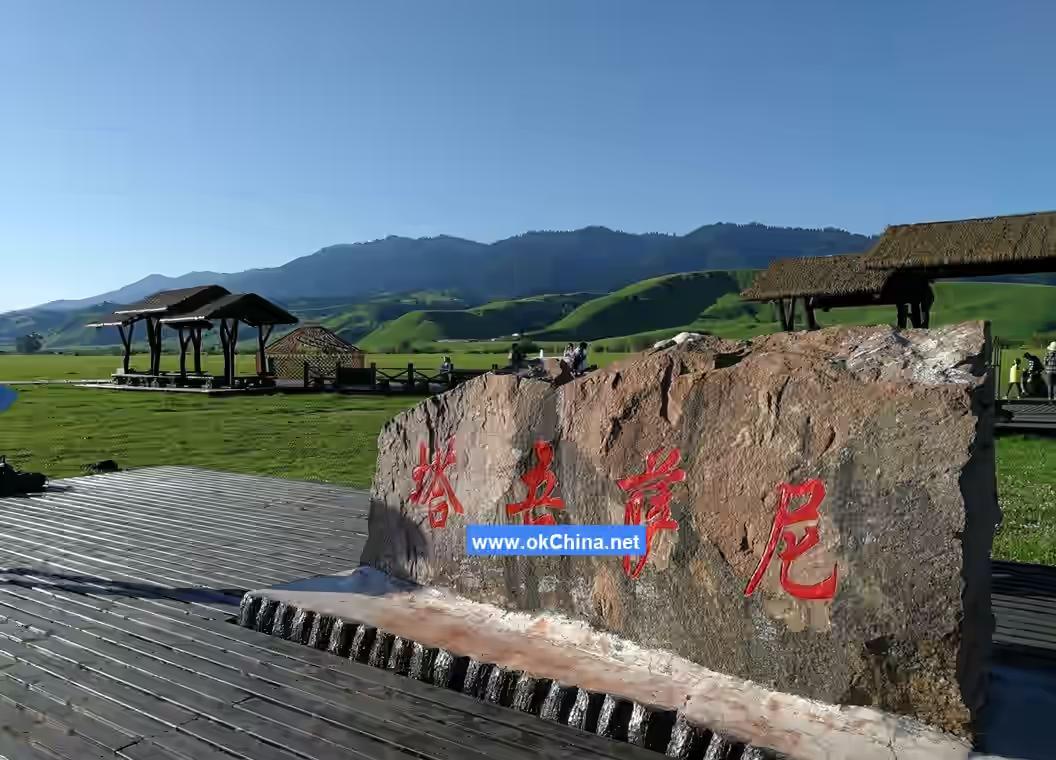
Tawusani

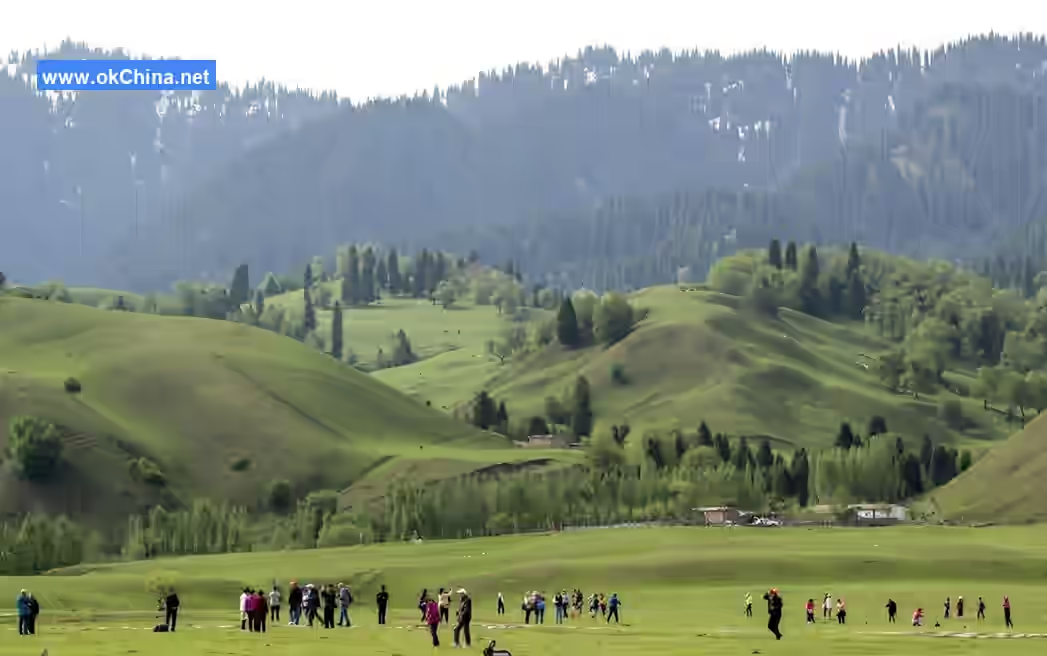
Meaning "beautiful mountain valley" in Kazakh, Tawusani is the first stop into the valley grassland. It features four distinct landscapes on one mountain: snow-capped peaks, dense forests, rolling hills, and flat meadows, serving as a window to the vertical natural landscape of the grassland. The eastern slope resembles the ear of the Tianshan Mountains, listening to the sounds of the earth and silently guarding the Tianshan range, earning it the name "Ear of Tianshan." The southwestern slope resembles a galloping horse with its head held high, symbolizing "immediate success and rapid advancement," and is named "Flying Horse Plain."

Wusun Ancient Relics

The Wusun were an ancient nomadic tribe in Chinese history, rising to prominence in the northwest region from the 2nd to the 1st century BC. During the Western Han Dynasty, Zhang Qian was sent twice as an envoy to the Western Regions, forming a political alliance with the Wusun tribe to resist the Xiongnu and facilitating marriages. Two Han princesses were sent to marry into the Wusun tribe, strengthening the ties between the Han Dynasty and the Western Regions. The Wusun are the primary ancestors of today's Kazakh ethnic group in China and form the main tribe of the Kazakh people. According to incomplete statistics, there are over 200 Wusun ancient tombs scattered across the Nalati Grassland. Based on the scale of the burial, this tomb is suspected to be the mausoleum of the Wusun king, Liejiaomi. This royal tomb is massive, with a diameter of 46 meters and a height of 6.5 meters.

Yitigensai

Located at the crossroads of the Valley Grassland Route, Glacier Landscape Road, and Panlong Valley Road, Yitigensai consists of the ancient Wusun tribe, Lianxin Lake, the Kazakh Folk Culture Exhibition Area, and the Cattle Pen Bar. It is a centralized display area for Kazakh folk culture, where visitors can personally experience and participate in the rich and diverse production and daily life of the Kazakh people, enjoying the simplicity and humility of grassland folk customs. Exiting the Yitigensai Folk Experience Area and heading west across Lianxin Lake, where sky and clouds linger together, visitors arrive at the "Wusun Tribe" nestled among vegetation. This area reflects the primitive living scenes of the Kazakh people, where mountains, forests, grasslands, and riverbanks converge. The encounter of landscape awaits your entry into the secluded dwelling for a timeless encounter.

Daigelasi

Meaning "grassland reception hall" in Kazakh, Daigelasi was historically a place where grassland tribes discussed important matters. Today, it serves as the comprehensive service area for the Valley Grassland Route in the scenic area. It offers tourists entertainment activities such as horseback riding, archery, ethnic costume photos, ancient road carriage rides, grassland motorcycles, as well as dining and accommodation services.

International Horse Racing Track

The Nalati International Horse Racing Track features a standardized international track and natural grandstands, covering approximately 1,050 acres. The track is 1,450 meters long, with flat terrain and knee-high lush grass. It hosts a variety of high-quality horse breeds and serves as a centralized display area for horse culture. It has successfully hosted the National Speed Horse Racing Competition—Nalati Station Open Race multiple times. It is also a gathering place for herders on the grassland, where traditional equestrian sports are held during major festivals: equestrian performances and folk performances on horseback (horse racing, goat snatching, and girl chasing). As a Kazakh proverb says, "Songs and fine horses are the two wings of the grassland people." Regardless of gender or age, Kazakhs start learning to ride horses from the age of five and become skilled riders by around ten years old.

Na·Book Garden

Located on the west side of the Forest Park, the Nalati Book Garden is a sanctuary for the soul and a place for communication. Find a winding path deep in the forested valley, and savor a passage of time and historical changes. The book curtains open to the clear sky among the spruce trees, welcoming visitors with a view of green mountains in the morning.

Forest Park

Located at the easternmost stop of the Valley Route, the Forest Park is a multifunctional tourist destination integrating sightseeing, vacationing, entertainment, recuperation, fitness, adventure, and scientific research. It covers a forested area of 100,000 acres, with an altitude ranging from 1,600 to 2,800 meters. The average annual temperature is below 20 degrees Celsius, and the annual precipitation is 800–1,200 mm. The fresh air and high oxygen content make it a "natural oxygen bar." The vertically distributed plant landscapes form a beautiful natural botanical garden, hailed as a living fossil exhibition hall for plants and a gene bank for wild Chinese medicinal herbs and vegetables. The park is primarily dominated by the nationally protected Tianshan spruce, making it a high-end leisure and wellness area focused on ecological health, leisure vacations, and forest therapy.

Tianying Terrace (Eagle Terrace)

Tianying Terrace is one of the hiking trails in the scenic area and the highest point of the Forest Park, standing at an altitude of 1,800 meters. Wandering through the primeval forest, visitors can breathe the freshest air. Climbing the 2,779-step "Cloud Ladder" leads to the "Eagle Whirlwind," where one can overlook the grassland from an eagle's perspective, evoking the feeling of "ascending the highest peak to see all other mountains appear small." Additionally, due to the convergence of cold and warm air currents here, a natural updraft forms. From May to July each year, eagles soar and circle in the valley in search of food, lingering for a long time, making it their domain—hence the name "Eagle Terrace."

Tianfeng Terrace

"Plant a single grain in spring, harvest ten thousand in autumn." In May, the slopes are covered with pink-white apple blossoms. When the fruits ripen, the entire grassland is filled with the fragrance of apples... reminiscent of the scene described by Tao Yuanming: "a land of idyllic beauty with falling petals." In the golden autumn season, strolling on the fruit-laden slopes allows one to share the joy of harvest, showcasing the beauty of spring blossoms and autumn fruits.

Tianyun Terrace (Cloud Terrace)

The clouds in the sky resemble flocks of white sheep surrounding the连绵的山峰, or galloping steeds驰骋 in the valley. The intertwining clouds and mist make one feel as if置身于 a sea of clouds, hence the name Tianyun Terrace. Accompanying Tianyun Terrace is a giant浮雕 of a grassland girl, showcasing the diligence and kindness of Kazakh women, as if saying, "Is it not a joy to have friends coming from afar?"

Tianjie Terrace (Heavenly Boundary Terrace)

Tianjie Terrace is the watershed between the Valley Grassland and the Sky Grassland, symbolizing the "entrance to paradise, the boundary between heaven and earth," serving as the gateway to the草原通天之处. The凸起的山坡 on the east and west sides resemble a saddle, known in geography as a "saddle部." Standing here feels like urging a horse to gallop across the grassland. From here, one can gaze at the boundless Sky Grassland in the distance and俯瞰 the垂直自然景观 of the Valley Grassland below.

Tianmu Terrace (Heavenly Pasture Terrace)

In spring, as冰雪初融 and百草权舆, the frozen wild lilies bloom quietly under the nourishment of雪水,奏响了 the开场曲 for the沉睡的空中草原. Tulips and dandelions bloom all over the mountains,拉开序幕 for nomadic life. Kazakh herders drive成千上万的牛羊马 to转场 to the lush "summer pastures."届时,毡房点点 and炊烟袅袅 fill the area with the rich atmosphere of nomadic life,呈现ing the繁荣景象 of "vast skies and boundless wilderness, where风吹草地 reveals牛羊."

Nomadic Family

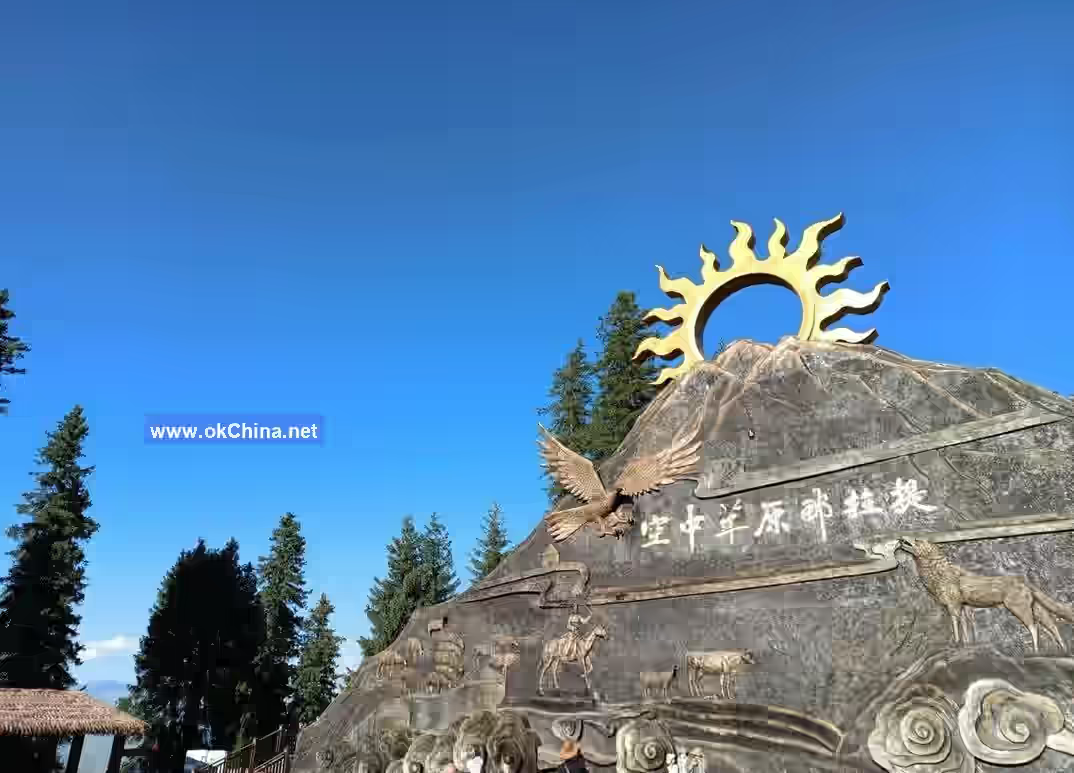
Located at the terminal of the Sky Grassland Route, Nomadic Family is the comprehensive service area for the Sky Grassland Route. It offers tourists entertainment activities such as horseback riding, goat-drawn cart rides, ethnic costume photos, and合影 with草原骆驼. The sculpture矗立在广场中央 is a缩影 of herders' daily lives, reflecting the traditional virtues of the Kazakh ethnic group and展示ing their智慧精髓. It is also the starting point通往天神台. Taking a观光车 allows visitors to一睹 the壮美 of Snow Lotus Peak.

Tiancheng Terrace

Meaning "Heaven's will顺成." Climbing the观景台 to遥望雪山飞鹰, whether in career, studies, or love, everything will become顺利成功.仰望天神台, the耸入云霄的雪峰 is婀娜秀美, with云雾缭绕 around the peak, making one feel心旷神怡.居高临下: the皑皑的雪山,连绵起伏的山丘,葱郁静穆的森林, and洁白的毡房 are all尽收眼底.

Tianshen Terrace (Heavenly Deity Terrace)

Tianshen Terrace is空谷幽灵, with举目蓝天如洗 and白云飘逸,雪山耸立. Also known as "Snow Lotus Valley," its altitude of 3,000 meters makes it feel like dwelling with神灵, allowing the soul to purify in圣洁. It is also named for its bird's-eye view from the sky, resembling a blooming snow lotus. The surrounding险峻的山峰 are like雪莲花瓣, and the奇异的鲜花 in the valley resemble雪莲花蕊. The积雪 provides a suitable environment for雪莲的生长. Every July and August,雪莲花孤傲绽放,独语高山.

Jiaolong Chuhai (Sea Dragon Emerges)

Known for its黑森林, the雪杉森林沟挟裹ed by两侧重叠山峦 is堪称 the most震撼的画面 among the沿途丛林景观. The tall and苍劲的云杉 stand like定海神针 or倚空长剑,齐刷刷插矗于风涛云浪之间,汲取山川灵性日月精华,化作兴云作雨万千游龙. They依偎,守护,滋养, and扮美 the秀涧灵峰 of Panlong Valley.

Woniugang (Resting Ox Ridge)

The ridge地势居高临下 with开阔视野. From afar, it looks like an ox resting on the mountain grazing. Here, one can not only眺望远处连绵群山 and四围迢遆丛林 but also俯瞰岗下的山谷,观赏到山谷丛林间若隐若现的哈萨克冬窝子和坡地牧场上悠闲吃草的牛羊. The valley below Woniugang is the most经典性 among the无数山谷 in the Panlong scenic area. It integrates沟坡林溪综合地貌为一体, with幽谷密林,缓坡深溪, and四季景色美的惊人.

Tiaoshigang (Gazing Stone Ridge)Also known as Eagle Whirlwind, this is the best spot to overlook Eagle Whirlwind Peak and the Celestial Terrace’s Sky-Flying Stone. Gazing into the distance, a tall, towering peak stands where eagles beat their wings and circle above the summit, hence the name Eagle Whirlwind Peak. Due to the convergence of cold and warm air from the three high mountains surrounding the Nalati Grassland right above Eagle Whirlwind Peak, a powerful updraft forms, attracting golden eagles and goshawks from the grassland to gather here. Riding the updraft, they glide and circle effortlessly in search of mates and prey. Dozens to hundreds of eagles and hawks gather in the sky above Eagle Whirlwind Peak, either leisurely circling or diving and soaring, creating a magnificent spectacle of eagles battling the heavenly winds, their clear cries echoing as they dance with vigor—a breathtaking and soul-stirring sight.

Green Ingot

Named for its lush vegetation and mountain shape resembling an ingot, surrounded by forests, this area offers broad views and pleasant scenery. It is also known as the "land of hidden treasures, a place to seek riches." Legend has it that during the western expedition of Chagatai, the second son of Genghis Khan, he ordered all the army’s treasures to be buried here to lighten the load while pursuing the enemy. However, when the troops returned after defeating the enemy, a dense fog enveloped the area, making it impossible to locate the treasures. This place is filled with mystery and allure.

Volta Jiaota

A romantic and poetic destination, it serves as the starting point of the Windmill Terrace love-themed route. The mountain fields are adorned with blooming flowers and green grass, while the peaks are shrouded in mist and clouds, creating an extraordinarily beautiful scene that offers a unique sense of poetry and distant horizons. It is also revered as the "I love her, find her" love sanctuary and a premier location for wedding photography. Integrating sloping valleys, winding mountain forests, and peak观光, it features multiple landscapes within a single mountain, each scene ever-changing. Visitors praise it as "a mountain with four seasons, different weather within ten miles."

Celestial Terrace

Also known as "Yutasi," which translates to "stone house" in Kazakh, Celestial Terrace is primarily formed by massive rock clusters at the mountaintop, creating landscapes such as the "Guardian Deity of the Western Regions," "Celestial Throne," and walking trails. It embodies the auspicious寓意 of "harmony between heaven and humanity, where merging with the mountain leads to immortality." At an elevation of 2,800 meters, it stands at the head of the river valley. Its得天独厚 geographical conditions make Celestial Terrace the首选 destination for outdoor camping and the最佳 angle for viewing sea of clouds and sunrise. Beneath the vast sky and above the云海,置身其中 feels like entering a fairyland.

Windmill Terrace

A hiking route themed around love, it is the Champs-Élysées of the grassland. Accompanied by mountains full of flowers, walking up the坡 of commitment allows beautiful love to become as圆满 as the nine-leaf windmill atop the peak, spending a lifetime together. As time passes, walking through the苍苍 reeds, the most beautiful sentiments are hidden in the years, and the truest affections are imprinted in the heart. Let us encounter all缘分 related to love and experience the romantic journey from connection to fruition.

Official Website

Official Scenic Area Website

https://www.nalati.com/

Brief History

Narat

1. Introduction

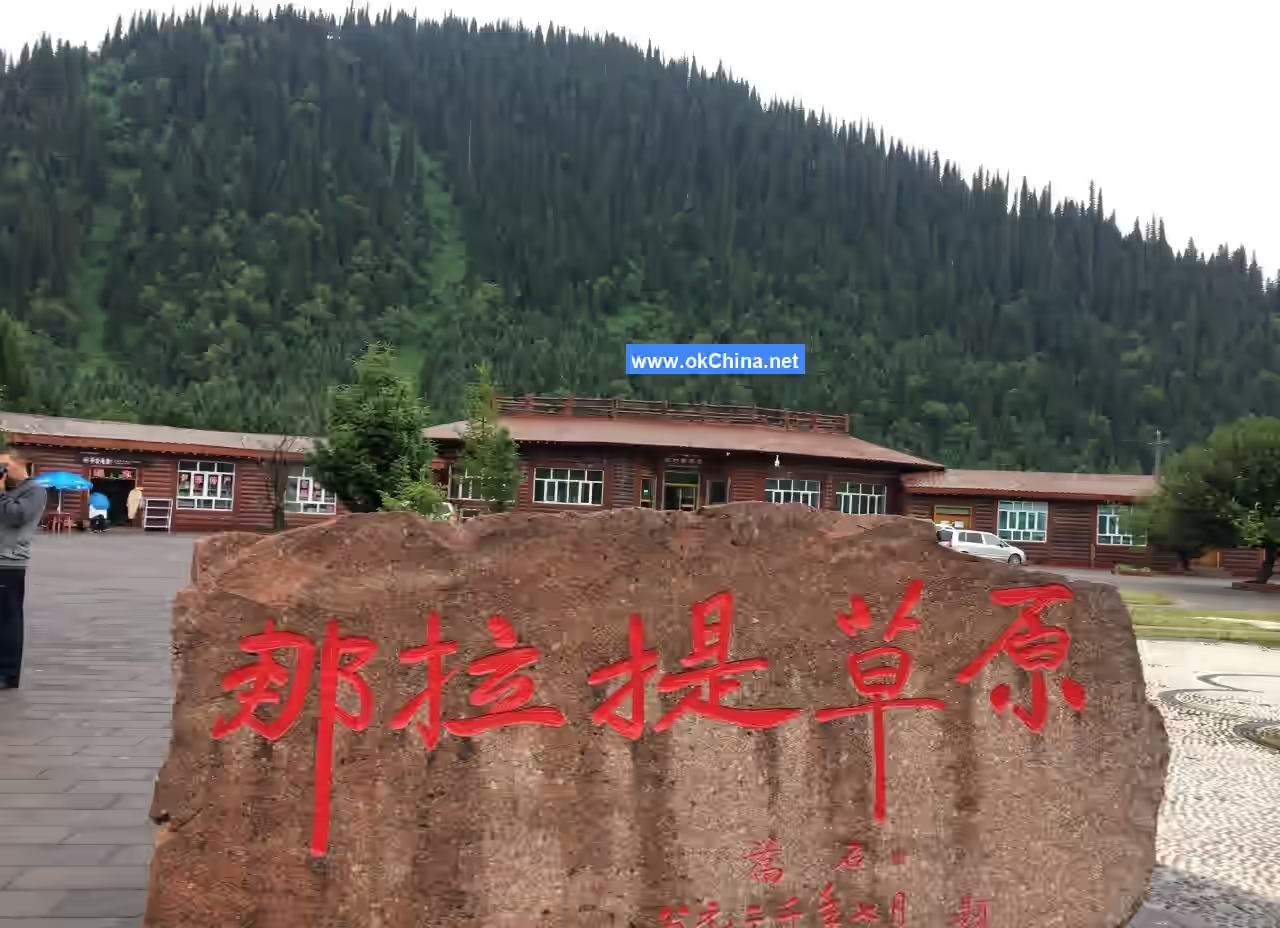
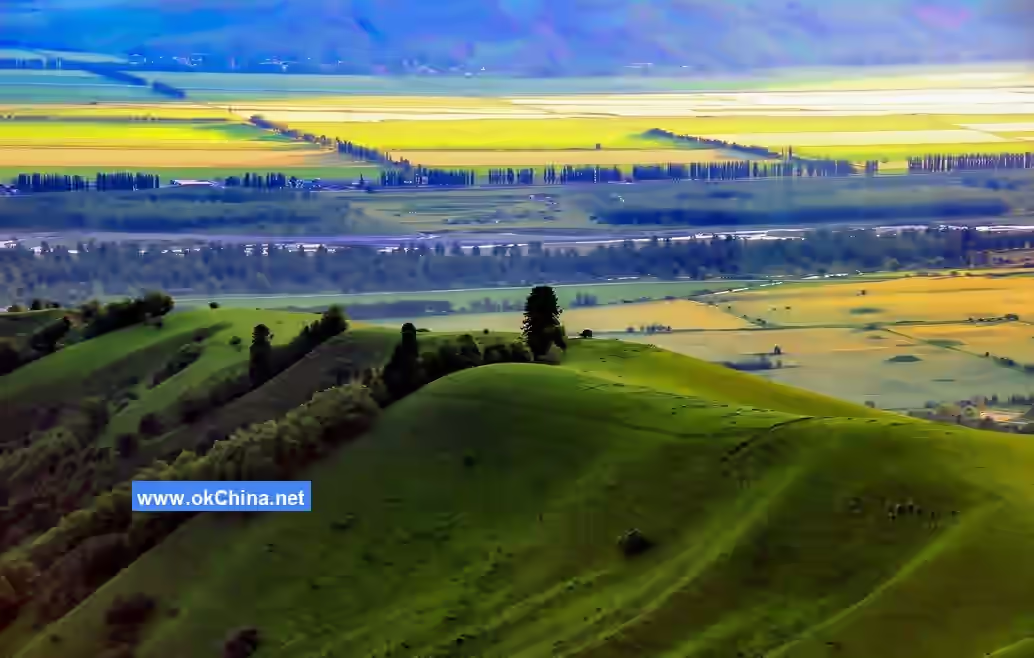
The Narat Tourist Scenic Area, also known as the Narat Scenic Area, is located in Xinyuan County, Ili Kazakh Autonomous Prefecture, Xinjiang Uygur Autonomous Region. Situated in the heart of the Tianshan Mountains at the eastern end of the Ili River Valley, the scenic area was established in 1999 and covers a total planned area of 1,848 square kilometers. From south to north, the scenic area comprises the Alpine Grassland Sightseeing Zone, the Kazakh Folk Customs Zone, and the Tourist Living Zone. Major attractions include Tianjie Terrace, Nomadic Family, Tawusani (meaning "beautiful mountain valley" in Kazakh), Tianxian Terrace, Wolta Jiaota Viewing Platform, Snow Lotus Valley, and more. The area is home to the hospitable, song-and-dance-loving Kazakh people, known as the "children of the Tianshan," who still preserve their ancient, rich folk customs and profound grassland culture. The scenic area integrates grasslands, valleys, and forests, boasting high vegetation coverage and abundant wildlife resources. Due to its unique natural ecological and cultural landscapes, it is hailed as the "Green Island of Tianshan," "Green Homeland," and "Colorful Grassland."

2. Geographical Environment

2.1 Location and Territory

The Narat Tourist Scenic Area is situated in the heart of the Tianshan Mountains at the eastern end of the Ili River Valley, between 85°17′–85°28′ east longitude and 43°01′–43°15′ north latitude. The total planned area is 1,848 square kilometers.

2.2 Climate

The Narat Tourist Scenic Area has a temperate continental climate, with an average altitude of 1,800 meters, annual rainfall of approximately 880 mm, and average summer temperatures around 20°C.

2.3 Plant Resources

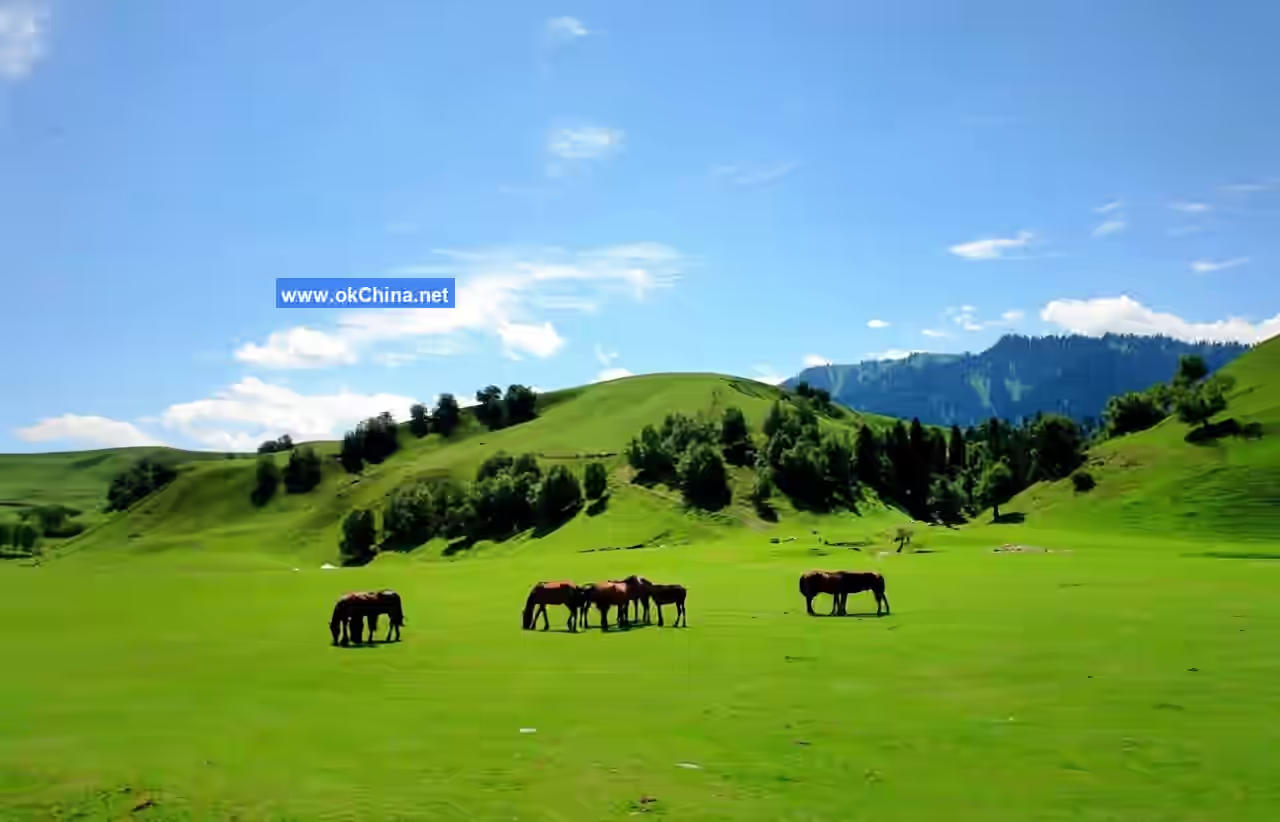
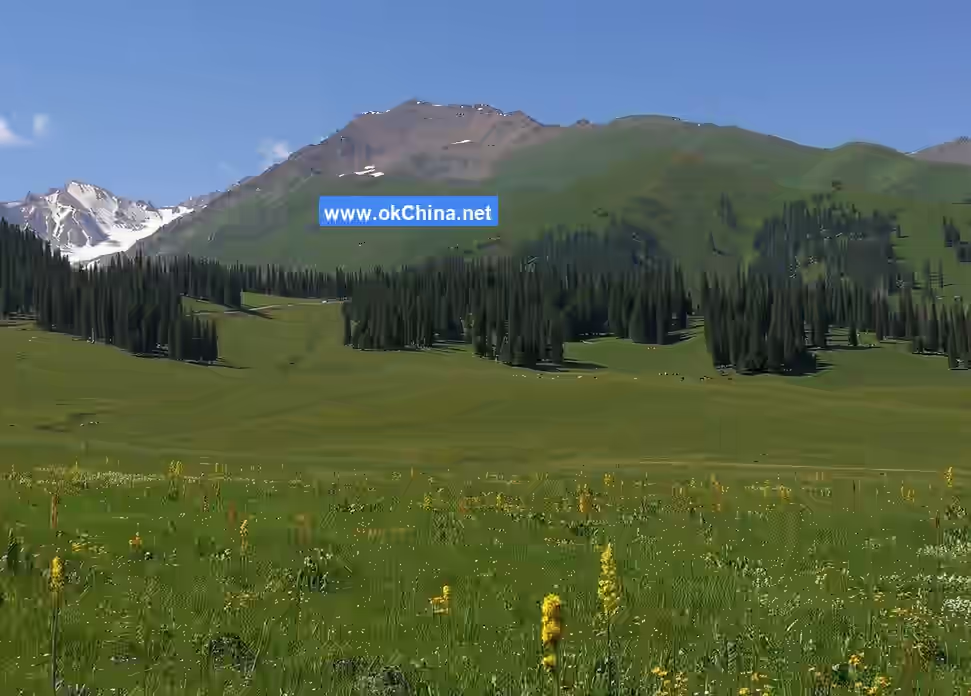
Narat Grassland is one of the world's four major grasslands, belonging to the subalpine meadow plant region. It features rich vegetation, including lush mountain meadows dominated by the slender-stemmed iris community. Other associated species mainly include rough sage, false gentian, sedge, wheatgrass, fescue, strawberry, thyme, and horsetail (Equisetum), which belongs to the Equisetaceae family of the Sphenopsida subclass.

2.4 Animal Resources

The Narat Tourist Scenic Area is rich in animal species, including snowcock, ring-necked pheasant (wild pheasant), otter, roe deer, lynx, fox, steppe polecat, egret, kestrel, ibex, snow leopard, wolf, golden eagle, rough-legged buzzard, and more.

3. Main Attractions

3.1 Valley Grassland

3.1.1 Grassland Tribe

"Where to find the ancient Wusun Kingdom? Herders point to the distant Ili River." The Grassland Tribe, established in June 2006, recreates the Wusun tribe from over 2,000 years ago. It is the world's first comprehensive attraction reflecting Kazakh history, culture, and folk customs. The Wusun Golden Dome Yurt within the tribe is known as the "First Yurt in Northwest China." Here, visitors can witness the grand scene of a Wusun king marrying a Han princess and experience traditional Kazakh cultural scenes such as wedding ceremonies and folk production and daily life.

3.1.2 Tawusani

Meaning "beautiful mountain valley" in Kazakh, Tawusani is the first stop into the Valley Grassland. It features one mountain with four distinct landscapes: snow-capped peaks, dense forests, rolling hills, and flat meadows, serving as a window to the vertical natural landscape zones of the grassland. The eastern slope resembles the ear of the Tianshan mother, listening to the sounds of the earth and silently guarding the Tianshan, earning it the name "Ear of Tianshan." The southwestern slope resembles a galloping horse with its head held high, symbolizing "immediate success and rapid advancement," and is named "Flying Horse Plain."

3.1.3 Wusun Ancient Relics

The Wusun were an ancient nomadic tribe in Chinese history, rising to prominence in northwest China between the 2nd and 1st centuries BCE. During the Western Han Dynasty, Zhang Qian was sent twice as an envoy to the Western Regions. To form a political alliance against the Xiongnu, the Han court arranged marriages with the Wusun tribe, sending two princesses to marry Wusun leaders, thereby strengthening ties between the Han Dynasty and the Western Regions. The Wusun are a primary source of the modern Kazakh ethnic group in China and form the main tribal component of the Kazakh people. According to incomplete statistics, there are over 200 Wusun ancient tombs scattered across the Narat Grassland. Based on the tomb's scale, it is speculated that this tomb might be the mausoleum of the Wusun King Liejiaomi. This royal tomb is massive, with a diameter of 46 meters and a height of 6.5 meters.

3.1.4 Yitigensai

Located at the crossroads of the Valley Grassland route, Glacier Landscape Road, and Panlong Valley Road, Yitigensai consists of the Ancient Wusun Tribe, Lianxin Lake, Kazakh Folk Culture Exhibition Area, and the Cattle Pen Bar & Restaurant. It is a centralized display area for Kazakh folk culture, where visitors can personally experience and participate in the diverse production and daily life of the Kazakh people, enjoying the simplicity and humility of grassland folk customs. Exiting the Yitigensai Folk Experience Area and heading west across the Lianxin Lake, where sky light and cloud shadows linger, leads to the "Wusun Tribe" nestled among vegetation. This area reflects the original living scenes of the Kazakh people, following the encounter of mountains, forests, grasslands, and riverbanks.

3.1.5 Daigelasi

Meaning "grassland reception hall" in Kazakh, Daigelasi was historically a place where grassland ethnic groups discussed important matters. It now serves as the comprehensive service area for the Valley Grassland route. It offers tourists entertainment experiences such as horseback riding, archery, ethnic costume photos, ancient road carriage rides, grassland motorcycles, as well as dining and accommodation services.

3.1.6 International Horse Racing Field

The Narat International Horse Racing Field features a standardized international track and natural grandstands, covering approximately 1,050 acres. The track is 1,450 meters long, situated on flat terrain with knee-high sturdy grass. It houses various high-quality horse breeds and serves as a centralized display area for horse culture. It has successfully hosted the National Speed Horse Racing Competition—Narat Station Open Race multiple times. It is also a gathering place for herders on the grassland, where traditional equestrian sports are held during major festivals: equestrian performances and folk performances on horseback (horse racing, goat snatching, girl chasing). A Kazakh proverb says, "Songs and fine horses are the two wings of the grassland people." Regardless of gender or age, people start learning to ride horses from the age of five and become skilled riders by around ten.

3.1.7 Na·Shuyuan (Narat Academy)

As a showcase for Narat Scenic Area's own high-end cultural image, Narat Academy serves as a cultural name card for Ili region and even the entire Xinjiang, targeting political, business, and artistic circles nationwide and globally. It is a high-end cultural academy integrating sightseeing, leisure, elegant gatherings, communication, solitude, and socializing—a cultural Eden for writers, painters, musicians... offering personal solitude, group gatherings, and delightful immersion.

3.1.8 Forest Park

Narat National Forest Park is located at the easternmost stop of the Valley route. It is a multifunctional tourist resort integrating sightseeing, vacationing, entertainment, recuperation, fitness, adventure, and scientific research. The forest coverage area is 100,000 mu (approx. 66.67 sq km), with an altitude ranging from 1,600 to 2,800 meters. The average annual temperature is below 20°C, and annual precipitation is 800–1,200 mm. With fresh air and high oxygen content, it is known as a "natural oxygen bar." The vertically stratified plant landscape forms a beautiful natural botanical garden, hailed as a living fossil exhibition hall for plants and a gene bank for wild Chinese medicinal herbs and vegetables. The park's tree species are mainly the nationally protected Tianshan spruce. It is a high-end leisure and wellness area focusing on ecological health preservation, leisure vacations, and forest wellness.

3.1.9 Tianying Terrace (Sky Eagle Terrace)

Tianying Terrace is one of the scenic area's hiking trails and the highest point of the Forest Park, at an altitude of 1,800 meters. Wandering through the primeval forest to breathe the best air, climbing the 2,779-step "cloud ladder" leads to the "Eagle Whirlwind." Viewing the grassland from an eagle's perspective evokes the feeling of "ascending the summit, dwarfing all surrounding mountains." Additionally, due to the convergence of cold and warm air currents here, a natural updraft forms. Every May, June, and July, eagles soar and circle the valley in search of food, lingering for long periods, making it the domain of eagles, hence the name "Sky Eagle Terrace."

3.2 Sky Grassland

3.2.1 Tianyun Terrace (Sky Cloud Terrace)

The clouds in the sky resemble flocks of white sheep surrounding the连绵的山峰, or galloping steeds驰骋在山谷间. When clouds and mist meet and intertwine, one feels置身于云海之中, hence the name Tianyun Terrace. Accompanying Tianyun Terrace is a large浮雕 of a grassland girl, showcasing the diligence and kindness of Kazakh women, as if saying, "Is it not a joy to have friends come from afar?"

3.2.2 Tianjie Terrace (Sky Boundary Terrace)

Tianjie Terrace is the watershed between the Valley Grassland and the Sky Grassland. Its name寓意 "the entrance to paradise, the boundary between heaven and earth," as it is the passage from the grassland to the sky. The凸起的山坡 on its east and west sides are referred to as a "saddle" in geography.

3.2.3 Tianmu Terrace (Sky Pasture Terrace)

In spring, as冰雪初融 and百草权舆, the frozen wild lilies bloom悄然 under the nourishment of雪水,奏响了开场曲 for the slumbering Sky Grassland. Tulips, wild poppies, and dandelions bloom漫山遍野,拉开序幕 for nomadic life.

3.2.4 Nomadic Family

Nomadic Family is located at the terminal station of the Sky Grassland and serves as the comprehensive service area for the Sky Grassland route. It offers tourists entertainment experiences such as horseback riding, goat cart rides, ethnic costume photos, and合影 with grassland camels. The sculpture矗立在广场中央 is a缩影 of herders' daily life, reflecting the traditional virtues and showcasing the智慧精髓 of the Kazakh people.

3.2.5 Tiancheng Terrace (Heavenly Success Terrace)

寓意 "Heaven's will brings顺成." Ascending the viewing platform allows one to遥望雪山飞鹰.#### 3.2.6 Celestial Terrace The Celestial Terrace is a secluded valley where one can look up to a sky as clear as if washed, with drifting white clouds and towering snow-capped mountains. Also known as "Snow Lotus Valley," its elevation of 3,000 meters makes it feel like dwelling among deities, purifying the soul in its sacred purity. It earns its name from an aerial view resembling a blooming snow lotus, with the surrounding rugged peaks like petals and the valley's exotic flowers like the pistils. The snow provides an ideal environment for the snow lotus, which blooms proudly and solitarily in July and August each year, whispering to the high mountains.

3.3 Dragon Coiling Valley Trail

3.3.1 Dragon Emerges from the Sea

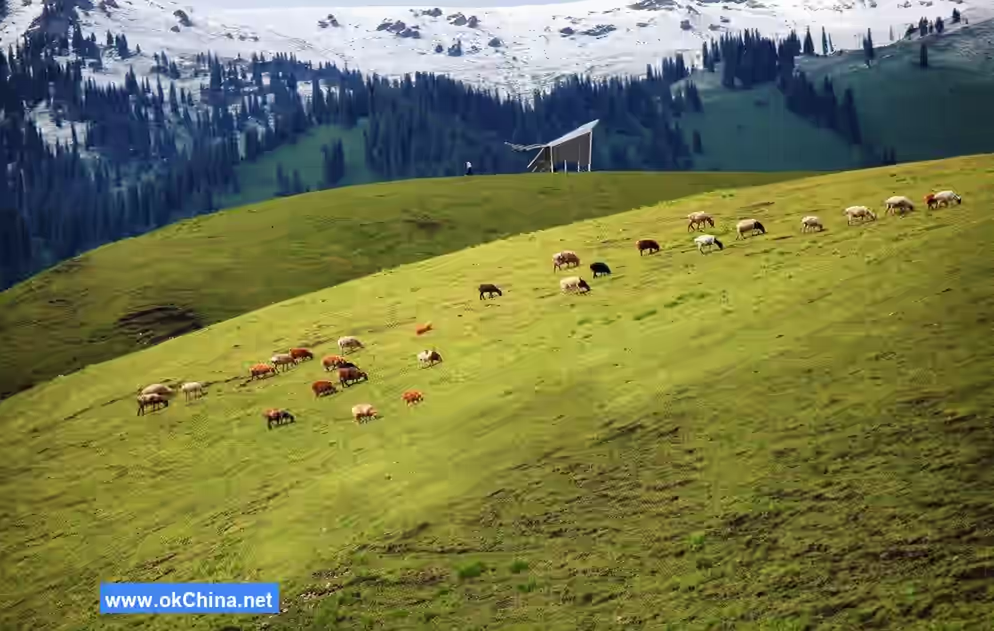
Famed for its dark forest, the snow-fir forest gorge nestled between overlapping mountain ranges presents the most awe-inspiring scene along the trail. Towering, robust spruce trees stand like pillars stabilizing the sea or swords leaning against the sky, uniformly piercing through the winds, waves, and clouds. Drawing spiritual essence from the mountains and rivers and the essence of the sun and moon, they transform into countless roaming dragons that bring clouds and rain, embracing, guarding, nourishing, and beautifying the elegant streams and spiritual peaks of Dragon Coiling Valley.

3.3.2 Recumbent Ox Ridge

The ridge commands a high vantage point with an open view. From afar, it resembles an ox lying on the mountain grazing. Here, one can gaze upon the distant rolling mountains and the surrounding vast forests, as well as overlook the valley below, catching glimpses of the faintly visible Kazakh winter dwellings and the leisurely grazing cattle and sheep on the sloping pastures. The valley beneath Recumbent Ox Ridge is the most classic among the countless valleys in the Dragon Coiling scenic area.

3.4 Wolta Jiaota

3.4.1 Green Ingot

Named for its lush vegetation and mountain shape resembling an ingot embraced by forests, this area offers broad views and pleasant scenery, also known as "the land of hidden treasure, the place to seek treasure." Legend has it that during Genghis Khan's western expedition, his second son Chagatai, to lighten the load and pursue the enemy, ordered all the army's treasures to be buried here. When the troops returned after defeating the enemy, a dense fog enveloped the area, making it impossible to find the treasure. This place is filled with mystery and allure.

3.4.2 Wolta Jiaota

A romantic place full of poetic charm, it is the starting point of the Windmill Terrace love-themed route. Flowers and green grass cover the mountain fields, with clouds and mist swirling around the peaks... Such breathtaking scenes offer a different kind of poetry and distant horizon. It is also revered as the love sanctuary "I love her, I seek her" and the premier location for wedding photography. Integrating sloping valleys, winding mountain forests, and mountaintop views, it features multiple landscapes on a single mountain, each scene ever-changing. Visitors praise it as "experiencing four seasons on one mountain, with weather changing every ten li."

3.4.3 Celestial Immortal Terrace

Also known as "Yutasi," which translates from Kazakh as "stone house," the Celestial Immortal Terrace is primarily formed by massive rock clusters at the summit, creating landscapes such as the "Guardian Deity of the Western Regions," "Celestial Immortal Throne," and walking trails. It embodies the auspicious concept of "harmony between heaven and humanity, where merging with the mountain makes one an immortal." At an elevation of 2,800 meters, it stands at the head of the river valley. Its unique geographical conditions make it the preferred site for outdoor camping and the best vantage point for viewing the sea of clouds and sunrise. Under the vast sky and above the sea of clouds, one feels as if transported to a fairyland.

3.4.4 Windmill Terrace

A hiking route themed around love, it is the Champs-Élysées of the grassland. Accompanied by mountains full of flowers, walking up the Engagement Slope allows beautiful love to become as complete and fulfilling as the nine-leaf windmill atop the mountain, promising a lifetime together. As time passes, walking through the lush reeds, the most beautiful sentiments are hidden in the years, and the truest affections are imprinted in the heart. Let us encounter all love-related connections and experience the romantic journey from fate to fruition.

4. History and Culture

4.1 Origin of the Name

Legend has it that during Genghis Khan's western expedition, a Mongol army passed through Toksun and the Bayanbulak Grassland to assemble in the Ili River Valley. Struggling through the southern foothills of the Tianshan Mountains in midsummer, they encountered snowstorms and chilling cold. The Mongol soldiers, suffering from hunger and cold, were utterly exhausted. Unexpectedly, after crossing a mountain pass (called "daban" in Mongolian), the clouds parted, the sun shone brightly, and before them lay a vast plain with blooming flowers and murmuring streams, as if they had entered another world. The soldiers felt refreshed and exhilarated, and they couldn't help but shout in unison: "Narat, Narat..." In Mongolian, this translates to "the place where the sun is first seen," later phonetically translated as "Nalati," giving birth to this evocative geographical name.

4.2 Cultural Activities

4.2.1 Apricot Blossom Festival

Held annually from late March to mid-April when apricot blossoms are in full bloom, the Apricot Blossom Festival features various themed activities such as live concerts, apricot blossom flash camp experiences, "Traditional Attire in Spring" performances, and special product exhibitions. Leveraging the unique natural landscape of Nalati Apricot Blossom Valley, the festival combines open scenic viewing with experiential tourism, blending natural beauty with folk culture. It promotes high-quality apricot blossom-themed tour packages, showcasing the county's rich tourism resources and vibrant folk culture.

Comments

Post a Comment

Loading comments...