Wa Palace
I. Introduction
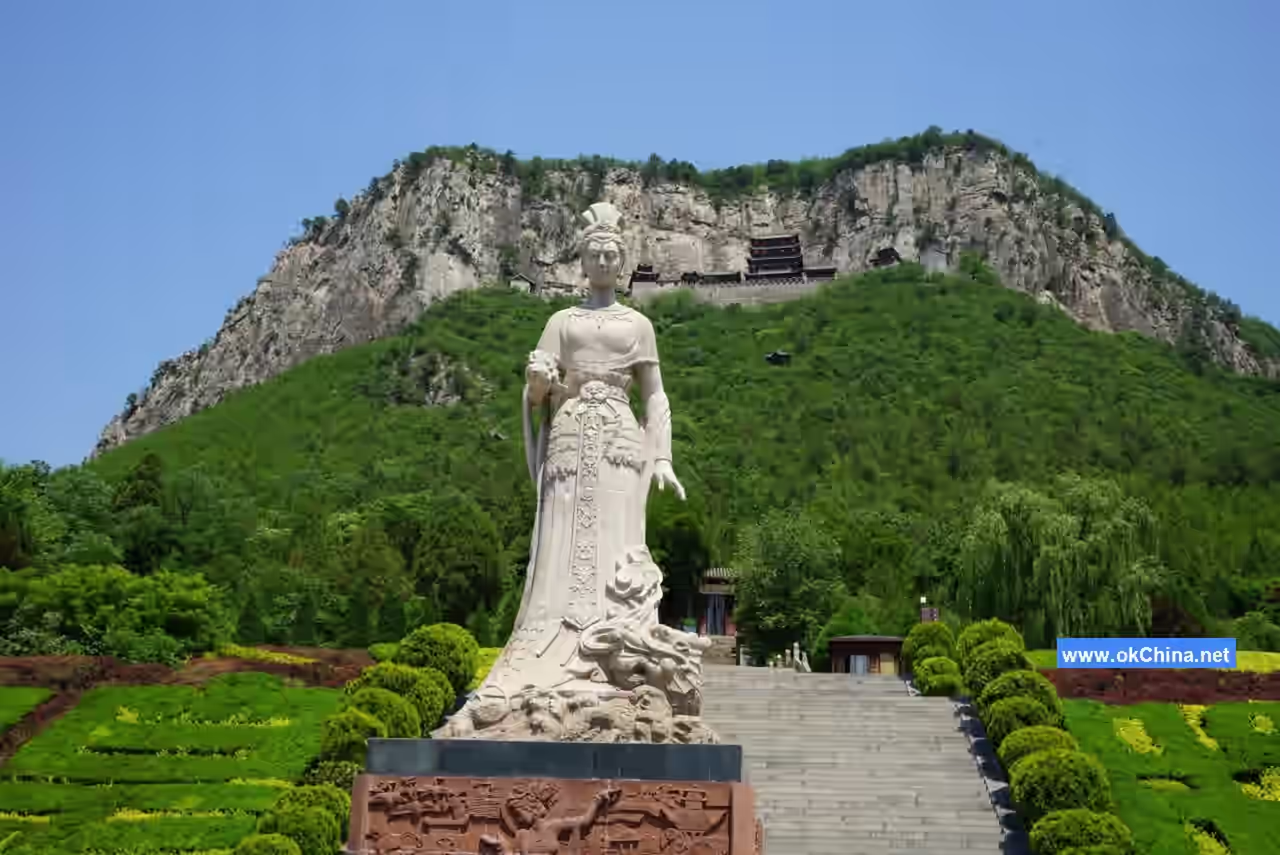
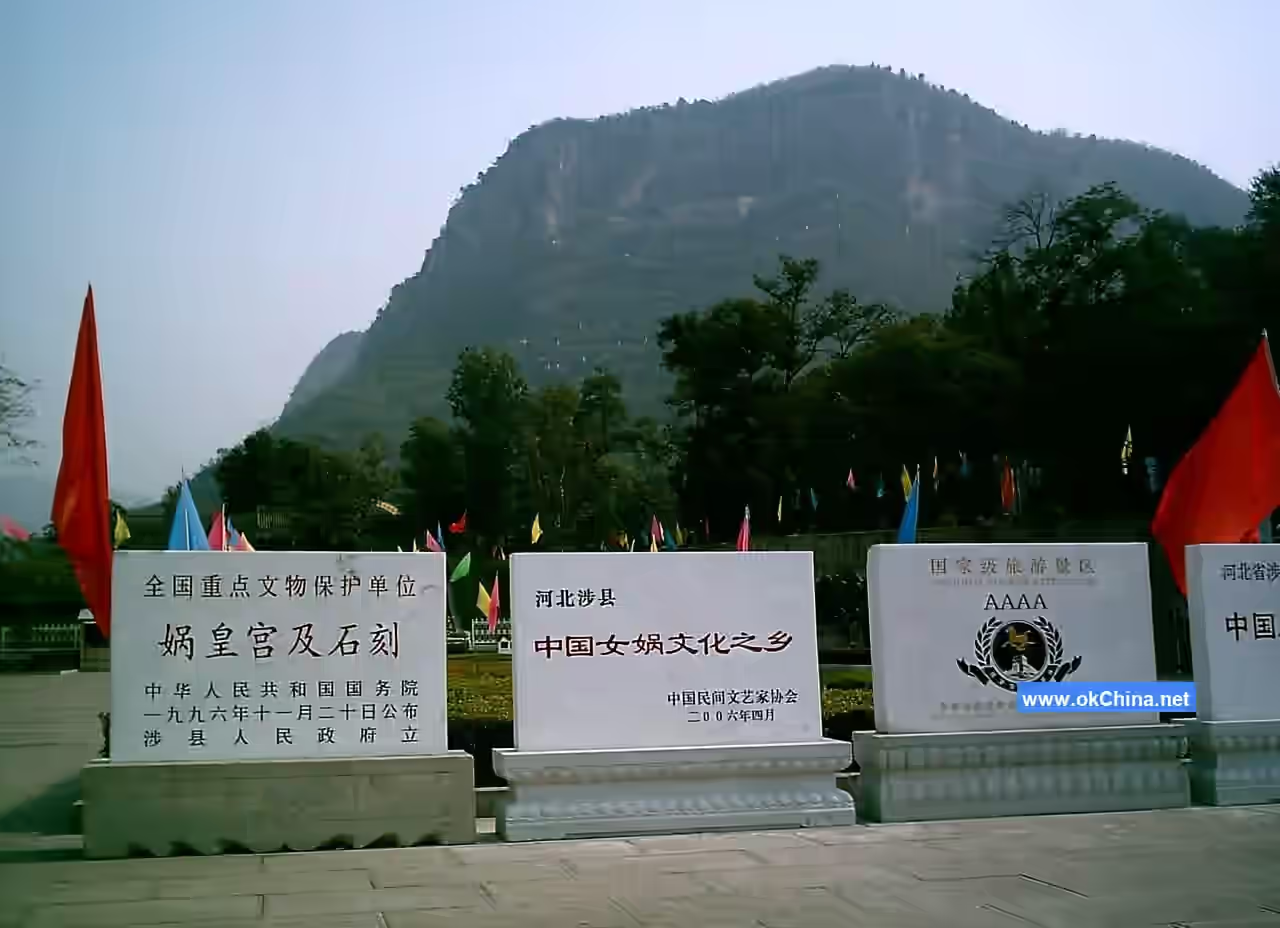
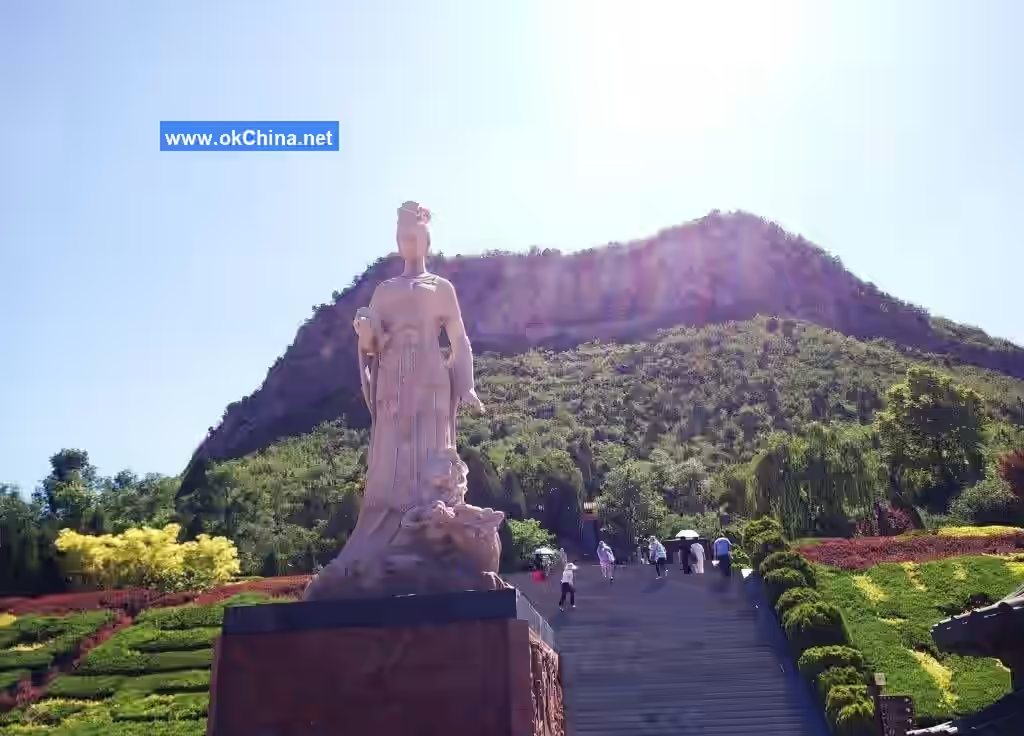
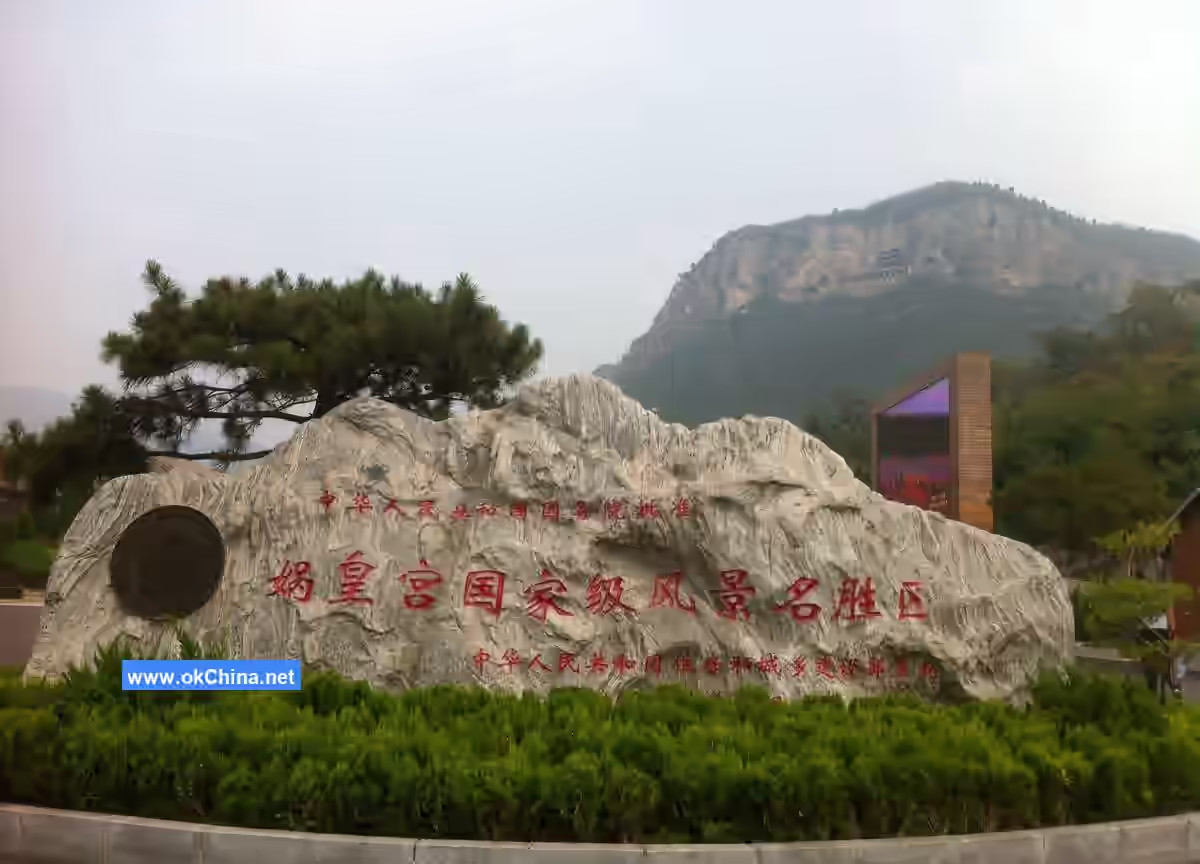
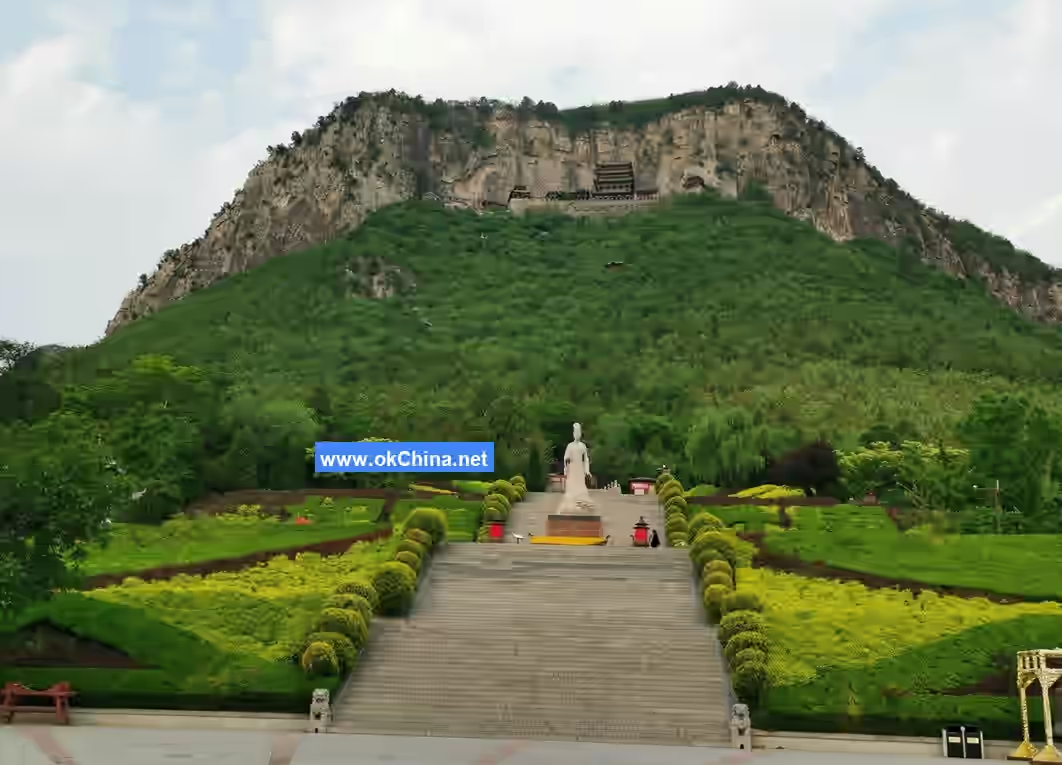
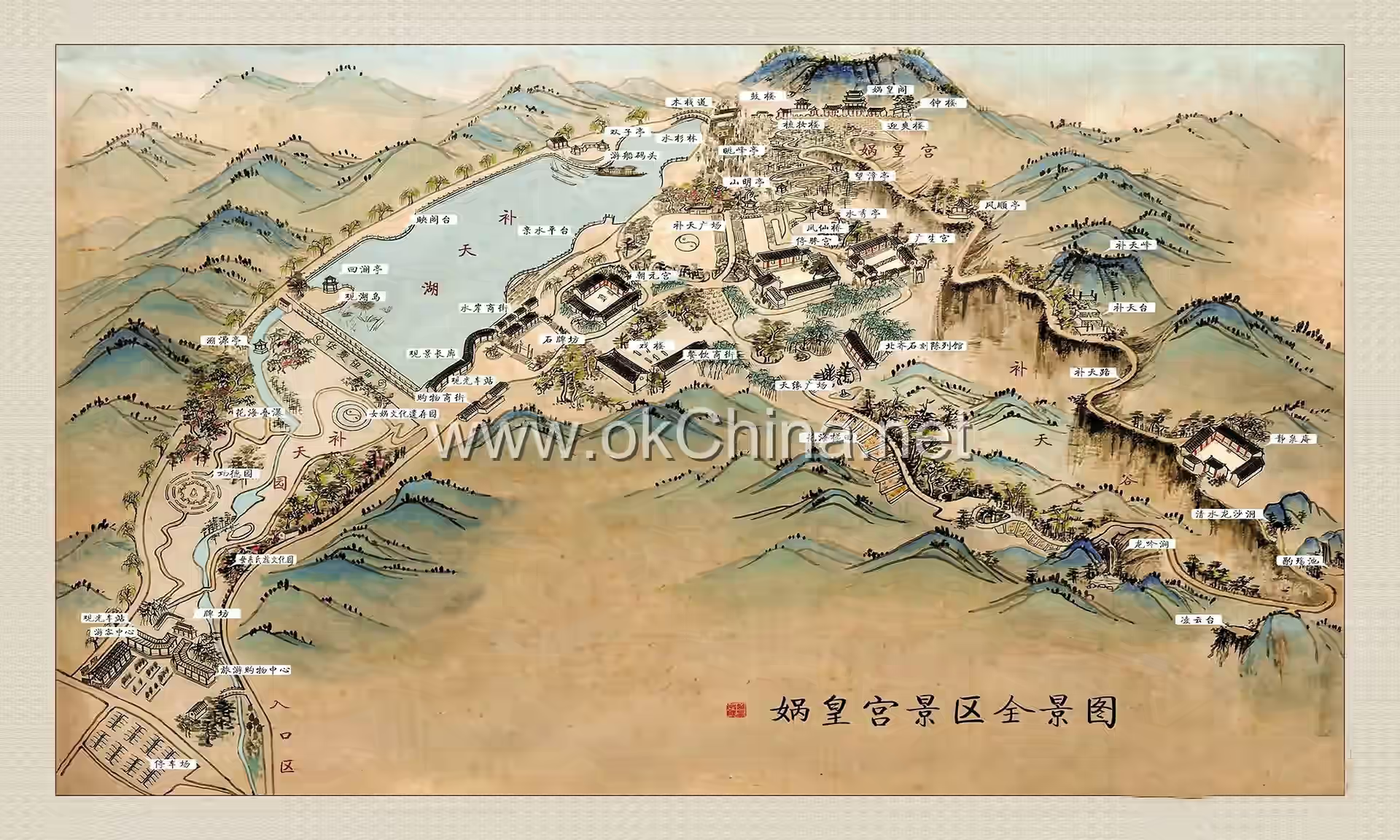
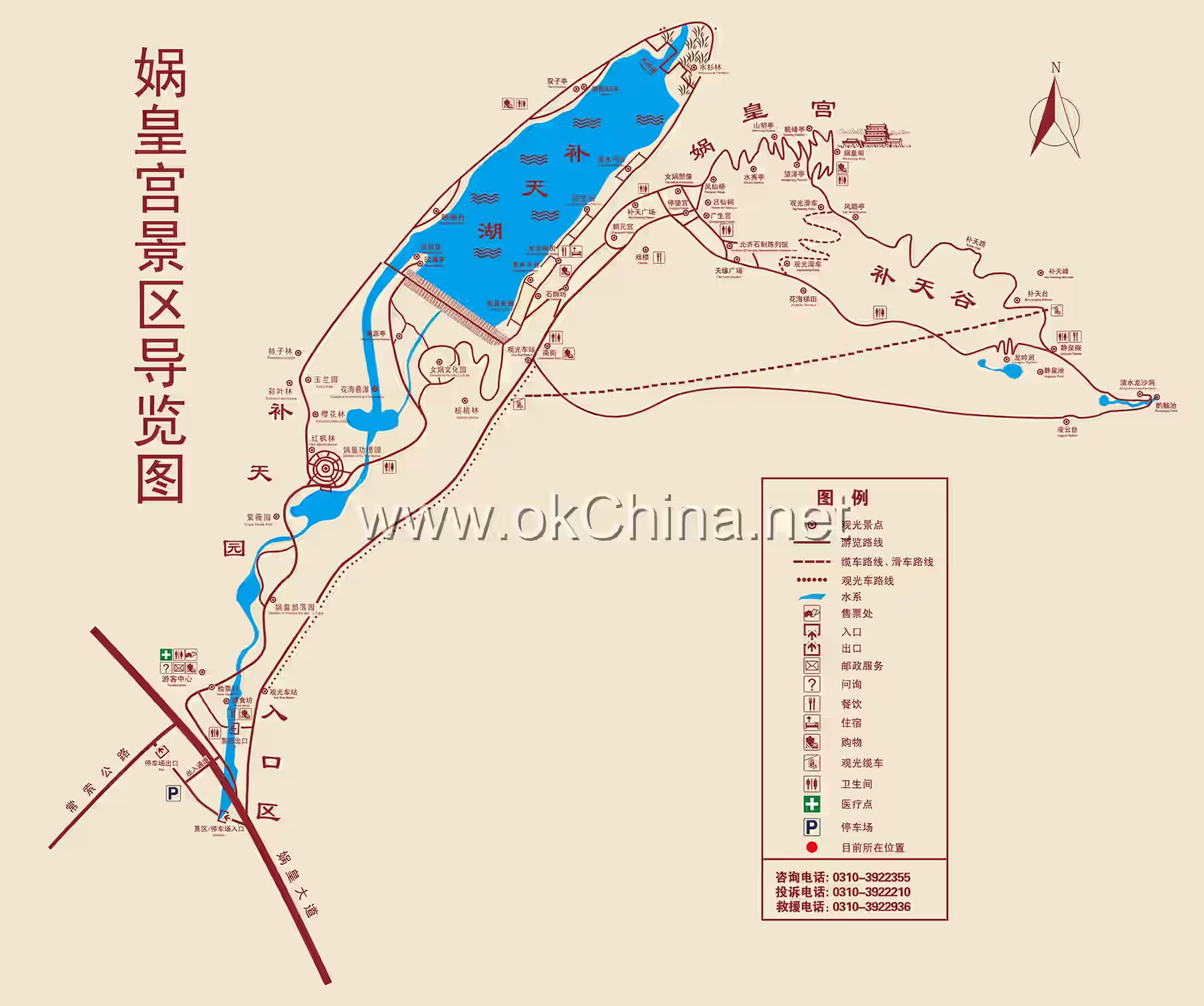
Wa Palace is located on Zhonghuang Mountain in She County, Handan City, Hebei Province, covering an area of 5 square kilometers. It consists of five zones: the service area, the Sky-Mending Garden, the Sky-Mending Lake, Wa Palace, and the Sky-Mending Valley. This is the legendary site where the goddess Nüwa "created humans from clay and mended the sky with melted stones." It is the largest and earliest ancient architectural complex in China dedicated to the worship of Nüwa, the legendary ancestor of humanity.
II. Historical Background
Nüwa
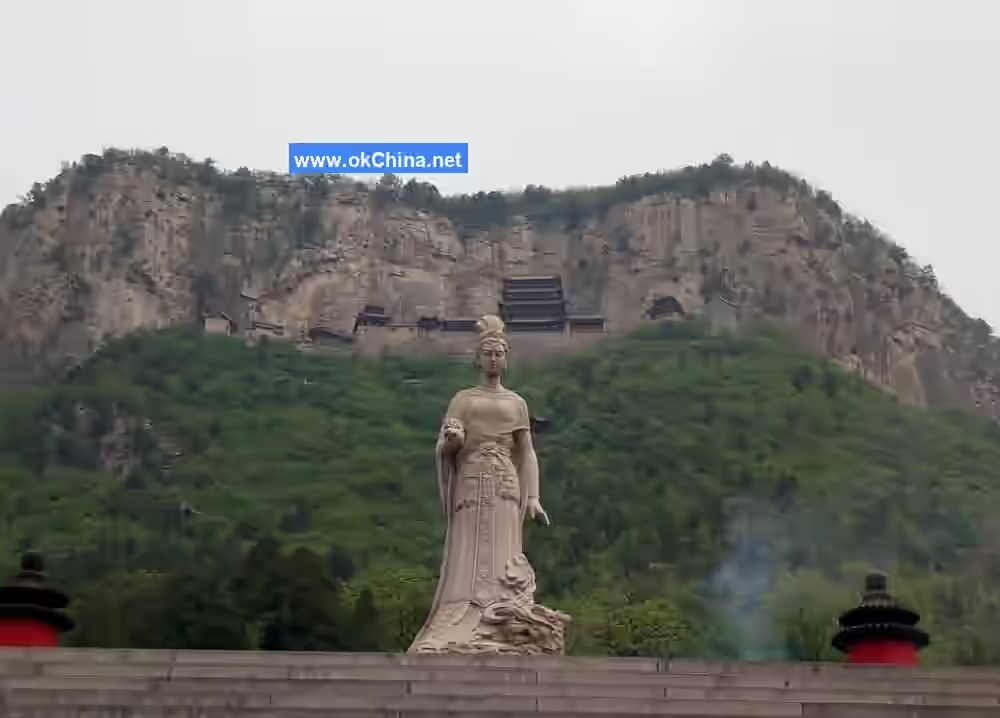
Nüwa is a creation goddess in ancient Chinese mythology. Also known as Wa Huang or Nü Yin, she is recorded in historical texts as the progenitor of the Chinese nation and a revered deity who blesses the land and its people. According to legend, Nüwa created humans by molding yellow clay in her own image, establishing human society and the institution of marriage. When the sky collapsed and the earth cracked, she melted colorful stones to mend the sky and cut off the legs of a giant turtle to support the four corners of the heavens, leaving behind the myth of "Nüwa Mending the Sky."
Nüwa is not only a heroine who mended the sky and saved the world, a goddess who created humans from clay, but also a deity of nature who created all things. With her immense divine power, she could create at least seventy things each day. As the creator of the world and all beings, she is known as the "Mother of the Earth" and is widely and enduringly worshipped as a creation goddess and ancestral mother.
Related Legends
Nüwa Creates Humans
As a creation goddess, Nüwa’s creations encompass both the natural world and humanity, making her also the goddess of human creation. According to legend, one day, while walking along the Yellow River, she reflected on how she had created mountains, rivers, lakes, seas, birds, and beasts since the beginning of the world, transforming a once-silent realm. However, Nüwa felt that something was still missing but couldn’t immediately identify what it was. When she lowered her head in contemplation and saw her reflection in the Yellow River’s waters, she suddenly realized what was lacking: beings like herself—humans. Thus, Nüwa molded clay figures in her own image using the river’s mud and infused them with divine power, bringing them to life as humans.
Nüwa as the Matchmaker
After creating women and men, Nüwa realized that humans would eventually die. To avoid the trouble of repeatedly creating new batches, she pleaded with the heavens to establish marriage, allowing men and women to unite. Thus, she is also regarded as the deity of marriage, love, and matchmaking.
Nüwa Creates Music
Nüwa is credited with inventing traditional Chinese musical instruments such as the se (a zither), sheng (a mouth organ), huang (a reed instrument), and xun (an ocarina).
Nüwa Bestows Wine
Legend says that after creating humans from clay, Nüwa observed their arduous lives, toiling from sunrise to sunset with no time or means for leisure. Moved by compassion, she transformed the sweet dew from Mount Miaoguye into fine wine and bestowed it upon humanity. Upon tasting the wine, people found it rich and sweet, capable of alleviating fatigue and bringing joy. Gathering to drink together enhanced their happiness and camaraderie. Grateful to Nüwa not only for their creation but also for the gift of wine that improved their health, lifted their spirits, and fostered social interaction, they began to offer wine in her honor. This practice gradually evolved into a customary ritual of offering wine to the heavens, a tradition that continues to this day.
Nüwa Mends the Sky
As recorded in Huainanzi·Lan Ming Xun:
In ancient times, the four pillars supporting the sky collapsed, the nine regions of the earth cracked, the sky could no longer cover the earth, and the earth could no longer sustain all things. Raging fires spread unchecked, floods surged endlessly, fierce beasts devoured the innocent, and predatory birds snatched the elderly and children. In this crisis, Nüwa smelted five-colored stones to repair the sky, severed the legs of a giant sea turtle to serve as new pillars, slew a black dragon to save Jizhou, and piled reed ashes to stem the floods.
With the sky restored, the pillars reinstated, the floods receded, and peace returned to the central plains, the fierce birds and beasts perished, and the good people survived. Leaning against the earth and embracing the sky, Nüwa brought warmth in spring, heat in summer, crispness in autumn, and cold in winter. Resting her head on a square ruler and her body on a marking line, she harmonized blocked yin and yang energies and suppressed harmful influences that threatened people and their possessions.
People celebrated on Tiantai Mountain with song and dance, rejoicing in the success of mending the sky. At the site where Nüwa smelted the stones, they built Wa Palace, which has been continuously worshipped and visited by pilgrims ever since.
Dream of the Red Chamber
The first chapter of Dream of the Red Chamber, one of China’s Four Great Classical Novels, references this myth: To mend the sky, Nüwa smelted 36,501 stones, using 36,500 of them. The one unused stone later reincarnated as the magical jade of Jia Baoyu, the novel’s protagonist.
Historical Development
Wa Palace was first built during the Northern Qi Dynasty. Under Emperor Wenxuan Gao Yang (r. 550–560 AD), whose capital was Ye (present-day Yezhen, southwest of Linzhang County, Hebei) and secondary capital was Jinyang (present-day Taiyuan, Shanxi), the emperor frequently traveled between the two cities, passing by the mountain. He "constructed a temporary palace for his inspections," initially carving three stone chambers and several statues. Through successive renovations and expansions over the dynasties, Wa Palace now covers an area of 760,000 square meters. Most of the existing structures date to the Ming and Qing Dynasties, while Northern Qi relics remain only in the form of grottoes and cliff inscriptions—six texts in total, representing the earliest and most extensive surviving cliff inscriptions in China.
From the first to the eighteenth day of the third lunar month each year, a temple fair is held to commemorate Nüwa. People from across the country and overseas Chinese gather to worship this ancestral figure of Chinese civilization. As the largest, earliest, and most widely influential historical and cultural site dedicated to Nüwa, it is honored as the "Ancestral Temple of the Chinese Nation" and is one of the country’s premier ancestral worship destinations.
Sky-Mending Sculpture
UN Sculpture
To commemorate the 25th anniversary of the Montreal Protocol on protecting the ozone layer and the 20th anniversary of the United Nations Industrial Development Organization’s participation in the "Sky-Mending Initiative," Chinese artist Yuan Xikun created and donated the "Nüwa Mending the Sky" sculpture, which was officially installed at the Vienna International Centre on November 21, 2012. Inspired by the ancient Chinese myth, the sculpture symbolizes the call for international cooperation to protect the ozone layer and address global climate change. Nearly 200 attendees, including Chinese Ambassador to Austria Zhao Bin, representatives of international organizations, and diplomats, were present at the unveiling ceremony.
III. Scenic Area Layout
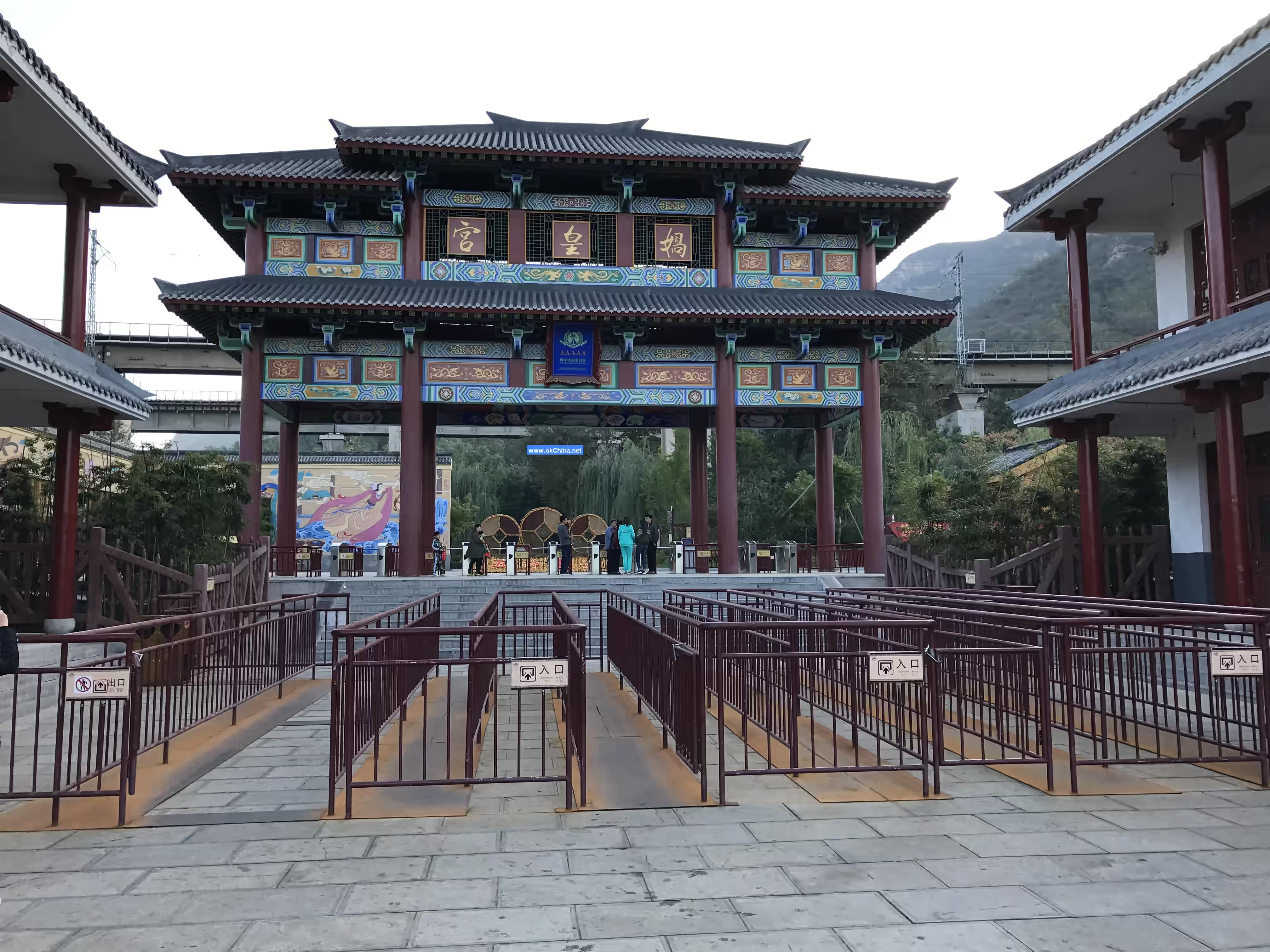
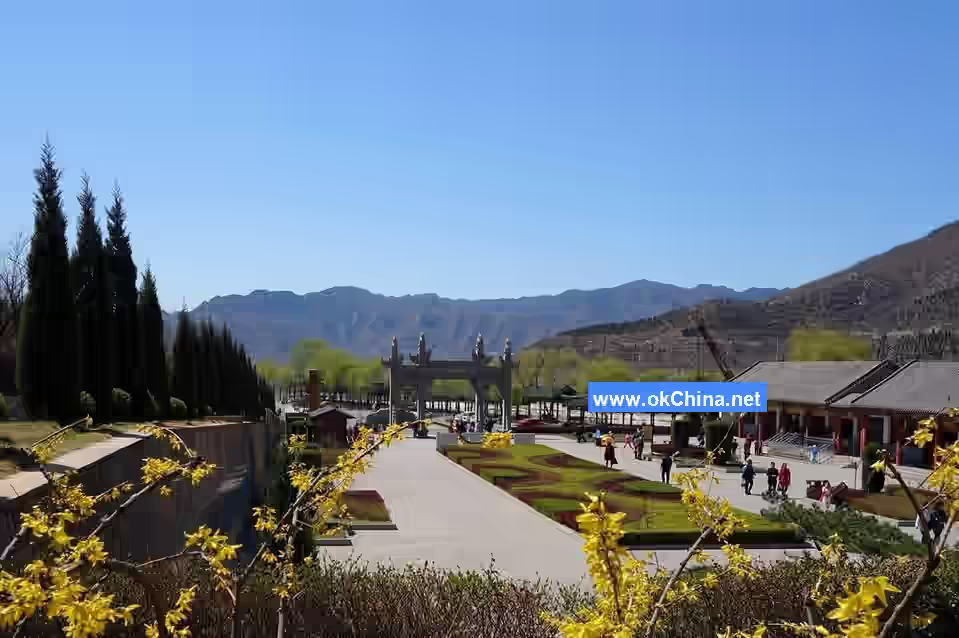
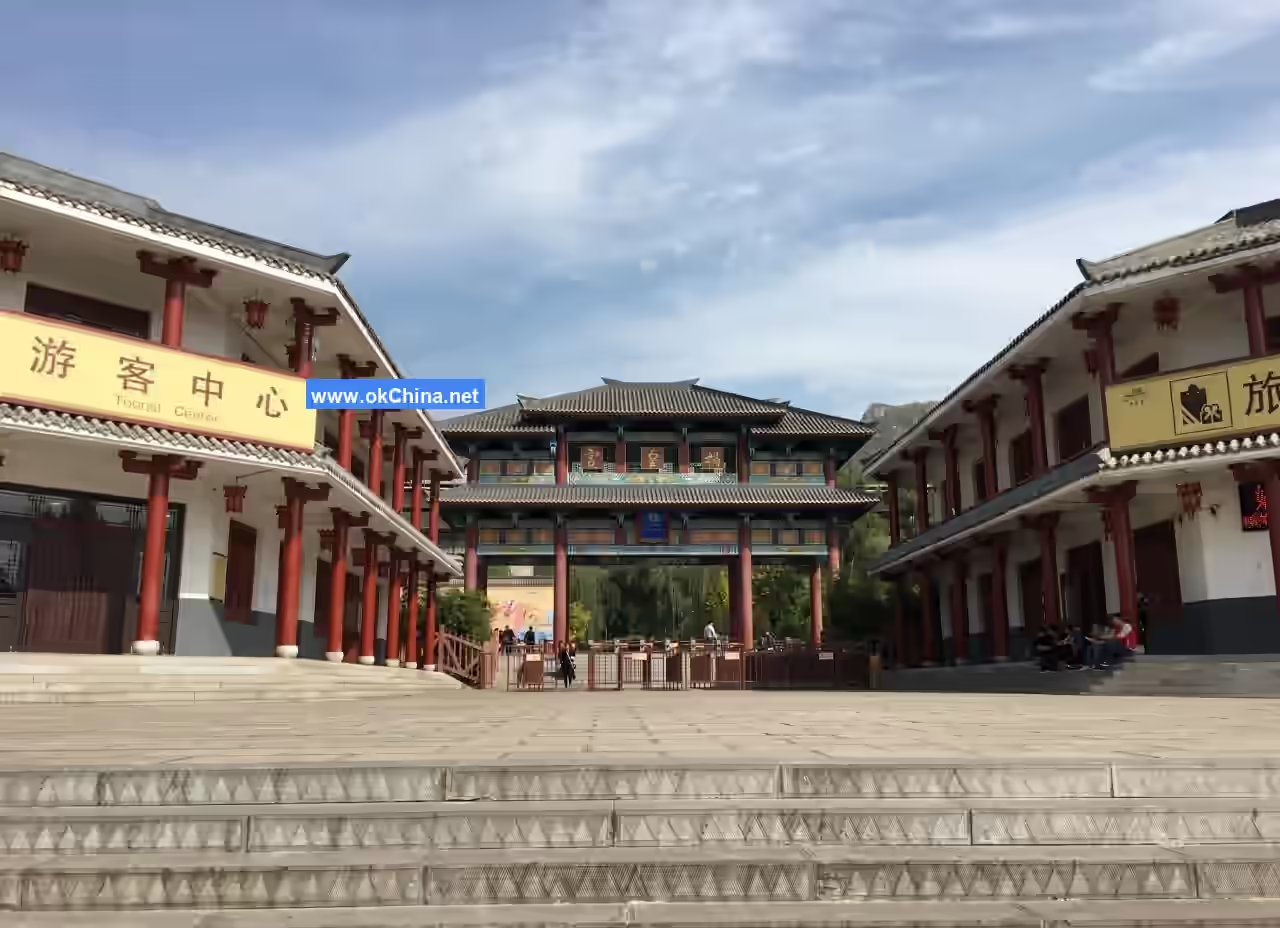
The Wa Palace scenic area comprises five functional zones: the entrance service area, Sky-Mending Garden, Sky-Mending Lake, core area, and Sky-Mending Valley. The Sky-Mending Garden is currently the only zone under construction, consisting of three parts: the Matrilineal Clan Culture Garden, the Merit Garden, and the Stone Garden. It features cultural attractions such as primitive tribal sites, displays of Nüwa’s achievements, distribution of Nüwa relics, and discussions of Nüwa culture, alongside green spaces, cascading waterfalls, and water systems.
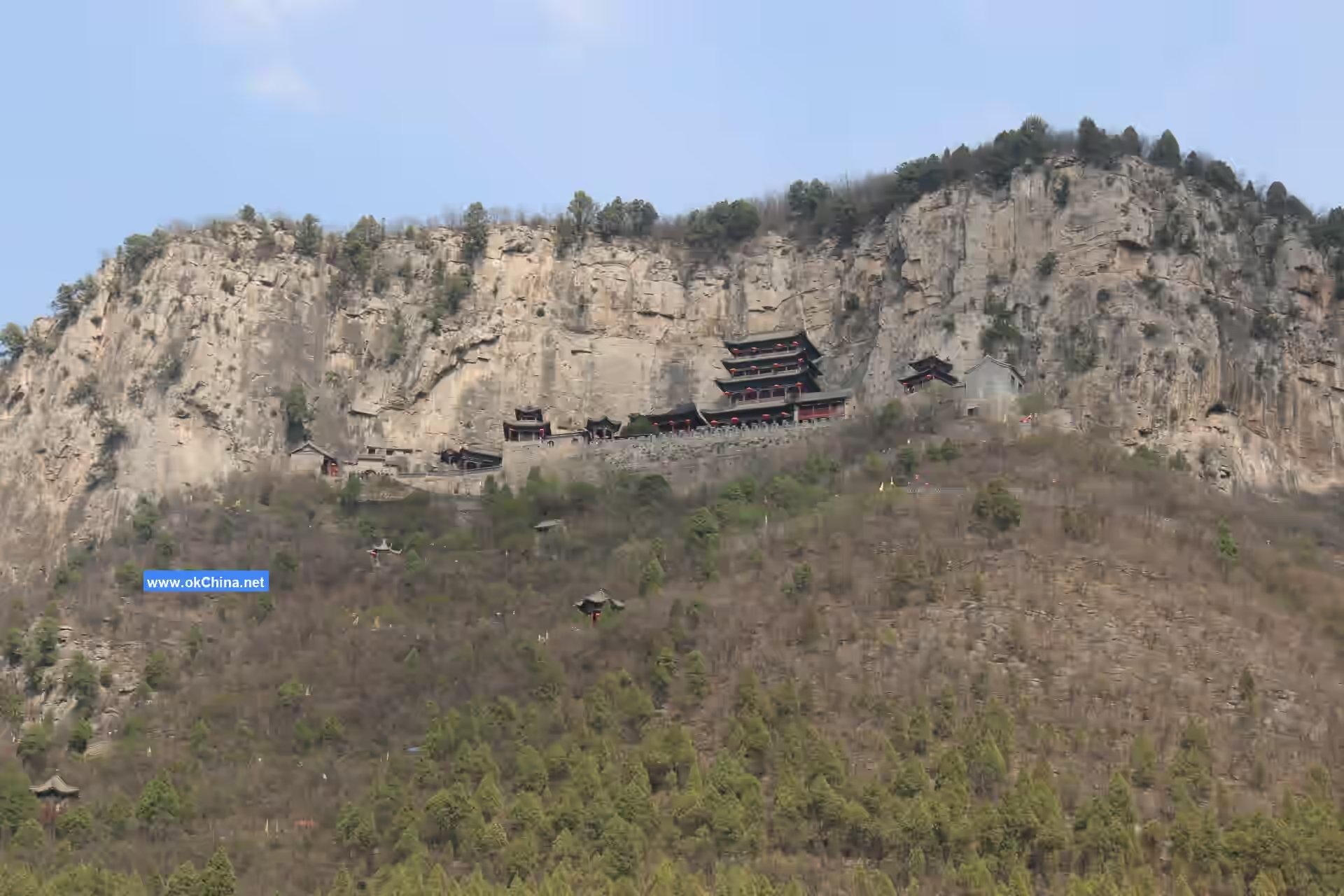
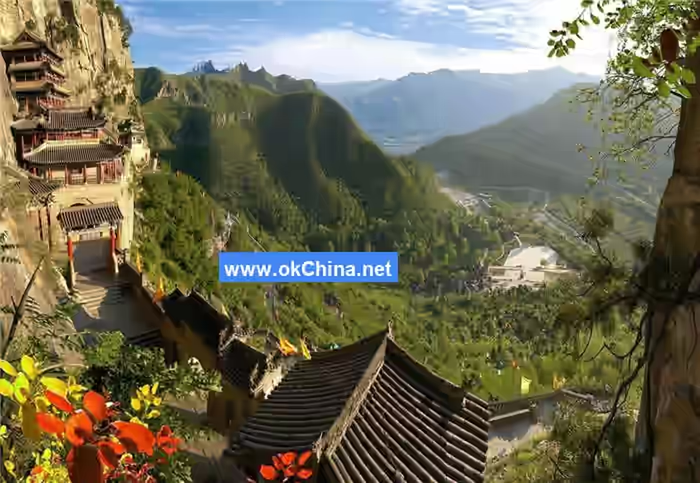
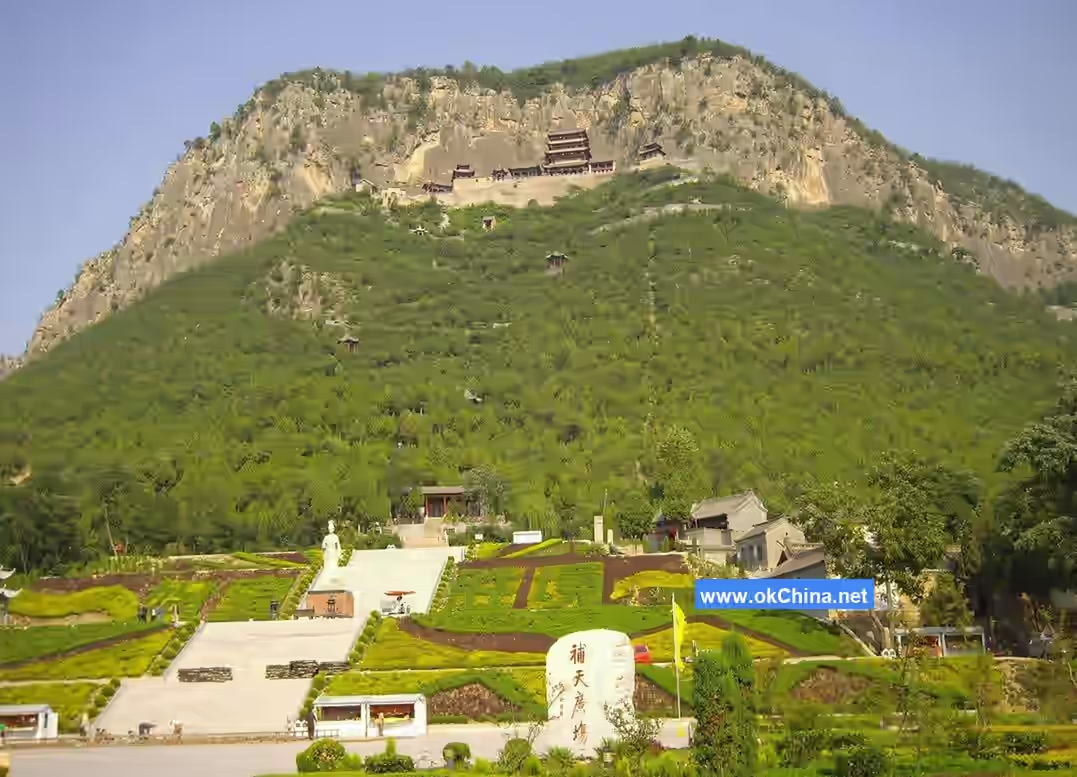
The mountain where Wa Palace is situated resembles an armchair when viewed from afar. According to Taoist interpretation, it is surrounded by mountains on three sides, with the "Green Dragon" to the left and the "White Tiger" to the right. The Zhang River flows below, while to the east lie the former headquarters of the Liu-Deng Army and General Ridge, marking the intersection of three provinces. The round trip from the summit’s Wa Huang Pavilion to the mountain base covers 3 kilometers.
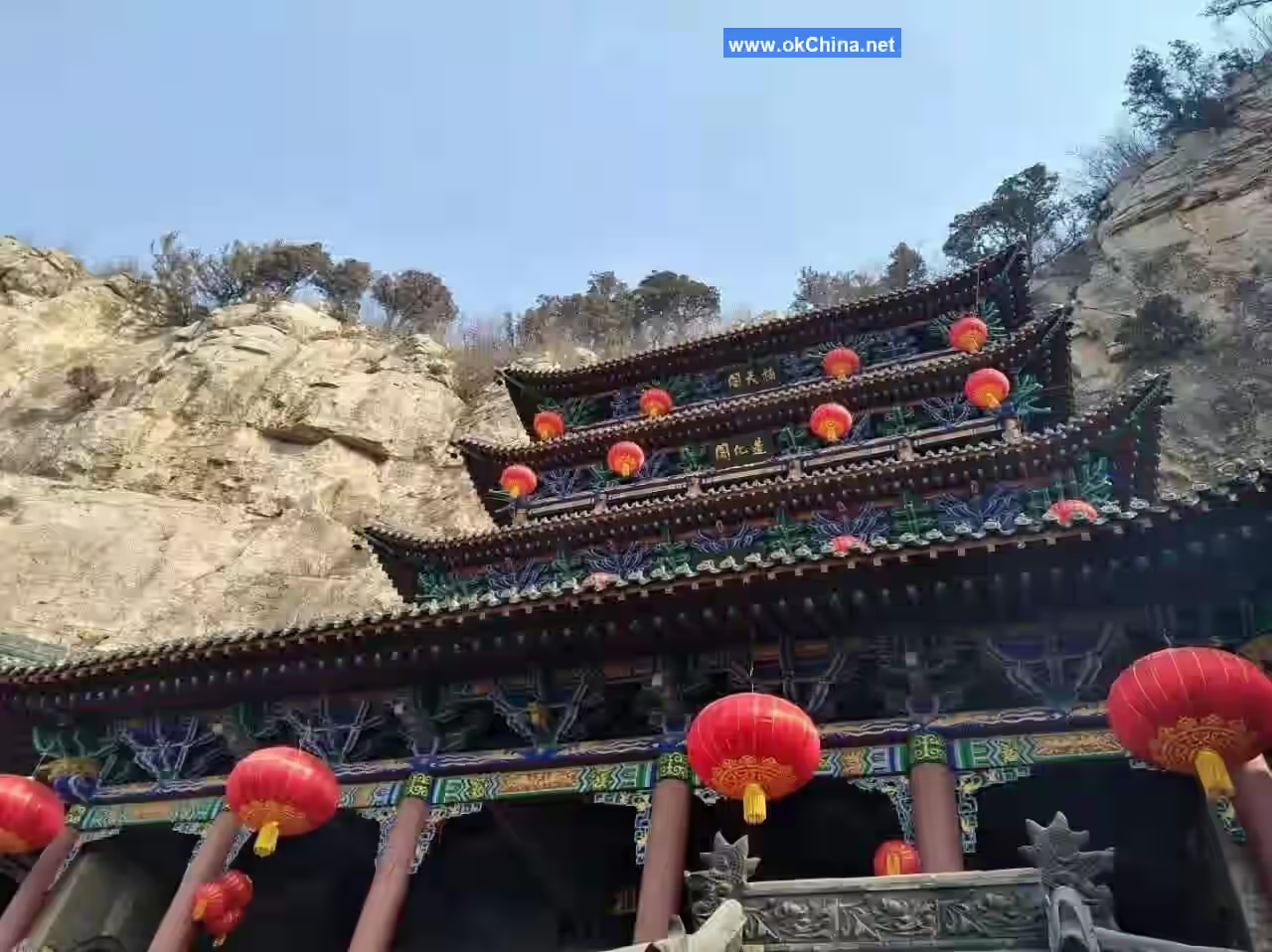
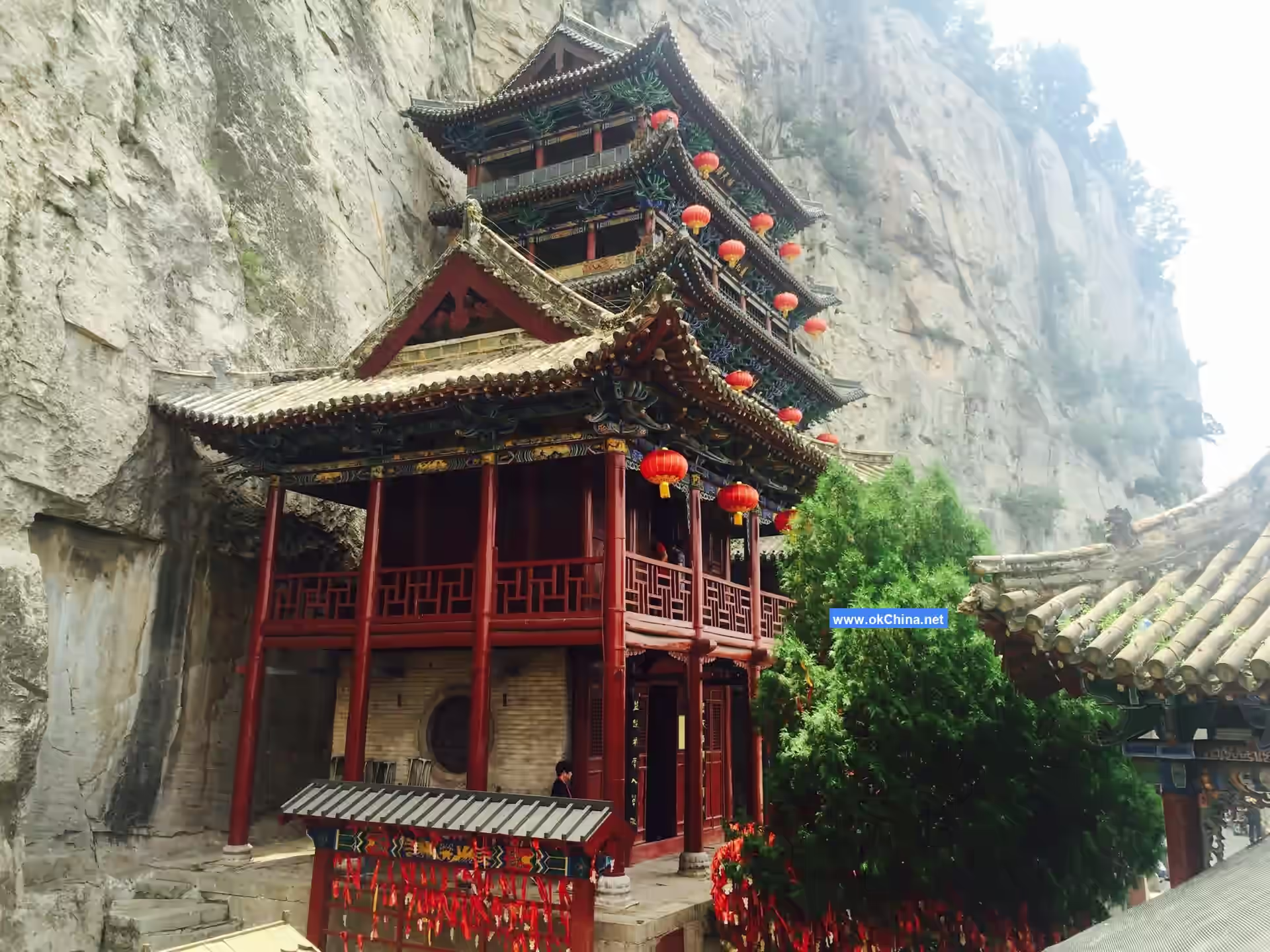
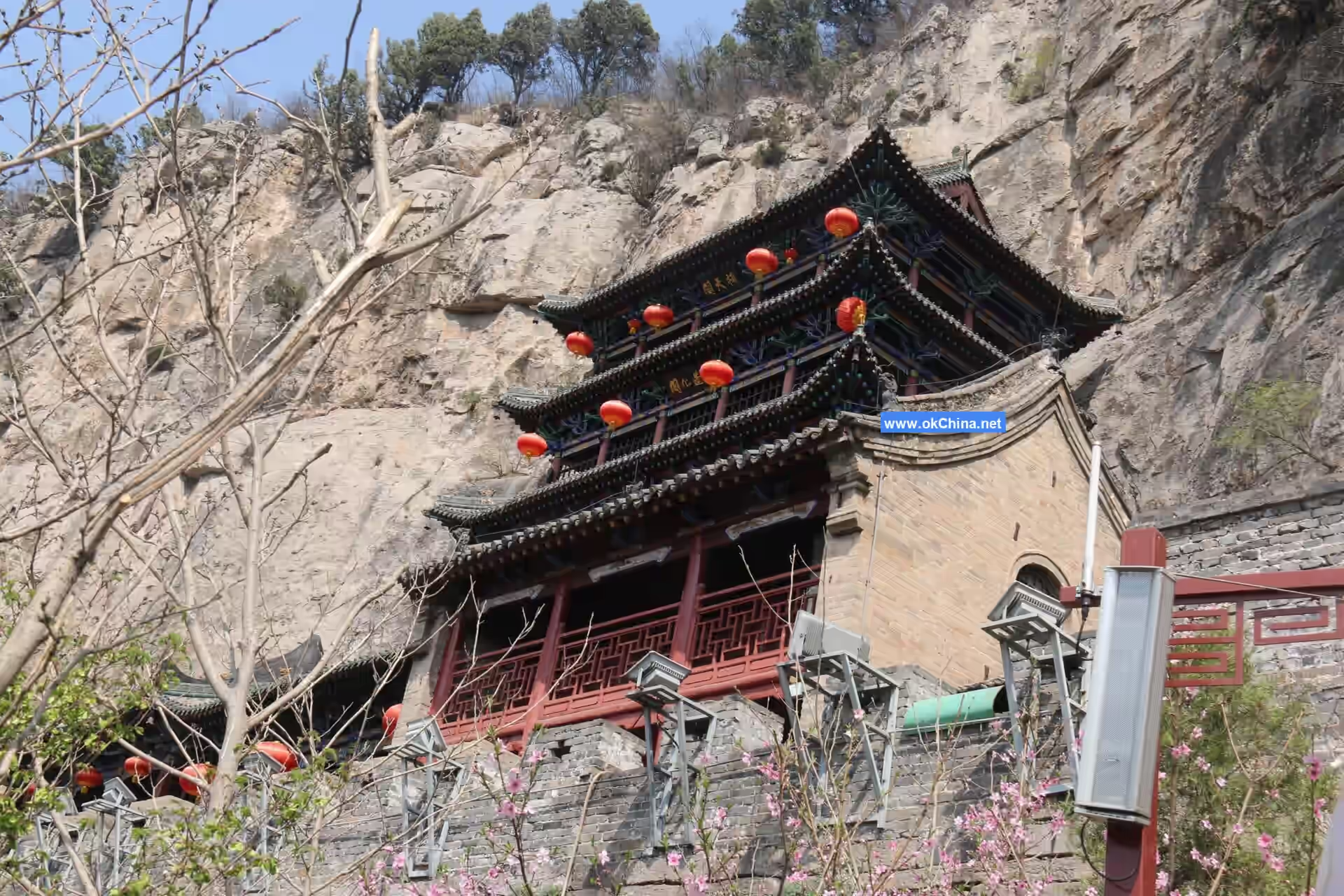
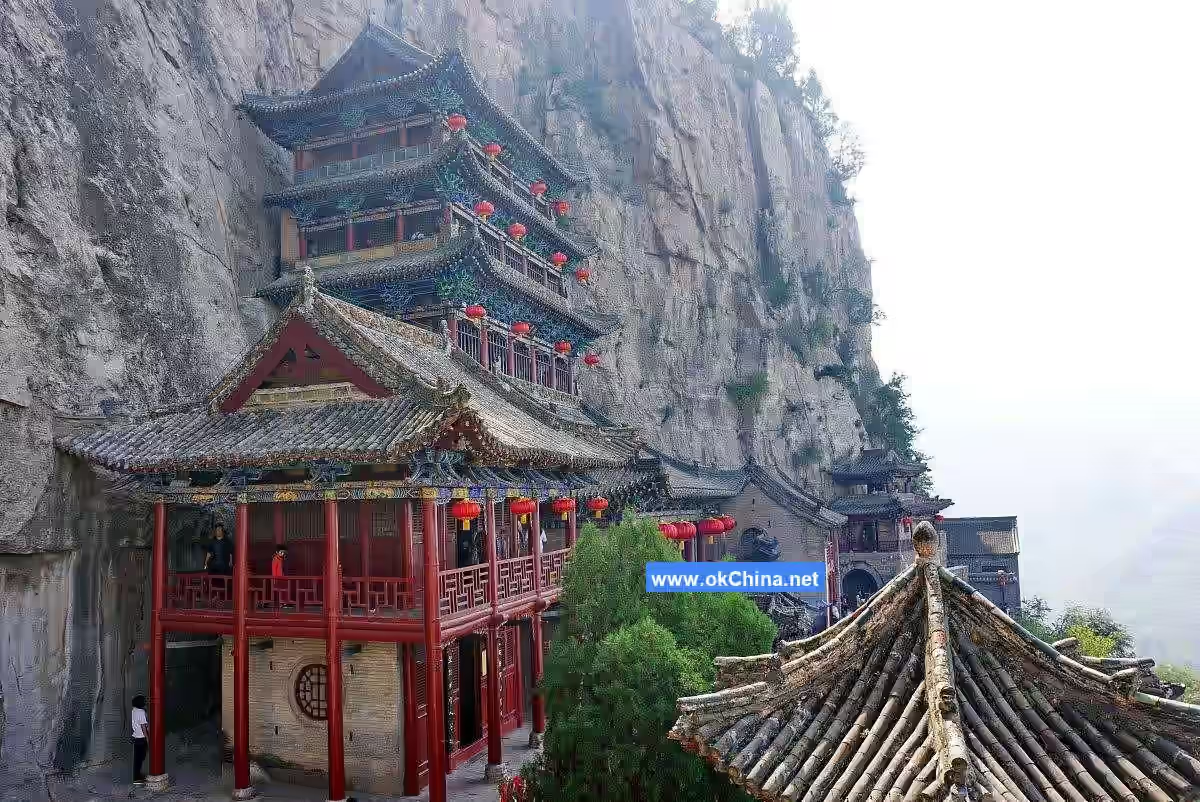
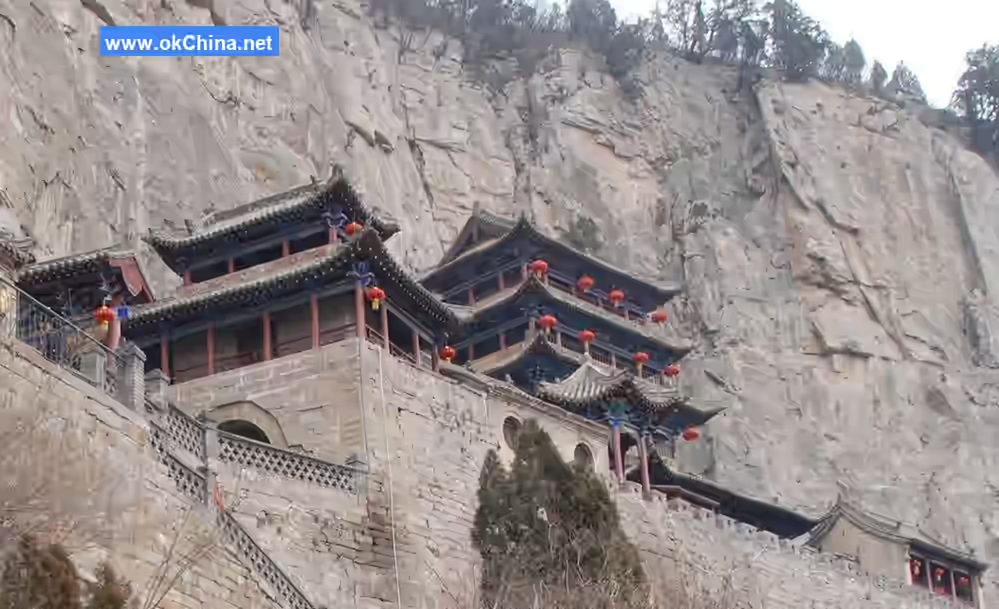
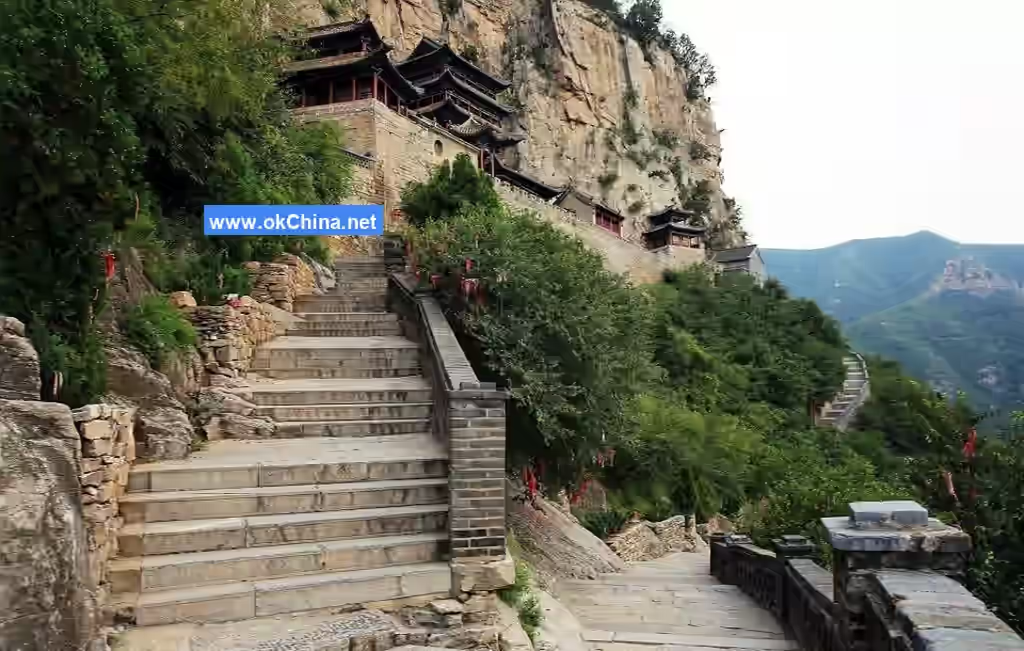
Wa Palace is built on a steep and precipitous mountainside. A broad platform hosts 12 structures of varying sizes, including Wa Huang Pavilion, Dressing Tower, Ying Shuang Tower, Bell and Drum Towers, Hexagonal Pavilion, Wooden Archway, Pi Yang Wang Temple, Water Pool House, and the Mountain Gate. The complex now comprises 135 rooms, covering 760,000 square meters, and is divided into upper and lower mountain clusters. The lower cluster includes Chao Yuan Palace, Ting Can Palace, Guang Sheng Palace, and memorial archways. Wa Huang Pavilion, facing west and built against the cliff, stands 23 meters high with four stories. It is anchored to the cliff by nine iron chains, which clang and cause the building to sway when crowded with visitors.
IV. Main Attractions
Nüwa Museum
She County, Hebei Province, plans to construct the "Chinese Nüwa Culture Museum" at the foot of Zhonghuang Mountain. Designed with high standards, the museum will comprehensively showcase Nüwa culture, complementing and enhancing the Wa Palace experience.
Main Structures of Wa Palace
Locals summarize the features of Wa Palace with nine numbers: 1 suspended building, 2 religions, 3 grottoes, 4 ancient architectural groups, 5 types of inscriptions, 6 scriptures, 7 statues, 8 great achievements, and 9 iron chains. The two religions refer to Buddhism and Taoism, while the nine iron chains anchor the Wa Huang Pavilion to the cliff. The temple itself is a Ming Dynasty structure renovated during the Qing Dynasty’s Xianfeng era.
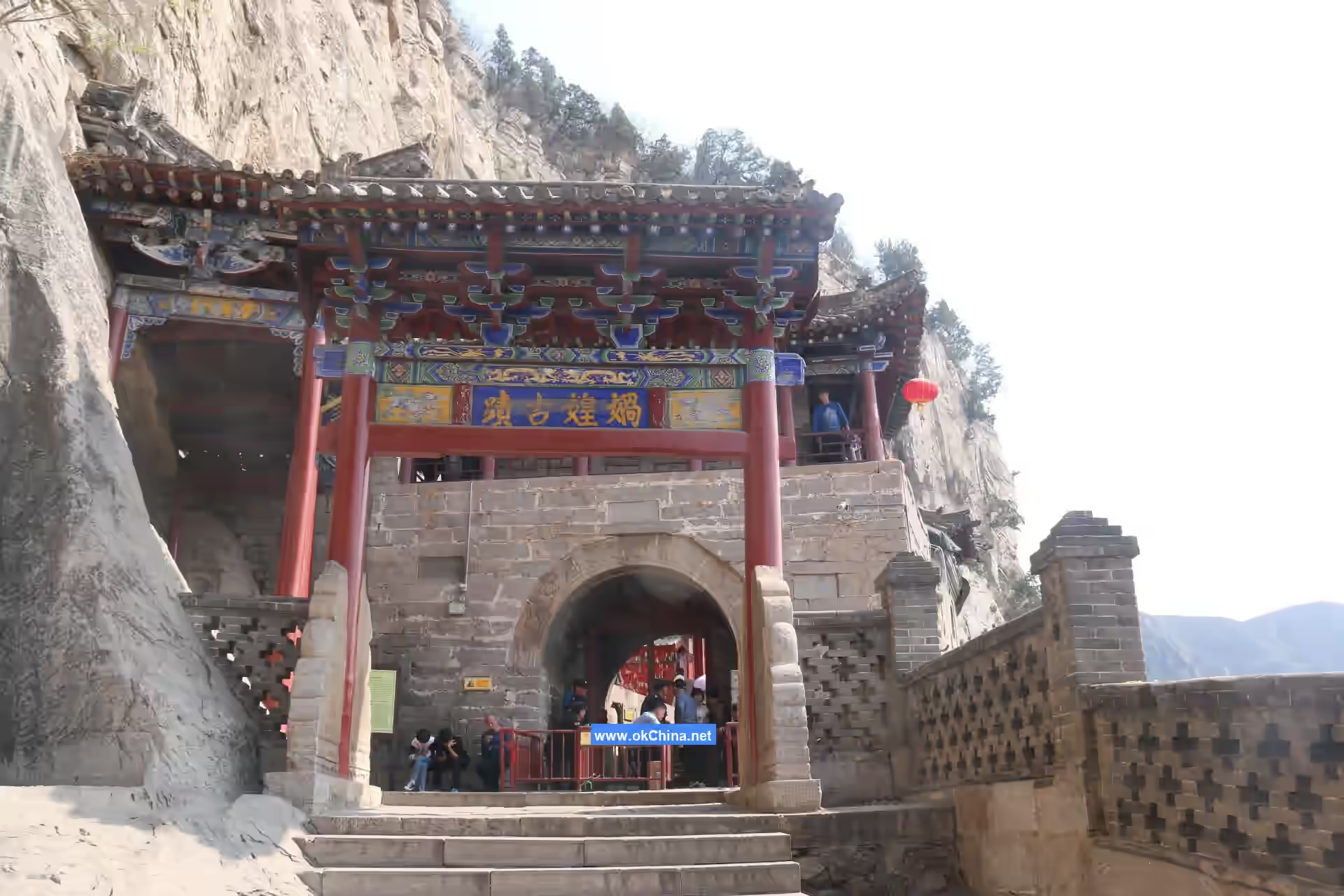
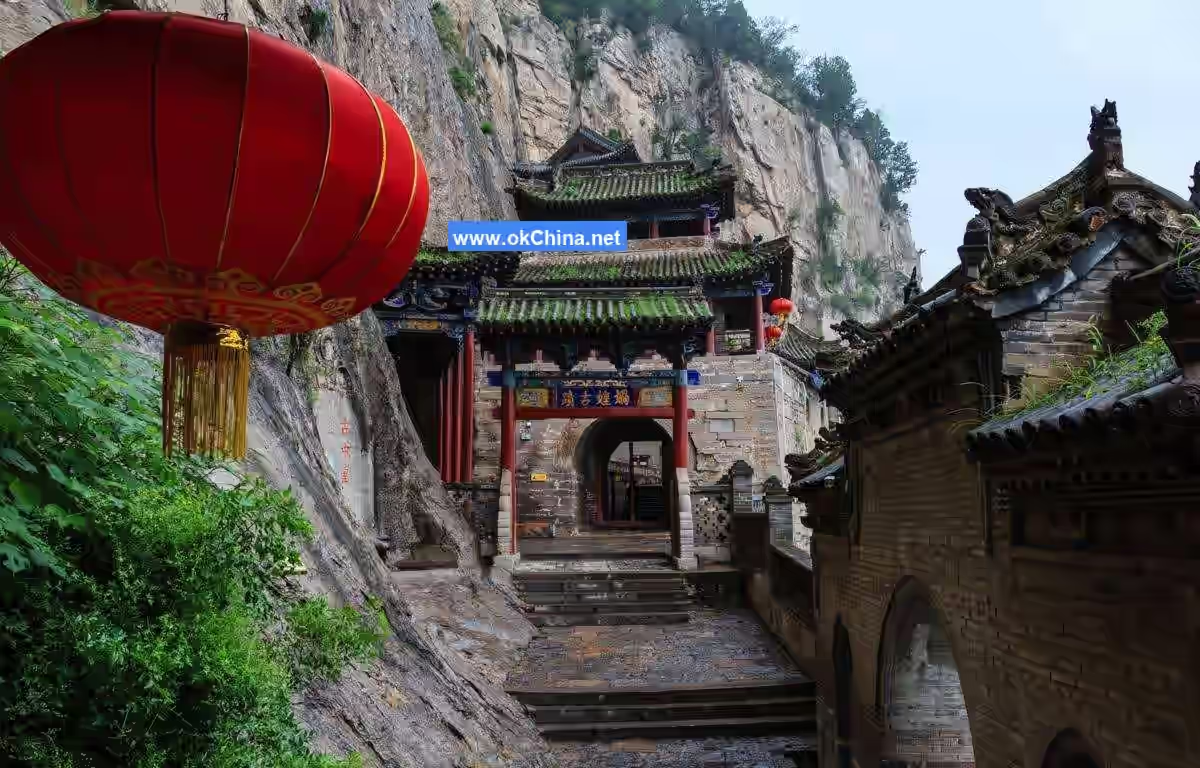
Wa Palace is the highest and final major architectural group, constructed on a strategically positioned terrace on the steep cliffs of Phoenix Mountain. Wa Huang Pavilion (a three-story tower) stands at the center, flanked by Dressing Tower and Ying Shuang Tower, with Bell and Drum Towers facing each other to the north and south. Additional structures like the Hexagonal Pavilion, Ling Guan Pavilion, and the archway inscribed "Wa Huang Gu Ji" (Ancient Site of Wa Huang) are thoughtfully placed, creating a harmonious yet varied layout that exemplifies the unique style of ancient Chinese architecture.
Ascending the winding Eighteen Bends path leads to the highest point, Wa Huang Pavilion. The layout of Wa Palace skillfully utilizes the natural terrain, blending with the mountain’s contours. It comprises four architectural groups, each with its own charm and integrity, yet harmoniously unified within the overall design.At the foot of the mountain, three structures are arranged from bottom to top in the following order: Chaoyuan Palace, Tingcan Palace, and Guangsheng Palace. Chaoyuan Palace (also known as Shifang Temple), named for being the first temple at the mountain's front (burned by Japanese invaders in 1938). Tingcan Palace (Xie Ma Hall) is a temporary palace serving as a resting place for the emperor and pilgrims. On the 18th day of the third lunar month each year, the birthday of the goddess Nüwa, folk ceremonies are held here to celebrate the deities' longevity.
On the gable wall of this palace (Xie Ma Hall), there is a panoramic painting of the Nüwa Palace and a mural titled "Attending the Imperial Carriage." It depicts Nüwa seated in a luxurious carriage, pulled by divine dragons, accompanied by celestial maidens, and guarded by heavenly soldiers, soaring through the clouds across the vast sky—a precious work of art. Guangsheng Palace (also known as the Children's Hall) is a temple dedicated to the mythical tradition of praying for offspring. Both Tingcan and Guangsheng Palaces feature main halls and side halls, constructed in the overhanging gable and flush gable styles, respectively. After winding up the mountain via the "Eighteen Bends" from the foot and passing Guangsheng Palace, one reaches "Grandma's Summit," the location of Nüwa Palace.
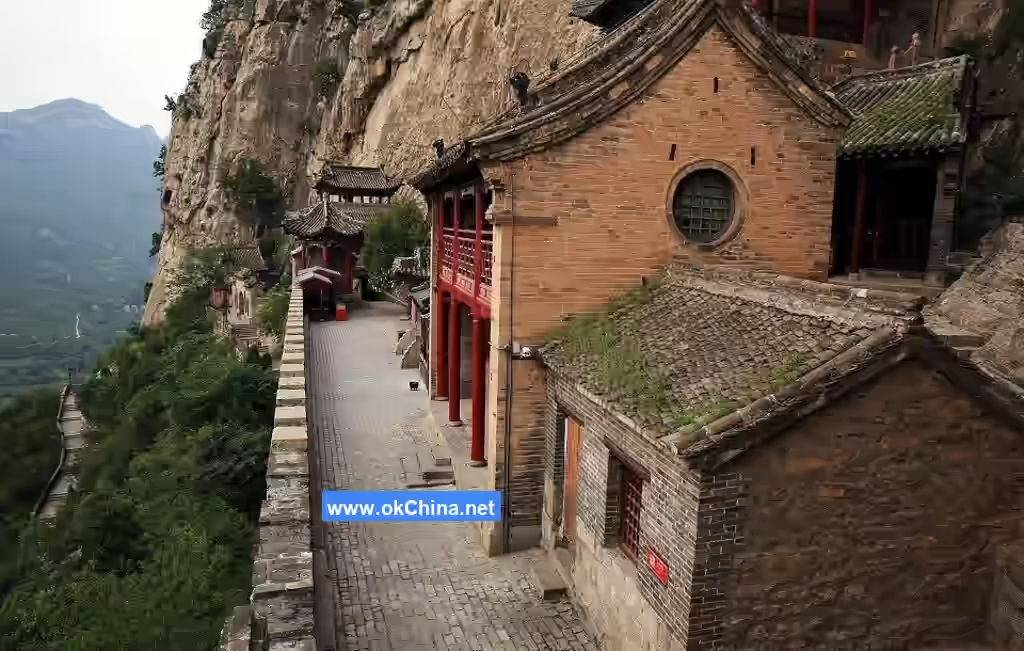
Nüwa Palace consists of four architectural complexes. One is built on the cliffside, with the main structure being the three-story pavilion—Nüwa Pavilion. At the mountain's base, there are three other complexes: Chaoyuan Palace, Tingcan Palace, and Guangsheng Palace. Nüwa Palace is an ancient architectural complex, comprising structures such as Nüwa Pavilion, Dressing Table, Yingshuang Tower, Bell Tower, Drum Tower, Mountain Gate, Memorial Archway, Piyang Temple, Merit Shrine, and Water Pool House, among others. It also includes historical relics like cliff-carved scriptures. Nüwa Pavilion, facing south with its back against a sheer cliff, is the main building of Nüwa Palace. Standing 23 meters tall, it is a four-story structure with a glazed tile roof, ingeniously built to follow the mountain's contours. The second to fourth floors feature corridors on three sides. Eight iron chains anchor the pavilion to the cliff behind it. On the cliff outside the pavilion, there are ancient cliff carvings of ten Buddhist scriptures, including the Lotus Sutra, Secret Liberation Sutra, Wonderful Dharma Lotus Sutra, Ullambana Sutra, and Ten Grounds Sutra.
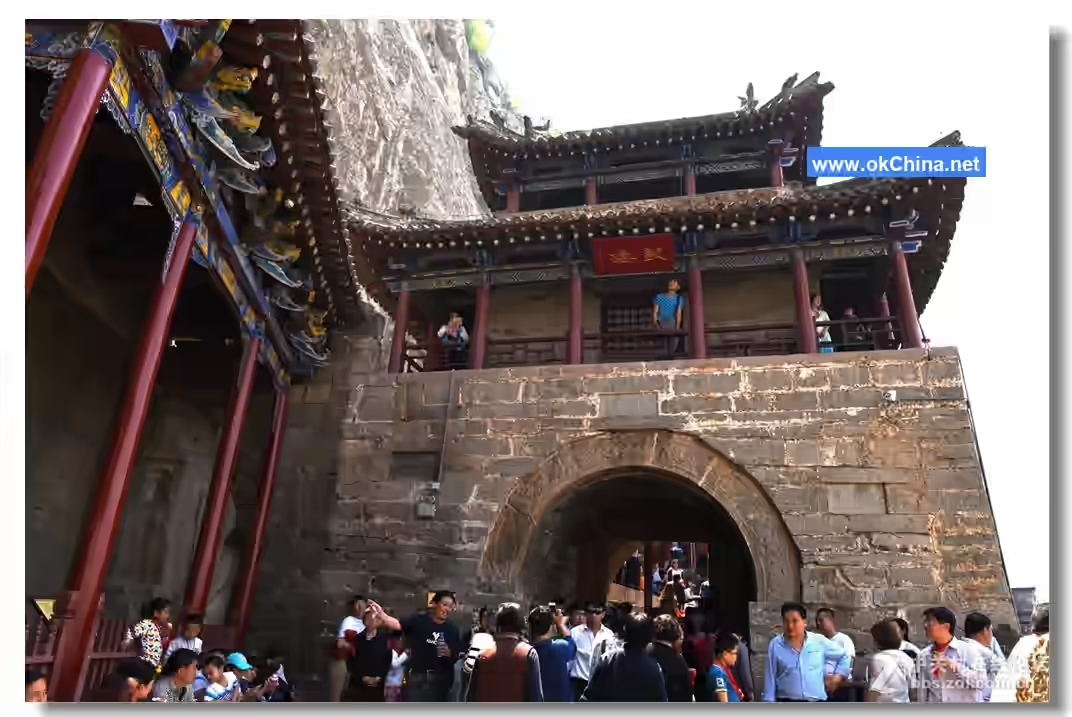
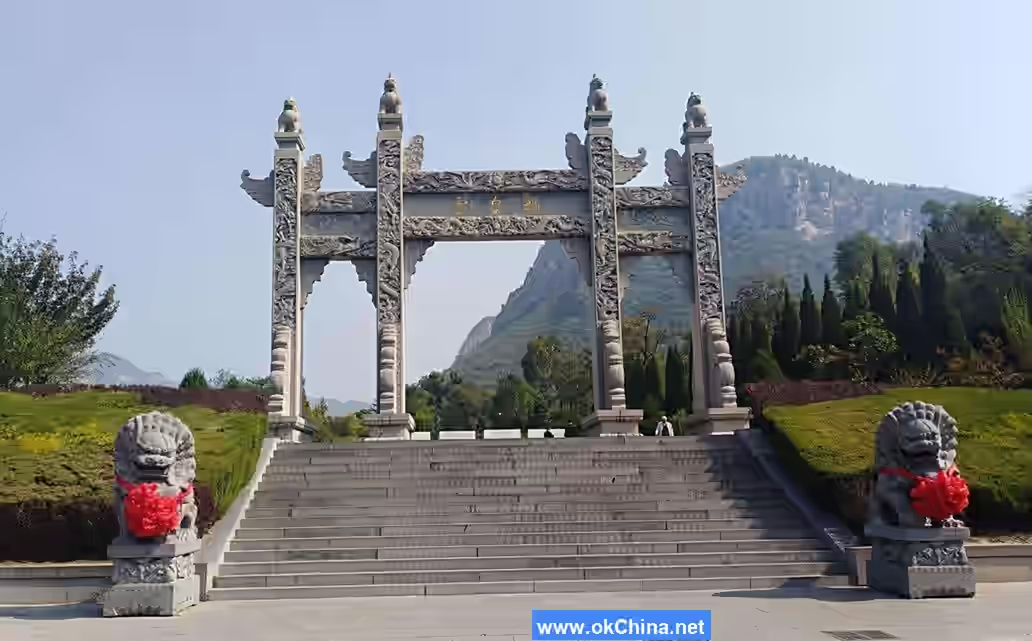
The mountain gate of Nüwa Palace faces west and consists of three brick archways. The couplets on either side read: "Fengshan's fame rivals the immortal isles; its divine aura overwhelms the ten continents." The horizontal inscription reads: "Penglai Fairyland." Inside the gate stands a wooden memorial archway inscribed with "Ancient Site of Nüwa." To the west of the archway is Piyang Temple, housing statues of King Piyang and Lu Ban. To the east stands an ancient stele inscribed with "Ancient Zhonghuang Mountain." Past the archway, on the eastern cliff face, are Northern Qi Dynasty cliff carvings. Further ahead is a stone arch gate topped with a drum tower, inscribed with the words "Scenic Wonder."
Nüwa Pavilion
Nüwa Pavilion is the main structure of the Nüwa Palace complex, built against the cliffside and divided into four floors. The first floor is the worship hall, above which three additional stories rise, totaling 23 meters in height. Anchored to the cliff by eight iron chains, it is famously known as the "Hanging Temple" or "Moving Pavilion." The ground floor of Nüwa Pavilion is a stone grotto, initially constructed during the Tianbao era of the Northern Qi Dynasty (550–559 AD), making it one of the earliest structures in Nüwa Palace.
Built on a precipitous cliff, Nüwa Pavilion ingeniously utilizes a semicircular stone ledge. Other structures, such as the Dressing Tower, Yingshuang Tower, Bell and Drum Towers, and the hexagonal pavilion, are also constructed on stone platforms that follow the mountain's natural contours.
Legend has it that during the temple fair on the 18th day of the third lunar month each year, when the community leaders from the seven counties under the former Zhangde Prefecture gather, the pavilion sways, and the eight iron chains anchored to the cliff clatter loudly. Thus, Nüwa Pavilion is regarded as a marvel in architectural history.
Nüwa Pavilion (also known as the Three-Story Pavilion), facing west, is the main building of Nüwa Palace. Historically praised as "carved into perilous cliffs, a magnificent structure soaring into the void," it stands suspended 23 meters high with a hip-and-gable roof, bracket sets, and glazed tiles. Built atop a large Northern Qi Dynasty grotto, its foundation consists of stone arches supporting three stories named "Qingxu," "Zaohua," and "Butian." Each floor features corridors on three sides, with its back against the cliff, tethered by iron chains to eight "hitching rings" carved into the rock. When crowded with visitors, the chains stretch taut like bowstrings, causing the pavilion to tilt forward—hence its nicknames "Hanging Temple" and "Living Pavilion." This ingenious design represents a masterpiece in architectural history, combining dynamic and static elements. Viewed from afar, Nüwa Pavilion appears embedded in the cliff, adorned with carved beams and painted rafters. From its heights, one can gaze upon the verdant Taihang Mountains and the ribbon-like Zhang River, truly a "heaven-created and earth-shaped realm."
Nüwa Pavilion consists of three floors: the first named "Qingxu Pavilion," the second "Zaohua Pavilion," and the third "Butian Pavilion." Standing over 23 meters tall, it is anchored to the cliff by nine iron chains attached to eight "hitching rings." Due to its precarious position on the cliff with no solid foundation, the pavilion tilts forward when filled with people, creating a swaying sensation and earning it the titles "Living Pavilion" and "Hanging Temple." In summary, Nüwa Pavilion is a destination that is "carved into cliffs, soaring into the void, uniquely situated, ingeniously crafted, and utterly marvelous." Regarding this, Professor Luo Zhewen, an expert in ancient Chinese architecture, commented: "In the 1980s, I wrote an article titled 'Ten Wonders of Ancient Architecture in Hebei,' listing Nüwa Palace alongside the Great Wall, Zhaozhou Bridge, and the Watchtower as quintessential examples of ancient Chinese architecture and symbols of Chinese civilization. As a Taoist temple, Nüwa Palace also integrates folk Buddhism and other elements, making it a masterpiece among ancient pavilions. Since becoming a national 4A-level scenic area, its fame has spread far and wide. Thus, every spring when flowers bloom, visitors flock here continuously, with daily foot traffic sometimes reaching nearly ten thousand."
Cliff-Carved Scriptures
On the cliff outside Nüwa Pavilion at the mountain summit, there are six sets of cliff-carved scriptures from the Northern Qi Dynasty, totaling over 130,000 characters. Known as the "World's Premier Wall Scripture Collection," they hold a prestigious place in Chinese Buddhist culture.
Among the cultural relics of the ancient Nüwa site, the cliff-carved scriptures are the most precious, representing the essence of this historical treasure. The scriptures are carved in five locations on the cliff, covering a total area of 165 square meters and comprising over 137,400 characters. The largest section spans 54.18 square meters and contains more than 41,000 characters. The calligraphy is in the Wei stele style, described as "silver hooks and iron strokes, unparalleled under heaven," making it a treasured artistic work. The content consists of Mahayana Buddhist scriptures, providing invaluable historical specimens and materials for the study of Buddhism and Northern Qi culture, rare even nationally. Among extant Northern Qi stone carvings, most relate to Buddhist teachings, reflecting the prevalent trend of carving Buddha statues at the time. However, large-scale cliff carvings of scriptures are exceedingly rare. Thus, in terms of stone carving architecture, artistic value, and scriptural content, the cliff-carved scriptures at Nüwa Palace hold significant historical and artistic importance, serving as a microcosm of Northern Qi culture. They also reveal that the Nüwa site originated from Buddhist scripture carvings before temples were built for deity worship, reflecting the Han ethnic cultural psychology of simultaneous reverence for Buddhism and deities—a multifaceted religious belief. Therefore, from the cliff-carved scriptures to the ancient Nüwa structures, this site stands as a vivid testament to the integration of indigenous Chinese and foreign cultures.
The carved scriptures consist of six texts: Sutra of the Questions of the Devas, Ten Grounds Sutra, Sutra of the Buddha's Final Teaching, Ullambana Sutra, Secret Liberation Sutra, and Lotus Sutra. The total carved area is 165 square meters, with 1,187 lines and over 137,400 characters. This collection is the earliest and largest of its kind among extant cliff-carved scriptures in China, making it extremely precious and of high research value. Hailed as the "World's Premier Buddhist Scripture Collection," it is cherished by historians and calligraphers alike.
The Northern Qi cliff-carved scripture collection is the essence of the ancient Nüwa site, comprising six texts: Sutra of the Questions of the Devas, Ten Grounds Sutra, Sutra of the Buddha's Final Teaching, Ullambana Sutra, Secret Liberation Sutra, and Lotus Sutra. Carved across five locations on the cliff, the scriptures cover 165 square meters and contain over 137,000 characters. The calligraphy includes clerical, regular, and Wei stele scripts, described as "silver hooks and iron strokes, unparalleled under heaven," making it an artistic treasure. It is the earliest and largest collection of cliff-carved scriptures in China and a precious resource for the study of early Buddhist history, particularly Buddhist texts. It holds significant value for researching the regional spread, schools, and evolution of calligraphy and carving in early Chinese Buddhism, verified as the "World's Premier Wall Scripture Collection." The main structure, Nüwa Pavilion, stands 23 meters tall with four floors. It commands the surrounding peaks, perches perilously on the cliff, showcases ingenious craftsmanship, and overlooks the serene Zhang River, encapsulating the beauty of the landscape and the essence of ancient architecture. Suspended like a jade palace and towering like an emerald tower, it stands above perilous rocks and overlooks deep ravines, ranking among the Ten Wonders of Ancient Architecture in Hebei Province and famously known as the "Living Pavilion" and "Hanging Temple."
The cliff-carved scriptures are a precious cultural heritage in Chinese and global Buddhist literature, representing the essence of the ancient Nüwa site. They serve as a historical microcosm of Northern Qi culture, holding immense research value and acclaimed as the "World's Premier Wall Scripture Collection." The cliff carvings of the Lotus Sutra and Secret Liberation Sutra feature neat, elegant, and upright calligraphy from the Northern Qi Dynasty. Inside the gate of Grandma's Summit, a Northern Qi stele is inscribed with the four large characters "Ancient Zhonghuang Mountain." On the cliff, there is also a large stone carving from the Ming Dynasty's Wanli era reading "Heaven-Created and Earth-Shaped Realm." Additionally, there are grottoes excavated during the Northern Qi Dynasty. Nüwa Palace, with its rustic serenity and long history, holds significant value for the study of history, calligraphy, stone carving art, and Buddhist origins.
Butian Valley
The Butian Valley scenic area is located within the Nüwa Palace scenic zone, covering a total area of 1.96 square kilometers. It complements and harmonizes with Zhonghuang Mountain, where Nüwa Palace is situated. The valley highlights the cultural essence of Nüwa mending the heavens, featuring attractions such as Butian Terrace, Butian Peak, Zhuoshang Pond, and Longyin Stream, allowing visitors to fully appreciate the profound depth of Nüwa culture.Based on the Northern Qi Dynasty scriptures carved on the cliffs of the Wahuang Palace, the most precious stone relics of Shexian County have been collected and displayed, establishing the culturally distinctive Northern Qi Stone Carving Exhibition Hall. In terms of design approach, the unique terrace culture, slate culture, and traditional Chinese medicinal herb culture of the Taihang Mountains have been fully integrated into the construction of landscape nodes, making the symbols of Shexian County more prominent.
In terms of scenic area development, the Butian Valley has leveraged the lush secondary forest belt of the Zhonghuang Mountain Valley to construct a 5,000-meter-long distinctive landscape walking trail, multiple viewing platforms for sightseeing, forest appreciation, and panoramic views, along with supporting infrastructure such as fire pipelines, electronic surveillance, high and low-voltage line installations, as well as smart tourism projects like Wi-Fi coverage and electronic audio guides. These enhancements allow visitors to fully experience the unique charm of a digital scenic area. Its completion extends visitors' stay in the scenic area by over three hours, significantly expanding the scale of the Wahuang Palace scenic area and serving as an important supplement to its core zone.
Stone Carving Museum
The Stone Carving Museum is located within the Wahuang Palace scenic area, covering an area of 350 square meters. The exhibition rooms are arranged chronologically and divided into three halls: the first hall showcases Northern Qi Dynasty stone carvings, the second hall features stone carvings from the Sui, Tang, Song, Jin, and Yuan dynasties, and the third hall displays stone carvings from the Ming, Qing, and Republic of China periods. For immovable cultural relics such as the Thousand Buddha Cave, Foye Nao Grottoes, Aiyejiao Grottoes, and Thousand Buddha Pagoda, displays are created using photographs and rubbings.
"These stone carvings collectively represent the diverse carving styles and techniques from various historical periods spanning from the Northern Qi Dynasty to the Republic of China, encompassing all categories of stone relics with immense historical and artistic value," explained the head of the Shexian County Cultural Relics Bureau. The museum exhibits over 110 stone carving pieces, each tailored to the characteristics of the carvings themselves and displayed using modern techniques. This approach not only enhances visual artistic effects but also highlights cultural distinctiveness, offering a refreshing experience. The stone carvings primarily depict Buddhist activities and are categorized into three types: individual statues, pagoda statues, and stele statues. They collectively showcase the statue styles from nine dynasties, including the Northern Qi, Sui, Tang, Song, Jin, Ming, Qing, and Republic of China periods. These exquisite stone carvings captivate the world with their extraordinary brilliance. When people see the smiling Buddha statues and elegantly adorned Bodhisattvas, they are deeply moved. The Buddhas and Bodhisattvas in the exhibition halls are depicted with full figures, accurate shapes, smooth lines, and serene expressions. The Buddha statues feature simple, sparse, and lightweight clothing that clings to the body, while the Bodhisattvas are adorned with elaborate, intricate, and finely detailed attire, exuding strong artistic appeal and immense preciousness. Although these stone carvings have endured for millennia, they still radiate a captivating luster and dazzling colors, opening a mysterious door to a distant history for the world.
V. Cultural Activities
Government Public Worship
In September 2003 and September 2004, the Shexian County People's Government organized public worship ceremonies for the goddess Nüwa at the Wahuang Palace. The public worship primarily involved homage and sacrifices by the public and government to the merits of Nüwa, the ancestral mother of humanity, for creating humans from clay, mending the sky with stones, cutting off the legs of the giant turtle to support the four pillars, controlling floods, establishing marriage customs, and inventing musical instruments. The main forms of worship include the traditional March temple fair at the Wahuang Palace, folk sacrifices during the fair, and the public worship on the fifteenth day of the ninth lunar month.
Nüwa Worship Ceremony
Legend has it that the eighteenth day of the third lunar month is Nüwa's birthday. To commemorate this, the Wahuang Palace holds a temple fair from the first to the eighteenth day of the third lunar month. "Baishe" (setting up altars) is the primary form of folk worship. Communities from surrounding areas organize groups of over a hundred people annually on the eighteenth day of the third lunar month, preparing a complete set of sacrificial utensils, to visit the Wahuang Palace in Shexian County to trace their roots, worship their ancestors, and pay homage to Nüwa.
Prayers and Vows
Starting from March each year, scattered pilgrims from various regions gather at the Wahuang Palace to pray and fulfill vows. Prayers include seeking blessings, longevity, wealth, career prospects, children, peace, health, and guidance for the future. The forms of prayer are diverse, including night vigils, fan drum performances, rice scattering, knot tying and untying, draping red cloths, piling stones, tying red cloths, binding dolls, and unlocking rituals.
Incense Offering and Worship
The timing for incense offering and worship at the Wahuang Palace scenic area is not fixed but often occurs on the first or fifteenth day of each lunar month, though it can also take place on ordinary days. Pilgrims come from all walks of life, including officials, common people, and sometimes international friends. The primary forms involve burning incense, bowing, and offering prayers, with the aim of praying for national peace and prosperity, abundant harvests, favorable weather, bountiful crops, fulfillment of wishes, and family well-being.
Comments
Post a Comment