Museum of the Imperial Palace of Manchukuo
1. Introduction
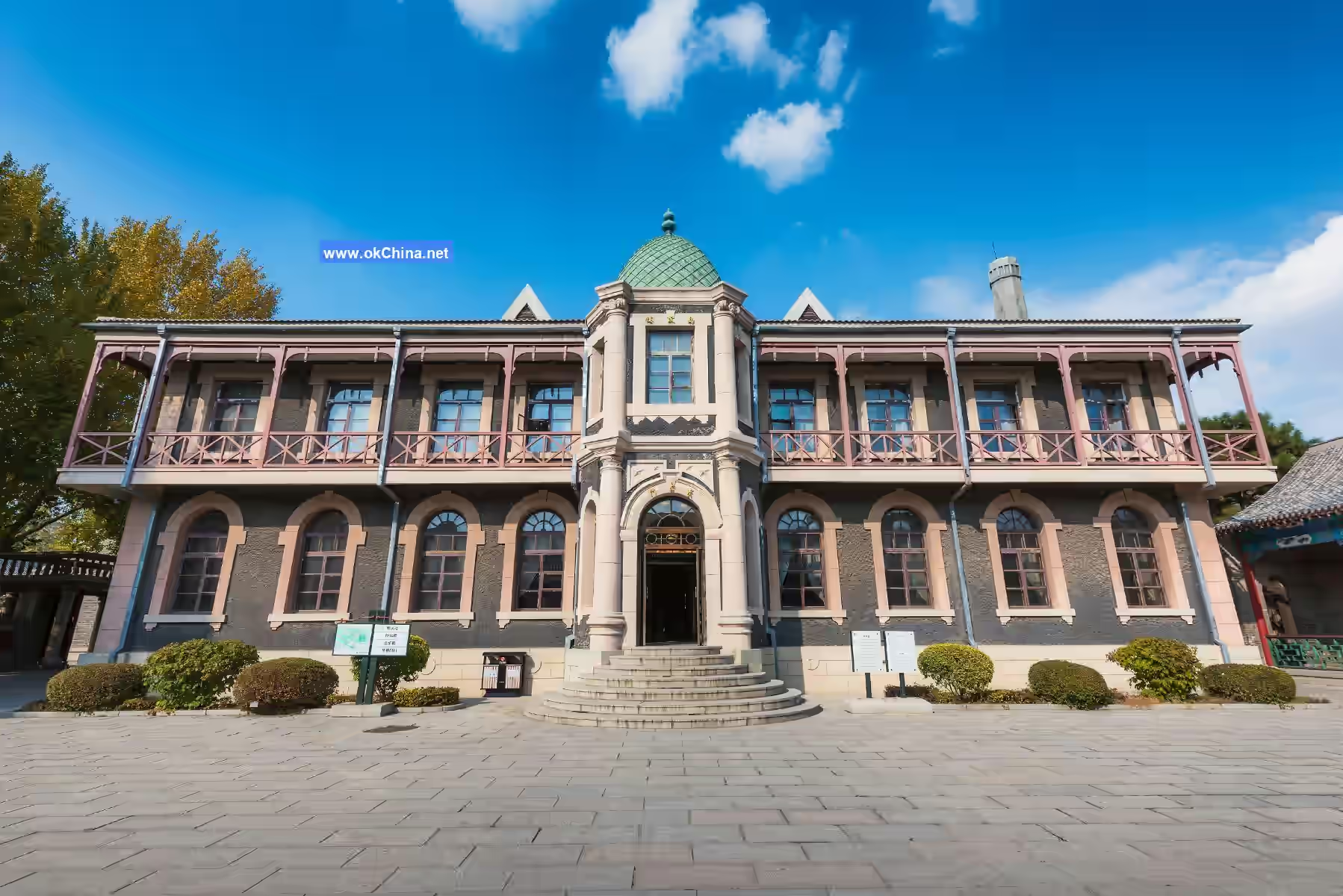
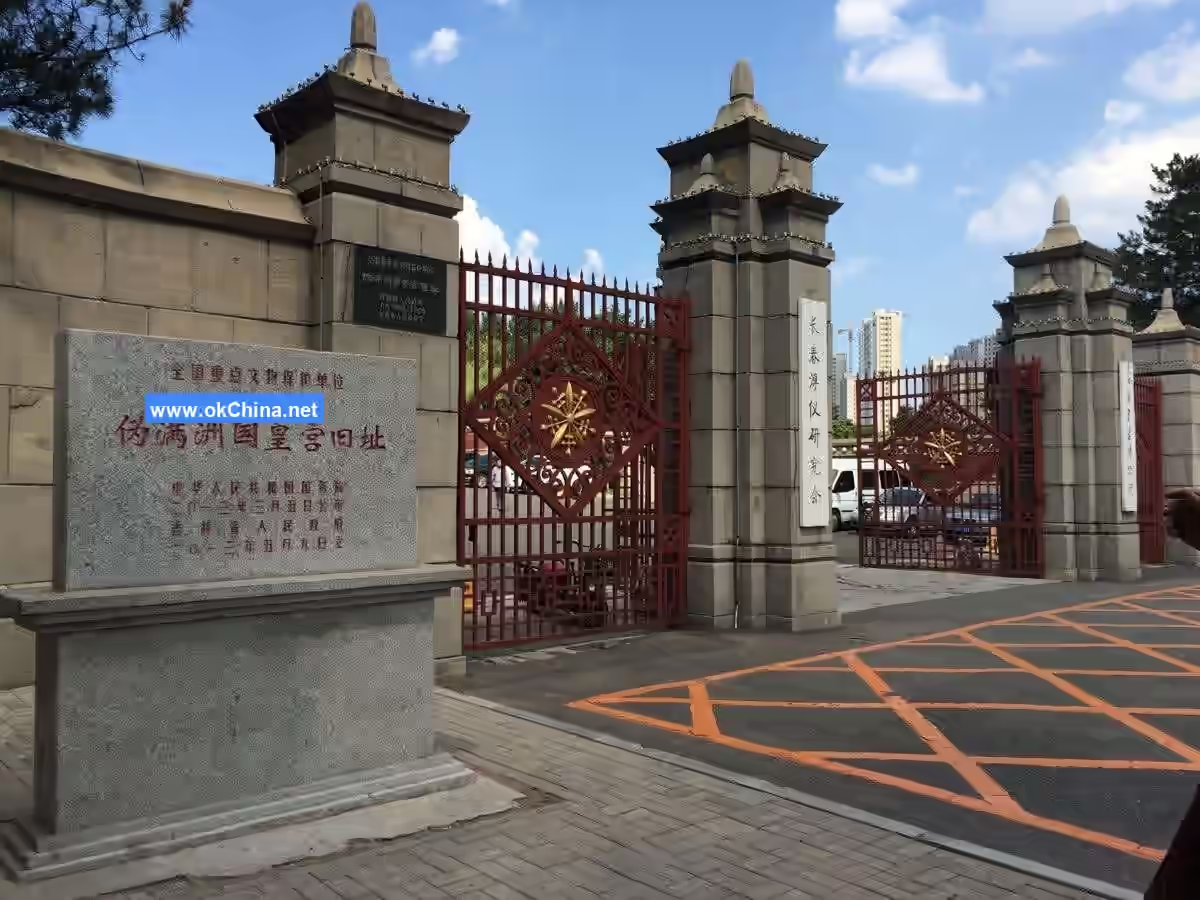
The Museum of the Imperial Palace of Manchukuo is located at No. 5 Guangfu North Road, Kuancheng District, Changchun City, Jilin Province. Established in 1962, it covers a total area of 250,500 square meters with a building area of 137,000 square meters. It is a palace-site museum and a National First-Class Museum built upon the architectural complex of Puyi's former imperial palace.
The museum's predecessor was the Jilin-Heilongjiang Salt Tax Bureau office during the Republic of China period, which managed salt affairs in Jilin and Heilongjiang provinces. The museum was founded in 1962, and the protection and restoration work of the former Imperial Palace of Manchukuo site began in 1982. It was renamed the Museum of the Imperial Palace of Manchukuo in February 2001. The museum currently features 50 original-state displays of Manchukuo palace buildings, including the Jixi Building, Qinmin Building, and Tongde Hall, along with 2 large permanent exhibitions, 3 thematic exhibitions, 33 temporary exhibitions, 17 domestic touring exhibitions, and 11 international exhibitions. Its collections include a large number of Manchukuo palace artifacts, Japanese modern and contemporary artifacts, Northeast China modern and contemporary artifacts, folk artifacts, and representative modern and contemporary artworks such as calligraphy, paintings, sculptures, and works by intangible cultural heritage inheritors. The Imperial Palace of Manchukuo was a product of Japan's invasion of China. With its multiple connotations and unique value, it truthfully reflects the last-ditch struggle of the last emperor of China's feudal society and bears witness to the brutality and violence of Japan's invasion and colonial rule in Northeast China. It stands as one of China's typical cautionary memorial sites of modern colonial culture.
In 2007, the museum was recognized as a National Advanced Collective in the Cultural Heritage System and a National AAAAA Tourist Attraction. On May 21, 2009, it was designated as the fourth batch of National Patriotic Education Demonstration Bases [3]. On May 16, 2013, it was listed as a National Key Cultural Relics Protection Unit. On October 11, 2018, it was included in the list of "National Research and Practice Education Bases for Primary and Secondary School Students." As of the end of 2022, the museum's collection comprises 56,346 items/sets, including 11,128 items/sets of precious cultural relics, with an annual total of 267,734 visitors.
2. Layout and Orientation
2.1 Exhibition Design
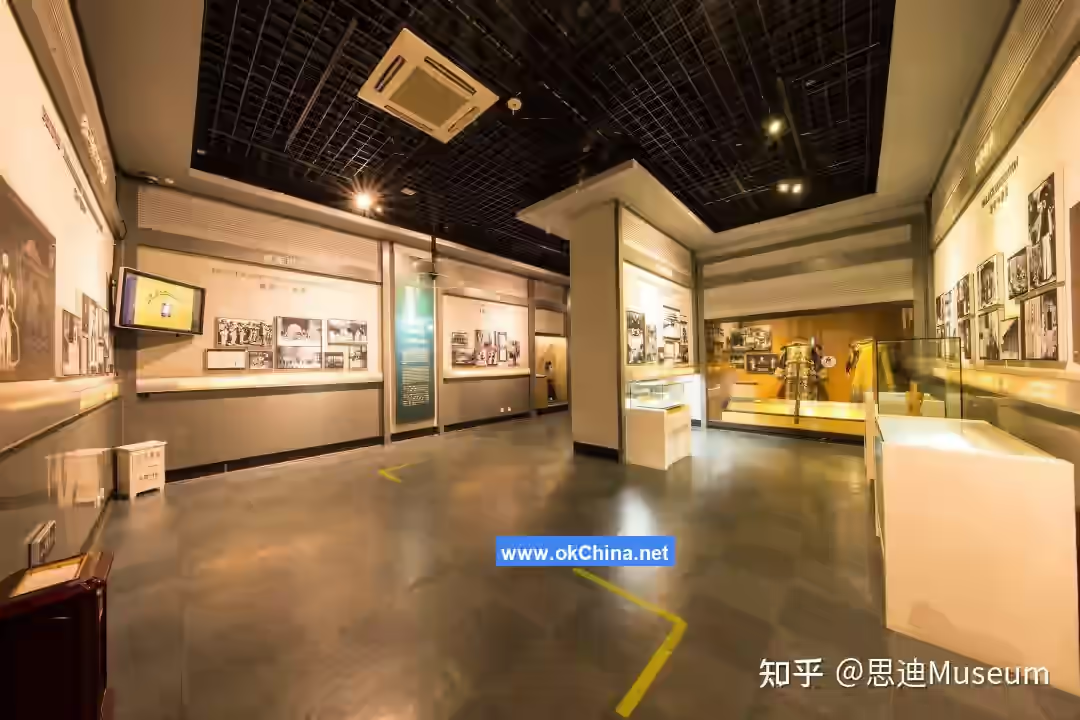
The main thread of the exhibition design at the Changchun Museum of the Imperial Palace of Manchukuo reflects the core themes and narrative flow. The design prioritizes artifacts, supplemented by charts, photographs, and text panels. The layout is dignified yet flexible, with precise content. The main thread emphasizes the display of Manchukuo history, showcases the unique style of Changchun's historical landscape, and places special importance on the cautionary role of historical education. The secondary thread emphasizes vivid and dynamic concepts, with highlights including landscapes, models, audiovisual displays, restorations of large artifacts, and groupings of similar artifacts. The Manchukuo history section of the secondary thread focuses on landscape designs related to Puyi, reflecting the incompetence of the puppet regime. The puppet regime section emphasizes landscape designs of Changchun, showcasing the pioneering spirit of the newly developing city. The concluding section features a large lightbox wall titled "Historical Lessons" combined with a small screening room, creating a powerful impression of tracing history, facing the present, and looking toward the future. The secondary thread complements the main thread, enhancing the depth and impact of the exhibition content.
2.2 Interior Layout
2.21 Original-State Display of Tongde Hall
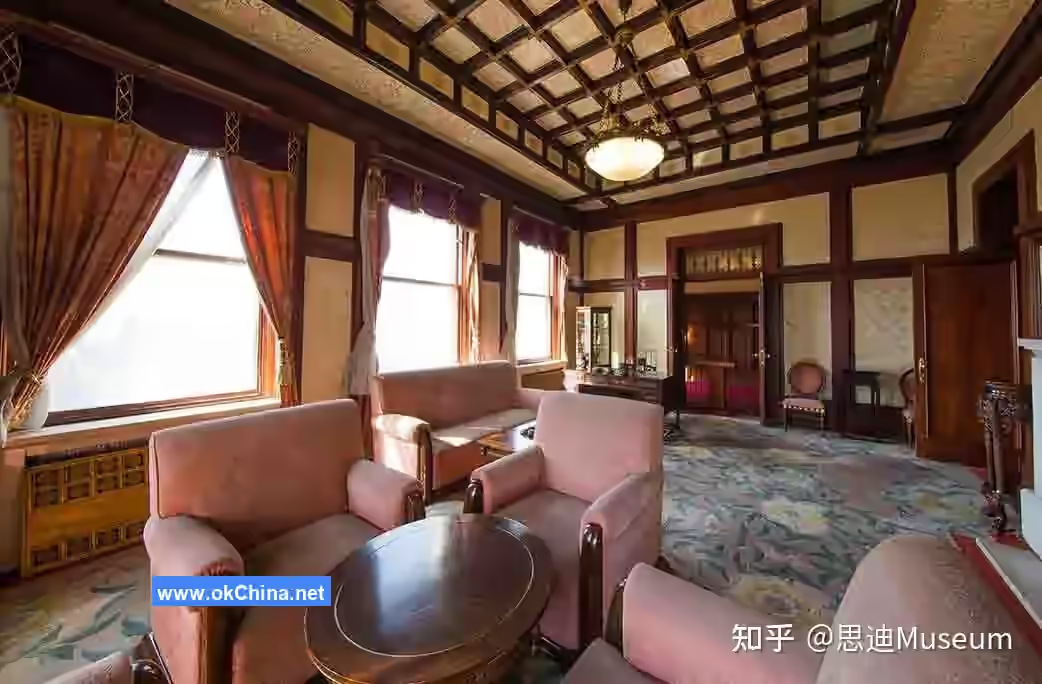
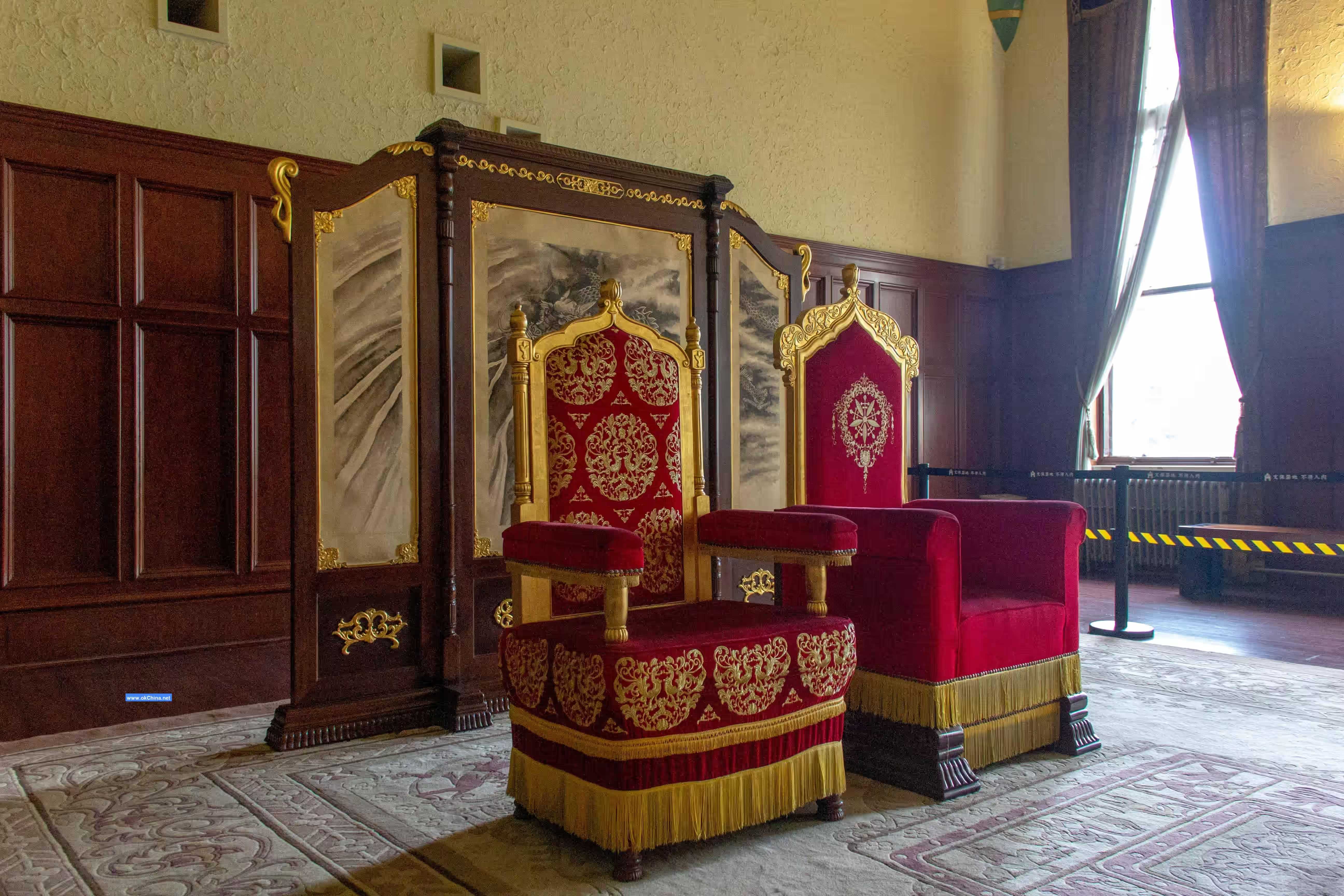
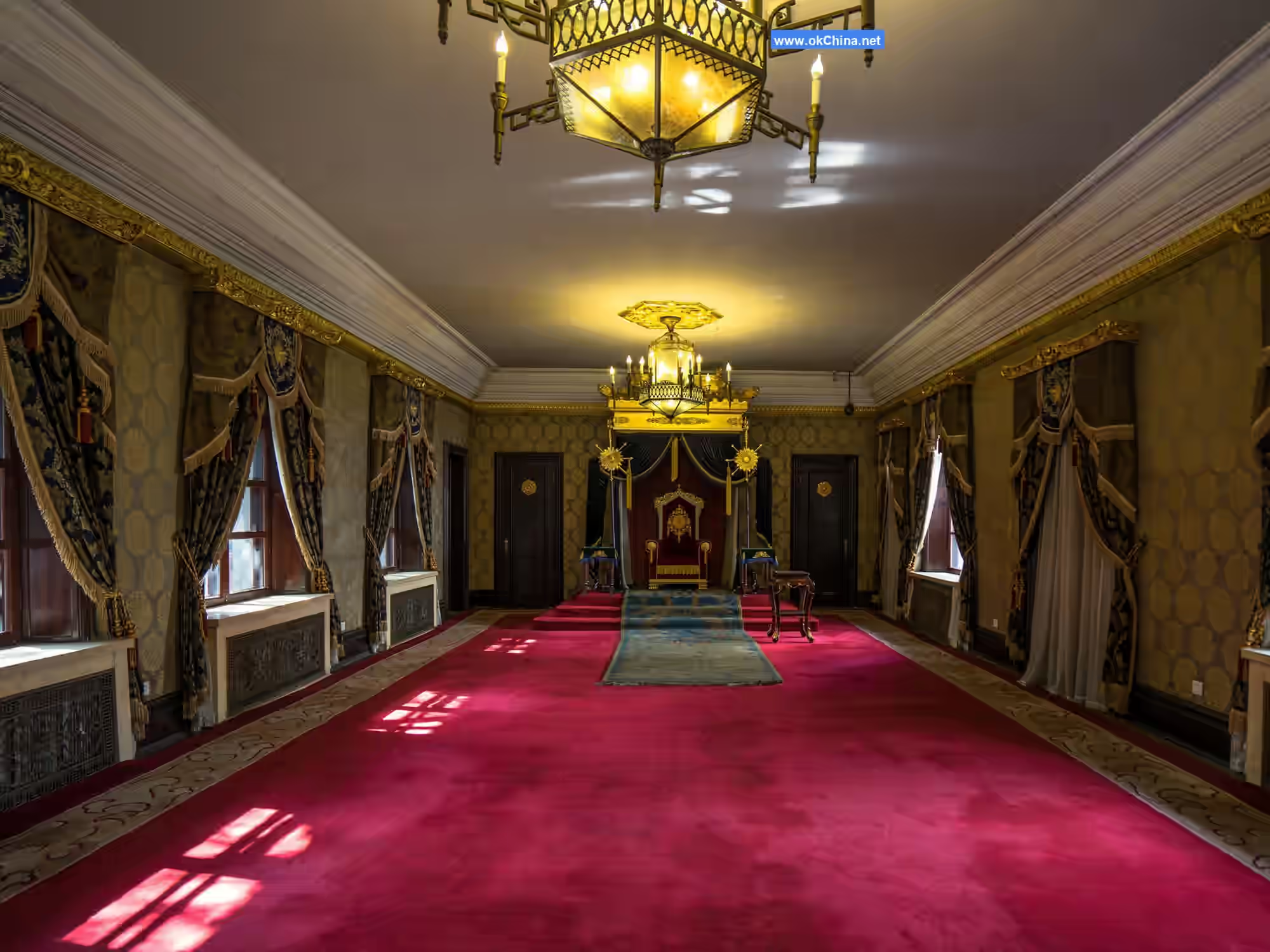
The "Original-State Display of Tongde Hall" is an exhibition of the palace site's architectural restoration. Tongde Hall was completed in the 27th year of the Republic of China (1938), with a building area of 5,758 square meters. Based on historical photographs, documents, and other materials, and adhering to the principle of "restoring the old as it was," this exhibition restores the historical appearance of Tongde Hall. It reconstructs the rooms according to their original purposes and styles. The exhibition recreates various rooms and scenes within Tongde Hall, including the Grand Hall, Audience Hall, Informal Reception Room, Chinese Room, Piano Room, Billiards Room, Movie Theater, Galloping Horse Corridor, Puyi's Living Quarters, Li Yuqin's Living Quarters, and the Long Corridor. The architecture itself and its interior decorations reflect colonial characteristics. The restoration of Tongde Hall vividly reveals this historical and cultural connotation, representing and embodying the unique features of the Imperial Palace of Manchukuo, making its restoration irreplaceable.
2.22 Exhibition Hall of the History of Northeast China's Occupation
The Exhibition Hall of the History of Northeast China's Occupation was designed by the Museum of the Imperial Palace of Manchukuo in 2005 and serves as a crucial component of the museum's efforts to build a cautionary cultural education and patriotic education base.
The hall is located in the eastern area of the former Imperial Palace of Manchukuo site, covering an area of 26,000 square meters with a building area of over 8,000 square meters across four floors (one underground and three above ground). The top floor is an exchange exhibition hall with an exhibition space of approximately 1,200 square meters. This hall has hosted over ten thematic exhibitions, including the "Calligraphy and Painting Exhibition by One Hundred Generals" commemorating the 75th anniversary of the September 18 Incident, the "Exhibition of Japanese Calligraphy and Paintings from the Collection," and the "Exhibition of Japanese Invasion Cartoons." The other three floors serve as the main exhibition halls, with an exhibition space of about 4,200 square meters, featuring the large permanent exhibition "Never Forget September 18th—The History of Japan's Invasion of Northeast China."
The hall also houses a cultural relics storage room and a central monitoring room for anti-theft and fire safety equipment. After its completion, it hosted the First International Academic Symposium on Puyi Studies, the National Museum Directors Forum, and government press conferences.
The hall includes two VIP reception rooms, one of which can be used for government diplomatic receptions in addition to welcoming guests.
2.23 Exchange Exhibition Hall
The Exchange Exhibition Hall is located on the third floor of the Exhibition Hall of the History of Northeast China's Occupation, with a building area of over 1,200 square meters. It features four sets of glass display cases over ten meters long, dozens of meters of fixed display panels, and six sets of movable display panels. The hall can also accommodate over ten temporary display stands, with a total exhibition line exceeding 200 meters.
The central hall has a glass roof with electric ceiling panels that can adjust natural lighting. All lighting in the hall consists of adjustable spotlights specifically designed for exhibitions, allowing for precise control of light direction without damaging the exhibited artifacts.
The Exchange Exhibition Hall has hosted over ten temporary exhibitions, including "The Life and Works of Lu Xun," "Iranian Culture and Art Exhibition," "Fragrant Ink—Exhibition of Ming and Qing Calligraphy and Painting Masterpieces from the Huai'an Museum Collection," and "August 15th as Depicted by One Hundred Japanese Cartoonists."
2.24 Multi-Function Hall
The Multi-Function Hall is located on the second floor of the Exhibition Hall of the History of Northeast China's Occupation, with a building area of over 800 square meters and seating for over 200 people. It primarily hosts various conferences, academic exchanges, and performances. The hall is equipped with a multimedia display system and an A/V system. The multimedia display system consists of high-brightness, high-resolution projectors capable of large-screen displays of various graphic and textual information. The A/V system includes a computer, DVD player, mixing console, microphones, amplifiers, speakers, digital hard disk recorders, and other A/V equipment. It enables the playback of various graphic and textual information, live sound amplification, broadcasting, and recording of the entire process via digital hard disk recorders.## 3. History
3.1 Manchukuo
Manchukuo (March 1, 1932 – August 18, 1945) was a puppet regime established by Japan after its occupation of China's Northeast region. As the Nationalist Government, the Chinese Communist Party, and the international community did not recognize the "Manchukuo" regime, it was referred to as "Puppet Manchukuo" or "False Manchukuo." Its "capital" was set in Hsinking (present-day Changchun, Jilin), and its "territory" included the entire area of what is now China's three northeastern provinces except for the Kwantung Leased Territory (present-day Lüshun and Dalian), as well as eastern Inner Mongolia and Chengde City in Hebei Province.
After Japan invaded and occupied China's Heilongjiang, Jilin, and Liaoning provinces from September 1931 to February 1932, it established the "Northeast Supreme Administrative Committee." On March 9, 1932, under the instigation of the Japanese army, the last emperor Puyi secretly fled from Tianjin to the Northeast and established the puppet regime "Manchukuo" (Japanese: まんしゅうこく) in Changchun. On September 15, 1932, Nobuyoshi Mutō, Commander of the Japanese Kwantung Army and Ambassador Plenipotentiary to Manchukuo, and Zheng Xiaoxu, "Prime Minister of Manchukuo," signed the "Japan-Manchukuo Protocol" in Changchun, formally recognizing "Manchukuo."
Initially, Puppet Manchukuo adopted a "republican" system, but soon appointed the deposed Qing emperor Puyi as its "head of state." His initial title was "Chief Executive," with the reign title "Datong." Puyi later assumed the title "Emperor," with the reign title "Kangde." In August 1945, after the United States dropped two atomic bombs on Japan proper, the Soviet Red Army launched a surprise attack on the Kwantung Army and the "Manchukuo Imperial Army" (the puppet army) stationed in "Manchukuo." Following Japan's defeat in 1945, from midnight on August 17 to the early hours of August 18 of the same year, Puyi held an "abdication ceremony" at the Mining Company Technical Training Institute (Japanese: 鉱山株式会社技術養成所, now the Puppet Manchukuo Emperor Puyi Temporary Palace Museum in Dalizi Town, Linjiang, Baishan) in Linjiang County, Tonghua (now part of Baishan City), where he read the "Abdication Edict," marking the end of Puppet Manchukuo. Subsequently, Puyi and other war criminals of the puppet regime were captured by the Soviet army and handed over to the newly established government of the People's Republic of China in 1950 for reformation.
3.2 Historical Evolution
3.21 Predecessor of the Palace
The predecessor of the Puppet Manchukuo Palace was the official office of the Jilin-Heilongjiang Salt Tax Bureau, which managed salt affairs for Jilin and Heilongjiang provinces during the Republic of China period. In 1907, the Qing government reorganized salt administration and implemented a salt monopoly and tax system in the Northeast, first establishing the Official Salt Bureau in Fengtian. On June 21, 1908, the Qing government established the Jilin Official Transport Bureau in Jilin City to manage the transportation and sales of salt in Jilin Province. In October 1911, the Jilin Provincial Official Transport Bureau was relocated to Changchun, with its office and salt warehouse chosen at the Changchun Salt Warehouse. On January 28, 1913, the Ministry of Finance of the Republic of China established the Jilin Salt Tax General Bureau here. On December 23, 1914, the Salt Affairs Office of the Three Northeastern Provinces Salt Tax General Bureau decided to merge the Jilin and Heilongjiang bureaus, forming the Jilin-Heilongjiang Salt Tax Bureau, responsible for the monopoly, transportation, sales, and anti-smuggling operations of salt in Jilin and Heilongjiang provinces. From then on, the Changchun Salt Warehouse became the office location for the Jilin-Heilongjiang Salt Tax Bureau and the Jilin-Heilongjiang Salt Affairs Audit Office. In 1932, when the Japanese Kwantung Army fabricated Puppet Manchukuo, the office building of the Jilin-Heilongjiang Salt Tax Bureau was selected as the site for the puppet "Administrative Government."
3.22 Establishment as the Palace
On March 9, 1932 (the 21st year of the Republic of China), with the support of the Japanese invaders, Puyi assumed the position of "Chief Executive of Manchukuo." On April 3, 1932 (the 21st year of the Republic of China), Puyi moved here, and it became the "Manchukuo Administrative Government." In 1934 (the 23rd year of the Republic of China), Puppet Manchukuo implemented an imperial system, and "Manchukuo" was changed to the "Manchukuo Empire." On March 1, 1934 (the 23rd year of the Republic of China), Puyi held his enthronement ceremony in the Qinmin Building, transforming from "Chief Executive" to "Emperor." The "Administrative Government" was accordingly renamed the "Imperial Palace," commonly known as the "Palace." Subsequently, the Puppet Manchukuo Imperial Palace underwent significant expansion. From 1934 (the 23rd year of the Republic of China) to 1940 (the 29th year of the Republic of China), buildings such as the Huaiyuan Building, Tongde Hall, East Imperial Garden, air-raid shelter, rockery, Jiale Hall, and the National Foundation Shrine were constructed.
3.23 Modern Preservation
In 1954, the Jilin Provincial Museum moved from Jilin City to Changchun, temporarily located in the Puppet Manchukuo Palace, using Tongde Hall, Jiale Hall, and the Calligraphy and Painting Building as its exhibition halls.
In 1962, the Jilin Provincial Cultural Bureau took over the eastern part of the Puppet Manchukuo Palace. However, buildings in the western part, such as the Jixi Building and Qinmin Building, were still occupied by the Public Security Force Cadre Training Class. The air-raid shelter under the rockery in the East Imperial Garden was used as a fruit warehouse by the Changchun Fruit Company. In July of the same year, after inspecting the site of the Puppet Manchukuo Palace, Zhou Yang, then Deputy Minister of the Central Propaganda Department, instructed that "the Puppet Imperial Palace should be managed by the cultural department to become a venue for exhibiting the first half of the life of China's last emperor and the crimes of Japanese imperialism in invading the Northeast."
On August 16, 1982, with the approval of the Jilin Provincial People's Government, the Jilin Provincial Puppet Imperial Palace Exhibition Hall was re-established, and the protection and restoration work of the Puppet Manchukuo Palace site began. In 1984, the main buildings in the core area of the Puppet Manchukuo Palace, such as the Qinmin Building and Jixi Building, were gradually restored and opened to the public. The open area was less than one-tenth of the original site's total area.
In September 2000, the Jilin Provincial Party Committee and Provincial Government decided to transfer the management of the Puppet Manchukuo Palace to Changchun City and set the overall goal of "restoring the original appearance of the Puppet Manchukuo Palace within three years." Starting in 2001, over three years, with a total investment of over 600 million yuan, the open area of the Puppet Manchukuo Palace expanded from 12,000 square meters to 137,000 square meters.
In February 2001, to meet the needs of development, the Puppet Imperial Palace Exhibition Hall was officially renamed the Puppet Manchukuo Palace Museum. In 2009, the Puppet Manchukuo Palace Museum joined the "International Museum Night."
4. Main Attractions
4.1 Tongde Hall
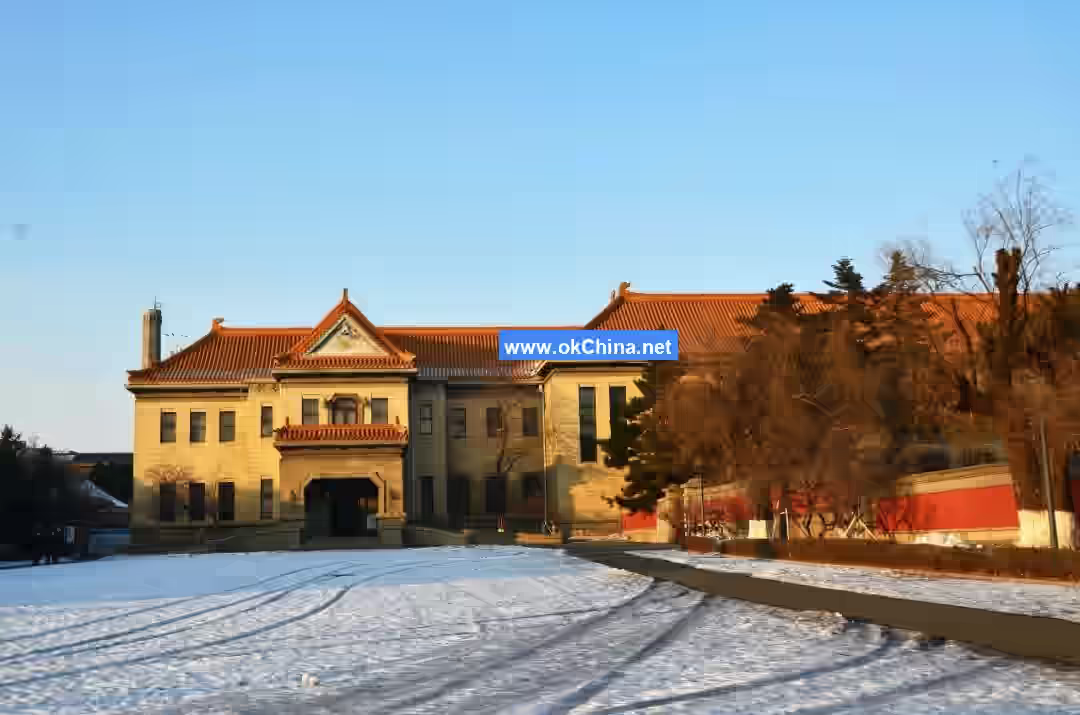
Tongde Hall is a temporary palace designed and built by the Japanese for Puyi and his family. Completed in 1938, it has three floors above and below ground, with a floor area of 3,707 square meters. The main structure is reinforced concrete, with beige facing tiles on the exterior walls and yellow glazed tiles on the roof. The eaves tiles and drip tiles are inscribed with seal script characters "弌德" and "弌心," symbolizing the "unity of virtue and heart between Japan and Manchukuo." The overall architectural style incorporates elements of traditional Chinese palace design, many components of ancient Japanese architecture, and Western architectural elements, belonging to the category of modern eclecticism. Tongde Hall is the largest building in the "Manchukuo" imperial palace complex and one of the most representative buildings in the Puppet Manchukuo Palace Museum.
4.2 East Imperial Garden
The "East Imperial Garden" was built in 1938, designed by Japanese garden designer Masashi Sato, drawing inspiration from the landscaping techniques of the Akasaka Palace Garden in Japan. The garden features a small rockery and artificial waterfall modeled after the Changbai Mountains, along with some tree species from Changbai Mountain and Japanese cherry blossoms, and is home to koi fish. Covering an area of approximately 10,000 square meters, it is the largest garden within the Puppet Manchukuo Palace.
4.3 "Imperial Swimming Pool"
The swimming pool was a venue for Puyi and palace students to play. Influenced by Western culture, Puyi had a swimming pool built within the Puppet Manchukuo Palace. On the night before his escape on August 11, 1945, archives stored in the palace, Puyi's personal diaries, and film footage shot by Japanese photographers for Puyi were burned here.
4.4 "Imperial Air-raid Shelter"
The "Imperial Air-raid Shelter" was specifically built for Puyi and his family to take refuge from air raids. Completed in 1939, it is entirely constructed of reinforced concrete. Internal rooms are equipped with blast-proof iron doors and gas filtration devices, capable of withstanding direct hits from heavy bombs. In the final days of Puppet Manchukuo, Puyi repeatedly took his family here for shelter.
4.5 "National Foundation Shrine"
The "National Foundation Shrine" is a Japanese-style wooden frame temple built in 1940. In July of the same year, the Japanese Kwantung Army instructed Puyi to visit Japan and bring back the "Amaterasu Omikami," symbolizing the ancestral deity of Japan's founding, to be enshrined here as the "Founding Deity of Manchukuo." They also ordered the people of the Northeast to worship it, strengthening ideological control centered on the "Way of the Gods." On the night of August 11, 1945, as Puyi fled the Puppet Manchukuo Palace, the Kwantung Army set it on fire. Only the foundation stones remain today.
4.6 "Amaterasu Omikami" Air-raid Shelter
The "Amaterasu Omikami" air-raid shelter was built concurrently with the "National Foundation Shrine" enshrining "Amaterasu Omikami" in 1940. It is entirely constructed of reinforced concrete, with a shrine inside for placing the "Amaterasu Omikami." In the final days of Puppet Manchukuo, whenever there was an air raid, the祭祀官 would move the "Amaterasu Omikami" into the shelter for protection.
4.7 Calligraphy and Painting Building
The Calligraphy and Painting Building, also known as the "Little White Building," was where Puyi stored precious ancient books, manuscripts, calligraphy, and paintings transported from the Forbidden City, which were treasures of the Qing palace. Built in the 1930s, it has a floor area of 670 square meters. After the collapse of Manchukuo, the national treasures within the Calligraphy and Painting Building were also scattered and lost.
4.8 Jixi Building
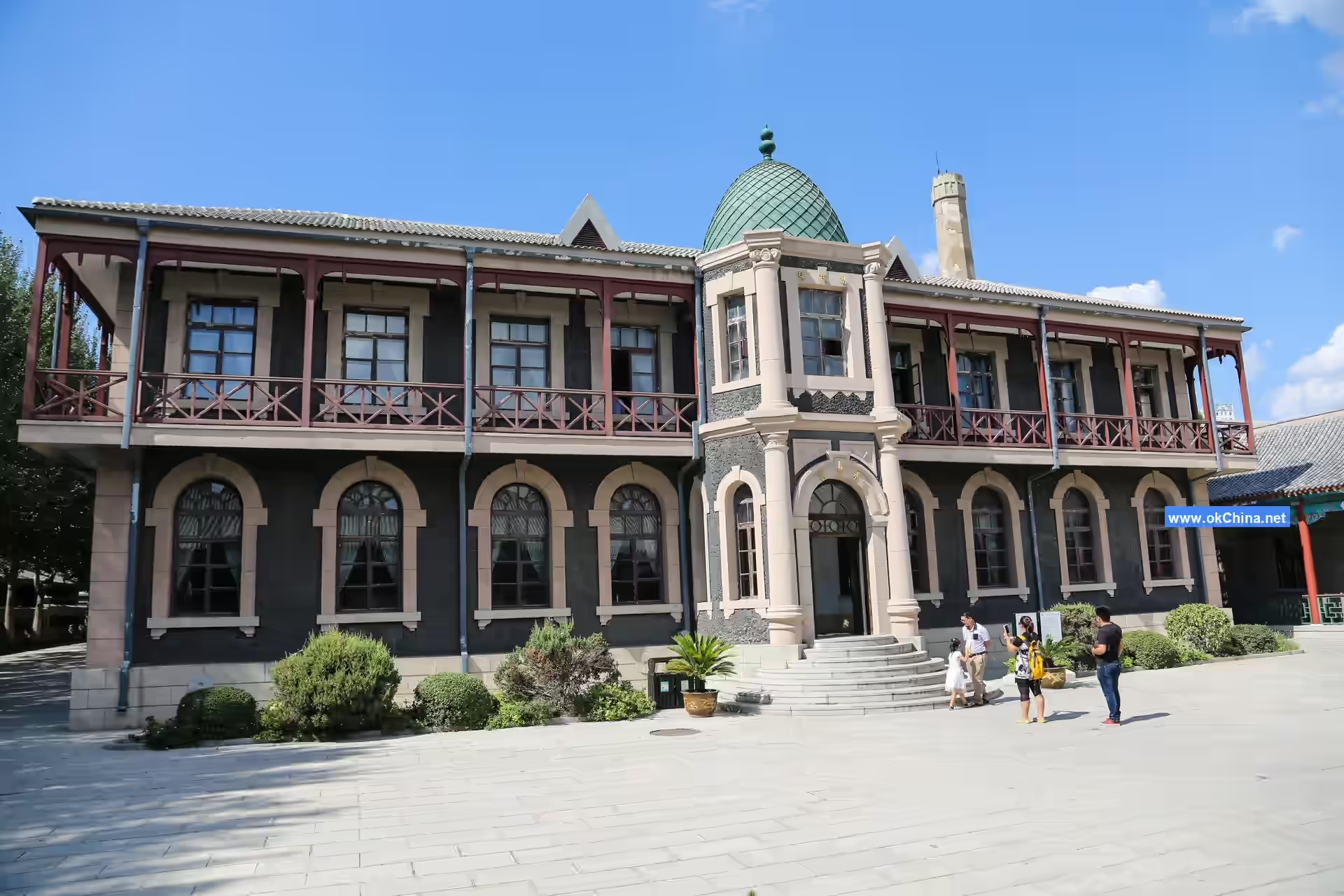
The Jixi Building served as the living quarters for Puyi and his "empress and consorts." Originally the office building of the Jilin-Heilongjiang Salt Affairs Audit Office, it was built in 1928 with a floor area of 1,325 square meters. It is a two-story brick and wood building. The name "Jixi" is taken from the Book of Songs: "Majestic was King Wen, / Continuously bright and reverent," implying "inheriting the legacy of Emperor Kangxi and revering the light." The eastern and western sides of the second floor were the living areas for Puyi and Wanrong respectively, while the western part of the first floor was the residence of Noble Consort Xiang, Tan Yuling.
4.9 Qinmin Building
The Qinmin Building was built in the early 20th century.During the Republic of China period, it served as the office building of the Jilin-Heilongjiang Salt Tax Bureau. In 1932, after Puyi assumed the role of "Chief Executive" of the puppet state of Manchukuo, he named the building "Qinmin" (Diligent Governance) in accordance with the ancestral motto "Revere Heaven and Follow Ancestral Teachings, Be Diligent in Governance and Love the People." It was used as a venue for handling government affairs, holding ceremonies, receiving guests, hosting banquets, and conducting sacrificial activities. The Qinmin Building is a square enclosed structure made of brick and wood, featuring a wooden corridor around the second-floor courtyard and an aerial walkway connecting it to the Huaiyuan Building. Its architectural style blends Eastern and Western elements, falling under the category of typical eclectic architecture.
4.10 Huaiyuan Building
The Huaiyuan Building, constructed in 1934 as a place for ancestral worship, covers a floor area of 1,483.69 square meters. Puyi named it "Huaiyuan" (Cherish the Distant) after the phrase "cherishing distant people brings harmony from all directions, and embracing feudal lords instills awe throughout the land" from the Doctrine of the Mean, expressing his intent to remember and give thanks to his ancestors. In addition to the Fengxian Hall, the building also houses the Department of the Grand Secretariat, the Office of the Aide-de-Camp, and the Qingyan Hall.
4.11 "Western Imperial Garden"
The "Western Imperial Garden" was built during the early years of the puppet Manchukuo regime on the foundation of the garden of the Jilin-Heilongjiang Salt Tax Bureau. It covers an area of over 2,200 square meters. The garden features a variety of flowers, plants, and trees, complemented by pavilions, rockeries, and ponds, creating a picturesque and elegant atmosphere. Before the completion of the "Eastern Imperial Garden," Puyi and his consort Wanrong often visited this garden for leisure and relaxation.
4.12 Changchun Pavilion
The Changchun Pavilion was constructed during the early years of the puppet Manchukuo regime. In July 1934, Puyi's father, Zaifeng, stayed here when he came to congratulate Puyi on his "ascension to the throne." Puyi's sisters also resided here during their visits. After Tan Yuling entered the palace and was conferred the title "Xiang Guiren" (Auspicious Noble Consort), this pavilion became one of her primary activity areas. After her death, her coffin was placed here for a time.
4.13 Zhixiu Pavilion
The Zhixiu Pavilion was built during the early years of the puppet Manchukuo regime. Puyi often used it as a dining and reception area for family gatherings. After his second sister married, she lived here for a time. It also served as the living quarters for his fourth and fifth sisters and as a classroom for students of the inner court. According to recollections from those familiar with the matter, Puyi stored his cash and jewelry in two large safes located in the back rooms. After the completion of the Tongde Hall, this pavilion was converted into a table tennis room for students.
4.14 Imperial Household Department
The courtyard of the Imperial Household Department resembles a traditional Beijing quadrangle. Its architectural style features gray brick and tile-roofed houses with decorative hanging flower gates, combined with Japanese-style hip-and-gable roof characteristics, giving it a unique charm. The Imperial Household Department building corresponds with the Zhixiu Pavilion and Changchun Pavilion, forming a unified complex.
The Imperial Household Department served as the auxiliary institution for Puyi and his court. The ministers of the Imperial Household Department were successively Shen Ruilin and Xi Qia, while the deputy ministers were all Japanese. The Imperial Household Department was originally built in 1909 as the residence of the director of the Jilin-Heilongjiang Salt Tax Bureau. It underwent two renovations and reconstructions. In 1932, after Puyi moved in, it was repurposed as the office of the Imperial Household Department, overseeing all matters within the palace.
5. Important Collections
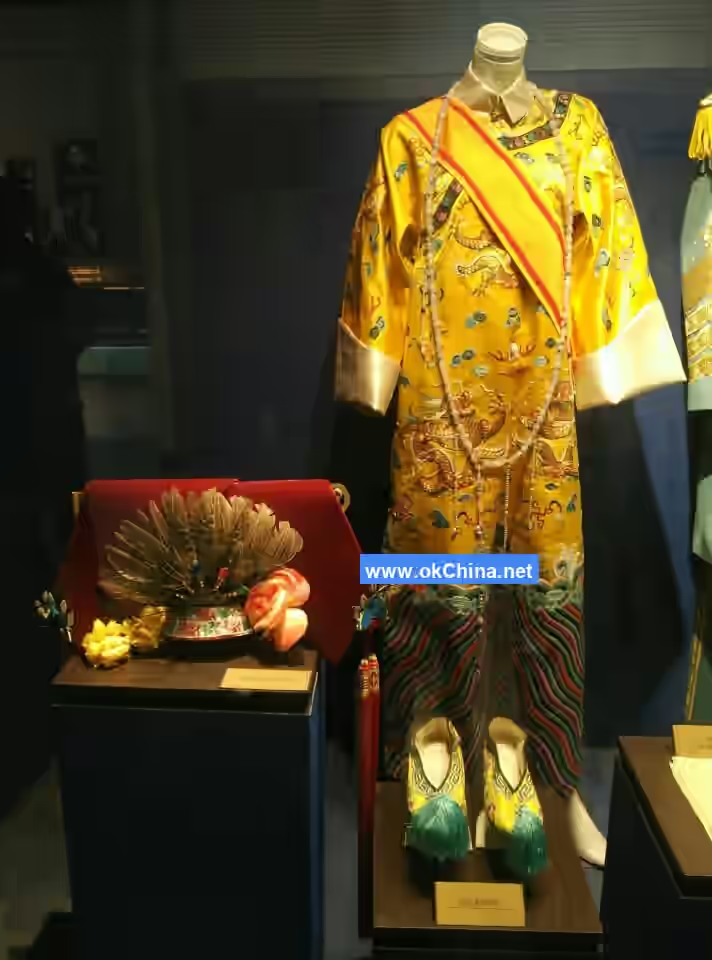
The Museum of the Imperial Palace of Manchukuo houses a large collection of cultural relics from the puppet Manchukuo court, modern Japanese artifacts, modern Northeast Chinese artifacts, folk cultural relics, and representative modern artworks such as calligraphy, paintings, sculptures, and works by intangible cultural heritage inheritors. These include Puyi's diaries, decrees issued during the Manchukuo regime, the imperial carpet from the Jingren Palace, calligraphy and paintings by renowned Japanese artists, and ceramics from famous Japanese kilns such as Kyūshū, Nabeshima, and Satsuma.
Coral-Glazed Double-Handled Wine Cup
Mouth diameter: 7.9 cm, weight: 78.7 g. Double-handled, shaped like a lingzhi mushroom, with gilded rim. The exterior is coral red, featuring an orchid imperial emblem mark. The bottom bears the inscription "Kangde Third Year" (1936). Designated as a National Second-Class Cultural Relic.
Yellow-Glazed Gilded Footed Cup with Imperial Emblem
Mouth diameter: 8.3 cm, base diameter: 3.4 cm, weight: 70 g. Flared mouth, round foot, with an orchid imperial emblem mark inside and gilded rim. Designated as a National Second-Class Cultural Relic.
Gilded Rim Handled Cup with Imperial Emblem
Mouth diameter: 5.3 cm, base diameter: 4 cm, weight: 60 g. Gilded rim, damaged mouth, with an orchid imperial emblem mark on the body. Designated as a National Third-Class Cultural Relic.
Gilded Rim Plate with Imperial Emblem
Diameter: 22.7 cm, base diameter: 12.3 cm, weight: 451.6 g. White glaze, gilded rim, with an orchid imperial emblem mark on the edge. The bottom bears the inscription "Japan Ceramics Company," manufactured in the 25th year of the Republic of China (1936). Designated as a National Second-Class Cultural Relic.
Cloisonné Phoenix Pattern Vase
This vase has a copper body, flared mouth, short neck, full shoulders, straight belly, and flat foot. Height: 36 cm, mouth diameter: 15.3 cm, base diameter: 15.3 cm, weight: 4,720 g. Fired during the Manchukuo period. The entire vase is covered in golden-yellow enamel, with a vividly colored phoenix depicted in the center, spreading its wings in flight. In August 1982, this vase was transferred from the Jilin Provincial Museum to the Museum of the Imperial Palace of Manchukuo. In August 1993, it was authenticated as a National Second-Class Cultural Relic by a panel of porcelain experts from the National Cultural Relics Appraisal Committee, including Geng Baochang.
Cloisonné Small Red-Ground Vase
This pair of vases has copper bodies, flared mouths, short necks, full shoulders, straight bellies, tapered lower sections, and short ring feet. Height: 12.5 cm, mouth diameter: 4.2 cm, base diameter: 5.6 cm, weight: 1,570 g. Fired during the Manchukuo period. Both vases are well-preserved. In August 1982, they were transferred from the Jilin Provincial Museum to the Museum of the Imperial Palace of Manchukuo. Designated as a National Third-Class Cultural Relic.
Painting of a Meditating Fox
Painting dimensions: 27.8 cm (height) × 46 cm (width). Ink and color on silk, belonging to the freehand ink wash style. The painting depicts a single fox in human form, wearing clothing with a skirt fluttering as if in the wind. The fox holds a bamboo rod and sits cross-legged in the center of the painting, with a peaceful expression, eyes closed, and deep in meditation, resembling a Zen practitioner. The surrounding area is largely left blank.
Painting of a Looking Back Figure
Painting dimensions: 40.5 cm (height) × 57 cm (width). The scroll is exquisitely mounted, with silk as the medium, belonging to the traditional Japanese painting style. The lines of the figure's clothing are fluid, with light color washes. The hair is rendered with extremely fine ink strokes, each strand distinct at the roots and softly fading backward, showcasing the delicate beauty of femininity. The dark brown kimono is occasionally adorned with two or three small white flowers. The obi (belt) at the back has a white base with green outlines of patterns, sparingly colored. The flying sparrow in the upper left corner is almost entirely depicted in line drawing without coloring.
6. Role and Value
The primary function of the Museum of the Imperial Palace of Manchukuo is to expose, through exhibitions, Japan's occupation of Northeast China, its enslavement and persecution of the people in the region, and the traitorous actions of Puyi, the puppet emperor of Manchukuo, who sought personal gain at the expense of the nation. It aims to educate the general public, particularly young people, in patriotism and modern history. The museum plays an irreplaceable role in promoting patriotic education among the masses, especially the youth.
Comments
Post a Comment