Simian Mountain Scenic Area
1. Introduction
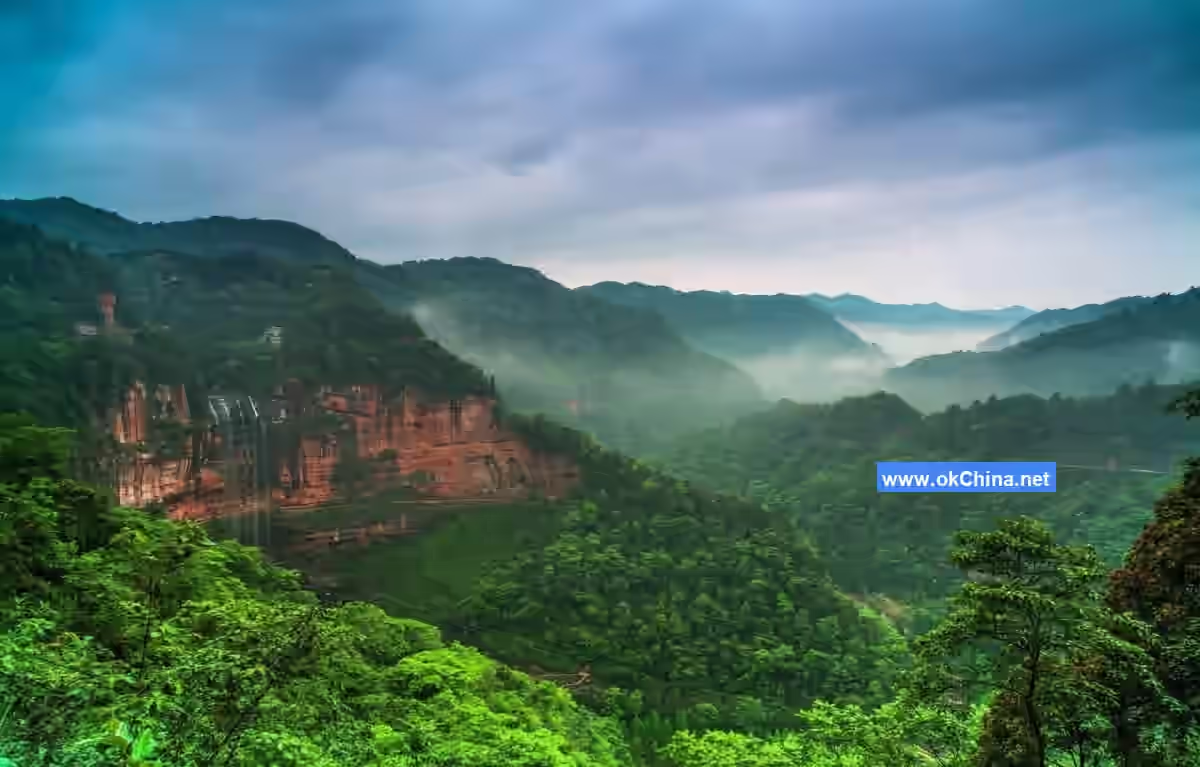
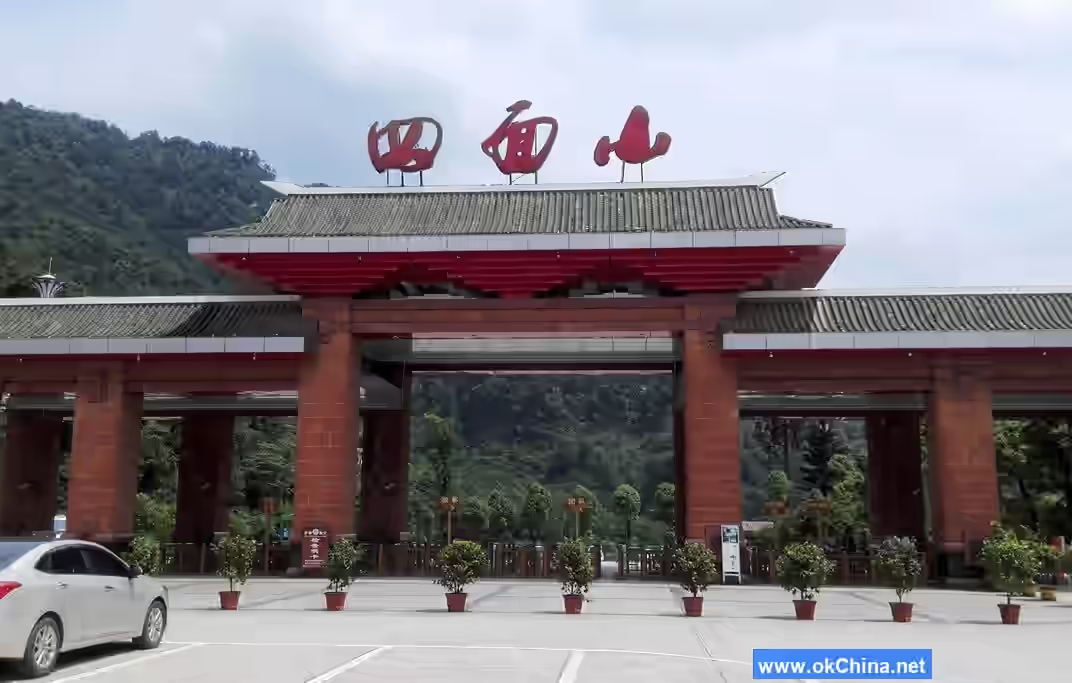
The Simian Mountain Scenic Area is located in Simianshan Town, Jiangjin District, Chongqing. It is situated over 100 kilometers from the central urban area of Chongqing, Luzhou in Sichuan, and Zunyi in Guizhou, placing it at the core of the tourism "Golden Triangle" connecting Chongqing, Sichuan, and Guizhou. It integrates mountains, waters, forests, waterfalls, and rocks, blending serenity, peril, grandeur, wonder, and beauty. With its unique natural landscapes, excellent ecological environment, and abundant tourism resources, it is a premier destination for leisure and vacation.
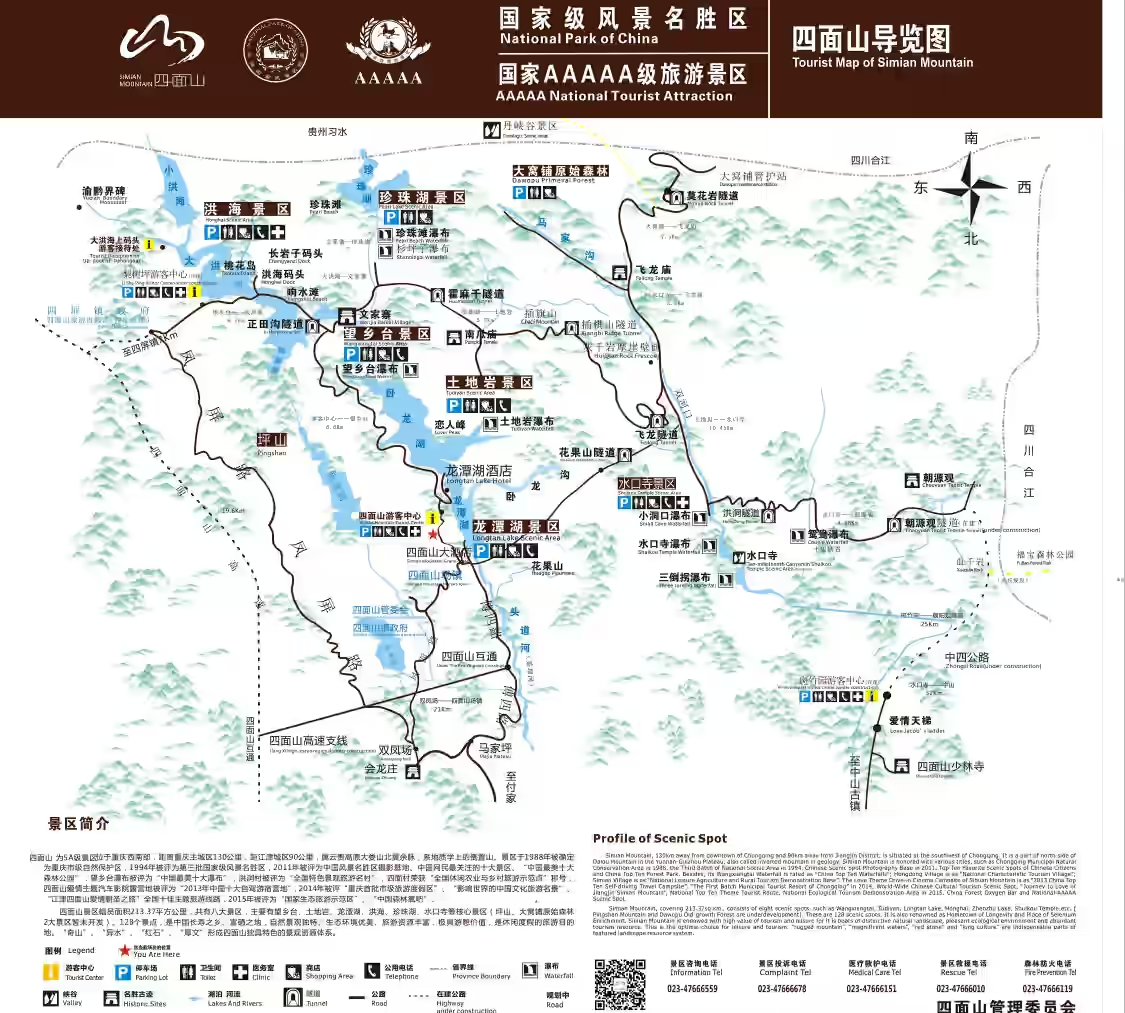
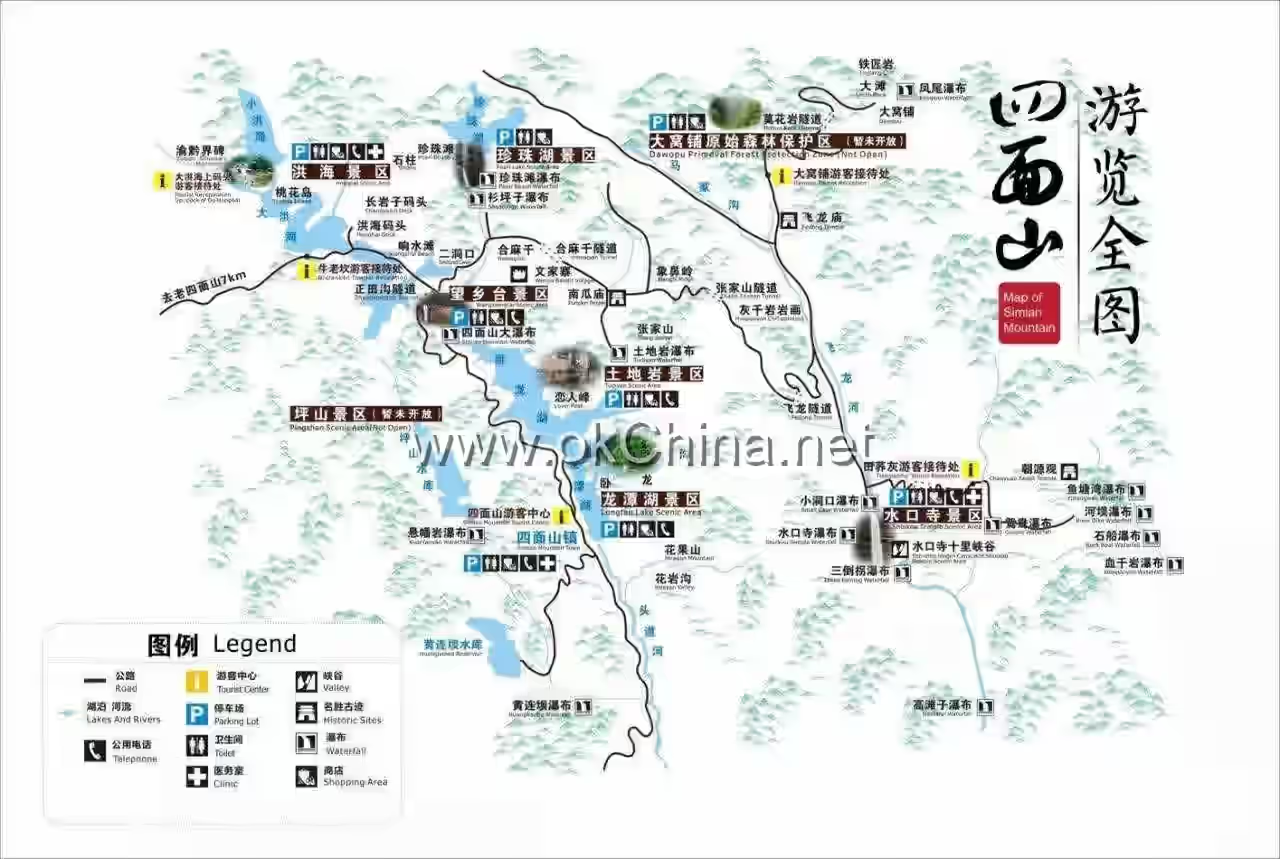
The Simian Mountain Scenic Area covers an area of 213.37 square kilometers, with an altitude ranging from 1,000 to 1,500 meters. Its core scenic spots mainly include Wangxiangtai, Tudi Rock, Longtan Lake, Honghai, and Pearl Lake, totaling 128 attractions. It features four distinctive landscape themes: "Fantastic Mountains," "Unique Waters," "Red Rocks," and "Rich Culture." Simian Mountain is a National Scenic Area with a forest coverage rate of 95.4%. It is home to approximately 1,700 species of flora and fauna and represents the only remaining subtropical primeval evergreen broad-leaved forest belt at the same latitude on Earth. It has been recognized by UN ecological conservation experts as a rare "Natural Species Gene Pool" on the planet.
2. Geographical Environment
2.1 Location and Territory
The Simian Mountain Scenic Area is located in southwestern Chongqing, southern Jiangjin, about 100 kilometers from the main urban area of Chongqing and over 60 kilometers from Jiangjin's urban center. It is accessible via Provincial Highway 107 and the Jiangjin-Xishui Expressway. The scenic area spans 213.37 square kilometers, with geographical coordinates of 106°24′ East longitude and 28°39′ North latitude, and an altitude ranging from 560 to 1,709.4 meters.
2.2 Geology and Landforms
Simian Mountain belongs to the northern extension of the Dalou Mountain range of the Yunnan-Guizhou Plateau and is a geologically inverted mountain. It lies at the heart of the tourism "Golden Triangle" connecting Chongqing, Sichuan, and Guizhou. To the northwest, it borders the Sichuan Hejiang Fubao National Forest Park; to the southwest, it neighbors the Guizhou Chishui National Scenic Area; and to the south, it adjoins the Guizhou Xishui National Forest Park.
2.3 Climate Characteristics
The summer temperature in the Simian Mountain Scenic Area ranges from 22 to 25 degrees Celsius, with an annual average temperature of about 13.7 degrees Celsius.
2.4 Hydrological Features
Simian Mountain is renowned as the "Land of a Thousand Waterfalls" and "A Thousand Waterfalls, A Thousand Poses." Its water area covers 5 square kilometers, with 80% of the water bodies meeting Grade I water quality standards. It features three major water systems: Feilong River, Chaba River, and Linxian River. There are nine lakes above 800 meters in altitude, forming a vast group of alpine lakes. It boasts an alpine waterfall group represented by the Wangxiangtai Waterfall, known as "China's Tallest Waterfall." Among them, there are 3 waterfalls with a vertical drop exceeding 100 meters, 11 exceeding 80 meters, and 37 exceeding 50 meters.
2.5 Natural Resources
2.5.1 Plant Resources
The Simian Mountain Scenic Area covers an area of 25,300 hectares, including 3,533 hectares of primeval forest and 18,000 hectares of primeval secondary forest, resulting in a forest coverage rate of 95.8%. The forest is subtropical evergreen broad-leaved, dominated by arbor species. The core protected area, the Dawoopu Primeval Forest, is the largest and best-preserved subtropical primeval forest remaining at 28° North latitude on Earth. It hosts approximately 2,600 species of flora and fauna, including 19 rare, endangered, and nationally protected plant species such as Cyathea spinulosa, Dipteris chinensis, Fokienia hodginsii, Phoebe zhennan, Taiwania cryptomerioides, Michelia wilsonii, and Taxus chinensis.
2.5.2 Animal Resources
Nationally protected animals in the Simian Mountain Scenic Area include 15 species such as the Chinese Merganser, Rhesus Macaque, and Chinese Giant Salamander. As of 2022, over 30 species of nationally protected (Grade I and II) wild animals have been discovered, including Forest Musk Deer, Small Indian Civet, Leopard Cat, Silver Pheasant, and Mandarin Duck, along with more than 20 species of key protected wild animals in Chongqing.
3. Main Attractions
3.1 Natural Landscapes
3.1.1 Wangxiangtai Waterfall
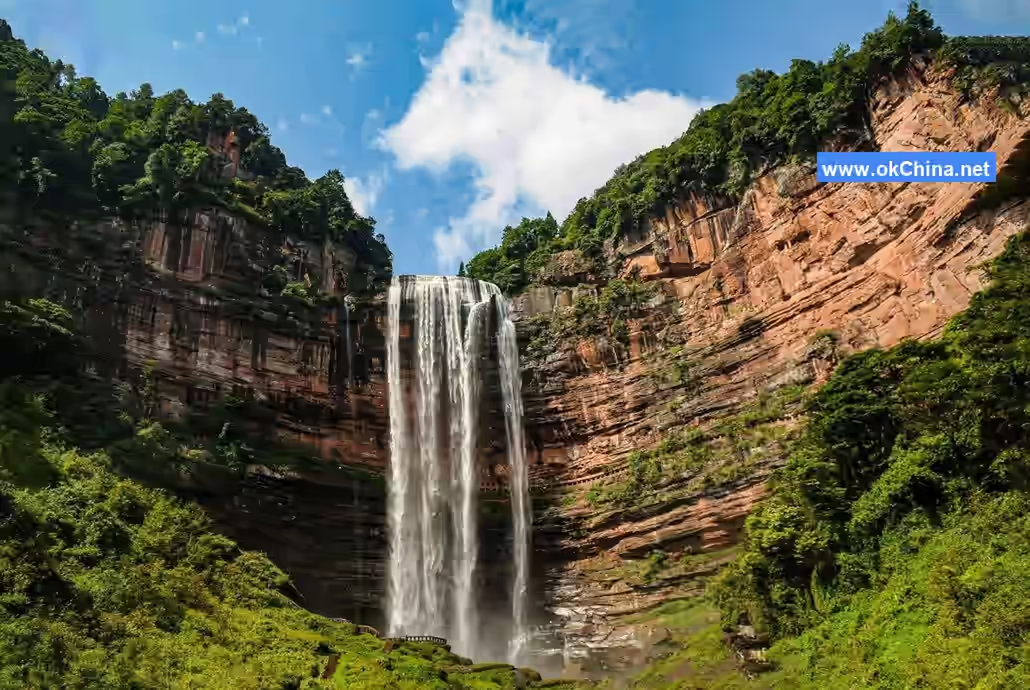
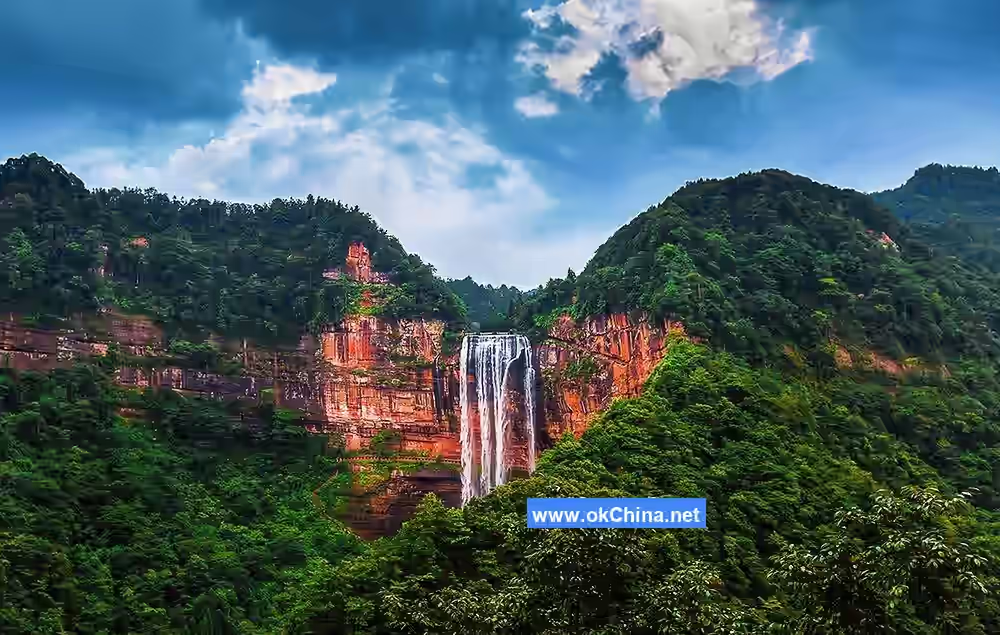
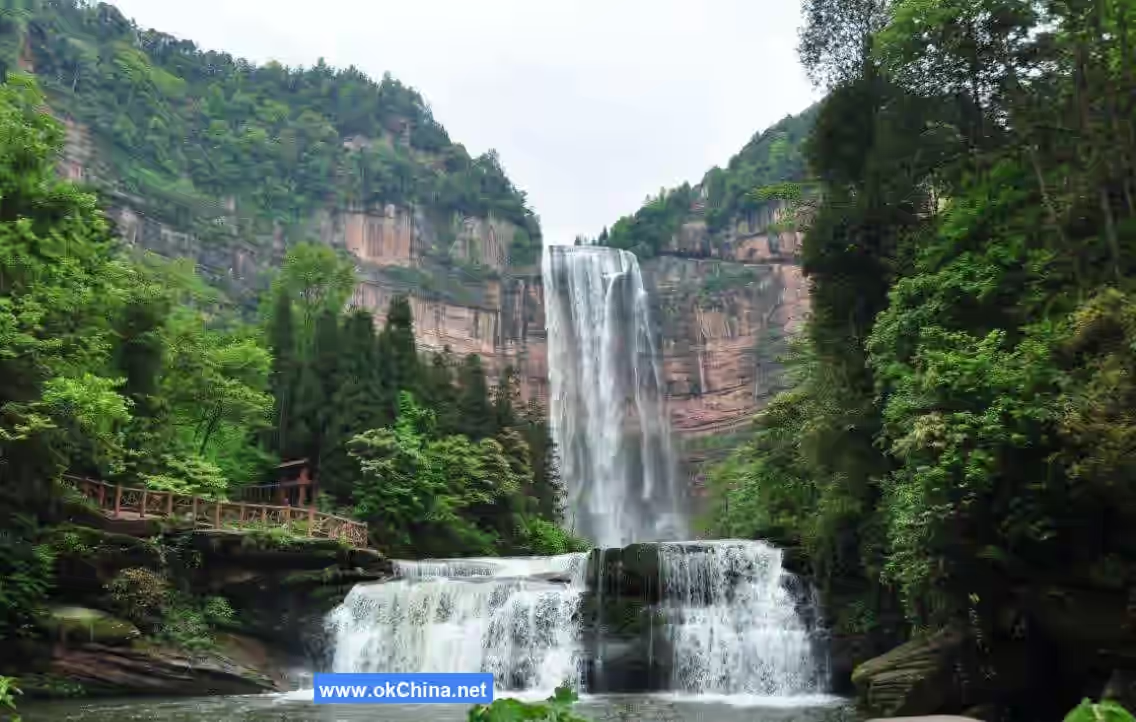
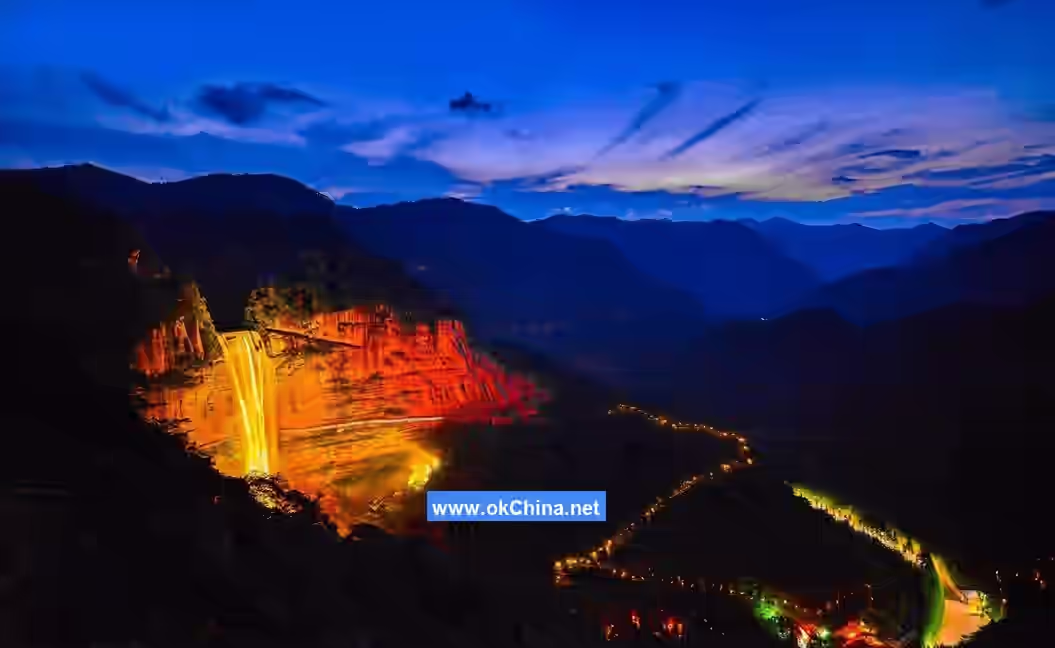
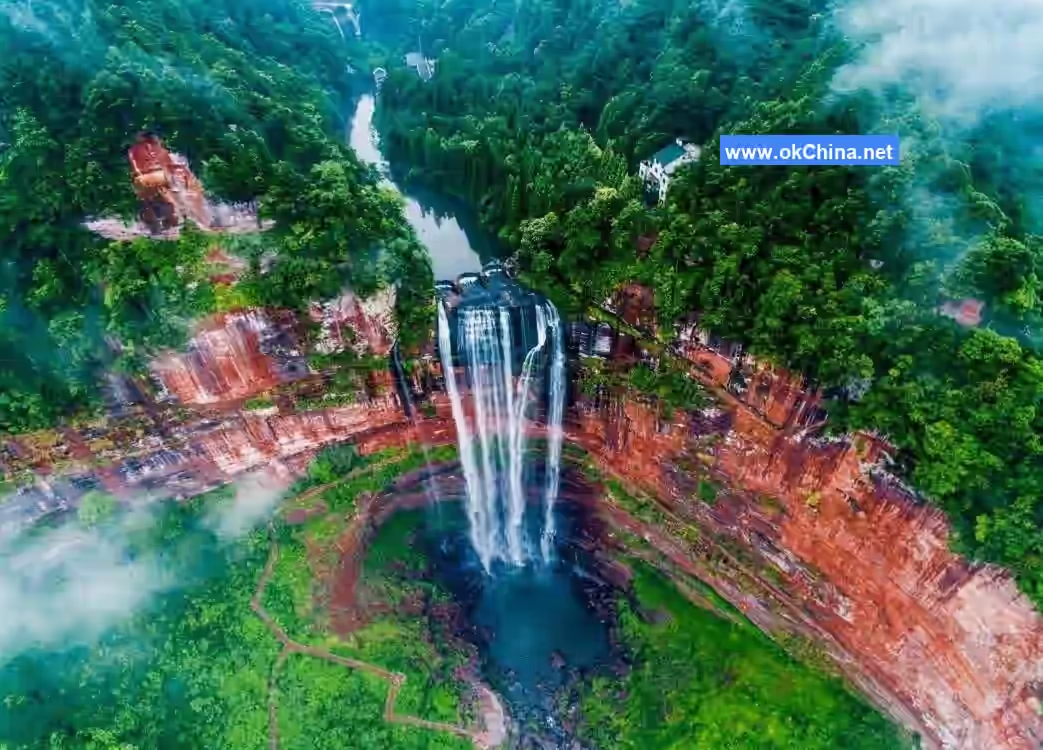
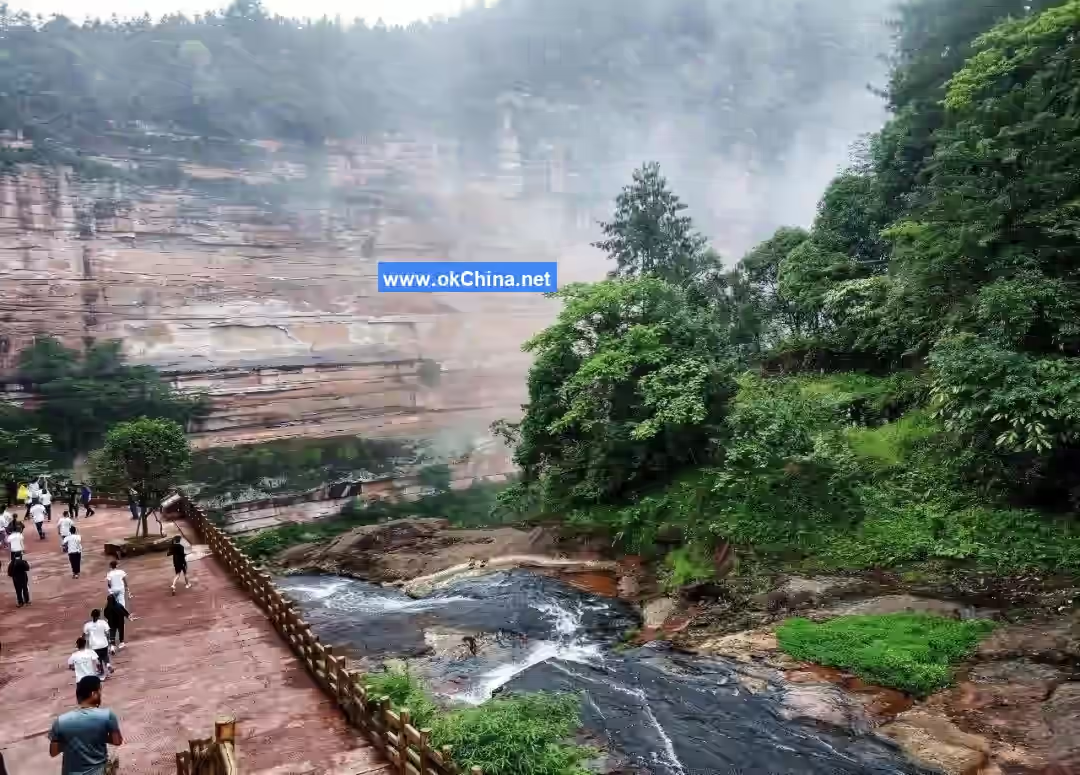
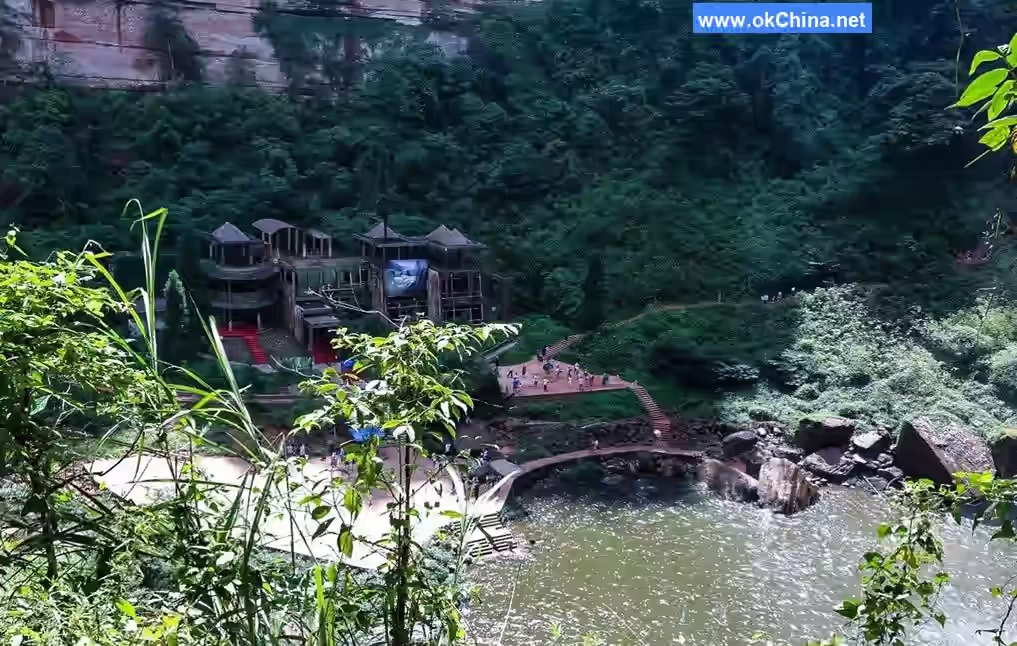
Wangxiangtai Waterfall stands 158 meters high and 48 meters wide, making it the widest single-drop waterfall in China to date, over twice the height of Huangguoshu Waterfall. It is hailed as "China's Tallest Waterfall" and one of "China's Top Ten Most Beautiful Waterfalls," serving as the iconic landmark of Simian Mountain. The waterfall not only has a tremendous drop with thunderous sounds that shake the mountains and valleys, but on sunny days, sunlight refraction creates rainbows that merge with the cascading water, forming rainbow bridges across the valley. Surrounded by forest vegetation and set against Danxia (red sandstone) cliffs, its overall outline remarkably resembles a heart shape, making it the world's largest naturally formed heart-shaped Danxia landscape associated with a waterfall, acclaimed as the "World's Premier Heart." Directly opposite Wangxiangtai Waterfall, echoing the "World's Premier Heart," is a massive cave formed by weathering and erosion of Danxia landforms, resembling a "Giant Eye" and known as the "World's Premier Eye." Formerly named Xiaoyao Cave (Carefree Cave), legend says two celestial immortals passed by, were captivated by the scenery, and used their magic to create this cave for leisurely enjoyment. Utilizing sound, light, and electrical technology, Wangxiangtai Waterfall is illuminated at night by 148 sets of large LED eco-friendly lamps, transforming into a "Colorful Waterfall." It is the world's first colored light waterfall and the only large-scale illuminated waterfall in China viewable at night. The waterfall viewing road stretches for 3 kilometers, allowing tourists to admire it from different angles and perspectives, from afar to up close and from bottom to top, as the tour vehicle progresses.
3.1.2 Longtan Lake
Longtan Lake is a natural lake situated to the left of the main entrance of the Simian Mountain Scenic Area and to the right of the steep, cliff-like Huaping Mountain. The lake surface is at an altitude of 900 meters, nearly 3,000 meters long, 100 meters wide, and up to 22 meters deep at its deepest point. The lake water is clear and sparkling, with lush trees lining its shores.
3.1.3 Old Wife Young Husband Trees
On the way to Wangxiangtai Waterfall, there are two Machilus trees, one slender and small, the other thick and robust. The larger tree resembles a woman in shape, with branches like human arms embracing the smaller tree, hence named the "Old Wife Young Husband Trees." The name originates from the love story of Xu Chaoqing and Liu Guojiang, known as the "Heavenly Ladder of Love." Their story was selected as one of China's Top Ten Contemporary Classic Love Stories, and they were shortlisted for the 2012 "Touching China" Top Ten Figures and "Touching Chongqing" Top Ten Figures.
3.1.4 Tudi Rock Mural
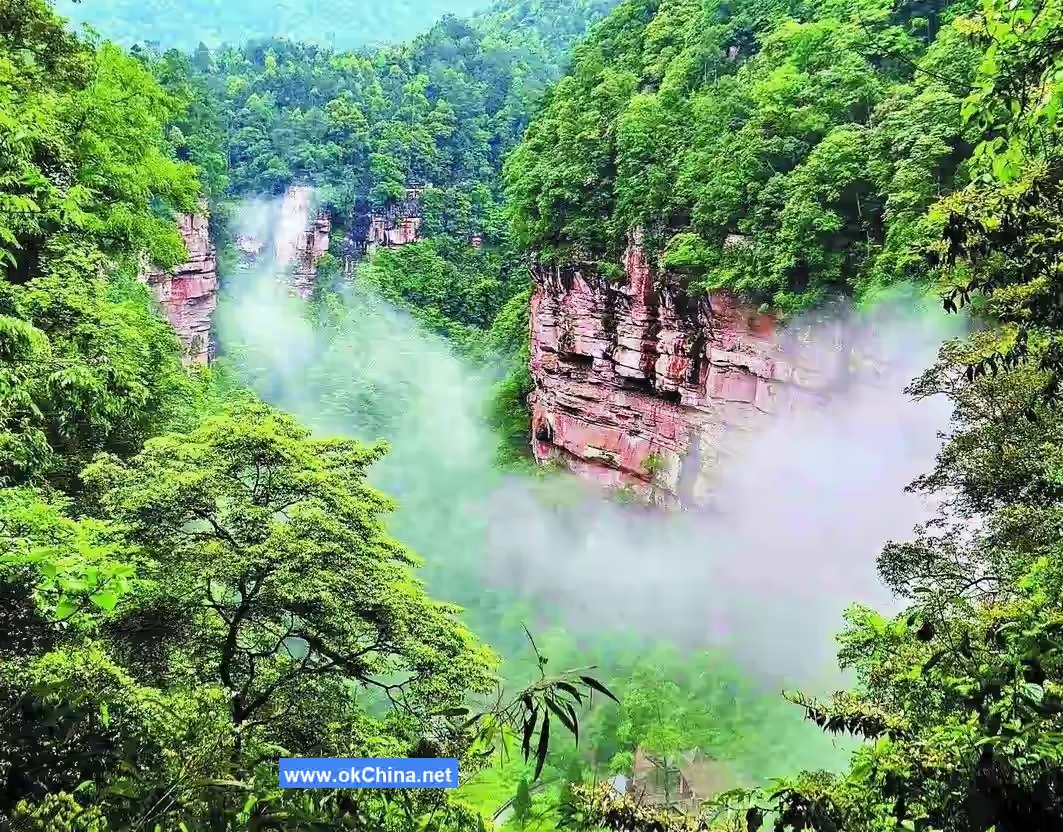
The Tudi Rock Mural is a natural mural, belonging to a well-developed, typical juvenile Danxia landform. The mural is 376 meters long, 127 meters high, covering an area of 50,000 square meters, and is honored as the "Divine Rock of Asia." The rocks display varying hues, and nature's craftsmanship has formed various lifelike patterns, including vivid depictions of Afanti, a beauty portrait, and stacks of books.
3.1.5 Tudi Rock Waterfall
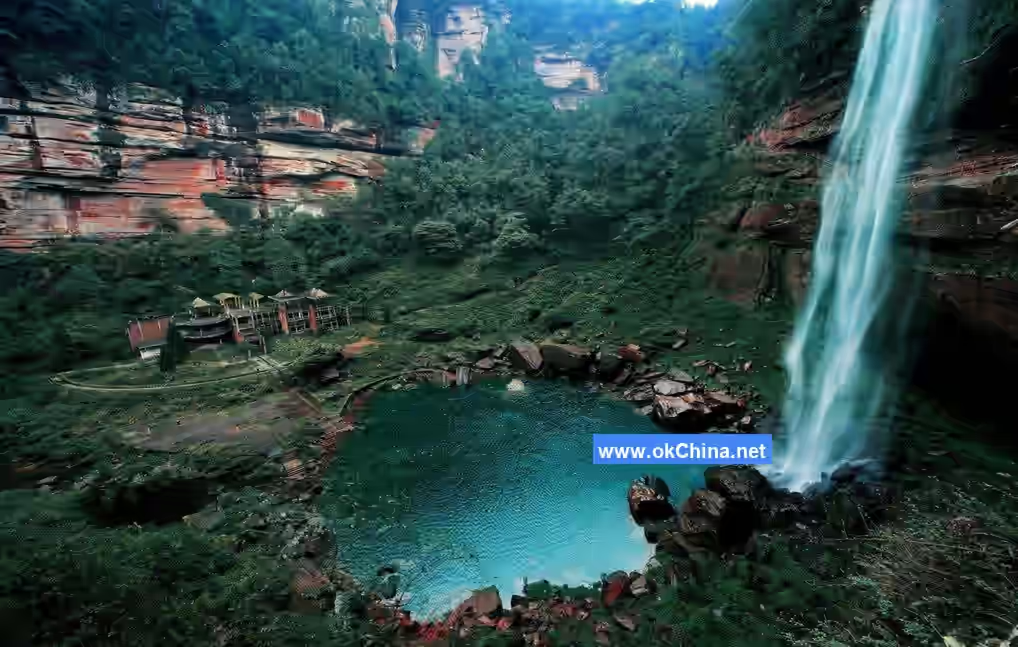
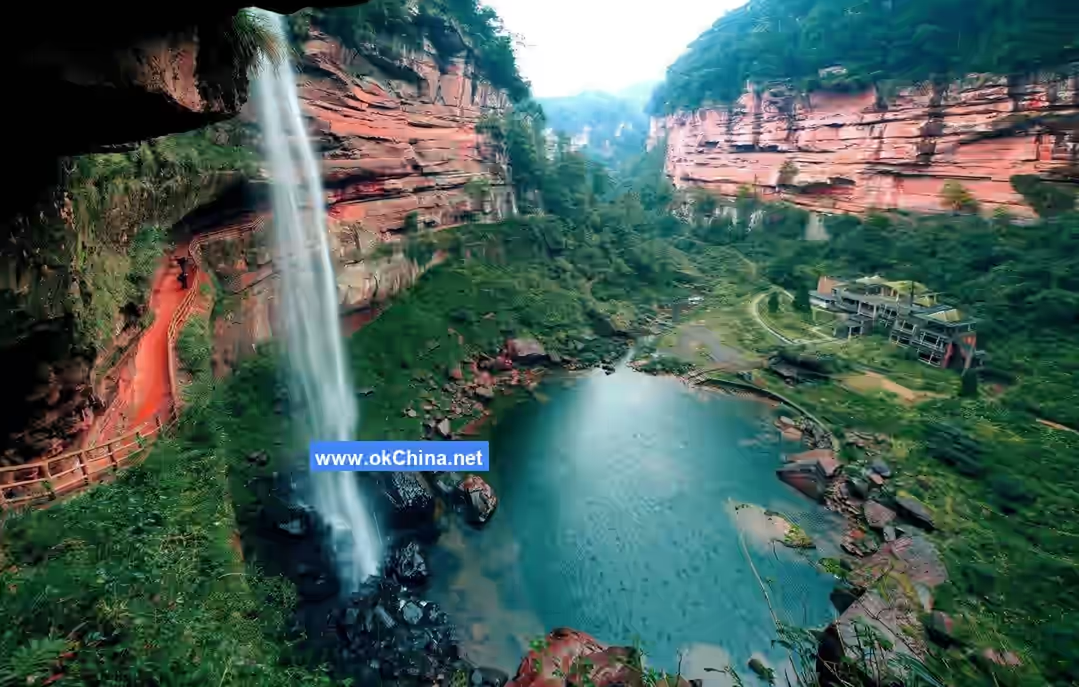
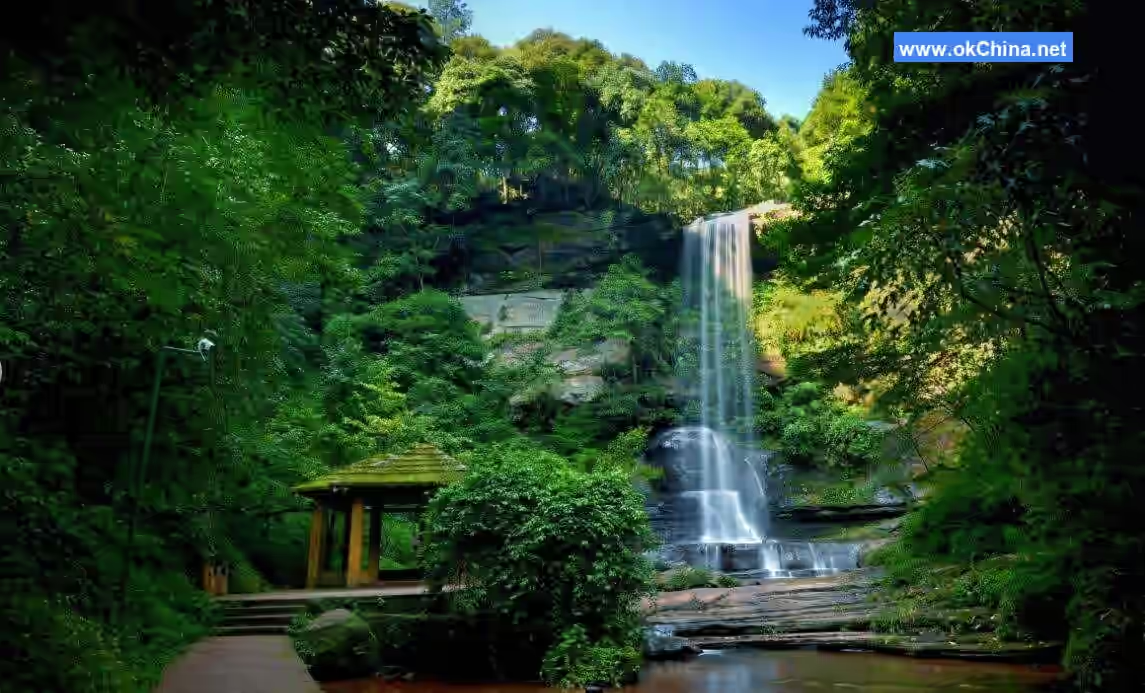
Tudi Rock Waterfall is located opposite the Tudi Rock Mural, cascading down like a clean white satin ribbon. The waterfall is 89 meters high and 25 meters wide, suspended amidst green trees and red rocks, surrounded by red cliffs on three sides. It echoes the massive Danxia red cliff, creating a breathtaking scene of mountains enclosing a secluded valley, a waterfall descending into a serene forest, green trees reflecting on the lake, and Danxia cliffs intoxicating like a painted screen.
3.1.6 Jigong Stone
Along the Tudi Rock plank walkway, one can see statues of the Earth God (Tudigong) and Earth Goddess (Tudipo), devoutly worshipped by locals year-round. There is also a massive, peculiarly shaped rock that closely resembles the monk Jigong, hence called Jigong Stone.
3.1.7 Honghai
Honghai is a reservoir built by the people of Honghai Village in 1970. It consists of two lakes: Big Honghai and Small Honghai. Big Honghai is at an altitude of 1,200 meters, 6,850 meters long, 60-200 meters wide, up to 12 meters deep, with a total storage capacity of 3.1 million cubic meters, featuring a Peach Blossom Island in the middle. The shores of Honghai are lush with trees, some standing straight, others leaning. The straight ones seem to reach for the sky, while the leaning ones extend over the water. Every spring, various alpine azaleas bloom in competition along both banks. Boating on Honghai, one sees verdant layered mountains on both sides, often with deer and goats drinking by the lake. The lake surface shimmers with blue waves, mandarin ducks playing in the water are a common sight, and egrets occasionally take graceful flight.
3.1.8 Pearl Lake
Pearl Lake is located on the platform in the central-southern part of Simian Mountain, at an altitude of 1,300 meters. It is 5,600 meters long, 20 meters wide, and up to about 18 meters deep, making it the highest alpine lake in Simian Mountain. The Pearl Lake dam is 18.6 meters high and 80 meters long, with a storage capacity of 1.6 million cubic meters. The lake is surrounded by green mountains, free from human habitation, offering a quiet and naturally unpolluted environment.
3.1.9 Shanpingzi Waterfall
Shanpingzi Waterfall is located near Pearl Lake, about 20 meters high. The waterfall gently descends along the mountain stream, like clusters of jadeite and pearls scattering into the red stone river valley at the base. Because the water temperature is piercingly cold year-round, it is also called the "Cold Beauty Waterfall."
3.1.10 Pearl Shoal Waterfall
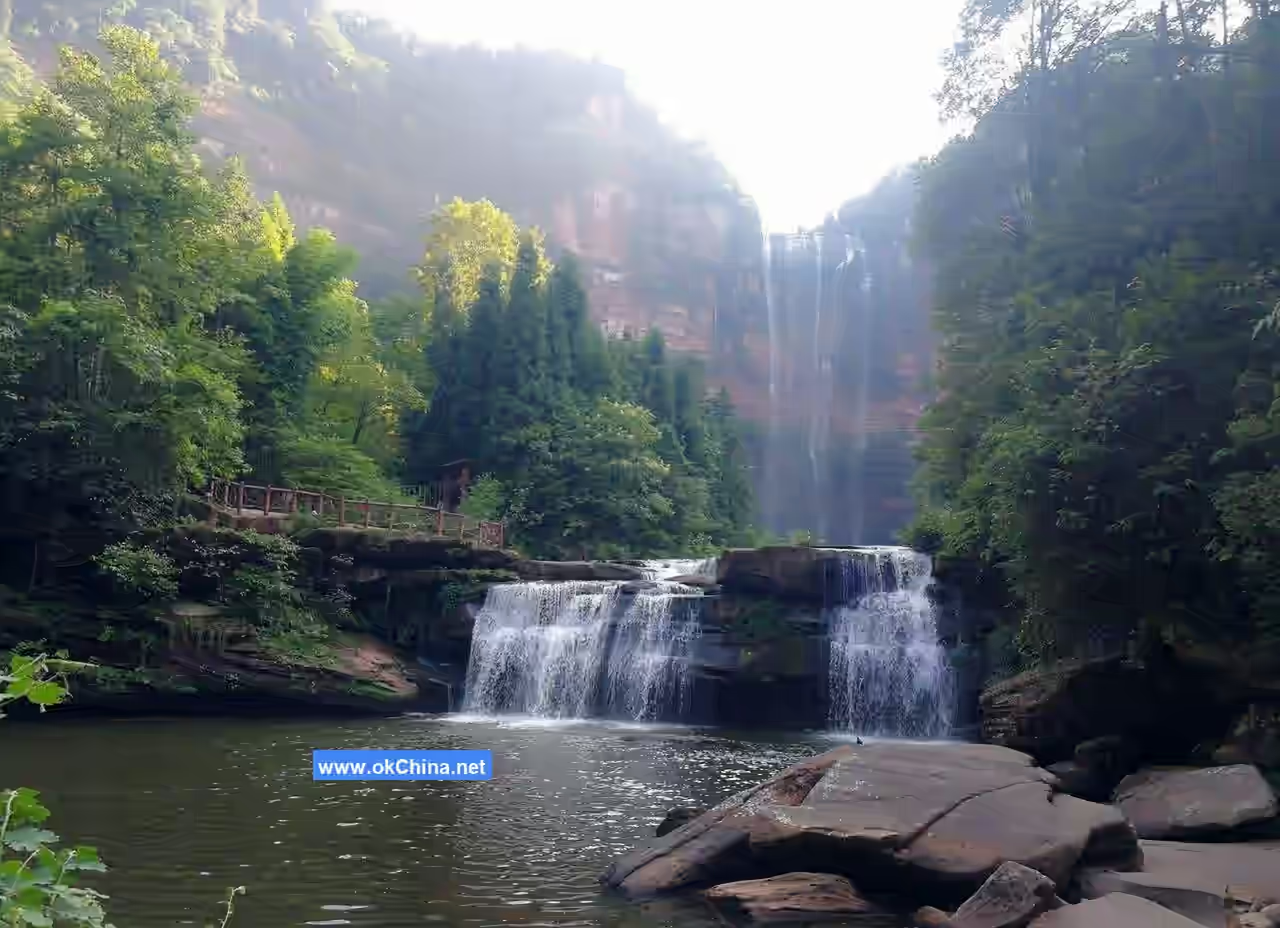
Pearl Shoal Waterfall is located at Pearl Shoal, a three-tiered waterfall with a total drop of 60 meters. It is one of the rare three-step waterfalls in Simian Mountain. The waterfall flows eastward like countless pearls falling onto a jade plate. Pearl Shoal was originally a channel used by forestry workers in the scenic area to transport timber. People discovered that water flowing through this section created a jumping bead phenomenon, hence the name Pearl Shoal. The shoal is complemented by the Mirror Lake at its head and the Tail Waterfall at its end. The riverbed is smooth and flat, and the stream water is crystal clear.
3.1.11 Shuikousi Waterfall
Shuikousi Waterfall is 94.18 meters high and 30 meters wide, with a maximum flow rate of over 120 cubic meters per second, making it the fourth tallest waterfall in Simian Mountain. To view Shuikousi Waterfall, one can reach the back of the waterfall via a plank walkway for a level view, or descend 818 stone steps via the "Nine Bends" path to look up at the waterfall from the base. Sitting on rocks to enjoy the scenery, one is surrounded by fantastically shaped rocks, greeted by the sight of a silvery waterfall flying down, with murmuring streams underfoot and ancient trees clinging to the mountainside.#### 3.1.12 Dawo Forest Dawo Forest is a pristine wilderness, boasting the best-preserved subtropical primitive evergreen broad-leaved forest at 28° north latitude on Earth, covering an area of 32.43 square kilometers. It has preserved vegetation from the Tertiary period intact, hosting ancient tropical and temperate plants dating back 350 million years. It is home to 2,586 species of flora and fauna, including 36 nationally protected plant species such as Dipteris chinensis, Angiopteris lygodiifolia, Taxus chinensis, and Liriodendron chinense, as well as 40 key protected animal species like the South China tiger, clouded leopard, forest musk deer, leopard cat, and music frog. It has been acclaimed by UN ecological conservation experts as a "natural species gene bank."
3.1.13 Pingshan
Pingshan, at an elevation of approximately 1,600 meters, is reached by climbing 5 kilometers eastward from Toudao River to the Pingshan Observation Deck. From the deck, one can gaze upon rolling peaks and endless stretches of lush fir forests. Nestled between the mountains, a clear stream meanders from south to north, forming the Upper and Lower Pingshan Lakes. The lakes are home to waterbirds like mandarin ducks; along the lakeshore, green trees and red flowers flourish, with flocks of birds such as egrets perched on the treetops.
3.1.14 Sandao Waterfall
Sandao Waterfall is one of the most beautiful waterfalls in Simian Mountain. Though not particularly high, it has a unique shape, cascading three times to form a three-tiered waterfall—a rare sight in Simian Mountain. The waterfall features white water against red cliffs, ancient trees and vines, green foliage and red blossoms, dark rocks, and flowing streams. Standing beneath the waterfall feels like wandering through a painting.
3.1.15 Mandarin Duck Waterfalls
Named for their resemblance to a pair of mandarin ducks, these waterfalls face each other across the cliffs—one to the south and one to the west. The southern waterfall, known as the Male Waterfall, stands 110.82 meters high, with water sometimes plunging vertically and sometimes sliding along the rock face. The western waterfall, the Female Waterfall, is 90.25 meters high, with water cascading in delicate strands like the threads of lovers' affection. The two waterfalls gaze at each other, their spray rushing toward one another before merging at the valley floor and flowing northward.
3.1.16 Ten-Mile Gorge
Located in the Shuikousi Scenic Area, Ten-Mile Gorge is a long canyon connecting to the "Chinese Historical and Cultural Town" of Zhongshan Ancient Town. Stretching for dozens of miles, it is thus named Ten-Mile Gorge. Within the gorge, hanging springs form chains over ten miles long; silver waterfalls cascade from heights, and massive rocks jut out abruptly. Along the way, one encounters rapids, stone beaches, emerald pools, cascades, and secluded streams, with every step offering a new vista.
3.2 Cultural Landscapes
3.2.1 Red Army Bridge
The Red Army Bridge, situated by Honghai Lake, is a century-old wooden bridge and an important red tourism site in Simian Mountain. In 1935, during the Long March, after the "Tucheng Battle," a guard of Yang Dezhi from the First Front Army of the Red Army, wounded and lost, traveled from Xishui, Guizhou, to Simian Mountain, where he was rescued by the Tang father and son of Dahonghai in Simian Mountain. The Red Army gathered provisions from local villagers and left an IOU upon departure. To commemorate this history, the bridge was named the Red Army Bridge. In 2008, 78-year-old villager Tang Anhua from Simian Mountain discovered a revolutionary artifact related to the bridge—the handwritten note of a Red Army soldier from the "Tucheng Battle"—and donated it to the Chongqing China Three Gorges Museum.
3.2.2 Mountain Oath Stone
Located in front of Wangxiangtai Waterfall, the Mountain Oath Stone is shaped like the joined hands of a man and a woman, forming a heart. Every year on the Qixi Festival (Chinese Valentine's Day), many couples make vows of love here using the ancient Eastern wedding ritual of the "Nine-Step Hand-Holding Ceremony."
3.2.3 Xiang Family Ancient Tomb
On the island stands an ancient tomb inscribed with the four large characters "Xiang Shi Jia Cheng" (Xiang Family's Fine City), serving as the common ancestral tomb for the surrounding Xiang clan. Built around the Tongzhi period of the Qing Dynasty, it is an extremely rare joint burial tomb for a husband and wife in southern China. The tombstone is flanked by numerous couplets, which describe several famous scenic spots in Simian Mountain and provide introductions to them.
3.2.4 Chongqing-Guizhou Boundary Stele
Between Dahonghai and Jinlong Temple stand two boundary steles. This location once marked the border between the ancient Ba Kingdom and the Yelang Kingdom. The eastern stele, the Sichuan-Guizhou Boundary Stele, was erected in 1988 (when the former Jiangjin County was under Sichuan's jurisdiction). Beside it stands another stele, which was re-carved by Red Guards during the Cultural Revolution after they chiseled away the original Qing Dynasty stele. The north side of this stele faces Sichuan and bears inscriptions such as "Long Live Chairman Mao" and "Without the People's Army, the People Have Nothing." The south side faces Guizhou and is inscribed with "Be resolute, fear no sacrifice, surmount every difficulty to win victory" and "The people, and the people alone, are the motive force in the making of world history." West of the Sichuan-Guizhou Boundary Stele is the Chongqing-Guizhou Boundary Stele, erected in 1997 after the former Jiangjin City was placed under Chongqing's jurisdiction. Crossing these two steles leads to Feige Village in Dapo Township, Xishui County, Guizhou Province.
3.2.5 Feilong Temple
Feilong Temple was first built in the late Ming and early Qing dynasties and renovated during the Jiaqing period of the Qing Dynasty. It is backed by towering mountains, with a stream flowing perpetually in front. Spanning the stream is an ancient stone bridge shaped like the character "八" (eight), known as the Eight-Character Bridge, guarded by fierce lions and qilin (Chinese mythical creatures). The temple is surrounded by vast forests. Legend has it that long ago, a family in Simian Mountain was preparing to bury their elderly father when, shortly after digging the grave, the sky suddenly changed, and a dragon soared into the clouds. A temple was built at the spot where the dragon ascended, and incense was burned to pray for favorable weather. For centuries, it has been a popular site for worship across several counties in Sichuan and Guizhou.
3.2.6 Huiqian Rock Cliff Paintings
The Huiqian Rock Cliff Paintings stretch 163 meters long and 8 meters high. They feature 40 discernible images of 10 animal species, including cattle, bears, fish, and goats, depicted both in full and partial forms. The paintings were created by puncturing points to form lines, crafted by ancient Ba people in the late Neolithic period using simple polished stone and bone tools on the cliff face. These cliff paintings fill a gap in the history of cliff art in the Ba-Yu region, pushing back the history of the primitive Ba people and Ba-Shu culture in Chongqing by over a thousand years. They are a rare example of northern grassland-style engraved rock art in southern China, rewriting the previous belief that engraved cliff paintings did not exist in the south. In 1992, the cliff paintings were listed as a Chongqing Municipal Cultural Relics Protection Unit by the Chongqing Municipal People's Government.
3.2.7 Huilong Manor
Huilong Manor is located in Shuangfengchang within the Simian Mountain Scenic Area, covering an area of 21,000 square meters. Facing north, the manor is supported by 328 stone pillars of varying sizes, forming a "three-in, three-out" layout with three courtyards. It currently includes two watchtowers (one large and one small), 16 courtyards, 18 skywells, 1,084 doors, and 202 rooms arranged in an orderly yet varied manner. The entire estate was once adorned with carved beams, painted rafters, and gilded decorations. Centuries ago, the construction cost of the manor was approximately 80 million taels of silver, equivalent to 1.2 billion RMB, and took over a century to complete. Together with Shouxing Manor to its southeast, which belonged to the same family, Huilong Manor forms the grand "Number One Manor in Southwest China," known as the "Forbidden City Hidden in the Mountains." It is the largest watchtower in Chongqing, a well-preserved, large-scale, and structurally complex ancient architectural complex with multiple courtyards, integrating residential, ancestral, and defensive functions. It is a typical castle-style manor in eastern Sichuan. The manor is renowned for its mysteries: such a massive project has no documentation in historical records; its drainage system resembles that of the Forbidden City, and for centuries, water inside the manor has never flooded the steps; named after the "dragon," the central hall bears a plaque inscribed by Emperor Kangxi with "Ancestral Virtue Flows Fragrantly," along with imperial edicts from Emperors Qianlong and Jiaqing; the plinths, symbols of status, are only 3 mm smaller in diameter than the largest plinths in the Forbidden City, making them the largest folk plinths in China; and its architectural layout closely resembles that of the Forbidden City.
3.2.8 Chaoyuan Taoist Temple
Chaoyuan Taoist Temple is located at the "Seven Stars Point to the Dipper" spot on the mountainside of Chaqi Mountain. Founded in the Northern Song Dynasty, it connects to the Han and Wei dynasties above and continues through the Six Dynasties below, flourishing in the Yuan Dynasty and thriving during the Ming and Qing dynasties. With a history of about 1,200 years, it is a historical relic of Southern Taoism in China. The ancient temple is solemn and majestic, with the Patriarch Hall as the main hall dedicated to the Zhenwu Emperor. The courtyard preserves a Zhenwu altar and exquisite statues of the turtle and snake merged into one. On the stone pillars flanking the entrance to the Patriarch Hall are engraved two couplets. The left gate tower bears the inscription "Yao Yao Xian Yuan" (Deep and Mysterious Immortal Source), with "Ri Li" (Sunshine) and "Yue Jiao" (Moonlight) on either side. Below, the semicircular archway is inscribed with "Yuan Dong Yu Li" (Primordial Cave and Jade Calendar), and the couplet on either side reads: "Yun Peng Chao Zhao Zhao Zhao Zhao Zhao Zhao, Xia You Guan Guan Guan Guan Guan Guan." The right gate tower bears the inscription "Dang Dang Zi Qing" (Vast and Pure), with "Zhi Mao" (Luxuriant Mushrooms) and "Lan Fang" (Fragrant Orchids) on either side. Below, the semicircular archway is inscribed with "Jin Que Yun Gong" (Golden Palace and Cloud Palace), and the couplet on either side reads: "Shan Mao Chang Zhang Zhang Zhang Zhang Zhang Zhang, Xi San Cheng Cheng Cheng Cheng Cheng Cheng." These two peculiar couplets ingeniously incorporate the polyphonic and polysemous characters "朝" (cháo/zhāo), "观" (guān/guàn), "长" (cháng/zhǎng), and "乘" (chéng/shèng). They are both exquisitely crafted and cryptically profound,堪称天下一大奇联 (deserving to be called one of the world's most marvelous couplets).
3.2.9 Wenjia Fortress
Wenjia Fortress is an important red tourism site in Simian Mountain, known as the location of the "Three Attacks on Wenjia Fortress" in the history of bandit suppression in Southwest China. The fortress was built by the bandit Wen Haishan, known as "He Ma Qian," and took three years to complete, originally intended for grain storage. The three large characters "文家寨" (Wenjia Fortress) above the gate were inscribed by PLA General Li Desheng. In 1950, the 12th Army Division of the Third Corps of the Liu-Deng Army, commanded by Li Desheng, participated in the battle to suppress bandits at Wenjia Fortress. To commemorate the PLA's "Three Attacks on Wenjia Fortress," later generations recreated the scenes of the bandit suppression through sculptures.#### 3.2.10 Simian Mountain Shaolin Temple Simian Mountain Shaolin Temple (Shuangfeng Temple) is located in Baihe Village, Zhongshan Town, 15 kilometers from the ancient town of Zhongshan. It is the largest Shaolin temple in the southwestern region. Originally named Jingde Temple, it was later renamed due to its backing against the twin peaks of Chaqi Mountain. Since ancient times, there has been a saying: "Above are the twin peaks (temple), below is Zhuyang (temple)." In 2012, the renovation and expansion project of Shuangfeng Temple commenced. Following the architectural style and regulations of Quanzhou Shaolin Temple, new structures were built including the Heavenly King Hall, Mahavira Hall, Cundi Hall, Sutra Library, Manjushri Pavilion, Samantabhadra Pavilion, Guanyin Pavilion, Bell Tower, and Drum Tower. The construction area covers approximately 12,000 square meters, with a total site area of about 300 acres. By September 2015, the project was largely completed and consecrated, officially opening to the public under the name Simian Mountain Shaolin Temple. Simultaneously, eminent monks from Quanzhou Shaolin Temple were invited to preside over the temple, inheriting Chan Buddhism and Shaolin martial arts. It is recognized as China's fourth major Shaolin Chan Buddhist temple, following Songshan Shaolin Temple, Quanzhou Shaolin Temple, and Tianjin Shaolin Temple.
4. Legends and Stories
4.1 Legend One
Shuangfeng Village near Simian Mountain is considered the birthplace of the Cowherd and Weaver Girl story. Legend has it that when the Weaver Girl and the Cowherd were forcibly separated by the heavens, a once-in-a-century famine struck. To punish the local villagers, the Jade Emperor withheld rain for a year, leaving them with no harvest, using this as leverage to force the Weaver Girl to return. The villagers, unwilling to let her go, preferred to starve rather than see her leave. The kind-hearted Weaver Girl, unable to bear the villagers' suffering, was forced to painfully part from the Cowherd and their two children. After weeping with her family on opposite banks of the Milky Way, she turned away. The heavenly soldiers escorting her were deeply moved. Passing by the orchard of the Jade Pool, the Weaver Girl, still concerned about the villagers who suffered because of her, plucked seventy-seven plums and scattered them towards the mortal world. These seventy-seven plums fell upon Shuangfeng Village and instantly transformed into thousands of plum trees laden with fruit. The plums were delicious, juicy, crisp, and satisfying, alleviating hunger. The villagers gave these plums a beautiful name: "Emerald Mountain Pearls," also known as "Jade Pearls." These seventy-seven plums also symbolize the Cowherd meeting his children on the Magpie Bridge every year on the seventh day of the seventh lunar month (Qixi Festival).
4.2 Legend Two
Among the folk tales of Simian Mountain, there is a story about "A Bowl of Water." It is said that after the Monkey King Sun Wukong successfully escorted his master on the journey to the West to obtain scriptures, he passed by Simian Mountain on his return and was greatly fond of its beautiful mountains and clear waters, so he rested at Tudi Rock. He noticed the area was sparsely populated and, upon inquiry, learned that the local people were frail, sickly, and mostly infertile; even if children were born, it was often a single heir for three generations. Therefore, Wukong went to the Flower and Fruit Mountain behind Longtan Lake, picked a basket of immortal peaches, and presented them to Guanyin Bodhisattva, pleading on behalf of the people. The compassionate Guanyin Bodhisattva then placed a bowl on the red cliff of Tudi Rock and sprinkled a few drops of water into it. From then on, the water in this natural red stone bowl became warm in winter and cool in summer. The mountain villagers who drank it grew strong and healthy, their populations flourished, and twins were frequently born. As the story spread from ten to a hundred people, Tudi Rock became known as "Tudi Shen Rock" (Land Deity Rock), and the Flower and Fruit Mountain gained great honor because of this. The clear spring in the bowl naturally came to be called "Holy Water." Although this story may seem like a fantasy, it is an undeniable fact that twins are frequently born in Qingyan Village, Siping Town, not far from Tudi Rock.
Comments
Post a Comment