Mount Qingcheng and Dujiangyan Scenic Area
1. Introduction
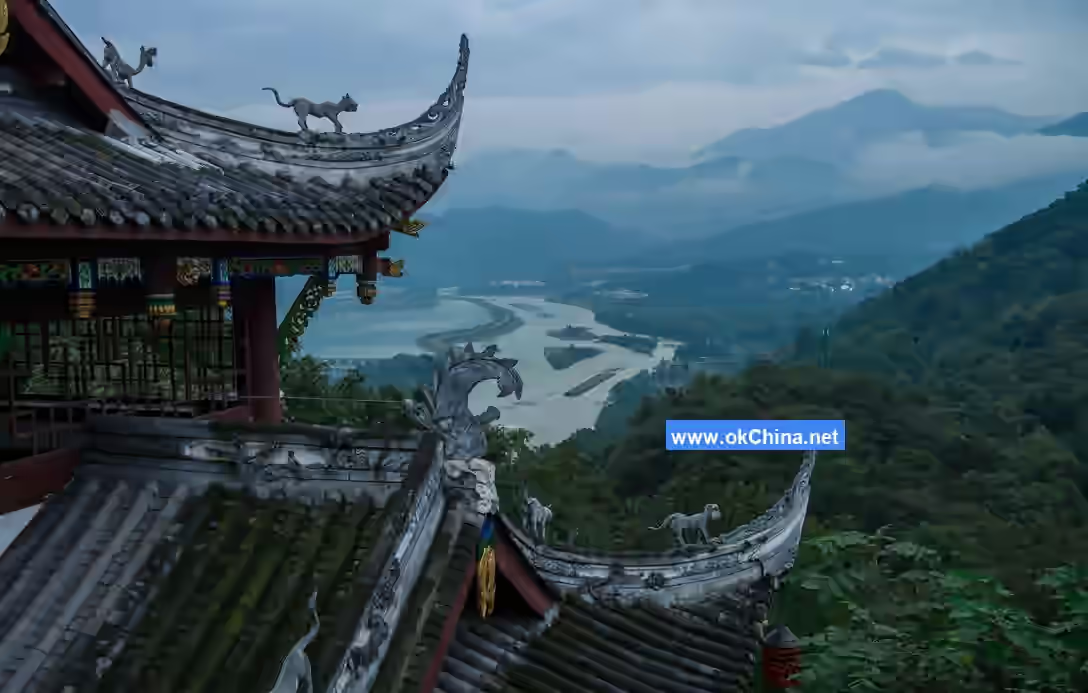
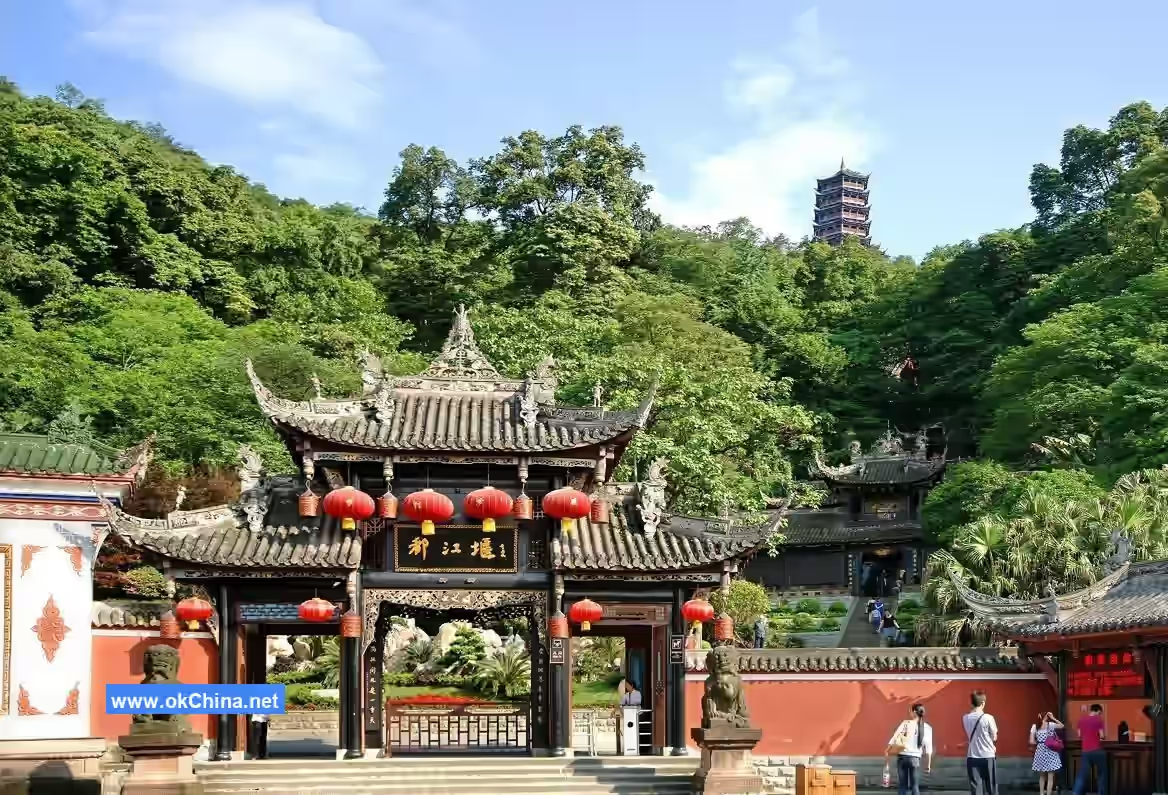
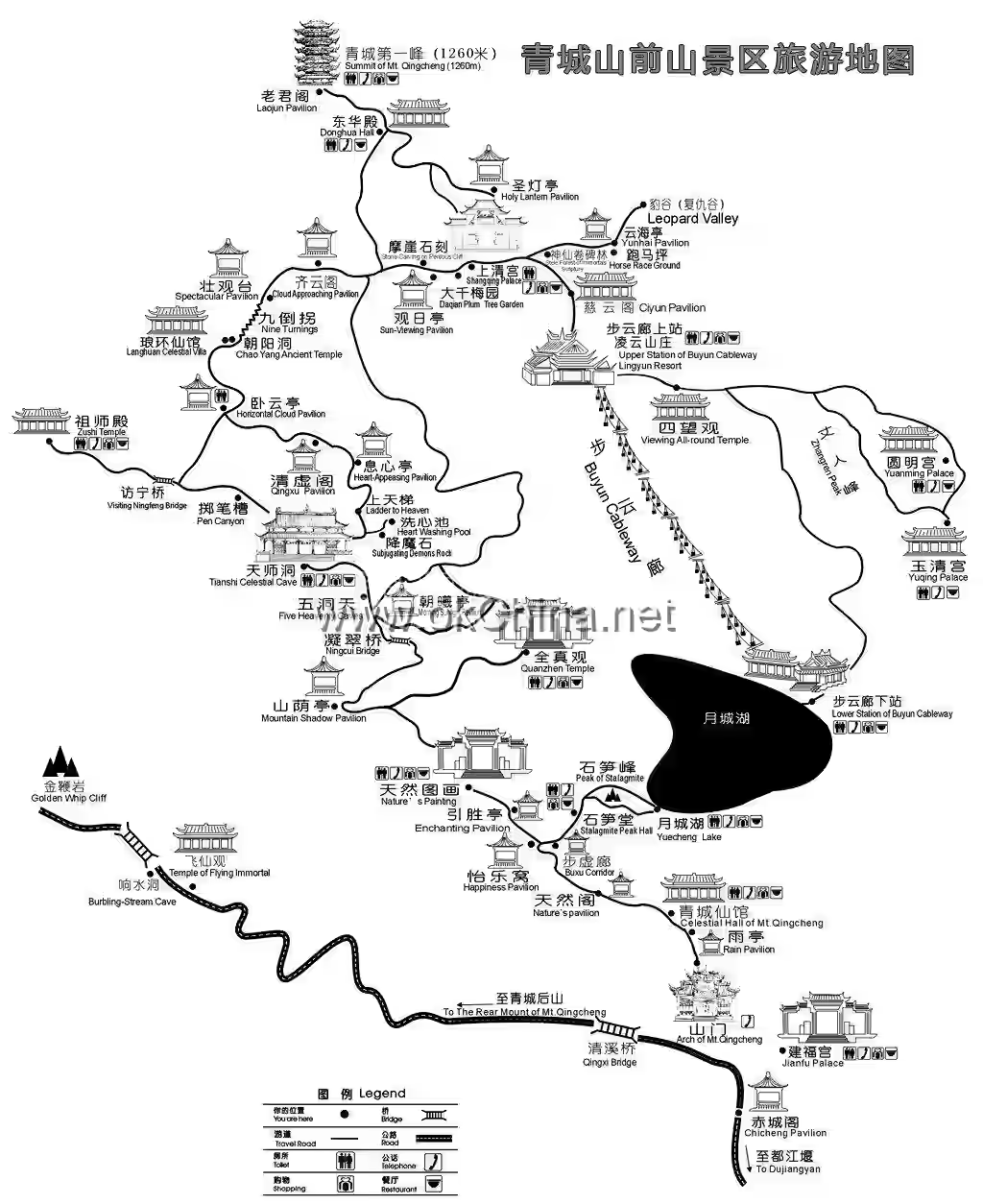
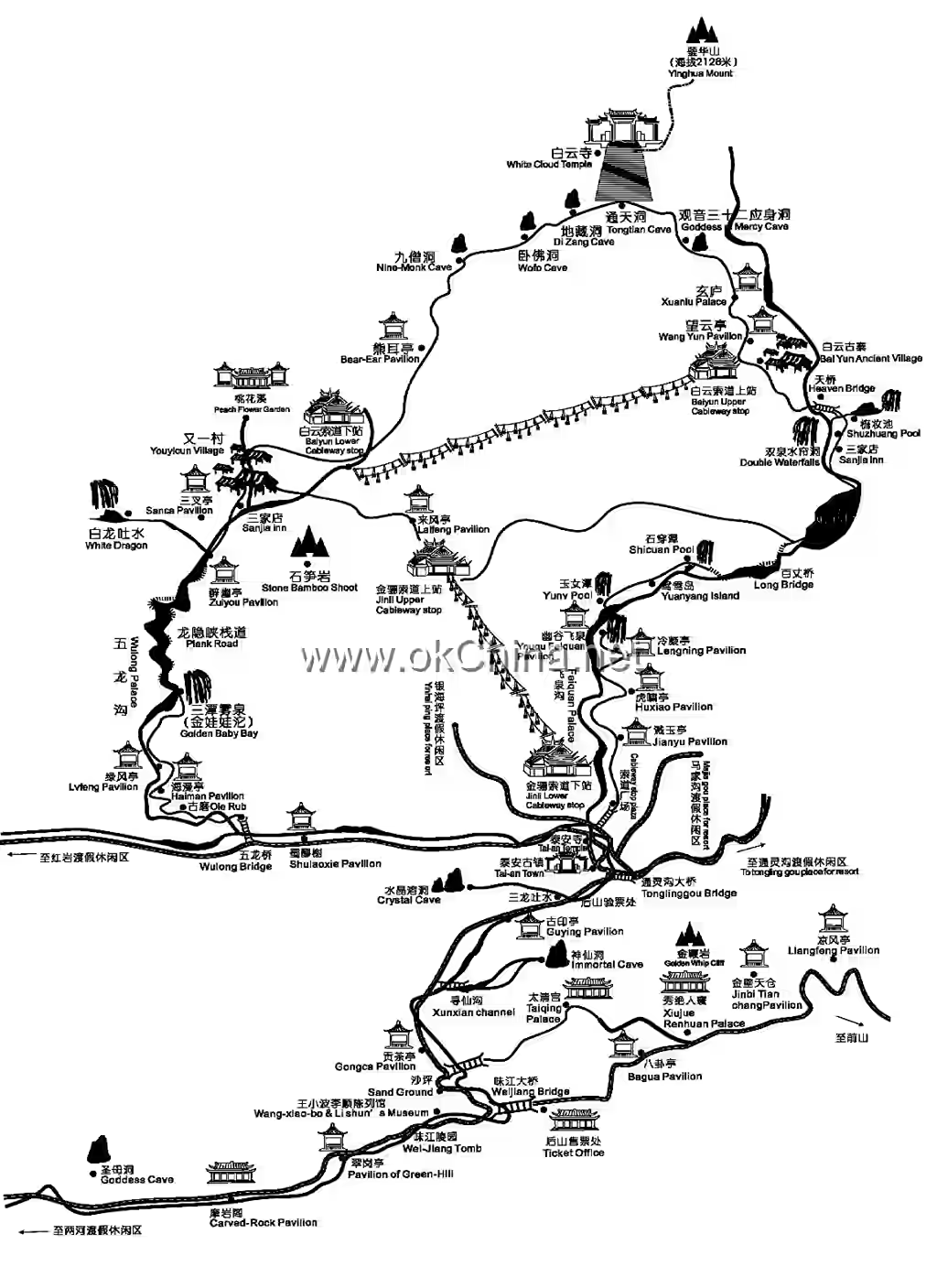
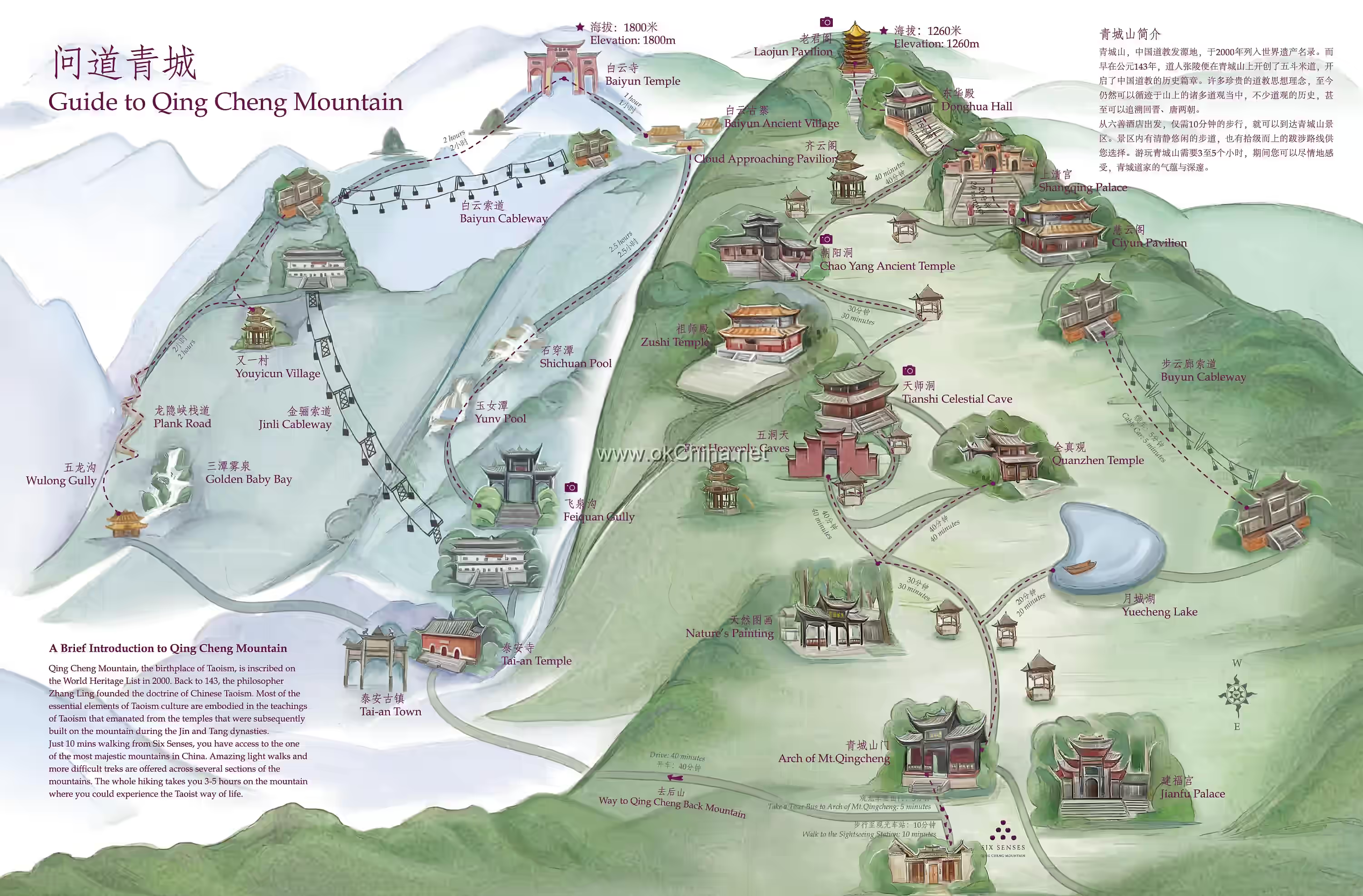
Mount Qingcheng is located southwest of Dujiangyan City, Chengdu, Sichuan Province. It lies 68 kilometers east of downtown Chengdu and about 10 kilometers southwest of the Dujiangyan Irrigation System. The scenic area covers 200 square kilometers, with its highest peak, Laojunge Pavilion, reaching an altitude of 1,260 meters. The mountain is divided into the Front Mountain and the Back Mountain, featuring undulating peaks surrounded by lush, serene forests, earning it the reputation of "the most secluded mountain under heaven." The entire mountain is verdant and evergreen throughout the year, with numerous peaks encircling it like a city wall, hence the name "Qingcheng" (Green City). With thousands of stone steps and winding paths leading to secluded spots, it is renowned for its tranquility and pristine beauty. Both inside and outside the scenic area, the serene Tianshi Cave and Yuanming Palace are distinctive features of Mount Qingcheng.
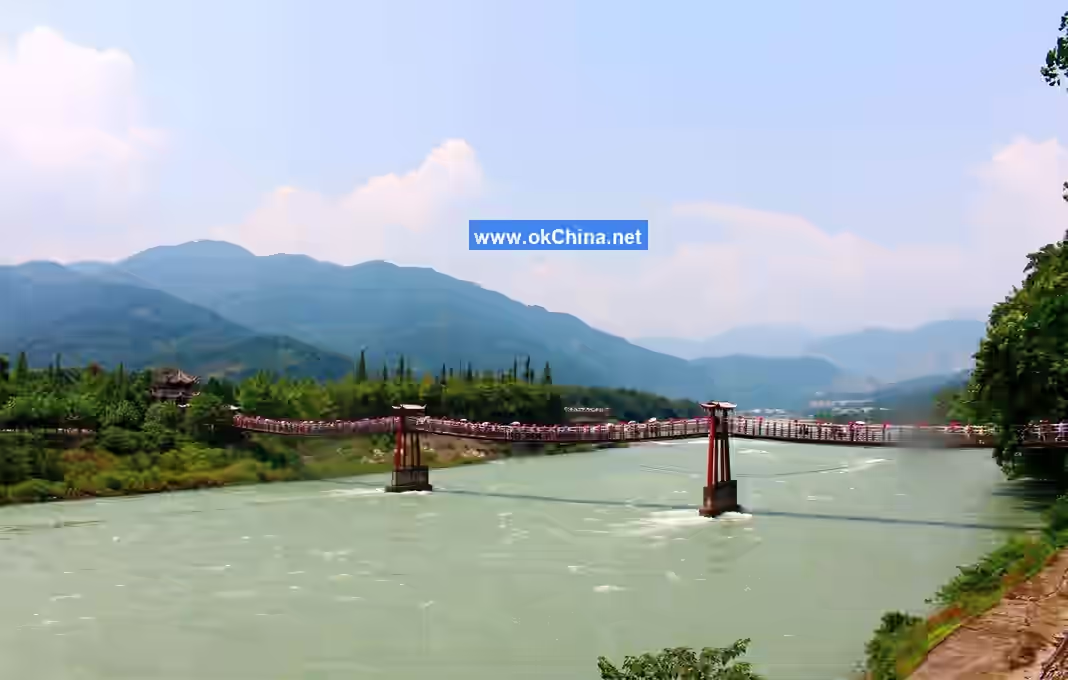
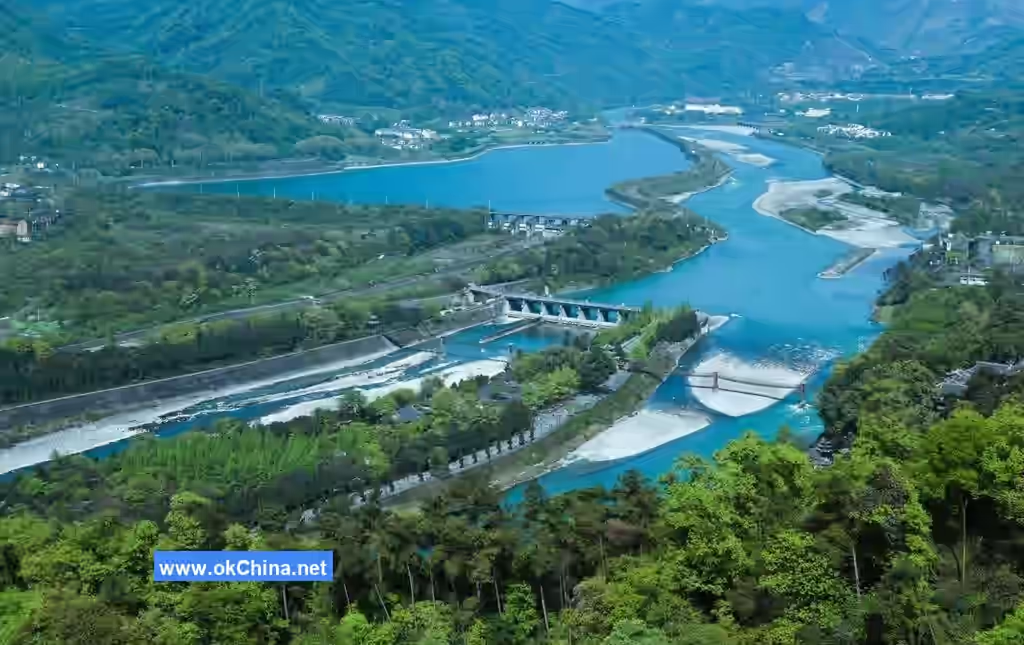
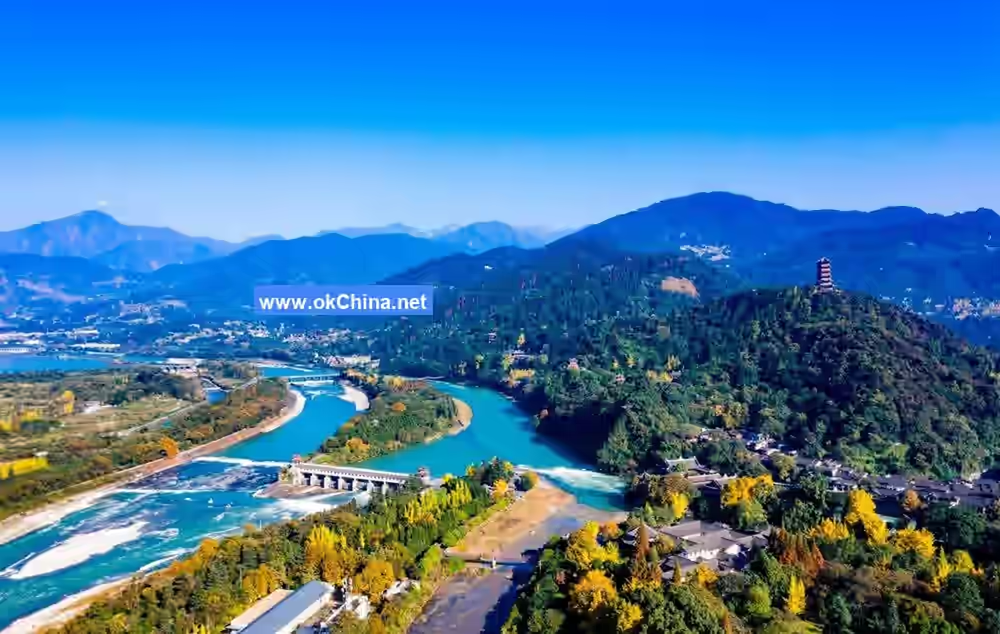
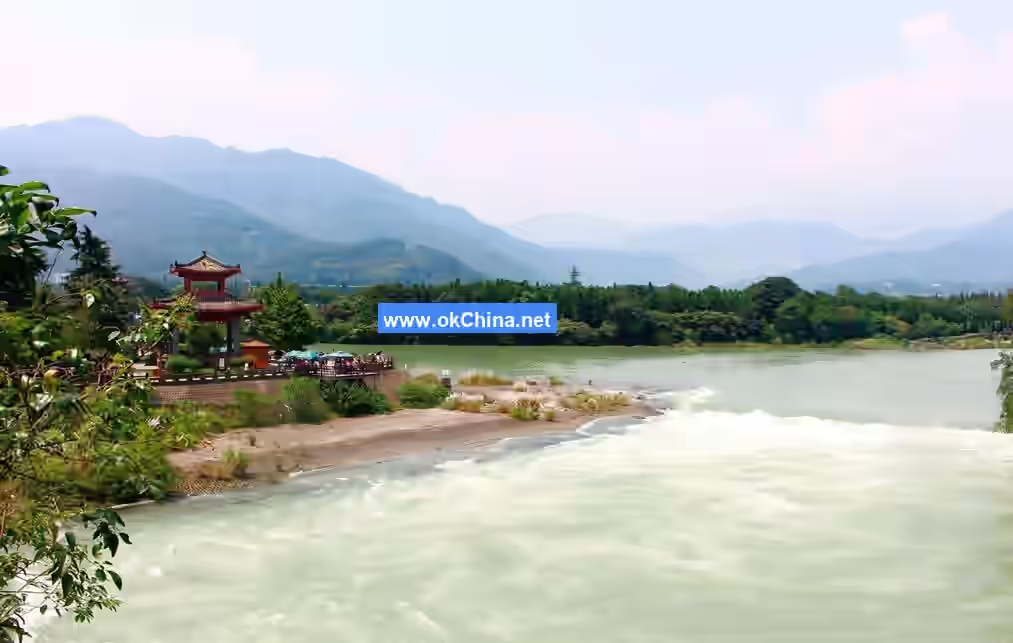
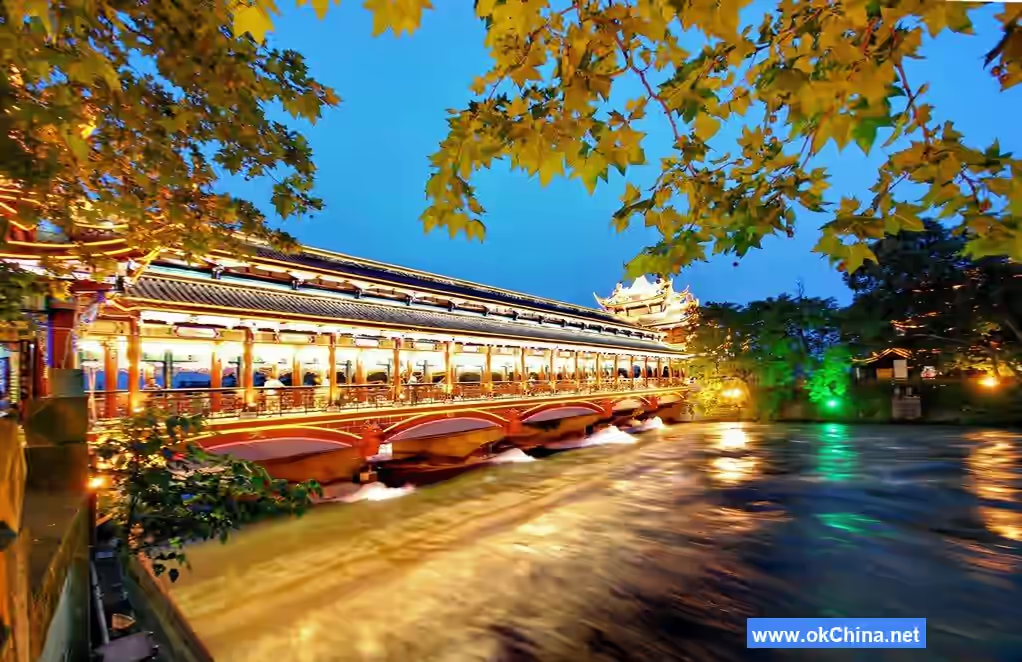
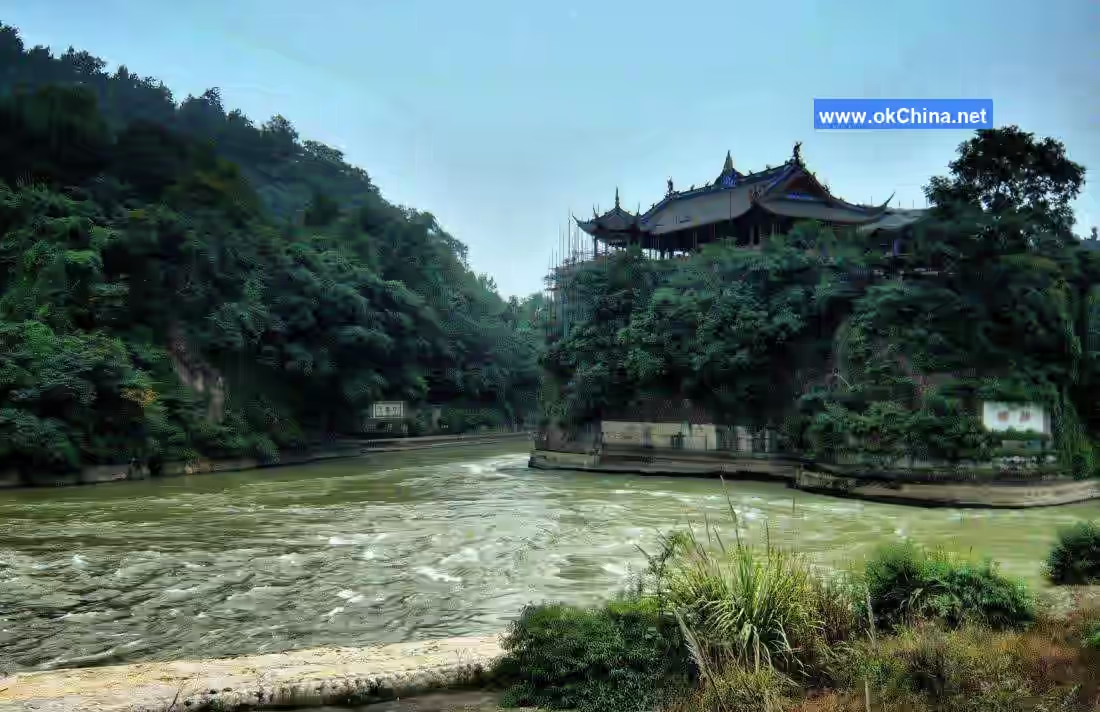
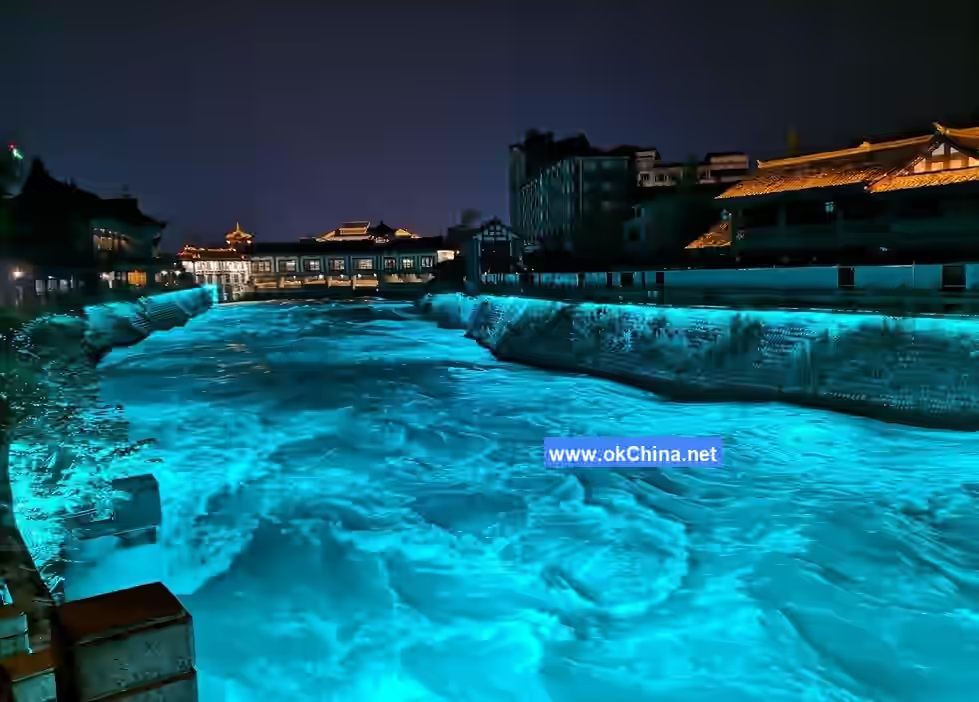
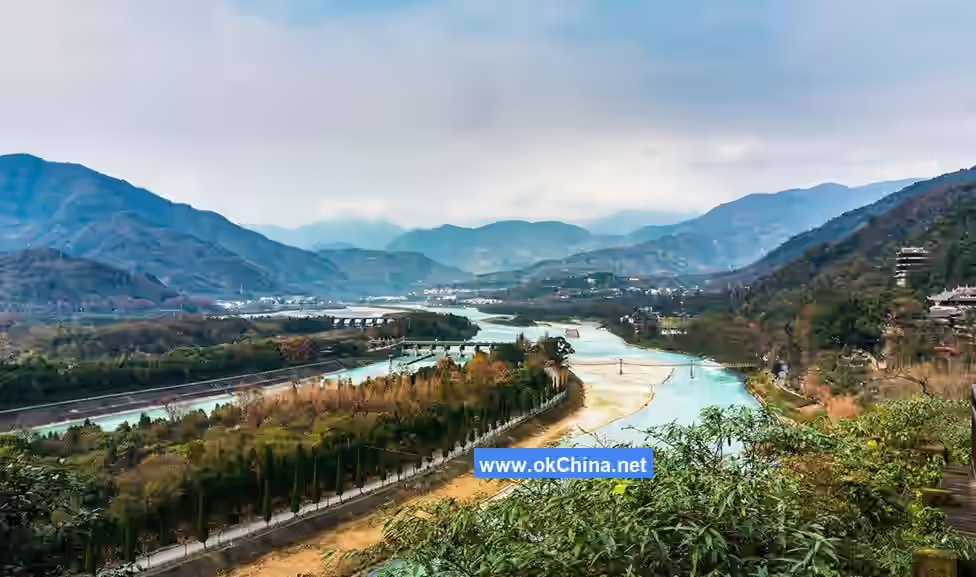
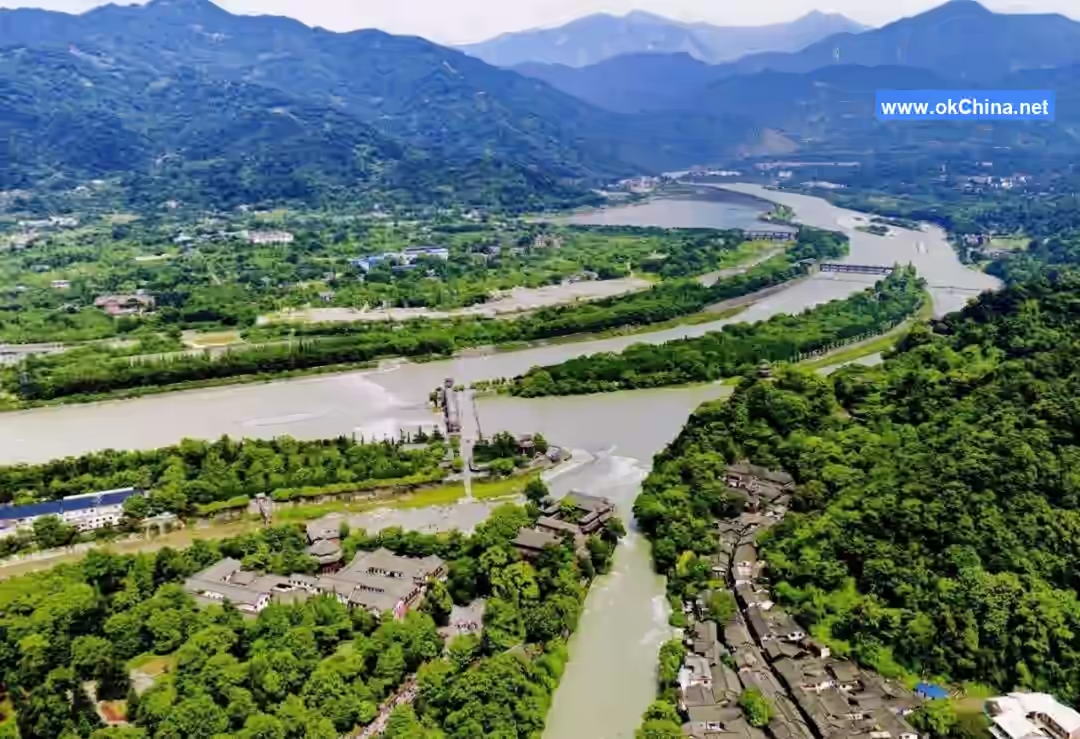
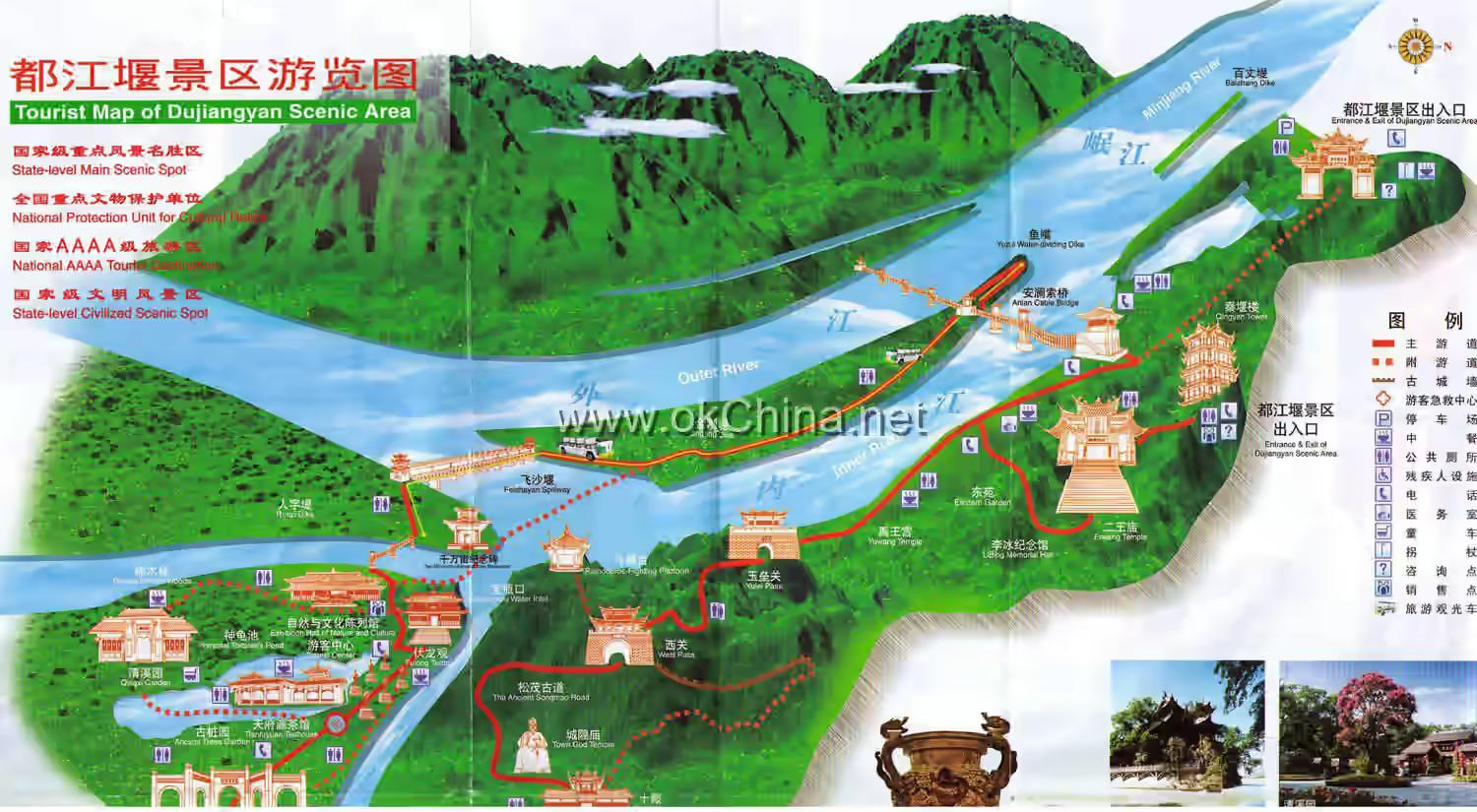
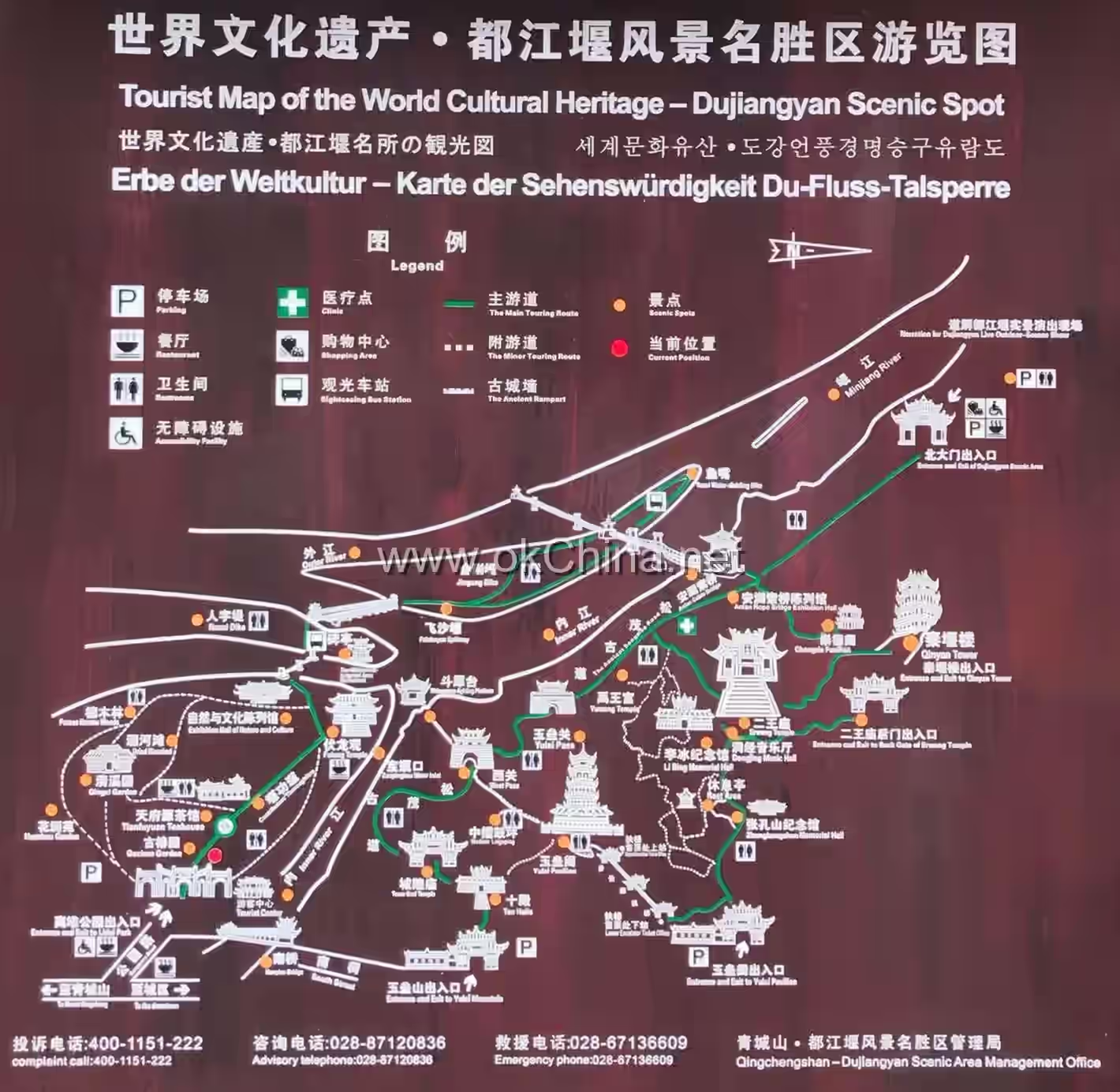
Dujiangyan is situated west of Dujiangyan City, Chengdu, Sichuan Province, on the Minjiang River in the western part of the Chengdu Plain. It is a massive engineering system consisting of the headwork structures (Fish Mouth, Flying Sand Spillway, and Bottle-Neck Channel), irrigation channels at various levels, various engineering structures, and reservoirs and ponds of different sizes. The headwork covers an area of over 200 mu. It serves multiple purposes, including irrigating over 11.3 million mu of farmland in 40 counties (cities, districts) across 7 cities (prefectures) in the central and western parts of the Sichuan Basin, supplying water to key enterprises and urban residents in Chengdu, as well as flood control, power generation, water transport, aquaculture, forestry, fruit cultivation, tourism, and environmental protection. It is an irreplaceable water conservancy infrastructure for the economic development of Sichuan Province.
2. Geographical Environment
2.1 Location and Territory
Mount Qingcheng is located southwest of Dujiangyan City, Chengdu, Sichuan Province, in the northwestern part of the Chengdu Plain, within the Mount Qingcheng-Dujiangyan Scenic Area. It is 68 kilometers from Chengdu and 16 kilometers from downtown Dujiangyan. The entire mountain is verdant and evergreen throughout the year, with numerous peaks encircling it like a city wall, hence the name "Qingcheng." With thousands of stone steps and winding paths leading to secluded spots, it is renowned for its tranquility and pristine beauty, and has been praised since ancient times as "the most secluded mountain under heaven." Together with the perilous Jianmen Pass, the elegant Mount Emei, and the majestic Kuimen, it is known as one of the "Four Beauties of Sichuan."
2.2 Topography and Landforms
Mount Qingcheng was anciently known as Zhangren Mountain and is a branch of the Qionglai Mountains. It leans against the snow-capped Minshan Mountains and faces the western Sichuan Plain. The main peak, Laoxiaoding, stands at an altitude of 1,260 meters (data measured in 2007). Backed by the thousand-mile-long Minjiang River and overlooking the Chengdu Plain, the scenic area covers 200 square kilometers. Ancient records describe Mount Qingcheng as having "36 peaks," "8 major caves," "72 minor caves," and "108 scenic spots." The mountain features 36 peaks, which encircle it like a city wall.
Geologically, Mount Qingcheng is characterized by "danxia valleys and red cliffs." The soil type is primarily mountainous yellow earth, with parent rock consisting of slope deposits of Jurassic purple sandstone, mudstone, and conglomerate.
2.3 Climate Characteristics
The Mount Qingcheng scenic area is situated in the middle-northern section of the famous "Huaxi Rain Screen Belt" along the western edge of the Sichuan Basin, at approximately 30°54′N and 103°35′E. The protected area spans 120 kilometers in circumference, covering 1,522 hectares. The climate is mild and humid, belonging to the subtropical warm and humid type. The annual average temperature is 15.2°C, with extreme highs of 34.2°C in the hottest month and extreme lows of -7.1°C in the coldest month. The average relative humidity is 81%, annual precipitation is 1,225.1 mm, and the frost-free period lasts 271 days.
2.4 Natural Resources
The main vegetation types on Mount Qingcheng include subtropical evergreen broad-leaved forests, evergreen and deciduous broad-leaved mixed forests, and warm coniferous forests. Based on sample plot surveys, field reconnaissance records of plant species, and the plant list of Mount Qingcheng recorded in the Flora of Dujiangyan City, China, it is preliminarily estimated that there are about 346 plant species on Mount Qingcheng. These include 51 species of pteridophytes belonging to 26 genera and 16 families, and 295 species of seed plants belonging to 192 genera and 90 families. Among the seed plants, there are 252 species of dicotyledons belonging to 169 genera and 77 families, and 36 species of monocotyledons belonging to 22 genera and 8 families.
3. Background of the Dujiangyan Construction
During the Warring States period, frequent warfare caused immense suffering, and people longed for the unification of China. At that time, the backward state of Qin, through reforms, rapidly became a powerful state described as "wealthy and militarily strong, dominating the feudal lords, with the Zhou court submitting and all directions paying tribute." With its revitalized national strength and abundant resources, Qin eagerly sought to unify the realm and end the division. To unify China, Qin needed a solid rear base to provide reliable military and financial support, hence its long-standing ambition to conquer Ba and Shu. First, King Hui of Qin enticed the King of Shu to construct the "Stone Cattle Road" and repeatedly used gold, silver, and beautiful women to麻痹 the King of Shu. The Records of Huayang Kingdom: Annals of Shu states: "The Marquis of Shu sent envoys to pay tribute to Qin. King Hui of Qin repeatedly presented beautiful women, and the King of Shu was moved by this, hence he paid tribute."
In 316 BC, the slave-state regimes of Ba and Shu engaged in fierce conflict. The Records of Huayang Kingdom: Annals of Shu records: "The King of Shu separately enfeoffed his younger brother Jiameng in Hanzhong, granting him the title Marquis of Ju, and named his city Jiameng. The Marquis of Ju befriended the King of Ba. As Ba and Shu were enemies, the King of Shu became angry and attacked the Marquis of Ju. The Marquis of Ju fled to Ba and sought help from Qin." This created an opportunity for Qin to conquer Ba and Shu. Sima Cuo of Qin analyzed the situation in Ba and Shu, believing that "Shu is in a state of turmoil like that under Jie and Zhou," and the time was ripe for expansion into Shu. He proposed that by conquering Ba and Shu, Qin would gain a reputation for "suppressing violence and ending chaos," aligning with the wishes of the people of Ba and Shu. Economically, "acquiring their wealth would suffice to enrich the people and strengthen the military." Militarily, "the waterways of Ba and Shu connect to Chu. With the strong soldiers of Ba and large ships sailing eastward to Chu, the land of Chu could be captured. Capturing Shu means capturing Chu; with Chu gone, the realm could be unified." King Hui of Qin adopted Sima Cuo's suggestion and in the autumn of the same year sent Zhang Yi, Sima Cuo, and Commandant Mo to lead troops via the Stone Cattle Road to attack Shu. The Shu army was defeated, and the King of Shu was killed. After the fall of Shu, Qin established the Marquis of Shu and a Chancellor of Shu in the region, implementing a feudal system. Thus, the slave-state regime of Shu rapidly transformed into a feudal society. The rise of feudal forces created the most reliable socio-historical conditions for the construction of Dujiangyan.
Before the construction of Dujiangyan, agriculture in the Chengdu Plain already had a certain foundation. Shu prioritized agriculture and possessed the desire and capability for water management. The Records of Huayang Kingdom: Annals of Shu states: "Later, there was a king named Du Yu, who taught the people to farm. He was also called Lord Du... He moved the capital to Pi or to Qushang." It also says that when Sima Cuo attacked Chu, his troops were elite and well-supplied. With substantial strength, he led "100,000 troops from Ba and Shu, 10,000 large ships, and 6 million hu of grain, sailing down the river to attack Chu." The Classic of Mountains and Seas: Classic of Regions Within the Seas records: "Shu has the wilderness of Duguang (i.e., Guangdu, in present-day Shuangliu District, Sichuan), where Houji is buried. Here there are rich beans, rich millet, and rich sorghum." This demonstrates that agriculture in the Chengdu Plain had reached a considerable level, providing a solid material foundation for the construction of Dujiangyan.
To promote production development and build Shu into a reliable strategic base, Qin inevitably needed to undertake water conservancy projects. Political stability was a prerequisite for such projects. Therefore, after annexing Shu, Qin implemented a series of significant measures: to strengthen Qin's political power in Shu, it first "relocated 10,000 Qin households to settle there." This move also brought Central Plains culture and advanced production techniques to Shu. Simultaneously, Qin immediately constructed the cities of Chengdu, Pi, and Linqiong, making them new political and economic centers as well as military fortresses. The Records of Huayang Kingdom: Annals of Shu states: "In Chengdu, extensive government offices were built, officials for salt, iron, and markets were appointed, streets and alleys were repaired, markets were established with rows of shops, following the same system as Xianyang." This indicates that the Qin government had begun an important economic reform: replacing the slave-state workshops of Shu with feudal individual industry and commerce. In the over thirty years after Qin conquered Shu, it successively suppressed three rebellions by the Marquis of Shu and the Chancellor of Shu. In 285 BC, King Zhao of Qin took decisive action, abolished the position of Marquis of Shu, and "only appointed a Governor of Shu," completely replacing the enfeoffment system with a system of commanderies and counties. By this time, the people of Shu had been able to recuperate, production had developed, and thus popular support was gained, and the political situation stabilized. This not only created conditions for liberating productive forces in terms of production relations but also provided organizational assurance for the construction of Dujiangyan.
4. Main Attractions
4.1 Natural Picture Pavilion
The Natural Picture Pavilion is located on the ridge of Paifanggang on Longju Mountain. It is a ten-cornered, double-eaved pavilion built during the Guangxu reign (1875–1909) of the Qing Dynasty. The scenery here is exquisite, making visitors feel as if they are inside a painting, hence its name "Natural Picture." Situated between Jianfu Palace and Tianshi Cave at an altitude of 893 meters, it is flanked by two peaks. Visitors here can see the pavilion standing among steep cliffs and lush greenery, as if in a painting. Behind the pavilion is Zhuhe Village, where flocks of red-crowned cranes often soar and call between the mountains. To the right, a horizontal stone lies across a cliff between two mountains, known as the "Immortal Bridge," said to be a gathering place for immortals.
4.2 Jianfu Palace
Jianfu Palace is located at the foot of Zhangren Peak. It was first built in the 18th year of the Kaiyuan era (730 AD) of the Tang Dynasty and has been repaired multiple times throughout history. Currently, only two halls and three courtyards remain. The existing structures were rebuilt during the Guangxu reign (1888) of the Qing Dynasty. There are three main halls, dedicated to famous Taoist figures and various deities. The 394-character couplet on the pillars inside the hall is praised as "a unique treasure of Qingcheng." Built beneath a steep cliff, Jianfu Palace is imposing and extraordinary. To its left are the ruins of the Mingqingfu Princess's residence. Walking one kilometer west leads to the "Natural Picture," where towering rocks are shrouded in clouds and mist. The Song Dynasty poet Fan Chengda once prayed here for the Song emperor, who specially granted it the name "Huiqing Jianfu Palace." The poet Lu You wrote a poem describing Jianfu Palace at that time: "Golden seal script adorns the golden gate, giant bamboos line the path, storing green clouds. The rocky ridge divides as if heaven and earth, a thousand pillars gaze intently at its edge." The palace preserves cultural relics such as ancient trees and rockeries, the Weixin Pavilion, the ruins of the dressing table of the Mingqingfu Princess, as well as murals and couplets.
4.3 Patriarch HallThe Ancestral Master Hall is located on the mountainside to the right rear of the Tianshi Cave, accessible by crossing the Fangning Bridge from the Tianshi Cave. Also known as the Zhenwu Temple, it was built during the Tang Dynasty. Tang Dynasty poets Du Guangting and Xue Chang, as well as Song Dynasty scholar Zhang Yu, all lived in seclusion here. Princess Yuzhen, daughter of Emperor Ruizong of the Tang Dynasty, also practiced Taoism here in pursuit of immortality. The hall is set in a tranquil environment and houses statues of deities such as Zhenwu Ancestral Master, Lü Dongbin, and Iron-Crutch Li, along with murals of the Eight Immortals and stone inscriptions of poems and writings.
4.4 Chaoyang Cave
Chaoyang Cave is located at the foot of the cliff of Laoxiao Peak, the main summit. The cave entrance faces east, with a depth and width of several zhang, capable of accommodating a hundred people. It is said to have been the dwelling place of Ningfeng Zhangren. During the Qing Dynasty, Huang Yunge once built a thatched cottage here and composed a couplet: "The sky distant, the red sun near; the land vast, the crimson palace wide." Modern painter Xu Beihong also wrote a couplet here: "The empty cave welcomes the radiant light; the verdant cliff often greets the phoenix's arrival."
4.5 Laojun Pavilion
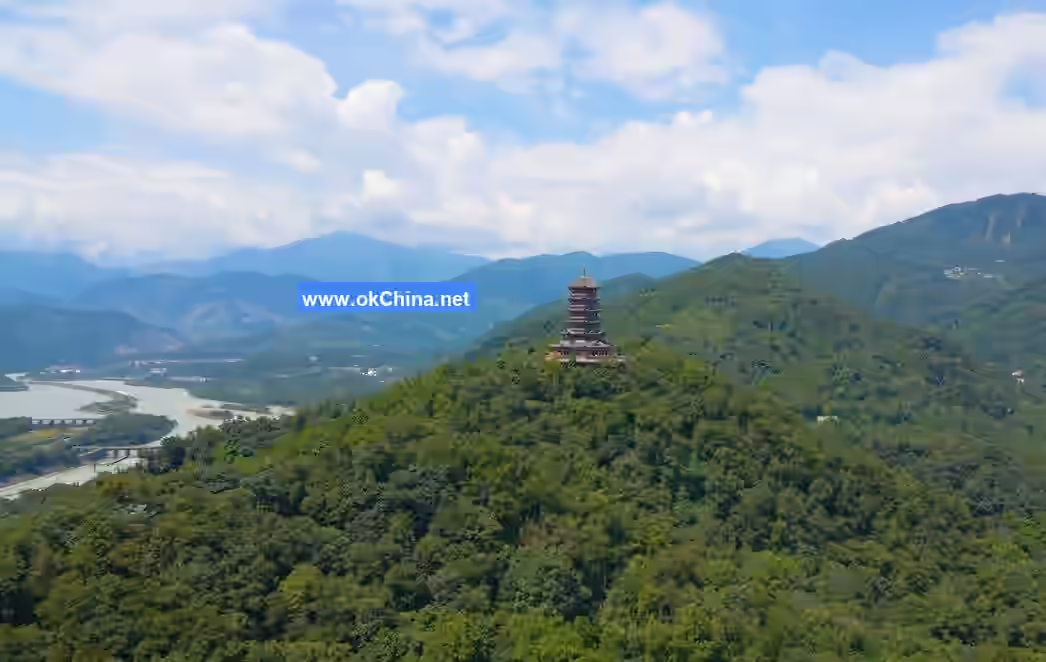
Laojun Pavilion is situated at the summit of Qingcheng's First Peak (also known as Pengzu Peak, Gaotai Mountain, or Laoxiao Peak), at an altitude of 1,260 meters. Originally, there was a Huying Pavilion at the top, symbolizing "a call from the heights, answered by all mountains." In the late 1980s, the pavilion was replaced by the current pavilion. After being destroyed in the devastating 2008 "5.12" earthquake, it was rebuilt to a height of 33 meters with nine stories. The structure is square at the base and round at the top, with octagonal layers symbolizing the round heaven and square earth, as well as the Taiji and Bagua. Its pagoda-like appearance features a pointed roof adorned with three round treasures, representing the three talents of heaven, earth, and humanity. Inside the hollow pavilion stands a solemn statue of Laozi seated on a lotus, measuring 7.3 meters in height and 10.37 meters including the pedestal. The outdoor platform is built with white marble, following the natural terrain, with winding railings and steps leading to the pavilion's summit. On clear days, it offers a panoramic view of the Min and Qiong mountains, Qingcheng and Emei peaks, and the vast plains of the Tianfu region, presenting a spectacle of unparalleled grandeur.
Before its reconstruction, the statue in Laojun Pavilion was based on Xu Beihong's surviving work Purple Air from the East (depicting Laozi riding a green ox out of the pass), meticulously studied by scholars, artists, and connoisseurs, and crafted by Taoist practitioners of Qingcheng Mountain. The statue of Laozi stood 13.6 meters tall, with the ox bringing the total height to 16 meters. Following classical architectural norms, it was cast in reinforced concrete, clad in fine copper, and shimmered with golden light, appearing lifelike. Unique in history, it portrayed Laozi as an ancient thinker, philosopher, and the Taoist patriarch of ancient, simple materialist dialectical relativism. The Laojun Pavilion complex includes the Donghua Hall, among others. The Donghua Hall covers an area of 100 square meters, with five bays, enshrining the Donghua Emperor in the center and Lü Chunyang and Zhong Liquan in side niches. Laojun Pavilion was constructed in the autumn of 1992 and completed after three years, adding another magnificent wonder to the sacred landscape of the eight-hundred-li Qingcheng region.
4.6 Yuanming Palace
Yuanming Palace is situated in the gentle valley of Muyu Mountain, north of Zhangren Mountain in Qingcheng. Built during the Wanli era of the Ming Dynasty, it is named after its dedication to the Yuandao Mother Celestial Worthy. The palace consists of four halls: the front hall is the Lingzu Hall, enshrining the statue of the Lingguan deity; the second hall is the Laojun Hall, dedicated to Laozi; the third hall is the Doumu Hall, where Doumu, also known as the Yuandao Mother Celestial Worthy, is revered as the mother of the stars of the Big Dipper; and the rear hall is the Sanguan Hall, enshrining the celestial, terrestrial, and aquatic deities, along with Lü Zu, Qiu Zu, and Chongyang Ancestral Master of the Quanzhen Taoist sect. Between the halls are courtyards, and both inside and outside the palace, auspicious grasses, exotic flowers, nanmu forests, and lush pines and bamboos thrive. A couplet captures the scenery: "Planting bamboos and pines, bamboos hide phoenixes and pines hide cranes; cultivating mountains and waters, mountains conceal tigers and leopards, waters conceal dragons." The environment is exceptionally serene and pleasant. Yuanming Palace also houses a Taoist research institute for fasting and health cultivation.
4.7 Shangqing Palace
Shangqing Palace is located halfway up the slope of Qingcheng's First Peak, about 500 meters from the summit. Originally built during the Jin Dynasty, the current temple structures date back to the Tongzhi era of the Qing Dynasty. Inscriptions such as "The Fifth Famous Mountain Under Heaven" and "The First Peak of Qingcheng" are carved into the cliffs, and the three characters "Shangqing Palace" above the gate were inscribed by Chiang Kai-shek. The palace enshrines Laozi, the founder of Taoism, with a statue of Laozi and a wooden engraving of the Tao Te Ching's five thousand words. Legendary sites such as Magu Pond and Yuanyang Well are also preserved. Behind Shangqing Palace lies Laoxiao Peak, where the Huying Pavilion is built, offering an excellent vantage point for viewing sunrises, divine lights, and sea of clouds.
4.8 Water Conservancy Project
The Dujiangyan Water Conservancy Project fully utilizes the geographical conditions of higher elevation in the northwest and lower elevation in the southeast. Based on the unique terrain, watercourses, and flow patterns at the river outlet, it guides water naturally without dams, enabling gravity-fed irrigation. The project integrates embankments, water diversion, flood discharge, sediment removal, and flow control into a cohesive system, ensuring comprehensive benefits in flood prevention, irrigation, water transport, and social water use.
The headworks of Dujiangyan mainly consist of three key components: the Fish Mouth, the Flying Sand Weir, and the Bottle-Neck Channel. These three elements work in concert, mutually regulating and coordinating to divert water for irrigation and mitigate flood disasters, achieving the effect of "dividing four and six, balancing floods and droughts."
4.9 Two Kings Temple
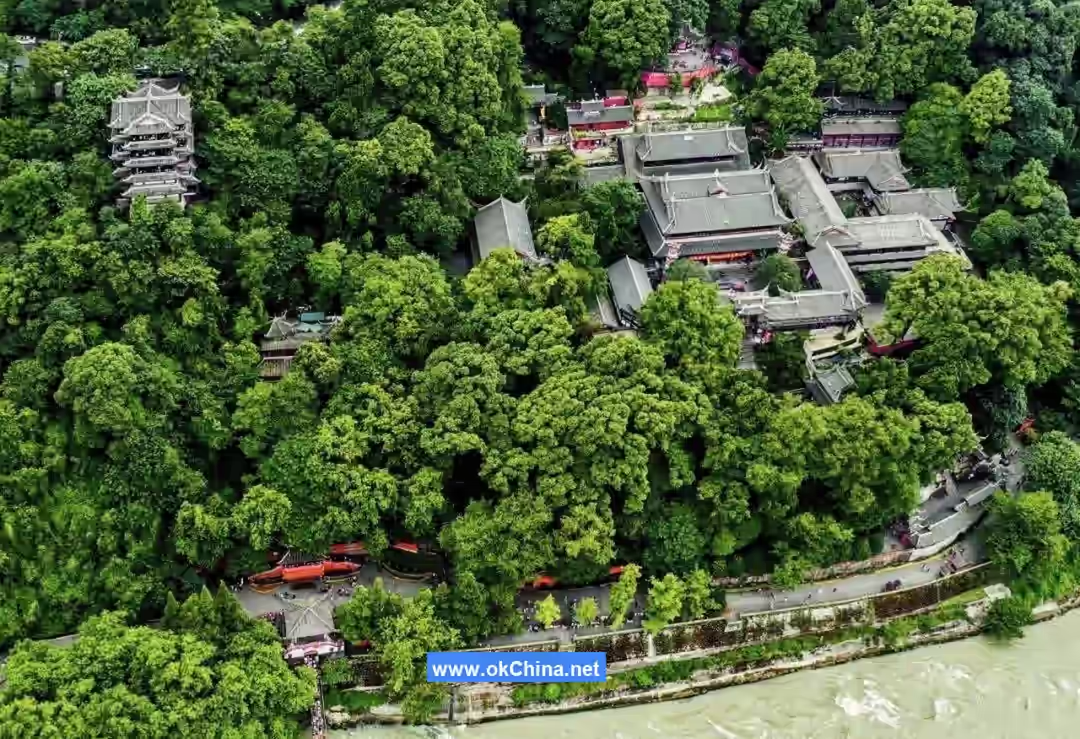
Two Kings Temple is located on the slope of the right bank of the Min River, facing Dujiangyan. Originally built as the Wangdi Temple in honor of the King of Shu, it was renamed "Chongde Temple" during the Jianwu era of the Qi Dynasty (494–498 AD) to commemorate Li Bing and his son. After the Song Dynasty (960–1279 AD), Li Bing and his son were successively granted the title of "King" by emperors, hence the name "Two Kings Temple." The main halls of the temple house statues of Li Bing and his son, along with treasured inscriptions of water management wisdom and poetic steles. The temple complex is situated on the east bank of the Dujiangyan headworks, featuring a grand scale, meticulous layout, and a serene environment. It is a famous scenic area combining temple architecture and gardens, covering approximately 50,000 square meters, with main buildings occupying about 10,000 square meters. The temple is divided into eastern and western sections: the eastern section is the garden area, and the western section is the hall area. The entire temple is constructed with wooden mortise-and-tenon joints, relying entirely on the natural geographical environment and following the mountain's contours, without emphasizing axial symmetry in its architectural style.
Comments
Post a Comment