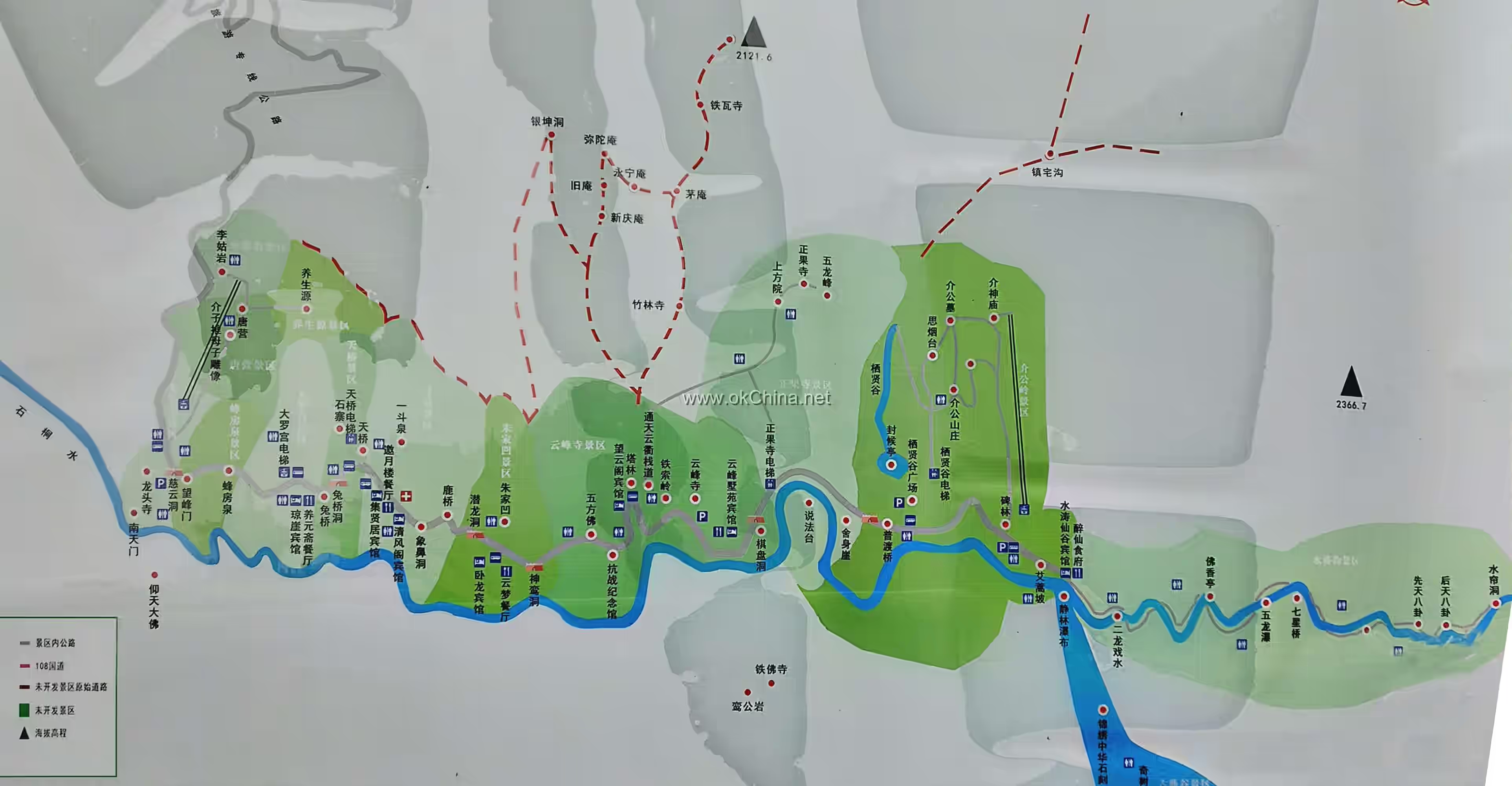
Mianshan Scenic Area
I. Introduction
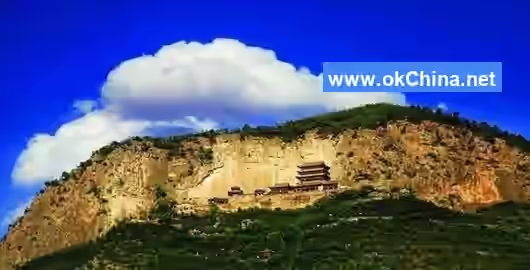
Mianshan Scenic Area is a National AAAAA Tourist Attraction, a key scenic area in Shanxi Province, the birthplace of China's Qingming Festival (Cold Food Festival), the Chinese Cold Food and Qingming Culture Research Center, and the Chinese Cold Food and Qingming Culture Museum. Spanning the boundaries of Jiexiu, Lingshi, and Qinyuan counties, Mianshan Scenic Area reaches a maximum altitude of 2,560 meters and is a branch of the Taiyue Mountain range.
II. Historical Background
Legend of Qingming
The most widely celebrated story associated with Mianshan is that of Jie Zitui being burned. In China's long-standing folk culture, there are only two festivals commemorating historical figures: the Dragon Boat Festival in May, honoring Qu Yuan, a minister of the State of Chu; and the Qingming Cold Food Festival, commemorating Jie Zitui, a minister of the State of Jin.
Over 2,000 years ago during the Spring and Autumn Period, Prince Chong'er of Jin was exiled abroad. In his most difficult times, his attendant Jie Zitui "cut flesh from his thigh to feed his lord." Nineteen years later, Chong'er returned to become the ruler of Jin, one of the Five Hegemons of the Spring and Autumn Period. While generously rewarding his meritorious officials, Duke Wen of Jin (Chong'er) inadvertently forgot Jie Zitui. Believing he had fulfilled his destiny by assisting the lord in restoring the state, Jie Zitui refused to serve alongside those who sought rewards and accolades. He retreated with his elderly mother to Mianshan in Jiexiu. Upon hearing this, Duke Wen of Jin felt deep shame and personally went to Mianshan to search for him, but to no avail. In desperation, Duke Wen ordered the mountain to be set on fire, hoping to force Jie Zitui out. However, treacherous ministers deliberately conspired to set the fire on all sides. When the flames finally subsided, Jie Zitui and his mother were found embracing each other, burned to death under a large willow tree. To mourn Jie Zitui, Duke Wen issued an edict forbidding the lighting of fires and eating cold food on the anniversary of Jie Zitui's death.
The tradition of eating cold food to express grief was likely to prevent another fire on Mianshan. This is similar to the Dragon Boat Festival in May, where people race dragon boats and throw zongzi into the Miluo River to commemorate Qu Yuan, while also hoping to prevent fish from desecrating his body. This is the best way for the people to remember the historical figures they cherish. Two sages from the same period, one in the south and one in the north, shine like twin stars; one associated with water and the other with fire, both sacrificing themselves for righteousness; one remembered by a river and the other by a mountain, forever recorded in history.
Over time, by the Tang Dynasty, the Cold Food Festival had become one of the most important festivals of the year. Originally observed the day before Qingming, it gradually evolved into a standalone festival by the late Tang Dynasty. Spanning over two millennia, the Cold Food Festival eventually developed into a grand occasion celebrated nationwide, where the living show filial piety and ancestors are honored with offerings.
Thus, Mianshan is also known as Jie Mountain. As early as the Northern Wei Dynasty, temple structures existed on Mianshan, and by the early Tang Dynasty, it had become a significant Buddhist sanctuary. The ancient-style architectural complexes in Mianshan Scenic Area feature diverse styles. From an architectural perspective, these structures not only draw on the strengths of earlier dynasties but also incorporate modern creativity from designers and builders, blending ancient and contemporary Chinese essence to form a unique style of modern ancient-style architecture.
III. Main Attractions
Longtou Temple
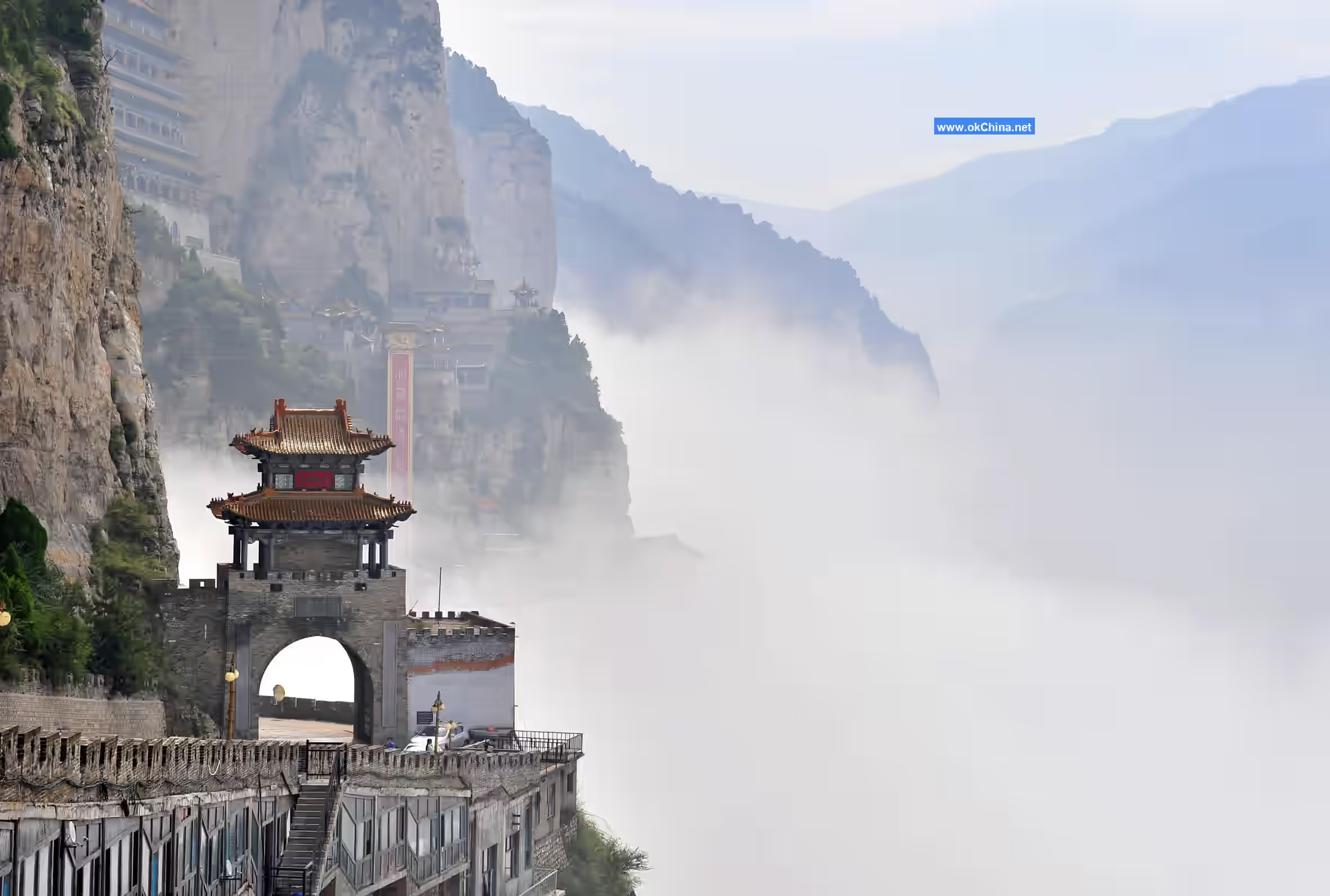
Longtou Temple, originally named Tayantou, was renamed after the appearance of two dragons during Emperor Taizong's pilgrimage to Mianshan to worship Buddha in the 15th year of the Zhenguan era (641 AD). The area includes historical sites such as Yude Hall, Guan Yu Temple, Zhenwu Temple, and South Heavenly Gate. Stone inscriptions like "Marshal Ye Jianying on Mianshan," "Zuo Zhuan: Jie Zitui Does Not Speak of Rewards," Qu Yuan's "Nine Chapters," Song Tingkui's "Ode to Mianshan," and Emperor Taizong's inscribed poem stele are key cultural landscapes showcasing Mianshan's profound history. It is also an excellent spot for viewing sea of clouds at dawn and sunsets in the evening.
Dragon Ridge, Statues of Jie Zitui and His Mother, Health Preservation Garden
Dragon Ridge is named for its location along the spine where two dragons converge. This area highlights the military culture of the Tang Dynasty and Taoist health preservation practices. It features over twenty attractions, including Dragon Head, Dragon Saliva Spring, Dragon Whisker Waterfall, giant statues of Jie Zitui and his mother, Zhenwu Hall, Bagua Garden, and Yangzhi Pavilion. The statues vividly depict Jie Zitui and his mother retreating to Mianshan. Mianshan Tang Camp is the only preserved ancient Tang military camp in China. Historical relics like the Command Platform and Flagstone tell stories of Prince Li Shimin (later Emperor Taizong) deploying troops. Mianshan's spiritual energy attracted many immortals and sages, with over ten meditation caves of ancient worthies such as Bo Zichang, Peng Zu, Ziqiao, Hua Tuo, Han Zhongli, Lü Dongbin, and Chen Tuan, making it one of China's oldest health preservation sites. The Health Preservation Garden uses steles and illustrations to provide concise and vivid introductions to health preservation techniques.
Ligu Rock
Ligu Rock, also known as Imperial Princess Rock, is a rare tourist destination where an imperial princess became a nun. A record from the 17th year of the Shunzhi era (1660) in the Qing Dynasty, "Record of Repairing Ligu Rock" by Liang Zhongyu of Jiexiu, states: "Among the rocks of Mianshan, there is one named Ligu Rock." Legend has it that in the 15th year of the Zhenguan era (641), Princess Changzhao, sister of Emperor Taizong, accompanied the emperor to worship Buddha and settled here, practicing asceticism for years until attaining enlightenment. She later manifested to help people, and a statue was erected in her honor.
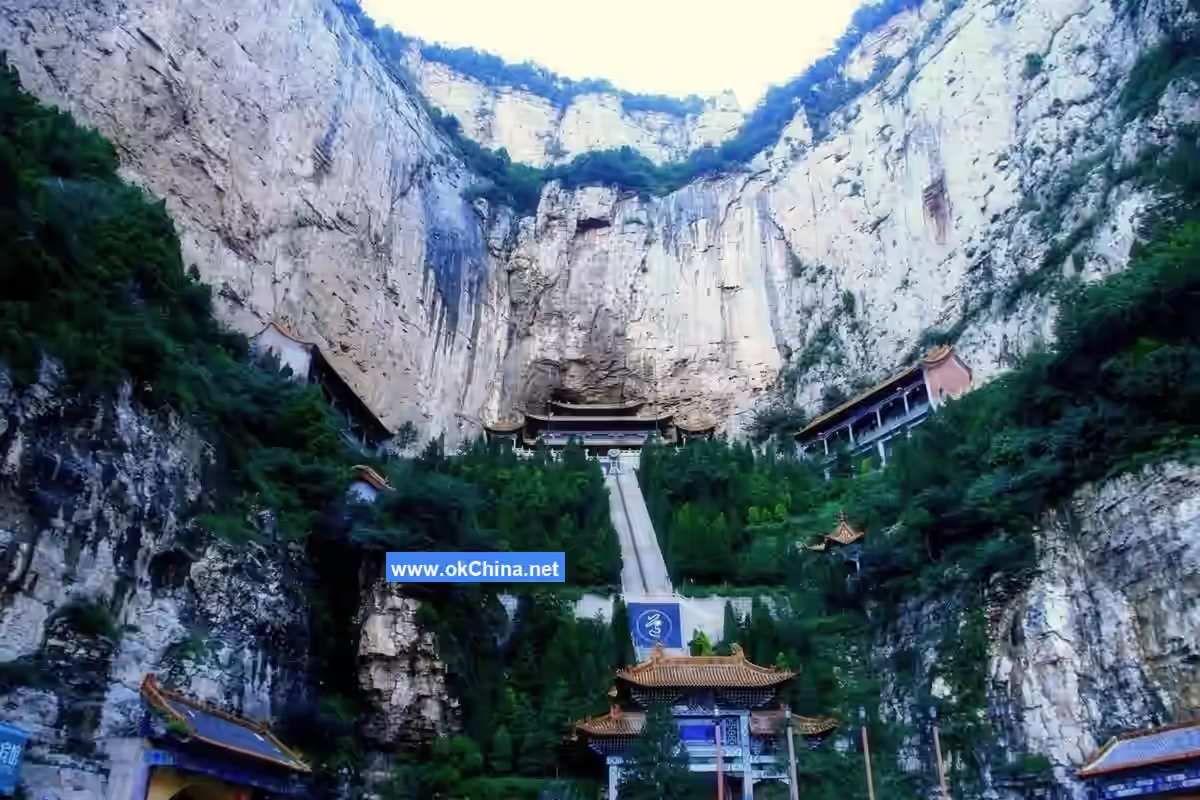
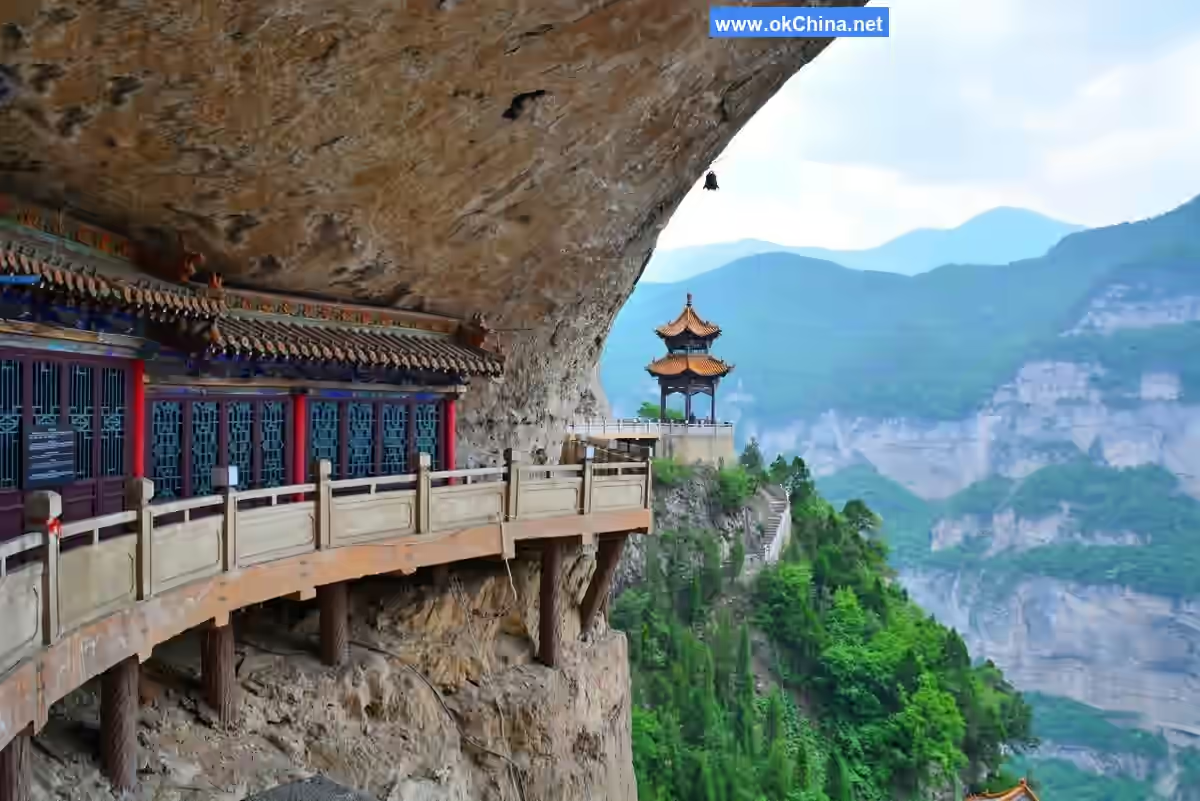
Located on the west side of Dragon Ridge, Ligu Rock is a natural giant cave over 200 meters long, 20 meters deep, and 30 meters high. The temple halls are built on two levels, uniquely integrated into the mountain. They include Imperial Princess Hall, Sakyamuni Hall, Guan Yu Hall, Dragon King Hall, Arhat Hall, and Trikaya Buddha Hall.
The nine sculptures in the Imperial Princess Hall are all Tang Dynasty relics, making them extremely precious. The Imperial Princess Tower is where Princess Ligu meditated, and its furnishings and murals reflect the grandeur of the Tang royal family. The origins of the other halls are all related to Princess Ligu, preserving many touching legends.
The entire area is nestled under the shade of ancient forests, enveloped in mist and fresh fragrance, exuding an antique charm unique to Mianshan. For centuries, locals have said, "Of all the rocks to visit in Mianshan, Ligu Rock is the most beautiful." For convenience, a sightseeing cable car connects to Dragon Ridge, providing easy and safe access to Ligu Rock.
Honeycomb Spring, Moon Viewing at Tianjing
Honeycomb Spring, also known as Holy Breast Spring or Mother's Nipple, is a rare natural wonder and China's only hanging spring. Northern Song Prime Minister Zhang Shangying described the landscape: "Water seeps from honeycomb springs, mountain tops round like granaries; wind blows through the valley like bellows, clouds cover the sky like a winnowing fan." Dozens of moss-covered stone nipples on the massive cliff drip milk-like pearls into a pool, creating a melodious sound akin to a mountain stream playing a zither. During the Kangxi era of the Qing Dynasty, Shanxi scholar Fu Shan compared the spring water to the purest Buddhist dharma and the finest cream, suggesting even the divine dragon Naga could only taste a spoonful without greed. A poem reads: "Buddha's grace nourishes the serene, stone milk blesses the dragon pool. Lotus stems guide, mani jewels sweeten. Grace encompasses eight virtues, purity embodies three bodies. A spoonful of ghee suffices, Naga is not allowed greed." Other attractions include Wangfeng Gate, Five Dragons Paying Homage to Mother Hall, Four Seas Dragon King Hall, Three Sovereigns Pavilion, Five Peaks Hall, Mazu Hall, Holy Mother Hall, Eight Immortals Cave, and the "Supreme Goodness Like Water" Archway.
Daluo Palace Scenic Area
Daluo Palace Scenic Area, locally known as "Middle Rock," is named after the Taoist belief in the Thirty-Six Heavens, with Daluo Heaven being the highest. Thus, Daluo Palace signifies the highest celestial palace.
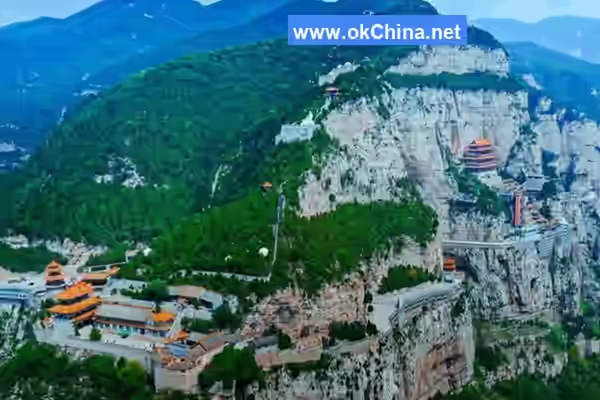
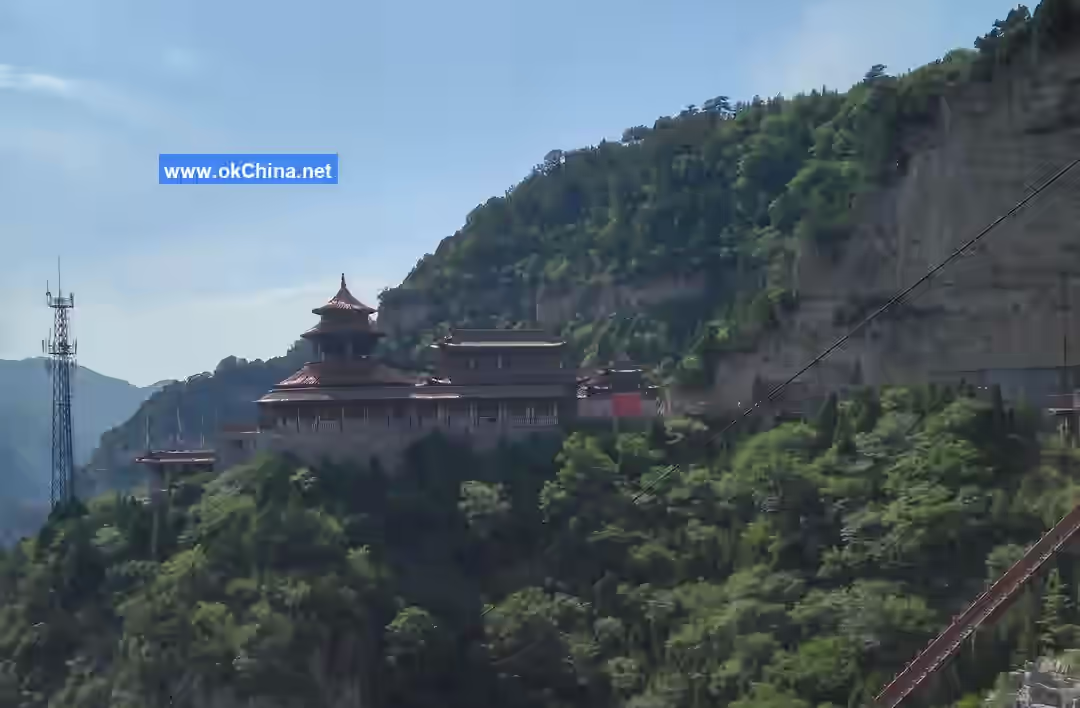
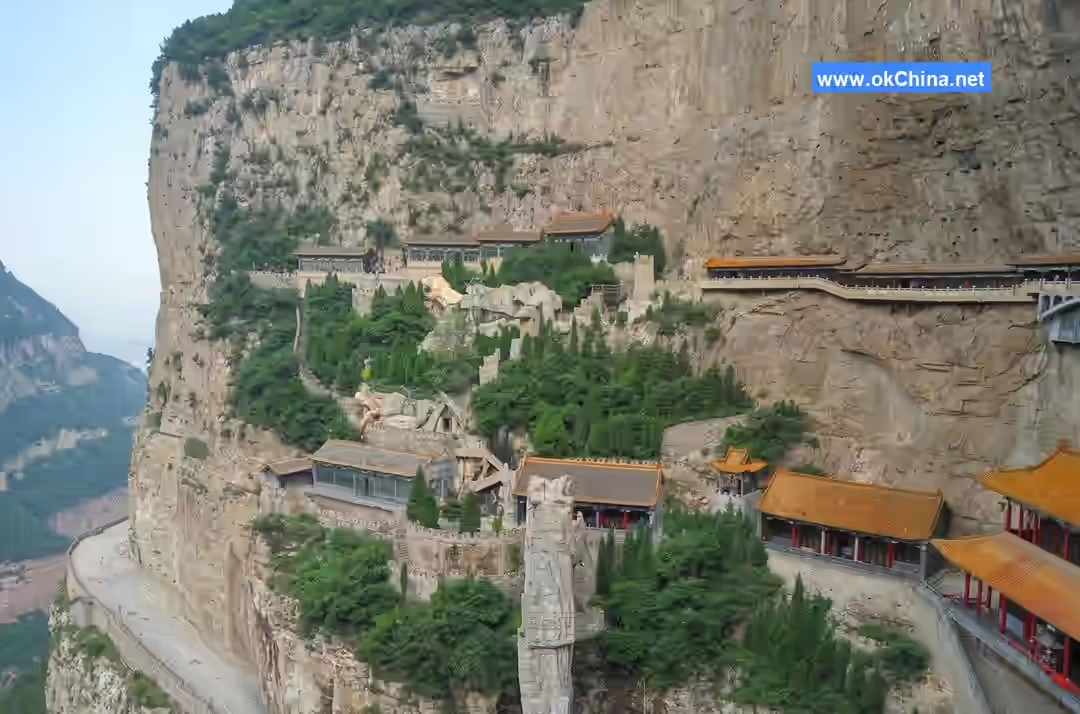
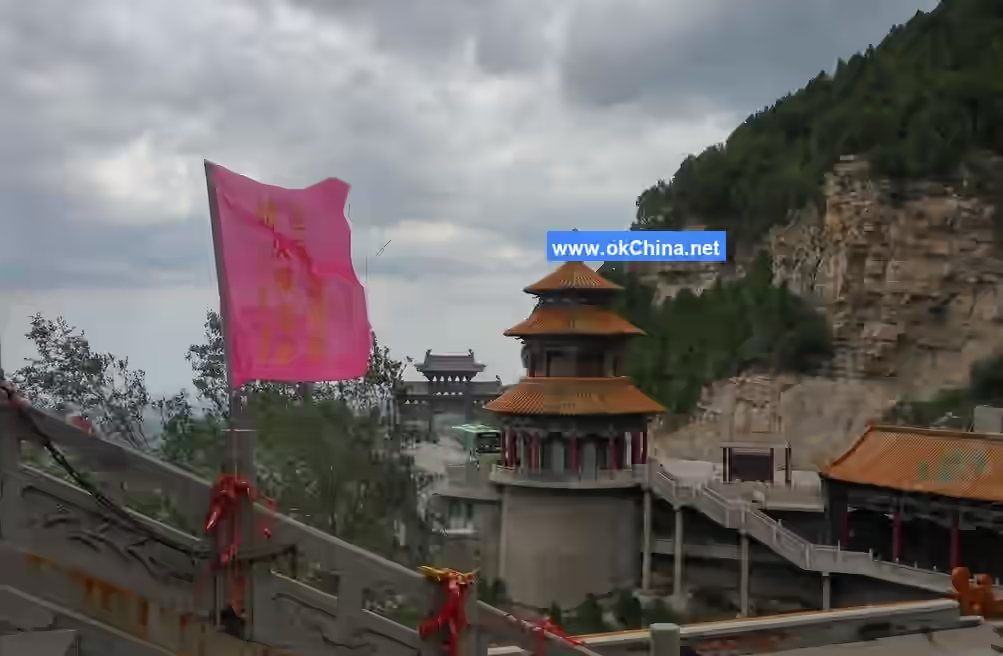
Built against the mountain, Daluo Palace features towering pavilions, painted beams, carved pillars, and resplendent gold. The entire complex covers over 30,000 square meters across thirteen floors, reaching a height of 110 meters. Praised by visitors as "comparable to the Potala Palace," it is considered the foremost Taoist palace in the world.
The exact founding date of Daluo Palace is unknown. Legend holds that Taoist activities existed when Jie Zitui retreated to Mianshan during the Spring and Autumn Period. By the Eastern Han Dynasty, some temple halls had taken shape. In the 11th year of the Kaiyuan era (723) of the Tang Dynasty, Emperor Xuanzong visited Mianshan on his way south through Queshu Valley to honor the merits of past sages and express gratitude for the gods' protection of the Tang Dynasty. He ordered the renovation of Daluo Palace halls. Subsequent repairs were made during the Yuanyou era of the Song Dynasty, the Wanli era of the Ming Dynasty, and the Kangxi and Qianlong eras of the Qing Dynasty. The palace was burned down by Japanese troops in 1940 and rebuilt by Sanjia Company on the original site in 1998, achieving its current grandeur.
The area includes the main hall's Lecture Altar, Hunyuan Hall, and Immortals Hall, as well as Lingxiao Hall, Three Pure Ones Hall, God of Wealth Hall, Salvation Hall, Yuanchen Hall, Three Officials Hall, Five Elder Lords Hall, and Doumu Hall. The exhibition halls feature exquisite colored sculptures from the Tang, Song, Yuan, Ming, and Qing dynasties, earning Mianshan the title "Dunhuang of Shanxi." The Scripture Depository is the largest library in Chinese scenic areas. Woodblock and stone inscriptions of the "Tao Te Ching," along with translations in English, Japanese, and Russian, showcase the cultural richness of the text. A natural stone cave on the rock often emits white clouds in summer, hence named "White Cloud Cave." A thatched cottage beside it, called White Cloud Hermitage, houses a rare Tang Dynasty stone inscription of the "Diamond Sutra."
Sky Bridge
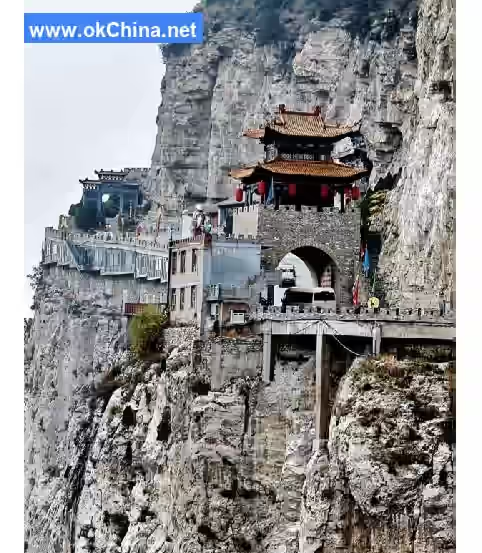
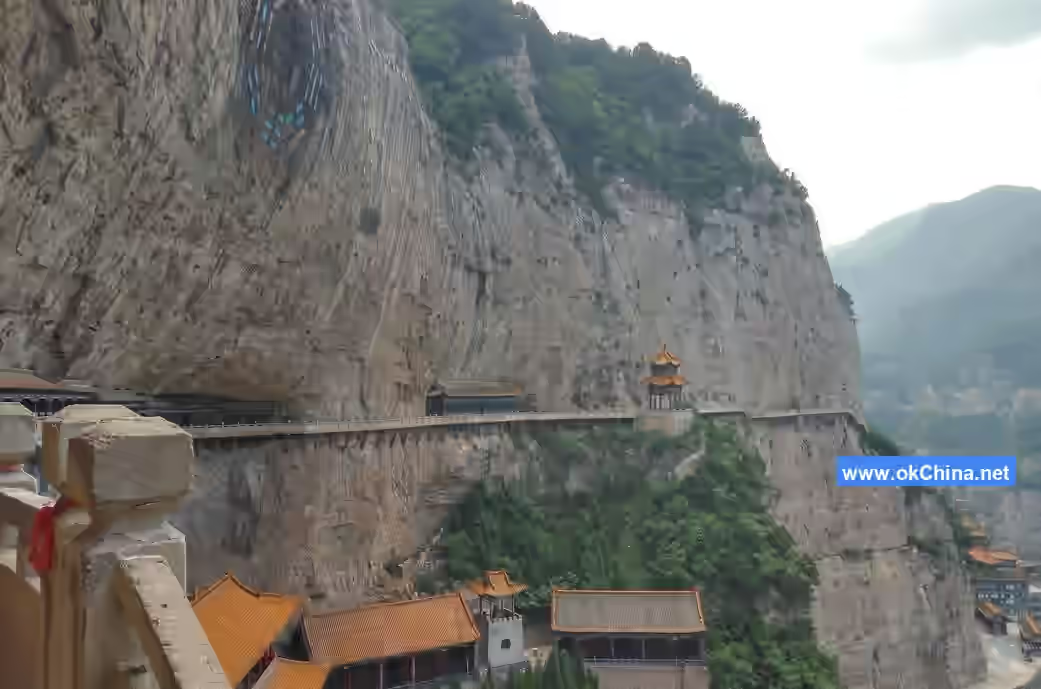
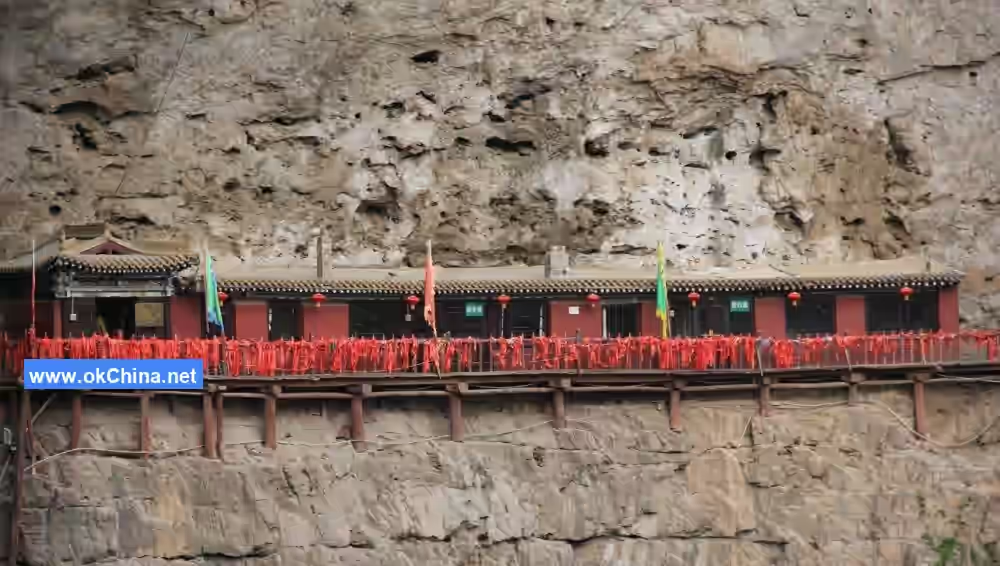
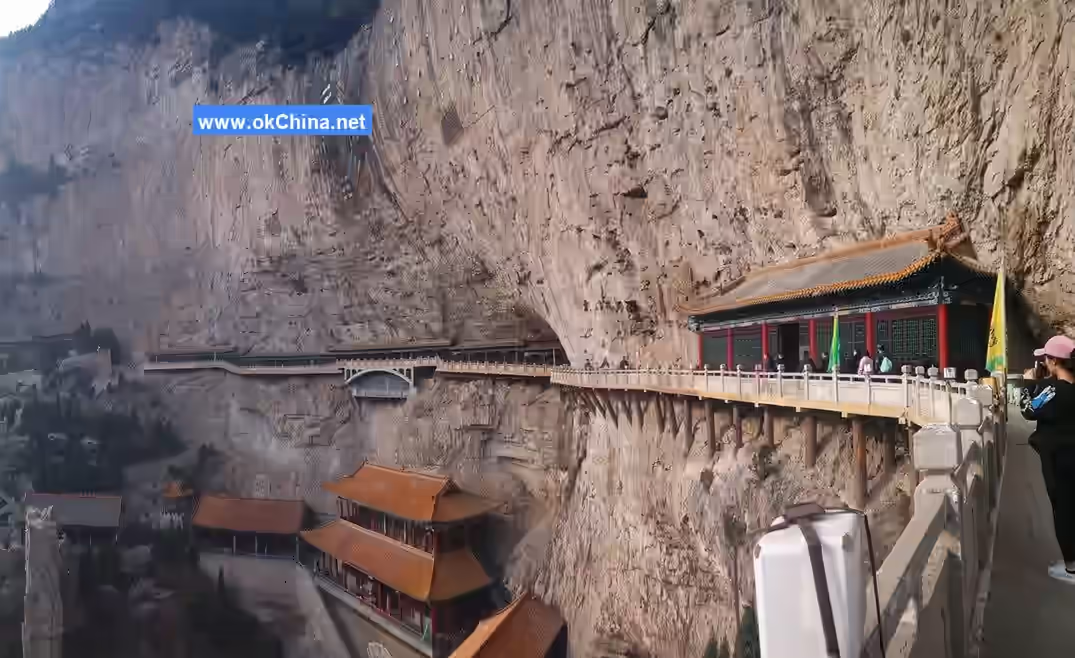
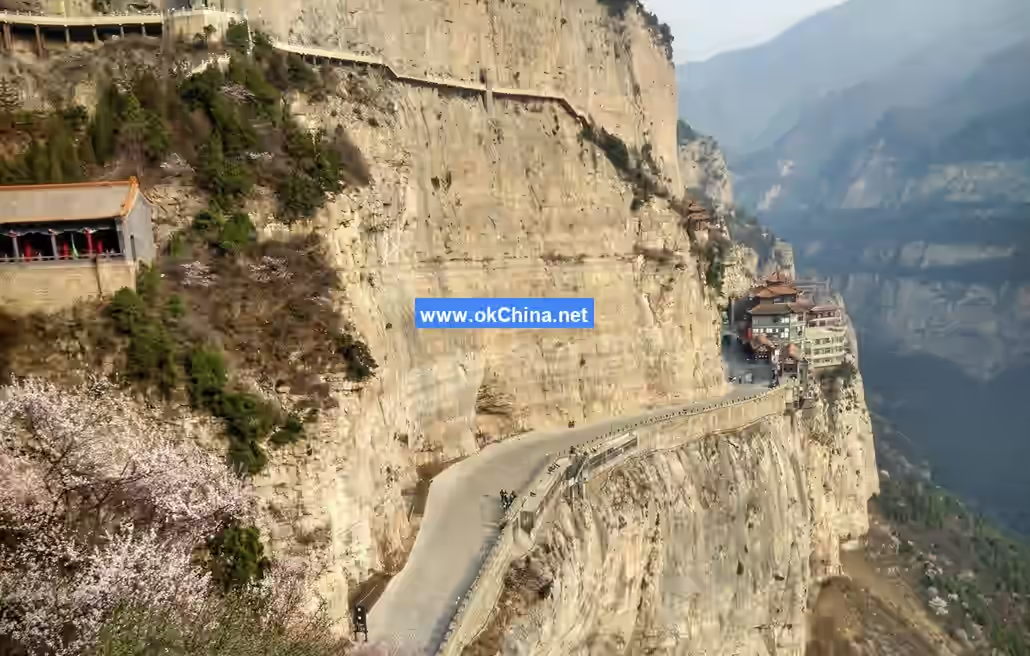
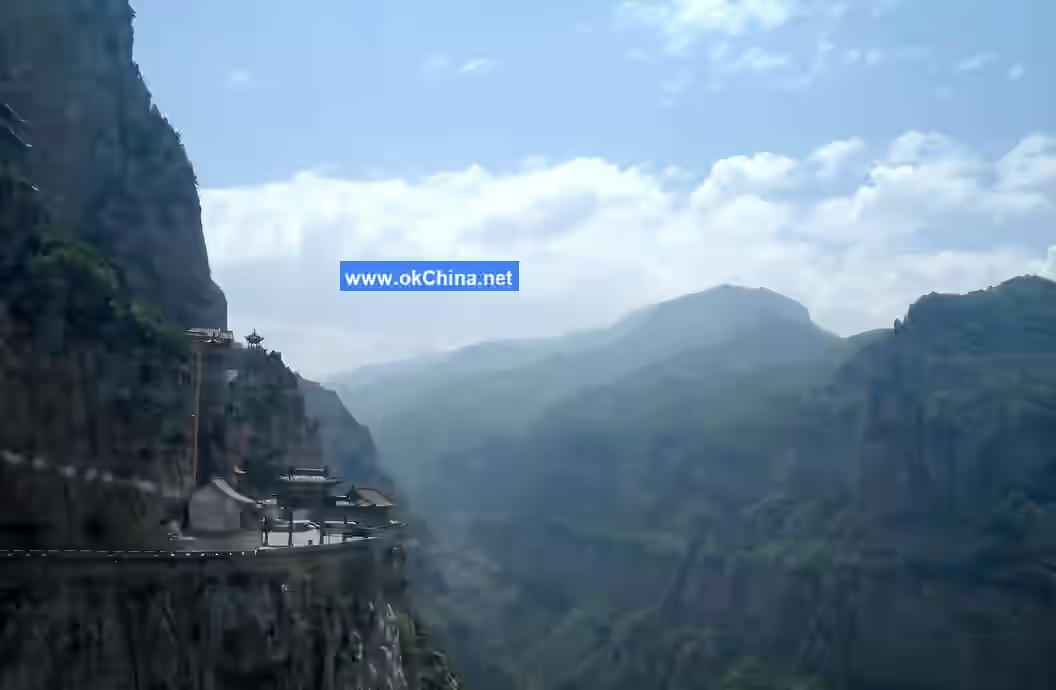
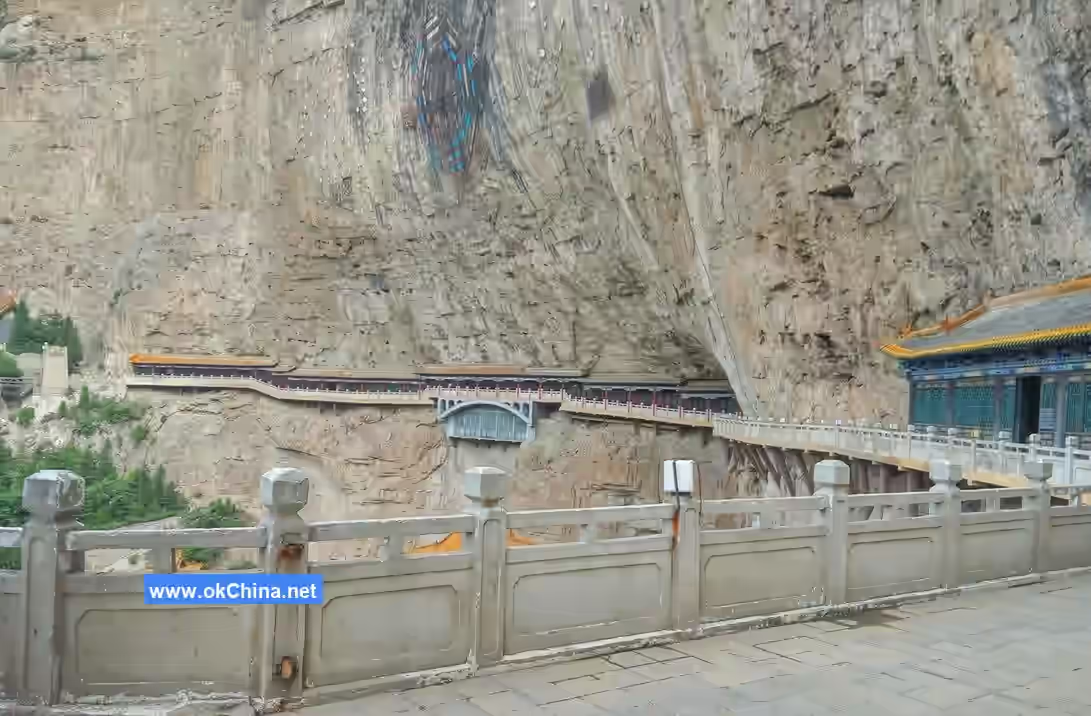
Sky Bridge is named for its cliffside plank walkway, which has a history of over a thousand years. Stretching over 300 meters long and about 1 meter wide, it hangs 80 meters below the peak and 300 meters above the valley floor, seemingly reaching into the clouds. After rain, clouds drift beneath the bridge, giving walkers a feeling of stepping into the clouds and ascending to immortality. The area features main structures like Cave God Palace, Patriarch Hall, Seven Perfected Hall, Water Mother Hall, and Hanging Corridor, along with scenic spots such as Looking Back at Cypress Dragon, Rabbit Bridge, and Sumeru Stone. There are also meditation caves of figures like Zhuge Liang and Zhang Liang. Additionally, the area includes Shile Fortress, one of ancient China's most perilous military strongholds, known for its steep terrain and ease of defense.
Cave God Palace was rebuilt in the 16th year of the Zhenguan era (642) by Emperor Taizong Li Shimin to express gratitude for the protection of the Supreme Pure Lord of Dao De during his battle against Liu Wuzhou at Dusuoyuan in Queshu Valley in the 3rd year of the Wude era (620).The site was successively expanded and renovated by both official and private efforts during the Song, Yuan, Ming, and Qing dynasties. In 1940, it was burned down by Japanese troops. In 1998, the Sanjia Company expanded the complex on the original site.
Yidou Spring
Yidou Spring is a naturally formed stone spring, named for its capacity of holding only one dou (a unit of volume) of water. Legend has it that long ago, Mianshan suffered from water scarcity. The Primordial Heavenly Lord, while traveling here, dipped his horsetail whisk into the waters of the East Sea and sprinkled a few drops onto Mianshan. Many springs appeared across the mountain, with the final drop landing here, forming Yidou Spring.
Zhujia'ao and Wolong Hotel
The Zhujia'ao scenic area on Mianshan is related to the rise of the Zhu Ming Dynasty and is considered a "sacred site." It is said that during the late Yuan Dynasty, Zhu Wusi, the father of Ming Dynasty founder Emperor Taizu Zhu Yuanzhang, practiced asceticism here, praying to the heavens for the prosperity and nobility of his descendants. As a result, his son Zhu Yuanzhang, under the protection of the Lingbao Heavenly Lord, unified China, became emperor, and established the Great Ming Dynasty. In the 18th year of the Hongwu reign (1385), the seventeenth prince, Zhu Quan, was sent to Mianshan to express gratitude. He undertook large-scale construction and renovated the Dongxuan Palace, which is the origin of Zhujia'ao.
Zhujia'ao is the sacred site of the Shangqing Lingbao Heavenly Lord. The side halls on the left and right are the Shifang Lingbao Hall and the Hall of Immortals. On the western hill stands the Jade Emperor Pavilion. In the 21st year of the Jiajing reign (1542), Emperor Shizong of the Ming Dynasty held a sacrificial ceremony here, praying for the eternal stability of the Ming Dynasty. Below the cliff is the Wolong Hotel. Its name originates from the Book of Changes: "The hidden dragon lies in the deep" and "It is beneficial to see the great man." During the Ming Dynasty, it was a mountain lodge where emperors would stay when visiting the mountain, hence the name Wolong Hotel.
Baofu Rock at Yunfeng Temple
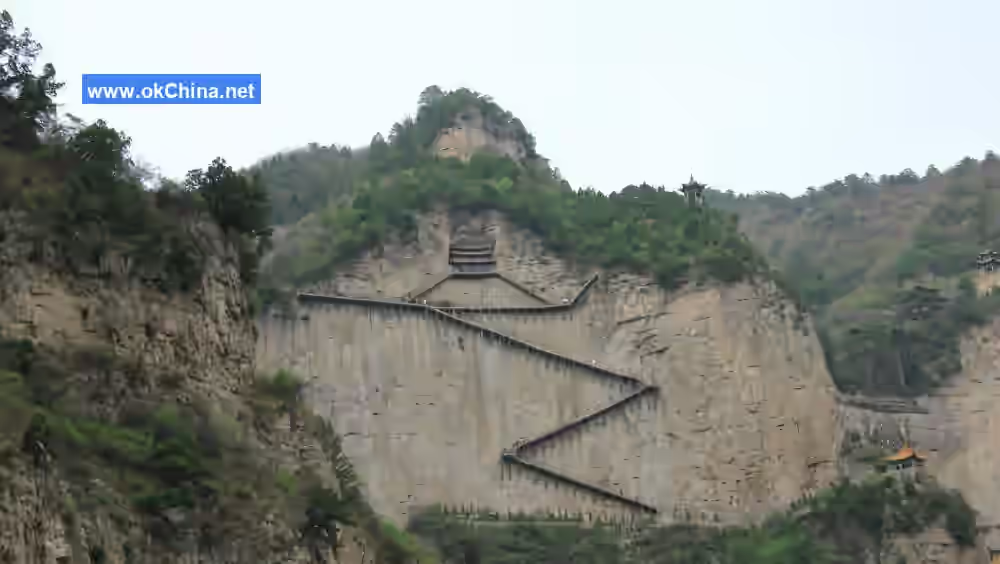
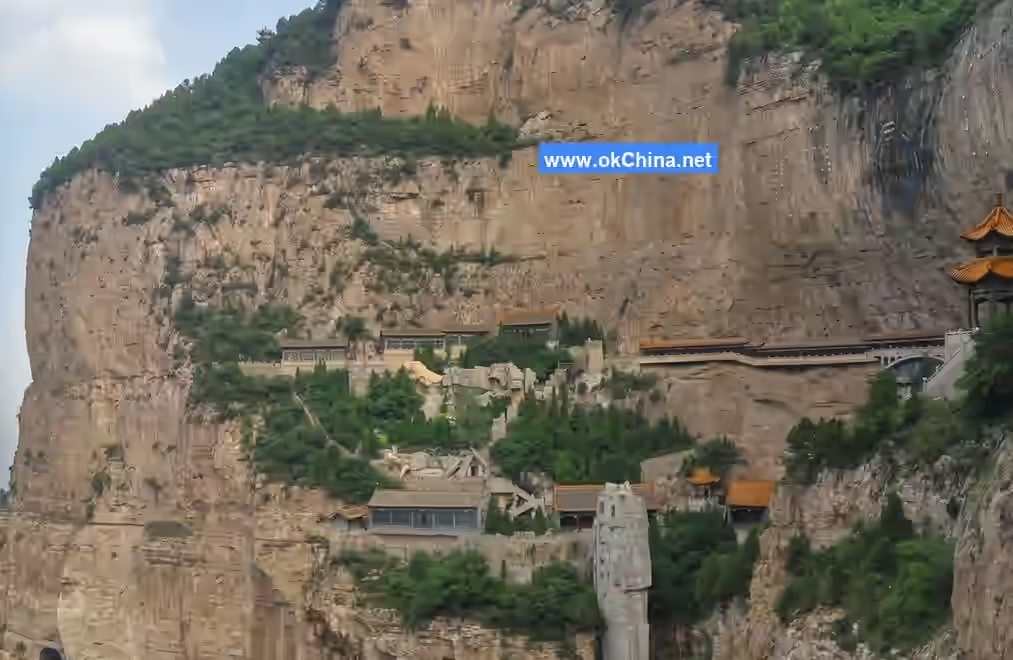
Yunfeng Temple, originally named Baofu Temple, gets its name from being built within Baofu Rock. It was first established during the Cao Wei period of the Three Kingdoms by the eminent monk Digong, over 1,700 years ago. Baofu Rock faces west, standing 60 meters high, 50 meters deep, and 180 meters long. It consists of two levels, "embracing" over 200 halls and lodgings within its "belly," containing two millennia of historical and cultural heritage, making it "unique in the world." Key attractions include the Vairocana Hall, Jade Emperor Pavilion, Kongwang Hall, Five Dragons Hall, Digong Cave, Luangong Cave, Zhichao Cave, Five Dragons Pine, Iron Chain Ridge, the "Stele of the Tang Dynasty Baofu Temple in Fenzhou," and over forty other sites. The temple enshrines the local deity Jie Zitui and the true Buddha Kongwangfo. Tian Zhichao was the first Han Chinese to achieve Buddhahood; his statue contains his actual skeletal remains. The temple also preserves many Tang, Song, Yuan, and Ming dynasty stone inscriptions and sculptures of high cultural relic value. Hanging bells from the top of Baofu Rock create a breathtaking and awe-inspiring spectacle. Iron Chain Ridge is the world's oldest cliff-climbing iron chain plank path. The iron chains and the ladders below were hung before the Tang Dynasty and were part of the perilous route taken by the great Tang poet He Zhizhang when he ascended the mountain. The long couplet inscribed by the late Ming-early Qing scholar Fu Shan in the 10th year of the Chongzhen reign (1637), the imperial plaque "Ciyun Fayu" (Compassionate Clouds, Dharma Rain) bestowed by the emperor in the 3rd year of the Guangxu reign (1877), and the plaque "Baofu Qiyun" (Embracing Clouds in the Bosom) inscribed by contemporary renowned scholar Zhang Han are all rare treasures.
Zhengguo Temple and Whole-Body Sariras
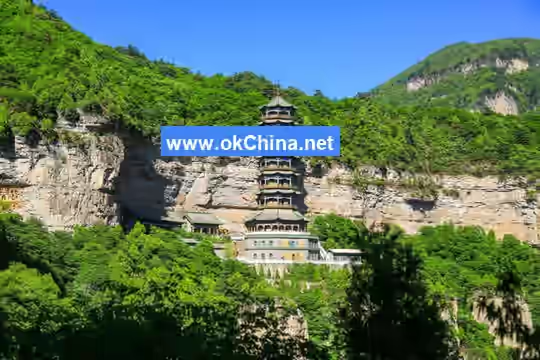
Originally, Mianshan was owned by the Five Dragons and their mother. After Zhichao arrived, the Dragon Mother ceded Mianshan to him through a game of chess. The Five Dragons converted to Buddhism and often listened to Kongwangfo's teachings on the preaching platform. Later, the Five Dragons' power greatly increased; they soared and leaped across to the opposite mountain, leaving five gullies on the cliff face, hence the name Wulongchan (Five Dragons' Traces). The main temple in this area is called "Zhengguo Temple." Inside are thirteen whole-body sarira statues. Despite over a thousand years, their skeletons remain intact and are considered quite spiritual, serving as important cultural relics for studying Mianshan's history, culture, and geographical climate. Additionally, there are Tongtian Yunqu (Path to Heaven Cloud Ladder), Five Dragons Pine, Amitabha Hall, Holy Mother Hall, Guanyin Hall, Three Great Bodhisattvas Hall, Goddess of Child-giving Hall, Five Dragons Hall, etc., all with miraculous origins and efficacious temples. The Lingying Pagoda has seven visible and nine hidden stories, standing 69 meters tall, towering into the clouds, majestic and spectacular—the tallest Buddhist pagoda among China's high mountain monasteries. Combined with the perilous terrain and towering pines and cypresses, it makes Mianshan a uniquely characteristic tourist destination.
Qixian Valley and Jiugu Yixiantian Grand Canyon
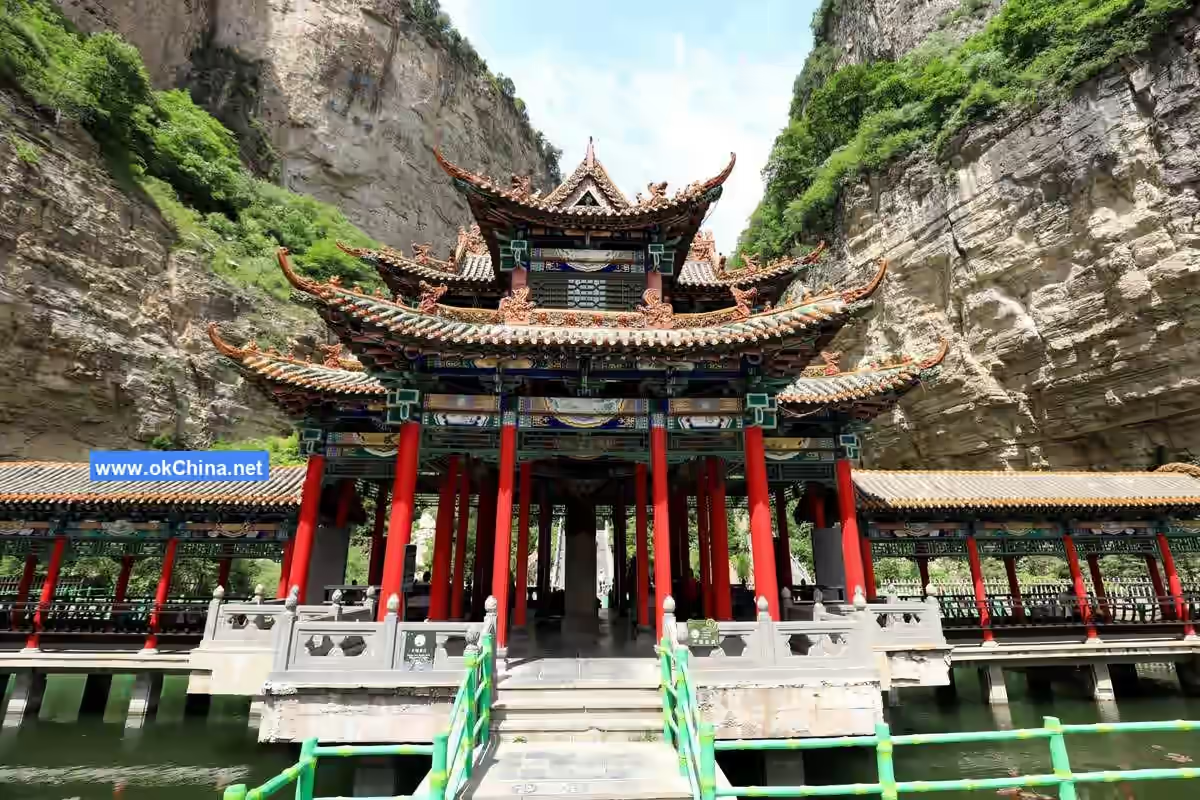
Qixian Valley is a winding canyon known as "Jiugu Yixiantian" (Nine Bends, One Thread of Sky). With rugged rocks on both sides and a babbling stream at the bottom, sounds echo in the empty valley. Passing through requires climbing over ten aerial ladders. It is said that Jie Zitui and his mother passed through here to reach their hermitage. The Fenghou Pavilion was built when Wen Yanbo proclaimed the imperial edict conferring the title "Jiehui Marquis" upon Jie Zitui. It is ingeniously designed, exquisitely crafted, and possesses the grandeur of imperial gardens. Inside the pavilion is the precious stone inscription of Emperor Shenzong of Song's imperial edict. The scenic area also features over twenty attractions, including Qingfeng Cave, Yingxian Arch, Tianyuan Waterfall, Chaofan Cave, Xiaosheng Diepu (Overlapping Waterfalls with Flute Sounds), Crocodile Rock, Immortal Realm Rock, Cliff Garden, Butterfly Nest, Tiger-Taming Deity, Turning Stones into Sheep, Immortal Spring, etc.
Jiegong Ridge and Jiegong Tomb
Jie Zitui is the only historical figure in the world commemorated by a mountain, a county, a festival, and customs. "A mountain's fame lies not in its height, but in its immortals." Jiegong Ridge is the hermitage, self-immolation site, and place of worship for the ancient sage Jiezi. This area also includes main attractions such as Aihao Slope, Mianshan Stele Forest, Immortal Stone Forest, Yizhang Mountain, Hujie Rock, Zimu Rock, Lotus Leaf Spring, Baiya Mountain, Ruyi Spring, Yugui Mountain, Fire Shelter Cave, Siyan Terrace, Zuxia Pavilion, Jiegong Ridge, Cypress Ridge, Jiegong Tomb, Sheshen Rock, etc. Yugui Mountain, homophonous with "yu gui" (to return), is Jie Zitui's hermitage. Siyan Terrace records the story of Duke Wen of Jin setting the mountain on fire, where white crows circled the smoke and cawed, preventing the fire from burning. Aihao Slope and Zuxia Pavilion recount the tale of Duke Wen of Jin facing the charred remains, making clogs from the burnt wood, wearing them on his feet, crying "zuxia" (under your feet), and stamping his feet in grief. Jiegong Tomb is built in the center of Cypress Ridge atop 2,000 stone steps. Overlooking from this high vantage point, one can take in the panoramic view of the ancient State of Jin's mountains and rivers. The ancient tomb is built against the mountain, with several tombstones from the Yuan, Ming, and Qing dynasties. Jieshen Temple is situated in a natural grotto 28 meters deep, 30 meters wide, and 18 meters high—the largest grotto temple in China.
Shuitaogou
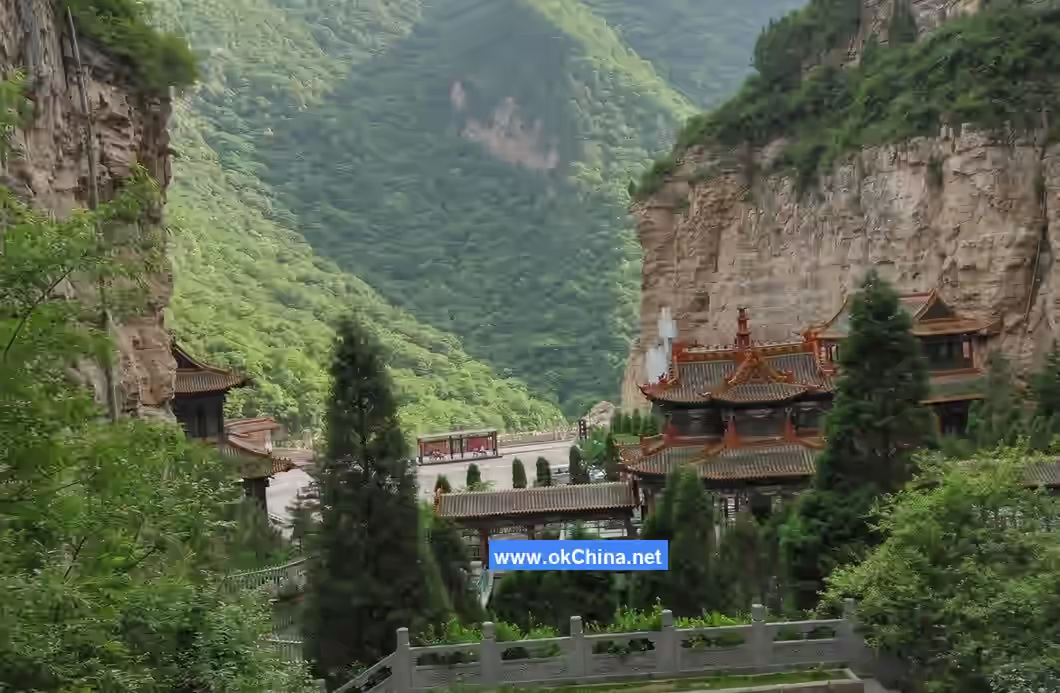
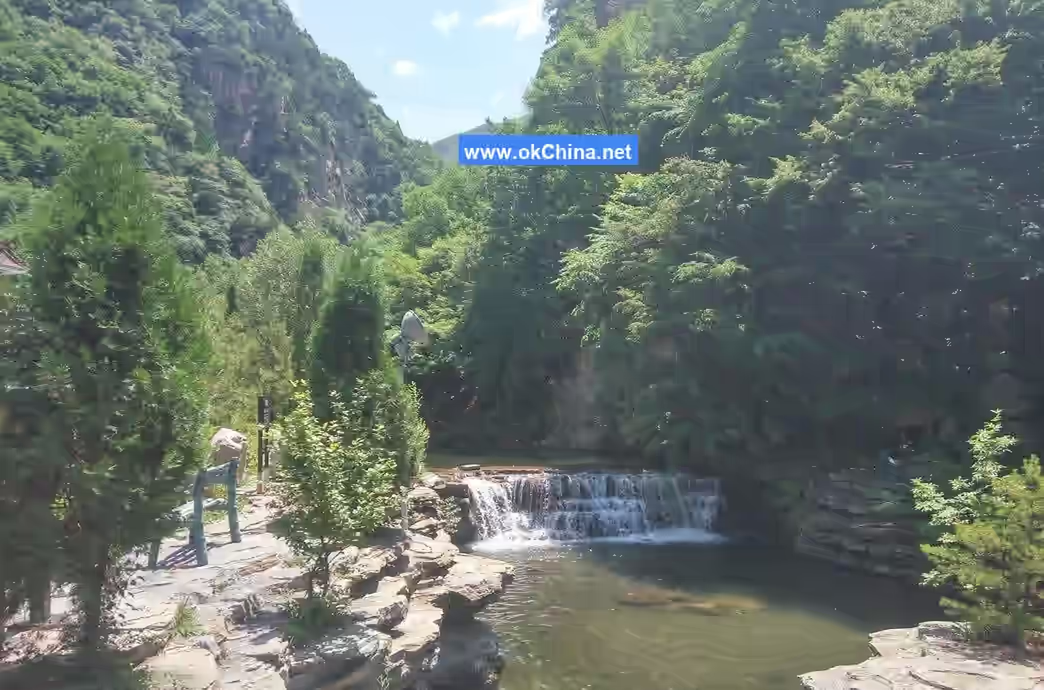
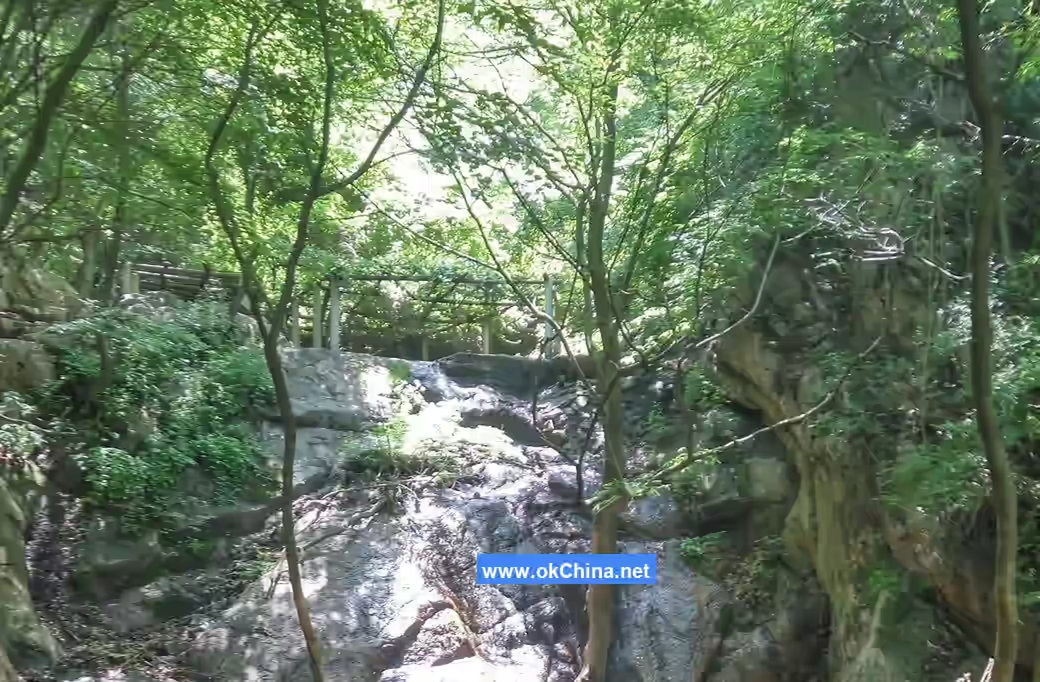
The beauty of Mianshan is best represented by Shuitaogou (Water Ripple Immortal Gully). At the gully's entrance, the verdant preaching platform stands between two mountains, encircled by stream water. Rainbows often rise here in summer and autumn, creating picturesque scenery. Within the ten-li immortal valley, the Shitong Water of Mianshan, mentioned in the Northern Wei geographer Li Daoyuan's Commentary on the Waterways Classic, twists and turns, cascading and churning, forming dozens of waterfalls of varying sizes and shapes. They resemble strings of jade inlaid among dense forests and reed marshes, making one feel as if transported to a mysterious and enchanting southern water town.
Main landscapes within the gully include natural wonders like Five Dragons Tree, Five Dragons Flying Waterfall, Lotus Peak, Immortal Register Tablet, Ziyue Peak, Knife-Cleft Rock, Lion Waterfall, Water Curtain Cave, etc.; as well as sculptural pieces like Immortal Maiden Sitting on a Turtle, Fishing by the Green Stream, Hanging Books on an Ox Horn, and He Zhizhang Drunk. The Five Dragons Flying Waterfall, a wonder of China, has a drop of over 80 meters, plunging into the Five Dragons Pool. The Water Curtain Cave is considered the foremost cave in the world for cultivating nature, nurturing qi, and achieving enlightenment through fasting. A flying stream like a white silk hangs at the cave entrance; the interior can accommodate thirty to forty people and served as a cultivation site for eminent monks and Taoists throughout history for seclusion and fasting.
Guteng Valley
Guteng Valley, commonly known as "Xishui Gou" (West Water Gully), is located on the famous western side of Shuitaogou. It rivals Shuitaogou in beauty yet possesses its own distinct characteristics. According to historical records, this area was once one of the sources of the Mianshan Jinglin River and also the site where the famous Tang Dynasty Prime Minister Linghu Chu established the Jinglin Academy. Within the valley, ancient vines entwine ancient trees, forming umbrella-like, tail-like, cave-like, bridge-like, net-like, and palace-like vine spectacles. Wild fruits like kiwi, mountain grapes, mountain cherries, mountain walnuts, wild hawthorns, mountain pears, and mountain apricots are随处可见. Moreover, it is a natural Chinese herbal medicine botanical garden, with over a hundred precious medicinal herbs recorded in the Compendium of Materia Medica, such as Codonopsis pilosula, Mian Huangqi, Wulingzi, Picae, Acorus calamus, and Poria cocos. Many naturally formed strange rocks in various shapes resemble different animals. Therefore, for thousands of years, it has attracted numerous historical figures to visit, leaving behind many precious inscribed stone carvings. Still clearly discernible are the handwriting of Emperor Xuanzong of Tang, Linghu Chu, Wen Yanbo, He Zhizhang, Zhang Xuan, and others. Due to its typical temperate rainforest climate, visitors call it a "natural oxygen bar," making it the best destination for summer retreats and escaping the heat.
Yude Hall
Yude Hall on Mianshan is a solemn and sacred hall that centrally embodies the Great Dao philosophy of Mianshan, enshrining the "Heaven, Earth, Sovereign, Parents, Teacher." It was first built during the Spring and Autumn Period by Duke Wen of Jin to commemorate Jie Zitui. Its purpose is to admonish the world to follow the ways of Heaven, Earth, Sovereign, Parents, and Teacher—to revere heaven and earth, be loyal to the sovereign and patriotic, be filial to parents, benevolent to elder brothers, and respectful to elders—using Jie Zitui's 16-character maxim: "Loyalty, Filial Piety, Benevolence, Trustworthiness, Propriety, Righteousness, Integrity, Shame, Compassion, Frugality, Gentleness, Kindness, Prudence, Humility, Harmony." Mianshan's Yude Hall is China's earliest hall promoting the Great Dao philosophy. The hall is solemn and majestic, with an imperial air. It houses treasured calligraphy pieces containing profound sayings from emperors, generals, ministers, and literati throughout history. Emperor Taizong of Tang, Li Shimin, visited Mianshan twice. After paying homage to Jie Zitui and Kongwangfo, inspired by Jiegong's loyalty, filial piety, integrity, and noble character, and by Kongwangfo's philosophy of relieving the people's suffering and universally saving all beings through the Great Dao, he left his calligraphy in Yude Hall: "A ruler should act as parents to the common people; the people should exert their own strength; national harmony truly means considering the welfare of all under heaven." "The emperor should be diligent in governance for the people, hear the Dao morning and evening, devote himself entirely, and must never violate these ancestral teachings." Zhang Liang, one of the "Three Heroes of the Early Han," the famous remonstrating minister Wei Zheng of Chinese history, the famous Northern Song Prime Minister Wen Yanbo who served as both general and minister for fifty years, and the famous Ming Dynasty astronomer Liu Bowen all left philosophical sayings in Mianshan's Yude Hall, such as "Governing a state must emphasize virtue" and "Human ethics and morality have a proper order of respect and humility; fundamental principles have their laws."
In the upper level of Yude Hall, the central position enshrines the deities of "Heaven, Earth, Sovereign, Parents, Teacher." On the right are the Texts for Sacrificing to Mother, Sacrificing to the Gods of Land and Grain, and Emperor Xuanzong's Text for Sacrificing to Heaven and Earth. On the left are Emperor Shenzong's Text for Sacrificing to the Jade Emperor, the Prince of Qin's Text for Announcing the Campaign to Heaven and Earth, and Emperor Taizong's Text for Sacrificing to Jie Mountain.Thus, the excellent traditional virtues of China and the reverence for heaven, earth, sovereign, parents, and teachers are inherited and perpetuated at the Yude Hall of Mian Mountain, showcasing the profound cultural heritage of Mian Mountain and reflecting the broad and profound concept of a harmonious society. Promoting the philosophy of the Great Way, inheriting moral culture, upholding traditional virtues, and building a harmonious society—this has always been the consistent purpose followed by the Yude Hall of Mian Mountain.
IV. Scenic Area Culture
-
It has the earliest historical records, mentioned four times in China's first historical book, Zuo Zhuan, and also documented in the earliest poetry collections, The Book of Songs and Songs of Chu. The Book of Songs records, "I will leave you and go to the outskirts of Ya. Who will cry out forever?" This vividly depicts the reclusive life of Jie Zitui and his mother. Jie Zitui's noble character of not claiming rewards for his contributions has become a widely praised tale throughout the ages.
-
The Baofu Rock boasts a unique and unparalleled mountain formation in the world. It stands 60 meters high, 180 meters wide, and 50 meters deep, capable of holding over 200 halls, temples, and accommodations, as well as 10,000 to 20,000 tourists. The thrilling and spectacular sight of hanging bells flying beneath the rock is another extraordinary feature.
-
The Stele of Baofu Temple in Fenzhou of the Great Tang Dynasty, created in the 20th year of the Kaiyuan era of the Tang Dynasty, has a history of over 1,200 years. It vividly records the planning and establishment of Baofu Temple by the eminent monk Di Gong during the Cao Wei period of the Three Kingdoms, and includes inscriptions by many notable figures from the Tang and Song dynasties. Its content and calligraphic value are exceptionally high. Particularly intriguing is the fact that the stele is located over 200 meters away from the temple, a mystery that has lasted for millennia and is unparalleled in China.
-
"He Zhizhang's Mountain Path" is a perilous route that ascends directly from the ravine to the rock. According to the inscription by the Tang Dynasty poet He Zhizhang on the left side of the Stele of Baofu Temple in Fenzhou of the Great Tang Dynasty, he climbed Mian Mountain by first being pulled by temple monks using cloth to a point over 50 meters high near the "Chessboard Cave," then climbing a 100-meter cloud ladder to the foot of Yunfeng Temple. From there, he ascended 120 and 60 stone steps to the base of the Iron Chain Ridge, grabbed an over 70-meter-long iron chain to climb the ridge, and finally made his way to the Mota Pagoda in one go. The entire route, spanning over 500 meters, consists almost entirely of cliffs with a 75-degree incline. It is both a breathtaking natural wonder and rich in cultural history, making it a unique spectacle in the world.
-
The Honeycomb Spring is a Baofu Rock over 100 meters high and 30 meters wide. Dozens of stalactites at the lower part of the rock drip water year-round, producing a melodious sound as it falls into the stone pool. Scholars throughout history have referred to it as the "Hanging Spring." Such a spring clinging to a rock face is unparalleled in China.
-
The Daluo Palace is a Ming-style four-story (with seven hidden floors) ancient-style building constructed against the mountain, covering a total area of 30,000 square meters. It rivals the Potala Palace and is hailed as the foremost Taoist palace in the world. Inside, a 300-square-meter wooden carving of the Tao Te Ching inscribed by a hundred renowned Chinese calligraphers and a 300-square-meter cloth painting are both unique treasures of China.
-
The Sky Bridge Plank Road stretches over 300 meters, entirely built along the mountain's summit, with imitation white marble railings on the sides. From a distance, it resembles a white crane soaring through the sky. Walking across the bridge with springs flowing beneath gives one a feeling of ethereal transcendence. Such a scene is rare even after touring all of China's famous mountains and rivers.
-
The twenty-kilometer-long Shuitao Gully is adorned with verdant rocks, winding paths, peculiar trees, strange stones, mountain flowers, and wild grass. As described in the Commentary on the Water Classic by Li Daoyuan of the Northern Wei Dynasty, the Shitong Water of Mian Mountain meanders and rushes through, with eagles circling low in the empty valleys and birds singing, forming a unique landscape painting. Among its features, the Five Dragon Waterfall has a drop of over 80 meters, allowing visitors to pass beneath it. The Water Curtain Cave Waterfall cascades in front of the cave, which can accommodate thirty to forty people inside. Such scenery is exceptionally rare in northern China.
-
The deity of Mian Mountain is Jie Zitui, dating back over 2,600 years, making him one of the earliest Taoist figures. The Buddha of Mian Mountain is King Kong Buddha, whose secular name was Tian Zhichao, originally a Tang Dynasty eminent monk and the first Han Chinese to attain Buddhahood. Additionally, the early Tang general Yuchi Gong and the Northern Wei Pure Land sect pioneer Tanluan are also unique deities and Buddhas of Mian Mountain. All of them are native Shanxi people, a feature unmatched by other famous mountains. The deities of Mian Mountain range from the Formless Heavenly Venerable, Nameless Heavenly Venerable, and Supreme Primordial Lord to mountain gods and earth gods. The Buddhas of Mian Mountain range from Lamp Bright, Wonderful Light, and Dipankara to Buddhas of the past, present, and future. The sheer number and variety of deities and Buddhas are unparalleled in China.
-
The Mian Mountain Religious Music Ensemble consists of 150 members and has performed multiple times for religious figures from Taiwan. It received high praise for its performances at events such as the abbot inauguration ceremony at Beijing's Baiyun Temple, the consecration ceremony at Hebei's Lutai, and the opening ceremony of Liaoning's Pu'an Temple. Min Zhiting, the president of the Chinese Taoist Association, has spoken highly of the Mian Mountain Religious Music Ensemble.
Comments
Post a Comment