Langshan Scenic Area in Shaoyang City
1. Introduction
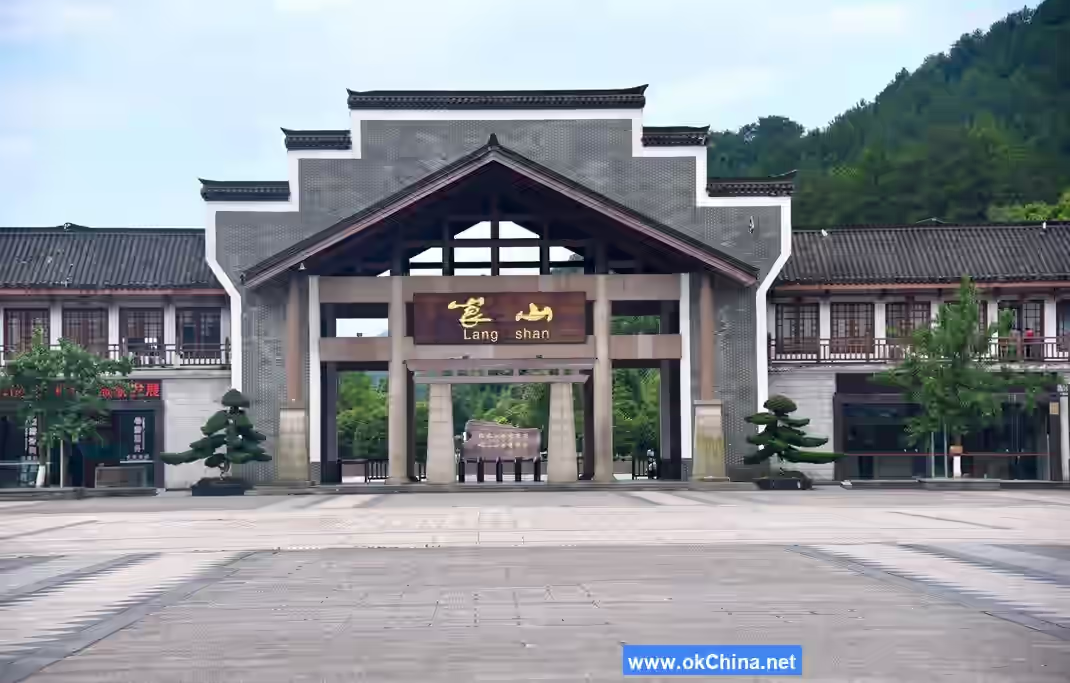
Langshan Scenic Area in Shaoyang City, abbreviated as Langshan Scenic Area, also known as Langshan Tourist Area or Langshan Scenic Spot, is a tourist attraction located in Xinning County, Shaoyang City, Hunan Province, covering a total area of 108 square kilometers.
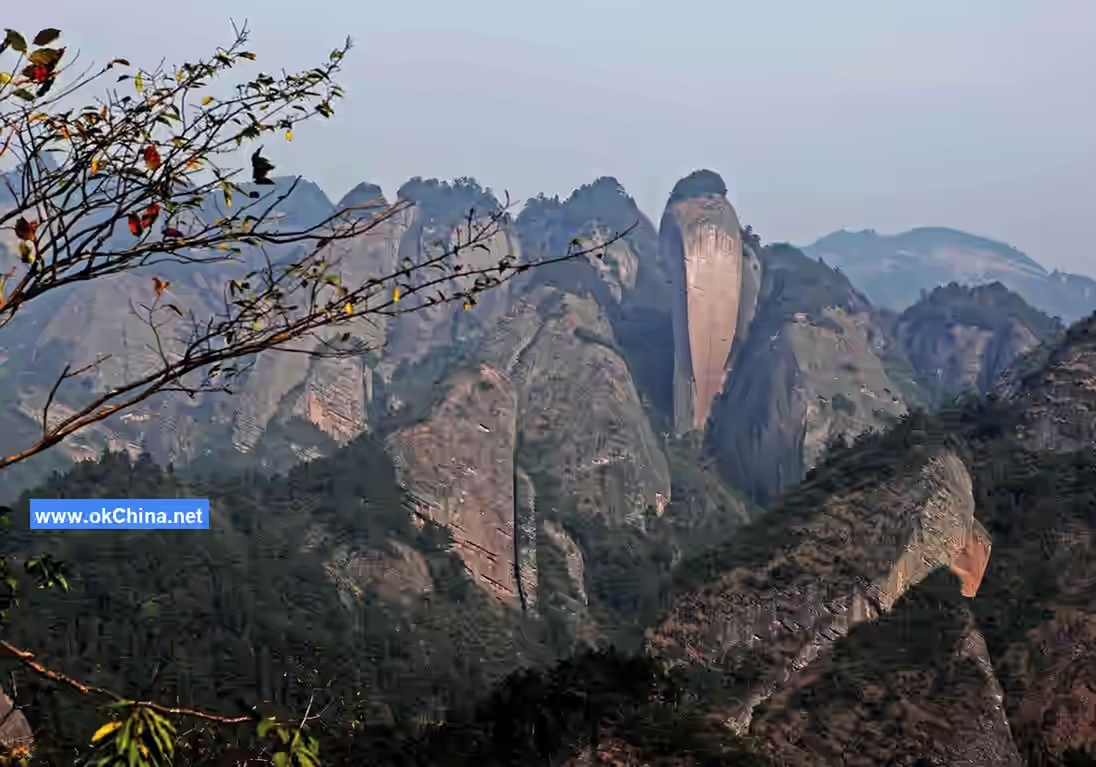
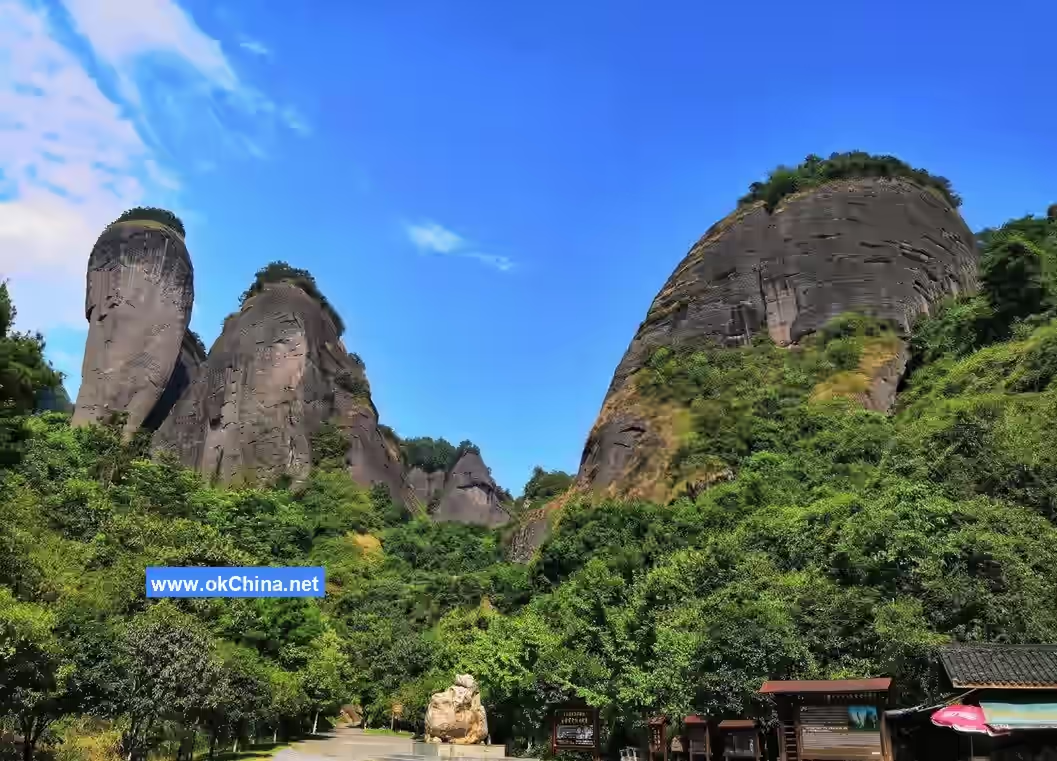
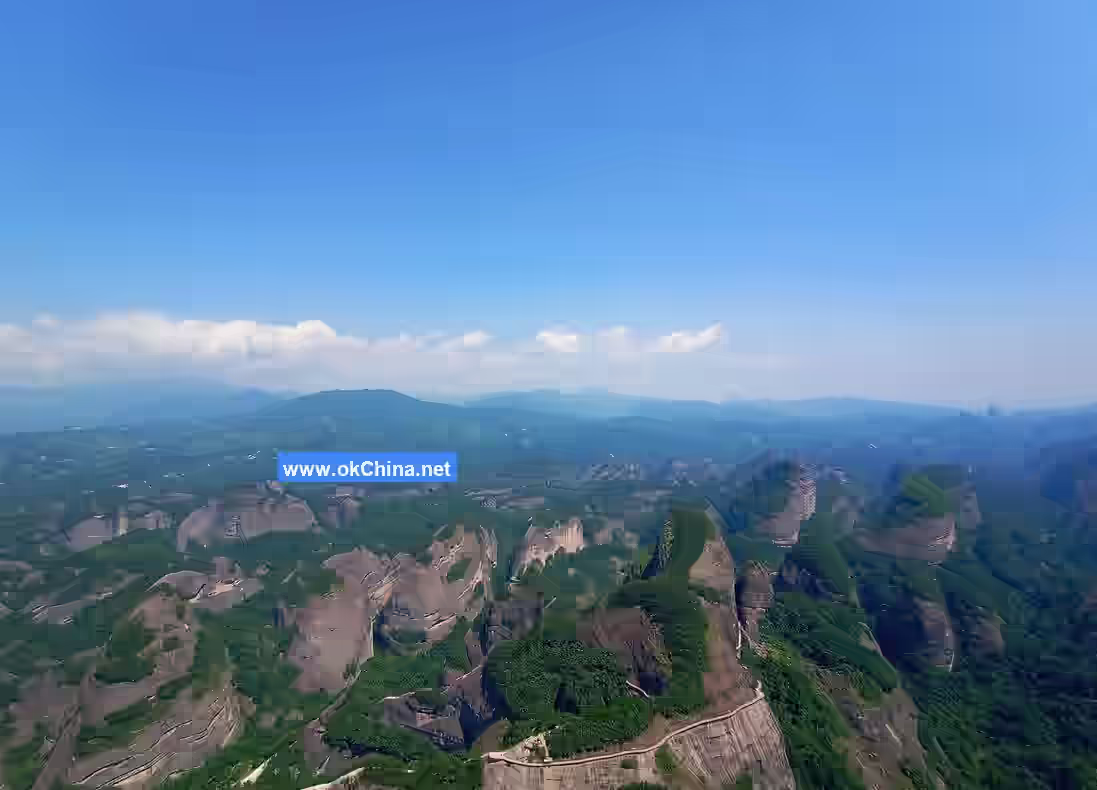
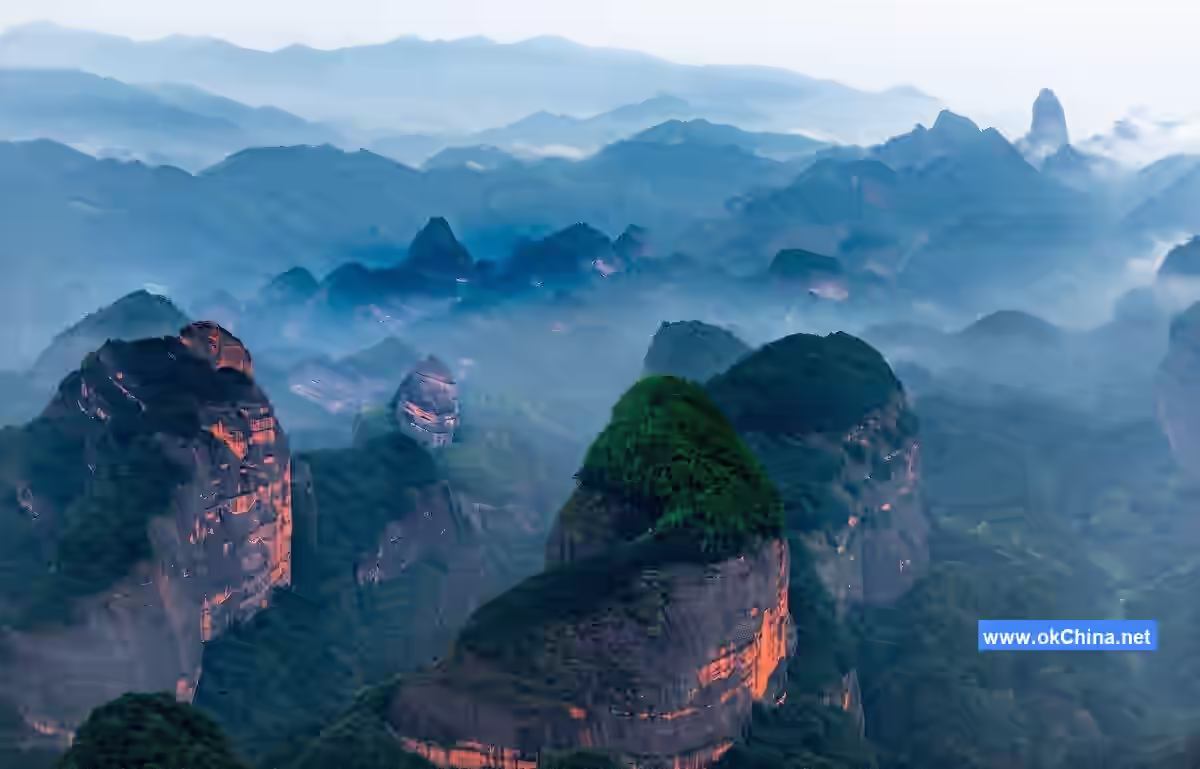
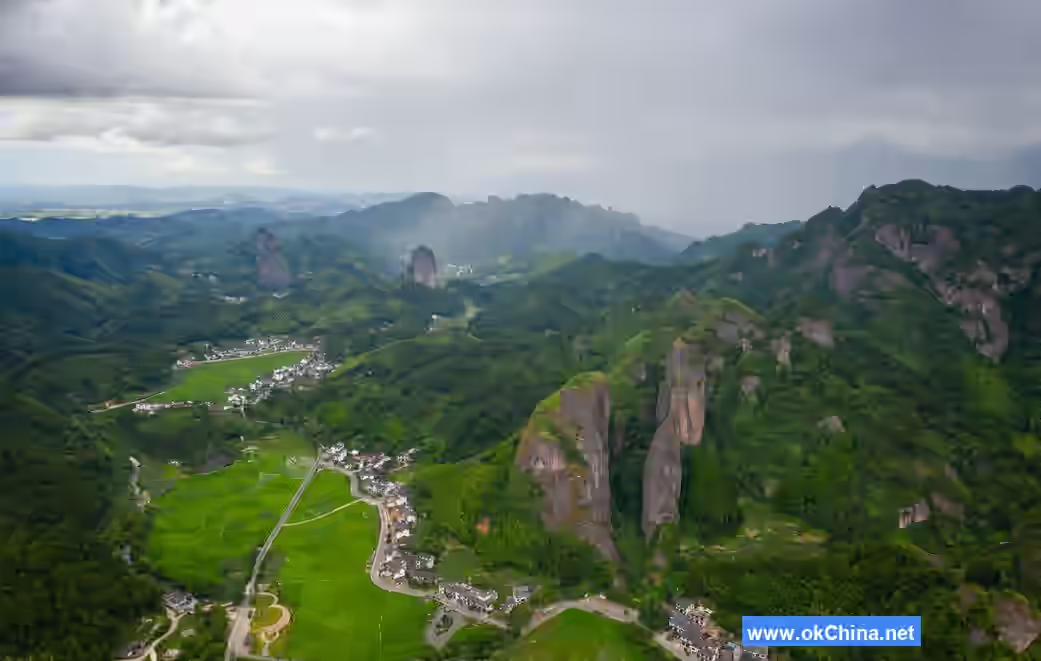
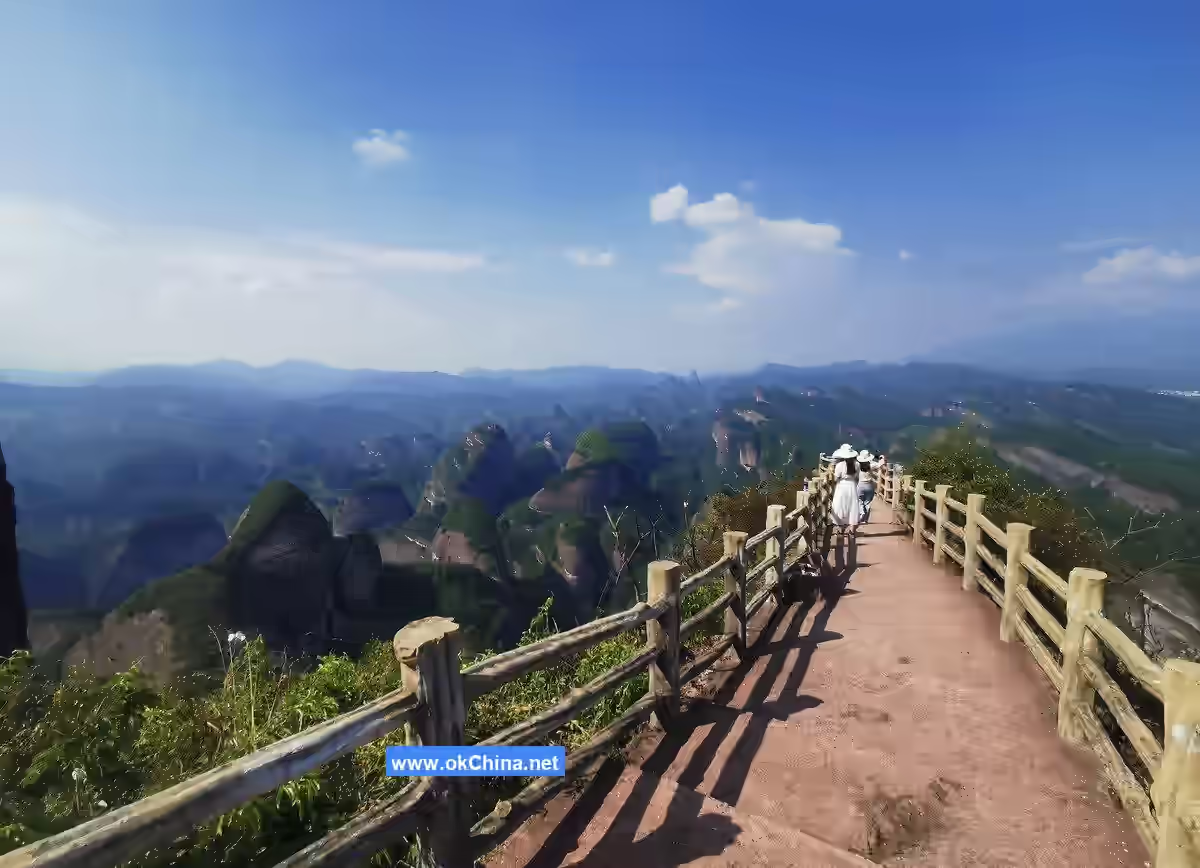
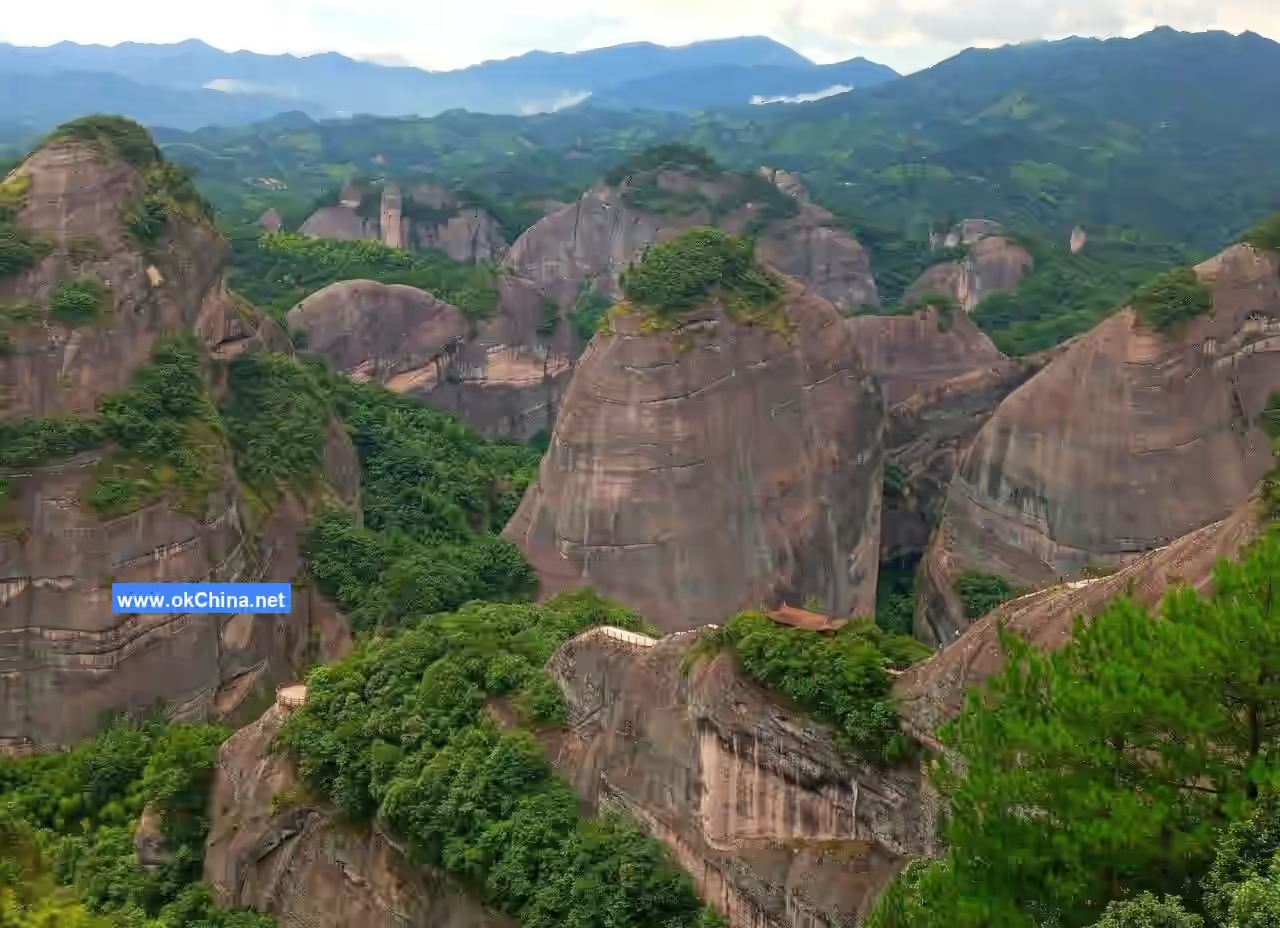
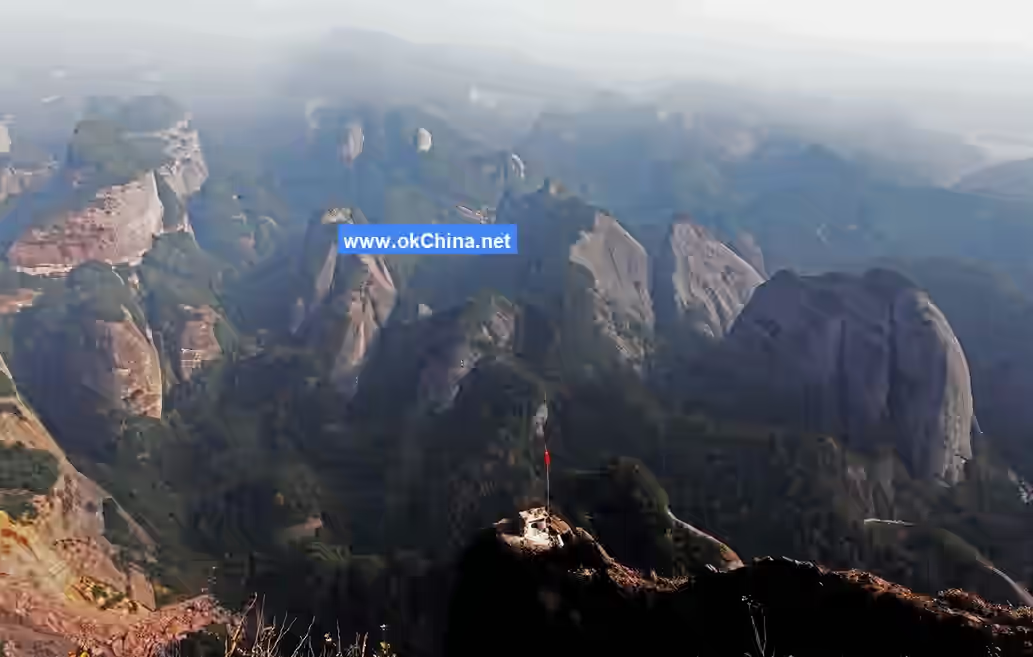
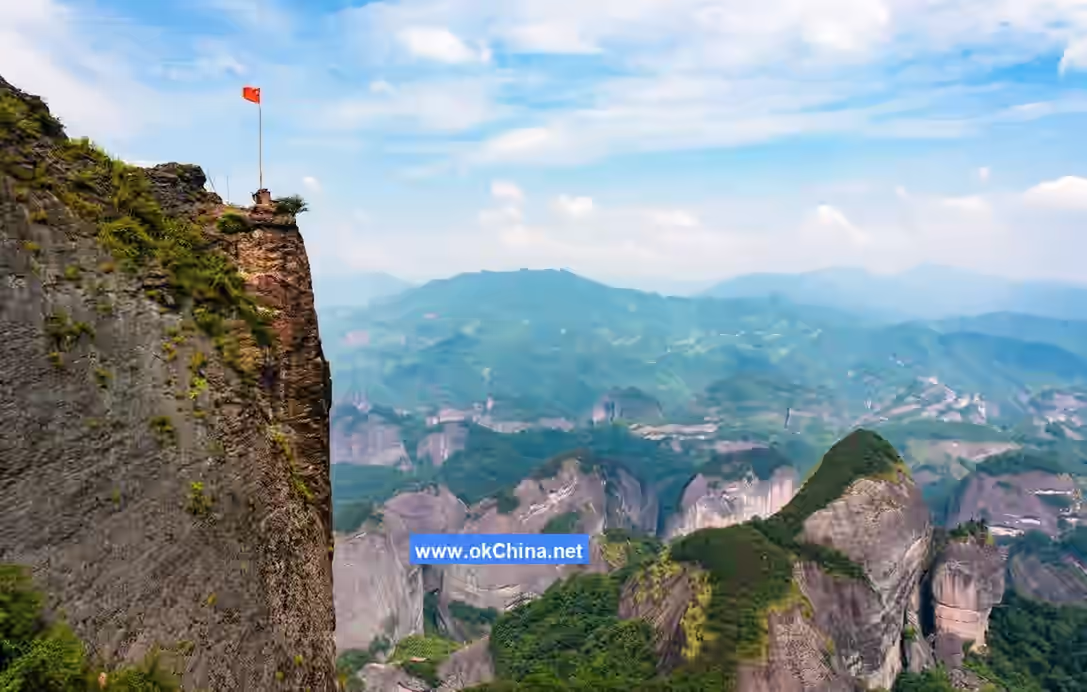
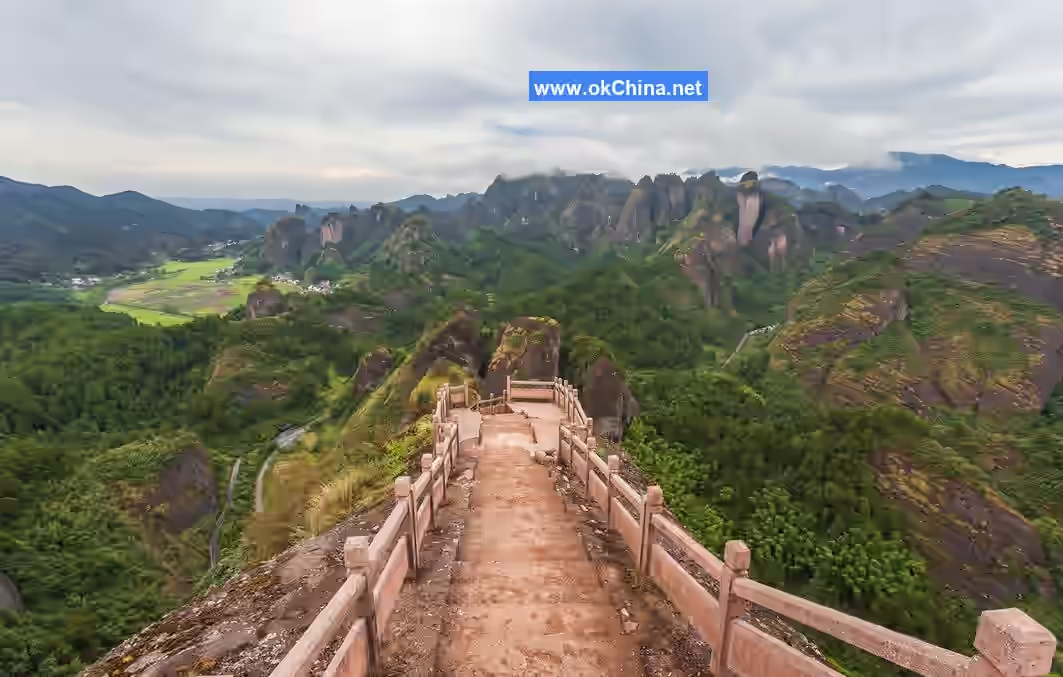
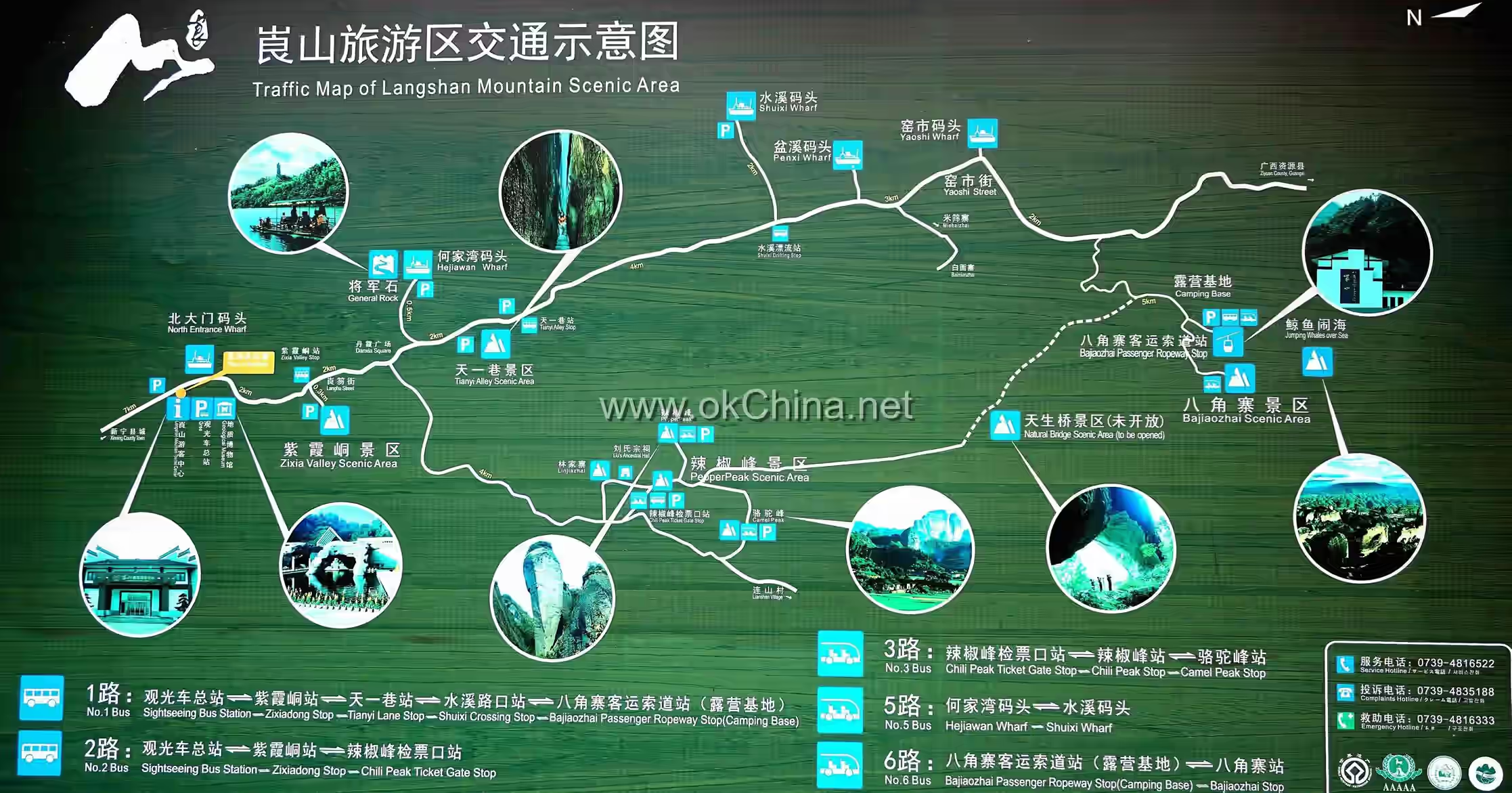
Langshan Scenic Area is a rare large-scale Danxia landform scenic area in China and even the world, comprising six major scenic zones: Bajiaozhai, Chilli Peak, Tianyi Lane, Fuyi River, Zixia Dong, and Natural Bridge. The Langshan landform is diverse, characterized by mature Danxia peak cluster and peak forest landscapes, integrating height, steepness, depth, and length, and combining grandeur, wonder, danger, seclusion, and beauty. It features magnificent mesa fortresses, towering stone pillars and walls, steep red cliffs and Danxia precipices, narrow and winding stone lanes and troughs, lifelike figurative landscapes, and the crystal-clear, beautiful Fuyi River, all of which are deeply moving and captivating. It is a destination for tourism, leisure vacations, rock climbing adventures, and scientific research. Representing the highest richness and quality among China's Danxia scenic areas, it is praised by geological experts as the "Soul of Danxia, National Treasure."
2. Geographical Environment
2.1 Location and Region
Langshan Scenic Area is located in Langshan Town, Xinning County, Shaoyang City, Hunan Province. It borders Dong'an County to the east, Chengbu Miao Autonomous County to the west, is 11 kilometers south of Xinning County town to the north, and adjoins Quanzhou County and Ziyuan County of Guangxi Zhuang Autonomous Region to the south. Xinning County, where Langshan is situated, lies between 110°18′~110°28′ east longitude and 26°15′~26°55′ north latitude.
2.2 Topography and Landforms
The main characteristic of Langshan Scenic Area's landform is Danxia and Danxia-Karst mixed landforms.
2.3 Climate Features
Langshan Scenic Area has a subtropical monsoon humid climate. The average annual rainfall is 1450 mm, with 45% of the annual rainfall occurring from April to June. The extreme maximum temperature is 37.2°C, and the extreme minimum temperature is -6.9°C, exhibiting typical southern mountain climate characteristics. Approximately 400 million years ago, the area where Langshan is located was a vast ocean. Later, magnificent orogenic movements lifted it from the deep sea to form land. However, the sea soon returned, and Langshan, along with the "Xiang-Gui Marine Basin" area including Guilin and Changsha, submerged beneath the sea twice. After dozens of subsequent crustal movements, Langshan alternately appeared and disappeared, formed and vanished. About 100 million years ago, intense orogenic movements lifted Langshan from the deep sea again. Located in a subtropical humid climate zone with abundant rainfall, well-developed surface runoff, and erosion by flowing water along with induced gravitational processes, Langshan eventually formed the typical Danxia landform seen today.
3. Main Attractions
3.1 Bajiaozhai Scenic Zone
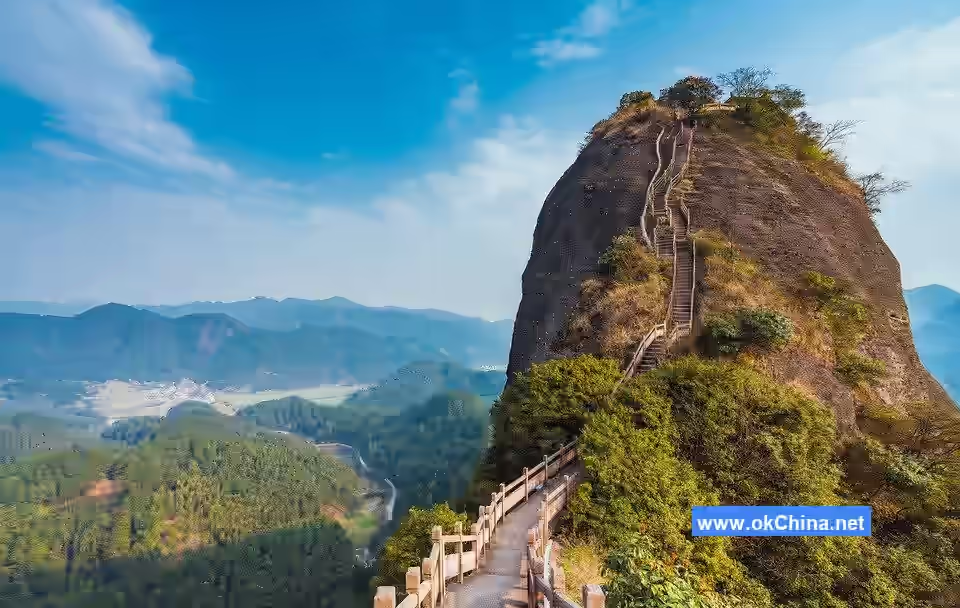
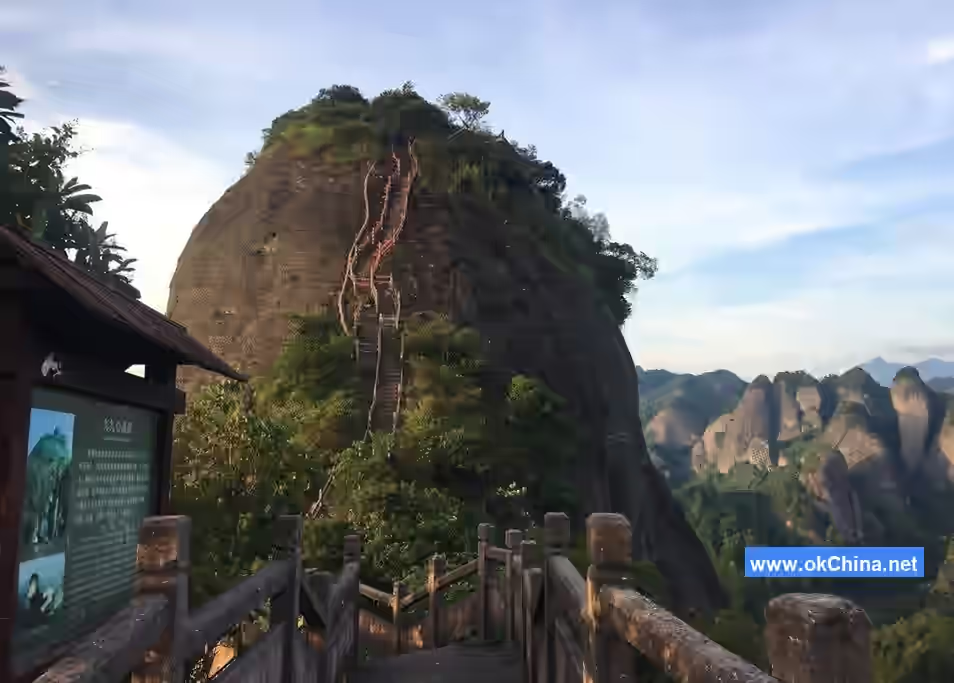
Bajiaozhai, also known as Yuntai Mountain, has a main peak elevation of 814 meters. It is named for the eight upturned corners of its main peak. The Danxia landform here covers over 40 square kilometers, with a developmental richness and quality rare in the world, praised by experts as the "Soul of Danxia" and "first-class quality." Its mountain scenery integrates the "grandeur of Mount Tai, the steepness of Mount Hua, and the elegance of Mount Emei." The Eye Stone within the scenic zone is entirely a masterpiece of nature, vivid and remarkably lifelike.
3.2 Chilli Peak Scenic Zone
The Chilli Peak Scenic Zone is the earliest developed area in Langshan, featuring main attractions such as Chilli Peak, Camel Peak, Linjiazhai, Egongzhai, Candle Peak, Yixiantian, and Dragon's Mouth Facing the Sun.
The summit of Linjiazhai is 153.4 meters high. The stone lane "Yixiantian" (A Thread of Sky) in the middle of the stronghold is 60 meters long, 40 meters high, with the narrowest point only 0.5 meters wide.
Camel Peak is composed of four stone peaks forming the head, body, spine, and tail, arranged in picturesque disorder and extremely lifelike. The camel's body is 273 meters long and 187.7 meters high.
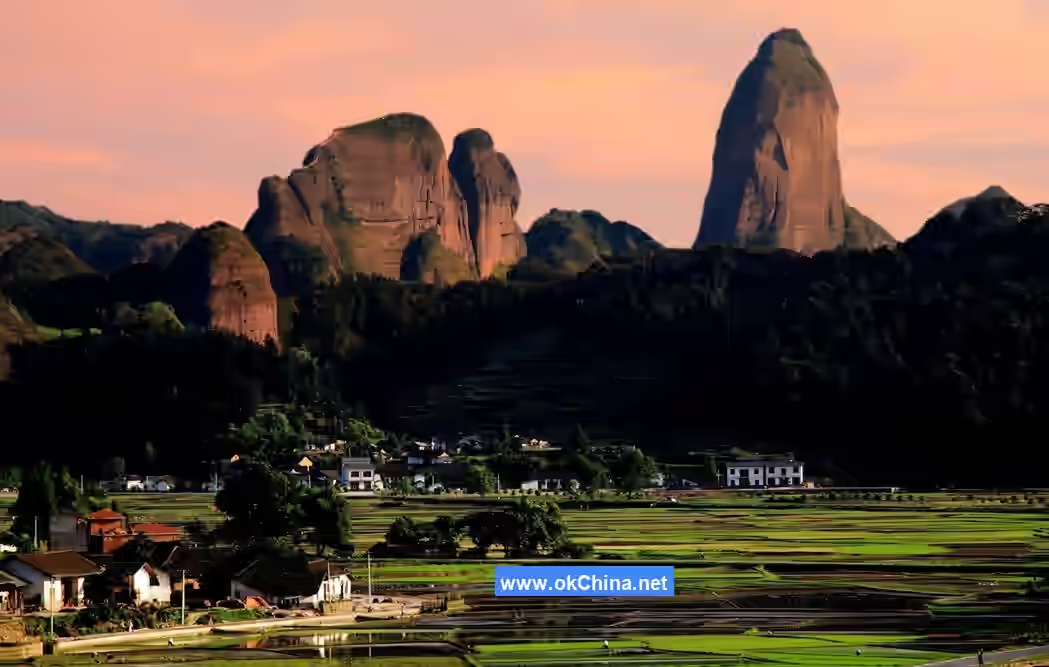
Opposite Camel Peak stands Chilli Peak, located on Foding Mountain. It rises abruptly from the ground, towering vertically, overlooking all peaks with an absolute height of 180 meters. It is larger at the top and smaller at the base, with a circumference of about 100 meters at the summit and over 40 meters at the foot. It appears bright red, resembling an enormous red chili pepper from afar, commonly known as "Immortal Pepper Drilling into the Ground."
Beside Camel Peak is "Candle Peak," shaped like a red candle piercing the clouds. On the southwest side, it stands 217.8 meters high with a circumference of 400 meters. With a pointed top and round body, surrounded by steep cliffs, it is tall and majestic, a rare and peculiar landscape in Danxia landforms.
At the foot of the steep cliff east of Candle Peak, there is a huge natural crevice, 100 meters long, 50 meters deep, and 0.4~1.8 meters wide. The upper and lower rocks are as smooth as if cut by a knife, resembling a giant dragon opening its mouth tilted at 40 degrees towards the east. Every day around 11 a.m., when sunlight shines directly from the dragon's mouth into the crevice bottom, it creates the spectacular scene of "Dragon's Mouth Facing the Sun," where the dragon's mouth seems to swallow a pearl, producing a colorful display.
3.3 Tianyi Lane Scenic Zone
Originally named Ox Nose Stronghold Scenic Zone due to many pairs of ox-nose-shaped stone holes on its east side, this area was renamed Tianyi Lane Scenic Zone in 2004. "Lane" is the characteristic here, represented by the "First Lane Under Heaven" and eight other large and small "Yixiantian" (thread-of-sky) formations, forming a typical Danxia landform Yixiantian cluster. Main attractions include Tianyi Lane, Yuxian Lane, Horse Hoof Lane, Yuxian Bridge, Immortal Bridge, Hundred Zhang Cliff, Moonlight Rock, etc.
The First Lane Under Heaven is known as Langshan's premier wonder. It is 238.8 meters long, with stone walls on both sides 80~120 meters high, the widest point being 0.8 meters and the narrowest only 0.33 meters. At the southeast corner of Tianyi Lane is the Yijunzhai (Righteous Army Stronghold) where Shi Dakai, the Wing King of the Taiping Heavenly Kingdom, once stationed his troops. The front and rear stronghold gates and walls are still faintly discernible today.
3.4 Natural Bridge Scenic Zone
The Natural Bridge in this zone has a pier length of 64 meters, width of 14 meters, height of 20 meters, and a deck thickness of 5 meters. The entire bridge is arched, spanning across the sky with magnificent momentum, acclaimed as the Number One Bridge in Asia. The Natural Bridge Scenic Zone borders Guangxi and is one of the most distinctive newly discovered areas in Langshan in recent years. The area features mountains encircling waters, rows of peaks, confronting red cliffs, and countless mysterious lanes, covering approximately 50 square kilometers of large-scale Danxia red cliff group landscapes.
3.5 Fuyi River Scenic Zone
The Fuyi River originates from Mao'er Mountain in Guangxi and is the mother river of the Langshan people. Its waters run through the Langshan Scenic Area, providing unique conditions for both mountain and water activities. The Fuyi River is crystal clear and as calm as a mirror, with a width of about 100 meters at its broadest and over 70 meters at its narrowest. The strange peaks and rocks on both banks are reflected in the water under the blue sky; the sandy beaches on both sides have pure white sand, with continuous willows and competing beautiful grasses; boats dot the river, bamboo flutes sound, creating a poetic and picturesque scene. Taking a bamboo raft tour along the Fuyi River, one passes numerous attractions including Shadowless Islet, Long Dyke Willow Bank, Langshan Tiger Roaring at the Sky, Jade Stone Lane, Turtle Rock, Warship Rock, Woodpecker Rock, Grandmother Rock, Pen Rack Mountain, Ancient Dyke, and Lotus Pond Reflecting the Moon.
3.6 Zixia Dong Scenic Zone
The Zixia Dong Scenic Zone includes over twenty attractions such as Zixia Palace, Ten Thousand Scenery Trough, Ziwei Peak, Red Flower Red Cliff, Black Cloud Stronghold, Liu Guangcai's Tomb, Zixia Pavilion, Elephant Trunk Stone, and Red Tile Mountain. The environment here is beautiful, with lush vegetation, peculiar mountain rocks, and winding paths. It is characterized by deep caves and forests, mountain stream waterfalls, figurative rocks, and religious temples.
Zixia Palace was first built during the Jiajing period of the Ming Dynasty and was once a Buddhist sanctuary in southwestern Hunan, with morning bells and evening drums, and curling incense smoke. The reconstructed temple in antique style houses a 6-meter-high statue of Guanyin (Goddess of Mercy), second only to the Buddha statue at Nanyue, making it the second largest Buddha statue in Hunan and one of the seventy Buddhist sacred sites in China. The General's Tomb is the burial site of Liu Guangcai, a Guanglu Dafu and Jianwei General of the late Qing Dynasty. Liu Guangcai, styled Huaxuan, served as the Provincial Military Commander of Guangxi, Guizhou, Shanghai, and Zhejiang during the Guangxu era, and was awarded the titles Guanglu Dafu and Jianwei General. The tomb covers an area of 500 square meters in a semicircular shape, surrounded by towering ancient trees. The tombstone is inscribed with his life story. The tomb enclosure carvings are exquisitely crafted, with stone sheep, stone horses, and stone figures vividly lifelike.
4. History and Culture
4.1 Origin of the Name
"Lang" is pronounced "làng." Legend has it that when Emperor Shun toured south to Langshan, he was amazed by its beauty and lingered, unwilling to leave. He said, "This is a fine mountain (Shan zhi liang ye)," thus bestowing the character "崀" (Lang). Hence, the mountain got its name Langshan.
4.2 Cultural Relics and Historic Sites
4.2.1 Zixia Palace
Zixia Palace was first built during the Jiajing period of the Ming Dynasty and was once a Buddhist sanctuary in southwestern Hunan. The reconstructed temple in antique style houses a 6-meter-high statue of Guanyin, second only to the Buddha statue at Nanyue, making it the second largest Buddha statue in Hunan and one of the seventy Buddhist sacred sites in China.
4.2.2 General's Tomb
The General's Tomb is the burial site of Liu Guangcai, a Guanglu Dafu and Jianwei General of the late Qing Dynasty. Liu Guangcai, styled Huaxuan, served as the Provincial Military Commander of Guangxi, Guizhou, Shanghai, and Zhejiang during the Guangxu era, and was awarded the titles Guanglu Dafu and Jianwei General. The tomb covers an area of 500 square meters in a semicircular shape, surrounded by towering ancient trees. The tombstone is inscribed with his life story. The tomb enclosure carvings are exquisitely crafted, with stone sheep, stone horses, and stone figures vividly lifelike. In 2003, the tomb was designated as a municipal-level cultural relics protection unit in Shaoyang City.
4.3 Intangible Cultural Heritage
4.3.1 Langshan Dong Songs
Langshan Dong Songs belong to the category of traditional music and were listed in the fourth batch of provincial-level intangible cultural heritage representative projects in 2018. During the Hongwu period of the Ming Dynasty, Yao ancestors migrated from Chengbu to Langshan, Malin, Huangjin, and other places in Xinning. Over long-term production labor and life, they gradually formed and developed a unique folk song system, reflecting the thoughts, feelings, ideals, and aspirations of the Yao people from various aspects and angles. The main forms include mountain songs, work chants, field songs, ditties, and custom songs. Particularly notable is the series of "Liuliu Songs" using "liuliu" as filler words, and derived mountain songs such as "Bangbang Song," "Caocao Song," "Papapa Song," and "The Moon Comes Out Bright and Shining." These songs are either high-pitched and sonorous with long drawn-out tunes, or low in volume, soft and beautiful, or structurally regular with standardized rhythms.
4.4 Legends and Stories#### 4.4.1 A Day, A Millennium
At the foot of Bajiao Village lived a young man surnamed Yang. He made a living by cutting firewood every day, while his wife stayed home weaving cloth and managing household chores. One day, the young man surnamed Yang went up the mountain to cut firewood and arrived at the summit of Bajiao Village, where he saw two white-bearded old men playing chess. Curious, he stood by and watched. After several rounds of chess, the two old men prepared to leave and noticed the young man who had been watching. They said to him, "Young man, it's time to go back. If you don't return soon, your family will grow impatient." Only then did the young man suddenly come to his senses.
In the mountains, seven days pass, but in the mortal world, a millennium has gone by. When the young man turned to look, the carrying pole and wooden handle of his axe had long since rotted away, and the axe itself was covered in rust. In a panic, he hurried home, only to find the village completely changed. He recognized no one in the village, and no one recognized him either. When he gave his name and asked about his home, the villagers said they had heard from the elders that a very long time ago, a family had lived there. One day, the young man of that family went up the mountain to cut firewood and never returned, eventually disappearing. His wife never remarried, waiting for her husband until she grew old, but he never came back. The young man hastily told everyone his story.
4.4.2 Immortals Playing Chess
Every year on the third day of the third lunar month, the birthday of the Queen Mother of the West, immortals from all directions gather to celebrate her longevity. The Eight Immortals also regularly attend the Queen Mother's Peach Banquet to offer their congratulations, which is what I know as the "Eight Immortals Celebrating Longevity." After the Star of Fortune, the Star of Longevity, and Guanyin visited Bajiao Village, the Eight Immortals followed the other immortals to Bajiao Village after the Peach Banquet. Seeing that the scenery of Bajiao Village was indeed beautiful and lived up to its reputation, the immortals were thrilled and overjoyed. It was the first time the Eight Immortals had visited Bajiao Village. They found the mountain quite distinctive, with its summit composed of several peaks, so each of them sat on a peak, savoring celestial peaches while admiring the scenery of Lang Mountain. At this moment, He Xiangu, the only female among the Eight Immortals, grew bored sitting on the peak and began counting the peaks. She counted over and over, finding that Bajiao Village had seven peaks. She then asked the other Eight Immortals how many peaks the mountain actually had. Each of the Eight Immortals sitting on the peaks counted and said the mountain had seven peaks. However, the Eight Immortals were puzzled: each of them had counted and found only seven peaks, yet there were clearly eight of them. Why was no one left out? The Eight Immortals couldn't figure it out and began arguing endlessly on the mountaintop, each giving their own reasons.
Unable to resolve their dispute, the Eight Immortals sought the advice of Guanyin Bodhisattva to judge the matter. Guanyin Bodhisattva told the Eight Immortals that the mountain indeed had eight peaks and asked them to count again. Only then did the Eight Immortals realize that when counting the peaks, each of them had forgotten to count the peak they were sitting on. When Guanyin explained the reason, the Eight Immortals were filled with admiration. Upon learning that the mountain was formed from the eight corners of Laozi's alchemical furnace, and because the traditional Chinese medicine "bajiao" (star anise) also has eight corners, the mountain likewise had eight corners, the Eight Immortals said, "To prevent future generations from being confused about how many corners this mountain has, let's simply name it 'Bajiao Village'." From then on, people also began calling this mountain Bajiao Village.
5. Value and Significance
Lang Mountain is a rare large-scale Danxia landform scenic area in China and even the world. It is characterized by typical mature Danxia peak cluster and peak forest landforms, integrating height, steepness, depth, and length, and combining grandeur, wonder, danger, seclusion, and beauty. It is a destination for tourism, leisure vacations, rock climbing adventures, and scientific research. Lang Mountain is the most representative and beautiful Danxia scenic area in China in terms of richness and quality, praised by geological experts as the "Soul of Danxia, National Treasure." Lang Mountain showcases a typical and unique developmental and evolutionary mechanism of Danxia landforms. It is an outstanding example of mature, intensive Danxia peak clusters and peak forests globally. The red-bed rocks and layered Danxia landform structures bear witness to crustal movements and regional climate changes.
Comments
Post a Comment