
Zhenjiang Jinshan · Jiaoshan · Beigushan Scenic Area
1. Introduction
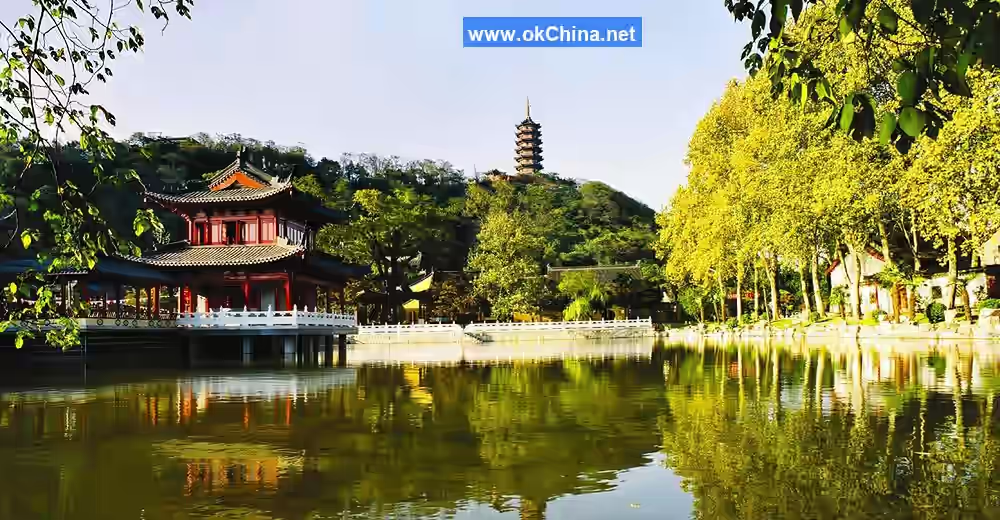
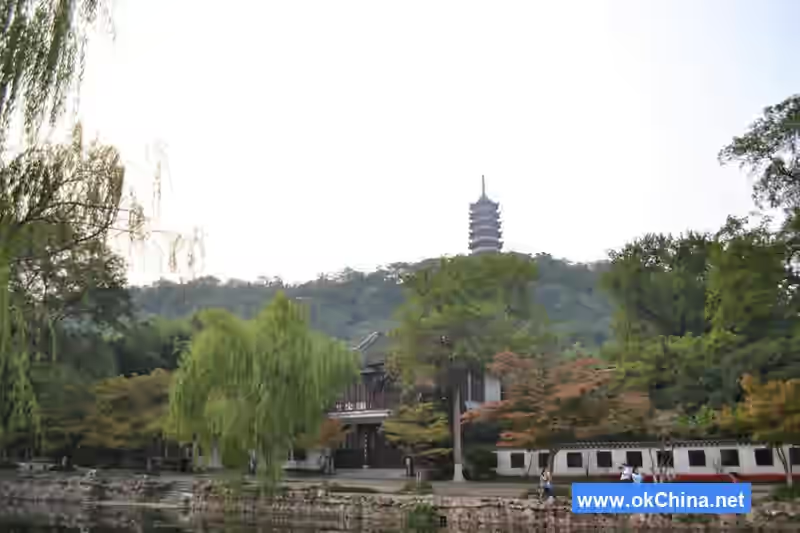
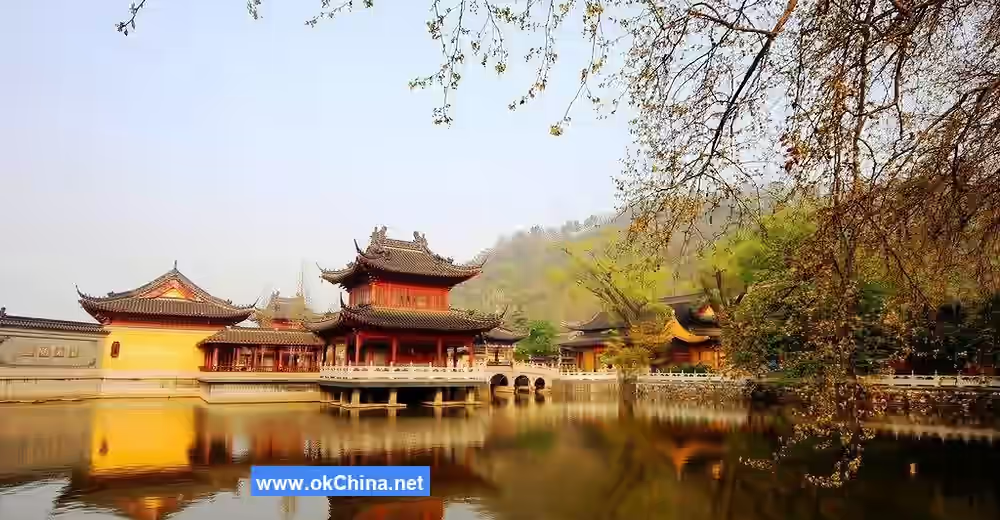
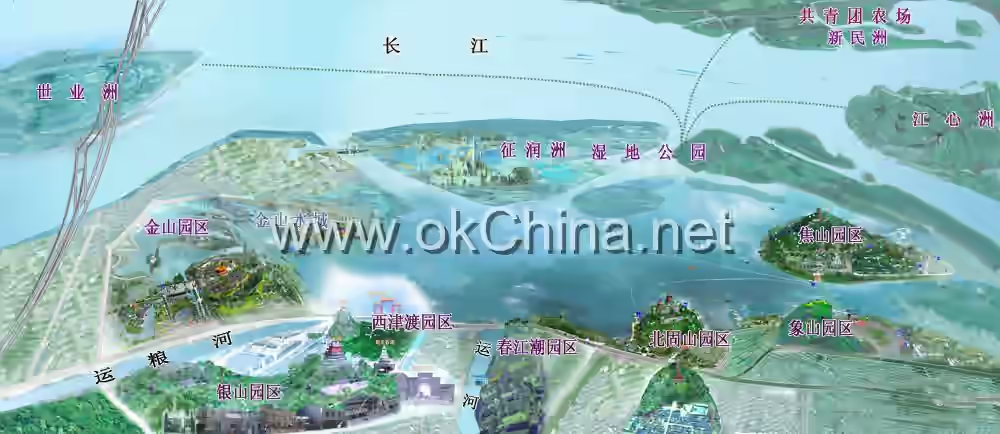
The Zhenjiang Jinshan · Jiaoshan · Beigushan Scenic Area is located in the southwestern part of Jiangsu Province, on the southern bank of the lower reaches of the Yangtze River. It boasts a unique landscape of "real mountains and real water." It is a three-mountain scenic area composed of the Jinshan Scenic Area, the Jiaoshan Scenic Area, and the Beigushan Scenic Area, each with distinct scenery.
2. Geographical Environment
2.1 Jinshan
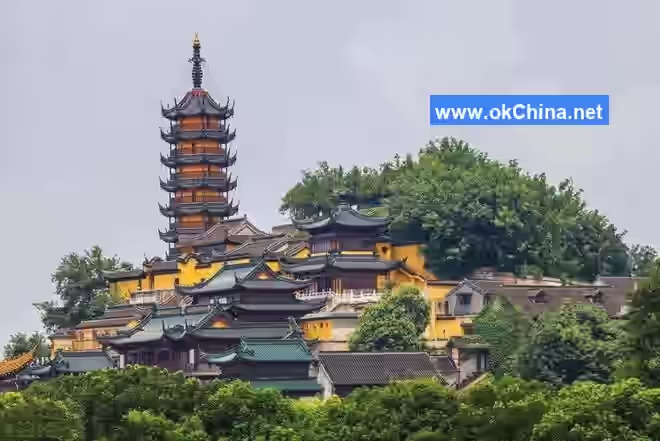
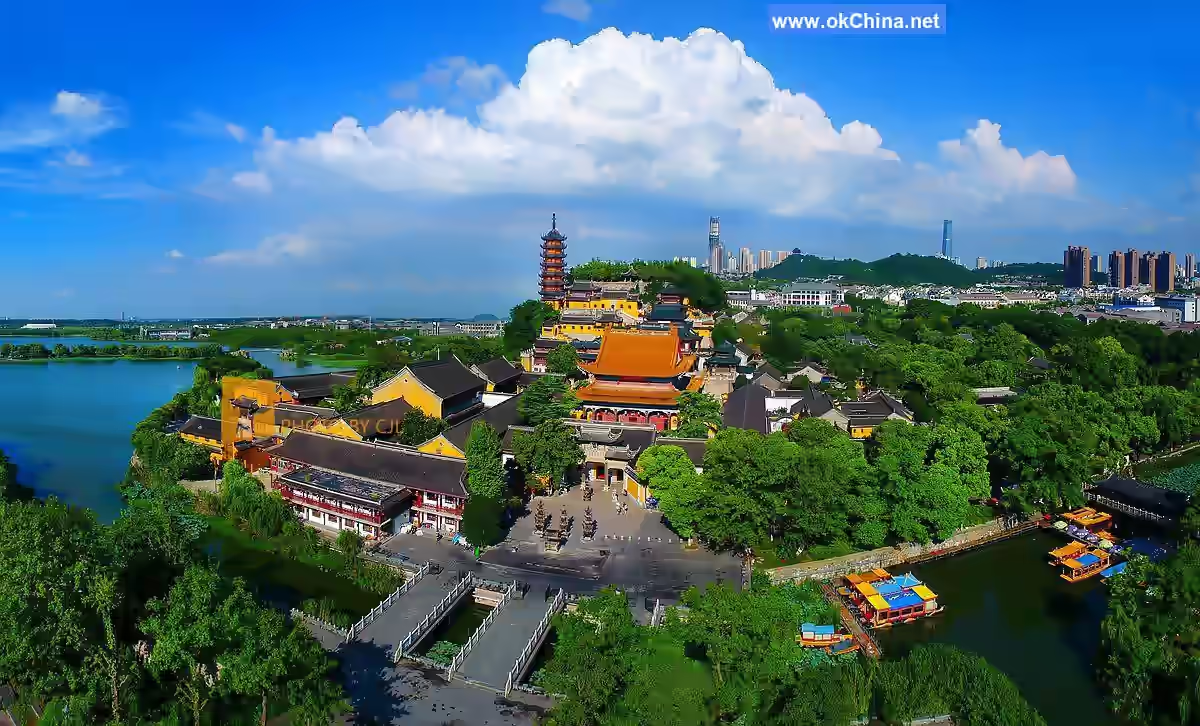
Jinshan is situated in the northwest of Zhenjiang City, with an altitude of 43.7 meters and covers an area of 41.6 hectares. Jinshan features secluded and exquisite scenery with a naturally advantageous terrain, and has been one of China's famous tourist destinations since ancient times. In ancient times, Jinshan was originally an island standing in the middle of the Yangtze River, praised as "a beautiful lotus flower in the heart of the river." Zhang Hu of the Tang Dynasty described it as "the tree shadows are seen in the midstream, the bell sounds are heard on both banks"; Shen Kuo of the Northern Song Dynasty praised it: "The towers and pavilions on both banks are connected by water, the north and south of the river are like a mirror reflecting the sky." Originally an island in the Yangtze River, due to the "great river flowing east," it connected with the mainland around the end of the Guangxu reign of the Qing Dynasty (1903).
2.2 Jiaoshan
Jiaoshan is located in the Yangtze River, 4.5 kilometers northeast of the city center (Dashikou). It has an altitude of 70.7 meters and a circumference of 2,000 meters. Because the mountain is lush and green, resembling a piece of jade floating on the river, it is also known as "Floating Jade Mountain." It is a national key scenic area and a national AAAAA tourist attraction, located northeast of Zhenjiang, a famous historical and cultural city in China. It is an island surrounded by water in the vast Yangtze River, accessible for sightseeing and exploration.
2.3 Beigushan
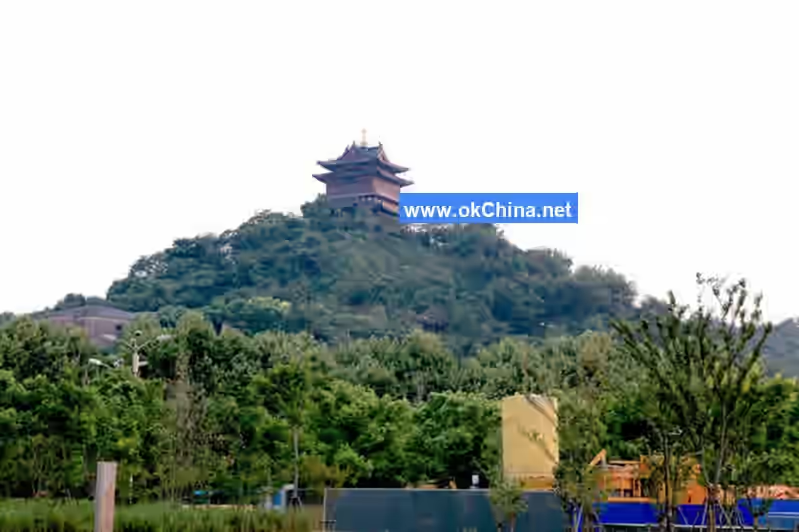
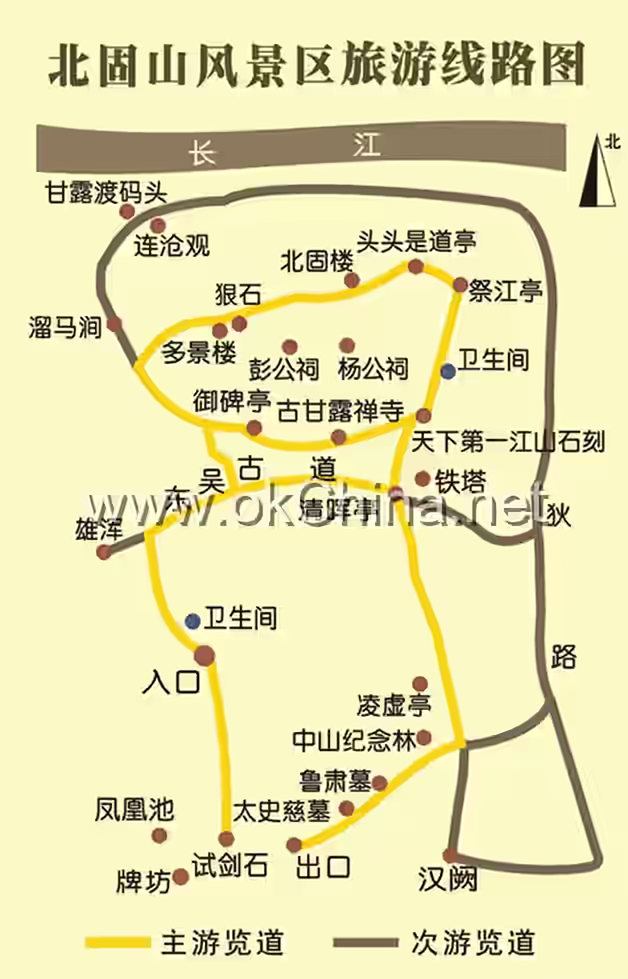
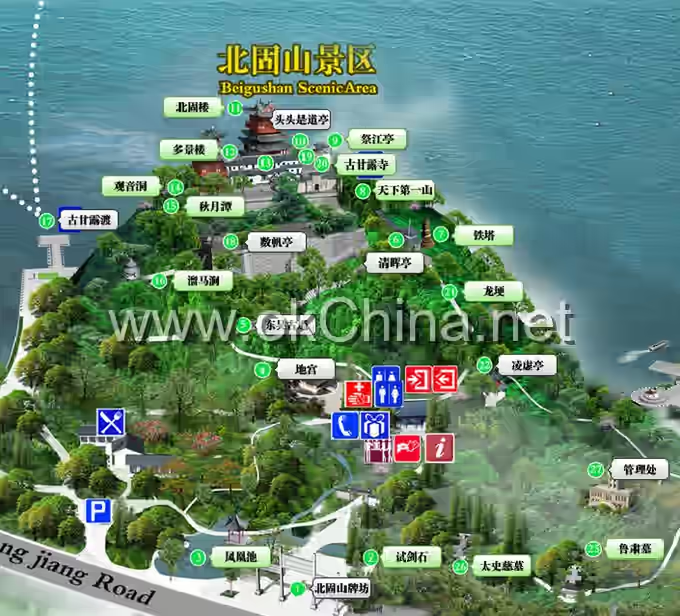
Beigushan is located in Zhenjiang, Jiangsu. Because it faces the Yangtze River to the north and has a strategically solid and dangerous terrain, it is named Beigu (Northern Fortress). It is 55.2 meters high and about 200 meters long. With steep cliffs and a strategically solid terrain, Emperor Wu of the Liang Dynasty during the Southern Dynasties inscribed "The First Landscape Under Heaven" to praise its magnificent scenery. Ganlu Temple, majestically situated atop the mountain, was built during the Ganlu era of the Eastern Wu Kingdom and holds many legends and relics related to the Three Kingdoms period. Visitors here naturally follow the story of Liu Bei's marriage proposal as a clue to search for related historical sites and legends. Beigushan forms a pincer position with Jinshan and Jiaoshan; the three mountains stand like a tripod. In terms of controlling Chu and overlooking Wu, Beigushan appears even more majestic and strategically important. During the Ming Dynasty, the local magistrate cut through the front and middle peaks to defend the city against Japanese pirates.
3. Main Attractions
3.1 Jinshan
3.1.1 Jiangtian Temple (Jinshan Temple)
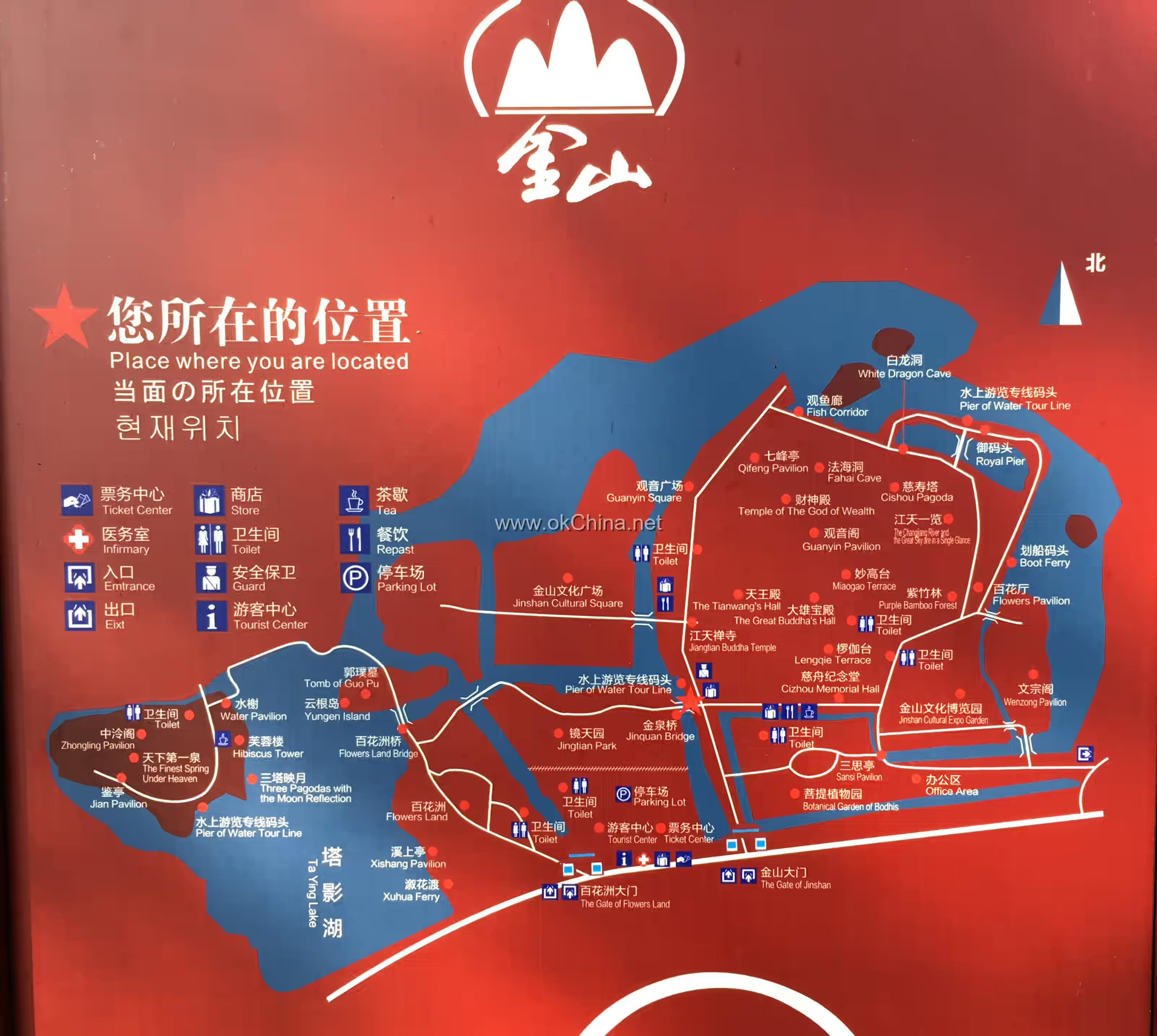
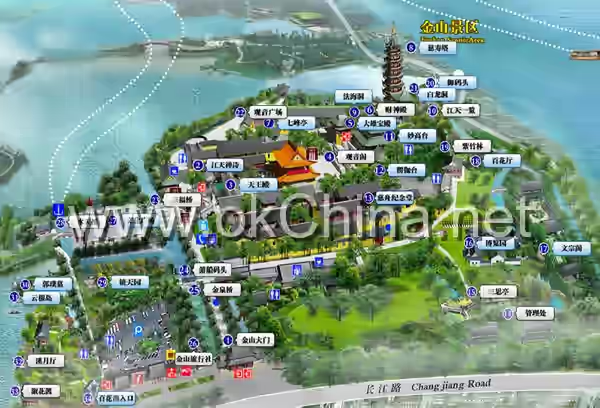
This is the most famous attraction in Jinshan, originally built during the Eastern Jin Dynasty. It is one of the four great Buddhist mountains in China. The temple complex includes ancient buildings such as the Heavenly King Hall, the Mahavira Hall, and the Scripture Depository, as well as landmark structures like the Cishou Pagoda.
3.1.2 Cishou Pagoda
Built over 1,400 years ago, standing 30 meters tall, it is an important landmark of Jinshan. Climbing the pagoda offers distant views of the cityscape and surrounding mountain peaks.
3.1.3 Zhongling Spring
Known as the "First Spring Under Heaven," it was already famous during the Tang Dynasty. The spring water is clear to the bottom, making it a must-visit spot for tourists.
3.1.4 Bailong Cave and Fahai Cave
These two caves are full of mystery and are associated with the story of "Flooding Jinshan Temple" from the "Legend of the White Snake."
3.1.5 Qifeng Pavilion (also known as Jin'ao Pavilion)
Commemorating Yue Fei and Elder Daoyue of Jinshan Temple, it is one of the best places to view the panoramic scenery of Jinshan.
3.1.6 Yudai Bridge
Legend says it was built after Su Dongpo lost a jade belt in a bet with the abbot of Jinshan Temple, Foyin.
3.1.7 Wenzong Pavilion
Housing the "Complete Library of the Four Branches of Literature," it is one of China's seven major ancient libraries.
3.1.8 Baihua Zhou (Hundred Flowers Islet)
This was once a place where the Tea Sage Lu Yu tasted tea, and is also a good spot for visitors to relax.
3.1.9 Liuyun Pavilion
It is one of the best vantage points for overlooking the beautiful scenery of the entire Zhenjiang city.
3.2 Jiaoshan
3.2.1 Wanfo Pagoda (Ten Thousand Buddha Pagoda)
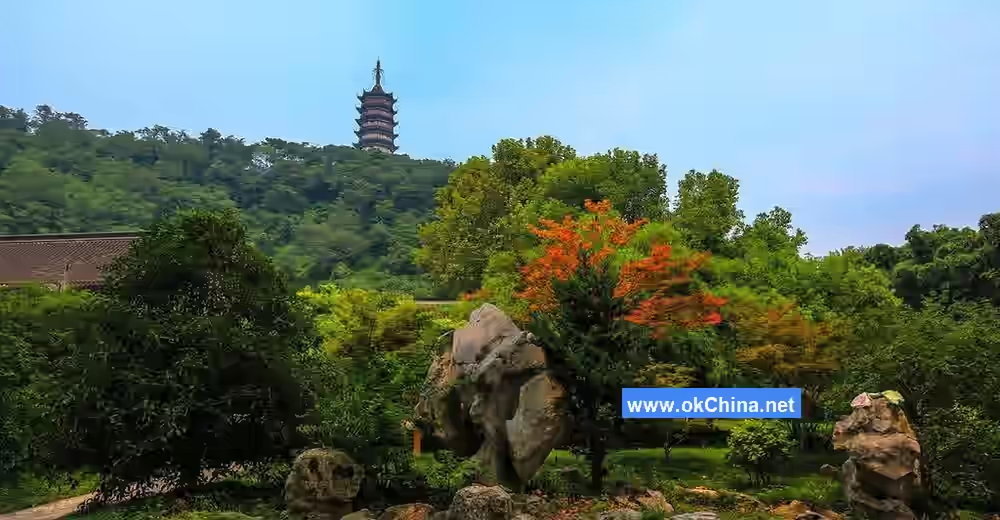
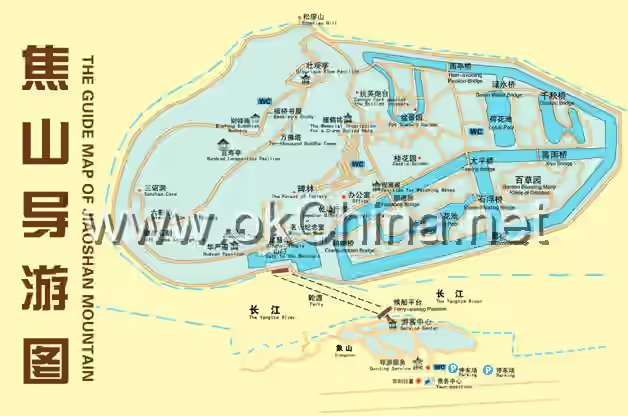
Located at the summit of Jiaoshan, Wanfo Pagoda is a Ming-Qing style antique imitation pagoda with Jiangnan characteristics. The pagoda body is 42 meters high, with an altitude of 70.4 meters, and a floor area of 583 square meters. The pagoda has seven stories and eight sides, with a heavenly palace above and an earthly palace below. Inside, there are two sets of stairs for separate ascent and descent, and external railings. Each level has interconnected corridors with views on all eight sides. Looking out from the railings, the river and sky scenery is fully captured. At night, eight beams of light radiate into the sky, guiding passing boats.
3.2.2 Banqiao Study
Biefeng Nunnery is located on Biefeng Peak in the shade of Jiaoshan's twin peaks. It is a square courtyard surrounded by bamboo groves. The Banqiao Study within the nunnery is where Zheng Banqiao, one of the Eight Eccentrics of Yangzhou during the Qing Dynasty's Yongzheng reign, studied. Zheng Banqiao diligently studied and practiced calligraphy and painting here.
3.2.3 Jiaoshan Temporary Imperial Palace (Xinggong)
The Jiaoshan Temporary Imperial Palace was the place where Emperor Qianlong of the Qing Dynasty stayed most frequently during his southern tours. Originally, it consisted of three parts: the Jiaoshan Temporary Palace, the Eastern Temporary Palace, and the Upper Temporary Palace, which were later destroyed. The current Jiaoshan Temporary Palace was rebuilt on the sites of the Ziran Nunnery and Wusheng Nunnery. It is a typical small Jiangnan courtyard, featuring structures such as the Boat Pavilion, Beiji Pavilion, Huangye Tower, Plum Blossom Tower, Huachan Mountain Studio, Wenshu Pavilion, Dream Jiaoshan Immortal Lodge, and Guanlan Pavilion.
3.2.4 Guanlan Pavilion (Wave-Viewing Pavilion)
Guanlan Pavilion is a two-story building. Over fifty years ago, no beach had formed in front of the pavilion; outside, waves crashed against the shore, rising and falling, hence its name. The upper and lower floors have large transparent windows on the east, south, and west sides. Viewing the river scenery from the upstairs corridor offers an open vista: nearby flowers and trees are lush, while in the distance, the river tide surges, white clouds drift gracefully, and mountains stand beautifully—truly a marvelous picture.
3.2.5 Jiaoshan Forest of Steles
Baomoxuan, also known as the Jiaoshan Forest of Steles, was originally the site of Ziran Nunnery, Xianglin Nunnery, Yufeng Nunnery, and Haiyun Nunnery. The Forest of Steles houses over 400 stone inscriptions from various dynasties. In terms of quantity, it is second only to the Xi'an Forest of Steles, making it the largest forest of steles in Jiangnan. These inscriptions are embedded in the corridors and pavilions, covering calligraphy, art, historical materials, epitaphs from past dynasties, stone carving art, etc., with extremely rich content.
3.2.6 Inscription for a Buried Crane (Yihe Ming)
Legend has it that one day, the great Eastern Jin calligrapher Wang Xizhi brought two cranes to visit Jiaoshan. Unfortunately, the two cranes died here. The grieving Wang Xizhi wrapped the cranes in yellow silk and buried them on the back mountain of Jiaoshan. He then wrote the famous "Inscription for a Buried Crane" on the cliff to commemorate them. Because of its exquisite calligraphy, it was immediately carved onto the rock of the mountain. The famous Song Dynasty calligrapher Huang Tingjian believed that no large-character calligraphy surpassed the "Inscription for a Buried Crane,"推崇 it as the "ancestor of large-character calligraphy." Cao Shimian considered that "the superb brushwork of Jiaoshan's 'Inscription for a Buried Crane' is the crown of calligraphy."
3.2.7 Crane Garden
Located south of Guanlan Pavilion and surrounded by water on all sides, Crane Garden was built based on the historical legend of Wang Xizhi and the cranes. The garden houses peacocks, doves, cranes, sika deer, etc.
3.2.8 Huayan Pavilion
Huayan Pavilion is located southwest of Dinghui Temple, facing the great river with its back against a steep cliff. It is a two-story waterside building. The name "Huayan" comes from the "Avatamsaka Sutra," metaphorically describing this place as a scenic spot where "a hundred flowers bloom, all-embracing." Originally, the central hall upstairs featured a couplet: "The great river flows east, mountains come from the west," which perfectly complemented the view from the pavilion. It has now been replaced with "A piece of floating jade, ten parts of river scenery." Downstairs is the "Floating Jade Studio" vegetarian restaurant, which is quite distinctive.
3.2.9 Anyin Rock
"Anyin Rock," east of Huayan Pavilion, is a small cave. Embedded in the stone wall at the cave entrance are a stone carving portrait of Su Dongpo and poems praising the Sixteen Scenes of Jiaoshan, showcasing the beauty of Jiaoshan's scenery. The Sixteen Scenes of Jiaoshan are: Pine Shadows at the Mountain Gate, Dinghui's Tide Sound, Tasting Spring by the Withered Tree, Huayan's Moonlight, Xianglin Flower Garden, Haiyun's Treasured Calligraphy, Seeking the Way in Nature, Viewing the Sun from the Perilous Tower, Biefeng Orchard, Seeking Immortals in the Cave, Stone Chamber Hiding the Inscription, Nunnery Courtyard with Locust Shade.
3.2.10 Sanzhao Cave (Three Edicts Cave)
Sanzhao Cave, also known as Jiao Gong Cave, is located beside the path leading up the mountain on the western foothills of Jiaoshan. Originally, Jiaoshan had a Jiao Gong Shrine with a statue of Jiao Gong. In the tenth year of the Shunzhi reign of the Qing Dynasty (1653), Monk Xing Shang moved the statue of Jiao Gong into Sanzhao Cave, and the Jiao Gong Shrine was converted into a Sangharama Hall. It later collapsed and was not repaired. Sanzhao Cave was renovated during the Mid-Autumn Festival in the 24th year of the Guangxu reign of the Qing Dynasty (1898) by Jiao Guang's descendant, Jiao Erchang. Inside the cave, there was a stone statue wearing deep robes with a wide belt, flanked by two standing boy attendants (destroyed during the Cultural Revolution). The current statue of Jiao Guang inside the cave was sculpted in August 1979. It depicts him wearing hermit clothing, straw sandals, holding a scroll in his right hand, appearing dignified and vivid.
3.2.11 Baishou Pavilion (Hundred Longevity Pavilion)
Baishou Pavilion is located halfway up the northwestern slope of Jiaoshan, below Biefeng Nunnery. It is a square brick pavilion surrounded by walls, with archways on the east, west, and north walls. Mountain paths run through the east and west gates. On the pavilion eaves is a horizontal plaque with the three large characters "百寿亭" (Baishou Pavilion). On the inner wall of the south wall, four vertical stone slabs are embedded, carved with one hundred different seal-script characters for "longevity," ingeniously varied and uniquely crafted. The north gate head is carved with the four characters "水云深处" (Deep in Water and Clouds). Currently, there are stone benches inside the pavilion for visitors to rest.
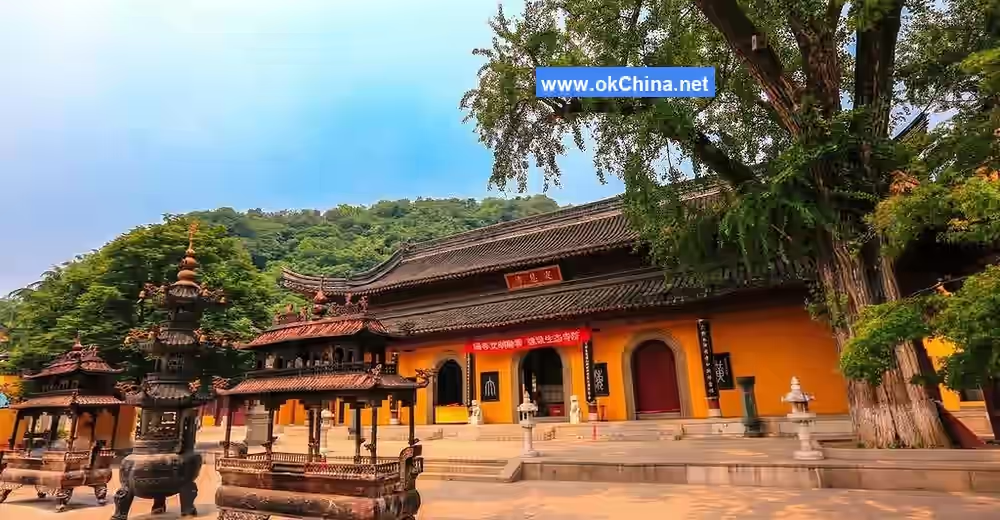
3.2.12 Dinghui Temple
Dinghui Temple was first built during the Xingping era of the Eastern Han Dynasty, originally named Puji Chan Temple. It is the largest temple on Jiaoshan. The temple experienced several periods of prosperity and decline. When Emperor Kangxi of the Qing Dynasty toured Jiaoshan during his southern inspection, he changed the temple's name to Dinghui Temple, which has been used ever since. The temple still maintains the architectural style of the Ming Dynasty.
3.2.13 Bobo Pavilion (No Waves Pavilion)
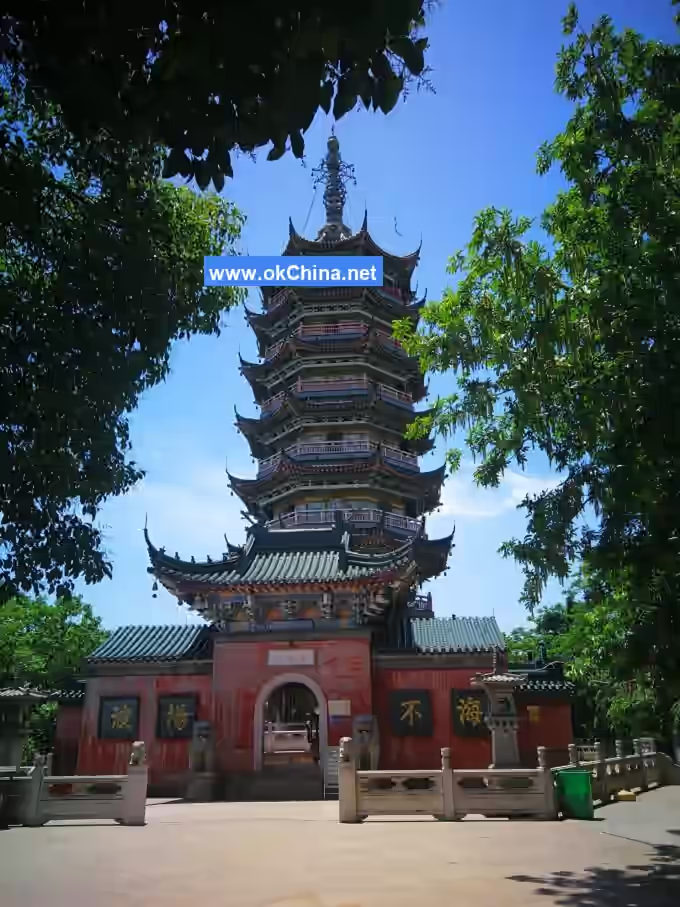
Bobo Pavilion serves as the mountain gate of Dinghui Temple. The structure is painted with red lacquer and colorful patterns, flanked by a pair of guardian stone lions. On either side of the gate hangs a couplet written by Ba Zhou's Liao Lun during the Guangxu reign of the Qing Dynasty: "The Yangtze River is a natural moat here, China has its sages." Inside the gate, on the screen wall, is the horizontal inscription of the couplet: "海不扬波" (The Sea Does Not Raise Waves), written by the Ming Dynasty calligrapher Hu Zuanzong. It means that Jiaoshan stands in the heart of the river like a stone that calms the sea, driving away water demons, hence the sea does not raise waves.#### 3.2.14 Jiaoshan Ancient Fort The Jiaoshan Ancient Fort is an ammunition depot located at the northeast corner of Jiaoshan. Built during the Daoguang reign period of the Qing Dynasty, it features eight bunker-style gun emplacements. It played a significant role in the Zhenjiang battle against the British in 1842 and stands as an important historical site of the Chinese people's resistance against foreign aggression in modern history. It is currently a provincial-level cultural relics protection unit.
3.2.15 Penjing Garden
The Penjing Garden is situated within the Jiaodong area of the Jiaoshan Scenic Area, covering a total area of approximately 8,500 square meters. It consists of three parts: land, water bodies, and a small island. Through landscaping techniques, the garden creates an environment conducive to the study, creation, collection, and exhibition of penjing (bonsai), fostering suitable conditions for maintenance and management. It provides a specialized garden landscape for visitors and penjing artists to appreciate, observe, and exchange ideas on penjing and related skills.
3.2.16 Osmanthus Garden
Located east of the Fengyang Square, the Osmanthus Garden is divided into sections for osmanthus varieties, viewing, and appreciation. It currently features over 5,000 osmanthus plants across ten varieties belonging to four main categories: Thunbergii (Golden Osmanthus), Latifolius (Silver Osmanthus), Aurantiacus (Orange Osmanthus), and others.
3.2.17 Xijiang Tower
The Xijiang Tower stands atop the eastern peak of Jiaoshan. Originally named Xijiang Pavilion, it is also known as Xijiang Tower. Because it houses wooden Buddha statues on all four sides inside the pavilion, it is also called the Four-Faced Buddha Pavilion. The tower is octagonal in shape, constructed entirely of cement imitating wood. A spiral staircase leads upwards, with corridors extending in all directions and scenic views on all eight sides. The two-story tower bears the horizontal inscription "Xijiang Tower" on the upper floor and "Magnificent Rivers and Mountains" on the ground floor. Visitors ascending the tower can enjoy panoramic views of the beautiful scenery on both sides of the Yangtze River.
3.3 Beigu Mountain
3.3.1 Phoenix Pool
Legend has it that Emperor Taizu of the Ming Dynasty, Zhu Yuanzhang, once summoned scholars by this pool. In ancient times, the pavilion in the pool, which was connected to the Yangtze River via the Ganlu Port, was called the Phoenix Pavilion.
3.3.2 Sword-Testing Stone
To the right of the Phoenix Pool lies a large, straight stone split neatly in two, known as the Sword-Testing Stone or the Stone of Regret. The stone is in two pieces; the taller one is about 1.5 meters high, and the shorter one is about half that height. Both have a clean, sharp crack in the middle. The characters for "Sword-Testing Stone" are clearly visible on the rock.
3.3.3 Iron Pagoda
Southeast of the rear peak of Beigu Mountain, next to the Qinghui Pavilion, stands a four-story iron pagoda. Also known as the "Duke Wei Pagoda," it is an important cultural relic of Beigu Mountain. It is one of only six remaining iron pagodas in China and the only one in Jiangsu Province, designated as a provincial-level cultural relics protection unit.
3.3.4 Ancient Ganlu Temple
The Ganlu Temple is located atop the northern peak of Beigu Mountain. It was first built during the Ganlu era (265–266 AD) of the Eastern Wu state, hence its name "Ganlu Temple." The temple's plaque was inscribed by Zhang Fei himself. To commemorate that Zhenjiang was once the capital of Eastern Wu and to ensure people never forget the historical fact of the Three Kingdoms tripartite division, he moved historical relics and legends related to the Sun-Liu alliance and marriage onto the mountain. Since then, Beigu Mountain has become a famous historical site in China. To this day, the traditional Peking opera Ganlu Temple (also known as The Dragon and Phoenix Bring Prosperity) is deeply rooted among the people. Therefore, almost every visitor to Zhenjiang comes here to climb Beigu Mountain, visit the Ganlu Temple, see the hall where Liu Bei got married, and reflect on the story of Sun Shangxiang's marriage, which is thought-provoking.
3.3.5 Fierce Stone
Descending west from the Duojing Tower, there is a stone resembling a crouching sheep, similar in size to a real sheep but without horns. The characters "Fierce Stone" are carved on its left abdomen. Also known as the "Stone Sheep," legend says that Sun Quan once sat on this stone's back to discuss strategies with Liu Bei for defeating Cao Cao, ultimately devising the brilliant plan for the Battle of Red Cliffs. This stone, originally a curved-horned crouching sheep, was moved from the intersection of Luluxiang (now Lüzhuxiang) and Nanhuangchang in Zhenjiang and carved by stonemasons.
4. History and Culture
4.1 Jinshan (Golden Hill)
In ancient times, Jinshan was an island standing in the middle of the Yangtze River. "With myriad rivers flowing east, a single island stands in the center," it formed a strategic triangle with Guazhou and Xijindu, serving as a vital north-south passage. Long renowned as "suddenly standing firm in the midstream, majestically straddling two hundred southeastern provinces," it was called "a lotus flower in the heart of the river." It wasn't until the Daoguang reign period of the Qing Dynasty that it began to connect with the southern bank, making "riding a donkey up Jinshan" a popular activity for a time. Jinshan possesses natural scenic advantages and secluded, exquisite landscapes, making it one of China's beautiful tourist destinations since ancient times.
Jinshan is famous for its gorgeous scenery. Its temples are resplendent and densely packed, with a pagoda soaring from the ground straight into the clouds. Whether viewed from near or far, one always sees the temples rather than the hill, leading to the saying "Jinshan's temples wrap the hill." The architectural art of "the hill wrapped by temples" and "the pagoda towering over the hill" was borrowed by the Longevity Hill in Beijing's Summer Palace, the "Tianyu Xianchang" in Chengde Mountain Resort, and the "Little Jinshan" in Yangzhou's Slender West Lake.
Jinshan Temple is associated with many historical allusions and captivating legends, such as the Legend of the White Snake where the temple was flooded, Liang Hongyu beating war drums to fight at Jinshan, and Su Dongpo admiring the moon and dancing on the Miaogao Terrace. These stories are widely known and circulated.
4.2 Jiaoshan (Jiao Hill)
Jiaoshan was originally named Qiaoshan. Legend says that Emperor Zhenzong of the Song Dynasty renamed it Jiaoshan to commemorate the Eastern Han hermit Jiao Guang, who once lived in seclusion on the mountain, and the name has been used ever since. Jiaoshan's landscape is naturally authentic and has long been renowned for its ancient trees and famous steles. Its temple buildings are all nestled amidst lush old trees. Opposite Jinshan, it is often said that "Jiaoshan's hill wraps the temples." The Dinghui Temple on the hill, originally named Puji Chan Temple, is one of the earliest temples in the Jiangnan region. When Emperor Kangxi of the Qing Dynasty toured south and passed Jiaoshan, he personally inscribed the temple's name plaque.
Jiaoshan is one of the famous "Three Hills of Jingkou," long celebrated for its naturally formed landscape,古朴幽雅 (simplicity and elegance), and is a tourist island surrounded by water in the vast Yangtze River. Jiaoshan rises majestically in the river's heart, resembling a "midstream pillar" and "pacifying the waves of Zhenjiang," with imposing grandeur. The hill is covered with ancient, lush trees and numerous stone carvings. Temple buildings are all hidden within the verdant old growth, hence the saying "Jiaoshan's hill wraps the temples." The ancients once evaluated the two hills with "Jinshan is superior for its towers and pavilions, Jiaoshan for its trees and steles," which seems fair.
Jiaoshan houses many precious cultural relics and famous historical sites: its cliff inscriptions are world-renowned, and its collection of stele calligraphy treasures is second only to the Stele Forest in the ancient capital Xi'an, making it the largest stele forest in Jiangnan. Among them, the stele for the Inscription for a Buried Crane, known as the "King of Steles," is a rare treasure. Jiaoshan has many Zen temples, retreats, pavilions, and towers. Notable ones include the Dinghui Temple, Biefeng Nunnery, and over ten other temples and nunneries. Zheng Banqiao wrote a poem: "Fifteen quiet dwellings on Jiaoshan, each with bamboo and a fence." Pavilions and towers include the Huayan Pavilion, Guanlan Pavilion, and Xijiang Tower. These architectural gems adorn the rivers and hills, adding splendid colors to the natural landscape.
According to the Jiaoshan Annals, Emperor Zhenzong of the Song Dynasty fell ill and could not be cured for a long time. Suddenly, he dreamed of an old man entering his throne hall, claiming to be the hermit Jiao Guang from the southeast, who offered him medicine to cure his illness. Upon waking, the emperor's illness was indeed cured. He hurriedly asked his ministers about the events in his dream. A minister said: "Jiao Guang was a noble scholar of the late Han Dynasty who lived in seclusion on Jiaoshan in the middle of the Yangtze River. He was content with poverty and devoted to the Dao, refusing three imperial summonses, maintaining integrity and restraint." Emperor Zhenzong was delighted upon hearing this and issued an edict: "Enfeoff Jiao Guang as the Duke of Mingying, with sacrifices offered in spring and autumn in the village temple. Furthermore, all land taxes and corvée labor for Jiaoshan are exempted." Once the emperor spoke, Jiaoshan's fame spread far and wide.
4.3 Beigu Mountain
Beigu Mountain gets its name from its distant,稳固 (firm) appearance when viewed from the north, lying across the great river with steep cliffs and a坚固 (solid) mountainous terrain. Situated between Jinshan and Jiaoshan, bordering the Yangtze River, it consists of front, middle, and rear peaks, with the main peak reaching an altitude of 58.5 meters. It is said that when Emperor Wu of Liang ascended Beigu Mountain, he personally wrote the six characters "The First Landscape Under Heaven." The famous Southern Song calligrapher Wu Ju rewrote them, and during the Kangxi reign of the Qing Dynasty, Zhenjiang Prefecture's Assistant Prefect Cheng Kangzhuang copied and engraved them on stone. They are still embedded in the corridor wall today. The front peak of Beigu Mountain, known as Gulougang, is said to be the site of the palace of Sun Quan of the Three Kingdoms and the headquarters of Commander Zhou Yu. The middle peak formerly housed the Beigu Mountain Residence. At the foot of the mountain lie the tomb of the Eastern Wu general Taishi Ci and the now-lost tomb of the outstanding Song Dynasty poet Liu Yong. West of the middle peak, under the mountain corridor, is the Phoenix Pool, where legend says the founding emperor of the Ming Dynasty, Zhu Yuanzhang, once discussed state affairs. The rear peak is the main peak, also called the North Peak, where historical sites and scenic spots are concentrated. The Ganlu Temple occupies the peak's summit, and southeast of the peak stands an iron pagoda. Many of the pavilions, towers, mountain rocks, and streams here are associated with historical legends of the Sun-Liu alliance during the Three Kingdoms period, making it a sought-after destination for visitors tracing Three Kingdoms relics.
The temples, pavilions, and towers on Beigu Mountain differ in architectural structure from those on Jinshan and Jiaoshan. They employ the technique of "using the temple to dominate the hill," giving them a soaring, aerial quality and forming the characteristic of "the temple crowning the hill." The story of "Liu Bei's Marriage Proposal at Ganlu Temple" from the Three Kingdoms period took place on Beigu Mountain. Renowned for its steepness, Beigu Mountain gained eternal fame through Three Kingdoms tales. Its pavilions, towers, mountain rocks, and streams are all connected to historical legends such as the Sun-Liu marriage alliance, making it a向往之地 (place visitors long to see) for those seeking Three Kingdoms遗迹 (relics). The Ganlu Temple sits high on the peak, embodying the "temple crowning the hill"特色 (characteristic). It is said to have been first built in the first year of the Ganlu era (265 AD) of the Eastern Wu state during the Three Kingdoms period. Though destroyed and rebuilt多次 (multiple times), the temple complex, including the main hall, Laojun Hall, Guanyin Hall, and Jiangsheng Pavilion, is not large in scale but holds significant名气 (fame). Throughout history, visitors to Zhenjiang have enjoyed coming here to explore the relics of Liu Bei's marriage proposal.
Comments
Post a Comment