Huashan Scenic Area in Weinan City
I. Introduction
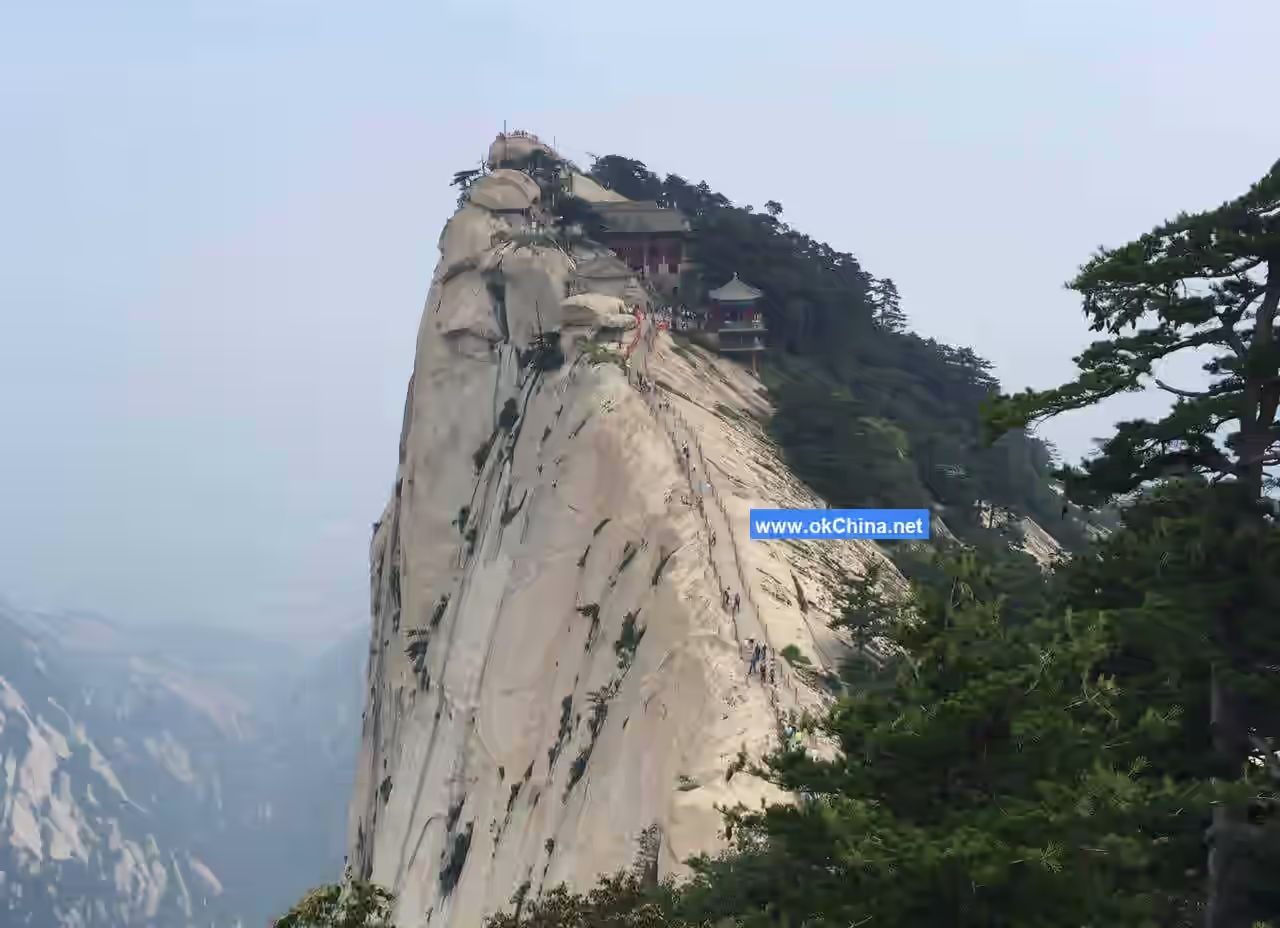
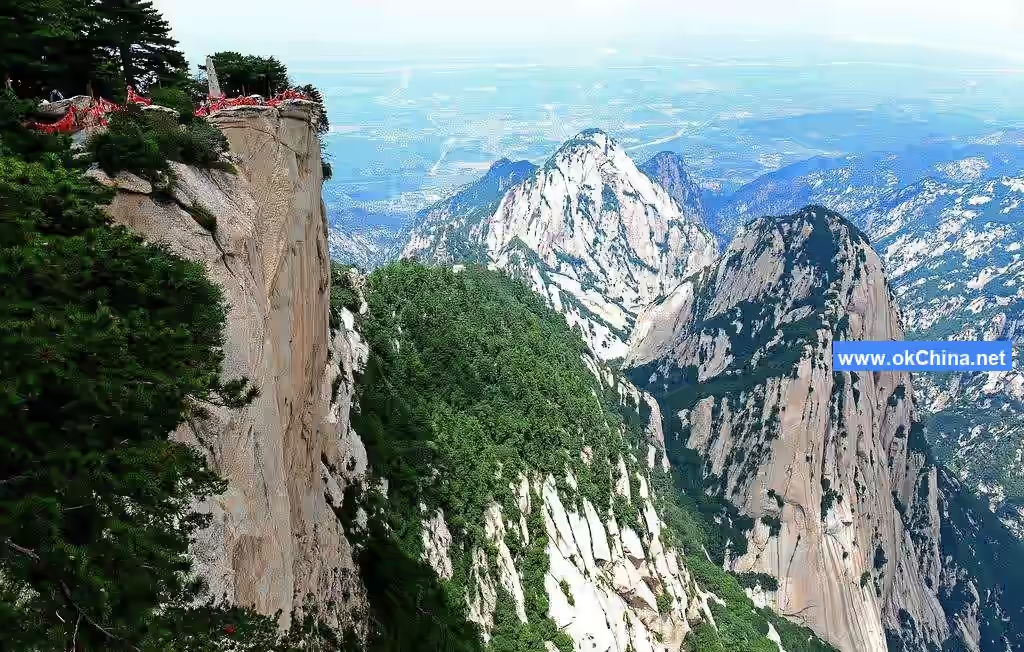
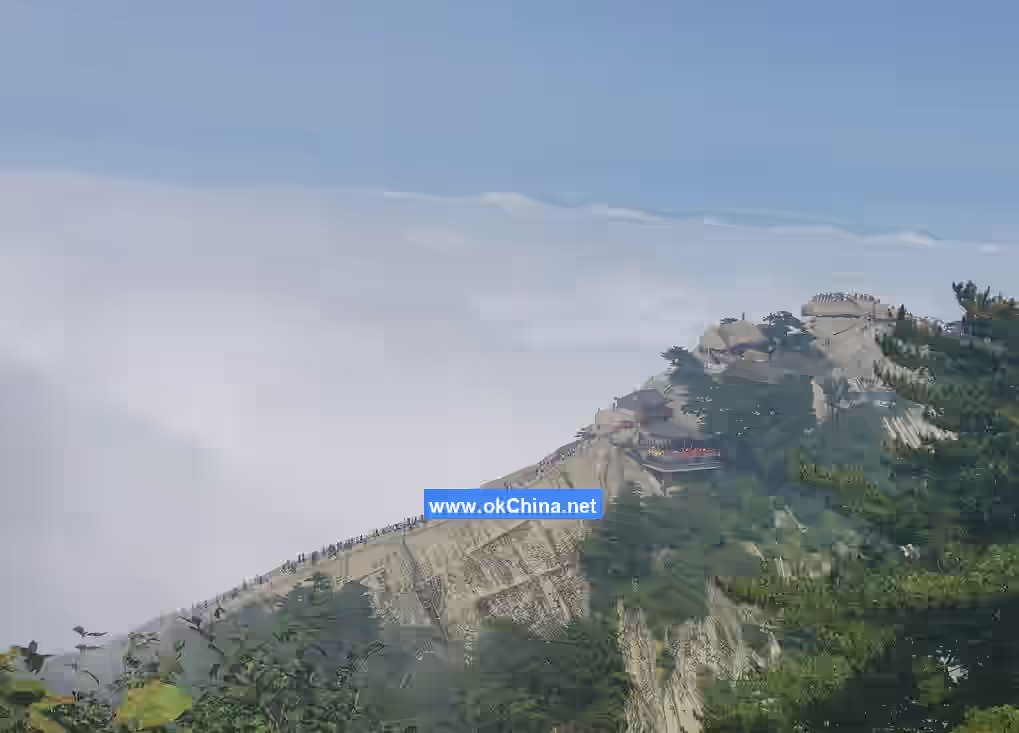
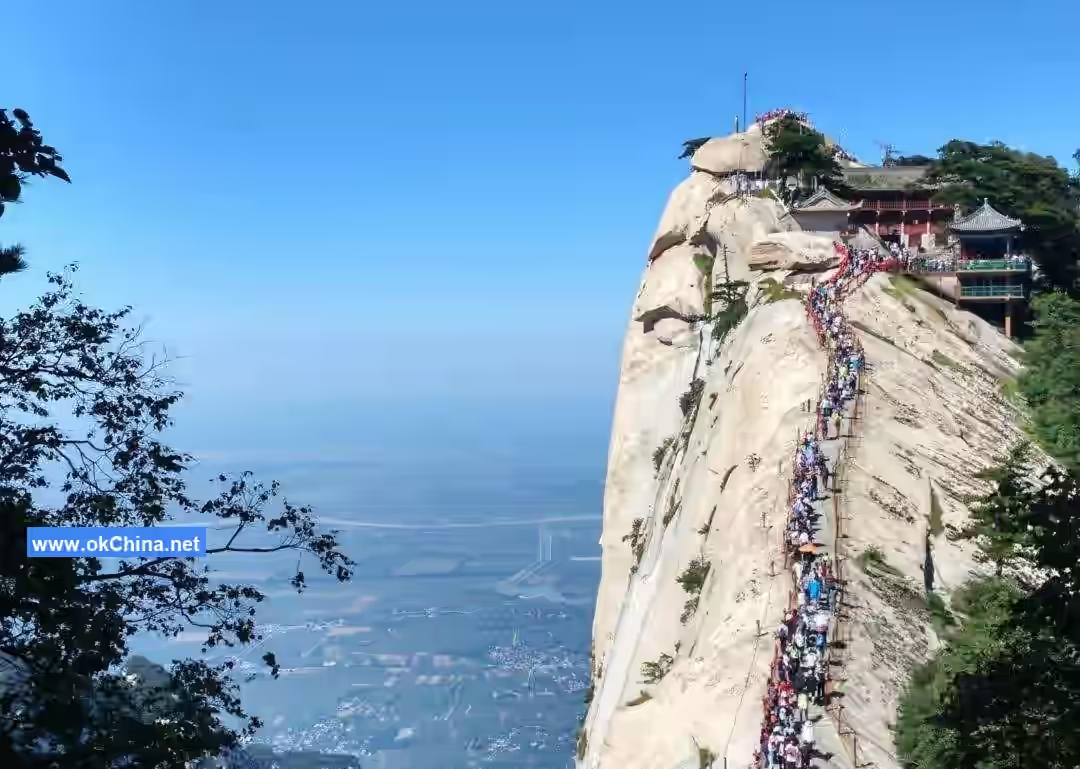
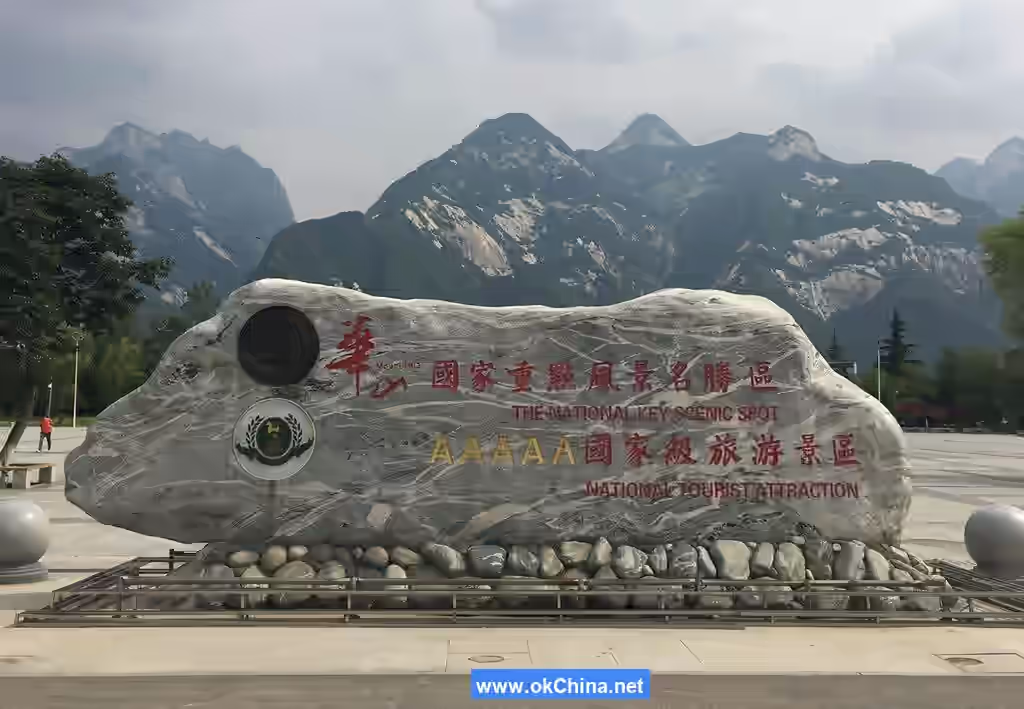
Huashan, historically known as the "Western Mountain," is one of China's renowned Five Great Mountains. It is located in Huayin City, Shaanxi Province, approximately 120 kilometers from Xi'an. To the south, it connects with the Qinling Mountains, and to the north, it overlooks the Yellow and Wei Rivers, guarding the gateway between the Northwest and the Central Plains. It is famously known as "the most precipitous mountain under heaven." In 2011, the Huashan Scenic Area in Weinan City was designated as a National AAAAA Tourist Attraction.
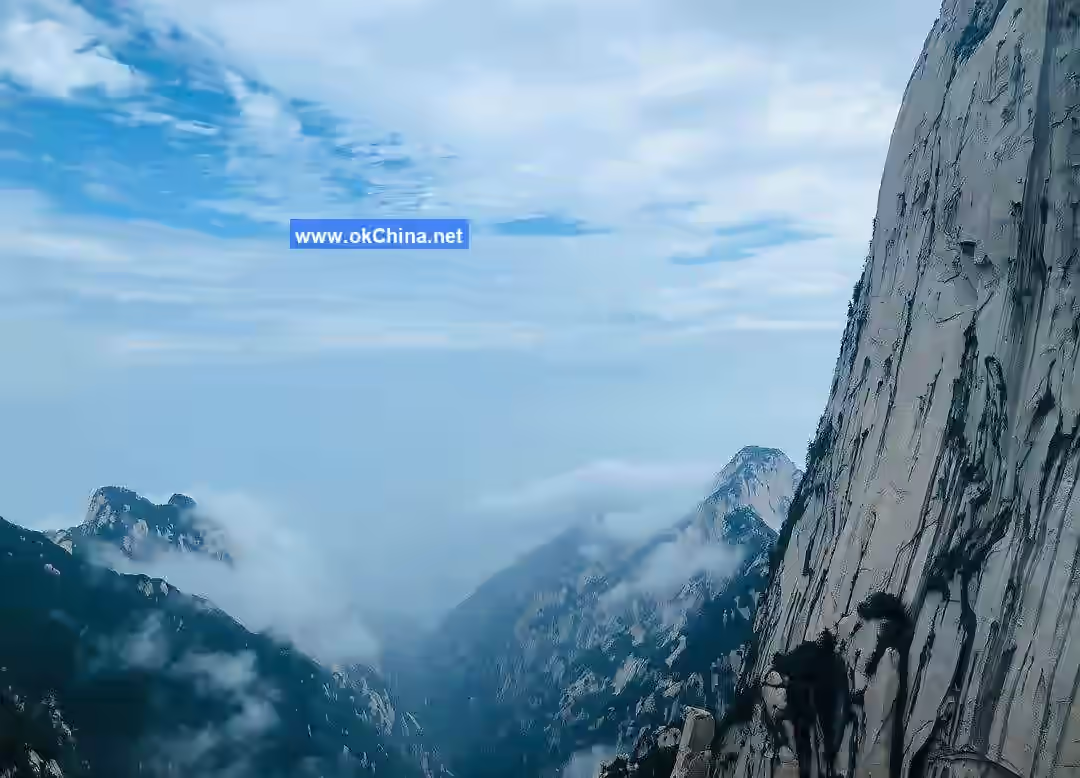
Huashan is composed of a single, massive granite body, with a geological history dating back 120 million years. According to the Classic of Mountains and Seas, "Mount Taihua is sheer and square, five thousand ren high and ten li wide."
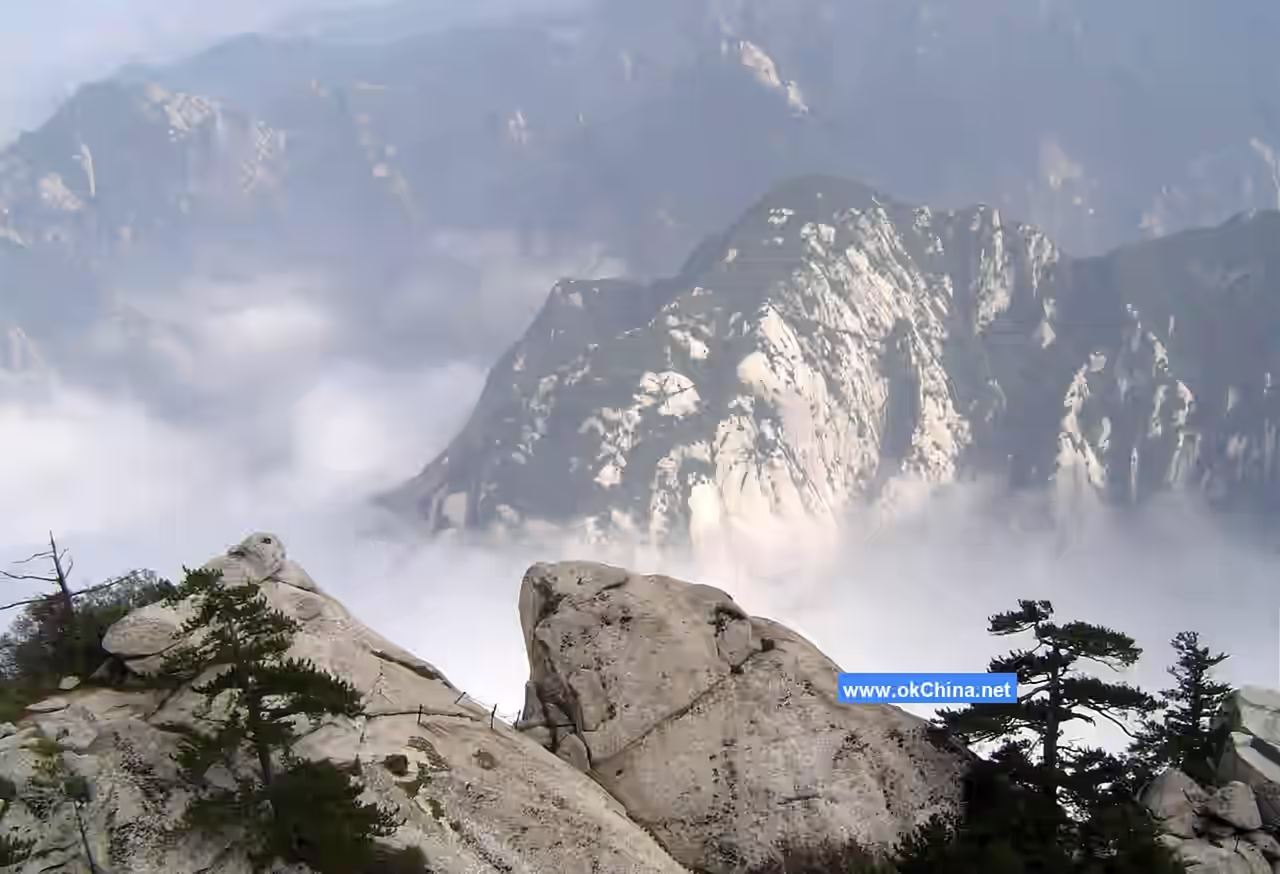
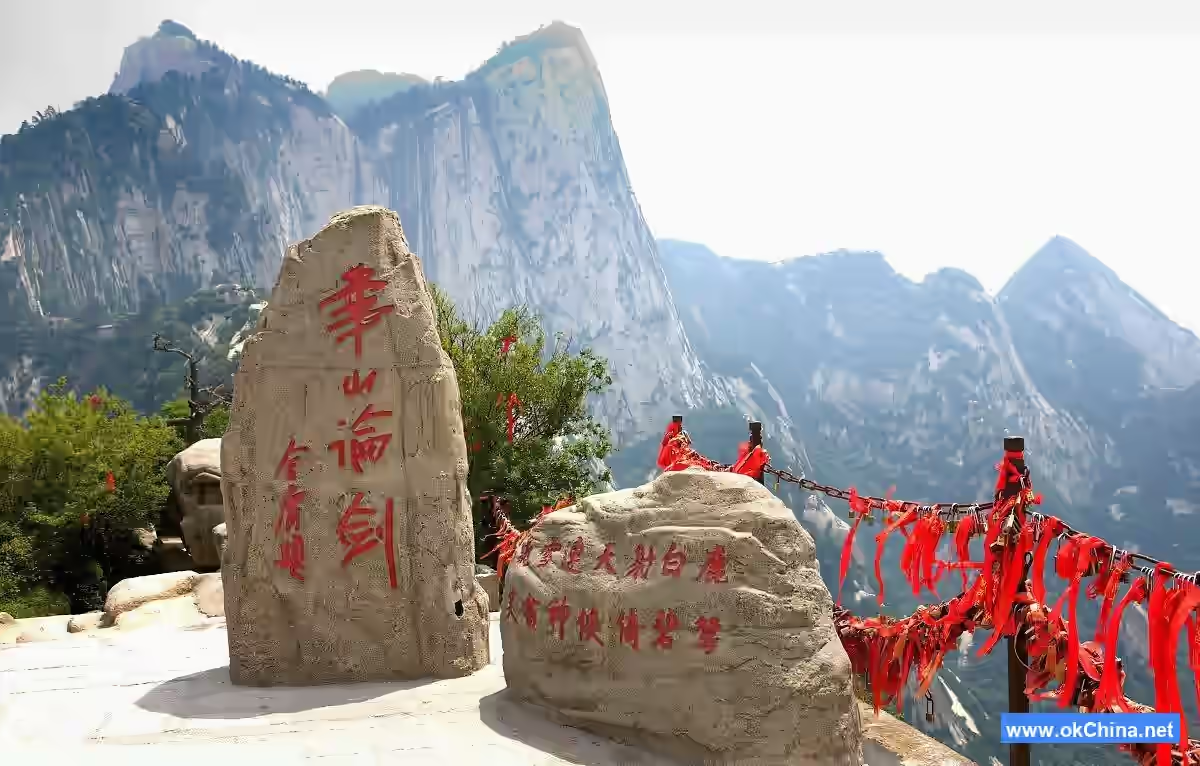
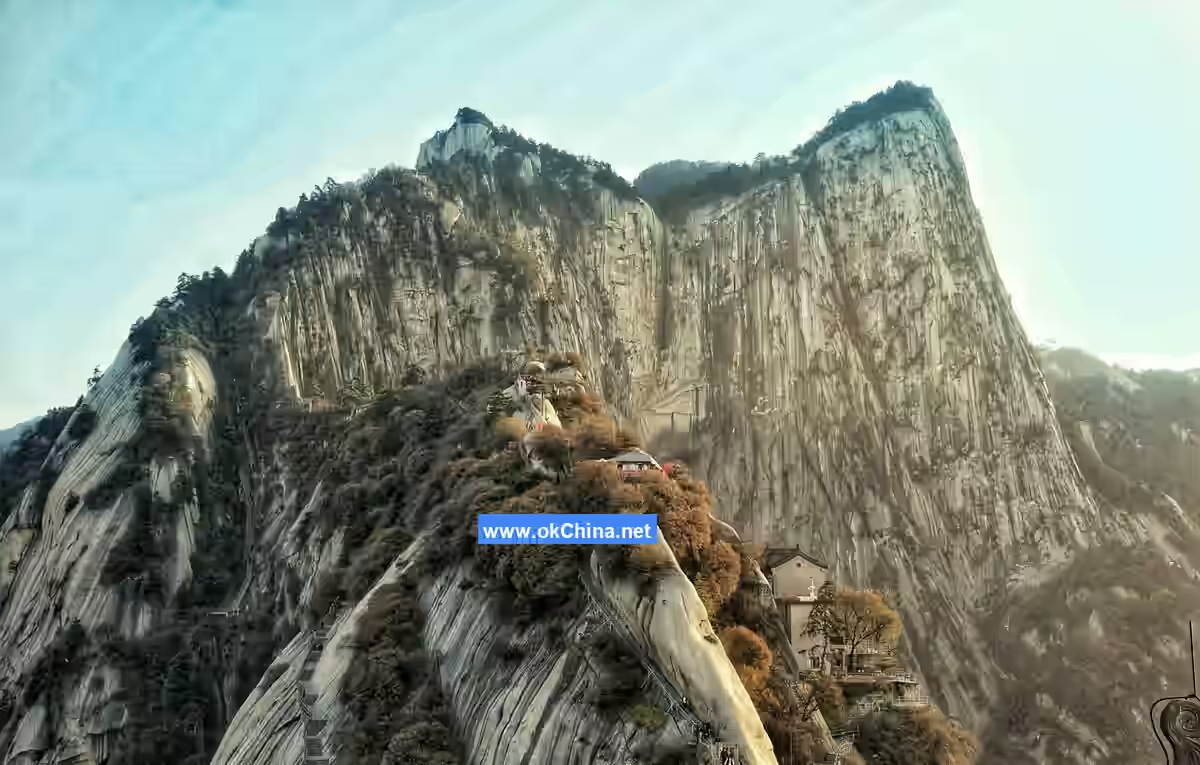
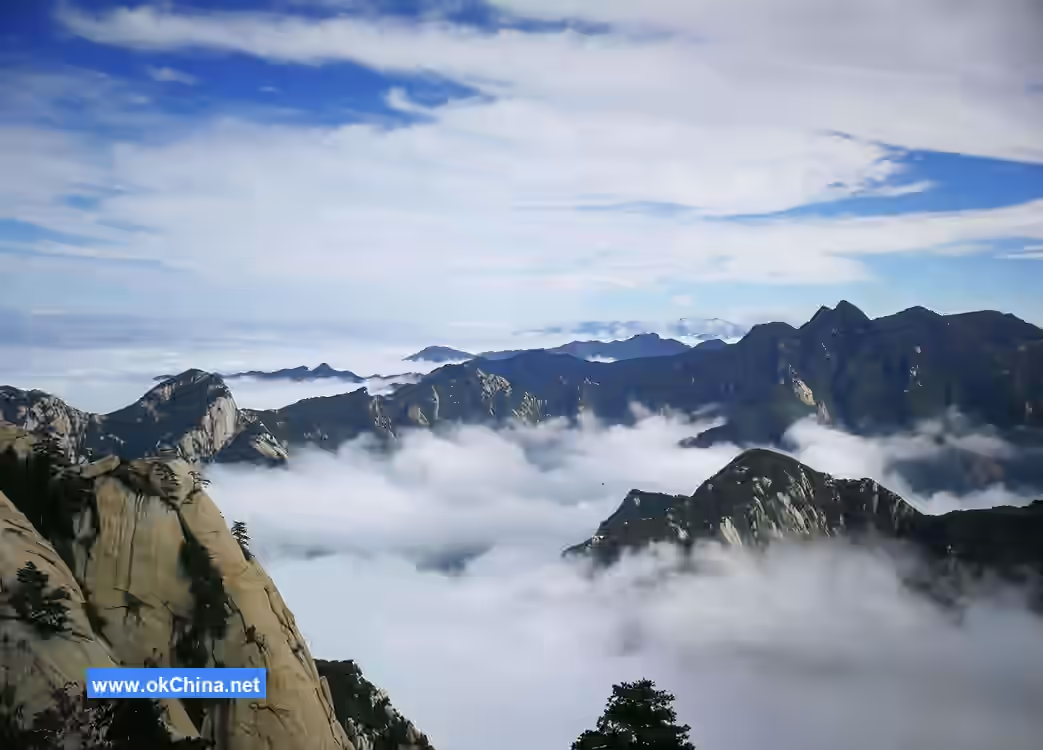
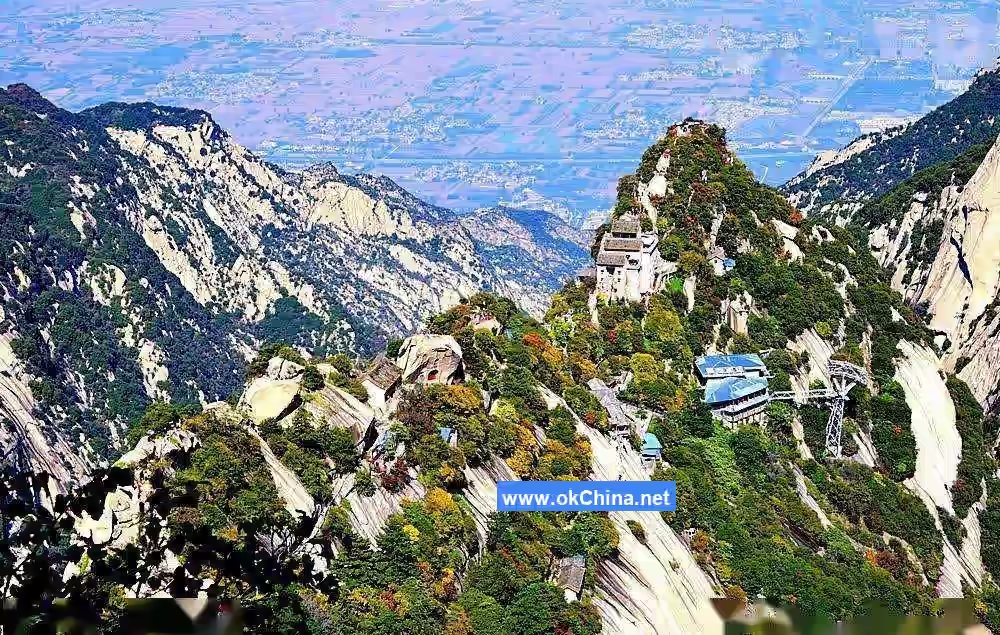
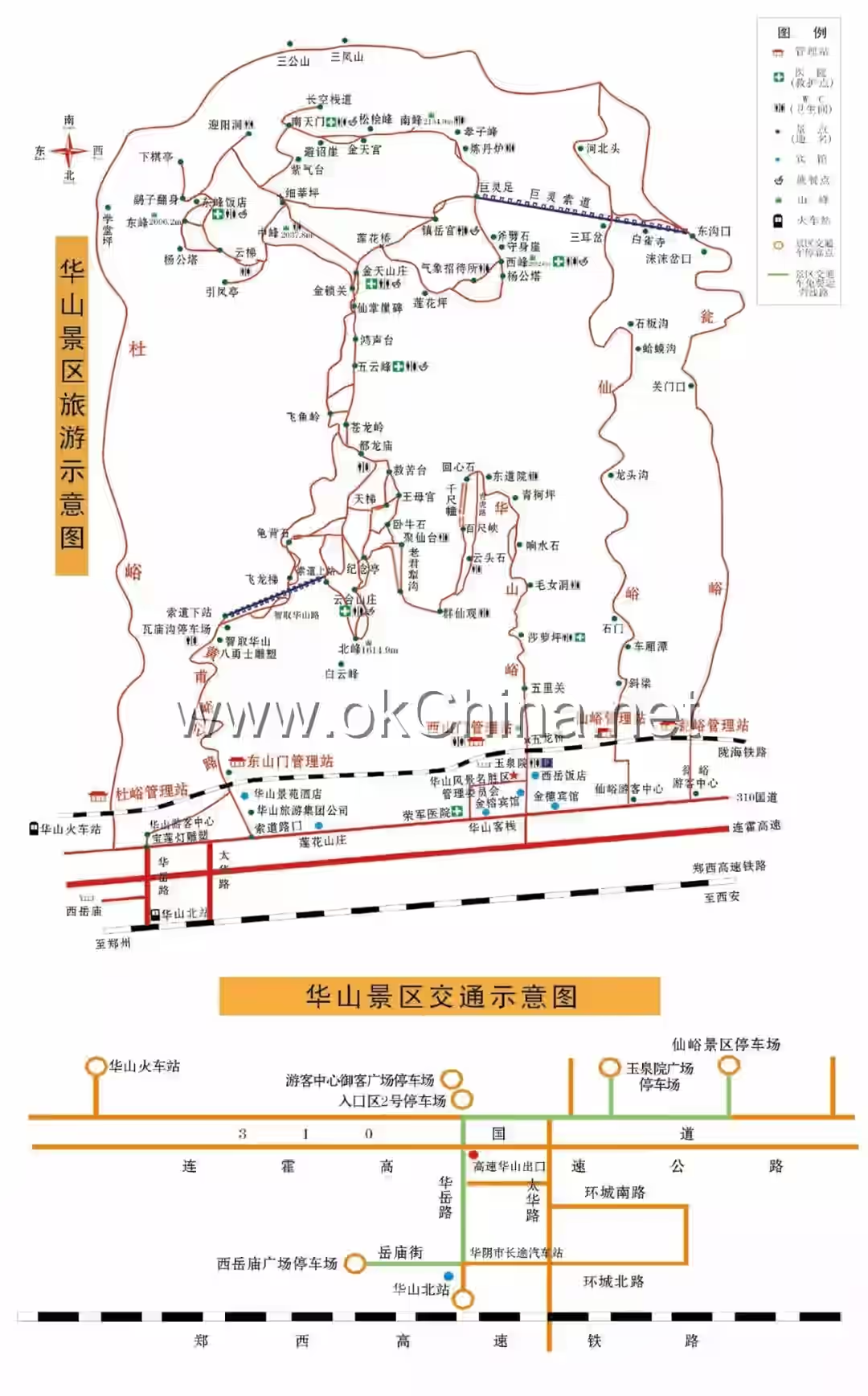
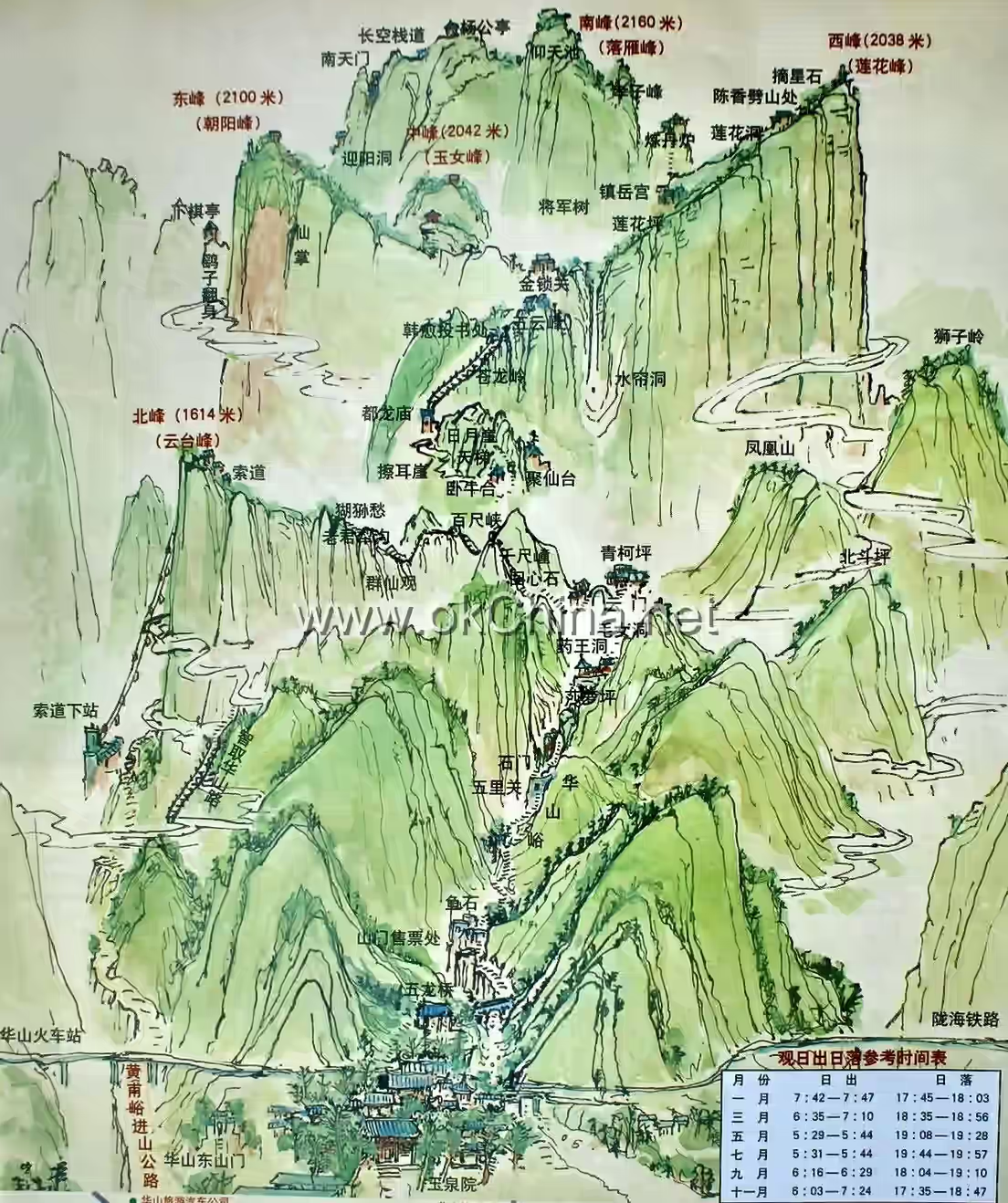
Today, Huashan comprises five main peaks: East, West, South, North, and Central. The primary peaks are the South Peak ("Falling Goose"), the East Peak ("Facing Sun"), and the West Peak ("Lotus Flower"). These three peaks stand majestically, "soaring beyond the white clouds, their shadows cast into the Yellow River," earning them the collective name "Three Peaks Beyond Heaven." Complemented by the Cloud Terrace and Jade Maiden peaks to the sides and with 36 smaller peaks arrayed before them, the mountain presents a formidable and awe-inspiring landscape. Its ever-changing weather creates the "Cloudy Huashan," "Rainy Huashan," "Foggy Huashan," and "Snowy Huashan," offering a fairyland-like beauty. It is considered the anchor of the imperial aura of the Western Capital.
Huashan is one of the birthplaces of Chinese civilization. According to research by the renowned Qing Dynasty scholar Zhang Taiyan, the terms "Zhonghua" (China) and "Huaxia" (Chinese civilization) are both derived from the name Huashan. Records of Huashan appear in the Book of Documents, and the Records of the Grand Historian mentions the legendary emperors Huangdi, Yao, and Shun touring Huashan. Over a dozen emperors, including Qin Shi Huang, Emperor Wu of Han, Empress Wu Zetian, and Emperor Xuanzong of Tang, conducted large-scale sacrificial ceremonies here.
Huashan is also a sacred site in Taoism, known as the "Fourth Grotto-Heaven." Famous Taoist masters such as Chen Tuan, Hao Datong, and He Yuanxi practiced here. The mountain currently has 72 half-suspended caves and over 20 Taoist temples, among which the Jade Spring Temple, East Taoist Temple, and Zhenyue Palace are listed as nationally significant Taoist temples.
Countless historical figures have left their footprints on Huashan, along with numerous stories and historical sites. Since the Sui and Tang dynasties, literati like Li Bai and Du Fu have composed over a thousand poems, inscriptions, and travelogues about Huashan, with more than a thousand cliff carvings. From Yang Bao and Yang Zhen of the Han Dynasty to scholars like Feng Congwu and Gu Yanwu of the Ming and Qing dynasties, many retreated to Huashan's valleys to teach disciples, creating a remarkable cultural phenomenon. Among the many legends associated with Huashan, the most widely circulated myths include "The Giant Spirit Splitting the Mountain," "Chenxiang Splitting the Mountain to Save His Mother," and "Playing the Xiao to Attract the Phoenix." Huashan is also one of the nine best places in China to view the sunrise. The sunrise viewing spot is located on the East Peak (also called the Facing Sun Peak), with the Facing Sun Terrace being the optimal location. The scenic area boasts over 210 famous sites, including the Changkong Plank Walkway suspended in mid-air, the Swallow's Flipping maneuver on three-sided cliffs, and the Thousand-Foot Precipice, Hundred-Foot Gorge, and Lao Jun's Plow Ditch carved into sheer cliffs. Among these, the Huayue Immortal Palm is ranked first among the Eight Scenic Wonders of Guanzhong.
II. Main Attractions
East Peak
The East Peak, with an elevation of 2,090 meters, is one of the main peaks of Huashan, named for its eastern location. At its summit is a platform, high and perilous, offering a broad view. It is a famous spot for watching the sunrise, known as the Facing Sun Terrace, which gives the peak its alternative name, Facing Sun Peak.
The East Peak consists of one main and three subordinate peaks. The peak housing the Facing Sun Terrace is the highest, with the Jade Maiden Peak to the west, the Stone Tower Peak to the east, and the Bo Terrace to the south, each with its own distinct character. Ancient people referred to the "Three Peaks of Huashan" as the East, West, and South peaks, with the Jade Maiden Peak considered part of the East Peak. Nowadays, the Jade Maiden Peak is often called the Central Peak, standing as a main peak of Huashan in its own right.
In ancient times, the path to the East Peak was considered extremely treacherous. The San Cai Tu Hui describes it as a sheer slope dozens of zhang high, with only a few footholds carved into the rock and no vines or branches to grasp. Climbers had to crawl on the rock, using both hands and feet to reach the summit. Today, several stepped paths have been opened and widened, allowing visitors to reach the peak safely.
The summit of the East Peak is covered with large cypresses and tall pines, their dense shade blocking the sun and creating a very tranquil environment. Walking through the pine forest, with green canopies overhead like umbrellas and the sound of wind through the pines like a chant, visitors feel refreshed and detached from worldly concerns. The Ming Dynasty painter and calligrapher Wang Lü wrote in his Record of the East Peak: "The tall cypresses and pines shade the peak top; the stone paths beneath the trees are cool and serene. The wind passing through the forest adds a musical rhythm to the surging pine waves, rising and falling like the playing of string and wind instruments or the striking of metal and stone—how marvelous!"
The East Peak features dozens of scenic spots. On the cliff face beside the East Stone Tower Peak, natural rock patterns resemble a giant palm print—this is the Huayue Immortal Palm, ranked first among the Eight Scenic Wonders of Guanzhong. The legend of the Giant Spirit deity splitting the mountain to guide the river originates here. North of the Facing Sun Terrace stands the Yang Gong Pagoda, facing the Yang Gong Pagoda on the West Peak from afar. It was built by General Yang Hucheng, who inscribed the four characters "Wan Xiang Sen Luo" (Myriad Phenomena, Dense and Layered) on the pagoda. Additionally, the East Peak features the Green Dragon Pool, Sweet Dew Pool, Three Thatched Hut Cave, Clear Void Cave, Eight Scenes Palace, and the East Gate of the Supreme Ultimate. Unfortunately, some sites have been lost to time or disasters, leaving only ruins. Since the 1980s, some attractions on the East Peak have been gradually restored. Dangerous paths have been reinforced, pavilions rebuilt, and on the site of the Eight Scenes Palace, which was destroyed by fire in 1953, a two-story wooden and stone pavilion now stands, serving as the East Peak Hotel.
West Peak
The West Peak, with an elevation of 2,082 meters, is one of the main peaks of Huashan, named for its western location. Because the summit rocks resemble lotus petals, ancient literati often called it Lotus Flower Peak or Hibiscus Peak. Yuan Hongdao recorded in his Huashan Yong: "Stone leaves cover it horizontally with cracks." Xu Xiake noted in his Travel Diary of Mount Taihua: "Rocks rise on the peak, with stone slabs covering them like a lotus flower." Li Bai's line "Rocks form the lotus, clouds form the terrace" also refers to these rocks.
The West Peak is a single, massive, naturally formed rock. Its northwestern side is a sheer cliff thousands of zhang high, as if cut by a knife or saw, representing Huashan's characteristic steep, majestic, and imposing grandeur. Therefore, ancient people often called Huashan "Lotus Flower Mountain."
From the summit of the West Peak, gazing into the distance, one sees rolling mountains, clouds and mist spreading in all directions, the surrounding wilderness unfolding like a screen, and the winding Yellow and Wei Rivers. Standing here feels like entering a divine realm, sweeping away all worldly thoughts. The Song Dynasty recluse Chen Tuan wrote in his poem West Peak: "I tell the noble recluse, this place is a fairyland."
A ridge on the southern cliff of the West Peak connects to the South Peak. This ridge, over 300 meters long, with dark blue-gray rocks, resembles a coiled dragon and is called Qu Ridge or Little Canglong Ridge. It is one of Huashan's famous dangerous paths.
Scenic spots abound on the West Peak, including Cuiyun Palace, Lotus Cave, Giant Spirit's Foot, Axe-Splitting Rock, and Sacrifice Cliff, accompanied by many beautiful myths and legends. The story of Chenxiang splitting the mountain to save his mother is particularly widespread. Cliff inscriptions cover the peak, in various scripts—regular, cursive, clerical, and seal—creating a dazzling display. The northernmost summit is called the West Stone Tower Peak, where the Yang Gong Pagoda, built by General Yang Hucheng, stands. General Yang inscribed it personally. On the rock below the pagoda is the inscription "Zhen Po Hong Meng" (Pillow Shattering the Primordial Chaos), by the calligrapher Wang Duo.
Many literary works from ancient and modern times praise the West Peak. Tang Dynasty's Qiao Shiyou wrote Inscription on the West Peak Qin Emperor's Observation Platform Pagoda; Ming Dynasty's Wang Lü wrote Record from Entering Huashan to the West Peak; even the Tang Dynasty Imperial Academy's palace examination used Lotus Flower Peak as a subject. A poem by Tang Dynasty's Liu Deren, Imperial Examination: Lotus Flower Peak, reads:
Taihua's myriad layers rise, Only this peak towers to the skies. In autumn, leaning on the vast void, In view, it seems a lotus deployed. Emerald, it soars a thousand xun straight, Verdant, perilous, a blossom great. Its aura shares the Hairy Maiden's grace, Its spirit holds the feathered one's trace. Inverted shadows mark the pass's way, Flowing fragrance stirs the temple's pine sway. Worldly dust can never reach this place, Carriages and horses pass in bustling pace.
South Peak
The South Peak, with an elevation of 2,160.5 meters, is the highest main peak of Huashan and the highest among the Five Great Mountains. Ancient people revered it as the "head of Huashan." Standing atop the South Peak, one feels the sky is within reach, as if stars can be plucked. Looking around, rolling mountains stretch vast and wild; the Yellow and Wei Rivers appear like threads; the plain seems like silk or cotton, all captured in a single glance. This allows one to truly appreciate Huashan's lofty, majestic, and grand momentum, enjoying the magical sensation of being at the celestial boundary, treading on floating clouds.
The southern side of the peak is a sheer cliff thousands of zhang high, straight as if cut by a knife, overlooking a deep fault ravine that separates it from the Sangong and Sanfeng mountains. The South Peak consists of one peak with two summits: the eastern summit is called Songgui Peak, and the western summit is called Falling Goose Peak. Some say the South Peak has three summits, including the Filial Piety Peak west of Falling Goose Peak. Thus, the highest Falling Goose Peak sits in the center, with Songgui Peak to the east and Filial Piety Peak to the west, forming an armchair-like shape, with the three summits resembling a giant sitting facing north. Ming Dynasty's Yuan Hongdao described the South Peak's shape in his Record of Huashan: "Like a person sitting upright with knees drawn up."
The name Falling Goose Peak originates from the legend that migrating geese often rest here. The highest point of this summit is Huashan's ultimate peak. Climbers take pride in reaching this summit. Throughout history, literati have been inspired here, composing poems and wielding brushes, leaving behind many literary records. Cliff inscriptions on the peak top are especially abundant. Feng Zhi recorded in his Miscellaneous Records of the Cloud Immortal that the Tang poet Li Bai, upon ascending the South Peak, exclaimed: "This mountain is the highest; its breath seems to reach the Emperor's throne. I regret not bringing Xie Tiao's startling lines to scratch my head and ask the blue sky." The Song Dynasty famous statesman Kou Zhun wrote the celebrated lines: "Only the sky is above, / No other mountain matches its height. / Raising my head, the red sun is near; / Bowing my head, white clouds lie low." Around Falling Goose Peak are many other scenic spots, including the highest point's Skyward Gazing Pool and Black Dragon Pool, and on the southwestern cliff, the Niche of An Yu Zhenren and the Guest-Greeting Pine.
Songgui Peak is slightly lower than Falling Goose Peak but covers a larger area. Its summit is shaded by tall pines and large cypresses, hence the name Songgui (Pine and Cypress) Peak. Huayin's renowned Confucian scholar Wang Hongzhuan called Songgui Peak the master of the South Peak. The White Emperor Temple, also known as Golden Heaven Palace, is built here. It is the main temple dedicated to the Huashan deity, Golden Heaven Shaohao. Because the main hall's roof is covered with iron tiles, it is also called the Iron Tile Hall. Many scenic spots surround Songgui Peak, including the Eight Trigrams Pool, South Heaven Gate, Chaoyuan Cave, Changkong Plank Walkway, Quanzhen Cliff, Avoid Edict Cliff, Eagle Wing Rock, and Yang Gong Pavilion.Throughout history, numerous poems and writings have depicted the South Peak of Mount Hua. The Ming dynasty painter and calligrapher Wang Lü composed a poem titled "The Summit of South Peak":
Scratching my head, I ask the azure sky,
Have you ever parted from the exiled immortal Li?
Suddenly, the greedy seeker of tranquility returns,
Soaring to the highest peak.
Breath exhaled beyond the primordial chaos,
Spirit transcending even before the Supreme Ultimate.
How to borrow the thatched dragon,
All the way to the edge of the Five Cities.
North Peak
The North Peak, with an elevation of 1,614 meters, is one of the main peaks of Mount Hua, named for its northern location. It stands precipitously on all sides, crowned by clouds above and connected to the earth's veins below, majestically unique like a cloud platform, hence also known as Yuntai Peak. The Tang dynasty poet Li Bai wrote in his poem "Song of the Western Peak's Cloud Terrace for Danqiuzi": "Three peaks stand as if about to crumble, emerald cliffs and crimson valleys with lofty palms. The White Emperor's golden essence moves the primal energy, stone forming lotuses, clouds forming terraces."
To the north, the peak faces Baiyun Peak, and to the east, it is near Liangzhang Mountain. It connects to the East, West, and South Peaks above and links to the perilous path of Gouchuang Gorge below. The peak's summit is composed of several groups of massive rocks, seamlessly formed by nature. At the very top, there is a platform where the Yiyun Pavilion once stood; now only ruins remain. It is an excellent spot to view the three peaks of Mount Hua and Canglong Ridge to the south. The mid-slope of the peak is lush with trees, exuding an air of elegance, making it an ideal resting place on the way to the summit. The upper station of the cable car, opened in 1996, is located on the eastern cliff of the peak.
The peak boasts many scenic spots, including influential sites such as the Zhenwu Hall, Jiao Gong Stone Chamber, Changchun Stone Chamber, Jade Maiden Window, Immortal Oil Tribute, Divine Earth Cliff, Yiyun Pavilion, Lao Jun's Plow Hanging Place, Iron Ox Platform, and the Baiyun Fairyland Stone Archway. Each site is accompanied by beautiful mythological legends.
The Changchun Stone Chamber was the hermitage of the Taoist Du Huaiqian during the Zhenguan period of the Tang dynasty. Legend has it that Du Huaiqian devoted himself to ascetic practices, abstaining from grains, and enjoyed playing the flute. He often had his disciples buy many bamboo flutes, and after playing a tune, he would throw the flute off the cliff. Once all were thrown, he would buy more, repeating the process endlessly. Because he could stay in the cliff cave for months without leaving, he called himself Master Changchun.
The Zhenwu Hall was built to enshrine the Northern God Zhenwu, who guards the nine regions. The Jiao Gong Stone Chamber, Immortal Oil Tribute, and Divine Earth Cliff are all named after the legends of Jiao Daoguang. It is said that during the reign of Emperor Wu of the Northern Zhou dynasty, the Taoist Jiao Kuang, also known as Daoguang, lived alone on Yuntai Peak, consuming mist and dew, abstaining from grains, and often accompanied by three blue birds that reported future events to him. Emperor Wu, Yuwen Yong, heard of his fame and personally visited the mountain to seek his wisdom, ordering the construction of a palace in front of the Jiao Gong Stone Chamber for him to reside in. During construction, there was no soil or lamp oil on the peak. Jiao Daoguang silently prayed, and soil surged from below the cliff, flowing endlessly. The oil in the jars also refilled overnight, never depleting. Later, people named the place where the soil emerged the Divine Earth Cliff and the place where the oil jars were kept the Immortal Oil Tribute.
Due to natural and man-made disasters, many scenic spots on the North Peak were destroyed, leaving only ruins, some of which have faded into obscurity over time. The Zhenwu Hall, the main structure on the North Peak, has been repeatedly built and destroyed over the centuries. During the Republic of China era, it underwent significant repairs. The Continued Chronicle of Mount Hua records: "In recent years, the buildings were destroyed, leaving only the foundation, yet it encompasses the Yellow River and Zhongtiao Mountain in a single view—is this not a grand spectacle?" During the Cultural Revolution, the buildings on the North Peak were burned down, leaving only broken walls and ruins. The current structure was rebuilt in 1988. It follows the natural contours of the cliff, simple and elegant, preserving the style of the original building, and has become one of the main cultural landmarks of the North Peak.
On the eve of the liberation of Huayin in 1949, Han Zipei, the commissioner of the Eighth Administrative Supervision District of Shaanxi Province and commander of the Sixth Security Brigade of the Shaanxi Nationalist forces, led over a hundred remnants of his troops up Mount Hua, attempting to rely on the natural barriers for a last stand. With the help of the local people of Huayin, the Chinese People's Liberation Army broke the legend that "Mount Hua has only one path since ancient times," climbing from Huangfu Valley to the North Peak and launching a surprise attack on the remnants, creating the miracle of divine soldiers crossing the natural chasm and heroes capturing Mount Hua with wisdom. Today, about a hundred meters in front of the Zhenwu Hall stands a hexagonal, roofed, and eaves-supported granite pavilion with a circular carving, housing a monument commemorating the liberation of Mount Hua. Since then, the North Peak has also become a site and classroom for patriotic education and revolutionary traditions for young people.
Central Peak
The Central Peak lies between the East, West, and South Peaks and is a small peak attached to the western side of the East Peak. In ancient times, it was considered part of the East Peak, but today it is listed as one of the main peaks of Mount Hua. The peak is lush with trees, offering a tranquil environment with many unknown exotic flowers and plants. Visitors walking through are enveloped in fragrance. At the summit, there is a Taoist residence called the Jade Maiden Temple, said to be the cultivation site of Nongyu, the daughter of Duke Mu of Qin during the Spring and Autumn period, hence the peak is also known as the Jade Maiden Peak.
Historical records describe Nongyu, the daughter of Duke Mu of Qin, as having peerless beauty and being skilled in music. One night, she dreamed of harmonizing with the hermit Xiao Shi of Mount Hua through playing the sheng and xiao, and they became soulmates. Later, they married and, tired of court life, rode dragons and phoenixes to Mount Hua.
Most scenic spots on the Central Peak are related to the story of Xiao Shi and Nongyu, such as the Bright Star Jade Maiden Cliff, Jade Maiden Cave, Jade Maiden Stone Horse, and Jade Maiden Hair-Washing Basin. The Jade Maiden Temple was built on the peak. Legend has it that Duke Mu of Qin searched for his daughter on Mount Hua but found nothing. In despair, he built the temple in her memory. The temple originally housed a stone statue of the Jade Maiden, along with a dragon bed, phoenix crown, and ceremonial robes, all of which were later destroyed by natural and man-made disasters. The current temple was rebuilt by later generations, and the Jade Maiden statue was re-sculpted in 1983, dignified, elegant, simple, and solemn.
The peak also features sights such as the Stone Turtle Tread, Rootless Tree, and Self-Sacrifice Tree, each accompanied by fascinating legends that enrich the Central Peak's cultural significance and add to its mystery and beauty.
Ancient poets wrote many poems about the Jade Maiden and Jade Maiden Peak. Tang dynasty poet Du Fu wrote in his poem "Gazing at the Mountain": "How can I obtain the immortal's nine-section staff, to lean on the Jade Maiden's hair-washing basin?" Tang poet Wang Han wrote "Ode to the Bright Star Jade Maiden Altar for the Inspector Liancha of Huayin," and Ming poet Gu Xianzheng wrote in his poem "Climbing Mount Hua": "The golden deity's dharma image spans three thousand realms, the Jade Maiden's bright attire adorns twelve towers." These literary works add to the Central Peak's splendor and serve as invaluable resources for its study.
Jade Spring Temple
The Jade Spring Temple is a renowned Quanzhen Taoist temple in northern China and one of the main sites for Taoist activities in the country. It was built during the Huangyou era of Emperor Shenzong of the Song dynasty, between 1049 and 1051, by the Taoist Jia Desheng for his master Chen Tuan. After repeated destruction and repairs, it reached its current scale during the Ming and Qing dynasties. Initially named the Xiyi Shrine after the title "Master Xiyi" bestowed upon Chen Tuan by Emperor Taizu of Song, it was later renamed the Jade Spring Temple.
"A mountain's fame lies not in its height but in its immortals." For over 2,000 years, this place has attracted many famous scholars and Taoists for teaching and cultivation, such as Gu Yanwu and Wang Hongzhuan of the Ming and Qing dynasties, who left behind inscriptions and stone tablets. Inside the Jade Spring Temple are inscriptions by the modern General Feng Yuxiang: "Eliminate Superstition" and "Water Conservancy Saves the People." The bold and powerful calligraphy reflects General Feng Yuxiang's foresight and progressive ideas of patriotism and caring for the people.
Passing the Hundred Lions Terrace, one arrives at the main architectural area of the Jade Spring Temple. Designed in the style of a Jiangnan garden, it centers around a pond surrounded by pavilions, terraces, and towers, creating an impression of grandeur within a small space. The main existing structures include the Carefree Pavilion, Seventy-Two Windows, Hall of the Seven Quanzhen Masters, Main Hall, and Tongtian Pavilion.
Carefree Pavilion: Named for its carefree ambiance, the area around the pavilion was once filled with peach and bamboo groves, with the ancient Warring States Wei Great Wall ruins on both sides. The pavilion is spacious and elegant, giving visitors a sense of joy and forgetfulness of worries. As the Carefree Pavilion is located in the northwest corner of the Jade Spring Temple, a local saying goes: "In the northwest corner of the Jade Spring Temple, even the biggest troubles can be slept away."
The Seventy-Two Windows Corridor encircles the Jade Spring Temple. Visitors interested can count to see if there are indeed seventy-two windows. Although these windows may not appear grand due to their age, they are unique in the history of Chinese garden architecture. They were meticulously designed based on the seventy-two phenological phenomena described in the ancient Chinese text Book of Rites: Monthly Ordinances. Phenology divides a year into five-day periods called "hou," with three hou forming a solar term, totaling twenty-four solar terms and seventy-two hou. The window shapes vary, including round, square, and designs of flowers, grass, insects, and fish, each of the seventy-two windows being distinct.
Hall of the Seven Quanzhen Masters: Mount Hua's Taoism belongs to the Quanzhen sect. The hall enshrines the seven eminent Taoists of the Quanzhen sect, arranged from the center outward. In the center is Qiu Chuji, flanked by Ma Danyang, Tan Chuduan, Liu Chuxuan, Wang Chuyi, Hao Datong, and Sun Bu'er.
Water-Crossing Pavilion: Legend has it that Princess Jinxian, the sister of Emperor Xuanzong of Tang, cultivated Taoism on Mount Hua. One day, she and her maids climbed Mount Hua to the Zhenyue Palace at the foot of the West Peak. Inside the palace was a jade well with crystal-clear water. Princess Jinxian stood by the well to admire her reflection but accidentally dropped her jade hairpin into the well. On their way down, they rested and washed their hands under the Water-Crossing Pavilion, where they unexpectedly found the hairpin. To their surprise, they discovered that the spring water under the pavilion was connected to the jade well on the mountaintop. At that time, the spring water indeed flowed through the pavilion and out of the temple grounds. Unfortunately, during the Qing dynasty, a flash flood changed the river's course and buried it. Later generations renamed the Xiyi Shrine the Jade Spring Temple based on this legend.
Who exactly is Xiyi? Xiyi is the revered Chen Tuan, a famous figure of the Quanzhen Taoist sect and a hermit of the late Tang and Five Dynasties period. Also known as Fuyaozi, he was born in 871 and died in 989, living to 118 years old. A native of Haozhou, Anhui, he was skilled in alchemy and sleep cultivation. It is said he could sleep for eight hundred years in one nap, and locals often refer to lazy, sleepy people as "Grandpa Chen Tuan." During his lifetime, he often gathered herbs to treat the common people's illnesses and later attained immortality. He was widely revered. The Xiyi Stone Cave houses his stone reclining statue. During the annual Mount Hua temple fair on the fifteenth day of the third lunar month, devotees from all over come to pay homage, believing that touching Chen Tuan's sleeping statue can cure all illnesses and bring peace. Whether you believe it or not is up to you. If interested, you can touch it for blessings and peace.Passing through this corridor, you arrive at the main building of the Jade Spring Temple—the Great Hall, which is divided into two main sections: the front hall and the rear hall. The front hall enshrines Hao Datong, the founder of the Huashan Sect of Taoism. Outside the hall, numerous steles stand, including those inscribed with poems praising Mount Hua by famous figures throughout history, a stele depicting the complete map of Mount Hua, and the calligraphy "First Mountain" by the Song Dynasty calligrapher Mi Fu. The inscription "Ancient Pine for Ten Thousand Years" on the lintel was written by Emperor Guangxu. This area is where Taoist priests perform rituals and celebrate during Taoist festivals. The rear hall enshrines a seated statue of Chen Tuan. On either side of the lintel hang two paintings: the left one depicts Zhao Kuangyin and Chen Tuan playing chess to wager Mount Hua, set at the East Peak of Mount Hua, while the right one shows five dragons carrying Chen Tuan to Mount Hua. This painting illustrates how Chen Tuan arrived at Mount Hua.
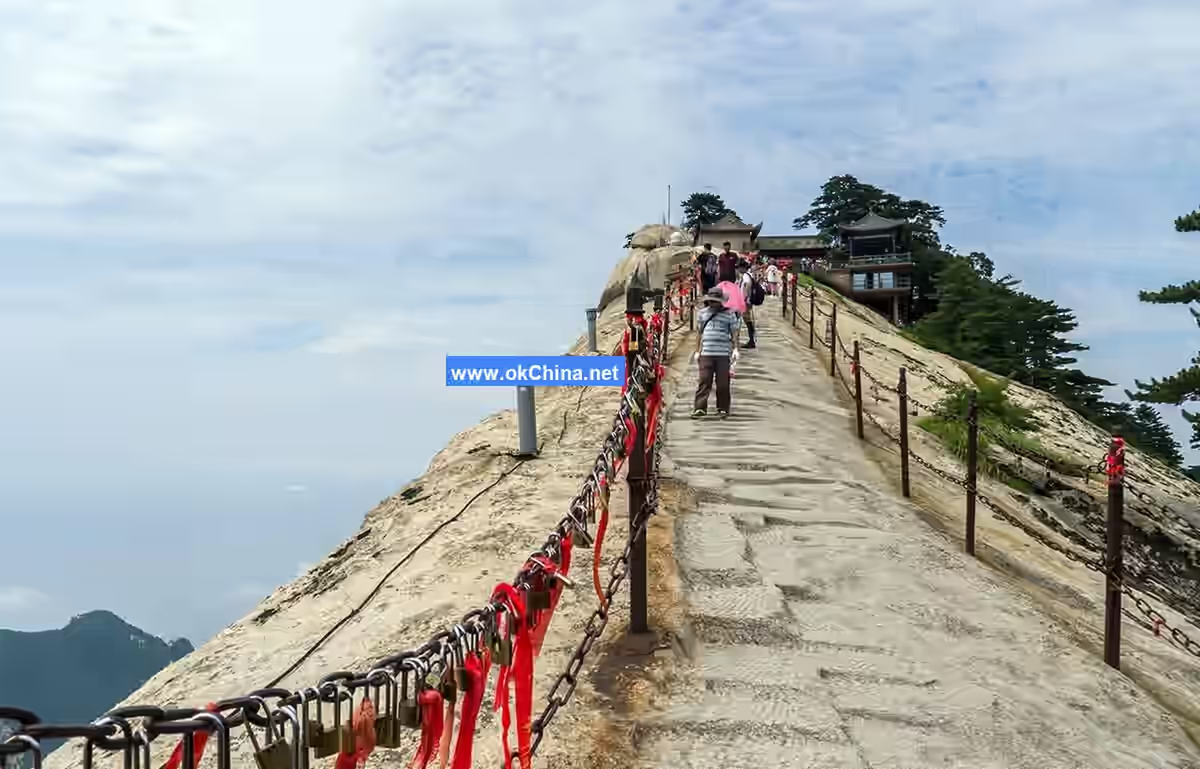
The "Tongtian Pavilion" is so named because it faces the Tongtian Gate at the Golden Lock Pass on the mountain peak. Exiting the Jade Spring Temple from here, the "Only Path to Mount Hua Since Ancient Times" begins underfoot, stretching for 25 li (approximately 12.5 kilometers) with a total of 9,567 steps. Along the way, you can enjoy enchanting landscapes and thrilling, awe-inspiring paths.
Comments
Post a Comment