Mount Emei Scenic Area, Leshan City
1. Introduction
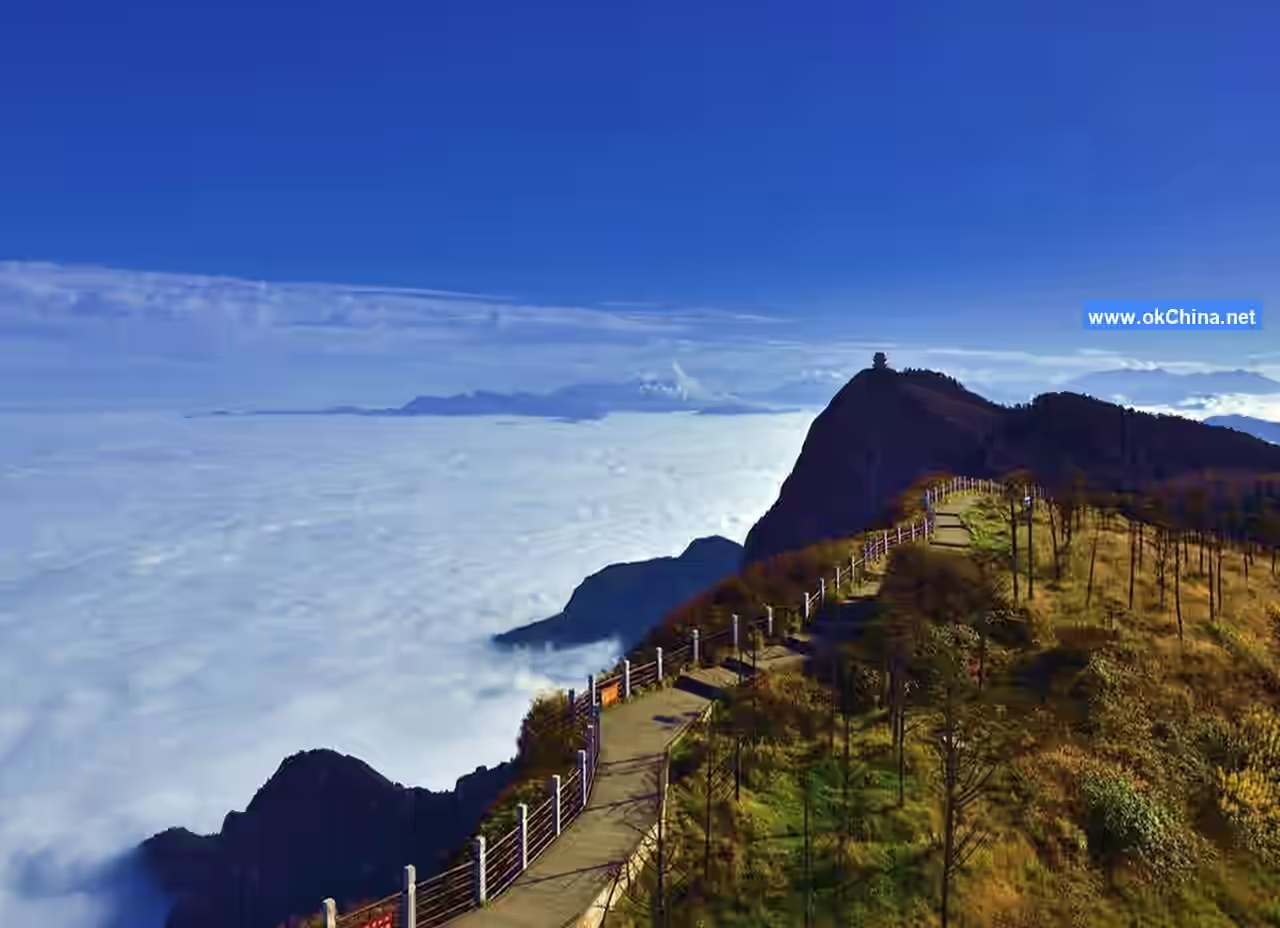
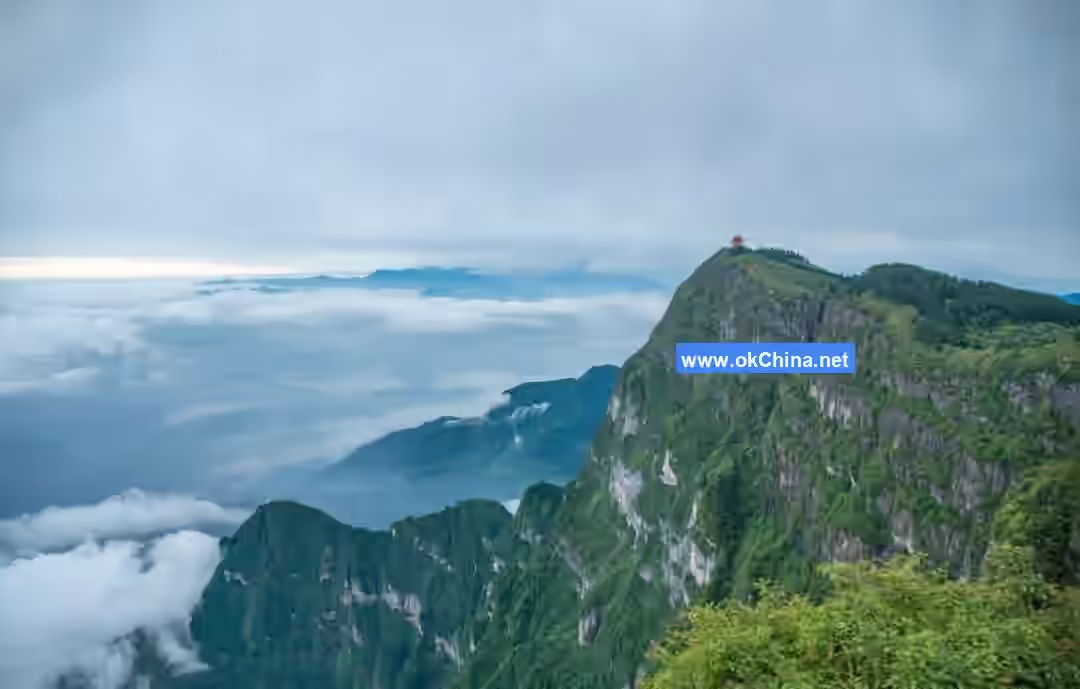
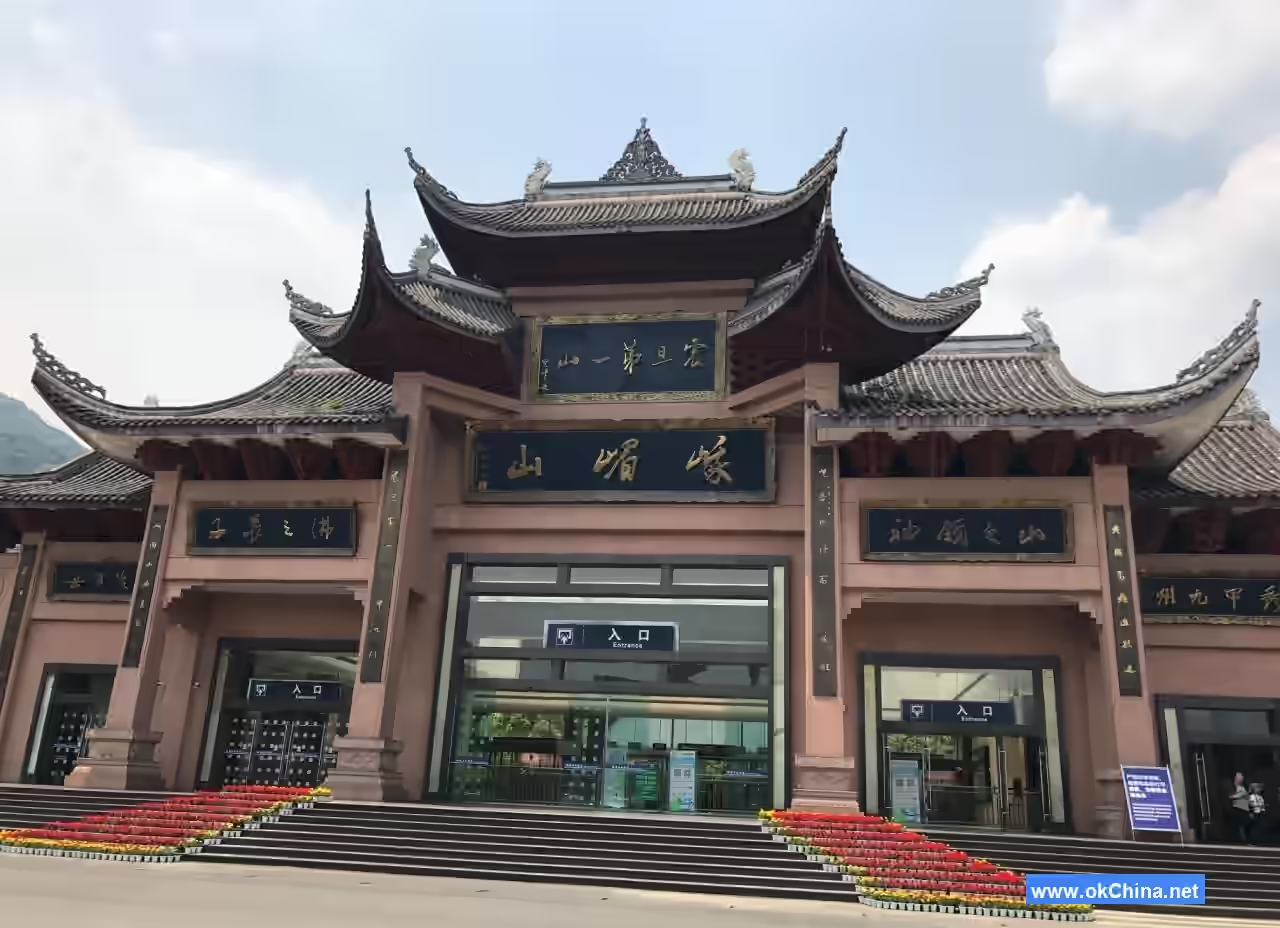
The Mount Emei Scenic Area, Leshan City, commonly referred to as the Mount Emei Scenic Area, is located within Leshan City, Sichuan Province. It covers an area of 154 square kilometers, with its highest peak, Wanfoding (Ten-Thousand-Buddha Summit), reaching an altitude of 3,099 meters. Renowned for its majestic, elegant, peculiar, perilous, and secluded characteristics, it is celebrated worldwide for its beautiful natural scenery, long-standing Buddhist culture, rich flora and fauna resources, and unique geological features. It is acclaimed as the "Land of Immortals and Buddhas," "Kingdom of Plants," "Paradise of Animals," and "Geological Museum."
2. Geographical Environment
2.1 Geographic Location
The Mount Emei Scenic Area, Leshan City, is situated at approximately E103°23′ longitude and N29°34′ latitude, within Emeishan City, Leshan City, Sichuan Province. The scenic area spans 623 square kilometers, with a core area of 154 square kilometers.
2.2 Topography and Landforms
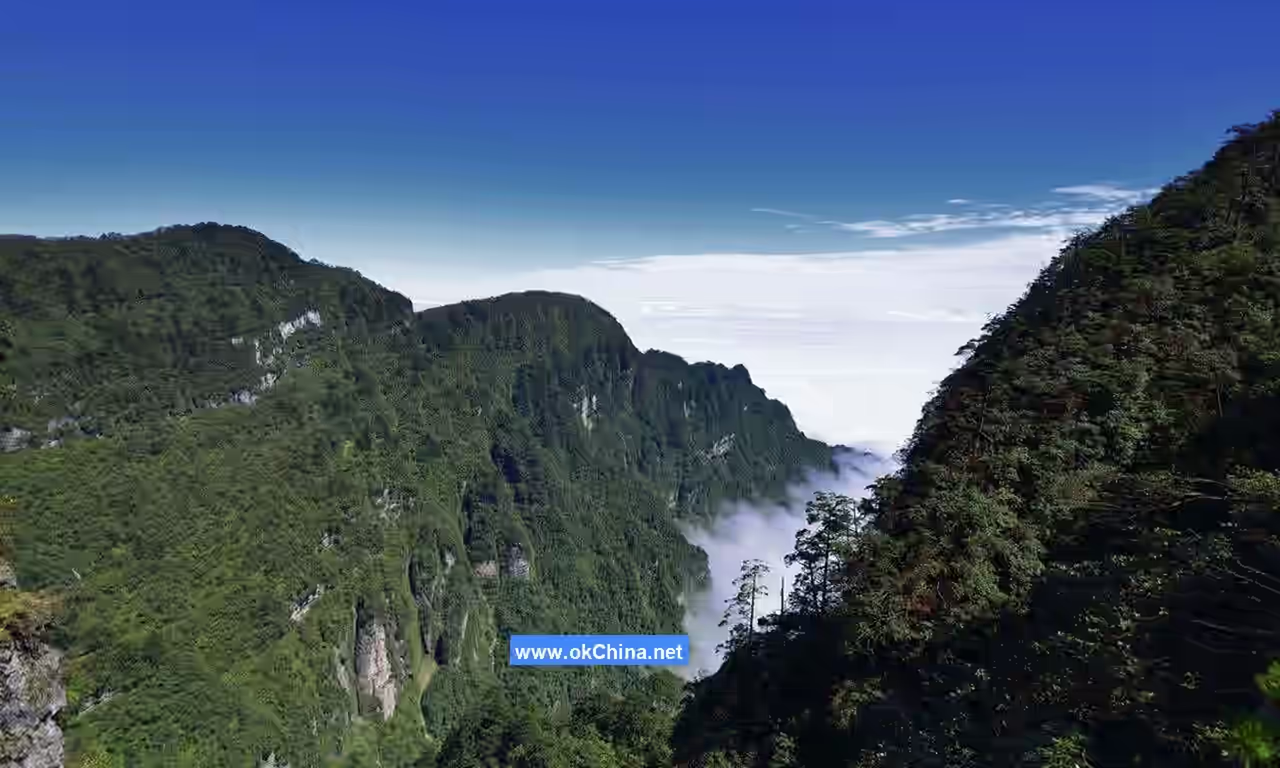
The summit of Mount Emei is covered by a large expanse of Paleozoic basalt. The underlying rock layers are protected and maintain their height. Due to intense fluvial erosion within the mountain, a "canyon and peak terrain" exceeding 2,000 meters in height has formed. The terrain along the climbing route varies with different strata: for example, areas within limestone layers feature karst cave landscapes like the Hidden Jiulao Cave; regions of granite and metamorphic rock form deep gorges; while the solid basalt at the summit presents a lava platform landscape.
2.3 Climate Characteristics
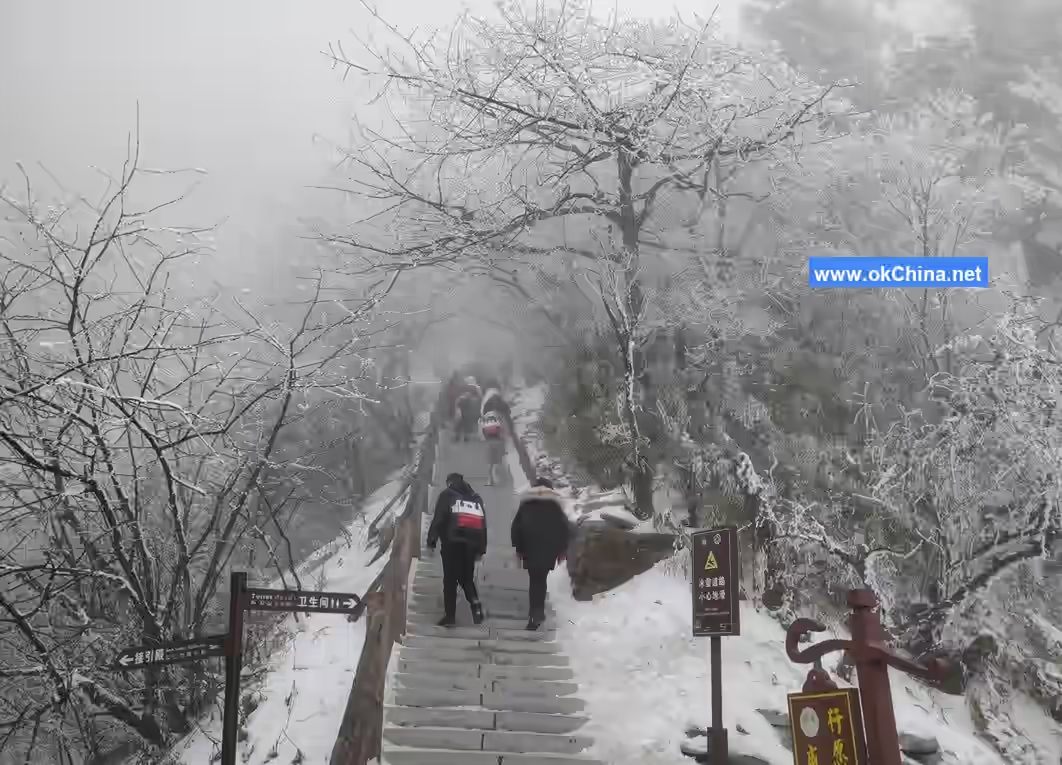
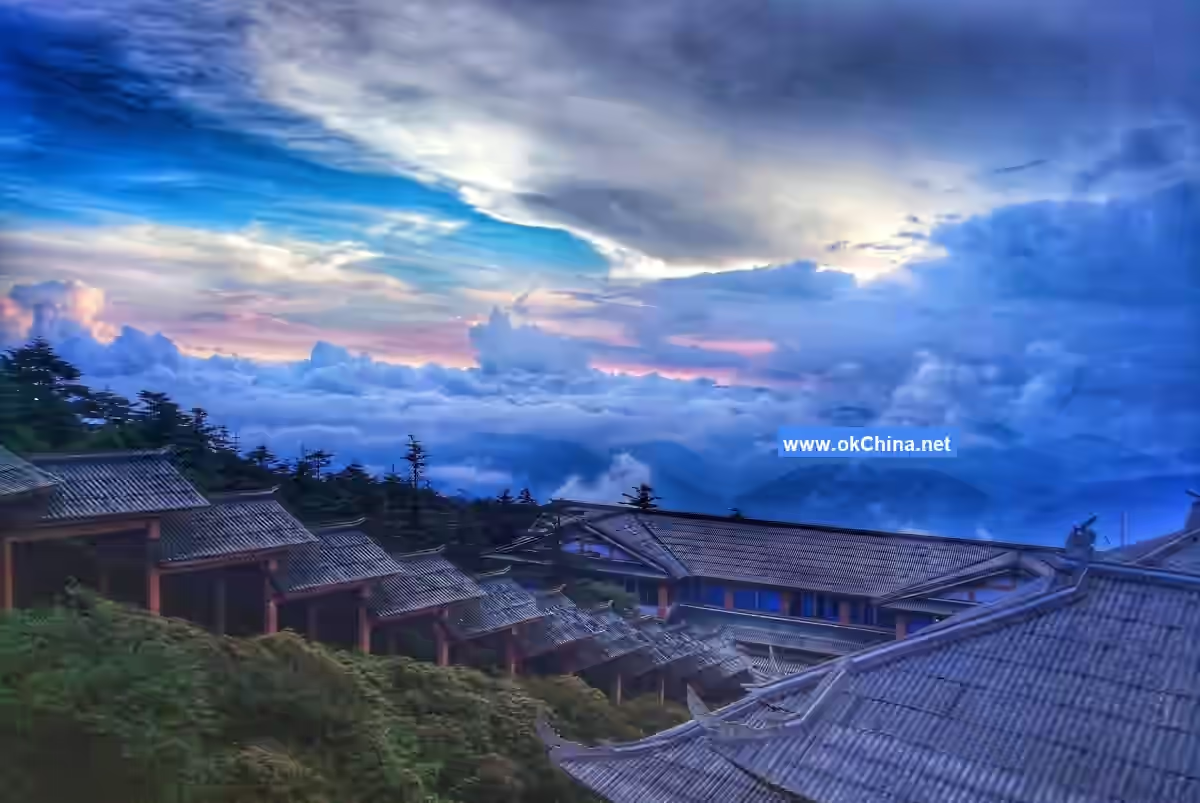
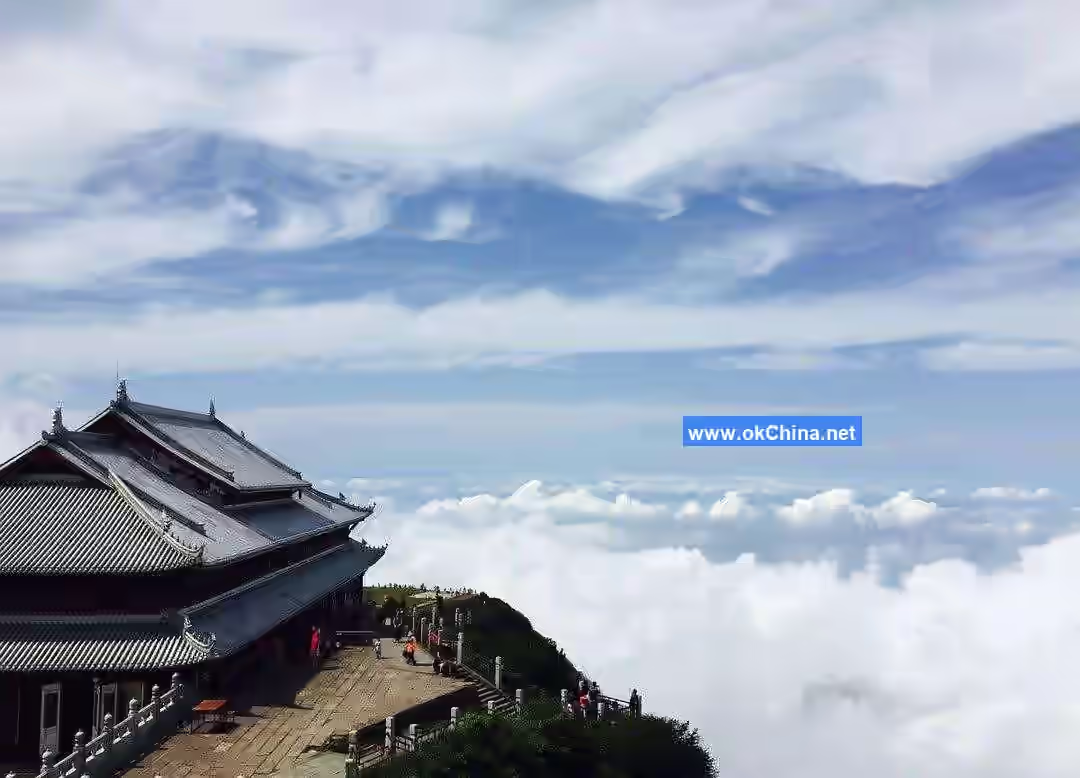
The scenic area experiences frequent cloud and fog, limited sunshine, and abundant rainfall. The plain areas belong to a subtropical humid monsoon climate, with average January temperatures around 6.9°C and average July temperatures around 26.1°C. The altitude range of 1,500 to 2,100 meters features a warm temperate climate; 2,100 to 2,500 meters, a mid-temperate climate; and above 2,500 meters, a subarctic climate.
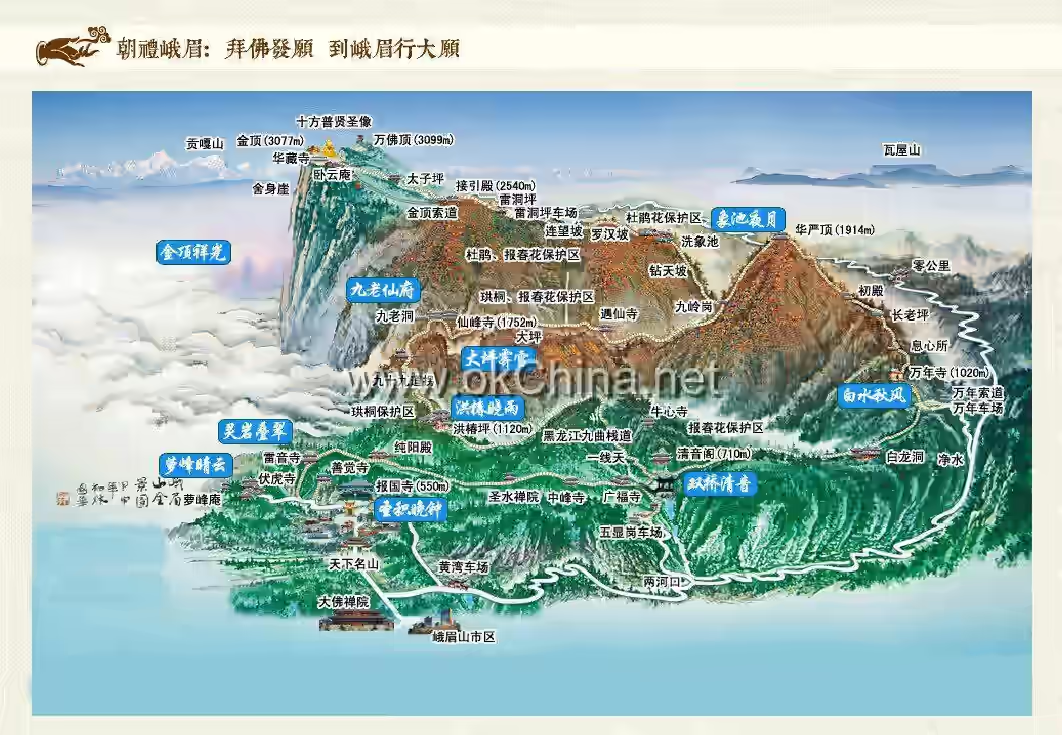
The scenic area exhibits different climate characteristics with varying altitudes. The area below Qingyin Pavilion is the low mountain zone, characterized by lush vegetation, cool breezes, and clear springs, with temperatures similar to the plains. The area from Qingyin Pavilion to Xixiang Pond is the mid-mountain zone, where temperatures are 4-5°C lower than the plains below. The area from Xixiang Pond to the Golden Summit is the high mountain zone, with temperatures about 10°C lower than places like Baoguo Temple at the mountain's base.
2.4 Natural Resources
2.4.1 Animal Resources
The Mount Emei Scenic Area, Leshan City, is home to over 3,200 species of wild animals. Among vertebrates, mammals belong to 7 orders, 23 families, and 51 species/subspecies. Aves is the largest class, with 16 orders, 43 families, and 256 species/subspecies, including 27 species endemic to China, 17 state-protected species, and 7 type specimens. Reptiles belong to 2 orders, 10 families, and 34 species/subspecies. Amphibians belong to 2 orders, 7 families, and 33 species/subspecies, their richness and diversity being rare nationwide. Among arthropods, butterflies of the order Lepidoptera in the class Insecta are most famous, with about 268 species. A total of 29 species in the scenic area are listed as national key protected animals, accounting for 12.08% of China's total protected animals, including 2 first-class and 27 second-class protected species, representing 2.2% and 18% of the national totals respectively. There are 157 rare and endemic species or those for which Mount Emei is the type locality.
2.4.2 Plant Resources
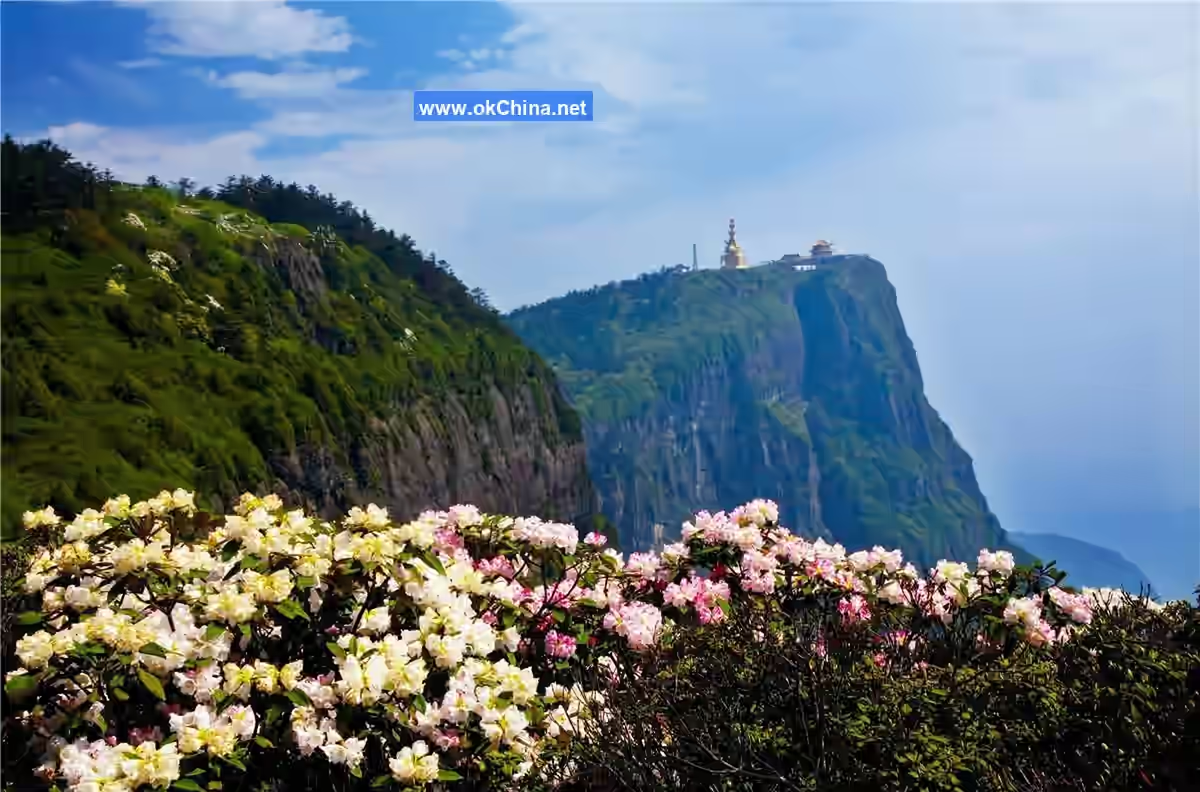
The Mount Emei Scenic Area, Leshan City, boasts abundant plant resources and is honored as the "Ancient Kingdom of Plants." The entire scenic area has nearly 5,000 plant species, including over 3,200 known species of higher plants belonging to 242 families, accounting for 1/10 of China's total plant species. There are 107 endemic plant species, representing 11.56% of China's endemic plants. Thirty-one species are among the first batch of national key protected plants, accounting for 10% of the national total, including two of China's eight first-class protected plants: Alsophila spinulosa and Davidia involucrata. Mount Emei is also known as the "Mountain of Medicinal Herbs," possessing rich medicinal plants. According to a survey at the end of 1984, there are 1,655 species of medicinal plants belonging to 868 genera and 212 families, accounting for 33% of the mountain's total plant species. Rare medicinal organisms are a major advantage and characteristic of Mount Emei's biological resources. The forest coverage rate of the entire scenic area reaches 87%.
3. Main Attractions
3.1 Wanfoding (Ten-Thousand-Buddha Summit)
Wanfoding is the highest-altitude scenic spot and natural ecological reserve among China's four famous Buddhist mountains, and also the highest-altitude World Natural and Cultural Heritage site in China. Heading west from the Golden Summit lies Qianfoding (Thousand-Buddha Summit).
3.2 Golden Summit and Golden Buddha
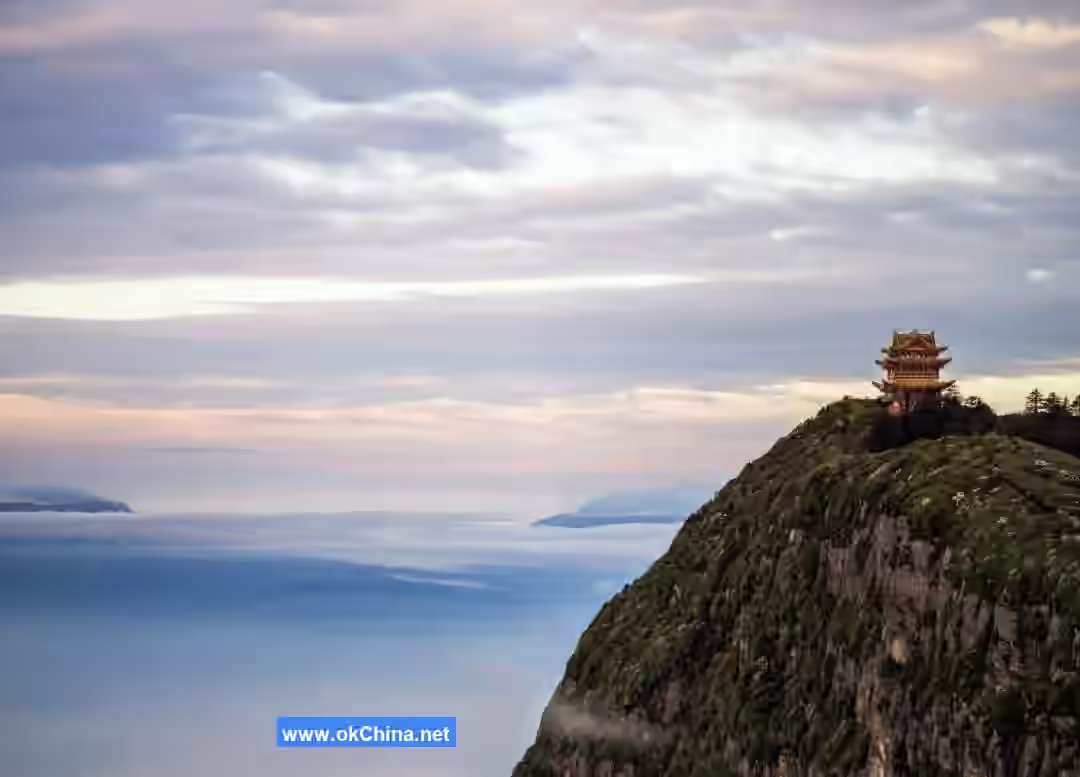
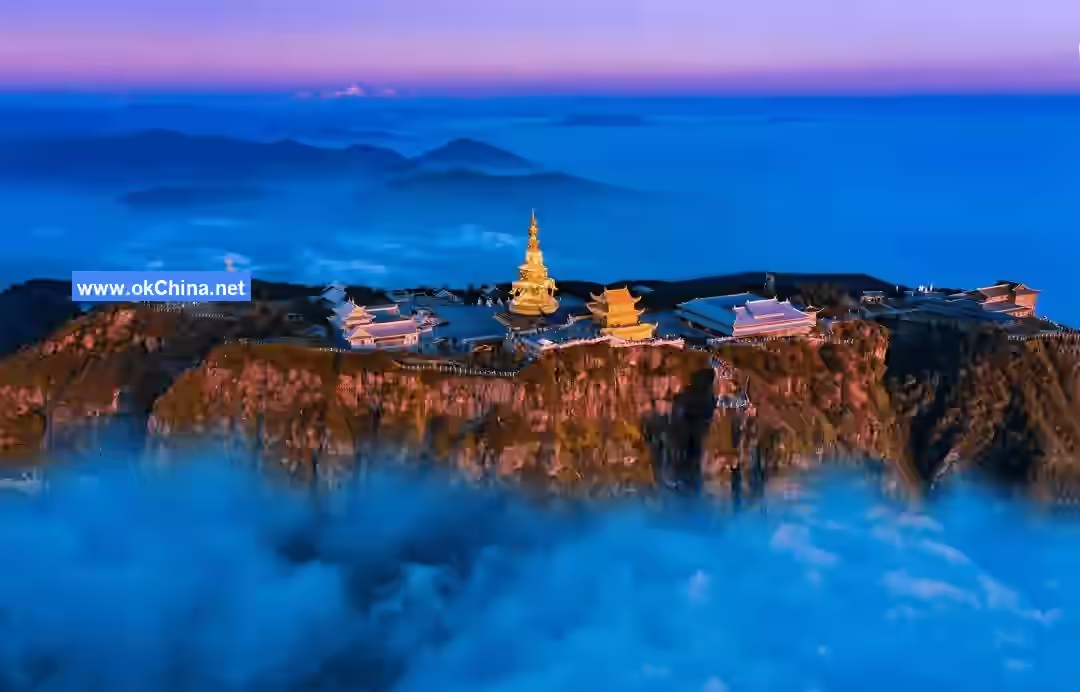
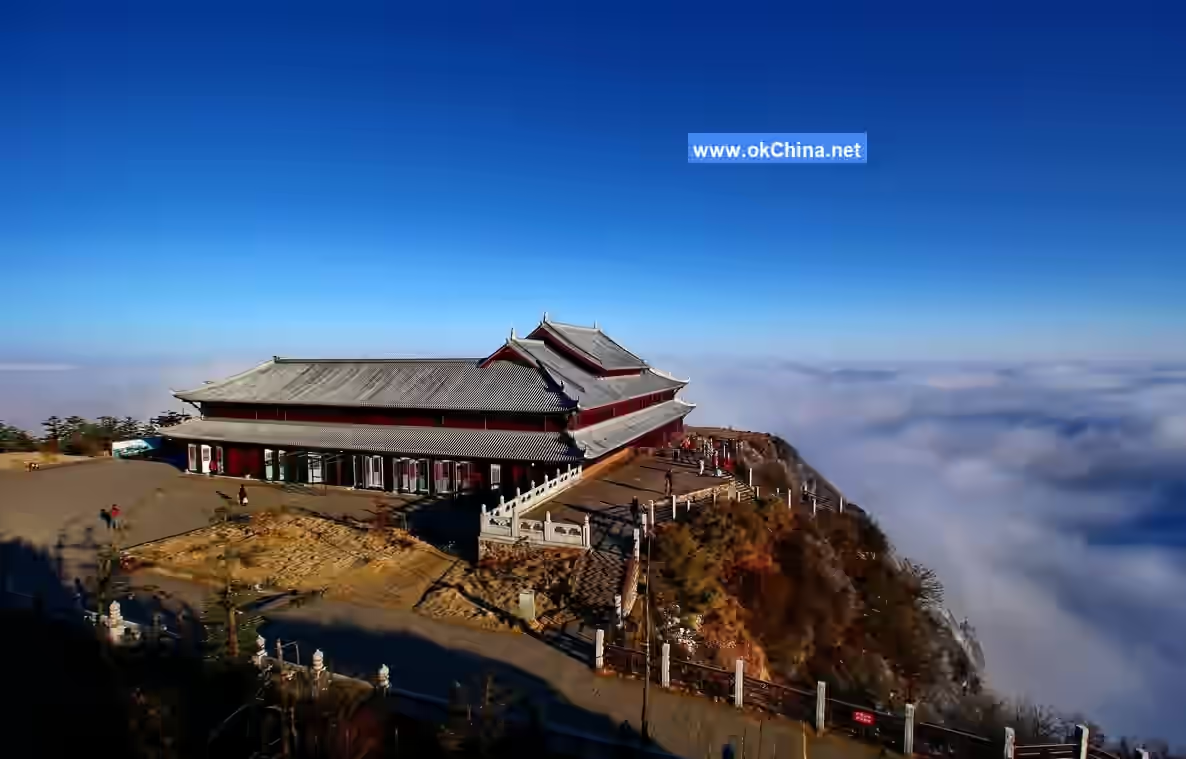
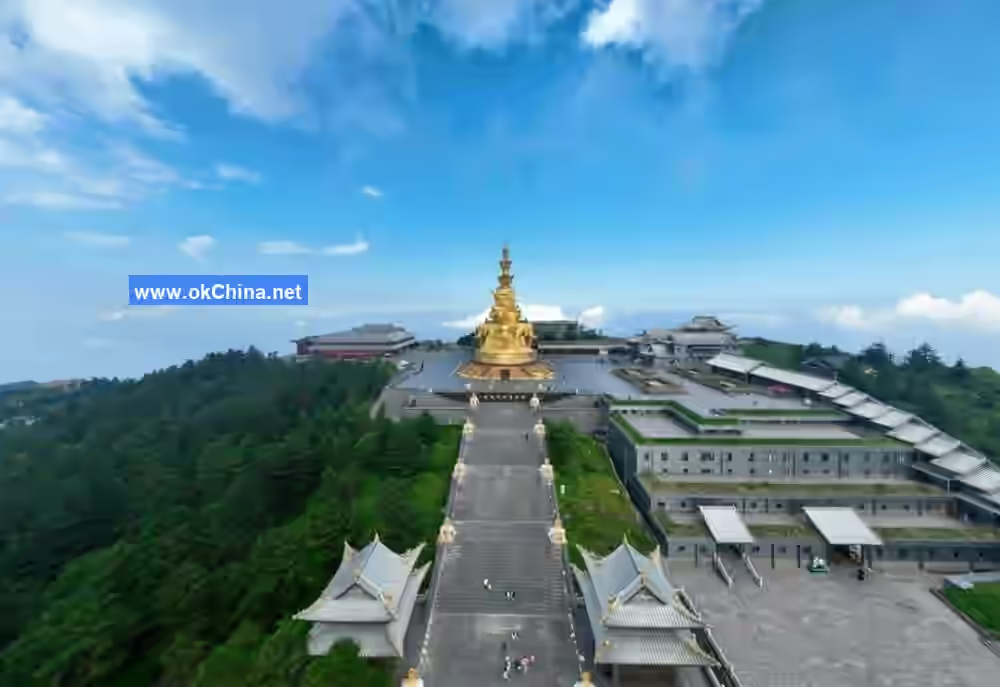
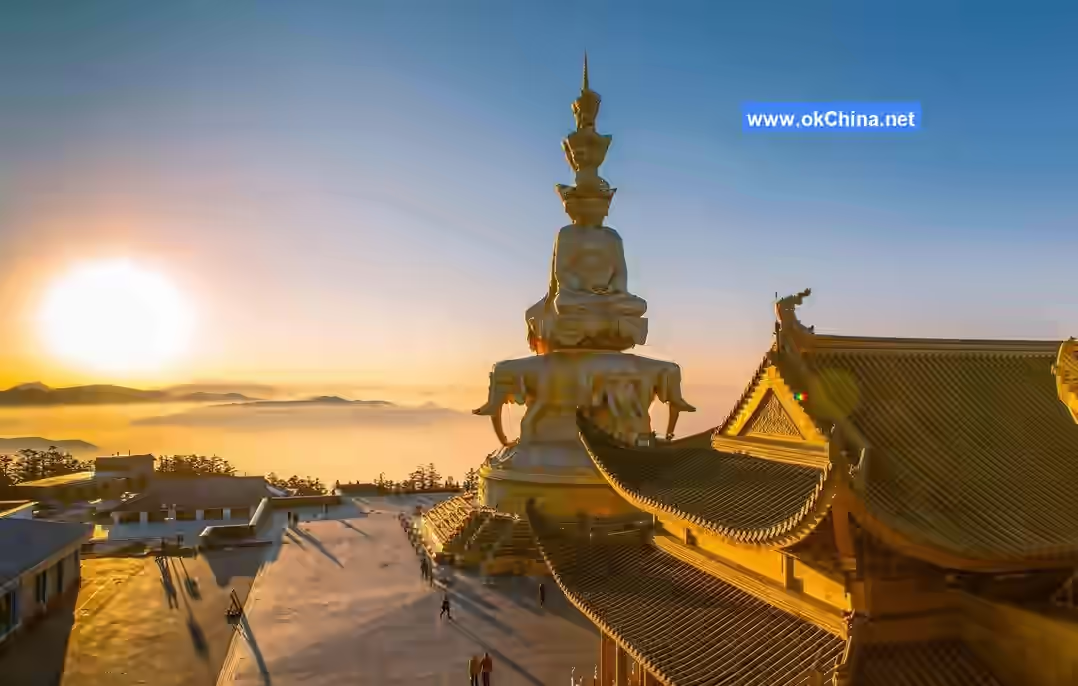
The Golden Summit is the symbol of Mount Emei, and the Golden Buddha is its landmark. The Golden Summit is a concentration of Mount Emei's scenic spots and temples, featuring a 48-meter-high gilded statue of Samantabhadra facing ten directions.
3.3 Jieyin Hall (Welcoming Hall)
Named Xindian in the Song Dynasty, Jieyin Hall is located at the mountain's base at an altitude of 2,540 meters. After several destructions and reconstructions, the current hall was completed in 1997, with an inauguration ceremony held the same year.
3.4 Xixiang Pond (Elephant Bathing Pond)
Xixiang Pond is one of the eight major temples of Mount Emei, situated on the Zuantian Slope at an altitude of 2,070 meters, 25 li (about 12.5 km) from Xianfeng Temple. In the Ming Dynasty, it was merely a pavilion called "Chuxi Pavilion," later rebuilt into a nunnery named Chuxi Nunnery.
3.5 Da'e Mountain (Great Mount Emei)
Da'e Mountain is the main peak of Mount Emei, with an altitude of 3,099 meters. The mountain range features undulating peaks, layered cliffs, and verdant scenery. The distance from the foothills to the summit is over 50 kilometers, with winding stone paths leading straight into the clouds. The Golden Summit is covered by a large area of weathering-resistant basalt, forming a relatively flat summit surface with a dip angle of 10-15 degrees. To the east of the Golden Summit lies Paleozoic carbonate rock, where intense dissolution along anticlinal fissures has formed a steep cliff (Sheshen Cliff) 800 meters high and deep ravines.
3.6 Er'e Mountain (Second Mount Emei)
Also known as Fupeng Mountain or Sui Mountain, Er'e Mountain runs northeast-southwest and is composed of granite, dolomite, etc. Its main peak resembles an overturned cauldron, with an altitude of 1,909 meters. The forest is mainly composed of Japanese cedar, mixed hardwoods, and bamboo, with a forest farm established. Local products include tea, bamboo shoots, tung oil, raw lacquer, and Chinese medicinal herbs. The Zhugan Cave on the western foothills is a Taoist scenic spot. To the south lies Ziyun Cave, traditionally believed to be where Lü Dongbin practiced cultivation in the Tang Dynasty.
3.7 San'e Mountain (Third Mount Emei)
Also known as Huaren Mountain or Xihuang Mountain, San'e Mountain is located southwest of Shawan Town, Leshan. It is 13 kilometers long and 7 kilometers wide, with its main peak reaching 2,027.1 meters, towering 1,625 meters above the river surface in Shawan Town. Exposed strata include the Sinian, Cambrian, Ordovician, and Permian systems, with basalt covering the summit. The eastern slope is steep. Its formation began at the end of the Neogene period. It contains mineral resources such as copper and aluminum.
3.8 Si'e Mountain (Fourth Mount Emei)
Si'e Mountain is located 20 li (about 10 km) north of Great Mount Emei and 5 kilometers north of Emeishan City proper, with an altitude of 982 meters. Because its ridges resemble flower petals, it is also called Flower Mountain, or is considered to be the Wuyang Longwei Mountain mentioned in the Commentary on the Waterways Classic. The mountain houses Yuantong Temple, and at its summit lies the ancient Guanyin Nunnery, the earliest built temple, which was the site where the eminent Ming Dynasty monk, Master Yinzong (from Mianzhou, Sichuan), discussed Zen and built a thatched hut.
3.9 Major Temples
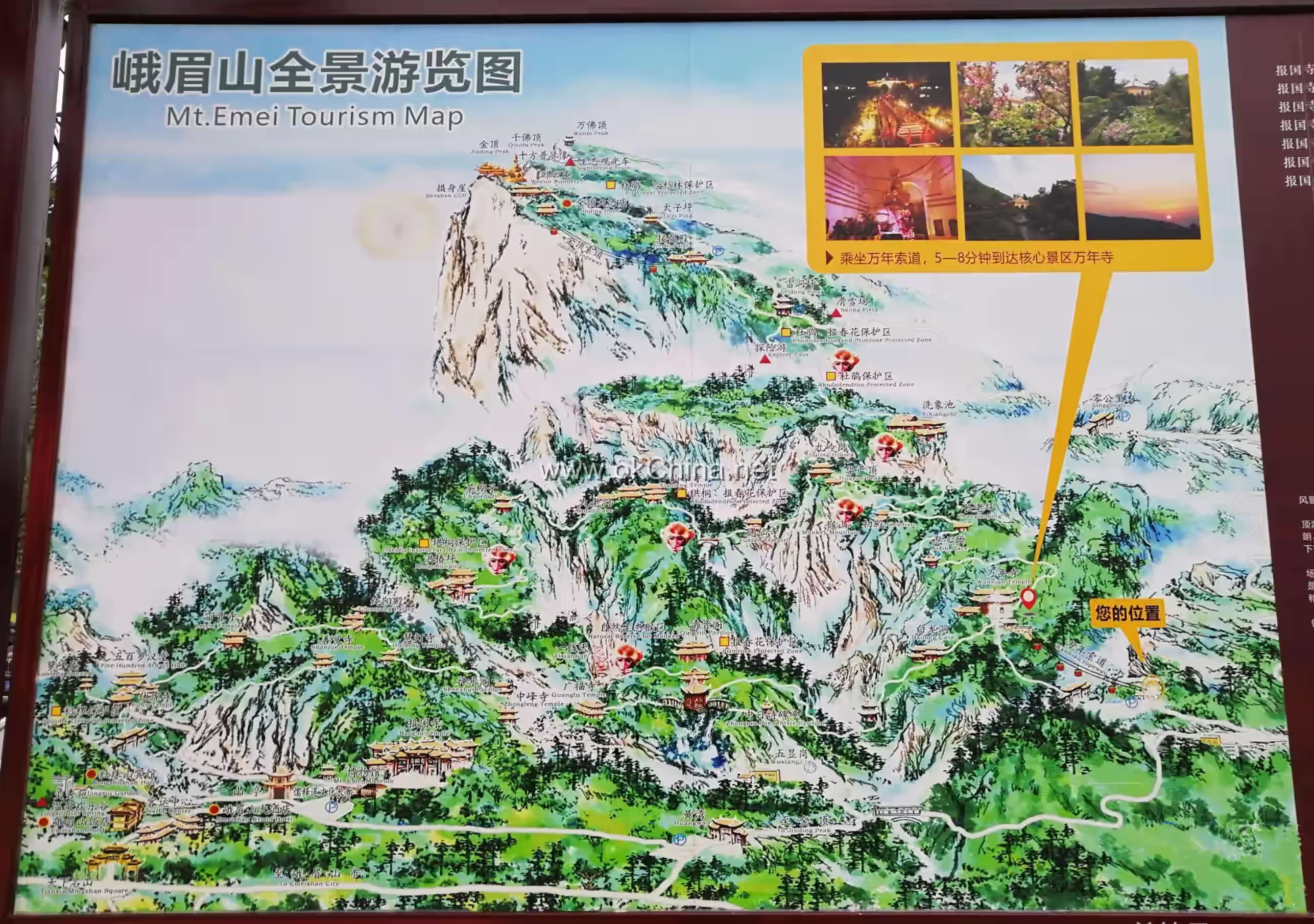
Mount Emei originally had over a hundred temples of various sizes. After several periods of prosperity and decline, the main existing temples include Wannian Temple, Baoguo Temple, Fuhu Temple, Shanjue Temple, and Guangxiang Temple.
-
Wannian Temple (Ten-Thousand-Year Temple): Initially built in the 3rd year of Long'an in the Jin Dynasty (399 AD) by Master Huichi, it was first named Puxian Temple. During the reign of Emperor Xizong of Tang (887-888), Master Huitong rebuilt it and renamed it Baishui Temple. In the Song Dynasty, it was renamed Baishui Puxian Temple. In the 29th year of Wanli in the Ming Dynasty (1601), Emperor Shenzong renamed it Shengshou Wannian Temple to celebrate the Empress Dowager's 70th birthday. It was further renovated in the Qing Dynasty. A major fire in 1946 destroyed almost everything except the brick hall. The current Wannian Temple was restored in 1954 with funding from the People's Government.
-
Baoguo Temple (Serve the Nation Temple): This is the first temple upon entering Mount Emei. Initially built during the Wanli period of the Ming Dynasty (1573-1619), it was originally named Huizong Hall. It was relocated and rebuilt here in the early Qing Dynasty, specifically rebuilt in the 9th year of Shunzhi. In the 42nd year of Kangxi (1703), Emperor Kangxi, drawing from the Buddhist scripture concept of "Four Kindnesses and Four Repayments" and the meaning of "repaying the kindness of the nation's ruler," inscribed the plaque "Baoguo Si" (Serve the Nation Temple), with Wang Fan writing the characters. Baoguo Temple has undergone several renovations throughout history, allowing the temple complex to be preserved intact.
-
Fuhu Temple (Subdued Tiger Temple): Also known as Fuhu Chanyuan, Shenlong Hall, or Huxi Jingshe. According to the Mount Emei Annals, it was first built by the monk Xin'an during the Jin Dynasty. It was established at the base of Fuhu Ridge, which resembles a crouching tiger, hence the name Fuhu Temple. It was rebuilt by Master Yun'an in the Tang Dynasty, gradually expanding in scale. During the Shaoxing period of the Southern Song Dynasty, the traveling monk Xin'an rebuilt it again, and the monk Shixing built a Zunsheng Chuang (victory pillar) to subdue tiger troubles, renaming it Fuhu Temple, a name that has been used ever since.
-
Shanjue Temple (Good Enlightenment Temple): Originally named Xianglong Temple (Subdued Dragon Temple), it was first built during the Wanli period of the Ming Dynasty by Master Daode, positioned to correspond distantly with Fuhu Temple to the left. In the early Qing Dynasty, the abbot, Master Yuanheng, was highly virtuous and renowned, his reputation reaching the imperial court. Legend has it that when Emperor Kangxi visited Mount Emei, the temple monks, to avoid the taboo of the "True Dragon Son of Heaven," changed the name from Xianglong Yuan to Shanjue Temple. In the Renwu year of Kangxi (1702), Emperor Kangxi inscribed the plaque "Shanjue Si" (Good Enlightenment Temple), and the name "Xianglong Yuan" was subsequently abandoned.
-
Guangxiang Temple (Light Manifestation Temple): Because the bronze hall on the peak emitted light under sunlight, it was named Golden Summit, also called "Golden Summit Temple." It is said to have been built in the Eastern Han Dynasty, originally named Puguang Hall. It experienced periods of prosperity and ruin throughout history. The main hall, Yongming Huazang Temple, was rebuilt in the 12th year of Guangxu in the Qing Dynasty (1886). At the highest point behind the hall, there was originally a bronze-cast Buddha hall built in the 31st year of Wanli in the Ming Dynasty (1603), measuring about 4.8 meters wide, 4.5 meters deep, and 8.3 meters high. It housed a bronze statue of Samantabhadra Bodhisattva, with ten thousand Buddhas cast on the four walls. Both the bronze hall and Huazang Temple were destroyed by fire. Two bronze pagodas remain near the site of the bronze hall.
Additionally, there are other temples such as Da'an Temple, Dafo Chanyuan (Great Buddha Temple), Huazang Temple, Qingyin Pavilion, Xianfeng Temple, Xixiang Pond, Shengshui Chanyuan, and Hongchunping.
4. Cultural Resources
4.1 Origins of Mount EmeiRegarding the origin of the name "Emei Mountain," opinions vary. As early as the Spring and Autumn and Warring States periods, Emei Mountain was already renowned. The name "Emei Mountain" can be traced back to the Western Zhou Dynasty. According to the Records of Huayang compiled by Chang Qu of the Jin Dynasty: "Duyu regarded Baoxie (present-day Hanzhong, Shaanxi) as the front gate, Xiong'er (within present-day Qingshen County, Sichuan) and Lingguan (northwest of present-day Lushan County, Ya'an, Sichuan) as the back doors, and Yulei (within present-day Dujiangyan City, Sichuan) and Emei (within present-day Emeishan City, Sichuan) as the city walls." Zuo Si of the Jin Dynasty wrote in Ode to the Capital of Shu: "Drawing the twin flows of the two rivers, confronting the formidable barriers of Emei." The Shi Dao Zhi of the Tang Dynasty states: "The famous mountain of the Jiannan Circuit is called Emei. Lu Shen remarked that the mountain spans a thousand li in circumference and rises eighty li in height." However, the reason for the name "Emei" remains unclear. One theory suggests it is named for its "lofty mountains and beautiful waters," while another attributes it to "two mountains facing each other." Yet another explanation is that Emei Mountain stands by the Dadu River, which was anciently known as the "E River." The mountain was named for its affinity with the water, hence "Emei Mountain." The name "Emei Mountain" evolved from "Emei" because it is a mountain, thus departing from the water. This theory was proposed by the modern scholar Zhao Xi: "The mountain lies at the eyebrow of the E River. 'Eyebrow' here means 'riverbank,' named after the water." Since the Spring and Autumn and Warring States periods, Emei Mountain has a history of over 2,000 years and has long been celebrated as "the most elegant mountain under heaven."
Emei Mountain is also known as "Yamen Mountain" or "Emel Mountain." Zhang Hua of the Western Jin Dynasty wrote in Records of Diverse Matters: "A hundred li west of Nan'an County (within present-day Leshan City, Sichuan) lies Yamen Mountain." Gu Zuyu of the Qing Dynasty noted in Reading History and Surveying the Territory: "It is also called Emel Mountain because the two mountains face each other like the delicate eyebrows of a moth."
4.2 Buddhist Culture
It is said that Buddhist temples existed as early as the Han Dynasty. However, according to the Annals of Emei Mountain, the earliest Buddhist temple on Emei Mountain was actually the Heishui Temple built by the monk Sengzhao during the Wei and Jin periods. In the third year of the Long'an era of the Jin Dynasty (399), the monk Huichi traveled from Mount Lu to Shu and built the Puxian Temple there, enshrining the Bodhisattva Samantabhadra. Legend has it that Emei Mountain thus became the sacred site of Samantabhadra. During the reign of Emperor Xizong of the Tang Dynasty, the Yongming Huazang Temple was commissioned, and six major temples—Zhongfeng, Zhongxin, Huayan, Wannian, Heishui, and Lingyan—were rebuilt. Due to frequent fires in the mountains, the temples were renamed Jiyun, Woyun, Guiyun, Heishui, and Baishui, using "three clouds and two waters" to suppress the fire element. Later, the Heishui Temple came to be known as the ancestral hall of Emei Mountain. In the fifth year of the Taiping Xingguo era of the Northern Song Dynasty (980), the monk Maozhen of the Baishui Temple was commissioned to rebuild the six major temples and cast a bronze statue of Samantabhadra weighing sixty-two tons, which was enshrined in the Baishui Temple (now the Wannian Temple).
In the mid-1st century AD, Buddhism was introduced to Emei Mountain from India via the Southern Silk Road. The herbalist Pu Gong built the Puguang Hall at the present-day Golden Summit. In the 3rd century, the belief in Samantabhadra spread throughout the mountains, and the Chinese monk Huichi constructed the Puxian Temple (now the Wannian Temple) at the foot of Guanxin Slope. By the mid-6th century, the center of world Buddhism gradually shifted from India to China, with Sichuan becoming a hub for Chinese Chan Buddhism. The construction of Buddhist temples flourished, with over 100 temples at its peak. In the 8th century, Chan Buddhism thrived exclusively, unifying the entire mountain. In the mid-9th century, Emperor Taizu of the Song Dynasty, Zhao Kuangyin, dispatched a delegation led by the monk Jiye to India. Upon their return, Jiye was tasked with building temples on the mountain, translating scriptures, spreading Buddhist teachings, and casting a massive bronze statue of Samantabhadra weighing 62 tons and standing 7.85 meters tall, which was enshrined in the present-day Wannian Temple. This statue became a masterpiece among Emei Mountain's Buddhist icons, boasting immense cultural and artistic value. For thousands of years, Emei Mountain, known as the "sacred Buddhist site" and the "Samantabhadra sacred site," has been celebrated alongside Mount Wutai in Shanxi, Mount Putuo in Zhejiang, and Mount Jiuhua in Anhui as one of China's Four Sacred Buddhist Mountains.
Over the long course of history, Emei Mountain has accumulated a wealth of Buddhist cultural treasures and preserved numerous precious artifacts. The scenic area currently houses 30 temples with a total construction area of approximately 100,000 square meters. Among them, the Feilai Hall and the brick-built Wannian Temple without beams are designated as national first- and second-class protected sites. The Buddhist artifacts are diverse, including the Huayan Bronze Pagoda, which stands 5.8 meters tall, has seven sides and fourteen tiers, and is inscribed with the entire Avatamsaka Sutra and over 4,700 Buddha images; the Ming Dynasty bronze Buddha statue in the Wannian Temple; and the Pattra Sutra gifted by the King of Siam during the Ming Dynasty, all of which are masterpieces. Emei Mountain boasts 164 cultural heritage sites and over 6,890 artifacts in temples and museums, including more than 850 nationally protected items, each with distinct historical, cultural, and artistic value.
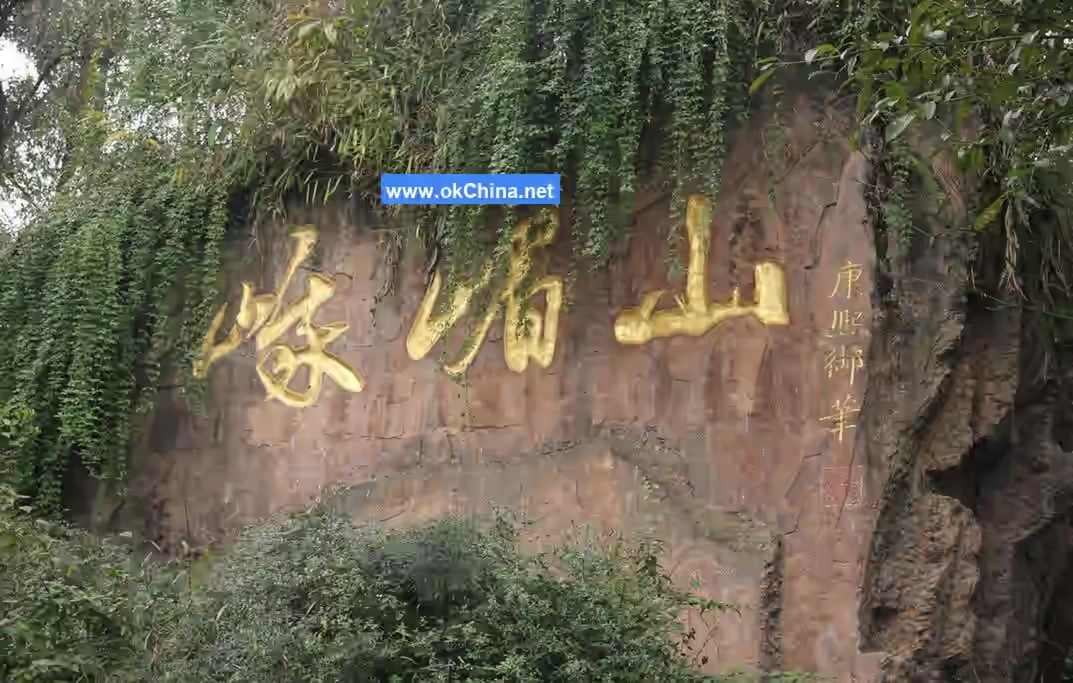
As a "sacred Buddhist site," Emei Mountain has been renowned for millennia not only due to the propagation of Buddhist teachings and the devotion of followers but also because of the praise, records, and dissemination by notable scholars, poets, and literati. Poets such as Li Bai and Su Dongpo left numerous verses extolling Emei Mountain. Not far from the foot of the Second Emei Mountain (ancient Suishan) in Shawan Town lies the former residence of the modern literary giant Guo Moruo. Guo Moruo wrote many poems about Emei, earning him the title of "Emei poet," and he inscribed the words "Famous Mountain Under Heaven."
4.3 Martial Arts Culture
The historical evolution of the Emei School of martial arts differs from that of the Shaolin and Wudang schools. The Shaolin School is traditionally said to have been founded by Bodhidharma, the ancient Indian monk and founder of Chinese Chan Buddhism, during the Northern and Southern Dynasties. The Wudang School was established by the Taoist Zhang Sanfeng in the early Ming Dynasty. The origins of the Emei School predate both. Based on existing historical research, the gestation period of Emei martial arts can be traced back to ancient times, taking shape during the Spring and Autumn and Warring States periods, with the "Emei Tongbi Quan" of the White Ape Ancestor (Situ Xuankong) serving as historical evidence. The geographical definition of Emei martial arts remains debated among historians. Broadly speaking, Emei martial arts originated on Emei Mountain, hence the name, and spread throughout the Ba-Shu region (most of southwestern China). Due to similar geographical environments and shared cultural and natural characteristics, the various martial arts schools in this region developed highly similar styles and features, collectively referred to as the "Emei School of martial arts," forming a major regional martial arts system centered on Emei Mountain.
Theoretically, the Emei School is one of the three major traditional Chinese martial arts schools. Martial arts, derived from forms of military skills, are closely linked to social ideology. In their formation and development, they are inevitably influenced by contemporary political, economic, cultural, and regional factors. Therefore, during its gestation period, Emei martial arts was unavoidably shaped by the deeply rooted shamanistic culture of the Ba-Shu region. During its formation, it benefited from Taoist practices of health preservation and breath control, as well as the essence of Buddhist internal and external cultivation. In its development, it was influenced by the cultures of Chu-Yue, the Central Plains, and Ba-Shu, representing the wisdom and crystallization of the various ethnic groups in Ba-Shu over thousands of years.
4.4 Tea Culture
In the over 4,000 years of recorded civilization on Emei Mountain, the history of Emei tea and its tea culture hold a significant position. Together with Emei Mountain's Taoist, Buddhist, Confucian cultures, and the Emei School of martial arts, they form the grand cultural panorama of Emei Mountain. According to verifiable classical literature, the history of Emei tea and tea-related activities can be traced back to the earliest primitive agricultural period in the Emei region around 300 years ago. The first to select and drink the wild ancient tea from the forests of Emei Mountain were the early Taoist figures of ancient China, who flocked to the mountain in search of immortality practices during the ancient agricultural era.
The Emei School of tea ceremony began around 845 AD, founded by the Chan master Changfu of Emei Mountain (a native of present-day Meishan). He compiled the tea ceremony codex The Pure Precepts of the Emei Tea Ceremony School. By 880 AD, he had taught tea methods to 62 monks, and in 881 AD, he entrusted the tea ceremony rules to the monk Longyuan of the Wannian Temple. The spirit of the Emei tea ceremony is "wisdom and beauty," not bound by traditional standards. Longyuan, a native of Emei Mountain, was highly skilled in tea cultivation and processing. Through his efforts, the Emei tea ceremony incorporated tea planting and processing methods, gaining support and practice from many lay disciples. In later times, it became widely known that generations of eminent monks on Emei Mountain were adept at growing and making tea. Famous Chinese teas such as "Zhuyeqing," "Emei Xueya," "Emei Baiya," and "Miaopin" are premium green tea products cultivated and produced by these monks over the centuries.
4.5 Mountain Specialties
-
Emei Xueya: Thrives at altitudes of 800–1,200 meters on Emei Mountain, particularly around Chicheng Peak, Baiyan Peak, Yunü Peak, Tianchi Peak, Jingyue Peak, and the Wannian Temple area, where mist and clouds linger year-round. The tea leaves are characterized by their flat, smooth, straight, and pointed appearance.
-
Sichuan Fritillaria: An excellent medicine for moistening the lungs and relieving coughs. Functions and indications: Clears heat, moistens the lungs, resolves phlegm, and relieves coughs. Used for dry coughs due to lung heat, scanty phlegm, consumptive coughs from yin deficiency, and coughing with blood. Usage: Decoct in water or grind into powder for consumption. Contraindications: Not to be used with aconite.
-
Cinnabar Lotus: A rare and precious medicinal herb on Emei Mountain. Summer tourists suffering from abdominal or stomach pain due to heat can grind it into water for quick relief. Its rhizomes are used medicinally, with cold properties and a bitter, pungent taste. Functions and indications: Clears heat, detoxifies, reduces swelling, and relieves pain.
-
Emei Mountain Bitter Bamboo Shoots: Known for their sweet crispness, pure flavor, and richness in vitamins, they also have effects such as clearing the liver, benefiting the gallbladder, and invigorating yang. Emei Mountain has a bitter bamboo base covering 50,000 mu, radiating to nearly 70,000 mu in surrounding counties, producing 120,000 tons of fresh bitter bamboo shoots annually and processing 10,000 tons of canned products.
-
White Wax: Also known as insect white wax or Sichuan wax, Emei Mountain is the origin of insect white wax, a rare global specialty and a traditional Chinese export commodity. Because it is produced only in China, it is called "Chinese wax," and due to its primary production in Sichuan, it is also known as "Sichuan wax."
Comments
Post a Comment