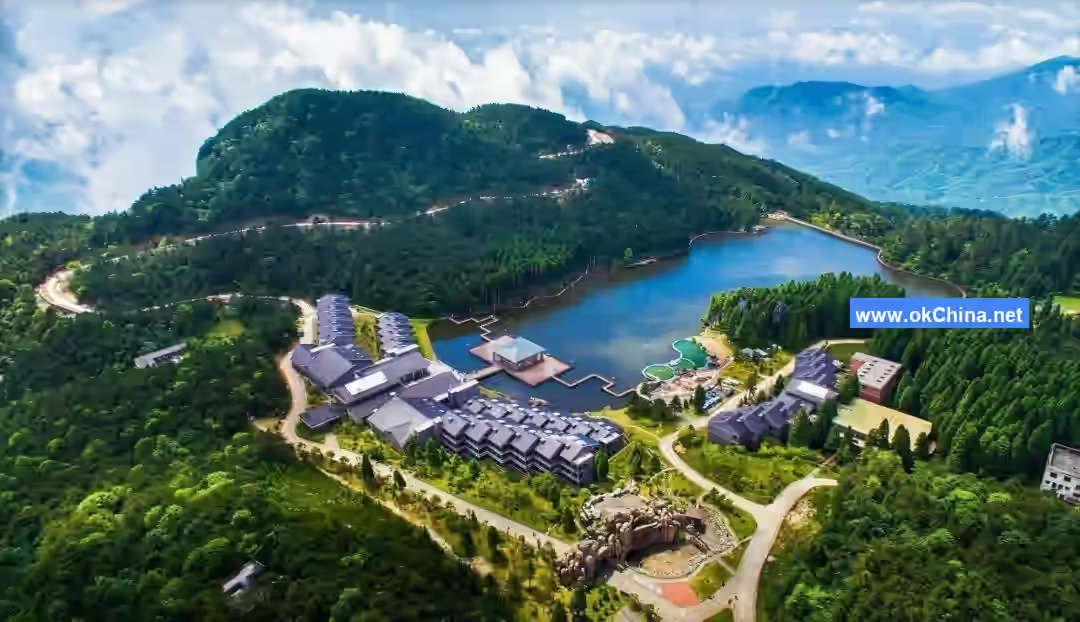
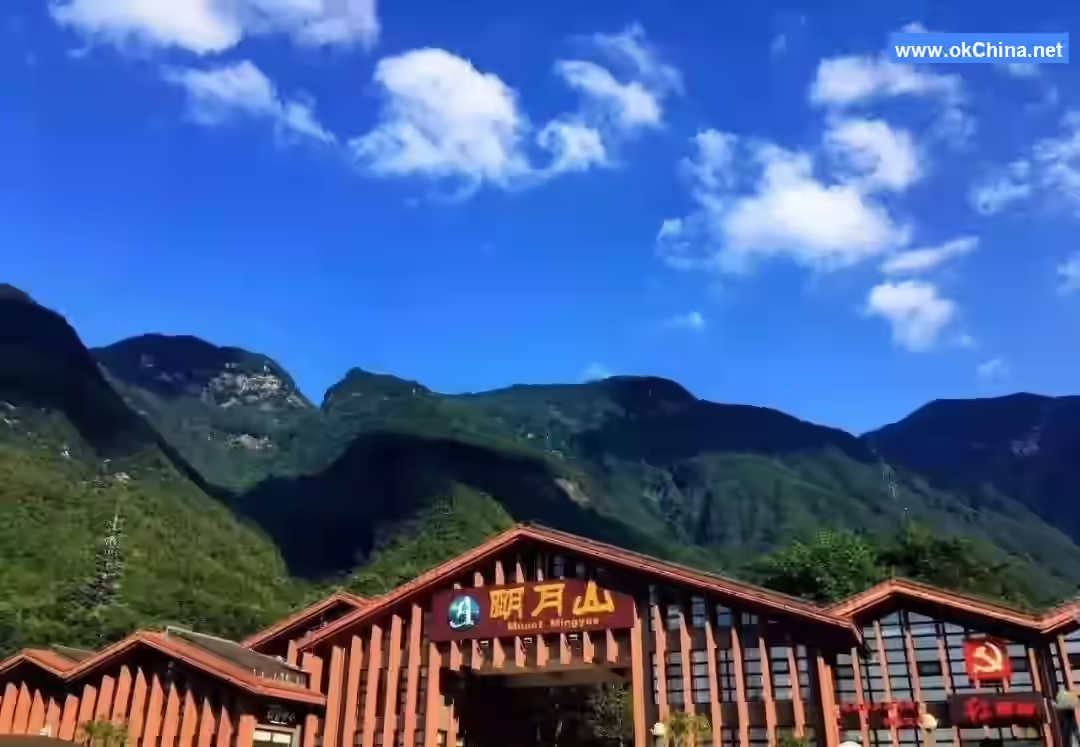
Mingyue Mountain Tourist Area

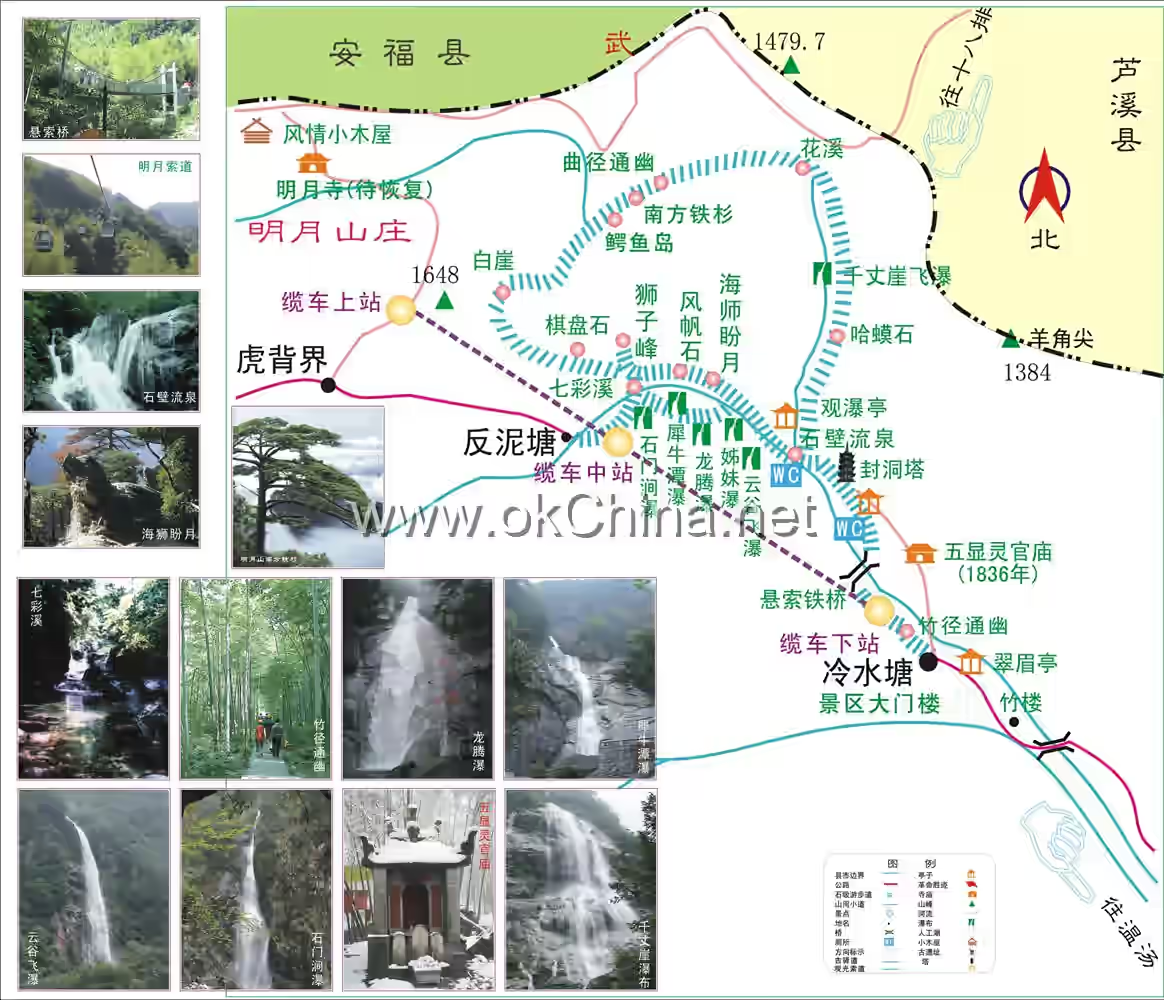
Location Map

Map of Mingyue Mountain Tourist Area

Ticket Price

Ticket Prices

Tickets

  • Adult Ticket: Original price ¥95, online booking ¥90
  • Student Ticket: Online booking ¥45

Ticket Packages

  • [Adult] Ticket + Round-trip Cable Car: Online booking ¥240
  • [Student] Ticket + Round-trip Cable Car: Online booking ¥195

Multi-Attraction Combo Tickets

  • [Adult] Mingyue Mountain Scenic Area Ticket + Yangshimu Scenic Area Ticket + Mingyue Mountain Cable Car (Round-trip) + Small Train Ticket (Round-trip): Original price ¥445, online booking ¥298

Opening Hours

Business Hours

  • January 1 to April 30 - Monday to Sunday - 08:00-16:00
  • May 1 to October 31 - Monday to Sunday - 07:30-16:30
  • November 1 to December 31 - Monday to Sunday - 08:00-16:00

Recommended Duration

Duration of Visit

The scenic area is quite extensive, so it is recommended to spend a full day exploring for the best experience.

Best Time to Visit

Best Season

In fact, you can visit all year round. Spring offers cherry blossoms, summer and autumn provide comfortable weather for escaping the heat, autumn features vibrant red leaves, and winter allows for relaxing hot spring baths.

Official Phone

Scenic Area Phone Numbers

  • Visitor Inquiry Hotline: 0795-3516666
  • Scenic Area Emergency Hotline: 0795-3511990
  • Tourism Complaint Hotline: 0795-3511877
  • Mingyue Mountain Management Committee Duty Phone: 0795-3518808

Transportation

Transportation Guide

  • Visitors from other cities can take a high-speed train to Yichun Station, then take Bus 113 directly to the scenic area. Alternatively, you can fly to Yichun Mingshan Airport, take the Airport Express Line to Yichun, and then transfer to relevant buses to reach the scenic area.
  • At Yichun Bus Station, there are direct buses to the scenic area, departing every 15 minutes at a fare of 8 yuan per person.

Classical Route

Travel Itineraries

One-Day Tour Route 1

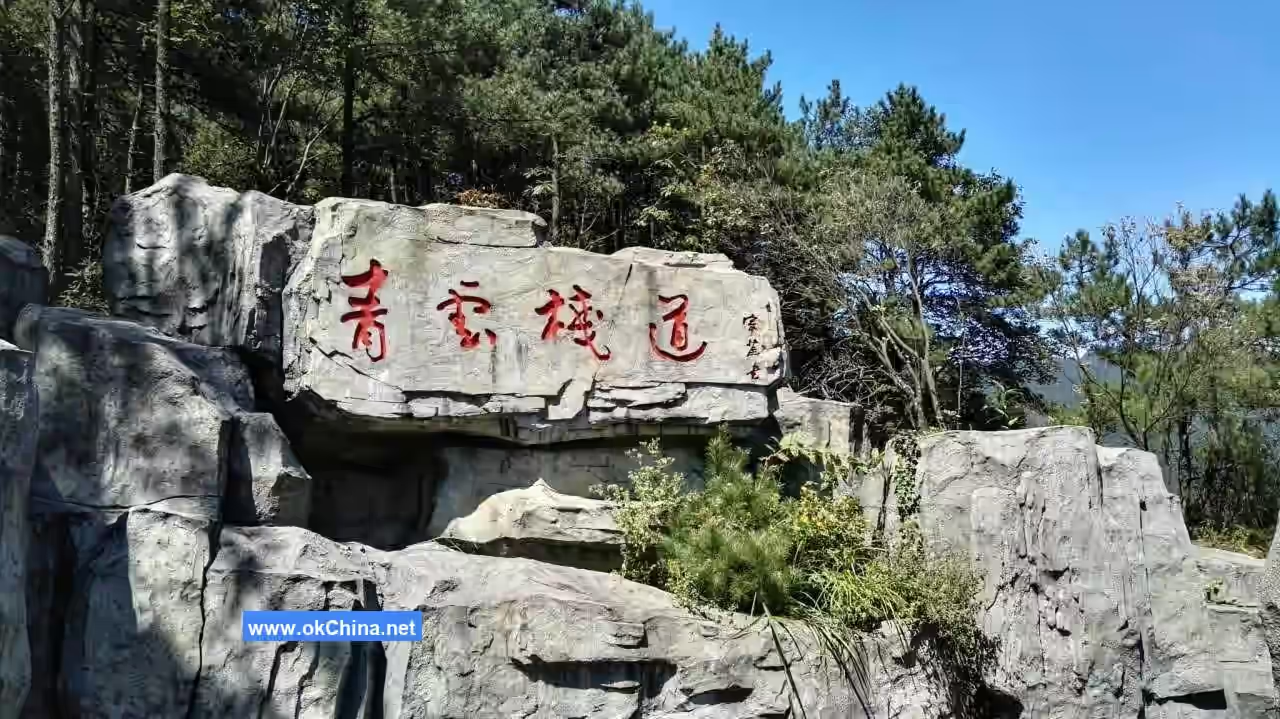
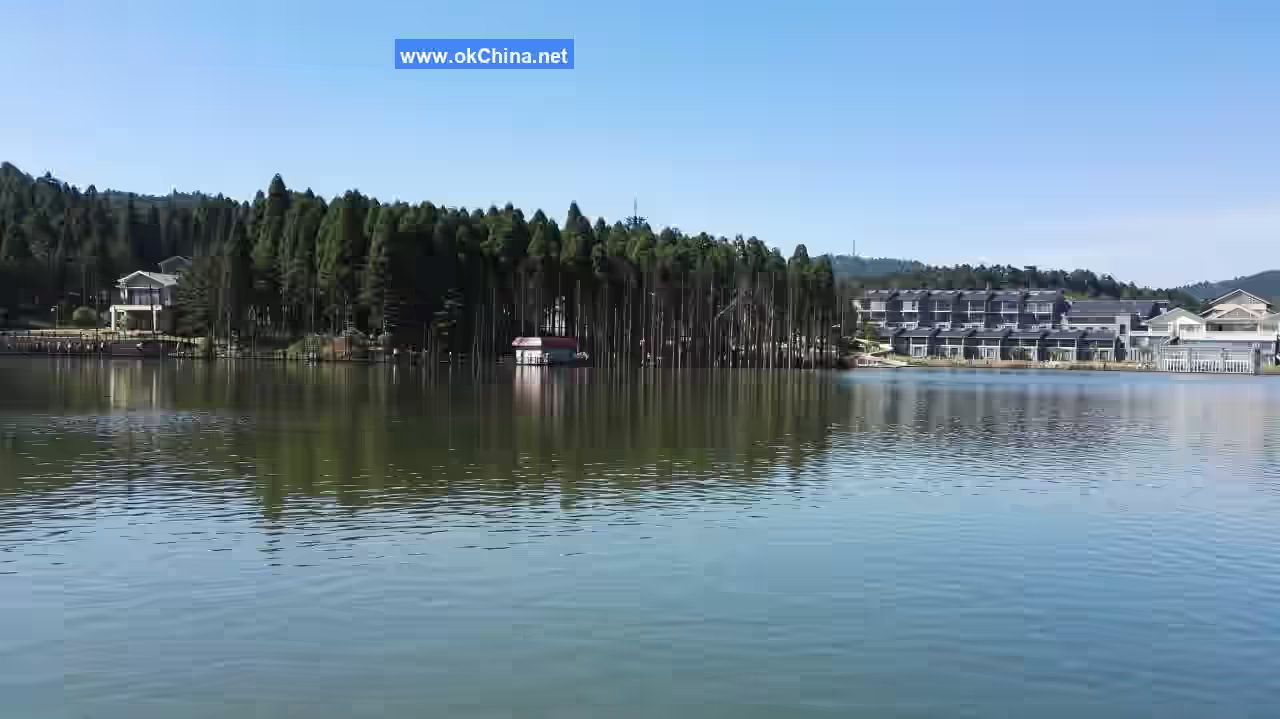
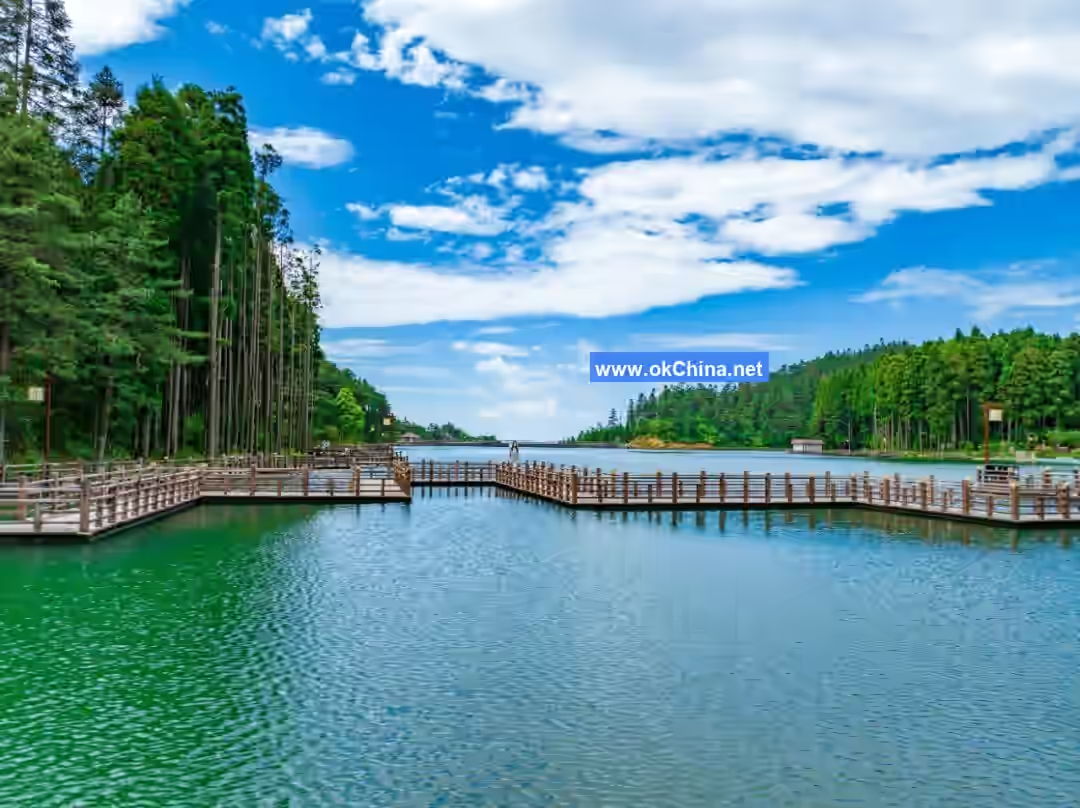
After breakfast, head to the national forest park, national scenic area, and national AAAAA tourist attraction—[Mingyue Mountain Scenic Area] (approximately 5 hours of sightseeing). Visit love-themed spots such as Mingyue Square Encounter, Lotus Pond Under the Moon Meeting, Moon Ode Stele Forest Bonding, and Bamboo Grove Moon Shadow Date. Enjoy the exquisite scenery where "the moon travels among the mountains, and the mountains shine within the moon," reflecting the harmonious beauty of mountains and moonlight. Then, take the cable car to the mountaintop to explore attractions like Mengyue Villa and Moon Lake.

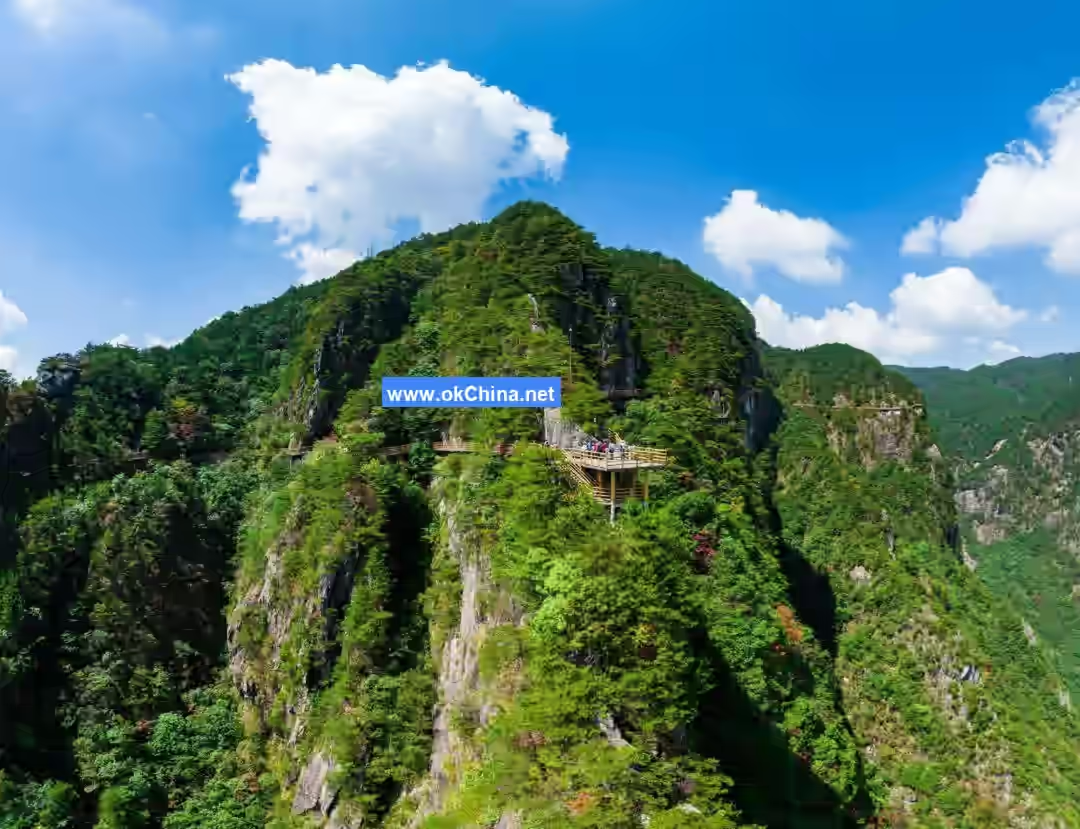
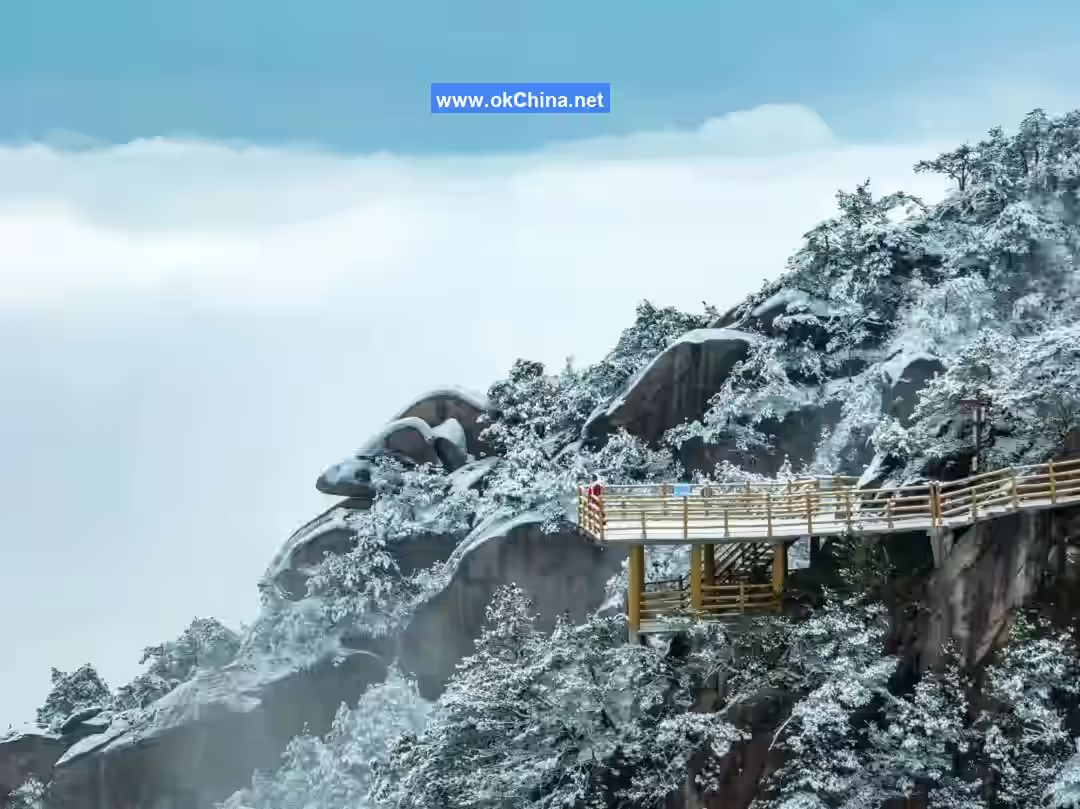
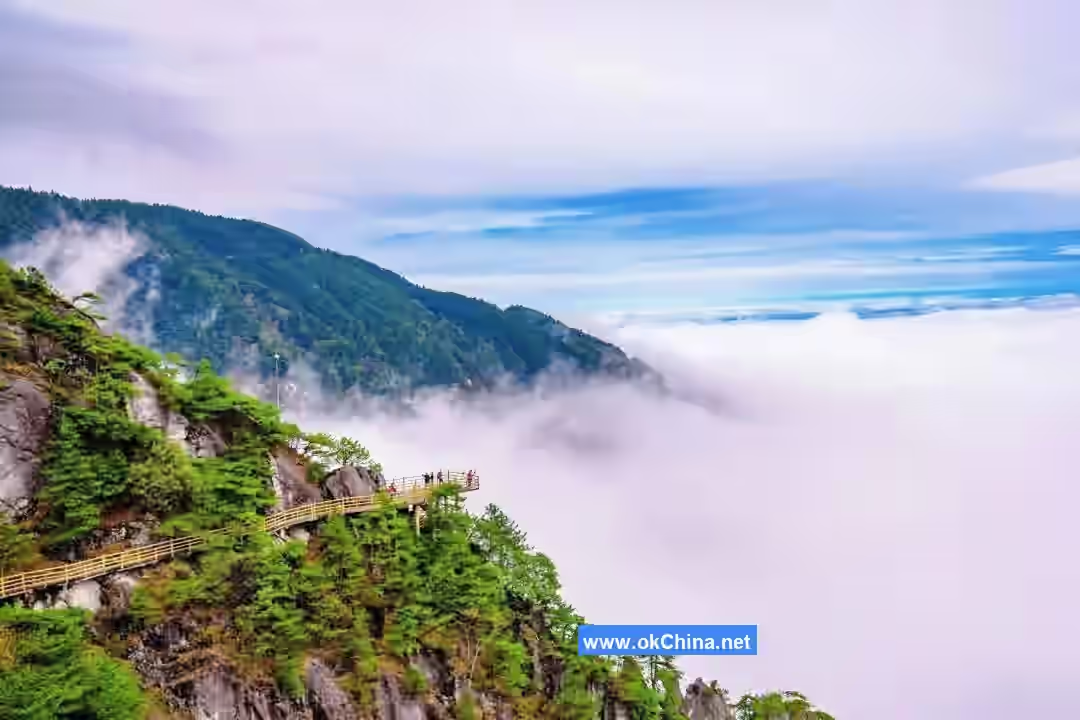
[Qingyun Plank Walk] (elevation approximately 1,500 meters) spans about 3,100 meters in total. It is often shrouded in mist and clouds, giving visitors a feeling of soaring to success as they walk along it. After lunch, take the cable car to the mid-station and enjoy scenic spots along the way, such as [Yungu Waterfall, Linglong Waterfall, Fish Scale Waterfall, Yulong Waterfall, and Feilian Waterfall]. Fully immerse yourself in the fresh air provided by this "natural oxygen bar."

After the tour, proceed to [Longping High-Tech Ecological Park] for a visit and experience [selenium-rich dining]. Then, explore [Wentang Ancient Town] (especially the millennia-old Wentang Ancient Well Hot Spring). The Wentang Hot Spring gushes from granite 470 meters underground, with a daily output of over ten thousand tons. The water quality is excellent, maintaining a temperature of 68°C–72°C year-round. It is colorless, odorless, and characterized by low mineralization, low sodium, high selenium, and high metasilicic acid content, making it a rare selenium-rich hot spring both domestically and internationally. Certified by national appraisals and analyzed by the Chinese Academy of Medical Sciences, the Wentang Hot Spring boasts a large output and is classified as a high-temperature, high-quality mineral spring. It has a pure taste, is suitable for both drinking and bathing, and promotes health and vitality. The hot spring also contains nearly 20 trace elements highly beneficial to the human body, offering significant anti-cancer and tumor-inhibiting health benefits. Later, return to the hotel to experience the selenium-rich hot spring.

One-Day Tour Route 2

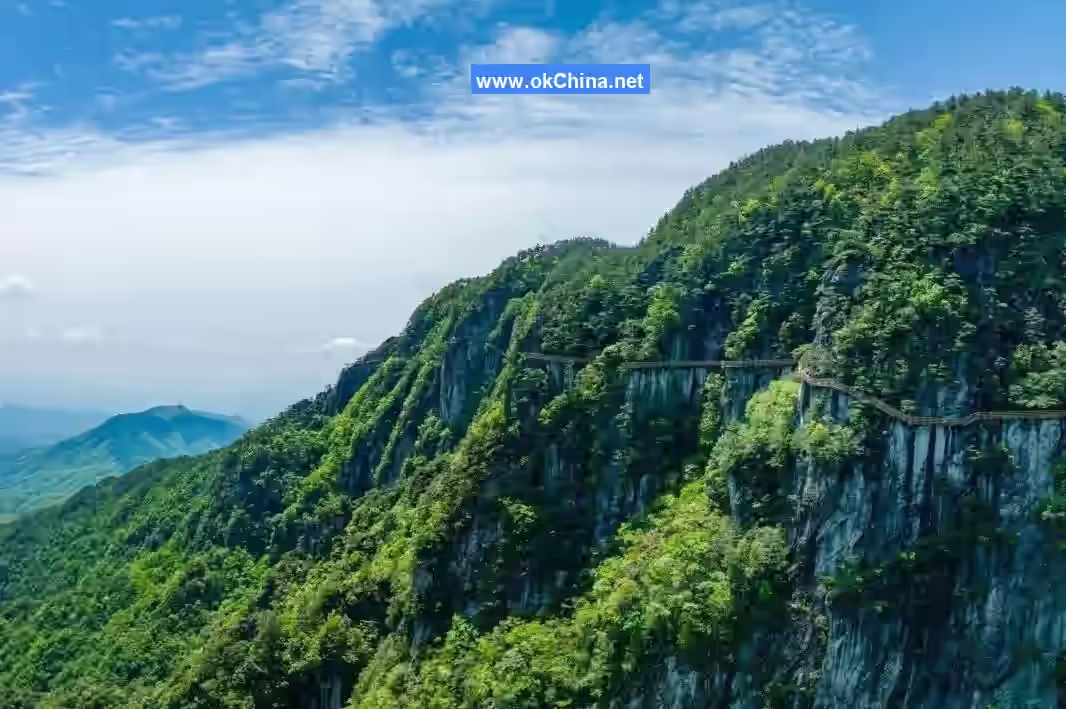
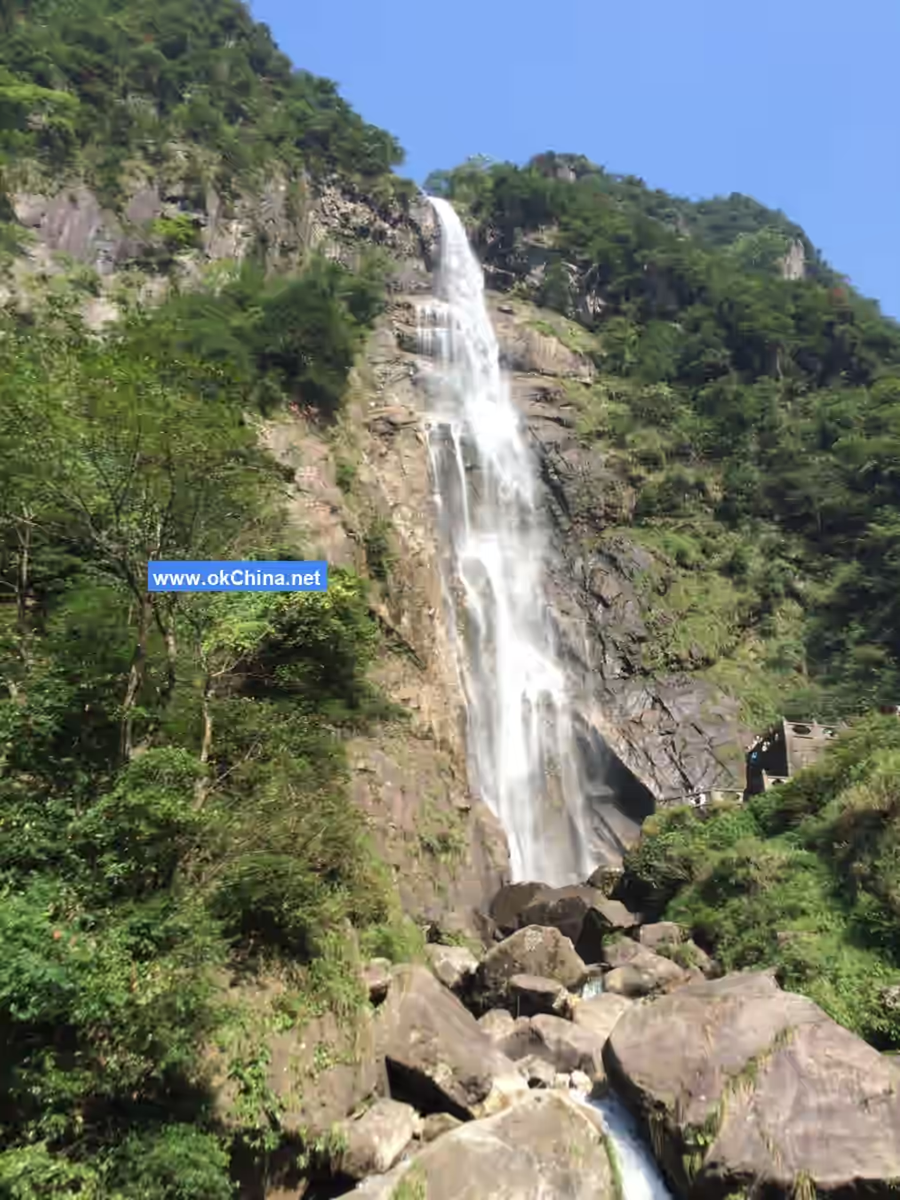
Morning: Visit the national 5A-level tourist attraction [Mingyue Mountain]. Mingyue Mountain is renowned for its bamboo forests, pine waves, waterfalls, and hot springs, and is also celebrated for its moon culture across China. After passing through [Bamboo Grove Moon Shadow], [Zhu Xi Poetry Pavilion], and [Six Turtles Worshipping the Moon], visitors can either hike or take the ascending cable car up the mountain. Admire the fairyland-like alpine lake—[Moon Lake]. At the mountaintop, experience one of China's seven most perilous hanging plank walks, the Qingyun Plank Walk. It stretches across the cliffs of Wuyun Cliff like a cloud-coiling dragon, spanning approximately 3,100 meters. Often enveloped in mist and clouds, walking along it gives a sense of soaring to success, hence its name. The plank walk starts at Mengyue Villa, passes through Xingyue Cave, and ends at Moon Lake. Xingyue Cave is a 150-meter-long natural stone cave, warm in winter and cool in summer, with a murmuring stream inside. Visitors can then take the descending cable car or hike down the mountain to explore Mingyue Mountain's "Five-Tier Waterfalls"—Feilian Waterfall, Yulong Waterfall, Fish Scale Waterfall, Linglong Waterfall, and Yungu Waterfall. Among them, Yungu Waterfall has a drop of 119.57 meters, making it the highest waterfall in the Jiangnan region.

Afternoon: Visit the national-level tourist resort and world-renowned hot spring health town—Wentang Town, and experience the unique and miraculous selenium-rich hot springs. The Wentang Ancient Well, built by the Southern Song Dynasty monk Dingyun, has a history of nearly 800 years. The ancient well and its surrounding street, a cultural, wellness, leisure, and resort integrated complex, offer a one-stop cultural tourism experience. Alternatively, enjoy the unique hot spring foot soak on the street or indulge in the hotel's hot spring pools.

Two-Day Tour Route 1

Day 1: After breakfast, head to the national forest park, national scenic area, and national AAAAA tourist attraction—[Mingyue Mountain Scenic Area] (approximately 5 hours of sightseeing). Visit love-themed spots such as Mingyue Square Encounter, Lotus Pond Under the Moon Meeting, Moon Ode Stele Forest Bonding, and Bamboo Grove Moon Shadow Date. Enjoy the exquisite scenery where "the moon travels among the mountains, and the mountains shine within the moon," reflecting the harmonious beauty of mountains and moonlight. Then, take the cable car to the mountaintop to explore attractions like Mengyue Villa and Moon Lake. [Qingyun Plank Walk] (elevation approximately 1,500 meters) spans about 3,100 meters in total. It is often shrouded in mist and clouds, giving visitors a feeling of soaring to success as they walk along it. After lunch, take the cable car to the mid-station and enjoy scenic spots along the way, such as [Yungu Waterfall, Linglong Waterfall, Fish Scale Waterfall, Yulong Waterfall, and Feilian Waterfall]. Fully immerse yourself in the fresh air provided by this "natural oxygen bar." After the tour, proceed to [Longping High-Tech Ecological Park] for a visit and experience selenium-rich dining. Then, explore Wentang Ancient Town and return to visit Wentang Ancient Town (especially the millennia-old Wentang Ancient Well Hot Spring). The Wentang Hot Spring gushes from granite 470 meters underground, with a daily output of over ten thousand tons. The water quality is excellent, maintaining a temperature of 68°C–72°C year-round. It is colorless, odorless, and characterized by low mineralization, low sodium, high selenium, and high metasilicic acid content, making it a rare selenium-rich hot spring both domestically and internationally. Certified by national appraisals and analyzed by the Chinese Academy of Medical Sciences, the Wentang Hot Spring boasts a large output and is classified as a high-temperature, high-quality mineral spring. It has a pure taste, is suitable for both drinking and bathing, and promotes health and vitality. The hot spring also contains nearly 20 trace elements highly beneficial to the human body, offering significant anti-cancer and tumor-inhibiting health benefits. Later, return to the hotel to experience the selenium-rich hot spring.

Day 2: After breakfast, head to Zhuojiang Scenic Area (1 hour) to visit [Zhuojiang Karst Cave] (approximately 1 hour of sightseeing). Explore the enchanting scenery inside the cave, which features over ten deep, winding, and uniquely characteristic karst caves of varying sizes. Colorful stalactites, stalagmites, and stone columns densely populate the intricate caves, forming shapes of birds, beasts, figures, flowers, plants, and fruits—all bizarre and lifelike. Afterwards, have lunch in the city before returning.

Two-Day Tour Route 2

Day 1: After breakfast, head to the national forest park, national scenic area, and national AAAAA tourist attraction—[Mingyue Mountain Scenic Area] (approximately 5 hours of sightseeing). Visit love-themed spots such as Mingyue Square Encounter, Lotus Pond Under the Moon Meeting, Moon Ode Stele Forest Bonding, and Bamboo Grove Moon Shadow Date. Enjoy the exquisite scenery where "the moon travels among the mountains, and the mountains shine within the moon," reflecting the harmonious beauty of mountains and moonlight. Then, take the cable car to the mountaintop to explore attractions like Mengyue Villa and Moon Lake. [Qingyun Plank Walk] (elevation approximately 1,500 meters) spans about 3,100 meters in total. It is often shrouded in mist and clouds, giving visitors a feeling of soaring to success as they walk along it. After lunch, take the cable car to the mid-station and enjoy scenic spots along the way, such as [Yungu Waterfall, Linglong Waterfall, Fish Scale Waterfall, Yulong Waterfall, and Feilian Waterfall]. Fully immerse yourself in the fresh air provided by this "natural oxygen bar." After the tour, proceed to [Longping High-Tech Ecological Park] for a visit and experience selenium-rich dining. Then, explore [Wentang Ancient Town] (especially the millennia-old Wentang Ancient Well Hot Spring). The Wentang Hot Spring gushes from granite 470 meters underground, with a daily output of over ten thousand tons. The water quality is excellent, maintaining a temperature of 68°C–72°C year-round. It is colorless, odorless, and characterized by low mineralization, low sodium, high selenium, and high metasilicic acid content, making it a rare selenium-rich hot spring both domestically and internationally. Certified by national appraisals and analyzed by the Chinese Academy of Medical Sciences, the Wentang Hot Spring boasts a large output and is classified as a high-temperature, high-quality mineral spring. It has a pure taste, is suitable for both drinking and bathing, and promotes health and vitality. The hot spring also contains nearly 20 trace elements highly beneficial to the human body, offering significant anti-cancer and tumor-inhibiting health benefits. Later, return to the hotel to experience the selenium-rich hot spring.

Day 2: After breakfast, head to the Mingyue Mountain East Gate Scenic Area (1 hour) to visit [Ancient Village and Ancient Temple] (approximately 2 hours of sightseeing). Explore the millennia-old ginkgo tree in Nanre Village and experience the natural inspiration of an original ecological village. Then, drive to [Yangshan Qiyin Zen Temple] for a visit. Yangshan Xiyin Zen Temple was originally built during the Tang Dynasty's Huichang era (842 AD), boasting a history of 1,164 years. Its founding master was Master Huiji. At its peak, Yangshan Qiyin Zen Temple comprised 28 halls, buildings, and pavilions, with over a thousand monks, holding significant status and influence both domestically and internationally.

Visit Zhuojiang Scenic Area (1 hour) to explore [Zhuojiang Karst Cave] (approximately 1 hour of sightseeing). Discover the enchanting scenery inside the cave, which features over ten deep, winding, and uniquely characteristic karst caves of varying sizes. Colorful stalactites, stalagmites, and stone columns densely populate the intricate caves, forming shapes of birds, beasts, figures, flowers, plants, and fruits—all bizarre and lifelike. After the tour, return to the city to visit the Yichun Cultural Relics Protection Unit—[Huacheng Temple] (approximately 1 hour of sightseeing). Built halfway up Huacheng Rock, the entire Huacheng Rock rises abruptly from the riverbank plain, featuring secluded caves and peculiar stones that form natural ravines. It is renowned for its serene elegance and is praised as "a scenic wonder of Jiangnan" and a "natural painting." When fishing boats return at dusk and shepherd's flutes call for homecoming, the ancient temple's bells ring clear and melodious, echoing across the vast sky and the city's outskirts, creating a sense of tranquility and remoteness. Afterwards, have dinner and return to the hotel for check-in.

Two-Day Tour Route 3

Day 1: [Changsha - Yichun Yangshan Zen Temple — Zhuojiang Bailong Cave] Includes lunch and dinner. Overnight in Yichun. In the morning, assemble at a designated location in Changsha and depart for Yichun (approximately 3.5 hours by car). After lunch, head to the birthplace of the Weiyang Sect, one of the five major schools of Chinese Buddhism—Yangshan Zen Temple (visit duration no less than 1.5 hours). Empty your heart and receive the baptism of Buddhism. Then, proceed to Zhuojiang Bailong Cave in Sanyang Town, Yuanzhou District (approximately 1.5 hours). As a poem says: "Zhuojiang's landscape is a painting, its karst caves a natural poem." Zhuojiang Karst Cave resembles a magnificent underground corridor, with colorful stalactites, stalagmites, and stone columns densely populating the intricate caves, forming shapes of birds, beasts, figures, flowers, plants, and fruits—all bizarre and lifelike. Notable attractions include "Panda Sitting in the Hall," "Stone Turtle Exploring the Sea," "Maiden Searching for Her Husband," and "Water Curtain Cave." Afterwards, check into the hotel.Day2: [Bright Moon Mountain - Changsha] Includes Breakfast and Lunch
After breakfast, head to Bright Moon Mountain. Take the cable car (optional, self-paid, ¥80/person for ascent) or hike to the mountaintop. Visit the Dark Cloud Cliff Scenic Area, featuring towering peaks, steep and perilous terrain, and cliffs over 100 meters high. The valley stretches for more than 1,000 meters, giving visitors the sensation of being in an endless sea of clouds. Explore the Star-Moon Cave and admire the high-altitude karst landscape, offering cool respite in summer. Walk the Qingyun Plank Road, which spans 1,650 meters and hangs along the cliffs of Dark Cloud Cliff. Walking on it gives a feeling of rising swiftly in the world, hence its name "Qingyun" (Ascending Clouds) Plank Road. Descend by cable car (optional, self-paid, ¥70/person for descent). After lunch, conclude the trip and return home.

3-Day Tour Route 1

Day1: Stroll through Wentang Ancient Town (visit the ancient well of Wentang, experience foot soaking in wooden buckets with hot spring water). After lunch, head to the 4A-rated [Bright Moon Eternal Love Scenic Area] in town. The large-scale song and dance performance "Bright Moon Eternal Love" condenses ten thousand years of history, culture, and folk customs of Yichun, Jiangxi. Additionally, dozens of shows including street acrobatics, Wa village customs, Wen Mansion's daughter selection, time-travel flash mobs, and energetic street dances offer a feast of culture and technology. In the evening, wander through Wentang's Millennium Reception Hall—Ancient Well Spring Street.

Day2: Morning visit to the national 5A tourist attraction [Bright Moon Mountain]. In the afternoon, visit the 4A rural tourism spot Twenty-Four Bridges Bright Moon Garden or the 3A scenic area Flower Sea Original Residence. In the evening, stroll through Wentang's Millennium Reception Hall—Ancient Well Spring Street and enjoy Wentang's selenium-rich hot springs.

Day3: Head to Bright Moon Mountain's Ancient Temple Village, experience the natural inspiration brought by the pristine village "Nanre," admire thousand-year-old ginkgo trees, yew trees, and other precious species. Walk along the stone-paved paths to feel the ancient village culture. At the 5A rural tourism spot Qiyin Valley, besides enjoying flowers and scenery, you can also experience creative facilities like traversing forests, bamboo groves, waterfalls, and streams. Afterwards, drive to Yangshan Qiyin Zen Temple for a visit. Yangshan Xiyin Zen Temple was first built during the Huichang era of the Tang Dynasty (842 AD), boasting a history of over 1,100 years. Its founding master was Monk Huiji. At its peak, Yangshan Qiyin Zen Temple had 28 halls, buildings, and pavilions, with over a thousand monks, holding significant status and influence both domestically and internationally.

3-Day Tour Route 2

Day1: After breakfast, head to the national forest park, national scenic area, and national AAAAA scenic spot—[Bright Moon Mountain Scenic Area] (approx. 5 hours of sightseeing). Visit love-themed spots such as Bright Moon Square Encounter, Lotus Pond Moon Meeting, Ode to Moon Stele Forest Understanding, and Bamboo Grove Moon Shadow Date, enjoying the exquisite意境 of "the moon walks in the mountains, the mountains shine in the moon." Then take the cable car to the mountaintop to visit Dream Moon Villa, Moon Lake, and other attractions. [Qingyun Plank Road] (approx. 1,500 meters above sea level) spans about 3,100 meters, often shrouded in clouds and mist. Walking on it gives a feeling of rising swiftly in the world. After lunch, take the cable car to the mid-station, visiting attractions along the way such as [Cloud Valley Waterfall, Linglong Waterfall, Fish Scale Waterfall, Jade Dragon Waterfall, Flying Ribbon Waterfall]. Fully experience the fresh air brought by this "natural oxygen bar." After the tour, visit [Longping High-Tech Ecological Park], experience selenium-rich dining, then visit Wentang Ancient Town (especially the thousand-year-old Wentang Ancient Well Hot Spring). Wentang Hot Spring gushes from granite 470 meters underground, with a daily output of over ten thousand tons. The water quality is excellent, maintaining a temperature of 68°C-72°C year-round. It is colorless and odorless, characterized by low mineralization, low sodium, high selenium, and high metasilicic acid content, making it a rare selenium-rich hot spring both domestically and internationally. According to national appraisal and testing, as well as analysis by the Chinese Academy of Preventive Medicine, Wentang Hot Spring has a large output and is a high-temperature, high-quality mineral spring. It tastes pure, is suitable for drinking and bathing, and helps improve health. The hot spring also contains nearly 20 trace elements beneficial to the human body, with significant anti-cancer and tumor-suppressing health effects. Afterwards, return to the hotel to experience the selenium-rich hot spring.

Day2: After breakfast, head to the East Gate Scenic Area of Bright Moon Mountain (1 hour) to visit [Ancient Village and Ancient Temple] (approx. 2 hours of sightseeing). Admire the thousand-year-old ginkgo tree in Nanre Village and experience the natural inspiration brought by the pristine village. Then drive to [Yangshan Qiyin Zen Temple] for a visit. Yangshan Xiyin Zen Temple was first built during the Huichang era of the Tang Dynasty (842 AD), boasting a history of 1,164 years. Its founding master was Monk Huiji. At its peak, Yangshan Qiyin Zen Temple had 28 halls, buildings, and pavilions, with over a thousand monks, holding significant status and influence both domestically and internationally.

Visit Zhuojiang Scenic Area (1 hour) to explore [Zhuojiang Karst Cave] (approx. 1 hour of sightseeing). The cave features enchanting scenery, with over ten deep, winding, and uniquely characteristic karst caves of various sizes. Colorful stalactites, stalagmites, and stone columns densely populate the intricate caves, forming shapes of birds, beasts, figures, flowers, plants, fruits, and trees—bizarre and lifelike. After the tour, return to the city to visit Yichun's cultural heritage site—[Huacheng Temple] (approx. 1 hour of sightseeing). Built halfway up Huacheng Rock, the entire Huacheng Rock rises abruptly from the riverside plain. With secluded caves and strange rocks, it forms its own cliffs and valleys, known for its清奥 (refined profundity) and被誉为 "a wonder of Jiangnan" and "a natural painting." When fishing boats return at dusk and herd boys' flutes urge homecoming, the ancient temple's bell sounds, melodious and clear, reverberating across the vast sky and rivers, audible clearly within and outside the city's suburbs, imparting a sense of tranquility and remoteness. Afterwards, have dinner and return to the hotel to check in.

Day3: After breakfast, drive to Pingxiang to visit [Anyuan Railway and Mine Workers Memorial Hall] and [Film and Television City]. Afterwards, return.

3-Day Tour Route 3

Day1: After breakfast, head to the national forest park, national scenic area, and national AAAAA scenic spot—[Bright Moon Mountain Scenic Area] (approx. 5 hours of sightseeing). Visit love-themed spots such as Bright Moon Square Encounter, Lotus Pond Moon Meeting, Ode to Moon Stele Forest Understanding, and Bamboo Grove Moon Shadow Date, enjoying the exquisite意境 of "the moon walks in the mountains, the mountains shine in the moon." Then take the cable car to the mountaintop to visit Dream Moon Villa, Moon Lake, and other attractions. [Qingyun Plank Road] (approx. 1,500 meters above sea level) spans about 3,100 meters, often shrouded in clouds and mist. Walking on it gives a feeling of rising swiftly in the world. After lunch, take the cable car to the mid-station, visiting attractions along the way such as [Cloud Valley Waterfall, Linglong Waterfall, Fish Scale Waterfall, Jade Dragon Waterfall, Flying Ribbon Waterfall]. Fully experience the fresh air brought by this "natural oxygen bar." After the tour, visit [Longping High-Tech Ecological Park], experience selenium-rich dining, then visit [Wentang Ancient Town] (especially the thousand-year-old Wentang Ancient Well Hot Spring). Wentang Hot Spring gushes from granite 470 meters underground, with a daily output of over ten thousand tons. The water quality is excellent, maintaining a temperature of 68°C-72°C year-round. It is colorless and odorless, characterized by low mineralization, low sodium, high selenium, and high metasilicic acid content, making it a rare selenium-rich hot spring both domestically and internationally. According to national appraisal and testing, as well as analysis by the Chinese Academy of Preventive Medicine, Wentang Hot Spring has a large output and is a high-temperature, high-quality mineral spring. It tastes pure, is suitable for drinking and bathing, and helps improve health. The hot spring also contains nearly 20 trace elements beneficial to the human body, with significant anti-cancer and tumor-suppressing health effects. Afterwards, return to the hotel to experience the selenium-rich hot spring.

Day2: After breakfast, head to the East Gate Scenic Area of Bright Moon Mountain (1 hour) to visit [Ancient Village and Ancient Temple] (approx. 2 hours of sightseeing). Admire the thousand-year-old ginkgo tree in Nanre Village and experience the natural inspiration brought by the pristine village. Then drive to [Yangshan Qiyin Zen Temple] for a visit. Yangshan Xiyin Zen Temple was first built during the Huichang era of the Tang Dynasty (842 AD), boasting a history of 1,164 years. Its founding master was Monk Huiji. At its peak, Yangshan Qiyin Zen Temple had 28 halls, buildings, and pavilions, with over a thousand monks, holding significant status and influence both domestically and internationally. Afterwards, experience a农家 lunch at [Nongchan Pavilion], then drive to [Yuanzhou Watchtower] for a visit, experiencing the urban charm of Yichun. After dinner, return to the hotel to check in.

Day3: After breakfast, head to Zhuojiang Scenic Area (1 hour) to explore [Zhuojiang Karst Cave] (approx. 1 hour of sightseeing). The cave features enchanting scenery, with over ten deep, winding, and uniquely characteristic karst caves of various sizes. Colorful stalactites, stalagmites, and stone columns densely populate the intricate caves, forming shapes of birds, beasts, figures, flowers, plants, fruits, and trees—bizarre and lifelike. After the tour, return to the city to visit Yichun's cultural heritage site—[Huacheng Temple]** (approx. 1 hour of sightseeing). Built halfway up Huacheng Rock, the entire Huacheng Rock rises abruptly from the riverside plain. With secluded caves and strange rocks, it forms its own cliffs and valleys, known for its清奥 (refined profundity) and被誉为 "a wonder of Jiangnan" and "a natural painting." When fishing boats return at dusk and herd boys' flutes urge homecoming, the ancient temple's bell sounds, melodious and clear, reverberating across the vast sky and rivers, audible clearly within and outside the city's suburbs, imparting a sense of tranquility and remoteness. Afterwards, have lunch and return.

4-Day 3-Night Route

Day1: Bright Moon Eternal Love Scenic Area - Wentang Rice Cake - Ancient Well Spring Street - Bright Moon Mountain Selenium-Rich Hot Spring

Day2: Bright Moon Mountain Scenic Area - Twenty-Four Bridges Bright Moon Garden - Paragliding Base - Shuikou Village

Day3: Bright Moon Mountain Qiyin Valley - Firefly Town - Nanre Scenic Area

Day4: Tangjiashan - Return

Multi-Day Tour Route

Day1:

Arrive in Yichun by high-speed rail, flight, self-driving, or with a tour group.

Yichun is located in northwestern Jiangxi with convenient transportation, including a high-speed rail station, airport, and bus station.Independent travel is a favorite among young people. Tickets for Mingyue Mountain, hot springs, and hotels can be booked through various travel apps like Tongxie Lvtu. Smart tourism features such as scanning QR codes for entry are also available, and we hope they earn your positive reviews.

For accommodation, it is recommended to stay in Wentang Town. If Wentang is fully booked, staying in Yichun City Center is also lively. It is advisable to book hotels in Wentang at least one week in advance. For those planning to visit Mingyue Mountain, now is the time to make your reservations!

Additionally, we have offices in Jiangxi, Hunan, Hubei, Guangdong, Jiangsu-Zhejiang-Shanghai-Anhui, Beijing, and other regions, making guided tours an excellent choice. With a guide handling all the arrangements, you can simply sit back and enjoy the scenery.

Visitors staying in Wentang Town are in for a treat. After a tiring journey, savoring Mingyue’s delicacies and experiencing our selenium-rich hot springs is the perfect choice. A restful night’s sleep in this small town will ensure an exciting journey ahead.

Day 2-3:

Explore the Mingyue Mountain Hot Spring Scenic Area and Yangshimu Scenic Area.

During the National Day holiday, the number of visitors is high, so it is recommended to enter the mountain early. Independent travelers can book tickets online and enter by scanning QR codes.

The Mingyue Mountain High-Altitude Sightseeing Train is a unique tourism project, known as the "first on the mainland" and "one of only three in the world." It spans three regions—Yichun, Pingxiang, and Ji'an—starting from the summit of Mingyue Mountain and ending at the outer area of Yangshimu (Shibapai).

Purchasing a combo ticket for Mingyue Mountain, the sightseeing train, and Yangshimu at the Mingyue Mountain ticket window costs only 200 yuan. You can choose to stay overnight in the Mingyue Mountain scenic area and take the train to Yangshimu the next day before returning.

At the Moon Street near the exit of Mingyue Mountain, the Thrilling World features wax figure exhibitions and a spooky haunted house.

Day 4:

Nanye Ancient Village, Yangshan Qiyin Zen Temple, Zen Expo Garden, and Flower Expo Garden

Drive from Wentang Town to Yangshan Qiyin Zen Temple, which takes about an hour. Arrive at the temple in the morning to explore and experience Zen culture. Before lunch, drive to Nanye Ancient Village, which is about 20 minutes from the temple. Enjoy a farmhouse meal at Nanye Ancient Village and savor Yangshan Zen tea.

In the afternoon, head to the Yichun Zen Expo Garden. In the evening, visit the Yichun Flower Expo Garden to see the dinosaur exhibition and the evening lantern display.

Day 5:

Mingyue Mountain Gesang Flower Sea and Zhuojiang Karst Cave Scenic Area

The beautiful mountains and waters of Jiangnan paired with the plateau Gesang flowers create a unique charm. The Gesang flower sea at Mingyue Mountain’s Xiangong Xianyuan awaits your visit!

The Zhuojiang Scenic Area in Yichun, Jiangxi, is located in Sanyang Town, Yichun City, 18 kilometers from downtown Yichun. Based on the landscape, it is divided into five major areas: "White Dragon Cave," "Zhuojiang Cave," "Water Base," "Stone Forest," and "Orchard." Each area has its own characteristics, standing independently while complementing the others. It is a typical karst landform, forming a rare karst landscape.

Important Notes

nix

Important Child Sites

Scenic Spots and Attractions

Qingyun Plank Path – One of China's Seven Most Dangerous Hanging Plank Paths, Moon Lake at the Mountain Peak (Elevation 1,530 meters), Moon-Leaping Zip Line – Asia's Zip Line with the Greatest Height Difference, Mingyue Mountain Alpine Sightseeing Train, Natural Stone Cave with Twinkling Starlight – Starmoon Cave, "Cloud Valley Flying Waterfall" – The First Waterfall in Jiangnan, Ninth Stop of the Love Journey – Vowing at the Moon-Worship Altar, Eighth Stop of the Romantic Love Journey – Reflecting by the Moon-Immersed Pond, Seventh Stop of the Love Journey – Tying the Knot with the Matchmaker Under the Moon, Sixth Stop of the Love Journey – Falling in Love in the Moon-Embracing Pavilion, Fifth Stop of the Love Journey – Holding Hands on the Moon-Swaying Bridge, Fourth Stop of the Love Journey – Meeting Amid Bamboo Shadows and Moonlight, Third Stop of the Love Journey – Understanding Each Other at the Moon-Chanting Stele Forest, First Stop of the Love Journey – Encountering at the Bright Moon Square, Fish Scale Waterfall, Yangshimu (Eighteen Ridges) Scenery, and Yun Gu Bathing in Moonlight, among others.

Official Website

Scenic Area Official Website

www.myswq.com

Brief History

Moon Mountain

1. Introduction

The Moon Mountain Tourist Area of Yichun City, abbreviated as Moon Mountain Tourist Area and also known as the Moon Mountain Hot Spring Scenic Area, is located in Yuanzhou District, Yichun City, Jiangxi Province. It is a mountainous scenic area integrating "ecological sightseeing, leisure vacation, science education, and religious tourism."

The Moon Mountain Tourist Area has a planned area of 136 square kilometers, with a core area of 80 square kilometers. The tourist area is divided into five scenic zones and one resort area: the Tanxia Scenic Zone, characterized by the Cloud Valley Waterfall and Thousand-Zhang Cliff; the Taiping Mountain Scenic Zone, known for the Taiping Mountain sunrise, alpine meadows, and peculiar peaks and rocks; the Tangjiashan Scenic Zone, featuring the Wuyun Cliff and its meteorological wonders; the Yangshan Scenic Zone, centered on Zen Buddhist culture and folk customs; the Yujing Mountain Scenic Zone, distinguished by rare flora and fauna and wilderness charm; and the Wentang Hot Spring Resort Area, focused on hot spring therapy, vacationing, leisure, and entertainment.

In 2015, the Moon Mountain Tourist Area of Yichun City was officially recognized as a National AAAAA Tourist Attraction by the National Tourism Administration of the People's Republic of China. It became the first such attraction in Yichun City and the eighth in Jiangxi Province.

2. Geographical Environment

2.1 Location and Territory

The Moon Mountain Tourist Area of Yichun City is located 31 kilometers southwest of Yuanzhou District, Yichun City, Jiangxi Province.

2.2 Topography and Landforms

Moon Mountain is composed of dozens of mountain ridges, including Taiping Mountain, Wuyun Rock, Gungu Ridge, Jijian Peak, Laoshan, Muping Mountain, Zenggai Peak, and Jiyun Peak. It is a branch range of the Wugong Mountain system, with its main peak, Taiping Mountain, reaching an altitude of 1,736 meters.

2.3 Climate Characteristics

The Moon Mountain Tourist Area of Yichun City enjoys a subtropical humid monsoon climate. It features unique landscapes, a mild climate, with an average annual temperature around 12–15°C, and an average annual precipitation of 1,800–2,000 mm. This environment supports diverse plant and animal life, earning it the reputation of a "natural zoo" and "plant kingdom." Within the area, secluded fragrances linger, greenery thrives year-round, dense forests and tall bamboos flourish, clouds roll and mist swirls, condensing into rain and seeping out as springs. The sound of streams echoes through mountain valleys. The scenic area is lush and green with fresh air; the negative ion concentration on the mountain reaches over 70,000 per cubic centimeter, 35 times the national standard, earning it the title "natural oxygen bar."

3. Main Attractions

3.1 Taiping Mountain Scenic Zone

3.1.1 Alpine Meadows

The alpine meadows are mainly concentrated in the Taiping Mountain area of Moon Mountain. Due to the rising terrain and vertical changes in climate zones, the vegetation on Moon Mountain exhibits vertical distribution. Peaks above 1,600 meters are primarily covered with meadows dominated by cogon grass, forming the unique alpine meadow landscape of Moon Mountain.

3.1.2 Taiwan Pine

Over ten thousand mu (approx. 667 hectares) of pine trees grow contiguously near Taiping Mountain. Distinct from the Guest-Greeting Pine of Huangshan and the Five Pines of Mount Tai, they possess their own unique characteristics. The Taiwan Pine is endemic to China's subtropical regions and holds significant scientific and economic value. Forestry experts' field surveys confirm that from Moon Mountain's Yuhuang Hall, Zhongyintang, Xuezhu'ao to Banjiaojian, spanning over ten li (approx. 5 km) and covering about 733.3 hectares, this area boasts the largest, best-growing, and most uniformly forested stand of its kind in the country.

3.1.3 Qingyun Plank Walk

The Qingyun Plank Walk is situated on sheer cliffs. Stretching about 3,100 meters, it winds dramatically along the precipice, rising and falling, offering a spectacular view. Walking on the plank path, one looks down into a bottomless abyss. It is an excellent spot for viewing the sea of clouds and sunrise.

3.2 Tanxia Scenic Zone

3.2.1 Wuxian Lingguan Temple

Located at the entrance of the Tanxia Scenic Zone, the Wuxian Lingguan Temple covers an area of less than 2 square meters. Research indicates it was built during the Wanli period of the Ming Dynasty, over 400 years ago. The temple houses five palm-sized Bodhisattva statues. Couplets are carved on both sides of the temple gate: the upper scroll reads "Shrine built beneath the flying waterfall," the lower scroll reads "Grace bestowed upon the Buddhist stream," and the horizontal plaque reads "Lingguan Temple."

3.2.2 Lion Peak

Less than 500 meters from the Cloud Valley Waterfall stands a prominent and peculiar peak. When visitors face south and look north at this peak, it resembles a giant, roaring long-haired lion. When viewed facing north, one surprisingly discovers the long-haired lion carrying a cub on its back, followed by a lively, playful little lion. Local villagers call this peak Lion Peak.

3.2.3 Cloud Valley Waterfall

The Cloud Valley Waterfall is one of the Eight Scenes of Yichun and a premier attraction of the Tanxia Scenic Zone. The waterfall system consists of five levels: Cloud Valley Waterfall, Linglong Waterfall, Yulin Waterfall, Yulong Waterfall, and Feilian Waterfall. The water originates from the foot of Taiping Mountain at an altitude of 1,735.6 meters. The Cloud Valley Waterfall is the first level, with a drop of 119.57 meters. On the left side of the waterfall, about 70 meters high, the cliff inscription "Cloud Valley Waterfall" was written by Shen Peng, Chairman of the Chinese Calligraphers Association. The characters are four meters square and took eight months to carve. The waterfall is named for being "often amidst mist and rosy clouds, its spray always playing with rainbows." "Rainbows reflecting on the pool on sunny days, mist shrouding the green mountains on rainy days" vividly depicts its scenery. Scholars throughout history have composed over fifty poems about it. Viewed from the opposite cliff, the silver waterfall, layered peaks, and forest sea complement each other, forming a splendid landscape painting.

3.2.4 Seven-Colored Stream

Hidden deep in dense forest, the Seven-Colored Stream murmurs softly, surrounded by exotic flowers, rare herbs, and ancient towering trees with captivating fragrances. When sunlight filters through the leaves onto the stream's pools, the water surface shimmers with dazzling, colorful ripples, hence the name. There is a pool in the stream with clear water, a smooth, flat bottom, and an area of about 7 square meters. Legend says Empress Xia of Emperor Xiaozong of the Southern Song Dynasty was from Xiajiafang at the foot of Moon Mountain. Before entering the palace, she often bathed in this pool, so later generations also call the Seven-Colored Stream the "Imperial Consort's Bathing Pool."

3.2.5 Chessboard Rock

Located northeast in the Tanxia Scenic Zone, there is a relatively flat, square stone slab supported by an arching rock below, accompanied by two stone stools, resembling a square chessboard, hence the name Chessboard Rock. Legend says it was where Lü Dongbin played chess.

3.2.6 Flower Stream

The Flower Stream is located on the south side of the Tanxia Scenic Zone, upstream of the Thousand-Zhang Cliff Waterfall in a deep bamboo forest. A small stream meanders through the mountains, tinkling softly. Downstream, there is a clear, emerald pool. Moss and vines cover the rocks by the stream, tree shadows dance, mountain flowers bloom brilliantly, and secluded fragrances waft, hence the name "Flower Stream."

3.3 Tangjiashan Scenic Zone

3.3.1 Ice Age Bizarre Stone Forest

The Bizarre Stone Forest features incredibly strange and ingeniously crafted rocks. Archaeologists confirm it is a glacial epoch relic with a history of over 100 million years.

3.3.2 Jianghu Ancient Path

The ancient path of Zen Buddhism's "roaming Jianghu" passes through Tangjiashan. It was the shortest route from Master Mazu's site in Nanchang, Jiangxi to Master Shitou Xiqian's site on Mount Heng (Nanyue) in Hunan. The entire path is paved with bluestone slabs. In ancient times, there was no road from Yichun to Ji'an Anfu; Tangjiashan was the nearest and shortest route. Goods like salt transported to Ji'an Anfu passed through here.

3.4 Yangshan Scenic Zone

3.4.1 Yangshan Qiyin Chan Temple

In the first year of the Huichang era of the Tang Dynasty (841 AD), the eminent monk Huiji came from Weishan to Yangshan in Yichun. He cleared brushwood and built the "Yangshan Temple" to preach, becoming known as Master Yangshan. Founded by Masters Lingyou of Weishan and Huiji of Yangshan, the school became known as the "Weiyang Sect," the foremost of the five Southern Chan schools of Chinese Zen Buddhism.

Initially called "Yangshan Temple," due to Emperor Wuzong's persecution of Buddhism, Huiji once lived in seclusion elsewhere. During the Dazhong era of Emperor Xuanzong, it was renamed "Qiyin Temple." By the early Song Dynasty, it was renamed "Taiping Xingguo Temple." In the seventh year of the Dade era of the Yuan Dynasty (1304 AD), the temple was destroyed by fire. The abbot, Master Xiling, raised funds for reconstruction, which took eight years. The new temple was completed in the first year of the Huangqing era of the Yuan Dynasty (1312 AD) and was bestowed the name "Taiping Xingguo Chan Temple." It comprised 28 structures including halls, pavilions, towers, monastic quarters, storehouses, and kitchens, with upturned eaves, bracket sets, carved beams, and painted pillars, presenting a magnificent sight. After the Ming and Qing dynasties, the temple experienced repeated cycles of prosperity and decline, gradually shrinking in scale.

Its final reconstruction was in the eleventh year of the Daoguang era of the Qing Dynasty (1832 AD), when it was renamed "Xingguo Ancient Temple." The temple faces south and is divided into upper and lower halls. The upper hall is the Mahavira Hall, housing camphorwood-carved, gold-decorated, and colorfully painted Buddha statues. In ancient times, this temple was one of the main attractions for visitors to Yichun.

3.4.2 Yangshan Pagoda Forest

The Yangshan Pagoda Forest is located west of Dongnan Village, Hongjiang Township, south of the city, at the foot of Yangshan. Here, there are pagoda tombs from the Tang, Song, Yuan, Ming, and Qing dynasties, distributed across eight hilltops including Tawo, Wangxing, Huxing, and Jiyun Peak, totaling over 100. These pagoda tombs hold very high value for researching the Weiyang Sect, one of the five major Zen schools in China. In 841 AD, Master Huiji, one of the founders of the Weiyang Sect, came to Yangshan and founded the "Qiyin Temple." Subsequently, seekers came continuously to receive ordination, making Yangshan the birthplace of the Weiyang Sect.

3.4.3 Yangshan Snow Accumulation

One of the ancient Eight Scenes of Yichun, located on Jiyun Peak at an altitude of 1,034 meters in Dian Shang, Dongnan Village, Hongjiang Township. The climate here is unique, with year-round mist and clouds. Snowfall can occur even in early spring and midsummer, and accumulated snow often lasts for dozens of days without melting. As autumn turns to winter, whenever the weather changes and temperatures drop, snow piles appear on Jiyun Peak, cloaking it in silver and making it exceptionally dazzling. In the depths of winter, it becomes a jade-carved, crystal-clear, and多姿多彩的雪山, hence the name "Yangshan Snow Accumulation."#### 3.4.4 Yangshan Flying Waterfall The Snow Valley Pool is the most famous feature of the Yangshan Flying Waterfall. According to the Yichun County Annals, since the Jin Dynasty, the Dragon King of Yangshan, whose "temples and worship spread across nearly half the empire" (as stated by Yuan Dynasty historian Cheng Jufu), resided in this pool. The Snow Valley Pool, also known as the Three Cauldron Pool or the Otter Path Pool, is situated at the foot of Jiyun Peak. It is deep, clear, and extremely cold, renowned far and wide. The Yangshan waters flow over the Flying Water Cliff to form a waterfall that plunges into the pool. Because the waterfall cascades down, creating a mist that fills the valley resembling piled snow, and as the water is "extremely cold, unsuitable for washing even in midsummer," it earned the name "Snow Valley Pool." The waterfall cascading into this pool is over thirty meters high and more than twenty meters wide, presenting a magnificent spectacle.

In the fourth year of the Shaoxi era (1193) of the Southern Song Dynasty, the poet Xin Qiji visited Yangshan with friends, tracing the stream to its source. He left an inscribed stone at the Snow Valley Pool, which reads: "Xin Qiji (style name You'an) of Jinan, Zhang Zhongchu (style name Zizhong) of Bingmen, and Yu Yuru (style name Chengzhi) of Daliang intended to trace the stream to its source but turned back here. Inscribed on the 22nd day of the third month, the fourth year of Shaoxi (1193) of the Southern Song Dynasty."

3.4.5 Yangshan Stone Turtle

At the foot of Mingyue Mountain, beside Dongnan Village in Hongjiang Township, there is a small river no wider than ten meters. Due to its narrowness, locals do not call it a river but a stream, named Danxi. In the middle of Danxi lies a massive stone turtle, its head raised looking upstream and its tail pointing downstream, as if attempting to climb upward.

3.4.6 Yangshan Ancient Temple

The Yangshan Ancient Temple, also known as the Yangshan Ancient Shrine or the Fuhui Ancient Shrine, is located in Gumiao Village at the southern foot of Yangshan Mountain. It was the renowned incense-burning site for the Dragon King of Yangshan in ancient times and the birthplace of various Dragon King deities worshipped in surrounding prefectures and counties. The deities of Yangshan are two legendary divine dragons. As early as the reign of Emperor Wen of the Han Dynasty, a shrine was established in the valley of Yangshan Mountain, commonly called the "Ancient Temple." The Yichun County Annals records: "The Dragon King of Yangshan possesses vast divine power; in the mountain, he is a dragon, emerging he takes human form. Beside the Yangshan Ancient Temple lies the Otter Path Pool, also called the Dragon Pool or the Spirit Pool. Its waters are deep, clear, and extremely cold, unsuitable for washing even in the heat of summer. It is the dwelling place of the divine dragons of Yangshan." During the Huichang era of the Tang Dynasty, the "Yangshan Ancient Temple" was officially established by imperial decree. By the Northern Song Dynasty, the highest rulers elevated its status, first conferring upon it the title "King." In the second year of Yuanfu (1099) of the Northern Song Dynasty, it was further granted the name "Guardian of the State, Fuhui Zhenren" (True Man of Trust and Grace). Huang Tingjian wielded his brush to write the plaque "Fuhui" for it. In former times, the Dragon King of Yangshan was a deity who "bestowed rain and dew upon the region." Later, with the addition of imperial inscriptions, its fame grew greatly. Consequently, Yangshan became the guardian mountain of Yichun Commandery or Yuanzhou Prefecture. It was explicitly stipulated that each spring and autumn, the prefectural leaders would routinely offer sacrifices twice at the Dragon King Temple of Yangshan. When newly appointed prefectural officials arrived in Yichun or when floods or droughts occurred, they also had to go to burn incense, kowtow, and pray. For example, after Han Yu assumed the post of Prefect of Yuanzhou in the first month of the 15th year of Yuanhe (820) of the Tang Dynasty, he went to Yangshan multiple times to pray for rain and composed "Prayer for Rain at Yangshan" and "Thanksgiving for Rain." Prominent officials, dignitaries, and literati who came to Yichun would visit Yangshan to see the ancient temple, some even composing essays or poems to express their impressions and sentiments.

Because the Yangshan Ancient Temple was located remotely, making it inconvenient for city dwellers to pray, during the Guangde era (763–764) of the Tang Dynasty, Yuanzhou Prefect Yan Yu divided the incense fire and established a "Southern Temple" at Dutian, thirty li south of the city wall, also called the "Yangshan Main Temple." During the Song Dynasty, the Yangshan Main Temple received the imperial plaque "Fuhui," hence it was also called the "Fuhui Main Shrine" (or Fuhui Main Temple). However, city residents still found it inconvenient to visit the Southern Temple. In the second year of Jianyan (1128) of the Southern Song Dynasty, Jin soldiers invaded Yichun City. It was said that two deities wearing yellow clothes, holding weapons, and riding white horses were seen fighting the Jin soldiers back and forth on the city walls. The Jin soldiers were terrified out of their wits. Therefore, people said this was the manifestation of the two Dragon Kings. Consequently, in the early Shaoxing era (1131–1162) of the Southern Song Dynasty, a "Yangshan Traveling Shrine" was built at Yichun Terrace. In the first year of Chunxi (1174) of the Southern Song Dynasty, the shrine was converted into a hall, which is the predecessor of the current building atop Yichun Terrace.

3.5 Wentang Hot Spring Resort Area

3.5.1 Wentang Hot Spring

The Wentang Hot Spring is located in Wentang Town, 15 kilometers southwest of the city, with a history of over 800 years of utilization. The Yuanzhou Prefecture Annals from the Zhengde era of the Ming Dynasty records: "The air is warm as soup, suitable for bathing in winter. A raw chicken egg thrown in cooks immediately. There are still fish in the water." The hot springs are distributed over an area of 0.8 square kilometers within Wentang Township. The center of the geothermal hot spring is at an elevation of 168 meters, gushing out from granite 470 meters underground. The daily flow of the spring water reaches 700 tons, with an average temperature consistently maintained between 68–72°C year-round. The source flows continuously throughout the four seasons without significant seasonal variation. According to national appraisal, testing, and analysis by the Chinese Academy of Medical Sciences, it is a high-yield, high-temperature, high-quality mineral spring. The Wentang Hot Spring contains no sulfur odor; the water is colorless, odorless, pure in taste, and rich in selenium, metasilicic acid, and over 20 other trace mineral elements highly beneficial to human health, classifying it as a selenium-rich hot spring.

3.5.2 Ancient Hot Spring Well

During the Shaoding era of the Southern Song Dynasty, the Chan Master Dingyuan traveled to Wentang. Walking to Longpo Ridge, he found the area surrounded by beautiful, uniquely shaped mountains, interconnected fields, and shaded by dense forests and tall bamboo. A small stream meandered through the landscape, its clear water babbling. Beside the stream was a hot spring, bubbling like pearls. Drinking it refreshed the heart; bathing in it moistened the skin. Knowing it had the effects of detoxification, health promotion, and healing illnesses, he raised funds to build a well around the spring, construct bathing pools, and establish a monastery (commonly called Dingguang Temple or Wentang Monastery). Here, he chanted scriptures and practiced the Dao, regularly drinking and bathing in the spring. Chan Master Dingyuan lived to a great old age, remaining physically and mentally healthy. Later, the well and pools were renovated several times, benefiting people far and wide. To commemorate the merits of the founder and donors, this stele inscription was specially carved. Established in autumn of the fourth year of Jingding (1264) of the Southern Song Dynasty.

4. Cultural Legends

Yungu refers to Empress Chenggong Xia, about whom a beautiful legend circulates: Yungu's childhood name was Mingyue. Her family was poor, making a living by gathering firewood and farming. Not only was Yungu beautiful, but she was also clever and skillful, proficient in all farm work such as transplanting rice seedlings, gathering firewood, weaving bamboo ware, and weaving cloth. When Xia Yungu was sixteen years old, the emperor sent people across the country to select beautiful women for the palace. A eunuch surnamed Zhang was dispatched to Yichun to oversee the selection. On his journey, Eunuch Zhang decided not to let anyone guide him and even loosened his horse's reins, letting it go wherever it wished. The horse headed straight for Mingyue Mountain. When passing over a stone arch bridge (now called Kneeling Horse Bridge) near the Xia family home, the horse suddenly knelt on the bridge, nearly throwing Eunuch Zhang off. He whipped it several times, but the horse still refused to stand up. Puzzled, Eunuch Zhang muttered to himself, "Could there be an imperial consort here? If so, you wretched horse, stand up immediately and neigh three times." Strangely, as soon as he finished speaking, the horse stood up with a start and neighed three times towards the sky. At that moment, Eunuch Zhang noticed a girl herding ducks by the river, wearing clothes patched over patches and a tattered bamboo hat. Just then, a gust of wind blew off the girl's hat. She was Xia Yungu. Eunuch Zhang asked, "May I ask your name, young lady?" Xia Yungu smiled and replied, "My name sometimes rests on the mountainside, sometimes hangs from the treetops, sometimes resembles a round mirror, sometimes a crescent blade." Seeing that the girl was not only beautiful and charming but also witty and clever, Eunuch Zhang selected her for the palace. Upon first entering the palace, Yungu caught the eye of the Empress Dowager, who chose her as a personal maid. The year before Crown Prince Zhao Shen ascended the throne, his crown princess passed away. On the Empress Dowager's order, this intelligent and beautiful maid by her side was married to the crown prince. When Zhao Shen ascended the throne as emperor, Yungu immediately became the principal consort, enfeoffed as empress. Emperor Zhao Shen doted greatly on Empress Xia and specially erected a memorial archway for her beside the drum tower in Yichun City. He decreed that "civil officials must dismount from their sedan chairs, and military officials must dismount from their horses when passing by." Empress Xia, being considerate of her subjects, found this etiquette too cumbersome and ordered the archway moved to her hometown—the Xia family home. Because of that archway, the Xia family home was later renamed Xiajiafang. Mingyue Mountain also derived its name from Empress Xia's childhood name, Mingyue.

Comments

Post a Comment

Loading comments...