Xianling Tomb
1. Introduction
The Xianling Tomb Cultural Tourism Scenic Area in Jingmen City, abbreviated as the Xianling Tomb Cultural Tourism Scenic Area or Xianling Tomb Scenic Area, is a tourist attraction located in Zhongxiang City, Jingmen City, Hubei Province, with a total area of 3.18 square kilometers.
The core of the Xianling Tomb Cultural Tourism Scenic Area, the Xianling Tomb itself, was initially constructed in the 14th year of the Zhengde era of the Ming Dynasty (1519 AD) and officially opened to the public as a scenic area in 1983. The scenic area centers around the Xianling Tomb, the mausoleum of Emperor Zhu Youyuan (posthumously honored as Emperor Gongruixian), the biological father of the Jiajing Emperor (Emperor Shizong of the Ming Dynasty), and his biological mother, Empress Zhangsheng (posthumously honored as Empress Cixiaoxian). It includes the UNESCO World Heritage Site Xianling Tomb, Mochou Village (known as the top folk-custom village in Central China), the Mochou Lake National Wetland Park, and the Ming Culture Exhibition Hall (Zhongxiang City Museum). The core Xianling Tomb is the only one of its kind in central-southern China and is one of the best-preserved single imperial mausoleums from the Ming Dynasty. The Xianling Tomb Scenic Area is a semi-open scenic area integrating water landscapes, garden scenery, human history, and ancient architecture.
2. Geographical Environment
2.1 Location and Territory
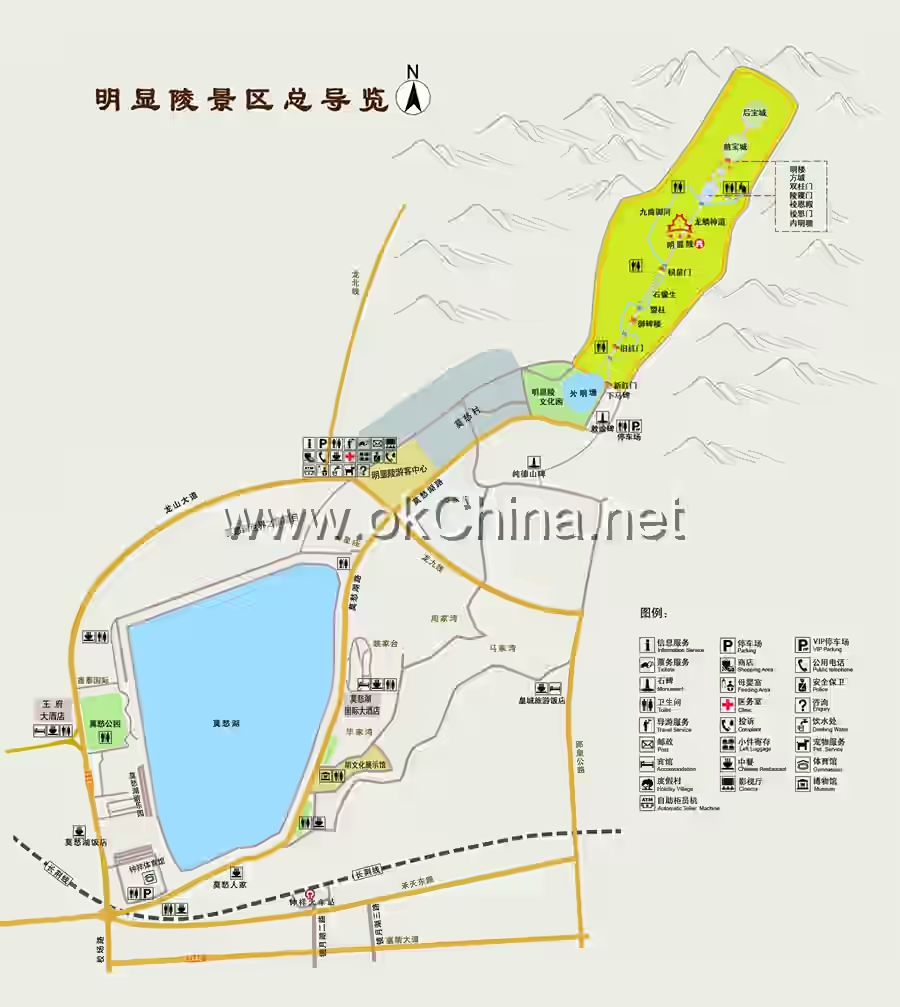
The Xianling Tomb Scenic Area is located in the northeastern suburbs of Zhongxiang City, Jingmen City, Hubei Province, situated on Chunde Mountain by Mochou Lake. The entire Xianling Tomb Scenic Area covers a total area of 3.18 square kilometers.
2.2 Climate
Zhongxiang City, where the Xianling Tomb Scenic Area is located, has a northern subtropical monsoon climate characterized by four distinct seasons, abundant sunlight, ample heat, moderate rainfall, and simultaneous occurrence of rain and heat. The city's annual average temperature is 16.9°C, with an average annual precipitation of 983 mm. The coldest month (January) has an average temperature of 3.9°C, while the hottest month (July) averages 28.1°C. The historical extreme maximum temperature is 39.7°C, and the extreme minimum is -15.3°C. Major hazardous weather affecting the region includes torrential rain and floods, drought, thunderstorms, and strong winds.
3. Main Attractions
3.1 Xianling Tomb
The Xianling Tomb mausoleum area uses the surrounding mountains and water systems as the main elements of its architectural composition. Adhering to the principles that "the mausoleum system should correspond with the landscape" and "augmenting construction according to the mountains to achieve near perfection," and based on the concepts of "embracing yin while holding yang" and "backed by mountains, facing water," it utilizes the left peak of Chunde Mountain as the ancestral mountain supporting the underground palace (Xuangong), the left and right peaks as the protective sand hills flanking the mausoleum area, and the Tianzi Ridge in front as the altar hill of the tomb, forming an environment in high harmony with nature. The mausoleum area fully utilizes the terraces between the Chunde Mountains, sequentially arranging structures such as the Dismounting Stele, gates, pavilions, ornamental columns (wangzhu), stone statues (shixiangsheng), memorial archways, and bridges, guiding visitors along the mountain's contours to the Xiang Hall (Offering Hall), Ming Tower (Soul Tower), and the Precious City (Baocheng, the burial mound). The various buildings within the mausoleum area are nestled amidst mountains and waters, complementing each other.
3.1.1 Architectural Layout
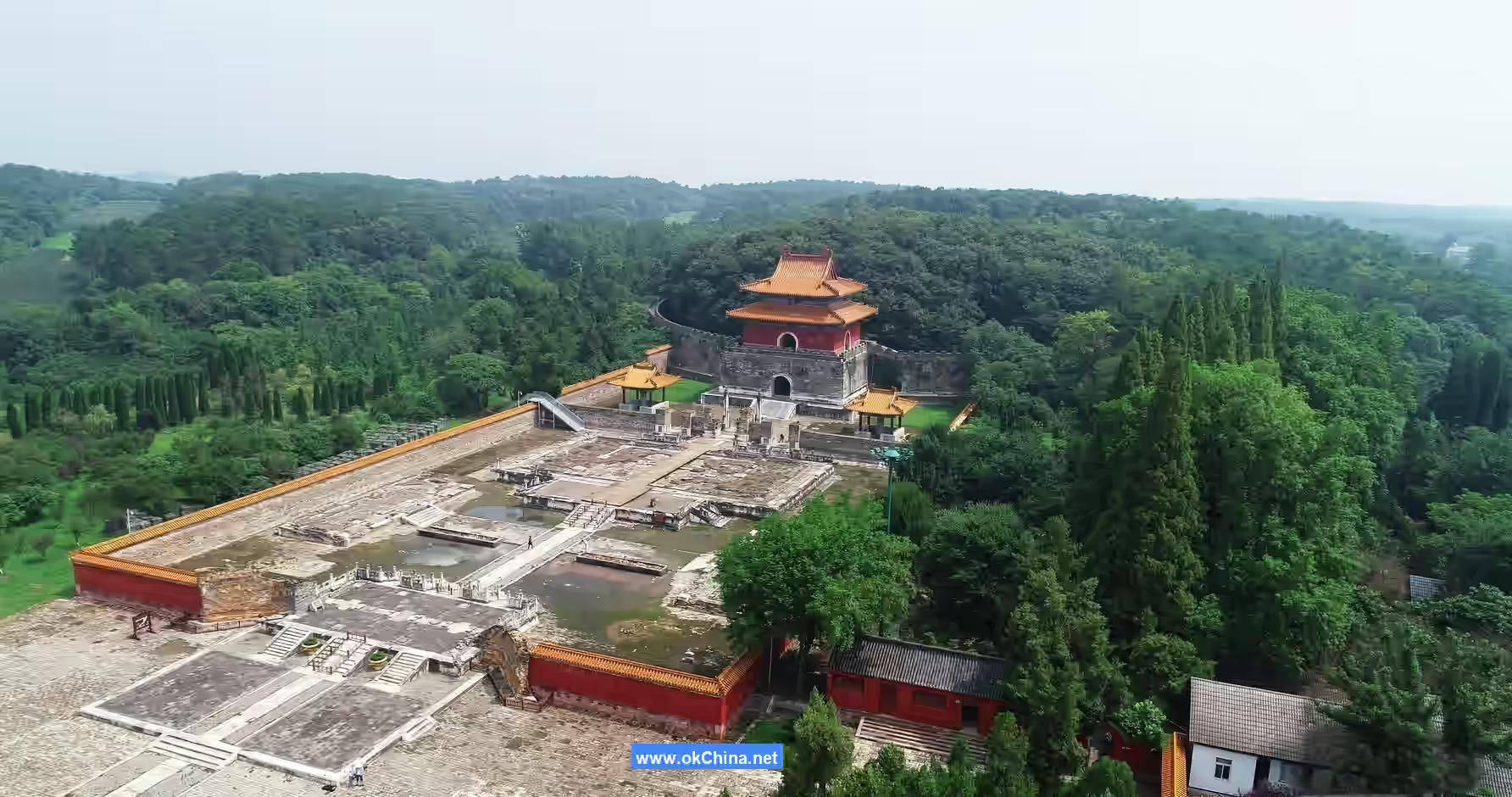
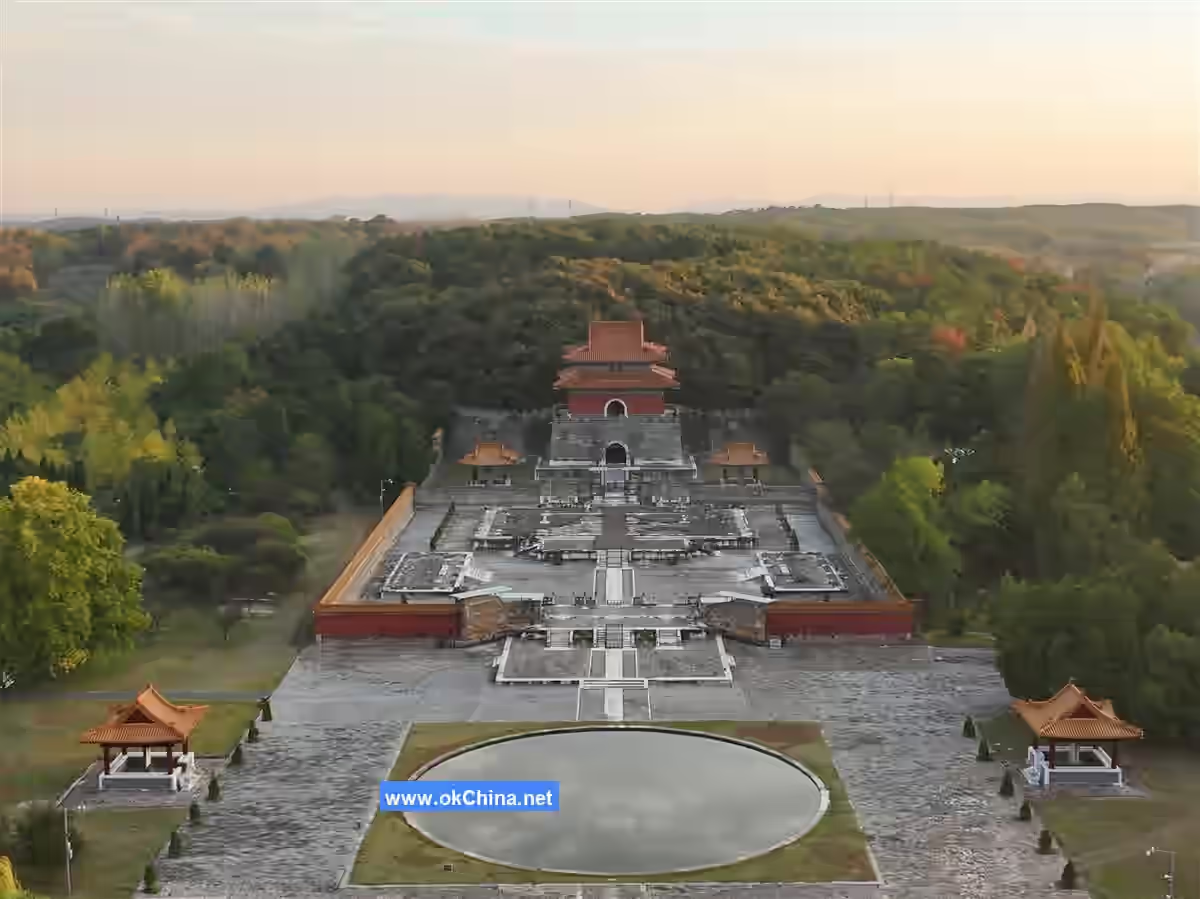
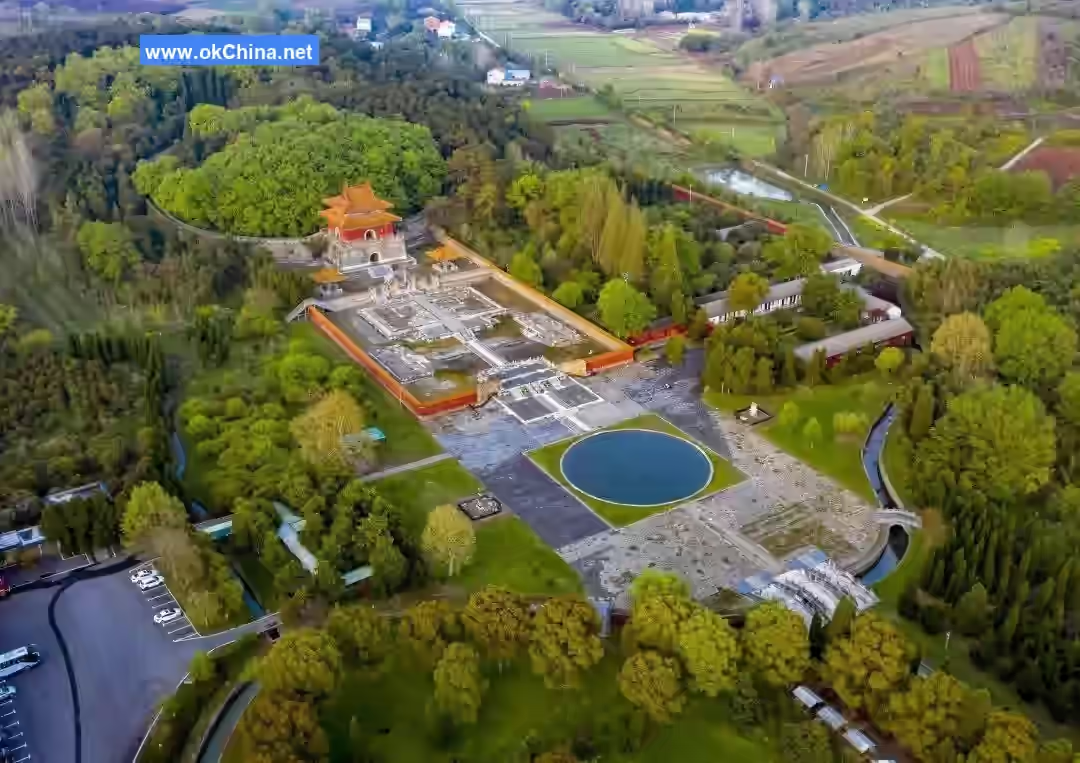
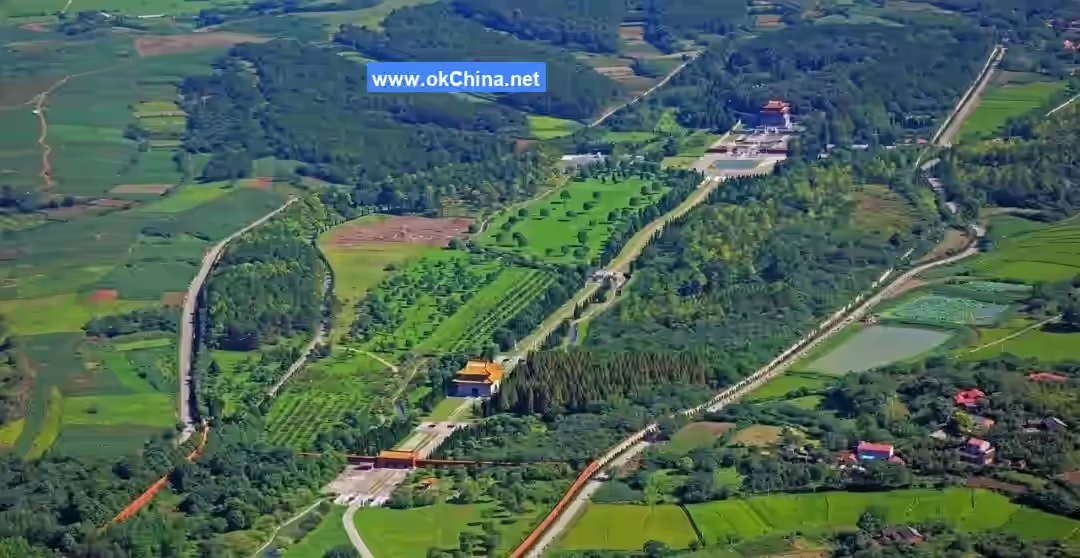
The Xianling Tomb covers an area of 183.15 hectares, with the tomb complex itself occupying 52 hectares. The tomb's palace buildings are arranged longitudinally following a layout of "court in the front, resting place in the rear." The overall structure consists of inner and outer enclosure walls (Luocheng), comprising front and rear Precious Cities (Baocheng), the square Ming Tower, the Ling'en Hall (Leng'en Hall), the Ling'en Gate, the Divine Kitchen, the Divine Storehouse, tomb households, military households, the Divine Palace Directorate, the Merit Stele Tower, the New Red Gate, the Old Red Gate, inner and outer Mingtang ponds, the Nine-Bend Imperial River, the Dragon-shaped Sacred Way, and other architectural complexes. The overall layout of the Xianling Tomb resembles the shape of a "precious vase." Its architecture fully considers the geographical form, paying particular attention to the harmony between the architectural structure and the surrounding natural environment. All mountains, water systems, forests, and vegetation within the mausoleum area are unified in layout and arrangement as constituent elements of the tomb. The natural hill at the rear of the mausoleum area serves as the ancestral mountain, supporting the tomb. The hills on both sides provide protection. Buildings are arranged on the central terrace, with the Nine-Bend River winding through. The hill in front acts as a screen hill, forming the feng shui pattern of the Vermilion Bird in front, the Black Tortoise behind, the Azure Dragon on the left, and the White Tiger on the right. This achieves harmony and unity between architecture and environment, ensuring "the mausoleum system corresponds with the landscape."
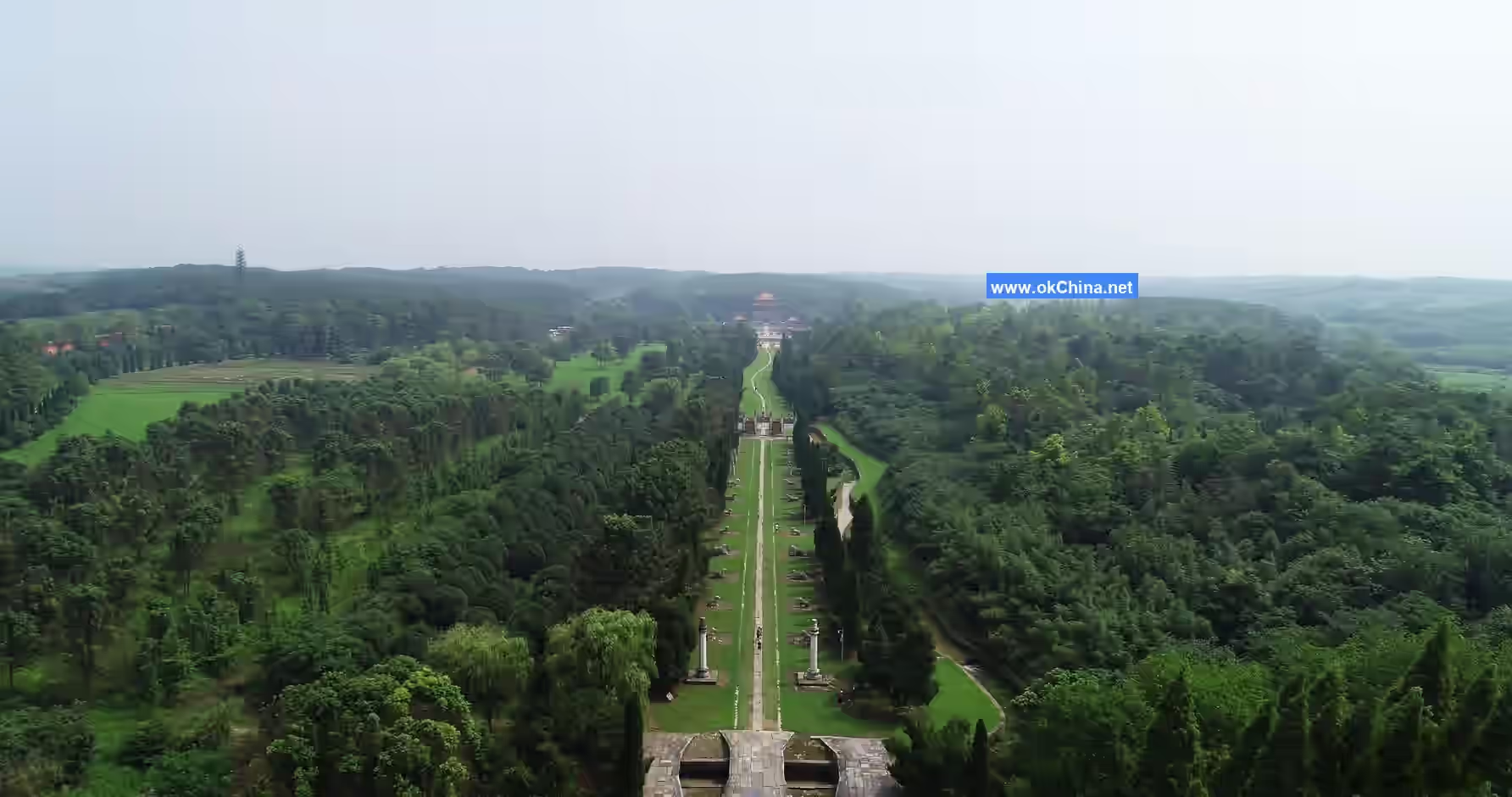
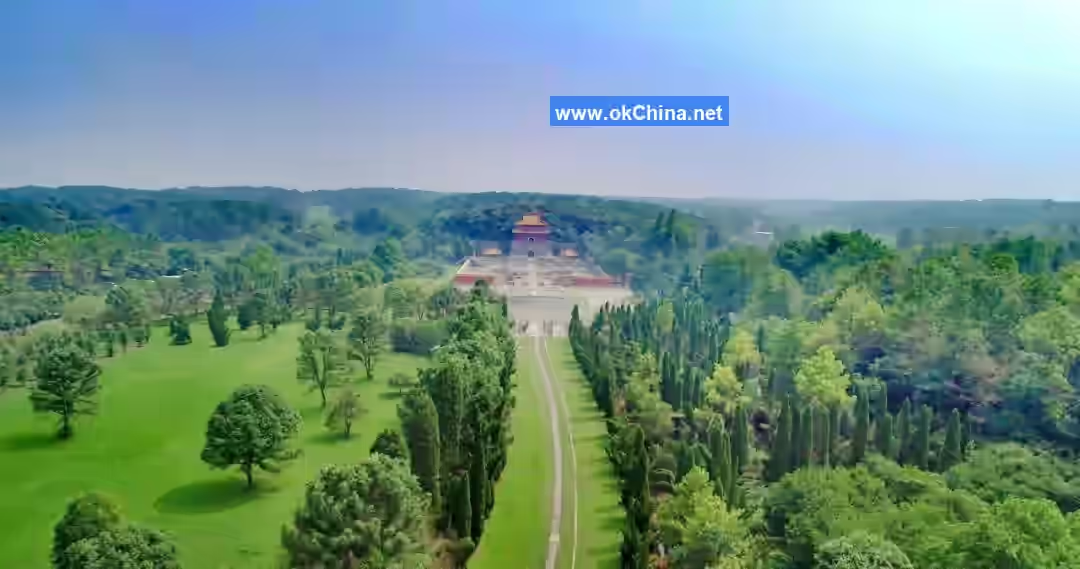
The total length of the Xianling Tomb's outer enclosure wall exceeds three thousand meters. At its southernmost end are two layers of mausoleum gates: the New and Old Red Gates, constructed of brick and stone. Inside the Old Red Gate lies a Sacred Way that resembles a swimming dragon in both form and spirit (the Dragon-shaped Sacred Way), connecting to the tomb palace area. At the center of the Sacred Way stands the tall Ruigong Shengde Stele Pavilion. Its plan is square, covering 334 square meters. It features a white marble platform base with a stone Sumeru pedestal below and a double-eave hip-and-gable roof above. Arched doorways open on all four sides, with the Ruigong Shengde Stele, crowned by a dragon head and borne by a stone tortoise (bixi), standing in the center. 63 meters behind the stele pavilion is an Imperial Bridge. Crossing this bridge leads to the main tomb ornamentation structures. Facing visitors is a 12-meter-high white marble ornamental column (wangzhu) with a square Sumeru pedestal below. The column body is hexagonal, with a two-tiered waist and a cloud-patterned disc supporting a cylindrical column head carved with cloud and dragon reliefs. On both sides of the Sacred Way behind the ornamental column are distributed stone carvings (stone statues) including civil and military officials, generals, standing horses, kneeling horses, qilin, elephants, lions, and camels. After crossing the final Imperial Bridge over the Nine-Bend Imperial River lies the Inner Mingtang pond. Beyond the Inner Mingtang is the palace area of the Xianling Tomb.
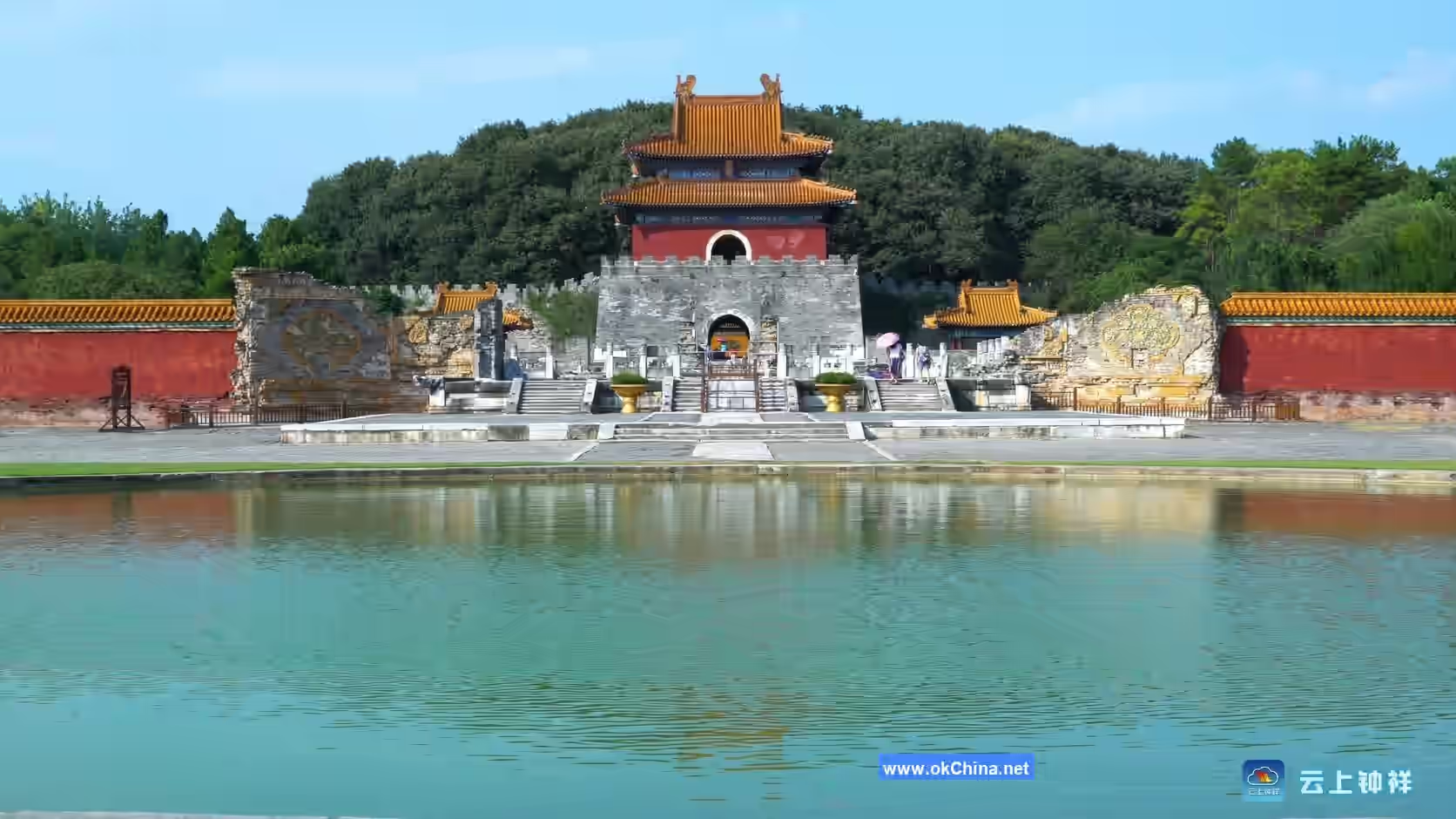
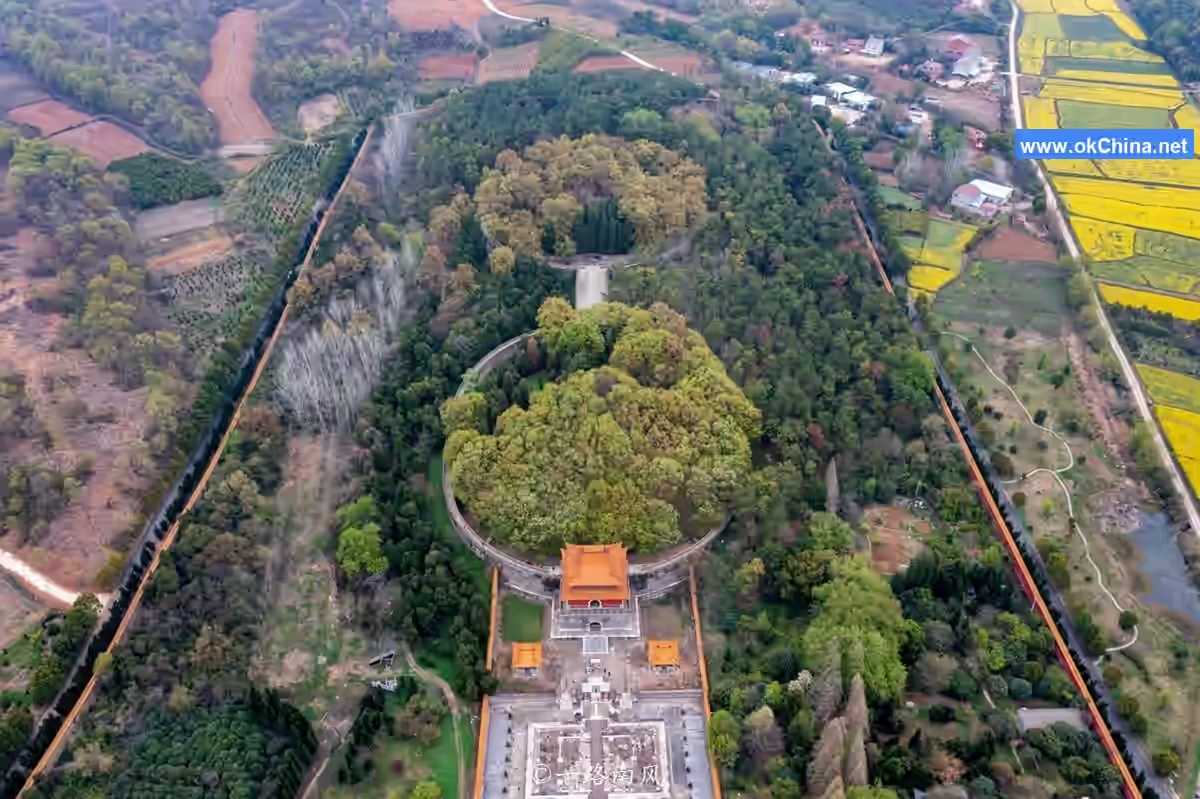
Within the inner enclosure wall of the Xianling Tomb's palace area are structures such as the Ling'en Gate, the Ling'en Hall, the Ming Tower, the Burial Enclosure (Precious City), and the Yaotai Terrace. Among these, the two large Burial Enclosures (the front and rear Precious Cities) form a figure-eight shape, connected by the Yaotai Terrace which links the two underground palaces (Xuangong). The main gate of the inner city is the Ling'en Gate. The Burial Enclosure is divided into front and rear circular walls, connected in the middle by the Yaotai Terrace, resembling a dumbbell shape. The walls are surrounded by "parapet walls" and drainage outlets carved with coiling dragon heads from white marble. The front wall is five meters high, while the rear wall is several tens of meters high with a diameter of one hundred meters. In front of the Burial Enclosure, a square city platform is built, topped by the Ming Tower. Below it is a vaulted passageway built of brick and stone. Inside the tower, the stele inscribed "Tomb of Emperor Gongruixian" is placed here. On both sides of the gate are displayed meticulously crafted inscriptions for the tomb's occupants. In front of the city platform stand a Five Altar Offerings platform and two stone columns called ornamental columns (wangzhu), all carved from natural giant stone. The tops of these columns each hold a sacred beast to ward off evil.
3.1.2 Architectural Features
3.1.2.1 One Mausoleum, Two Burial Mounds
Among imperial mausoleums throughout Chinese history, the Xianling Tomb is unique for its "one mausoleum, two burial mounds" system. There are two reasons for constructing two Precious Cities at the Xianling Tomb. First, when the underground palace was opened, it was found to be leaking water. The Jiajing Emperor decided to add a new underground palace, which became the rear Precious City. Second, it was to properly bury both his parents. The front underground palace was initially constructed in the 14th year of the Zhengde era (1519 AD) for Prince Xianxian, Zhu Youyuan, according to the regulations for a feudal prince after his death. The rear underground palace was built in the 18th year of the Jiajing era (1539 AD) when Emperor Jiajing toured south to Zhongxiang. It was the new underground palace and rear Precious City he personally designated for his parents. The two Precious Cities are connected by the Yaotai Terrace, forming an interrelated whole and creating the special layout of "one mausoleum, two burial mounds." Therefore, the front and rear underground palaces were built 20 years apart.
3.1.2.2 New and Old Red Gates
The Xianling Tomb has two red gates, new and old, which is very unique among Ming Dynasty imperial mausoleums. Although they were not built in the same period, they share commonalities in construction and function. The Old Red Gate was built in the 3rd year of the Jiajing era (1524 AD) and is the second gateway of the Xianling Tomb. It is the main gate on the central axis, with walls built on its east and west sides connecting to the eastern and western sand hills and the outer enclosure wall, forming a closed area. The New Red Gate was built in the 18th year of the Jiajing era (1539 AD) and is the first gate of the Xianling Tomb. It served to strengthen the protective function of the mausoleum, making the area heavily guarded to achieve a solemn and majestic atmosphere. Based on the terrain, the New Red Gate could have been built directly on the central axis of the Sacred Way, but it deviates from the axis, leaning against Chunde Mountain to the east and facing the Outer Mingtang pond to the west, with its sides connected to the outer enclosure wall. This was primarily for feng shui reasons. When Emperor Jiajing returned to Zhongxiang, he brought a feng shui master named Liao Wenzheng. After inspecting the tomb's geomancy, Liao said the central axis of the Xianling Tomb leaned towards the southwest, and it would be better if it leaned slightly southeast. Ultimately, Emperor Jiajing followed Liao Wenzheng's advice, adding the New Red Gate and the outer enclosure wall, extending the Dragon-scale Sacred Way, and positioning the New Red Gate like a dragon's tail pointing eastward, making the entire Dragon-shaped Sacred Way more resemble a living, swimming dragon.
3.1.2.3 Inner and Outer Mingtang Ponds
The construction of the Inner and Outer Mingtang ponds at the Xianling Tomb is not found in other Ming Dynasty imperial mausoleums and is one of its distinctive features. The practice of having inner and outer Mingtang ponds at that time might be related to the deep belief in Taoism by Prince Xianxian and Emperor Jiajing, and was completed according to feng shui principles. "Mingtang" (明塘) is a homophone for "明堂" (bright hall), a place to gather "qi." Both are located in the positions considered "Mingtang" in feng shui art, which are key areas related to "vital energy" in the feng shui pattern. The Inner Mingtang is located in front of the Ling'en Gate. It is a manually excavated circular pond, close to the core "acupuncture point" position, and functions to collect groundwater. The Outer Mingtang was modified from an existing natural pond. It is situated precisely at the front end of the mausoleum area and serves to demarcate and protect the earth energy of Chunde Mountain. This is because the Classic of Burial states: "Qi disperses when carried by the wind, and stops when bounded by water."
3.1.2.4 Inner and Outer Enclosure Walls
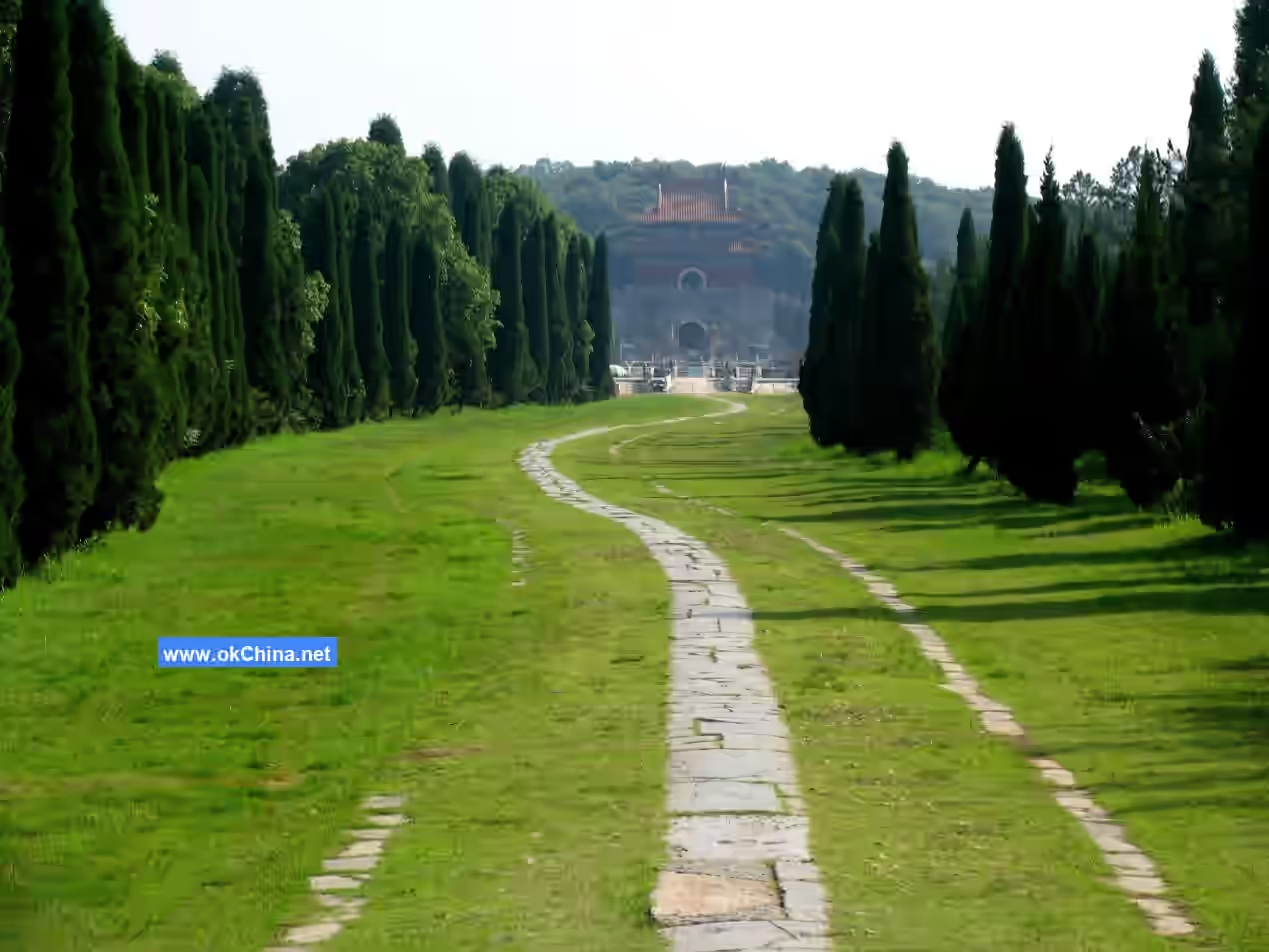
As an independent mausoleum area, the Xianling Tomb has high walls built around it. Relative to the walls of the tomb palace area, these are called the outer enclosure wall and the inner enclosure wall, respectively. The inner enclosure wall surrounds the most mysterious part of the tomb palace area, adopting a "square in front, round in back" and "court in front, resting place in back" planar layout. The front, square section refers to the square courtyard, symbolizing earth, serving as the primary activity area for the living and the main site for sacrifices. The rear resting place forms a circular courtyard, symbolizing heaven. The circular precious dome and Precious City serve as the resting palace, the place where the emperor and empress are buried and reside eternally. The entire complex reflects the ancient Chinese philosophical concept of "round heaven and square earth." The construction of the outer enclosure wall primarily served to strengthen the mausoleum's protection and embodied the centralized power of the imperial society. The outer enclosure wall of the Xianling Tomb was built in the 18th year of the Jiajing era (1539 AD). Starting from the New Red Gate, it encircles the entire mausoleum with red walls and yellow tiles, presenting a magnificent sight. Simultaneously, the winding wall follows the mountain's contours, avoiding a rigid external appearance and conforming to the harmony principle that "the mausoleum system should correspond with the landscape."##### 3.1.2.5 Dragon-Shaped Sacred Way The Ming Xianling Mausoleum is the only imperial tomb from the Ming Dynasty that retains the overall "dragon scale" design of its sacred path. The dragon-shaped sacred way, also known as the dragon-scale sacred way, intentionally avoids a straight path and is designed as a "winding road." Beyond the Lingxing Gate, a 290-meter-long dragon-shaped sacred way leads to the fifth stone bridge. Influenced by the eastern sand hill and the unalterable central axis of the tomb facing the "table mountain" (Anshan), the sacred way between the fourth and fifth river bridges forms a curved path. This cleverly echoes the winding sacred way between the old red gate and the new red gate. The Ming Dynasty text Geographical Ancient Mirror Song by Jiang Pingjie also states: "The path can bound and also welcome qi; it should be evaluated like the zero deity. A great road winding like the Xuan character, the yang deity coils three times before the tomb. Straight comings and goings lack vitality; a 'Yi'-shaped bend is most affectionate." The curved layout of the sacred way objectively harmonizes with the natural landscape, narrows the field of view, prevents the sacred path from pointing directly at the tomb (like an "earth arrow"), and avoids the tomb buildings being fully exposed at a glance, thus creating the artistic effect of "a winding path leading to a secluded spot."
3.1.2.6 Nine-Bend Imperial River
The Nine-Bend Imperial River is one of its architectural features, and its design is closely related to Feng Shui principles. The Classic of Burial states: "In the methods of Feng Shui, obtaining water is paramount, containing wind is secondary. Qi is the mother of water; where there is qi, there is water." The design of the Nine-Bend River is very ingenious. The winding river channel intersects horizontally with the five stone arch bridges on the central axis sacred way, dividing the tomb area ground into several different sections, perfectly utilizing the spatial defining role of natural elements like mountains, water, and trees. As Emperor Jiajing revered Taoism, it also symbolizes the meaning of the "supreme九五至尊" (the emperor). Although the construction of imperial tombs throughout history placed great importance on drainage and flood discharge, whether by excavation or utilizing natural rivers, the Ming Xianling Mausoleum's drainage system is relatively more complete compared to other tombs, reflecting the Feng Shui theory's emphasis on perfection.
3.1.2.7 Glazed Screen Wall
Inside and outside the Ling'en Gate of the Ming Xianling Mausoleum, "八字"-shaped (splayed) glazed screen walls are installed. Besides having significant decorative functions, these screen walls on both sides of the gate also have the practical value of enhancing the gate's imposing manner. The glazed screen wall is a unique architectural feature of the Ming Xianling Mausoleum and does not exist in other Ming Dynasty imperial tombs.
3.1.2.8 Numerous Stele Pavilions
The number of stele pavilions at the Ming Xianling Mausoleum far exceeds that of the Ming Tombs (Thirteen Tombs) and other Ming imperial tombs. Counting from the "Stele of the Pure Virtue Mountain" bestowed by imperial decree, there are as many as nine steles: the "Pure Virtue Mountain Stele," "Imperial Edict Stele," "Stele of Sagely Merit and Divine Virtue," "Stele Recording Auspicious Texts," "Stele of Sacrificial Address to Pure Virtue Mountain," "Stele Recording the Addition of Posthumous Titles," "Stele of Imperial Bestowed Sacrificial Text," "Stele of Imperial Bestowed Posthumous Title and Record Text," and the "Sacred Name Stele" in the Soul Tower. Except for the "Stele Recording the Addition of Posthumous Titles" erected inside the Ling'en Hall, all have stele pavilions, far surpassing other Ming imperial tombs. The inscriptions on the steles in the Ming Xianling Mausoleum's pavilions all praise the merits and virtues of Zhu Youyuan (Emperor Jiajing's father) and contain sacrificial texts, aiming to elevate his father's status.
3.2 Introduction to Scenic Spots of Ming Xianling Mausoleum
3.2.1 Pure Virtue Mountain Stele Pavilion
At the southernmost end of the Ming Xianling Mausoleum stands one Pure Virtue Mountain Stele Pavilion, built in the 10th year of the Jiajing reign (1531) following an imperial decree. Its plan is square, with steps on the north side. The pavilion is destroyed. The white marble stele is well-preserved, with a Sumeru pedestal of constricted-waist shape. The stele head is carved with the seal script characters "敕封" (bestowed by imperial decree), and the stele body is carved in relief with the regular script characters "纯德山" (Pure Virtue Mountain).
3.2.2 Imperial Edict Stele Pavilion
At the foot of Tianzigang, northeast of the Pure Virtue Mountain Stele, stands one Imperial Edict Stele Pavilion. It was built in the fifth month of the 20th year of the Jiajing reign (1541) upon the petition of the garrison eunuch Fu Lin. Its plan is square, with steps on the north side and a corridor. The pavilion is destroyed. Inside stands a tortoise-borne stele, with the tortoise looking ahead into the distance, facing north. The inscription on the north side of the stele body is severely weathered and illegible, while the inscription on the south side is faintly visible. In 1999, the surrounding environment was cleared, and the Imperial Edict Stele was restored.
3.2.3 Dismounting Stele
The Dismounting Stele is located 165 meters north of the Imperial Edict Stele Pavilion, in front of the New Red Gate. It is carved from white marble, with one stele erected on each of the east and west sides. Both sides of the stele body are inscribed with eight large regular script characters: "官员人等至此下马" (All officials and others dismount here). The lower part of the stele body is supported by drum-shaped stones at each of the four corners. The eight large characters on each side were personally written by the high-ranking official Yan Song during the Jiajing reign. In imperial Chinese society, the emperor's dignity was supreme, and the imperial tomb was a sacred forbidden area. Not only were common people not allowed to enter, but even civil and military officials ordered to pay homage here had to dismount from their sedan chairs or horses and enter the tomb area respectfully. Therefore, the dismounting stele served as an important warning marker.
3.2.4 Outer Mingtang
The Outer Mingtang was built in the 18th year of the Jiajing reign (1539). It is located west of the New Red Gate, connected to the outer enclosure wall on the east and west, with the outlet of the Nine-Bend Imperial River to the north. Placing the Mingtang here served to prevent the loss of dragon qi (vital energy). The Jin Dynasty Feng Shui theorist Guo Pu believed that "dragon qi disperses when encountering wind and stops when meeting water." Therefore, the Outer Mingtang here prevents the loss of dragon qi, ensuring the eternal prosperity of the imperial enterprise. The Outer Mingtang was restored in 1999.
3.2.5 New Red Gate
The New Red Gate is the first portal entering the tomb area. Built in the 18th year of the Jiajing reign (1539), it leans against Pure Virtue Mountain to the east, borders the Outer Mingtang to the west, and connects to the outer enclosure wall on both sides. It is a single-eave hip-and-gable roof structure, built with glazed tiles, bricks, and stone. It has three arched doorways, the central one higher and the side ones lower, with side doors and gatehouses on the left and right.
3.2.6 Dragon-Shaped Sacred Way
The dragon-shaped sacred way of the Ming Xianling Mausoleum is 1368 meters long. The center is paved with bluestone slabs, called the "dragon spine." Both sides are filled with cobblestones, equivalent to "dragon scales," and bounded on the outer edges by curb stones, hence called the "dragon-scale sacred way." This method served the functional needs of the tomb architecture while being economical and aesthetically pleasing.
3.2.7 Outer Enclosure Wall
The red-walled, yellow-tiled city wall is the outer enclosure wall of the Ming Xianling Mausoleum. The entire outer enclosure wall is 3600 meters long, winding and undulating with the mountain terrain, enclosing the entire tomb garden. Viewed from above, the entire outer enclosure wall is shaped like a "净瓶" (pure vase), a ritual object held by the Bodhisattva Guanyin, symbolizing sacredness and auspiciousness. Here, it symbolizes the role of encircling qi and protecting life.
3.2.8 Five Stone Arch Bridges
First Bridge: Entering the New Red Gate and following the winding sacred way for 102 meters, there are three side-by-side single-arch white marble stone arch bridges spanning the Nine-Bend Imperial River, the central one higher and the side ones lower. The main bridge is 17 meters long and 7.95 meters wide. The left and right auxiliary bridges are 15.3 meters long and 6.1 meters wide. The baluster heads on the main bridge are lion heads, those on the auxiliary bridges are plain square heads, and the connecting baluster heads between the main and auxiliary bridges are lotus heads. Second Bridge: 55 meters north along the sacred way from the Old Red Gate, built of bluestone, there are three side-by-side single-arch stone arch bridges. The railings and balusters are scattered and残缺 (damaged/incomplete). Third Bridge: 41 meters north along the sacred way from the Imperial Stele Pavilion, built of bluestone, there are three side-by-side single-arch stone arch bridges. The railings and balusters are scattered and残缺. Fourth Bridge: Past the Lingxing Gate is the fourth stone arch bridge, built of bluestone, with three side-by-side single-arch stone arch bridges. The railings and balusters are scattered and残缺. Fifth Bridge: Connecting to the dragon-scale sacred way is the fifth stone arch bridge, built of white marble, with three side-by-side single-arch stone arch bridges.
3.2.9 Old Red Gate
38 meters past the first stone arch bridge is the Old Red Gate. Built in the 3rd year of the Jiajing reign (1524). It is a single-eave hip-and-gable roof structure, built with glazed tiles, bricks, and stone. It has three arched doorways, with side doors and gatehouses on the left and right.
3.2.10 Nine-Bend Imperial River
The Nine-Bend Imperial River, commonly called the Nine-Bend River. The Nine-Bend River is the main drainage system of the tomb area. It is a brick and stone structure, 1688 meters long, passing left and right under the five stone bridges on the central axis sacred way, connecting the entire tomb garden, receiving water from the Songlin Mountain spring upstream and connecting to the Outer Mingtang downstream. The number "nine" here generally refers to the many bends of the river channel. The number "nine" is associated with the dragon, representing heaven. The number "five" is central, representing humanity. In ancient times, the "center" was the most important, core position, fully expressing the ancient emperor's ideology of supreme self-importance. The Nine-Bend River is one of the most unique landscapes of the Ming Xianling Mausoleum, possessing both aesthetic and practical value.
3.2.11 World Heritage Marker
The World Heritage Marker was erected by the Zhongxiang Municipal Government in 2000 after the scenic area successfully applied for World Heritage status. The diamond shape in the center of this marker represents clasped hands, symbolizing heritage created jointly by humanity. The outer circle indicates that jointly created heritage requires the common protection of all humanity. Green symbolizes nature and also symbolizes the interdependence of cultural and natural heritage. The English text is the abbreviation of the United Nations Educational, Scientific and Cultural Organization.
3.2.12 Stele Pavilion of Sagely Merit and Divine Virtue
41 meters past the second stone arch bridge is the Stele Pavilion of Sagely Merit and Divine Virtue, commonly called the Imperial Stele Pavilion or Great Stele Tower. Completed in the 7th year of the Jiajing reign (1528), it was destroyed in the late Ming Dynasty. It is a commemorative building and also one of the landmark buildings of the tomb. This structure was restored in 2010. The Stele Pavilion of Sagely Merit and Divine Virtue has a square plan layout, with a white marble Sumeru pedestal set on a base. The walls are relatively complete, with arched doorways on all four sides. It originally had a double-eave hip-and-gable roof, but its wooden structure no longer exists. In the center stands the "Stele of Sagely Merit and Divine Virtue" borne by a dragon-headed tortoise. The stele head features four high-relief intertwined dragons with heads lowered.
3.2.13 Ornamental Column
Crossing the third stone arch bridge, one is greeted on both sides by white marble ornamental columns, also called watchtowers or望柱 (wangzhu). They are 6.5 meters tall overall, with a square base stone below, an octagonal Sumeru pedestal above, the body decorated with cloud patterns, and the head decorated with cloud and dragon patterns on a two-tiered constricted waist.#### 3.2.14 Stone Statue Group Behind the ornamental columns are arranged 12 pairs of stone statues, constructed in the 6th year of the Jiajing reign of the Ming Dynasty (1527). The stone statues include one pair of lions, one pair of xiezhi (mythical creatures), one pair of camels, one pair of elephants, two pairs of qilin (mythical creatures), two pairs of horses, two pairs of military officers, one pair of civil officials, and one pair of meritorious officials. The stone statue group symbolizes imperial power and is a microcosm of the emperor's ceremonial guard during his lifetime.
3.2.15 Lingxing Gate
The Lingxing Gate is also called the Stone Archway or Dragon-Phoenix Gate. It is a three-gate, six-pillar, four-tower chongtian-style ceremonial archway. Cloud-shaped plaques hang from the square pillars, and the lintels are topped with lotus pedestals, each carved with a chaotianhou (a mythical creature looking skyward). A flaming pearl stands in the center, hence it is also called the "Flaming Archway." The archway body imitates wooden structures with forehead beams, decorative panels, and door frames, featuring door studs on the top and bottom. The archway pillars are flanked front and back by drum-shaped stone blocks. The screen wall base is a Sumeru pedestal, and the roof is covered with yellow glazed tiles.
3.2.16 Inner Bright Pond
Beyond the fifth stone arch bridge lies the Inner Bright Pond, built in the 6th year of the Jiajing reign of the Ming Dynasty (1527). The Inner Bright Pond is circular, constructed of brick and stone, with a diameter of 33 meters. Its inner embankment has five steps, faced with bluestone, and the perimeter is inlaid with colored pebbles forming cloud and dragon patterns.
The Inner Bright Pond echoes the Outer Bright Pond. Besides its function of gathering favorable winds and energies (feng shui), it also helps lower the water table of the underground Xuan Palace and serves as a firefighting resource. Since the main structures of the Xianling Tomb are mostly wooden, water could be drawn from here in case of fire.
3.2.17 Jiruiwen Stele Pavilion
The Jiruiwen Stele Pavilion is located east of the Inner Bright Pond, built in the 11th year of the Jiajing reign of the Ming Dynasty (1532). Its plan is square, with an arched door centered on the west side and steps in front. The pavilion is destroyed, but the stele remains. The stele base is a waisted Sumeru pedestal, and the inscription is no longer clear.
3.2.18 Ling'en Gate
North of the Inner Bright Pond is the Ling'en Gate. It has a frontage of three bays and a depth of two bays, with a moon platform and three sets of steps at the front and back. The upper structure is destroyed, but the platform base is well-preserved, connecting to the inner city walls on the east and west. Both sides of the Ling'en Gate feature splayed glazed screen walls. The front centerpiece has a glazed qionghua (a legendary jade flower) pattern, while the back depicts two dragons playing with a pearl.
3.2.19 Glazed Screen Walls
The Xianling Tomb's Ling'en Gate has exquisite glazed screen walls on both its inner and outer sides. Judging from the remaining walls, they are glazed imitations of wooden structures, with the front featuring a qionghua pattern.
3.2.20 Ling'en Hall
North of the Ling'en Gate is the Ling'en Hall, located in the center of the courtyard. It was a palace-style building with double-eave hip-and-gable roof and a rear baosha (attached structure). Built in the 4th year of the Jiajing reign of the Ming Dynasty (1525), only the foundation site remains today. It had a frontage of five bays and a depth of four bays, surrounded by a 2-meter-wide corridor with white marble carved balustrades and posts. The Sumeru-style platform base originally had 60 fully carved dragon-head water spouts, with four chi (hornless dragon) heads at each corner. A moon platform extended from the front, with two chi heads at each of its corners. The platform base is intact. The Ling'en Hall was built in imitation of the imperial palace's throne hall and was an important venue for enshrining the spirit tablets of the emperor and empress and conducting sacrificial ceremonies.
3.2.21 Stone Five Offerings
The Stone Five Offerings are a group of symbolic structures. In the center is a stone incense burner, flanked on each side by a stone candleholder and a stone vase, with a stone altar table behind. The Stone Five Offerings have no practical use but symbolize perpetual incense, undying sacred flames, and ever-blooming celestial flowers before the tomb, allowing the emperor and empress resting in the underground palace to continuously receive offerings from their descendants. The stone altar table is Sumeru-style, with the upper fascia carved with intertwining lotus flowers, the top and bottom carved with upward and downward-facing lotus petals, and the waist section featuring a tied ribbon and flower pattern.
3.2.22 Square City and Soul Tower
The Square City and Soul Tower were built in the 6th year of the Jiajing reign of the Ming Dynasty (1527). The Square City has a frontage of 22.2 meters. Its depth contains an arched passageway, with an imperial rampway (jiangca) in front of the door. Behind the arch, ramps are set on both left and right sides for ascending and descending to the Soul Tower. The top of the Square City has crenellations on the east, west, and south sides and a parapet wall on the north side. The outer walls on the east and west each have one water spout in the shape of a dragon head. In the center stands a stele tower, a double-eave hip-and-gable roof structure with arched doors on all four sides. Between the double eaves on the south side hangs a plaque in regular script reading "Xianling." Inside is the Sacred Title Stele, on a waisted Sumeru pedestal. The stele top is carved with the seal script characters "Da Ming" (Great Ming), and the stele body is inscribed with large regular script characters reading "Gong Rui Xian Huang Di Zhi Ling" (Tomb of the Reverent, Wise, and Dedicated Emperor).
3.3 Mochou Lake
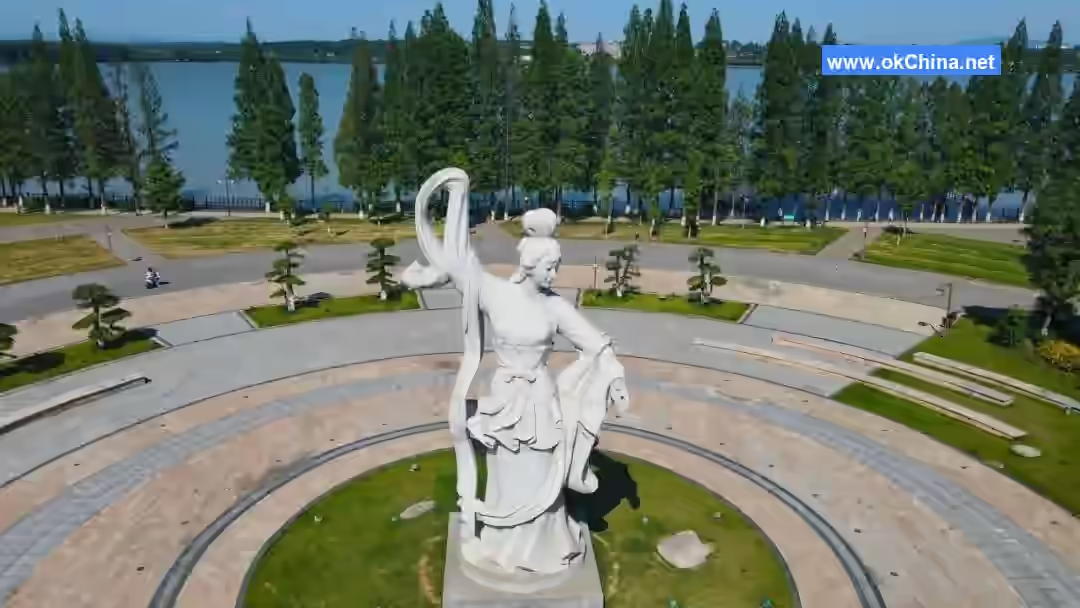
Mochou Lake is named after Mochou, a song and dance artist from the State of Chu, who was born here. To commemorate her, people renamed the Canglang Lake where she once lived to Mochou Lake. Mochou Lake Park covers an area of 3,000 mu, with a 7,000-meter-long lakeside landscape belt and a winding shoreline. It serves as a green link connecting the urban area and the Xianling Tomb. The scenic area has built various leisure facilities along the lake, including pavilions, towers, and walking paths. The Mochou Lake tourist boardwalk is 5,800 meters long. The largest viewing platform on the boardwalk covers an area of 800 square meters, providing visitors with a vantage point to enjoy the lake scenery and city architecture.
3.4 Mochou Village
Mochou Village is constructed in a retro style, featuring courtyard and neighborhood-style buildings in Ming, Qing, and Republican-era architectural styles, all uniformly in Huizhou architectural style.
Mochou Village opened to the public on August 22, 2016, with a total planned area of 1,600 mu. The village is divided into six areas: Mochou Old Street·Chu Folk Market District, Mochou Ferry·Chu Charm Market District, Baisui Bay·Chu Style Dining District, Taohua Ridge·Chu Sentiment Resort District, Taohua Kiln·Chu Art Research & Production District, and Mochou Farm·Chu Studies Parent-Child District. It is a comprehensive tourist attraction integrating "sightseeing, folk custom experiences, ecological dining, agricultural creative retail, performance entertainment, leisure vacations, parent-child study tours, conferences, and exhibitions." Mochou Village occupies approximately 40,000 square meters. Within the village, there are 2 resort hotel clusters, 2 boutique hotels, 1 apartment-style hotel, 6 themed homestays, over 10 workshop-style restaurants, over 20 themed Chinese restaurants, more than 200 traditional snack shops, over 50 cultural and intangible cultural heritage display and experience zones, 5 performance venues, 1 bar street, 1 boat tour waterway, as well as tourist projects and facilities such as a horse ranch, hot springs, a winery, a golf driving range, and an infinity pool.
4. Related Culture
4.1 Ming Culture Exhibition Halls
4.1.1 Xianling Tomb Cultural Exhibition Hall
The Xianling Tomb Cultural Exhibition Hall is located east of the Xianling Tomb scenic area's tourist reception center. The two-story hall has a total area of 2,000 square meters and a total investment of 20 million yuan. The exhibition uses Emperor Jiajing as the main thread, connecting figures and events to showcase Zhongxiang's history and culture. The first floor has four exhibition areas. The first area is the Xianling Tomb exhibition area, mainly displaying the architectural features and feng shui layout of the tomb. The second area is dedicated to Zhu Youyuan, the tomb's occupant, highlighting the lives of the Dedicated Emperor Zhu Youyuan and Empress Dowager Zhangsheng, their education of Emperor Jiajing, and their contributions to Zhongxiang. The third area is the Sixteen Emperors of the Ming Dynasty exhibition area. The fourth area is the Jiajing exhibition area. The second floor has three exhibition areas. The first is Cultural Zhongxiang. The second is Beautiful Zhongxiang. The third is Longevity Zhongxiang, using images and videos to interpret Chu culture, Ming culture, and longevity culture.
4.1.2 Ming Culture Exhibition Hall
The Ming Culture Exhibition Hall (Zhongxiang City Museum) was completed and opened in June 2012. It covers an area of 80,000 square meters, with a total construction area of 11,037 square meters, of which the main hall building area is 5,157 square meters and the exhibition area is over 3,300 square meters. Its design concept is centered on Ming culture. The entire building resembles a seal in a natural landscape painting; its plan adopts the framework of a Chinese character seal, forming a "明" (Ming) structure, with the "日" (sun) character as the main hall and the "月" (moon) character as the auxiliary hall, the whole structure immersed in a landscape water pool. The Ming Dynasty Imperial Culture Museum has two floors. Inside are five exhibition halls: the Ming Dynasty Emperors Hall, Chu Culture Hall, Ceramics, Calligraphy, and Painting Treasures Hall, Longevity Culture Hall, Li Ji Memorial Hall, and a multimedia hall. The exhibition displays artifacts unearthed from the Ming Yingjing Wang Tomb, the Liangzhuang Wang Tomb, and the Xianling Tomb. The museum houses over ten thousand precious cultural relics and is a source for studying Zhongxiang's history and culture, especially the burial culture of Ming Dynasty emperors.
4.2 Development History
The 17th day of the 6th month in the 14th year of the Zhengde reign of the Ming Dynasty (1519): Xingxian Wang Zhu Youyuan (posthumously honored as Ming Ruizong) passed away. According to Ming Dynasty rituals, the Xingxian Wang Tomb was constructed on Songlin Mountain northeast of Anlu Prefecture City.
The 25th day of the 2nd month in the 2nd year of the Jiajing reign of the Ming Dynasty (1523): Because Xingxian Wang was the biological father of Emperor Jiajing, the Xingxian Wang Tomb was upgraded and reconstructed according to imperial tomb regulations. The original black tiles were replaced with yellow glazed tiles, and the Sacred Way, jade bridges, etc., were built.
The 12th day of the 3rd month in the 3rd year of the Jiajing reign of the Ming Dynasty (1524): It was officially named Xianling Tomb.
The 4th day of the 12th month in the 6th year of the Jiajing reign of the Ming Dynasty (1527): Emperor Jiajing "ordered the repair of Xianling Tomb according to the system of the seven tombs at Tianshou Mountain," initiating large-scale reconstruction. This included constructing the Xianling Tomb mound (the Precious Summit and Precious City), rebuilding the Incense Hall (the Enjoyment Hall), adding the Square City and Soul Tower, the Ruigong Shengde Stele Pavilion, the Great Red Gate, etc., and also erecting ornamental columns and 12 pairs of stone statues along both sides of the Sacred Way in front of the Lingxing Gate.
The 23rd day of the 2nd month in the 10th year of the Jiajing reign of the Ming Dynasty (1531): Emperor Jiajing decreed that Songlin Mountain be renamed Chunde Mountain, and a stele and pavilion were erected. The reconstruction project was not completed until the 10th month of the 11th year of the Jiajing reign (1532).
The 4th day of the 12th month in the 17th year of the Jiajing reign of the Ming Dynasty (1538): Emperor Jiajing's birth mother, Empress Dowager Zhangsheng (née Jiang), passed away and was buried in the Xianling Tomb to be interred with her husband, Zhu Youyuan.
The 16th day of the 2nd month in the 18th year of the Jiajing reign of the Ming Dynasty (1539): Emperor Jiajing and Liao Wenzheng inspected the Xianling Tomb's geomantic veins. They approved the "blueprint" for the new Xuan Palace, using a tall brick-and-stone platform called the "Yaotai" (Jade Terrace) to connect the new Precious City with the old Precious City to the south, creating a unique layout unprecedented among Ming Dynasty imperial tombs.
The 21st year of the Jiajing reign of the Ming Dynasty (1542): The main construction project of the Xianling Tomb was completed.April of the 33rd year of the Jiajing reign in the Ming Dynasty (1554), Emperor Jiajing ordered the reconstruction of the Xiang Hall, also known as the Ling'en Hall, "following the system of the Jing Mausoleum of the Ming Dynasty." The project was supervised by Lu Xun, the Right Vice Minister of Works who concurrently held the post of Right Assistant Censor of the Censorate.
July of the 35th year of the Jiajing reign in the Ming Dynasty (1556), Emperor Jiajing decreed the repair of the left corner gate of the second red gate, the side paths, the imperial bridge, walls, and other structures at the Xianling Mausoleum.
September of the 45th year of the Jiajing reign in the Ming Dynasty (1566), Emperor Jiajing again dispatched Zhang Shouzhi, the Left Vice Minister of Works, to rebuild the Ling'en Hall. In reality, large-scale construction of the Ling'en Hall and the Ming Tower at the Xianling Mausoleum continued during the Ming government's reigns in the 7th year of the Wanli reign (1579), the 30th year of the Wanli reign (1602), the 37th year of the Wanli reign (1609), and the 3rd year of the Chongzhen reign (1630).
New Year's Eve of the 12th lunar month in the 15th year of the Chongzhen reign (1642), Li Zicheng captured Cheng Tian, and the wooden structures of the above-ground buildings of the Xianling Mausoleum were all burned down.
During the Qing Dynasty, the Qing court did not carry out large-scale repairs on the Xianling Mausoleum but issued protective prohibitions regarding it.
During the Republican period, the Xianling Mausoleum was unmanaged and left in a state of neglect.
In 1981, the Hubei Provincial Government allocated funds multiple times for repairs, restoring buildings such as the Ming Tower, the New Red Gate, and the Outer Ming Pond.
In 1983, the Xianling Mausoleum Management Office was established, and it was officially opened to the public as a scenic area.
4.3 Related Figures
4.3.1 Emperor Xian, Zhu Youyuan
Zhu Youyuan was the fourth son of Emperor Xianzong of Ming, Zhu Jianshen, the half-brother of Emperor Xiaozong of Ming, Zhu Youcheng, and the uncle of Emperor Wuzong of Ming, Zhu Houzhao. He was born on the second day of the seventh lunar month in the 12th year of the Chenghua reign (1476), with his birth mother being Zhu Jianshen's Consort Shao (Empress Xiaohui Shao). On the 11th day of the seventh lunar month in the 23rd year of the Chenghua reign (1487), he was enfeoffed as the Prince of Xing. On the 18th day of the ninth lunar month in the 7th year of the Hongzhi reign (1494), he took up his fief in Anlu Prefecture, Huguang (present-day Zhongxiang City). He passed away on the 17th day of the sixth lunar month in the 14th year of the Zhengde reign (1519) at the age of 44. Emperor Wuzong of Ming, Zhu Houzhao, bestowed upon him the posthumous title "Xian" and buried him with the rites of a prince at the Tomb of the Prince of Xing in Songlin Mountain (i.e., the Xianling Mausoleum). After Emperor Shizong of Ming, the Jiajing Emperor, ascended the throne, he was posthumously honored as an emperor.
4.3.2 Empress Cixiao Xian
Empress Cixiao Xian, née Jiang, was the consort of the Prince of Xing, Zhu Youyuan, and the birth mother of Emperor Shizong of Ming, the Jiajing Emperor Zhu Houcong. She was born on the third day of the second lunar month in the 13th year of the Chenghua reign (1477). In the twelfth lunar month of the 4th year of the Hongzhi reign (1491), she was installed as the Princess Consort of Xing. After Emperor Shizong of Ming, the Jiajing Emperor, ascended the throne, she was honored as Empress Dowager Zhangsheng. After her death due to illness on the fourth day of the twelfth lunar month in the 17th year of the Jiajing reign (1538), she was buried together with her husband Zhu Youyuan in the Xianling Mausoleum.
4.4 Cultural Relic Value
The Xianling Mausoleum represents the highest form of ancient Chinese funerary art, reflecting the economic conditions of its time Like previous feudal dynasties in China, the Ming Dynasty advocated "elaborate burials to demonstrate filial piety." Whenever an emperor died, immense financial and human resources were expended to construct grand mausoleums. These mausoleums are a concentrated embodiment of the belief in the soul during China's feudal era, encapsulating the political ideology, moral concepts, and aesthetic tastes of a period. Simultaneously, these mausoleums, built using state power, reflect the economic conditions, scientific and technological levels, and construction techniques of the time, representing the highest expression of Chinese funerary art and architectural models.
The Xianling Mausoleum holds significant value for studying the history and political environment of the early Jiajing period in the Ming Dynasty The construction of the Xianling Mausoleum was a product of the major mid-Ming event known as the "Great Rites Controversy." It is connected to the social ideologies, beliefs, and the fates of some leading political figures in the early Jiajing period, witnessing the process of Emperor Shizong of Ming, the Jiajing Emperor, consolidating his imperial power, thus holding great historical significance.
The Xianling Mausoleum plays a connecting role and holds significance for Ming imperial mausoleums The Xianling Mausoleum inherited and continued the established forms of previous Ming mausoleums, such as the "Dumb Courtyard" and the "front court, rear resting chamber" layout, while also introducing new architectural features on this basis. For example, its drainage system differs significantly from that of the first seven mausoleums at the Ming Tombs on Tianshou Mountain in Beijing. The front and rear treasure cities of the Xianling Mausoleum each have 16 outward-projecting chi (hornless dragon) head gargoyles that directly drain water from the treasure city walls to outside the city. Previously, the treasure cities of the seven mausoleums on Tianshou Mountain drained water inward. The later-built Ming Yongling and Ming Dingling Mausoleums inherited this drainage method from the Xianling Mausoleum. As an independent mausoleum complex, the Xianling Mausoleum is surrounded by an outer enclosure wall approximately 3.5 kilometers long, forming a "golden vase" shape in plan. Before this, the seven mausoleums on Tianshou Mountain only had walls around the palace area and did not have separate outer enclosure walls. After the Xianling Mausoleum, the Ming Yongling and Ming Dingling Mausoleums were built with outer enclosure walls, a practice later inherited by imperial mausoleums of the Qing Dynasty.
Comments
Post a Comment