
Mingsha Mountain Crescent Spring Scenic Area in Jiuquan City
1. Introduction
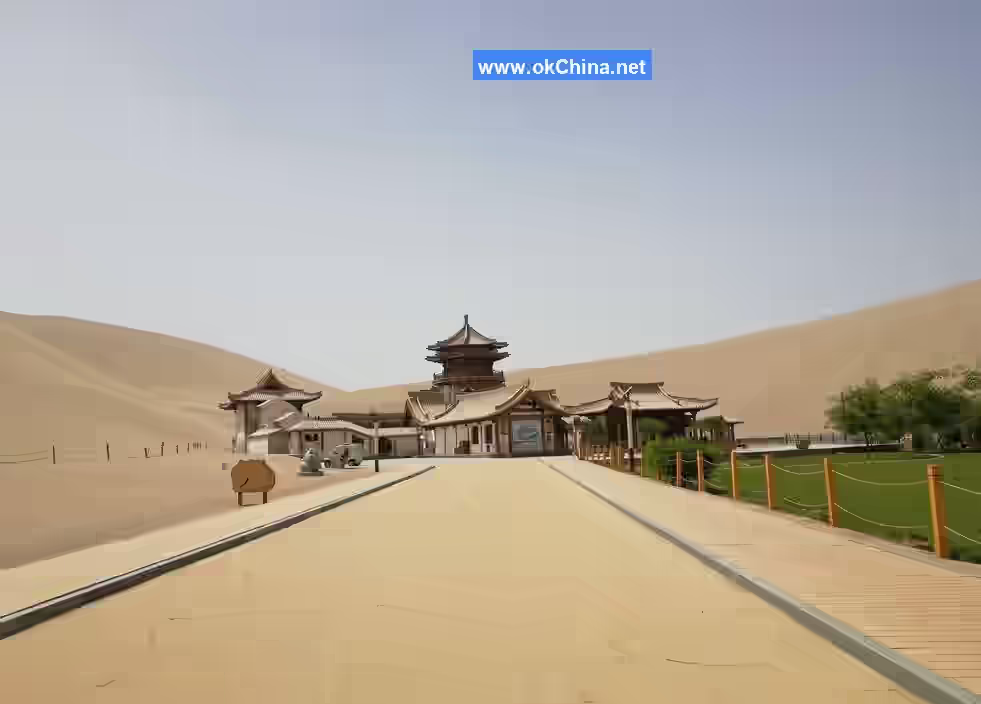
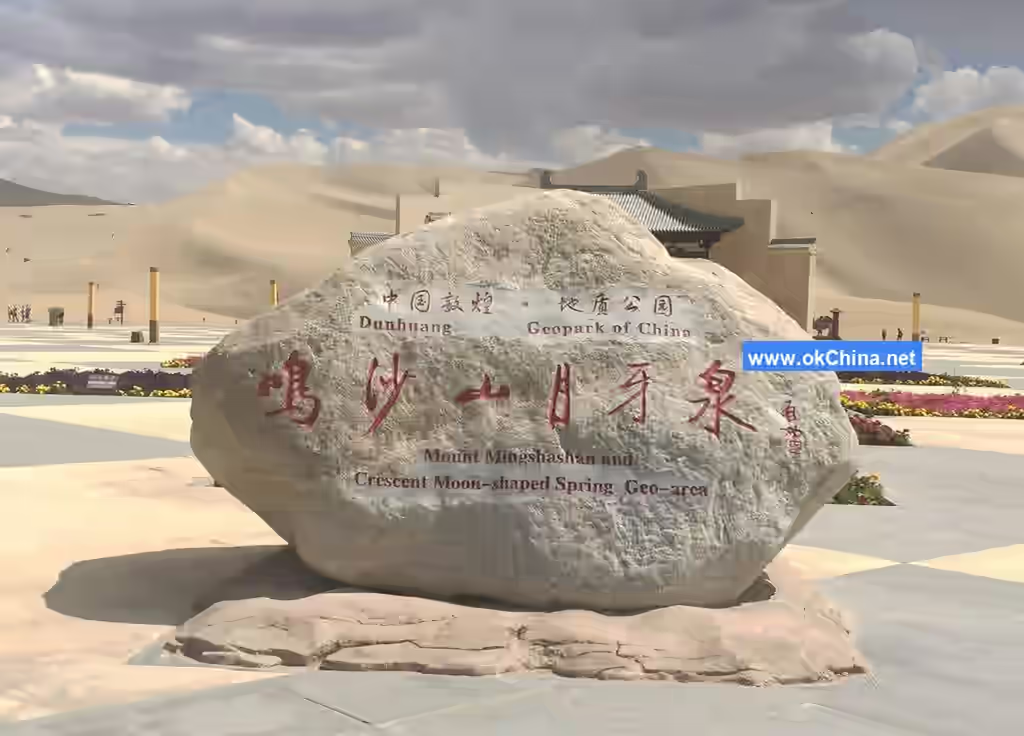
The Mingsha Mountain Crescent Spring Scenic Area in Jiuquan City, abbreviated as the Mingsha Mountain Crescent Spring Scenic Area, is located 5 kilometers south of Dunhuang City, Jiuquan City, Gansu Province. It covers an area of 76.82 square kilometers, with a core scenic area defined as 12.79 square kilometers. Renowned worldwide for the desert wonder of mountains and springs coexisting, and sand and water sharing a symbiotic relationship, it is acclaimed as "one of the most spectacular landscapes beyond the Great Wall."
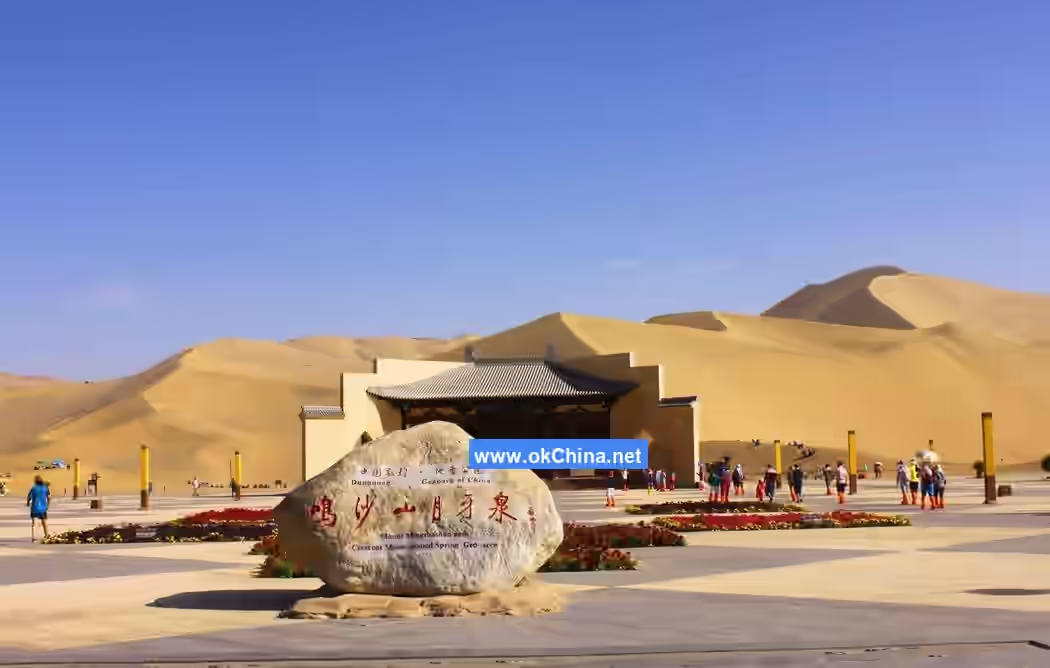
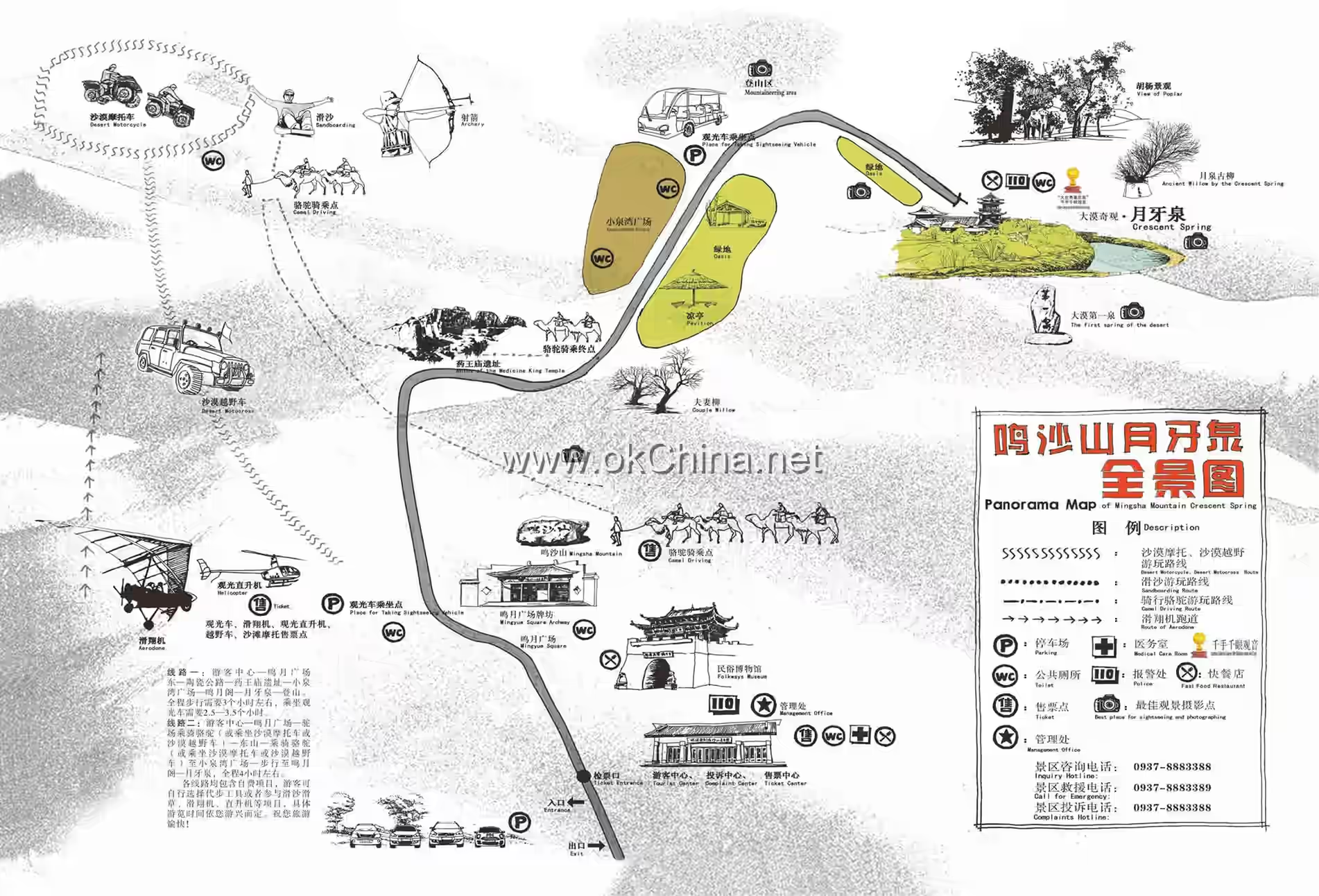
The Dunhuang Mingsha Mountain Crescent Spring Scenic Area features a typical warm temperate arid climate. Mingsha Mountain stretches 40 kilometers from east to west, from the Mogao Caves in the east to the Danghe River estuary in the west, and is about 20 kilometers wide from north to south. Its main peak stands at an elevation of 1,715 meters, and the mountain is composed of fine sand in five colors: red, yellow, green, black, and white. Crescent Spring is nestled within the embrace of Mingsha Mountain and is named for its crescent moon shape. The spring is home to iron-backed fish and the medicinal herb Qixingcao (Seven-star Grass). The Dunhuang Mingsha Mountain Crescent Spring Scenic Area has three entrances: the Central Gate, East Gate, and West Gate. It consists of six major scenic zones, with main attractions including the First Spring Stone Tablet, Husband-and-Wife Willows, Crescent Spring, Mingsha Mountain, and the site of the Medicine King Temple.
2. Historical Development
2.1 Naming
During the Han Dynasty, Mingsha Mountain was known as Shensha Mountain (Divine Sand Mountain) and Shajiao Mountain (Sand Horn Mountain). It began to be called Mingsha Mountain (Singing Sand Mountain) during the Wei and Jin periods, named for the sound produced by moving sand. Its sounds can be categorized into two types: one that resonates naturally with the heavens and another that harmonizes with human activity. Apart from the Eastern Han work San Qin Ji by Xin Shi, historical documents from different periods, such as the Tang Dynasty's Yuanhe Junxian Zhi and the New Book of Tang: Geography, contain records of Mingsha Mountain producing sounds. According to multiple on-site measurements, the sound volume from Mingsha Mountain can reach up to 83 decibels. Crescent Spring was called Shajing (Sand Well) during the Han Dynasty and Yaoquan (Medicine Spring) during the Tang Dynasty. It began to be called Yueyaquan (Crescent Spring) in the Qing Dynasty, named for its resemblance to a crescent moon.
2.2 History
2.2.1 Mingsha Mountain
The earliest record of Mingsha Mountain appears in the Eastern Han work San Qin Ji by Xin Shi: "West of the river lies Shajiao Mountain, with perilous and steep peaks surpassing those of stone mountains. Its sand grains are coarse and yellow, resembling dried rice... If one wishes to ascend the peak, they must descend into a cave on foot, whereupon the sound of drums and horns will be heard, vibrating underfoot."
2.2.2 Crescent Spring
Historically, the southern bank of Crescent Spring, from east to west, once housed over a hundred structures including the Niangniang Hall, Dragon King Palace, Bodhisattva Tower, Medicine King Cave, Yuquan Pavilion, Thunder God Platform, and scripture halls, which were later destroyed. Among the local people, since the Han and Tang dynasties, there has been a custom of holding "dragon boat races" at Crescent Spring. After the Qing Dynasty, folk activities such as the "Medicine King" temple fair on the 28th day of the fourth lunar month, gathering mugwort by the spring on the sixth day of the sixth lunar month for boiling into medicinal baths, and the Crescent Moon Jade Pool Peach Banquet were also held.
2.3 Scenic Area History
In July 1988, the Dunhuang Municipal Government established the "Dunhuang City Crescent Spring Scenic Management Office," bringing the Dunhuang Mingsha Mountain Crescent Spring Scenic Area under government management and protection.
On June 14, 1994, the "Mingsha Mountain Crescent Spring Cultural and Historical Research Society" was established. In November of the same year, the site of the Medicine King Cave was discovered.
In 2003, the Dunhuang Mingsha Mountain Crescent Spring Scenic Area completed ISO 9001 quality management certification and ISO 14000 environmental management system certification.
In August 2013, the Master Plan for the Mingsha Mountain · Crescent Spring Scenic Area (2010–2025) was approved.
On October 20, 2023, due to entering the tourism off-season and a decrease in visitor numbers, the East Gate of the Dunhuang Mingsha Mountain Crescent Spring Scenic Area temporarily suspended tourist reception.
On May 1, 2024, to facilitate faster entry for tourists, the Mingsha Mountain Crescent Spring Scenic Area officially reopened its East Gate and West Gate.
3. Geographical Location
3.1 Location and Territory
The Mingsha Mountain Crescent Spring Scenic Area in Jiuquan City is located 5 kilometers south of Dunhuang City, Jiuquan City, Gansu Province. It covers an area of 76.82 square kilometers, with a core scenic area defined as 12.79 square kilometers.
3.2 Geology
The Dunhuang Crescent Spring formed during the Holocene epoch of the Quaternary period, characterized as a freshwater spring lake coexisting with sand. Its formation is a natural product of the combined influence of endogenic and exogenic geological processes and hydrogeological conditions throughout the geological history since the Quaternary period. It formed under conditions of loose geological structure, low-lying topography, and a regionally high groundwater table.
Crescent Spring is located in the central part of the interdune depression between the alluvial fans of the Danghe River and the Xishui Gully in the Dunhuang area. Its water source is supplied by groundwater runoff recharged by the Danghe River. The key factors in its formation are the low-lying topographic conditions and the high regional groundwater table causing water to emerge at the surface.
3.3 Topography and Landforms
Mingsha Mountain stretches 40 kilometers from east to west, from the Mogao Caves in the east to the Danghe River estuary in the west, and is about 20 kilometers wide from north to south. Its main peak stands at an elevation of 1,715 meters, and the mountain is composed of fine sand in five colors: red, yellow, green, black, and white. Mingsha Mountain belongs to an aeolian landform of low hills and mountains. The undulation of the sand dunes is primarily controlled by the underlying topography, i.e., the bedrock surface. Its morphology bears traces of ancient topography while also exhibiting characteristics of modern aeolian landforms, with crescent-shaped sand ridges often distributed in the piedmont zone.
Mingsha Mountain's formation results from various climatic and geographical factors. Quartz-based fine sand grains, moved by wind-induced vibrations, slide or move against each other. Numerous sand grains rotate within air currents, and surface cavities create a "bullroarer" effect, producing a buzzing sound. Therefore, besides human activity, the primary factor determining the humming sound of Mingsha Mountain is wind influence. The evaporation rate at Mingsha Mountain's location is 60 times higher than the precipitation rate, with annual rainfall around 40 millimeters, classifying it as a typical hyper-arid region. The area is also windy year-round, providing basic conditions for dune formation, but dune formation also depends on whether surface conditions allow for aeolian sand deposition and accumulation. Furthermore, the formation of Mingsha Mountain results from multi-directional winds being disturbed by the mountain mass. The occurrence of local southerly circulation here is mainly related to mountain interference rather than being a reflection of valley winds generated by local temperature differences. Under certain conditions, mountain interference can alter airflow velocity structure and increase its vertical upward component.
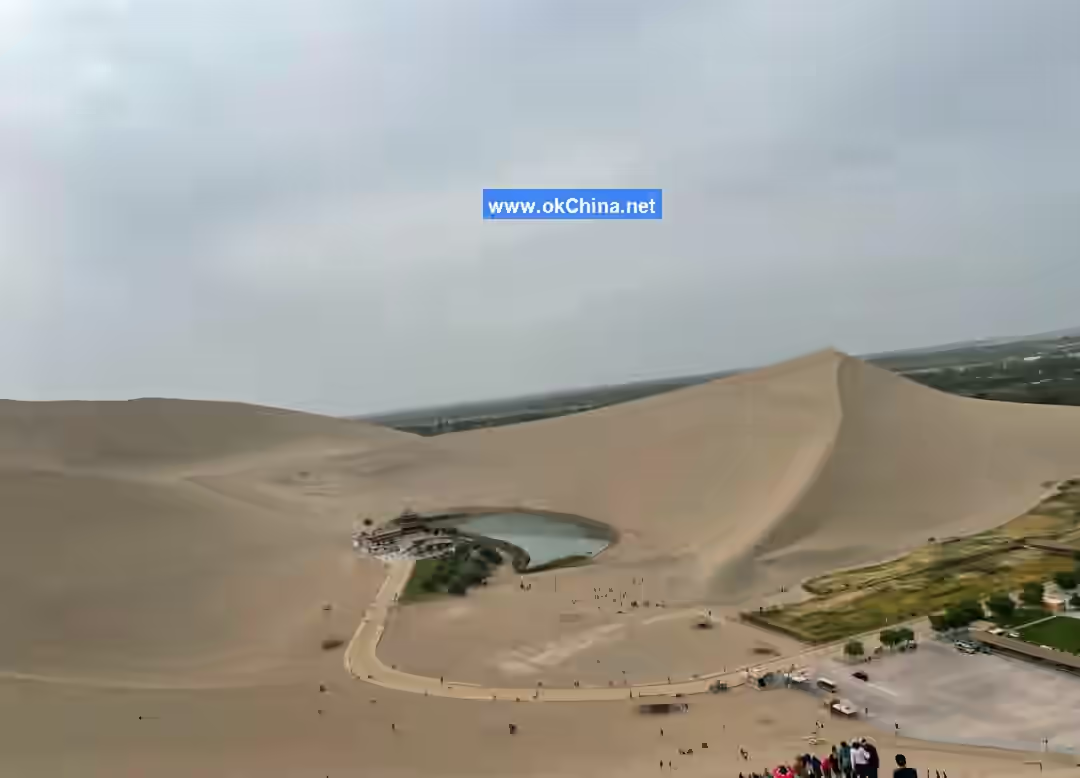
Crescent Spring is nestled within the embrace of Mingsha Mountain. The spring is deeper in the east and shallower in the west, with a maximum depth of about 5 meters. The general topographic characteristic of the area surrounding Crescent Spring is higher in the south and lower in the north. The south is occupied by Mingsha Mountain, while the north belongs to a low, gentle alluvial and lacustrine plain. The east and west are distributed with alluvial-proluvial fans formed by the Xishui Gully and Danghe River floods. Crescent Spring lies precisely in the interdune depression between these two alluvial fans to the east and west. The southern bank of Crescent Spring features a lakeshore terrace 50–70 meters wide and about 300 meters long, with a terrace surface approximately 11 meters above the lake water level.
3.4 Climate
The Dunhuang Mingsha Mountain Crescent Spring Scenic Area features a typical warm temperate arid climate. The average annual precipitation is 42.2 mm, evaporation is 2,505 mm, and the average annual temperature is 9.9°C, with a maximum temperature of 41.7°C and a minimum temperature of -30.5°C. The area experiences frequent strong winds and sandstorms. East winds and northwest winds prevail throughout the year. East winds are dominant from April to September, while northwest winds are frequent from October to March. On average, there are 15–20 occurrences of force 8 or higher winds annually, with the highest reaching force 11.
3.5 Hydrology
There are two surface water systems near Crescent Spring: the Danghe River to the west and the Xishui Gully to the east. The nearest point of the Danghe River system to Crescent Spring is about 4.5 kilometers away. The river originates from the Tuanjie Peak in the Qilian Mountains of Subei County and is fed by meltwater from snow and ice. Blocked by the uplifted zone between the Shuangta and Sanwei Mountains, the river turns west after exiting the mountains, follows the uplifted zone, and then turns northeast near Shazaoyuan before entering Dunhuang city proper and eventually flowing into the Shule River. The total river length is 390 kilometers. The Xishui Gully is located east of Crescent Spring, with a straight-line distance of about 6.5 kilometers. It is a small stream formed by the uplift of the Sanwei Mountains and Mingsha Mountain, which raises the groundwater level in the south, causing it to overflow.
3.6 Biodiversity
Within the Crescent Spring of the Dunhuang Mingsha Mountain Crescent Spring Scenic Area, pondweed (Potamogeton) and stonewort (Chara) plants grow. The southern bank has dense reeds. Additionally, the spring produces iron-backed fish and the medicinal herb Qixingcao (Seven-star Grass).
3.7 Scenic Area Layout
The Dunhuang Mingsha Mountain Crescent Spring Scenic Area has three entrances: the Central Gate, East Gate, and West Gate. The East Gate is located at Hall C of the International Convention and Exhibition Center on Wenbo East Road in Dunhuang City. The West Gate is located 3 kilometers west of the Landscape Avenue (Rainbow Road) in Yuequan Town, Dunhuang City. The scenic area consists of six major scenic zones: Yuequan Bay Scenic Zone, Xiangshapo (Echoing Sand Slope) Scenic Zone, Qianqiu (Low Hill) Scenic Zone, Gobi Scenic Zone, Sand Dune Experiment Scenic Zone, and Sand Dune Chain Scenic Zone.
4. Important Attractions
4.1 Mingsha Mountain
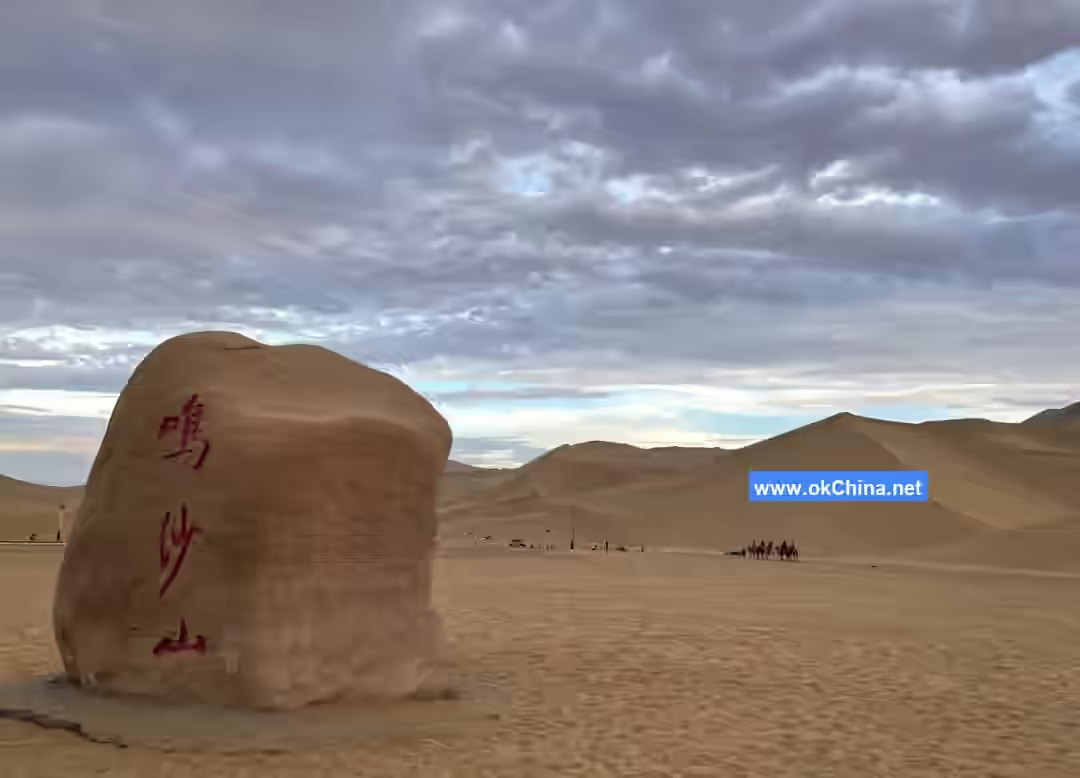
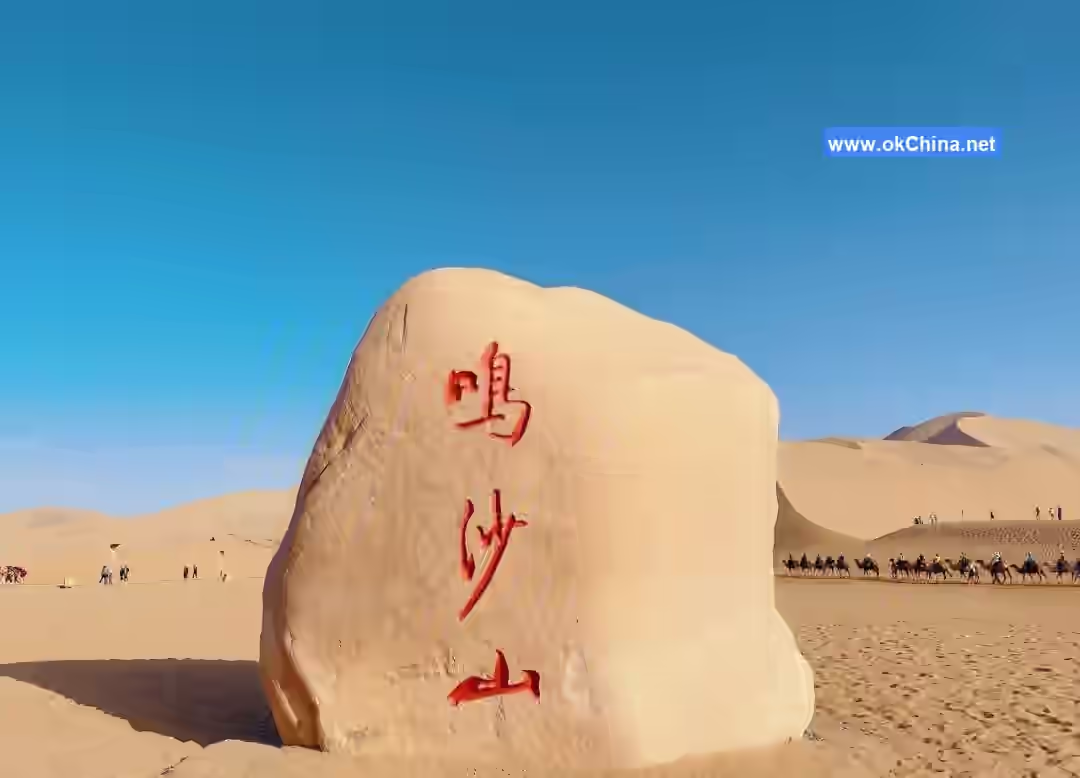
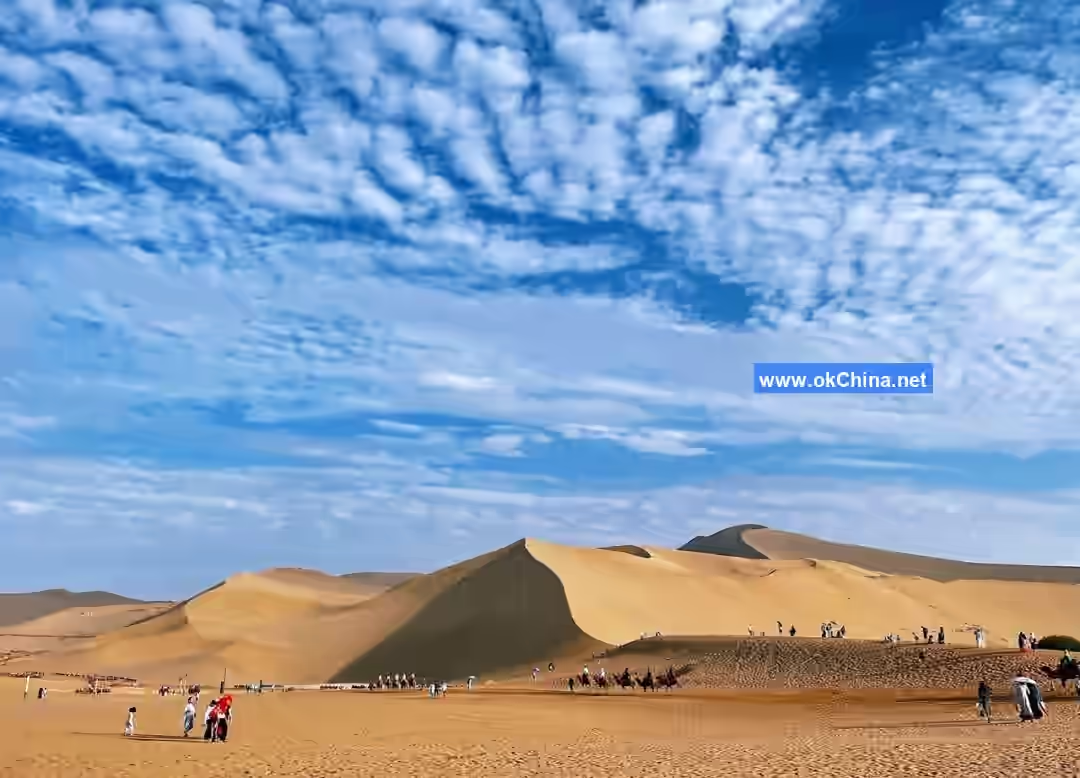
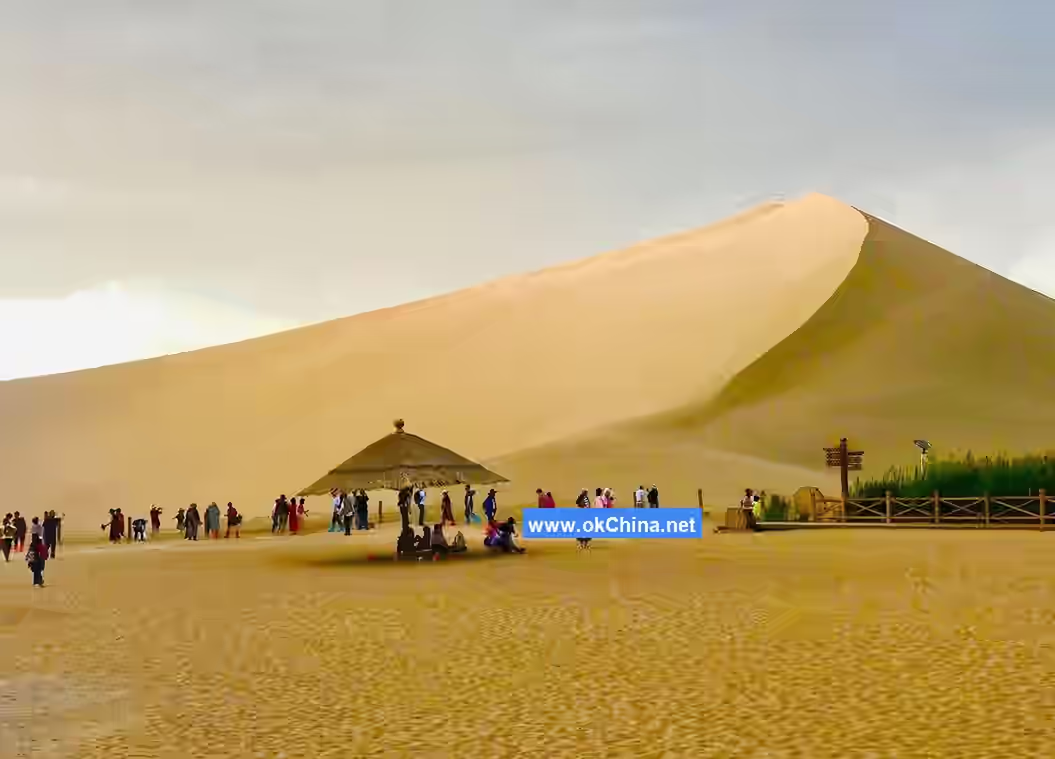
Mingsha Mountain is a magical sand dune that "sings." When you step into this sea of sand, the first thing that catches your eye is the undulating, vast expanse of sand dunes, shimmering with golden light under the sun, surging like waves towards the horizon.
Climbing Mingsha Mountain is a unique experience. With every step forward, you slide half a step back. The fine, soft sand slips through your fingers, as if playing with you. After some effort, reaching the top of the dune offers a panoramic view. The lines of the dunes constantly change in the wind—some steep as if carved, others gentle like waves—composing a magnificent painting of a sand sea. And when you slide down the dune, a rumbling sound fills your ears, like the thunder of ten thousand galloping horses or the roll of distant thunder. This is the origin of the name Mingsha Mountain (Singing Sand Mountain). The mystery of this sound continues to attract countless scientists for research and adds an aura of mystique to this desert.At different times, the Singing Sand Dunes present different forms of beauty. In the early morning, as the sun just rises, soft light spills over the dunes, outlining them with golden contours, while their long shadows stretch across the sand, creating a dreamlike and fantastical scene. In the evening, the afterglow of the sunset dyes the entire Singing Sand Dunes in shades of orange and red. As the light gradually fades, the colors become richer and deeper. At this moment, the dunes resemble a shy maiden, displaying her graceful charm under the glow of the setting sun. At night, with the bright moon hanging high and stars twinkling, the Singing Sand Dunes appear exceptionally serene under the moonlight and starlight. The undulating dunes are like sleeping giants, guarding this mysterious desert.
4.2 Crescent Moon Spring
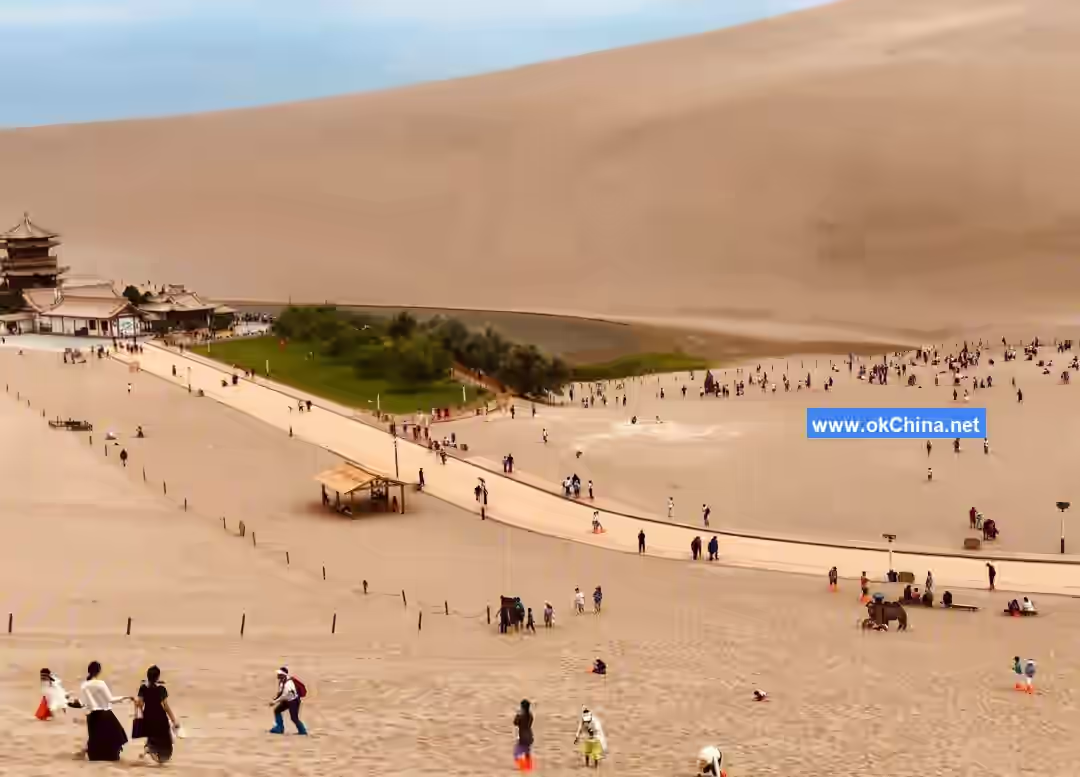
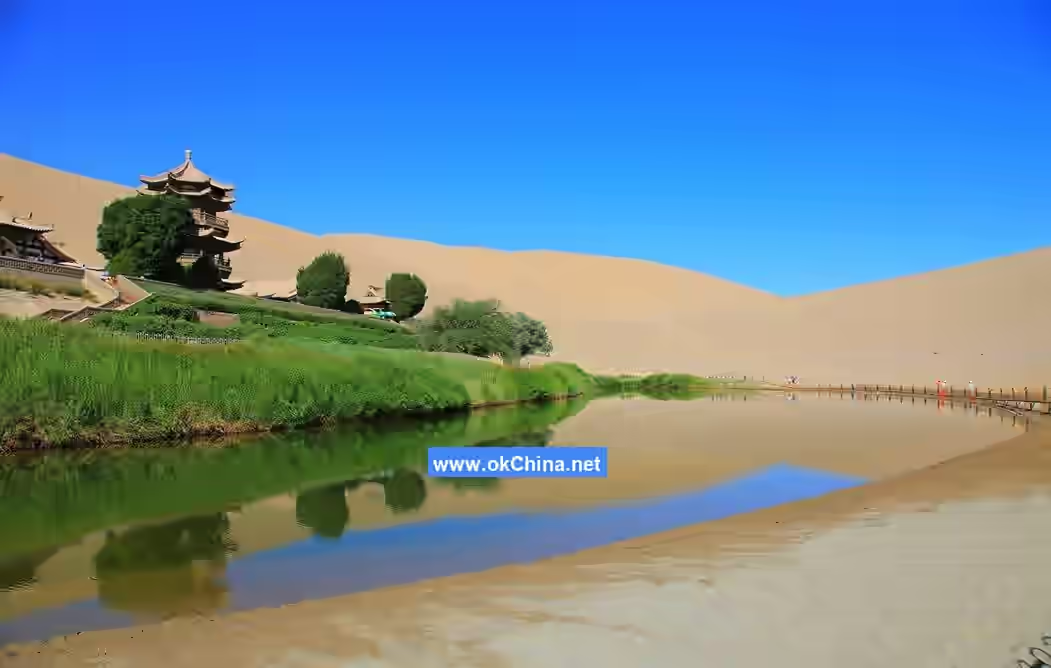
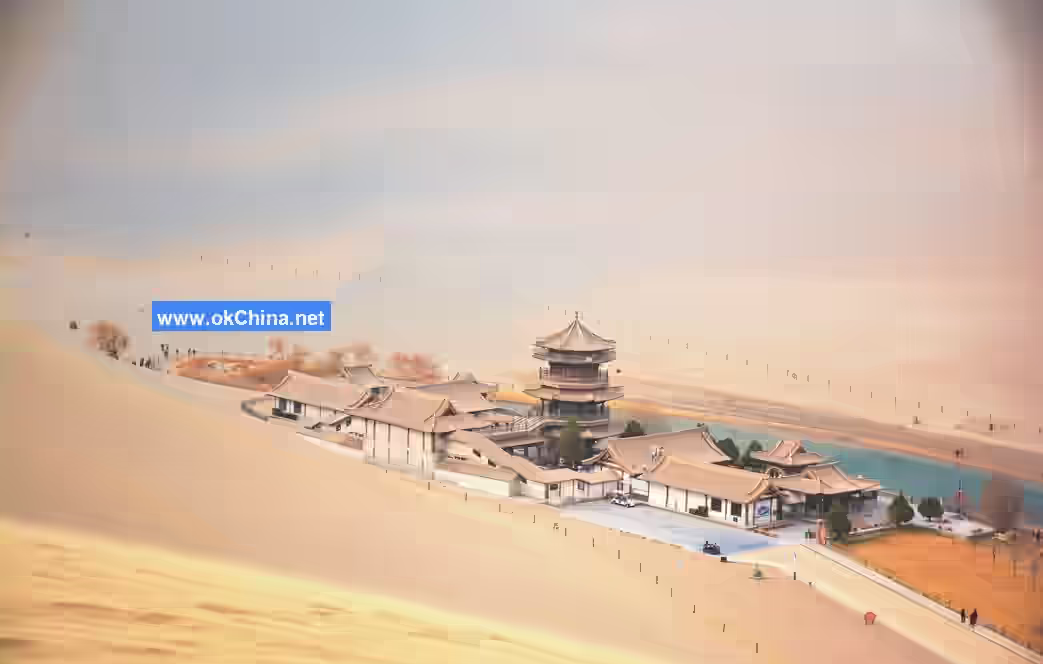
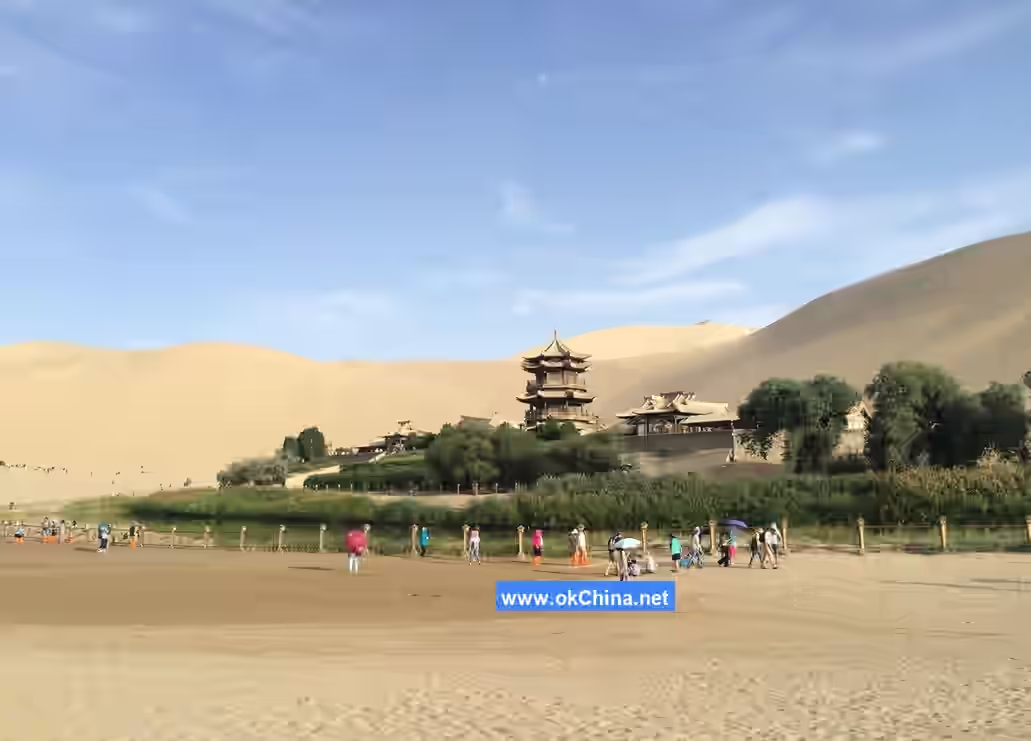
Crescent Moon Spring is like a brilliant pearl in the desert, nestled quietly in the embrace of the Singing Sand Dunes. Shaped like a crescent moon, its spring water is crystal clear, appearing even more vibrant and precious against the surrounding yellow sand.
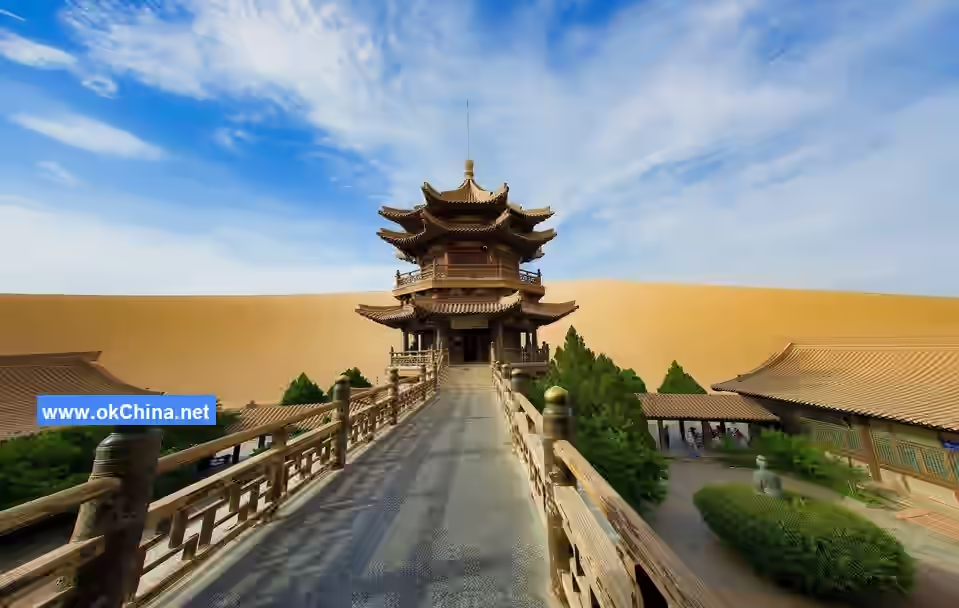
Lush vegetation, including drought-resistant plants such as poplars and sea buckthorns, thrives around Crescent Moon Spring. These resilient lives add a touch of vitality and greenery to the spring. The sturdy posture of the poplars resembles loyal guardians, protecting Crescent Moon Spring year after year. The pavilions and buildings by the spring are quaint and elegant, complementing the spring perfectly. Strolling along the paths beside the spring and listening to the gentle murmur of the water feels like traveling back to ancient times. Legend has it that Crescent Moon Spring was formed from a tear shed by the Queen Mother of the West. No matter how fiercely the desert winds and sands rage, the spring has never dried up. This miraculous phenomenon fills people with awe and admiration.
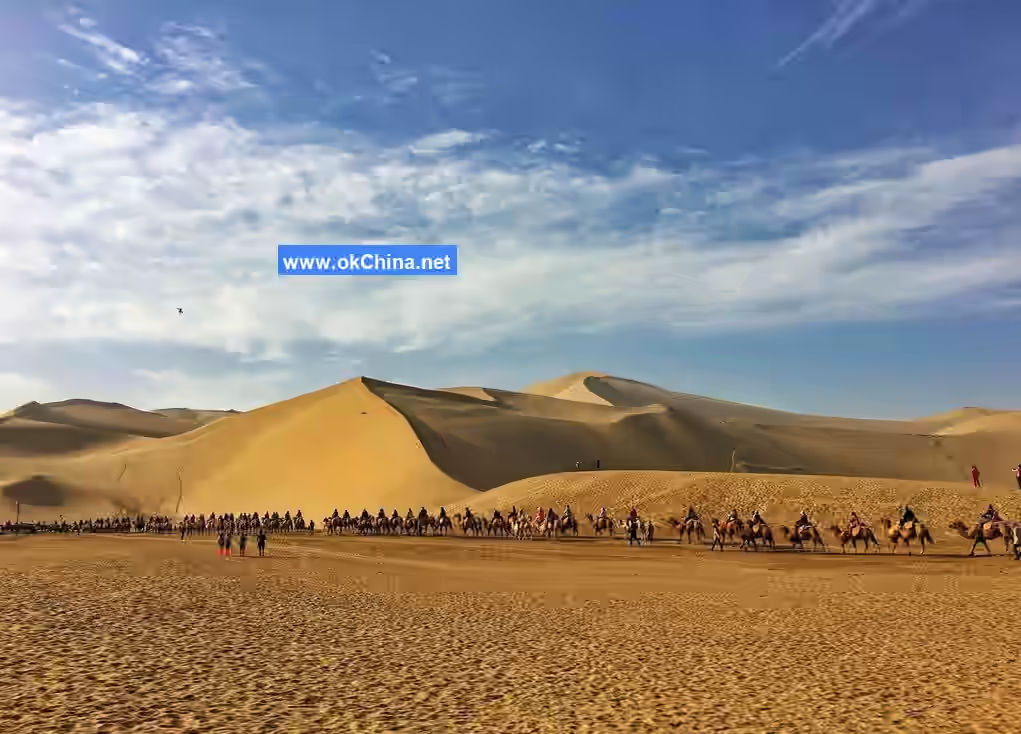
By Crescent Moon Spring, visitors can also experience the joy of camel riding. The camel caravan moves slowly, with the tinkling of camel bells seeming to tell ancient tales. Riding on a camel’s back, feeling its steady pace, and admiring the beauty of Crescent Moon Spring and the Singing Sand Dunes offers a unique and delightful experience. At night, under the illumination of lights, Crescent Moon Spring looks like a fairyland. The spring water reflects the surrounding buildings and the starry sky, shimmering with ripples, creating a mesmerizing beauty. Sitting by the spring at this time, sipping a cup of fragrant tea, and quietly listening to the silence of the desert can bring a moment of peace and solace to the soul.
4.3 Sand Sliding Experience
Sand sliding is one of the most attractive activities in the Singing Sand Dunes and Crescent Moon Spring scenic area. On the towering sand dunes, specially designed sand sliding tracks are set up. Once you step onto the sand sliding board and get ready, a gentle push will send you sliding down the dune at high speed.
At the moment of sliding, the wind whistles past your ears, and a sea of golden sand rushes before your eyes. The heart-pounding sensation is both thrilling and exhilarating. As the sliding speed increases, your body seems to merge with the sand dune, allowing you to fully enjoy the thrill of surfing on the sand. For first-time visitors, this is undoubtedly an unforgettable adventure. Even if you accidentally swallow a few mouthfuls of sand during the slide, it becomes a unique experience that often brings even more laughter.
At the sand sliding site, professional staff are responsible for guiding and ensuring the safety of visitors. They patiently explain the techniques and precautions for sand sliding, allowing visitors to enjoy the activity with greater peace of mind. Moreover, different dune slopes and track lengths cater to visitors’ varying preferences for thrill levels. Whether you are a brave soul seeking extreme challenges or an ordinary visitor looking to try something new, you can find your own joy in sand sliding here.
5. Folk Culture and Legends
The Jiujuan area, where the Singing Sand Dunes and Crescent Moon Spring scenic area is located, is rich in folk culture and captivating legends. The local folk culture is closely connected to desert life. For example, the people here are skilled in crafting exquisite sand sculptures. Using sand from the Singing Sand Dunes as raw material, artisans shape various lifelike figures, including mythological characters, animals, and buildings. These sand sculptures not only showcase the artistic creativity of the local people but also serve as popular souvenirs for visitors.
In terms of legends, besides the tale of Crescent Moon Spring being formed from a tear of the Queen Mother of the West, there are also stories about the Singing Sand Dunes. According to legend, a fierce battle took place here in ancient times, where two armies fought fiercely, resulting in rivers of blood and the eventual demise of all soldiers. Their loyal souls remained undying, transforming into the Singing Sand Dunes. Whenever the wind blows, the sound emitted by the sand is said to be their shouts and cheers. These legends add a rich cultural depth to the scenic area, allowing visitors to gain a deeper understanding of the local history, culture, and folk customs while admiring the beautiful scenery. Additionally, the area features unique desert song and dance performances. Dancers, dressed in vibrant ethnic costumes, gracefully dance on the sand, showcasing the boldness and optimism of the desert people through their passionate and lively performances.
Comments
Post a Comment