Jining Ming Ancient City Three Confucian Sites Tourist Area
1. Introduction
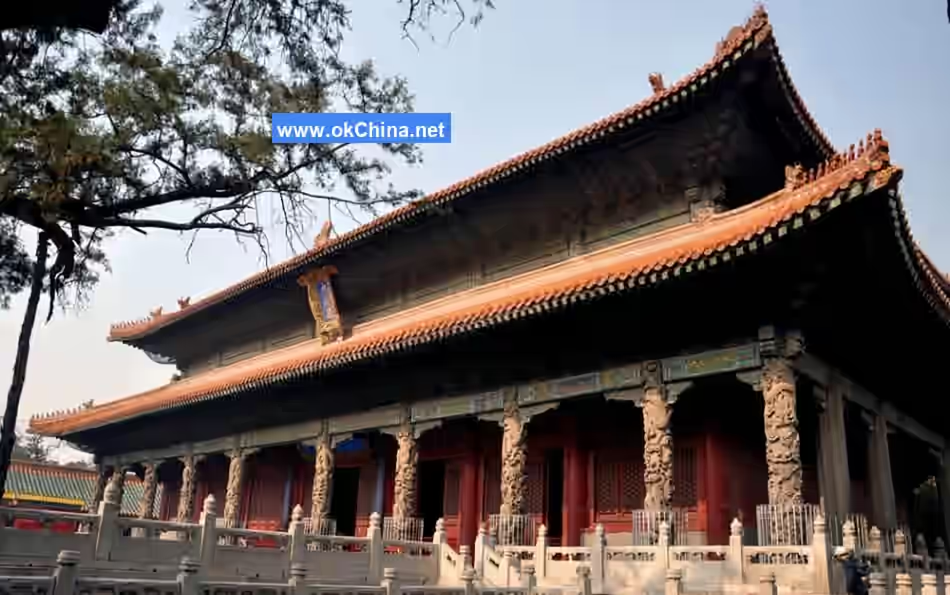
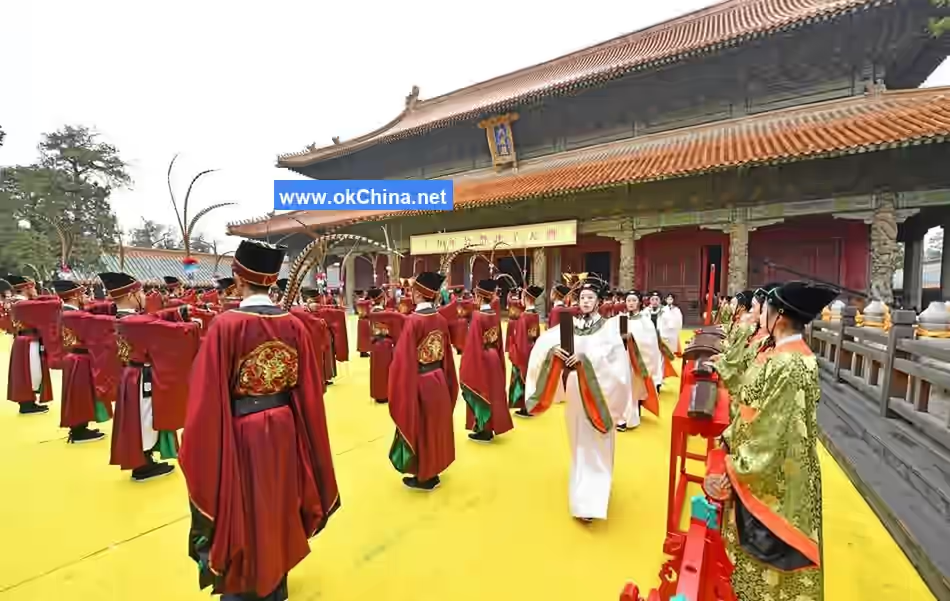
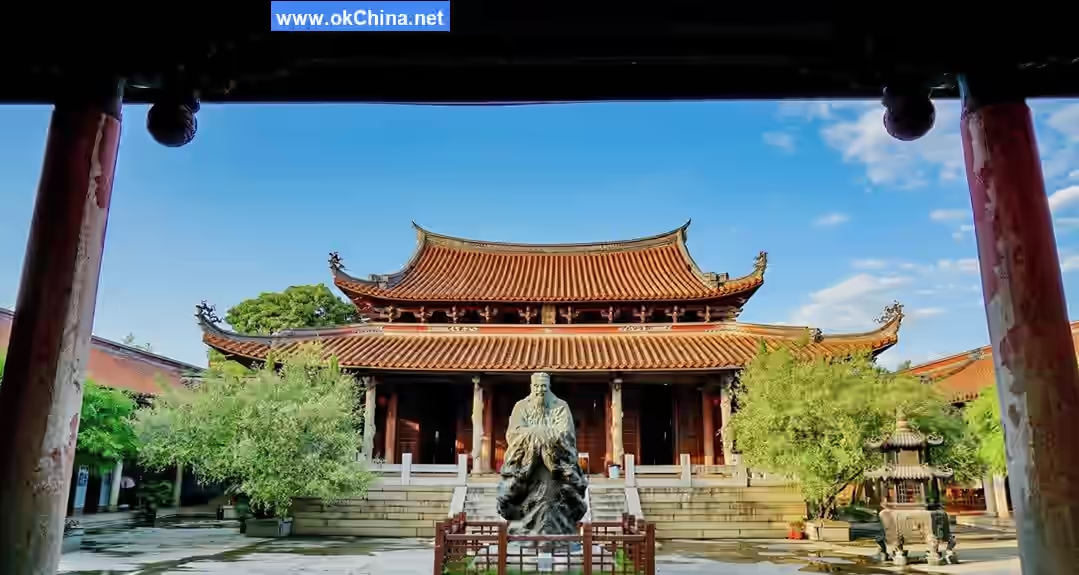
The Jining Ming Ancient City Three Confucian Sites Tourist Area, abbreviated as the Ming Ancient City Three Confucian Sites Tourist Area, also known as the Ming Ancient City (Three Confucian Sites) Tourist Area, and commonly referred to as the Three Confucian Sites Scenic Area, is located in Qufu City, Jining City, Shandong Province. The Three Confucian Sites Tourist Area is based on the "Confucius Temple, Confucius Mansion, and Confucius Forest" for tourism. Collectively known as the "Three Confucian Sites," they are not only symbols and landmarks of the ancient Chinese reverence for Confucianism but also important physical artifacts for studying Chinese history, culture, and art. The Confucius Temple is located on Shendao Road in Qufu City, the Confucius Mansion is on Gulou North Road in Qufu City, and the Confucius Forest is on Lintao Road in Qufu City. On May 8, 2007, the Ming Ancient City Three Confucian Sites Tourist Area was officially approved by the National Tourism Administration of the People's Republic of China as a National 5A-level Tourist Attraction.
2. Confucius Mansion
The Confucius Mansion, originally named the Yansheng Duke Mansion, is located east of the Confucius Temple in the center of Qufu City. It served as the residence for the direct descendants of Confucius. The title "Yansheng Duke" was conferred by Emperor Renzong of the Song Dynasty in the second year of the Zhihe era (1055 AD) upon Kong Zongyuan, the 46th-generation descendant of Confucius. This title was passed down through generations, inherited by 32 successive descendants over 880 years.
The Yansheng Duke was a privileged aristocrat in feudal Chinese society. During the Song Dynasty, the rank was equivalent to an eighth-grade official. It was elevated to third-grade in the Yuan Dynasty, first-grade civil official in the early Ming Dynasty, and later ranked "first among civil officials." In the Qing Dynasty, they were granted special privileges such as riding horses within the Forbidden City and walking on the imperial pathways.
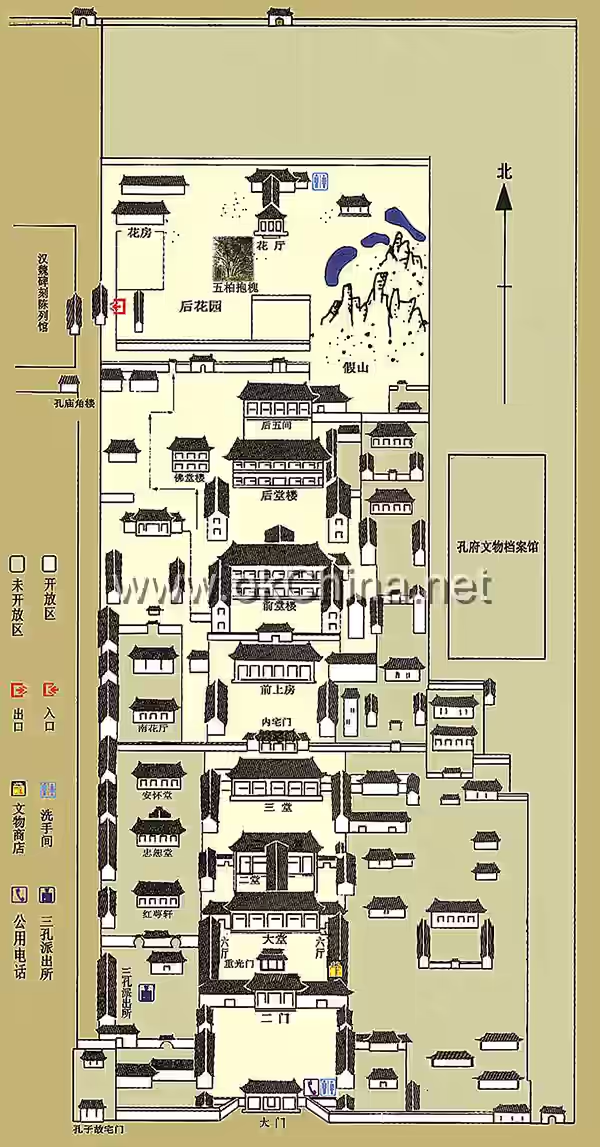
The Confucius Mansion covers an area of 240 mu and comprises 463 halls, chambers, buildings, and rooms. It features a nine-courtyard layout with three main sections: the Eastern Section, known as the Eastern Study, includes the Yiguan Hall, Mu'en Hall, the Kong Family Ancestral Temple, and workshops; the Western Section, known as the Western Study, contains the Hong'e Pavilion, Zhongshu Hall, Anhuai Hall, and flower halls; the central section forms the main part of the mansion, with the front serving as the official offices, featuring three main halls and six auxiliary halls, and the rear as the inner residence, including the Front Upper Rooms, front and rear chamber buildings, side buildings, and the Rear Six Rooms, culminating in a garden.
2.1 Main Attractions of Confucius Mansion
2.1.1 Main Gate
The Confucius Mansion is situated in the center of Qufu City, facing south. Upon approach, visitors are greeted by a large whitewashed screen wall. Flanking the entrance are a pair of over two-meter-high stone lions, one male and one female, carved in the round. The red-edged, black-lacquered main gate is adorned with suanni (mythical lion-like beast) door knockers. Above the center of the gate hangs a plaque with gold characters on a blue background reading "Sheng Fu" (Sacred Mansion). On the bright red pillars on either side of the gate hangs a pair of couplets with gold characters on a blue background: "With the state sharing eternal peace, secure in wealth, honor, and glory is the Duke's mansion; With heaven growing equally old, literature, virtue, and morality belong to the Sage's household." This couplet is traditionally attributed to the handwriting of Ji Yun of the Qing Dynasty. The excellent literary quality and beautiful calligraphy vividly illustrate the prominent status of the Confucius Mansion in feudal society. The grand tone of the couplet goes without saying. What is thought-provoking are the characters for "wealth" (富) in the first line and "literature" (章) in the second line. As can be seen from the image above, the character "富" is missing a dot on top, and the character "章" has an extra stroke. This implies that the Yansheng Duke, holding the first official rank and possessing vast lands, naturally had wealth without limit; Confucius and his doctrines, whose "virtue matches heaven and earth, and teachings crown past and present," meant the "rituals, music, laws, and systems" of the Sage's household could coexist with heaven and earth, shining like the sun and moon.
2.1.2 Second Gate
Passing through the first narrow, elongated courtyard, one reaches the second gate on the central axis of the Confucius Mansion, commonly known as the Second Gate. Built during the Ming Dynasty, the lintel bears a vertical plaque inscribed with "Shengren Zhi Men" (Gate of the Sage) by Li Dongyang, a Ming Dynasty poet, Minister of Personnel, and Grand Secretary of the Wenyuan Pavilion. Below the plaque are ornamental stone pillars (fayue), and the gateposts are flanked by stone drums. On either side of the main gate are smaller side gates and an antechamber. In feudal times, only the side gates were used for daily passage, while the main gate remained closed to signify solemnity.
2.1.3 Chongguang Gate (Gate of Double Glory)
Entering the Gate of the Sage, one encounters a small, exquisite, and uniquely styled screen gate. Built in the 16th year of the Hongzhi era of the Ming Dynasty (1503), this gate is wooden-structured and stands independently in the courtyard, not connected to the surrounding walls, resembling a partition gate. The roof is covered with gray tiles. The lintel bears a plaque inscribed with "En Ci Chong Guang" (Bestowed Double Glory) personally granted by Emperor Shizong of the Ming Dynasty, hence the name "Chongguang Gate" (Gate of Double Glory). The four round pillars of the gate are flanked by stone drums at their base, supporting a colorfully painted roof. Four gilded wooden carved inverted flower buds hang from the front and back eaves, giving it the alternative name "Chuihua Gate" (Drooping Flower Gate). It holds significant value for architectural craftsmanship studies. In the past, the Chongguang Gate was usually kept closed. It was only opened during grand ceremonies at the Confucius Mansion, imperial visits, the reading of imperial edicts, and major Confucius worship rituals, starting from the age of thirteen.
As the Chongguang Gate stands independently in the courtyard, separating the front and rear courtyards, it is also called the "Sai Men" (Blocking Gate). It is said that such a blocking gate was generally not permitted for ordinary officials and aristocratic families; only enfeoffed lords ("Bang Jun") could enjoy this honor. Hence, the Analects of Confucius - Bayi records, "A lord of a state has a blocking gate erected." The eastern and western halls flanking the Chongguang Gate are the Six Offices established by the Confucius Mansion, modeled after the "Six Ministries" of the feudal dynasties.
2.1.4 Grand Hall (Da Tang)
Beyond the Chongguang Gate, there is a platform in the courtyard that originally held items like a sundial. Behind it lies the spacious main hall, namely the Confucius Mansion Grand Hall. This was where the Yansheng Duke proclaimed imperial edicts, received officials, enforced family rules and clan regulations, adjudicated major cases, and held ceremonies for festivals and birthdays. The hall has five bays wide and three bays deep, with a gabled roof covered in gray tiles. Under the eaves are bracket sets (dougong) of the yidou'ersheng jiaomaye type (one block and two arms with intertwined hemp-leaf patterns), with the hemp-leaf tips pointed and the main blocks inclined, characteristic of Ming Dynasty style. In the center of the hall is a warm pavilion painted with flowing clouds and the Eight Treasures. The grand master chair in the center is draped with a spotted tiger skin. On the tall, narrow red-lacquered official desk in front of the chair are placed the Four Treasures of the Study (writing brush, ink stick, inkstone, paper), a seal box, and a tally tube.
A plaque inscribed with "Tong She Zong Xing" (Governing the Clan Surname) hangs in the center of the hall. It bears an imperial edict from the sixth year of the Shunzhi era of the Qing Dynasty (1649 AD), instructing the Yansheng Duke to "govern the clan surname, supervise and encourage, reiterate and enforce teaching regulations, so that all may reverently abide by ritual norms, bringing no disgrace to the Sage's gate." This defined the various privileges of the Yansheng Duke within the Kong clan. Since the Tang Dynasty, the court had stipulated that the magistrate of Qufu County be concurrently held by the Yansheng Duke. After the Ming Dynasty, it was stipulated that the Yansheng Duke recommend a member of the Kong clan to concurrently hold the position.
Displayed on both sides and at the rear of the hall are ceremonial instruments of the first-rank nobility, such as golden melons, sky-facing stirrups, curved spears, sparrow guns, hook-linked spears, watch drums, cloud tablets, dragon flags, phoenix flags, tiger flags, umbrellas, fans, etc. There are also official title plaques with red backgrounds and gold characters symbolizing his ennoblement and privileges, such as "Hereditary Yansheng Duke," "Grand Master of the Court of Imperial Entertainments," "Granted to Wear Double-Eyed Peacock Feathers," "Ride Horse in the Forbidden City," and "Imperial Commissioner to Inspect All Educational Affairs of Shandong Province." Whenever the Yansheng Duke traveled, these were carried by designated personnel to display his authority.
Behind the Grand Hall, a covered corridor connects to the Second Hall, forming an "I" shape. Inside the corridor is a large, long red-lacquered bench called the "Ge Lao Deng" (Grand Secretary's Bench). Legend has it that when the powerful Ming Dynasty minister Yan Song was impeached and about to be punished, he came to the Confucius Mansion to ask his grandson-in-law, the Yansheng Duke, to intercede with the emperor on his behalf, but the master of the Kong Mansion refused. This bench is said to be the one Grand Secretary Yan sat on while waiting.
2.1.5 Second Hall (Er Tang)
Also called the Rear Hall, this was where the Yansheng Duke met officials of the fourth rank and above and, commissioned by the emperor, annually examined students of rites and music for the court. Inside, large plaques reading "Qin Cheng Sheng Xu" (Reverently Inheriting the Sage's Legacy) and "Shi Shu Li Yue" (Poetry, Books, Rites, Music) hang prominently. Several stone steles stand on both sides. Among them are a "Longevity" character stele handwritten by Empress Dowager Cixi, a "Nine Peaches Diagram," and a "Pine and Crane Diagram," bestowed in the 20th year of the Guangxu era of the Qing Dynasty (1894 AD) when Yansheng Duke Kong Lingyi, along with his mother and wife, made a special trip to Beijing to congratulate Empress Dowager Cixi on her birthday. The end rooms at the two ends of the Second Hall are the Qishi Hall (Petition Hall) on the east and the Banguan Hall (Attendant Officials' Hall) on the west.
2.1.6 Third Hall (San Tang)
Behind the Second Hall is a small courtyard with two towering ancient cypresses standing side by side. Six stone-carved basins each hold a peculiarly shaped Taihu Lake rock. The northern building of this courtyard is the Third Hall. Also called the Retreat Hall, this was where the Yansheng Duke received officials of the fourth rank and above, and also where they handled internal family disputes and punished household servants. The east and west side rooms of this courtyard each lead into another courtyard. The east side houses the Ce Fang (Register Office), responsible for the land registers and deeds of the Duke's Mansion, and the Si Fang (Administration Office), managing general affairs and finances. The west side is the Shu Fang (Study), which served as the document archive of the Duke's Mansion.
Beyond the Third Hall lies the inner residential part of the Confucius Mansion, also called the Inner Residence Courtyard. A forbidden gate—the Inner Residence Gate—separates it from the outside world. This gate was heavily guarded, and no outsider was allowed to enter without permission. The Qing Dynasty emperor specially bestowed three pairs of weapons—tiger-tail clubs, swallow-wing tridents, and gold-headed jade rods—to be held by guards at the gate. Those who dared to enter without authorization would be "severely punished without leniency."
2.1.7 Inner Residence Gate
To maintain contact with the outside world, two types of messengers were specially assigned at the Inner Residence Gate: one called chaibian (runners) and the other called neichuanshi (inner messengers), each with over a dozen people who took turns on duty in the side rooms by the gate, relaying messages outward and inward. On the west side of the gate, there is also a specially designed water chute protruding from the wall—a stone conduit. The mansion rules stipulated that water carriers were not allowed to enter the inner residence; they only poured water into the chute, which flowed into the inner residence through the wall.
2.1.8 Front Upper Rooms (Qian Shang Fang)
Directly north of the screen wall is the main hall with seven bays, called the Front Upper Rooms. This was the drawing room where the master of the Confucius Mansion received close relatives and immediate clan members, and also the main venue for family banquets, weddings, and funerals. In the courtyard, there is a flourishing shilixiang (Murraya paniculata) tree on both the east and west sides. During the transition between spring and summer, their pure white flowers emit waves of fragrance. In front of the hall is a large moon platform, with four stone drums with rings at its four corners. These served as foundation stones for setting up stages when the mansion's opera troupe performed. In the late Qing Dynasty, the Confucius Mansion maintained an opera troupe of several dozen people. At the master's command, the performance would begin immediately. Inside the Front Upper Rooms, the central bay is bright and spacious. A large plaque reading "Hong Kai Ci Yu" (Vastly Opening the Abode of Compassion) hangs prominently in the center. On the central scroll hangs a "Longevity" character personally written by Empress Dowager Cixi.
The interior furniture is exquisite, and cultural relics and antiques are displayed in dazzling array. In the eastern side room, the thorn root bed and chairs given by Emperor Qianlong to the Confucius Mansion are exhibited. On the table lies the original imperial edict from Emperor Tongzhi. There are also brightly colored,古朴 patterned Ming Dynasty "cloisonné" pieces.On the central table in the side room is displayed a large set of Manchu-Han tableware, totaling 404 pieces. The utensils are carved with designs of deer, ducks, fish, etc., and dishes can be served according to their shapes, with up to 190 courses in a single meal. Over time, the Kong Family Mansion has developed a refined and unique cuisine known as Kong Family Dishes. The preparation of various dishes is meticulous, and their names are elegant, such as "Lion’s Mane Shark Fin," "Pearl Sea Cucumber," "Immortal Duck," "Poetry and Etiquette Ginkgo," "Jade Brush Shrimp," and other famous dishes, all of which excel in color, aroma, taste, and presentation. The inner western room is where Kong Lingyi, the 76th-generation descendant of Confucius and the Duke Yansheng, reviewed documents. On the table are the Four Treasures of the Study, and the bookshelves display Confucian classics and the Kong family genealogy. The east and west sides of the Front Upper House courtyard each have five side rooms, which serve as the inner storerooms for daily ritual utensils and the accounting office of the Kong Family Mansion.
2.1.9 Front Hall Building
Passing through the Front Upper House and a low, small door, one enters the courtyard of the Front Hall Building. The courtyard features towering pine trees and fish ponds symmetrically arranged on the east and west sides, creating a serene and elegant atmosphere that gives a sense of changing scenery with every step. The Front Hall Building is a two-story pavilion with seven rooms, and its interior furnishings and layout have been preserved in their original state. A copper heating stove is placed in the center, serving as the heating appliance of the time. In the "Treasure Pavilion" in the eastern room, items such as a phoenix crown, ginseng, coral, lingzhi mushrooms, jade carvings, and ivory carvings are displayed. The inner chamber is the bedroom of Tao Shi, the wife of Kong Lingyi, the 76th-generation descendant of Confucius and the Duke Yansheng, and further inside are the bedrooms of Kong Lingyi’s two daughters. A scroll written by Kong Decheng, the 77th-generation descendant of Confucius and the Duke Yansheng, at the age of 14, which reads, "The heart of a sage is like a pearl in the deep; the heart of an ordinary person is like a gourd floating on water," remains hanging on the wall as it was.
2.1.10 Rear Hall Building
Passing through the front and rear verandas, one enters the courtyard of the Rear Hall Building. The Rear Hall Building is a two-story, seven-room structure with a front corridor, flanked on the east and west sides by two-story, three-room side buildings with front corridors. The Rear Hall Building served as the residence of Kong Decheng, the 77th-generation descendant of Confucius and the Duke Yansheng.
The hall displays items from Kong Decheng’s wedding, as well as calligraphy, paintings, and gifts presented by friends at the time. The eastern inner room served as the reception room, furnished with a blend of Chinese and Western furniture. The inner chamber is the bedroom of Kong Decheng and his wife, Sun Qifang. A photo frame on the eastern wall contains a group photo of Kong Decheng, his wife, and their children. The two rooms on the west side of the Rear Hall Building were the bedrooms of Kong Decheng’s wife’s wet nurse. The building in the courtyard was where needlework was done in the mansion, while the western building served as the residence for entertaining close relatives. To the west of the Rear Hall Building, there is another building called the Buddhist Hall Building, which was the place where the Duke Yansheng burned incense and worshiped Buddha. Behind the Rear Hall Building, there are five main rooms called the Rear Five Rooms, formerly known as the Jujube and Locust Studio, which originally served as the Duke Yansheng’s study and later became the residence of female servants in the late Qing Dynasty.
2.1.11 Rear Garden
The Kong Family Garden is located in the rear courtyard of the inner residence of the Kong Family Mansion, also known as the Iron Mountain Garden. In fact, there is no iron mountain in the Iron Mountain Garden; only a few iron ore stones resembling mountain peaks are placed in the northwest corner of the garden. These stones were moved in by Kong Qingrong during the renovation of the garden in the Jiaqing period of the Qing Dynasty. He claimed that the "Three Divine Iron Stones" descended from heaven to assist him in the renovation, and he thereafter referred to himself as the "Master of the Iron Mountain Garden."
The garden was built in the 16th year of the Hongzhi era of the Ming Dynasty (1503 AD) during the renovation and expansion of the Kong Family Mansion. It was designed and supervised by Li Dongyang from Changsha. At the time, Li Dongyang was the Grand Tutor to the Crown Prince, Minister of Personnel, Grand Scholar of the Huagai Hall, and Chief Editor of the National History. Why did he personally design and put so much effort into the Kong Family Mansion? Because Li Dongyang’s daughter married Kong Wenshao, the 62nd-generation descendant of Confucius and the Duke Yansheng, becoming a first-rank duchess. For the sake of his daughter, he exerted great effort to build the garden. After completing the construction of the Kong Family Mansion and the Confucius Temple, Li Dongyang composed poems and prose four times, which were inscribed on steles to commemorate this grand event. After this renovation, during the Jiajing period of the Ming Dynasty, Yan Song replaced Li Dongyang’s position, also serving as the Grand Tutor to the Crown Prince, Minister of Personnel, Grand Scholar of the Huagai Hall, and Chief Editor of the National History, becoming the prime minister of the court. He also took a liking to the Kong Family Mansion and married his granddaughter to Kong Shangxian, the 64th-generation descendant of Confucius and the Duke Yansheng, as a first-rank duchess. Yan Song further assisted the Duke Yansheng in expanding and renovating the Kong Family Mansion and the garden, bringing exotic stones and rocks from famous mountains and transplanting rare flowers and plants from various gardens, making the Kong Family Garden even more impressive.
The Kong Family Garden underwent three major renovations from the time of Li Dongyang and Yan Song to the reign of Emperor Qianlong, along with several medium and minor renovations, gradually expanding to cover more than 10 acres. It features mountains, water, forests, winding bridges, flower beds, waterside pavilions, fountains, stone islands in the water, a flower hall for cooling off, a stone altar for worshiping the flower deity, a cool terrace for moon viewing, and an altar house for burning incense and reading. In the garden, there is also a "Five Gentlemen Cypress" tree that is nearly 400 years old, with five branches growing from a single trunk and a locust tree growing in the middle, hence also known as "Five Cypresses Embracing a Locust." A poem praises it: "Five trunks share the same leaves, enduring the cold winter. Their sound resembles the roar of tigers and leopards; their form seems to transform into coiling dragons. The winding path provides shade from the summer heat; the tall locust tree’s lush green diminishes. With the natural quality of a gentleman, it rivals the pines of Mount Tai."
3. Confucius Temple
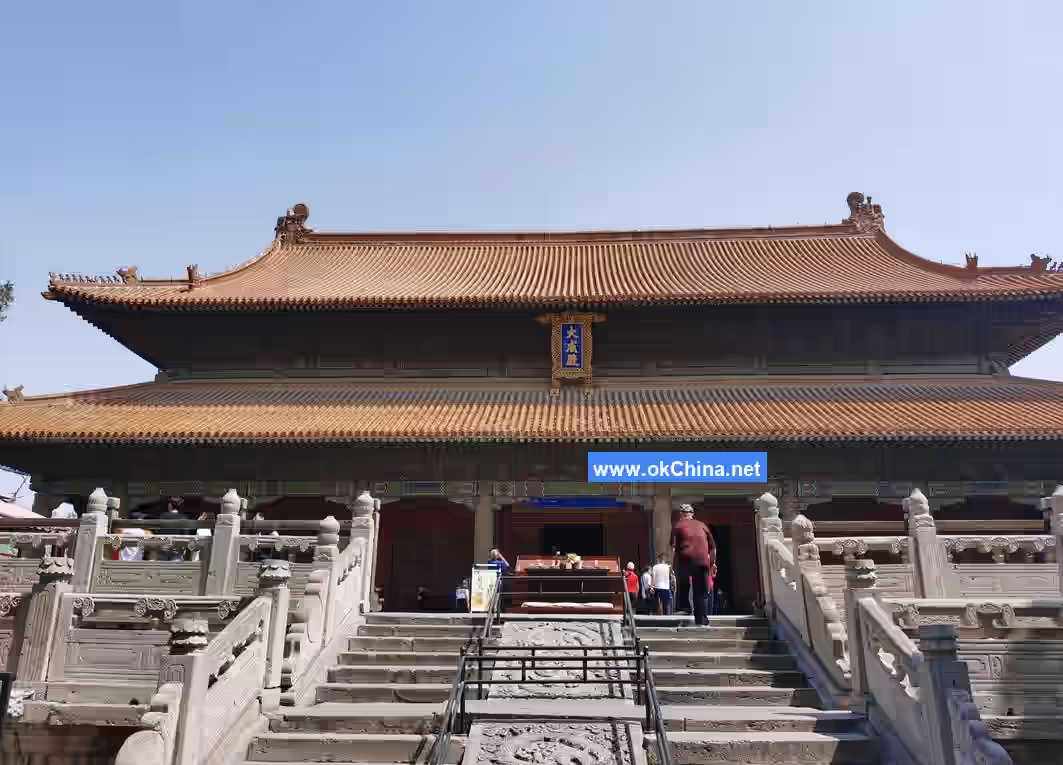
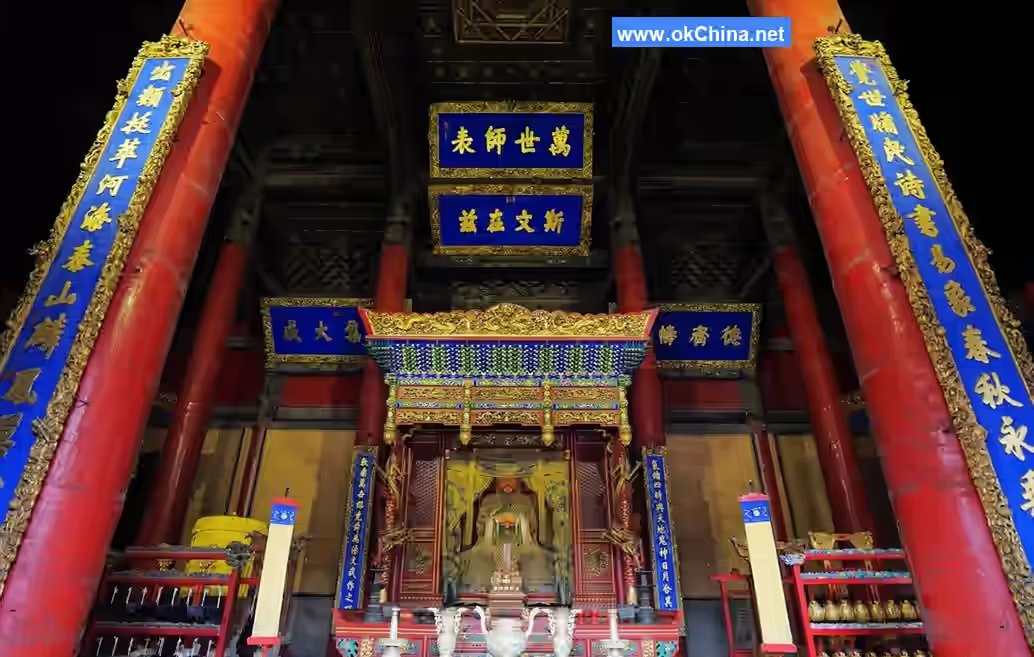
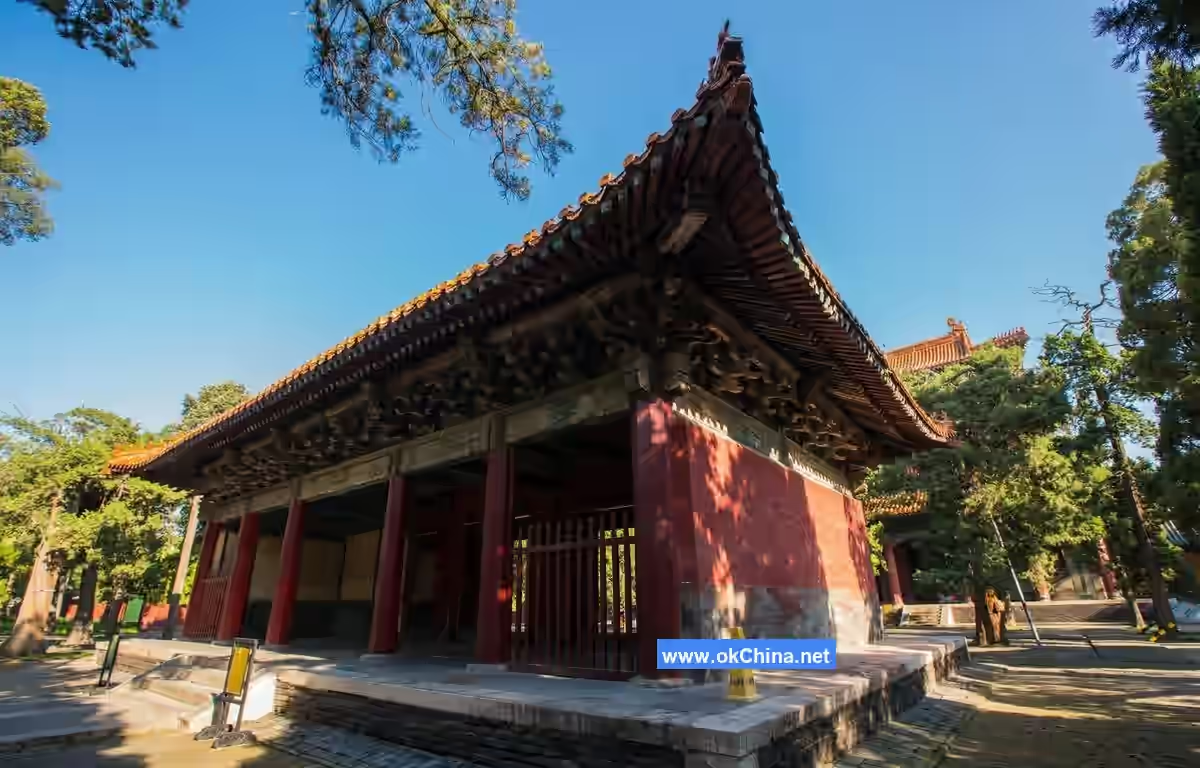
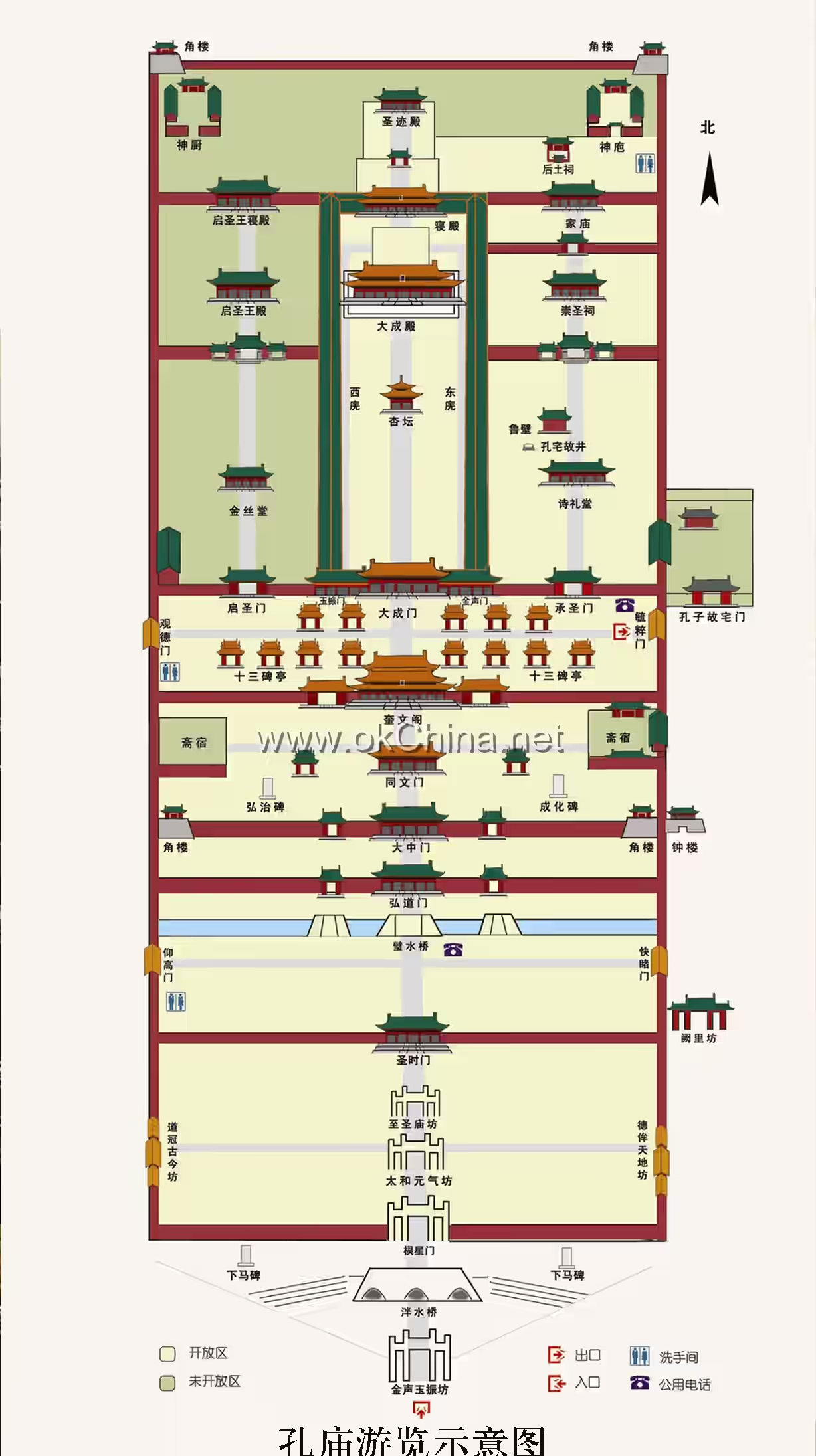
The Confucius Temple began in the second year after Confucius’s death (478 BC). His disciples established the "hall where he once lived" as a temple for "annual worship." At that time, there were only "three temple rooms," housing Confucius’s personal belongings such as "clothes, hats, qin (a musical instrument), carriage, and books." Subsequently, successive dynasties continuously expanded it. In the first year of the Yongxing era of the Eastern Han Dynasty (153 AD), Emperor Huan ordered the renovation of the Confucius Temple and appointed Kong He as the temple guardian, "erecting a stele in the temple." In the second year of the Huangchu era of the Wei Dynasty (221 AD), Emperor Cao Pi issued an edict to "restore the old temple" in Lu Commandery, but the scale of the temple was not particularly large at the time. By the end of the Western Jin Dynasty, the "temple was desolate and dilapidated." In the first year of the Xinghe era of the Eastern Wei Dynasty (539 AD), the Confucius Temple was renovated, and "statues of the sage were sculpted, with ten disciples standing beside him," marking the beginning of statues in the Confucius Temple. In the early Tang Dynasty, in addition to building "one temple each for the Duke of Zhou and Confucius" in the Imperial Academy, the highest educational institution in the capital, the emperor also issued an edict for "prefectures and counties to establish Confucius Temples." The temple was renovated five times during the Tang Dynasty and seven times during the Northern Song Dynasty. The largest renovation occurred in the second year of the Tianxi era of Emperor Zhenzong of Song (1018 AD), "expanding the old structure... adding 316 halls, corridors, and side rooms in total." It was renovated four times during the Jin Dynasty, six times during the Yuan Dynasty, and a total of 21 times during the Ming Dynasty through renovations and reconstructions. The largest renovation took place in the 12th year of the Hongzhi era of Emperor Xiaozong of Ming (1499 AD) when the Confucius Temple was struck by lightning, and over 120 main structures, including the Dacheng Hall, were "reduced to ashes." Emperor Zhu Youcheng urgently ordered a renovation, which took five years and cost 152,000 taels of silver. During the Qing Dynasty, the Confucius Temple was renovated 14 times. The largest renovation occurred in the second year of the Yongzheng era (1724 AD) when the temple was again destroyed by a lightning fire. Emperor Yongzheng, in addition to personally offering sacrifices at the temple, "allocated treasury funds for ministers to supervise the renovation, requiring drawings of the hall and corridor systems, as well as ritual vessels, to be submitted for review and personally instructed." To expedite the project, 12 prefectures, counties, and magistrates were mobilized to supervise the renovation, which took six years. Historically, the Confucius Temple underwent 15 major renovations, 31 medium renovations, and hundreds of minor renovations, ultimately forming the grand scale seen today.
The current scale of the Confucius Temple was achieved during the Ming and Qing Dynasties. The architecture follows the imperial palace system, divided into nine courtyards arranged symmetrically along a north-south central axis. The entire complex includes five halls, one pavilion, one altar, two side corridors, two halls, and 17 stele pavilions, totaling 466 rooms built during the Jin, Yuan, Ming, Qing, and Republic of China periods. The Confucius Temple covers approximately 200 acres, stretching over 1 kilometer from north to south. It is surrounded by high walls, complemented by gates, archways, and corner towers. With yellow tiles, red walls, carved beams, painted rafters, forests of steles, and ancient towering trees, it presents a majestic scene. Lü Mengzheng of the Song Dynasty praised it in writing: "The winding walls rise like clouds; the flying eaves spread like wings. The layered gates open wide; the towering pavilions stand majestically..." This vast architectural complex, with its distinctive Eastern architectural features, extensive area, grand scale, long history, and remarkable preservation, is hailed by ancient architecture scholars as the "only unique example" in the history of world architecture. It embodies the sweat and blood of countless laborers throughout history and is a crystallization of the wisdom of the Chinese working people.
3.1 Main Attractions of the Confucius Temple
3.1.1 Golden Sound and Jade Vibration Archway
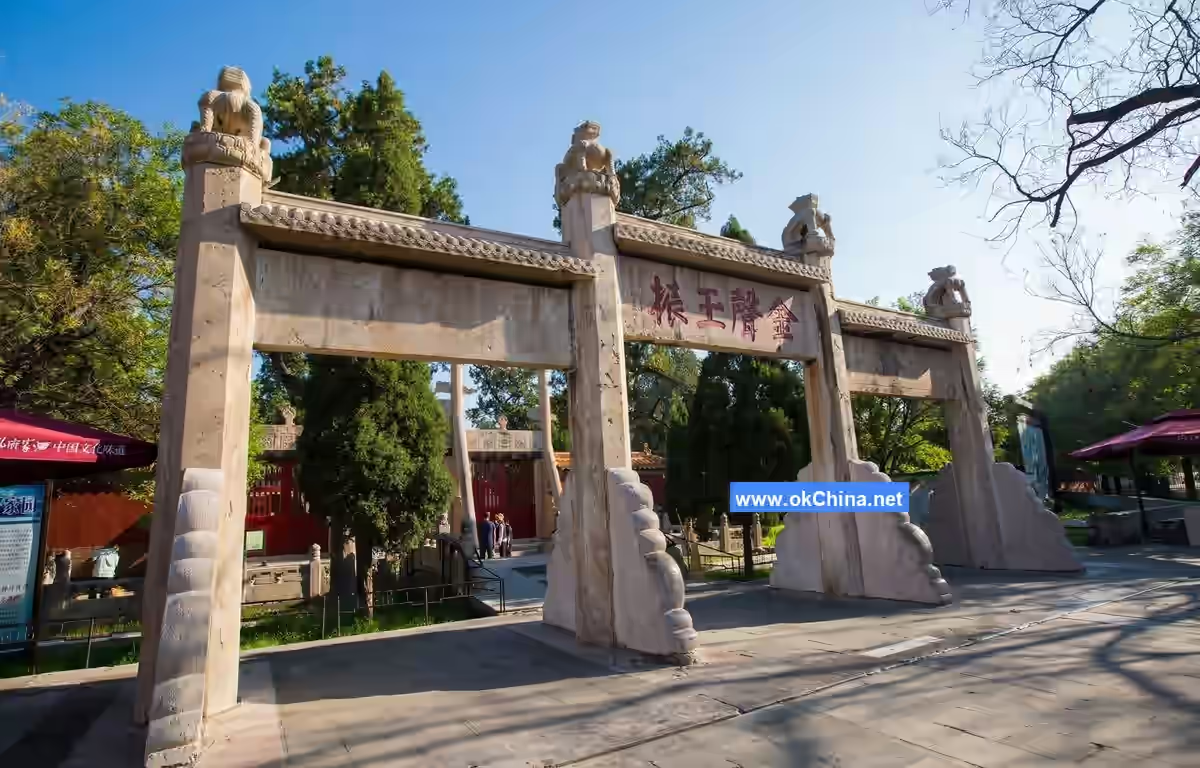
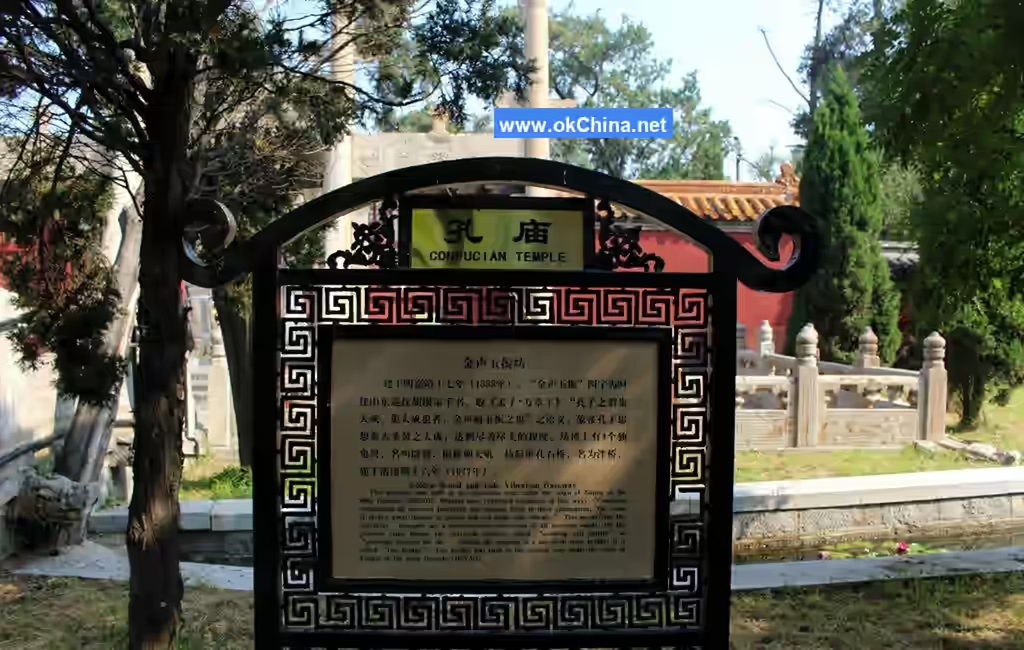
Mencius once evaluated Confucius as follows: "Confucius may be regarded as the complete symphony. To be a complete symphony is to first produce the golden sound and then the jade vibration. The golden sound marks the beginning of order; the jade vibration marks the completion of order." "Golden Sound" and "Jade Vibration" represent the entire process of music performance, starting with striking a bell (golden sound) and ending with striking a chime stone (jade vibration). This symbolizes Confucius’s thought as the culmination of ancient sages and praises his immense contribution to culture. Therefore, later generations named the first stone archway in front of the Confucius Temple the "Golden Sound and Jade Vibration Archway."
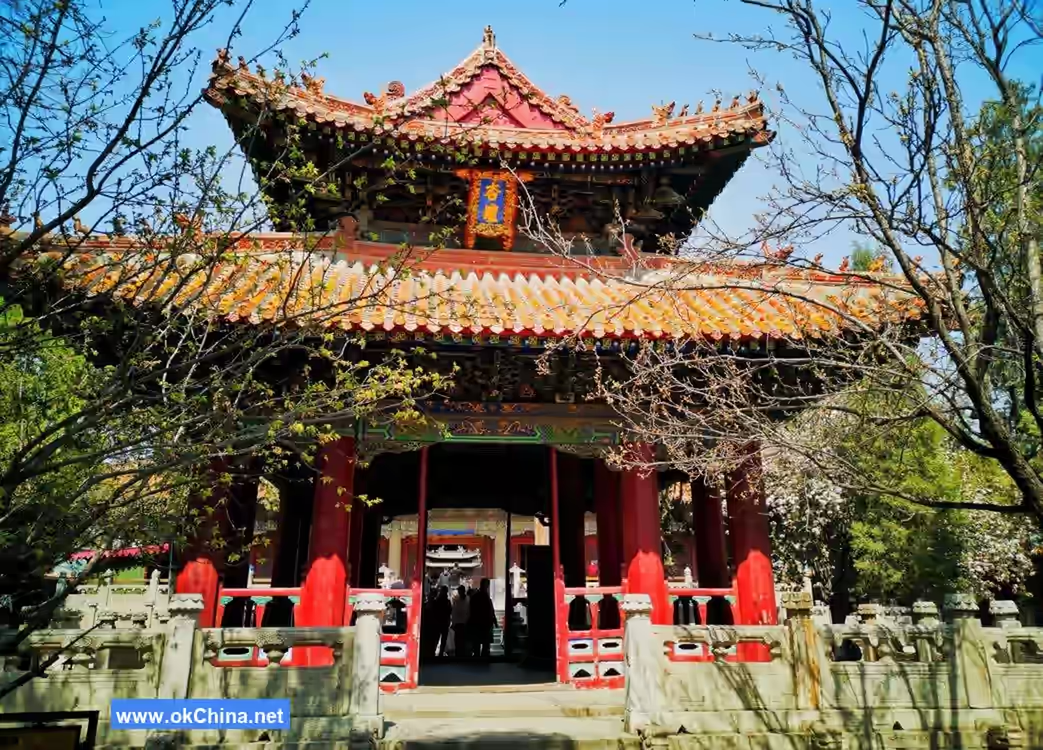
The Golden Sound and Jade Vibration Archway is a stone structure with four pillars, flanked by stone drums. The tops of the four octagonal stone pillars are adorned with lotus pedestals, each supporting a carved, ancient-style unicorn beast known as "Bitianxie," commonly called "Heavenward Roar." The sides of the archway are shallowly carved with clouds and dragons playing with pearls. The central panel of the archway is inscribed with four large characters, "Golden Sound and Jade Vibration," in powerful calligraphy, written by the famous calligrapher Hu Zuanzong in the 17th year of the Jiajing era of the Ming Dynasty (1538 AD). Behind the archway is a single-arch stone bridge with steps carved with two dragons playing with pearls. Below the bridge, a clear stream flows in a semicircle, known as the Pan Water. Unfortunately, the Pan Water has been covered with stones, leaving only the Pan Bridge intact. East and west of the bridge, there are stone tablets erected in the second year of the Jinmingchang era (1191 AD), inscribed with "Officials and commoners dismount here," known as the "Dismounting Stele." In the past, civil and military officials, as well as commoners, had to dismount or step down from their sedans when passing by to show respect. Even emperors had to descend from their palanquins when offering sacrifices to Confucius, highlighting the dignity of the Confucius Temple.
3.1.2 Lingxing Gate
Lingxing, also known as the Spirit Star or Tian Tian Star, was believed by the ancients to "bring blessings of gaining scholars." In ancient times, worshiping heaven began with worshiping the Spirit Star. Naming the gate of the Confucius Temple "Lingxing" signifies honoring Confucius as highly as heaven.
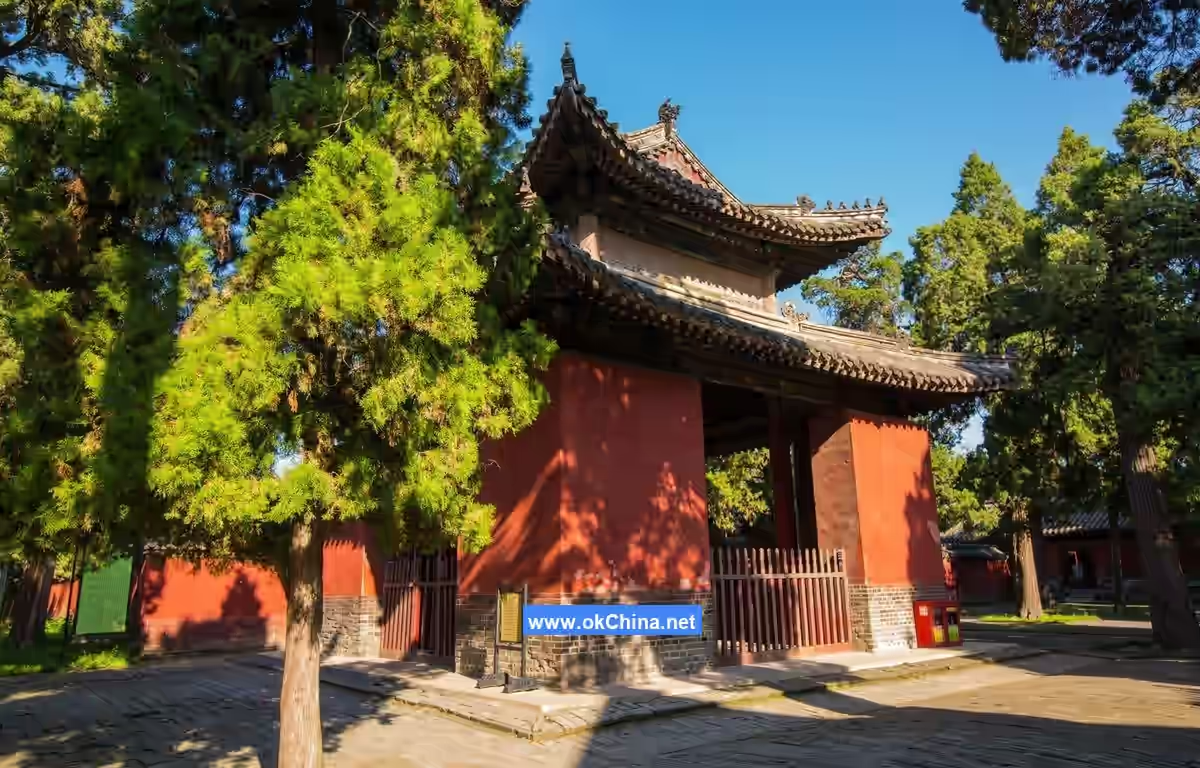
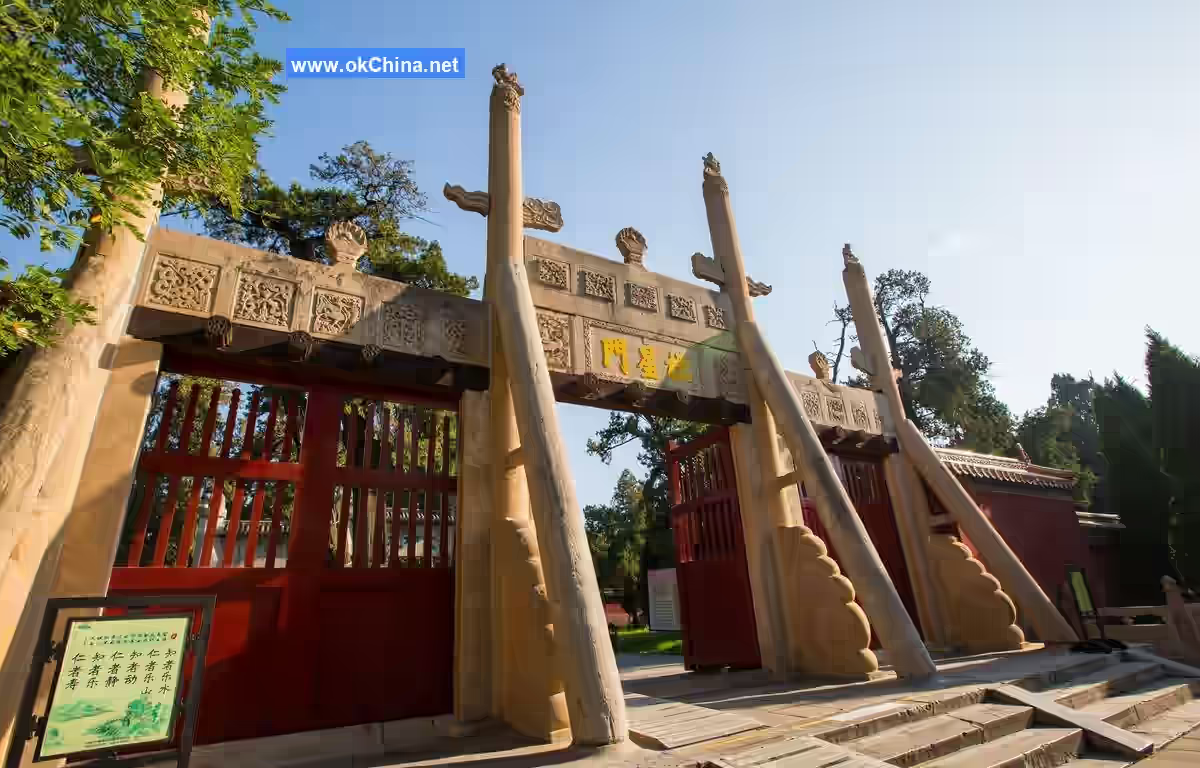
The Lingxing Gate is located behind the Pan Water Bridge, with four pillars and three openings. It features stone pillars and iron beams, with the iron beams cast with 12 dragon-head decorations. The four round stone pillars are adorned with auspicious clouds, and their tops are carved with fierce-looking heavenly generals sitting upright.The architrave is carved with flaming pearls. The central architrave consists of two layers of stone slabs: the lower layer is inscribed with three large characters "Lingxing Gate" in Emperor Qianlong's handwriting, while the upper layer is decorated with interlocking floral patterns. During the Ming Dynasty, this gate was made of wood, but it was "replaced with stone" during the renovation in the 19th year of the Qianlong era (1754 AD).
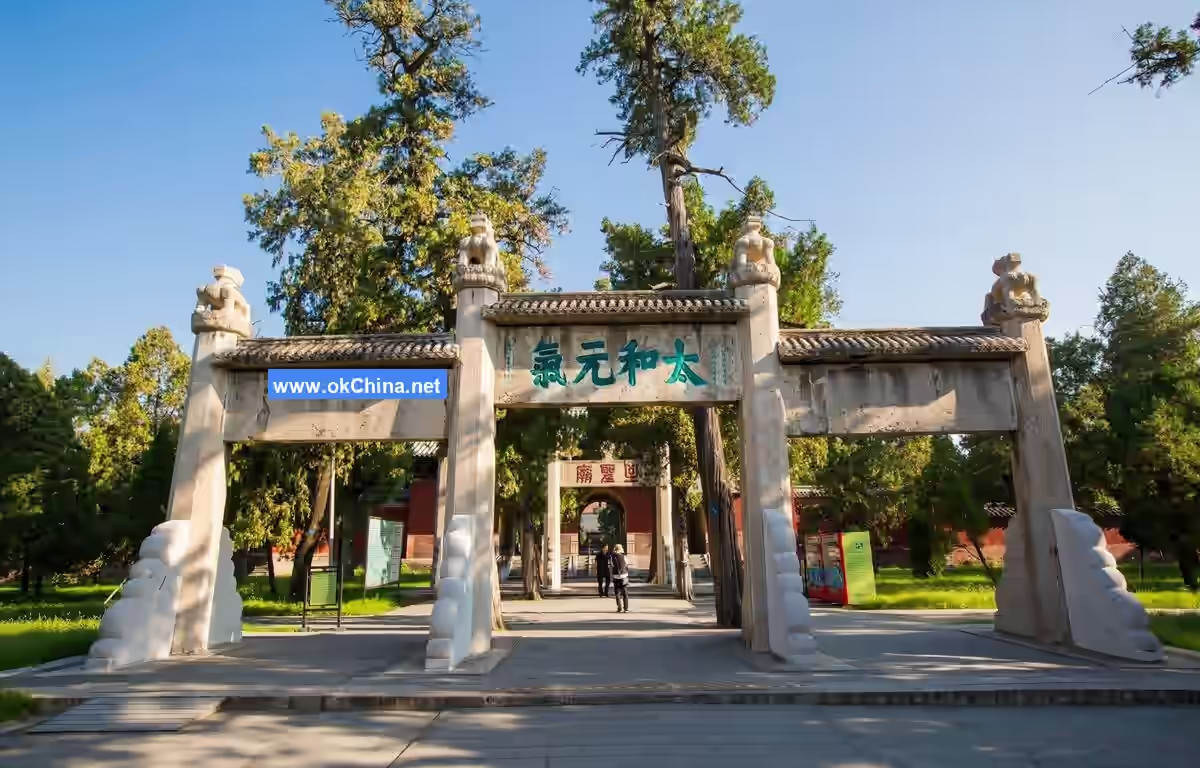
Inside the Lingxing Gate, two memorial archways were erected. The southern one is the "Taihe Yuanqi Archway," built in the spring of the 23rd year of the Jiajing era of the Ming Dynasty (1544 AD). Its design is similar to that of the "Jinsheng Yuzhen Archway," and the inscription on the archway was written by Zeng Xian, the governor of Shandong, praising Confucius's thoughts as being as nurturing as heaven and earth. The northern archway is the "Zhisheng Temple Archway," with a Ming-era inscription in seal script. Originally, it bore the characters "Xuansheng Temple" during the Ming Dynasty, but it was renamed to its current name in the 7th year of the Yongzheng era of the Qing Dynasty (1729 AD). The archway is made of white marble, with three bays and four pillars. The pillars are adorned with auspicious clouds, and the architrave is decorated with flaming pearls.
Later generations, in praise of the profound influence of Confucius's thoughts on Chinese society, used the phrases "Virtue Matches Heaven and Earth" and "Doctrine Crowns Ancient and Modern," meaning his contributions were as great as heaven and earth, and his teachings were the best throughout history. Therefore, two symmetrical wooden archways were built on the left and right sides of the first courtyard of the Confucius Temple. The eastern one bears the inscription "Virtue Matches Heaven and Earth," and the western one bears "Doctrine Crowns Ancient and Modern," serving as the first side gates of the temple. These archways were built in the early Ming Dynasty and exhibit distinct characteristics of the period. The structures are wooden, with three bays, four pillars, and five roofs, covered with yellow glazed tiles and featuring ruyi bracket sets. The central bay has thirteen tiers of brackets, the side bays have nine tiers, and the small roofs in between have five tiers. Below each archway, there are eight stone-carved mythical beasts. The four central ones are tianlu, with scales, flicking tails, long necks, and sharp claws. The four on the sides are bixie, with fierce eyes and twisted necks, presenting a bizarre appearance.
3.1.3 Shengshi Gate
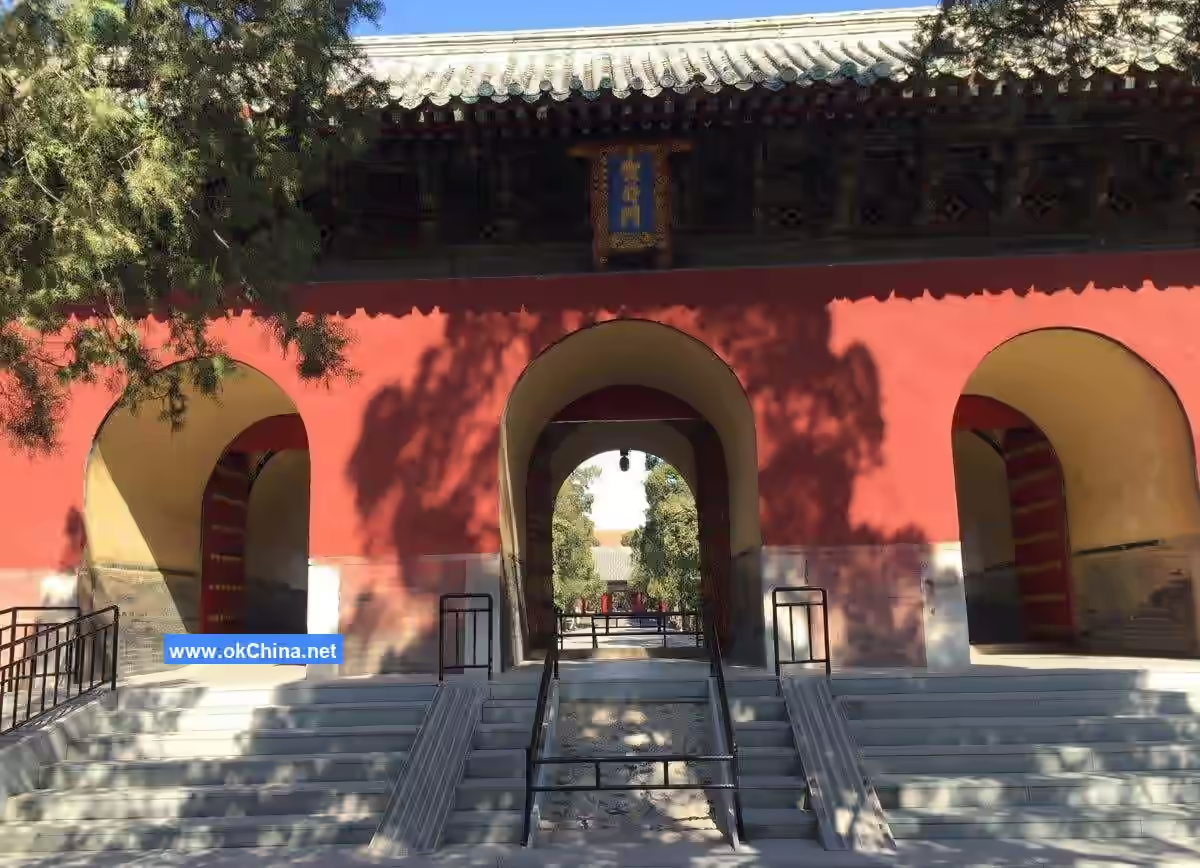
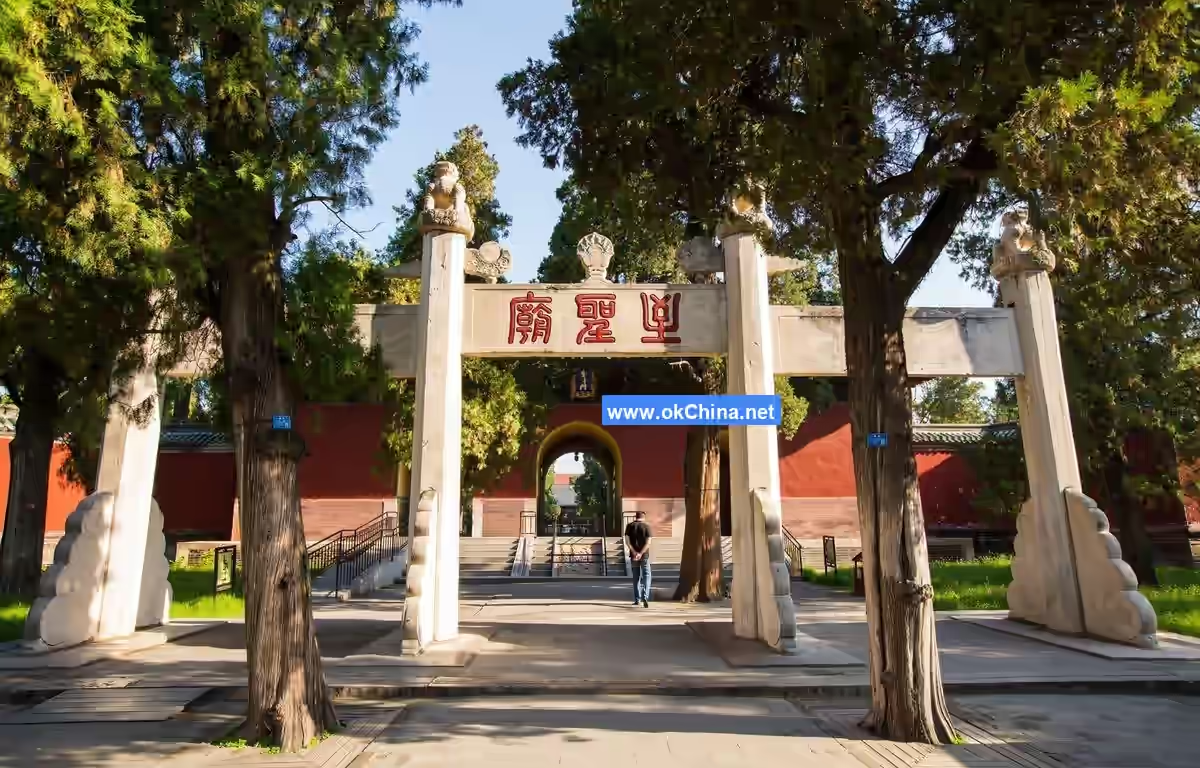
According to Mencius, "Mencius said, 'Boyi was the sage of purity; Yiyin was the sage of responsibility; Liuxia Hui was the sage of harmony; Confucius was the sage of timeliness.'" This means that among the sages, Confucius was the most suited to his time. Based on this, Emperor Yongzheng of the Qing Dynasty officially named the main gate of the Confucius Temple "Shengshi Gate" in the 8th year of the Yongzheng era (1730 AD). The Shengshi Gate was first built in the 13th year of the Yongle era of the Ming Dynasty (1415 AD) with three bays. During the Hongzhi era, it was expanded to five bays, with three arched gates. It features a green-tiled hip-and-gable roof, surrounded by deep red walls, with apricot-yellow walls inside the arches. Stone dragon thrones are carved on the front and back stone steps. Looking through the arched gates gives a sense of profound mystery.
Passing through the Shengshi Gate, a vast courtyard opens up, filled with ancient cypress trees, lush green shade, and a carpet of fragrant grass. Three arched bridges span across a winding stream with clear, rippling water and lush lotus leaves. The water is surrounded by exquisitely carved stone railings. The water "winds around like a wall," hence it is called "Bishui" (Wall Water), and the bridges are named accordingly as "Bishui Bridges."
To the south of the bridges, there are two gates connected by a paved path. The eastern gate bears the plaque "Kuaidu Gate," derived from Li Bo's phrase "like a bright star or phoenix, everyone rushes to see it," meaning "eager to be the first to see." The western gate bears the plaque "Yanggao Gate," taken from the Analects phrase "the more you look up, the higher it seems," praising the profound depth of Confucius's teachings. These are the second side gates of the Confucius Temple. In the past, only the emperor could enter through the main gate during sacrifices, while ordinary people entered through the Yanggao Gate.
4. Confucius Forest
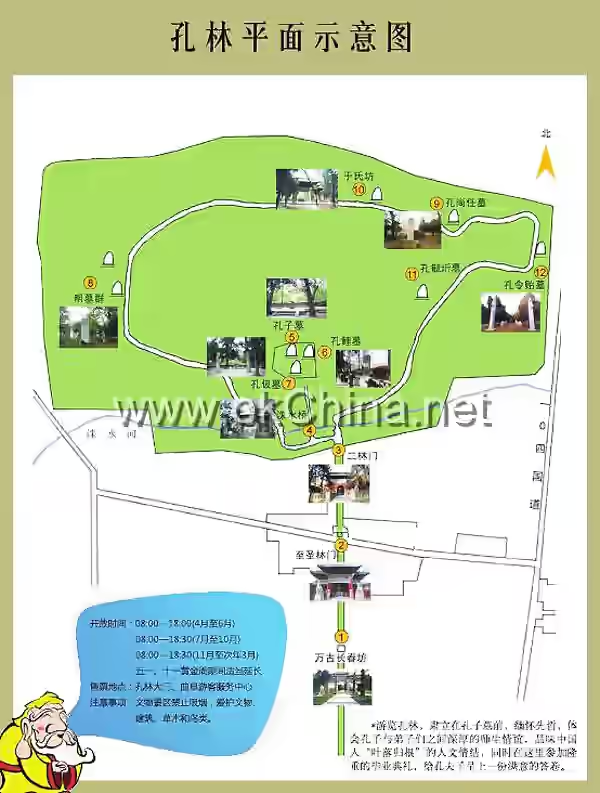
Confucius Forest, originally called Zhisheng Forest, is the burial ground of Confucius and his family. After Confucius's death, his disciples buried him north of Lu City by the Sishui River. At that time, it was "a grave without a mound" (no raised earth). By the Qin and Han dynasties, although the mound was raised, the cemetery remained small, with only a few caretakers. As Confucius's status grew over time, the scale of Confucius Forest expanded. In the 3rd year of the Yongshou era of Emperor Huan of the Eastern Han Dynasty (157 AD), Han Chi, the chancellor of Lu, repaired Confucius's tomb, built a spirit gate in front of the tomb, and constructed a fasting lodge to the southeast. He assigned households such as Wu Chu to tend to the tomb. At that time, Confucius Forest covered "no more than one qing of land." By the Northern Qi Dynasty, 600 trees were planted. During the Xuanhe era of the Song Dynasty, stone statues were erected in front of Confucius's tomb. In the 2nd year of the Zhishun era of Emperor Wenzong of the Yuan Dynasty (1331 AD), Kong Sikai oversaw the construction of the forest wall and gates. In the 10th year of the Hongwu era of the Ming Dynasty (1684 AD), Confucius Forest was expanded to 3,000 mu. In the 8th year of the Yongzheng era (1730 AD), Confucius Forest underwent major renovations, costing 25,300 taels of silver to rebuild various gates and archways, with special officials assigned to guard it. According to records, since the Han Dynasty, Confucius Forest has been renovated or expanded 13 times, with trees planted five times and the forest area expanded three times. The entire forest is surrounded by a wall 7.25 kilometers long, over 3 meters high, and about 5 meters thick, covering a total area of 2 square kilometers—much larger than the city of Qufu. As a clan cemetery, Confucius Forest has been used continuously for over 2,000 years. Here, one can study burials from the Spring and Autumn period, verify tombs from the Qin and Han dynasties, and research the development of China's politics, economy, culture, and the evolution of burial customs over the centuries. In 1961, it was designated as one of the first national key cultural relics protection units by the State Council. "The ancient tomb remains for a thousand years, the deep forest chills even in May." Confucius Forest now has over 100,000 trees. It is said that after Confucius's death, "his disciples brought rare trees from all directions to plant, so there are many exotic trees, and generations of people in Lu have been unable to name them." Even today, some trees in Confucius Forest remain unnamed. Among them are cypress, juniper, oak, elm, pagoda tree, jie, pu, maple, poplar, willow, tanluo, privet, wuweizi, cherry, and other large trees, with intertwined roots and lush branches. Hundreds of plants, such as wild chrysanthemum, banxia, chaihu, taizishen, and lingzhi, also thrive in their seasons. Confucius Forest is truly a natural botanical garden.
"Broken steles lie deep in the forest, with no path to find them." Amidst the dense trees of Confucius Forest, stone steles stand like a forest, and stone statues gather in groups. While some famous Han steles have been moved to the Confucius Temple, the forest still contains tombstones inscribed by Ming and Qing calligraphers such as Li Dongyang, Yan Song, Weng Fanggang, He Shaoji, and Kang Youwei. Therefore, Confucius Forest can rightly be called a forest of steles.
4.1 Main Attractions of Confucius Forest
4.1.1 Sacred Way
North of the city gate of Qufu, two rows of verdant cypress and juniper trees stand like dragons along the road, forming the Sacred Way of Confucius Forest. At the center stands the majestic "Everlasting Spring Archway." This is a finely carved stone archway with six pillars, each flanked by twelve stone lions in different poses. The characters "Wan Gu Chang Chun" (Everlasting Spring) in the center were carved when the archway was first built in the 22nd year of the Wanli era of the Ming Dynasty (1594 AD). During the Yongzheng era of the Qing Dynasty, the inscription "Renovated by Imperial Decree in the Seventh Month of the 10th Year of Yongzheng" was added. The archway is carved with coiling dragons, dancing phoenixes, qilin, steeds, spotted deer, floral patterns, and auspicious clouds. The center features two dragons playing with a pearl, flanked by designs of a red phoenix facing the sun. The entire archway is grand and beautifully crafted.
To the east and west of the archway, there are two square pavilions with green tiles, each housing a large stone stele. The eastern stele, erected in the 22nd year of the Wanli era (1594 AD) by Ming officials Zheng Rubi and Lian Biao, bears the inscription "Sacred Way of the Great Sage and Supreme Teacher Confucius." The western stele, erected the following year by the same two individuals, is the "Stele for the Renovation of the Forest and Temple of Queli." Both steles are tall, with finely carved patterns at the top and vividly shaped turtle pedestals at the bottom.
4.1.2 Zhushui Bridge
West of the Zhisheng Forest Gate is the Imperial Path. About 200 meters ahead, to the north of the road, stands a stone archway carved with clouds, dragons, and bixie. Both sides of the archway bear the inscription "Zhushui Bridge," with the north side noting its erection by Kong Wenxiao, the Duke Yansheng, in the 2nd year of the Jiajing era, and the south side bearing the date of the 10th year of the Yongzheng era. North of the archway, a high-arched bridge spans the Zhushui River.
The Zhushui was originally an ancient river that merged with the Sishui River and split again north of Qufu. During the Spring and Autumn period, Confucius taught between the Zhushui and Sishui rivers, and later generations used "Zhushui and Sishui" as a metaphor for Confucianism. However, the Zhushui riverbed silted up long ago. To commemorate Confucius, later generations designated the moat of the State of Lu as the Zhushui and built an exquisite archway and bridge. On the north and south sides of the bridge, there are stone tablets recording the dredging and repair of the Zhushui Bridge over the dynasties. The bridge is adorned with blue stone railings. To the northeast of the bridge, there is a square courtyard called the "Hall of Reflection," with three main rooms and three side rooms on the east and west. This was where sacrificial participants changed clothes during ceremonies. The walls inside are embedded with numerous stone tablets inscribed by later literati praising Confucius Forest, such as "Phoenixes sometimes perch on fine trees, but common birds dare not nest in the deep forest" and "Thorns do not grow in the burial ground, and birds avoid nesting in the jie forest." Adjacent to this courtyard to the east is a smaller courtyard with the inscription "Divine Kitchen" above the gate, where animals were slaughtered for sacrifices.
4.1.3 Hall of Offering
North of the Zhushui Bridge, first stands a high-platform gate with three bays and green tiles—the "Tomb Guarding Gate." Beyond it lies the Hall of Offering, which houses the wooden tablet of Confucius. Along the paved path to the Hall of Offering, there are four pairs of stone carvings: huabiao (ornamental pillars), wenbao (literary leopards), jiaoduan (mythical beasts), and wengzhong (stone statues). Huabiao are stone pillars in front of tombs, also called "gazing pillars." Wenbao, resembling leopards with flames under their armpits, are gentle and kind, guarding the tomb. Jiaoduan is another mythical beast, said to travel 18,000 li a day, understand all languages, and know distant and obscure matters. Wengzhong are stone statues, said to depict a fierce general of the Qin Dynasty who intimidated the borderlands. Later, for symmetry, statues of civil and military officials were carved, both called Wengzhong, to guard the tomb. The two pairs of stone beasts were carved during the Xuanhe era of the Song Dynasty, while the Wengzhong statues were carved during the Yongzheng era of the Qing Dynasty. The civil official holds a ceremonial tablet, and the military official rests his hand on a sword. At the end of the path is the Hall of Offering, with five bays, a yellow-tiled hip-and-gable roof, a timber frame with front and rear corridors, and double-ang bracket sets with five tiers under the eaves. Inside the hall, a stele inscribed by Emperor Qianlong of the Qing Dynasty, "Stele for Offering Wine at Confucius Forest," remains, with lines such as "His teachings endure for a thousand years, Mount Tai never crumbles." During the War of Liberation, Commander-in-Chief Zhu De held a military conference in this hall.
4.1.4 Tomb of Confucius
Behind the Hall of Offering lies the heart of Confucius Forest—the Tomb of Confucius. The tomb resembles the raised back of a horse, known as a "horse-mane mound." It is surrounded by a red wall about one li in circumference. In front of the tomb stands a large stele inscribed with "Tomb of the Great Sage and Supreme Teacher, King of Culture and Propagation," written by Huang Yangzheng in the 8th year of the Zhengtong era of the Ming Dynasty (1443 AD). The stone platform in front of the tomb was initially built during the Han Dynasty, rebuilt with stones from Mount Tai during the Tang Dynasty, and expanded during the Qianlong era of the Qing Dynasty.To the east of Confucius' tomb lies the burial site of his son, Kong Li, and to the south is the tomb of his grandson, Kong Ji. This burial arrangement is known as "carrying the son and embracing the grandson."
5. Cultural Resources
5.1 Confucius
Confucius (551–479 BC), named Qiu and styled Zhongni, was a native of the State of Lu during the late Spring and Autumn period. His ancestors were nobles of the State of Song, but the family declined several generations before his time. In his youth, Confucius held several minor official positions, but he spent most of his life engaged in education. It is said that he taught as many as 3,000 disciples, many of whom became knowledgeable and talented individuals. As a thinker and educator of the late Spring and Autumn period and the founder of the Confucian school, he was already revered during his lifetime as the "Sage of Heaven" and the "Wooden Bell of Heaven," making him one of the most learned scholars of his time. Later generations honored him as the "Supreme Sage" (the sage among sages) and the "Model Teacher for Ten Thousand Generations." He was named Qiu because his parents prayed for a child at Mount Niqiu. He was born in Zouyi, State of Lu (present-day southeast of Qufu, Shandong Province). He compiled the Book of Songs and the Book of Documents, established the Rites and Music, wrote commentaries on the Book of Changes, and authored the Spring and Autumn Annals. Confucius' thoughts and teachings have had an extremely profound impact on later generations.
Internationally, Confucius is regarded as a great philosopher, politician, and educator of China during the Spring and Autumn period from the 6th to the 5th century BC. The temple, cemetery, and mansion of Confucius are located in Qufu, Shandong Province. The Confucius Temple was built in 478 BC to commemorate Confucius. Over the centuries, it was repeatedly destroyed and rebuilt, evolving into a complex of over 100 halls. The Confucius Forest not only contains Confucius' tomb but also the burial sites of over 100,000 of his descendants. The once-small Confucius Mansion has expanded into a grand and illustrious estate, comprising 152 halls. The unique artistic and historical characteristics of Qufu's ancient architectural complex are attributed to the strong promotion of Confucius by Chinese emperors throughout history over more than 2,000 years.
"Millennia of rites and music return to Eastern Lu; eternal generations pay homage to the Unadorned King." Qufu's global reputation is closely linked to the name of Confucius. Confucius is one of the world's greatest philosophers and the founder of the Confucian school in China. Over the long history of more than 2,000 years, Confucian culture gradually became the orthodox culture of China and influenced countries in East and Southeast Asia, forming the cornerstone of Eastern culture. The Confucius Mansion, Confucius Temple, and Confucius Forest in Qufu, collectively known as the "Three Confucian Sites," symbolize the commemoration of Confucius and the promotion of Confucianism throughout Chinese history. They are renowned for their rich cultural heritage, long history, grand scale, abundant collection of cultural relics, and scientific and artistic value. Due to their prominent position in Chinese history and Eastern world culture, they are revered as one of the three holy cities in the world.
5.2 Confucian Culture
Confucian culture is an important component of traditional Chinese culture. It originated during the Spring and Autumn period, founded by Confucius, and through the inheritance and development by Confucian scholars of successive dynasties, it became the mainstream ideological system of ancient Chinese society.
5.2.1 Core Ideas
Benevolence (Ren): The core idea of Confucian culture is "Ren," meaning benevolence and kindness. Confucius believed that "Ren" is the essence of humanity and the fundamental principle for handling interpersonal relationships. Rites (Li): "Li" is an important concept in Confucian culture, referring to social norms and codes of conduct. Confucianism emphasizes maintaining social order and harmony through "Li." Righteousness (Yi): "Yi" refers to justice and moral principles. Confucianism holds that people should act according to "Yi" to achieve fairness and selflessness. Loyalty and Forgiveness (Zhong Shu): "Zhong" refers to loyalty and diligence, while "Shu" refers to forgiveness and understanding. Confucianism emphasizes practicing loyalty and forgiveness in interpersonal relationships.
5.2.2 Education and Self-Cultivation
Education: Confucianism places great importance on education, viewing it as a vital means of nurturing talent and enhancing personal cultivation. Confucius advocated "education without discrimination," emphasizing the universality and equality of education. Self-Cultivation: Confucianism stresses personal cultivation, believing that through learning and practice, individuals can elevate their moral standards and spiritual realms.
5.2.3 Family and Society
Family Ethics: Confucian culture emphasizes family ethics, considering the family the basic unit of society. Confucianism promotes filial piety, stressing children's respect and devotion to their parents. Social Order: Confucianism holds that maintaining social order relies on "Li" and "Yi." By adhering to social norms and moral principles, social harmony and stability can be achieved.
5.2.4 Politics and Governance
Rule by Virtue: Confucianism advocates "rule by virtue," believing that rulers should lead by moral example, influencing and inspiring the people through their own moral cultivation. Benevolent Governance: Confucianism promotes "benevolent governance," meaning ruling the state with a heart of benevolence, caring for the people's livelihood, and alleviating their burdens.
5.2.5 Classical Works
Four Books and Five Classics: Confucian classical works include the "Four Books" (Analects, Mencius, Great Learning, Doctrine of the Mean) and the "Five Classics" (Book of Songs, Book of Documents, Book of Rites, Book of Changes, Spring and Autumn Annals). These works are important carriers of Confucian thought.
5.2.6 Influence and Inheritance
Historical Influence: Confucian culture long dominated Chinese history, influencing all aspects of Chinese society, including politics, education, family, and ethics. Modern Inheritance: Confucian culture continues to exert significant influence in modern society, with many Confucian ideas applied in contemporary education, management, and ethical development.
Confucian culture is an important component of traditional Chinese culture. Based on its core ideas of "Ren," "Li," "Yi," and "Zhong Shu," it emphasizes the importance of education and self-cultivation, family and society, politics and governance, and other aspects. Confucian classical works, such as the "Four Books and Five Classics," are key carriers of Confucian thought. Confucian culture long held a dominant position in Chinese history and continues to exert significant influence in modern society.
Comments
Post a Comment