Meizhou Island Mazu Cultural Tourism Area in Putian City
1. Introduction
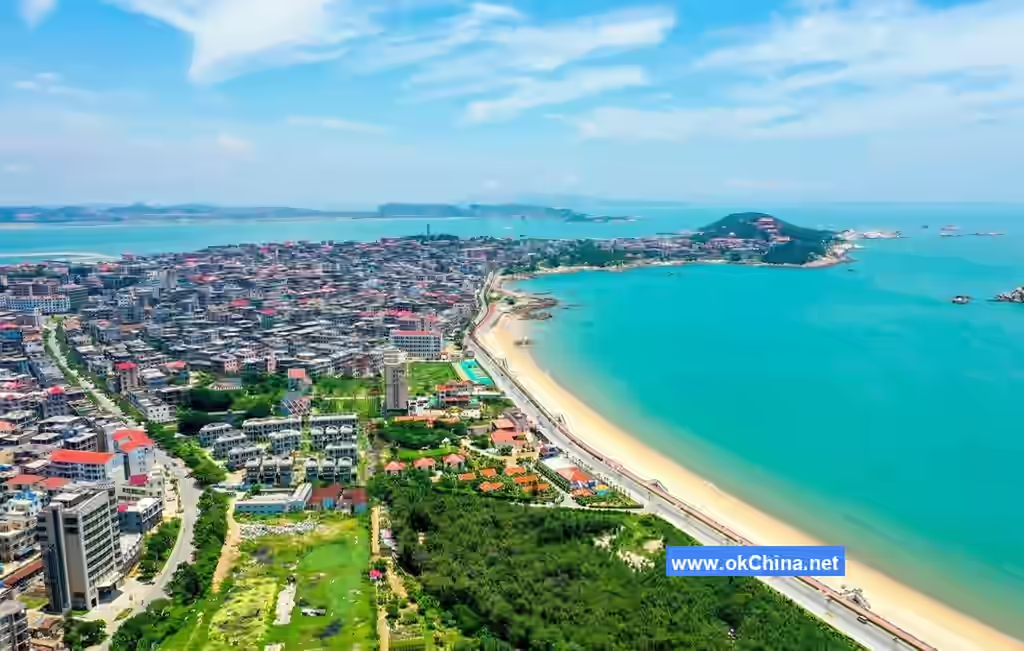
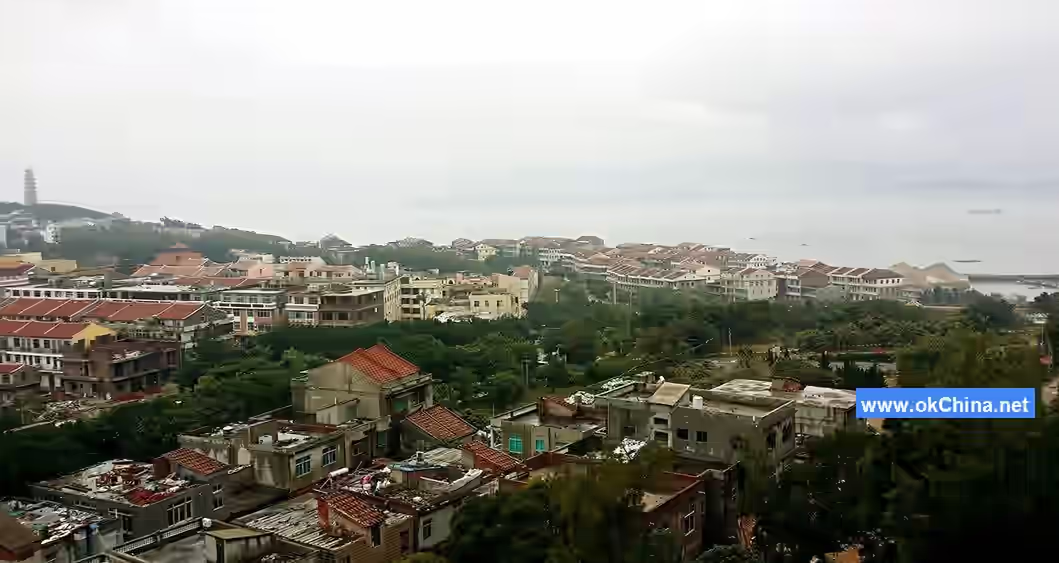
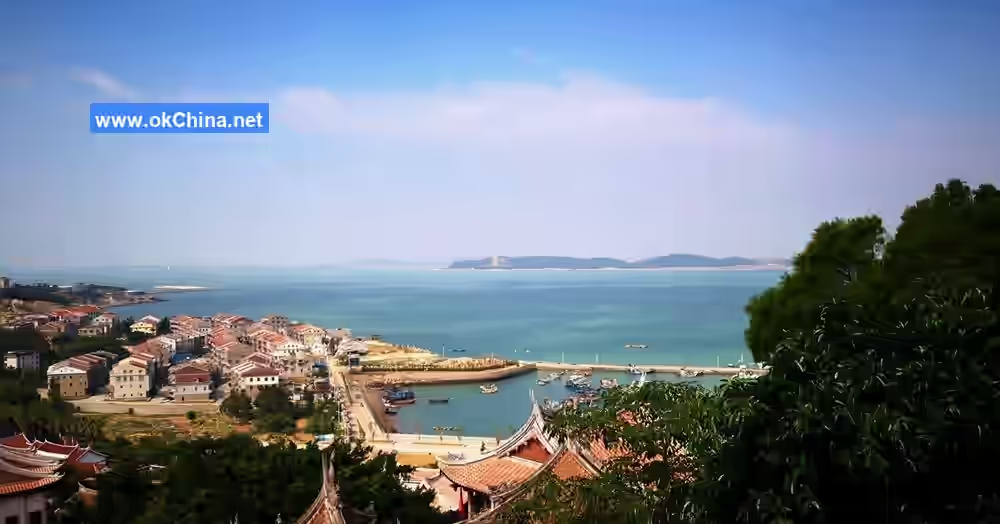
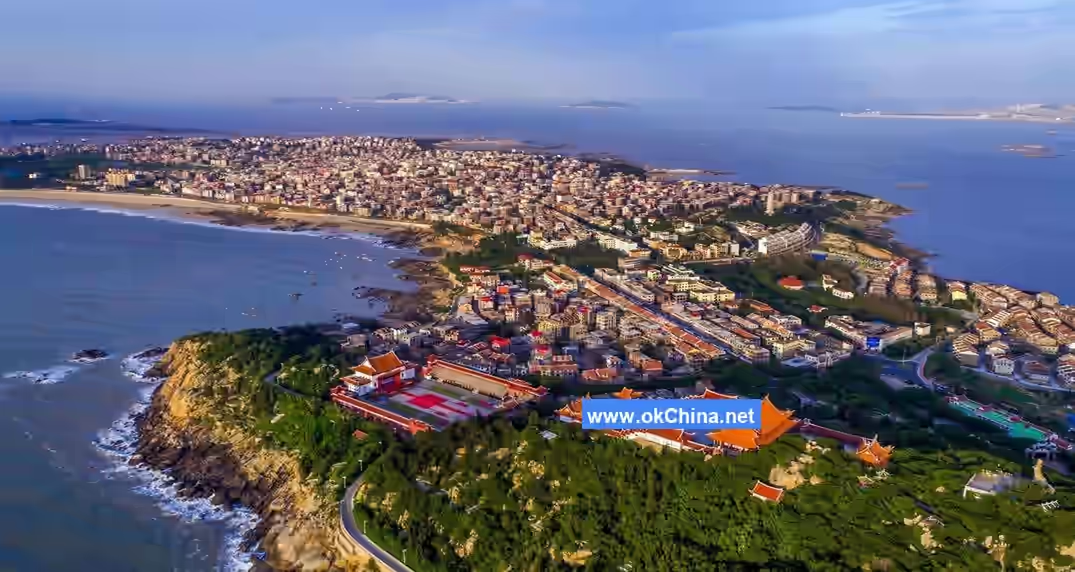
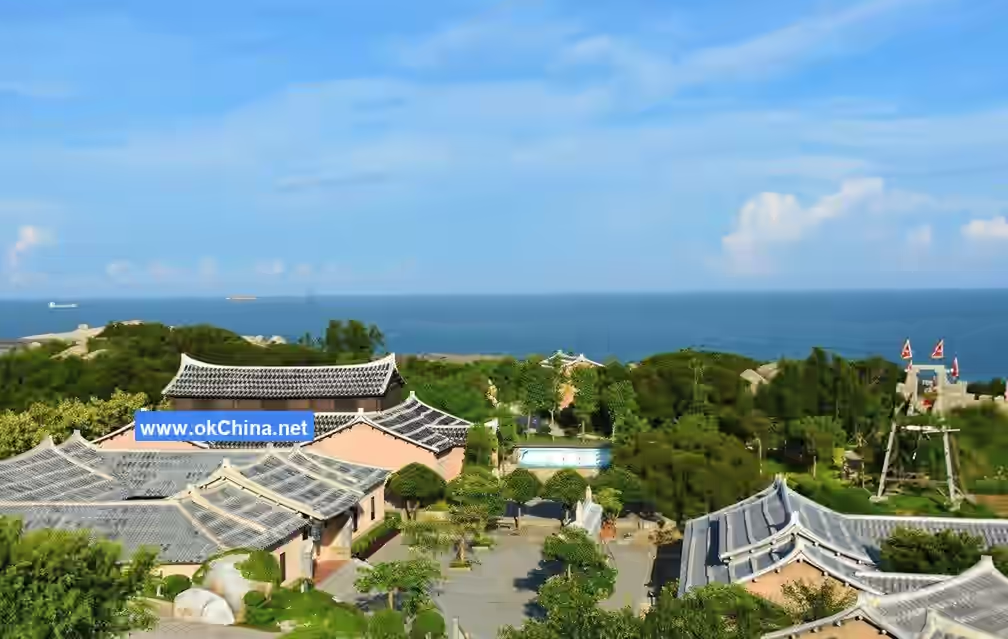
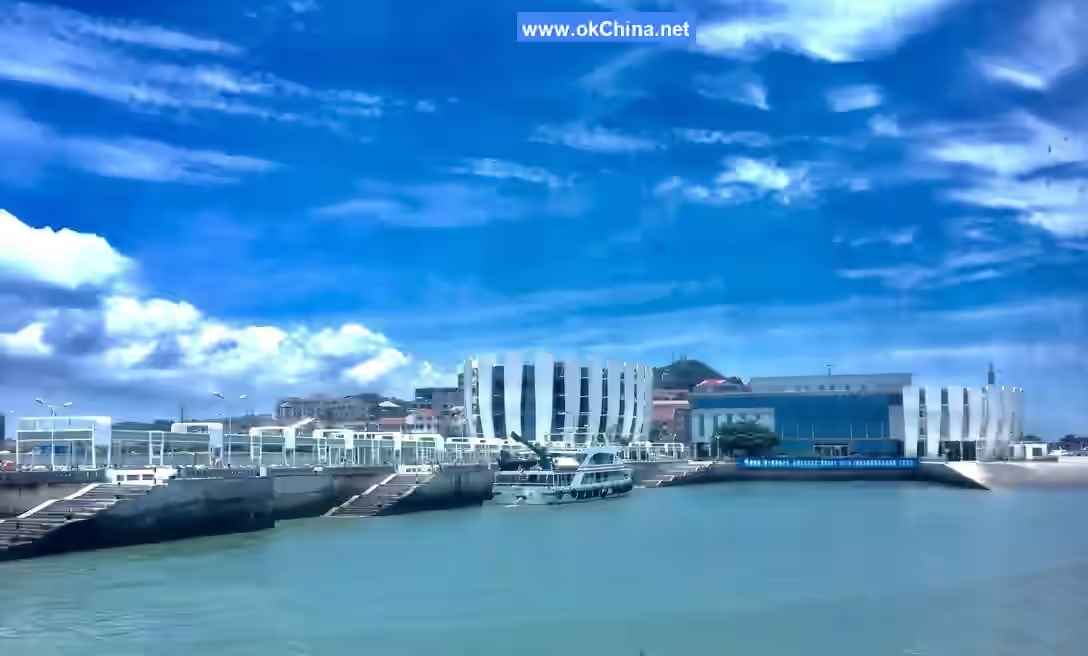
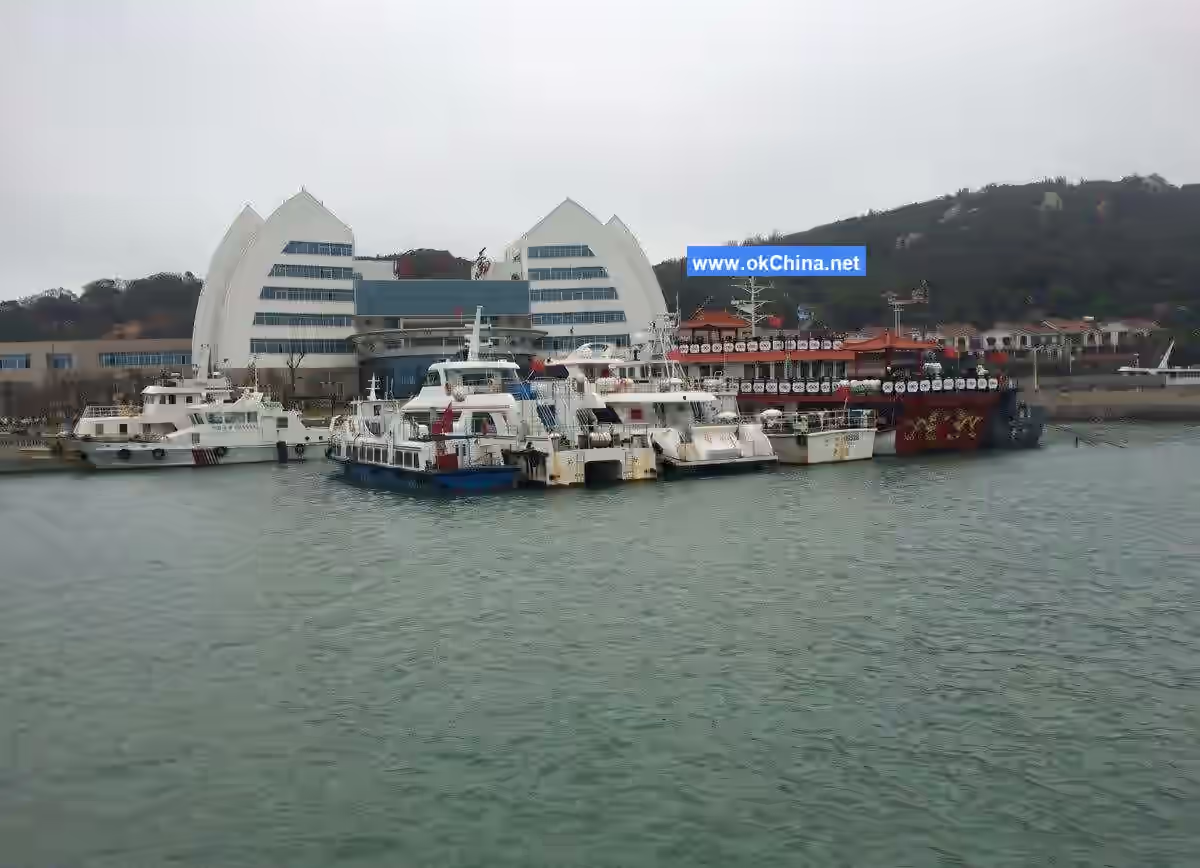
The Meizhou Island Mazu Cultural Tourism Area in Putian City is located on the shores of Meizhou Bay in Putian City, Fujian Province. It is 42 kilometers from the city center and 1.8 nautical miles from the nearest mainland pier, Wenjia. The scenic area covers approximately 49.3 square kilometers.
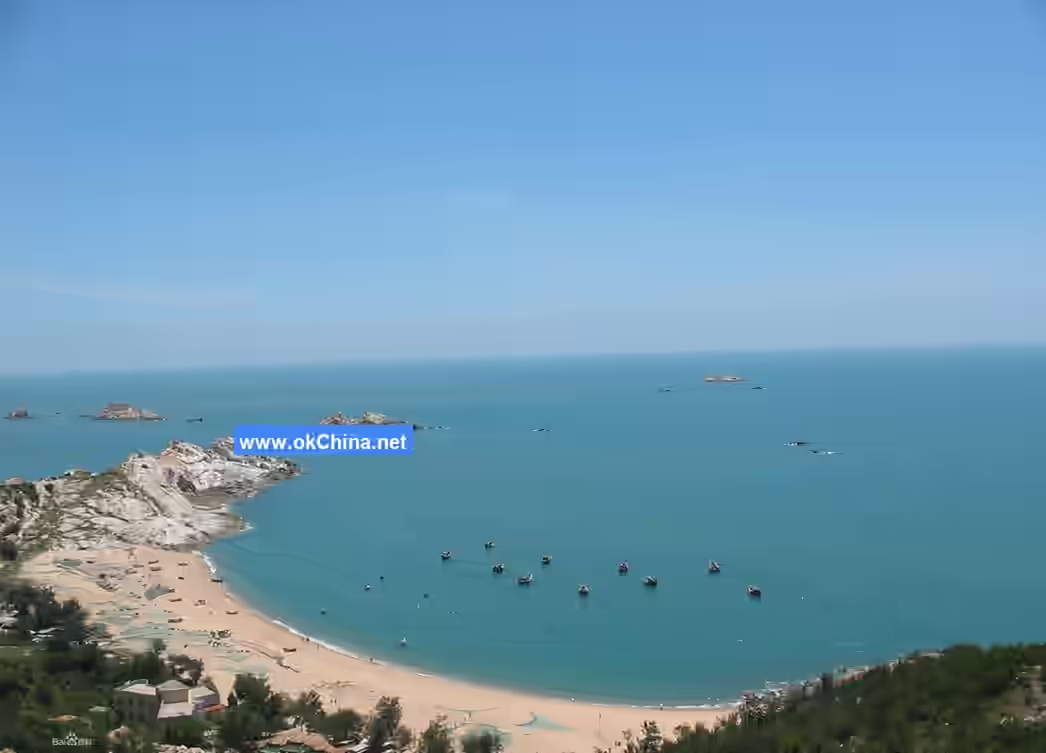
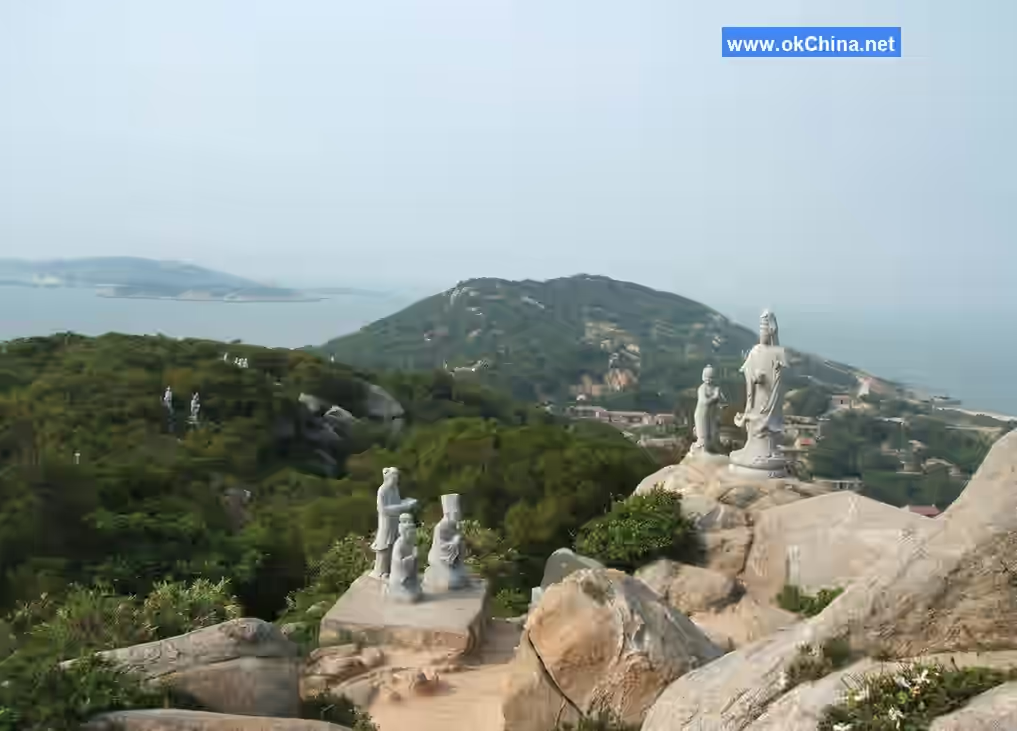
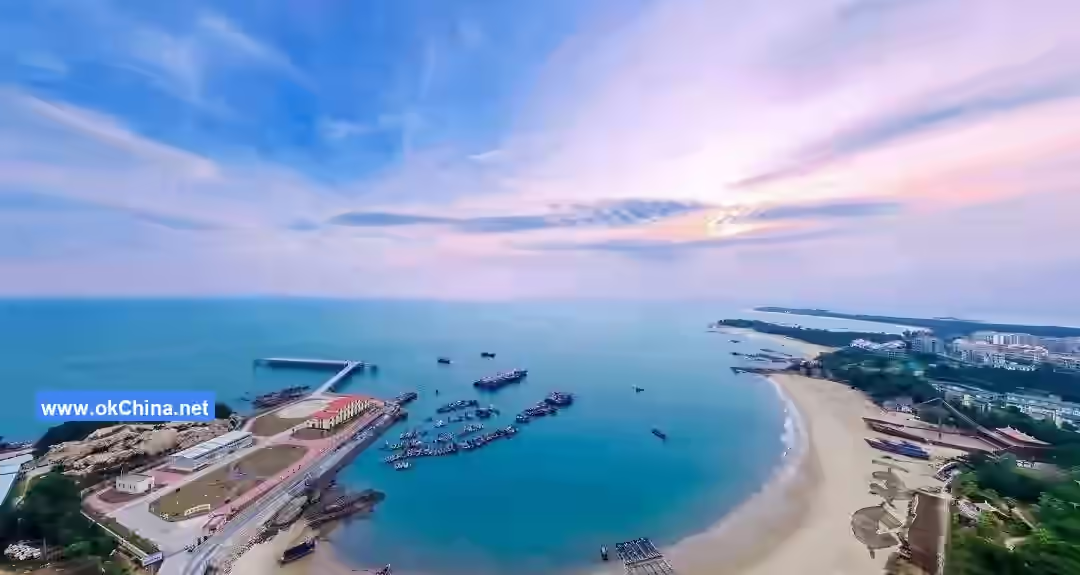
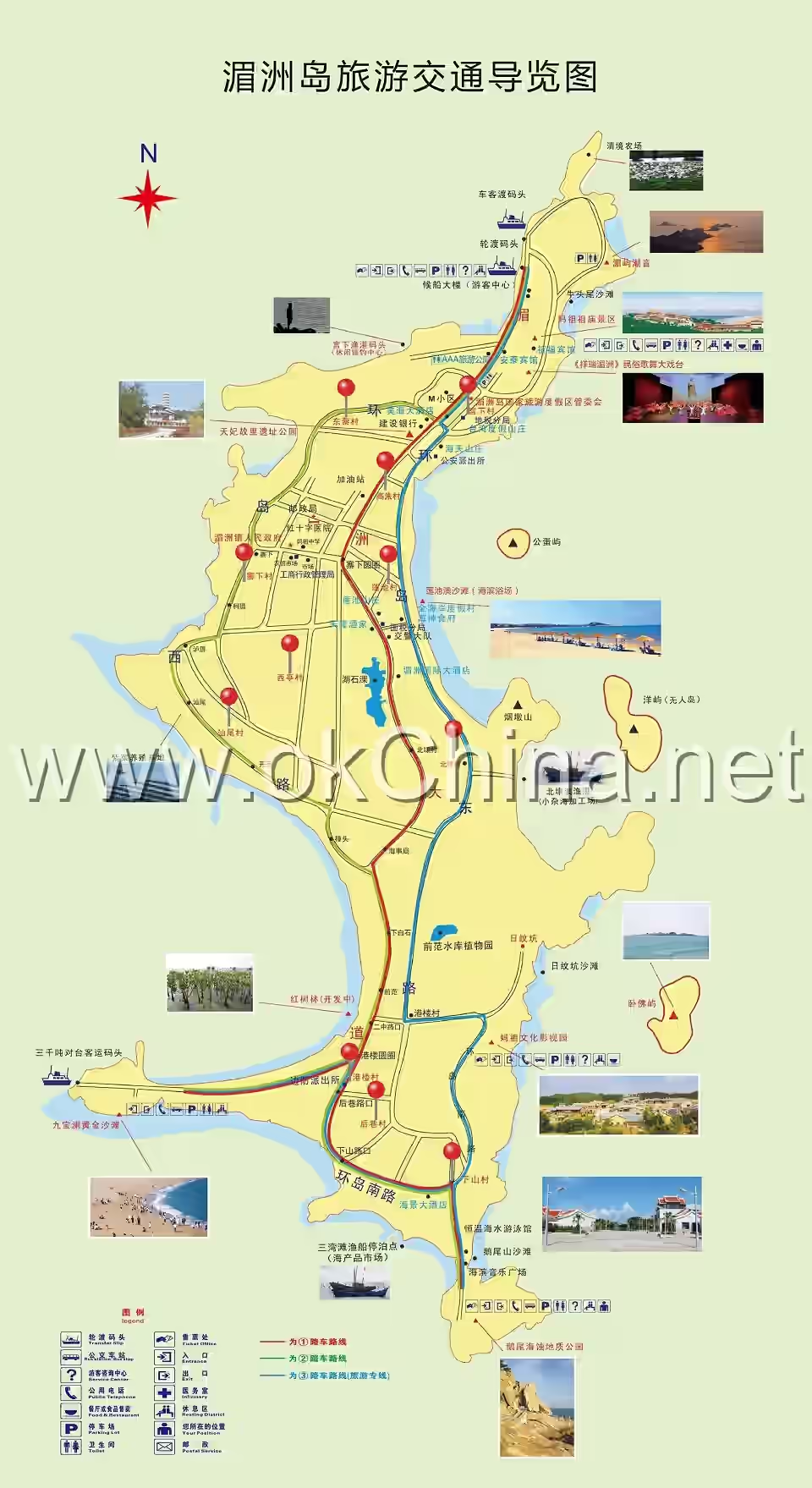
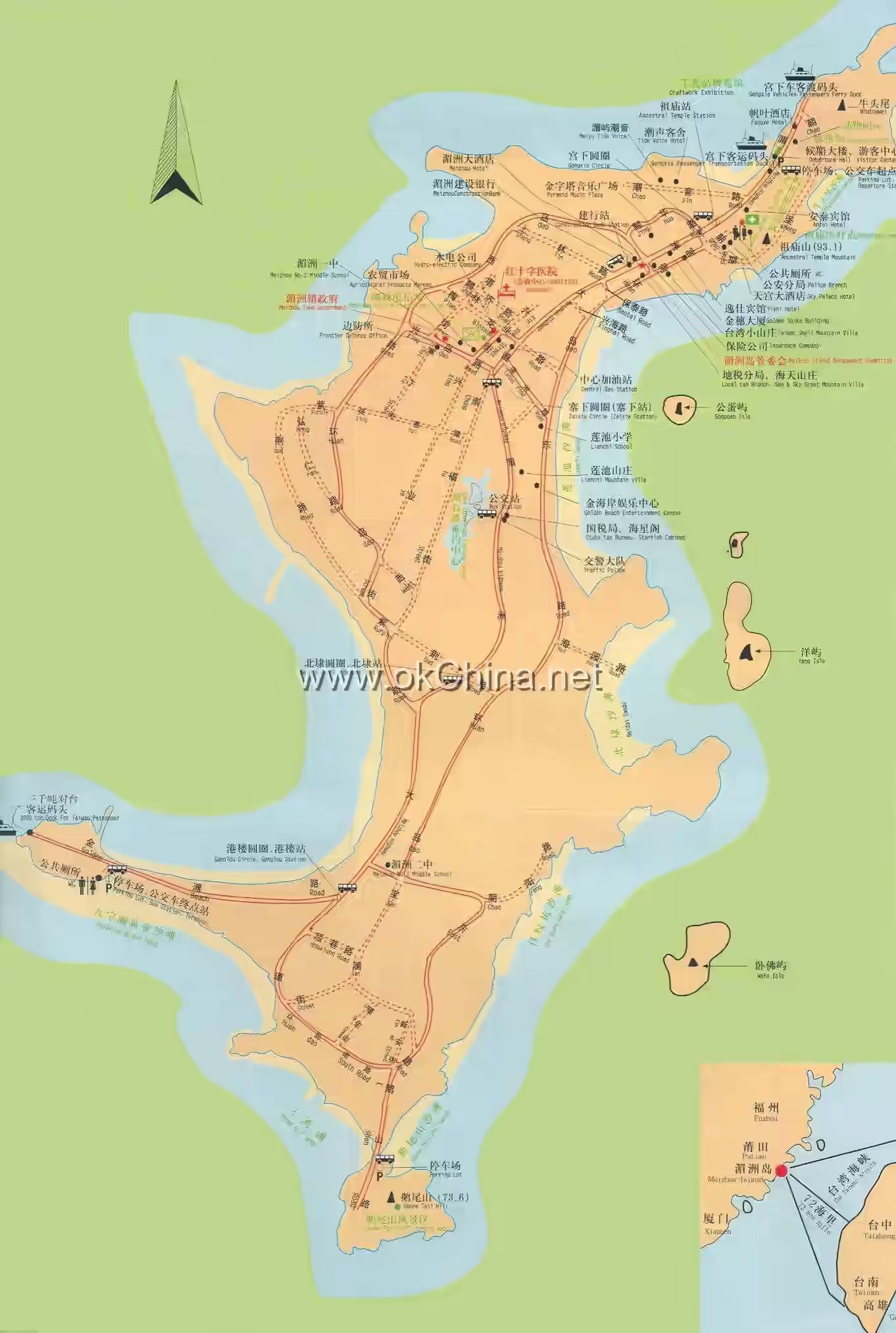
The Meizhou Island Mazu Cultural Tourism Area in Putian City comprises important natural and cultural landscapes, including the Mazu Ancestral Temple, Zumiao Mountain, Meiyu Tide Sound, Niutouwei Beach, Golden Beach, Yandun Mountain, East Sea Reclining Buddha Garden, Ewei Divine Stone Garden, and 36 islands and reefs, including Caizi Islet and Hushi Archipelago. Among all the scenic spots, the Mazu Ancestral Temple is the core of the tourism area. It was first built in the 4th year of the Yongxi era of the Song Dynasty (987 AD) and has been continuously expanded over successive dynasties. The current Mazu Ancestral Temple includes architectural complexes along the west and south axes, featuring dozens of large and small structures with interwoven pavilions and halls, creating a magnificent sight. Along Meizhou Island's 30.4-kilometer coastline, 13 golden beaches are scattered like pearls. The Meiyu Tide Sound scenic area is located at the northernmost tip of Meizhou Island, stretching several hundred meters. The Ewei Divine Stone Garden is situated at the southernmost tip of the island, at an altitude of 65 meters, and is a natural "stone bonsai." The Mazu Cultural Film and Television Park (Mazu Ping'anli) is located by the harbor of Meizhou Island and served as the filming base for the 38-episode large-scale mythological TV series "Mazu." Additionally, Meizhou Island boasts 1,085,782 square meters of green space, with per capita green space reaching 29.7 square meters, and the island's overall greening coverage rate is 49.3%. There are 212 species of garden plants, including 89 species of trees, 83 species of shrubs, 39 species of ground cover, and one type of lawn.
In February 2002, Meizhou Island National Tourism Resort was rated as a National AAAA-level Tourist Attraction. In September 2009, the Mazu belief and customs were inscribed on the UNESCO Representative List of the Intangible Cultural Heritage of Humanity, becoming China's first world heritage in the category of beliefs and customs. On December 15, 2020, the Meizhou Island Mazu Cultural Tourism Area was designated as a National AAAAA-level Tourist Attraction.
2. Geographical Environment
2.1 Location and Territory
The Meizhou Island Mazu Cultural Tourism Area in Putian City is located on the shores of Meizhou Bay in Putian City, Fujian Province. It is 42 kilometers from the city center and 1.8 nautical miles from the nearest mainland pier, Wenjia.
2.2 Topography and Landforms
Meizhou Island has historically belonged to Putian, Fujian, and is located in the central western coast of the Taiwan Strait. It is approximately 9.6 kilometers long from north to south and about 1.3 kilometers wide from east to west, making it the second-largest island in Putian City, with a land area of 14.35 square kilometers, including over 30 islands, islets, and reefs. To its southeast lies Putian's Wuqiu Township, which includes Da Wuqiu Islet and Xiao Wuqiu Islet (Xia Yu).
The coastal terraces of Meizhou Island are primarily composed of beach rock and marine peat layers. Marine peat layers are widely distributed, with significant variations in elevation due to fault movements. In the north, the elevations at Duchuantou and Dinglianchi range from 2 to 4 meters. In the central-south, the elevations at Xiabaishi and Houyu West range from 10 to 15 meters, while Shangbaishi has an elevation of 20 to 30 meters. In the same central-south area, upstream of the Riwenkeng Reservoir, a 1-meter-thick marine peat layer underlies old red sand, directly overlying granite residual soil, distributed at elevations of 30 to 40 meters. Beach rock is distributed at Goutouwei, island sand barriers, and near Shangbaishi Village in the central part, at an elevation of about 3 meters, composed of coarse sand, fine gravel, and oyster shell fragments.
2.3 Climate
Meizhou Island has a typical southern subtropical maritime climate, characterized by mild temperatures, with no severe cold in winter and no intense heat in summer. The annual average temperature is 21°C. The average annual precipitation is 1240.9 mm, with an average annual evaporation of 2130.3 mm and a relative humidity of 77%. Sunshine is abundant, with annual sunshine hours ranging from 1942 to 2334 hours. The island experiences frequent strong winds, with gales of force 8 or above concentrated from October to March of the following year. The prevailing wind direction is northeast throughout the year, shifting to south in summer. The average annual wind speed is 7.15 m/s, with a maximum wind speed of 27 m/s and an instantaneous extreme wind speed of 40 m/s. Disastrous weather includes typhoons and droughts. Typhoons mostly occur from July to October, while the period from October to December is often a dry season.
3. Main Attractions
Scenic Area Layout
The Meizhou Island Mazu Cultural Tourism Area in Putian City covers approximately 49.3 square kilometers and comprises important natural and cultural landscapes, including the Mazu Ancestral Temple, Zumiao Mountain, Meiyu Tide Sound, Niutouwei Beach, Golden Beach, Yandun Mountain, East Sea Reclining Buddha Garden, Ewei Divine Stone Garden, and 36 islands and reefs, including Caizi Islet and Hushi Archipelago. Meizhou Island possesses high-quality coastal tourism resources along the southeastern coast, with a total coastline of 30.4 kilometers, encircled by 13 golden beaches totaling 20 kilometers in length and a 5-kilometer-long spectacle of marine erosion landforms. Among all the scenic spots, the Mazu Ancestral Temple is the core of the tourism area, including architectural complexes along the west and south axes, with dozens of large and small structures featuring interwoven pavilions and halls. Along Meizhou Island's 30.4-kilometer coastline, 13 golden beaches are scattered like pearls. The Meiyu Tide Sound scenic area is located at the northernmost tip of Meizhou Island, stretching several hundred meters. The Ewei Divine Stone Garden is situated at the southernmost tip of the island, at an altitude of 65 meters, and is a natural "stone bonsai." The Mazu Cultural Film and Television Park (Mazu Ping'anli) is located by the harbor of Meizhou Island and served as the filming base for the 38-episode large-scale mythological TV series "Mazu."
3.1 Meiyu Tide Sound Scenic Area
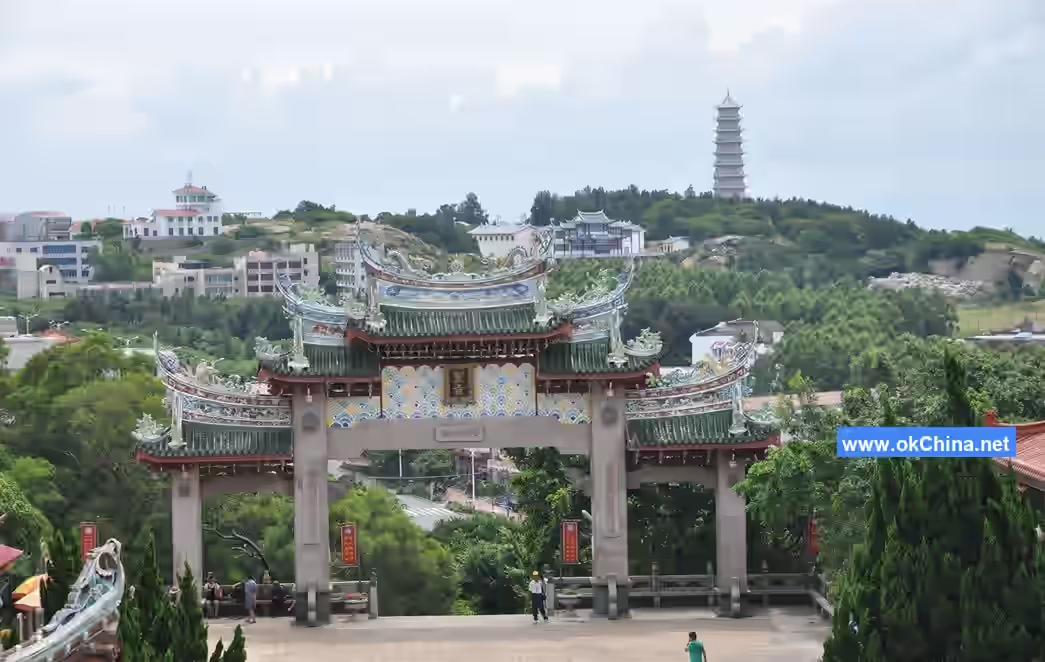
The Meiyu Tide Sound scenic area is located at the northernmost tip of Meizhou Island. Here, extensive diabase on the seabed has been eroded by wind and waves, forming a natural groove several hundred meters long. This unique wind-eroded and marine-eroded landscape, combined with the ebb and flow of tides, produces奇妙而有节奏的音响奇妙而有节奏的音响奇妙而有节奏的音响奇妙而有节奏的音响奇妙而有节奏的音响奇妙而有节奏的音响奇妙而有节奏的音响奇妙而有节奏的音响奇妙而有节奏的音响奇妙而有节奏的音响奇妙而有节奏的音响奇妙而有节奏的音响奇妙而有节奏的音响奇妙而有节奏的音响奇妙而有节奏的音响奇妙而有节奏的音响奇妙而有节奏的音响奇妙而有节奏的音响奇妙而有节奏的音响奇妙而有节奏的音响奇妙而有节奏的音响奇妙而有节奏的音响奇妙而有节奏的音响奇妙而有节奏的音响奇妙而有节奏的音响奇妙而有节奏的音响奇妙而有节奏的音响奇妙而有节奏的音响奇妙而有节奏的音响奇妙而有节奏的音响奇妙而有节奏的音响奇妙而有节奏的音响奇妙而有节奏的音响奇妙而有节奏的音响奇妙而有节奏的音响奇妙而有节奏的音响奇妙而有节奏的音响奇妙而有节奏的音响奇妙而有节奏的音响奇妙而有节奏的音响奇妙而有节奏的音响奇妙而有节奏的音响奇妙而有节奏的音响奇妙而有节奏的音响奇妙而有节奏的音响奇妙而有节奏的音响奇妙而有节奏的音响奇妙而有节奏的音响奇妙而有节奏的音响奇妙而有节奏的音响奇妙而有节奏的音响奇妙而有节奏的音响奇妙而有节奏的音响奇妙而有节奏的音响奇妙而有节奏的音响奇妙而有节奏的音响奇妙而有节奏的音响奇妙而有节奏的音响奇妙而有节奏的音响奇妙而有节奏的音响奇妙而有节奏的音响奇妙而有节奏的音响奇妙而有节奏的音响奇妙而有节奏的音响奇妙而有节奏的音响奇妙而有节奏的音响奇妙而有节奏的音响奇妙而有节奏的音响奇妙而有节奏的音响奇妙而有节奏的音响奇妙而有节奏的音响奇妙而有节奏的音响奇妙而有节奏的音响奇妙而有节奏的音响奇妙而有节奏的音响奇妙而有节奏的音响奇妙而有节奏的音响奇妙而有节奏的音响奇妙而有节奏的音响奇妙而有节奏的音响奇妙而有节奏的音响奇妙而有节奏的音响奇妙而有节奏的音响奇妙而有节奏的音响奇妙而有节奏的音响奇妙而有节奏的音响奇妙而有节奏的音响奇妙而有节奏的音响奇妙而有节奏的音响奇妙而有节奏的音响奇妙而有节奏的音响奇妙而有节奏的音响奇妙而有节奏的音响奇妙而有节奏的音响奇妙而有节奏的音响奇妙而有节奏的音响奇妙而有节奏的音响奇妙而有节奏的音响奇妙而有节奏的音响奇妙而有节奏的音响奇妙而有节奏的音响奇妙而有节奏的音响奇妙而有节奏的音响奇妙而有节奏的音响奇妙而有节奏的音响奇妙而有节奏的音响奇妙而有节奏的音响奇妙而有节奏的音响奇妙而有节奏的音响奇妙而有节奏的音响奇妙而有节奏的音响奇妙而有节奏的音响奇妙而有节奏的音响奇妙而有节奏的音响奇妙而有节奏的音响奇妙而有节奏的音响奇妙而有节奏的音响奇妙而有节奏的音响奇妙而有节奏的音响奇妙而有节奏的音响奇妙而有节奏的音响奇妙而有节奏的音响奇妙而有节奏的音响奇妙而有节奏的音响奇妙而有节奏的音响奇妙而有节奏的音响奇妙而有节奏的音响奇妙而有节奏的音响奇妙而有节奏的音响奇妙而有节奏的音响奇妙而有节奏的音响奇妙而有节奏的音响奇妙而有节奏的音响奇妙而有节奏的音响奇妙而有节奏的音响奇妙而有节奏的音响奇妙而有节奏的音响奇妙而有节奏的音响奇妙而有节奏的音响奇妙而有节奏的音响奇妙而有节奏的音响奇妙而有节奏的音响奇妙而有节奏的音响奇妙而有节奏的音响奇妙而有节奏的音响奇妙而有节奏的音响奇妙而有节奏的音响奇妙而有节奏的音响奇妙而有节奏的音响奇妙而有节奏的音响奇妙而有节奏的音响奇妙而有节奏的音响奇妙而有节奏的音响奇妙而有节奏的音响奇妙而有节奏的音响奇妙而有节奏的音响奇妙而有节奏的音响奇妙而有节奏的音响奇妙而有节奏的音响奇妙而有节奏的音响奇妙而有节奏的音响奇妙而有节奏的音响奇妙而有节奏的音响奇妙而有节奏的音响奇妙而有节奏的音响奇妙而有节奏的音响奇妙而有节奏的音响奇妙而有节奏的音响奇妙而有节奏的音响奇妙而有节奏的音响奇妙而有节奏的音响奇妙而有节奏的音响奇妙而有节奏的音响奇妙而有节奏的音响奇妙而有节奏的音响奇妙而有节奏的音响奇妙而有节奏的音响奇妙而有节奏的音响奇妙而有节奏的音响奇妙而有节奏的音响奇妙而有节奏的音响奇妙而有节奏的音响奇妙而有节奏的音响奇妙而有节奏的音响奇妙而有节奏的音响奇妙而有节奏的音响奇妙而有节奏的音响奇妙而有节奏的音响奇妙而有节奏的音响奇妙而有节奏的音响奇妙而有节奏的音响奇妙而有节奏的音响奇妙而有节奏的音响奇妙而有节奏的音响奇妙而有节奏的音响奇妙而有节奏的音响奇妙而有节奏的音响奇妙而有节奏的音响奇妙而有节奏的音响奇妙而有节奏的音响奇妙而有节奏的音响奇妙而有节奏的音响奇妙而有节奏的音响奇妙而有节奏的音响奇妙而有节奏的音响奇妙而有节奏的音响奇妙而有节奏的音响奇妙而有节奏的音响奇妙而有节奏的音响奇妙而有节奏的音响奇妙而有节奏的音响奇妙而有节奏的音响奇妙而有节奏的音响奇妙而有节奏的音响奇妙而有节奏的音响奇妙而有节奏的音响奇妙而有节奏的音响奇妙而有节奏的音响奇妙而有节奏的音响奇妙而有节奏的音响奇妙而有节奏的音响奇妙而有节奏的音响奇妙而有节奏的音响奇妙而有节奏的音响奇妙而有节奏的音响奇妙而有节奏的音响奇妙而有节奏的音响奇妙而有节奏的音响奇妙而有节奏的音响奇妙而有节奏的音响奇妙而有节奏的音响奇妙而有节奏的音响奇妙而有节奏的音响奇妙而有节奏的音响奇妙而有节奏的音响奇妙而有节奏的音响奇妙而有节奏的音响奇妙而有节奏的音响奇妙而有节奏的音响奇妙而有节奏的音响奇妙而有节奏的音响奇妙而有节奏的音响奇妙而有节奏的音响奇妙而有节奏的音响奇妙而有节奏的音响奇妙而有节奏的音响奇妙而有节奏的音响奇妙而有节奏的音响奇妙而有节奏的音响奇妙而有节奏的音响奇妙而有节奏的音响奇妙而有节奏的音响奇妙而有节奏的音响奇妙而有节奏的音响奇妙而有节奏的音响奇妙而有节奏的音响奇妙而有节奏的音响奇妙而有节奏的音响奇妙而有节奏的音响奇妙而有节奏的音响奇妙而有节奏的音响奇妙而有节奏的音响奇妙而有节奏的音响奇妙而有节奏的音响奇妙而有节奏的音响奇妙而有节奏的音响奇妙而有节奏的音响奇妙而有节奏的音响奇妙而有节奏的音响奇妙而有节奏的音响奇妙而有节奏的音响奇妙而有节奏的音响奇妙而有节奏的音响奇妙而有节奏的音响奇妙而有节奏的音响奇妙而有节奏的音响奇妙而有节奏的音响奇妙而有节奏的音响奇妙而有节奏的音响奇妙而有节奏的音响奇妙而有节奏的音响奇妙而有节奏的音响奇妙而有节奏的音响奇妙而有节奏的音响奇妙而有节奏的音响奇妙而有节奏的音响奇妙而有节奏的音响奇妙而有节奏的音响奇妙而有节奏的音响奇妙而有节奏的音响奇妙而有节奏的音响奇妙而有节奏的音响奇妙而有节奏的音响奇妙而有节奏的音响奇妙而有节奏的音响奇妙而有节奏的音响奇妙而有节奏的音响奇妙而有节奏的音响奇妙而有节奏的音响奇妙而有节奏的音响奇妙而有节奏的音响奇妙而有节奏的音响奇妙而有节奏的音响奇妙而有节奏的音响奇妙而有节奏的音响奇妙而有节奏的音响奇妙而有节奏的音响奇妙而有节奏的音响奇妙而有节奏的音响奇妙而有节奏的音响奇妙而有节奏的音响奇妙而有节奏的音响奇妙而有节奏的音响奇妙而有节奏的音响奇妙而有节奏的音响奇妙而有节奏的音响奇妙而有节奏的音响奇妙而有节奏的音响奇妙而有节奏的音响奇妙而有节奏的音响奇妙而有节奏的音响奇妙而有节奏的音响奇妙而有节奏的音响奇妙而有节奏的音响奇妙而有节奏的音响奇妙而有节奏的音响奇妙而有节奏的音响奇妙而有节奏的音响奇妙而有节奏的音响奇妙而有节奏的音响奇妙而有节奏的音响奇妙而有节奏的音响奇妙而有节奏的音响奇妙而有节奏的音响奇妙而有节奏的音响奇妙而有节奏的音响奇妙而有节奏的音响奇妙而有节奏的音响奇妙而有节奏的音响奇妙而有节奏的音响奇妙而有节奏的音响奇妙而有节奏的音响奇妙而有节奏的音响奇妙而有节奏的音响奇妙而有节奏的音响奇妙而有节奏的音响奇妙而有节奏的音响奇妙而有节奏的音响奇妙而有节奏的音响奇妙而有节奏的音响奇妙而有节奏的音响奇妙而有节奏的音响奇妙而有节奏的音响奇妙而有节奏的音响奇妙而有节奏的音响奇妙而有节奏的音响奇妙而有节奏的音响奇妙而有节奏的音响奇妙而有节奏的音响奇妙而有节奏的音响奇妙而有节奏的音响奇妙而有节奏的音响奇妙而有节奏的音响奇妙而有节奏的音响奇妙而有节奏的音响奇妙而有节奏的音响奇妙而有节奏的音响奇妙而有节奏的音响奇妙而有节奏的音响奇妙而有节奏的音响奇妙而有节奏的音响奇妙而有节奏的音响奇妙而有节奏的音响奇妙而有节奏的音响奇妙而有节奏的音响奇妙而有节奏的音响奇妙而有节奏的音响奇妙而有节奏的音响奇妙而有节奏的音响奇妙而有节奏的音响奇妙而有节奏的音响奇妙而有节奏的音响奇妙而有节奏的音响奇妙而有节奏的音响奇妙而有节奏的音响奇妙而有节奏的音响奇妙而有节奏的音响奇妙而有节奏的音响奇妙而有节奏的音响奇妙而有节奏的音响奇妙而有节奏的音响奇妙而有节奏的音响奇妙而有节奏的音响奇妙而有节奏的音响奇妙而有节奏的音响奇妙而有节奏的音响奇妙而有节奏的音响奇妙而有节奏的音响奇妙而有节奏的音响奇妙而有节奏的音响奇妙而有节奏的音响奇妙而有节奏的音响奇妙而有节奏的音响奇妙而有节奏的音响奇妙而有节奏的音响奇妙而有节奏的音响奇妙而有节奏的音响奇妙而有节奏的音响奇妙而有节奏的音响奇妙而有节奏的音响奇妙而有节奏的音响奇妙而有节奏的音响奇妙而有节奏的音响奇妙而有节奏的音响奇妙而有节奏的音响奇妙而有节奏的音响奇妙而有节奏的音响奇妙而有节奏的音响奇妙而有节奏的音响奇妙而有节奏的音响奇妙而有节奏的音响奇妙而有节奏的音响奇妙而有节奏的音响奇妙而有节奏的音响奇妙而有节奏的音响奇妙而有节奏的音响奇妙而有节奏的音响奇妙而有节奏的音响奇妙而有节奏的音响奇妙而有节奏的音响奇妙而有节奏的音响奇妙而有节奏的音响奇妙而有节奏的音响奇妙而有节奏的音响奇妙而有节奏的音响奇妙而有节奏的音响奇妙而有节奏的音响奇妙而有节奏的音响奇妙而有节奏的音响奇妙而有节奏的音响奇妙而有节奏的音响奇妙而有节奏的音响奇妙而有节奏的音响奇妙而有节奏的音响奇妙而有节奏的音响奇妙而有节奏的音响奇妙而有节奏的音响奇妙而有节奏的音响奇妙而有节奏的音响奇妙而有节奏的音响奇妙而有节奏的音响奇妙而有节奏的音响奇妙而有节奏的音响奇妙而有节奏的音响奇妙而有节奏的音响奇妙而有节奏的音响奇妙而有节奏的音响奇妙而有节奏的音响奇妙而有节奏的音响奇妙而有节奏的音响奇妙而有节奏的音响奇妙而有节奏的音响奇妙而有节奏的音响奇妙而有节奏的音响奇妙而有节奏的音响奇妙而有节奏的音响奇妙而有节奏的音响奇妙而有节奏的音响奇妙而有节奏的音响奇妙而有节奏的音响奇妙而有节奏的音响奇妙而有节奏的音响奇妙而有节奏的音响奇妙而有节奏的音响奇妙而有节奏的音响奇妙而有节奏的音响奇妙而有节奏的音响奇妙而有节奏的音响奇妙而有节奏的音响奇妙而有节奏的音响奇妙而有节奏的音响奇妙而有节奏的音响奇妙而有节奏的音响奇妙而有节奏的音响奇妙而有节奏的音响奇妙而有节奏的音响奇妙而有节奏的音响奇妙而有节奏的音响奇妙而有节奏的音响奇妙而有节奏的音响奇妙而有节奏的音响奇妙而有节奏的音响奇妙而有节奏的音响奇妙而有节奏的音响奇妙而有节奏的音响奇妙而有节奏的音响奇妙而有节奏的### 3.8 Meizhou Mazu Ancestral Temple The Meizhou Mazu Ancestral Temple, a sacred site revered by over 200 million Mazu devotees worldwide, is located at the northern end of Meizhou Island, known as the "Pearl of the Sea." It was first built in the fourth year of the Yongxi era of the Song Dynasty (987 AD) and underwent repeated expansions and renovations during the Yuan, Ming, and Qing dynasties. By the late Qing Dynasty, it boasted ninety-nine meditation rooms, earning the title "Dragon Palace on the Sea."
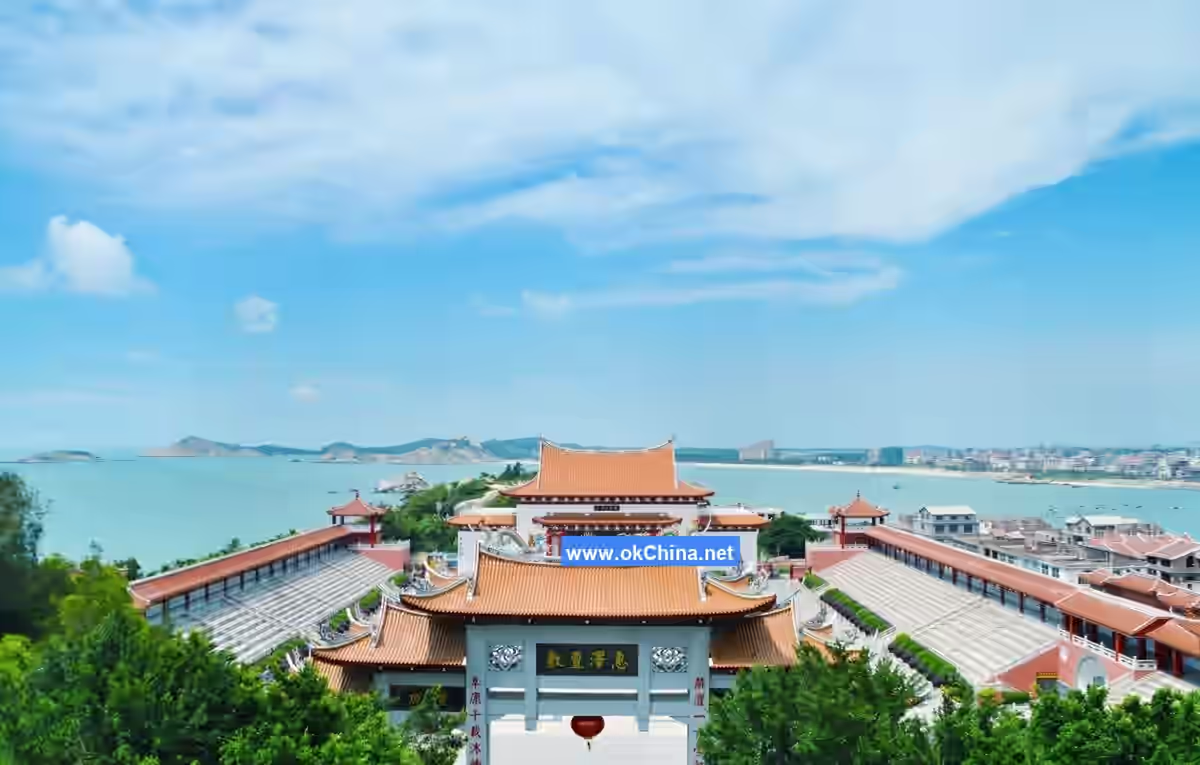
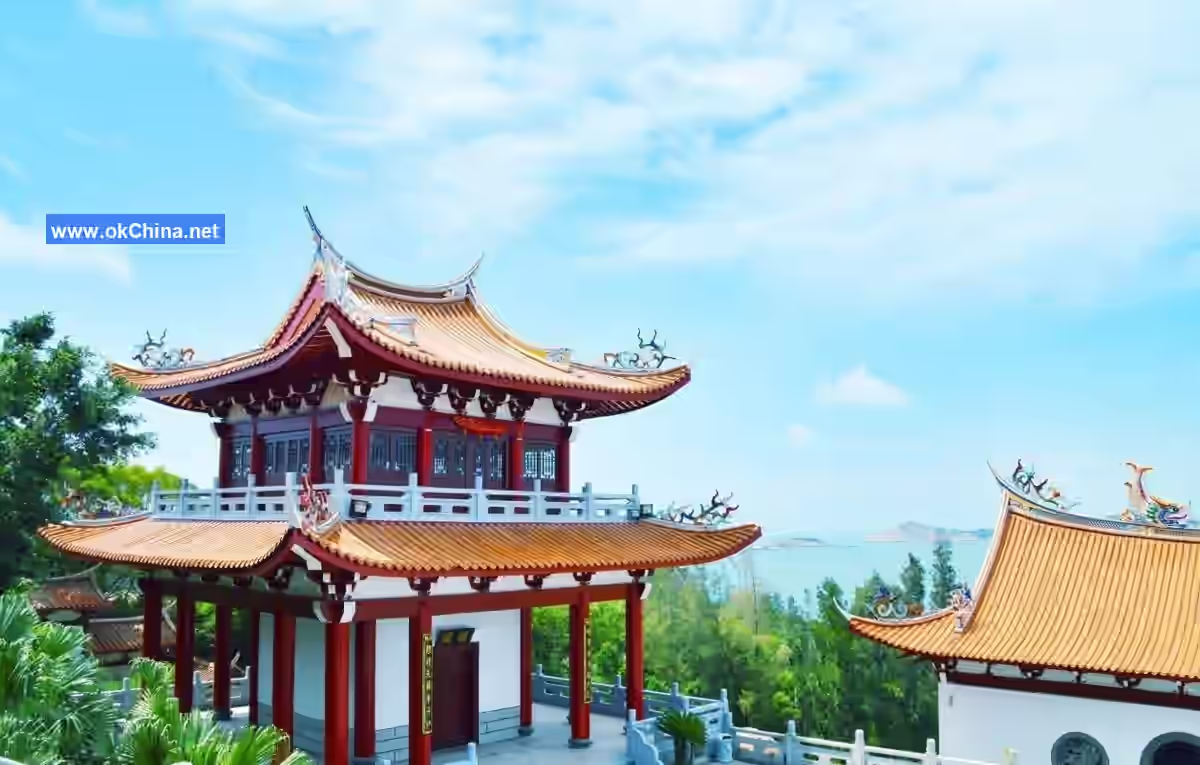
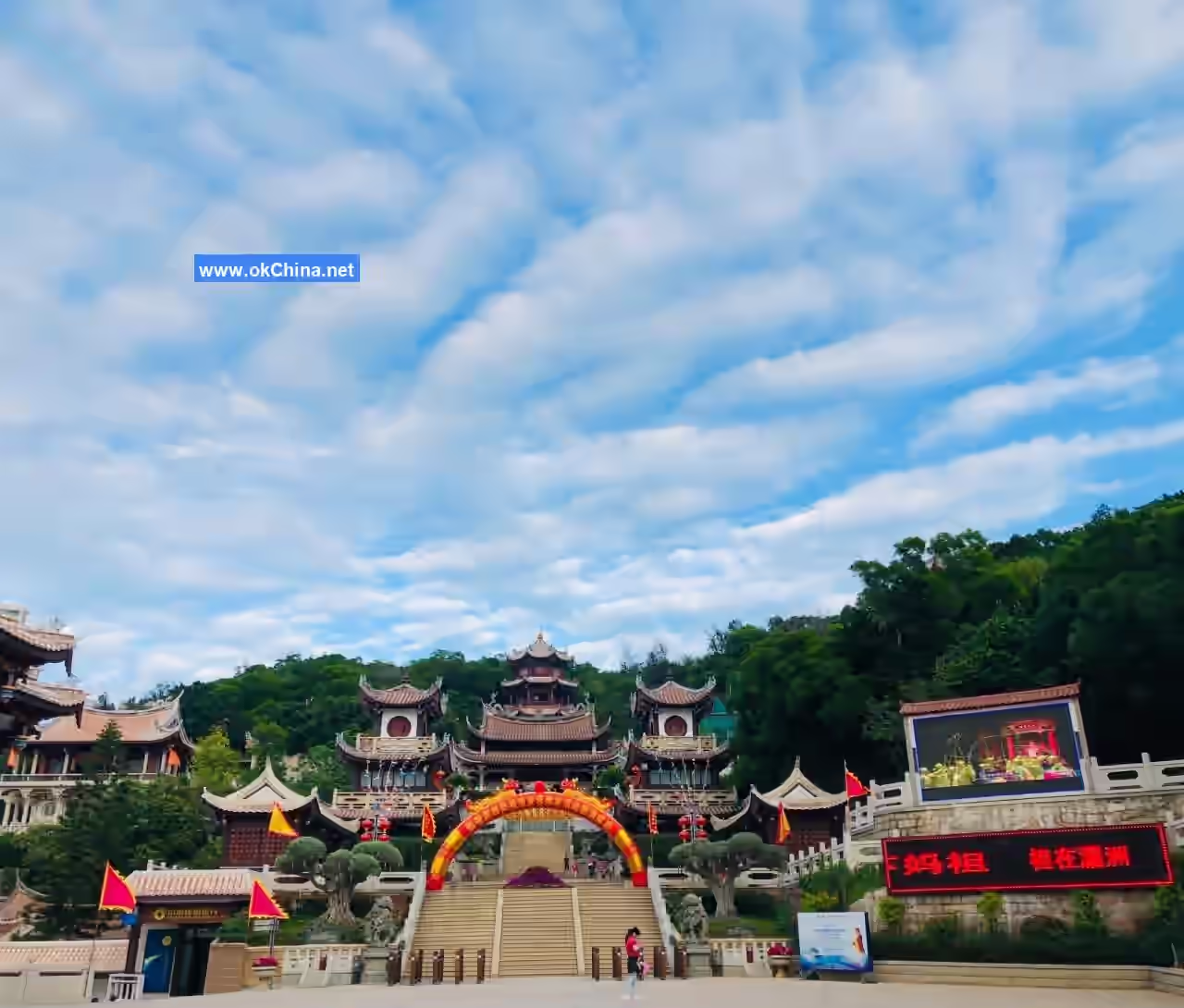
Planning for the new temple complex at the Meizhou Mazu Ancestral Temple began in 1996, and it was fully completed with a consecration ceremony held in 2002. The new complex is a five-courtyard architectural ensemble in Song Dynasty style, measuring 323 meters long and 99 meters wide, facing south. It includes the Lingci Hall, Tianhou Hall, Shunji Hall, Palace Gate, Grand Memorial Archway, Tianhou Square, Tianhou Opera Stage, and on both sides, the Mazu Culture Exhibition Hall, Prayer Hall, and Prayer Hotel, all arranged in sequence to form a magnificent and grand architectural complex that highlights Mazu culture.
The Meizhou Mazu Ancestral Temple comprises three major systems: the Mazu Temple (Western Axis), the New Temple Complex, and the Mazu Cultural Park. The Mazu Temple (Western Axis) has been restored to its historical appearance, preserving the traditional historical and cultural style, and primarily serves pilgrimage functions. Visitors can explore over 36 structures of varying sizes for pilgrimage or sightseeing, starting from the Grand Memorial Archway, passing through the Mountain Gate, Imperial Edict Gate, Bell and Drum Towers, proceeding to the Main Hall, entering the Bedchamber Hall, crossing the Chaotian Pavilion, entering the Shengxian Tower, and viewing the Buddha Hall and Guanyin Hall, among others. On ordinary days, Mazu devotees from around the world flock here to trace their roots, pay homage to their ancestors, burn incense, and worship, making it a remarkable cultural landscape. During the Mazu festivals on the 23rd day of the third lunar month and the 9th day of the ninth lunar month, the site is even more crowded with throngs of people, enveloped in incense smoke and the sound of firecrackers.
3.9 Mazu Cultural Park
The Mazu Cultural Park is the most concrete manifestation of Mazu culture, consisting of the Mazu Stele Forest, the Mazu Story Sculpture Group, and the Mazu Culture Exhibition Hall. The Mazu Stele Forest is located on the eastern hillside of the Mazu Cultural Park, covering 15 mu (approximately 1 hectare), nestled between the mountains and the sea. It integrates Mazu culture, calligraphy art, and garden design, making it a beautiful and outstanding site. The Stele Forest comprises four main parts: the Stele Tower, Stele Corridor, Stele Pavilion, and Stele Stones, with the Stele Stones being the core component. It includes one main stele and ninety-nine auxiliary steles. The steles vary in design, drawing on the strengths of stele forests from various regions, and are categorized into antique-style, natural-style, and creative-style. Renowned calligraphy artists from China and abroad, including Zhao Puchu, Lin Sanzhi, Liu Bingsen, and Qi Gong, have used different script styles to inscribe historically significant steles related to Mazu, as well as poems and lyrics composed by literati throughout the ages praising Mazu's great virtues and achievements. This allows visitors to understand the origins and development of Mazu culture.
3.10 National Marine Park
The Meizhou Island National Marine Park encompasses the Northeast Key Conservation Area (including the Chiyu Mountain and Xiaodingyu Island Ecological Special Reserve), the Northern Mazu Pilgrimage Area (including the three major scenic spots: Mazu Ancestral Temple, Meiyu Tide Sound, and Tianfei Hometown), the Central Beach Leisure Area (including the Lianchi'ao Beach Scenic Area and Beidai Beach Scenic Area), the Southern Golden Coast Leisure Resort Area (including Ewei Mountain Scenic Area and Jiubaolan Beach Scenic Area), the Baibo Bay Leisure Resort Area, the Northwest Eco-Tourism Transportation Area, reserved zones, and surrounding marine areas, with a total area of 6,911 hectares.
4. Cultural Resources
4.1 Naming
Meizhou Island is shaped like an eyebrow (蛾眉), hence the name Meizhou (湄洲). Among all the scenic areas, the Mazu Ancestral Temple is the core of the Meizhou Island Mazu Cultural Tourism Zone, giving the area its name.
4.2 Mazu Culture
Mazu culture, as an influential folk belief culture in China's southeastern coastal regions and even among global Chinese communities, traces its origins back to the Song Dynasty. Mazu, originally named Lin Mo, was born into a fishing family on Meizhou Island in Putian, Fujian. Legend has it that she was intelligent from a young age, proficient in medicine, and possessed the ability to predict weather changes. Lin Mo dedicated her life to rescuing fishermen and sailors in distress at sea, and her kindness and selfless dedication were widely celebrated locally. After her untimely death, local fishermen began to worship her at sea to commemorate her and seek her protection. Over time, Lin Mo was gradually deified as the guardian deity of the sea, revered as "Mazu," meaning "Mother Goddess."
The core of Mazu belief is praying for safety at sea, favorable weather, and bountiful fisheries. Mazu culture is not only a religious faith but also a symbol of maritime culture, reflecting the resilience and mutual aid spirit of the Chinese nation in the face of natural challenges. Mazu is typically depicted as a benevolent woman holding ritual instruments and standing on waves, symbolizing her role in safeguarding sailors at sea.
With the development of maritime trade and the spread of Chinese migration, Mazu belief gradually spread from Fujian to coastal regions such as Taiwan, Guangdong, and Zhejiang, and further extended to Chinese communities in Southeast Asia, Japan, South Korea, and around the world. In Taiwan, Mazu belief is particularly prevalent, with many Mazu temples built across the island, the most famous being the Dajia Zhenlan Temple in Taichung. Every year on Mazu's birthday, the 23rd day of the third lunar month, grand sacrificial activities known as "Mazu's Pilgrimage" or "Mazu's Procession" are held. Thousands of devotees follow the statue of Mazu in processions, praying for peace and good fortune.
Mazu culture holds significant importance not only in the realm of religious belief but also has profoundly influenced literature, art, architecture, and folklore. Many literary works, dramas, paintings, and sculptures feature Mazu as their theme, showcasing her legendary stories and noble spirit. The architectural style of Mazu temples is unique, blending the essence of traditional Chinese architecture and serving as important landmarks of local culture.
Furthermore, Mazu culture embodies the virtues of benevolence, courage, and dedication of the Chinese nation. The image of Mazu symbolizes the greatness and selflessness of maternal love. Her story inspires generations of Chinese people, whether at sea or on land, to uphold the spirit of mutual assistance, love, and courage in facing difficulties.
In summary, Mazu culture is an important component of China's maritime culture. It is not only a religious faith but also a cultural heritage and spiritual sustenance. Through sacrificial activities, literature, art, and architecture, Mazu belief passes down the traditional virtues and maritime spirit of the Chinese nation from generation to generation. It serves as a cultural bond connecting Chinese people at home and abroad and plays a significant cohesive role in global Chinese communities.
Located in Putian City, Meizhou Island is a sacred pilgrimage destination revered by Mazu devotees worldwide. It houses the Mazu Ancestral Temple and the golden statue of Mazu, worshipped by 300 million believers, and is the birthplace of Mazu culture. Pilgrims from all corners of the globe visit here every year, earning it the title "Eastern Mecca." During Mazu's birthday on the 23rd day of the third lunar month and her ascension day on the 9th day of the ninth lunar month, the pilgrimage tourism reaches unprecedented heights.
Originating from Meizhou Island in Putian, Mazu culture is a treasure of Chinese culture, a core carrier of Chinese maritime culture, and a bridge for global cultural exchange. Mazu culture embodies the spiritual pursuit of "cultivating virtue, performing good deeds, and showing great love." It highly aligns with the maritime outlook of jointly building a "sea of peace, cooperation, and harmony." Its spiritual core resonates with the concept of a "maritime community with a shared future," making it an important spiritual force for promoting the integration of maritime cultures, maintaining maritime peace, enhancing maritime well-being, and fostering maritime development.
4.3 Cultural Works
The ancient Puxian opera is hailed as a living fossil of Southern Drama from the Song and Yuan dynasties (960–1368 AD) and is one of the important genres of Chinese local opera. It has preserved and created a number of excellent plays renowned both in China and abroad, such as Reunion After, Chuncao Intrudes into the Hall, and Ode to the Autumn Wind.
Puxian folk music, including "Shiyin" (Ten Tones), "Bale" (Eight Music), "Daguchui" (Great Drum and Wind Ensemble), and "Lige" (Folk Songs), is considered a marvel of folk music and is deeply loved by the masses.
Comments
Post a Comment