Emperor Qinshihuang's Mausoleum Site Museum in Xi'an
1. Introduction
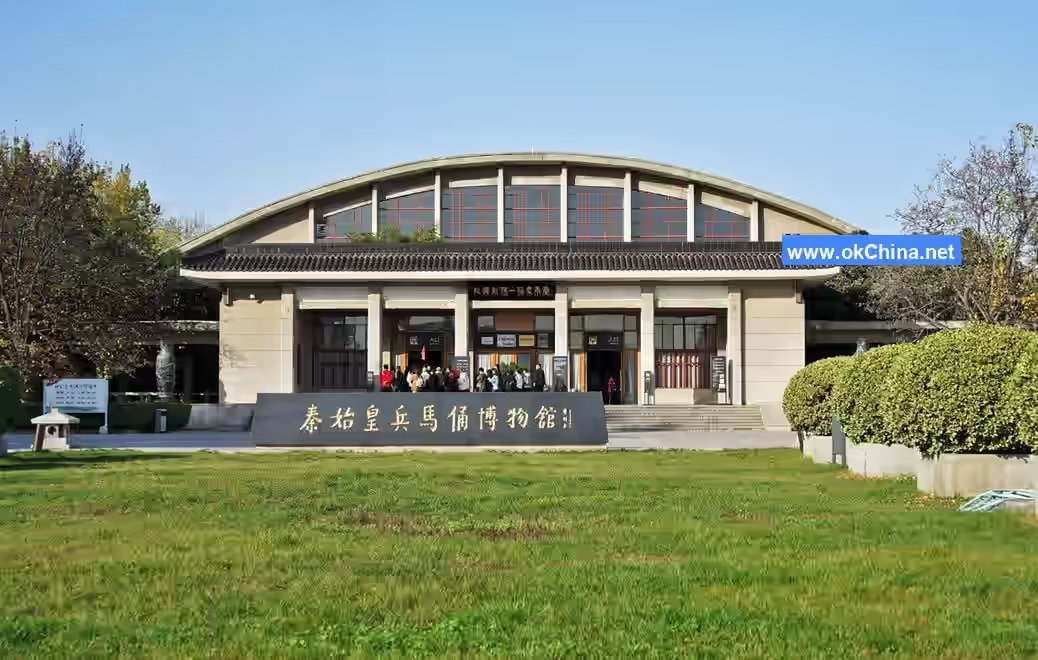
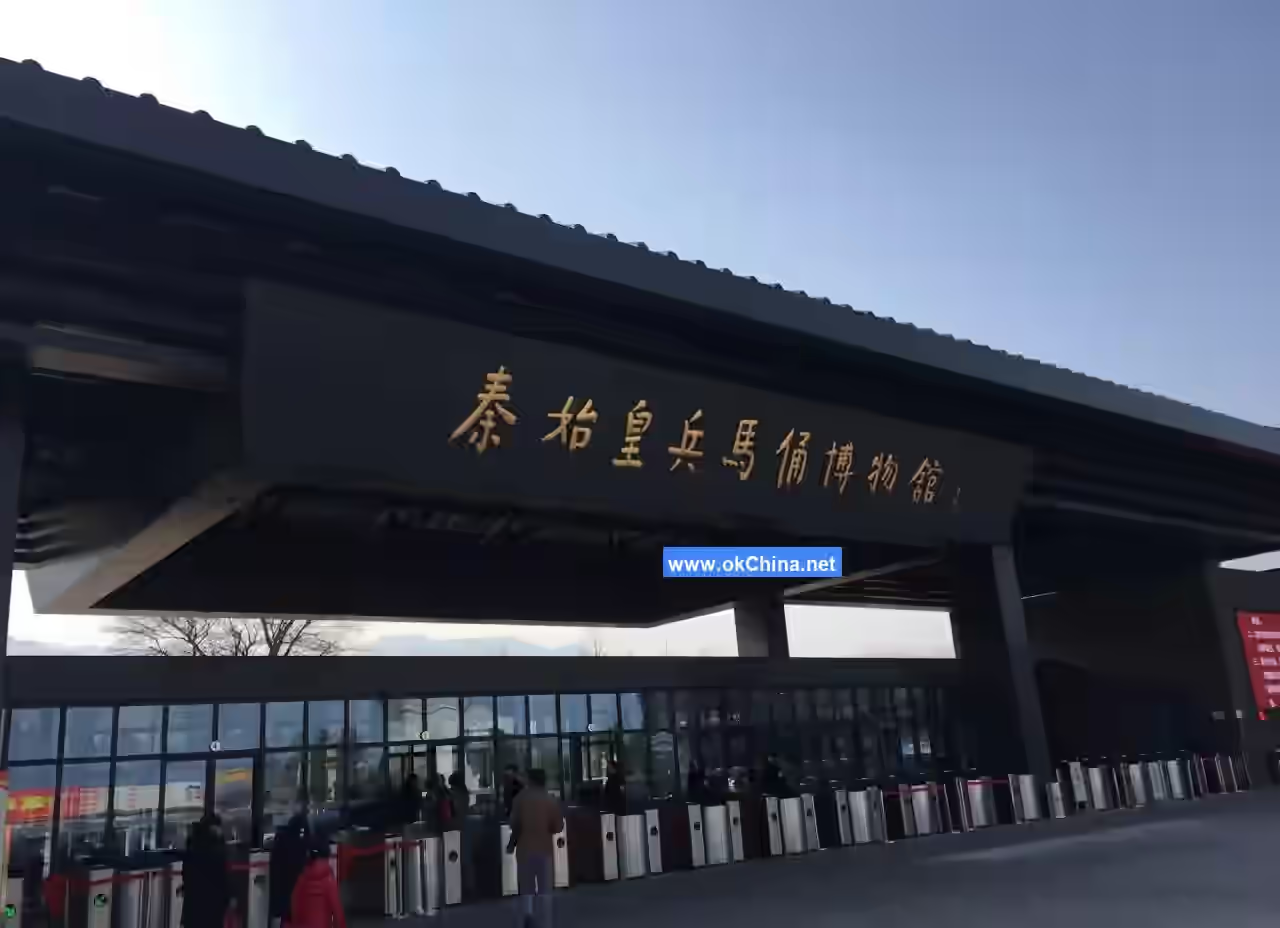
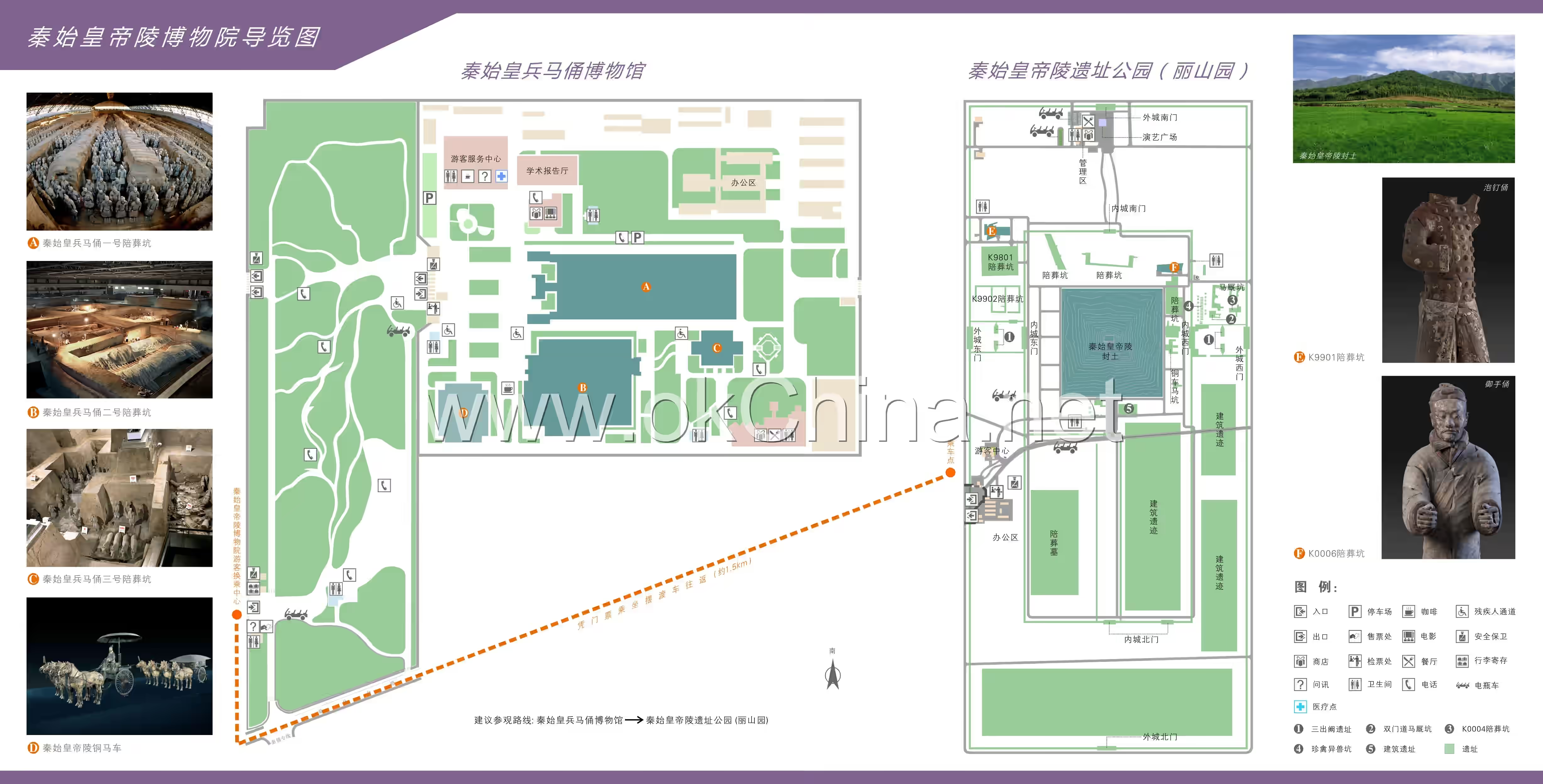
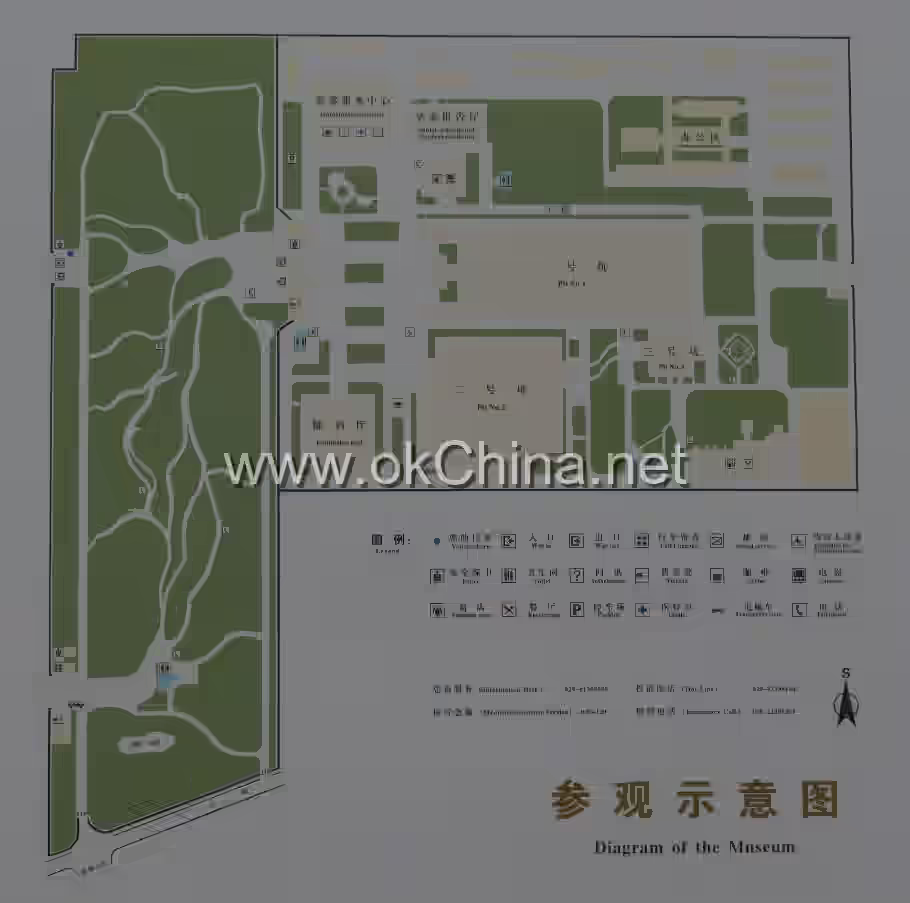
The Museum of the Terracotta Warriors and Horses of Qin Shihuang is located in Qinling Town, Lintong District, Xi'an City, Shaanxi Province. It was established in November 1975, originally as the Qin Shihuang Terracotta Warriors Preparatory Office. It officially opened to the public on October 1, 1979, built on the site of the Terracotta Army pits of Emperor Qinshihuang's Mausoleum at the northern foot of Mount Li, 7.5 kilometers east of the former Lintong County and 37.5 kilometers west of Xi'an. Together with the Lishan Garden, it forms the Emperor Qinshihuang's Mausoleum Site Museum. By January 2020, the Museum of the Terracotta Warriors and Horses had received over 80 million visitors from home and abroad. The underground terracotta army has received nearly 50 million visitors, including 187 visits by foreign heads of state and government leaders, 506 visits by vice presidents, vice premiers, and speakers of parliament, and 1,852 visits by ministerial-level guests.
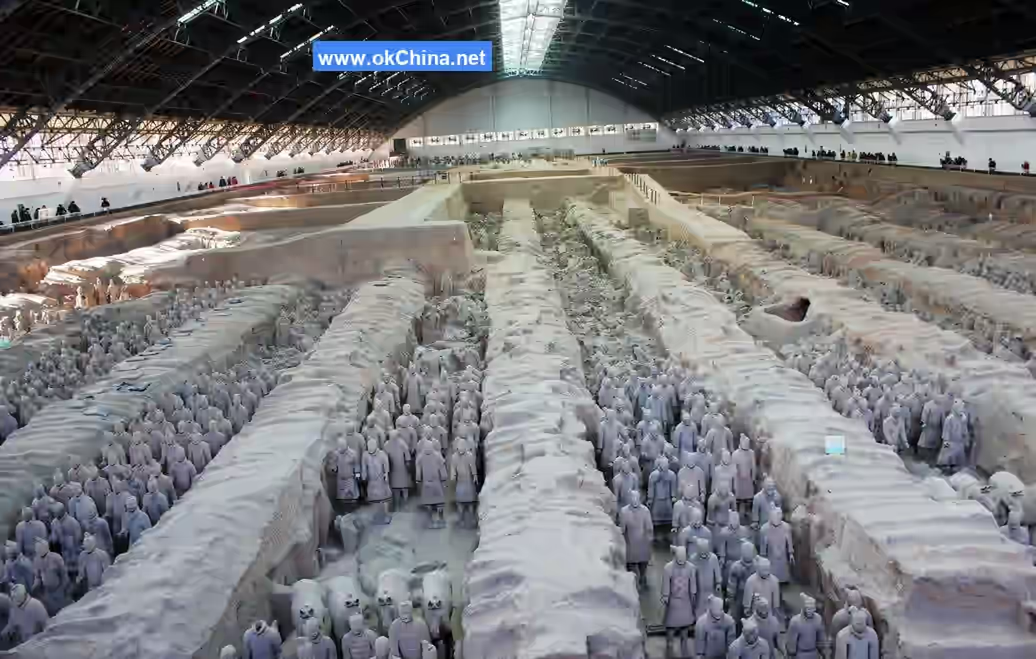
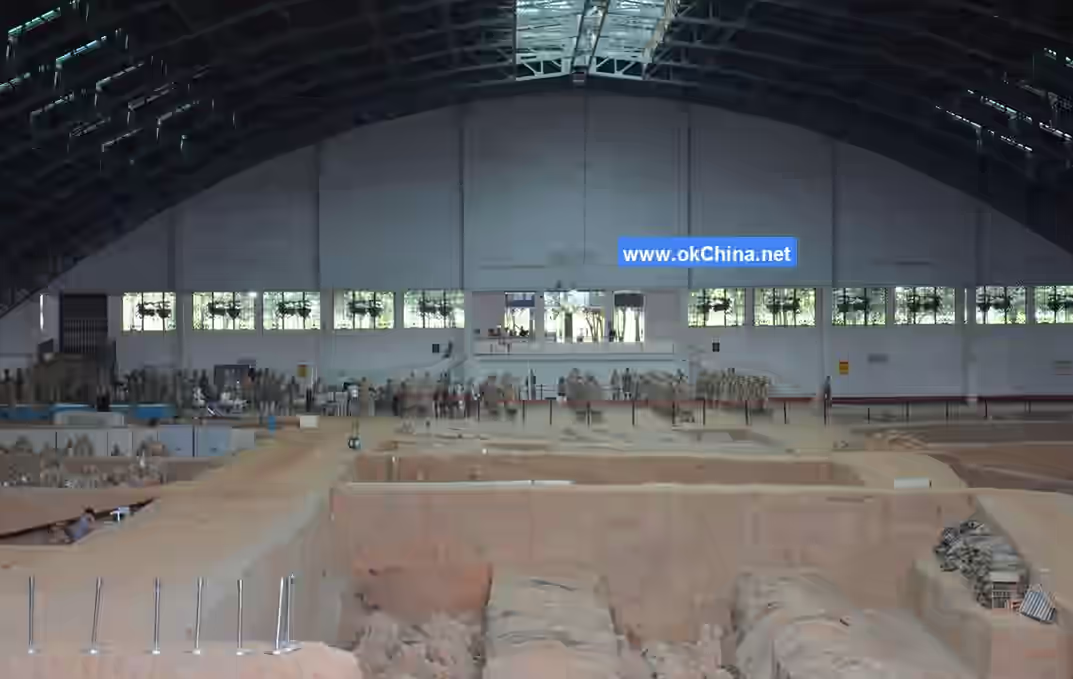
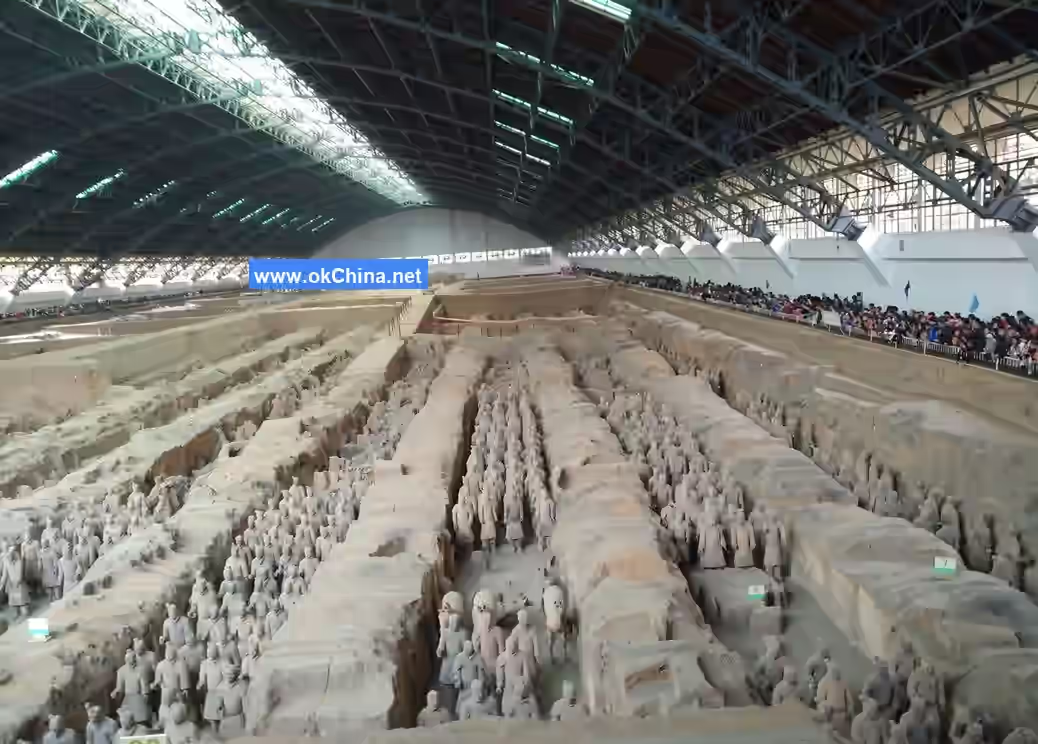
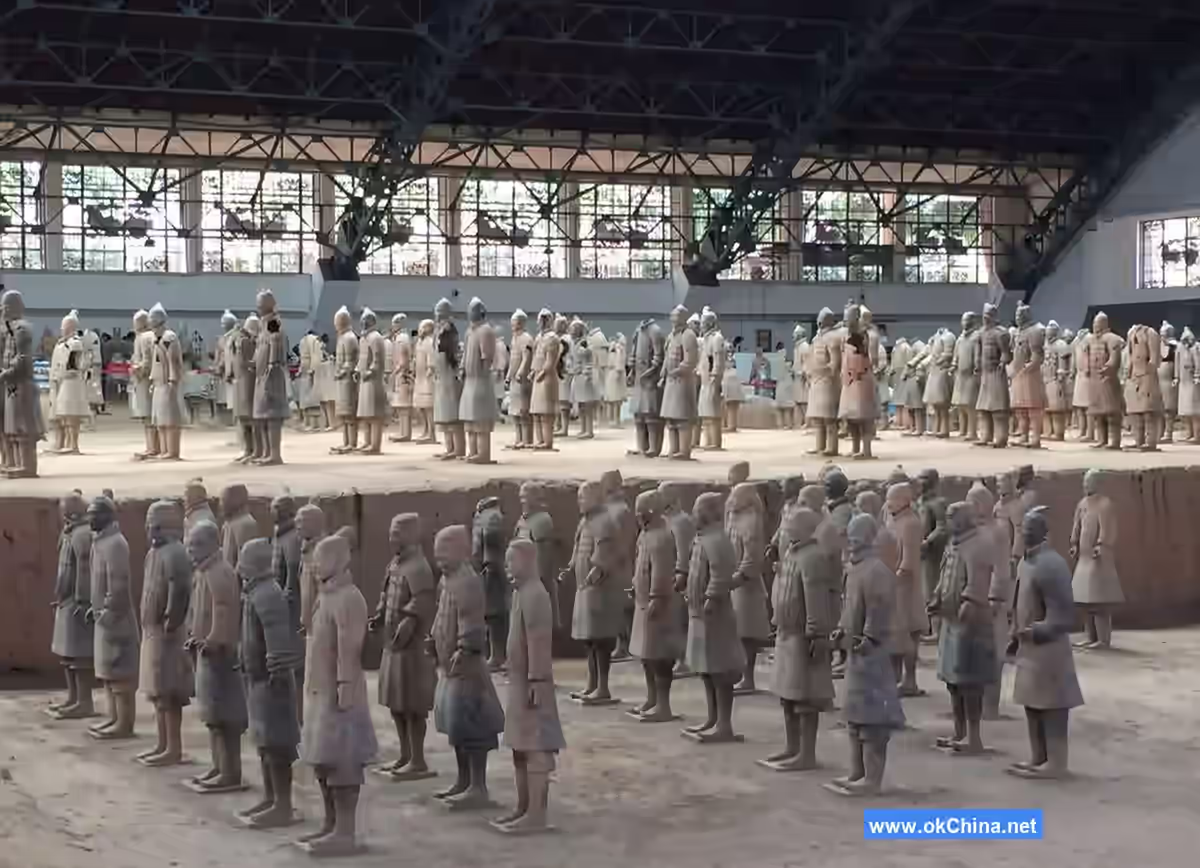
By January 2020, Pit 1, Pit 3, Pit 2, and the Cultural Relics Exhibition Hall had been successively completed and opened. Currently, the museum covers an area of 46.1 hectares and houses a collection of over 50,000 items (sets). Pit 1 contains approximately 6,000 terracotta figures and horses, along with a large number of bronze weapons. Pit 2 contains over 1,300 terracotta figures and horses, with richer content and a more complete array of military branches compared to Pit 1. Pit 3 is smaller in scale, containing 72 terracotta figures and horses. The Exhibition Hall houses the Bronze Chariots and Horses Nos. 1 and 2.
2. Historical Development
Historical records in Records of the Grand Historian state: The mausoleum of Emperor Qinshihuang was designed and planned by Chancellor Li Si according to convention, with General Zhang Han supervising its construction. The construction lasted 39 years. The Terracotta Army was produced and buried in the accompanying pits simultaneously with the construction of the mausoleum.
In the first year of Ziying of Qin (206 BC), Emperor Qinshihuang's Mausoleum suffered its first and greatest catastrophe. According to historical records such as Records of the Grand Historian: Annals of Gaozu, Book of Han: Volume 1, Annals of Emperor Gaozu Part 1, and Book of Han: Volume 36, Biographies of Chu Yuanwang and Others, after Xiang Yu invaded the Guanzhong region, he caused large-scale destruction to Emperor Qinshihuang's Mausoleum, severely damaging the above-ground structures. Archaeological excavations indicate the presence of black charcoal remains in Pit 1 and Pit 2, suggesting that the collapse of these pits was caused by fire.
3. Permanent Exhibitions
3.1 Terracotta Army Pit No. 1
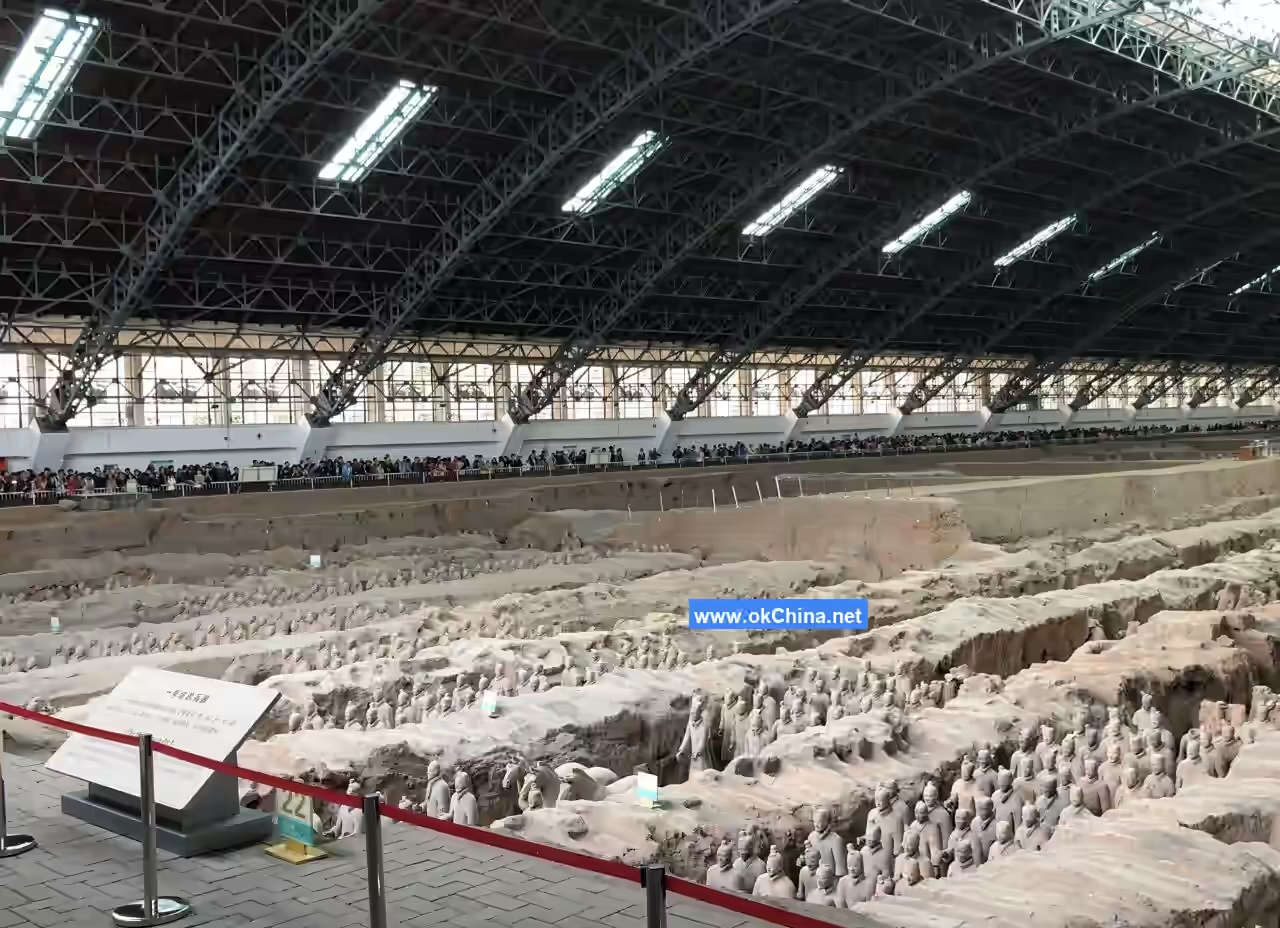
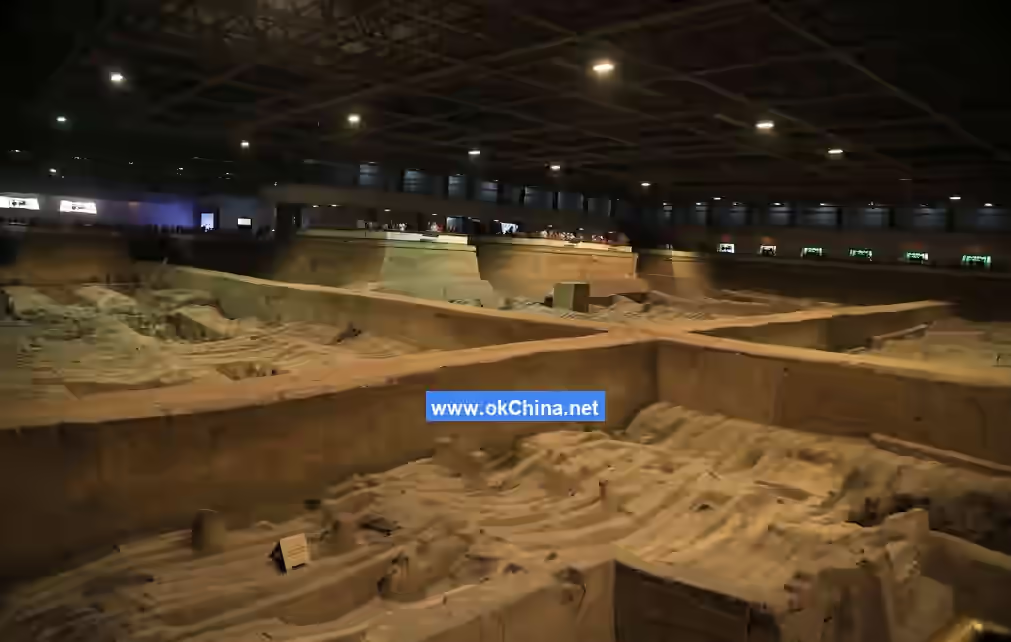
Pit 1 was discovered in March 1974 when the Terracotta Army came to light. Farmers from Xiyang Village were digging a well south of the village, and the well opening happened to be at the southeast corner of Pit 1. In mid-July 1974, an archaeological excavation team jointly formed by the Shaanxi Provincial Museum, the Cultural Relics Management Committee, and the Lintong County Cultural Center stationed at the Terracotta Army pit site. As the scope of work expanded, from 1976 to 1978, the team added personnel in archaeology, conservation, photography, and restoration. The excavation of Pit 1 was fully launched, with over ten restoration groups undertaking large-scale restoration of the terracotta figures and horses.
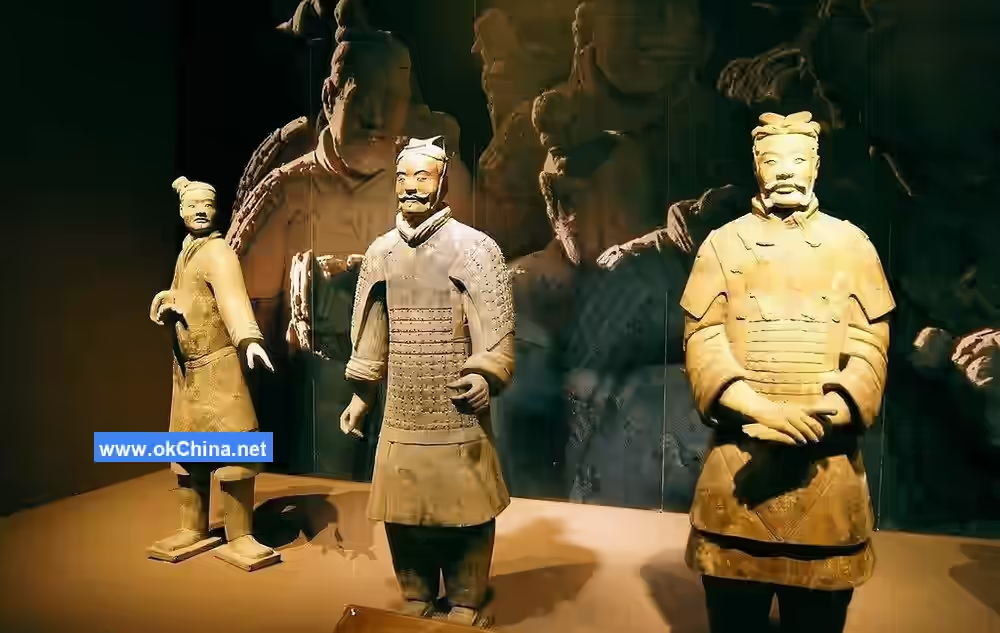
At the eastern end of Pit 1, 210 warrior figures wearing full-length battle robes are arranged in rows. The remaining rows each have 68 figures, forming a total of 204 figures arranged in orderly rows and columns, constituting the rearguard of the formation. In the middle of the pit, 38 columns of chariots and infantry are arranged, forming the main body of the army.
From 2009 to 2019, the Emperor Qinshihuang's Mausoleum Site Museum conducted the third official excavation of Pit 1, covering an area of 400 square meters. Over 220 terracotta figures, 12 terracotta horses, traces of 2 chariots, and a large number of weapons and architectural remains were unearthed.
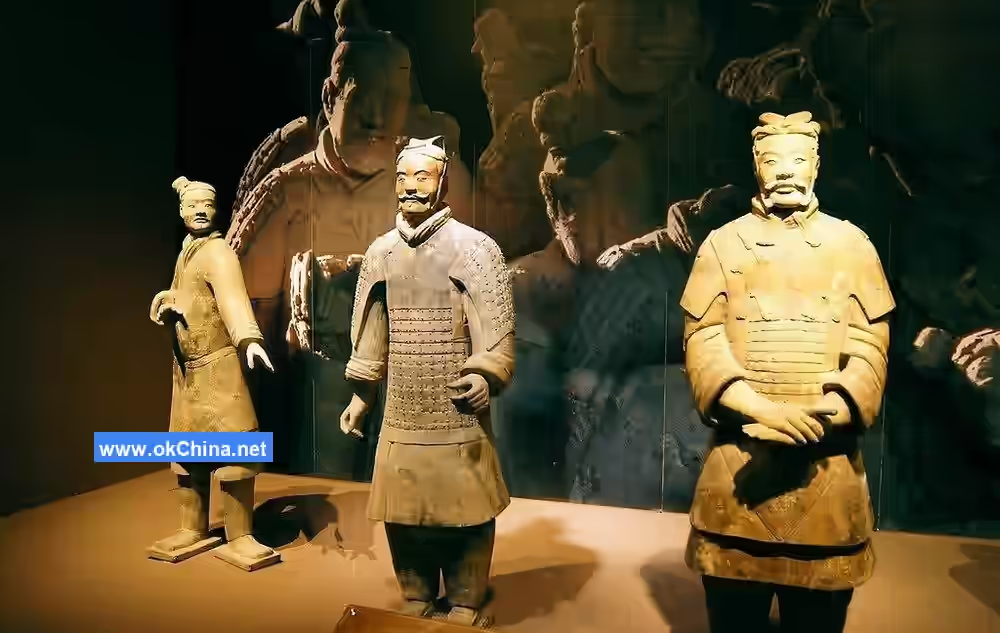
This excavation yielded over 220 terracotta figures. Based on differences in headgear, armor, and clothing, the figures can be categorized into high-ranking military officer figures, mid-ranking military officer figures, low-ranking military officer figures, and ordinary warrior figures. Preliminary analysis and research suggest that the original category of low-ranking military officer figures can be further subdivided into two types, providing new basis and methods for understanding the arrangement of the military formation in the pit.
Archaeologists also discovered remains of a Qin shield. This shield is identical in shape to the one found on the Bronze Chariot No. 1 but twice its size. This is the first discovery of Qin shield remains in the archaeology of the Qin Mausoleum. Additionally, bronze long swords and crossbows were unearthed, allowing for the first definitive identification of the qingmu (a crossbow component) and clarifying the preservation methods for crossbows.
3.2 Terracotta Army Pit No. 2
While Pit 1 was discovered accidentally by farmers digging a well, Pit 2 was discovered scientifically through drilling by archaeologists. Between April and May 1976, during targeted drilling work north of the eastern end of Pit 1, the archaeological team discovered another pit containing terracotta figures and horses on April 23.
On March 1, 1994, after the completion of the protective hall for Pit 2, a grand commencement ceremony was held. Zhang Deqin, then Director of the State Administration of Cultural Heritage, attended the ceremony and announced the official start of the excavation of Pit 2. To ensure the scientific and standardized nature of this key archaeological project, the State Administration of Cultural Heritage established a special expert group for Pit 2 to guide the archaeological excavation work.
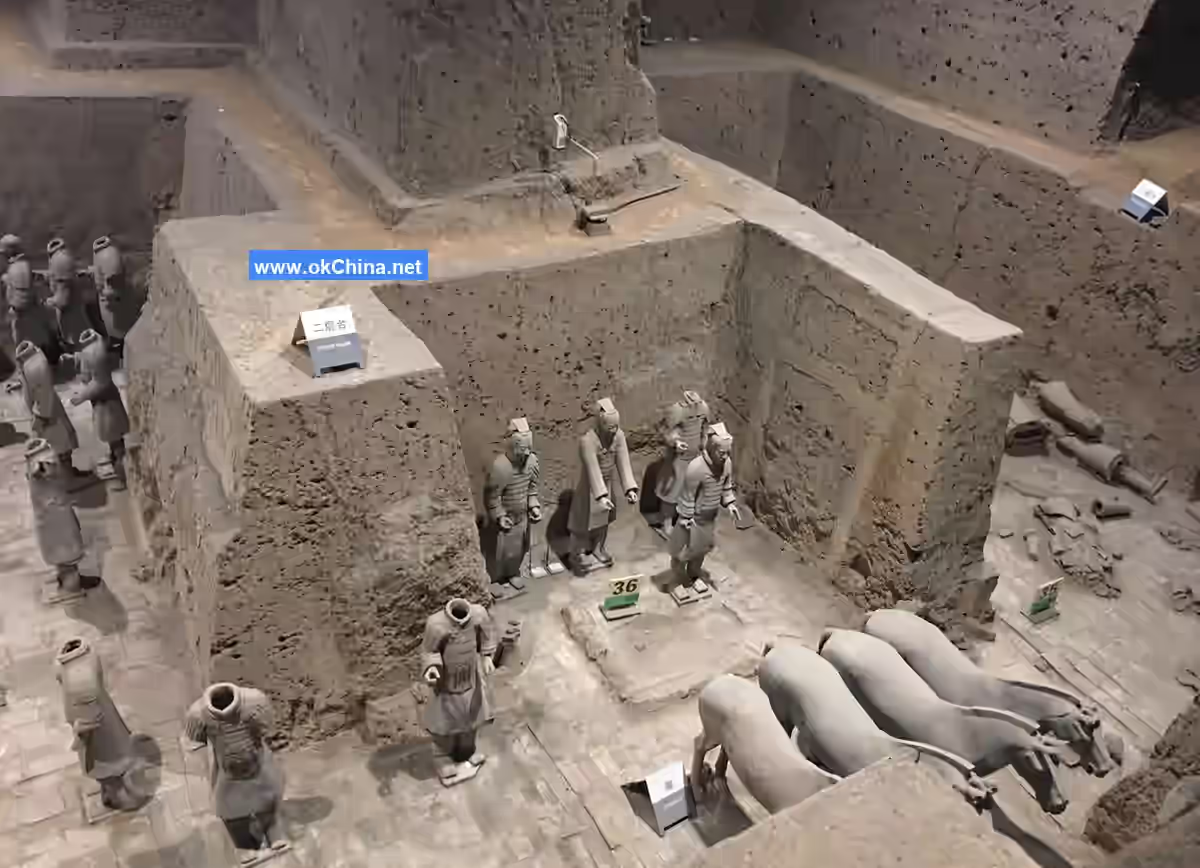
Pit No. 2 of the Terracotta Army is L-shaped, located northeast of Pit 1 and east of Pit 3. It measures 96 meters east-west and 84 meters north-south, with a total area of approximately 6,000 square meters. The structure inside the pit is similar to Pit 1, but the formation is more complex and the array of military branches is more complete, making it the most spectacular military formation among the three pits. It is a special multi-branch force composed of cavalry, chariots, and infantry (including crossbowmen). Pit 2 contains over 1,300 terracotta figures and horses, more than 80 chariots, and tens of thousands of bronze weapons. Among these, general figures, saddled horse figures, and kneeling archer figures were discovered for the first time. Pit 2 has four sloping entrances at its eastern and western ends, and two sloping entrances on the northern side. The pit faces east, with its main entrance on the eastern side.
The layout inside the pit is divided into four units. The first unit, located at the eastern end of the pit, features 60 standing crossbowman figures along the surrounding corridors, with the core of the formation consisting of 160 kneeling crossbowman figures facing east in eight rows. The crossbowmen are arranged in a formation within a formation, with standing and kneeling figures taking turns shooting to compensate for the slow reloading of crossbows.
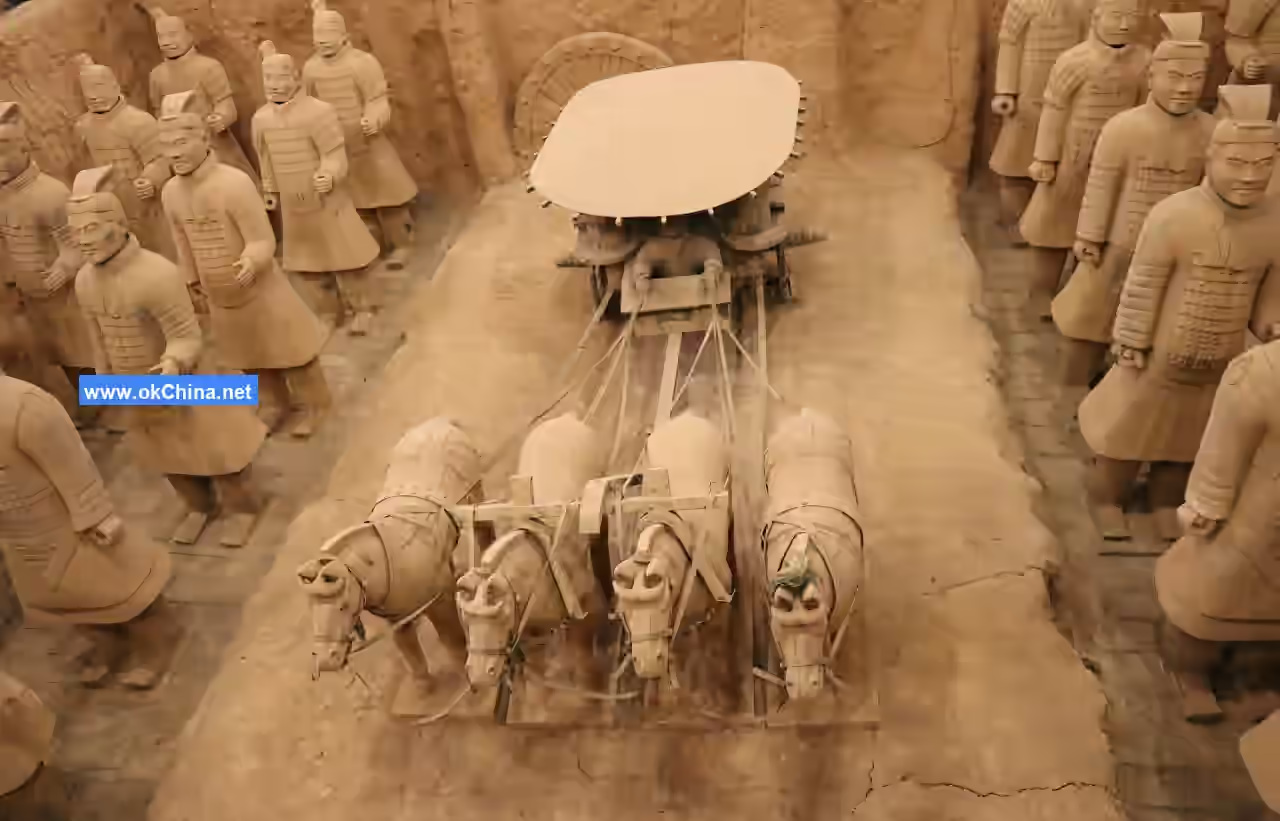
The second unit, located on the right side of the pit, consists of a square formation of 64 chariots (the chariots were wooden, leaving only traces). Each row has 8 chariots, totaling 8 rows. Each chariot is drawn by four terracotta horses the size of real horses. Behind each chariot, three soldier figures are arranged in a line: the middle one is the charioteer holding the reins, and the other two stand on the left and right of the chariot, holding long-handled weapons.
The third unit, located in the center, consists of a rectangular formation of 19 chariots, 264 infantry figures, and 8 cavalry figures, divided into three columns. In front of each horse stands a cavalry figure, one hand holding the horse's reins and the other in a drawing-bow posture. Behind each chariot, besides the three chariot warriors, there are also 8 to 36 infantry figures.
The fourth unit, located on the left side of the military formation, consists of 108 cavalry figures and 180 saddled terracotta horse figures arranged in 11 horizontal rows, forming a rectangular cavalry formation. The first and third rows each contain 6 chariots. In front of each horse stands a cavalry figure in Hu-style clothing, holding the horse with the right hand and drawing a bow with the left. The 108 cavalry figures in the pit are the first large-scale discovery of ancient cavalry imagery in Chinese archaeological history, and their special attire is closely related to the tactical characteristics of cavalry. The archer, light charioteer, and cavalry figures unearthed from Pit 2 of the Terracotta Army provide the first visual materials of ancient cavalry, light charioteers, and archers from 2,200 years ago, holding extremely significant importance for the study of ancient military history.
3.4 Bronze Chariots and Horses Museum
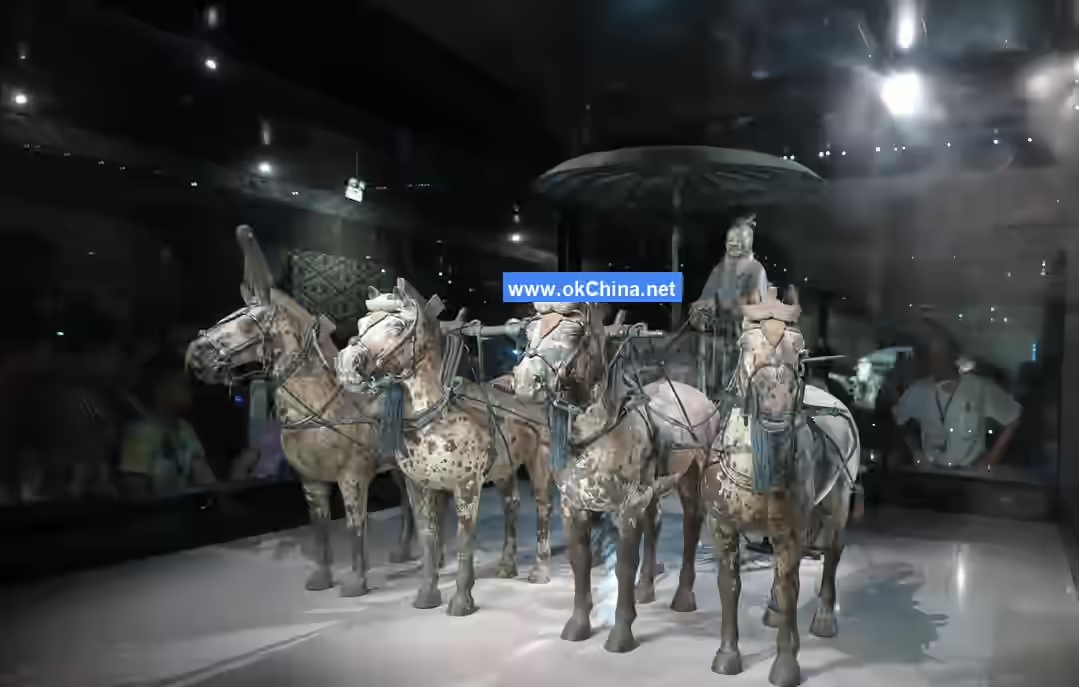
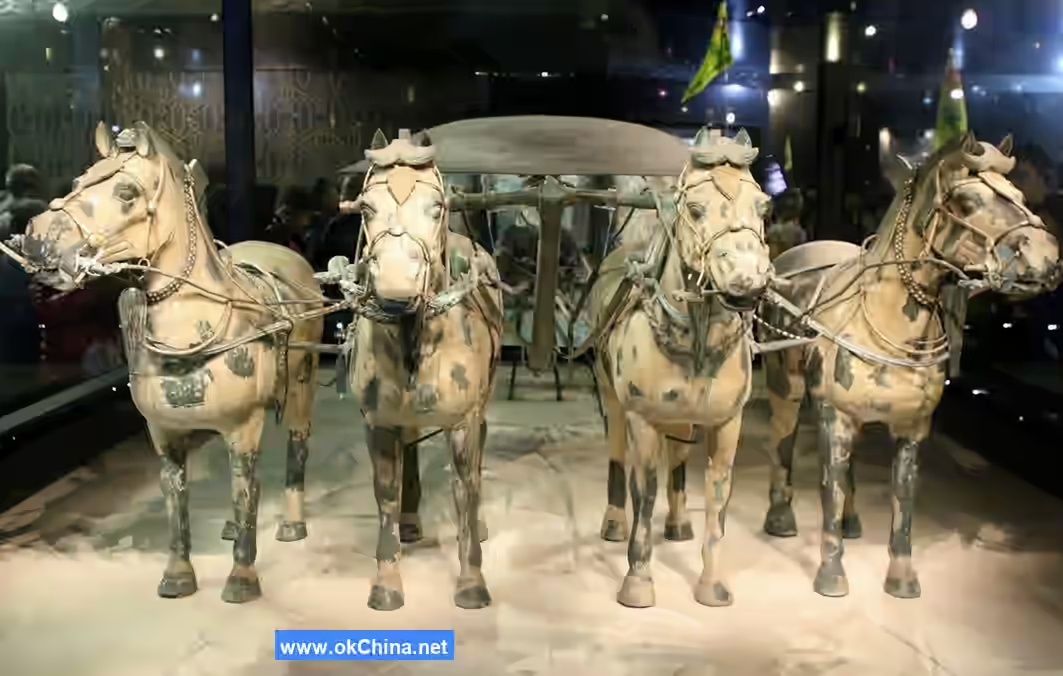
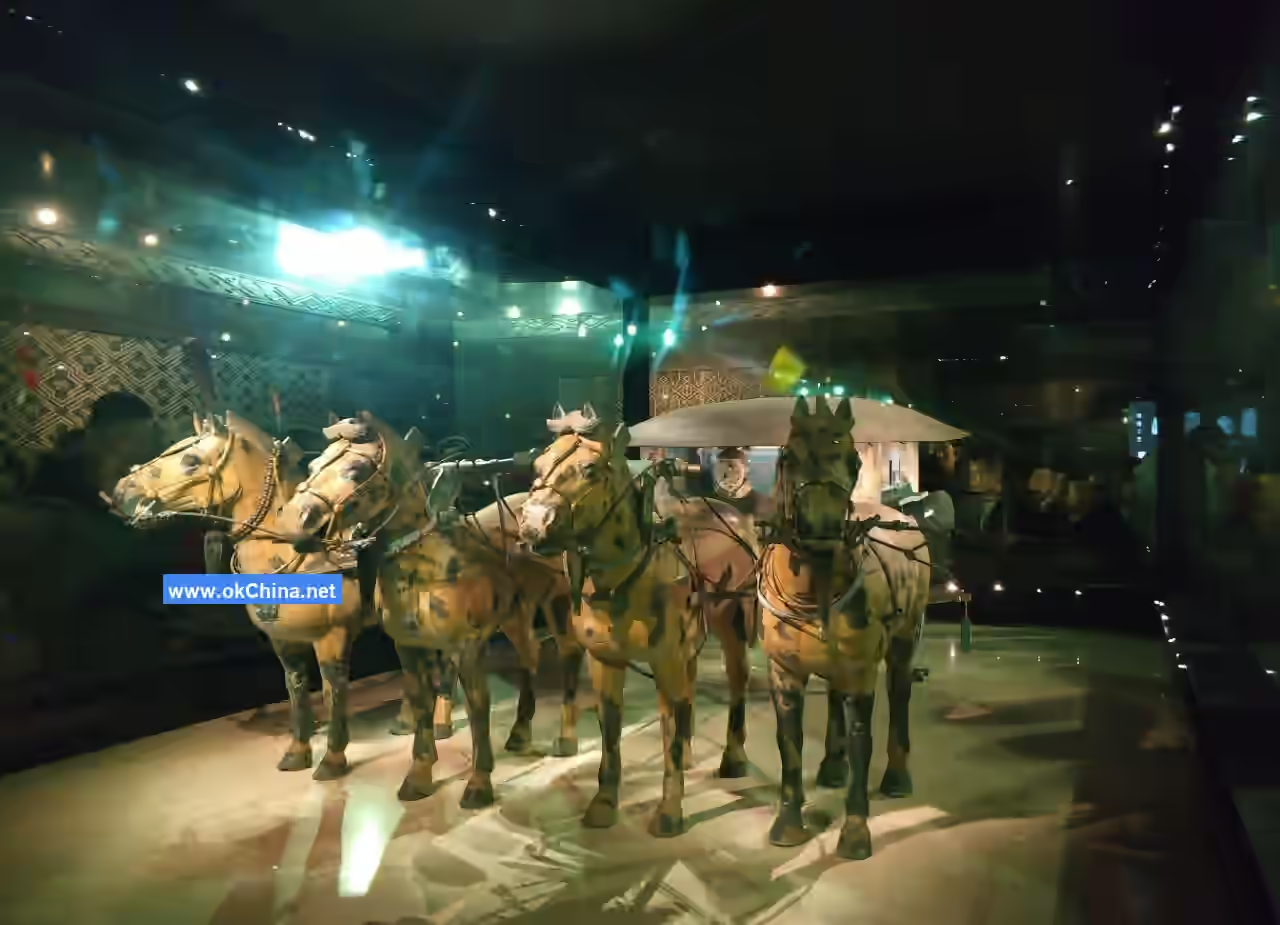
The newly built Bronze Chariots and Horses Museum of the Emperor Qinshihuang's Mausoleum Site Museum has an exhibition area of approximately 8,000 square meters. It aims to fully showcase the historical, scientific, artistic, and social value of the bronze chariots and horses, comprehensively interpreting the chariot and horse culture of the Qin Dynasty. The new museum provides in-depth interpretation of Qin Dynasty chariot and horse culture, ritual culture, technological level, and their immense contributions to modern research, enhancing the depth and breadth of the exhibition to allow people to understand more profoundly the true value and extraordinary significance of the bronze chariots and horses. Since their excavation in 1980 on the western side of Emperor Qinshihuang's Mausoleum, the Qin Mausoleum bronze chariots and horses have attracted worldwide attention. Each chariot is drawn by four horses, with a charioteer figure on board. The bronze chariots and horses are realistically shaped, exquisitely decorated, making extensive use of gold and silver for ornaments and components, and are crafted with great skill. Hailed as the "Crown of Bronze," the Qin Mausoleum bronze chariots and horses, with their massive bronze forms, created a miracle in the history of ancient metallurgy and casting. They not only recreate the grandeur of Emperor Qinshihuang's imperial carriage but also demonstrate the harnessing system of ancient chariots and horses and the superb craftsmanship of ancient artisans. They represent a concentrated manifestation of the advancement of science and technology after Emperor Qinshihuang unified China.
On April 18, 2024, after three years of work, the Emperor Qinshihuang's Mausoleum Site Museum relocated the Qin Mausoleum Bronze Chariot and Horse No. 1 to the Bronze Chariots and Horses Museum and placed it in an exhibition case.
3.5 Civil Official Figures Pit
The Civil Official Figures Pit, also known as Accompanying Pit K0006, is an accompanying pit discovered during the survey of the Emperor Qinshihuang's Mausoleum Park in 2000. The pit is located within the inner city of the mausoleum park, at the southwestern corner of the tomb mound. It is an east-west oriented, slightly "中"-shaped underground tunnel-style structure built entirely of wood, with a total area of about 410 square meters. It consists of three parts: a sloping entrance passage, a front chamber, and a rear chamber. The front and rear chambers are offset east-west, forming two relatively independent units containing different burial objects. The front chamber mainly contains terracotta figures, while the rear chamber contains horse bones. This pit is one of the rare accompanying pits in the Emperor Qinshihuang's Mausoleum Park that was not burned, so the wooden structural remains are relatively complete. Excavation revealed remains such as roof beams, partition boards, floor planks, and sealing planks.The front chamber of Burial Pit K0006 measures 10.6 meters in length and 4.05 meters in width. On the southern wall, there is a side room measuring 3.8 meters in length and 2.9 meters in width. Twelve pottery figurines were unearthed from the front chamber, which can be categorized into two types: figurines with folded sleeves (8 pieces) and charioteer figurines (4 pieces). At the time of excavation, the pottery figurines were already broken into fragments. Compared to the warrior figurines unearthed from Pit No. 1 of the Terracotta Army, these appear more refined and scholarly. They wear single or double-layered knee-length robes with crossed collars and right lapels, tied at the waist with leather belts, long trousers, and square-toed shallow shoes. The pottery figurines originally featured painted colors such as red, green, black, pink, and white. However, due to groundwater erosion and the collapse of the pit, only traces of color remained on their faces at the time of excavation. These twelve pottery figurines wear long crowns, indicating they held certain noble ranks.
Judging from the degree of fragmentation and the manner in which some figurines were broken, signs of deliberate damage are evident. The destruction likely occurred shortly after the pit was constructed, before the wooden roof beams had collapsed. Additionally, artifacts such as pottery jars and bronze battle-axes were unearthed from the front chamber. In the western part of the front chamber, at the entrance of the sloping passageway, remnants of a wooden chariot were discovered. The chariot was a single-shaft, double-wheeled wooden vehicle.
The rear chamber of Burial Pit K0006 measures 20.2 meters in length and 3.9 meters in width, where horse skeletons and other artifacts were unearthed. Based on the density of the horse bone arrangement, it is estimated that the rear chamber originally contained over 20 horses, all arranged with their heads facing north and tails facing south.
3.6 Acrobat Figurine Pit
The Acrobat Figurine Pit, also known as Burial Pit K9901, is located between the inner and outer city walls southeast of the burial mound of the First Emperor of Qin. It covers a total area of approximately 700 square meters. Trial excavations unearthed one bronze ding and 11 pottery figurines. These figurines, life-sized and in various poses, have exposed upper bodies and wear colored short skirts, representing a new type of pottery figurine discovered at the Qin Mausoleum. Based on the poses of these figurines, the pit has been tentatively named the "Acrobat Figurine Pit."
In March 1999, a burial pit was discovered between the inner and outer city walls southeast of the burial mound of the First Emperor of Qin. The pit has a "凸"-shaped layout, with a sloping entrance passage at both the eastern and western ends. It measures 40 meters in length from east to west, with the western end 16 meters wide and the eastern end 12.3 meters wide. Inside, there are two east-west rammed earth partitions and three east-west tunnels. The entrance passages at both ends are 20.8 meters long and 7.6 to 11.4 meters wide. The pit is about 5 meters below the current ground surface, covering an area of approximately 700 square meters. It is an underground tunnel-style wooden structure that collapsed after being burned.
During trial excavations in the pit, one bronze ding and 11 pottery figurines were unearthed. The 11 pottery figurines discovered in the pit have exposed upper bodies and wear colored short skirts. They are life-sized and in various poses, representing a type of figurine never before seen in archaeological discoveries at the Qin Mausoleum.
Based on descriptions of various "acrobatic performances" in historical texts such as Guoyu: Jinyu Si, Hanshu: Guangchuan Huiwang Zhuan, Huainanzi: Xiuwu Xun, Xijing Fu, and Baopuzi: Bianwen Pian, as well as the poses of these pottery figurines, it is speculated that these figurines may represent acrobats who performed for the imperial court. Therefore, the burial pit has been tentatively named the "Acrobat Figurine Pit."
"Acrobatic performances" refer to a general term for ancient miscellaneous music and acrobatics, encompassing a rich variety of acts such as weightlifting, pole climbing, wrestling, and comic performances. Judging from the poses of the figurines unearthed during trial excavations, these figurines depict skills such as weightlifting, pole climbing, and plate spinning.
3.7 True Colors of the Terracotta Army Exhibition
After decades of archaeological excavation and conservation, the little-known polychromy of the Terracotta Army has been restored, and its mysterious and diverse colors continue to inspire endless contemplation. "True Colors of the Terracotta Army" showcases 40 years of research on the polychromy of the Terracotta Army, presenting to the public the splendid and magical use of pigments in the Qin Dynasty, the ingenious decorative techniques, and revealing the rich cultural connotations of Qin culture and the aesthetic preferences of the Qin people for color.
4. Collection of Cultural Relics
As of January 2020, the area of the Emperor Qinshihuang's Mausoleum Site Museum has expanded to 46.1 hectares, with a collection of over 50,000 items (sets). The main attractions of the museum include the exhibition halls of Pits No. 1, 2, and 3 of the Terracotta Army, the circular-screen cinema, and the Exhibition Hall of Cultural Relics from the Mausoleum of the First Qin Emperor, with a total exhibition area of approximately 30,000 square meters. Among these, Pit No. 2 is considered the finest of the Terracotta Army pits.
4.1 Qin Bronze Ding
This exhibit is a bronze vessel from the Qin Dynasty, with a total height of 61.00 cm, a rim diameter of 65.50–71.00 cm, a belly depth of 34.00 cm, and a weight of 212 kg. It was unearthed from Burial Pit K9901 of the First Emperor of Qin. As a large bronze ding discovered in the Acrobat Figurine Pit, it is referred to as the "Great Ding of the Qin Mausoleum." The ding has a stable shape and is adorned with intricate and exquisite patterns. Since it was unearthed from the same pit as the acrobat figurines, some scholars believe it may have been a prop used in weightlifting performances, while others suggest it was a ritual vessel buried due to the turmoil at the end of the Qin Dynasty.
4.2 Qin Acrobat Figurines
This set of exhibits consists of pottery from the Qin Dynasty, unearthed from Burial Pit K9901 of the First Emperor of Qin. Acrobat Figurine No. 1 has a remaining height of 152.00 cm, with carved characters "咸阳亲" on the right arm. Acrobat Figurine No. 3 has a remaining height of 172.00 cm. Acrobat Figurine No. 4 has a remaining height of 152.00 cm. Acrobat Figurine No. 19 has a remaining height of 181.00 cm. In 1999, archaeologists unearthed 11 pottery figurines during trial excavations in a burial pit between the inner and outer city walls southeast of the Qin Mausoleum. These figurines have exposed upper bodies and wear skirts below the waist. Their poses include standing upright, rolling up sleeves with both hands, one hand on the hip and the other raised high, a bow-and-arrow step stance, and half-kneeling.
4.3 Qin Stone Helmet
This exhibit is a stone artifact from the Qin Dynasty, consisting of 74 helmet pieces. The material of the stone helmet is bluish-gray karstic limestone, with a fine texture and uniform color. The pieces were polished, drilled, and strung together with bronze wires. Compared to the armor depicted on the Terracotta Army figurines, this stone helmet demonstrates more refined craftsmanship, reflecting the highly developed handicraft industry of the Qin Dynasty and the complexity and difficulty of constructing the Qin Mausoleum.
4.4 Qin Stone Armor Without Shoulder Guards
This exhibit is a stone artifact from the Qin Dynasty, with a total length of 64.00 cm. It was unearthed from Burial Pit K9801 of the First Emperor of Qin. The armor consists of a front and back body armor and a pair of shoulder guards, comprising a total of 380 armor pieces. The opening of the armor is located at the junction of the right shoulder and chest.
4.5 Qin Stone Armor With Shoulder Guards
This exhibit is a stone artifact from the Qin Dynasty, with a total length of 75.00 cm and shoulder guards measuring 20.00 cm in length. It was unearthed from Burial Pit K9801 of the First Emperor of Qin. The armor consists of a front and back body armor and a pair of shoulder guards, comprising a total of 612 armor pieces.
4.6 Qin Gold Forehead Ornament
This exhibit is a gold artifact from the Qin Dynasty. The gold forehead ornament was a decorative piece for the heads of horses in the bronze chariots of the First Emperor of Qin's Mausoleum. The front side features finely drawn cloud patterns, with a cicada-like motif in the center composed of two intertwined serpent patterns, raised in low relief. The back of the ornament is inscribed with "十二," and the knob bears the character "上."
4.7 Qin Seated Charioteer Figurine
This exhibit is a pottery artifact from the Qin Dynasty, with a total height of 51.00 cm and a weight of 51.92 kg. It was unearthed from the bronze chariot and horse burial pit west of the First Emperor of Qin's Mausoleum and served as the charioteer for the No. 2 bronze chariot of the Qin Mausoleum. The charioteer is fully painted, wearing a pheasant-feather crown, a long robe tied at the waist with a leather belt, and long trousers. Similar to the high-ranking military officer figurines unearthed from the Terracotta Army pits, this charioteer also held a certain noble rank.
Comments
Post a Comment