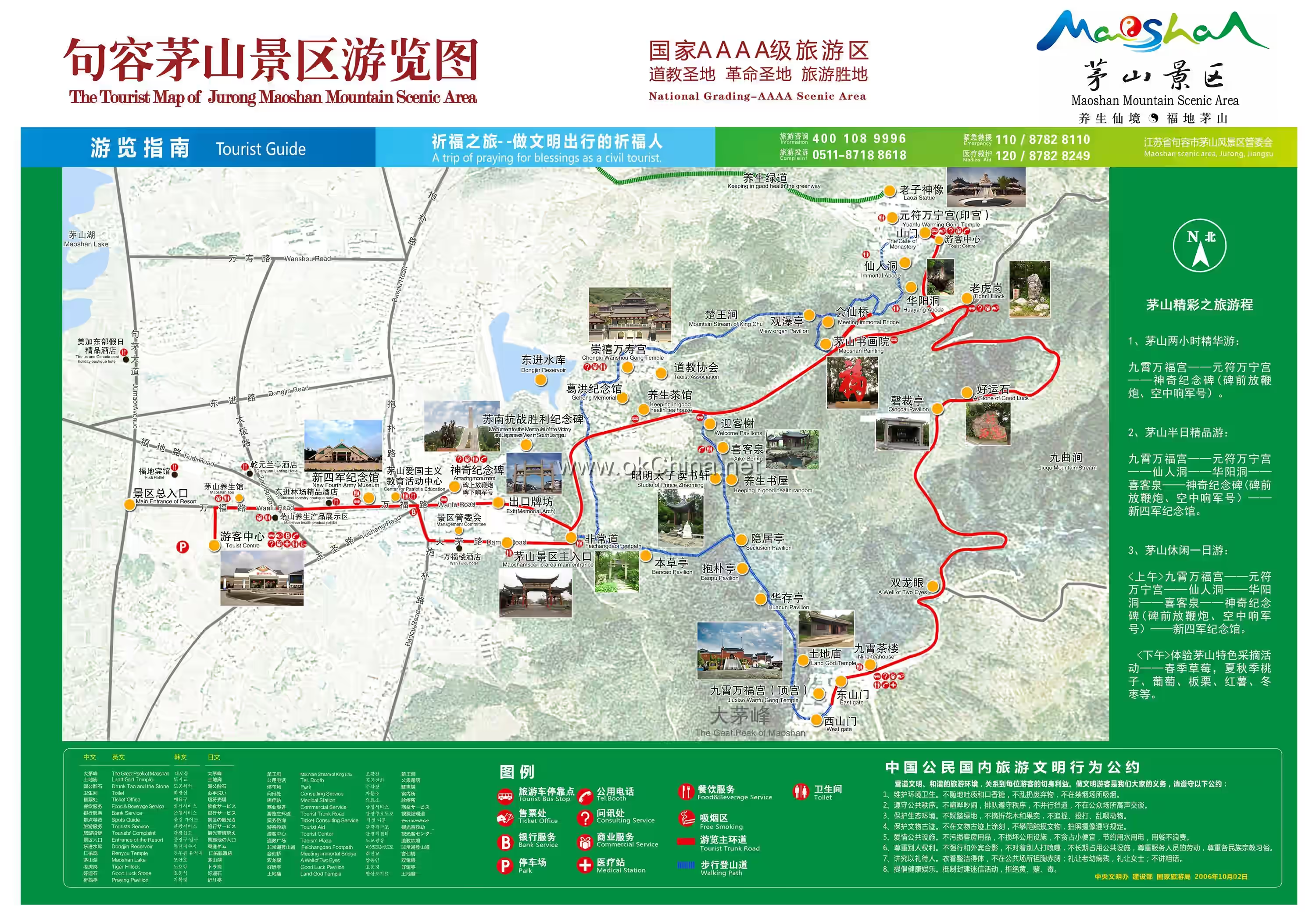
Maoshan Scenic Area in Zhenjiang City
1. Introduction
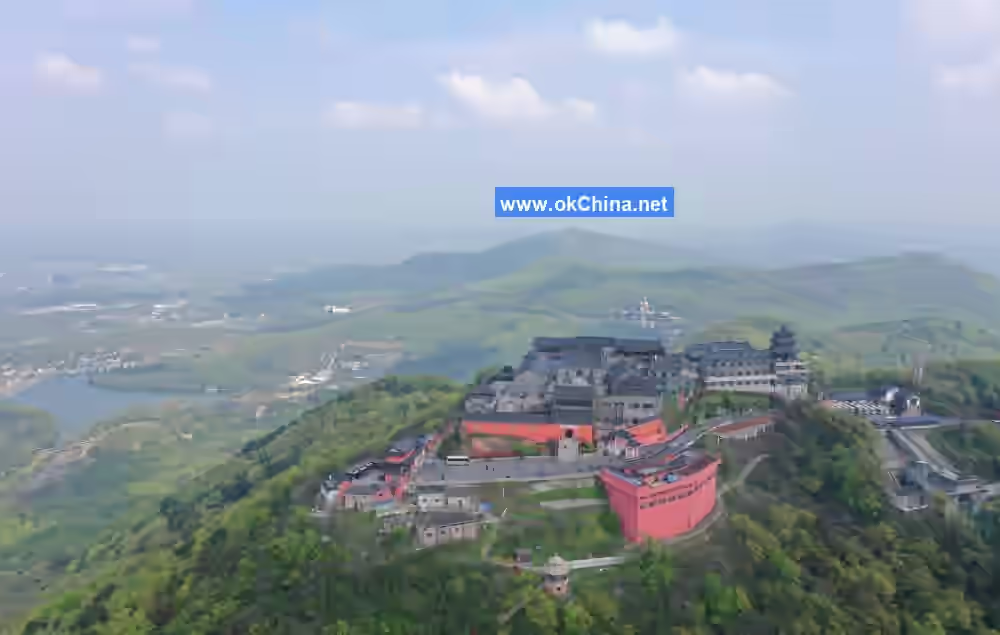
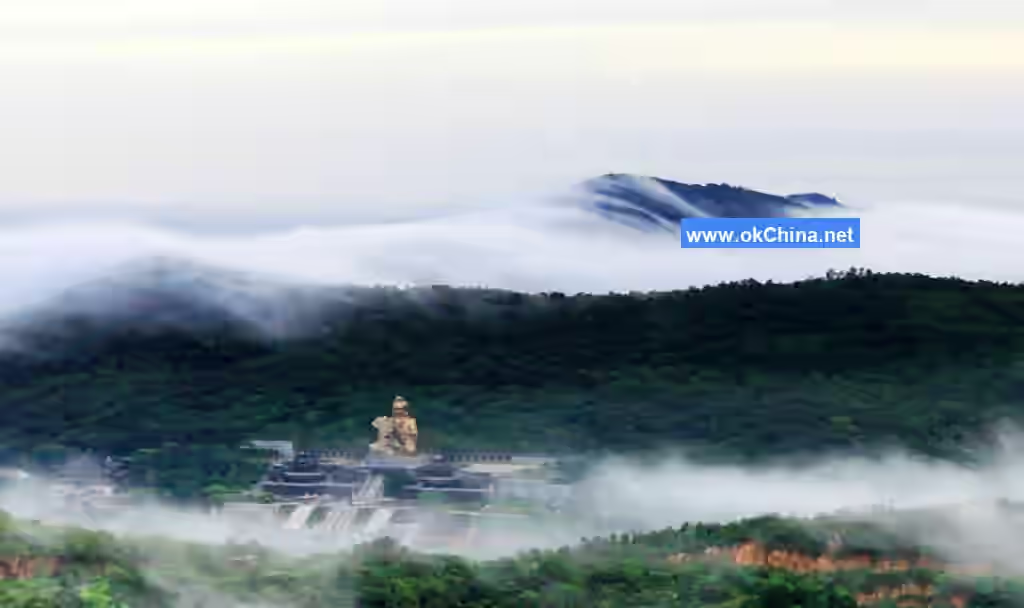
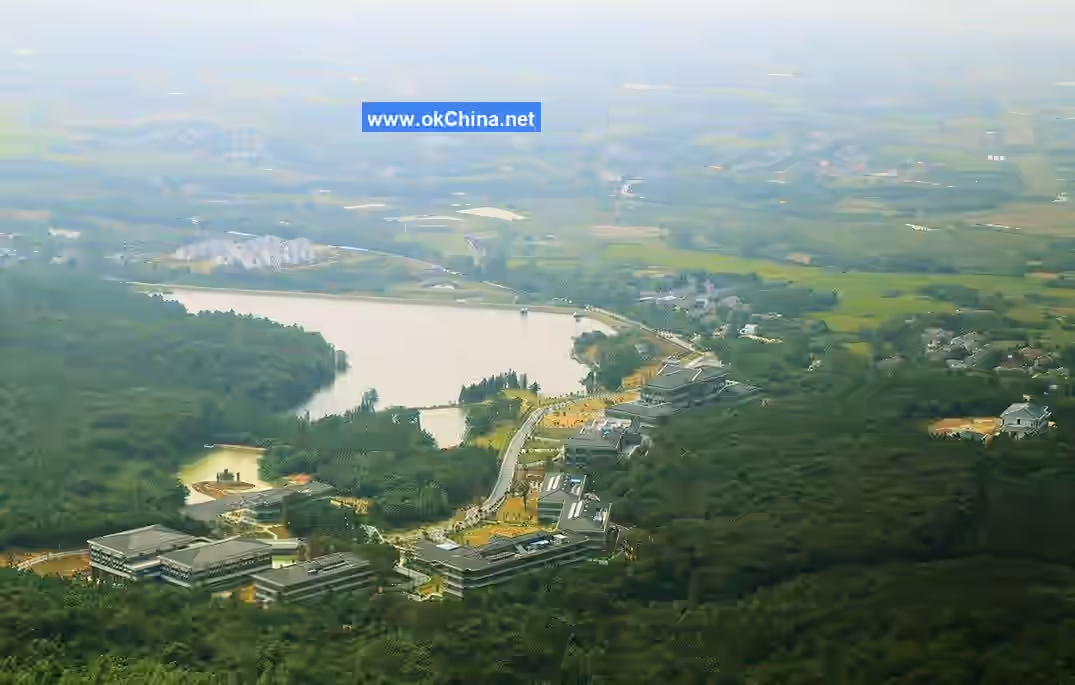
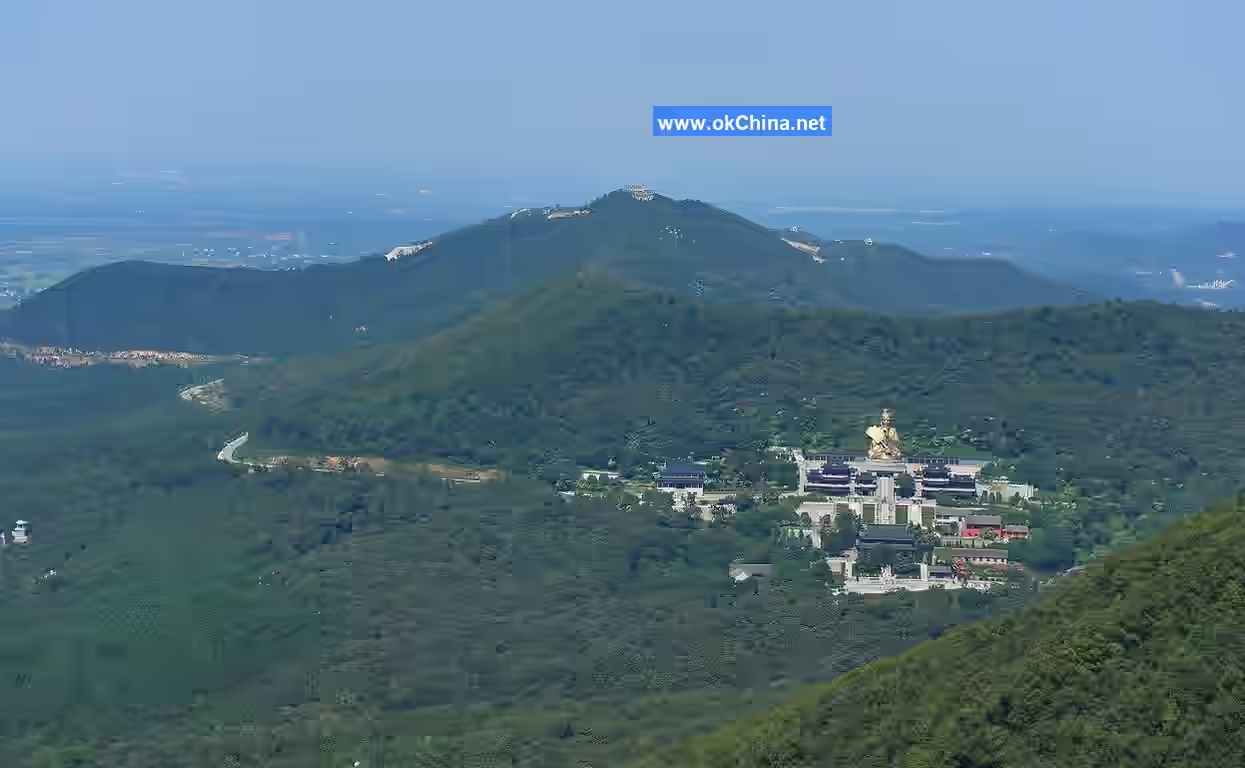
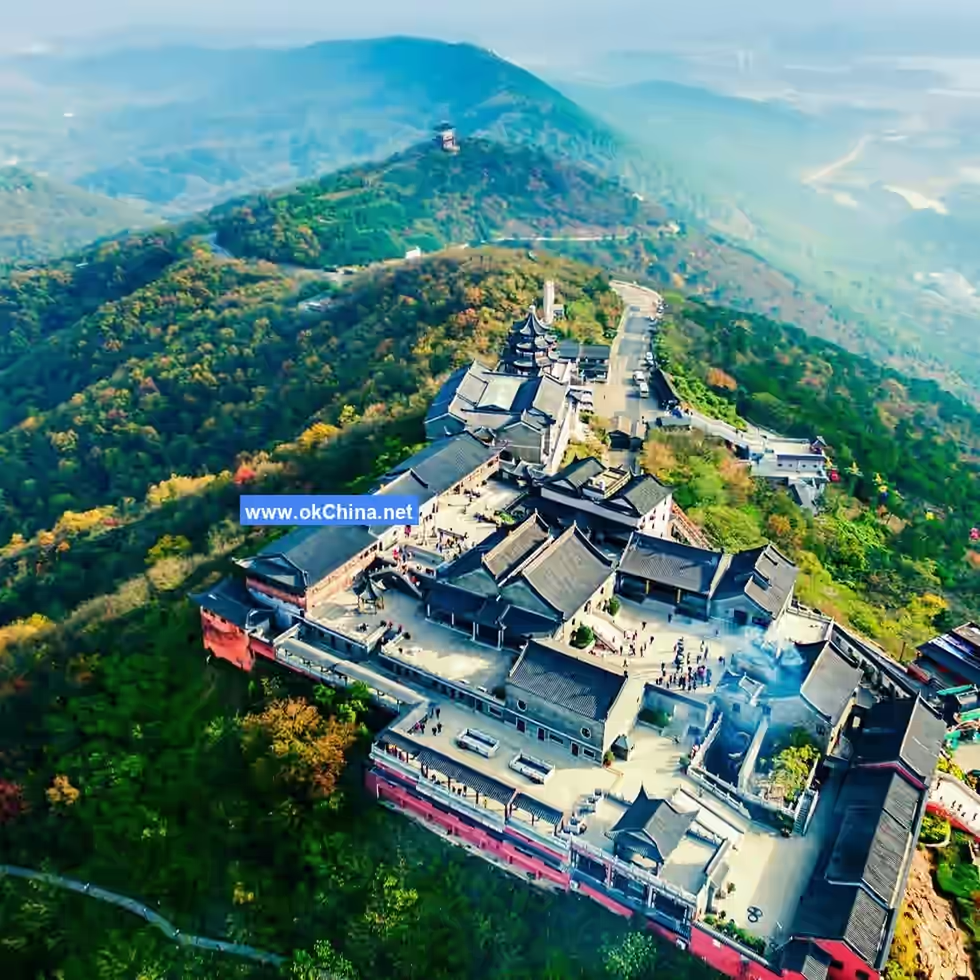
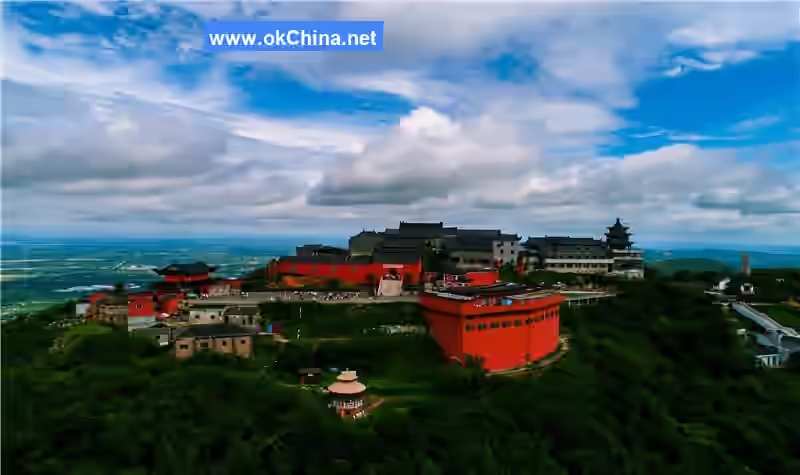
The Maoshan Scenic Area in Zhenjiang City is a National AAAAA Tourist Attraction located in Zhenjiang City, Jiangsu Province. Also known as Jurong Maoshan Scenic Area, it is situated 26 kilometers southeast of Jurong City, Zhenjiang, 48 kilometers from downtown Zhenjiang, and lies at the heart of the three cities: Nanjing, Zhenjiang, and Changzhou. The scenic area covers 18.19 square kilometers, with a core area of 11.51 square kilometers. Maoshan is one of China's Ten Famous Taoist Mountains and one of the six major mountainous anti-Japanese base areas nationwide. It is a comprehensive tourist destination integrating Taoist culture, revolutionary culture, traditional culture, and ecological landscapes.
The Maoshan Scenic Area is established around Mount Mao. Complex geological structures and prolonged external erosion have formed a series of anticlines, synclines, and klippen in the Maoshan region, resulting in a fragmented terrain with varying orientations. In 1991, the Jurong Municipal Government established the Jurong County Management Committee for the Maoshan Scenic Area; in 2007, the Jurong Municipal Party Committee and Government formed the Maoshan Scenic Area Management Committee. The Maoshan Scenic Area comprises six scenic zones and one scenic corridor, featuring nine peaks, eighteen springs, twenty-six caves, and twenty-eight ponds. Major attractions include the Jiuxiao Wanfu Palace (Top Palace), Yuanfu Wanning Palace (Seal Palace), Chongxi Wanshou Palace, Immortal Cave, Huayang Cave, Xike Spring, the Southern Jiangsu Victory Monument of the War of Resistance Against Japan, and the New Fourth Army Memorial Hall.
In November 2014, the Maoshan Scenic Area was rated as a National AAAAA Tourist Attraction. On April 12, 2020, it was included in the National Red Tourism Classic Scenic Area List.
2. Geographical Environment
2.1 Location and Area
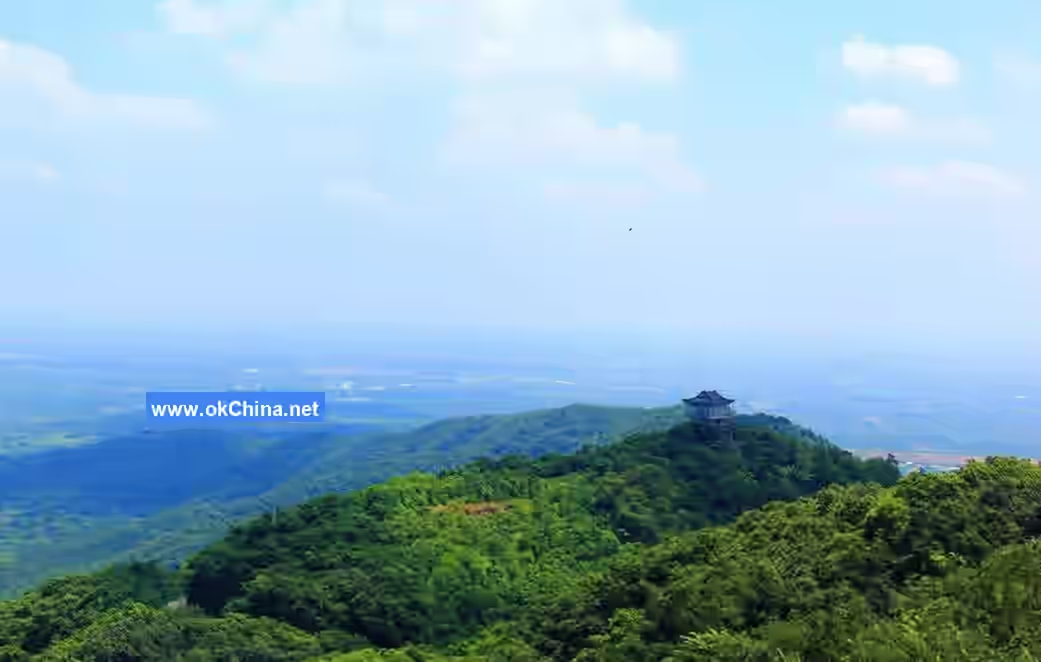
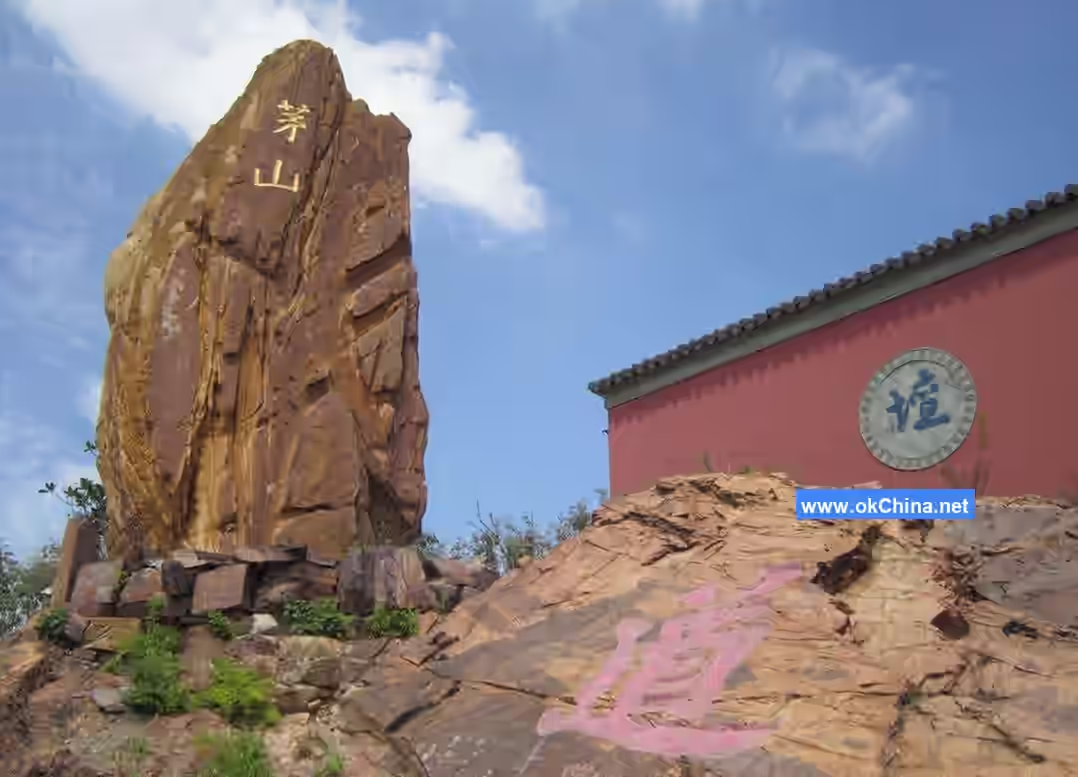
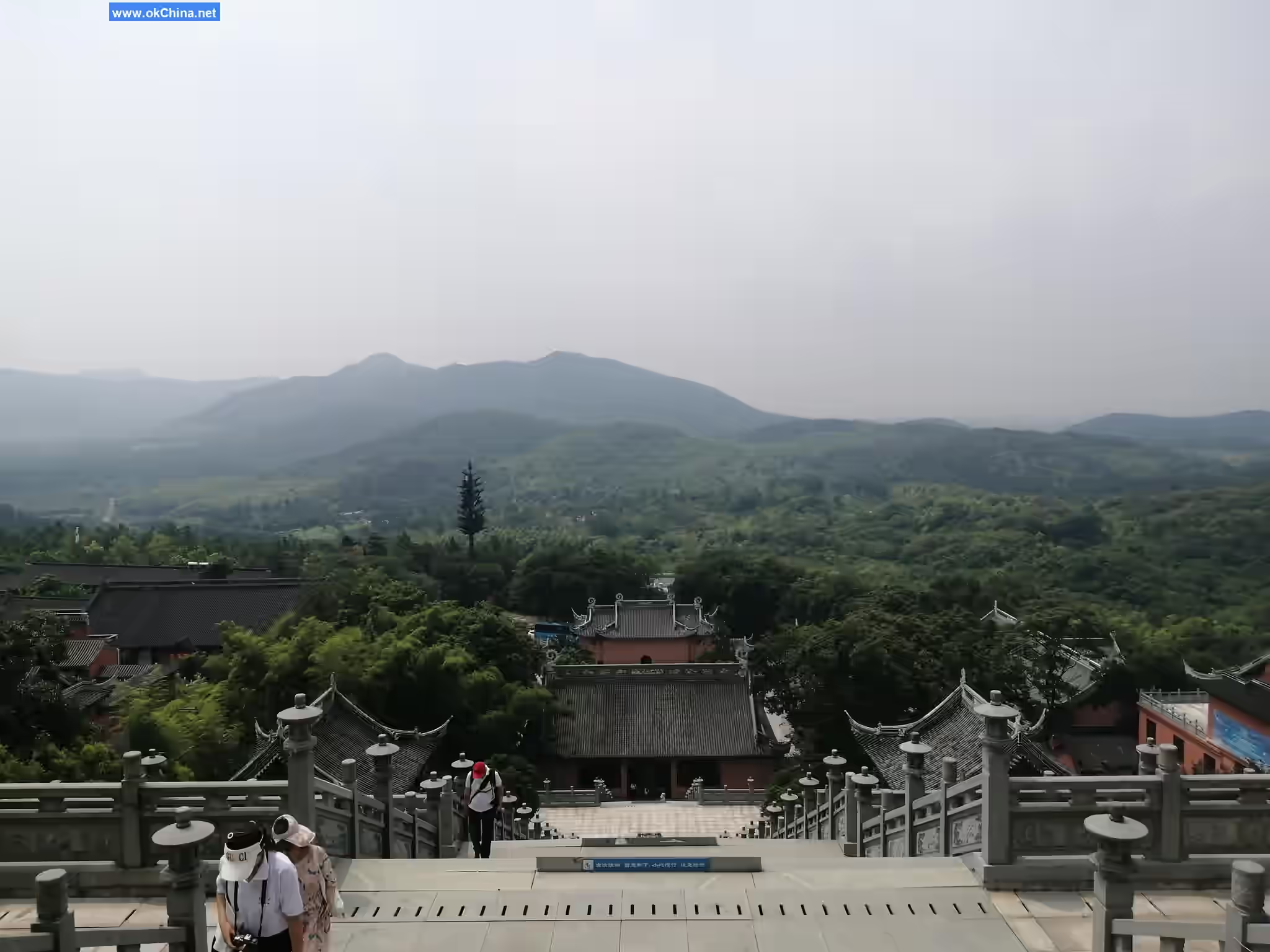
The Maoshan Scenic Area is located 26 kilometers southeast of Jurong City, Zhenjiang, Jiangsu Province, 48 kilometers from downtown Zhenjiang, and lies at the heart of the three cities: Nanjing, Zhenjiang, and Changzhou. The scenic area covers 18.19 square kilometers, with a core area of 11.51 square kilometers. It is established around Mount Mao. Complex geological structures and prolonged external erosion have formed a series of anticlines, synclines, and klippen in the Maoshan region, resulting in a fragmented terrain with varying orientations. The main peak, Damao Peak, has an elevation of 372.5 meters. Maoshan belongs to a low mountainous and hilly region.
2.2 Climate
The Maoshan Scenic Area experiences a mid-northern subtropical monsoon climate characterized by mild temperatures, distinct seasons, and pleasant weather. The hottest months, July and August, have average temperatures of 28–29°C. Winters are short with severe cold and low precipitation.
3. Main Attractions
3.1 Jiuxiao Wanfu Palace
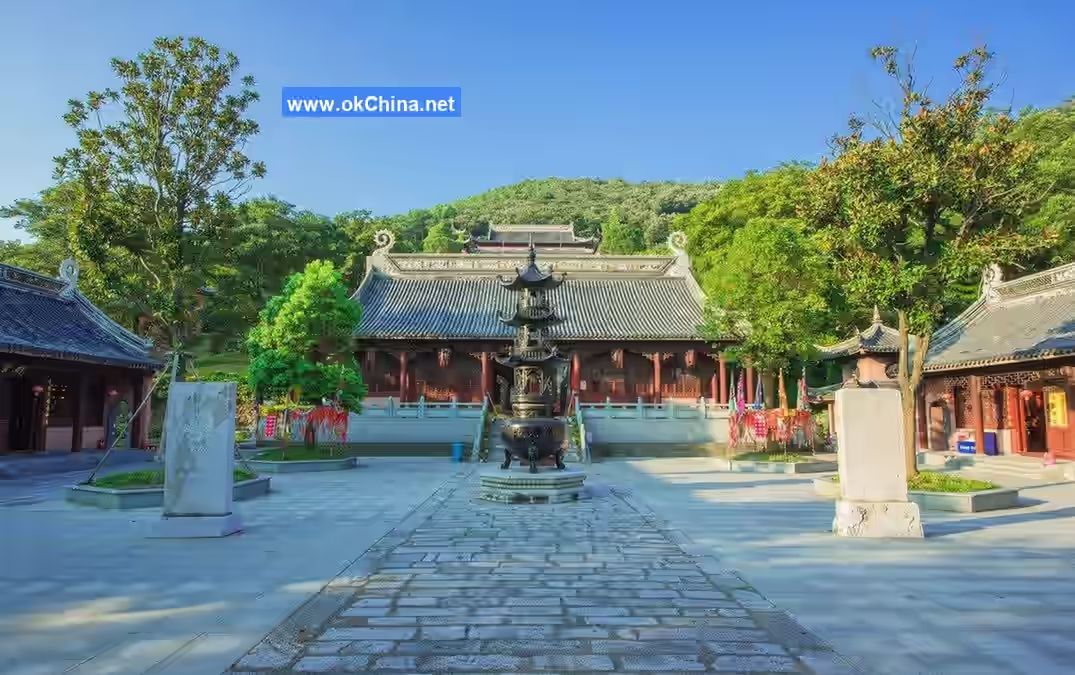
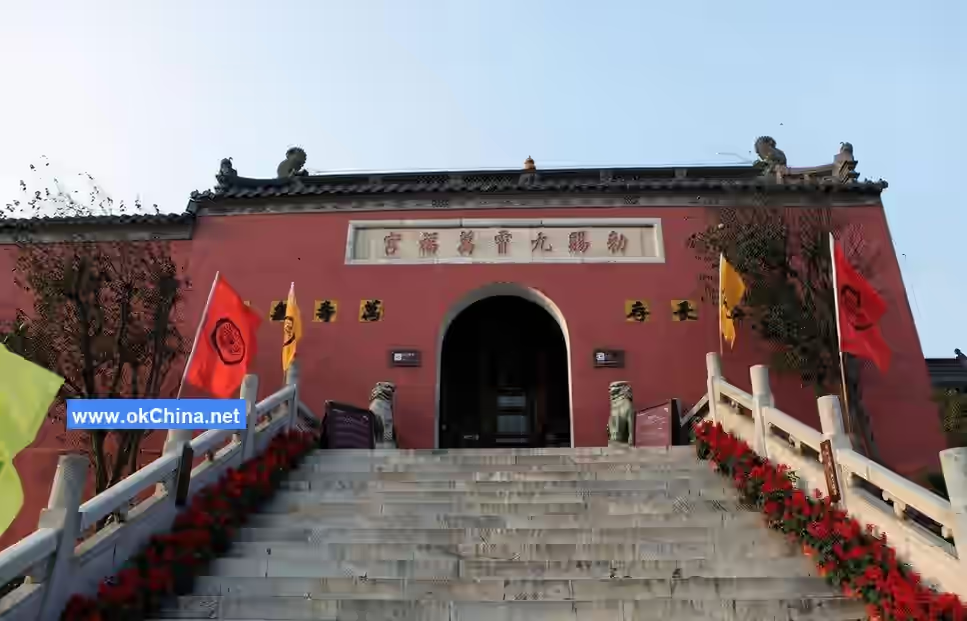
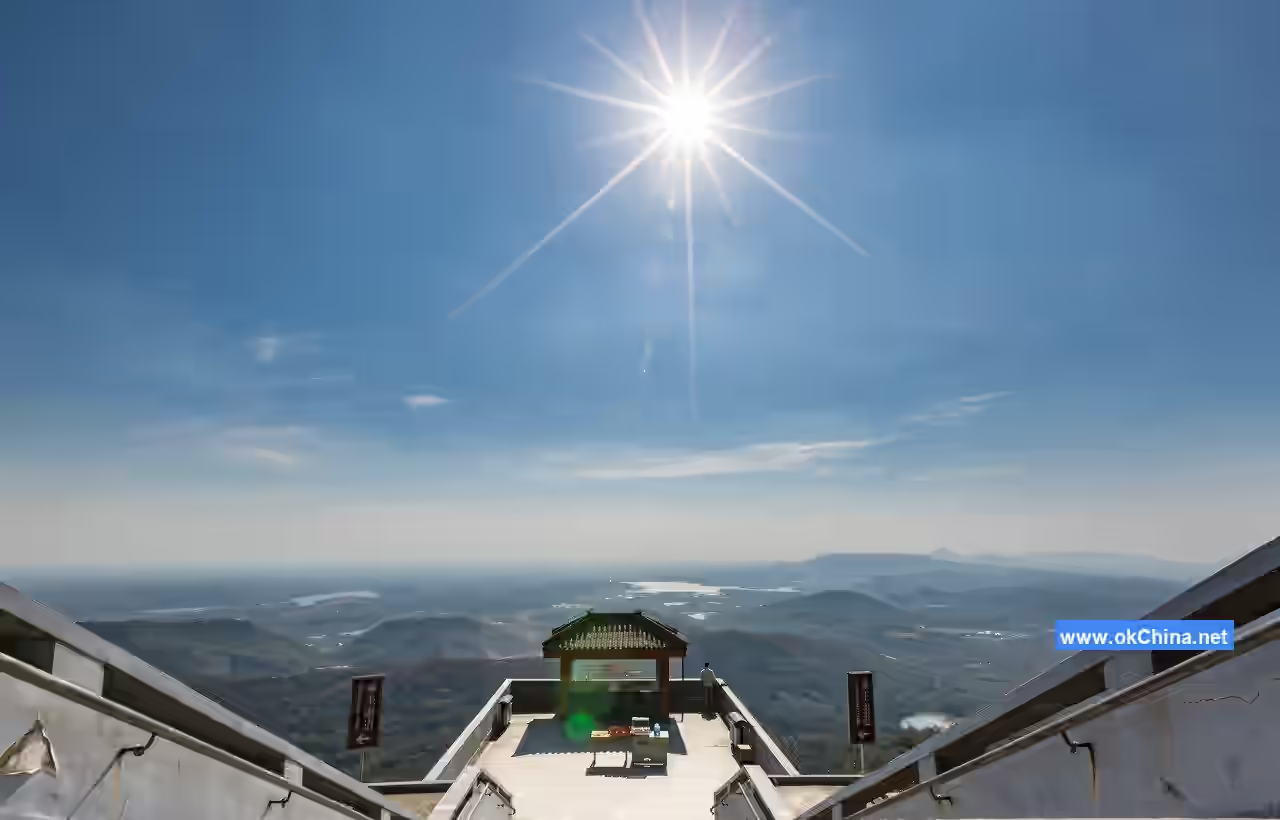
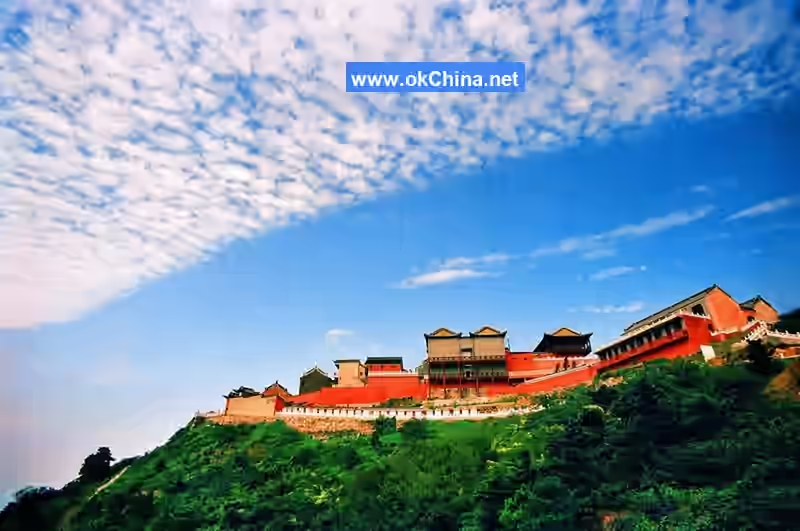
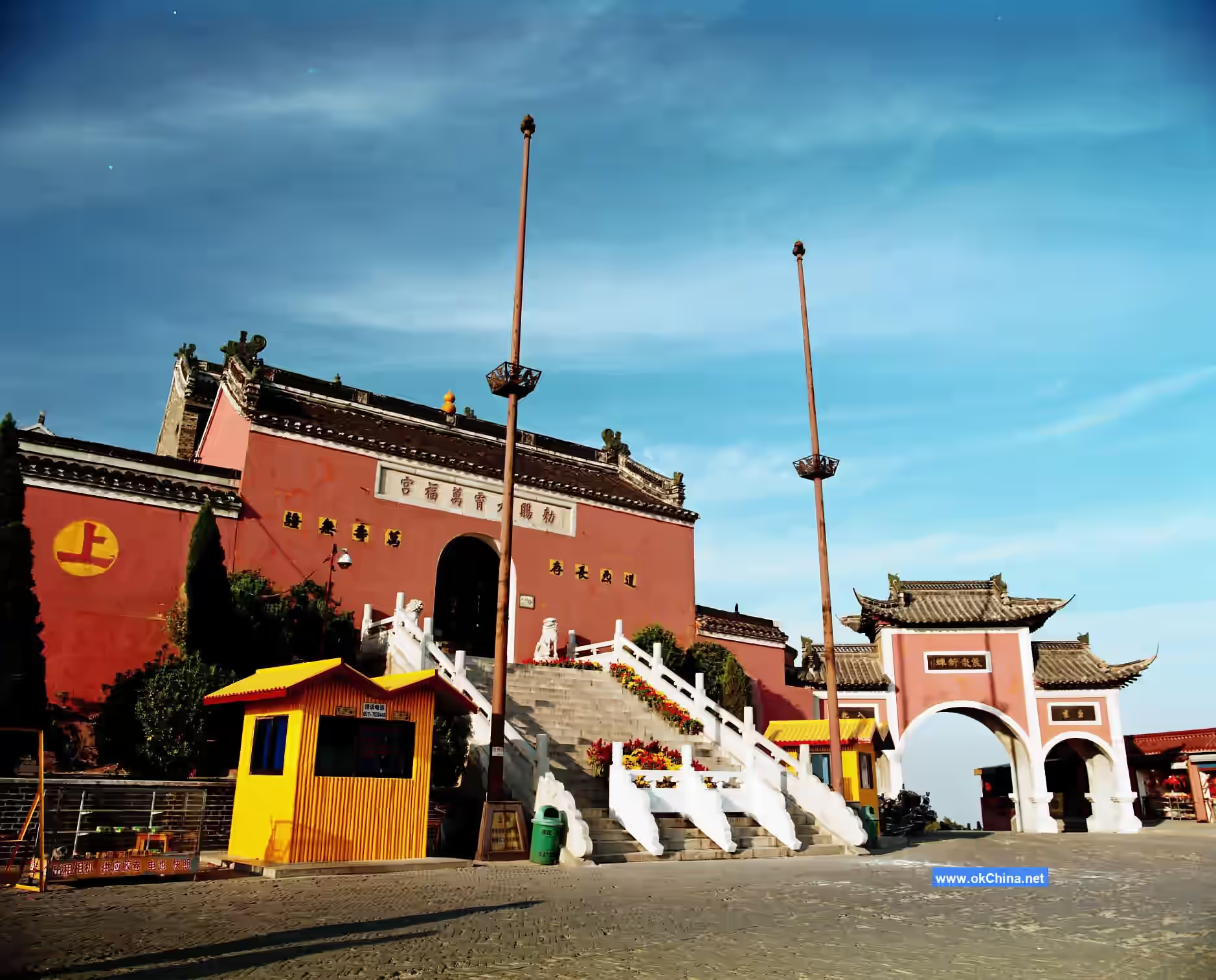
Jiuxiao Wanfu Palace (Top Palace) is a highly influential Taoist temple on Mount Mao. During its peak, the Maoshan Taoist Temple complex comprised 257 temples, with the "Three Palaces and Five Temples" being the most famous. During the Western Han Dynasty, the three Mao brothers built stone altars and houses here for spiritual cultivation. In the Yuan Dynasty, it was called "Shengyou Temple." It was expanded in the 26th year of the Wanli era (1598) during the Ming Dynasty and bestowed the name "Jiuxiao Wanfu Palace" by imperial decree. Because it is situated atop the main peak, Damao Peak, it is also known as the Top Palace. This ancient Taoist temple has weathered over 2,100 years, experiencing periods of prosperity and decline, and was officially restored in 1985.
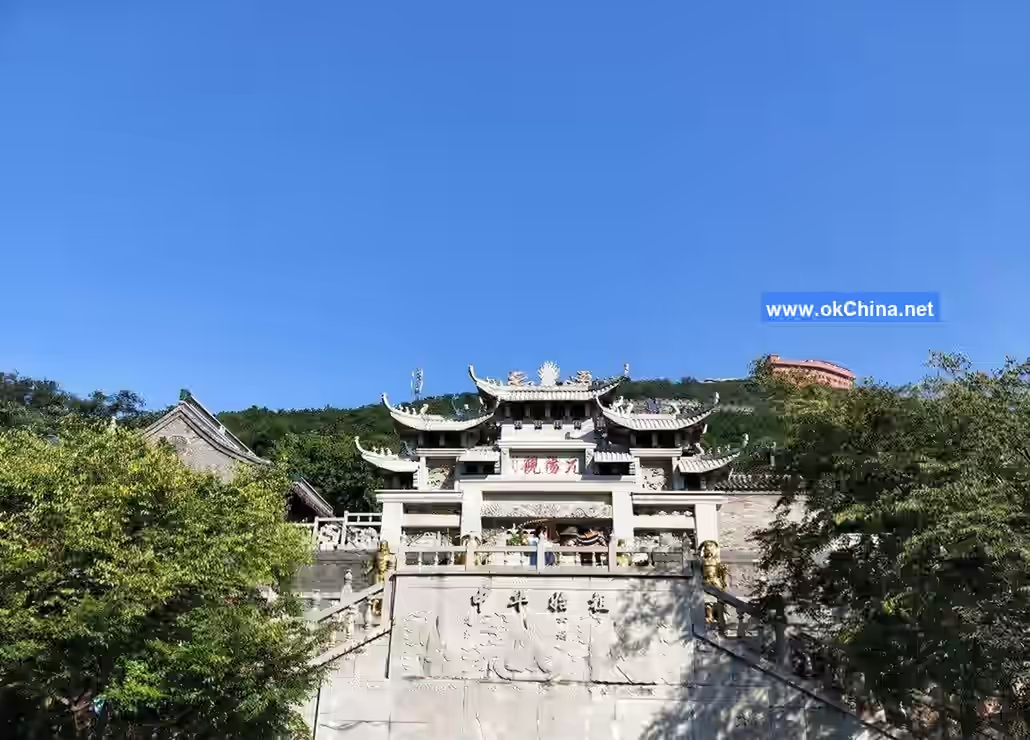
The Top Palace square is approximately 80 meters long east-west and 40 meters wide north-south. The south side of the square has a stone railing, marking the boundary with the territory of Jintan, Changzhou, Jiangsu. Facing the square is the East Mountain Gate. Its front bears four large yellow characters reading "Maoshan Daoyuan" (Maoshan Taoist Temple), while the back features four large characters in clerical script reading "Ziqi Xinhui" (Purple Aura Shines Anew). The left and right side gates are inscribed with "Chu Xuan" (Exit the Profound Male) and "Ru Pin" (Enter the Receptive Female), respectively, where "Xuan" represents yang (male) and "Pin" represents yin (female). "Xuan Pin" originates from Chapter 6 of Laozi's Tao Te Ching: "The valley spirit never dies; it is called the mysterious female. The gate of the mysterious female is the root of heaven and earth." The "gate of the mysterious female" signifies that the Tao gives birth to all things, from which everything emerges.
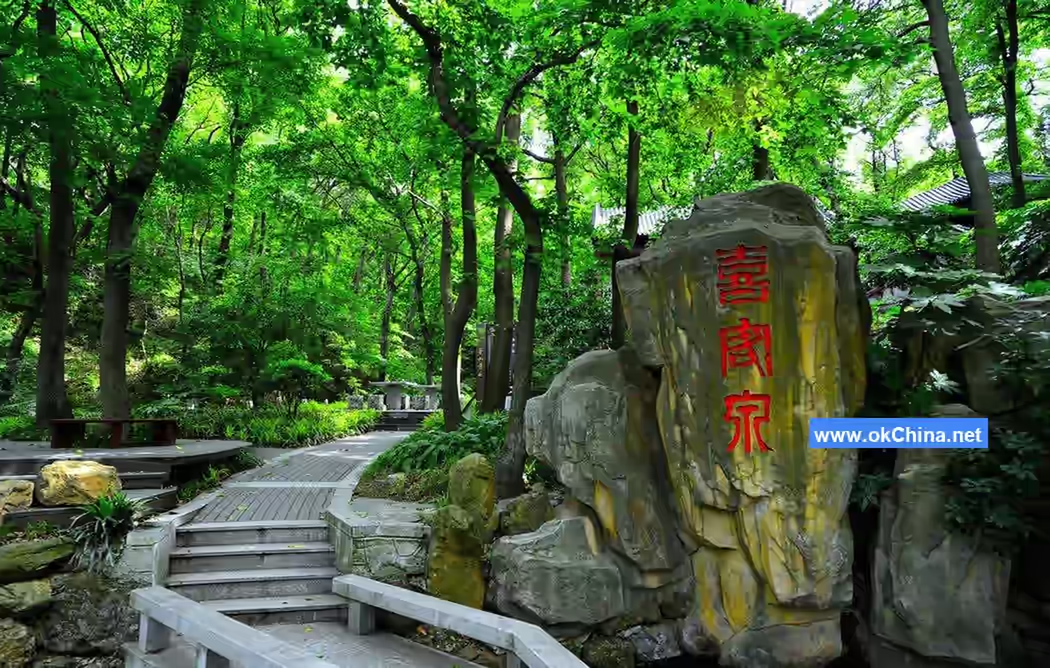
A distinctive feature of the western structure (West Mountain Gate entrance) is that the outer door frame top is round, while the inner door top is square. The East Mountain Gate was created after liberation when Xu Shiyou cut a road through the mountain, whereas the West Mountain Gate is the original ancient main gate of the Top Palace. This combination of square and round shapes carries symbolic meaning. The round shape represents the temple (the spiritual realm), and the square shape represents the home (the secular world), indicating that Maoshan Taoist priests could marry and establish families.
3.2 Yuanfu Wanning Palace
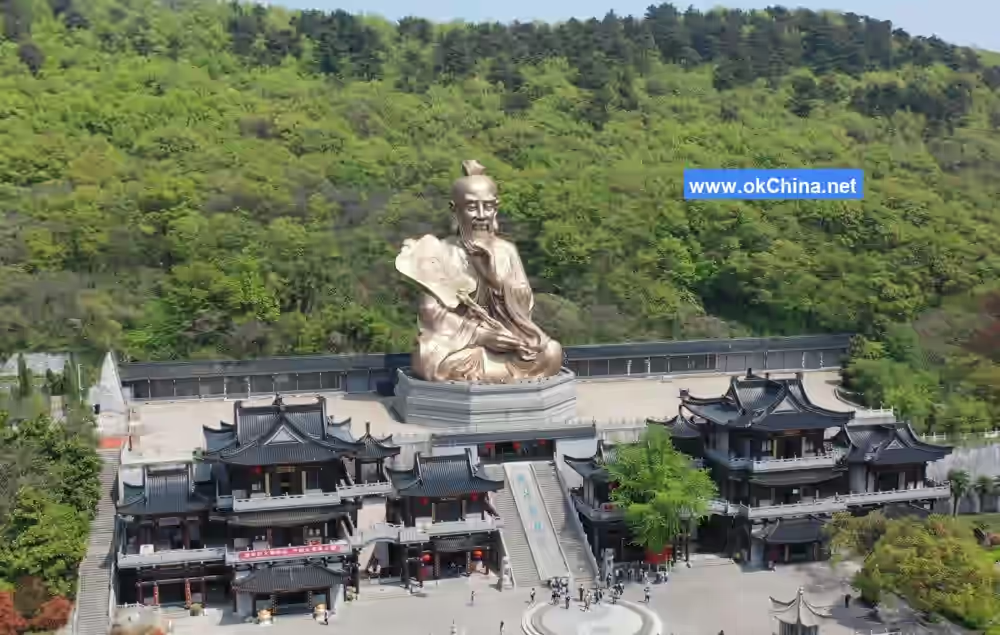
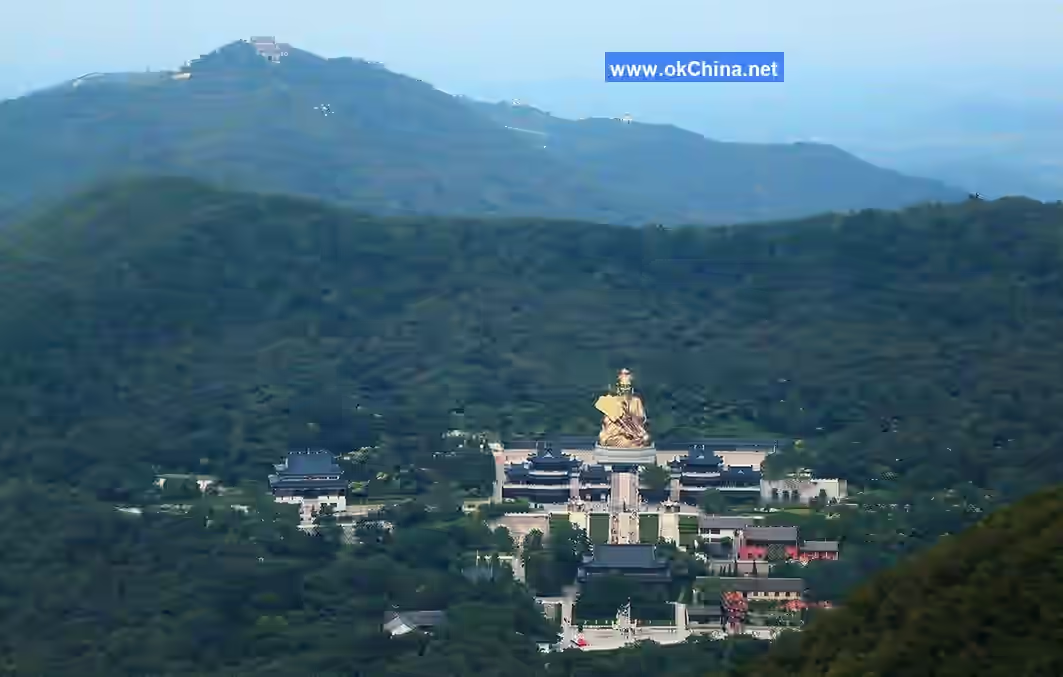
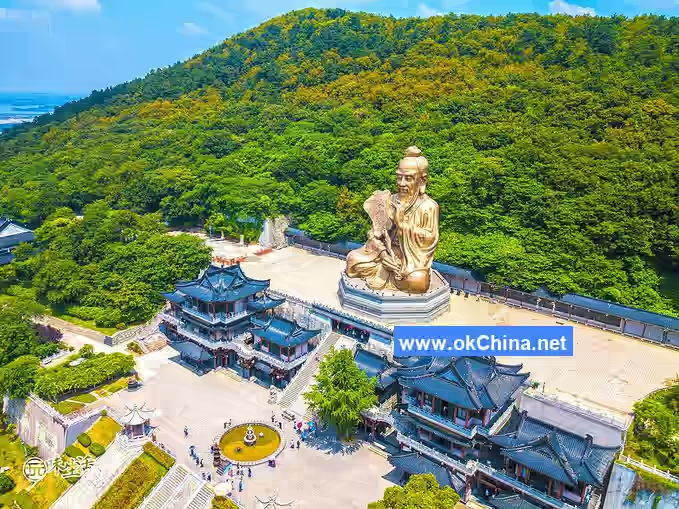
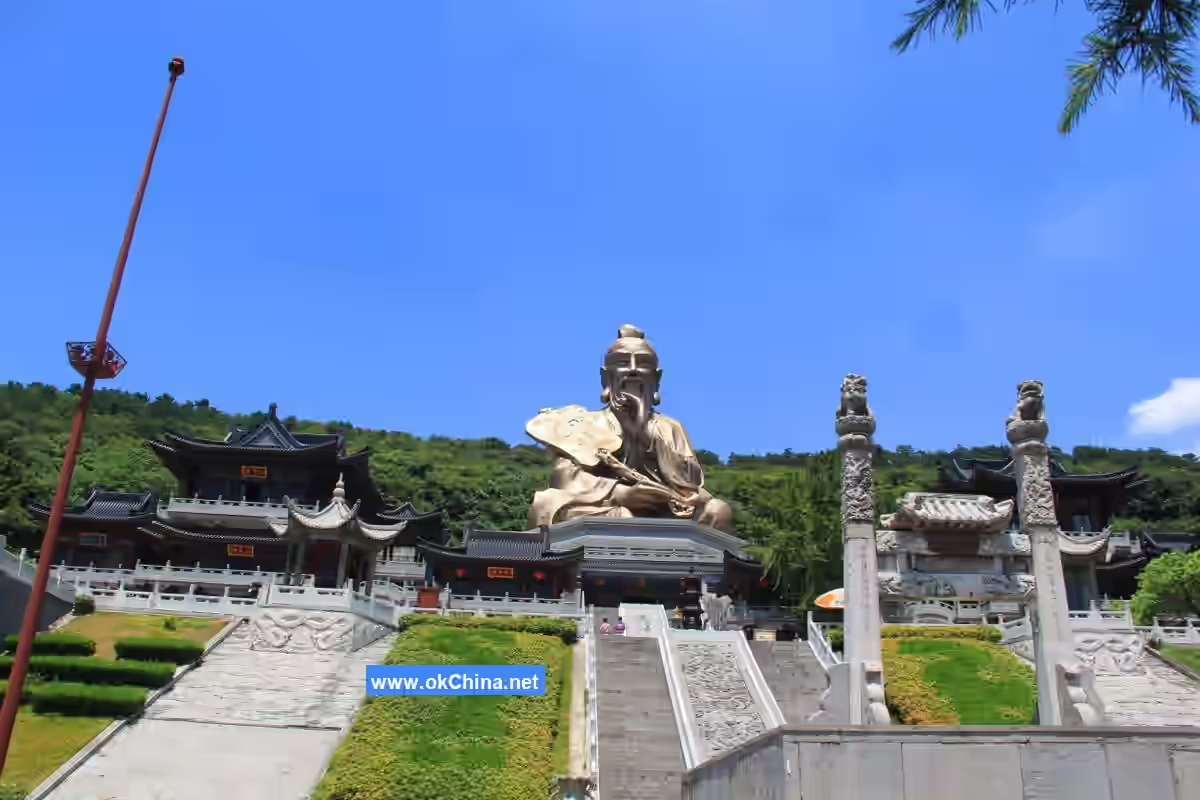
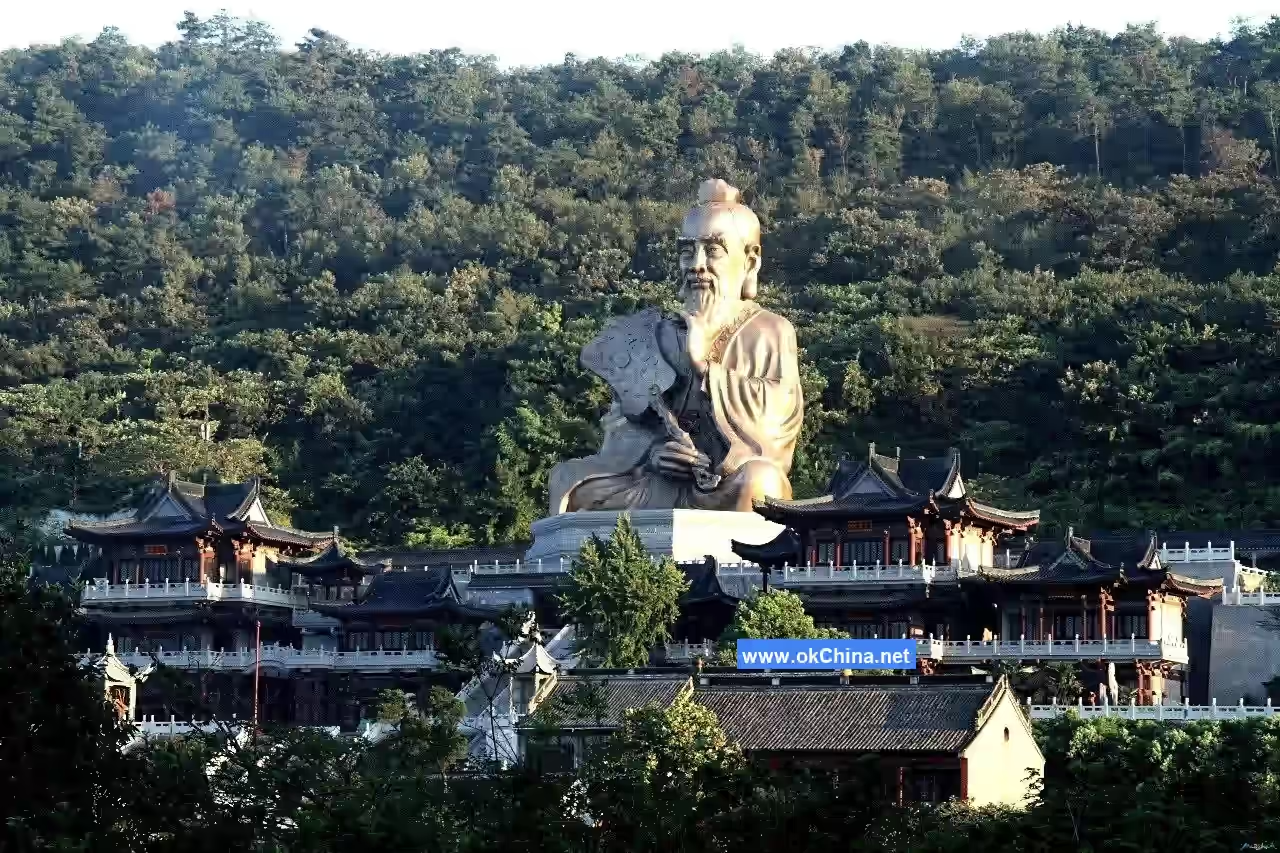
Yuanfu Wanning Palace (Seal Palace) is nestled among the green trees on the mountainside of Jijin Peak on Mount Mao. Initially built during the Liang Dynasty of the Southern Dynasties and flourishing in the Song Dynasty, it was first named "Qianshen Hermitage," later changed to "Yuanfu Palace," a name retained to this day, with the full title Yuanfu Wanning Palace. Because one of the eight treasures bestowed by Emperor Zhezong of Song, a jade seal, was kept here, it is also called the Seal Palace. The palace is surrounded by beautiful natural landscapes and dense vegetation, where cultural sites blend harmoniously with nature, making it an ideal place for visitors to explore secluded spots, enjoy scenic views, and cultivate their minds. The palace houses the "Number One Under Heaven" statue of Laozi. It served as the venue for the blessing ceremony of the Fifth International Taoist Forum.
The "Seal Palace" is located on the southern foothills of Jijin Peak on Mount Mao. Originally named "Qianshen Hermitage," it was the cultivation site of Liu Hunkang, the 25th-generation master of the Shangqing sect on Mount Mao. In the Yuanyou era (1086), the mother of Emperor Zhezong accidentally swallowed a sharp needle, and imperial physicians were helpless. Taoist priest Liu Hunkang cured her using Maoshan Taoist talismans and elixirs. Emperor Zhezong was delighted and bestowed eight treasures upon Mount Mao, granting Liu Hunkang the title "Dongtian Tongmiao Fashi" (Master of Cave Heavens and Profound Wonders). Construction of "Yuanfu Temple" began in the fourth year of the Shaosheng era (1098) and was completed nine years later. Emperor Huizong bestowed the plaque "Yuanfu Wanning Palace" and ordered the Jiangning Prefecture to dispatch 200 soldiers for patrol and cleaning duties at Yuanfu Palace and Chongxi Temple.
Among the eight treasures was a jade seal carved with seal-script characters in relief reading "Jiulao Xiandu Jun Yin" (Seal of the Lord of the Nine Elders Immortal Capital). It is said to be carved from part of the "He Shi Bi" jade and is associated with the saying, "Consumes four liang of cinnabar at night, stamps a thousand documents by day." Legend has it that during the Hongwu era of the Ming Dynasty, the jade seal was taken to the imperial palace to be recarved into the emperor's jade seal inscribed "Feng Tian Cheng Yun Wen Bao" (By the Mandate of Heaven, the Emperor's Seal). However, after three attempts at carving and testing, the impression still read "Jiulao Xiandu Jun Yin." Emperor Hongwu had no choice but to return it to Mount Mao in the 13th year of Hongwu. Later, during Maoshan's incense festival temple fairs, devout pilgrims would go to Yuanfu Palace to have a Taoist priest stamp the "Jiulao Xiandu Jun Yin" on their incense bags or belts, believing it could ward off disasters, prolong life, and turn misfortune into blessing. Over time, Yuanfu Palace became known as the "Seal Palace." The Seal Palace currently has 107 rooms, covering an area of over 3,000 square meters. Presently, it mainly includes architectural complexes such as the Duxing Gate Square, Lingguan Hall, Wanshou Terrace, Three Heavenly Gates Square, Mianzhai Taoist Academy, Tai Chi Square, Laozi Statue, Laozi Square, and the Twenty-Four Filial Piety Pictures.
3.3 Chongxi Wanshou Palace
Chongxi Wanshou Palace (Longevity Palace) is located south of Dinggong Mountain, northwest of Damao Peak. It has been reconstructed on the east side of the original site, situated at the southern foothills of Qingyu Peak. Originally the "Qulin Pavilion" built during the Southern Dynasties, it later became the "Huayang Lower Lodge" of Patriarch Tao Hongjing. During the Zhenguan era of the Tang Dynasty, Emperor Taizong built the "Taiping Temple" for Master Wang Fazhu (Wang Yuanzhi). In the Song Dynasty, it was renamed "Chongxi Shrine" by imperial decree, and in the sixth year of Yanyou, it was bestowed the name "Chongxi Wanshou Palace." Chongxi Wanshou Palace was demolished twice in 1957 and 1964, leaving no trace of the original structure. In 1966, the Dongjin Reservoir was built, completely submerging the palace site. The restoration of Maoshan Chongxi Wanshou Palace began in 2011, and it opened to the public on August 28, 2016. The palace complex includes: Maoshan Taoist College, Maoshan Taoist Calligraphy and Painting Institute, Maoshan Taoist Museum, Wellness Valley (regularly hosting wellness classes, fasting classes, body-cultivation classes, Chinese classics classes, summer camps, winter camps, Taoist weddings, coming-of-age ceremonies, etc.), Zhidao Hall, and Scripture Copying Hall. It was the venue for the opening ceremony of the Fifth International Taoist Forum.
Chongxi Wanshou Palace blends traditional architecture with religious style, focusing on showcasing Maoshan Taoist culture and Taoist wellness practices. It has gradually developed distinctive advantages characterized by "Taoist priests conferring registers, believers listening to sermons, and tourists observing rituals." It integrates "cultivation, wellness, and Dharma propagation" into one, combining "sacredness, mystery, and wonder" within a single palace, allowing visitors to fully appreciate and experience the grand feast of Maoshan Taoist wellness culture. It serves as a venue for large-scale religious activities, Taoist cultural dissemination, and leisure wellness. From Chongxi Wanshou Palace, visitors can follow hiking trails to reach Xike Spring and Jiuxiao Wanfu Palace, or follow the Chuwang Stream to reach Yuanfu Wanning Palace, Huayang Cave, and Immortal Cave.
3.4 Huayang Cave
Mount Mao has long enjoyed the reputation of being the "First Blessed Land, Eighth Cave Heaven." This "Eighth Cave Heaven" originates from Huayang Cave. "Cave Heaven" is a Taoist term referring to a "passageway" place where practitioners cultivate in the cave, connecting with immortals and the celestial realm.
Huayang Cave is located on the west side of Laohu Gang on Mount Mao, about 300 meters north of the Seal Palace. This place possesses strong "immortal aura" — under natural conditions, the negative oxygen ion content is as high as 10,000 per cubic centimeter. Negative oxygen ions are known as "air vitamins" and "air longevity elements," beneficial for physical and mental health. The Shangqing sect of Mount Mao primarily uses "spirit preservation" and "breath ingestion" as cultivation methods.
According to the Qing Dynasty Maoshan Annals, Huayang Cave has five openings: east, west, south, north, and central, with three visible and two hidden. It stretches 45 li east-west and 35 li north-south, with a void of 170 zhang. Above the western entrance of Huayang Cave are carved three large characters "Hua Yang Dong" (Huayang Cave), each about one meter square. They are said to be inscribed by the great Song Dynasty calligrapher Su Dongpo. The famous Taoist scholar Tao Hongjing of the Qi and Liang periods once lived in seclusion in this cave, establishing the Huayang Three Lodges based around it, where he wrote books, established doctrines, and took disciples. The Tang Dynasty poet Liu Changqing also wrote a poem praising it: "Gradually approaching the mouth of Huayang, a small path leads into lush greenery. The seven luminaries hang in the cave palace, five clouds embrace the deep hall." Zhang Shangying of the Song Dynasty praised in Huayang Cave: "A plain tiger and spotted dragon tread on purple mist, witnessing the sea change into mulberry fields. After seeking truth at Chicheng and Yusi, I arrive again at the eighth heaven of Huayang." During his southern tour, the Qing Emperor Kangxi inscribed "Huayang Dong Tian" (Huayang Cave Heaven).
Some Taoist artifacts from the Tang and Song periods were unearthed from Huayang Cave. Later, due to various reasons, excavation stopped after only 150 meters.
3.5 Immortal Cave
"Immortal Cave," also known as "Penghu Cave," has an entrance less than a hundred meters from the mountain gate of Yuanfu Palace. Legend has it that in ancient times, an immortal devotedly cultivated in this cave and achieved enlightenment, hence the name "Immortal Cave."The Immortal Cave was blocked during the Qing Dynasty and was not reopened to tourists until the 1980s. It is a limestone karst cave formed over 65 million years ago, with a total length of 920 meters divided into three levels: upper, middle, and lower. Currently, the middle and lower levels, spanning 208 meters, have been developed for tourism. The cave maintains a consistently low temperature, about ten degrees Celsius cooler than the outside. Qing Dynasty scholar Sun Xingyan once wrote a poem praising the cave: "Dripping stalactites sweet enough to feast on, flowing cream smooth and hard to touch. The heart suspects a turn to a fairyland, vast and open, revealing flat land."
The main attractions in the cave include: Green Ox Playing in Water, Tongtian River, Immortal's Kitchen, Nine-Twist Silver River, Celestial Book from the Upper Realm, Kindness Pool, Crescent Lake, Natural Immortal Bridge, Lotus Hanging from the Ceiling, Shadow Wall Ruins, Flying Waterfall, Seven-Level Pagoda, Laozi Preaching the Dao, Jade Curtain in Sight, and Thousand-Year Snow Mountain.
3.6 Xike Spring
Xike Spring is located northwest of Damao Peak in the scenic area and is one of the more famous ancient springs among the nineteen springs of Maoshan. The spring water is warm in winter and cool in summer, with a sweet taste, and it never dries up even during droughts. Ming Dynasty poet Chen Yi once praised it in a poem: "A clap by the pool, and the spring below bursts forth in four directions. The noise boils up, scattering like shattered pearls. When asked why this happens, people say it's the lung of this land. Its breath communicates with humans, moving with the sound of laughter."
In June 2002, the scenic area undertook restorative development of the divine spring. The site, embodying the Daoist idea of "harmony between heaven and humanity," integrates ancient trees, famous woods, divine springs, historical sites, pavilions, and terraces into a natural landscape painting. Xike Spring, imbued with the spiritual energy of heaven and earth and the immortal aura of Daoism, is renowned for its astonishing "three wonders":
First Wonder: The Spring Bubbles with Joy When Guests Arrive. As long as visitors stand by the spring and clap their hands twice, strings of bubbles will rise from the bottom, resembling tumbling jade beads or a welcome to the guests, hence the name Xike Spring (Guest-Welcoming Spring).
Second Wonder: The Oil-Like Surface Cover. When Xike Spring is calm, the water surface is covered with a thin film-like layer. When bubbles emerge and ripples spread, the film-like surface splits apart, then suddenly gathers back together before slowly returning to calm. Its appearance resembles oil on water, hence the name "Oil Surface Cover."
Third Wonder: Water Flows Uphill. The water level of Xike Spring is about 8 meters higher than that of the ditch to its east. According to gravity, water flowing down the mountain should follow the eastern ditch downhill, but instead, it surprisingly flows into Xike Spring.
3.7 Monument to the Victory in the War of Resistance
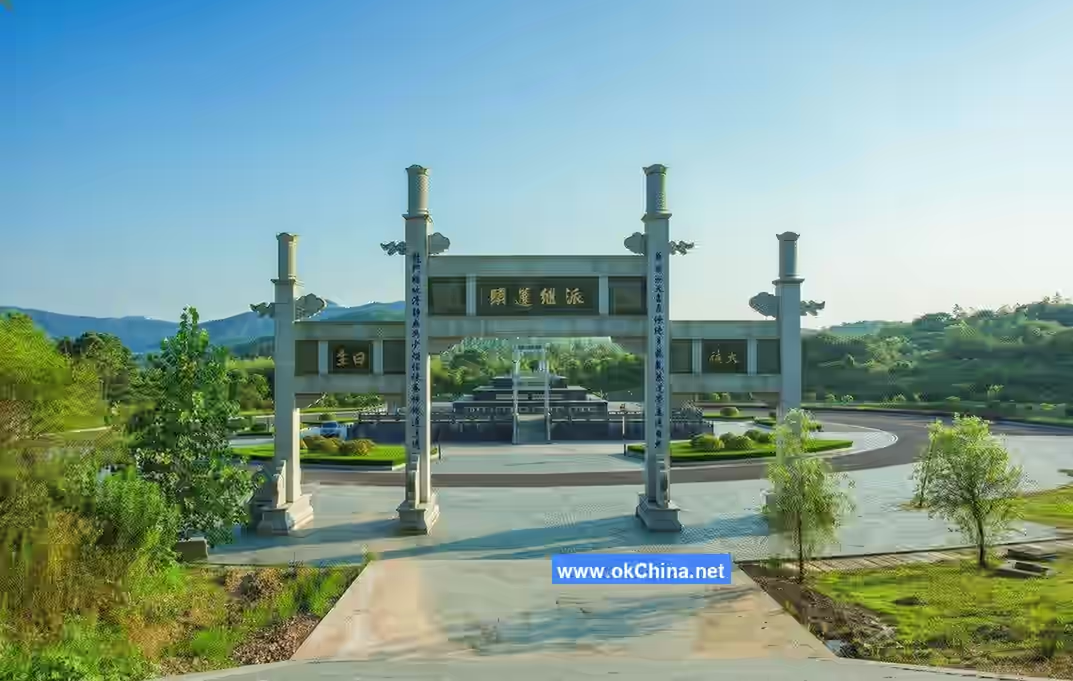
The Sunan (Southern Jiangsu) Monument to the Victory in the War of Resistance stands atop Wangmu Mountain at the northern foot of Maoshan, where the New Fourth Army fought bloody battles. It was built on September 1, 1995, with special party fees contributed by all party members in Zhenjiang City.
The monument is 6 meters wide and 36 meters high. Its inscription was written by General Zhang Aiping, former Minister of National Defense, and the back bears a 114-word commemorative text. The Sumeru base of the monument is 3.13 meters high, symbolizing the 313,000 party members in Zhenjiang City. The body of the monument is 28 meters high, representing the New Fourth Army's First and Second Detachments, which came from eight southern provinces. In front of the monument are 317 steps spanning 16 meters, divided into groups of 50 steps, symbolizing the 50th anniversary of the victory in the War of Resistance. The six groups of steps represent June, and the final 17 steps represent the 17th, referring to the anniversary of the Weigang Battle victory (June 17, 1938).
3.8 New Fourth Army Memorial Hall
The Maoshan New Fourth Army Memorial Hall is located at the foot of Maoshan, about 300 meters from the Sunan Monument to the Victory in the War of Resistance.
The memorial hall covers an area of 163,000 square meters and is divided into an exhibition area and a monument viewing area. The exhibition area includes a permanent display and three thematic exhibitions: "Hall of Generals and Marshals," "Hall of Heroes and Martyrs," and "New Fourth Army Integrity Education Hall," along with a temporary exhibition hall. The total building area of the exhibition halls is over 11,500 square meters.
3.9 Deyou Temple
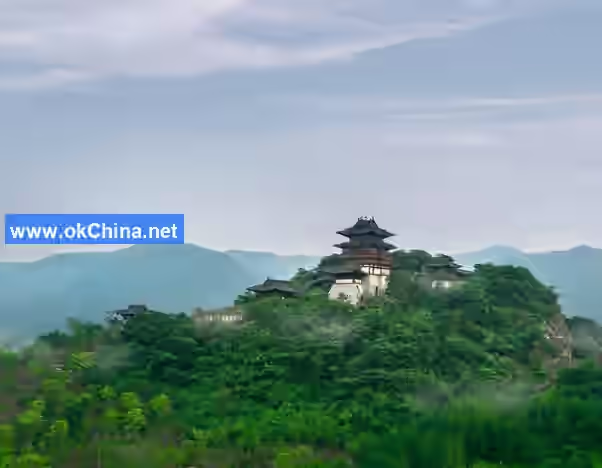
Deyou Temple is located atop the Second Mao Peak, covering an area of 1,600 square meters. It was built during the Yuan Dynasty's Yanyou period (1314–1320) and dedicated to the Second Mao Immortal, Mao Gu. It was burned down by Japanese troops during the War of Resistance. During the Qing Dynasty's Yongzheng and Qianlong periods (1723–1795), Quanzhen sect Daoist Shen Yiqing rebuilt the temple. In 1958, the only remaining three dilapidated rooms of the temple were dismantled for other uses. The temple follows the Quanzhen sect's male Daoist tradition. In 2013, Deyou Temple was reestablished in a new form atop the Central Mao Peak, becoming China's first Daoist temple resembling a museum.
3.10 Renyou Temple
Renyou Temple is located atop the Third Mao Peak, covering an area of 1,400 square meters. Its main structure blends traditional architecture with religious style, preserving the site while meeting religious and tourism needs. Built during the Yuan Dynasty's Yanyou period (1314–1320), it was dedicated to the Third Mao Immortal, Mao Zhong. It was burned down by Japanese troops during the War of Resistance and rebuilt by Quanzhen sect Daoist Shen Yiqing during the Qing Dynasty's Yongzheng and Qianlong periods (1723–1795). The temple follows the Quanzhen sect's female Daoist tradition. In March 2013, Renyou Temple was fully restored.
3.11 Feichang Dao (The Uncommon Way)
Feichang Dao is located on the right side of the scenic area's mountain road. Its name comes from the first chapter of the Dao De Jing: "The Dao that can be spoken is not the eternal Dao." Feichang Dao is 1.6 kilometers long and features four resting pavilions along the way: Huacun Pavilion, Baopu Pavilion, Bencao Pavilion, and Yinju Pavilion. The path offers views of Maoshan's rich plant life and the ancient town scenery. Feichang Dao was the essential route for ancient pilgrims ascending the mountain, and all building materials for the mountaintop temples were transported via this path.
4. Cultural Activities
4.1 Daoist Culture
Maoshan's Daoist culture has a long history. It is said that over 5,000 years ago, during the era of Emperor Gaoxin, a person named Zhan Shanggong practiced cultivation at Fulongdi in Juqu Mountain (now Yuchen Village, Maoshan Town). During the pre-Qin period, Guo Sichao from the State of Yan practiced cultivation at Yuchen Temple. During the Qin Dynasty, Li Ming, a true immortal, practiced at the ancient alchemy courtyard (now Qianyuan Temple). During the Han Dynasty, the three Mao brothers from Xianyang, Shaanxi (Mao Ying, Mao Gu, and Mao Zhong) practiced Daoism and performed good deeds at the foot of Juqu Mountain (now Xiabo Palace). During the Eastern Jin Dynasty, Ge Hong from Jurong practiced cultivation at Baopu Peak in Maoshan and wrote books to establish his theories. In the second year of Xingning in the Eastern Jin Dynasty (364 AD), Yang Xi, Xu Mi, and others compiled the Shangqing Dadong Zhenjing and founded the Maoshan Shangqing sect, a distinctive Jiangnan school of Daoism. During the Southern Dynasties, the famous Daoist Tao Hongjing lived in seclusion at Maoshan for over 40 years and became the primary inheritor of the Maoshan Shangqing sect.
4.2 Wellness Culture
Maoshan is lush and green with fresh air. The ecological Maoshan scenic area in Zhenjiang features peaks and springs complementing each other, a diverse range of flora and fauna, a forest coverage rate of 91.6%, and cold springs scattered throughout. Since ancient times, Maoshan has been known for its excellent natural environment and abundant wellness resources. During the Ming Dynasty, Li Shizhen collected medicinal herbs here, and over 380 types of Maoshan herbs were recorded in the Compendium of Materia Medica, with Maocangzhu and Taibao Huangjing being the best.
4.3 Poetry and Stone Inscriptions
4.3.1 Mr. Zhu Ziying's Xianyang Stele
Mr. Zhu Ziying's Xianyang Stele, commonly known as the "Thunder-Receiving Stele," is made of bluestone with white stripes. It was created by Chen Fu from Yunyang Nanguo, with calligraphy and inscription by Cai Reng from Qimin Xishan. In the fifth year of the Zhenghe era of Emperor Huizong of Song (1115 AD), Master Yangsuo Xu Xihe erected the stone, stating that the stele was set up at Qianyuan Temple by the 26th-generation master of the Shangqing sect, Da Jingzhi, after receiving Chen Fu's text. It is currently preserved at Qianyuan Temple.
4.3.2 Xike Spring Stone Inscription
Xike Spring is located northwest of Damao Peak in the Maoshan scenic area and is the most famous ancient spring among the nineteen springs of Maoshan. Ming Dynasty poet Chen Yi once praised it in a poem: "A clap by the pool, and the spring below bursts forth in four directions. The noise boils up, scattering like shattered pearls. When asked why this happens, people say it's the lung of this land. Its breath communicates with humans, moving with the sound of laughter." In 1986, the "Welcoming Spring" featured in the TV series Chinese Springs referred to this spring.
4.3.3 Song Dynasty Shangqing Zongtan Stele
The Song Dynasty Shangqing Zongtan Stele is made of bluestone, measuring 2.6 meters long, 1 meter high, and 0.2 meters thick. Emperor Lizong of the Southern Song Dynasty, Zhao Yun, presented it to commend the 38th-generation master of the Shangqing sect, Jiang Zongying, for his success in praying for clear weather after prolonged rain. The four characters "Shang Qing Zong Tan" are about one square meter each, with vigorous brushstrokes, making them the finest among all Maoshan stone inscriptions. Originally placed on the top level of Yuanfu Wanning Palace, near the summit of Jijin Peak, in front of Qianshen Hermitage where the 25th-generation master of Maoshan, Liu Hunkang, practiced cultivation, it was part of the "Zongtan Shrine," commonly known as the Nine-Level Terrace, which enshrined successive Shangqing masters. The Zongtan Shrine was destroyed during the Qing Dynasty's Xianfeng period. Currently, the two characters "Zong Tan" lie horizontally on the ruins of the seventh-level terrace of Yuanfu Palace (with the stone roof of the Zongtan Shrine lying beside the stone inscription). They weigh over a thousand pounds and cannot be moved or stored.
4.3.4 Imperial Song of Watching Dragons with Preface Stele from the Song Dynasty
The Imperial Song of Watching Dragons with Preface Stele from the Song Dynasty is made of bluestone, measuring 1.8 meters high, 0.8 meters wide, and 0.13 meters thick. It was written and inscribed by Emperor Zhenzong of the Northern Song Dynasty, Zhao Heng. The Imperial Song of Watching Dragons with Preface records: "The Maoshan Records say: In Leiping Pond and Huohuan Official Pond Well, small black dragons swim. Few see them now. There is also Guo Zhenren Pond, where dragons are often seen. Spiritual beings change and appear in various places. If people capture them and take them out of the mountain, even if sealed in containers, they secretly disappear. Recently, I sent the eunuch Ren Wenqing to offer sacrifices at famous mountains to pray for the people's blessings. Wenqing prayed and captured two dragons to present. While transporting them, one was lost on the way due to wind and rain. He brought one dragon to the palace, and upon close inspection, its form was truly extraordinary. Hence, I wrote this song to record it..." This stele was destroyed during the Qing Dynasty's Xianfeng period. In August 1983, two fragments of the Imperial Song of Watching Dragons stele were discovered by the Great Dragon Pond at the ruins of the five-level terrace Daoist temple of Yuanfu Palace and were collected and preserved in Yuanfu Wanning Palace.
5. Historical Culture### 5.1 Origin of the Name
5.1.1 The Three Mao Theory
Within Jiangsu Province, there are two Mao Mountains. One is located in Jurong and Jintan, south of the Yangtze River, known as South Mao Mountain; the other is in Xinghua City on the north bank of the Yangtze River, called North Mao Mountain. During the Qianlong period of the Qing Dynasty, Ren Dachun, a representative figure of the Yangzhou School renowned for textual research and verification, stated in his Record of Passing by Mao Mountain Stele, "North Mao Mountain is the place where the Three Mao Perfected Lords initially practiced the Dao." Volume 5 of the Zhengtong Daoist Canon, titled Records of the Three Deities, documents the lineage and deeds of the Three Mao Lords (Mao Ying, Mao Gu, Mao Zhong). During the reign of Emperor Jing of the Western Han Dynasty (188–141 BCE), the three brothers Mao Ying, Mao Gu, and Mao Zhong from Xianyang, Shaanxi, initially practiced Daoism and saved the people in this area. Later generations thus referred to them as the Three Mao Perfected Lords, called the mountain Three Mao Mountain, abbreviated as Mao Mountain. Later, when a plague spread in the Jintan area south of the Yangtze, the Three Mao Perfected Ones went to Juqu Mountain in the south and resided in Huayang Cave on Juqu Mountain. Thereafter, Juqu Mountain was renamed South Mao Mountain, and the Three Mao Mountain north of the river was renamed North Mao Mountain, thus establishing the distinction between South and North Mao Mountains. According to the Book of Liang: Biography of Tao Hongjing, it is recorded: "Juqu Mountain in Jurong is often said: 'Below this mountain is the eighth grotto-heaven, named the Golden Altar Huayang Heaven, with a circumference of 150 li. In the past, during the Han Dynasty, the Three Mao Lords from Xianyang attained the Dao and came here to oversee the mountain, hence it is called Mao Mountain.'"
5.1.2 The Mao Medicinal Herbs Theory
Both Wang Chong's Lunheng and Zhao Ye's Spring and Autumn Annals of Wu and Yue: Biography of Wu Taibo from the Eastern Han Dynasty mention that during the late Shang Dynasty, Taibo and Zhongyong "pretended to gather herbs on Mount Heng, then went to the Jingman region." The Mount Heng mentioned here likely refers to the earliest alternative name for Mao Mountain recorded in the Classic of Mountains and Seas. Mao Mountain became famous for producing teas such as "Mao Peak" and "Sparrow Tongue," and it was also abundant in medicinal herbs. This area was renowned for its medicinal herbs in ancient times. The Southern Atractylodes discovered during the Han Dynasty could be used for alchemy and was also called "Mao Atractylodes" or "Mao Bi" in ancient medical texts. The Records of the Ten Circuits states that Mao Mountain was formerly named Miao Mountain, the ancient center of the Miao people's settlement, and also mentions Mao Mountain's specialty, Mao medicinal herbs. The Records of the Grand Historian: Basic Annals of Emperor Xiaowu mentions: "The fragrant grass (auspicious grass) in the Jianghuai region" is the "divine mat." Legend has it that the Queen Mother of the West was skilled at identifying various medicinal herbs and believed that Mao herbs had the effects of preventing aging and death. Another legend says that carrying the fragrant herb Asarum forbesii enables horses to "run vigorously," although some records identify it as the "Wutiao" grass from volume 5 of the Classic of Mountains and Seas, which is lethal if eaten by rats. The Compendium of Materia Medica, compiled by the famous Ming Dynasty pharmacologist Li Shizhen, includes over 380 types of medicinal herbs from Mao Mountain, with Mao Atractylodes and the Polygonatum (named Taibao Huangjing by Emperor Xuanzong of Tang) being the finest. Therefore, people named this place Mao Mountain due to the fragrant grass and Mao Atractylodes being characteristic of the region.
5.1.3 The Mao Prefecture Theory
Tao Hongjing's Declarations of the Perfected records: "According to the mountain's winding shape, twisting east and west, it is called Juqu. Divided by the mountain ridge, the west and north belong to Jurong, the east and south belong to Yanling." Jurong was established as a county in the first year of Yuanshuo of the Western Han Dynasty (128 BCE), with a history of over two thousand years to date. In the third year of Wude of the Tang Dynasty (620 CE), Mao Prefecture was established with Jurong and Yanling counties. In the seventh year, Mao Prefecture was abolished, and Jurong came under Jiang Prefecture. In the eighth year of Wude (625 CE), Jiang Prefecture was renamed Yangzhou. In the ninth year of Wude (626 CE), it was transferred to Run Prefecture. Historically, Jurong belonged to Yangzhou, Mao Prefecture, Jiang Prefecture, Run Prefecture, Danyang Commandery, Yi Prefecture, and other places. Yanling and Jurong were once combined into Mao Prefecture. Following the principle of "the name follows the master," the original Juqu Mountain likely gradually became known as "Mao Mountain" after the third year of Tang Wude, following its master "Mao Prefecture." Names in some historical materials, such as Zhang Tianyu's Mao Mountain Records listed in Qian Daxin's Bibliographical Treatise of the History of Yuan, the New Minor Records of Mao Mountain listed in the Chongwen General Catalogue of the Northern Song, the General Record of Juqu Mountain revised by Chen Qian, the magistrate of Jurong County during the Jiayou period (1056–1063 CE), and the Records of Mao Mountain revised in the 20th year of Shaoxing of the Southern Song (1150 CE) by Zeng Xun from Nanfeng and the mountain gate's chief Daoist priest Fu Xiao of Mao Mountain, can serve as supporting evidence for the prevalence of the name "Mao Mountain" after the Tang Dynasty.
5.2 Evolution of Daoism
5.2.1 Origins of Daoism
Legend has it that Zhan Shanggong, a figure from the era of Emperor Ku, practiced cultivation at Fulongdi on Juqu Mountain (present-day Yuchen in Maoshan Town), nearly 5,000 years ago. During the pre-Qin period, Guo Sichao from the State of Yan also practiced cultivation at Yuchen Temple and was later enfeoffed as the Perfected Lord of Taiwei Baoguang. During the Qin Dynasty, Perfected Lord Li Ming practiced cultivation at the ancient alchemy (gold) institute (present-day Qianyuan Temple), and the well there still exists today. During the Western Han Dynasty, the three Mao brothers (Mao Ying, Mao Gu, Mao Zhong) from Xianyang, Shaanxi, practiced cultivation and performed good deeds at the foot of Juqu Mountain (present-day Xiabo Palace), benefiting the world. During the Eastern Jin Dynasty, Ge Hong from Jurong practiced cultivation at Baopu Peak on Mao Mountain, wrote books and established theories, devised various methods for achieving immortality through cultivation, advocated the idea that "my fate lies with me, not with heaven," and created a set of theories for cultivating to become an "immortal," later known as the Dan Ding (Elixir Cauldron) School. They laid a solid ideological and popular foundation for the establishment and development of Daoism on Mao Mountain, with profound and lasting influence. However, they did not form a Daoist organization.
5.2.2 Emergence and Flourishing of the Shangqing School
In the second year of Xingning of the Eastern Jin Dynasty (364 CE), Yang Xi, Xu Mi, and Xu Hui, at Xu Mi's residence on Leiping Mountain north of Lesser Mao Peak, pretended to receive transmissions from the female libationer of the Celestial Master Dao, Wei Huacun, and various immortals, and produced the Shangqing Dadong Zhenjing (Authentic Scripture of the Great Cavern of Shangqing). Later, it was expanded by Wang Lingqi and circulated widely, establishing a new Daoist school on Mao Mountain—the Shangqing School. The famous Daoist priest Tao Hongjing of the Southern Qi and Liang dynasties secluded himself on Mao Mountain for over 40 years. He collected the handwritten works of Yang Xi and Xu Mi, as well as essential methods from other schools, compiled the Declarations of the Perfected, assembled the Shangqing methods in Dengzhen Yinjue (Secret Instructions for Ascent to Perfection), and edited the Zhenling Weiye Tu (Chart of the Ranks and Functions of the Perfected Numinous Beings), making the doctrines, principles, and pantheon of the Shangqing School more complete. Tao Hongjing was the primary inheritor of the Mao Mountain Shangqing School. Because it took Mao Mountain as its base mountain and revered the three Mao brothers as patriarchs, it was also called the Mao Mountain School or Mao Mountain Sect. Tao Hongjing absorbed Confucian and Buddhist ideas, adhered to the principle of non-partisanship in methods and the harmonization of the three teachings, vigorously expounded the doctrines, and greatly influenced the development of later Daoism.
During the Tang and Song dynasties, Daoism on Mao Mountain reached its peak, with eminent Daoists emerging in succession and receiving imperial reverence. In the Tang Dynasty, the Li imperial family claimed descent from Laozi (Li Er), the patriarch of Daoism. Furthermore, because the Mao Mountain Daoist Wang Yuanzhi had assisted the Tang, he was held in even greater esteem. When Li Yuan became emperor, he appointed Wang Yuanzhi as a Court Gentleman for Consultation. Emperor Taizong of Tang, Li Shimin, and Fang Xuanling once visited him incognito. Emperor Zhenzong of Song also created a Daoist myth of "heavenly texts descending" and "the descent of the sacred ancestor," imitating the Tang method of venerating Laozi as an ancestor, claiming that "the Great Emperor of Celestial Venerable of Life Preservation, Zhao Xuanlang" was the ancestral patriarch of the Zhao imperial clan, using divine authority to consolidate imperial power. Emperor Huizong of Song even called himself the Emperor of Teaching, the Daoist Sovereign. In the first year of Yuanyou (1086 CE), Empress Meng of Emperor Zhezong of Song accidentally swallowed a needle, which stuck in her throat. The Mao Mountain Daoist Liu Hunkang cured her, making him famous throughout the court and the country. At that time, Mao Mountain Daoism was highly prestigious. Daoists corresponded directly with the emperor and bestowed titles upon the emperor and empress. According to a comment in the "Shangqing Forum" of the Shanghai Daoism magazine: "From the 3rd century to the 12th century, the history of Chinese Daoism revolved around Mao Mountain Daoism." "The Mao Mountain Shangqing School produced generations of famous masters, composing a glorious chapter in the history of Chinese Daoism during its peak period."
5.2.3 The "Three Mountains" Talismanic Registers Unified under Zhengyi
In the third year of Jiāxī of Emperor Lizong of Song (1239 CE), the 35th Celestial Master Zhang Keda was ordered to take charge of the talismanic registers of the Three Mountains (Mount Longhu, Mount Gezao, and Mount Mao). Mount Mao was one of the three major talismanic schools in China. By the Yuan Dynasty, the originally parallel Daoist schools in the Jiangnan region, such as the Celestial Masters, Shangqing, and Lingbao, gradually merged and were incorporated into the Zhengyi School, which focused on talismans and registers. To oversee the Three Mountains' talismanic registers, Emperor Shizu of Yuan dispatched envoys to Jiangnan several times to seek eminent masters. In the seventh month of the 17th year of Zhiyuan (1280 CE), he sent the eunuch envoy Yaonan to Mount Longhu, Mount Gezao, and Mount Mao to perform rituals. In the tenth month, he summoned Celestial Master Zhang Zongyan of Mount Longhu to the court. In the third month of the 18th year of Zhiyuan (1281 CE), he also summoned Jiang Zongying, the 38th-generation master of the Shangqing School on Mount Mao, to the court. In the eighth year of Dade of Yuan (1304 CE), Emperor Chengzong enfeoffed the 38th Celestial Master Zhang Yucai as the Patriarch of Zhengyi, in charge of the talismanic registers of the Three Mountains (Mount Longhu, Mount Gezao, and Mount Mao). From then on, Mount Mao became a Daoist center primarily of the Zhengyi School, but its rituals, norms, lineage, etc., continued to be transmitted according to the Shangqing tradition.
5.2.4 Introduction and Development of the Quanzhen School
The introduction of the northern Quanzhen School to Mount Mao is recorded during the Jiajing and Wanli periods of the Ming Dynasty (1522–1588 CE), when Yan Xiyan (also known as Yan Pengtou) resided at Qianyuan Temple and transmitted the "Qiu Patriarch's Branch of the Complex Character Lineage." In the late Ming, Shen Changjing (styled Taihe), the 7th generation of the Longmen Branch, also spent his later years practicing Daoism on Mount Mao. In the second year of Kangxi of the Qing Dynasty (1663 CE), Wang Changyue, the 7th-generation precept master of the Quanzhen Longmen Branch, led Zhan Shouchun, Shao Shoushan, and others to Mount Mao to transmit precepts. At that time, Sun Yuyang, the abbot of Qianyuan Temple on Mount Mao, was a disciple of Wang Changyue's senior fellow apprentice Shen Changjing. Da Chongguang, the 8th-generation founding master of the Quanzhen Longmen Branch and a Jinshi during the Shunzhi reign of Qing, retired to Qianyuan Temple due to difficulties in his official career, calling himself the Daoist of Sweeping Leaves at Yugang. Due to their collaborative promotion, the Quanzhen Longmen Branch quickly spread to Yuchen Temple, Deyou Temple, Renyou Temple, and Baiyun Temple. Consequently, Mount Mao formed a pattern where the "Five Temples" transmitted the Quanzhen School, and the "Three Palaces" transmitted the Zhengyi School, which continued until 1949.
Among the "Five Temples" on Mount Mao transmitting Quanzhen, there were also minor differences in lineage. Qianyuan Temple and Renyou Temple transmitted the Yan Patriarch Branch, a sub-branch of the Quanzhen Longmen lineage, while Baiyun Temple, Deyou Temple, and Yuchen Temple transmitted the orthodox Quanzhen Longmen lineage.
5.3 Red Culture
At the end of April in the 27th year of the Republic of China (1938), following the orders of the Central Committee of the Chinese Communist Party, Su Yu, Chen Yi, Zhang Dingcheng, and others led the New Fourth Army's advance detachment, First Detachment, and Second Detachment into the Mao Mountain area. After arduous and extraordinary struggles, they established the Southern Jiangsu Anti-Japanese Base Area centered on Mao Mountain. The Mao Mountain Anti-Japanese Base Area was one of the earliest anti-Japanese base areas created by the Chinese Communist Party behind enemy lines in Central China. It stood firm for a long time in the heart of enemy territory, fully playing the roles of a dagger, a base, and a hub. Comrade Mao Zedong listed it as one of the six major mountain base areas in the country in his work Problems of Strategy in Guerrilla War Against Japan.After entering the Maoshan area, the New Fourth Army took the initiative to launch a series of famous battles, including the Weigang, Xinfeng, and Jurong engagements. They continuously attacked, depleted, and pinned down the enemy, annihilating the effective forces of the Japanese and puppet troops. According to incomplete statistics, the military and civilians in the Southern Jiangsu Anti-Japanese Base Area, centered on Maoshan, resisted and contained over 100,000 Japanese and puppet troops. Among them, 30,000 were Japanese soldiers, accounting for more than half of the Japanese garrison in the Kuomintang’s Third War Zone, and over 70,000 were puppet troops, representing more than half of Wang Jingwei’s puppet army. In more than 5,000 engagements against the Japanese and puppet forces, the New Fourth Army and local armed forces in Southern Jiangsu killed, wounded, or captured over 40,000 enemy troops. The struggle in the Maoshan Base Area played a crucial role in disrupting the enemy’s rear, dividing and containing their forces, annihilating their effective strength, and alleviating pressure on the frontal battlefield. This, in turn, provided strong strategic support and coordination for the resistance efforts in Central China and across the nation.
5.4 Ancient Architecture
Taoist temples, imperial palaces, the Dacheng Halls of Confucian temples for worshipping Confucius, and the main halls of ancestral shrines all adhere to ancient architectural conventions. Taoist shrines vary in scale, with larger ones typically granted imperial titles and referred to as palaces, temples, or shrines, while smaller ones dedicated to less prominent deities are often called Taoist courtyards. Most Taoist temples follow a similar layout: at the front, there is a mountain gate, ornamental pillars, and flagpoles. Upon entering the mountain gate, one steps into the temple’s administrative area, with the space outside the ornamental pillars considered the secular world and the area inside regarded as the celestial realm. The central part inside the mountain gate is the main courtyard, which typically houses three main halls, though the number may vary. These halls usually enshrine deities such as Wang Lingguan and the Four Marshals, the Jade Emperor, the Four Heavenly Ministers, and the Three Pure Ones. Flanking the main hall are auxiliary halls dedicated to other Taoist deities or serving as guest quarters and administrative rooms. The main courtyard forms the core of the temple, with Taoist courtyards, such as the Eastern and Western Courtyards, built on either side. These courtyards enshrine various deities and include facilities like dining halls and dormitories. The walls of Taoist temples are typically painted red.
Comments
Post a Comment