China-Russia Border Tourism Zone
I. Introduction
Manzhouli City is China's largest land port city, blending the cultural flavors of China, Russia, and Mongolia. It is often referred to as the "Window to East Asia" and the "Eurasian Land Bridge." Located in the northwest of the Hulunbuir Grassland in Inner Mongolia, the city is bordered by the Greater Khingan Range to the east, Hulun Lake to the south, Mongolia to the west, and Russia to the north. With its exceptional tourism resources, Manzhouli has been honored with titles such as China's Excellent Tourism City, China's Charming City, and National Civilized City.
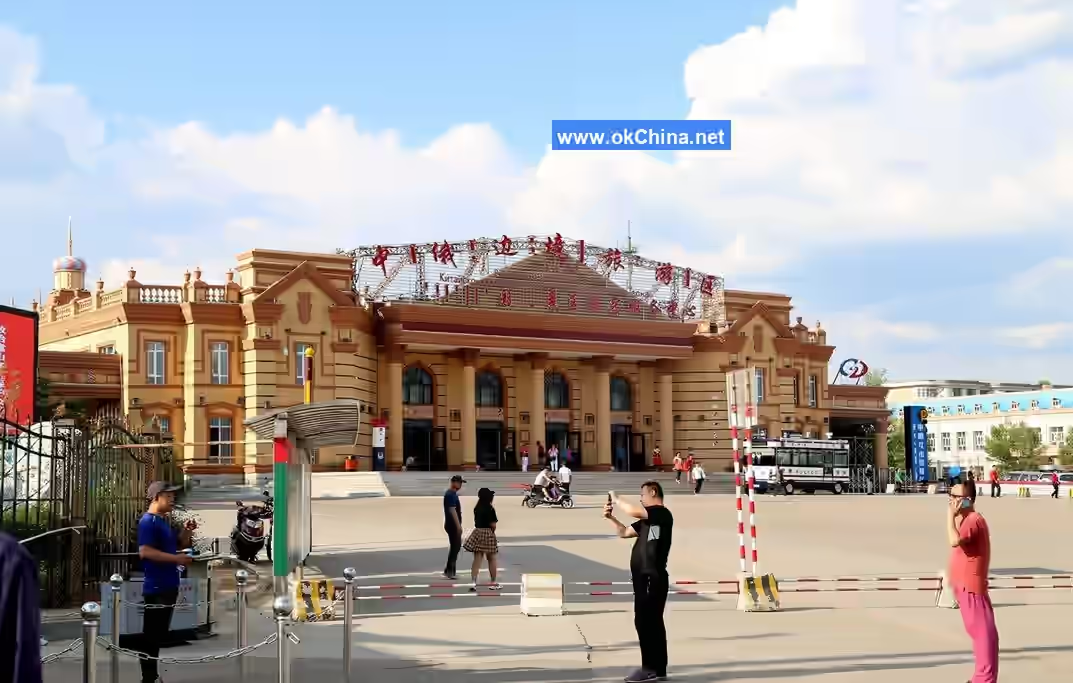
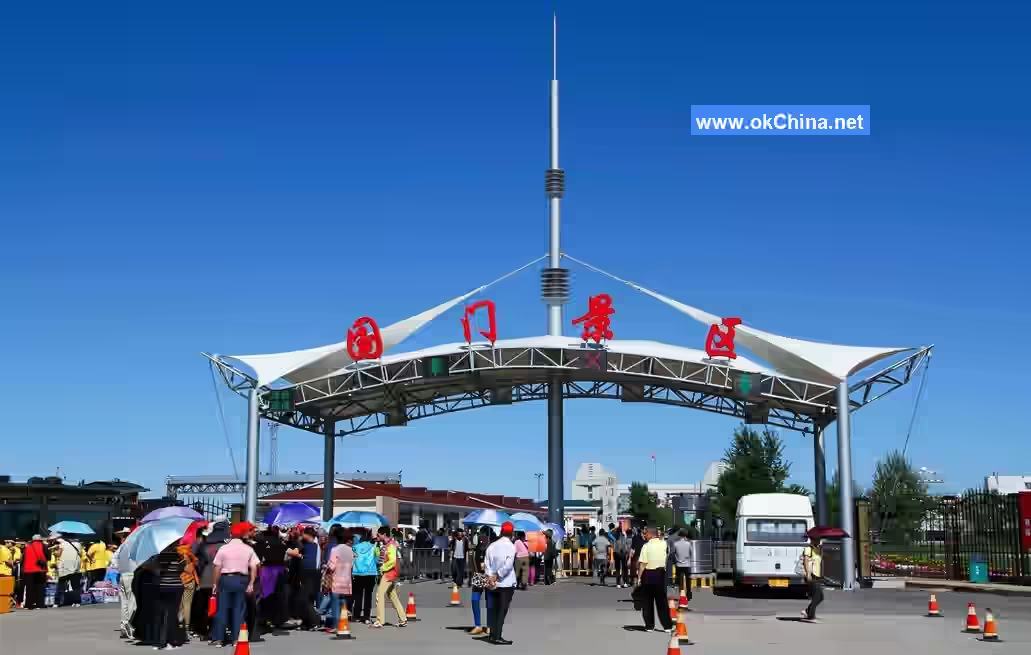
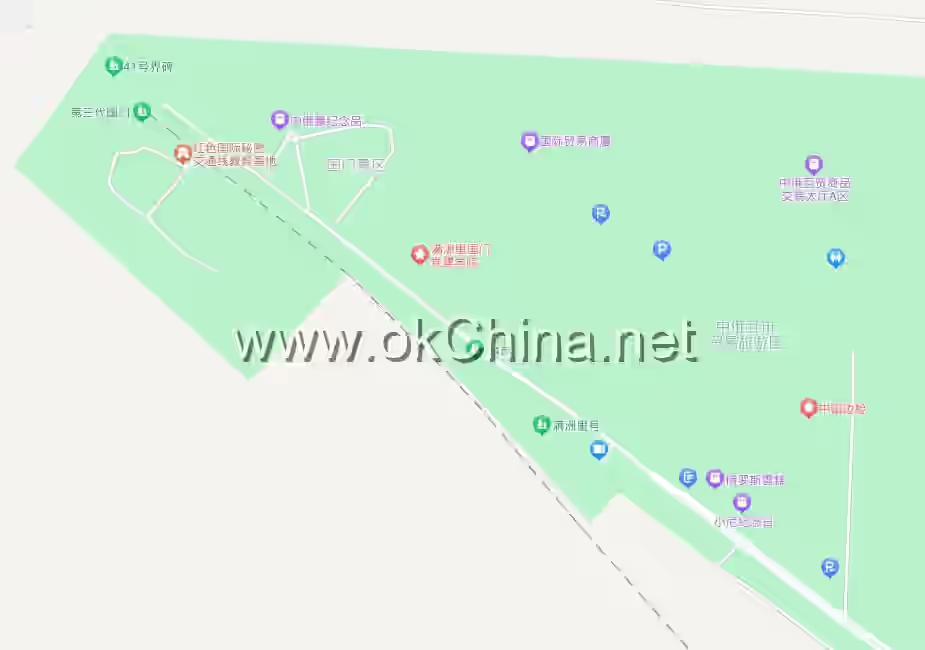
Leveraging its unique geographical environment, the China-Russia Border Tourism Zone integrates China's red culture and the essence of Russian customs, creating a distinctive tourism, leisure, and vacation base with northern frontier characteristics. It consists of two core areas: the National Gate Scenic Area and the Matryoshka Scenic Area.
II. City History
Manzhouli is located in Hulunbuir City, Inner Mongolia Autonomous Region, China. It is a century-old border port city. Originally named "Huolejinbulage," meaning "abundant spring water," Manzhouli's history dates back to the Yongzheng period of the Qing Dynasty, when the Qing government signed a series of border treaties with Russia and began establishing official garrisons. In 1901, the western line of the Chinese Eastern Railway was completed, and a railway station was built in Manzhouli, gradually transforming it into a vital land port.
Historically, Manzhouli served as a crucial junction for China, Russia, and Mongolia. Since the Qing Dynasty, it has been a significant channel for Sino-Russian trade. After the Opium War in 1840, Manzhouli was opened as a commercial port. The railway port opened in 1901, becoming a major distribution hub for China's imports and exports to Russia and Mongolia. Following the Russo-Japanese War, Manzhouli opened to Japan, leading to an influx of Japanese merchants and breaking the monopoly of Russian traders.
During the Republic of China era, Manzhouli became a fiercely contested market for Chinese, Japanese, and Russian merchants. During the War of Resistance Against Japan, the city suffered blockades and commercial decline. After liberation, the People's Government established the state-run "Public Cooperative" and gradually restored and developed the economy. Following the founding of the People's Republic of China in 1949, Manzhouli, as a major foreign trade channel, provided strong support for the nation's economic development.
Since the reform and opening-up, particularly after the normalization of Sino-Russian trade relations in the 1990s, Manzhouli has become a frontier for attracting foreign investment and generating export revenue, with import and export trade experiencing significant growth. Entering the new century, Manzhouli has handled an annual average of over 7 million tons of imported crude oil and more than 10 million cubic meters of imported timber, undertaking over 65% of the land transportation tasks for Sino-Russian trade.
Manzhouli is not only a century-old meritorious port but also a city that actively implements strategies of pioneering, leading development, focusing on people's livelihoods, and sharing prosperity. Relying on the National Key Development and Opening-Up Pilot Zone as its main framework, Manzhouli is accelerating the construction of a moderately prosperous society in all respects, achieving sound and rapid economic and social development. Today, Manzhouli is hailed as the "Window to East Asia," blending the cultural flavors of China, Russia, and Mongolia, and is a vibrant city full of opportunities.
III. Scenic Area Introduction
National Gate Scenic Area
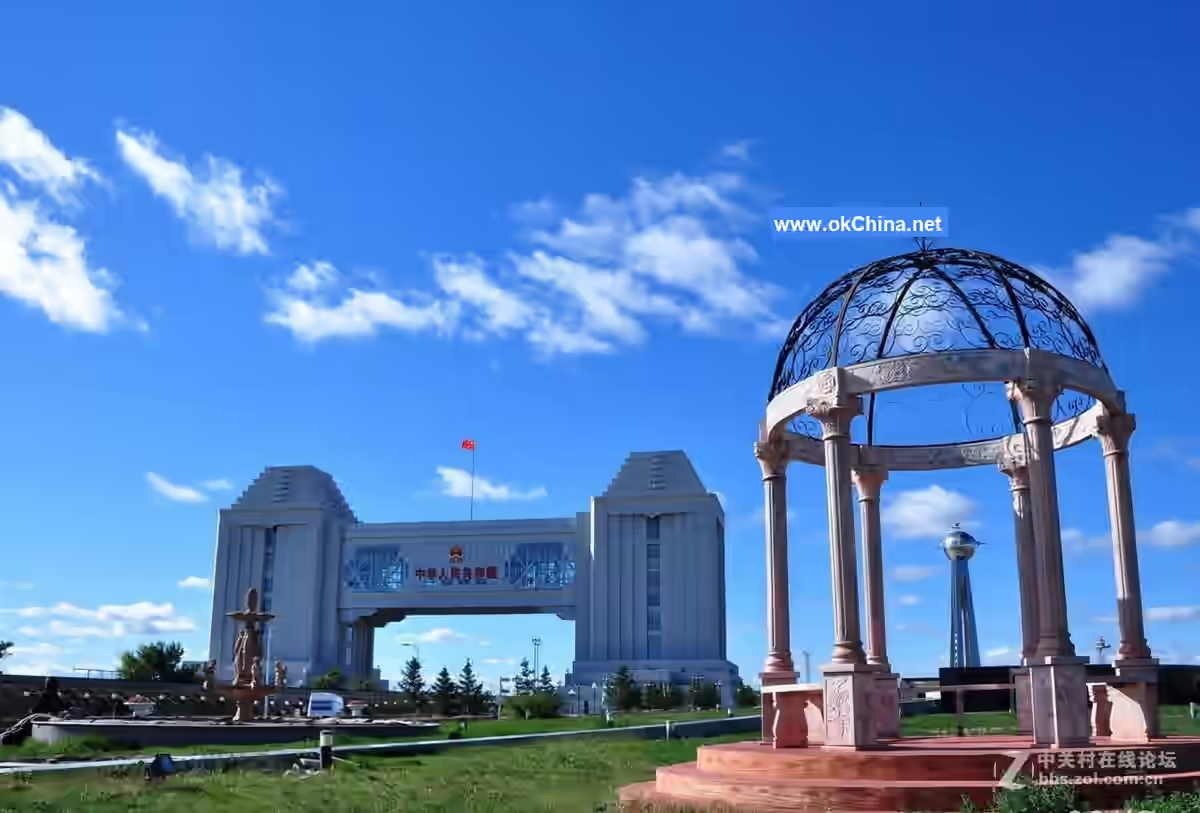
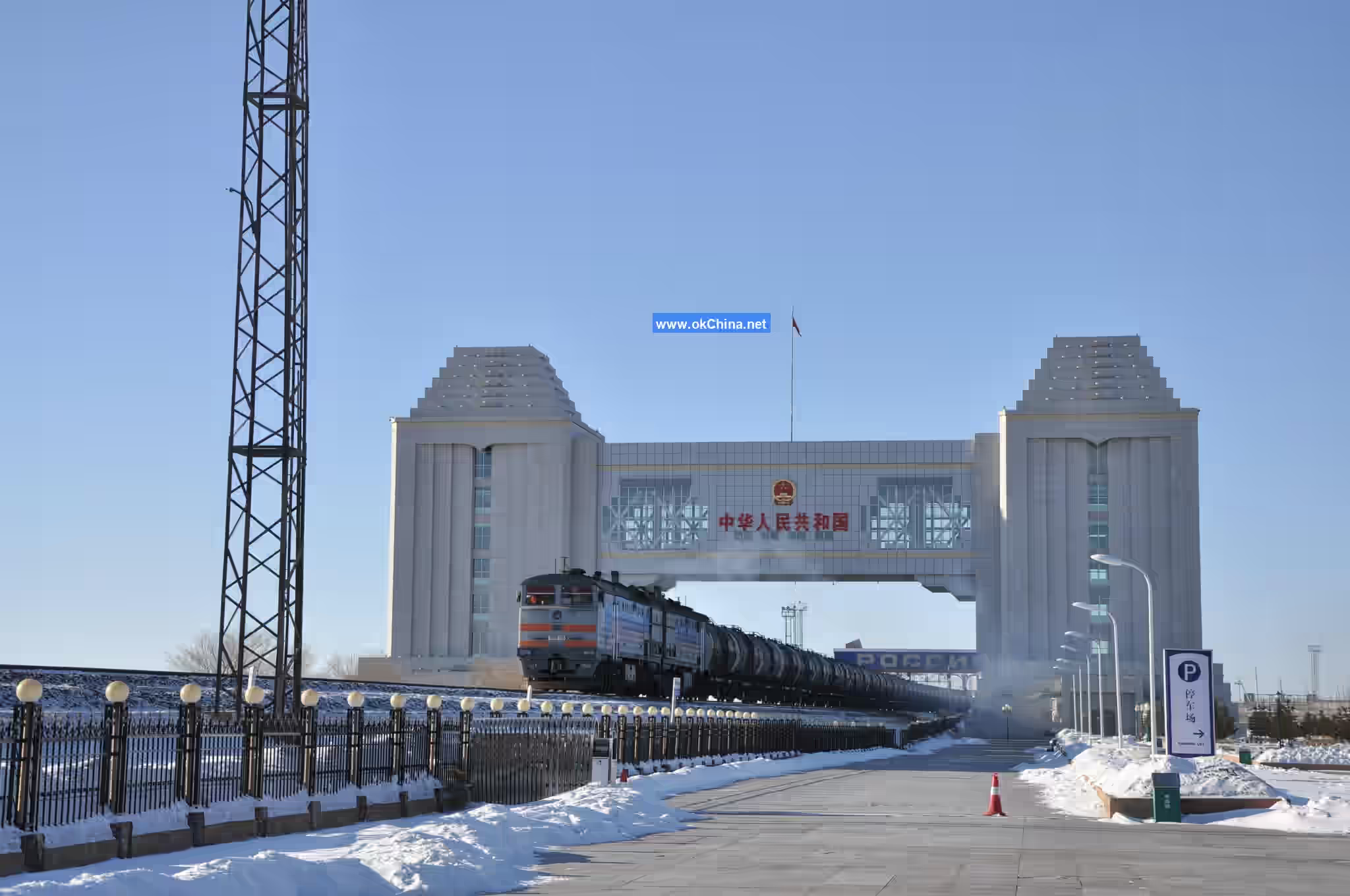
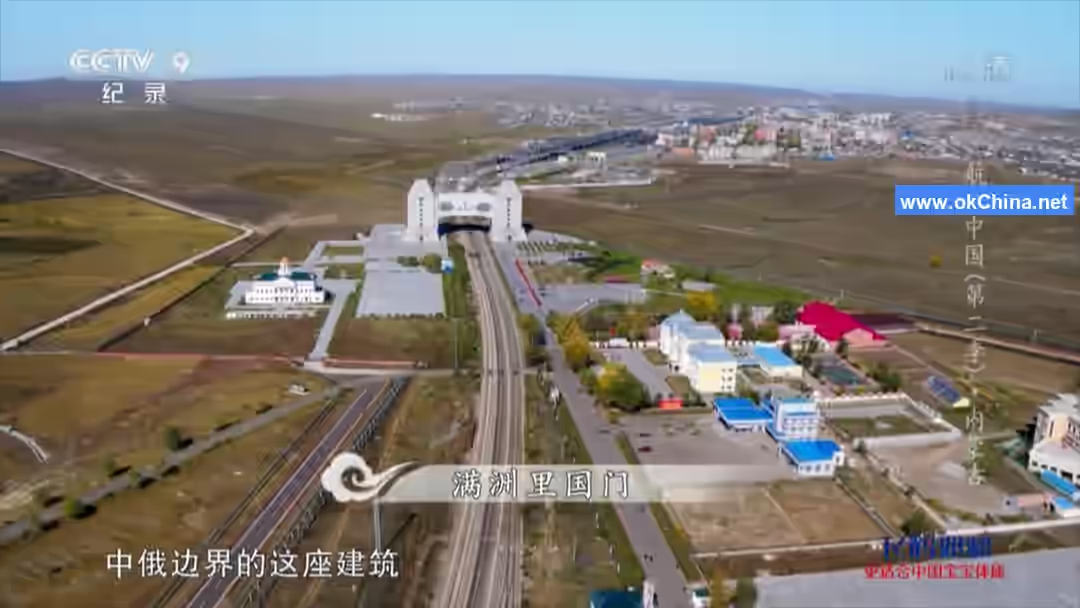
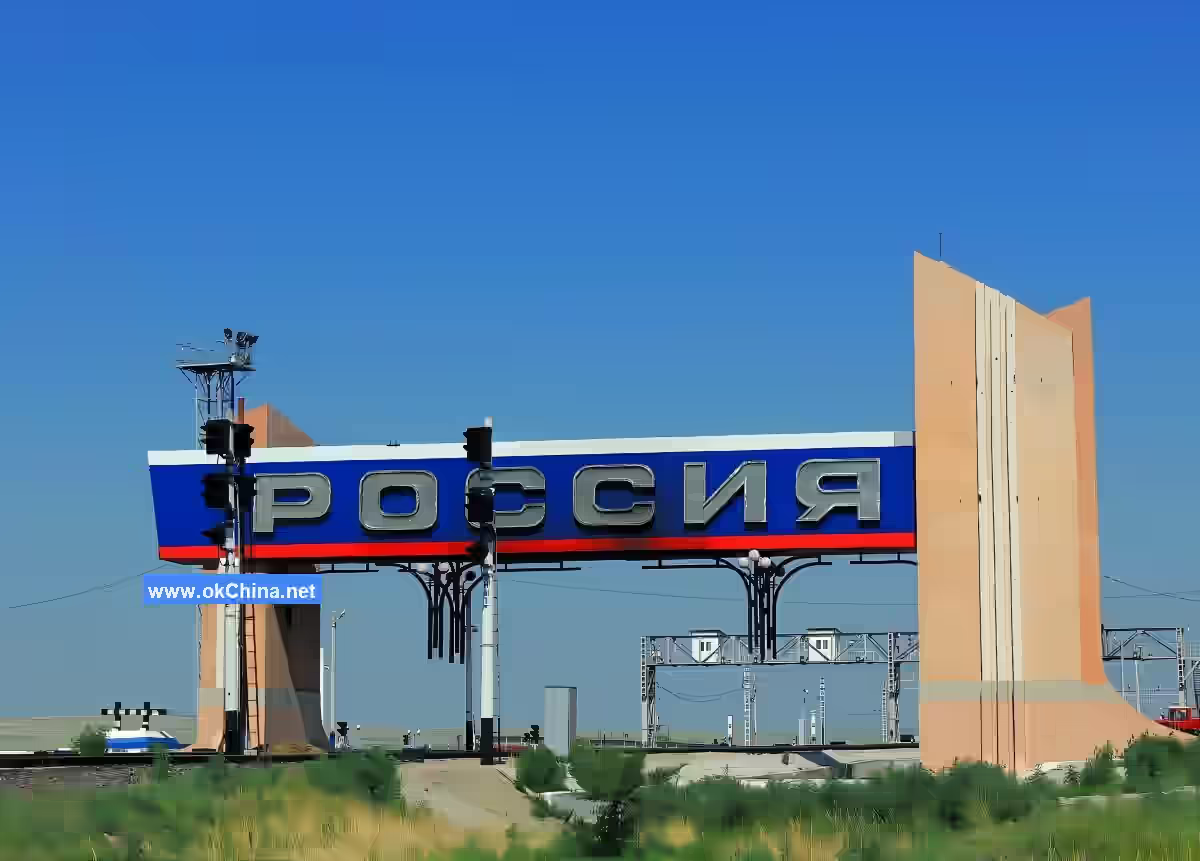
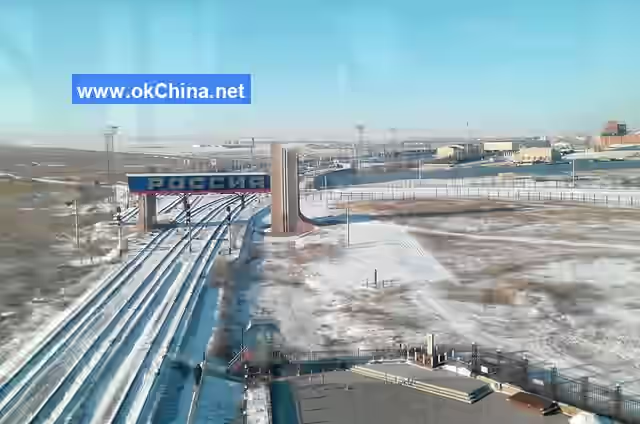
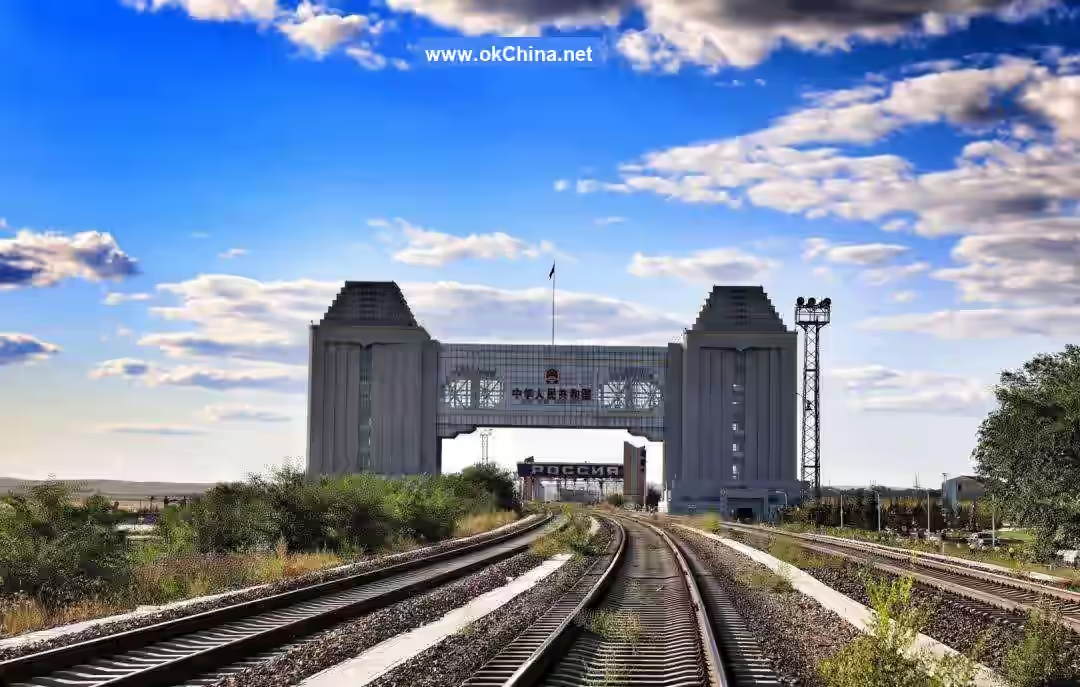
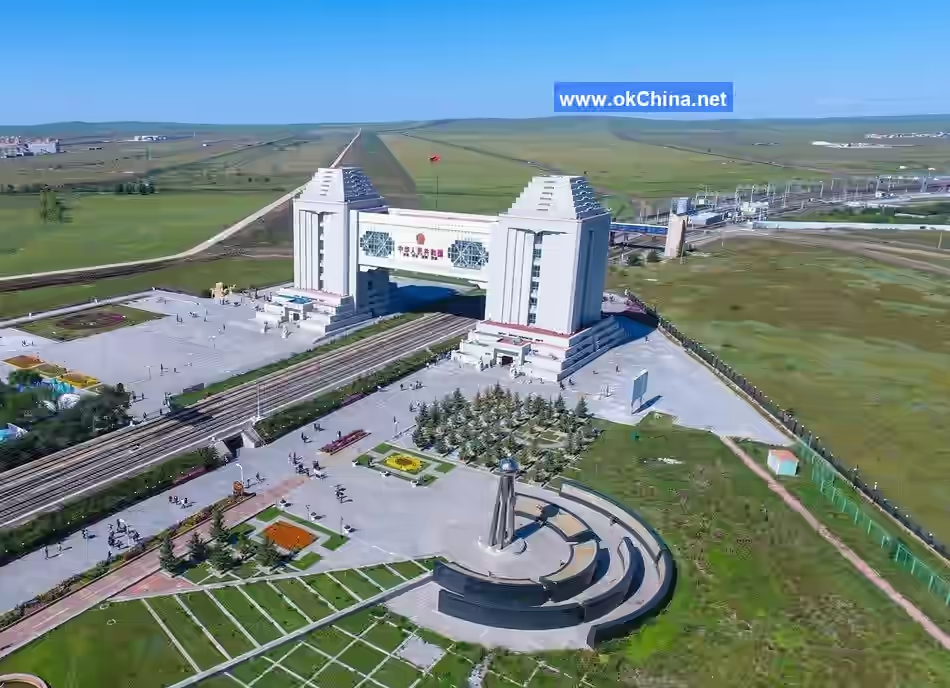
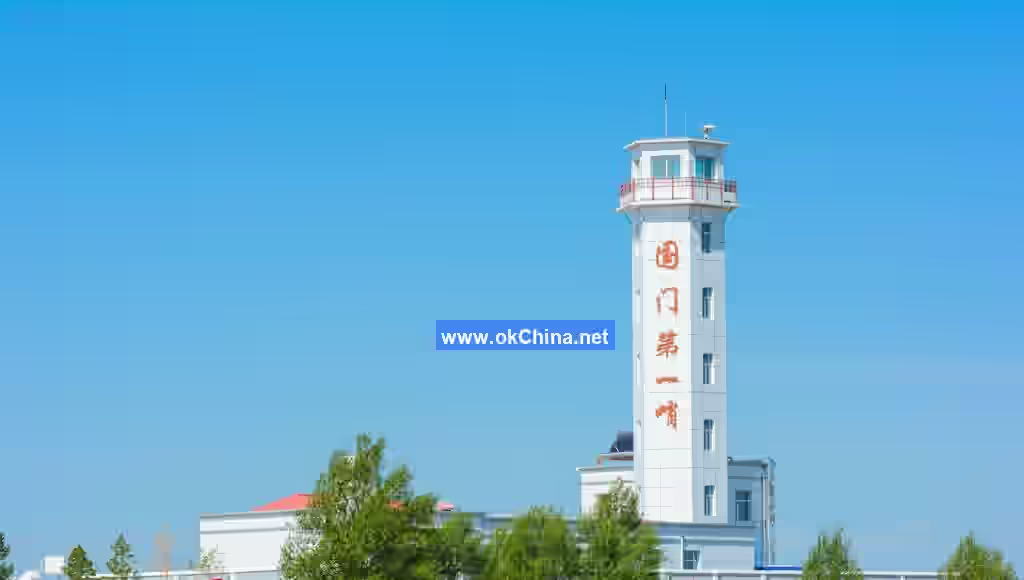
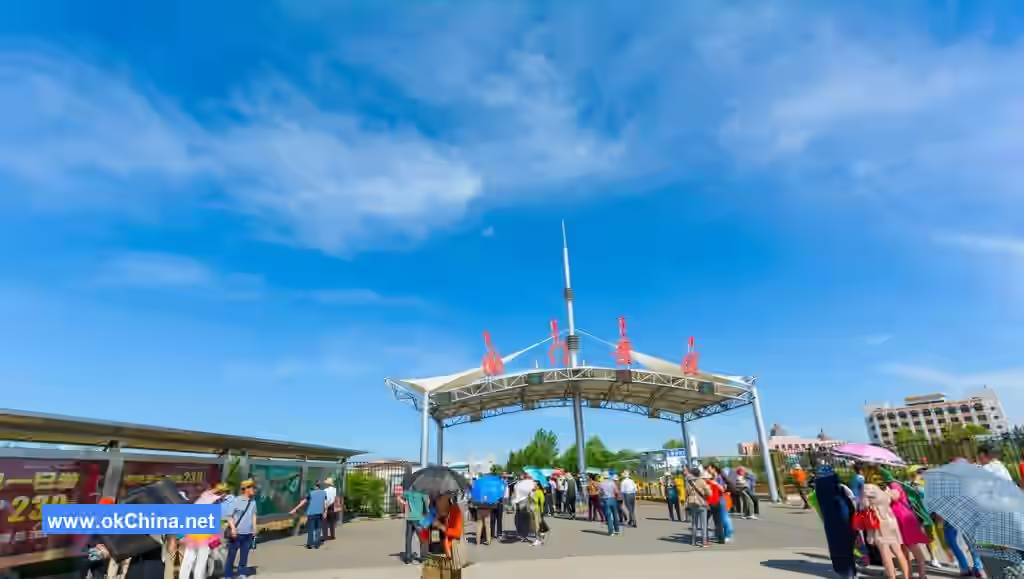
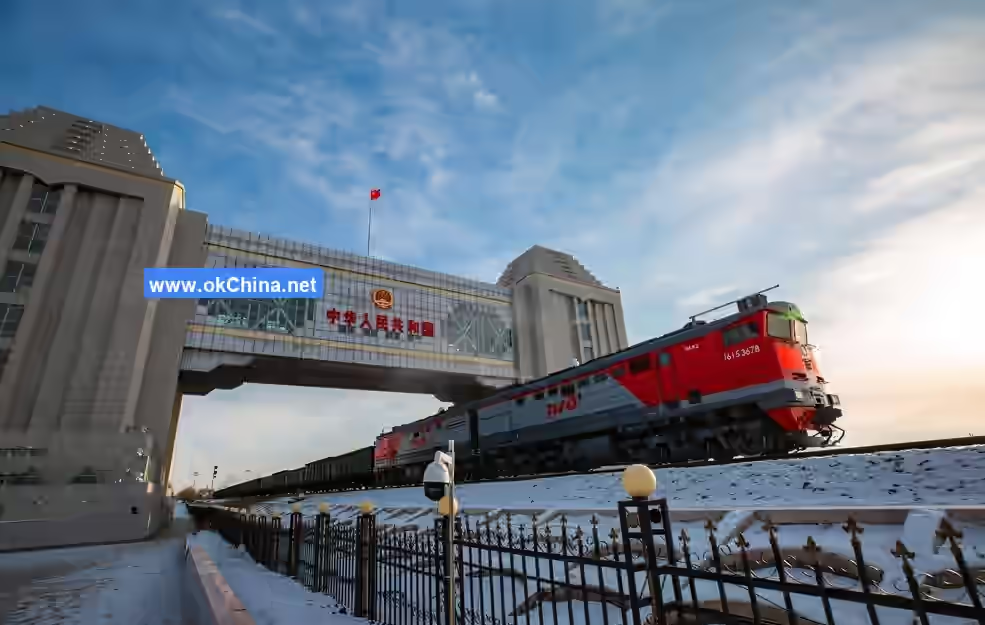
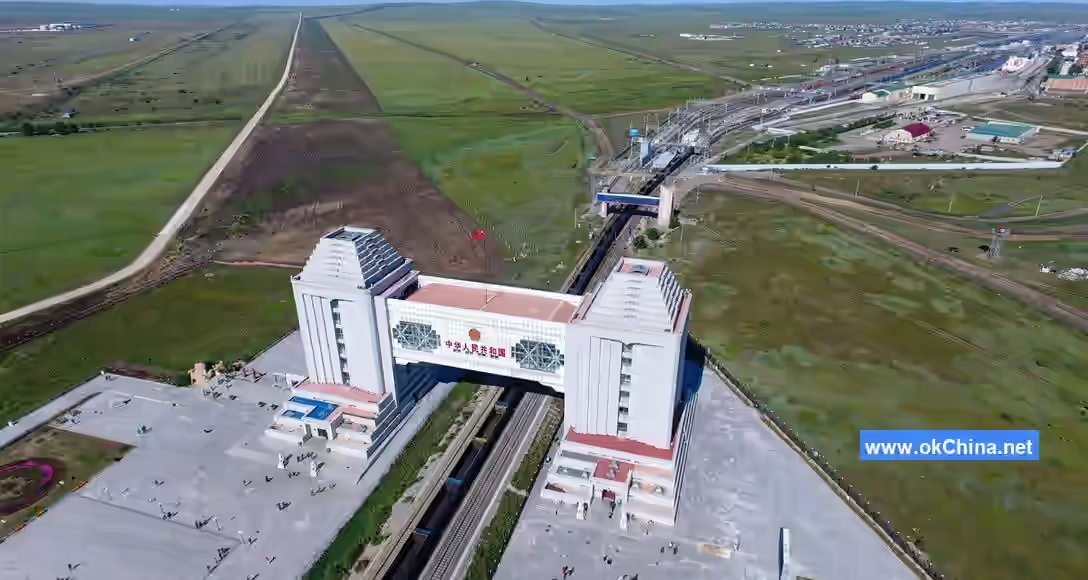
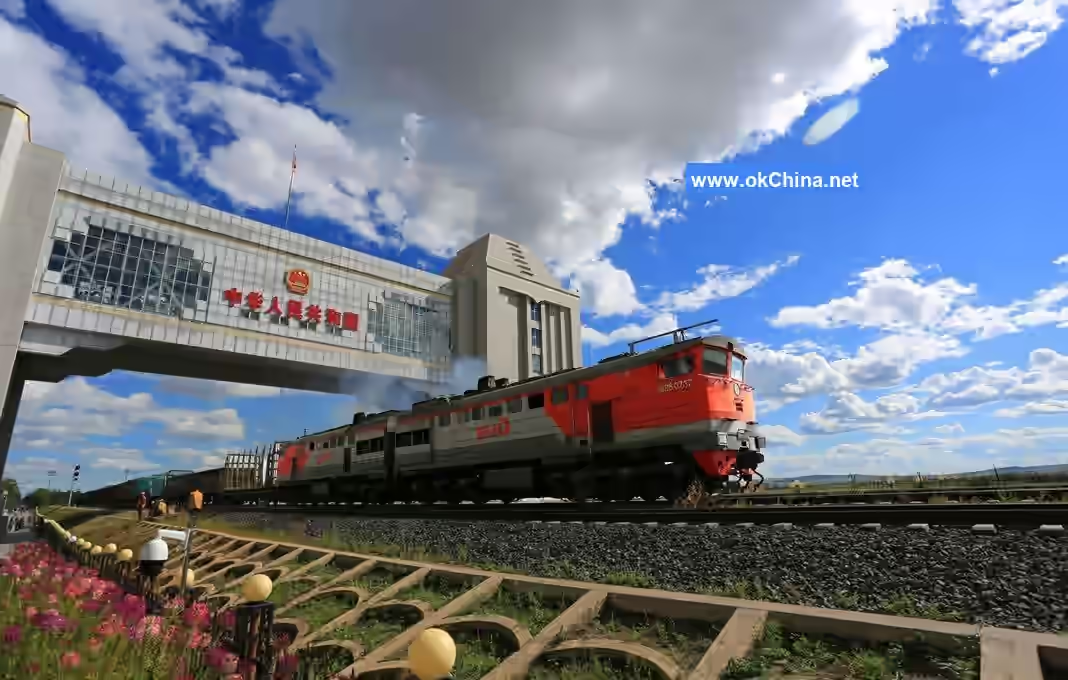
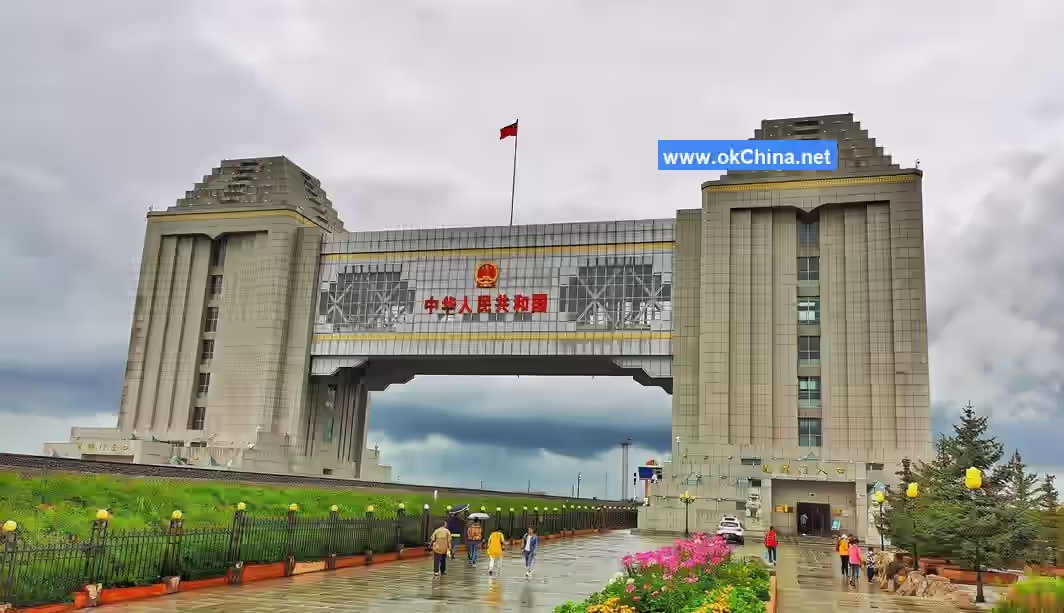
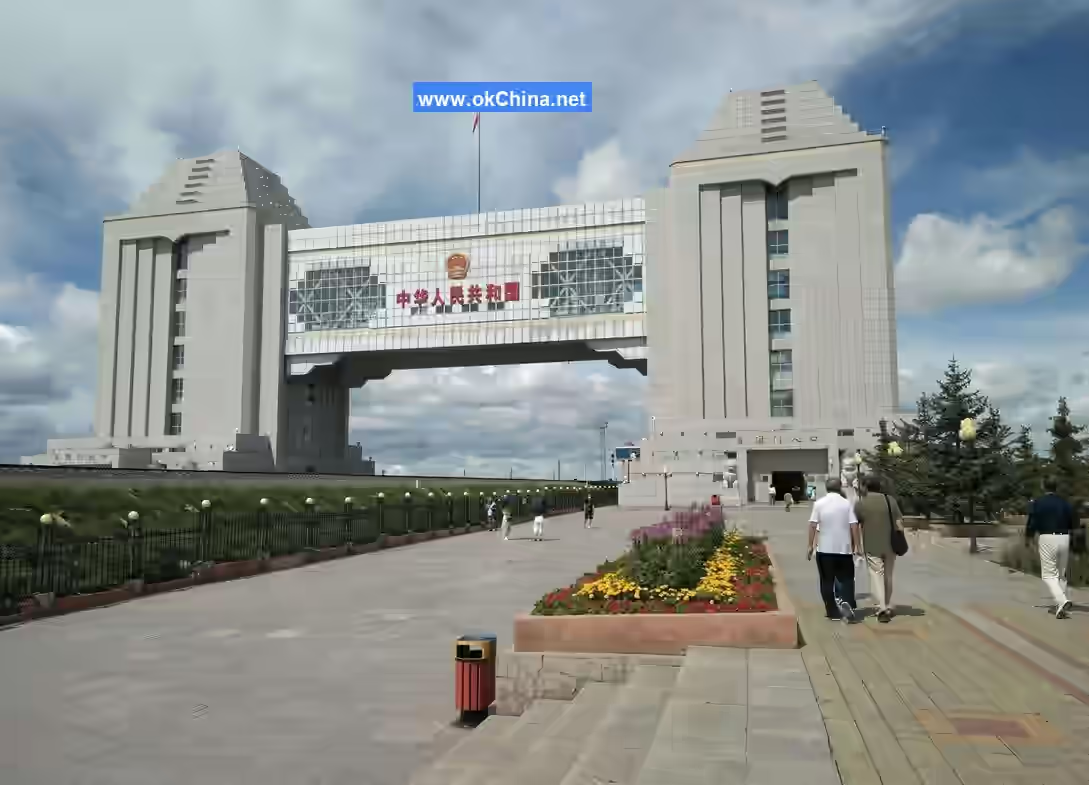
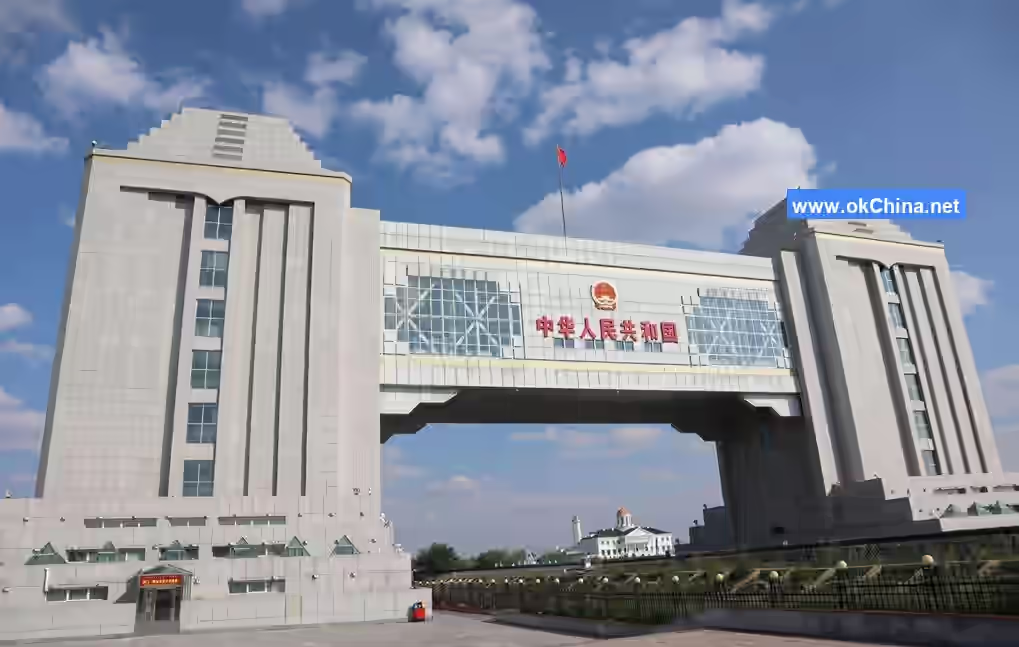
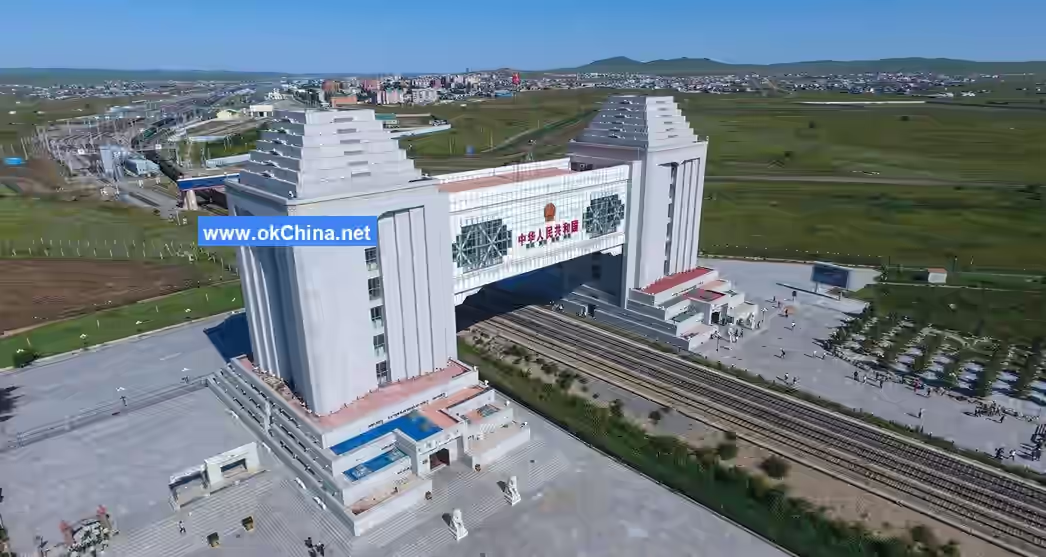
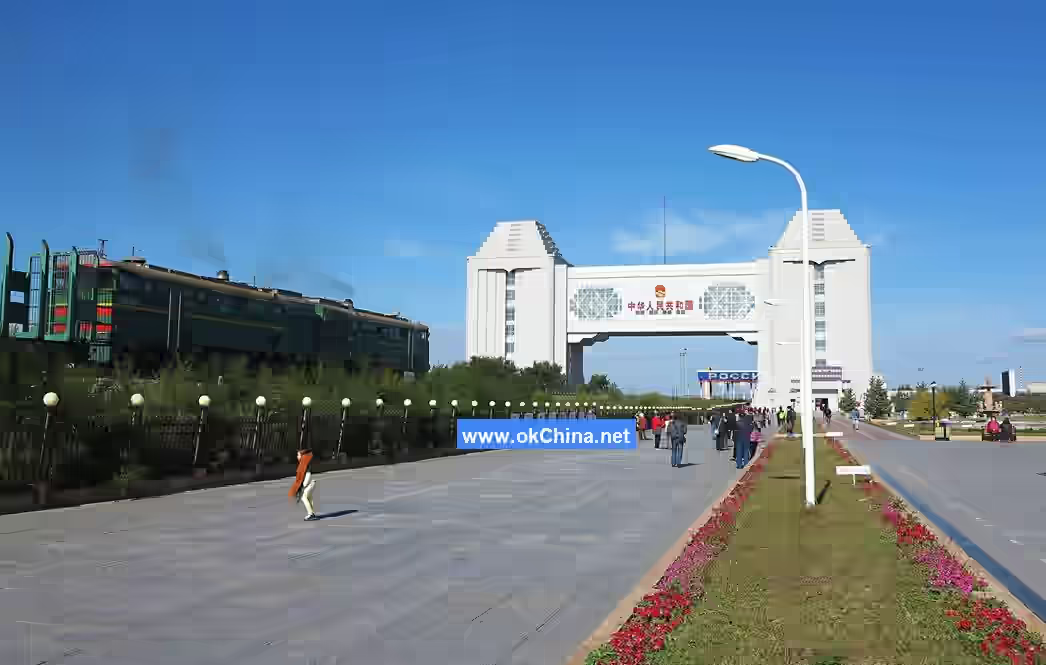
The National Gate Scenic Area is not only a landmark tourist attraction in Manzhouli but also an important patriotic education base, listed among China's 100 classic red tourism scenic spots. Located in the western part of the Sino-Russian Mutual Trade Zone in Manzhouli, 9 kilometers from the city center, the scenic area includes the National Gate, the No. 41 Boundary Monument, the site of the Manzhouli Red Secret Transportation Line, replicas of the four generations of national gates, the Gate of Peace Square, the Red Tourism Exhibition Hall, the Exhibition Hall of the Sixth National Congress of the Communist Party of China, and the Locomotive Square. Among these, the fifth-generation National Gate is the largest land port gate in China, standing opposite the Russian national gate. Visitors can ascend the gate to overlook the buildings and streets of Russia's Zabaikalsk District, making it a must-visit destination in Manzhouli.
History of the Sino-Russian National Gate
First-Generation National Gate
Built in 1902, it was constructed as part of the Siberian Railway extension into Chinese territory, renamed the "Eastern Qing Railway." At that time, the border was unilaterally established by Russia, with a wooden post erected on the left side of the railway embankment. The post featured a flattened wooden board inscribed in Russian with "Railway Border of Zabaykalsk Province." On the right side of the railway embankment, another wooden post with an iron double-headed eagle emblem was erected. The border was located at Macheyevsk, about ten kilometers from Zabaikalsk. These wooden posts, situated at the railway junction, were regarded as the "national gate."
Second-Generation National Gate
Built in 1920, also unilaterally constructed by the Soviet Union, it was relocated south to the Eighteen-Mile Town (now Zabaikalsk). The gate was a wooden arch structure, with the Chinese side inscribed with "Sino-Soviet Gate." However, after the Soviet Union occupied the Eighteen-Mile Town, the gate was dismantled by the Soviets in 1949.
Third-Generation National Gate
Built in 1968, it was initially an inspection bridge, also known as a trestle bridge. During the tense Sino-Soviet relations, Manzhouli served as an anti-revisionist front line, maintaining a high state of readiness. The bridge was constructed with an iron and wood structure, its main body welded from rails and painted green, with wooden boards embedded around it. The side facing west was inscribed in red paint with "Workers of the world, unite!" An iron ladder on the left side allowed observation of passing vehicles. Due to its gate-like appearance and location at the railway junction, it came to be known as the "national gate."
Fourth-Generation National Gate
Built in 1989, it was officially constructed by China as a symbolic national gate. Covering an area of approximately 774.5 square meters, the gate stood 12.8 meters high and 24.45 meters wide, inlaid with over 2,000 bluish granite slabs, each measuring 0.5 square meters. The center of the gate featured a 1.8-meter-high national emblem and the red characters "People's Republic of China." Below the gate, one broad-gauge and one standard-gauge railway line were laid. However, due to the increasing freight volume between China and Russia, the fourth-generation gate was dismantled in 2007 during the addition of a broad-gauge double track.
Fifth-Generation National Gate
Built in 2008, the gate measures 105 meters in length, 43.7 meters in height, and 46.6 meters in width, exuding grandeur. The center of the gate prominently displays the seven red characters "People's Republic of China," with the national emblem shining brightly.
Main Attractions
Locomotive Square
Completed in June 2004, the square features a "Yaxiya" type steam locomotive manufactured in Japan in 1940. The rails beneath the locomotive were made in the Soviet Union in 1925, known as 43 rails. This locomotive traversed the Chinese land for over half a century, playing out the "three movements" of its life journey and leaving behind many little-known stories. In the early days of the People's Republic of China, Chairman Mao Zedong traveled to the Soviet Union on a train pulled by this locomotive. The locomotive's number is "1861," where "18" represents the distance from Manzhouli to Zabaikalsk, Russia, which is 18 li (approximately 9 kilometers). "61" commemorates the six remarks Mao Zedong made to the locomotive's driver during his stay in Manzhouli: "We must maintain friendly neighborly relations with Soviet comrades, emphasize unity in ethnic minority regions, ensure the safety of military trains, prioritize cultural education, overcome difficulties caused by cold weather, and take care of our health." After returning to China, Mao Zedong called on the nation to build a new socialist China. From 1950 to 1965, this locomotive tirelessly served the nation's construction efforts on the steel transportation lines, making indelible contributions. Thus, the people of Manzhouli named it the "Manzhouli Number."
Gate of Peace Square
Built on July 28, 2002, the square features a stainless steel sculpture standing 13.8 meters tall. Its "M" shape resembles the Chinese character for "gate" (门) and also represents the first letters of "Manzhouli" in Pinyin, Russian, and English. The sphere atop the sculpture symbolizes the Earth, conveying the idea that while borders exist, the nation is connected to the world, reflecting the open-mindedness of the Chinese people. Five flying doves symbolize peace and the hope for friendly exchanges and progress with people from all over the world. Surrounding the Gate of Peace are seven groups of historical reliefs, depicting Manzhouli's long history and its bright future.
Red Tourism Exhibition Hall
Originally the Sino-Soviet Meeting Room, built in 1974, it was converted into the Red Tourism Exhibition Hall in June 2005. The exhibition hall consists of five sections: the Red International Secret Transportation Line, the Path to Truth, the Sixth National Congress of the Communist Party of China, the Dawn of Victory, and the Origins of Red Culture. Through detailed historical materials and artifacts, the exhibition hall presents a grand historical panorama of early Party leaders in the early 20th century bravely fighting in pursuit of truth.
Red International Secret Transportation Line
This site preserves the remnants of the Red International Secret Transportation Line in Manzhouli. As early as the 1920s to 1937, the Communist International and the Communist Party of China took advantage of Manzhouli's relatively weak reactionary forces, convenient transportation, and proximity to the Soviet Union to establish underground transportation stations. These stations facilitated the covert passage of Communists across the Sino-Soviet border. Early Party leaders such as Zhou Enlai, Qu Qiubai, Li Lisan, Luo Zhanglong, and Wu Xiuquan traveled to and from the Soviet Union under the cover of this secret transportation line. Statistics show that between 1931 and May 1934, over 70 comrades safely crossed the border. Revolutionary pioneers passing through here brought back the sacred flame of revolution from the Soviet Union, contributing to the founding of the Communist Party of China. Moreover, when the Sixth National Congress of the Communist Party of China was held in Moscow, delegates attending the conference passed through this route.### Matryoshka Scenic Area
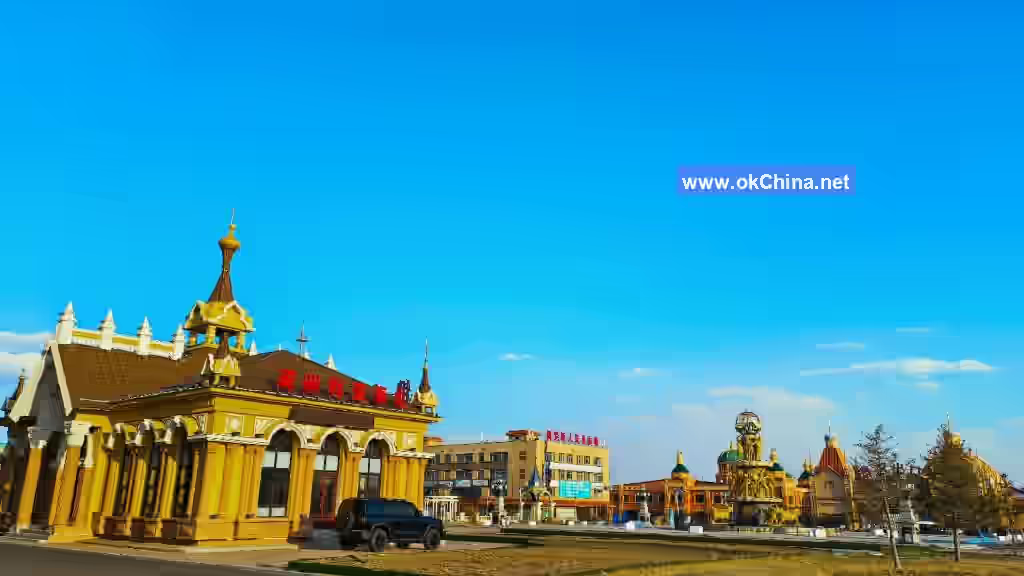
As a key component of the China-Russia Border Tourism Zone, the Matryoshka Scenic Area integrates the history, culture, architecture, and folk customs of Manzhouli and Russia. It features the world’s largest matryoshka doll and the largest collection of uniquely shaped buildings, serving as a large-scale Russian-themed park that combines dining, accommodation, transportation, sightseeing, shopping, and entertainment. The scenic area consists of three main themed zones: themed entertainment, themed park, and themed hotel.
Matryoshka Doll
The Russian matryoshka doll (Russian: матрёшка; English: Matryoshka doll) is a traditional Russian wooden toy, typically composed of multiple hollow wooden dolls of the same design nested inside one another, with up to over ten layers. They are usually cylindrical in shape with a flat bottom, allowing them to stand upright. Common colors include red, blue, green, and purple. The most typical design depicts a girl dressed in traditional Russian attire, known as Matryoshka, which has also become the general term for these dolls.
The matryoshka doll first appeared in 1890. Inspired by the Japanese "Fukusuke doll" toy, artist Sergei Malyutin proposed the idea of creating a detachable wooden doll and designed the first matryoshka. It was carved by craftsman Vasily Zvyozdochkin and painted by Malyutin himself. This original set consisted of eight dolls: the outermost layer depicted a round-faced village girl wearing an embroidered shirt, a sarafan skirt, an apron, and a floral headscarf, holding a black rooster. Inside were nested dolls of a young man and a girl, with the innermost doll being an infant.
Entertainment
The area features world-renowned Russian circus performances, the "Impressions of Matryoshka" outdoor live show, an ultra-realistic 6D dome flying theater, a dreamlike holographic ballet theater, the Matryoshka Russian-Mongolian performance restaurant, and numerous high-tech indoor and outdoor amusement facilities. These elements combine to create a themed entertainment zone that blends distinctive performances with dynamic recreational activities.
Park
The park’s architecture is modeled after Russia’s most iconic buildings, recreated on a reduced scale within the area. It includes a Russian Folk Experience Hall, a China-Russia Friendship Exhibition Hall, a direct-sales zone for Russian food and handicrafts with on-site processing, and the Matryoshka Square.
Hotel
The Matryoshka Hotel covers nearly 100,000 square meters and boasts over a thousand guest rooms, making it the largest themed tourist hotel in the Hulunbuir region. The main building is the world’s largest matryoshka-shaped structure, integrating dining, accommodation, business, conferences, and tourism to offer the diverse functions of a distinctive themed hotel.
The planning and development of the Matryoshka Scenic Area are being progressively refined. In the future, key attractions such as an ice and snow-themed "Ice and Snow World" and a self-driving campground focused on in-depth tourism will be opened. These additions aim to create a "four seasons, four sceneries" experience for the China-Russia Border Tourism Zone, further enhancing the functional layout of the 5A-level scenic area and elevating the influence of this branded destination.
Comments
Post a Comment