Mangdang Mountain Han Cultural Tourism Area in Shangqiu
1. Introduction
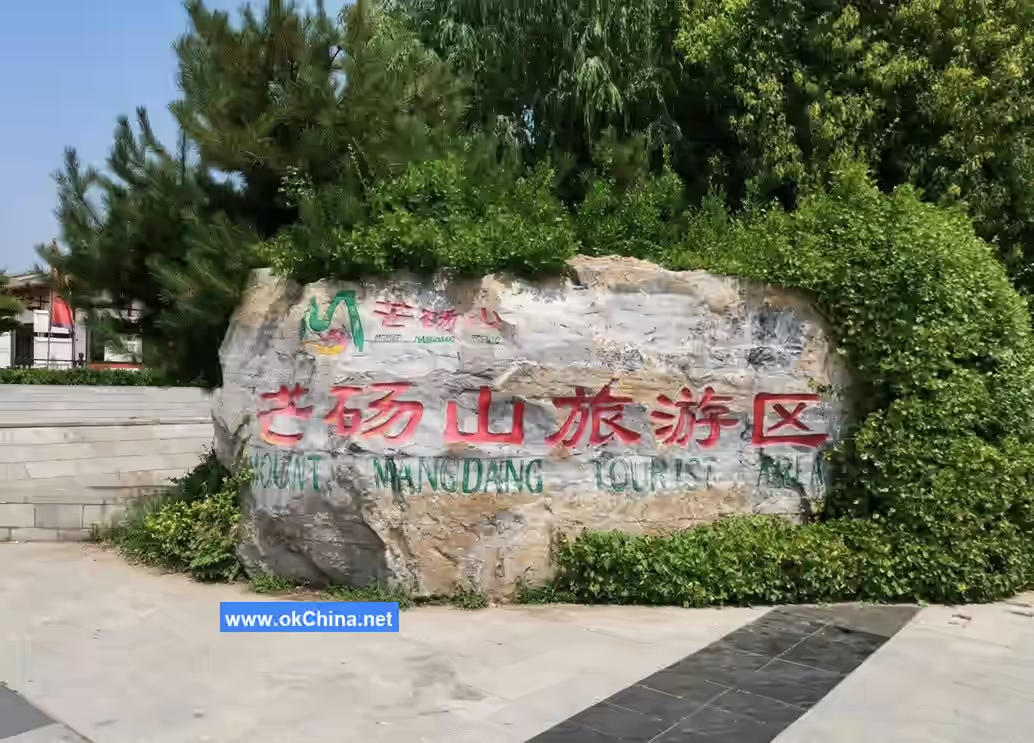
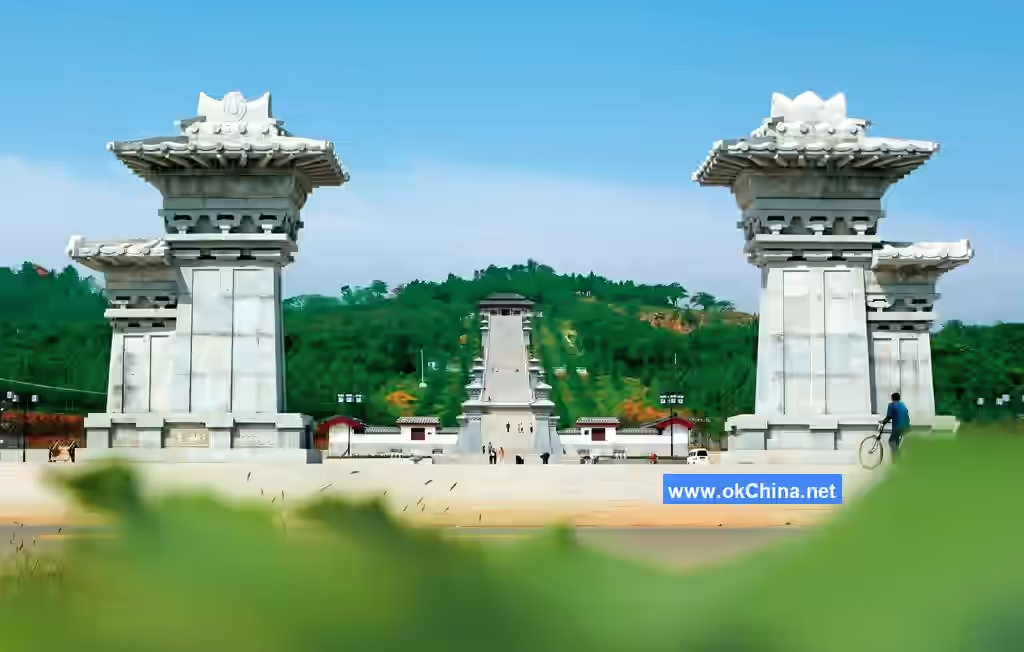
The Mangdang Mountain Han Cultural Tourism Area in Shangqiu, also known as the Mangdang Mountain Han Cultural Tourism Area, is located in Yongcheng City, Henan Province. It is a tourist destination integrating landscape sightseeing, cultural appreciation, and ecological leisure. The Lianhuo Expressway and Jiqi Expressway pass through the area, and the Yongcheng North Station of the Zhengzhou-Xuzhou High-Speed Railway is 4.5 kilometers away from the scenic area.
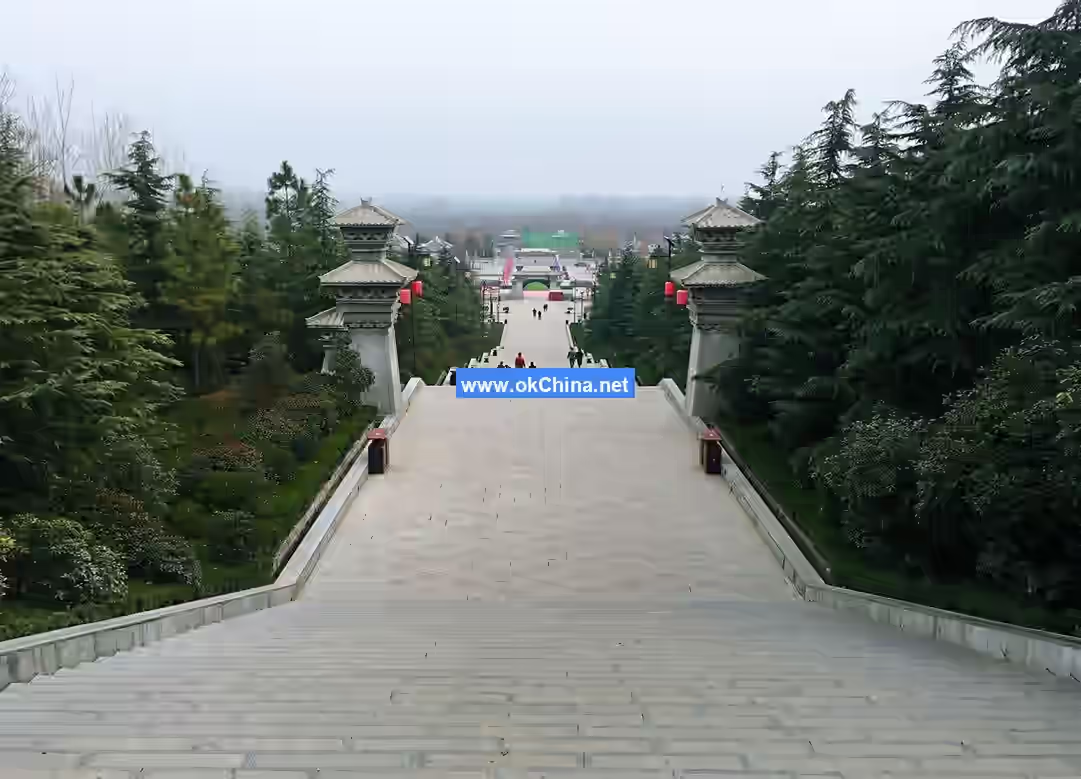
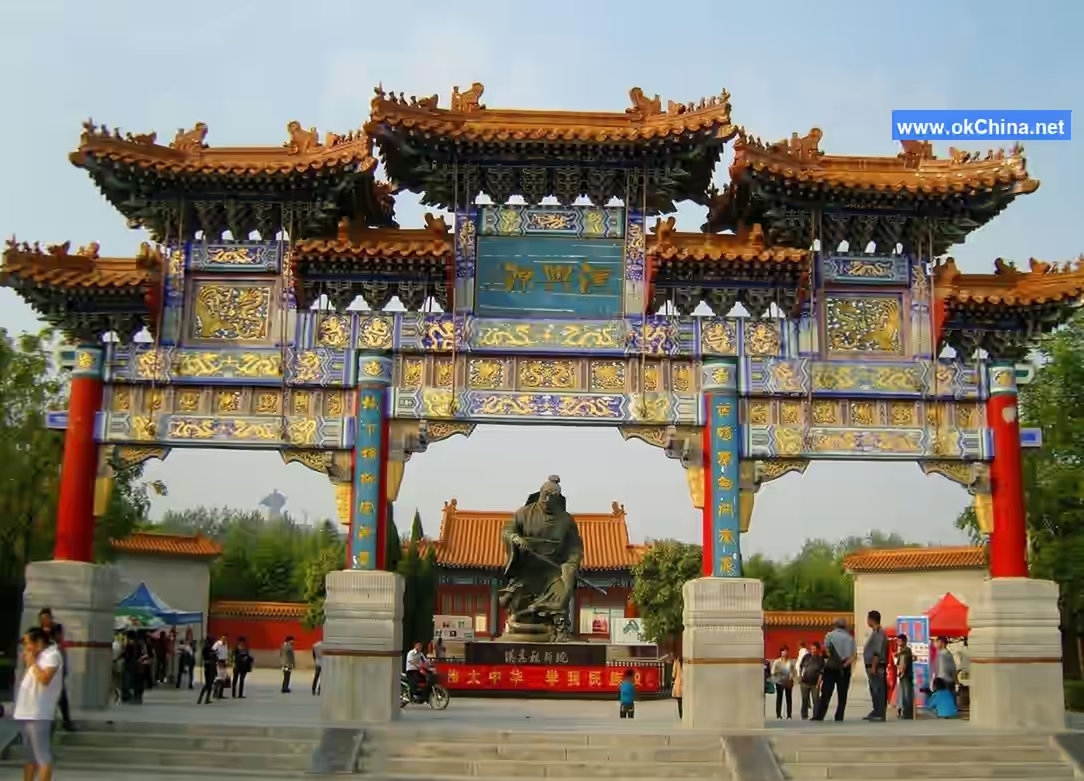
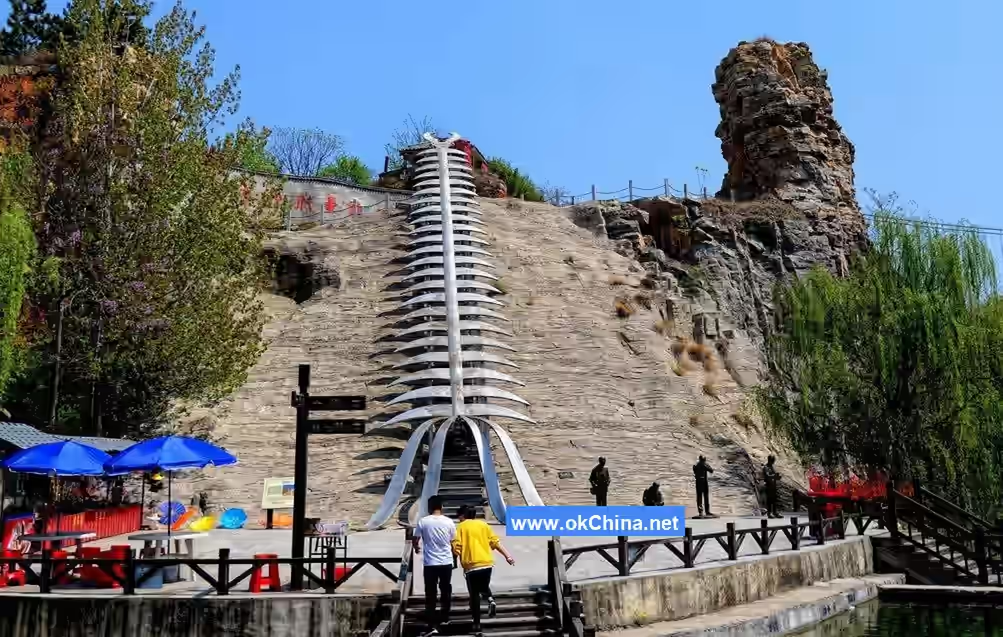
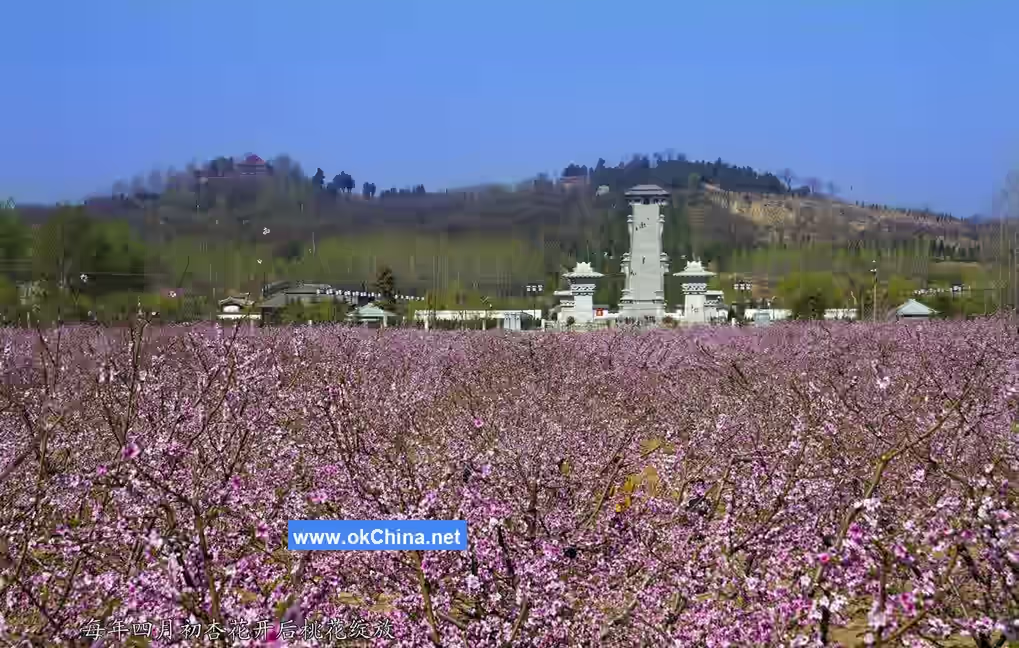
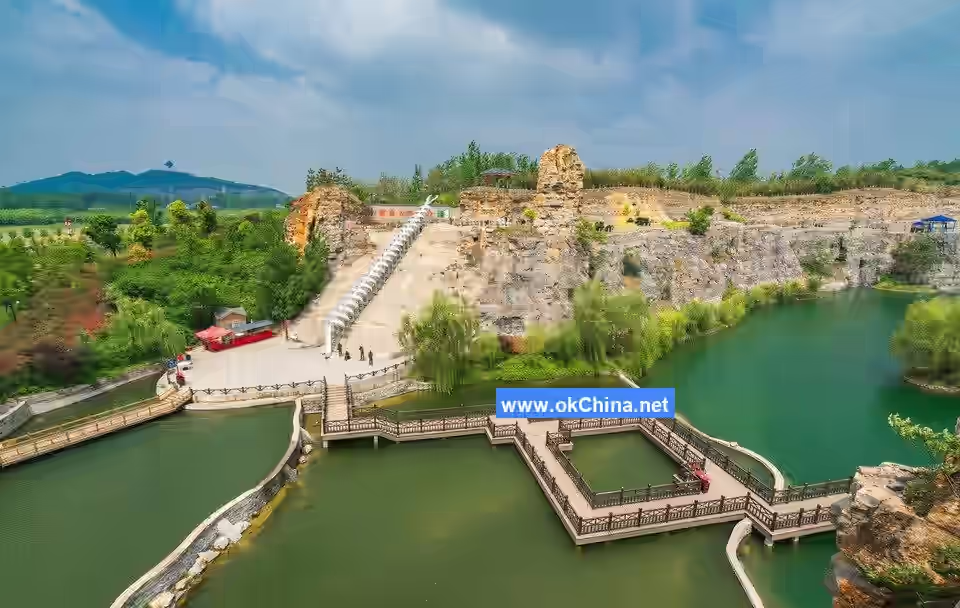
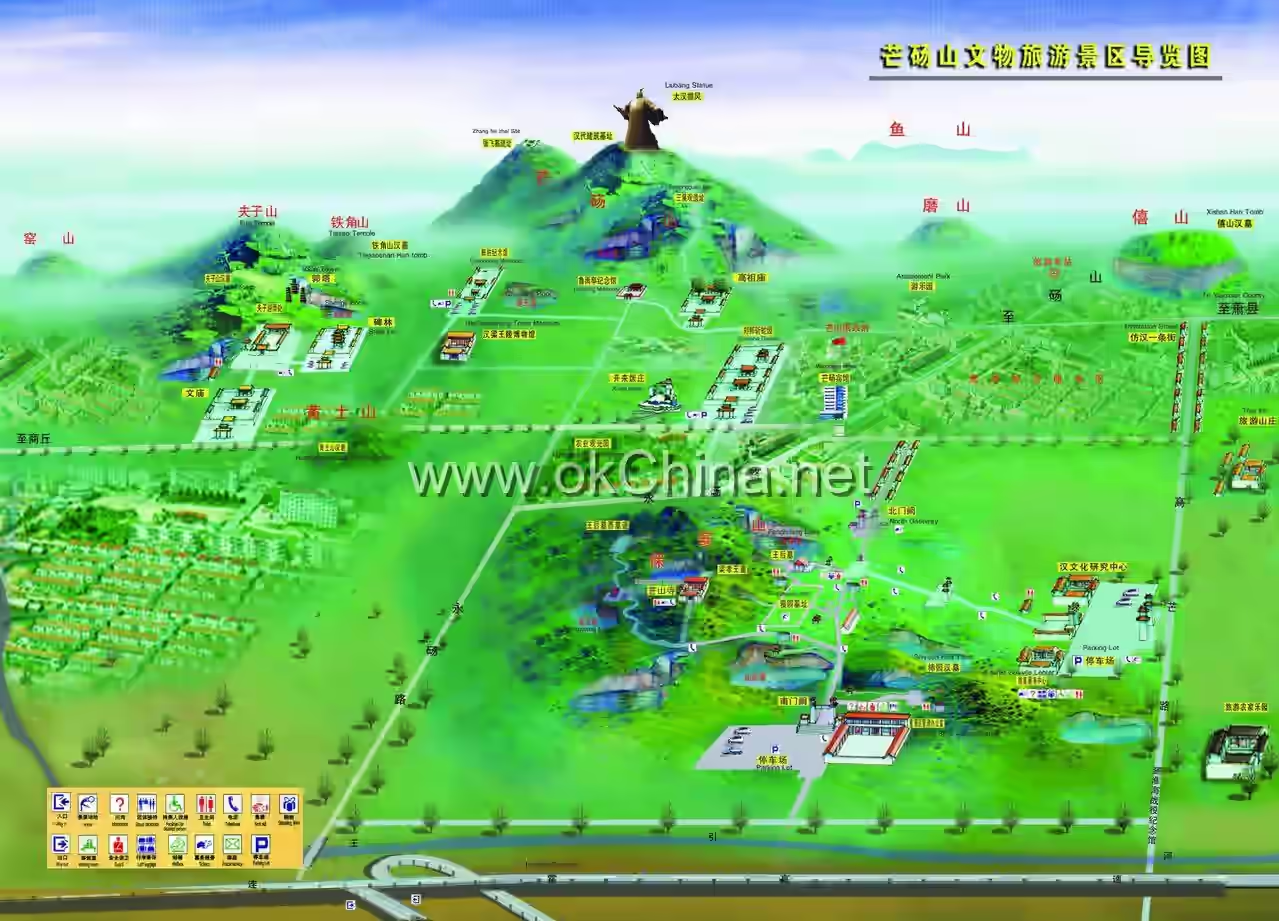
Covering an area of 14 square kilometers, the Mangdang Mountain Han Cultural Tourism Area features attractions such as the Han Dynasty Liang Kings' Tombs, the site where Liu Bang slew the serpent, the "Great Han Majesty" statue, the Mangdang Mountain Geological Park, the Tomb of Chen Sheng, and the Confucius Cliff. National treasures unearthed from the Western Han Dynasty royal tombs, including the "Four Deities and Cloud Patterns" mural and the jade burial suit sewn with gold thread, shine as brilliant gems of Chinese culture.
2. Geographical Environment
2.1 Location and Transportation
The Mangdang Mountain Han Cultural Tourism Area is situated in Mangshan Town, Yongcheng City, connected to six major tourist cities: Xi'an, Luoyang, Zhengzhou, Kaifeng, Xuzhou, and Lianyungang. It is approximately 80 kilometers east of Xuzhou Guanyin Airport and about 90 kilometers west of Shangqiu Airport. The Yongcheng-Mangshan Road and Shangqiu-Xuzhou Road run through the area. The Lianhuo Expressway and Jiqi Expressway intersect in a cross shape, with two expressway exits: the Mangdangshan Station on the Lianhuo Expressway and the Yongcheng North Station on the Jiqi Expressway. The area is 4.5 kilometers from the Yongcheng North Station of the Zhengzhou-Xuzhou High-Speed Railway.
2.2 Climate
The Mangdang Mountain area enjoys a warm temperate monsoon climate with four distinct seasons and ample sunshine. The average annual temperature is 14.34°C, and the average annual rainfall is 871.3 mm, providing abundant precipitation and moderate temperatures. The Jian River and Wangyin River flow through the region.
2.3 Geology and Topography
The Mangdang Mountain area was formed during the middle to late Yanshanian period, approximately 80 to 137 million years ago. The mountains are primarily composed of limestone and aplite. From the summit of the main peak to the flatland in front, the soil types include light stony soil, gray stony soil, cinnamon soil, moist cinnamon soil, and alluvial soil. The Mangdang Mountains feature an eroded residual hill landform, with over 20 hills of varying sizes. The main peak, standing at an elevation of 156.8 meters, is centrally located. Baoan Mountain and Li Mountain stand to the south, Xi Mountain rises to the east, Huangtu Mountain, Tiejiao Mountain, Fuzi Mountain, and Tao Mountain lie to the west, while Mo Mountain, Ma Mountain, Xu Mountain, Zhou Mountain, Wang Mountain, and Yu Mountain meander and scatter across the northern area.
3. Main Attractions
3.1 Site Where Liu Bang Slew the Serpent
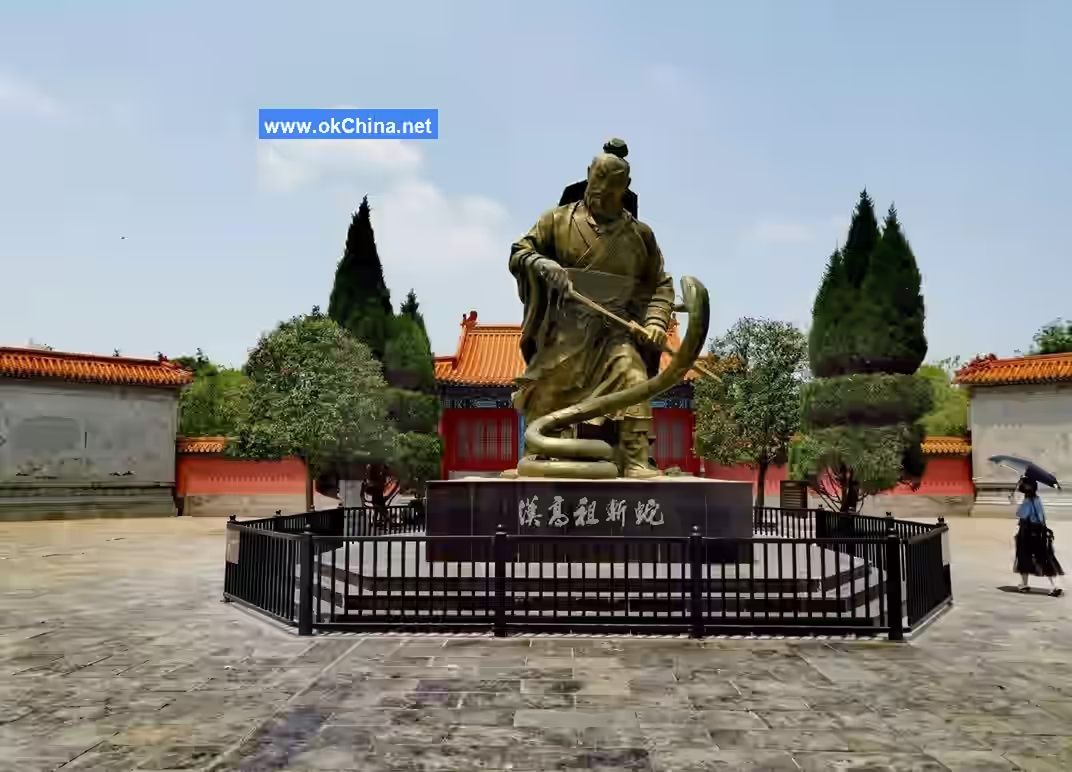
This site features a stele erected by later generations to commemorate Emperor Gaozu of Han, Liu Bang, slaying a serpent and initiating an uprising. Located at the southern foot of the main peak of Mangdang Mountain, it was first built during the reign of Emperor Wen of Han and has been reconstructed multiple times. The current stele is a replica of a Ming Dynasty stone tablet, standing 2.39 meters high. The stele's top is inscribed with the characters for "sun and moon" and "the site where Han Gaozu slew the serpent." The base is a massive stone tortoise (bixi). When illuminated at night, the stele reveals a majestic phantom image of Liu Bang, hailed as a "wonder of the world."
3.2 Queen's Mausoleum
Located on the northern peak of Baoan Mountain in Mangdang Mountain, the Queen's Mausoleum faces east. It is about 200 meters south of the Mausoleum of Prince Xiao of Liang. The tomb has two passageways, each about 80 meters long and 5.5 meters wide, along with 34 side chambers and corridors. The interior covers a planar area of 16,000 square meters with a volume of approximately 6,500 cubic meters. Its grand scale and complex structure make it the largest stone-chambered mausoleum discovered in China to date, acclaimed as the "Foremost Stone-Chambered Mausoleum under Heaven." The tomb contains China's earliest ice storage chamber, flush toilet, and a mysterious "Longing Path." In 1991, it was recognized as one of the "Top Ten Archaeological Discoveries of 1991."
3.3 Mausoleum of Prince Xiao of Liang
This is the tomb of Liu Wu, Prince Xiao of Liang. The northern peak houses the tomb of his wife, Queen Li, forming an underground palace complex where the couple is buried in "shared mound, separate chambers." The mausoleum was carved into the mountain to form its outer walls and tunneled through rock for its burial chambers. It measures 96 meters in total length, with a maximum width of 32 meters, covering an area of about 700 square meters. In 1994, it was listed as one of the "National Top Ten New Archaeological Discoveries during the Eighth Five-Year Plan period." It was designated as a National Key Cultural Relics Protection Unit in 1996.
3.4 Mausoleum of Prince Gong of Liang
This is the tomb of Liu Mai, Prince Gong of Liang, located southeast of the Mausoleum of Prince Xiao of Liang. Excavations yielded a large number of chariot and horse fittings, pottery figurines, weapons, approximately 5.5 tons (about 2.25 million pieces) of copper coins, a flush toilet, and precious artifacts such as a maid figurine dubbed the "Eastern Venus." The front hall of the underground palace preserves the national treasure—the "Four Deities and Cloud Patterns" mural, representing the pinnacle of Western Han painting art and hailed as "the Dunhuang before Dunhuang, the Dunhuang beyond Dunhuang." The discovery of this mausoleum was a significant archaeological find in the Liang Kingdom royal cemetery of the Han Dynasty at Mangdang Mountain. It was listed as one of the National Top Ten New Archaeological Discoveries in 1994.
3.5 Tomb of Chen Sheng
Located at the southwestern foot of the main peak of Mangdang Mountain, the Tomb of Chen Sheng faces south. It is an earthen mound with a stone-vaulted structure. The existing mound is 2.6 meters high with a circumference of about 27.3 meters. It is surrounded by a bluestone wall, and a tall stele stands in front of the tomb. The inscription, "Tomb of Chen Sheng, Leader of the Peasant Uprising at the End of the Qin Dynasty," was personally written by Guo Moruo. The tomb mound is nestled among mountains and shaded by verdant pines and cypresses. After Liu Bang became emperor, he assigned 30 households to guard the tomb. To this day, local people still acknowledge themselves as descendants of those tomb guardians.
3.6 Great Han Majesty
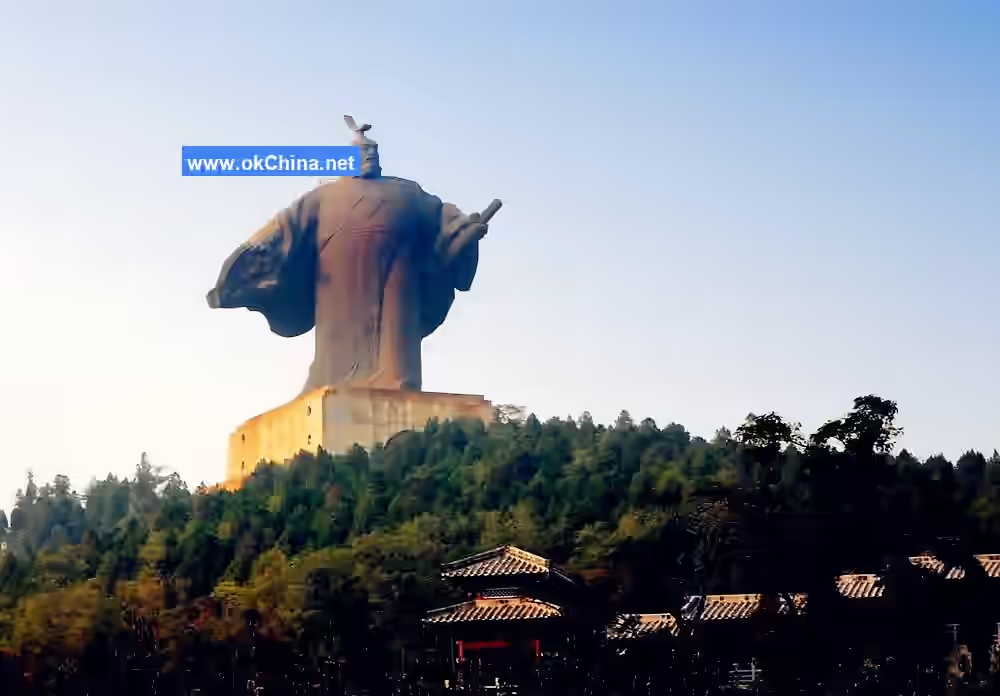
Situated on Chidi Peak, the main peak of Mangdang Mountain, the "Great Han Majesty" statue was erected to commemorate Liu Bang's slaying of the serpent at Mangdang Mountain and his founding of the four-century-long Han Dynasty. The statue itself is 29.9 meters tall, with an 11-meter-high base, totaling 40.9 meters in height, making it the largest historical figure statue in Asia. Visitors can take an elevator to the observation platform located at the statue's shoulder, offering a panoramic view of the scenery within an 80-li radius around Mangdang Mountain. Here, visitors can truly experience the意境 of "ascending the mountain's crest, dwarfing all peaks under one's sight."
3.7 Confucius Cliff
Also known as the Confucius Sheltering-from-Rain Site, this is a natural cave located on the southern slope of Fuzi Mountain. Legend has it that in the late Spring and Autumn period, Confucius and his disciples traveled among states on their way from Cao to Song. Passing by Mangdang Mountain, they encountered heavy rain and took shelter here, where Confucius lectured. The cave is approximately 8 meters from north to south, 10 meters from east to west, and 2 meters high. Its walls are even, and the floor is smooth. Inside stands a stone statue of Confucius, about 1 meter tall, depicting him with hands clasped, neck slightly drawn in, and sitting cross-legged. The statue is exquisitely carved and lifelike. The "Green Dripping Cliff" here is one of the Eight Scenic Spots of Yongcheng.
3.8 Confucius Temple
Also known as the Temple of Culture, it is located at the southern foot of Fuzi Mountain in Mangdang Mountain. Fuzi Mountain derives its name from Confucius sheltering from rain, drying books, and lecturing here during his travels among states. Later generations built this temple and erected steles in his honor. The exact founding date of the temple is unknown; it was destroyed by war in the late Ming Dynasty. The existing temple is a late Qing Dynasty structure facing south, consisting of the Qisheng Hall, east and west wing rooms, and the Dacheng Gate. In the courtyard, beneath the shade of two ancient thousand-year-old cypress trees in front of the central platform, stand three stone steles.
3.9 Geological Park
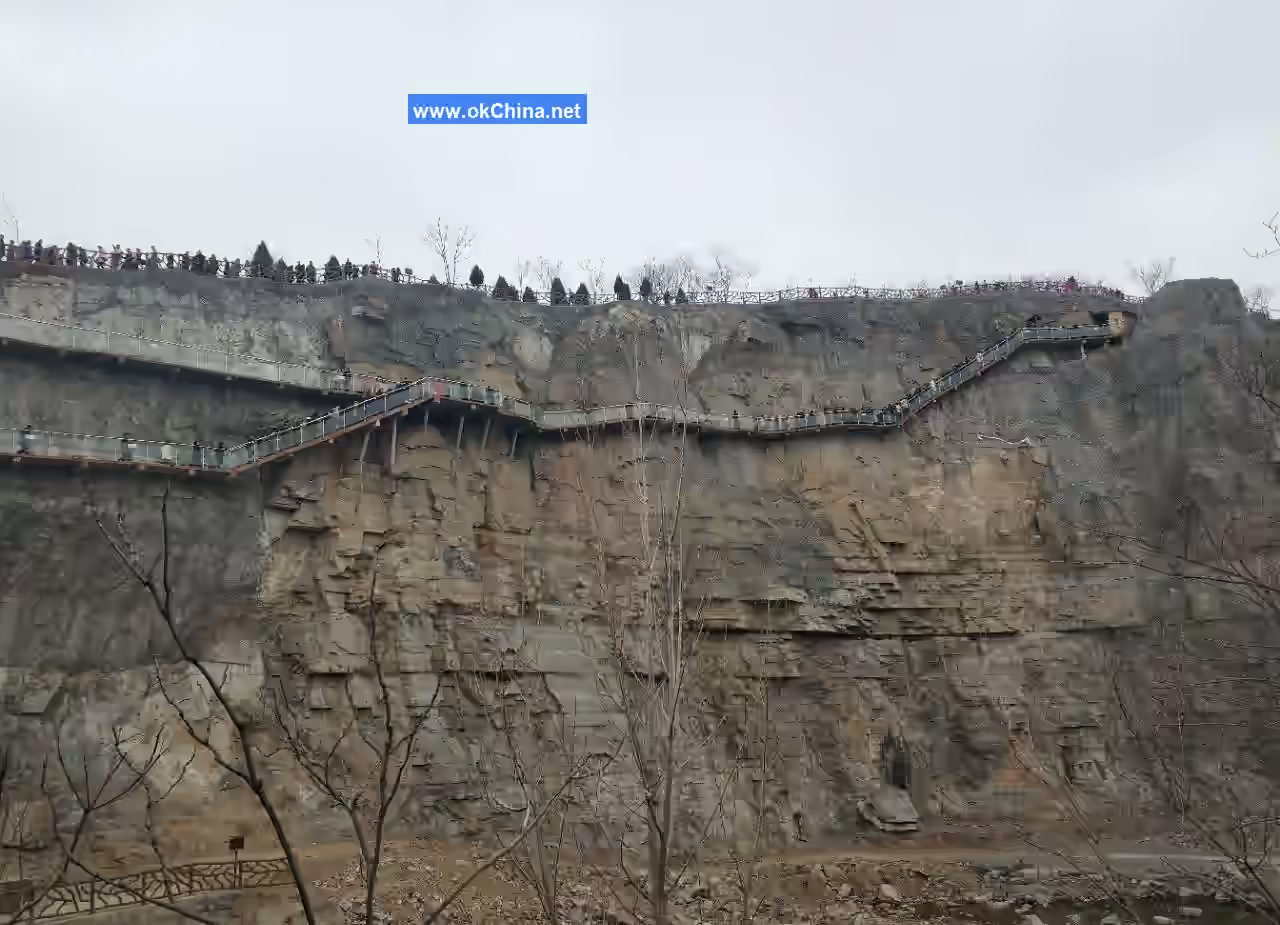
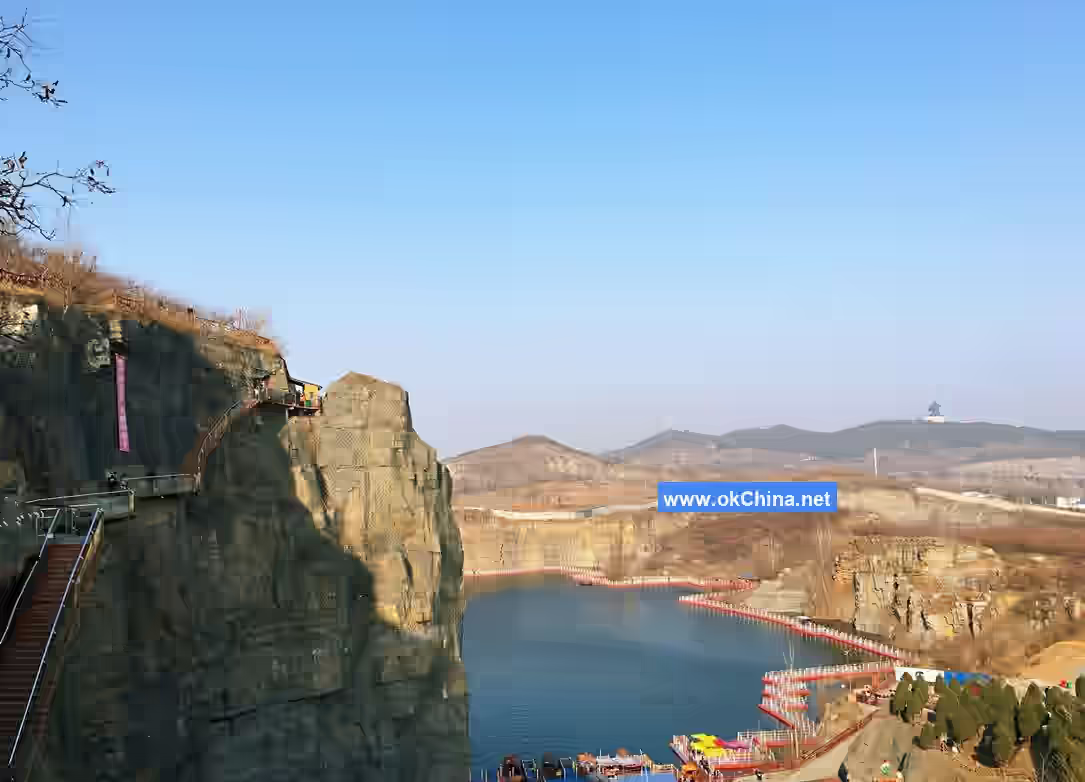
The Mangdang Mountain Geological Park covers a total area of about 50 square kilometers, divided into two zones: Mangdang Mountain and Yu Mountain, encompassing five scenic areas: Baoan Mountain, Mangdang Mountain, Fuzi Mountain, Xi Mountain, and Yu Mountain. The currently open area is located in the Baoan Mountain scenic area, featuring main attractions such as the Mangdang Mountain Geological Museum, Geological Culture Square, Cambrian Lake, Cambrian Culture Corridor, Cambrian Ecological Garden, Chinese Zodiac Garden, and ecological landscaping. The park contains various typical geological and geomorphological relics, unique in eastern Henan and rare within the province.
3.10 Other Attractions
These include the Han Dynasty Ritual Architecture Foundation Site at Mangdang Mountain, the Han Dynasty Stone Relief Tomb at Xi Mountain, Zhangfei Fortress, the Former Site of Sanxing Taoist Temple, Ancient Well & Ginkgo Tree, Mangdang Mountain Han Culture Museum, Mangshan Temple, Temple of Emperor Gaozu of Han, Imperial Dragon Spring, Purple Qi Rock, Chidi Peak, Site of the Resting Garden of Prince Xiao of Liang, Fuzi Mountain, Guo Pagoda, Guanyin Pavilion, Wenshi Pond, Lu Yuting Memorial Hall, Former Residence of Lu Yuting, Lu Ziming Stele Forest, Tomb of Martyr Lu Yuting, Site of Dang City, Xi Mountain, and Yu Mountain.
4. History and Culture### 4.1 History
According to the Records of Dangshan County, Mangdang Mountain was a famous quarry in ancient times. The Yellow Emperor once inspected Mangdang Mountain, and Chi You was active here.
From the Western Zhou to the Spring and Autumn Period, Mangdang Mountain was part of the territory of the State of Song. It is said that Duke Xi of Song was buried on Mount Xi. Confucius, "leaving Cao for Song," happened to pass by Mangdang Mountain to take shelter from the rain, leaving behind the world's only mountain named after "Confucius"—Mount Fuzi. The Biographies of Immortals, Extensive Records of the Taiping Era, and Records of Yongcheng County document that during the Warring States period, Mozi once lived in seclusion on Zhou Di Mountain north of Mangdang Mountain. Emperor Qin Shi Huang established Dang County at the foot of present-day Mangdang Mountain, where the ruins of Dang City remain to this day. "It is said that Qin Shi Huang observed an imperial aura in the southeast and thus traveled east to suppress it." Emperor Gaozu of Han, Liu Bang, hid in Purple Qi Rock and initiated his uprising by slaying a white serpent. "Qin General Zhang Han followed Chen, while his deputy commander Sima Xin led troops north to pacify the Chu region, massacring Xiang and reaching Dang." Liu Bang led his troops in a three-day battle against the Qin army at Mangdang Mountain, recapturing Dang City. However, after Chen Sheng's uprising, he was killed by his charioteer Zhuang Jia and buried at the southern foot of the main peak of Mangdang Mountain. His tomb and a stele inscribed by Guo Moruo remain there. In 207 BC, King Huai of Chu "appointed the Duke of Pei as the chief of Dang Commandery, enfeoffing him as the Marquis of Wu'an, and placed him in command of the troops of Dang Commandery." It was with this army as its foundation that Liu Bang was ordered to advance westward, easily capturing the Guanzhong region, contending with Xiang Yu for supremacy, and ultimately establishing the great Han Dynasty.
During the Western Han Dynasty, Emperor Wen of Han, Liu Heng, built a temple for Emperor Gaozu here and personally offered sacrifices. Prince Xiao of Liang, Liu Wu, once constructed the Eastern Garden around Mangdang Mountain, featuring scenic spots such as Falling Ape Rock, Perching Dragon Cave, Crane Islet, Swan Pond, and Duck Island. The princes of the Liang Kingdom regarded Mangdang Mountain as their final resting place. During Wang Mang's reign, Jiang Xu, the Governor of Bohai, lived in seclusion on Fish Mountain.
In the late Eastern Han Dynasty, Cao Cao established the "Tomb Raiding Captain" and "Grave Mound General" to loot and excavate the treasures from the tombs of the Han Dynasty Liang princes on Mangdang Mountain in Yongcheng, filling 72 boats. Liu Bei, Zhang Fei, and others once contended with Cao Cao for Xuzhou. After being defeated, Zhang Fei retreated and held Mangdang Mountain, building a stronghold to resist Cao Cao. Remnants of the stronghold, including stone walls over two meters high, still exist today. The revered hermit Shentu Pan lived in seclusion here during the late Han period.
During the Tang Dynasty, Xue Rengui "charged straight to Heifengkou and shot down Phoenix City with three arrows," leaving behind the legendary tale of Dang City. During the Xiantong era of the Tang Dynasty, Pang Xun led his troops westward from Mangdang Mountain to attack Songzhou, engaging Tang imperial soldiers on Mount Mo. Gao Shi, Li Bai, and Du Fu toured Mangdang Mountain, leaving behind timeless poetic works.
In the Song Dynasty, the Water Margin heroes Fan Rui, Xiang Chong, and Li Gun gathered at Mangdang Mountain. Song Jiang, Wu Yong, and Gongsun Sheng went to subdue them. Water Margin contains a chapter titled "Gongsun Sheng Subdues Demons at Mangdang Mountain." Mei Yaochen passed through Yongcheng and specifically visited Mangdang Mountain.
During the Ming Dynasty, Zhu Zhishan left behind the poem Song of the Wind Terrace. Li Zicheng occupied Mangdang Mountain to resist Ming troops.
During the Taiping Heavenly Kingdom period, after the Nian Army led by Zhang Lexing captured Yongcheng County, "farmers from Mangdang swarmed to join the Nian Army, greatly boosting its strength."
During the War of Resistance, the national hero Lu Yuting shed his blood at Li Heilou and rests eternally at the foot of Mangdang Mountain.
4.2 Culture
4.2.1 Han Culture
The Mangdang Mountain Scenic Area has developed and organized the highly authoritative and representative "Nine Rites of China" experiential activities. These include the "Initiating Brush Ceremony" for young children about to enter primary school; the "Childhood Farewell Ceremony" for students entering adolescence; the "Coming-of-Age Ceremony" symbolizing maturity for high school and university students; the "Han Wedding Ceremony" for newlyweds; the "Banquet Ceremony" for tourists, groups, and schools; and the "Respect for the Elderly Ceremony" promoting filial piety for seniors. Visitors can wear Han clothing, learn Han etiquette, and engage in a series of Han cultural experience activities such as archery and hoop rolling.
4.2.2 Nuo Culture
"Nuo" is hailed as the "living fossil of Chinese dance." Nuo dance is a performance where ancient Chinese people wore wooden masks and danced on specific festivals, originally popular in the Yellow River basin. Many Han dynasty stone reliefs unearthed at Mangdang Mountain depict Nuo scenes, preserving the original belief forms since the Han Dynasty, making it a classic of Chinese Nuo culture. The ancient Nuo of Mangdang has "formed a partnership" with the Nuo troupe from Shiyou Village in Nanfeng, Jiangxi. This collaboration has led to the systematic organization and enrichment of the ancient Mangdang Nuo, resulting in a repertoire of Nuo dance dramas including Opening the Mountain, Spirit Money, God of Thunder, Zhong Kui Drunk, Nuo Gong and Nuo Po, Double Brothers, and Sacrificial Knife.
4.2.3 Ancient Temple Fair
The Mangdang Mountain Ancient Temple Fair is the largest millennium-old temple fair within hundreds of kilometers at the junction of Henan, Shandong, Jiangsu, and Anhui provinces. Renowned as the premier temple fair in the Central Plains, it integrates commerce, tourism, culture, religion, and cuisine, forming a vibrant Chinese folk cultural event full of strong local characteristics. The Mangdang Mountain Ancient Temple Fair originated in the Tang Dynasty and flourished in the Song Dynasty, boasting a history of over a thousand years. The fair is held four times a year, with the Spring Temple Fair starting on the 20th day of the third lunar month being the most famous, each lasting about ten days. The fair primarily features activities such as deity worship, incense offering, prayers for children and blessings, and cultural tourism. It showcases various traditional Chinese folk handicrafts, local specialty products, distinctive folk snacks, and folk performances rooted in ancient Han culture. During the fair, various Han cultural ritual performances and exhibitions are also presented.
4.2.4 Religious Culture
Mangshan Temple, also known as the Temple of the Goddess of Mount Tai, was originally named the Bixia Yuanjun Shrine. During the Han Dynasty, it was the Shrine of Prince Xiao of Liang. It was first built in the Tang Dynasty and is located atop the southern peak of Bao'an Mountain in Mangdang Mountain. The deity originally worshipped at Mangshan Temple was Bixia Yuanjun, a goddess in Taoism. While religious beliefs are typically exclusive, Buddhism integrated with the Temple of the Goddess of Mount Tai at Mangshan. It was successively renamed Mangshan Chan Monastery and Mangshan Temple, ultimately becoming a Buddhist site. The development and growth of Mangshan Temple, which uniquely combines Buddhism and Taoism, into a famous monastery spanning hundreds of miles, is nothing short of a miracle. Even during the Cultural Revolution, when Mangshan Temple was destroyed, the temple fair continued. Many people even risked great danger to secretly offer incense and pray to Buddha, overcoming worldly hardships with religious devotion.
Comments
Post a Comment