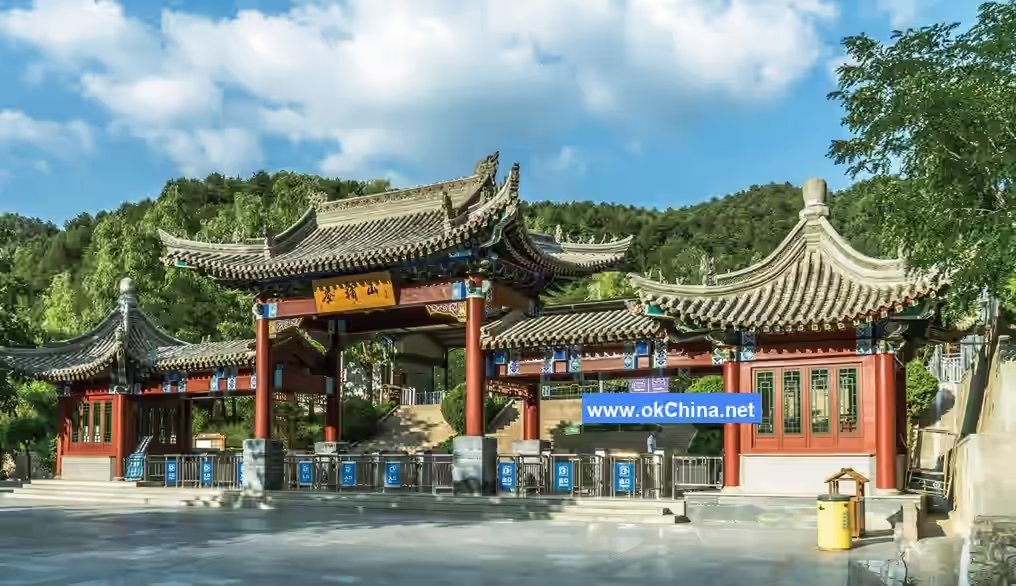
Maiji Mountain Scenic Area

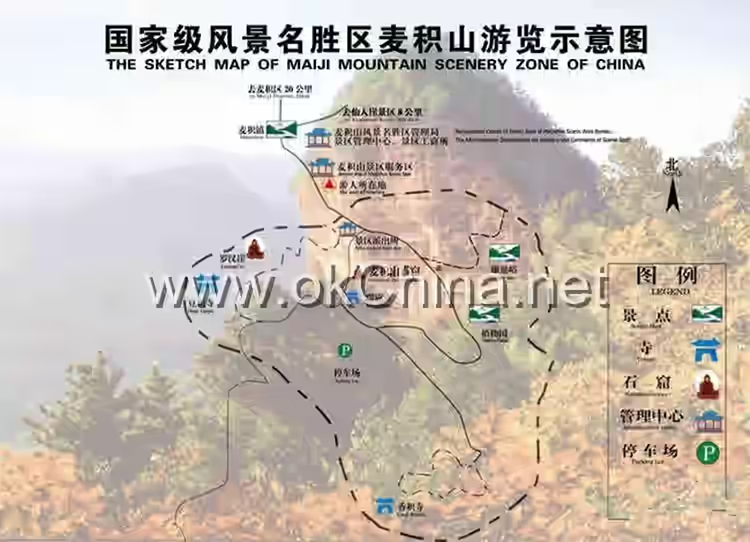
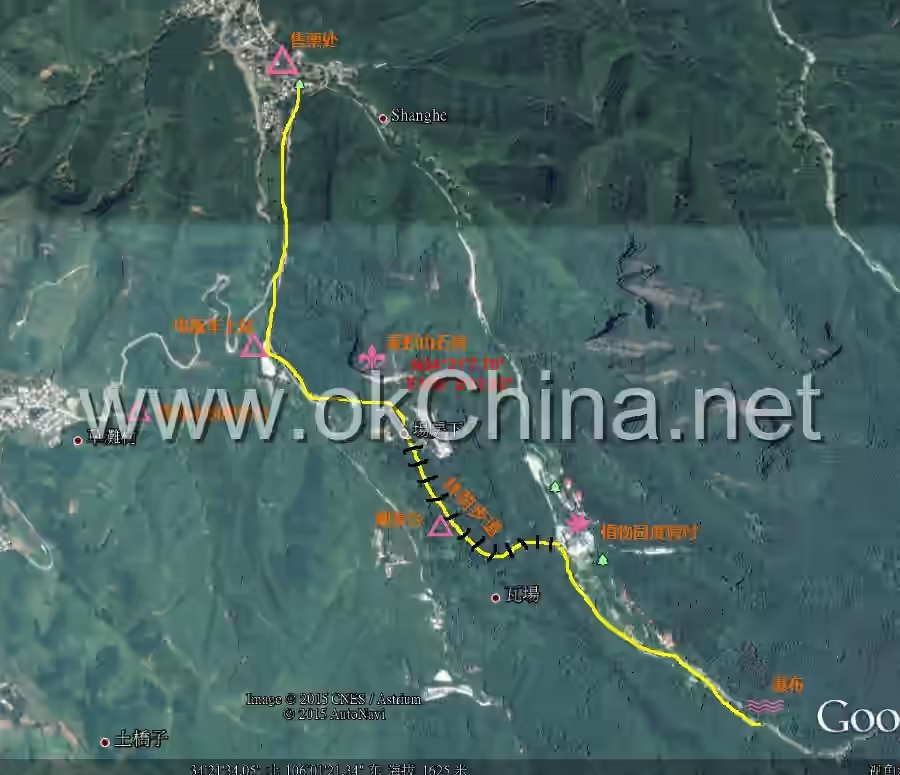
Location Map

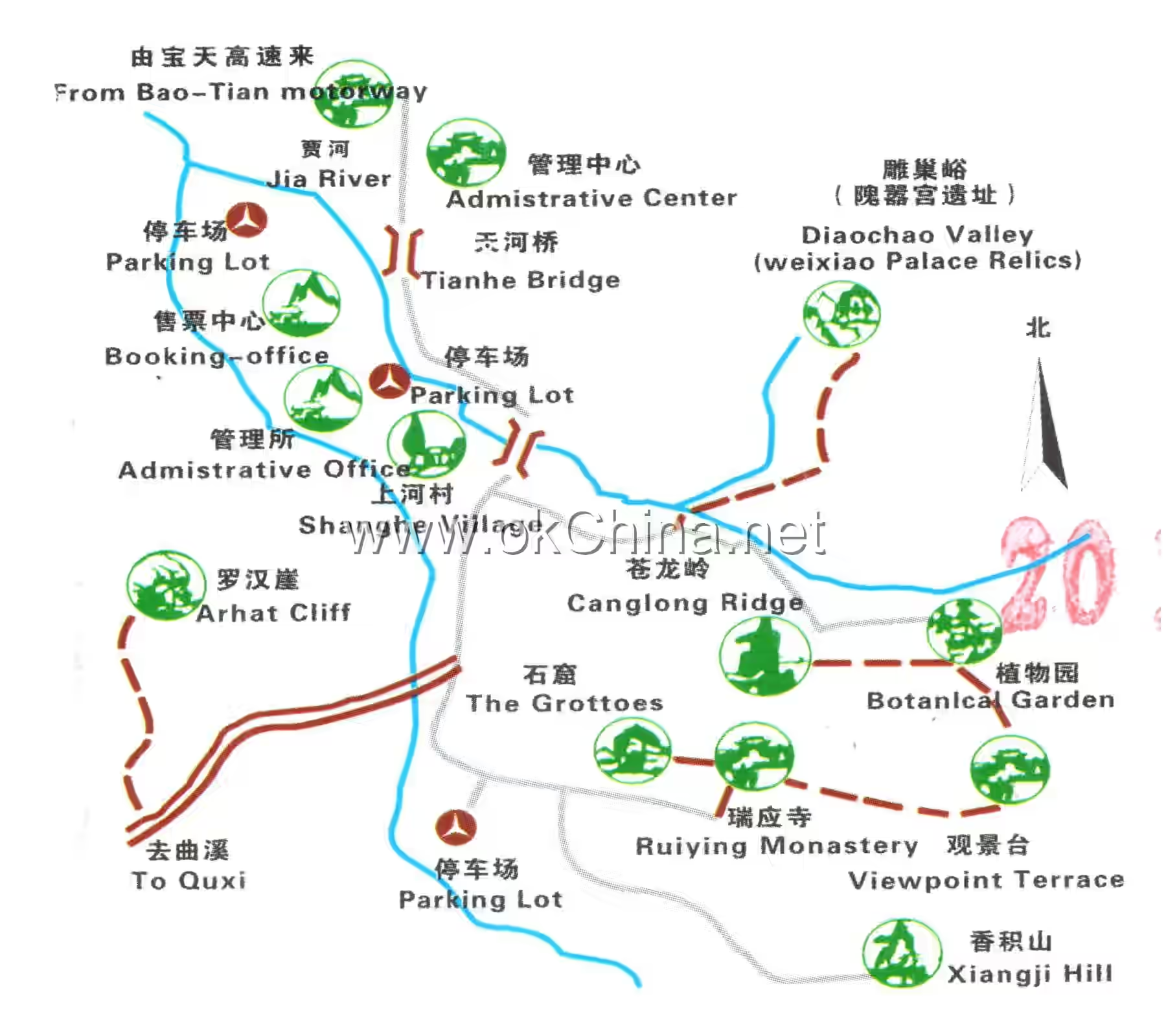
Map of Maiji Mountain Scenic Area

Ticket Price

Ticket Prices

Tickets

  • Type A (including Grotto Area visit): ¥80.
  • Type B (excluding Grotto Area visit): ¥25.

Opening Hours

Opening Hours

  • January 1 to April 30: Monday to Sunday, 09:00-17:00, last admission at 16:30.
  • May 1 to October 31: Monday to Sunday, 08:30-17:00, last admission at 16:30.
  • November 1 to December 31: Monday to Sunday, 09:00-17:00, last admission at 16:30.

Recommended Duration

Duration of Visit

1-2 hours.

Best Time to Visit

Best Time to Visit

Suitable for all seasons.

Official Phone

Scenic Area Phone

(0938) 2236316.

Transportation

Transportation Guide

Public Transportation

  • Tianshui Railway Station: Take Bus Route 34 directly to the Maijishan Scenic Area.
  • Tianshui South Station (High-Speed Rail Station): Take Bus Route 60 directly to the Maijishan Scenic Area, or take Bus Routes 1, 9, 35, or 58 to Tianshui Railway Station and transfer to Bus Route 34 to reach the scenic area.
  • Tianshui Airport: Take Bus Routes 5 or 60 passing through Tianshui South Station directly to the Maijishan Scenic Area. Alternatively, take Bus Routes 1, 9, 35, or 58 to Tianshui Railway Station and transfer to Bus Route 34 to reach the Maijishan Scenic Area.
  • Tianshui City Center: Take Bus Route 5 directly to the Maijishan Scenic Area, or take Bus Routes 1 or 9 to Tianshui South Station or the railway station and transfer to Bus Routes 60 or 34 to reach the Maijishan Scenic Area.

Self-Driving

The G30 National Expressway passes through the scenic area with three exits: Tianshui East, Jieting, and Dangchuan.

  • Tianshui East Exit: 10 km to Maijishan, 15 km to Xianrenya, and 13 km to Jieting Hot Springs.
  • Jieting Exit: 3 km to Jieting Hot Springs, 15 km to Xianrenya Scenic Area, and 12 km to Shimen Scenic Area.
  • Dangchuan Exit: 10 km to Shimen Scenic Area and 20 km to Xianrenya Scenic Area.

Additionally, National Highways G310 and G316 within Tianshui also provide access to the Maijishan Scenic Area.

Classical Route

Tour Routes

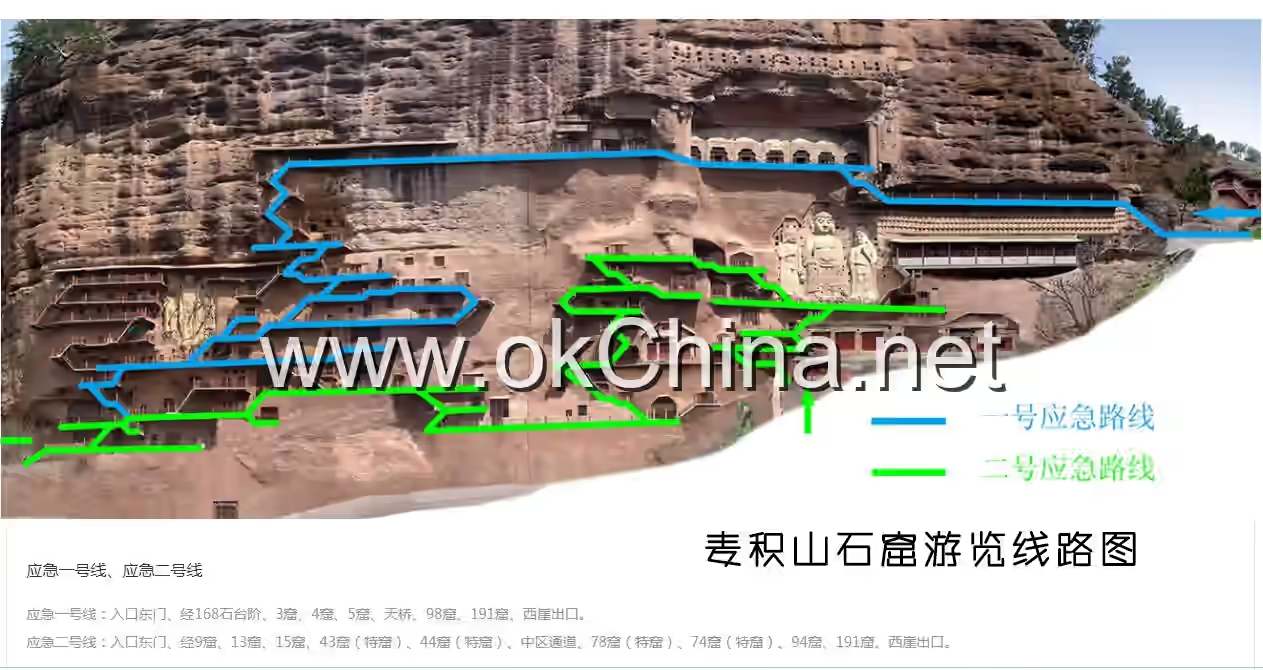
Emergency Route 1

Start from the entrance at the Seven Buddha Pavilion, pass through Cave 168, Cave 3, Cave 4, Cave 5, the Sky Bridge, Cave 135, Cave 98, Cave 94, and exit at the West Cliff.

Emergency Route 2

Start from the entrance at the Central Area, pass through Cave 37, Cave 13, Cave 15, Cave 44, the Central Area Passage, Cave 78, Cave 62, Cave 94, and exit at the West Cliff.

Important Notes

Visitor Guidelines

  1. Visitors must present valid tickets for entry. Before entering the grotto area, please assess your physical condition. Individuals with hypertension or hypoglycemia should exercise caution when using the plank walkways. Have your tickets and any discount certificates ready for inspection at the ticket checkpoint before proceeding to visit the grotto area.
  2. Smoking and bringing pets are strictly prohibited within the grotto area.
  3. Upon entering the core grotto area, please store all external items such as water bottles, keys, and mobile phones in your bag or deposit them at the storage facility to prevent falling objects from injuring visitors.
  4. Protecting cultural relics is everyone’s responsibility. The use of camera or mobile phone flashlights on the grottos is strictly forbidden, and touching the relics is prohibited. Any violation of these rules will result in immediate termination of the visit.
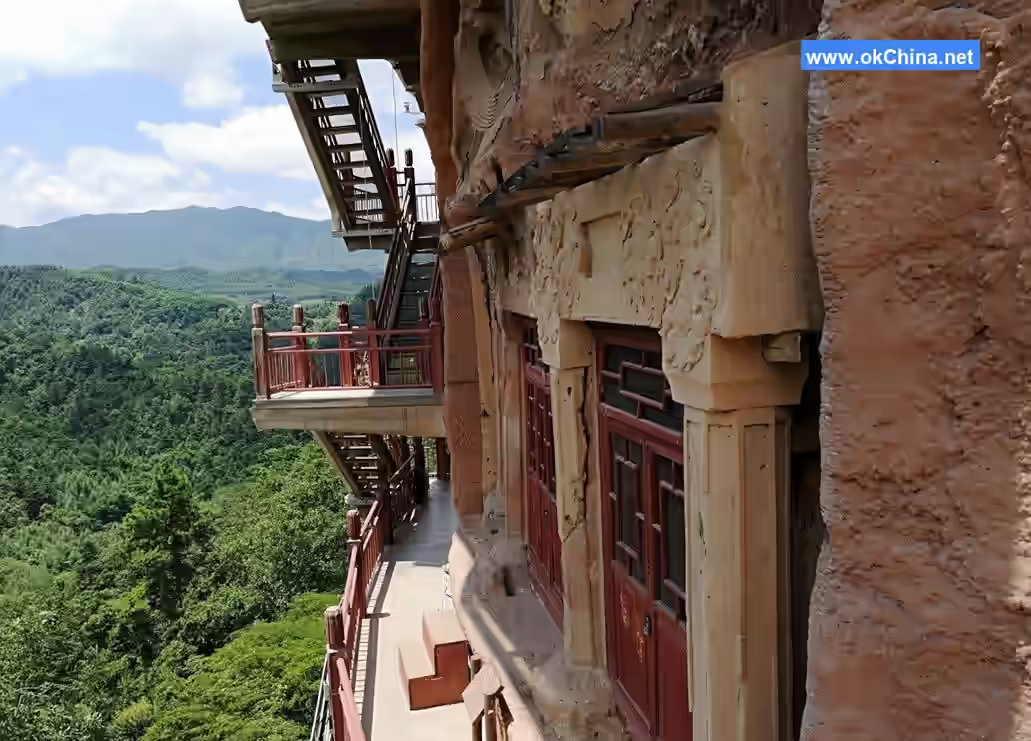
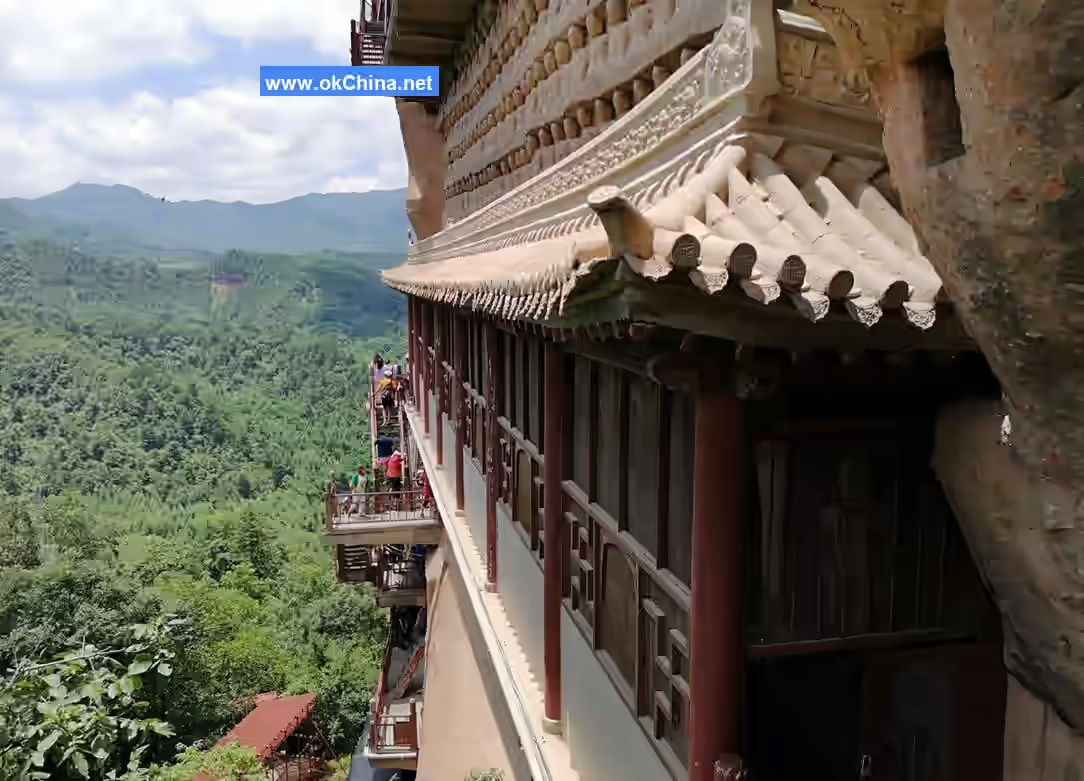
  5. Due to the narrow plank walkways in the grottos, please enter in an orderly queue and maintain a steady pace while visiting. Avoid taking photos, lingering for extended periods, or causing congestion on the walkways.
  6. During rainy or snowy weather, minor rockfalls may occur. When exiting via the West Cliff, stay close to the inner side of the cliff and pass through quickly to avoid accidents.
  7. There are two restrooms in the grotto area, located at the West Cliff exit and below the plaza steps. No additional restrooms are available along the plank walkways.

Important Child Sites

Main Attractions

Maijishan Grottoes

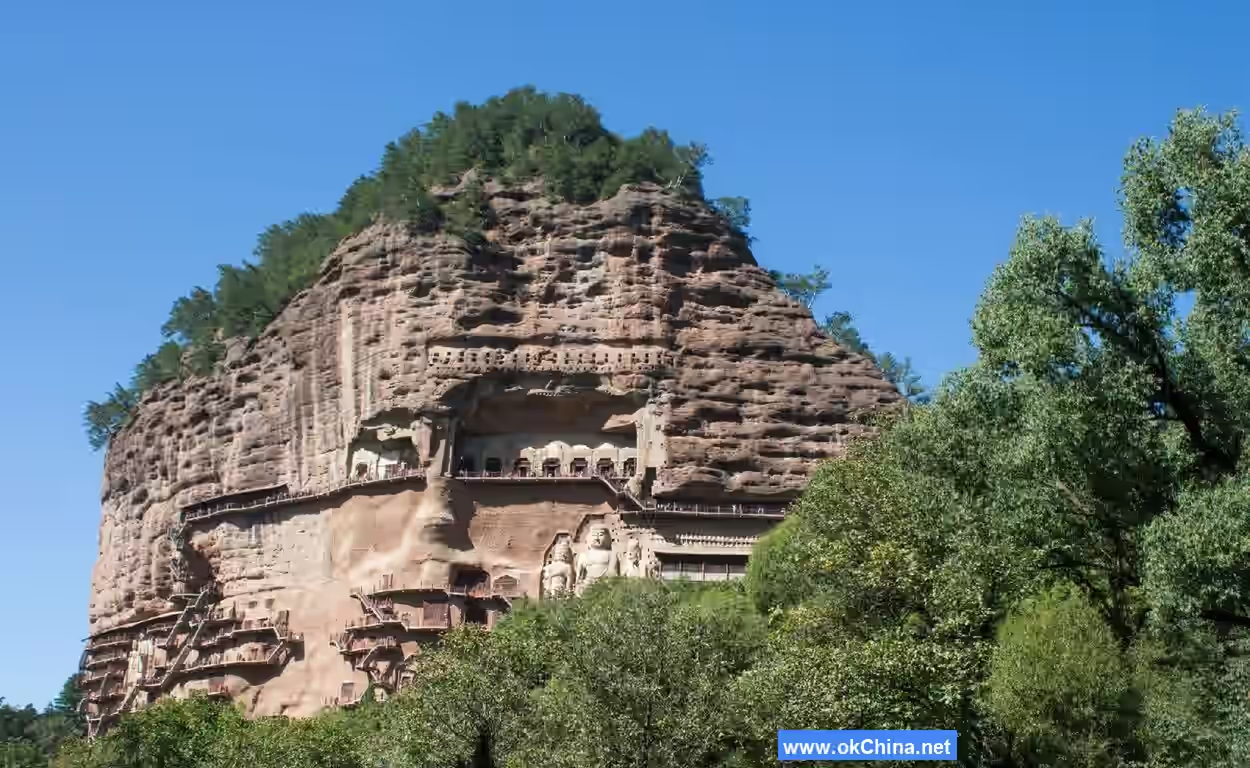
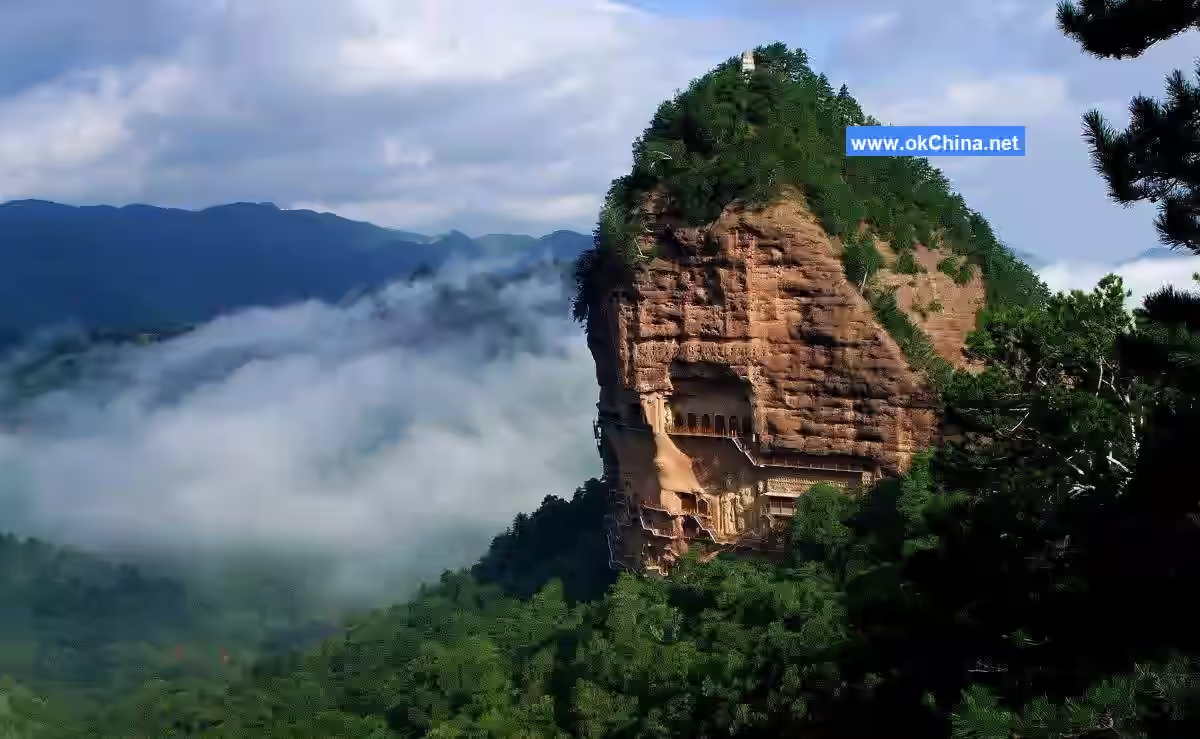
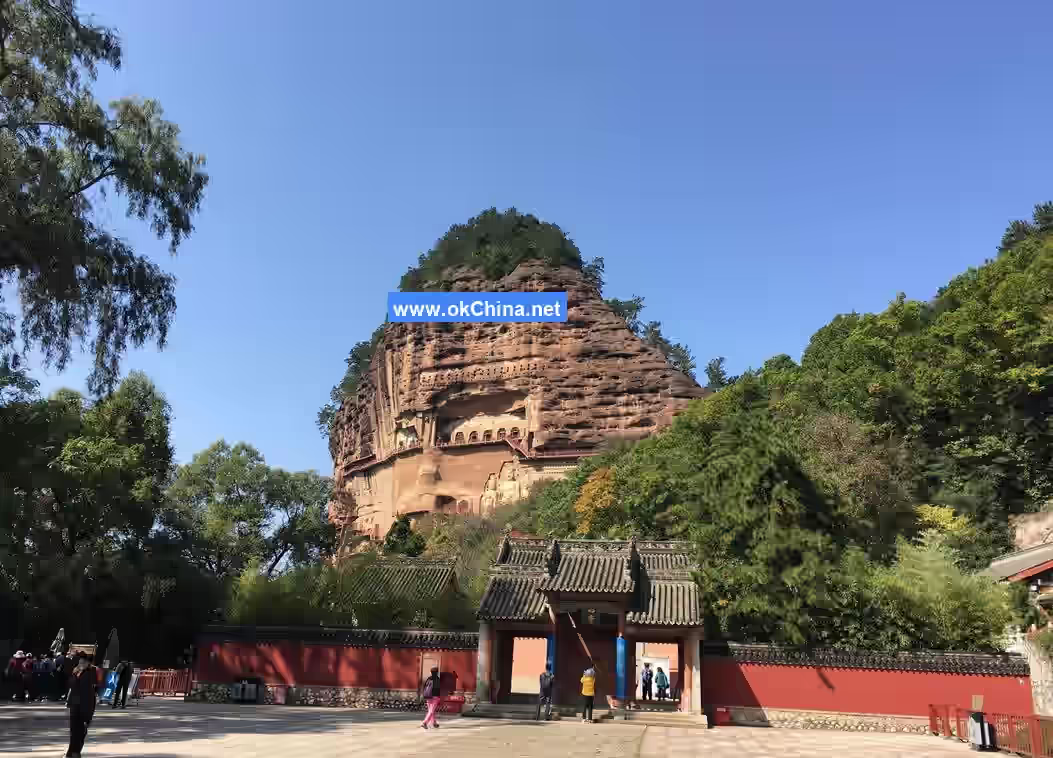
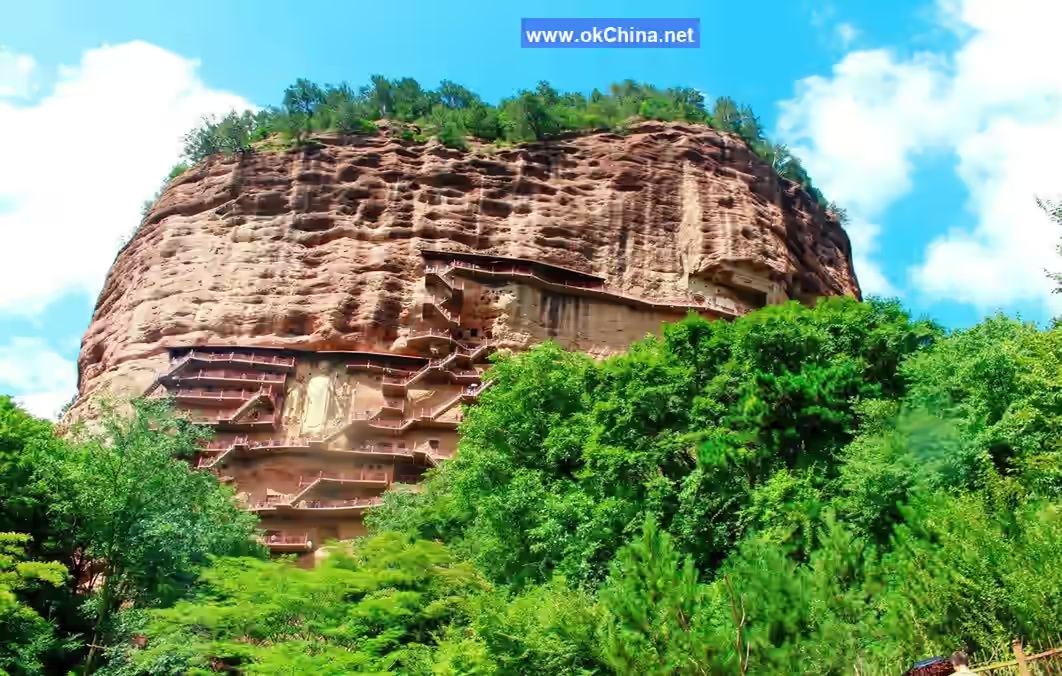
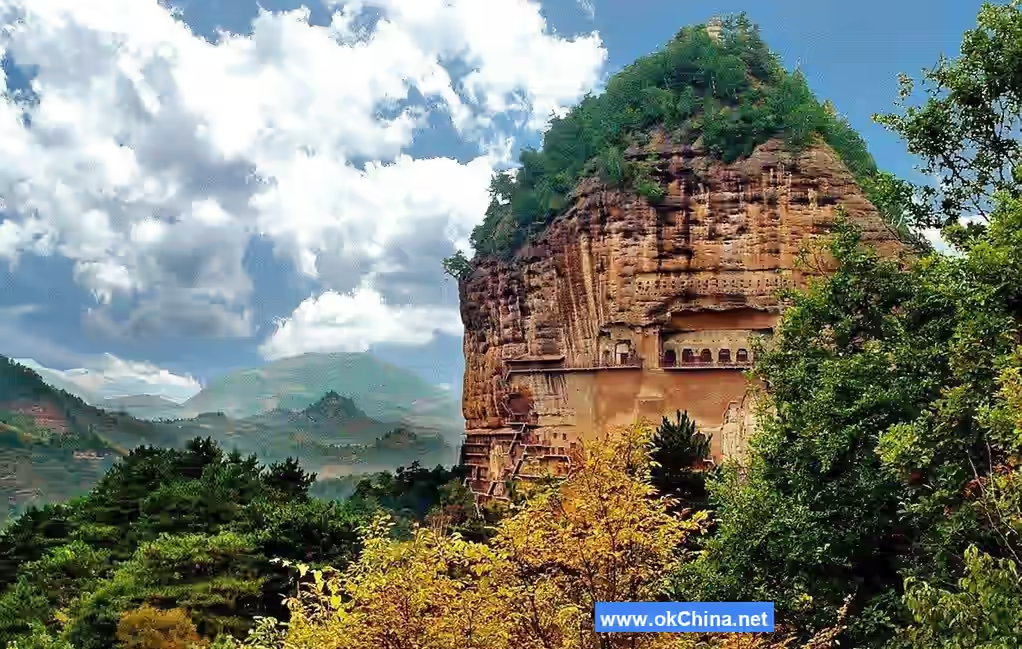
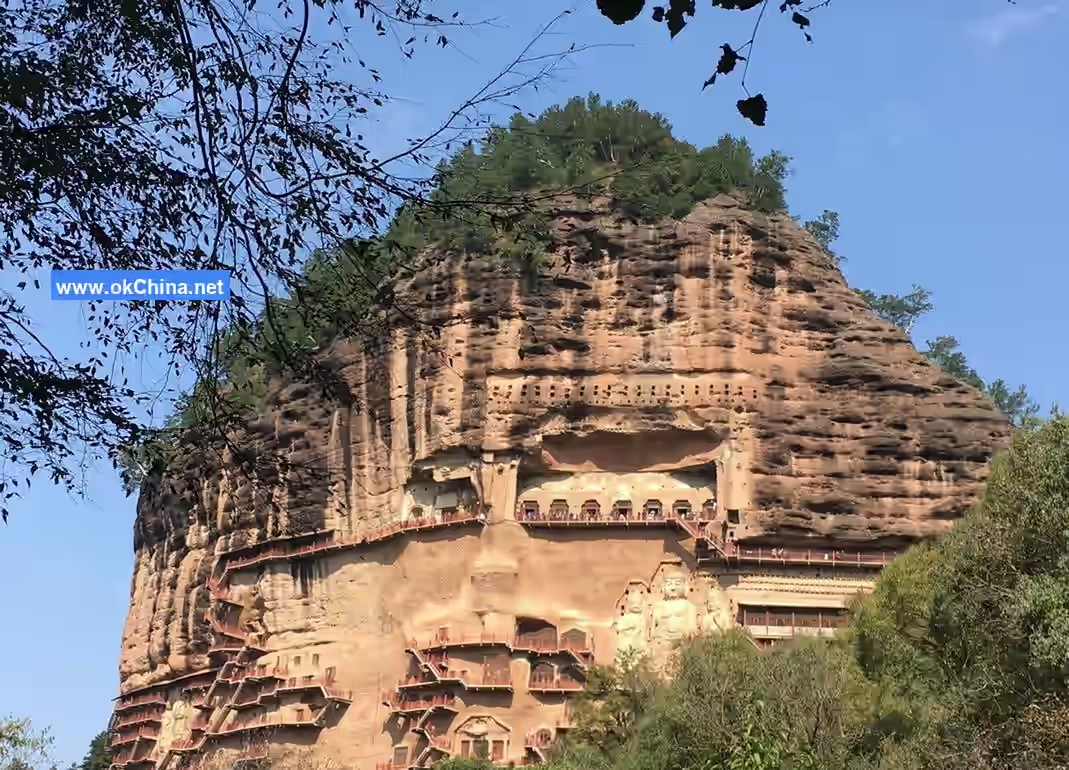
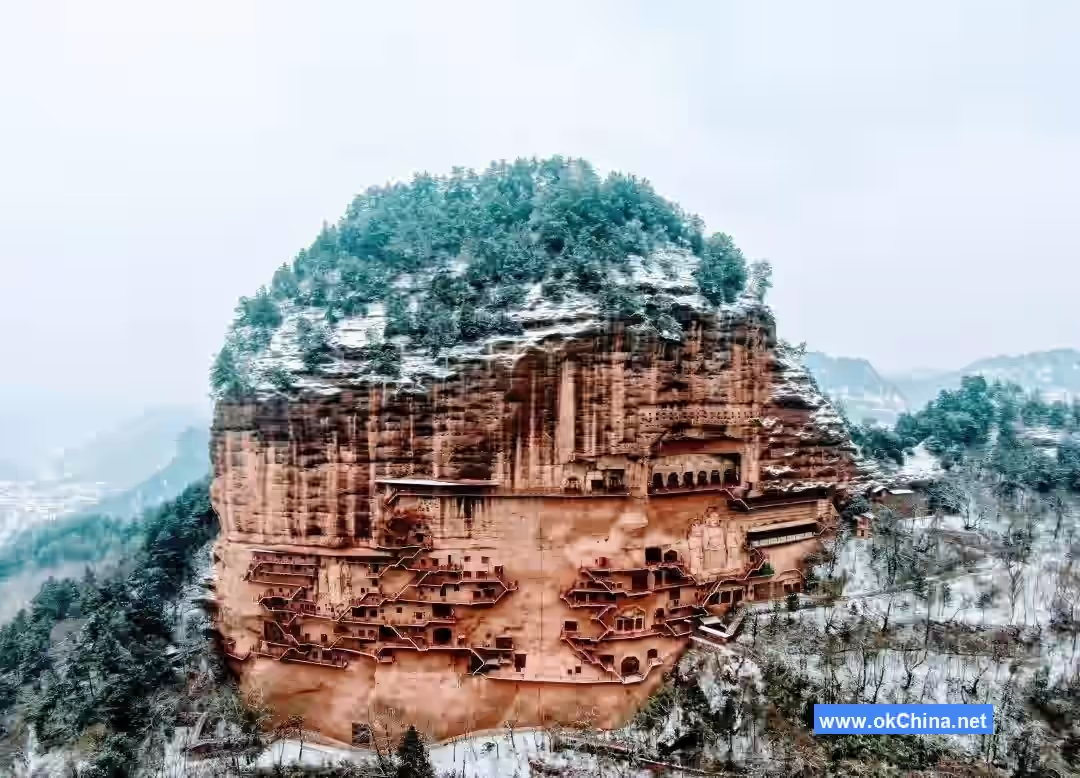
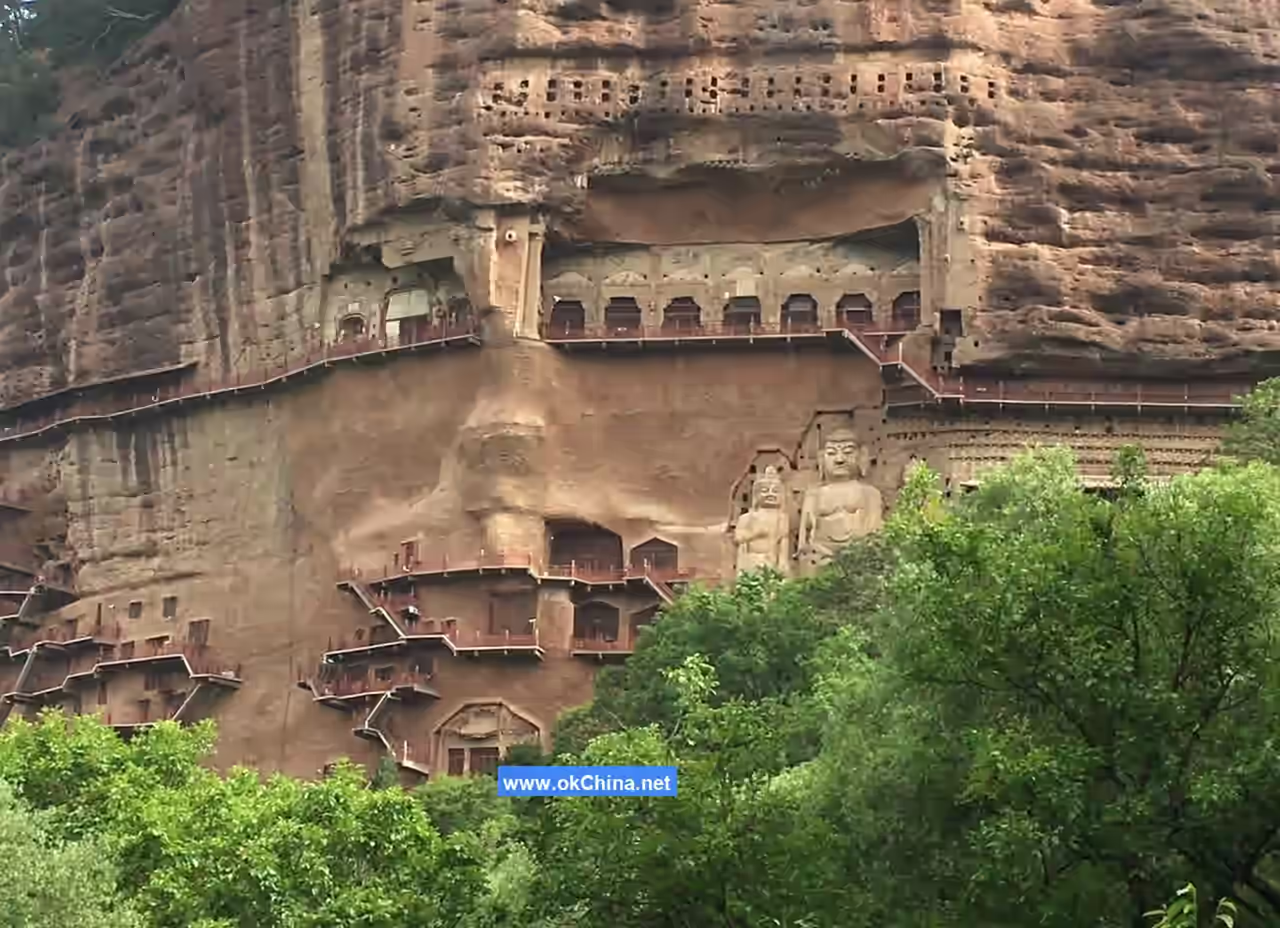
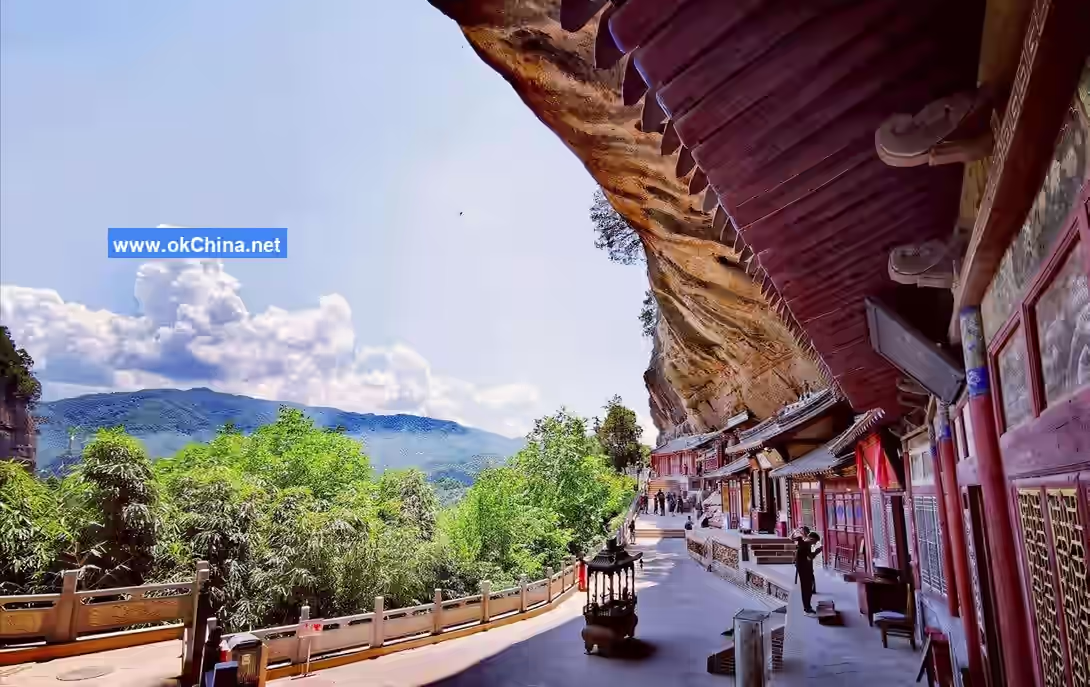
The Maijishan Grottoes are situated in the rugged mountains of the Xiaolongshan forest area, in the eastern section of the Western Qinling Range. The name "Maijishan" (Wheat Stack Mountain) comes from its solitary peak, which rises abruptly from the ground, resembling a stack of wheat in a farmyard. The mountain stands 142 meters tall, with a Sui Dynasty brick pagoda containing Buddhist relics at its summit. Ancient relict plants, such as the lacebark pine, are scattered around the pagoda. Carved into the sheer cliffs are 209 caves, 7,866 clay and stone sculptures, and over 1,300 square meters of murals, created over more than 1,600 years. This makes Maijishan one of China's Four Great Grottoes, often called the "Oriental Sculpture Gallery." The cliffside statues, sky-high plank walkways, verdant pines and bamboos, and crimson cliffs complement each other, creating magical scenes like the "Misty Rain of Maijishan."

Maijishan Botanical Garden

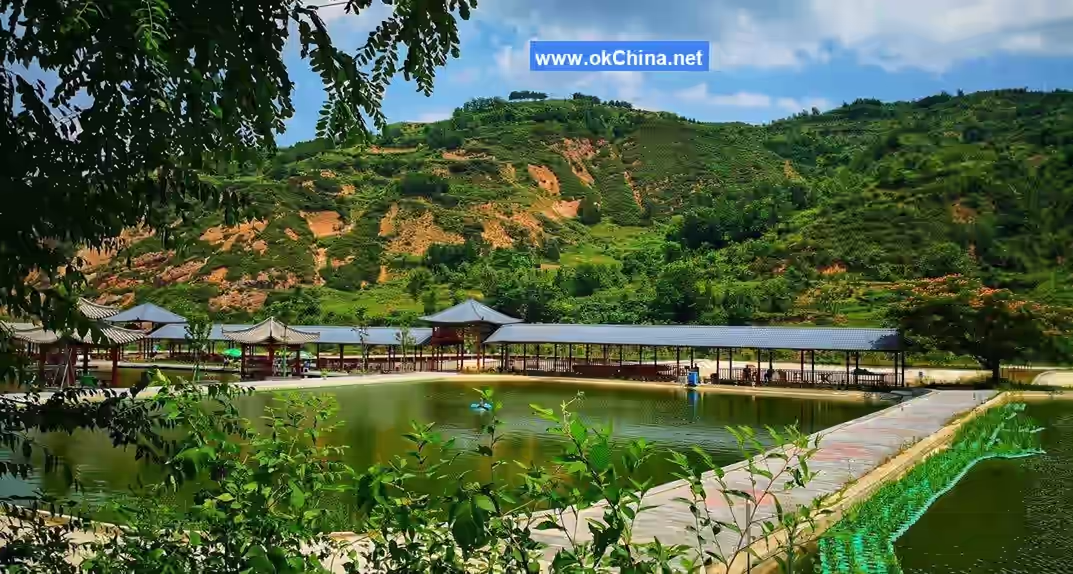
The Maijishan Botanical Garden boasts a collection of over 1,800 species of seed plants from 146 families, representing both northern and southern China. Within the garden, waterfalls and springs murmur, rare birds and animals are commonly seen, and exotic flowers and plants vie in beauty. Combined with leisure facilities like waterside pavilions, towers, and halls, it creates a feeling of being in a secluded paradise, unaware of the garden's boundaries.

Xiangji Mountain

Xiangji Mountain is located south of Maijishan. This pyramid-shaped, emerald-green peak serves as the watershed between the Jialing River (a tributary of the Yangtze) and the Wei River (a tributary of the Yellow River). On its mountainside is a fissure cave over a hundred meters deep, with clear, colorful stripes on the rock walls. Water drips from the cave ceiling year-round, forming icicles, ice curtains, and ice waterfalls in winter that are crystal clear, resembling a "Crystal Palace." The snow-capped summit is renowned as "Xiangji Snow Accumulation."

Luohan Cliff (Arhat Cliff)

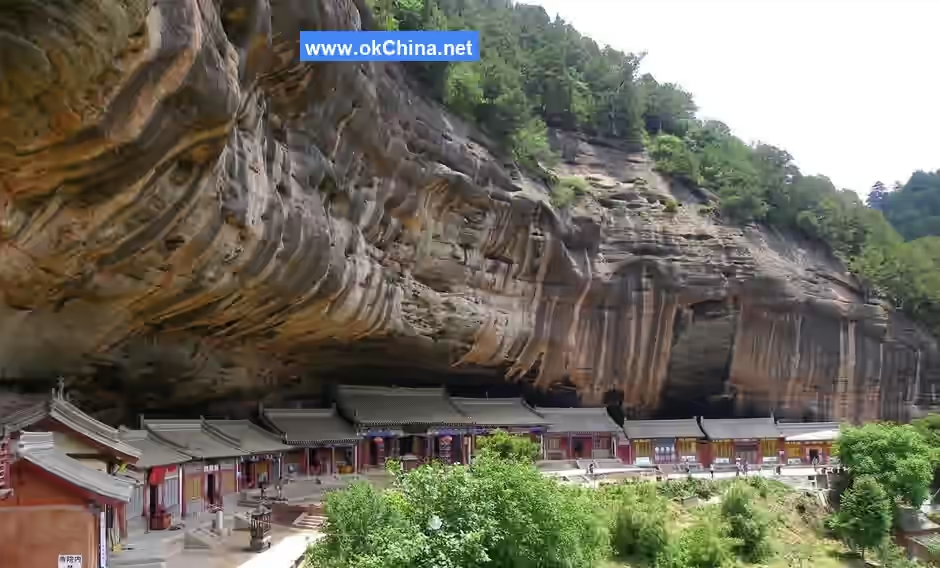
Luohan Cliff gets its name from its barrel-like external shape. The exposed cliff face on the mountainside is over 100 meters long and 150 meters high. Within the cliff caves are preserved three Song Dynasty hanging sculptures of the Buddhas of the Three Periods and eighteen arhats, hence the name "Luohan Cliff." The three clay sculptures are lifelike with flowing drapery; nestled within dense forests and crimson cliffs, they form a Buddhist realm together with Maijishan.

Tianchi Ping

Tianchi Ping is located 8 kilometers east of Maijishan. It is named after a natural pool in the col northwest of its main peak. The main peak, at 2,197 meters, towers above the surrounding mountains as the northernmost watershed between the Jialing River (Yangtze tributary) and the Wei River (Yellow River tributary). It is entirely forested and rich in flora and fauna. The mountain is majestic with deep forests and ravines. At sunset, the Milky Way seems to cast its reflection; on cloudy or rainy days, it appears half-immersed in the clouds, faintly visible and gracefully charming.

San Shan Ya (Three Fan Cliff)

San Shan Ya is behind Maijishan. The name comes from the upright cliff face, which resembles three inverted folding fans. The cliff is divided into left, middle, and right sections, overlapping each other with similar heights of over a hundred meters. The upper part of the cliff is covered with lacebark pines, while the middle and lower parts expose reddish-brown bedrock, looking as if cast from molten iron—majestic, elegant, and splendid. The cliff face has many eroded cavities resembling bird nests, named "Diaochao Valley" (Eagle's Nest Valley). During the Eastern Han Dynasty, when Wěi Xiāo dominated the Longyou region, he built a summer palace here. The interplay of flowing springs and crimson cliffs, locked in greenery by pines, cypresses, and tall bamboos, makes this a place for reminiscing about the past and exploring secluded, scenic beauty.

Jiaolong Temple

Jiaolong Temple is located at the border between the Maijishan and Xianrenya (Immortal's Cliff) scenic areas. Historical research suggests its construction date is no later than that of the Maijishan Grottoes. In recent years, primarily through public fundraising, several structures including the "Shimu Palace" have been built. The temple is constructed against the mountain, resplendent and magnificent. Coupled with a peculiar geomagnetic force, it holds great attraction for tourists and local residents.

Xianrenya (Immortal's Cliff)

Xianrenya is 15 kilometers from the Maijishan Grottoes, consisting of three cliffs, five peaks, and six temples. The three cliffs are named East Cliff, West Peak, and South Cliff based on their方位. The five peaks are Yuhuang Peak, Baogai Peak, Xianzhu Peak, East Cliff Peak, and West Cliff Peak. The six temples are Mulian Temple, Shilian Temple, Tielian Temple, Hualian Temple, Shuilian Temple, and Lingying Temple. Since the Northern Wei Dynasty, both Taoism and Buddhism have established temples here. It was called "Huayan Temple" in the Song Dynasty. Emperor Chengzu of the Ming Dynasty, Zhu Di, bestowed the name "Lingying Temple," which later became the imperial Zhu family temple. After the fall of the Ming Dynasty, it is said that descendants of Prince Hanxian, Zhu Zhihong, along with calligrapher Wang Liaowang and swordsman Wang Shiyong, lived here in seclusion for cultivation. Xianrenya currently has 27 Ming and Qing dynasty halls, 197 sculptures from the Northern Wei, Song, Ming, and Qing dynasties, 83 square meters of murals, and 5 precious bronze Buddha statues from the Yongle period. The exquisite Ming and Qing clay sculptures preserved in the Xianrenya Grottoes enrich the quantity and content of that period for the Maijishan Grottoes, forming a complete historical series of grotto art and providing detailed physical materials for studying the evolution of clay sculpture.

Xianren Lake (Immortal's Lake)

Xianren Lake is situated in the valley between Randeng Peak (South Cliff) and Yinghu Cliff in the Xianrenya scenic area. It is 13 meters deep with a surface area of over 20,000 square meters. The Randeng Peak by the lakeside resembles a solitary peak of Maijishan. More than 20 monasteries are arranged irregularly under the concave cliff of the West Cliff. The lake reflects the mountain scenery with shimmering ripples, creating a tranquil and harmonious landscape of water and hills.

Xianrenya Shiba Luohan Feng (Eighteen Arhat Peaks of Immortal's Cliff)

The Xianrenya scenic area features typical danxia (red cliff) peak forest landforms. Over 30 small peaks display their elegance, most notably the姿态万千的 Eighteen Arhat Peaks, the Nühao Mountain and Xianggong Mountain showcasing原始生殖文化本原, and the natural Buddha head within Jingtu Temple. Steep cliffs, encircling streams, and lush forests highlight their beauty. The peaks resemble castles or wheat stacks; the cliffs are either steep or deeply concave. When the mist is thick, the peaks emerge above a sea of clouds,恰似 "a fairyland on earth." On many peaks of Xianrenya grow large tracts of ancient relict lacebark pines. The community-style growth of lacebark pines in the Maijishan and Xianrenya areas is a remarkable ecological wonder.

Shilian Valley (Stone Lotus Valley)

Huangjia Gorge runs through the Xianrenya and Jieting Hot Spring scenic areas. Its upstream section is Shilian Valley, a gorge about 5 kilometers long. Metamorphic bedrock, eroded by flowing water, takes shapes酷似 lotus flowers. The characters "石莲谷" (Shilian Valley), inscribed by Mr. Feng Guorui, are carved on a lotus-shaped stone. The entire Huangjia Gorge features幽深 gorges,奇特的 peaks, dense trees and shrubs, clear water and碧绿的 pools, and numerous奇特的 caves. Walking through it is like stepping into a "Five-Kilometer Green Corridor."其中, a waterfall several zhang high plunges from a height into a deep pool. Legend says this is the place where the "Heavenly River poured water," giving rise to the name of Tianshui City.

Xianyou Valley (Immortal's Roaming Valley)

Next to Xianren Lake lies a secluded valley. Sixteen danxia秀峰 are arranged in an orderly, staggered manner on both sides of the valley. Lacebark pines grow on the peaks and in the岩石 and裂隙 of the cliffs, assuming千姿百态. Encircled by streams, with mountain flowers and草坪, birds singing and cicadas chirping, it presents a怡然 and幽静的 natural scene.

Jingtu Temple (Pure Land Temple)

Jingtu Temple is located in Houchuan, behind Xianrenya. Surrounded by mountains and filled with pines in the valley, the mountain wind creates waves of sound in the pines, known as "Jingtu Songtao" (Pure Land Pine Waves), one of the Ten Scenes of Qinzhou. Since the 1980s, monks and people from all walks of life have raised funds, investing nearly 90 million yuan in restoration and expansion. It has now formed a grand architectural complex with one entrance and three禅院. In recent years, new additions like the Arhat Hall, Scripture Depository, and景门牌坊 have further expanded its scale. In recent years, "Buddha's Light" has frequently appeared at this site, and a natural Buddha head was discovered on the cliff of the back mountain, spreading its fame both domestically and internationally.

Shimen (Stone Gate)

Shimen is located 25 kilometers southeast of the Maijishan Grottoes. With high peaks and perilous terrain, it is a granite峰峦 landform, known as "Little Huangshan." It consists of five peaks: Huangtian Peak and Yuling Peak on the south, and Doumu Peak, Xinglong Peak, and Qilin Peak on the north. Among them, the southern peak is the highest at 2,097 meters. The main north and south peaks stand opposite each other, towering into the clouds, connected by a廊桥 in between. Viewed from afar, it resembles a gate. Moreover, on the rock wall below the廊桥 (named Juxian Bridge) between the north and south peaks, there is a large square dark circle resembling a lintel, hence the name "Shimen" (Stone Gate). Qing Dynasty scholar Fei Tingzhen recorded: "The mountain stands a thousand ren tall, lush and green. Steep cliffs surround it with no path, requiring eighteen bends to ascend. Boundless pines and bamboos reflect the halls and pavilions, making it the foremost洞天福地 (blessed land) in Longyou." Every Mid-Autumn Festival night when the moon is full, the moon rises slowly between Huangtian Peak and Doumu Peak, hanging above the Juxian Bridge. This is the wondrous spectacle of "Shimen Night Moon." Taoism has a long history at Shimen. Over ten ancient temples, such as祖师, 圣母, 王母, and三官, built依托 the five peaks, form an "S"-shaped构图 resembling a Taiji八卦图, which is extremely rare among surviving Taoist architectural complexes in China.

Jiumen Gorge (Nine Gate Gorge)

Downstream from the Yingyue Lake at Shimen Mountain, the valley stretches for 1 kilometer. Torrents rush among high mountains and huge rocks, forming waterfalls and pools. The cliffs are perilous, and the沟壑 are filled with massive stones. There are nine narrow valley mouths, resembling nine natural stone gates, hence the name "Jiumen Jiudao Xiang" (Nine Gates, Nine Compartments),简称 "Jiumen Gorge."

Yingyue Lake (Moon Reflection Lake)

Yingyue Lake is located at the broad foot of Shimen's front mountain. The lake water comes from the Baxian River of Shimen. Every night when the moon reaches its zenith, the lake water, illuminated by moonlight, reflects the shadow of Shimen Mountain, creating an幽雅恬静 scene, hence the name "Yingyue Lake."

Mumatan (Horse Pasture Flat)

Mumatan is located southeast of the Shimen scenic area. With open terrain, backing onto mountains and facing water, fertile soil, and lush grass, it was the horse pasture of Ying Feizi, an ancestor of the Qin people. Over the past decade or more, precious cultural relics such as Warring States period Qin bamboo slips, wooden board maps, and paper have been unearthed from Qin and Han tombs at Mumatan. Among them, the wooden board maps are the world's earliest practical maps, extremely valuable. The Jiunü Peak (Nine Maidens Peak) distributed within Mumatan of Shimen Mountain resembles nine graceful maidens,亭亭玉立 and雄秀多姿.

Xiao Shimen (Little Stone Gate)

Xiao Shimen is northeast of Shimen's north peak. Two mountains stand opposite each other, forming a峡谷 about 500 meters long and up to 20 meters wide at its broadest point, named Shuanglong Gorge (Twin Dragon Gorge), also called Xiao Shimen. In the峡谷, a waterfall cascades down from a huge rock, about 100 meters high, flowing through three bends and eighteen drops like a素练凌空. The waterfall produces three distinct roars as it falls, called the "Three-Sound Waterfall." High mountains tower on both sides of the峡谷, with dense forests,封闭的 vegetation, and潺潺 streams, making it truly a绝景.

Quxi (Meandering Stream)

Quxi refers to the section of the Baijia River (a tributary of the Jialing River) from Xujiazhuang to Guanyin Hall. It winds曲折 for 12 kilometers. Within a 1.5-kilometer-wide area, the river meanders are highly developed with large sinuosity and short meander necks. The section with the greatest sinuosity is from Wangjiazhuang to Xiamachang, where the meandering stream is 3.5 kilometers long but the meander neck is only 300 meters. This creates a奇特景观 of九曲回转 (nine bends turning back),小桥流水 (small bridges over flowing water), and幽深 gorges with茂密的 forests, comparable to the Nine-Bend Stream of Wuyi Mountain and Jiuzhaigou.

Jieting Hot SpringJieting Ancient Town, situated at the junction of Jieting Hot Spring, Shimen, and Immortal Cliff scenic areas, was the residence of the great Tang dynasty poet Du Fu in Qinzhou in 759 AD. It houses cultural relics and historic sites such as the Dongke Thatched Cottage and Chongfu Temple. The Dongke Valley, Huangjia Gorge, Shenlong Mountain, and Wenjia Gorge feature majestic, beautiful, serene, and perilous peaks and gorges. Within Wenjia Gorge, there is a hot spring with a water temperature of around 40°C. The water is rich in 19 chemical trace elements, leaving the skin smooth and tender after bathing and providing overall comfort. It has unique therapeutic effects for neurasthenia, insomnia, hypertension, heart disease, sequelae of cerebral hemorrhage, arthritis, skin diseases, and athlete's foot.

Jieting Ancient Town

Jieting Ancient Town, also known as Jiezi Town, is located at the easternmost end of the Dongke River Valley, on the delta where the Huangjia Gorge and Wenjia Gorge waters converge. It is a cross-shaped ancient town. The north-south street is 300 meters long, the east-west street is about 400 meters long, and the streets are approximately 9 meters wide. Most of the shops along the streets are timber-framed structures built during the Ming and Qing dynasties or before liberation. At the entrances of the east-west street, the ancient city gate with a two-story archway is still preserved. To the west of the town is the Sage of Poetry Pavilion, while to the east are the Wenchang Pavilion and an opera stage. Not far from the opera stage lies Dongbaozi Mountain, which is steep and rises hundreds of meters high. Chongfu Temple is built halfway up the mountain, surrounded by precious white-bark pines.

Shenlong Mountain

Shenlong Mountain, also known as Shenling Mountain or Tielong Mountain, lies at the foot of Jieting Ancient Town. From the base to the summit, Chongfu Temple, the Hall of Heavenly Kings, the Hall of the Three Buddhas, the Lingxiao Hall, and the Primordial Mother Palace are built in sequence, forming a complex of Buddhist and Taoist architecture. What makes this mountain particularly unique is a deep, unfathomable hole at its summit. When one listens closely, a humming sound can be heard. If firewood is thrown into it, a constant airflow emerges from the hole year-round, making it a true marvel.

Du Fu Thatched Cottage

Du Fu Thatched Cottage is located in Liujiahe, Bahuai Village, within the Jieting Hot Spring scenic area. The great Tang dynasty poet Du Fu (courtesy name Zimei) took refuge in Qinzhou in the second year of the Qianyuan era (759 AD). He relied on his nephew Du You and built a thatched cottage to live in Dongke Valley, where he wrote poems about Dongke Valley and "To My Nephew You." Shortly after leaving Dongke Valley, locals preserved the thatched cottage in memory of Du Fu. Even in the Qinzhou Chronicles, "Dongke Thatched Cottage" is listed as one of the ten scenic spots of Qinzhou. Today, relics such as the Dongke Thatched Cottage are still preserved.

Official Website

Scenic Area Official Website

www.mjssk.cn

Brief History

Maijishan Scenic Area in Tianshui City

I. Introduction

The Maijishan Scenic Area is located in Tianshui City, Gansu Province, at the eastern end of the northern branch of the West Qinling Mountains, where the Qinling, Helan, and Min mountain ranges converge, in the central belt of China's territory. The watershed between the Yangtze River and Yellow River basins runs through the scenic area.

The Maijishan Scenic Area generally has an elevation between 1,400 and 1,800 meters, with the highest peak exceeding 2,200 meters. It marks the surface boundary between the sedimentary strata of northern and southern China and serves as the watershed between the Yellow River and Yangtze River basins. Its rock formations consist of red conglomerate layers and light-colored metamorphic rocks. The climate conditions within the scenic area are relatively favorable, with an average annual rainfall of 600–700 mm, a maximum temperature of 33°C, a minimum of -15°C, and typical winter lows around -8°C. The frost-free period is 230 days, annual sunshine hours are approximately 2,307, and relative air humidity is around 85%. Due to its location at the junction of north and south, the area experiences mild winters and cool summers, earning it the reputation of "Jiangnan in the Northwest."

The Maijishan Scenic Area covers a planned area of 215 square kilometers and comprises over 180 scenic spots across five sub-areas: the Maijishan Grottoes, Immortal Cliff, Stone Gate, Quxi Stream, and Jieting Hot Spring. The area boasts rich biodiversity in flora and fauna, unique geological landforms, a distinctive climate, and well-preserved grotto culture. In 1982, it was approved and announced by the State Council as one of the first national-level scenic areas. It is recognized as a National Natural and Cultural Heritage site, a National Key Cultural Relics Protection Unit, a National Forest Park, a National Geopark, an advanced unit in the creation of national civilized scenic tourist areas, and a National 5A Tourist Attraction.

II. Geographical Environment

Location and Territory

The Maijishan Scenic Area in Tianshui City is situated in Maiji Village, Maiji Town, Tianshui City, Gansu Province. Centered around Maiji Town, it extends to the southwestern part of Dangchuan Township (where Quxi Stream is located) and the northwestern part (part of Stone Gate), as well as the southern end of Boyang Town (Stone Gate). It straddles both sides of the Qinling Mountains.

Geology and Landforms

The rock layers of the Maijishan Scenic Area in Tianshui City are composed of red conglomerate layers and light-colored metamorphic rocks. Among these, Maijishan and Immortal Cliff feature typical Danxia landforms.

Climate Characteristics

The Maijishan Scenic Area in Tianshui City lies in the transition zone from subtropical to warm temperate climates, characterized by a mild climate and abundant rainfall. The average annual rainfall exceeds 800 mm, with a maximum temperature of 32.5°C and a minimum of -16.8°C. Winter lows typically hover around -8°C, the frost-free period is 230 days, annual sunshine hours are approximately 2,307, and relative air humidity is about 74%. With no severe cold in winter and no intense heat in summer, it is praised as the "Little Jiangnan on the Longshan."

III. Main Attractions

Maijishan Grottoes

The Maijishan Grottoes are located in the eastern section of the West Qinling Mountains, amidst the towering peaks of the Xiaolongshan forest area. The mountain gets its name from its resemblance to a stack of wheat, as one peak stands abruptly and rises from the ground like a farmer's wheat pile. The mountain is 142 meters high, with a Sui Dynasty brick pagoda for Buddhist relics at its summit, surrounded by ancient relict plants, the lacebark pines. Carved into the sheer cliffs are 209 caves, 7,866 clay and stone sculptures, and over 1,300 square meters of murals, dating back more than 1,600 years. As one of China's four major grottoes, it is known as the "Oriental Sculpture Gallery." The cliff carvings, aerial plank roads, verdant pines and bamboos, and red cliffs complement each other, creating magical landscapes such as "Misty Rain over Maiji."

Maijishan Botanical Garden

The Maijishan Botanical Garden features over 1,800 species of seed plants from 146 families, representing both northern and southern China. Within the garden, waterfalls and streams murmur, rare birds and animals are随处可见, and exotic flowers and plants vie for beauty. Coupled with leisure facilities such as waterside pavilions, towers, and halls, visitors feel as if they are in a secluded paradise, unaware of the garden's boundaries.

Xiangji Mountain

Xiangji Mountain is located south of Maijishan, resembling a pyramid-shaped emerald peak. It serves as the watershed between the Jialing River, a tributary of the Yangtze River, and the Wei River, a tributary of the Yellow River. On the mountainside, there is a fissure cave over 100 meters deep, with clearly visible and colorful stripes on the rock walls. Water drips from the cave ceiling year-round, forming icicles, ice hangs, and ice waterfalls in winter, sparkling and translucent like a "Crystal Palace." The snow-capped summit is renowned as "Xiangji Snow Accumulation."

Arhat Cliff

Arhat Cliff is named for its shape, which resembles an oil basket. The exposed cliff face on the mountainside is over 100 meters long and 150 meters high. Within the cliff caves, three suspended clay sculptures of the Buddhas of the Three Periods and eighteen arhats from the Song Dynasty are preserved, hence the name "Arhat Cliff." The three clay sculptures are lifelike with flowing robes, nestled among dense forests and red cliffs, forming a Buddhist realm alongside Maijishan.

Tianchi Ping

Tianchi Ping is located 8 kilometers east of Maijishan and is named after a natural pool in the northwestern col of its main peak. The main peak, at an elevation of 2,197 meters, towers above the surrounding mountains and serves as the northernmost watershed between the Jialing River (a tributary of the Yangtze) and the Wei River (a tributary of the Yellow River). The area is entirely forested and rich in flora and fauna. The mountain is majestic with deep forests and valleys. At sunset, the Milky Way seems to pour its light, and during overcast or rainy weather, the peak is half-hidden in the clouds, appearing ethereal and graceful.

Sanfan Cliff

Sanfan Cliff is located behind Maijishan and is named for its vertical cliff face, which resembles three inverted folding fans. The cliff is divided into left, middle, and right sections, overlapping each other with similar heights of over 100 meters. The upper part of the cliff is covered with lacebark pines, while the middle and lower parts expose reddish-brown bedrock, as if cast from molten iron, presenting a magnificent and splendid sight. The cliff face features many erosion caves shaped like bird nests, named "Diaochao Valley." During the Eastern Han Dynasty, when Wai Xiao dominated the Longyou region, he built a summer retreat palace here. The interplay of flowing springs and red cliffs, along with pines, cypresses, and bamboo groves, makes it a place for reflection on history and exploration of scenic beauty.

Jiaolong Temple

Jiaolong Temple is located at the junction of the Maijishan and Immortal Cliff scenic areas. Historical records suggest its construction date is no later than that of the Maijishan Grottoes. In recent years, primarily through public fundraising, several buildings, including the "Primordial Mother Palace," have been constructed. Built against the mountain, the temple is resplendent and, combined with its peculiar geomagnetic field, holds great appeal for tourists and local residents.

Immortal Cliff

Immortal Cliff is 15 kilometers from the Maijishan Grottoes and consists of three cliffs, five peaks, and six temples. The three cliffs are named East Cliff, West Peak, and South Cliff based on their方位. The five peaks are Jade Emperor Peak, Treasure Canopy Peak, Pearl Offering Peak, East Cliff Peak, and West Cliff Peak. The six temples are Mulian Temple, Shilian Temple, Tielian Temple, Hualian Temple, Shuilian Temple, and Lingying Temple. Taoism and Buddhism began building temples at Immortal Cliff during the Northern Wei Dynasty. In the Song Dynasty, it was called "Huayan Temple." Emperor Chengzu of the Ming Dynasty, Zhu Di, bestowed the name Lingying Temple, which later became the imperial Zhu family temple. After the fall of the Ming Dynasty, it is said that descendants of Ming Prince Hanxian, Zhu Zhihong, along with calligrapher Wang Liaowang and swordsman Wang Shiyong, retreated here for cultivation. Immortal Cliff currently has 27 Ming and Qing Dynasty halls, 197 sculptures from the Northern Wei, Song, Ming, and Qing dynasties, 83 square meters of murals, and five precious bronze Buddha statues from the Yongle era. The exquisite Ming and Qing clay sculptures preserved in the Immortal Cliff Grottoes enrich the quantity and content of Maijishan Grottoes from that period, forming a complete historical series of grotto art and providing detailed physical materials for studying the evolution of clay sculpture.

Immortal Lake

Immortal Lake is situated in the valley between Randeng Peak (South Cliff) and Yinghu Cliff in the Immortal Cliff scenic area. It is 13 meters deep with a surface area of over 20,000 square meters. Randeng Peak by the lakeside resembles a solitary peak of Maijishan, while more than 20 temples are arranged in a staggered manner under the concave cliff of West Cliff. The lake reflects the mountain scenery, with shimmering waves creating a tranquil and harmonious landscape of water and mountains.

Eighteen Arhat Peaks of Immortal Cliff

The Immortal Cliff scenic area features typical Danxia peak forest landforms, with over 30 small peaks showcasing their elegance. Representative examples include the姿态万千的 Eighteen Arhat Peaks, the Nuhao Mountain and Xianggong Mountain that embody原始生殖文化本原, and the natural Buddha head within Pure Land Temple. Steep cliffs, winding streams, and lush forests highlight their beauty. The peaks resemble castles or wheat stacks, while the cliffs are either steep or deeply concave. When fog is thick, the peaks emerge above the sea of clouds, resembling a "fairyland on earth." Many peaks in Immortal Cliff are covered with large tracts of ancient relict lacebark pines, and their群落式 growth in both Maijishan and Immortal Cliff is a remarkable ecological wonder.

Stone Lotus Valley

Huangjia Gorge runs through the Immortal Cliff and Jieting Hot Spring scenic areas. The upstream section is Stone Lotus Valley, a gorge over 10 li long. Metamorphic bedrock, eroded by flowing water, resembles clusters of lotus flowers. The words "Stone Lotus Valley," inscribed by Mr. Feng Guorui, are carved on the lotus stones. The entire Huangjia Gorge features幽峰奇, dense trees and shrubs, clear water and碧潭, and numerous奇洞, making a walk through it like stepping into a "Ten-Li Green Corridor." Among these is a waterfall several zhang high, cascading from a height into a deep pool,传说为 the place where the "Heavenly River poured water," giving rise to Tianshui City.

Immortal Wanderer Valley

Adjacent to Immortal Lake is a secluded valley with 16丹崖秀峰 arranged in an orderly manner on both sides. Lacebark pines grow on the peaks and in the岩石、裂隙 of the cliffs, displaying千姿百态. Streams meander, mountain flowers and草坪 bloom, birds sing, and cicadas chirp, creating a怡然、幽静的 natural scene.

Pure Land Temple

Pure Land Temple is located in Houchuan, behind Immortal Cliff. Surrounded by mountains and filled with pines, the temple experiences松涛阵鸣 when mountain winds blow, known as "Pure Land Pine Waves," one of the ten scenic spots of Qinzhou. Since the 1980s, monks and社会各界 have raised funds, investing nearly 90 million yuan for restoration and expansion, resulting in a grand architectural complex with three courtyards. In recent years, new additions such as the Arhat Hall, Scripture Depository, and景门牌坊 have further expanded its scale. In recent years, "Buddha's Light" has frequently appeared at this site, and a天然佛头 was discovered on the cliff behind the temple, gaining fame both domestically and internationally.

Stone GateShimen is located 25 kilometers southeast of the Maijishan Grottoes. With its towering peaks and rugged terrain, it features a granite mountain landscape and is known as the "Little Huangshan." It consists of five peaks: Huangtian Peak and Yuling Peak in the south, and Doumu Peak, Xinglong Peak, and Qilin Peak in the north. Among these, the southern peak is the highest, standing at an elevation of 2,097 meters. The main peaks, north and south, face each other, soaring into the clouds, connected by a corridor bridge in between. From a distance, they resemble a gate. Additionally, beneath the stone wall under the corridor bridge (named Juxian Bridge) between the north and south peaks, there is a large square black circle resembling a lintel, hence the name "Shimen" (Stone Gate). The Qing dynasty scholar Fei Tingzhen recorded: "The mountain stands a thousand ren tall, lush and verdant, surrounded by steep cliffs with no paths. It takes eighteen winding turns to ascend, with endless pines and bamboos, and the radiant glow of temple halls and pavilions, making it the foremost blessed land in Longyou." Every year on the night of the Mid-Autumn Festival, the full moon rises slowly between Huangtian Peak and Doumu Peak, hanging above Juxian Bridge, creating the wondrous spectacle known as "Shimen Night Moon." Taoism has a long history at Shimen, with over ten ancient temples, including Zushi, Shengmu, Wangmu, and Sanguan, built around the five peaks. These temples form an "S"-shaped layout resembling a Taiji Bagua diagram, which is extremely rare among surviving Taoist architectural complexes in China.

Jiumen Gorge

Downstream from the Yingyue Lake at Shimen Mountain, the valley stretches for one kilometer, with rushing torrents flowing through towering mountains and massive rocks, forming waterfalls and pools. The cliffs are steep, and the gorge is filled with huge boulders. There are nine narrow valley entrances, resembling nine natural stone gates, hence the name "Jiumen Jiudao Xiang," abbreviated as "Jiumen Gorge."

Yingyue Lake

Yingyue Lake is located in a broad area at the foot of the front mountain of Shimen. The lake water comes from the Baxian River of Shimen. Every night when the moon reaches its zenith, the lake reflects the moonlight and the shadow of Shimen Mountain, creating an elegant and tranquil scene, hence the name "Yingyue Lake" (Moon-Reflecting Lake).

Mumatan

Mumatan is located southeast of the Shimen scenic area. With its open terrain, nestled against mountains and beside water, fertile soil, and lush grass, it was the pastureland of Ying Feizi, the ancestor of the Qin people. Over the past decade or so, precious artifacts such as Qin bamboo slips from the Warring States period, wooden board maps, and paper have been unearthed from Qin and Han tombs at Mumatan. Among these, the wooden board maps are the world's earliest practical maps and are of great value. The Jiunv Peak within Mumatan at Shimen Mountain resembles nine graceful and elegant young women standing tall.

Little Shimen

Little Shimen is located northeast of the northern peak of Shimen. Two mountains face each other, forming a canyon about 500 meters long and up to 20 meters wide at its broadest point, named Shuanglong Gorge, also known as Little Shimen. Within the canyon, a waterfall cascades down from a massive rock, about 100 meters high, flowing through three bends and eighteen drops, resembling a white silk ribbon hanging in the sky. The waterfall produces three distinct loud sounds as it falls, earning it the name "Three-Sound Waterfall." The canyon is flanked by towering mountains, dense forests, and murmuring streams, making it a truly spectacular sight.

Quxi

Quxi is a section of the Baijia River, a tributary of the Jialing River, stretching from Xujiazhuang to Guanyin Hall. It winds and twists for 12 kilometers within a 1.5-kilometer-wide area, featuring highly developed river bends with large curvature and short necks. The section with the greatest curvature is from Wangjiazhuang to Xiamachang, where the meandering river stretches 3.5 kilometers while the neck of the bend is only 300 meters. This creates a unique landscape of winding rivers, small bridges, flowing water, deep gorges, and dense forests, comparable to the Nine-Bend Stream of Wuyi Mountain and Jiuzhaigou.

Jieting Hot Spring

Jieting Hot Spring is located in the ancient town of Jieting, which connects the Shimen and Xianrenya scenic areas. This town was the residence of the great Tang dynasty poet Du Fu in 759 AD when he lived in Qinzhou. It contains cultural relics and historic sites such as Dongke Thatched Cottage and Chongfu Temple. The Dongke Valley, Huangjia Gorge, Shenlong Mountain, and Wenjia Gorge feature a combination of majestic, elegant, serene, and perilous landscapes. Within Wenjia Gorge, there is a hot spring with a water temperature of around 40°C, rich in 19 chemical trace elements. Bathing in it leaves the skin smooth and tender, promoting overall relaxation. It is uniquely effective for neurasthenia, insomnia, hypertension, heart disease, sequelae of cerebral hemorrhage, arthritis, skin diseases, and athlete's foot.

Ancient Town of Jieting

The ancient town of Jieting, also known as Jiezi Town, is located at the easternmost end of the Dongke River Valley, situated on a delta where the Huangjia Gorge and Wenjia Gorge waters converge. It is a cross-shaped ancient town. The north-south street is 300 meters long, the east-west street is about 400 meters long, and the streets are approximately 9 meters wide. Most of the shops along the streets are timber-framed structures built during the Ming and Qing dynasties or before liberation. At the entrances of the east-west street, two-story gatehouse-style ancient city gates are still preserved. To the west of the town is the Shisheng Pavilion, and to the east are the Wenchang Pavilion and an opera stage. Not far from the opera stage is Dongbaozi Mountain, which rises steeply to a height of several hundred meters. Chongfu Temple is built halfway up the mountain, surrounded by precious white-bark pines.

Shenlong Mountain

Shenlong Mountain, also known as Shenling Mountain or Tielong Mountain, lies at the foot of the ancient town of Jieting. From the base to the summit, Chongfu Temple, Tianwang Hall, Sanshi Buddha Hall, Lingxiao Hall, and Shimu Palace are built in succession, forming a Buddhist and Taoist architectural complex. What is particularly unusual about this mountain is a deep, unfathomable cavity at its summit. When listened to, it emits a humming sound. If firewood is thrown into it, a continuous airflow emerges from the cavity year-round, making it a true wonder.

Du Fu Thatched Cottage

Du Fu Thatched Cottage is located in Liujiahe, Bahuai Village, within the Jieting Hot Spring scenic area. The great Tang dynasty poet Du Fu (courtesy name Zimei) lived in exile in Qinzhou in 759 AD. He built a thatched cottage in Dongke Valley with the help of his nephew Du You and wrote poems about Dongke Valley and "To My Nephew You." Shortly after, he left Dongke Valley. To commemorate Du Fu, the locals preserved the thatched cottage where he lived. Even in the "Qinzhou Chronicles," "Dongke Thatched Cottage" is listed as one of the ten scenic spots of Qinzhou. Today, relics such as Dongke Thatched Cottage are still preserved.

Comments

Post a Comment

Loading comments...