Jiujiang Lushan West Sea Scenic Area
1. Introduction
The Jiujiang Lushan West Sea Scenic Area, abbreviated as the Lushan West Sea Scenic Area, is located in the southwest of Jiujiang City, Jiangxi Province, spanning Yongxiu and Wuning counties. With a total planned area of 495 square kilometers and under the jurisdiction of the Lushan West Sea Scenic Area Management Committee, it is a large-scale mountain and lake-type scenic area.
The predecessor of the Jiujiang Lushan West Sea Scenic Area was the Yunju Mountain–Zhelin Lake Scenic Area, which originated from the Zhelin Hydropower Project initiated in 1958. In August 2011, the Yunju Mountain–Zhelin Lake Scenic Area was renamed the Jiujiang Lushan West Sea Scenic Area. The area is divided into two main sections: the West Sea Lake Area and the Yunju Mountain Area. In addition, it features attractions such as the General's Canyon 9D Glass Bridge, West Sea Drifting, West Sea Water World, Fukuang West Sea Hot Springs, Lake Flower Sea Huayuan Valley, and orchard picking. Major scenic spots include Yunju Island, Goddess Island, Ruoxi Island, West Sea Star, Pearl Island, among others.
On December 31, 2005, with the approval of the State Council, the predecessor of Lushan West Sea, the Yunju Mountain–Zhelin Lake Scenic Area, was listed as a National Scenic Area in the sixth batch. On August 18, 2015, at the "Third Tourism Integration and Innovation (China·Yanbian) Forum and the Release of the 2015 Most Beautiful China Tourism List," the Lushan West Sea Scenic Area was honored as the "Most Beautiful China·Health and Wellness Tourism Destination Scenic Area." On December 29, 2020, the Jiujiang Lushan West Sea Scenic Area was rated as a National AAAAA Tourist Attraction by the Ministry of Culture and Tourism of the People's Republic of China.
2. Natural Environment
2.1 Location and Territory
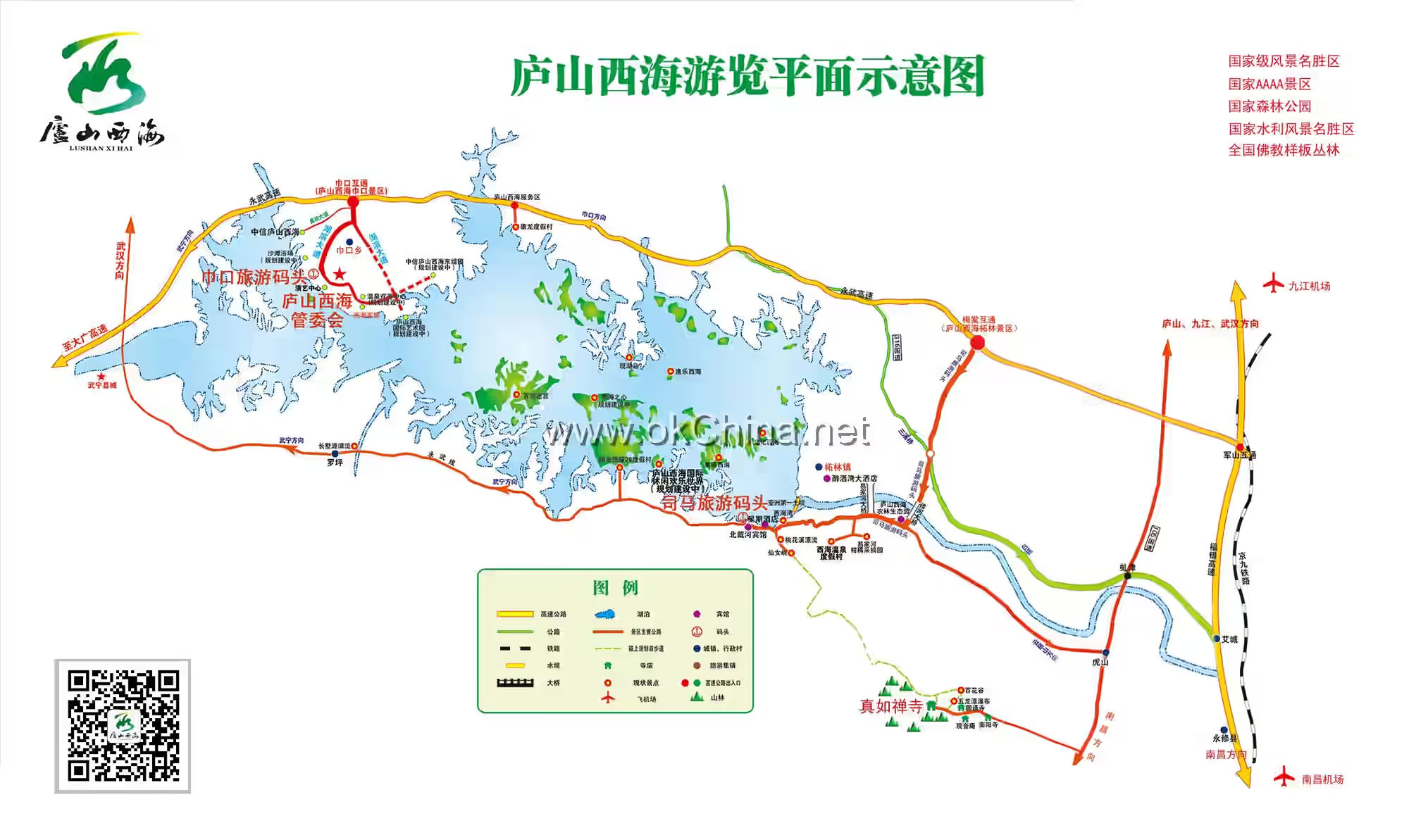
The Jiujiang Lushan West Sea Scenic Area is located in northern Jiangxi Province and southwest Jiujiang City, spanning Wuning and Yongxiu counties, with a total planned area of 495 square kilometers. It is adjacent to the Fuyin Expressway, Daguang Expressway, and Beijing-Kowloon Railway. The first tourism expressway, the Yongwu Expressway, runs along the lake. It is only a 50-minute drive from both Changbei Airport and Jiujiang Airport.
2.2 Topography and Landforms
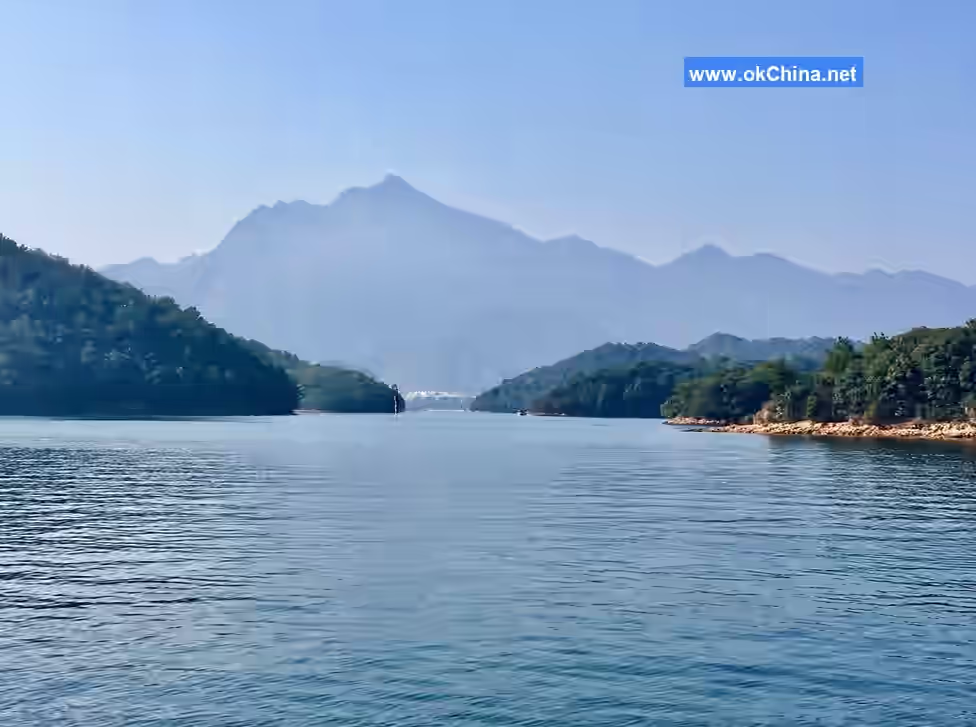
The Jiujiang Lushan West Sea Scenic Area belongs to the eastern end of the Jiuling Mountain Range, featuring a typical intrusive rock geological structure dominated by hilly slopes. The highest peak in the area, Gaoshanjian, has an elevation of 969.4 meters; low-altitude areas are along the shores of Zhelin Lake, with elevations around 20 meters.
2.3 Hydrology
The largest river within the Jiujiang Lushan West Sea Scenic Area is the Xiu River, originating from the southern foothills of the Mufu Mountains (at the junction of Pingjiang in Hunan, Tongcheng in Hubei, and Xiushui in Jiangxi). It flows through Tonggu, Xiushui, Wuning to Shanxiadu in Yongxiu, where it converges with the Liao River, and then joins the Gan River at Wucheng before flowing into Poyang Lake. The Zhelin Lake catchment area covers 9,340 square kilometers, with a normal water level storage area of 308 square kilometers and a total storage capacity of 7.92 billion cubic meters. The average water depth is about 45 meters.
2.4 Biodiversity
The Jiujiang Lushan West Sea Scenic Area has lush vegetation, with edible wild specialties such as luohan vegetables, fern vegetables, tea mushroom, and bamboo shoots. There are 118 species of fish in the West Sea, including mandarin fish, whitebait, white fish, stickleback, bighead carp, and yellowcheek carp.
3. Major Attractions
3.1 Yunju Mountain
Yunju Mountain, located in the southeast corner of Lushan West Sea, is renowned as "the premier cloud-covered ridge south of the Yangtze, famous across four hundred prefectures." It is a world-famous center for Buddhist pilgrimage. The Zhenru Chan Temple on Yunju Mountain, unifying five Buddhist schools, has a history of over 1,200 years and is the birthplace of the Caodong school of Chinese Buddhism. Emphasizing both farming and meditation, with a profound Chan tradition, it has produced many eminent monks and is known as the "cradle of Buddhist leaders in New China." Masters such as Haideng, Xingyun, the 11th Panchen Lama, and Cambodian King Norodom Sihamoni have visited here.
Yunju Mountain is dotted with strange peaks and rocks, streams and waterfalls, cliff inscriptions, ancient temples and pagoda forests, and historical sites. The Five Dragon Pool Waterfall, thousand-year-old ginkgo forest, and Lotus City are among its most famous beautiful landscapes. Celebrities like Bai Juyi, Huang Tingjian, Zhu Xi, and Wang Anshi left over 300 poems, essays, and paintings praising Yunju Mountain. Su Shi praised it as "a peerless wonderland under heaven, the abode of great beings, the cloud-dwelling place of four hundred prefectures."
3.2 West Sea Lake Area
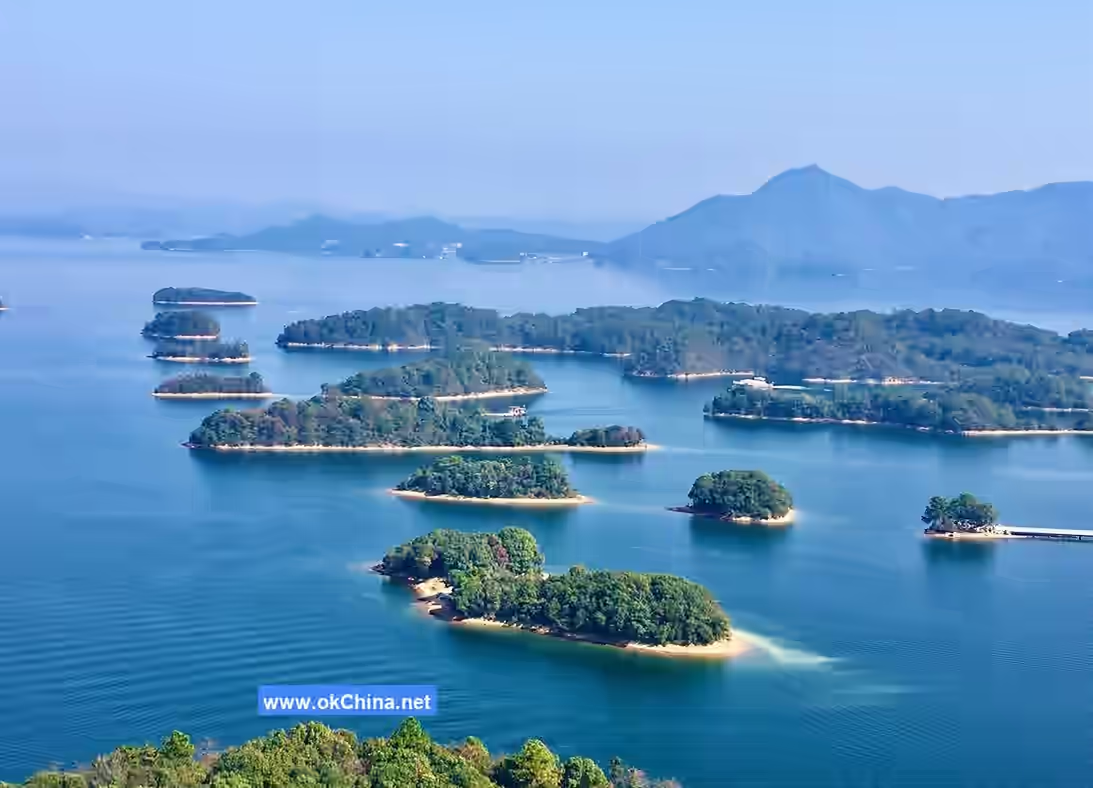
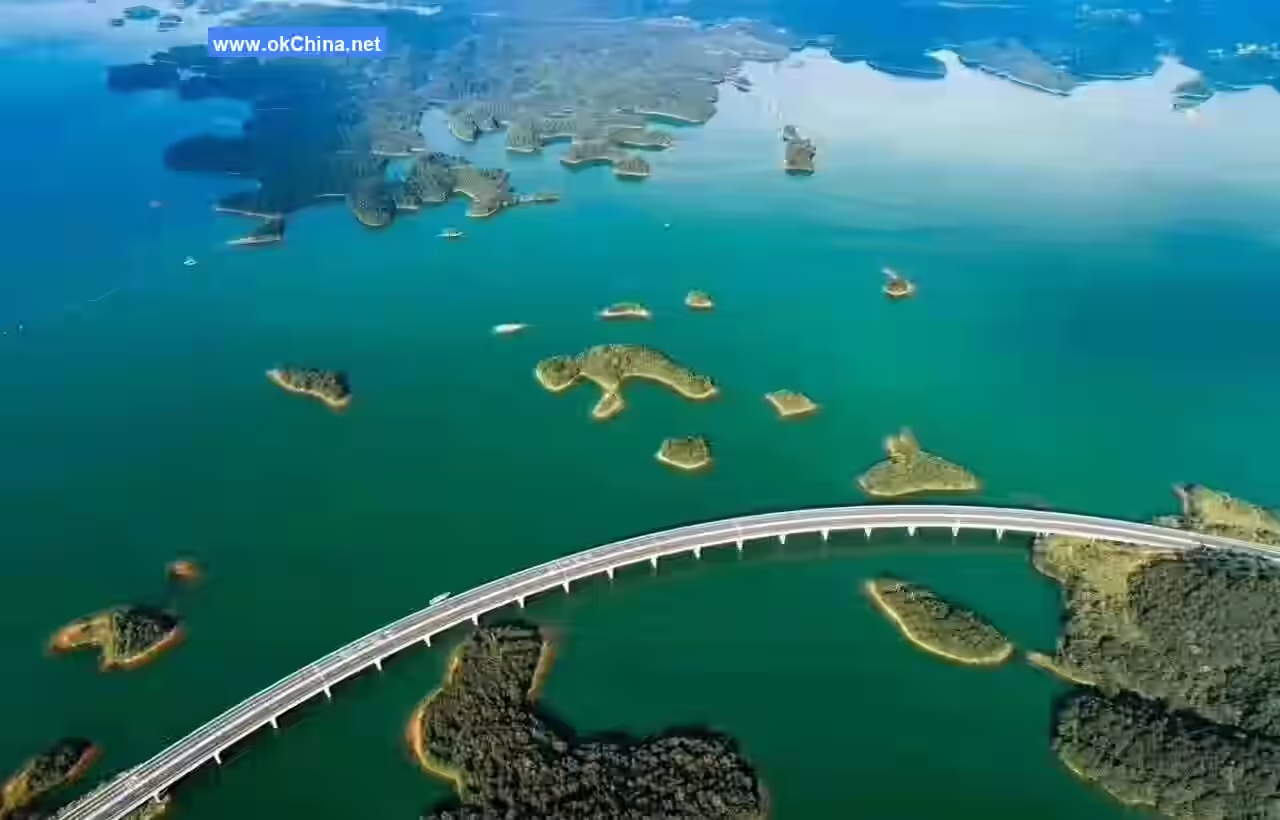
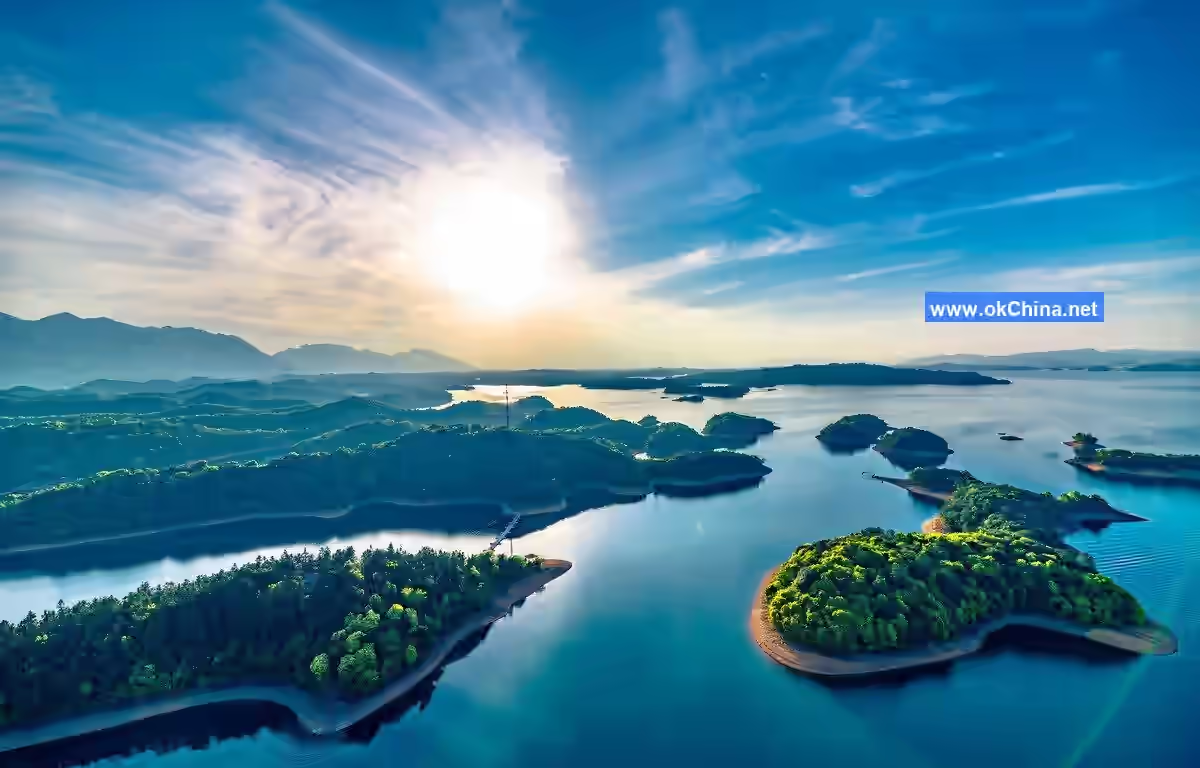
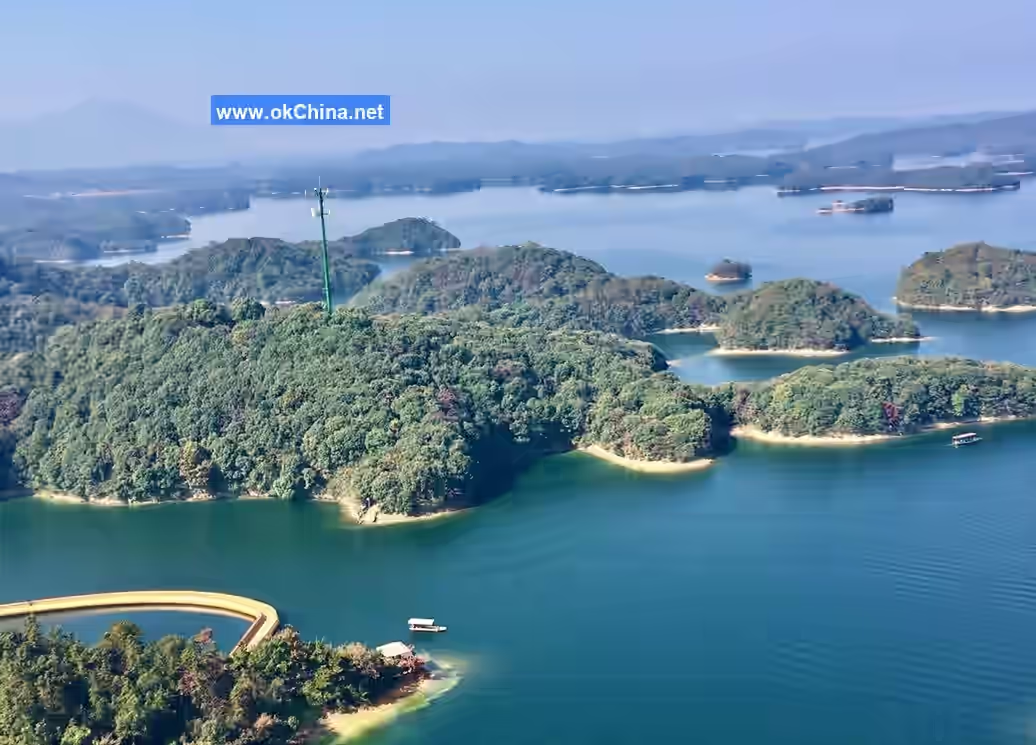
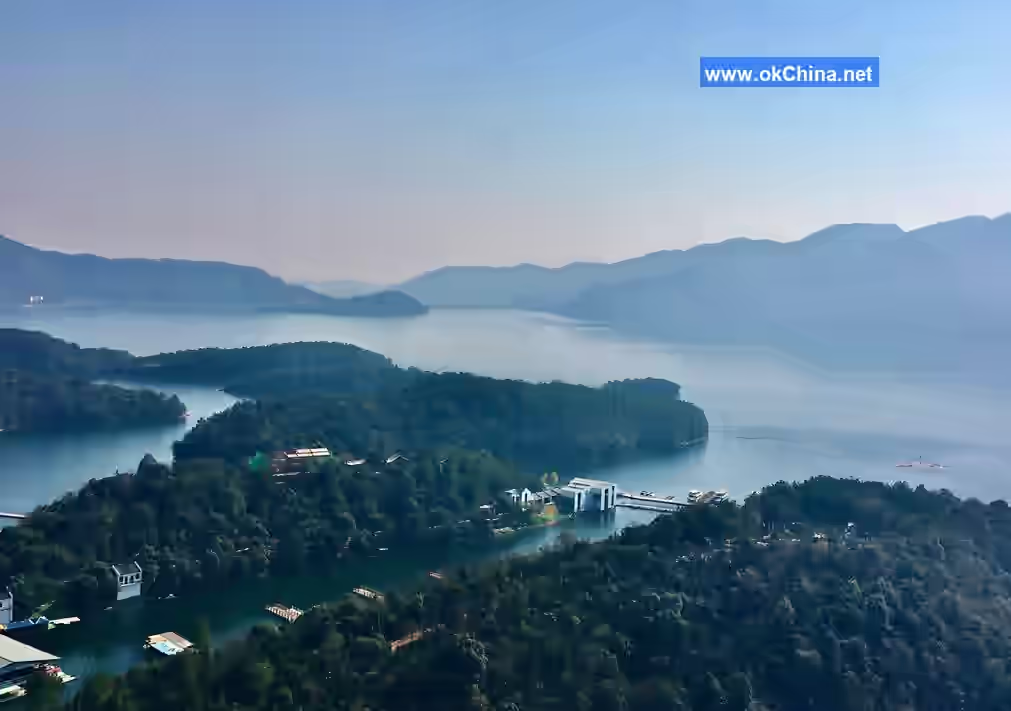
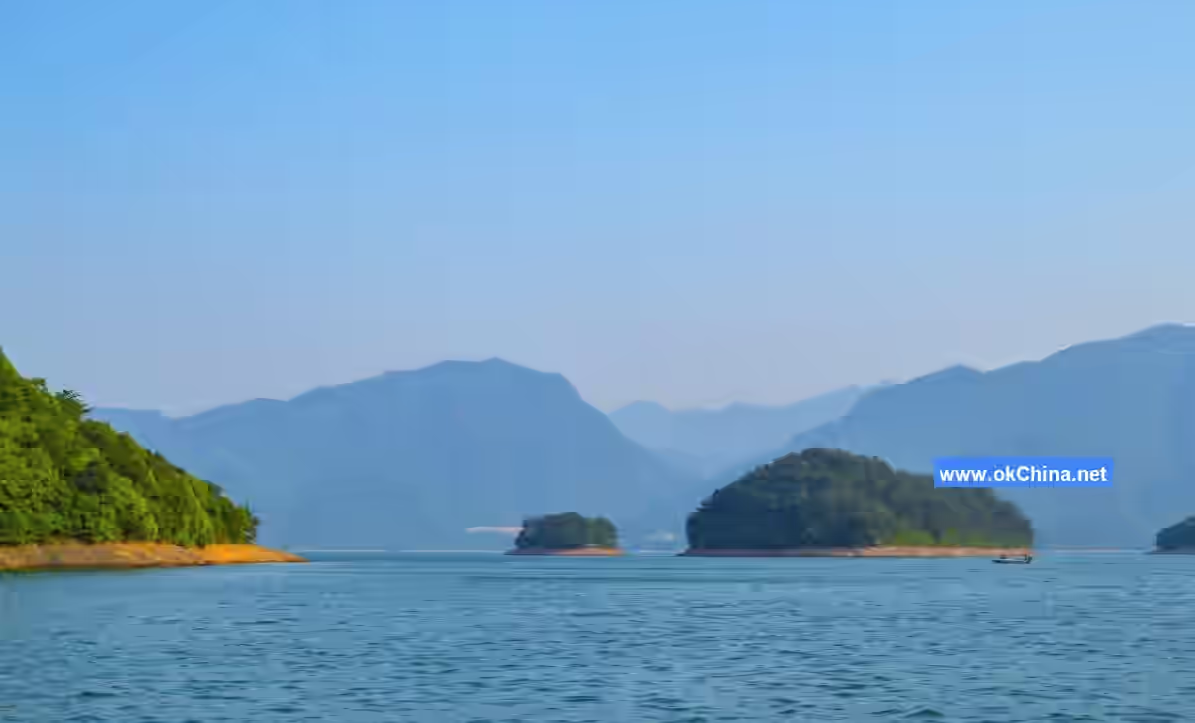
The West Sea Lake Area (Zhelin Lake) is Asia's largest earth dam reservoir, built by mobilizing hundreds of thousands of laborers over ten years to dam the Xiu River. The lake area covers 308 square kilometers, containing 1,667 islands larger than 3 mu and 997 islands larger than 5 mu, totaling over 8,000 islands of various sizes. The total capacity of the lake area is 8 billion cubic meters, with an average depth of 45 meters and visibility up to 11 meters. The concentration of negative oxygen ions in the air reaches 150,000 per cubic centimeter. It boasts national Class I water quality and Class I air quality and is the largest breeding ground in China for the "aquatic giant panda," the freshwater jellyfish (Craspedacusta sowerbii). In 2007, Premier Wen Jiabao, during an inspection, stopped and exclaimed, "There aren't many landscapes as beautiful as this left in China. You must develop and protect it well!" In 2015, Chairman Wu Bangguo, during his inspection, inscribed for the scenic area: "Cloud-dwelling in Heaven, Poetic and Picturesque West Sea."
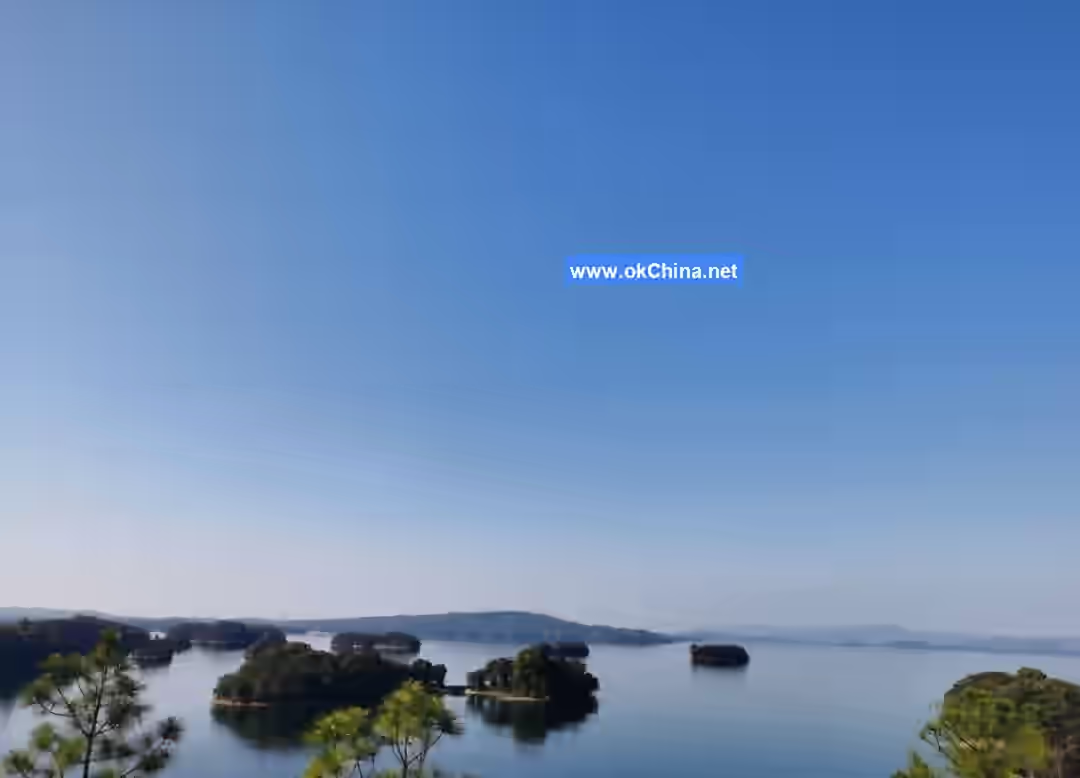
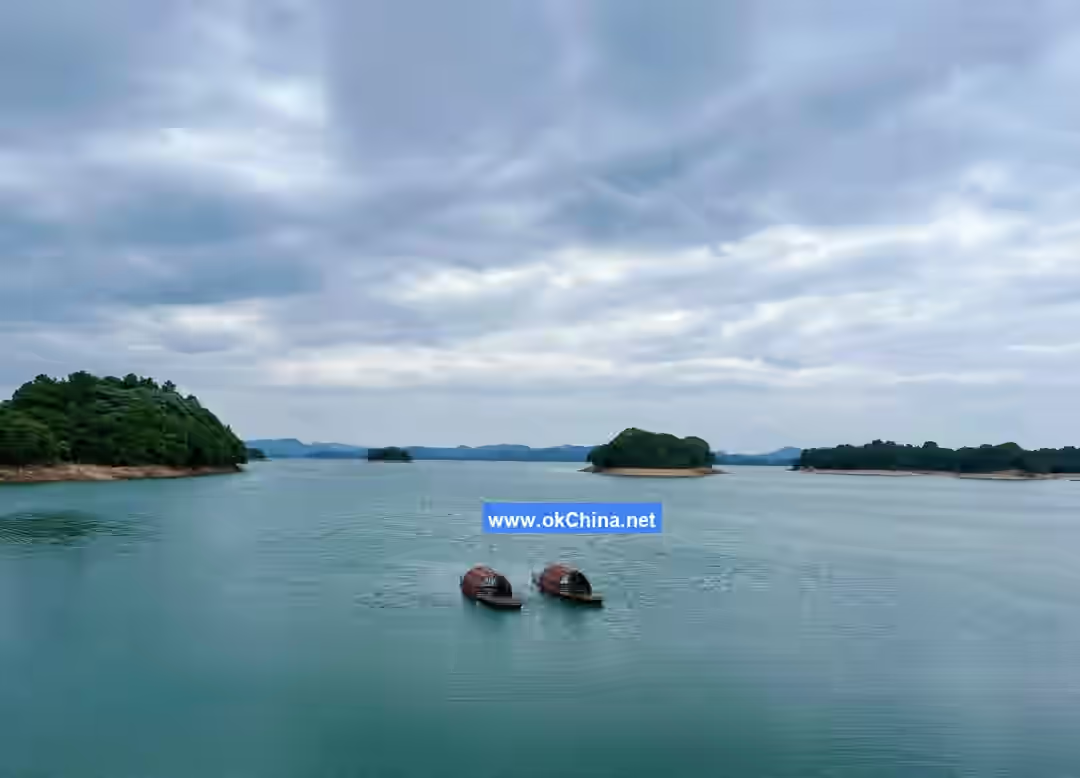
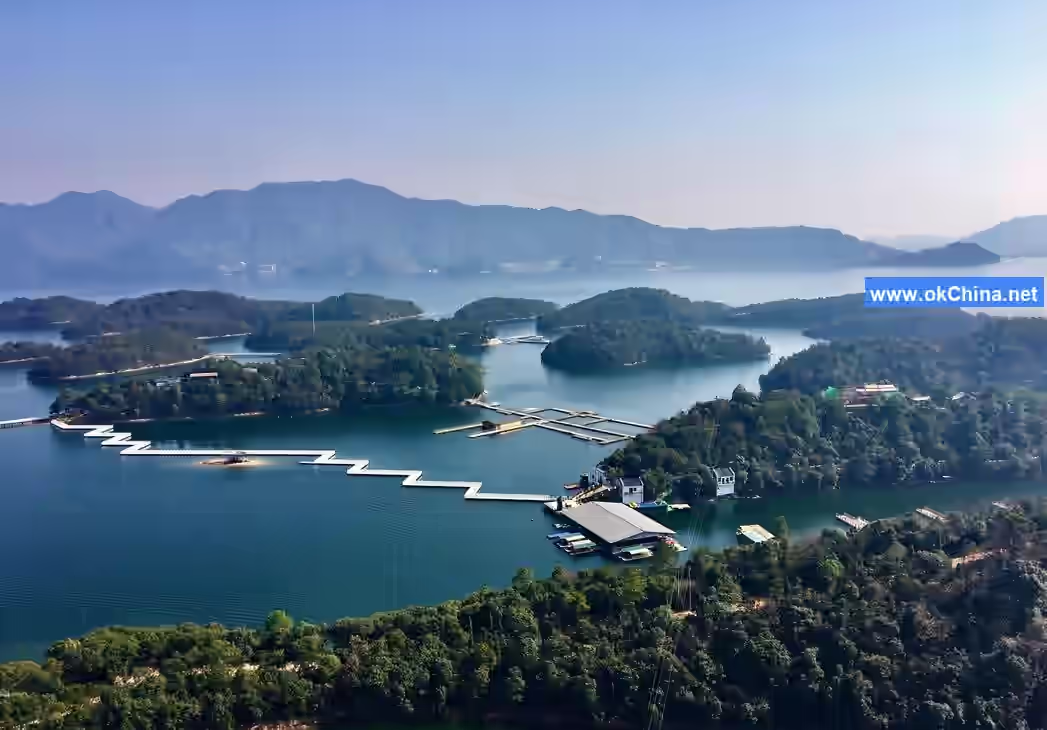
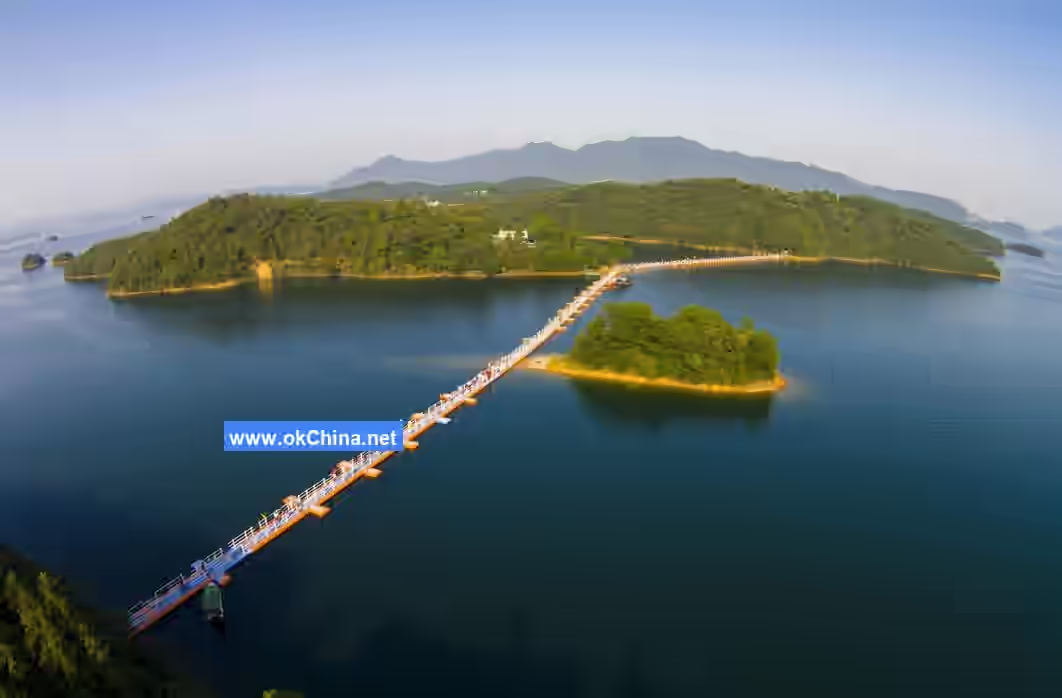
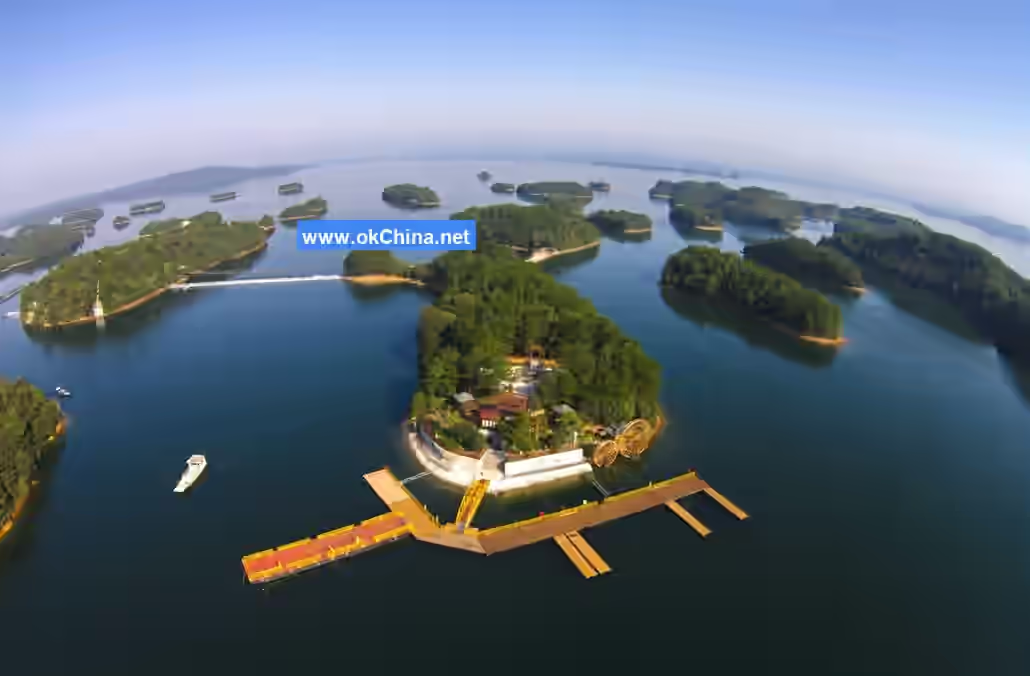
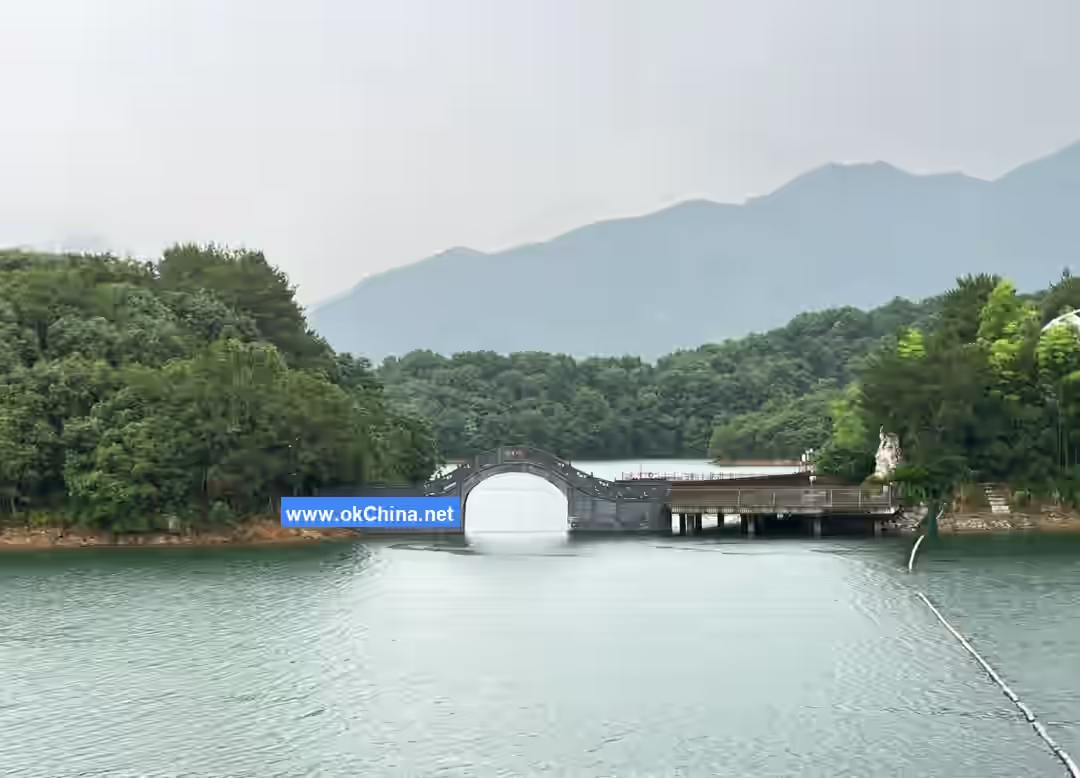
The West Sea Lake Area includes Love Island, Yunju Island, Goddess Island, Canghai Island, Ruoxi Island, Pearl Island, Sangtian Island, and others. Islands are connected by bridges and accompanied by boats. The Mufu and Jiuling mountain ranges rise layer upon layer, with vast expanses of blue waves and emerald-green islands resembling pieces of jade scattered on a jade plate. Major attractions include: Thousand Islands Like Pearls, A Lone Tree in Vast Sea, Love Island, West Sea Star Glass Tower, the nation's largest freshwater jellyfish breeding base, Golden Dragon Bridge, Zhelin Old Town Food and Cultural Creative Park, Peach Blossom Stream Drifting, West Sea Grand Canyon, the national rural tourism model village Yijiahe, West Sea Hot Spring Resort, and more.
3.3 Zhenru Chan Temple
Zhenru Chan Temple was first built in the third year of the Yuanhe era of Emperor Xianzong of Tang (808 AD). It is one of the birthplaces of the Buddhist Caodong school and one of China's first batch of key national open temples, enjoying high recognition in Southeast Asia and North America. It is known for its rigorous Chan practice and complete monastic rules, revered by Buddhist disciples as a world center for seated meditation. It is also hailed as the "cradle of leaders of the Buddhist Association of China." Venerable Xuyun, the first honorary president of the Buddhist Association of China in the new era, rebuilt Zhenru Chan Temple here from 1956 to 1959 and later passed away on Yunju Mountain. The third president, Zhao Puchu, was once Venerable Xuyun's secretary and a lay disciple of Yunju Mountain's Zhenru Temple. The fourth president, Master Yicheng, practiced here for 50 years and served as the temple's abbot. The current president of the Buddhist Association of China, Chuan Yin, began attending to Venerable Xuyun in 1954 until his passing, practicing on Yunju Mountain for 25 years.
For over a thousand years, Zhenru Chan Temple has adhered to the ancient and rigorous Chan tradition of "emphasizing both farming and meditation." In 1988, Zhao Puchu listed Zhenru Chan Temple alongside Suzhou's Lingyan Mountain Temple and Fujian's Putian Guanghua Temple as one of the three national model Buddhist monasteries. At its peak, Zhenru Chan Temple had over 1,500 monks and nuns, with nearly a hundred temples on the mountain. Besides Zhenru Chan Temple, Yunju Mountain has over 10 cultural relics protection units at or above the county level, including Yaotian Temple, Nanyang Temple, Yuantong Temple, Guanyin Temple, and Xiaoyunmen.
3.4 Canyon Drifting
West Sea Drifting, originally named Peach Blossom Stream Drifting, is located on the south bank of the West Sea Lake Area within the General's Canyon Scenic Area of Lushan West Sea. The drifting course is 5.1 kilometers long with a drop of 168 meters, equivalent to a 55-story building. Meticulously designed according to the mountain terrain, it offers poetic and leisurely drifting, passionate warrior drifting, and thrilling adventurer drifting. Along the way, visitors can not only enjoy the beautiful mountain forest scenery but also encounter lifelike pythons and giant beasts, making it a "ten-mile gallery that delights the heart."
3.5 Sima Tourist Center
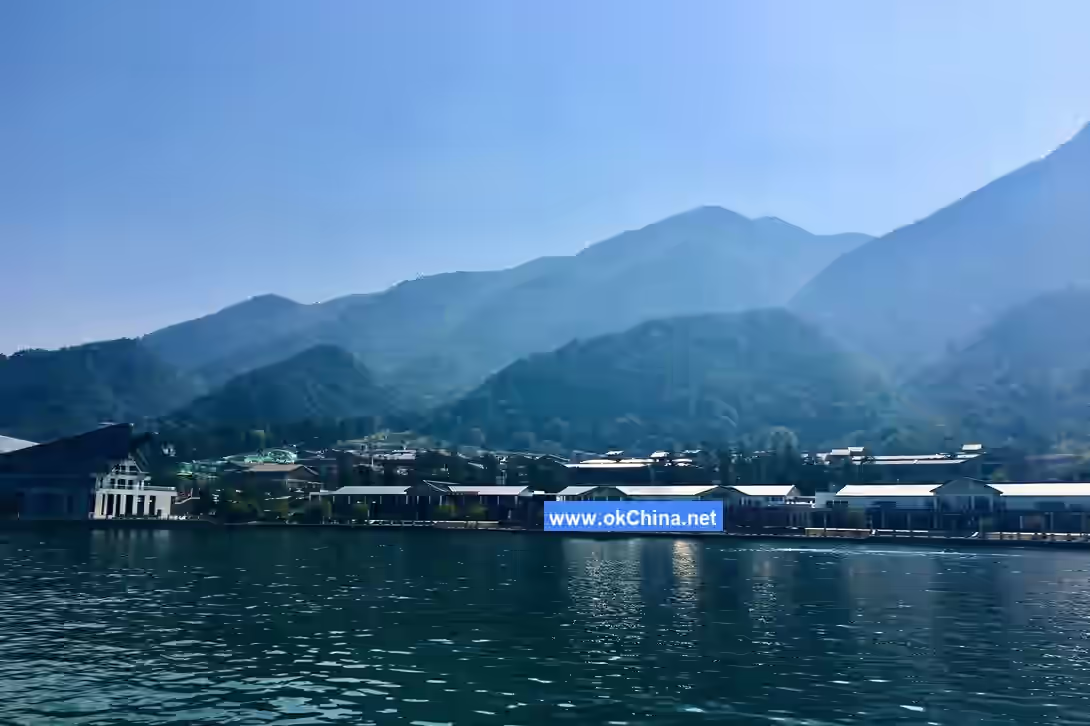
The Sima Tourist Center is located on the south bank of Lushan West Sea, adjacent to the Jiaowu National Highway, with a total investment of approximately 500 million yuan. The pier is divided into three functional areas: the boarding pier service area, the reservoir bay waterborne commercial area, and the disembarkation pier service area, catering to various levels of tourist needs such as sightseeing services, shopping and leisure, and entertainment. The pier area offers sightseeing to islands including Yunju Island, Goddess Island, Ruoxi Island, Huaguoshan, West Sea Star, Wooden House Town, Canghai Island, and Sangtian Island, forming a cluster of nine islands and one village.
3.6 Wei Yuan's Tomb
Wei Yuan's Tomb is located on the eastern slope of Weijia Mountain in Yijiahe Village, Zhelin Town. The tomb mound is built of brick and stone, 3 meters high and 8 meters in diameter. In front of the tomb are a pair of stone horses and a stone turtle. The tomb was robbed during the early Cultural Revolution. In 2009, some burial objects were collected by the Jiangxi Provincial Institute of Cultural Relics and Archaeology. The tomb's occupant, Wei Yuan (courtesy name Wenyuan), was a native of Jianchang. He passed the imperial examination in the fourth year of the Yongle era of the Ming Dynasty (1409) and served as Minister of Justice. Wei Yuan was known for his integrity, loyalty to the emperor, and care for the people, earning the emperor's appreciation. In the eighth year of the Zhengtong era (1443), Wei Yuan retired due to foot illness and returned to his hometown, passing away on Weijia Mountain the following year. To honor him with a grand burial and highlight his lifelong merits, Emperor Yingzong bestowed an imperial burial and the posthumous title "Wenzhong." Wang Zhi, the Minister of Personnel, wrote the "Imperial Burial Spirit Way Stele Record." He was buried in the third year of the Chenghua era (1463).
4. Cultural Resources
4.1 Cultural Activities
4.1.1 West Sea Xun Year · Intangible Cultural Heritage Folk Festival
In February 2024, the Jiujiang Lushan West Sea Scenic Area held the first "West Sea Xun Year · Intangible Cultural Heritage Folk Festival," featuring a series of exciting cultural and tourism activities covering national trend performances, intangible cultural heritage experiences, and specialty foods. Visitors could experience activities such as "Crossing the Dragon Gate," "Touching the Dragon Head," and "Dragon Fireworks."
4.1.2 Lushan West Sea Water Area Fishing Culture Activities
On November 9, 2024, the 2024 First Jiangxi Wuning (Lushan West Sea Water Area) Fishing Culture and Autumn Fishing Event kicked off at West Sea Yan Pier, inviting visitors from all directions to enjoy the autumn fishing spectacle. During the event, various exciting activities took place, including fishing culture song and dance performances, the lively scene of autumn fish harvest, tempting giant pot fish soup, a creative market with more than just "fish," and the festive auction of the "Fish King."### 4.2 Historical Evolution In the late 1950s, Jiangxi Province decided to build a large hydropower station in the Xiushui River basin. At the beginning of 1958, surveying and site selection work commenced. Under the guidance of Soviet experts, the preliminary design plan for the reservoir was completed. The main dam adopted an earth-fill dam scheme, and the dam site was chosen at Zhelin Town, hence the name Zhelin Hydropower Project. On June 12, 1975, the fourth generating unit was connected to the grid, marking the completion of the Zhelin Hydropower Project. By the mid-1990s, social electricity demand surged dramatically, and the power generation capacity of the 28-year-old Zhelin Reservoir had become a drop in the bucket. Due to the special characteristics of hydropower, it was used for peak shaving, frequency regulation, and emergency backup in the Jiangxi power grid. In 1999, comprehensive tourism development began at Zhelin Lake Reservoir, which was designated as the Yunju Mountain—Zhelin Lake Scenic Area. On April 30, 2006, the Yunju Mountain—Zhelin Lake Scenic Area Management Committee was established to provide unified management of the jurisdiction. In August 2011, the Yunju Mountain—Zhelin Lake Scenic Area was renamed the Jiujiang Lushan West Sea Scenic Area. In April 2012, construction began on the Sima Tourist Center of the Jiujiang Lushan West Sea Scenic Area. In June 2013, the Sima Tourist Center of the Jiujiang Lushan West Sea Scenic Area was completed.
4.3 Legends
4.2.1 The Legend of Yijia River
Yijia River was anciently known as "Wentang Yuan" (Hot Spring Source). Legend has it that over 1,200 years ago, during a winter of ice and snow, a poor woodcutter, on his way home from gathering firewood in the mountains, collapsed from hunger and cold beside a very small puddle and fell into a deep sleep. After a while, the woodcutter felt a wave of warmth spread throughout his body. Opening his eyes, he saw mist-like steam rising from the puddle. He quickly scooped up the hot water with his hands to satisfy his hunger and ward off the cold, repeatedly murmuring to himself, "Heaven is kind, bestowing upon me this warm soup." After returning home, he told everyone he had encountered a fairyland treasure. Within a few days, he moved his family near the puddle. As the news spread, people from outside the mountains continuously moved in. The woodcutter then led everyone to dig the small puddle into a pond, naming it "Wentang Yuan."
4.2.2 The Story of the Arhat Vegetable
Legend has it that during the Northern and Southern Dynasties, there was a temple in Dahu Ping, surrounded by over twenty households. Due to the steep mountain paths and isolated transportation, they were almost cut off from the world. Life was extremely hard; people had to dig for food on the mountains, relying on wild vegetables and fruits to stave off hunger, living a difficult life with scant clothing and insufficient food. However, they held deep faith in Buddhism. To make offerings to the Bodhisattva, they could only use the best wild fruits gathered from the mountains as tributes. Over time, their devotion moved the Buddha in the Western Paradise. One winter night, the Buddha appeared in a dream to the temple's abbot, saying: "The mountain folk here are simple and kind-hearted. In recognition of their sincere devotion to Buddhism, I bestow upon this land a cool and delicious vegetable. I will send eighteen Arhats to sow the seeds here, and the vegetables will grow during the Qingming period each year." The following year, indeed, a lush green vegetable grew around the mountain folk's homes, covering an area of about 200 mu. At first, they did not know what vegetable it was and dared not eat it. So, they consulted the temple abbot. The abbot explained the reason and was the first to eat it. This vegetable then became a common dish for the mountain folk—cool, delicious, and extremely tasty, never growing tiresome even after long consumption. According to the Buddha's message in the abbot's dream, the Arhat Vegetable also had miraculous properties: children eating it could aid digestion, avert disasters, and grow healthily; adults eating it could strengthen the body, improve health, and ward off all illnesses. This vegetable was excellent, but they did not know its name. So, the mountain folk asked the temple abbot to name it. The abbot pondered for a moment, thinking that this vegetable was planted by the eighteen Arhats sent by the Buddha, and thus named it "Arhat Vegetable." Hence, the Arhat Vegetable got its name.
4.4 Historical Figures
4.4.1 Huang Tingjian
Huang Tingjian (August 9, 1045 – May 24, 1105), courtesy name Luzhi, pseudonym Shangu Daoren (Mountain Valley Daoist), later pseudonym Fu Weng, was a native of Fennin, Hongzhou (present-day Xiushui County, Jiujiang City, Jiangxi Province). In his childhood, he often visited his maternal grandmother's home at Sanxi Bridge by the Lushan West Sea. He was a renowned litterateur and calligrapher of the Northern Song Dynasty, the founding master of the influential Jiangxi School of Poetry. Along with Du Fu, Chen Shidao, and Chen Yuyi, he is traditionally grouped as "One Ancestor and Three Patriarchs" (Huang Tingjian being one of the patriarchs). He studied under Su Shi along with Zhang Lei, Chao Buzhi, and Qin Guan, collectively known as the "Four Disciples of Su's School." During his lifetime, he was as famous as Su Shi, and the world referred to them together as "Su-Huang." Huang Tingjian's mother, Lady Li, and his uncle Li Chang were descendants of the Modao Li family of Sanxi Bridge, Lushan West Sea.
4.4.2 Yangshi Lei (The Lei Family of Architects)
"Yangshi Lei" is an honorary title for the Lei family, who presided over imperial architectural design for over 200 years during the Qing Dynasty. They were a family of court architectural craftsmen in Qing Dynasty China: Lei Fada, Lei Jinyu, Lei Jiaxi, Lei Jiawei, Lei Jiarui, Lei Siqi, Lei Tingchang, etc. The ancestral home of the Yangshi Lei family was Yongxiu, Jiangxi, and they were born at Sanxi Bridge by the Lushan West Sea Lake. The first-generation Yangshi Lei, Lei Fada, courtesy name Mingsuo, was born on the 21st day of the second lunar month in the 47th year of the Wanli era (April 5, 1619) and died on the 11th day of the eighth lunar month in the 32nd year of the Kangxi era (September 29, 1694). During the Kangxi period, he moved from Jiangning (present-day Nanjing, Jiangsu) to Beijing. Up to the seventh-generation Yangshi Lei, Lei Tingchang, who passed away in the late Guangxu period, seven generations of the Lei family were involved in the design and construction of palaces, gardens, mausoleums, as well as government offices and temples for the imperial family. Because several generations of the Lei family served as the chief heads of the Yangshi Fang (Design Office) of the Qing court, they were respectfully called "Yangshi Lei" by the world, also colloquially referred to as "Yangzi Lei."
Comments
Post a Comment