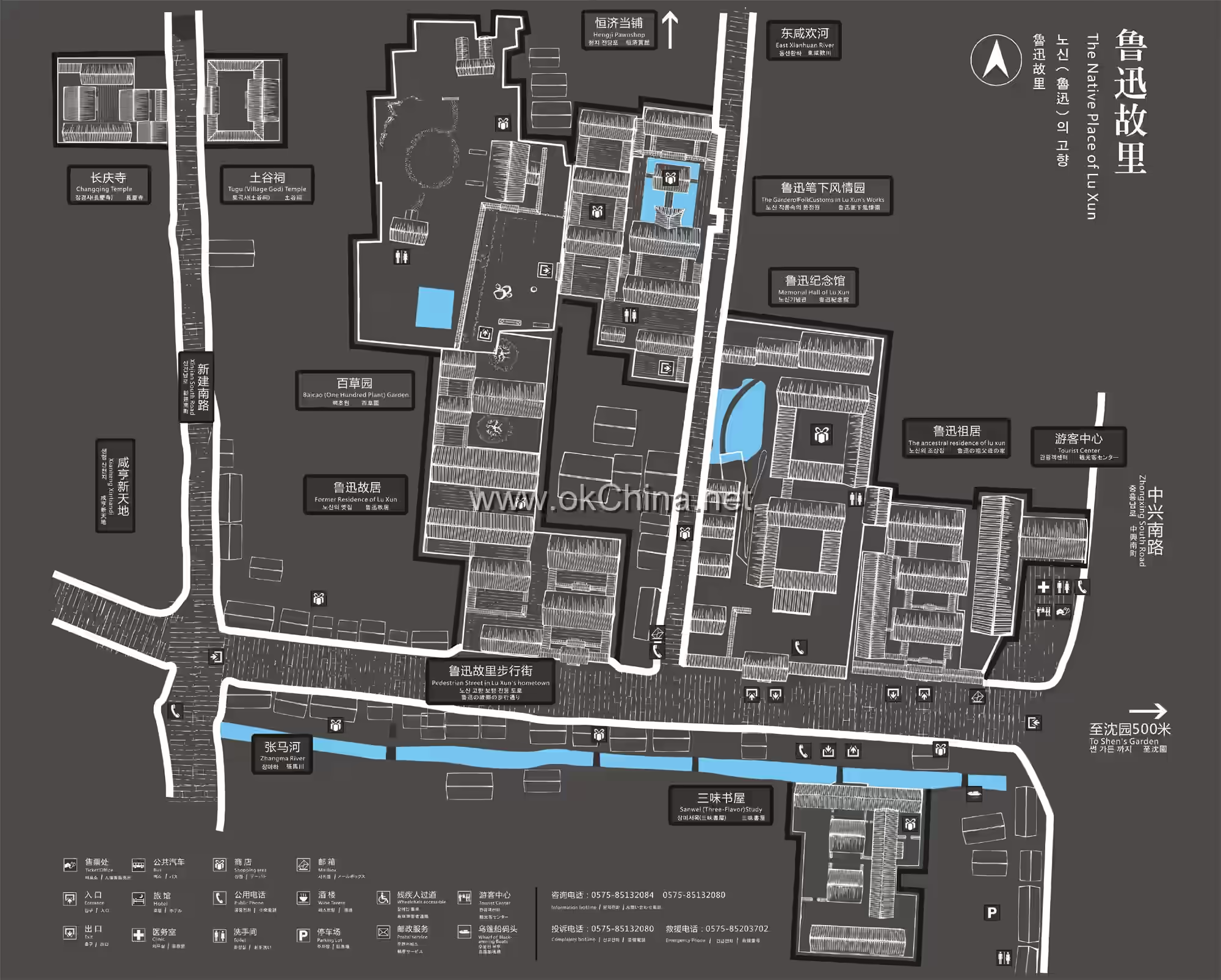
Shaoxing Lu Xun's Hometown and Shen Garden Scenic Area
1. Introduction
The Shaoxing Lu Xun's Hometown and Shen Garden Scenic Area, abbreviated as Lu Xun's Hometown and Shen Garden Scenic Area, is a tourist attraction located in Yuecheng District, Shaoxing City, Zhejiang Province. It comprises the Lu Xun's Hometown Scenic Area and the Shen Garden Scenic Area.
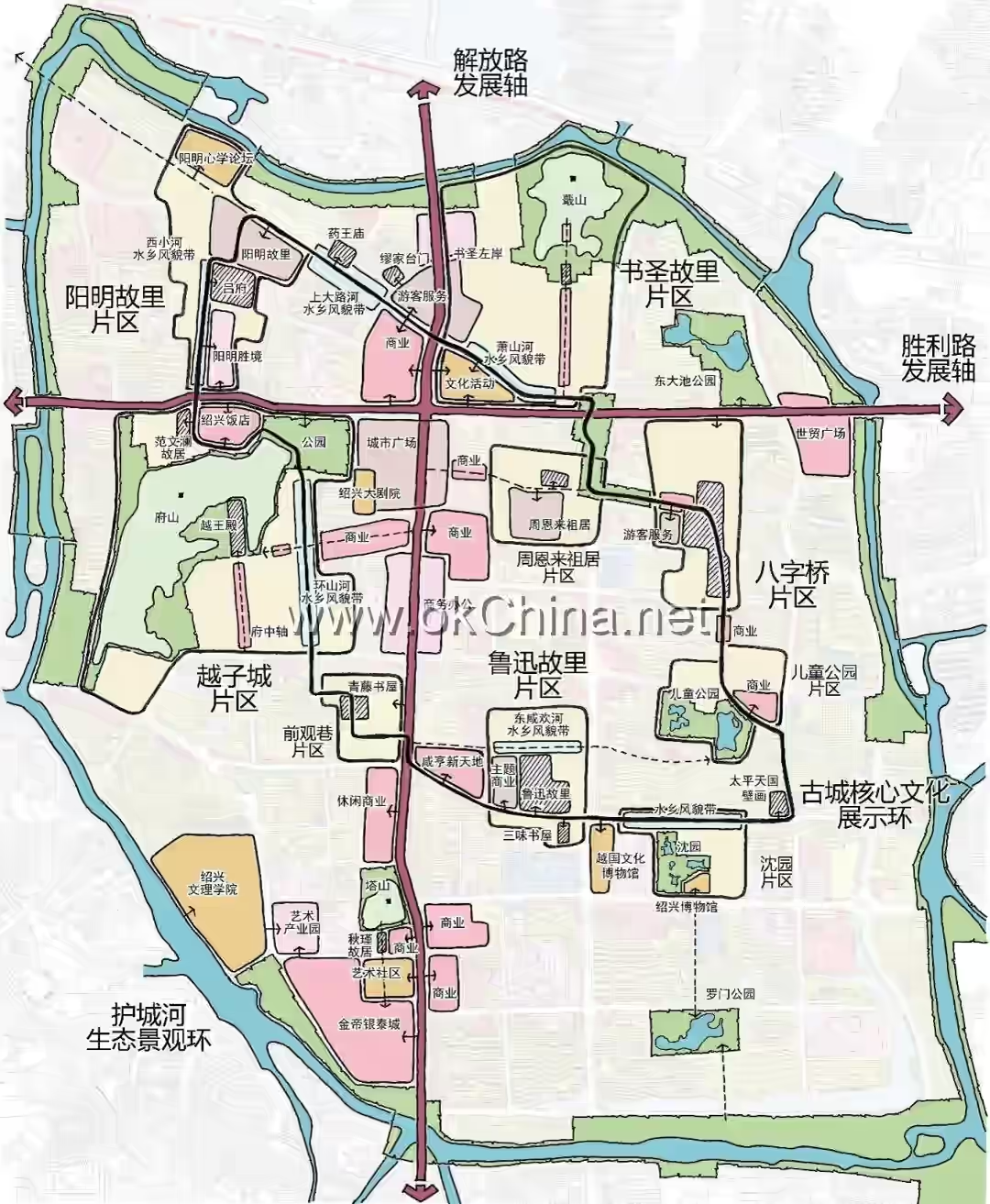
The Lu Xun's Hometown Scenic Area is located at No. 241, Lu Xun Middle Road. It is the birthplace and the land where Lu Xun spent his childhood and youth. Restoration and preservation efforts began in 1953. The protected planning area of the scenic area spans 51.57 hectares, with a core protection zone of 28.9 hectares. The core area of Lu Xun's Hometown contains a wealth of historical and cultural information related to Lu Xun and his literary culture. Nationally protected key cultural heritage sites such as Lu Xun's Former Residence, Lu Xun's Ancestral Home, and the Sanwei Study are renowned far and wide. Additionally, sites featured in Lu Xun's writings, such as the Xianheng Hotel, Tazi Bridge, Tugu Temple, Changqing Temple, and Hengji Pawnshop, are authentically preserved and presented to the public. Shaoxing Lu Xun's Hometown is a prime example of protecting and continuing the traditional style of the ancient city of Shaoxing. It has been developed into an ecological "cultural relic forest," reflecting the integrity of the ancient city's preservation and is hailed as a model for the protection of former residences of Chinese celebrities.
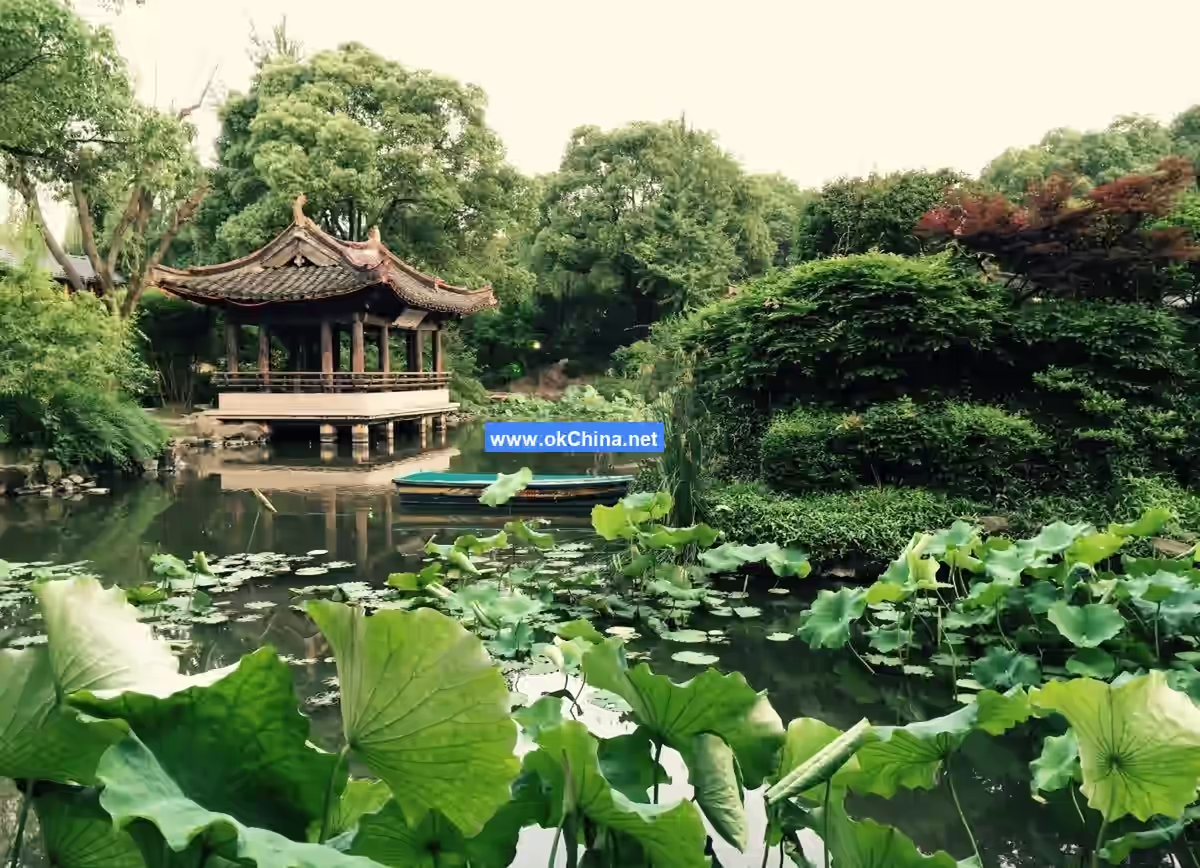
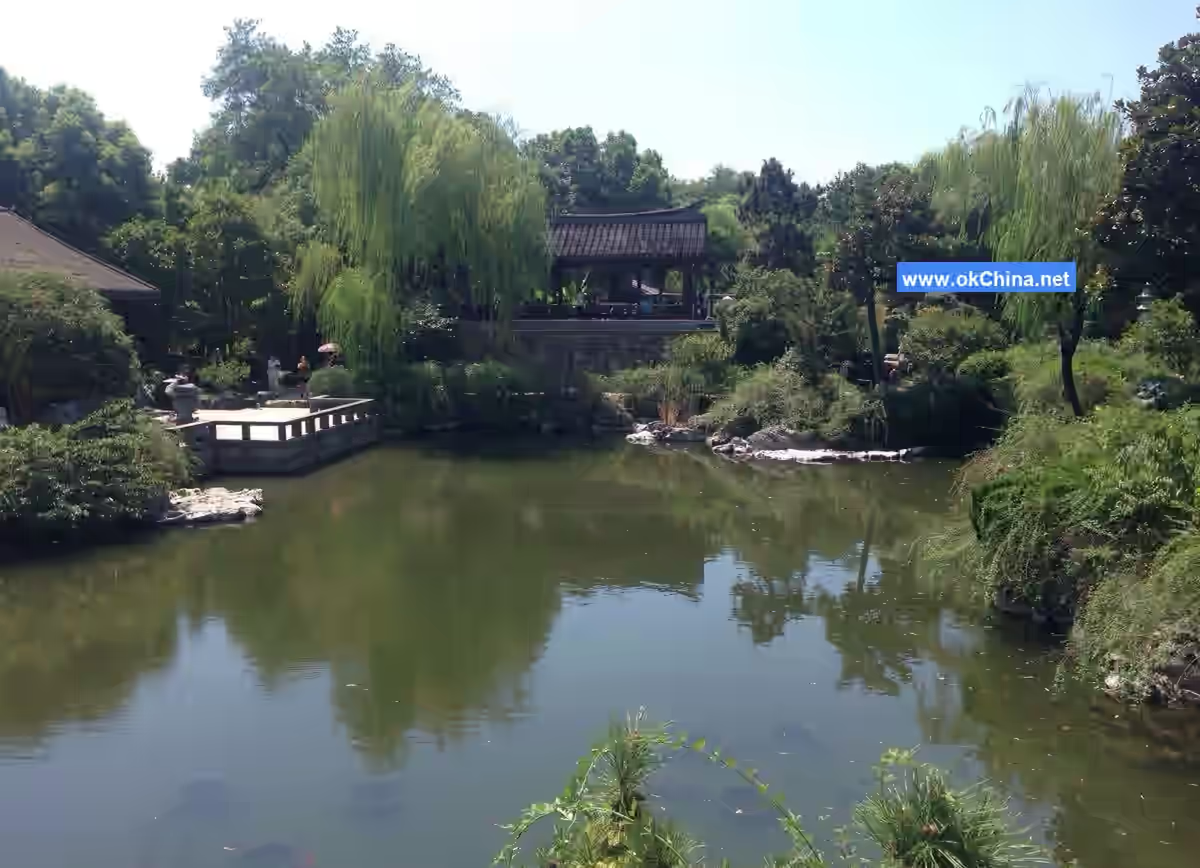
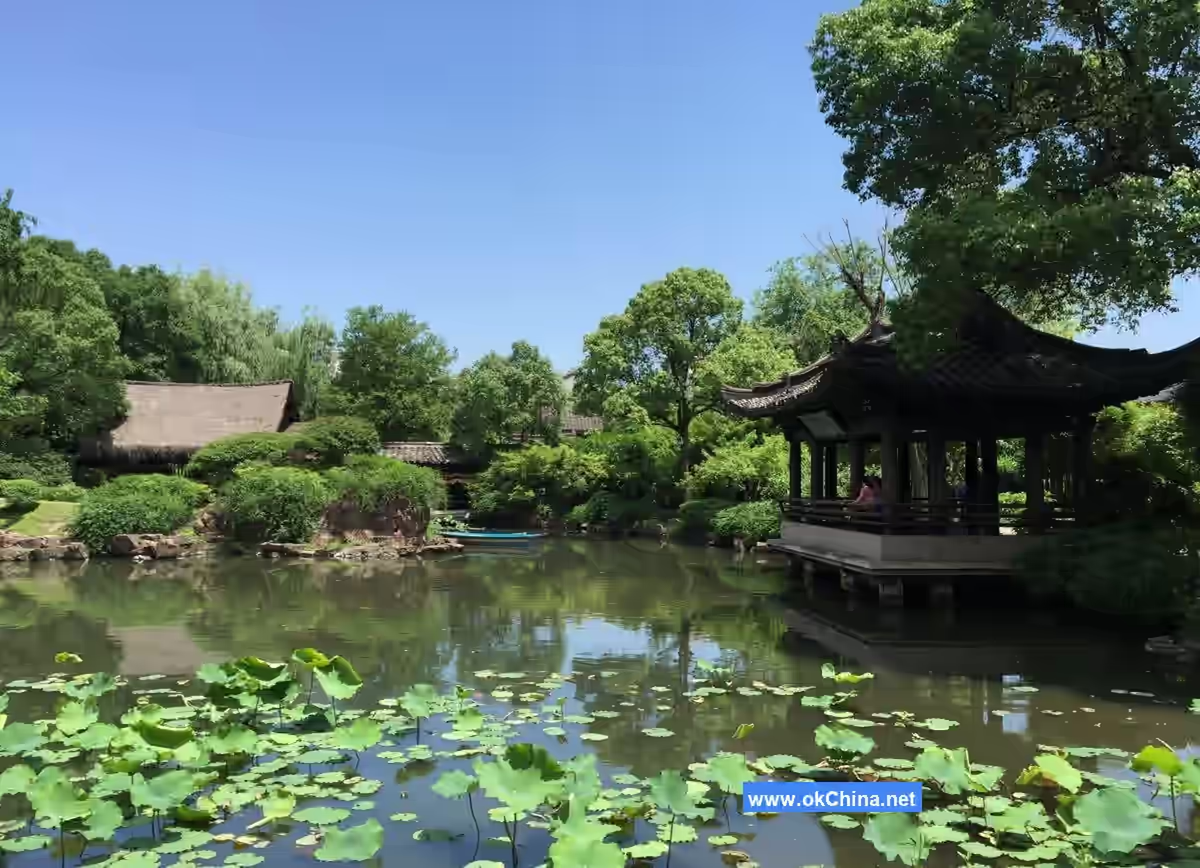
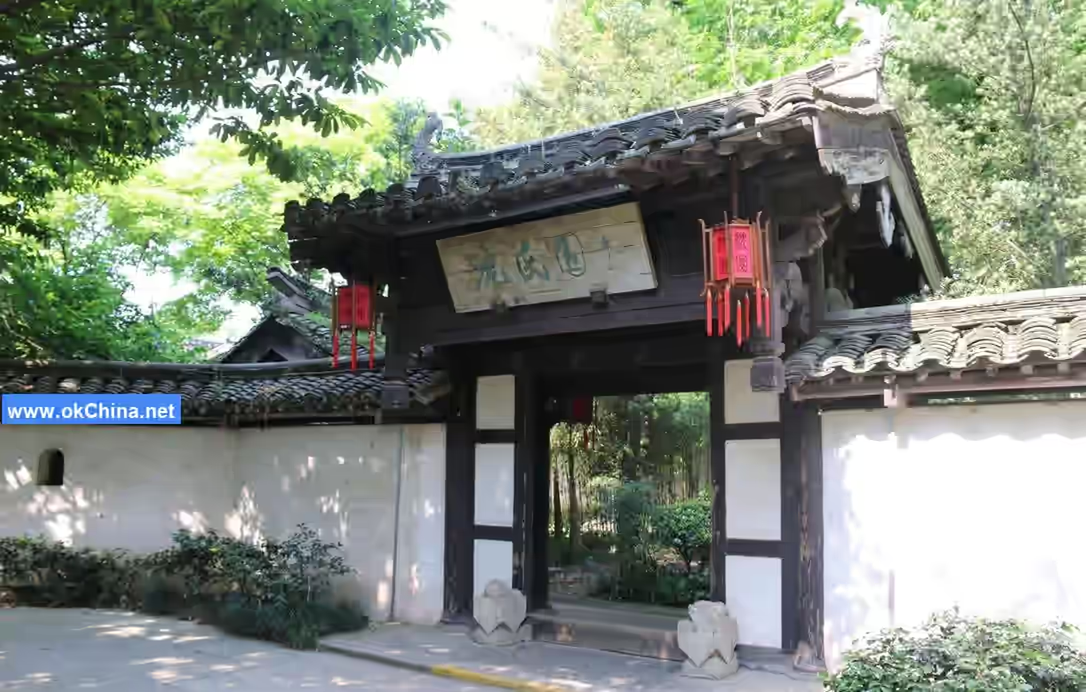
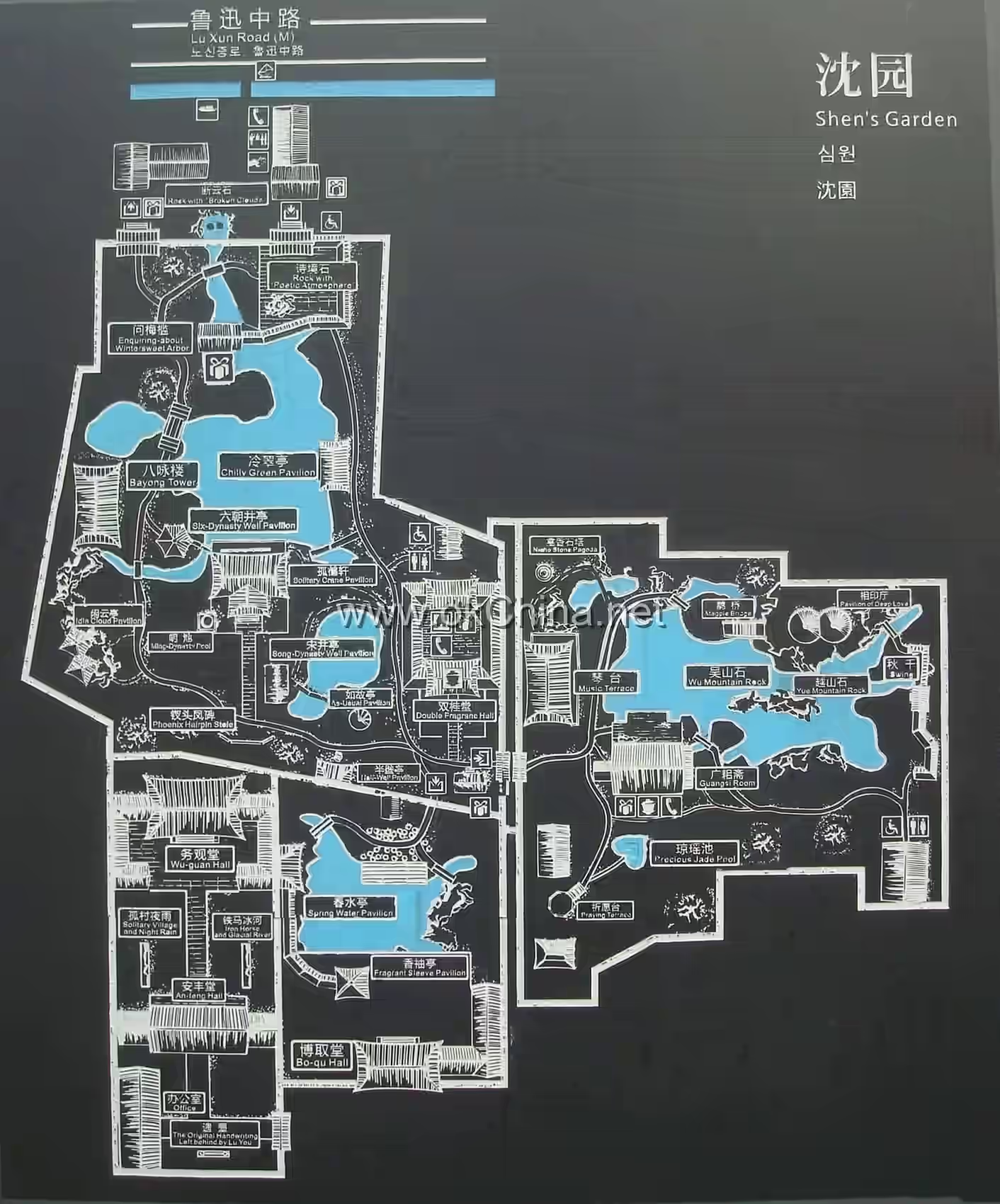
The Shen Garden Scenic Area is located at No. 318, Lu Xun Middle Road. Originally the private garden of the Shen family, it is a garden from the Song Dynasty, situated less than two hundred meters east from the front of Lu Xun's Ancestral Home across Zhongxing Road. The scenic area covers 57 mu (approximately 3.8 hectares) and mainly consists of three parts: the Historical Site Area, the East Garden, and the South Garden (Lu You Memorial Hall and Lianli Garden). It features ten scenic spots: "Broken Clouds, Song of Sorrow," "Poetic Realm, Love's Intention," "Spring Ripples, Startled Swan," "Remnant Wall, Lingering Regret," "Lone Crane, Mournful Cry," "Green Lotus Reflecting the Sun," "Palace Wall, Willow of Lament," "Treading Snow, Inquiring of Plum," "Fragrance of Poetry and Books," and "Magpie Bridge, Conveying Affection."
In 2012, the Shaoxing Lu Xun's Hometown and Shen Garden Scenic Area was officially recognized as a National AAAAA Tourist Attraction by the National Tourism Administration of the People's Republic of China, becoming the first such attraction in Shaoxing City and the tenth in Zhejiang Province.
2. Geographical Environment
2.1 Location and Area
The Lu Xun's Hometown Scenic Area is located at No. 241, Lu Xun Middle Road, Yuecheng District, Shaoxing City, Zhejiang Province. The protected planning area spans 51.57 hectares, with a core protection zone of 28.9 hectares. The Shen Garden Scenic Area is located at No. 318, Lu Xun Middle Road, Yuecheng District, Shaoxing City, Zhejiang Province, east of Shaoxing Lu Xun's Hometown, covering an area of 57 mu.
2.2 Climate Characteristics
Yuecheng District, where the Shaoxing Lu Xun's Hometown and Shen Garden Scenic Area is located, belongs to the subtropical climate zone, characterized by four distinct seasons and a mild climate.
3. Main Attractions
3.1 Lu Xun's Hometown Scenic Area
3.1.1 Overview
Lu Xun's Hometown is the land where Mr. Lu Xun lived during his youth. It is the historical district in Shaoxing's urban area that is best preserved, richest in cultural heritage, and most representative of the classic water-townscape. Authentic sites like the Sanwei Study, Baicao Garden, Lu Xun's Former Residence, and Lu Xun's Ancestral Home are completely preserved. Relics mentioned in Lu Xun's writings, such as Changqing Temple, Tugu Temple, Jingxiu Nunnery, Hengji Pawnshop, and Xianheng Hotel, are interspersed throughout. A number of old traditional gatehouse residences (Taimen), like the Shou Family Taimen, Zhu Family Taimen (Lu Xun's Folk Customs Garden), and He Family Taimen, retain their ancient charm. It has become an authentic place to interpret Lu Xun's works, savor the scenes and objects described in his writings, and experience the living environment of his time in a multi-dimensional way. It is considered Shaoxing's "treasure of the city."
3.1.2 Hengji Pawnshop
Pawnshops, also known as pawn houses or pledge shops. The pawnshop (zhidian) mentioned by Lu Xun in his articles primarily refers to the Hengji Pawnshop opened by the Xia family on Dongxianhuan Riverbank. Hengji Pawnshop was not far from the Zhou family home. Walking past the street-crossing pavilion in front of Tugu Temple and Tazi Bridge, and heading east for several hundred steps along the north bank of Dongxianhuan River, one would encounter a tall whitewashed wall with an enormous character "當" (pawn) written on it. This was the original site of the Hengji Pawnshop. Like other pawnshops of the time, Hengji had a rectangular black signboard with gold characters hanging above its lintel, displaying the shop's name horizontally, with a large "當" character in the center. The pawnshop's walls were very sturdy, typically using whole stone slabs as the foundation, commonly called "stone firewall," for fire and theft prevention. On the screen wall inside the main entrance, a plaque with words like "Enriching the Nation, Conveniencing the People" was hung.
3.1.3 Tugu Temple
Tugu Temple is a temple dedicated to the local earth god and the god of grains. "Tu" refers to the earth god, and "Gu" refers to the god of the five grains. There is also a Tugu Temple at the southern end of Tazi Bridge, located diagonally opposite Changqing Temple, with a street-crossing pavilion in front of it. The eaves of this colorful, multi-tiered pavilion originally held many inscribed plaques. One of them bore the characters "恩沛东陶坊民寿怀鉴敬立" (Erected respectfully by Shou Huaijian, a resident of Dongtao Lane, in gratitude for bestowed grace). Shou Huaijian was none other than Mr. Shou Jingwu, Lu Xun's teacher at the Sanwei Study. This pavilion hosted at least two operatic performances a year: one lantern-head opera during the first lunar month and one peace opera in the fifth lunar month. Additionally, temporary performances were held when the neighborhood suffered natural or man-made disasters. Lu Xun watched operas here as a child. Three temples stood side by side here: the northernmost was Tugu Temple, the middle was the Temple of the God Mu, and the southernmost was the Hall of the God of Wealth. Earth god temples were generally small in scale, and this Tugu Temple was only as wide as a single shopfront. However, because Lu Xun described it extensively in his writings, it has attracted considerable attention.
3.1.4 Sanwei Study
The Sanwei Study covers approximately 35 square meters. Hanging directly above the center is the plaque "Sanwei Study," inscribed by the renowned Qing Dynasty calligrapher Liang Tongshu. The meaning of "Sanwei" (Three Flavors) is: the flavor of reading classics is like staple food (rice and millet); the flavor of reading history is like delicacies; the flavor of reading the various schools of philosophy is like condiments. Below the plaque hangs a painting titled "Pine and Deer." Students would first bow to the plaque and the painting each day before starting their studies. The pillars on either side bear a couplet: "The greatest joy is soundless, found only in filial piety and fraternal duty; The most flavorful broth is that of poetry and books." In the center of the study is a wooden square table and a high-backed chair, which served as the teacher's lectern. The chairs on either side were for visiting guests, while the surrounding areas were for the students' seats.
3.1.5 Lu Xun's Folk Customs Garden
Lu Xun's Folk Customs Garden covers a total area of approximately 3,000 square meters. It sequentially houses several thematic exhibition halls, including "Shaoxing Customs: Blessing Ceremonies," "Yue Customs: Casual Talk," "Deity Welcoming and Temple Fairs," and "Wedding Customs."
3.1.6 Changqing Temple
Changqing Temple is located at the southern end of Tazi Bridge in the south of Shaoxing city, less than two hundred meters from Lu Xun's Former Residence. It was once one of the eight major temples in Shaoxing. Originally built in the second year of the Yonghui era of the Tang Dynasty (651 AD), it fell into ruin between the first and sixth years of the Huichang era of the Tang Dynasty (841-846 AD) and was rebuilt in 958 AD, making it a millennium-old temple. The temple faces east, with ochre walls and black tiles. A red signboard with gilded characters reading "Changqing Temple" hangs on the red mountain gate. Entering the gate leads to the first hall, which originally housed a statue of Maitreya Bodhisattva with a bare chest and belly and a beaming smile. The main hall is divided into front and rear halls. The front hall enshrines a large statue of the Tathagata Buddha and the Eighteen Arhats. The stone pillars inside the hall are carved with two couplets: "On the nine-grade lotus throne, lions roar and elephants trumpet, ascending the Dharma seat; The three golden forms, dragons chant and tigers roar, emerge from the Tiantai." "Shining wisdom in the Western Heaven, teaching spread during the two Han dynasties; Sheltering with merciful spirit in the Central Land, grace bestowed universally in all directions." The rear hall houses a wooden statue of the Thousand-Armed Guanyin. Lu Xun also mentioned, "I indeed saw early on the temple's Buddha statue over ten feet tall, and the small Bodhisattvas several feet or several inches tall." The hall also contains over fifty large and small inscribed plaques.
3.1.7 Lu Xun's Former Residence
Lu Xun's Former Residence is located on the western axis of the Zhou Family New Taimen. Lu Xun was born here on the third day of the eighth lunar month in the seventh year of the Guangxu reign of the Qing Dynasty (September 25, 1881). The Zhou Family New Taimen was a residential compound where members of the Zhou clan lived together. By the late Qing Dynasty, the Zhou family was in decline. In the seventh year of the Republic of China (1918), the clan members collectively decided to sell the New Taimen, along with the rear garden—Baicao Garden—to their wealthy eastern neighbor, Zhu Langxian. After purchasing it, the Zhu family demolished and rebuilt parts of the New Taimen. However, the two-bay building on the fourth section of the western axis and the three-bay single-story house on the fifth section remained unaltered. Fortunately, these constituted part of Lu Xun's Former Residence. After 1949, through multiple renovations, Lu Xun's Former Residence was restored to its original appearance. On January 13, 1988, Shaoxing Lu Xun's Former Residence was verified and announced by the State Council of the People's Republic of China as part of the third batch of National Key Cultural Heritage Protection Units. On January 26, 2021, it was designated by the Zhejiang Provincial Cultural Heritage Bureau as part of the first batch of Immovable Revolutionary Cultural Relics in Zhejiang Province.
Shaoxing Lu Xun's Former Residence includes the Sanwei Study and the Zhou Family Old Taimen. The New Taimen of Shaoxing Lu Xun's Former Residence faces south and consists of six sections, with over eighty rooms, covering an area of 4,000 square meters including the rear garden, Baicao Garden. Baicao Garden was a shared vegetable garden for the Zhou clan members. The Sanwei Study is located about 70 meters east of Lu Xun's Former Residence. It was originally the study of the Shou family, later converted into a private school. Lu Xun studied here from ages 12 to 17. The Zhou Family Old Taimen is located about 70 meters east of Lu Xun's Former Residence, facing the Sanwei Study across the river. It was the ancestral home where Lu Xun's forebears lived for generations.
3.1.8 Lu Xun's Ancestral Home
The Old Taimen covers an area of 3,087 square meters. With its black tiles, whitewashed walls, and brick-and-wood structure, it is a typical residence of a feudal scholar-official. Its main buildings are divided into four sections. The first section is commonly called the "Taimen Entrance." Above the ceremonial gate hangs a blue plaque with gold characters reading "Hanlin" (Member of the Imperial Academy). Lu Xun's grandfather, Zhou Fuqing, was appointed as a Hanlin by imperial decree during the Tongzhi reign. This was a great honor for the Zhou family, so Hanlin plaques were hung on the ceremonial gates of all three Zhou family Taimen, like three enormous name cards showcasing the owner's status. On either side of the plaque are two lines of small gilt regular script characters: "Erected for Zhou Fuqing, Imperially Appointed Hanlin Bachelor, by Yang Changjun, Governor of Zhejiang and Other Areas, Commander of Military Affairs Overseeing Land and Water Forces, and Concurrently Administrator of Salt Administration in the Two Zhe Regions."The third courtyard is the Ancestral Worship Hall, a place for offering sacrifices to ancestors and handling funeral affairs. Confucianism regards filial piety as fundamental. During festivals, portraits of ancestors are hung in the hall, memorial tablets are placed, five ritual items (such as candles and incense burners) are arranged, and offerings are set out. All members of the Zhou family within five generations must offer incense, kowtow, perform grand rituals, and fulfill their filial duties.
The fourth courtyard is a multi-story building, also known as the Main Residence, used for living. On both sides of the first to fourth courtyards, symmetrical side wings and multi-story buildings are constructed, with covered corridors connecting the rooms to shelter from sun and rain. The side courtyards are adorned with rockeries, stone ponds, and other small landscapes, elegant yet unpretentious. The entire layout of the Zhou Family Old Taimen is meticulous, rigorous, and rich in the local characteristics of Shaoxing. From a distance, the white walls and black tiles create a striking contrast, full of charm.
In the 19th year of the Qianlong era of the Qing Dynasty (1754), Zhou Shaopeng, the seventh-generation ancestor of the Zhou family, purchased the Zhao family residence on Fupen Bridge in Shaoxing. After extensive renovations, it became a sizable taimen compound, known as the Zhou Family Old Taimen. From then on, the Zhou family of Fupen Bridge gathered and lived in the Old Taimen, thriving and multiplying.
For a long time, the Zhou Family Old Taimen was inhabited by Zhou family members and remained well-preserved. After the founding of the People’s Republic, the Old Taimen was acquired by the state and renovated with allocated funds. It was successively used as the Shaoxing Library, the Folk Museum, and the Cultural Relics Management Office. Today, the Old Taimen has been restored to its former appearance. The displays are based on the architectural layout of the Zhou Family Old Taimen, set against the backdrop of the family’s peak period, and incorporate representative scenes from other wealthy households to recreate the living environment of affluent Shaoxing families during the Qing Dynasty.
3.1.9 Lu Xun Memorial Hall
The Shaoxing Lu Xun Memorial Hall was first built in 1973. Later, to restore the traditional appearance of Lu Xun’s hometown, the memorial hall was relocated to the east side of Lu Xun’s Hometown in 2003. The memorial hall is adjacent to Lu Xun’s ancestral home, and the green alley nearby is a typical traditional courtyard garden of Shaoxing, presenting a scene reminiscent of the Jiangnan water towns. To the west, it neighbors the Zhou Family New Taimen; to the north lies the Zhu Family Taimen; to the south, it faces Dongchangfangkou and overlooks the Shou Family Taimen across the river. The exhibition hall consists of an entrance hall, north and south main exhibition halls, auxiliary exhibition halls, a celebrity library, and a leisure area. The courtyard plants are mainly camphor, pine, orchid, and plum trees, which carry deep cultural significance, supplemented by species mentioned in Dawn Blossoms Plucked at Dusk, such as jujube trees, Chinese honey locusts, mulberries, and raspberries, recreating the scenes described by Lu Xun.
3.2 Shen Garden Scenic Area
3.2.1 Overview
Shen Garden, also known as Shen’s Garden, is located in Yanghe Lane in the southeast of Shaoxing City, Zhejiang Province. Originally a private garden of the Shen family, it is named after them. The Shaoxing Prefecture Gazetteer from the Qianlong era of the Qing Dynasty cites old records: “South of the Yuji Temple in the prefectural city of Kuaiji, the ponds and terraces were extremely splendid during the Song Dynasty.” These “ponds and terraces” refer to Shen Garden. In the 21st year of the Shaoxing era of the Southern Song Dynasty (1151), the story of Lu You and Tang Wan, which inspired the poem The Phoenix Hairpin, made Shen Garden famous throughout the ages.
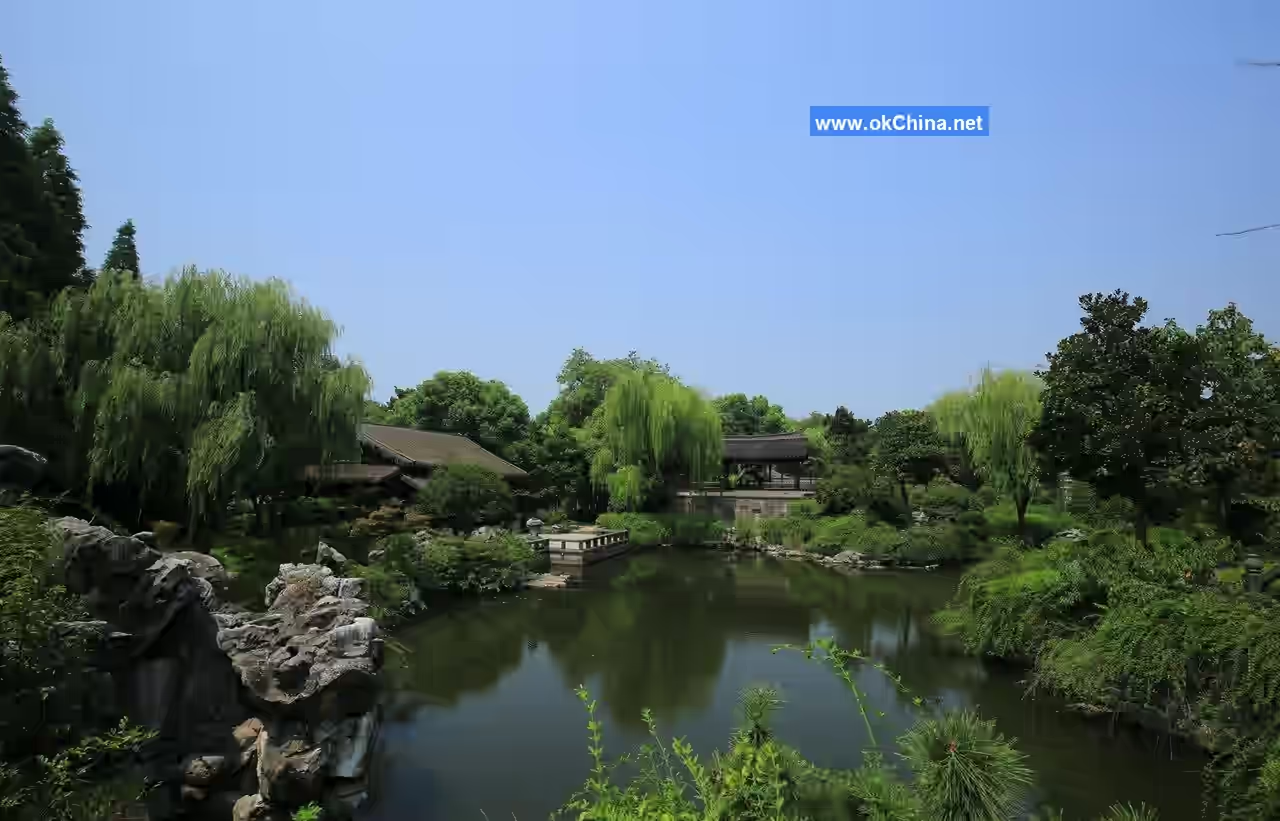
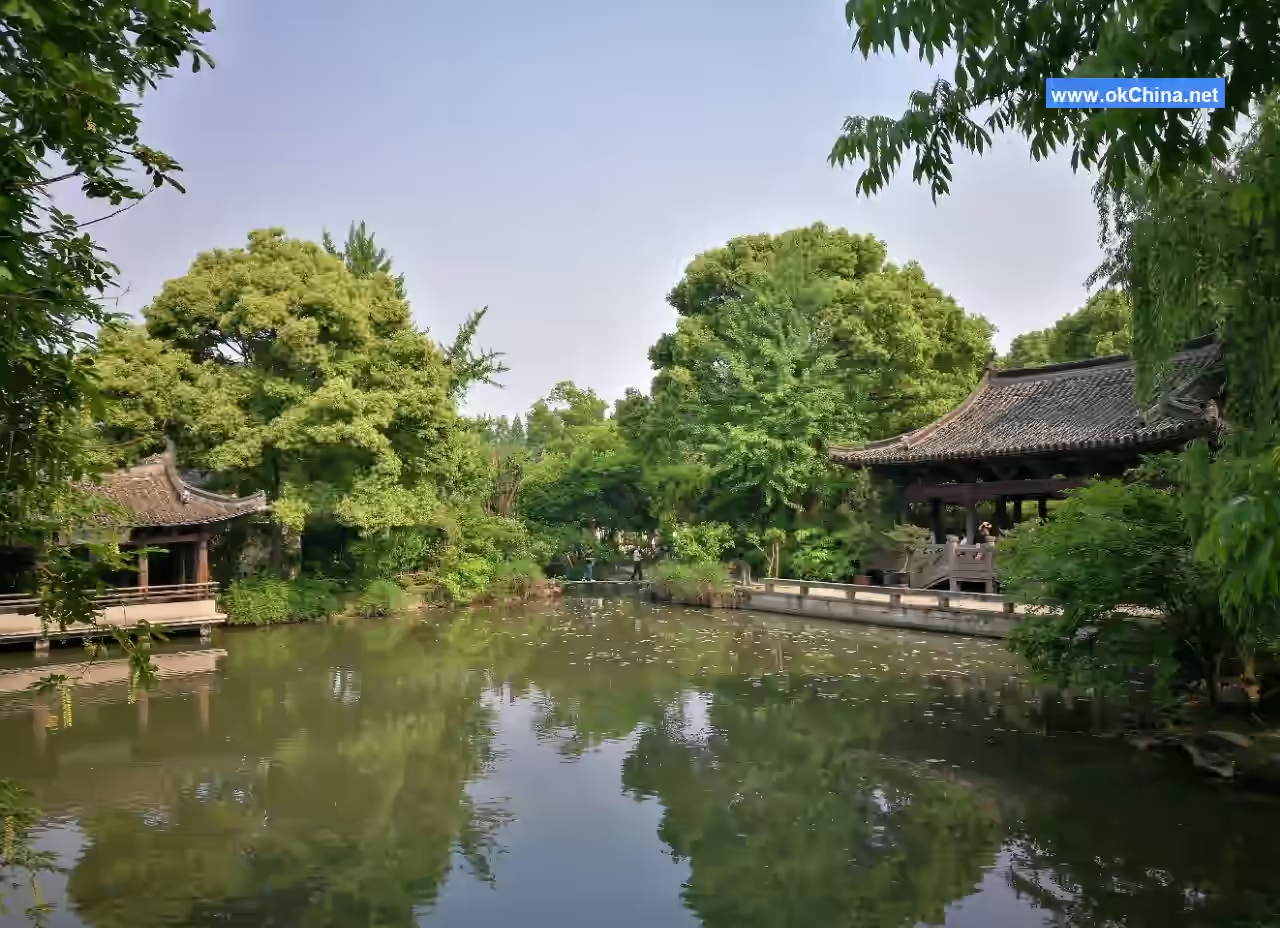
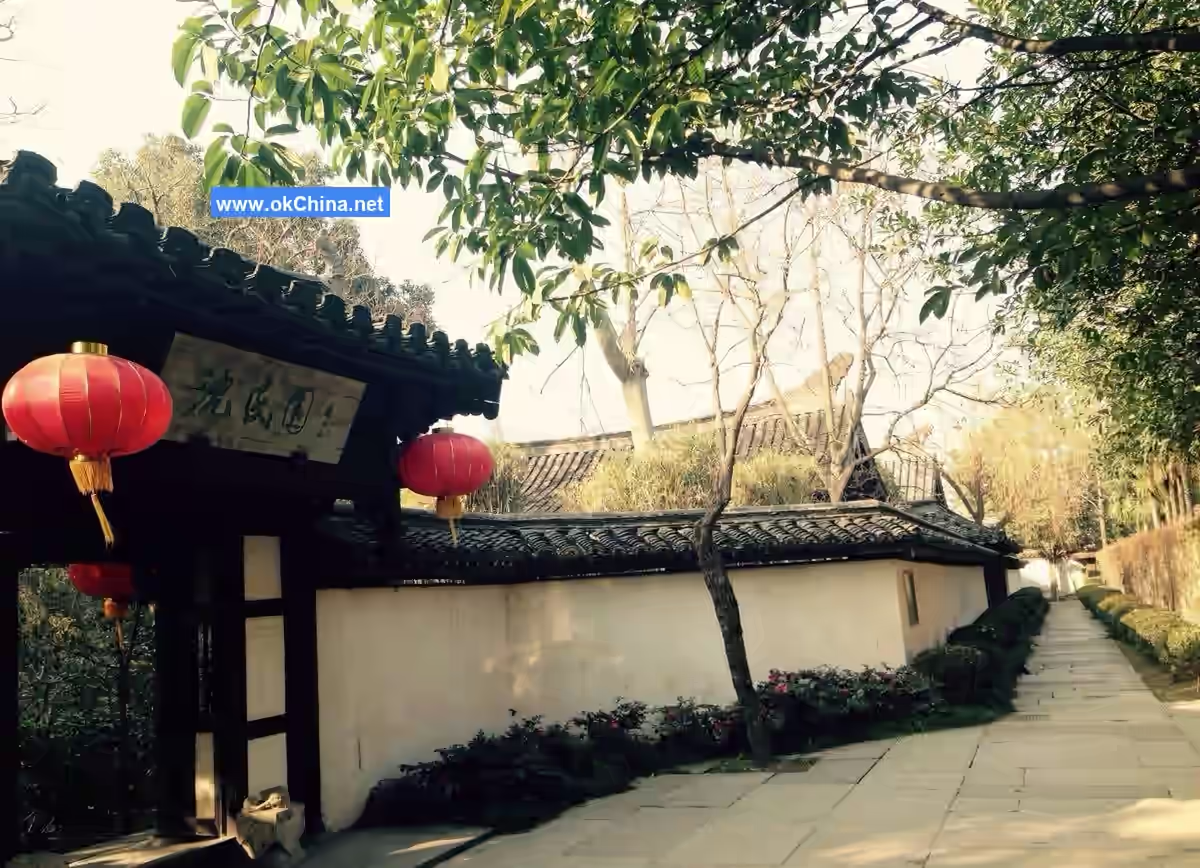
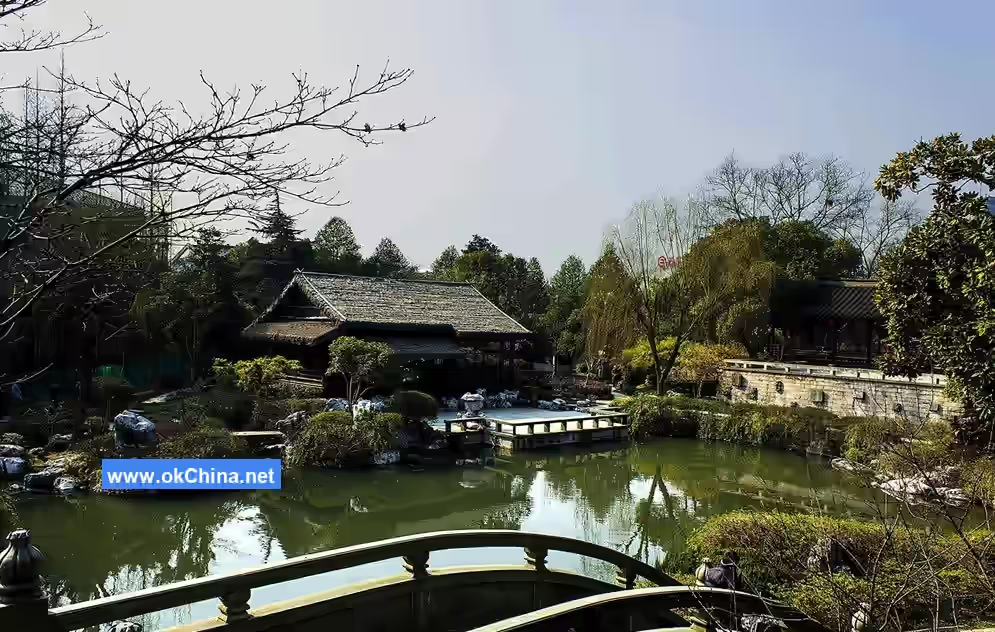
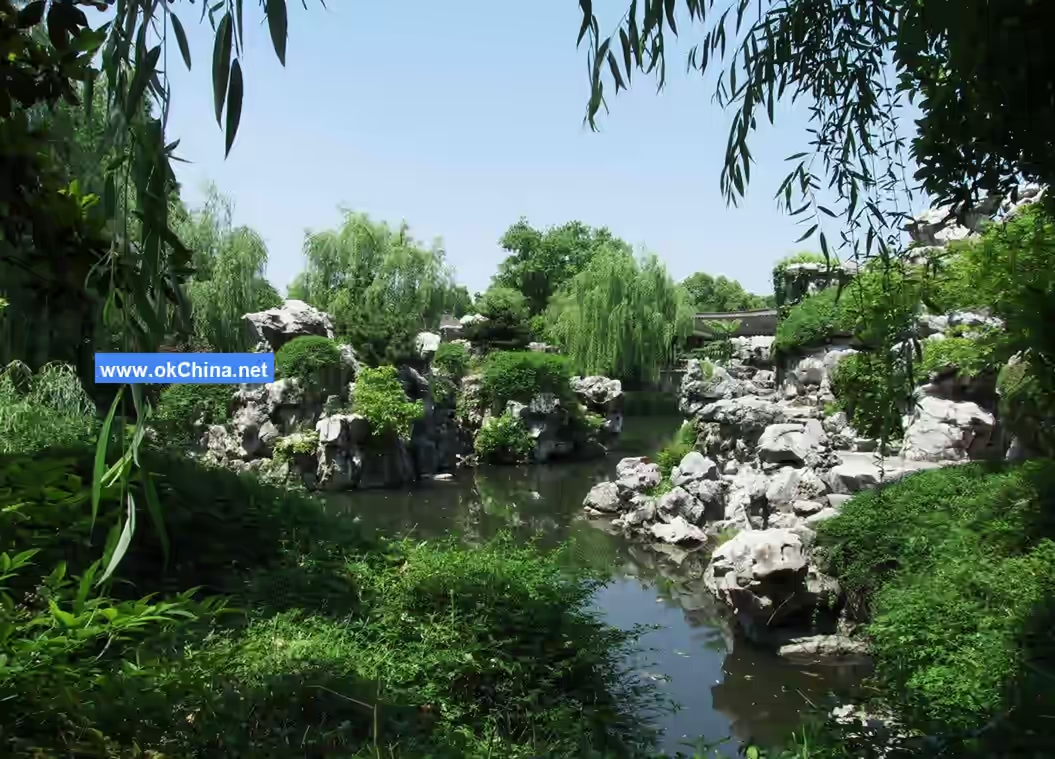
Shen Garden is a famous garden in Shaoxing and a provincial-level cultural relic protection unit in Zhejiang Province. After three meticulous restorations, the scenic area has been restored to cover 31,000 square meters, featuring three relatively independent and distinctive gardens: the Historic Site Area, the East Garden, and the South Garden. The Gourd Pond and the small hill in the Historic Site Area are original relics from the Song Dynasty, while most of the other structures have been restored based on archaeological excavations. The East Garden, located east of the Historic Site Area, is also known as the Lovers’ Garden, showcasing the characteristics of Jiangnan garden design. The South Shen Garden, located south of the Historic Site Area, mainly consists of the Lianli Garden and the Lu You Memorial Hall.
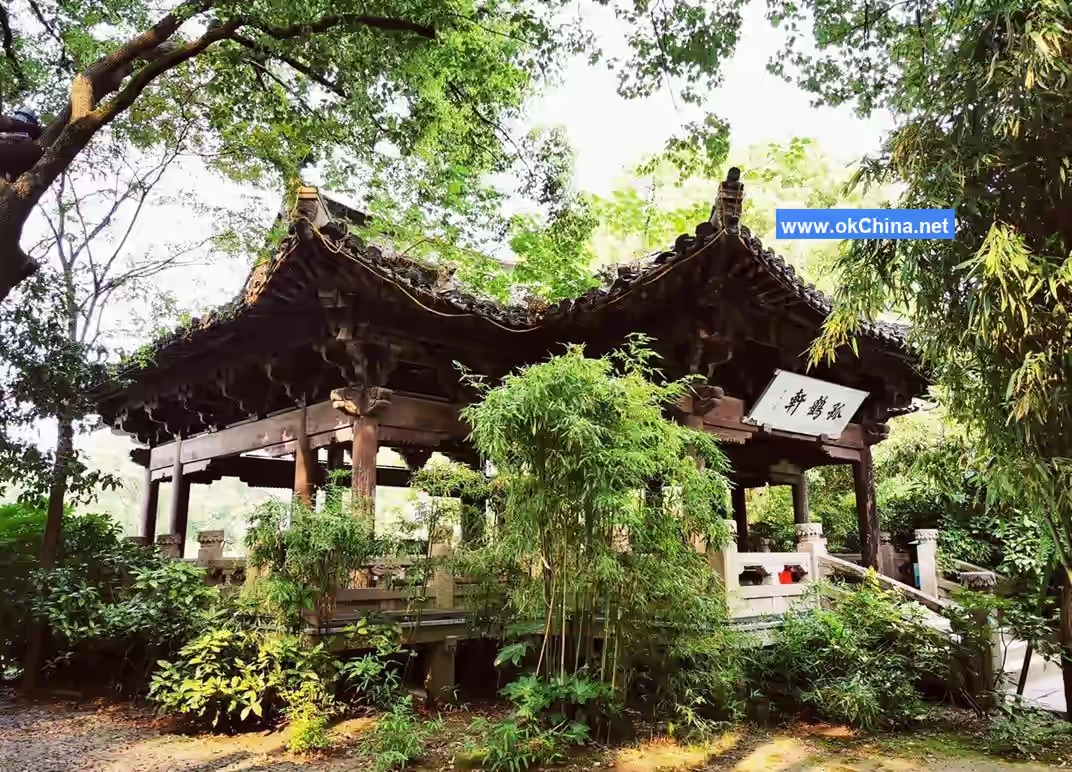
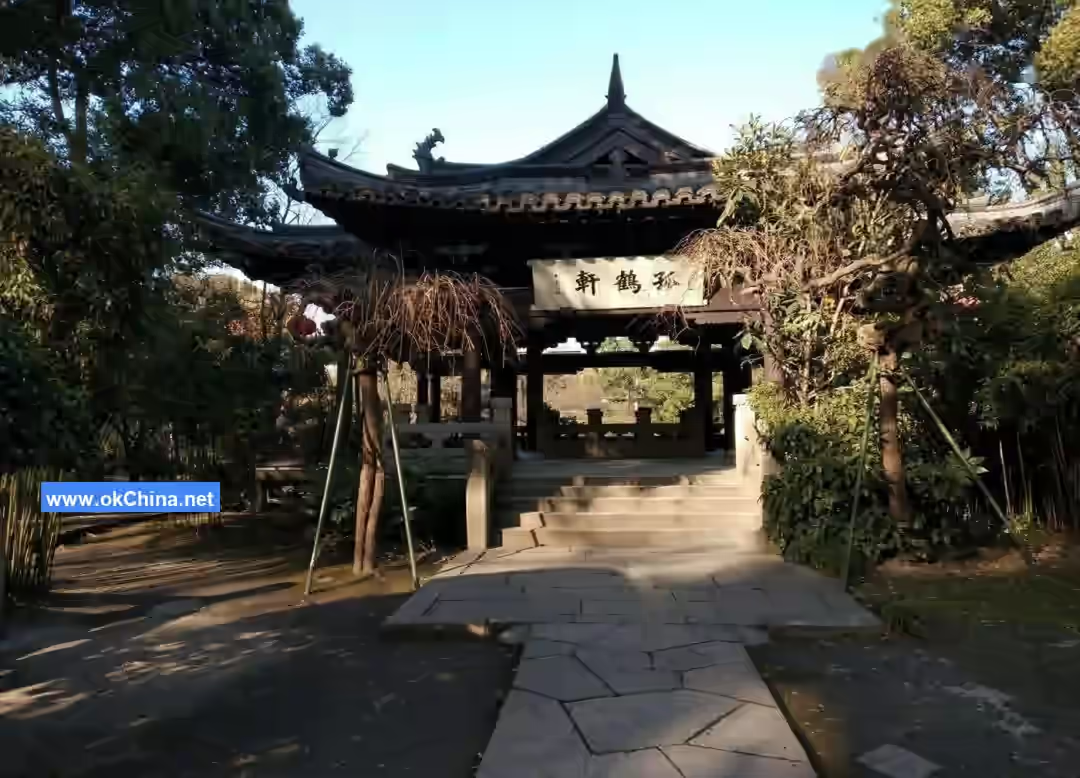
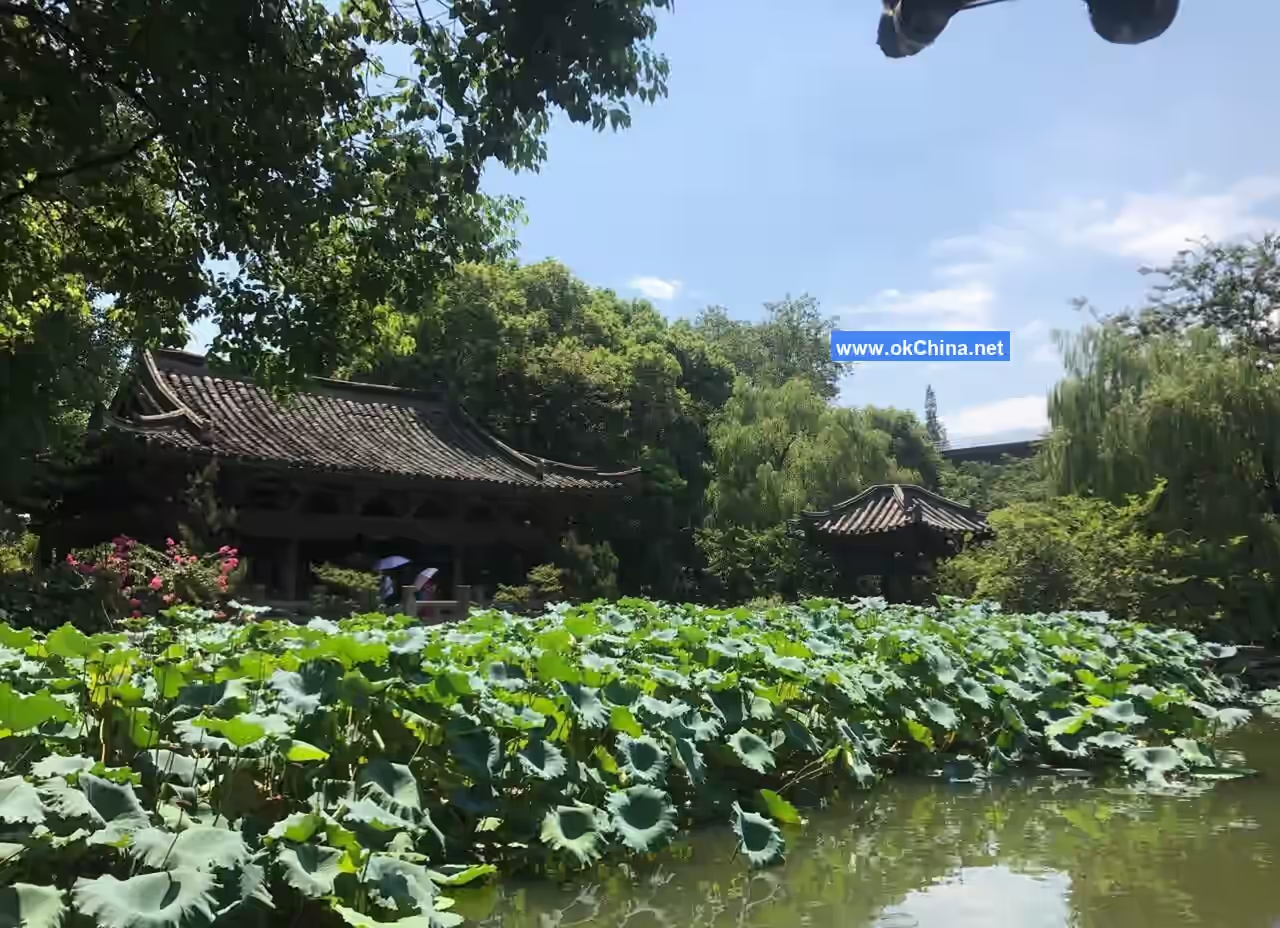
Shen Garden is well-proportioned, with a solemn and elegant color scheme, and its scenic spots complement each other. Among the many classical gardens in Shaoxing throughout history, it is the only famous Song Dynasty garden preserved to this day. Scenic spots such as the Lonely Crane Pavilion, Half-Wall Pavilion, Double Osmanthus Hall, Eight Odes Tower, Song Well, Plum Inquiries Pavilion, Qin Terrace, and Guangsi Studio are distributed in an orderly manner across the three main areas of Shen Garden, based on historical appearances or the cultural connotations of the garden. They form ten scenic themes: “Broken Cloud’s Sorrowful Song,” “Poetic Realm of Love,” “Spring Waves and Startled Swan,” “Remnant Wall’s Regret,” “Lonely Crane’s Lament,” “Green Lotus Reflecting the Sun,” “Willows of Palace Wall Resentment,” “Treading Snow to Inquire About Plum Blossoms,” “Fragrance of Poetry and Books,” and “Magpie Bridge Conveying Affection.”
3.2.2 Double Osmanthus Hall
Double Osmanthus Hall is a courtyard with architecture imitating the Song Dynasty style. The courtyard features two elegant and quiet buildings. In the courtyard, two osmanthus trees are planted—one golden osmanthus and one silver osmanthus—hence the name “Double Osmanthus Hall.” The three characters for “Double Osmanthus Hall” were inscribed by the famous calligrapher Sha Menghai. It is also the venue for evening performances in Shen Garden.
3.2.3 East Garden
The East Garden, also known as the Lovers’ Garden, is an extension of the poignant love story of Lu You and Tang Wan in modern times. The entire garden showcases the characteristics of Jiangnan-style gardens, beautiful yet dignified, subtle yet full of emotion, expressing the theme of “Magpie Bridge Conveying Affection.” It is an ideal place for lovers to express their feelings.
3.2.4 Lu You Memorial Hall
The Lu You Memorial Hall is a new attraction in Shen Garden, located south of the Historic Site Area. It consists of Lu You’s historical exhibition (Anfeng Hall), a stele corridor, Wuguan Hall, and sculptures. The hall displays a large number of manuscripts, photographs, paintings, rare books, rubbings, and physical models, reflecting Lu You’s patriotism, concern for the people, and his brilliant achievements as a literary giant. The exhibition is divided into four parts: Part 1: Internal and External Troubles, Sincere Devotion to the Country; Part 2: Striving for Excellence, Diligent Governance and Love for the People; Part 3: Love for Hometown, Exploring Scenic Spots; Part 4: Marital Tragedy, Lifelong Regret.
3.2.5 Gourd Pond
The Gourd Pond was the place where Lu You and Tang Wan met. It has retained its original Song Dynasty appearance to this day. Originally a lotus pond, it is commonly called the Gourd Pond due to its gourd-like shape. Lu You wrote the lines: “Beneath the heartbroken bridge, the spring waves are green, / Once reflecting the startled swan’s graceful shadow.” These lines describe Tang Wan’s beauty reflected in the pond water, as if her lovely image could still be seen, evoking deep sorrow.
3.2.6 Lonely Crane Pavilion
The Lonely Crane Pavilion, also known as the “Lonely Crane’s Lament,” is a metaphor for Lu You himself. The great patriotic poet Lu You, frustrated by the incompetence of the Southern Song court and his inability to realize his ambitions, likened himself to a lonely crane, lamenting his plight. This metaphor reflects the poet’s personal loss of his companion, his thwarted efforts to serve the country, his unjust persecution for loving the people, and his repeated demotions. Inside the pavilion are the ruins of the “Pond Pavilion.” During archaeological excavations in 1985, the remains of a Tang Dynasty pavilion and Ming Dynasty rockeries and fish ponds were discovered here. The plaque for “Lonely Crane Pavilion” consists of two parts, an inner and an outer plaque. The inner plaque was inscribed by the famous painter, calligrapher, and cultural relic appraiser Xie Zhiliu, while the outer plaque was inscribed by Da Kangjing.
3.2.7 Six Dynasties Well Pavilion
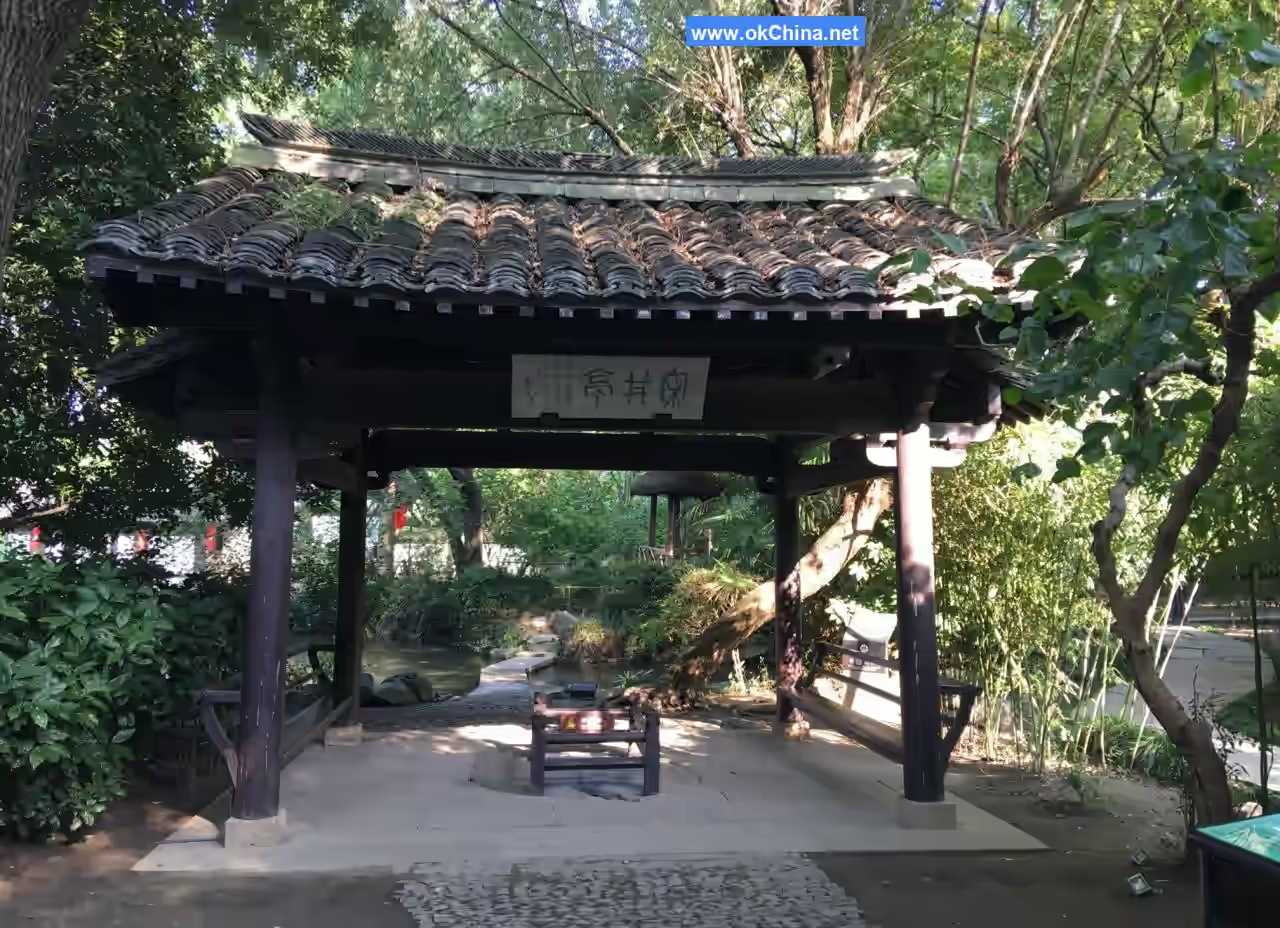
The Six Dynasties Well Pavilion contains multiple architectural ruins from the Tang, Five Dynasties, Song, Ming, and Qing periods, including pavilions, brick wells, ponds, and rockeries, serving as physical evidence of Shen Garden’s long history. Inside the Six Dynasties Well Pavilion is an ancient well. The pavilion’s roof is open in the center, allowing the well to receive rainwater and natural light, symbolizing the poet’s desire to recover what was lost. The open roof “receives heavenly light,” addressing the need for rainwater activity and illumination. It allows people to reflect on the desire for a bright and free marriage.
3.2.8 The Phoenix Hairpin Inscription Wall
Lu You’s poem The Phoenix Hairpin has become an eternal masterpiece, and Tang Wan’s response to it remains inscribed on the wall, locking their marital affection in place. The Phoenix Hairpin soars to the heavens, moving those who yearn for love to tears. This is why Shen Garden has become a garden renowned throughout the ages.
3.2.9 Broken Cloud Stone
The Broken Cloud Stone is located at the entrance of Shen Garden. “Broken Cloud” (homophonic with “broken fate” in Chinese) is a stone split in the middle but still clinging together, unwilling to separate. It tells the tragic love story of Lu You and Tang Wan, highlighting the theme of Shen Garden.
4. Cultural Activities
Related Figures
Lu Xun (September 25, 1881 – October 19, 1936), originally named Zhou Zhangshou, later renamed Zhou Shuren, with the courtesy names Yushan and later Yucai, studied at Sendai Medical College in Japan (incomplete). “Lu Xun” was the pen name he used when publishing Diary of a Madman in 1918, and it became his most widely known pen name. He was a native of Shaoxing, Zhejiang, a famous writer, thinker, democratic fighter, an important participant in the May Fourth New Culture Movement, and the founder of modern Chinese literature. Mao Zedong once commented, “The direction of Lu Xun is the direction of the new culture of the Chinese nation.”
Lu You (1125–1210), courtesy name Wuguan, literary name Fangweng, was a native of Shanyin, Yuezhou (present-day Shaoxing), and a great patriotic poet of the Southern Song Dynasty. Lu You lived during a time when the country was invaded by the Jin army, and the Southern Song court compromised for temporary peace, with the capitulationists gaining the upper hand and the national crisis deepening. Lu You was intelligent from a young age, able to compose poetry and prose by the age of twelve. Influenced by his family’s patriotic ideology, he aspired to serve his country from a young age. Suppressed by the compromising forces, Lu You’s proposals to recover the Central Plains and reform malpractices were not realized. However, he remained unwavering in his convictions. On his deathbed, he wrote the poem To My Son, urging his descendants: “I know all is void after death, / But grieve not to see the nation unified. / When the royal army recovers the Central Plains, / Do not forget to tell your father at the family sacrifice.” Lu You was a prolific poet in Chinese history, having composed over 10,000 poems during his lifetime, with more than 9,300 still extant. His enduring works include Collected Poems of Jiannan and Collected Works of Weinan, and he is considered the founder and master of the Jiannan School of Poetry.
Comments
Post a Comment