Longmen Grottoes
1. Introduction
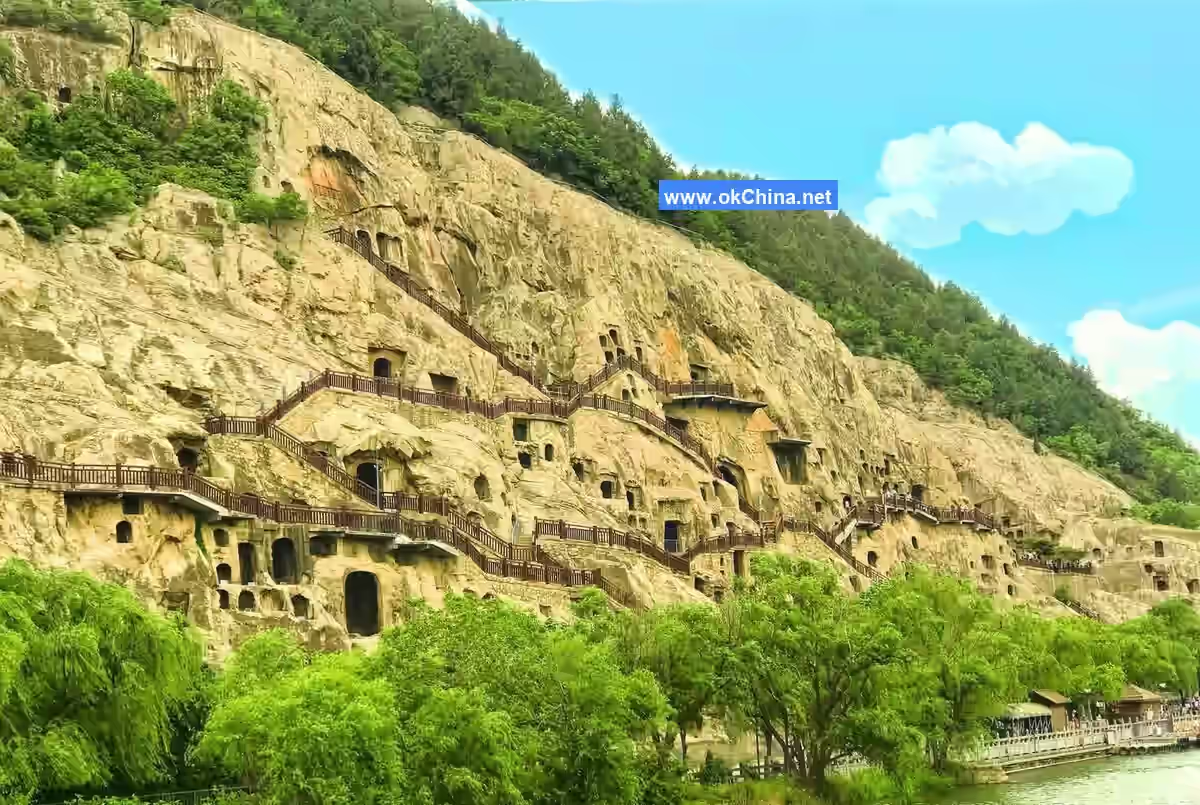
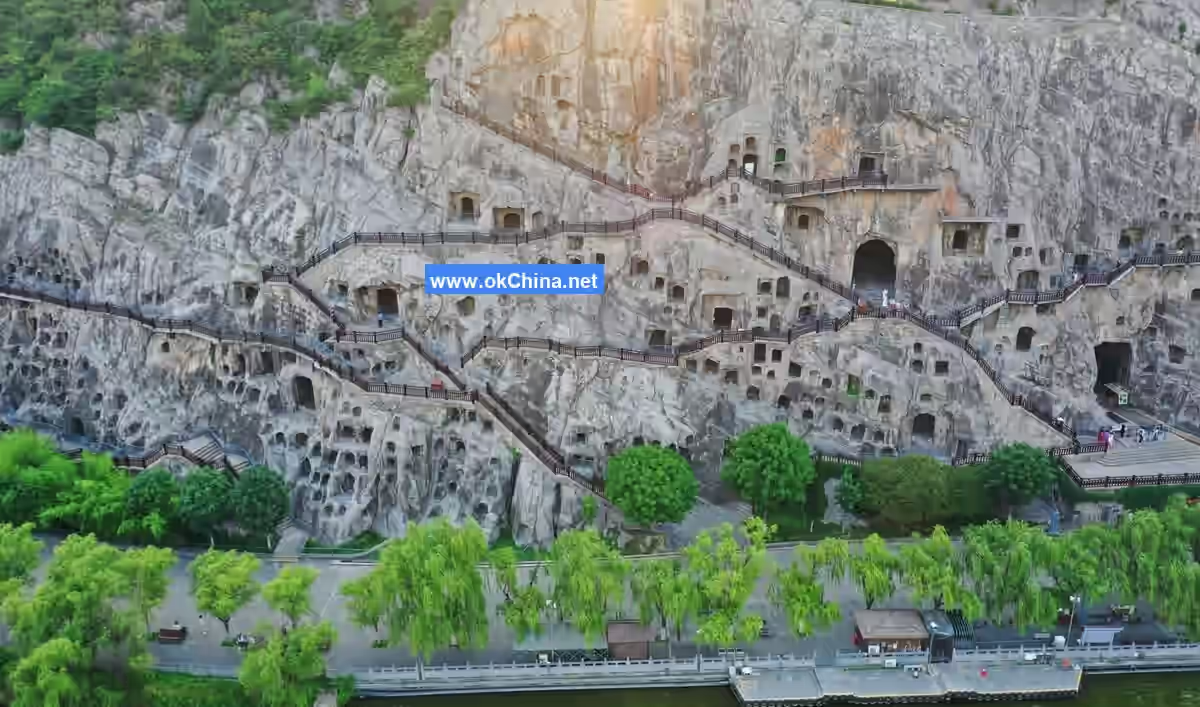
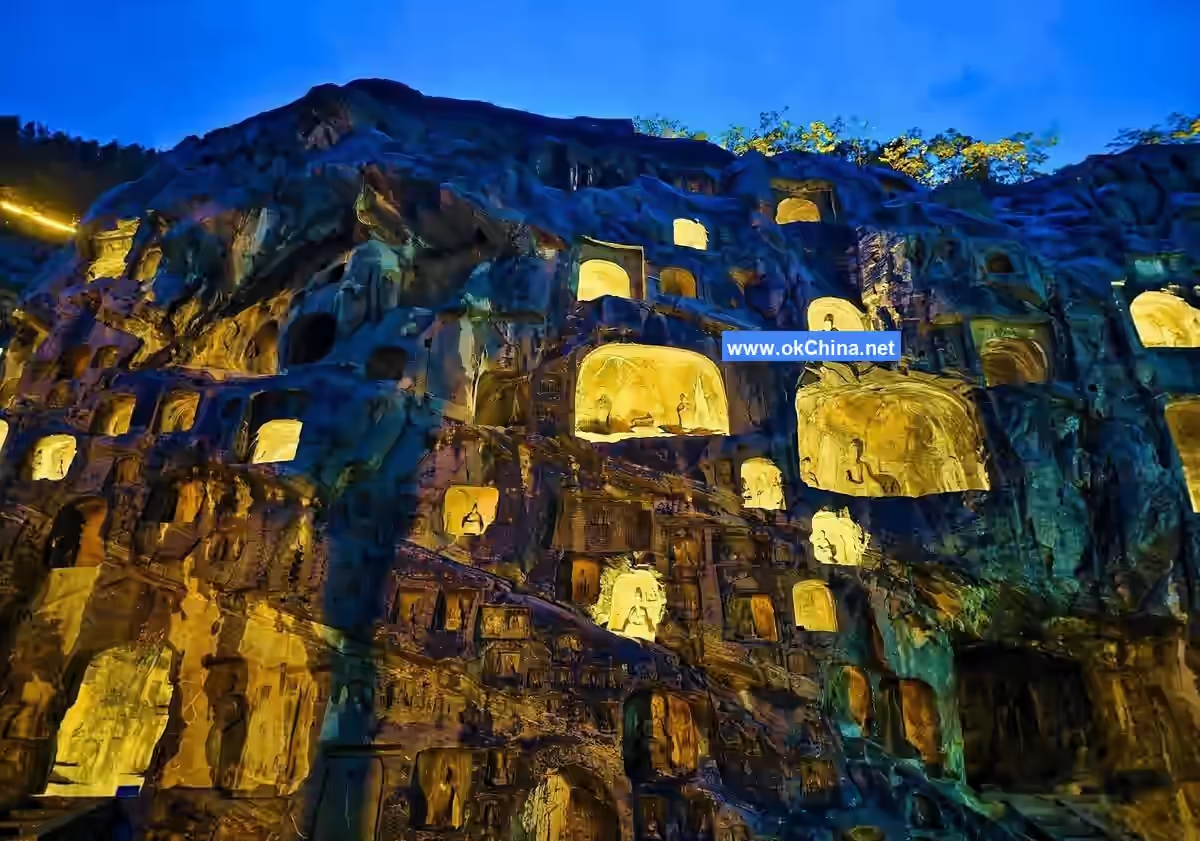
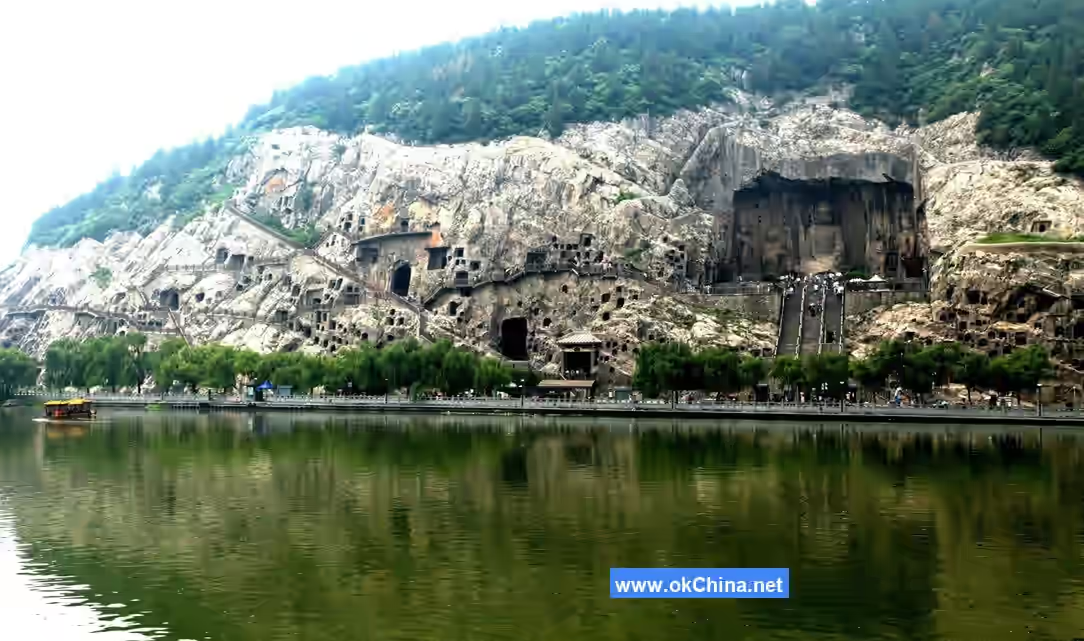
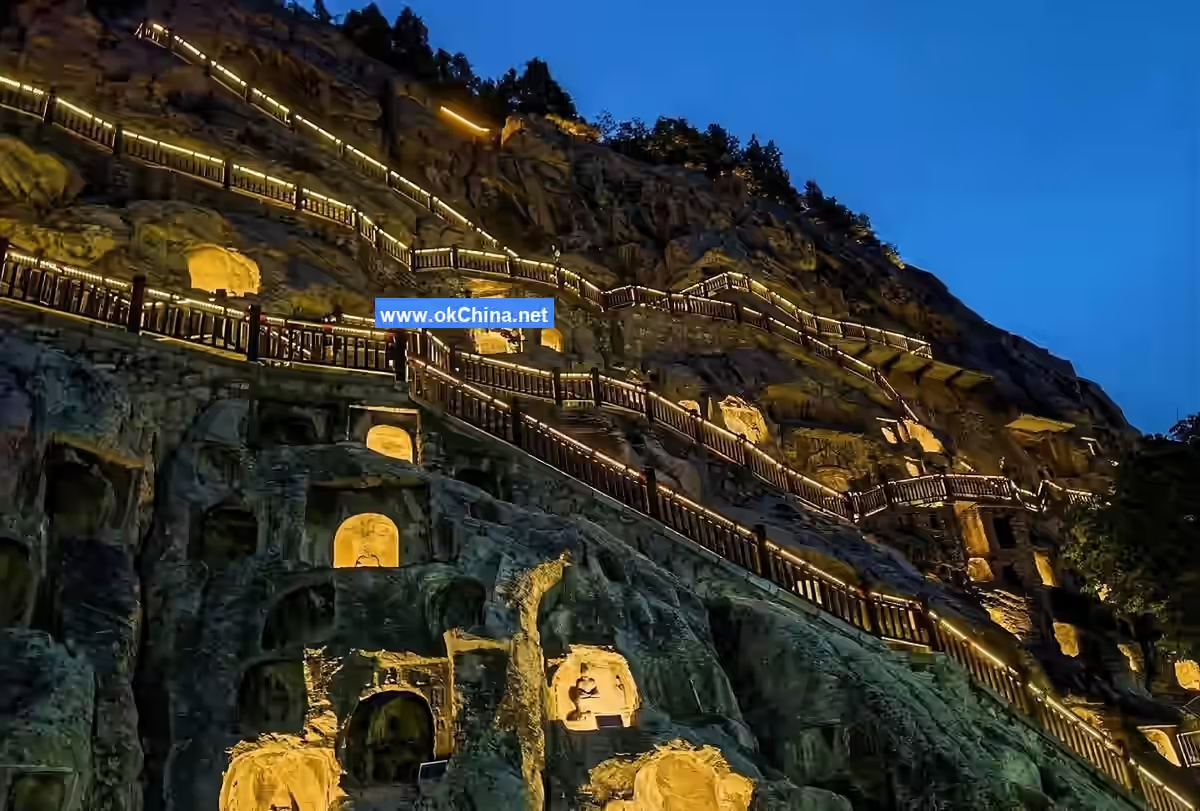
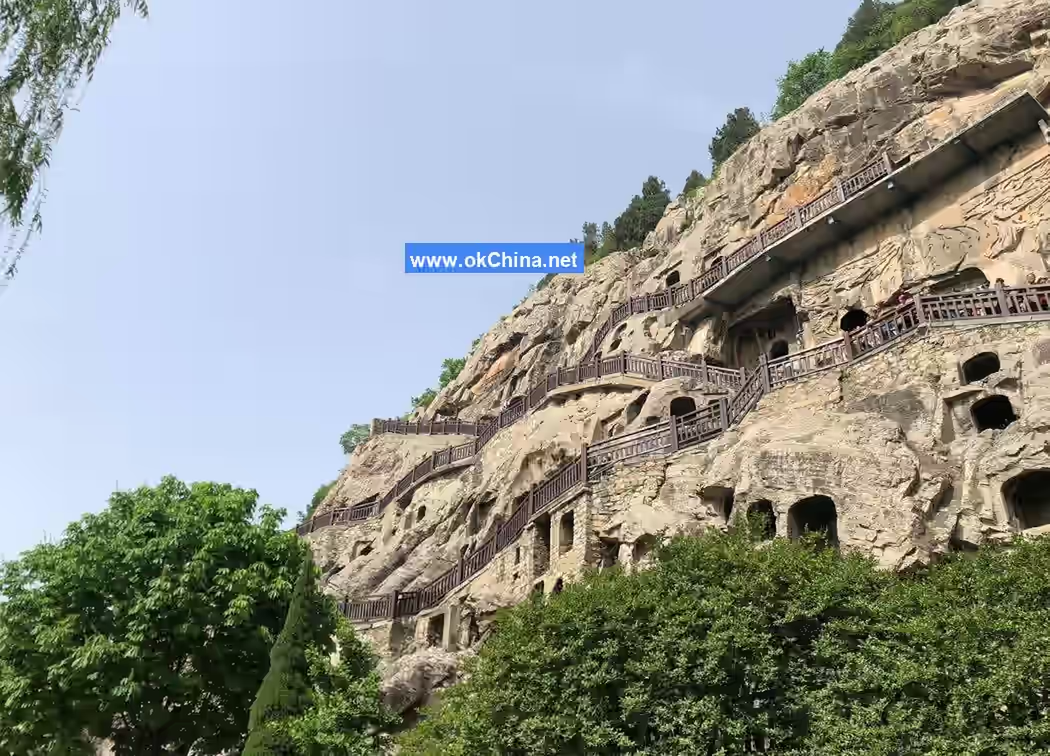
The Longmen Grottoes are located in Luoyang City, Henan Province, covering an area of 31.7 square kilometers. They are a cultural landscape. Currently, there are 2,345 niches, over 100,000 statues, and more than 2,800 inscribed stone tablets. It is the world's largest treasure trove of stone carving art in terms of the number of statues and scale. It has been rated by UNESCO as "the pinnacle of Chinese stone carving art" and ranks first among China's major grottoes.
The excavation of the Longmen Grottoes began before Emperor Xiaowen of the Northern Wei Dynasty moved the capital to Luoyang (493 AD). Between 493 AD and 528 AD, statues with "elegant bones and refined features" suitable for the aesthetics and culture of the Han people in the Central Plains were created, and caves such as Guyang Cave were constructed. During the Tang Dynasty, statues were built under four emperors, including the Qianxi Temple and the Binyang South Cave. In the Song Dynasty, new caves and niches were carved at Longmen, and structures were added to protect the Vairocana Buddha statue. During the Qing Dynasty, Emperor Qianlong visited Longmen and left an Imperial Stele Pavilion at the Xiangshan Temple in Longmen. In 1997, archaeological surveys and conservation work were carried out at the Fengxian Temple site in Longmen. In 2001, the Arhat statues from the Kanjing Temple, which were in the collection of the National Gallery of Canada, were returned to the Longmen Grottoes Research Institute for permanent preservation. In 2007, the facial restoration project of the Grand Vairocana Buddha was completed, involving dust and stain removal, as well as sealing fine cracks on the statue itself and its surroundings. The Longmen Grottoes scenic area mainly consists of four major attractions: the West Hill Grottoes, the East Hill Grottoes, Bai Garden, and Xiangshan Temple. Most of the grottoes in the scenic area are imperial grottoes. Constructed over more than 10 dynasties for over 1,400 years, it is one of the grottoes with the longest construction period in the world.
The Longmen Grottoes preserve a wealth of materials related to religion, art, and other fields, reflecting the development of ancient Chinese politics, culture, and other areas. They have made significant contributions to the innovation and development of Chinese grotto art. The Longmen Grottoes are among the first batch of Major Historical and Cultural Sites Protected at the National Level and are among the first batch of "National 5A-Level Tourist Attractions" in China. In 2000, UNESCO inscribed them on the World Heritage List. The Longmen Grottoes represent the culmination and synthesis of the sinicization of cave temple art. They not only carry the memory of human civilization but also embody global cultural exchange and integration.
2. Naming
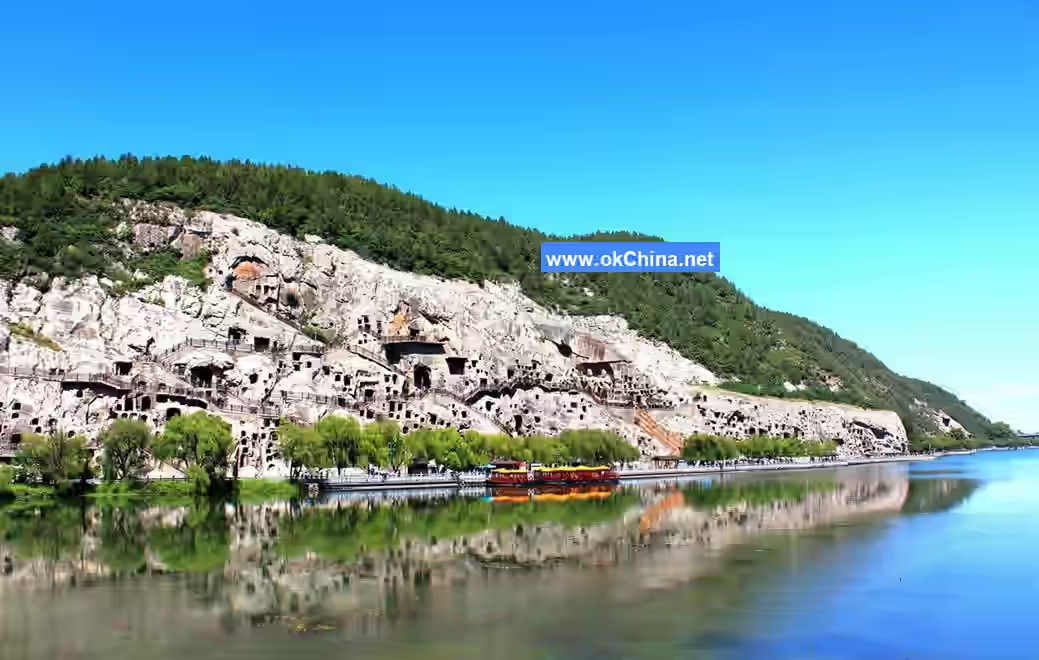
The name "Longmen" (Dragon Gate) originated from Emperor Yang of the Sui Dynasty. The Longmen Grottoes were once a natural gateway south of Luoyang, where two mountains stood facing each other with the Yi River flowing between them, resembling a natural gate from a distance. Since the Spring and Autumn and Warring States periods, this place has been figuratively called "Yique" (Yi River Gate). Later, when Emperor Yang of the Sui Dynasty built the eastern capital city in Luoyang, the palace gate faced Yique. Since ancient emperors considered themselves the "true dragon and son of heaven," the place was named "Longmen" (Dragon Gate), a name that has been used ever since.
3. Historical Development
3.1 Northern Wei Period
Longmen was excavated by Yu the Great during his flood control efforts, while the grottoes themselves began excavation a few years before Emperor Xiaowen of the Northern Wei Dynasty moved the capital to Luoyang (493 AD). Before Yu excavated Longmen, the Longmen Mountain was a connected whole, not divided into east and west hills. The Yi River accumulated south of Longmen Mountain, blocked by the mountain from flowing northward, forming a vast expanse of water that often caused floods. Therefore, Yu the Great split Longmen Mountain, dividing it into eastern and western halves, allowing the Yi River to flow northward between the two mountains. "Longmen Mountain" can refer to both hills collectively. After being divided by the Yi River, the eastern hill became specifically known as "Xiangshan" after Empress Wu Zetian built Xiangshan Temple, while the western hill continued to be called "Longmen Mountain."
The first large-scale period of cave excavation and statue creation was between 493 AD and 528 AD, spanning 35 years during the reigns of Emperors Xiaowen, Xuanwu, and Xiaoming of the Northern Wei Dynasty. The Northern Wei created statues with "elegant bones and refined features" and "loose robes and wide sashes," achieving a harmonious, unified, and nearly perfect style suitable for the aesthetics and culture of the Han people in the Central Plains. This style is known as the "Central Plains style." The most representative existing caves include Guyang Cave, Binyang Middle Cave, Lotus Flower Cave, Huangfugong Cave, and Weizi Cave, all located on Longmen West Hill, most of which are imperial grottoes. Among them, Guyang Cave is the most concentrated site of statues created by the Northern Wei imperial family and nobility, and it is also the earliest excavated and most richly decorated cave at Longmen. Of the 2,800 inscribed stone tablets at Longmen, over 800 are in Guyang Cave alone; of the famous "Twenty Calligraphic Masterpieces of Longmen" from the Northern Wei stele style, nineteen are in Guyang Cave. Binyang Middle Cave was excavated and built by Emperor Xuanwu of the Northern Wei to accumulate merit for his parents, Emperor Xiaowen and Empress Wenzhao, commemorating Emperor Xiaowen's move of the capital to Luoyang, his promotion of sinicization reforms, and his achievements in fostering great ethnic integration. According to records, the project employed over 800,000 workers and took 24 years to complete.
3.2 Tang Dynasty Period
The second large-scale period of cave excavation and statue creation was between 636 AD and 746 AD, during the reigns of Emperors Taizong, Gaozong, Empress Wu Zetian, and Emperor Xuanzong of the Tang Dynasty, spanning four emperors over 110 years. The statues from this period account for about two-thirds of all statues at Longmen. This period formed the cave temple statue style that became popular in China, Korea, and Japan—the "Great Tang Style." The most representative caves include, on Longmen West Hill: Qianxi Temple, Binyang South Cave, Jingshan Temple, Fengxian Temple, Ten Thousand Buddha Cave, etc.; on Longmen East Hill: Great Ten Thousand Five Buddha Cave (Leigutai), Gaoping Junwang Cave, Kanjing Temple, etc.
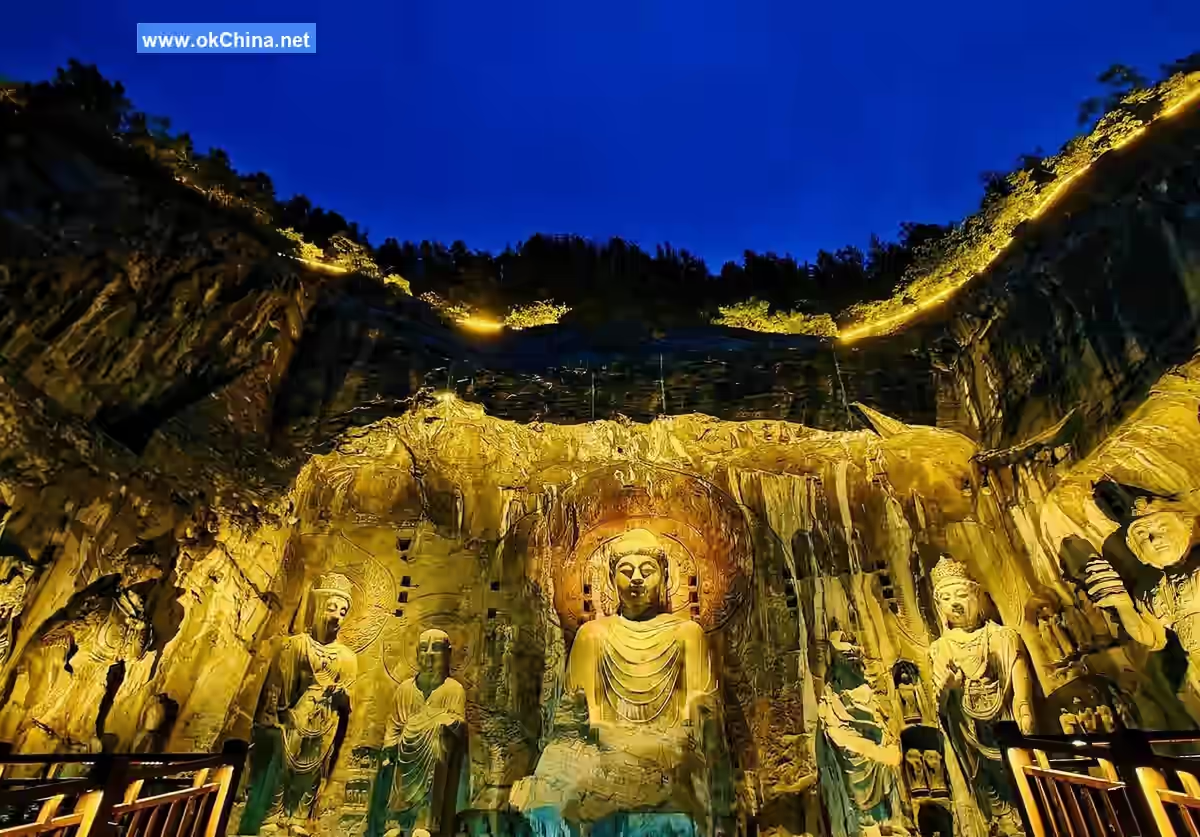
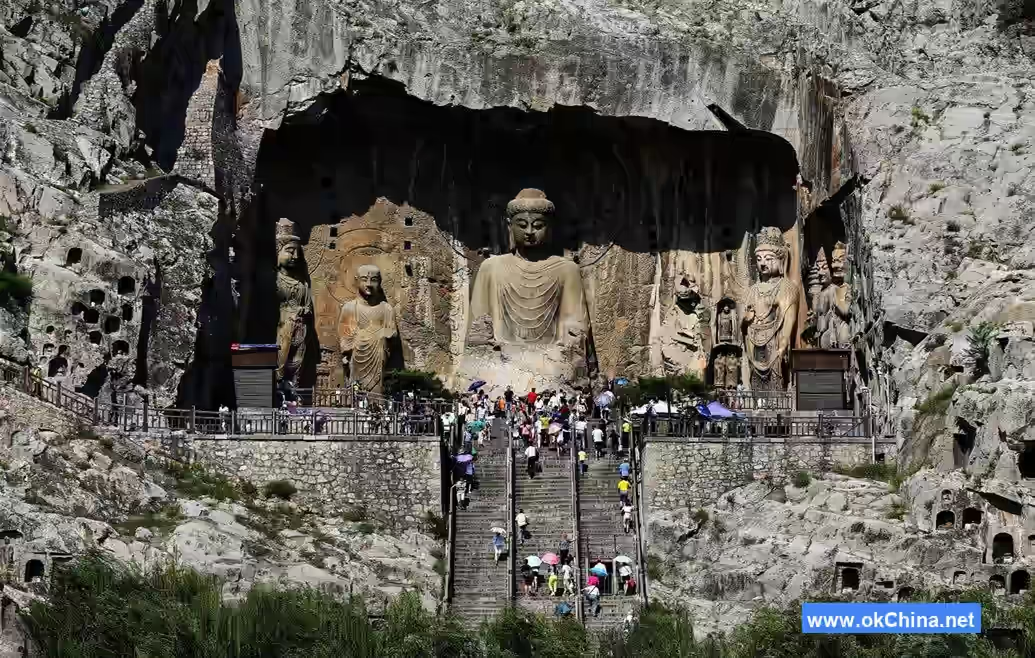
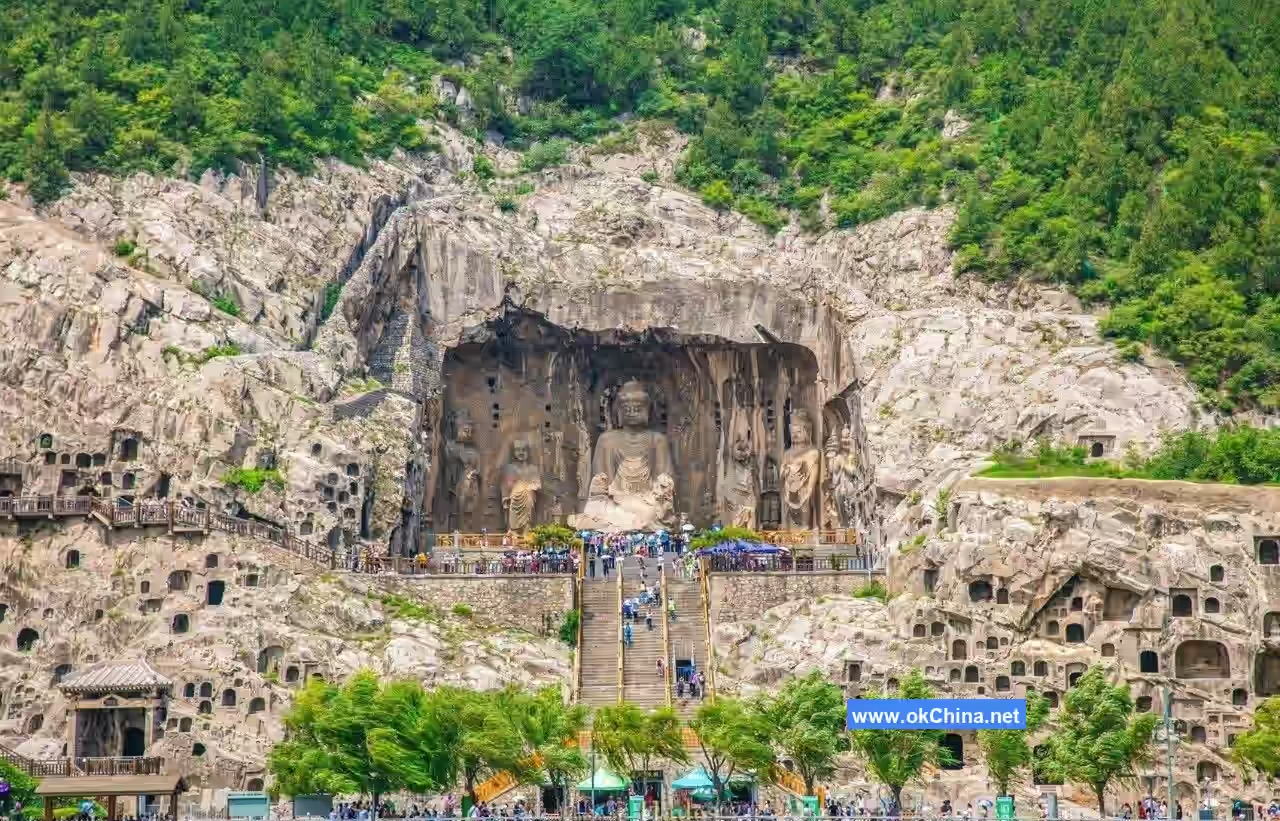
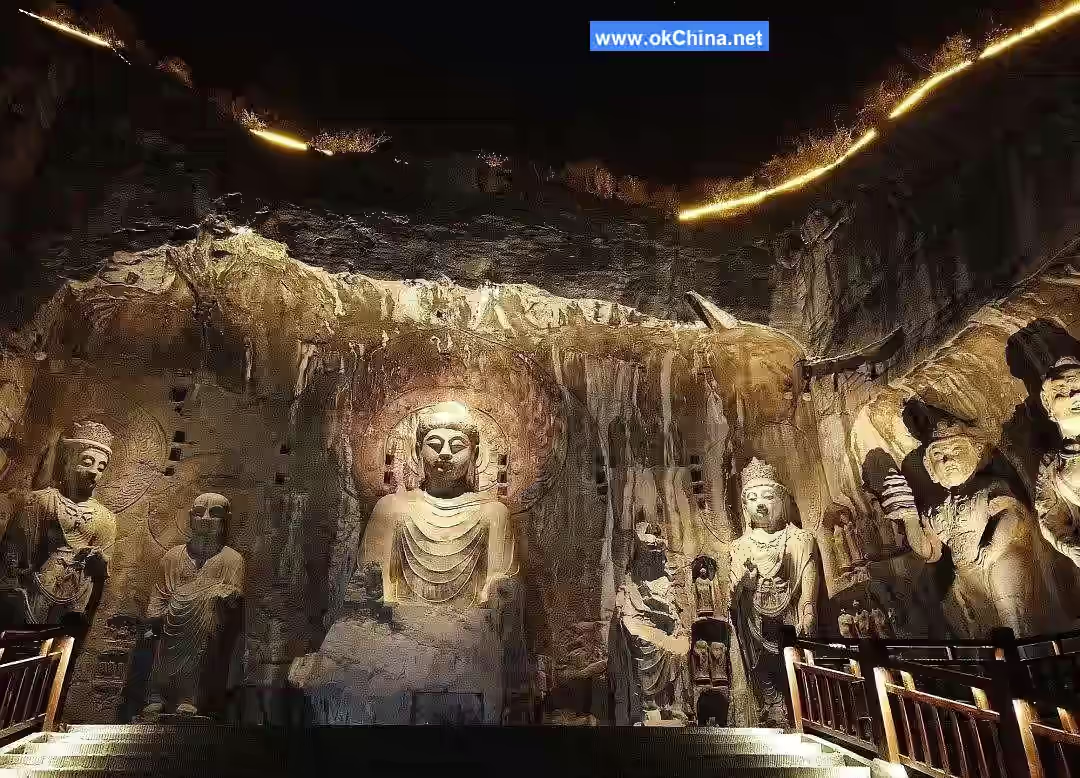
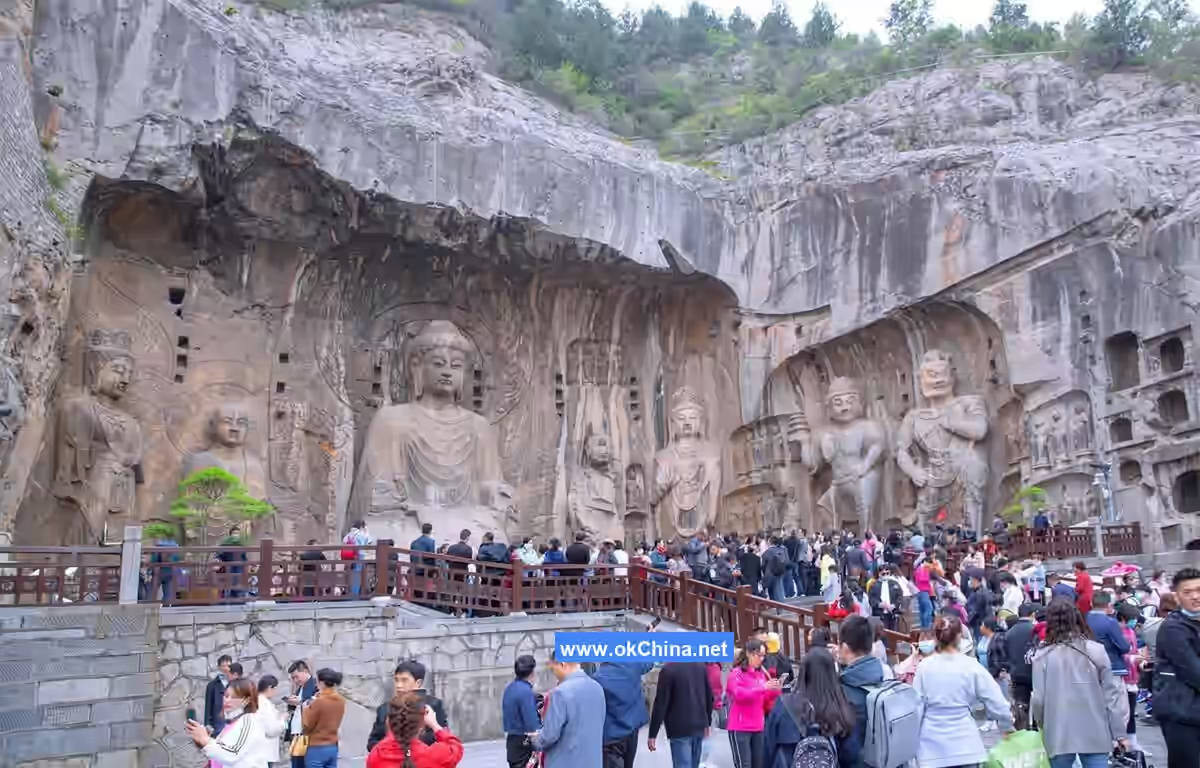
Of the two-thirds of Tang Dynasty statues, 80% were created during the reign of Emperor Gaozong and Empress Wu Zetian, which was the most prosperous period for the Longmen Grottoes. During this time, the statues at Longmen reached their peak both in quantity and artistic achievement. The most representative among them is Fengxian Temple, the largest complex at Longmen. Carved into the mountain, it features nine large statues hewn from the rock. The central Grand Vairocana Buddha stands over 17 meters tall, with a head alone measuring 4 meters and ears 1.9 meters long. Its facial features have been praised by scholars as a great exemplar in the history of Chinese sculpture, representing the pinnacle of Chinese stone carving art.
3.3 Song, Ming, and Qing Dynasties
During the Song Dynasty, there are inscriptions such as Chen Tuan's "Cross Scroll Stele" and Emperor Zhenzong's "Longmen Inscription Stele." The Song Dynasty also carved new caves and niches at Longmen and, to protect the Vairocana statue, added a nine-bay wooden eave-style structure, commonly known as the "Nine-Room House."
During the Ming Dynasty, on the surface of the lintel outside the Huijian Cave, five square and semi-circular stele-top-shaped inscriptions were carved in intaglio lines. All were erected on an auspicious day in the third month of the 31st year of the Wanli era (1603), recording donations for road repairs.
During the Qing Dynasty, Emperor Qianlong visited Longmen in 1750 and left an Imperial Stele Pavilion at Xiangshan Temple in Longmen. In 1900, during the invasion of the Eight-Nation Alliance, Empress Dowager Cixi fled westward. On her return to Beijing, she passed through Longmen and visited Guyang Cave. She ordered the main Buddha, Sakyamuni, to be renovated into a statue of Laozi, and the cave was renamed "Laojun Cave."
4. Scenic Area Layout
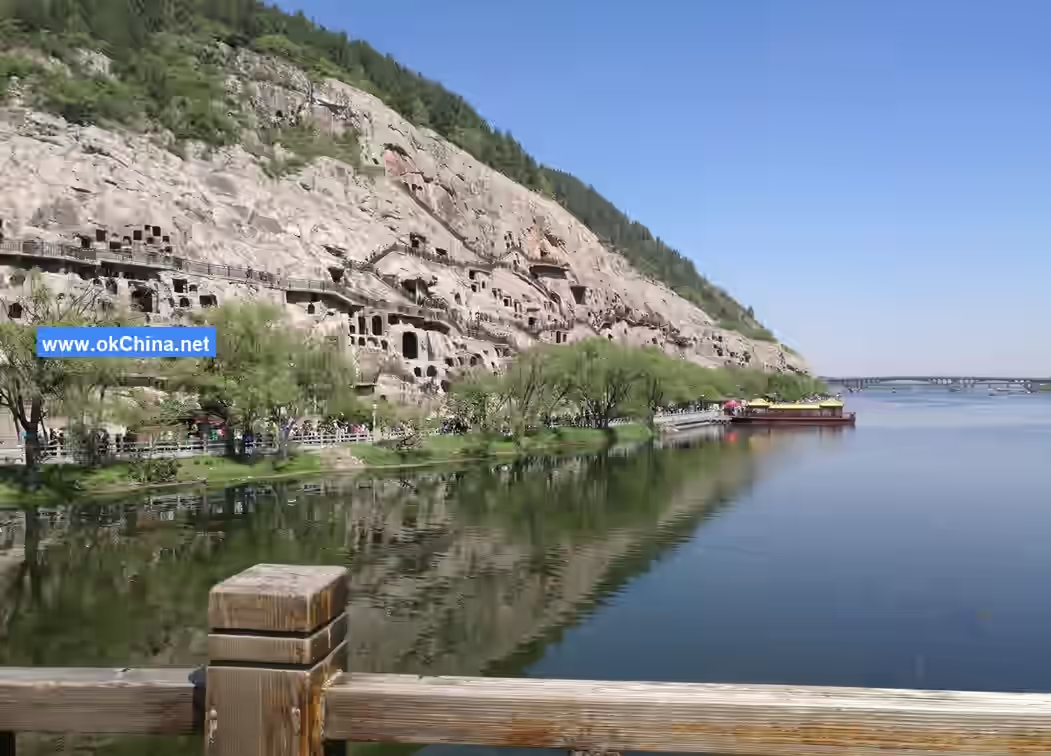
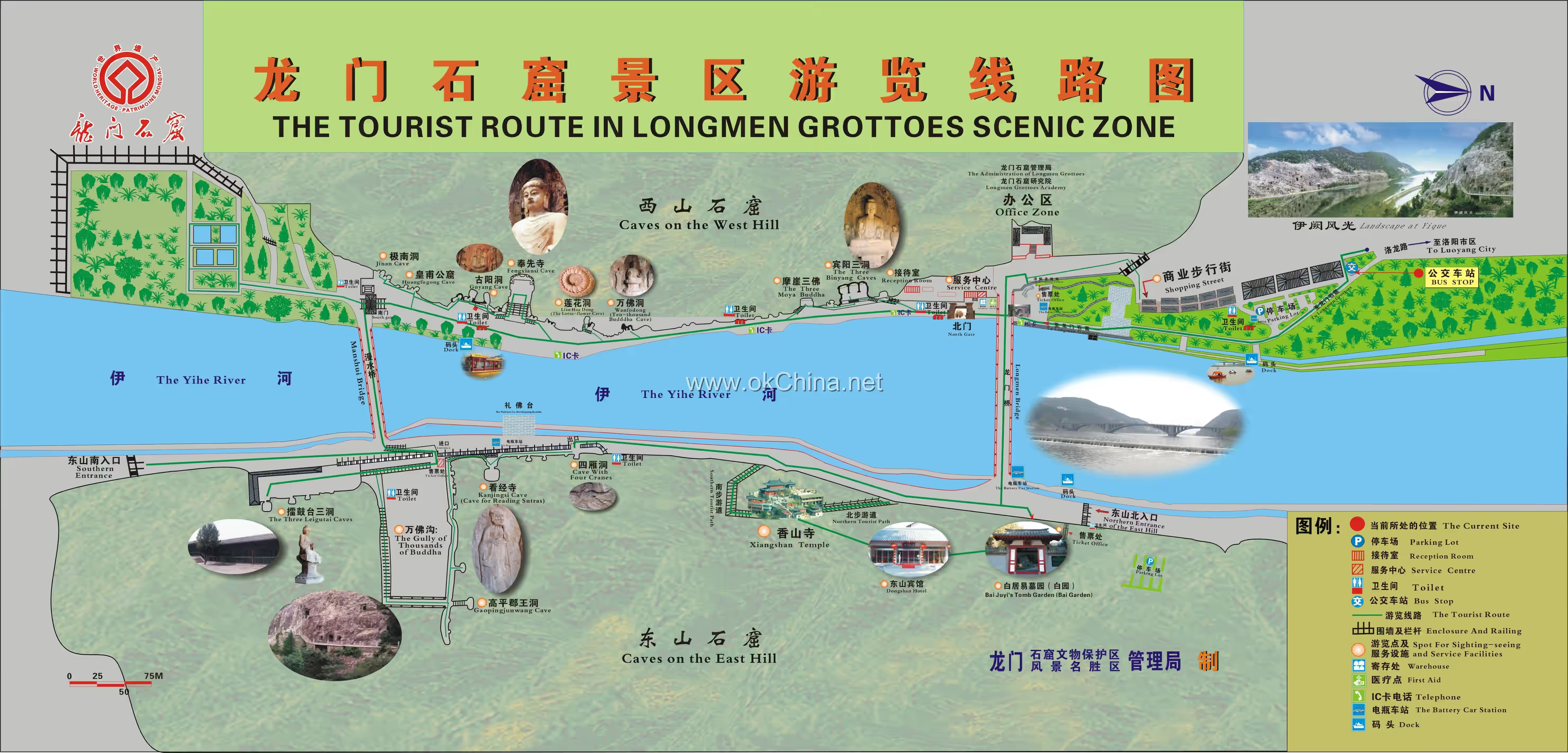
The Longmen Grottoes are located in the Yique Gorge, 6 kilometers south of Luoyang City, and consist of four attractions: the West Hill Grottoes, the East Hill Grottoes, Xiangshan Temple, and Bai Garden. Entering from the scenic area entrance, the attractions are distributed along both banks of the Yi River. Visitors can successively tour Yuwang Pool, Qianxi Temple, Binyang Middle Cave, Binyang North Cave, Ten Thousand Buddha Cave, Fengxian Temple, Manshui Bridge, Buddha Worship Viewing Platform, Xiangshan Temple, Bai Garden, and other sites.
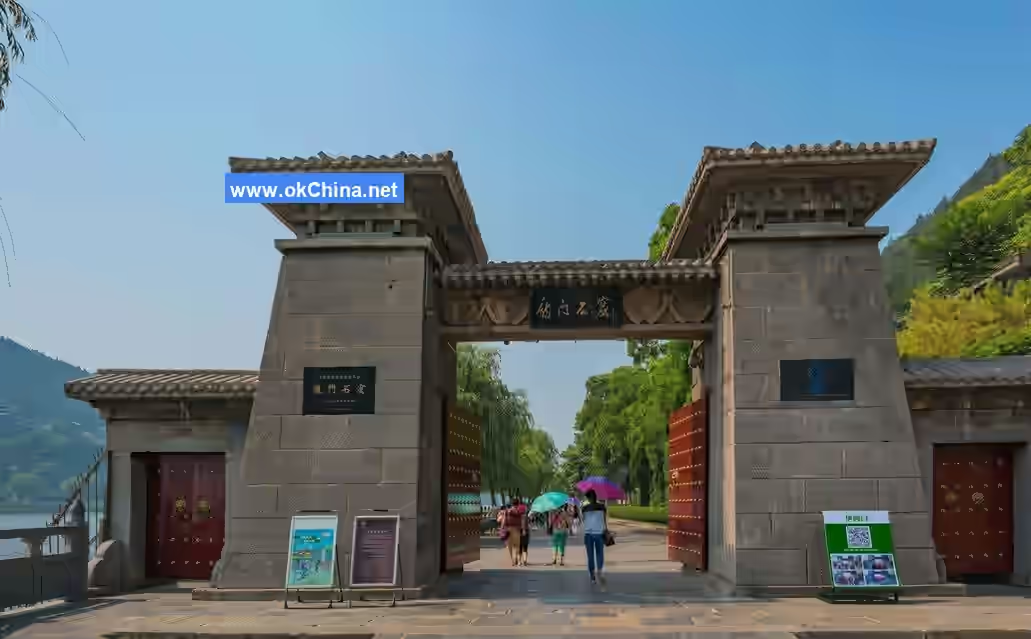
The main tour routes at Longmen Grottoes are as follows: General Route: West Hill Grottoes - East Hill Grottoes - Xiangshan Temple - Bai Garden. West Hill Grottoes: Great Stone Gate (Scenic Area Entrance) - Pine Forest - Yuwang Pool - Binyang Three Caves - Cliffside Three Niches - Ten Thousand Buddha Cave - Fengxian Temple - Guyang Cave - Prescription Cave. East Hill Grottoes: Leigutai Three Caves - Thousand-Hand Thousand-Eye Guanyin Niche - Kanjing Temple - Two Lotus Flower Caves. Xiangshan Temple: Jiang-Song Villa - Qianlong Imperial Stele Pavilion - Viewing Platform - Stone Tower - Bell and Drum Tower. Bai Garden: Green Valley - Letian Hall - Poetry Corridor - Pipa Peak.
5. Important Attractions
5.1 West Hill Grottoes
The West Hill Grottoes contain 90% of the grotto statues and are the essence of the scenic area. They include attractions such as Longmen Bridge, Yuwang Pool, Binyang Three Caves, Lotus Flower Cave, Ten Thousand Buddha Cave, Fengxian Temple, Guyang Cave, and Prescription Cave.
5.1.1 Longmen Bridge
Longmen Bridge is the legendary site where "the carp leaps over the Dragon Gate." Majestic and beautiful, its reflection in the clear Yi River water blends the landscape into a harmonious scene.
5.1.2 Yuwang Pool
Above the pool stands a peculiarly shaped stone stalagmite, said to have been used by Yu the Great during his flood control efforts, hence the name Yuwang Pool. Among the many streams and mountain springs at Longmen, Yuwang Pool has the strongest water flow and the most beautiful scenery, with koi fish playing in the water.
5.1.3 Binyang Three Caves
These are the most representative large imperial caves from the Northern Wei period, built by Emperor Xuanwu to pray for blessings for his parents, Emperor Xiaowen and Empress Wenzhao. The "canopy" ceiling of the middle cave, the statues of the Buddhas of the Three Periods, and the colorful reliefs covering the cave walls are considered monumental works. The north cave also features the internet-famous "scissors hand" Buddha statue, dubbed the "cutest Buddha statue in history." It has become a "social media sensation" in the scenic area, attracting many tourists.
5.1.4 Lotus Flower Cave
Lotus Flower Cave is named for the high-relief large lotus flower carved on its ceiling, likely excavated during the Northern Wei period. The lotus is a symbolic object in Buddhism, meaning "emerging unstained from the mud." Therefore, lotus flowers are often used as decorations on the ceilings of Buddhist grottoes. The flying apsaras around the lotus in Lotus Flower Cave are depicted with light postures, slender waists, long skirts, and natural grace. The main wall of the cave features a statue of one Buddha, two disciples, and two bodhisattvas. The main statue is a standing Sakyamuni, wearing a monastic robe with loose sleeves and a wide sash. The robe folds are simple and lively, depicting Sakyamuni in his preaching form, i.e., when he went out to preach the Dharma. The two disciples are in low relief. The disciple on the left, Kasyapa, has deep-set eyes, a high nose bridge, and prominent chest bones, holding a staff, resembling an ascetic monk from the Western Regions. His head was stolen in earlier years and is now in the Musée Guimet in France. The smallest Buddha statue at Longmen, only 2 centimeters high, is located on the upper part of the south wall of Lotus Flower Cave. These small thousand Buddhas are vivid, detailed, and lifelike.#### 5.1.5 Ten Thousand Buddha Cave The Ten Thousand Buddha Cave derives its name from the 15,000 small Buddha statues neatly carved on the north and south walls inside. The cave has a front and rear chamber structure. The front chamber features two guardian warriors and two lions, while the rear chamber houses one Buddha, two disciples, two Bodhisattvas, and two heavenly kings, making it the cave with the most complete sculptural ensemble at the Longmen Grottoes. The cave ceiling is adorned with an exquisite lotus flower, surrounded by an inscription: "Completed on the 30th day of the 11th month in the first year of Yonglong of the Great Tang Dynasty (680 AD), under the supervision of the palace's second-rank female official Yao Shenbiao and the Chan Master Zhiyun of the Inner Chapel, for the niche of fifteen thousand statues." This indicates that the cave was excavated under the direction of Yao Shenbiao and Chan Master Zhiyun and completed in 680 AD during the reign of Emperor Gaozong of Tang. The main Buddha inside is Amitabha, seated serenely on a double-layered lotus throne. The statue features a full, round face, broad shoulders, and flowing robe patterns carved using the Tang Dynasty's rounded knife technique. The main Buddha sits on the lotus throne, with four vajra warriors carved at the waist section. Behind the Buddha, there are 52 lotus flowers, each with a seated offering Bodhisattva. On the north and south walls, 15,000 small Buddha statues, each only 4 cm tall, are neatly carved. At the base of these walls, six musician-dancers are depicted on each side, with dancers gracefully moving to melodious music. On the south side of the cave entrance stands a Bodhisattva statue, 85 cm tall, with its head tilted to the right and its body forming an "S"-shaped curve.
5.1.6 Fengxian Temple
The Fengxian Temple is the largest, most magnificent, and artistically exquisite group of cliff carvings at the Longmen Grottoes. Its majestic and grand scale fully displays the imposing manner of imperial stone carvings. The most famous statue here is the Vairocana Buddha.
5.1.7 Guyang Cave
Known as the "First Cave of Longmen Grottoes," the Guyang Cave is the earliest excavated, longest continuously used, and most richly decorated cave at the site. It contains over 1,000 various niches with Buddha statues, characterized by elegant and refined features that reflect distinct period styles. Commissioned by Emperor Xiaowen of the Northern Wei Dynasty as a merit cave for his grandmother Empress Dowager Feng, it is the earliest excavated cave among the Longmen statue groups and boasts the highest calligraphic artistry. It was also the most concentrated site for vow-making and statue dedication by the Northern Wei imperial family and nobility. The cave walls and ceiling are carved with various Buddha niches, and it preserves the largest number of dedicatory inscriptions among Chinese grottoes.
5.1.8 Prescription Cave
The Prescription Cave contains China's earliest carved stone prescriptions. On the passage walls flanking the cave entrance are carved over 140 medical prescriptions from the Tang Dynasty, recording 40 disease names, 20 acupuncture therapies, and involving as many as 173 medicinal substances, hence the cave's name. Prescriptions for treating difficult ailments such as loss of voice, malignant ulcers, and even cholera and plague are recorded in this cave.
5.2 East Hill Grottoes
5.2.1 Middle Leigu Terrace Cave
The Middle Leigu Terrace Cave, also known as the Great Ten Thousand Five Buddha Cave, is a Zen Buddhist cave from the Wu Zhou period. The cave has a dome-shaped ceiling decorated with an ornate lotus caisson. The statues consist of one Buddha and two Bodhisattvas. The main Buddha is Maitreya seated with both knees hanging down. The wall base features a high-relief group of 25 arhats, extending from the west end of the south wall to the west end of the north wall. This arhat group forms a semi-circular decorative band, with each arhat accompanied by an excerpted text from the "Biographies of the Transmission of the Dharma Treasury" describing their background and characteristics. The inscribed texts often include Wu Zhou period neologisms, indicating the cave was managed by the Zen school during that era.
5.2.2 North Leigu Terrace Cave
The North Leigu Terrace Cave is one of the earlier excavated and largest esoteric Buddhist statue caves at Longmen. It features a dome ceiling, a horseshoe-shaped plan, a height of 4 meters, and a width of 4.9 meters. The ceiling is adorned with a lotus caisson surrounded by four flying apsaras, though these have become unclear due to weathering and erosion. The main statue in the North Cave, the three Buddha statues in the Middle Cave, and one Buddha statue in the South Cave were relocated from elsewhere during the Republican period. Among the three large seated Buddhas inside, the main Buddha on the east wall is Vairocana Buddha, meaning "Sun," symbolizing the dispelling of darkness and illumination of all, hence also called "Mahavairocana." It is depicted in Bodhisattva attire, wearing a jeweled crown and armlets, with a height of 2.45 meters, seated in meditation on a 0.9-meter-high Sumeru pedestal. On the south side of the front wall in the North Cave, an eight-armed Guanyin statue, 1.83 meters tall, is carved, seated barefoot on a round pedestal. On the north side of the front wall, an eleven-faced, four-armed Guanyin statue, 1.9 meters tall, stands barefoot on a round pedestal.
5.2.3 Kanjing Temple
The Kanjing Temple was carved during the reign of Empress Wu Zetian in the Tang Dynasty. It has a double-chamber structure, with the front chamber cliff wall featuring dozens of small niche statues. The main chamber is 1170 cm deep, 1116 cm wide, and 825 cm high, with a flat ceiling, square plan, and vertical walls. The lower sections of three walls are carved with 29 patriarchs transmitting the Dharma (11 on the rear wall, 9 on each side wall), each 180 cm high, representing the most exquisite arhat group statues from the Tang Dynasty in China. They were carved based on the "Record of the Dharma Jewel Through the Ages" by Fei Changfang of the Sui Dynasty. This large cave, which carves only arhats and not a main Buddha, resembles a large meditation hall and was likely excavated under the direction of the Zen school. The Kanjing Temple is the largest cave on Longmen's East Hill, and its 29 patriarch statues are well-preserved.
5.2.4 Four Wild Geese Cave
The Four Wild Geese Cave is a medium-sized cave from the High Tang period. The cave ceiling features a lotus caisson, around which four flying apsaras and four flying wild geese are depicted. Uniquely, these four geese have very slender legs, similar to crane legs, which is the origin of the cave's name. Buddhist scriptures once used the metaphor of five hundred wild geese to represent five hundred arhats. The carving of four geese in this cave uses this allegorical手法, using geese to symbolize arhats, which is unique at Longmen Grottoes.
5.2.5 Twin Lotus Caves
Located south of the Four Wild Geese Cave, the Twin Lotus Caves are a pair of caves with identical patterns, hence the name. They were excavated approximately during the Wu Zhou to Emperor Xuanzong of Tang period. The statues, carvings, and layout of the two caves are完全相同. The ceilings of both caves feature caissons with lotus patterns. Each cave contains one Buddha, two disciples, two Bodhisattvas, two heavenly kings, and two guardian warriors. The central main Buddha is Amitabha, performing the gesture of subduing demons. The scale of the caves is介于 large and medium-sized. The carving technique is relatively mature,颇具 Tang style, and holds certain artistic value.
5.3 Xiangshan Temple
Xiangshan Temple is located in the western col of Xiangshan Mountain, 13 kilometers south of Luoyang city. It faces the West Hill Grottoes area of the Longmen Grottoes World Cultural Heritage site across the river, and is connected to and stands adjacent to the East Hill Grottoes area and Bai Garden of Longmen. The temple was first established in the first year of Xiping of the Northern Wei Dynasty (516 AD). In the third year of Chuigong of the Tang Dynasty (687 AD), the Indian monk Divakara (Rizhao) who came to China was buried here, and the temple was rebuilt to house his remains. In the first year of Tianshou (690 AD), when Wu Zetian proclaimed herself emperor in Luoyang and established the Wu Zhou dynasty, Prince Liang Wu Sansi petitioned for the temple to be named "Xiangshan Temple" and had it renovated. At that time, the temple's lofty towers reached the Milky Way, and its soaring pavilions touched the clouds. In the sixth year of Huichang (846 AD), Bai Juyi passed away and was buried beside the pagoda of Master Rumian at Xiangshan Temple according to his will. The temple survived the Song and Jin periods but was废弃 by the late Yuan. It was renovated during the Kangxi reign of the Qing Dynasty but gradually fell into disrepair by the late Qing and early Republican era. After liberation, Xiangshan Temple underwent multiple restorations. In 2002, the new Xiangshan Temple, drawing on Tang Dynasty风格, renovated the Jiang-Song Building, the Qianlong Imperial Stele Pavilion, and the Robe and Bowl Pagoda. On the original site, a bell tower, drum tower, and Mahavira Hall were newly built, and the Heavenly King Hall, Arhat Hall, walking paths, etc., were refurbished.
5.3.1 Stone Tower
When Wu Zetian was emperor in Luoyang, she greatly favored the serene and elegant Xiangshan Temple. She visited the Stone Tower at the temple multiple times and left behind the典故 of "Composing Poems at Xiangshan to Win the Brocade Robe," which has been celebrated through the ages.
5.3.2 Hall of Nine Elders
In his later years in Luoyang, Bai Juyi长期 resided at Xiangshan Temple. Together with eight other elders, including Li Yuanshuang, they formed the "Nine Elders of Xiangshan," drinking wine and composing poetry daily.
5.4 Bai Garden
Located on the Pipa Peak of the East Hill within the Longmen Scenic Area in Luoyang, Bai Garden is the tomb garden of the Tang Dynasty poet Bai Juyi, covering an area of 30,000 square meters. In 1961, the State Council designated Bai Juyi's Tomb as a National Key Cultural Relics Protection Unit. The main attractions within Bai Garden include over ten sites such as the Green Valley Area, Letian Hall, Poetry Corridor, Tomb Area, Japanese Calligraphy Corridor, and Daoshi Study. The Green Valley Area lies between two hills and features White Pond, Tingyi Pavilion, stone slab bridges, pines, bamboos, and white lotuses. Letian Hall is nestled against the hills and by the water, housing a white marble statue of the great poet Bai Juyi, allowing visitors to瞻仰 the literati style that emerged from his writings. The Poetry Corridor is a hundred-meter-long corridor built along the hillside, displaying 27 poems by Bai Juyi, showcasing妙笔生花 and diverse styles. Here, one can回味 the timeless masterpieces by Bai Juyi read in textbooks and also appreciate the beauty of calligraphic art.
5.5 Twenty Inscriptions from Longmen
The title "Twenty Inscriptions from Longmen" originated in the Qing Dynasty. Among the many stele inscriptions at Longmen Grottoes, through推崇 from successive dynasties, by the mid-Qing period, people selected twenty representative works from over 2,800 inscriptions, forming the "Twenty Inscriptions from Longmen," nineteen of which are in the Guyang Cave. The "Twenty Inscriptions from Longmen" represent the精华 of calligraphic art from the Northern Wei period. The characters are upright and大方, inheriting from Han clerical script and paving the way for Tang regular script, holding an important position in Chinese calligraphic art.## 6. Other Highlights
6.1 Stone Inscriptions
6.1.1 The Yique Buddhist Niche Stele
Between the Middle Binyang Cave and the South Binyang Cave on the West Hill of Longmen, there stands the largest existing cliff-face stele in Chinese cave temples—the Yique Buddhist Niche Stele. Originally, this stele was a votive inscription commissioned by Emperor Xuanwu of the Northern Wei Dynasty for the merit-making cave dedicated to Emperor Xiaowen and Empress Wenzhao. The original text was erased by Prince Li Tai of Wei and re-carved in the 15th year of the Zhenguan era of the Tang Dynasty (641 AD). The text was composed by Cen Wenben and calligraphed by the great master Chu Suiliang. The stele's forehead is inscribed in seal script with the six characters "Yique Fokan Zhi Bei" (The Stele of the Yique Buddhist Niche), hence it is also known as the "Yique Stele." The stele is approximately 290 cm high and 190 cm wide. The inscription, composed by Tang Dynasty Secretariat Assistant Cen Wenben, consists of over 1,800 characters written in a single flow of parallel prose, characterized by ornate diction and balanced phrasing. Chu Suiliang wrote the main text in regular script (kaishu), with dignified characters and vigorous brushstrokes. Kang Youwei once praised this stele as "pure, ethereal, lofty, and concise," while Liu Xizai highly commended it for "combining the strengths of Ouyang Xun and Yu Shinan." Therefore, the Yique Buddhist Niche Stele is regarded as a representative work of early Tang calligraphy.
6.1.2 Chen Tuan's "Ten-Character Scroll Stele"
Located south of the Qianxi Temple at the northern end of the West Hill caves at Longmen, Chen Tuan's "Ten-Character Scroll Stele" bears ten characters written by the Song Dynasty Taoist philosophical master Chen Tuan: "Kai Zhang Tian An Ma, Qi Yi Ren Zhong Long" (Like a heavenly steed soaring across the skies, uniquely transcendent as a dragon among men). This phrase praises Laozi, the founder of Taoism. Chen Tuan was a famous figure in Chinese Taoist history, known for his unconventional and unrestrained personality. His calligraphy embodies strength within softness, employing simplified strokes and innovative forms to achieve remarkable effects. The stele is 68 cm high and 200 cm wide. The ink-rubbing preserved from Longmen Grottoes is in a horizontal format. The stele surface also bears three sections of poems and prose, all in regular script, characterized by bold, free, vigorous, and majestic brushwork.
6.1.3 The Longmen Inscription Stele
The Longmen Inscription Stele is located north of the Kanjing Temple on the East Hill of Longmen. It was inscribed by order of Emperor Zhenzong of the Song Dynasty during his visit to Longmen and erected in the third month of the 4th year of the Dazhong Xiangfu era of the Northern Song Dynasty (1011 AD). This stele, together with the Yique Buddhist Niche Stele calligraphed by Chu Suiliang on the West Hill, is known as the "Twin Jewels of the Two Yis." According to the History of Song, in the 4th year of the Jingde era (1007 AD), Emperor Zhenzong of the Northern Song entered the Western Capital to pay respects at the imperial tombs, visited Longmen, and personally ordered the inscription to be carved. The stele is 175 cm high and 144 cm wide, containing 13 lines of standard script with 25 characters per line, totaling over 300 characters. The inscription features robust and vigorous brushwork with regular character forms. Emperor Zhenzong described the scenery of Longmen as: "The lofty gate towers stand majestic, the mountain ranges wind into the distance," "converging to form peaks, melting into valleys," "thus securing the royal city, connecting the Yi River, a place of superior terrain where heroic spirits gather."
6.2 Statuary
6.2.1 King Udayana Statue
The King Udayana statue refers to the sandalwood statue of Shakyamuni Buddha commissioned by King Udayana of the Kaushambi kingdom in India. As Buddhism spread in India, this statue also began to circulate. With Buddhism's eastward transmission, Buddhist statues entered China via the Western Regions. In the 19th year of the Zhenguan era of the Tang Dynasty (645 AD), the monk Xuanzang returned from India, bringing back "one carved sandalwood Buddha statue, with a halo and pedestal measuring one chi and five cun in height, modeled after the statue commissioned by King Udayana of Kaushambi out of longing for the Tathagata, carved in sandalwood as a true likeness." The popularity of carving King Udayana statues in the Longmen area during the early Tang period may be related to the model statue brought back by Xuanzang from India.
6.2.2 Statuary by Foreigners
Among the existing cave excavators and statue creators at Longmen Grottoes, there are not only people from Tianzhu (ancient India) but also from Kang (an ancient Central Asian state, the leading state of the Sogdian Nine Surnames of Zhaowu during the Tang Dynasty, located in the Samarkand area of present-day Uzbekistan), reflecting their Buddhist faith. Among these, the Silla Niche, located 15 meters from the Pearl Spring in the northern part of the West Hill, is the only statue niche created by the ancient Korean kingdom of Silla at Longmen Grottoes, indicating close cultural exchanges between Silla and the Tang Dynasty.
6.2.3 Celestial Music from the West
Among the seventeen types of musical instruments depicted in Longmen Grottoes, nine were introduced from the Western Regions. Since the Han and Wei dynasties, the bent-neck pipa and the five-stringed pipa were introduced from Persia and India through Buddhism, exerting a tremendous impact on Chinese musical culture. Carved on the lower parts of the walls in the Wanfo Cave (Cave of Ten Thousand Buddhas), excavated during the Tang Dynasty, is a musician holding a bent-neck pipa. The ribbons on his body seem to flutter and dance with the music, creating an extraordinary, ethereal, and transcendent feeling.
6.3 Architecture
6.3.1 Ionic Capitals
Ionic capitals originated in ancient Greece, characterized by their slender and elegant form, featuring a pair of downward-scrolling volutes. Ionic columns were widely used in numerous ancient Greek buildings. A pair of capitals carved under the arch of the doorway of the Middle Binyang Cave at Longmen Grottoes show clear traces of the Greek Ionic style, belonging to the ancient Greek Ionic order, one of the typical forms of Greek art and culture. The appearance of such Greek-style stone columns at Longmen is a product of the fusion of Greek, Persian, Indian, and Chinese multicultural influences.
6.3.2 Pagodas
Pagodas originated in ancient India, also known as stupa or caitya. They are a traditional architectural form with a unique style, embodying various cultural elements such as religion, aesthetics, and philosophy, featuring exquisite designs and ingenious structures. With the introduction of Buddhism, the architectural form of pagodas was also transmitted to China. The main forms of pagodas at Longmen include multi-eaved pagodas, pavilion-style pagodas, and dome-shaped pagodas.
6.4 Decoration
6.4.1 Western Regions Motifs
Among the decorative patterns at Longmen Grottoes, many are patterns and designs from the Western Regions and even Europe that were introduced via the Silk Road. Common motifs on the lintels of Northern Wei niches in the Guyang Cave, such as linked pearls, grapes, and honeysuckle scrolls, also convey the profound influence of traditional Western Regions artistic themes.
6.4.2 Western Regions Attire
On the north wall of the South Binyang Cave, there is a niche with a standing Buddha carved in the 22nd year of the Zhenguan era (648 AD). The Buddha wears a thin, body-clinging monastic robe in the "Cao's drapery emerging from water" style, exuding a sculptural style reminiscent of the "wet-drapery Buddha" figures of the Mathura style of Gupta art. This demonstrates the influence of Mathura Buddhist art on the artistic forms at Longmen since the early Tang period.
7. Value and Significance
Longmen Grottoes preserve a vast amount of physical material related to religion, art, architecture, calligraphy, music, attire, medicine, and more. These materials reflect the developmental changes in various aspects of ancient Chinese politics, economy, religion, and culture from different perspectives, making significant contributions to the innovation and development of Chinese cave art.
7.1 Milestone
Longmen Grottoes are grand in scale and majestic in momentum. The statues within the caves are exquisitely carved, with rich thematic content, earning the reputation as one of the world's greatest classical art treasures. Through its own systematic and unique sculptural artistic language, it reveals various principles and rules of sculptural art creation.
The cave art preceding Longmen largely retained elements of Gandharan and Mathuran art. In contrast, Longmen Grottoes inherited Indian cave art from afar, followed the style of Yungang Grottoes more recently, and were excavated by integrating with the advanced and profound Han historical culture of Luoyang during the Wei-Jin period and the Southern Dynasties.
Therefore, from the outset, the statuary art of Longmen Grottoes incorporated an understanding and strong pursuit of the national aesthetic consciousness and forms, leading the cave art to exhibit a trend of Sinicization and secularization. It can be called a "milestone" in the transformation of Chinese cave art.
7.2 Imperial Style
Longmen Grottoes were the most concentrated site for votive statue creation by the imperial families and nobility of the Northern Wei and Tang dynasties. The imperial nobility possessed abundant human and material resources. The caves they sponsored were inevitably large in scale, magnificent, and gathered the essence of cave art of their time, making Longmen Grottoes highly representative. The excavation of these caves embodied imperial will and action, imbued with strong state religious characteristics. Therefore, the rise and fall of Longmen Grottoes not only reflect the vicissitudes of imperial patronage of Buddhism in China from the 5th to the 10th centuries but also, from certain perspectives, reflect the dynamics of some political changes and the development of socio-economic trends in Chinese history. Its significance is unparalleled by other cave sites.
7.3 Stone Inscriptions and Dedications
Longmen Grottoes contain the largest number of ancient stone inscriptions in China, earning the title "Ancient Forest of Steles." There are over 2,860 stone inscriptions and dedications. The Qing Dynasty scholar Wu Yi commented: "Longmen is not only a stone-carved Buddhist site but also an ancient forest of steles." Among them, the renowned Longmen Twenty Inscriptions are representative of the Northern Wei stele script style; Chu Suiliang's Yique Buddhist Niche Stele is a model of Tang regular script, and together with Emperor Zhenzong of Song's Longmen Inscription Stele, they are called the "Twin Jewels" of Longmen calligraphic art, masterpieces of Chinese calligraphic art.
The "Longmen Twenty Inscriptions" refer to twenty selected statue dedications from the Northern Wei period at Longmen Grottoes, representing Northern Wei stele calligraphy. Nineteen of them are in the Guyang Cave, and one is in the Cixiang Cave.
7.4 International Influence
7.4.1 Japan · Tōdai-ji Temple in Nara
Empress Kōmyō of Japan deeply admired Empress Wu Zetian. News of Wu Zetian building the Tian Tang (Hall of Heaven) in Luoyang's Ziwei City and the carving of the colossal Vairocana Buddha statue at the Fengxian Temple in Longmen Grottoes was transmitted to Japan by Japanese monks who traveled to Tang China to study Buddhism. In the 12th year of the Tenpyō era (740 AD), Emperor Shōmu made a vow, "I too shall commission [such a statue]." Consequently, Tōdai-ji Temple in Nara, Japan, was established, and it also enshrines a "Great Buddha of Vairocana" inside.
7.4.2 South Korea · Seokguram Grotto
After comparing the Shakyamuni statue at Seokguram Grotto in Gyeongju, South Korea, with the Vairocana Buddha at Longmen Grottoes, scholars have pointed out that the Longmen Buddha statue served as a precedent for the Gyeongju Shakyamuni statue. Regarding the Eleven-faced Avalokiteshvara and Bodhisattva statues at Seokguram, scholar Kinoshita Mokutarō believed that Tang Dynasty sculptures at Longmen Grottoes were their source.#### 7.4.3 Hong Kong · Tian Tan Buddha The design of the Tian Tan Buddha at Po Lin Monastery in Hong Kong is based on the descriptions of the thirty-two physical characteristics of the Tathagata as recorded in Buddhist scriptures. Its facial features draw inspiration from the Vairocana Buddha of the Longmen Grottoes, capturing a sense of fullness, roundness, and dignified elegance. The drapery and head ornamentation are modeled after the statue of Shakyamuni Buddha in Cave 360 of the Mogao Caves at Dunhuang, emphasizing gracefulness and fluidity. As a result, the statue combines the artistic characteristics of the Sui and Tang dynasties, the golden age of Chinese Buddhism. Through the harmonizing and unifying efforts of artists, it has evolved into the present-day form of the Tian Tan Buddha.
Comments
Post a Comment