Dragon Palace
1. Introduction
The Dragon Palace Scenic Area in Anshun City, also known as the Dragon Palace National Scenic Area, or simply the Dragon Palace Scenic Area, is a tourist attraction located within Longgong Town, Xixiu District, Anshun City, Guizhou Province.
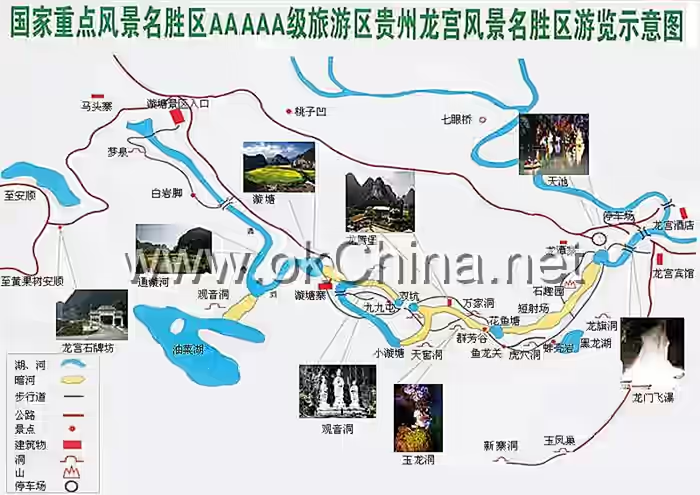
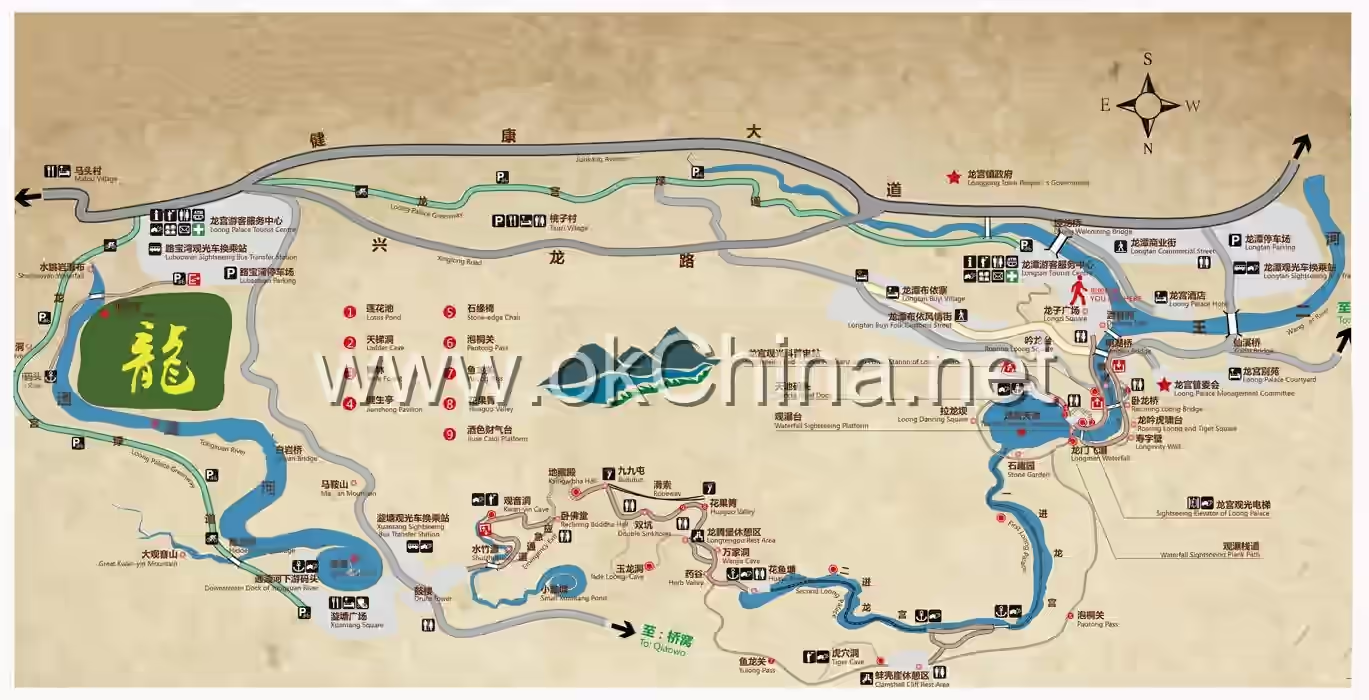
The Dragon Palace Scenic Area covers a total area of 60 square kilometers, with a core visiting area of approximately 18 square kilometers. It is composed of two main thematic zones: the Dragon Pool Secret Realm and the Tongxuan Pastoral Area. It boasts unique natural resources including China's longest and most beautiful water-eroded cave (the First and Second Dragon Palaces), China's largest cave Buddhist hall (Guanyin Cave), China's largest cave karst waterfall (Dragon Gate Waterfall), the location with the world's lowest natural radiation dose rate as measured by the China Atomic Energy Authority, the world's largest cluster of water and dry karst caves, and the world's largest plant-formed Chinese character "Dragon" field. It also features diverse tourism resources such as the rich ethnic cultures, primarily of the Bouyei and Miao peoples.
2. Geographical Environment
The Dragon Palace Scenic Area is located in the southern part of Anshun City, Guizhou Province. Its geographical coordinates are between 105°49'39"E to 105°57'52"E and 26°3'N to 26°12'5'N. It is 116 kilometers from Guiyang City, 17 kilometers from Anshun City, and 35 kilometers from the Huangguoshu Waterfall. The area features karst geology and landforms and belongs to a subtropical monsoon humid climate, making it suitable for tourism year-round.
3. Main Attractions
3.1 Dragon Palace Heavenly Pool
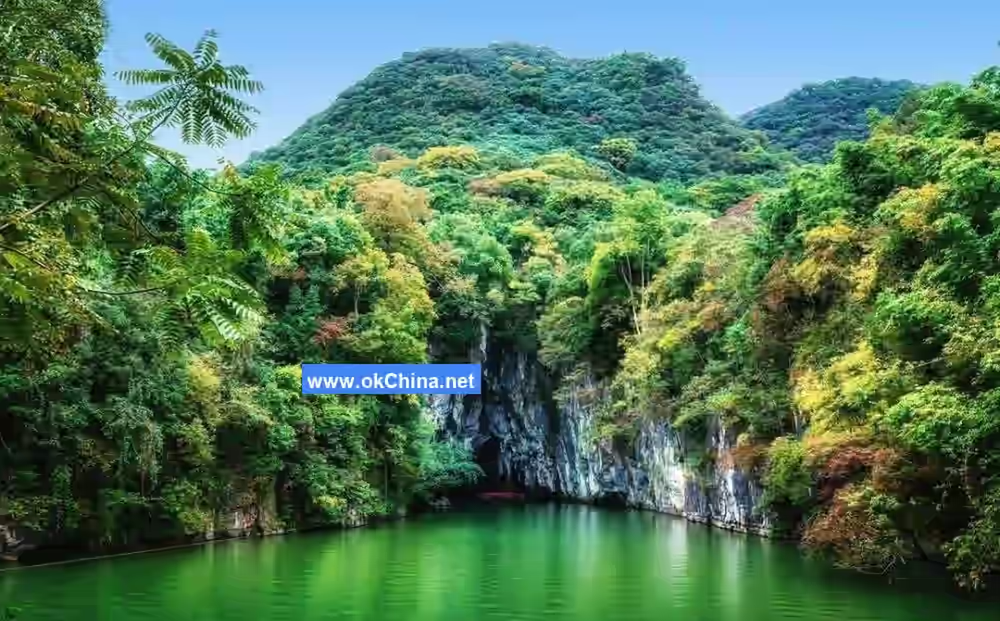
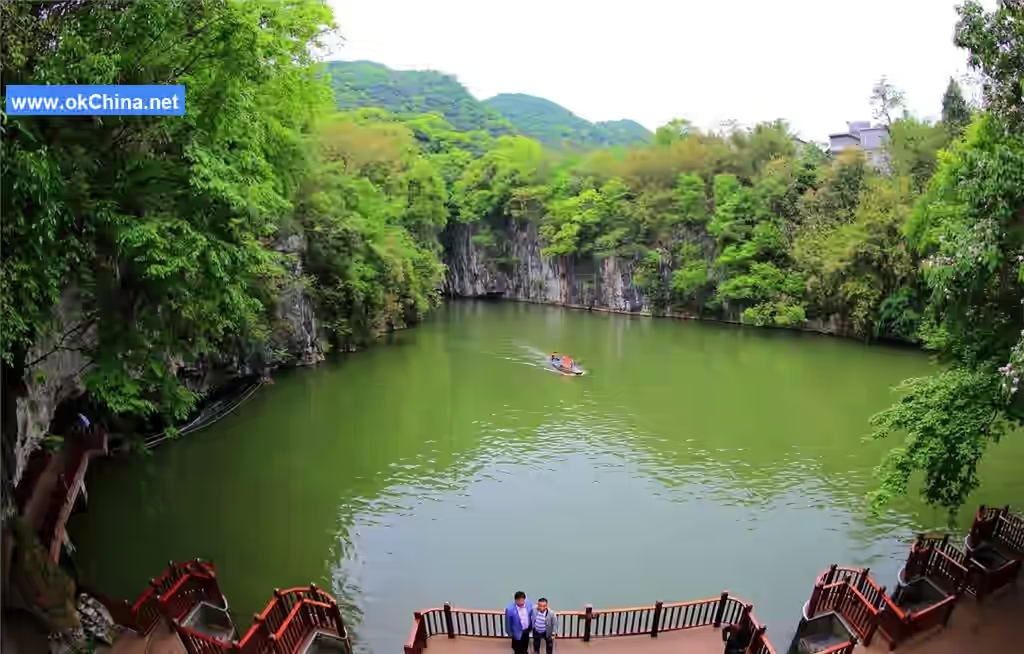
The Dragon Palace Heavenly Pool, also known as Xiangshui Dragon Pool, is situated at an altitude of 1,170 meters. It has a surface area of 12,500 square meters and an average depth of 28 meters. The pool is the turning point of the Dragon Palace underground river, formed by the collapse of the cave roof. It is the location with the world's lowest natural radiation dose rate as measured by the China Atomic Energy Authority. Surrounded by steep cliffs, the pool's water is clear and blue, creating a serene landscape, making it one of the core attractions of the Dragon Palace Scenic Area.
3.2 Dragon Gate Waterfall
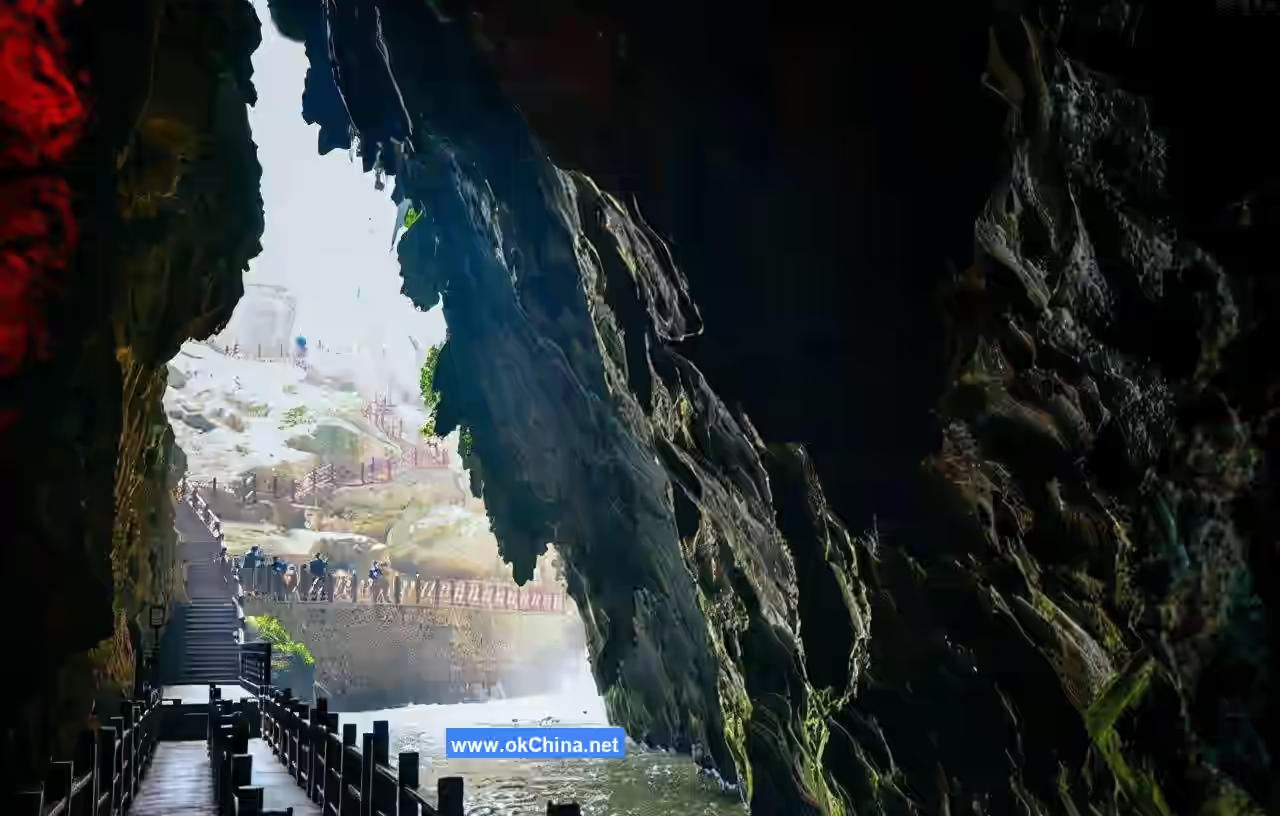
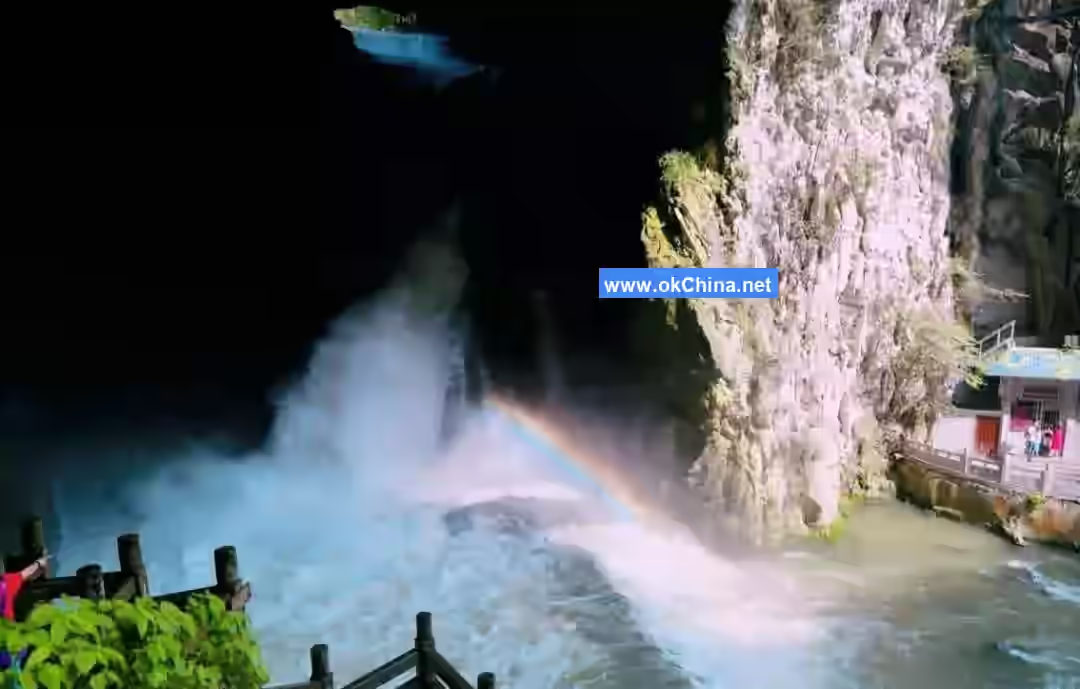
The Dragon Gate Waterfall is China's largest karst cave waterfall, formed by water pouring from the Heavenly Pool. The cave is 50 meters high, with the waterfall itself being 38 meters high and 25 meters wide. The waterfall is majestic, with water cascading like countless ribbons through the air, creating a scene of pearls shattering and jade collapsing, its sound resonating through the valley. The Dragon Gate hangs high like a skylight, with water cutting through the rock to form the magnificent spectacle described as "beaded curtains that cannot be rolled up, a bolt of silk hanging from a distant peak."
3.3 Dragon Palace Water-Eroded Cave
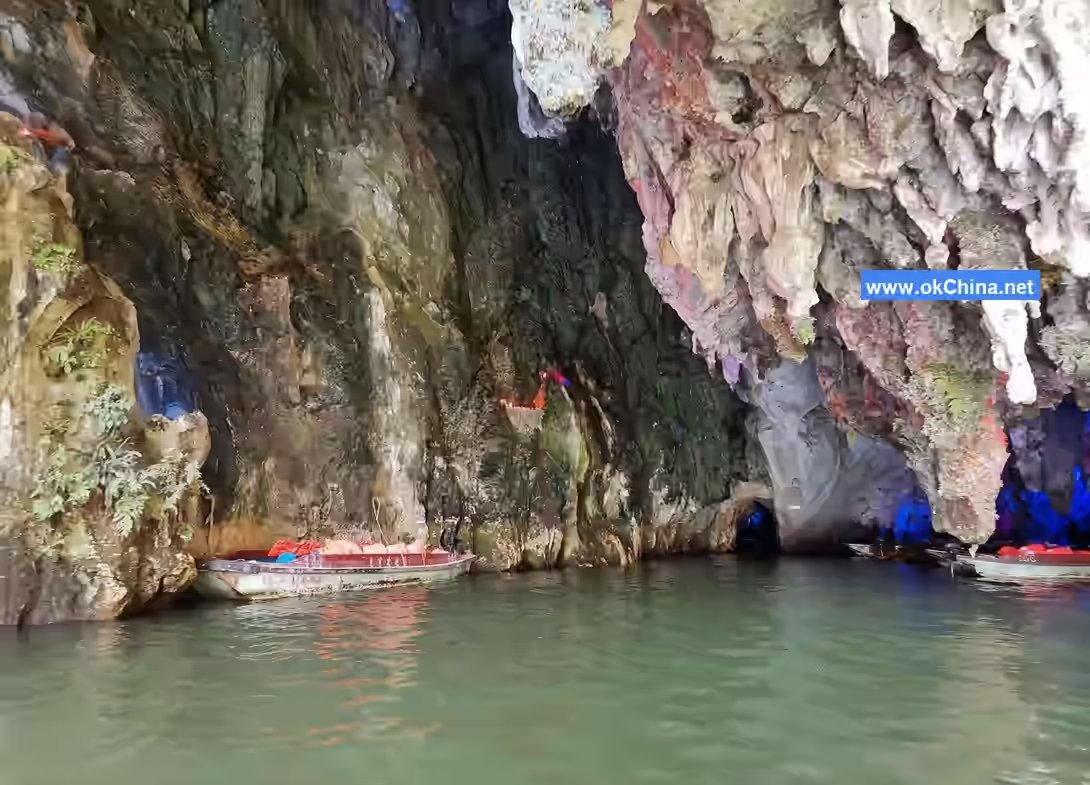
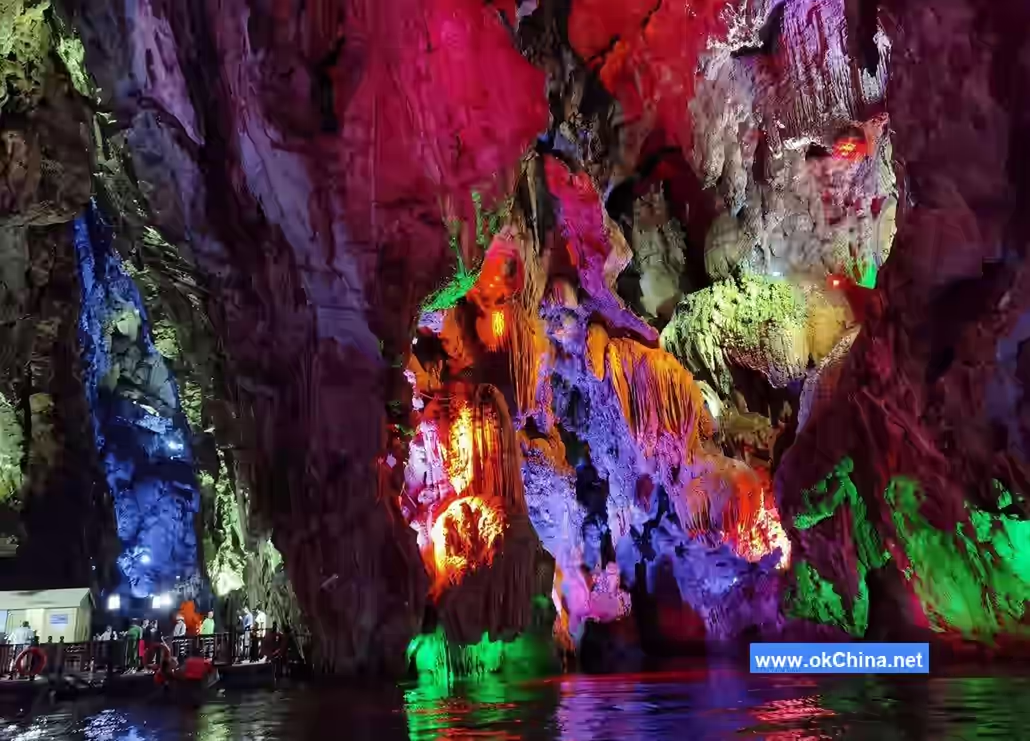
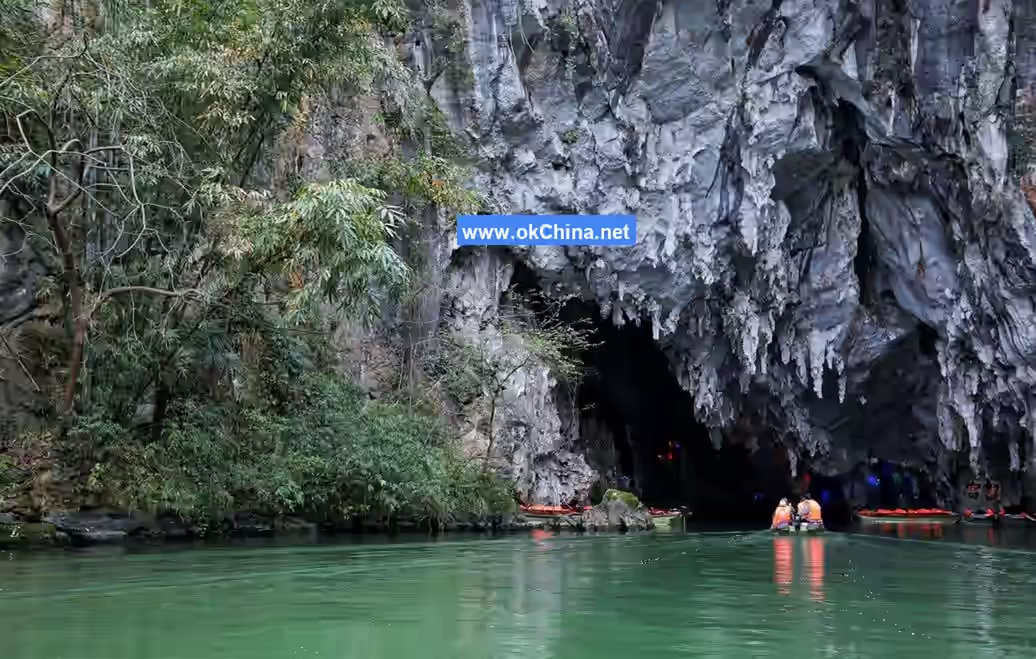
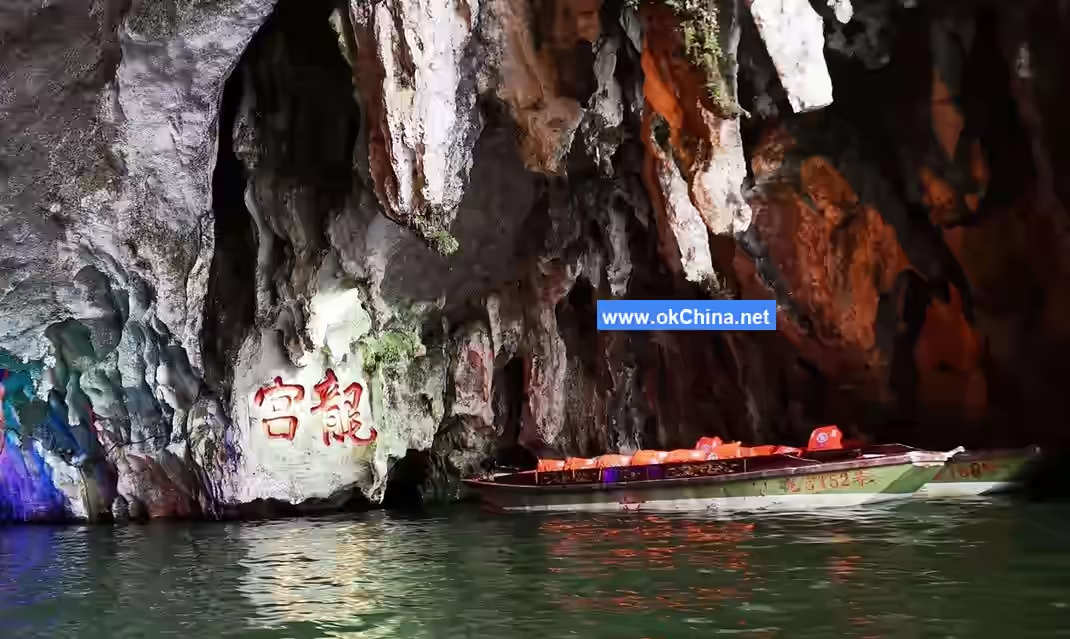
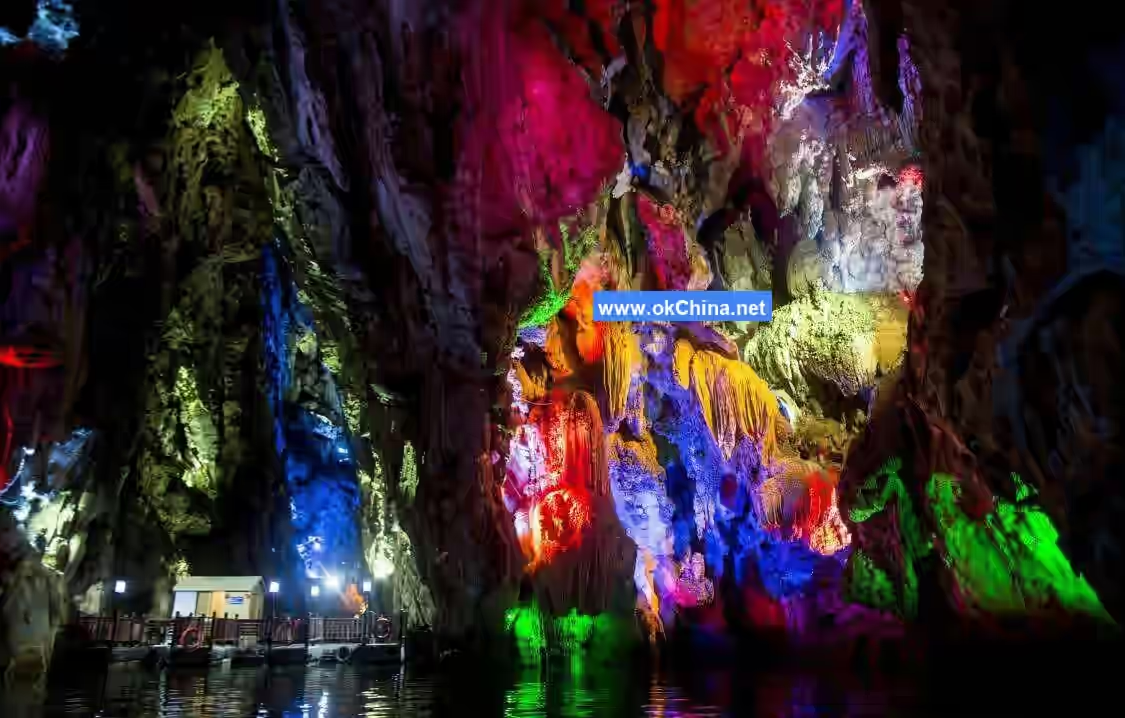
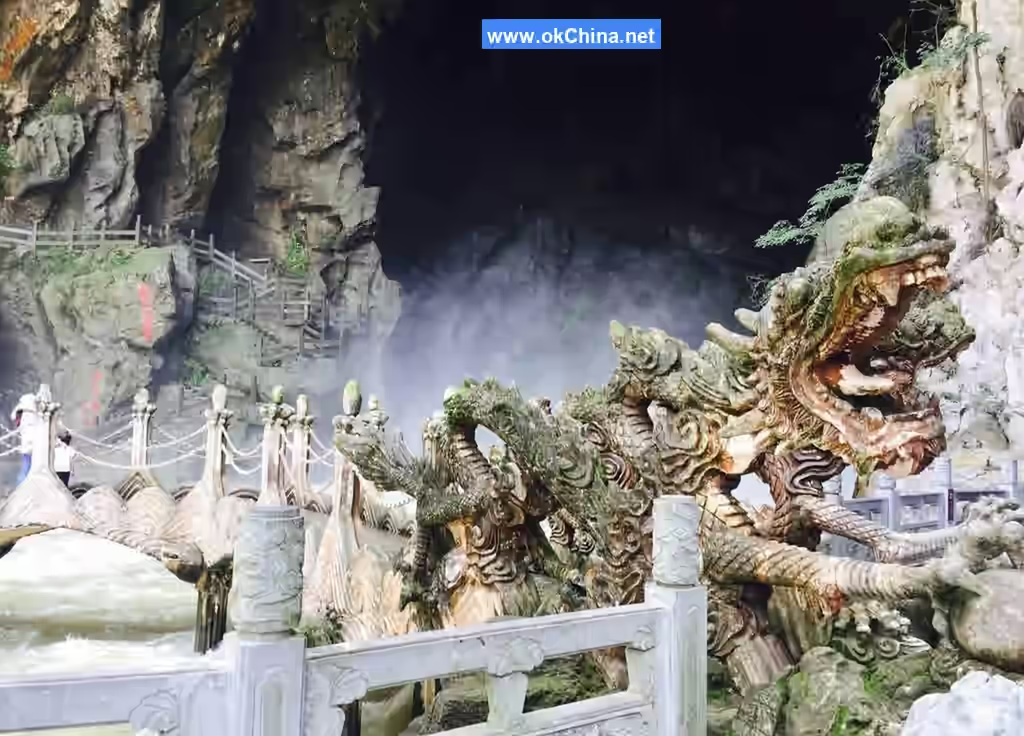
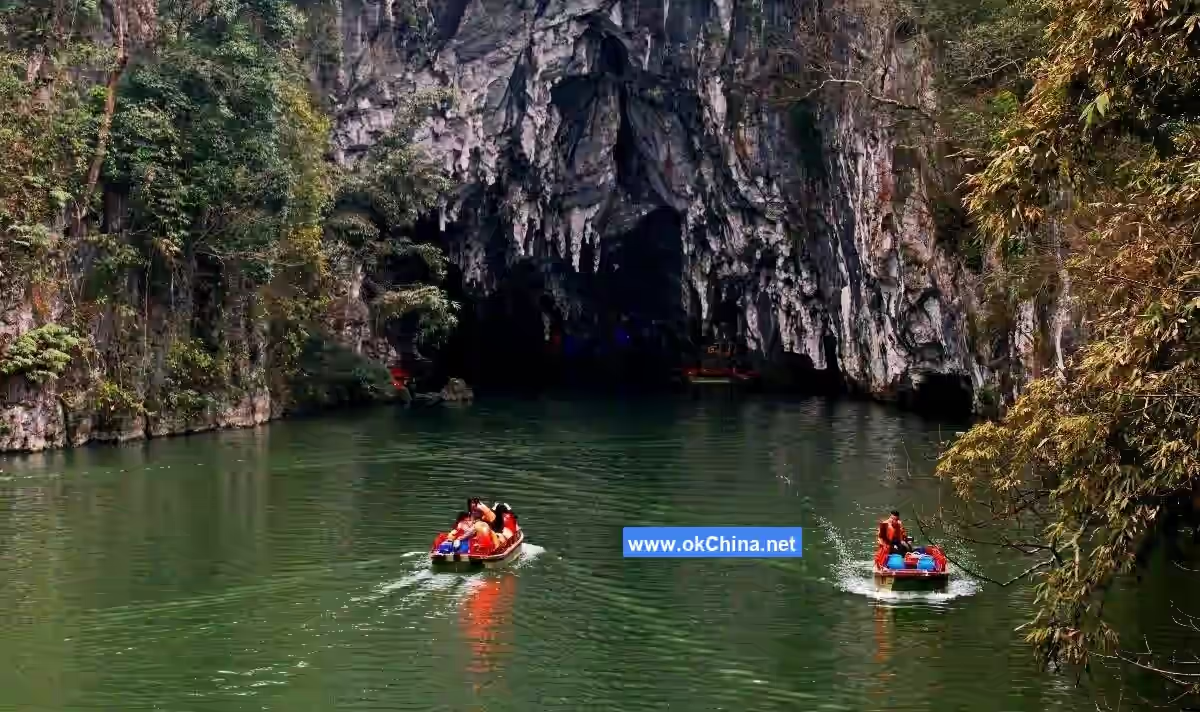
The Dragon Palace Water-Eroded Cave is renowned as the longest and most beautiful water-eroded cave in China and is one of the Three Wonders of Dragon Palace. The cave winds and twists, divided into the First Dragon Palace and the Second Dragon Palace:
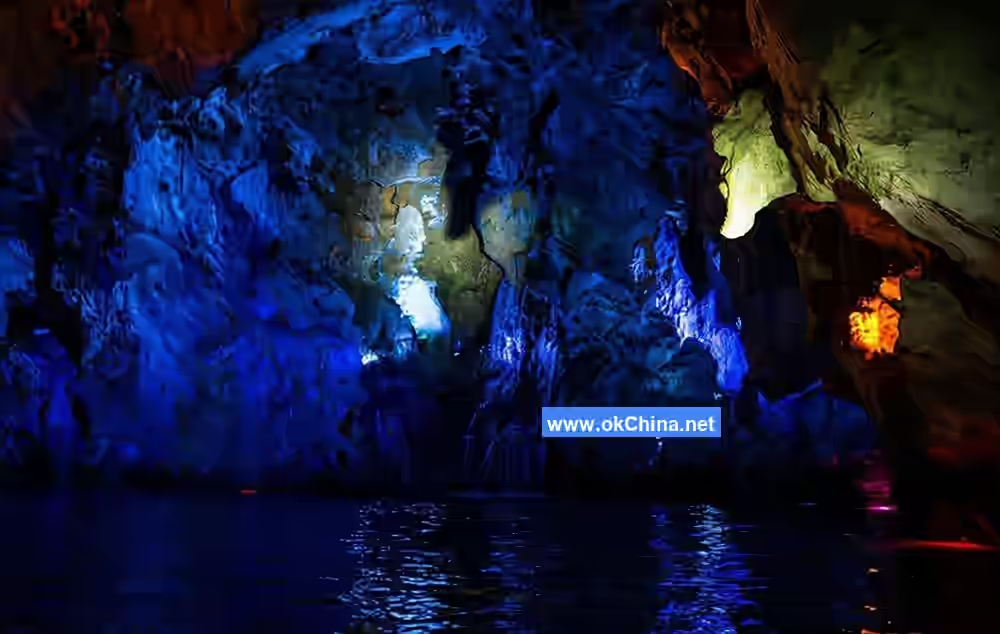
- First Dragon Palace: With a total length of 840 meters, it consists of five sections: the Welcoming Hall of Dragons, the Relief Mural Hall, the Five Dragons Guarding Treasure Hall, the Crystal Palace, and the High Gorge and Deep Valley Palace. The stalactites inside take various forms, and boating through it feels like entering a fantastical underground world.
- Second Dragon Palace: With a total length of 400 meters, the landscape inside is rugged and mysterious, with bizarre and jagged stalactites. The water screen projection creates a kaleidoscopic effect, making the boat ride feel like traveling through a "time tunnel."
3.4 Guanyin Cave
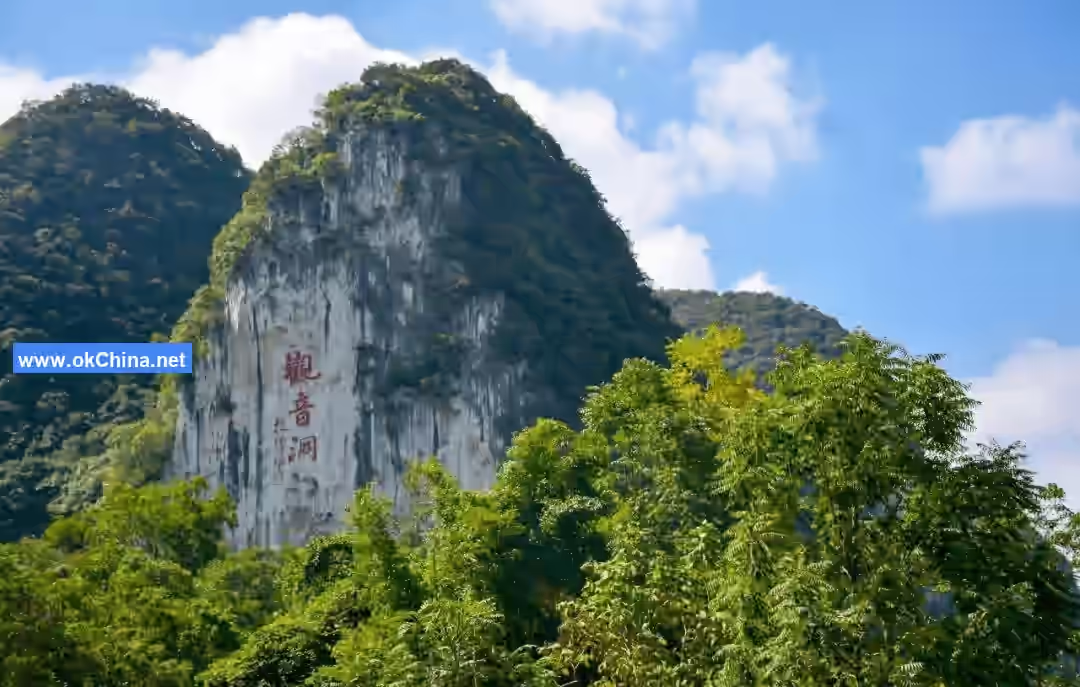
Guanyin Cave is one of the attractions in the Xuantang scenic series. It is a semi-open dry karst cave, with a maximum height of over 60 meters. Its three halls intersect and undulate at different horizontal levels, creating a three-dimensional touring route that is full of interest. While "famous mountains are mostly occupied by monks," it is rare nationwide to find a Buddhist hall built inside a cave. The most distinctive feature of Guanyin Cave is that all its halls are not man-made structures but natural karst caves. These include the Weituo Hall, Maitreya Hall, Mahavira Hall, and Guanyin Hall, covering a total area of over 20,000 square meters. There are 32 Buddha statues in total, with the Guanyin statue reaching a height of 12.6 meters. Surrounding Guanyin Cave are seven peaks evenly distributed, resembling the seven lotus pedestals of Guanyin. Below the peaks are thousands of green bamboo stalks, further encircled by clear water. Two short rivers emerge from a single source, flowing in different directions to embrace the entire mountain. On the cliff face, the three large characters "Guanyin Cave," each covering an area of 16 square meters, were inscribed for the cave by Zhao Puchu, the former chairman of the National Buddhist Association of China. Throughout the cave, natural and man-made Buddha statues complement each other, making it the largest cave Buddhist hall in China.
3.5 Xuantang (Whirlpool Pond)
Xuantang is a typical karst funnel landform. Located between Ma'an Mountain and Guanyin Cave in the Xuantang scenic series, it is a rare and marvelous landscape nationwide. It is a circular pond with a diameter of 101 meters and an area of 8,012 square meters. The pond water, without relying on wind, rotates clockwise day and night, year after year, ceaselessly. The green duckweed on the water surface spins along with the pond water. This ancient, perpetually self-rotating whirlpool is formed because water flows into the circular pond tangentially. At the pond's bottom, which reaches a depth of 43 meters, a natural funnel allows water to seep into an underground river, creating the never-ending clockwise whirlpool. The most peculiar aspect is that the natural funnel adjusts its seepage rate according to the water volume: when inflow is large, seepage is fast; when inflow is small, seepage is slow, thus maintaining a relatively consistent water level in the pond.
3.6 Dragon Character Field
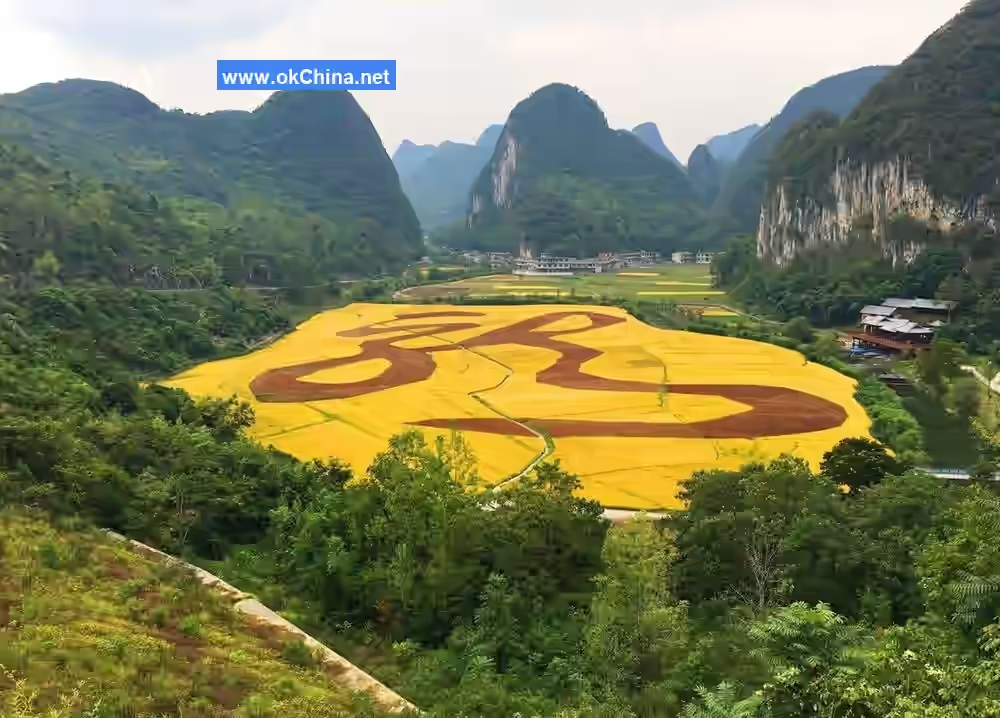
The Dragon Character Field is created using intercropping of crops, varying by season. In spring, it is formed by intercropping rapeseed flowers and broad beans; in autumn, by intercropping black glutinous rice and ordinary rice. The character "Dragon" is traced from the cursive script of the Tang Dynasty calligrapher Huaisu. Covering an area of approximately 80,000 square meters, it is the world's largest single Chinese character. When the breeze blows, the character sways like a giant dragon roaring out from between the mountains and forests.
3.7 Tiger Den Cave
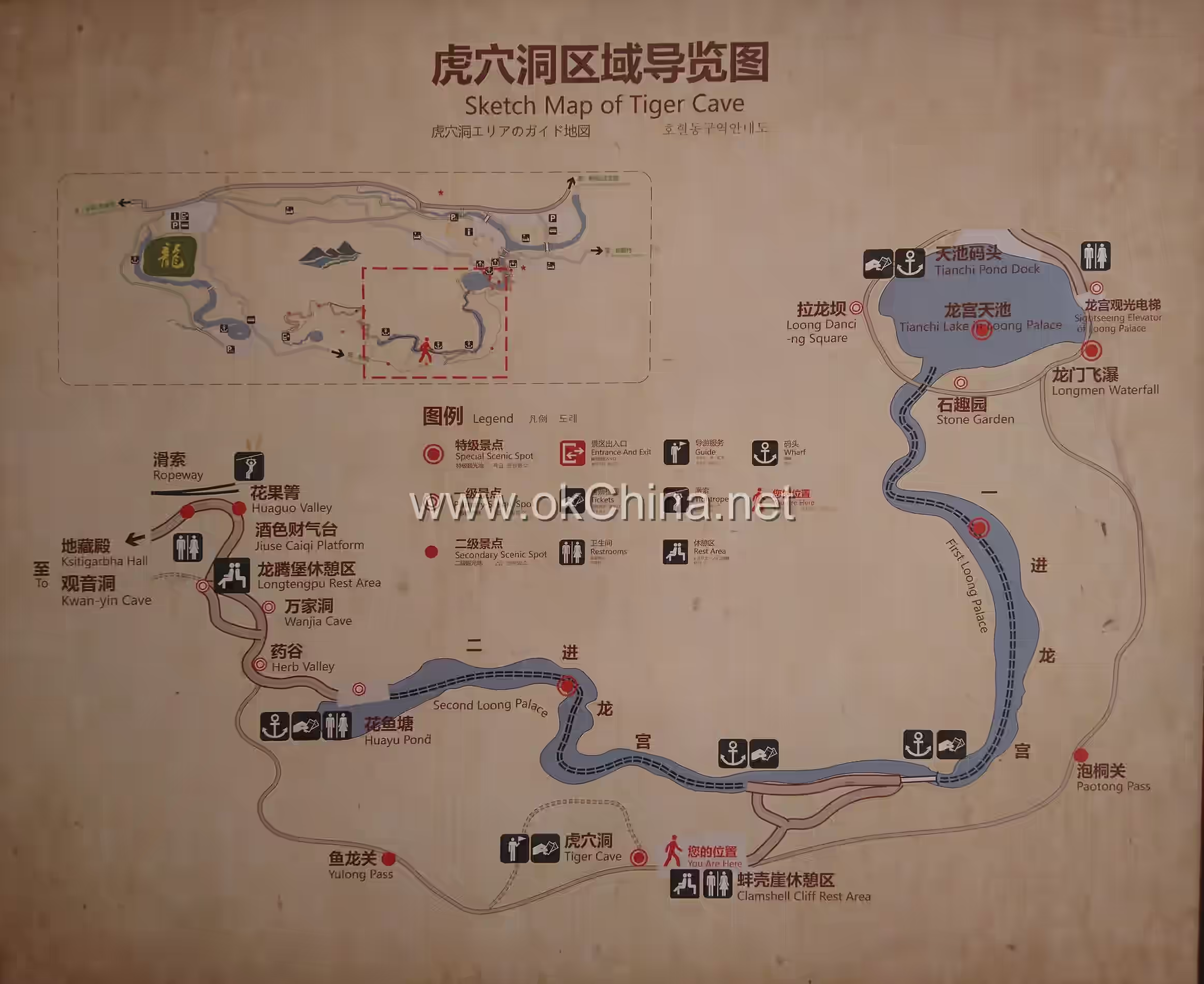
Tiger Den Cave is a dry karst cave, 400 meters long, named after a tiger-shaped rock inside. The cave features stalactites in myriad forms and magnificent landscapes, blending natural and cultural scenery, such as "Broadsword Cutting the Waterfall" and "Mandarin Duck Pillars."
3.8 Ksitigarbha Hall
Ksitigarbha Hall is located along the route to the Fifth Dragon Palace. The cave is 380 meters long and named after a stalactite inside that resembles the Bodhisattva Ksitigarbha. The cave's scenery is mysterious and deep, showcasing the unique charm of karst landforms.
3.9 Flowery Fish Tide and Waves
The Flowery Fish Pond is located in the waterway between the Second and Third Dragon Palaces, covering an area of about 2,400 square meters. When the weather turns from sunny to rainy, a wonder occurs in the pond: "one pond divides into two waters, with two different water colors." Legend has it that this is caused by flowery fish surging and leaping in waves, striving to cultivate themselves into dragons, leaving behind the legend of "Buddha does not ferry people; people ferry themselves."
3.10 Cave Sea Drum Music
The Qunfang Valley karst cave often emits sounds resembling music from a Buddhist or Taoist ceremony, known as "Cave Sea Drum Music." This is one of the Three Mysteries of Dragon Palace. This peculiar phenomenon attracts many tourists to explore its secrets.
3.11 Cave Dwelling for Health Benefits
Wanjia Cave is a unique cave dwelling site in Dragon Palace. It preserves daily utensils used by ancient inhabitants, such as stone beds and stone stools. Inside the cave, there is also a health-preserving exercise diagram called "Zhuang Yao Ba Duan Jin" (Waist-Strengthening Eight-Section Brocade), showcasing the wisdom of ancient health culture.
3.12 Clamshell Rock
Clamshell Rock is shaped like a giant clam covering the sky, with an inclination of 15 degrees, presenting a grand and imposing sight. Inside the rock wall lies the 400-meter-long Tiger Den Cave, with exquisite and translucent stalactites creating a splendid landscape.
3.13 Stone Fun Park
Inside the Yu Qingcheng Clay Pottery Art Museum, every piece of work is rich in local flavor, ingeniously conceived, and full of charm, possessing high artistic value. Particularly captivating is the "Eighty-Seven Immortals Scroll Rock Carving," carved on a stone dam. Its超前conception and浩大scale exceed ordinary imagination. The original "Eighty-Seven Immortals Scroll" is a masterpiece passed down from the famous Tang Dynasty painter Wu Daozi, and the original is now housed in the Xu Beihong Museum. The mural is极其壮观, with eighty-seven immortals appearing as if floating in, each with a relaxed and free-spirited demeanor. Reportedly, this mural covers an area of 3,200 square meters, making it the largest in the world and listed in the "Guinness World Records." Stone Fun Park is a tourist attraction that has risen in recent years. It is a masterpiece combining natural造化and人工sculpture, a holy site integrating Confucianism, Buddhism, and Taoism.
4. History and Culture
4.1 Development History
The Dragon Palace Scenic Area officially opened in 1984. In 1988, it was approved by the State Council as a第二批national-level scenic area. In 2007, it was rated as a National AAAAA Tourist Attraction. With its unique karst landforms and abundant natural resources, the scenic area attracts a large number of tourists and has become an important tourism destination in Guizhou and even nationwide.
4.2 Geological and Cultural Value
The Dragon Palace Scenic Area integrates various karst geological and landform landscapes such as溶洞, gorges, waterfalls, peak forests, cliffs, streams, rivers, and stone forests. It is hailed as the "Karst Landscape Museum." The water and dry karst cave clusters, Dragon Gate Waterfall, Guanyin Cave, and other landscapes within the area not only possess极高的geological research value but also contain rich cultural connotations.
4.3 Dragon Culture and Religious Beliefs
The Dragon Palace Scenic Area takes the "dragon" as its theme, showcasing unique dragon culture. The "Dragon Character Field" within the scenic area is the world's largest single Chinese character landscape. Formed by intercropping crops and covering an area of approximately 80,000 square meters, it symbolizes the inheritance and promotion of dragon culture.
Furthermore, Guanyin Cave is China's largest cave Buddhist hall. Inside, natural stalactites and人工Buddha statues blend seamlessly, demonstrating the perfect integration of Buddhist culture and karst landforms.
4.4 Ethnic Customs
The areas surrounding the Dragon Palace Scenic Area are inhabited by ethnic minorities such as the Bouyei and Miao peoples. Their服饰, festivals, activities, and traditional customs add strong ethnic flavor to the scenic area. For example, the Bouyei's "June Sixth" Festival and the Miao's "Flower Dance" activities are important local cultural displays.
Comments
Post a Comment