


Jixi Longchuan Scenic Area, Xuancheng City, Anhui Province
1. Introduction
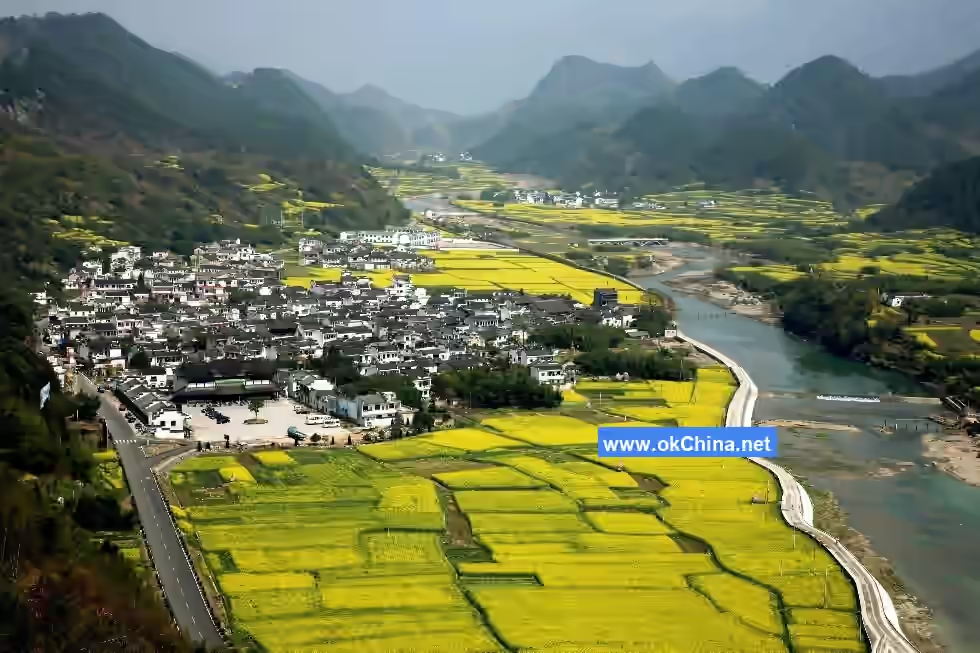
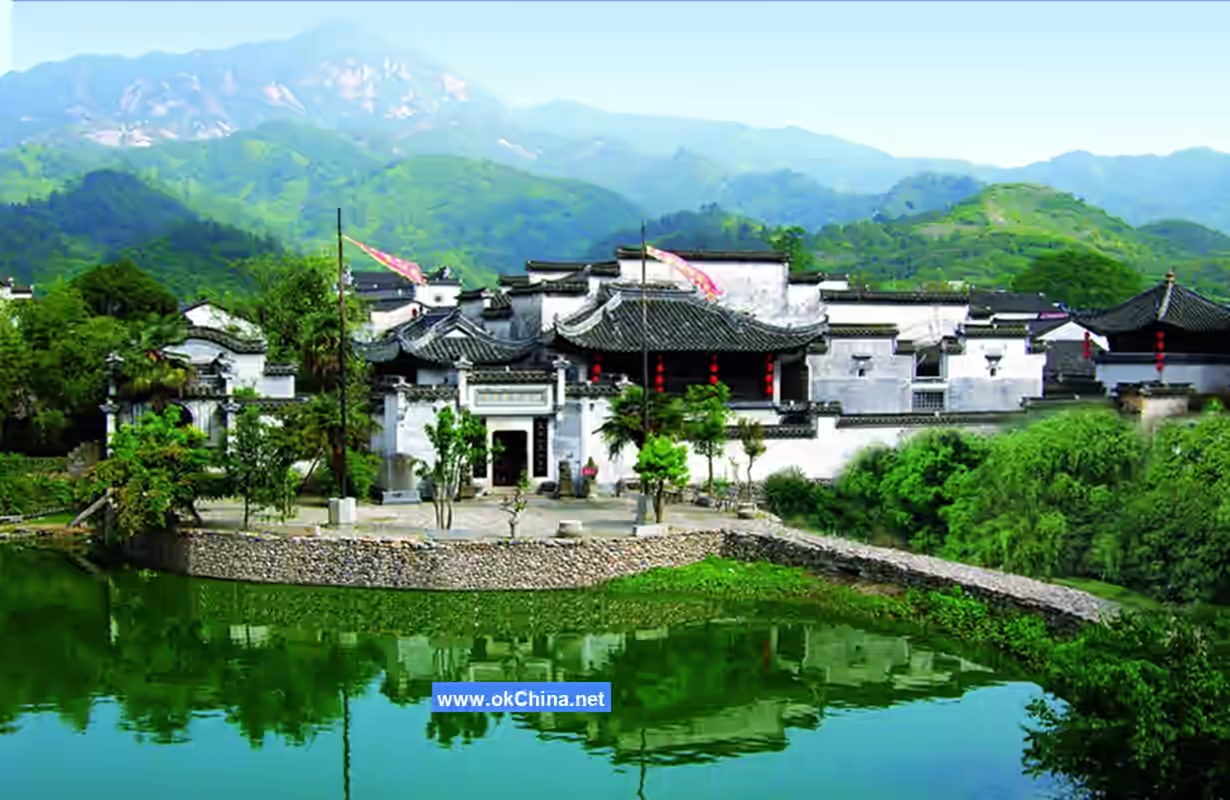
The Jixi Longchuan Scenic Area in Xuancheng City, Anhui Province, is a National AAAAA Tourist Attraction officially approved by the National Tourism Administration. Located in Longchuan Village, Jixi County, southern Anhui, it is an ancient village with a thousand-year history where the Hu clan has lived together for generations. The Longchuan Tourist Scenic Area combines cultural and natural landscapes. The Hu Clan Ancestral Hall, known as the "Number One Ancestral Hall in Jiangnan," is praised as the "Wood Carving Art Museum" and the "Hall of National Art." The Yishi Shangshu Memorial Archway is an authentic stone archway from the Ming Dynasty and represents the pinnacle of Huizhou-style stone carving.
2. Geographical Environment
2.1 Location and Area
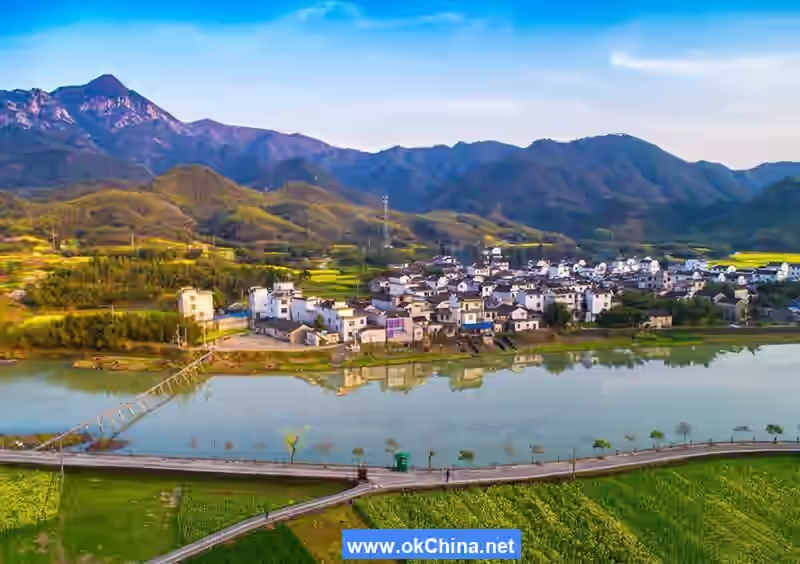
Longchuan Village is located 11 kilometers east of Jixi County, Xuancheng City, Anhui Province. It was formed by merging the former villages of Kengkou, Huli, and Hengchuan. The village is a typical mountainous village described as "eight parts mountains and water, one part farmland, one part roads and manors."
2.2 Topography and Landforms
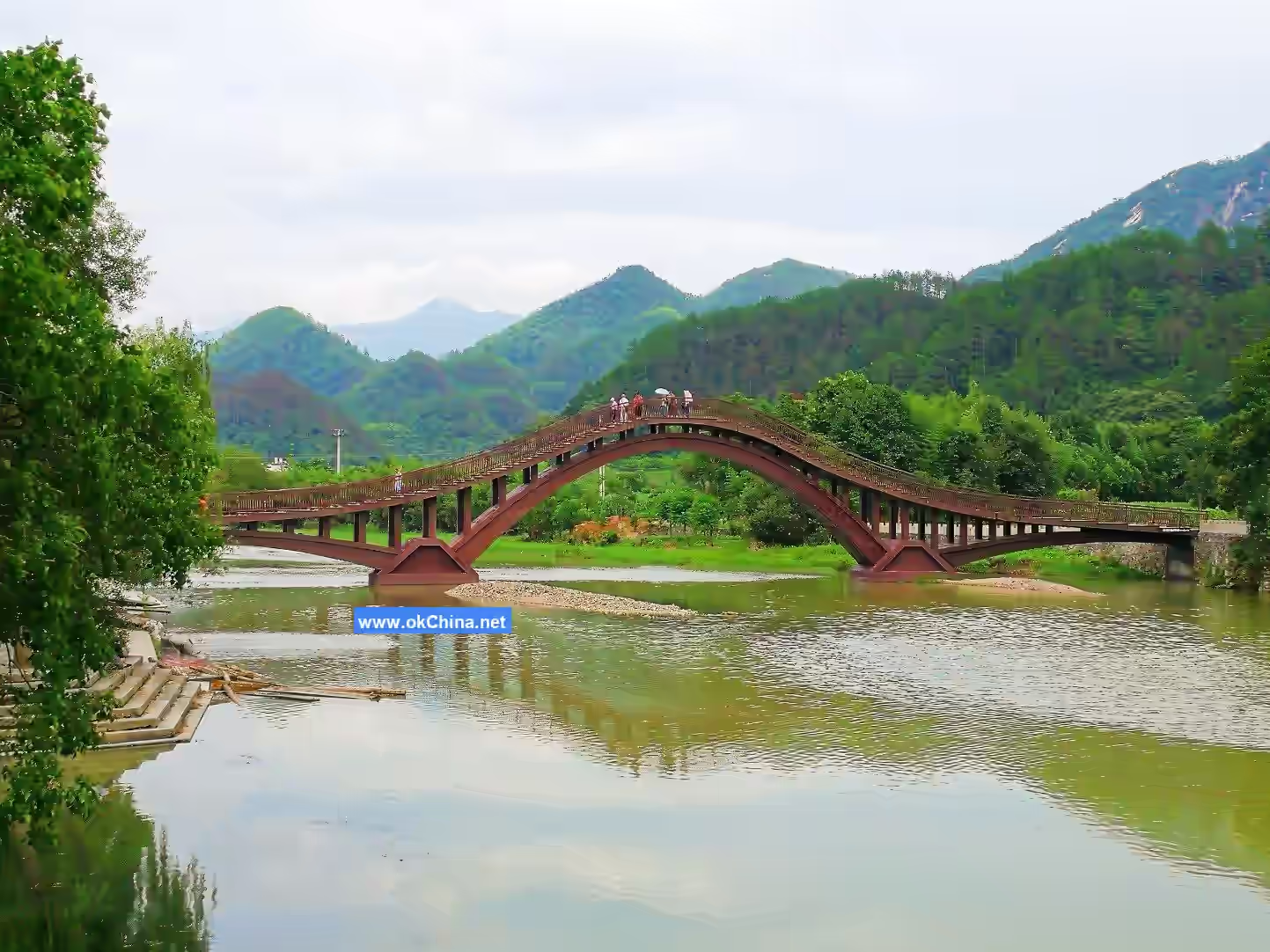
Longchuan is situated in a small basin surrounded by mountains. The terrain is primarily composed of low to medium mountains and hills, encircled by peaks, with the highest being Longxu Mountain at an elevation of 1,048 meters. The village layout resembles a boat moored to the shore: Longxu Mountain towers to the east, bordering the Dengyuan River; the Longchuan River flows eastward to the south; the beautiful Fengguan Peak nestles to the west; and steep mountains stand to the north.
2.3 Climate Characteristics
The Jixi Longchuan Scenic Area in Xuancheng City, Anhui Province, has a subtropical humid monsoon climate. The annual average temperature is 15.9°C. Spring and autumn are humid and mild, with summer average temperatures exceeding 22°C, featuring concurrent heat and rainfall. Winter average temperatures are below 10°C. The four seasons are distinct, with the best travel times being spring and autumn.
3. Main Attractions
3.1 Yishi Shangshu Memorial Archway
The Yishi Shangshu Memorial Archway is located in Dakengkou Village, Jixi County. It was built in the 41st year of the Jiajing reign of the Ming Dynasty (1562). Its main structure consists of 4 pillars, 4 fixed beams, and 7 lintels, standing 10 meters high and 9 meters wide. It is crafted from a combination of granite and Chayuan stone. The archway's overall structure employs a tapered design, converging inward, with the four main pillars having their edges smoothed. Each pillar is flanked north and south by drum-shaped stone braces. The roof is of the hip-and-gable style, made from carved Chayuan stone slabs, supported by bracket sets (dougong) and featuring overhanging eaves. At each end of the main ridges, confronting ao fish (mythical sea creatures) are placed, and a flaming pearl is set in the middle of the central ridge. The eight corner rafters soar upwards. The central section of the main structure features a vertical plaque inscribed with "En Rong" (Imperial Favor), surrounded by a relief carving of two dragons playing with a pearl. The panels below are inscribed on the north and south sides with "Yishi Shangshu" and "Yishi Gongbao" respectively, handwritten by the great calligrapher Wen Zhengming.
3.2 Hu Clan Ancestral Hall
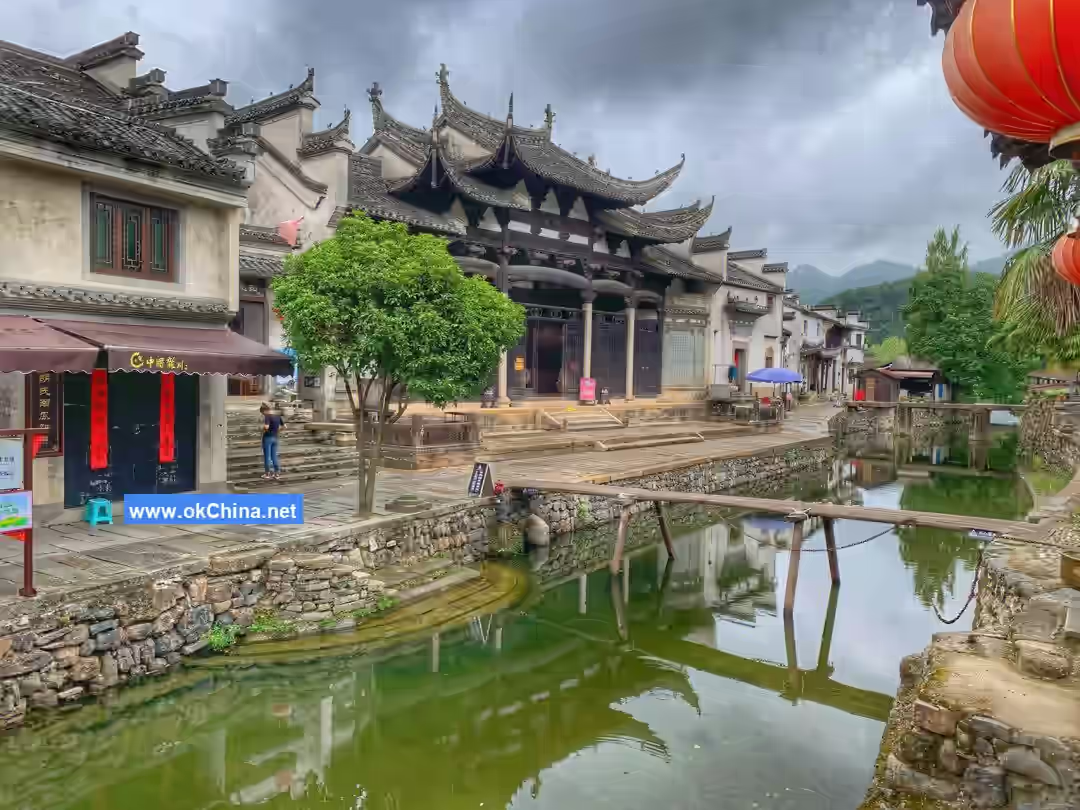
The Longchuan Hu Clan Ancestral Hall is located in Kengkou (Longchuan) Village, Yingzhou Town, Jixi County. Historically part of Huizhou, Jixi had a flourishing literary culture, with ancestral halls widespread. The Longchuan Hu Clan Ancestral Hall was built in the 25th year of the Jiajing reign of the Ming Dynasty (1547) and renovated in the 4th year of the Guangxu reign of the Qing Dynasty (1878). The hall faces south and comprises three courtyards, covering a total area of 1,729 square meters. It integrates with the mountains and water, creating a majestic and dynamic presence. The interior is exquisitely decorated, most notably with well-preserved wood carvings of various kinds, earning it the title "Treasure House of Huizhou Wood Carving Art." Longchuan produced two Ministers of the Six Boards during the Ming Dynasty and is also the hometown of Hu Jintao. It was listed as a National Key Cultural Relics Protection Unit in 1988. Relevant experts praise it as a unique masterpiece among ancient Chinese ancestral halls. It served as the clan hall for Hu Fu (Minister of Revenue in the Ming Dynasty), Hu Zongxian (Minister of War in the Ming Dynasty), and Hu Guangyong (a prominent "Red-Top" merchant in the Qing Dynasty).
3.3 Hu Zongxian Shaobao Mansion
The Hu Zongxian Shaobao Mansion presents his life story to visitors in the new form of an Anti-Japanese Pirates Memorial Hall. It is divided into four exhibition halls: the first hall covers Hu Zongxian's life; the second hall depicts the rampant Japanese pirates and his appointment in crisis; the third hall highlights his wisdom, courage, and achievements in the southeast; the fourth hall recounts his wrongful imprisonment and enduring spirit. The exhibition halls emphasize the role of images and multimedia through innovative formats and atmosphere creation; modern sound, light, and electronic high-tech are applied to highlight Hu Zongxian's heroic deeds in resisting pirates and pacifying the coastal regions. The Hu Zongxian Shaobao Mansion officially opened to the public in March 2010.
3.4 Village Worthy Shrine
"Village Worthy" refers to a person of high moral character in a locality. During the Ming and Qing dynasties, individuals whose character, learning, or governance were esteemed by the local community could, after their death, be reported by local officials to have a memorial tablet erected in the county or village worthy shrine for sacrificial ceremonies in spring and autumn. According to the Jiaqing Jixi County Annals (published 1810), the Jixi County Village Worthy Shrine honored 15 worthies, three of whom were from Longchuan. Longchuan historically had the "Hall of Remembrance and Reverence," a sacred place for the clan to remember and honor ancestors. It compiled the names of Longchuan clansmen throughout history who were highly respected and contributed to the village. Based on the life stories of eight of them, eight paintings were created, serving as a local education base for Longchuan.
3.5 Xuan Paper Workshop
Among the "Ten Scenes of Longxu," one is named "Dragon Grass and Chengxin Hall." "Dragon Grass" refers to Longxu grass (Chinese alpine rush), which is abundant on Longxu Mountain. This grass resembles dragon whiskers, being slender, flexible, highly elastic, and difficult to break. It ranges from over a foot to more than a meter in length and is an excellent raw material for papermaking. Longxu Mountain is named for its abundance of this grass, which is the primary raw material for making Chengxintang paper. "Chengxin" refers to the Chengxin Hall where Longxu paper was stored. The Longchuan Scenic Area successfully excavated and showcased this intangible cultural heritage, restored the ancient Chengxintang papermaking process on-site, and established "Dragon Grass and Chengxin Hall" as a historical tourism project. The Chengxintang Paper Experience Workshop opened to visitors on Labor Day in 2011.
3.6 Longchuan Water Street
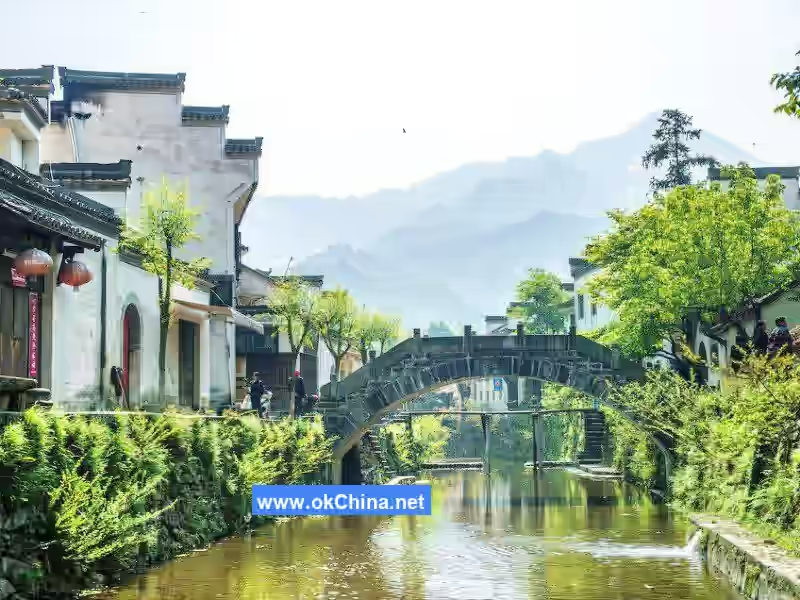
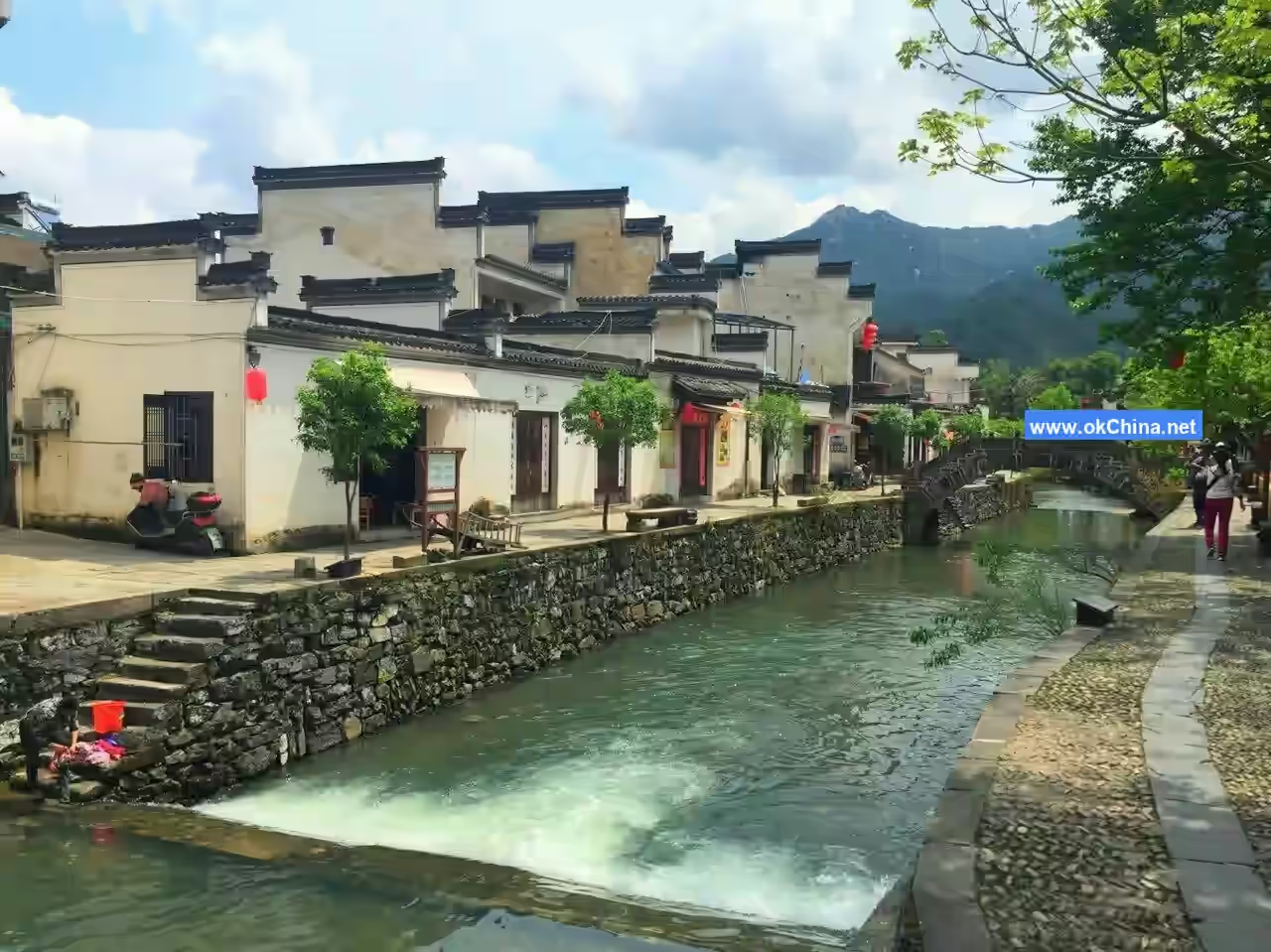
Longchuan Water Street is located in Longchuan Village, Yingzhou Township, Jixi County, a provincial-level historically and culturally famous village in Anhui. It has a long history, is well-preserved, and is a key tourist area in the eastern tourism route under development in Jixi County. The water street and the buildings along its sides feature many cultural relics, historical sites, and structures with strong local characteristics and high cultural value.
Longchuan Water Street is about 500 meters long. The water originates from the Shijin Mountain foothills, flows south through Lingli to Lingwai, turns east, enters the village at Fengshan in Longchuan Village, passes through the village, and converges into the Dengyuan River. The riverbed gradient is 500:1, resulting in murmuring streams during the dry season and rushing torrents during floods, washing away all silt and muddy water from the village. The riverbanks are built with bluestone and granite. The banks are steep, with stone steps leading down to the river for residents to wash and fetch water. One particular access point resembles a small wharf, constructed from bluestone and granite, dating back to the early Qing Dynasty.
3.7 Lingshan Nunnery
The entire nunnery is divided into three bays and two courtyards. Looking up, one can see a plaque inscribed "Liao Wu Da Cheng," meaning "Comprehending Mahayana Buddhism." The main hall enshrines Guanyin Bodhisattva (Avalokiteshvara). The rear hall enshrines Sakyamuni Buddha, i.e., the Tathagata Buddha.
3.8 Dragon Embankment and Phoenix Street
The Dragon Embankment was formed during the Ming and Qing dynasties and is the main street within Longchuan Village. The embankment extends from the Longfeng Mountain east of the river. The central longitudinal paving stones represent the "dragon's spine," while the cobblestones laid on both sides represent "dragon scales." It is topographically higher than the "Phoenix Street."
Phoenix Street was formed during the Ming and Qing dynasties and is the main street within Longchuan Village. It is named for its connection to the Fengshan Mountain to the west. Phoenix Street is paved horizontally with white Fenghuang hemp stones, representing the feathers of a phoenix. Together with the Dragon Embankment, they are called "Dragon and Phoenix Bringing Prosperity."
3.9 Jinshi Lane
Jinshi Lane was named during the Ming and Qing dynasties and is a main alley in the village. According to the Hu Clan Genealogy, during the Song, Ming, and Qing dynasties alone, 11 individuals from Longchuan Village passed the imperial examination to become Jinshi (advanced scholars), including 7 in the Ming Dynasty. The most famous are the three who achieved high office from one clan: Hu Fu (Minister of Revenue), Hu Zongxian (Minister of War), and Hu Zongming (Vice Censor-in-Chief). Historically, there were fourteen memorial archways for successful candidates along Jinshi Lane, which no longer exist.
3.10 Ancient Official Road
The Ancient Official Road is located south of the Yishi Shangshu Memorial Archway. It dates from the Ming and Qing dynasties and was an ancient post road, also known as an official road. At that time, it was the main route connecting the village to the outside world, linking with the Longchuan post road leading out of the village.
3.11 Longchuan Inner Water Outlet
The Longchuan Inner Water Outlet dates from the Qing Dynasty. It embodies the spirit of "small bridges and flowing water." Through tree planting, dam construction, water conservation, bridge and pavilion building, and filling gaps, it prevents the Dengyuan River from flooding back into the Longchuan stream, no matter how high or fierce the river rises.
3.12 Seven Star Pond
The Seven Star Pond was initially built in the Qing Dynasty, primarily to provide water for firefighting in the village, while also serving an ornamental purpose. The pond curves like a ladle. Legend also says there were seven spring wells here, positioned like the Big Dipper in the sky. To conceal this imperial aura, Hu Zongxian flooded the seven wells, forming the present-day Seven Star Pond.
3.13 Duxian Memorial Archway
The Duxian Memorial Archway was initially built in the Ming Dynasty and was reconstructed on its original site in 2004, erected for Vice Censor-in-Chief Hu Zongming. The topmost part bears the characters "Sheng Zhi" (Imperial Decree), placing it in the third rank among archway grades. "Duxian" is an abbreviation for the Left Censor-in-Chief of the Censorate, equivalent to the Deputy Procurator-General of the central procuratorate. The two sides of the stone pillars feature lions climbing downwards, symbolizing national peace and prosperity for generations. The ends of the beams use corbel brackets (queti) to increase compressive strength, representing "solidity" (gu). The upper decorations of the archway mostly use openwork carving, allowing wind to pass through, reducing wind resistance, and harmonizing rational structure with aesthetic form, representing "permeability" (tou).
3.14 Dialect Hall (Fangyan Hall)
The Dialect Hall was initially built in the Qing Dynasty, primarily as a school for village children. The people of Longchuan value reading and understanding propriety. Historically, there was the Longfeng Academy, which nurtured many historical figures like Hu Zongxian. Currently, the Longchuan Academy has been restored.
4. Cultural Resources
4.1 Historical DevelopmentLongchuan Village is an ancient settlement with a history spanning over 1,600 years. Originally a barren riverbank overgrown with yellow chaste trees, it was known as Jinglinli due to its abundant production of golden (jing) honey. In 318 AD, Hu Yan, holding the title of Sanqi Changshi, led troops to garrison Shezhou. In the third year of the Xiankang era (337 AD), Hu Yan traveled to Huayang Town and arrived here. He observed the terrain: "To the east, Dragon Peak rises majestically; to the west, Rooster Crown stands tall; to the south, Heavenly Horse gallops upward; to the north, the Longxi (Dengyuan River) winds its way here." Admiring the clear and beautiful landscape, he proceeded to Jinglinli at the entrance of Longchuan and settled there with his clan (according to The Genealogy of the Hu Clan of Longchuan). Hu Yan thus became the founding ancestor of the Hu clan in Longchuan.
In the second year of the Yongtai era of the Tang Dynasty (766 AD), Huayang Town of She County was separated to establish Jixi County, and Longchuan became part of it. Throughout successive dynasties, the administrative affiliations of Huizhou Prefecture and Jixi County frequently changed, but Longchuan consistently remained under their jurisdiction.
The Ming Dynasty marked the peak of Longchuan Village's development. The village had a large population, a prosperous economy, and placed great emphasis on the imperial examinations, earning fame as the "Village of Jinshi." More than ten individuals successively passed the imperial examinations to become jinshi, the most notable being Hu Fu, who passed the imperial examination in the fourteenth year of the Chenghua era (1478 AD) and rose to the positions of Taizi Shaobao (Junior Guardian of the Heir Apparent) and Minister of Revenue in Nanjing, and Hu Zongxian, who passed the imperial examination sixty years later in the seventeenth year of the Jiajing era (1538 AD) and became Taizi Taibao (Grand Guardian of the Heir Apparent) and Minister of War. During the Ming Dynasty's peak, the village's architecture had essentially covered the entire area of Longchuan's "boat-shaped village."
Since the Qing Dynasty, Longchuan gradually declined. The villagers' official careers were no longer as illustrious as during the Ming Dynasty, the population slowly decreased, many buildings gradually collapsed, and the architectural coverage of the village gradually shrank from the entire boat-shaped area to settlements mainly north of the Longchuan River.
Entering the new century, the People's Government of Jixi County, in accordance with national and provincial government documents and regulations regarding the protection of historical and cultural cities, formulated a "conservation plan" for Longchuan Village centered around the Longchuan Water Street. This plan integrates the protection of the water street and the ancient village's history with socio-economic development, village infrastructure construction, and improvements in residents' living conditions to adapt to the construction of a moderately prosperous society and the development of tourism.
4.2 Related Figures
Hu Zongxian
Hu Zongxian (1512–1565), courtesy name Ruzhen, art name Meilin, was a native of Jixi, Anhui. He was a renowned military strategist, statesman, and a famous general who resisted Japanese pirates during the mid to late Ming Dynasty. During the Jiajing era (1522–1566) of the Ming Dynasty, he served as the Governor and Viceroy of Zhejiang, famous for his outstanding contributions in resisting Japanese pirates and quelling unrest along the southeastern coast. Hu Zongxian's life was filled with legendary elements. His military talent, political wisdom, and leadership in the war against Japanese pirates made him a significant figure in Ming history that cannot be overlooked.
Early Life and Start of Official Career
Hu Zongxian was born into a scholarly family in Jixi, Anhui. From a young age, he was intelligent and diligent in his studies, deeply influenced by Confucian culture. He passed the imperial examination to become a jinshi in the seventeenth year of the Jiajing era (1538 AD) and began his official career. Initially, he served in local positions such as county magistrate and prefect, accumulating rich administrative experience. During his tenure in local offices, he was known for his integrity, diligence, and care for the people, earning deep affection from the populace.
During the Jiajing era, the southeastern coast suffered severely from Japanese pirate raids, which frequently harassed coastal areas, bringing profound disaster to the local people. Facing this严峻 situation, the Ming government urgently needed a capable official to oversee the resistance against the pirates. In the thirty-third year of the Jiajing era (1554 AD), Hu Zongxian was appointed as the Governor of Zhejiang, responsible for the defense of the southeastern coast. This appointment marked his formal entry into the campaign against the Japanese pirates.
Outstanding Contributions in the War Against Japanese Pirates
Upon taking office, Hu Zongxian quickly implemented a series of effective measures in response to the rampant activities of the Japanese pirates. He first reorganized the local military, strengthened coastal defenses, and actively recruited and trained militia, forming a powerful anti-pirate force. Hu Zongxian understood that relying solely on military force would not completely resolve the pirate problem. Therefore, he adopted a strategy of "suppression and appeasement," firmly打击 the pirates'嚣张气焰 on one hand, while weakening their forces through招抚 and分化 on the other.
Under Hu Zongxian's leadership, the Ming army achieved significant victories in multiple battles. The most famous among these was the "Great Victory of Taizhou" in the thirty-fourth year of the Jiajing era (1555 AD). In this battle, Hu Zongxian personally commanded the forces, successfully repelling a large-scale attack by the Japanese pirates and annihilating a large number of enemy troops, greatly震慑ing the pirates'嚣张气焰. Subsequently, Hu Zongxian achieved a series of victories in places like Ningbo and Shaoxing, gradually扭转ing the situation along the southeastern coast.
Hu Zongxian not only excelled militarily but was also adept at using political means to consolidate the gains against the pirates. Through diplomatic contacts with Japan, Korea, and other countries, he secured external support, further weakening the pirates' forces. Additionally, Hu Zongxian focused on安抚 the people and restoring production, gradually reviving the war-torn coastal areas.
Collaboration with the Famous General Qi Jiguang
During Hu Zongxian's campaign against the pirates, he closely collaborated with another famous Ming general, Qi Jiguang. Qi Jiguang was a renowned military strategist of the mid to late Ming Dynasty, famous for establishing the "Qi Family Army." Hu Zongxian greatly appreciated Qi Jiguang's military talent and appointed him as the Regional Commander of Zhejiang, responsible for commanding the anti-pirate battles. With Hu Zongxian's support, Qi Jiguang was able to fully utilize his military skills, establishing the disciplined and highly effective "Qi Family Army" and achieving glorious victories in numerous battles.
The collaboration between Hu Zongxian and Qi Jiguang not only yielded significant military results but also left valuable military experience for later generations. Their deeds in resisting the Japanese pirates are still celebrated today.
Political Struggles and Tragic End
Despite his赫赫战功 in the war against the pirates, Hu Zongxian's official career was not smooth sailing. During the mid to late Ming Dynasty, factional strife within the court was intense. Due to his close relationship with the powerful minister Yan Song, Hu Zongxian became entangled in complex political struggles. Yan Song was a powerful minister during the Jiajing era. To gain more support for the war against the pirates, Hu Zongxian had to依附于 Yan Song. However, Yan Song later faced impeachment due to his excessive power, and Hu Zongxian was implicated as a result.
In the forty-fourth year of the Jiajing era (1565 AD), Hu Zongxian was accused of corruption and bribery and was impeached. Despite多次为自己辩解, he was ultimately dismissed from his post and investigated. He died不久后 in prison. Hu Zongxian's tragic end was both a reflection of personal fate and a microcosm of the political corruption in the late Ming Dynasty.
Historical Evaluation and Influence
Although Hu Zongxian met with misfortune in political struggles, his outstanding contributions in the war against the Japanese pirates have been widely recognized by later generations. He was not only an杰出的军事家 but also a far-sighted政治家. Through his strategy of "suppression and appeasement," he successfully quelled the pirate threat along the southeastern coast, making important contributions to the stability and development of the Ming Dynasty.
Hu Zongxian's deeds not only left a浓墨重彩的一笔 in history but also provided valuable lessons for later generations. His anti-pirate strategies, military talent, and political wisdom are still studied and借鉴ed today.
4.3 Traditional Folk Customs
4.3.1 Longchuan Shanhui
Longchuan Shanhui was a large-scale activity held by the Hu clan of Longchuan Village to honor their ancestors. During leap years (locally known as "big years"), the five branches of the Hu clan in Longchuan would compete with each other. The main content was ancestral worship, along with theatrical performances and banquets. Longchuan Shanhui belongs to historical customs and has not continued to the present day.
4.3.2 Ancestral Worship Rituals
Ancestral worship is the grandest ceremony and activity of the Hu clan in Longchuan. It is divided into two types: shrine worship and tomb worship. Shrine worship is held twice a year: spring worship and autumn worship. Spring worship takes place on Qingming Festival, and winter worship on the Winter Solstice. Tomb worship is held once a year on Qingming Festival.
The chief officiant is the clan leader. There are 48 ritual assistants, categorized by职责 into Tongzan (locally called "Dazan"), Yinzan (locally called "Xiaozan"), Peizan, Siguan, Sizun, Sibo, Sizhu, Sizhuan, and Siguo, among others. According to调查, the large number of ritual assistants in the Hu clan's shrine worship in Longchuan is rare among the prominent clans of Huizhou. According to clan rules and family laws, all male members aged 15 to 60 must participate in the accompanying worship.
On the day of worship, the值班 elders sound gongs three times along the streets to notify the participating male members to gather at their respective east, west, south, north, and central ancestral halls, then proceed to the main ancestral hall led by their branch heads to participate in the ceremony. Those who are late are lightly reprimanded or heavily penalized by forfeiting their share of sacrificial meat. The ancestral hall is decorated with lanterns and streamers, and the ceremonial gate is wide open. The participating male members line up in the courtyard in front of the main hall according to their generational order.
4.3.3 Customs
Longchuan Village has a custom: if a boy is born after marriage, a teapot and nandina leaves are placed at home, symbolizing sweetness and beauty; if a girl is born, a wine pot and cypress branches are placed, symbolizing longevity. Additionally, the family takes the teapot or wine pot to the maternal grandmother's house to seek celebratory wine, not only for good luck but also to share the joyful news of the newborn with everyone.
4.3.4 Traditional Crafts
Huqin
The Huqin is a musical instrument that has been流传很久 in Longchuan Village. The琴筒 is covered with python skin at both ends, producing a淳厚音质.
Chengxintang Paper
Chengxintang paper, also known as Xuan paper, is a UNESCO World Cultural Heritage material. Longchuan Village originally had a Chengxintang paper workshop that produced high-quality paper供皇上专用 for writing letters, imperial edicts, etc. Later, as production expanded and raw materials became insufficient, local dragon's beard grass was used to make Xuan paper. Therefore, the predecessor of Xuan paper is actually Chengxintang paper.
Comments
Post a Comment