Liugong Island Scenic Area, Weihai City
1. Introduction
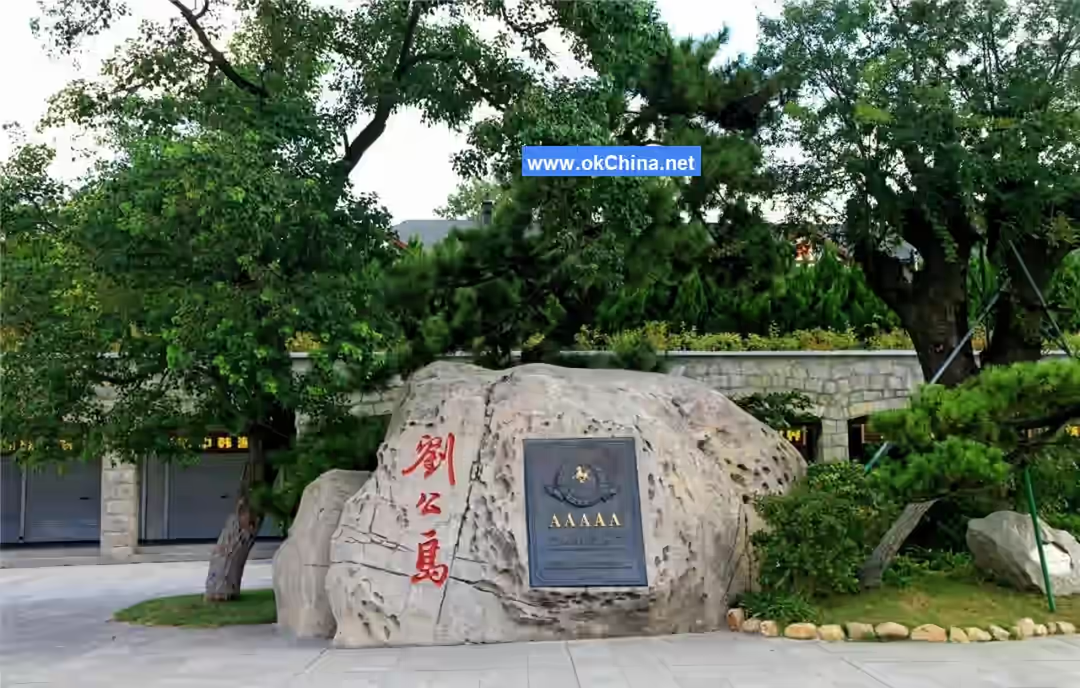
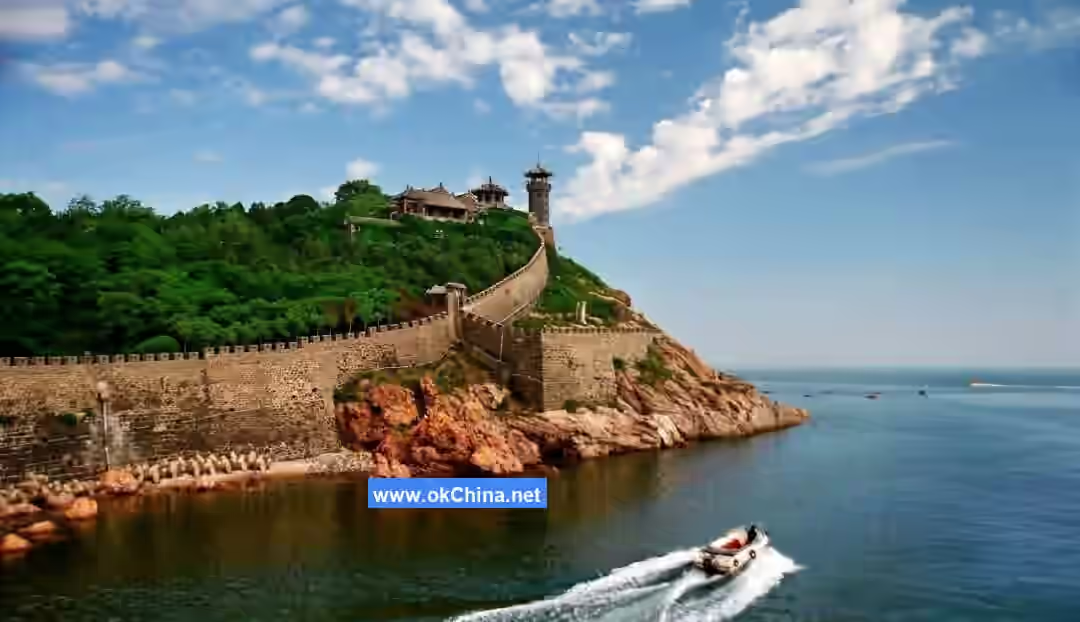
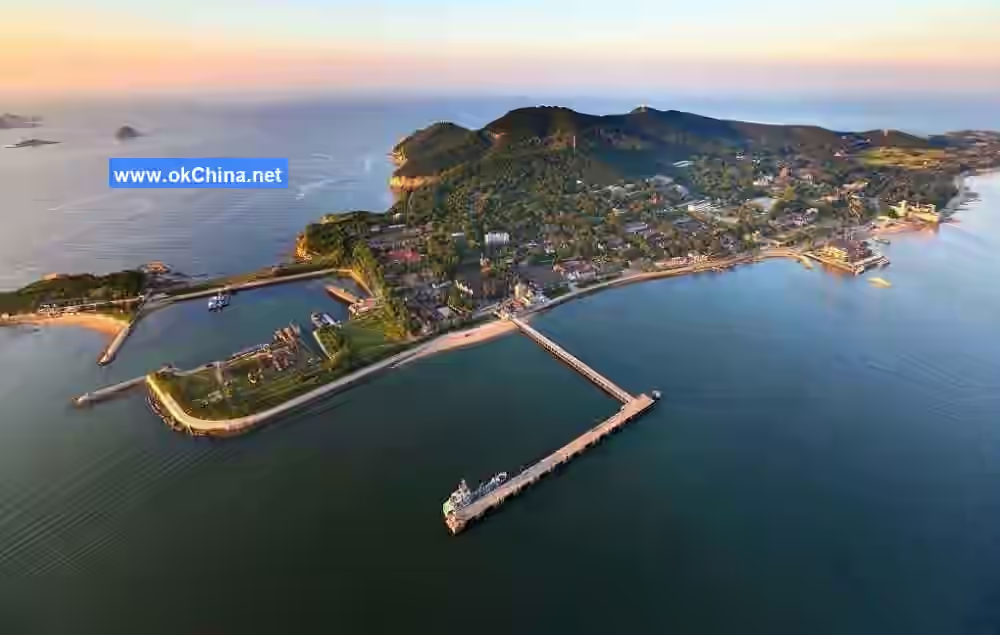
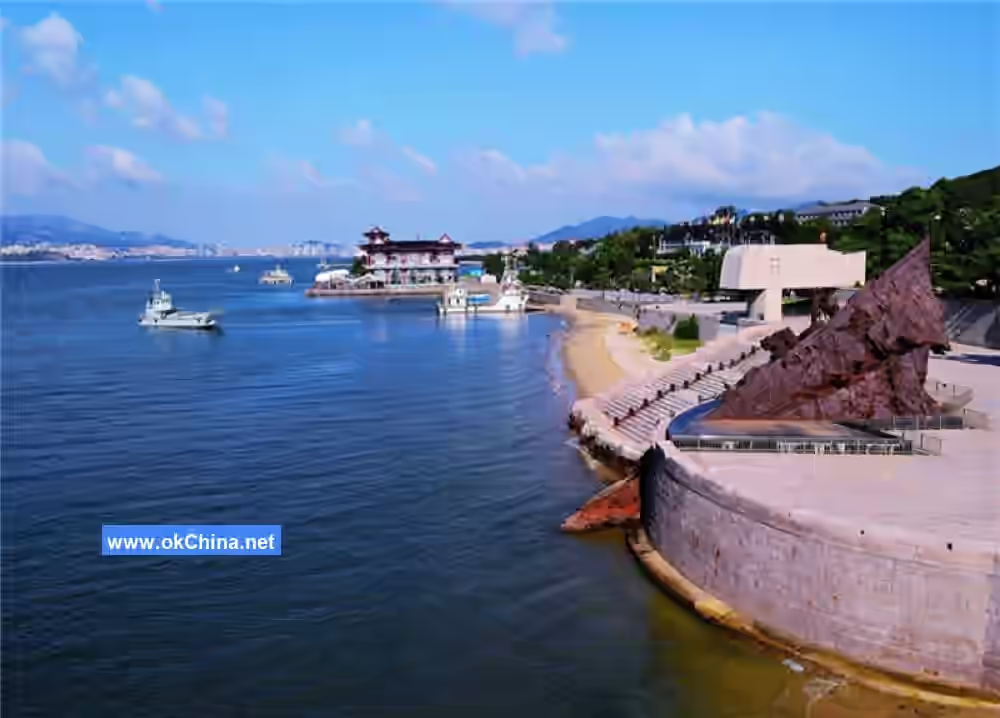
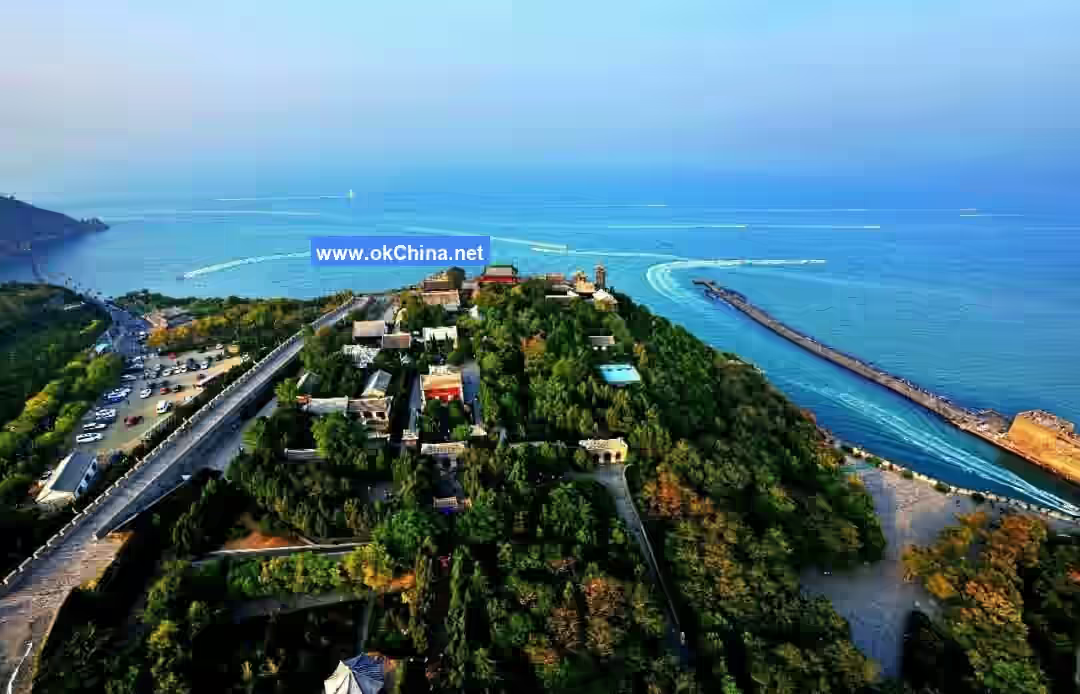
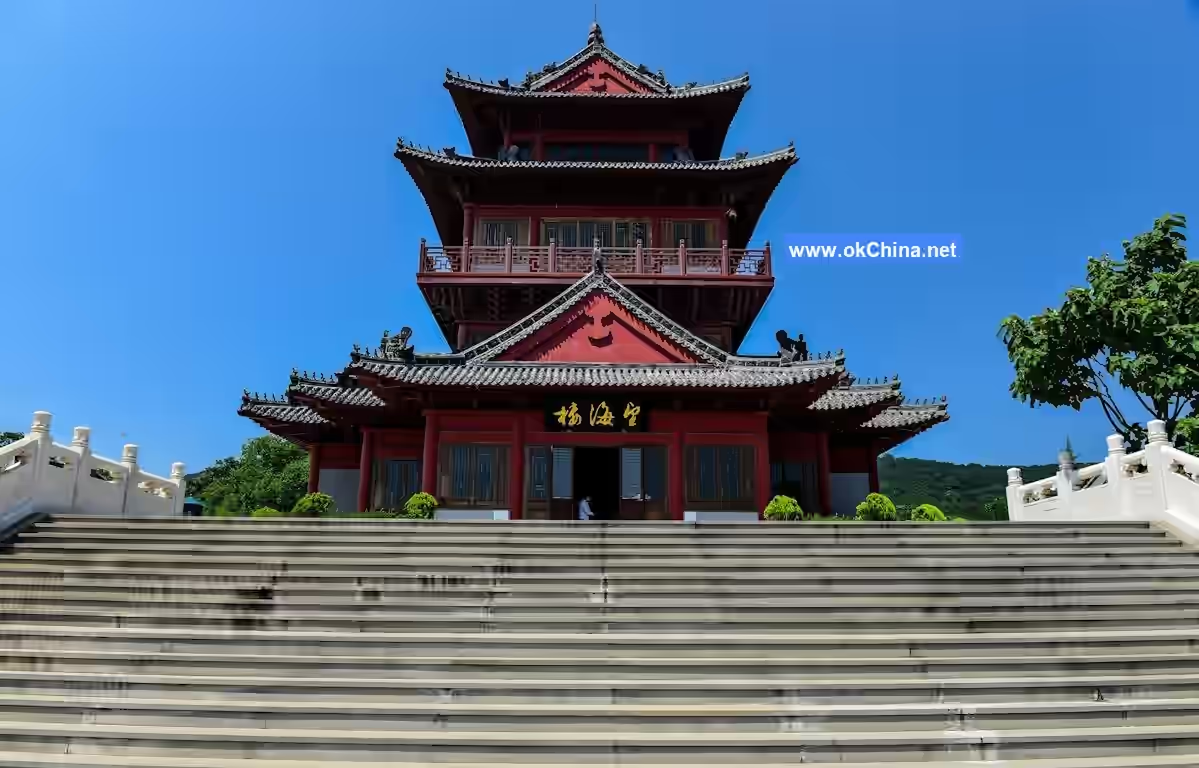
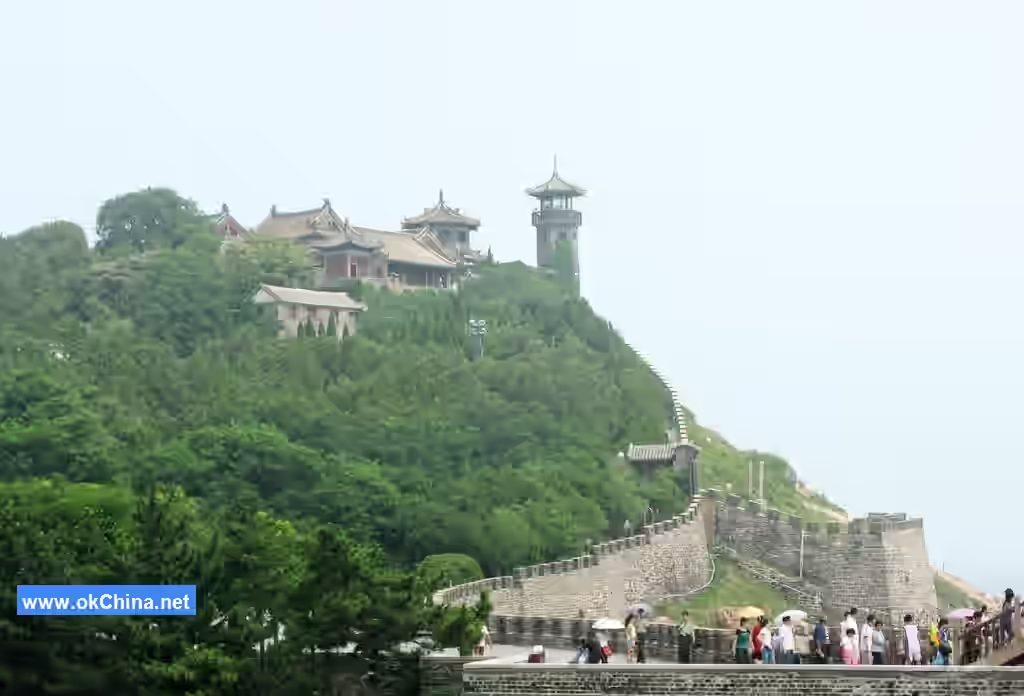
Liugong Island Scenic Area (Liugongdao Fengjingqu) is located within Weihai Bay at the eastern tip of the Shandong Peninsula. It is 2.1 nautical miles from the urban area of Weihai City. The island stretches 4.08 kilometers from east to west, with a maximum width of 1.5 kilometers from north to south, covering an area of 3.15 square kilometers. The terrain of Liugong Island is higher in the north and lower in the south. The northern part features steep cliffs, while the southern part is gentle and rolling, giving it a strategically important position for coastal defense. The island is named after "Liu Gong" (Lord Liu). Its history can be traced back to the Warring States period, and there are stories from the Han Dynasty about a benevolent couple, Liu Gong and Liu Mu, known for their charity and helping those in distress. The scenic area is divided into two main landscape groups: natural and cultural. Natural attractions include Qiding Mountain, Donghong, Lotus Flower Bay, Liugong Spring, Wuhua Stone, Banjiang Stone, and Tingtao Cliff. Cultural landscapes primarily consist of historical relics such as the Beiyang Fleet Admiralty Office, Ding Ruchang's Residence, the Iron Wharf, the Naval Academy, the Stone Wharf, and fortifications. Other attractions include the China-Japan War Museum of 1894-1895, the Sino-Japanese War Exhibition Hall, the Liugong Island Expo Garden, and the Liugong Island National Forest Park.
2. Historical Development
2.1 Historical Origins
According to records, people lived on Liugong Island during the Warring States period. Legend has it that the island was the "seaside estate of the Liu family," hence it was called Liu Island, Liujia Island, or Liugong Island. The History of Yuan refers to it as Liujia Island, while local gazetteers like the Dengzhou Prefecture Gazetteer, Wendeng County Gazetteer, and Chongming County Gazetteer refer to it as either Liu Island or Liujia Island. Another name for Liugong Island is Longgong Island (Dragon Palace Island), due to a former Dragon King Temple on the island.
Historical records indicate that during the Guangxu reign of the Qing Dynasty, the Qing government established the Beiyang Navy. From 1881 (the 7th year of Guangxu) to 1891 (the 17th year of Guangxu), facilities such as an Engineering Bureau, Machinery Factory, and Coal Depot were successively established on Liugong Island. The Beiyang Fleet Admiralty Office, the Weihai Naval School, residences for naval and army officers, barracks, the Iron Wharf, and fortifications were also constructed. The harbor housed nearly 50 warships and four army battalions.
During the First Sino-Japanese War (1894-1895), the Beiyang Fleet was completely destroyed, and Liugong Island was subsequently occupied by Japanese forces. In 1898 (the 24th year of Guangxu), Liugong Island was forcibly leased to Britain. During this period, facilities like hotels, bars, clubs, and sports grounds were built on the island. In 1930, the island was reclaimed by the Nationalist Government. In December 1948, Liugong Island was liberated.
2.2 Modern and Contemporary History
Since the founding of the People's Republic of China, Liugong Island has been a military restricted area. In April 1985, Liugong Island was officially opened to the public.
3. Geographical Environment
3.1 Location and Area
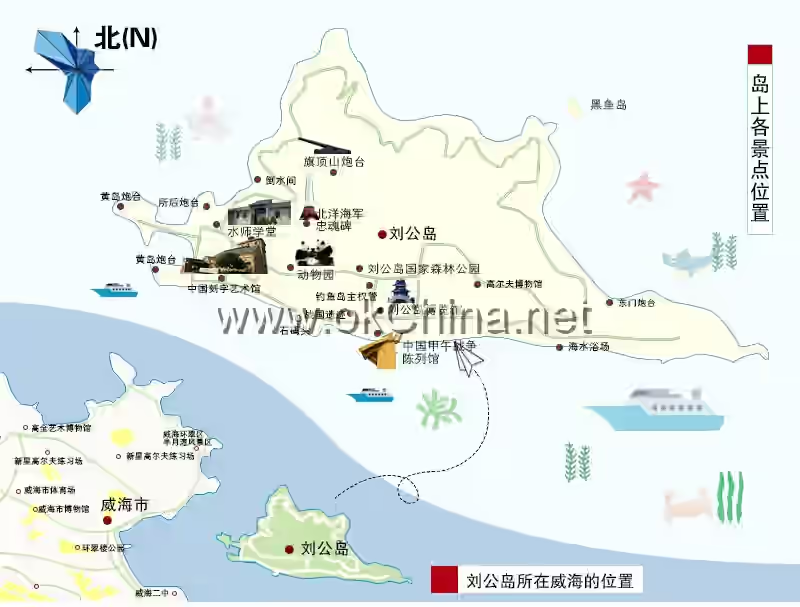
Liugong Island Scenic Area, Weihai City, is located within Weihai Bay at the eastern tip of the Shandong Peninsula, at coordinates 37°30′19.79″N, 122°11′16.81″E. It is 2.1 nautical miles from the Weihai City tourist ferry terminal. The island is 4.08 kilometers long from east to west, with a maximum width of 1.5 kilometers from north to south. Its highest point is 153.5 meters above sea level, and it covers an area of 3.15 square kilometers.
3.2 Topography and Landforms
The terrain of Liugong Island Scenic Area is higher in the north and lower in the south. The northern slope is steep and rugged with sea-eroded cliffs, while the southern slope is gentle, scenic, sheltered from wind, and sunny, making it suitable for habitation. The island is surrounded by smaller islets. To the northeast lies Heiyu Islet; to the west lies Huang Island, connected to Liugong Island; to the east lie Xiaohong Island and Dahong Island, collectively known as "Donghong." The waters around the island are dotted with visible and submerged rocks.
3.3 Climatic Characteristics
Liugong Island Scenic Area experiences distinct seasonal changes and monsoon shifts. Due to its proximity to the Yellow Sea and the moderating influence of the ocean, it exhibits maritime climate features such as cool springs, mild summers, warm autumns, temperate winters, small diurnal temperature variations, a long frost-free period, frequent winds, and high humidity. The island's climate is mild, with an annual average temperature around 12 degrees Celsius.
4. Main Attractions
4.1 Overview
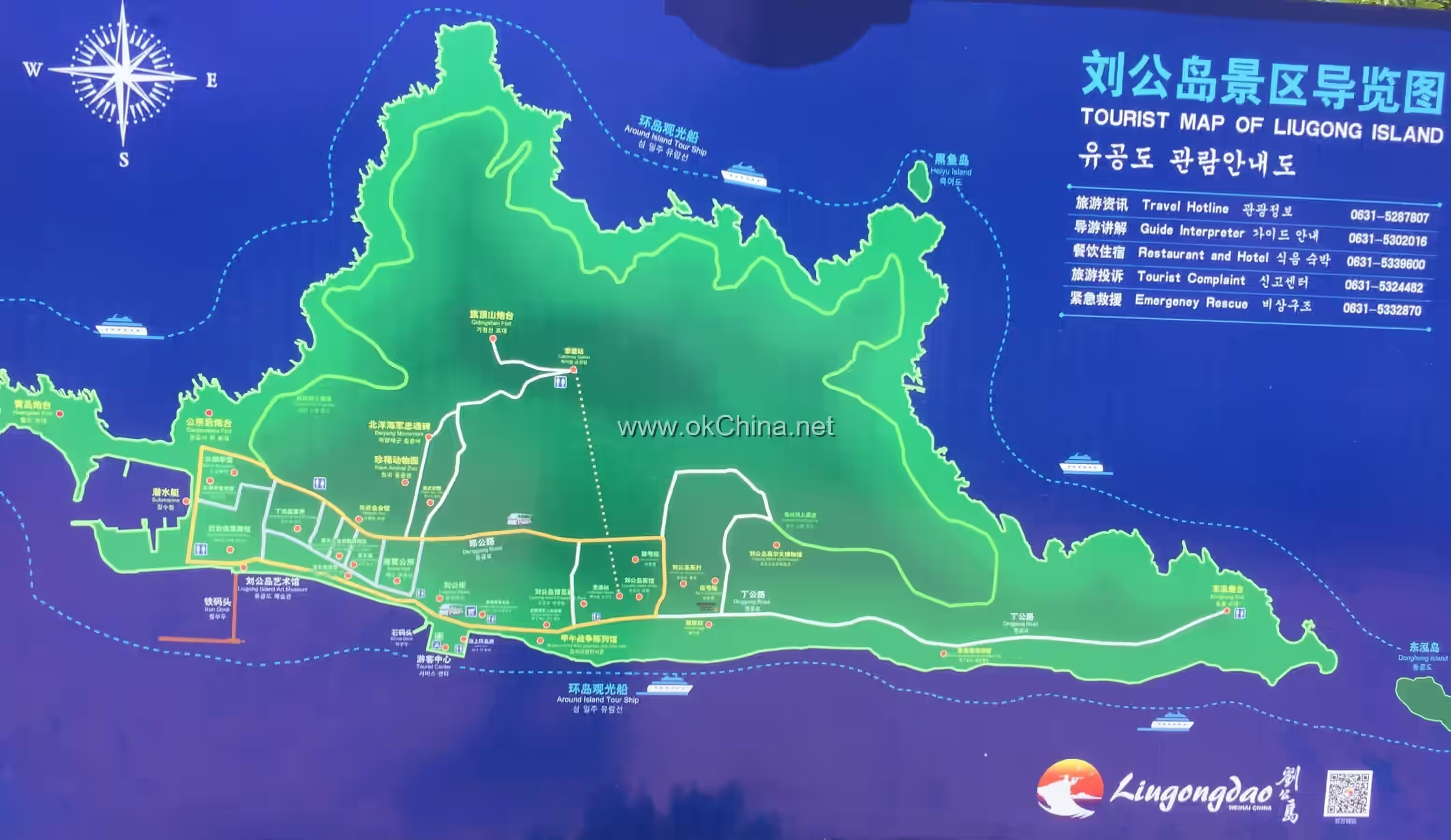
The natural attractions of Liugong Island Scenic Area include Qiding Mountain, Donghong, Lotus Flower Bay, Liugong Spring, Wuhua Stone, Banjiang Stone, and Tingtao Cliff. The cultural landscapes primarily consist of historical relics such as the Beiyang Fleet Admiralty Office, Ding Ruchang's Residence, the Iron Wharf, the Naval Academy, the Stone Wharf, and fortifications.
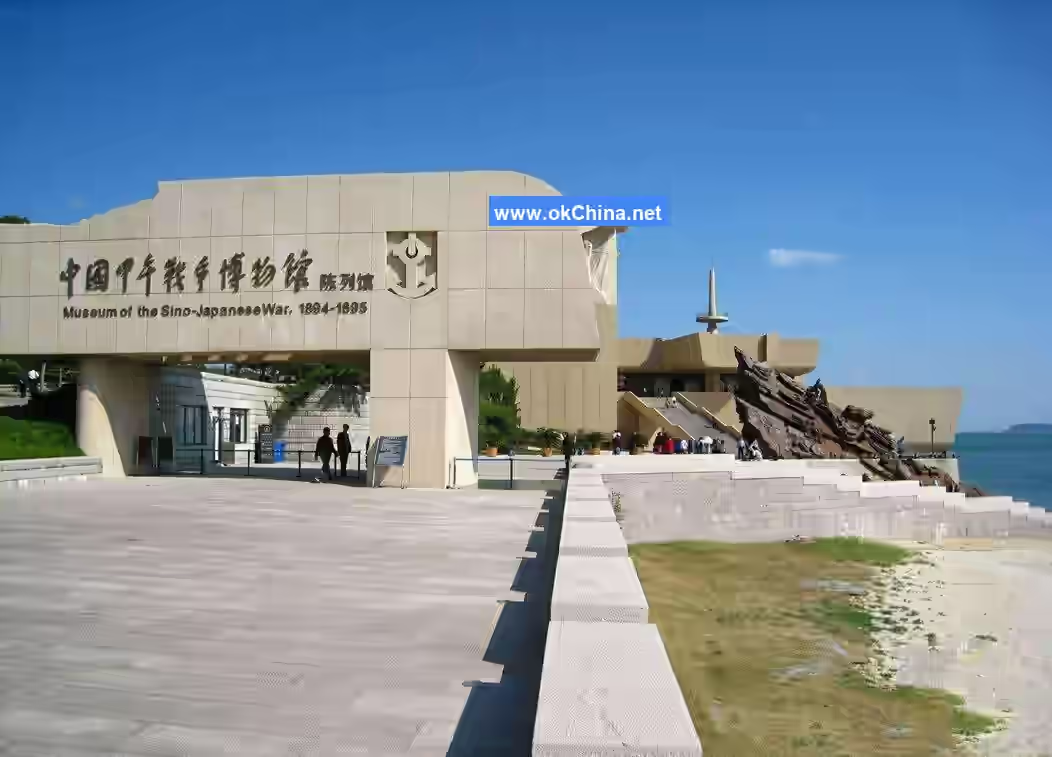
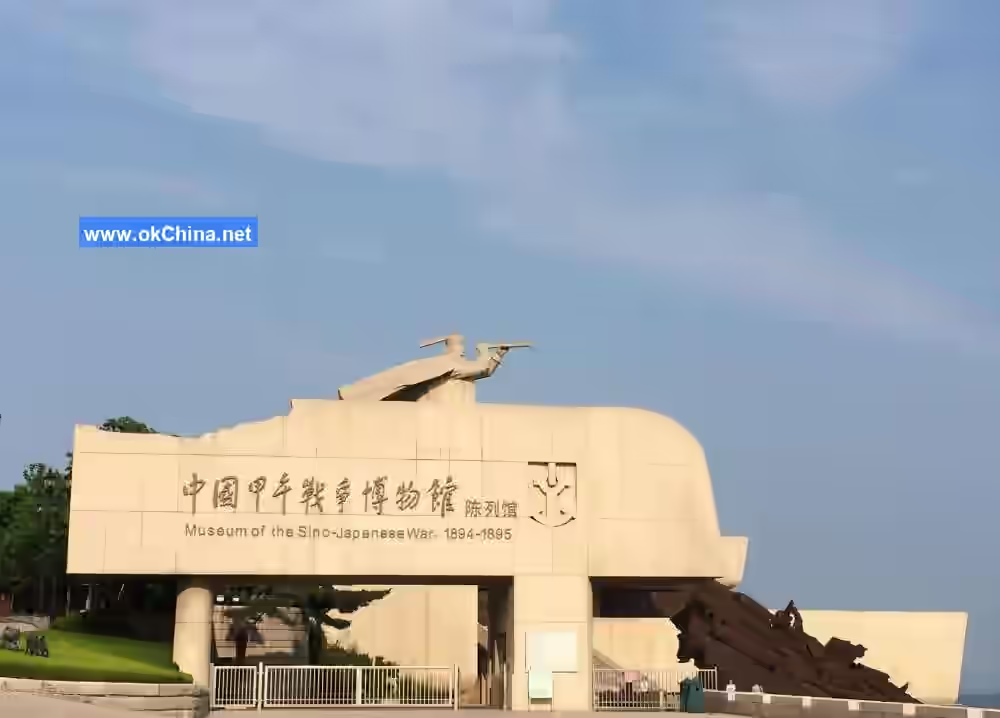
4.2 China-Japan War Museum of 1894-1895
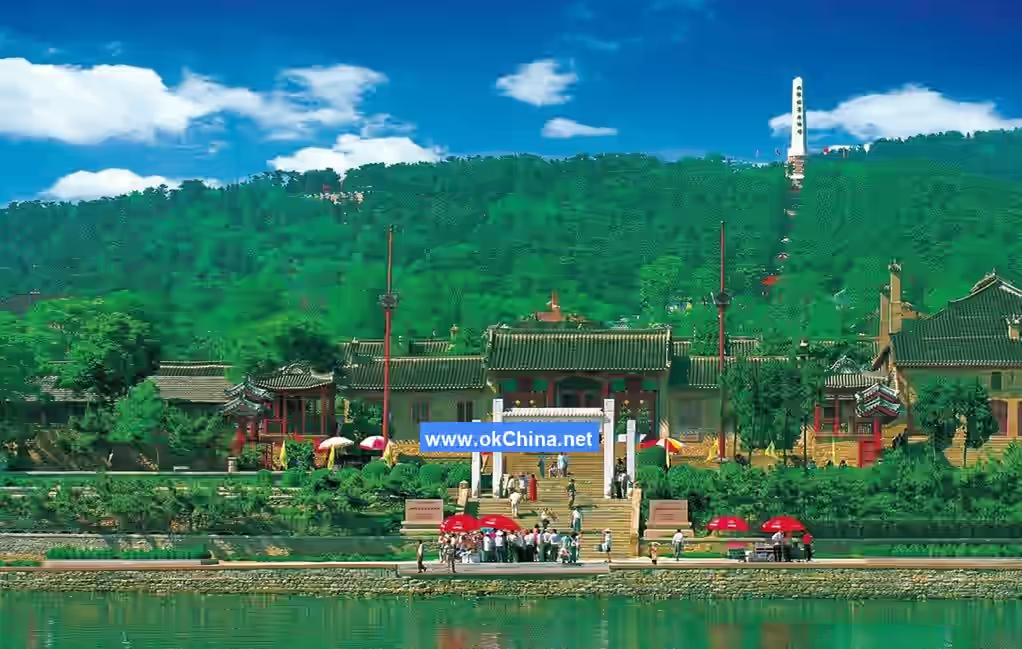
This is a National First-Class Museum, comprising the Beiyang Fleet Admiralty Office, the Dragon King Temple, the Ding Ruchang Memorial Hall, and the Weihai Naval Academy. It is the specialized management and protection institution for the "Liugong Island Sino-Japanese War Memorial Site," a National Key Cultural Relics Protection Unit. It has been designated as a National Youth Education Base, a National Primary and Secondary School Patriotic Education Base, a National Patriotic Education Demonstration Base, a National Advanced Unit for National Defense Education, and a National Red Tourism Classic Scenic Area.
4.3 Exhibition Hall of the China-Japan War Museum of 1894-1895
This is a comprehensive exhibition hall fully showcasing the history of the First Sino-Japanese War. Through precious historical photographs, restored scenes, 3D films, sound and light effects, and multimedia integration, it vividly presents battle scenes such as the Battle of the Yellow Sea and the Defense of Weihaiwei.
4.4 Beiyang Fleet Admiralty Office
Also known as the Naval Yamen (Office), it was completed in 1891 (the 17th year of Guangxu). Located on a coastal highland on the southern slope of western Liugong Island, it faces south with mountains behind and the sea in front, covering an area of 17,000 square meters. It was the command institution of China's first modern regular navy. As a representative historical site of the "Liugong Island Sino-Japanese War Memorial Site," it is one of the most completely preserved military yamen in China. Because it was the headquarters of Fleet Admiral Ding Ruchang, it is also popularly known as "Ding Gong's Mansion." It displays over 300 pieces of replica classical furniture, 18 historical statues, more than 200 various cultural relics, and over 1,500 auxiliary exhibits including porcelain, calligraphy and paintings, couplets, and firearms, recreating the historical scene of the Beiyang Navy at its peak and making it a unique historical specimen of the Sino-Japanese War period.
4.5 Historical Choice Exhibition Hall
This is the core part of the Jiaodong (Weihai) Party Spirit Education Base. The hall is divided into five main sections: The Arduous Exploration of the Path to National Salvation; History Focusing on the Kuomintang and the Communist Party; The Suffering-Enduring Communist Party of China; The People United, Marching Toward New China; and Writing a Glorious Historical Answer Sheet.
4.6 Dragon King Temple
Located 100 meters west of the Beiyang Fleet Admiralty Office, the Dragon King Temple was initially built in the late Ming Dynasty. In the late Qing Dynasty, when coastal defense was being established and Liugong Island became a base for the Beiyang Navy, the stationed Beiyang Navy and Beiyang Guard forces raised funds to renovate it. It is a brick-and-wood structure with a post-and-lintel frame, laid out as a traditional courtyard (siheyuan). It consists of a mountain gate (reverse hall), east and west wing rooms, and a main hall, with two courtyards front and back, totaling 14 rooms. Including the opera stage in front of the temple, it covers 1,700 square meters and is a Taoist temple. The main hall enshrines a statue of the Dragon King of the East Sea in the center, with yakshas and a turtle minister standing on either side. The interior walls on the east and west sides are painted with murals depicting stories from Romance of the Three Kingdoms and Investiture of the Gods.
4.7 Ding Ruchang Memorial Hall
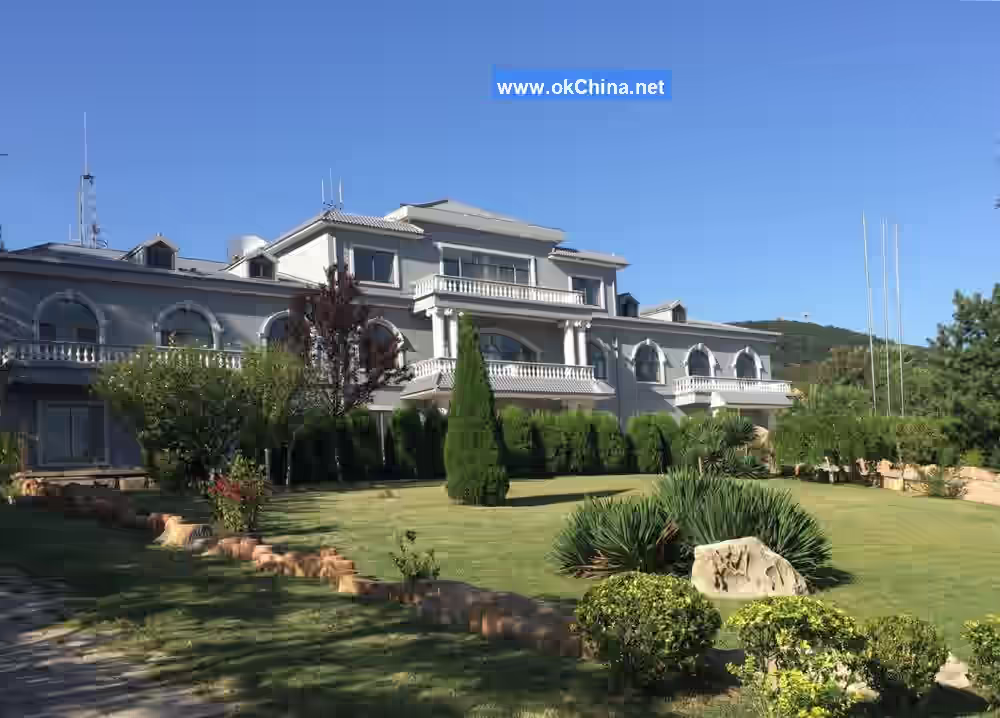
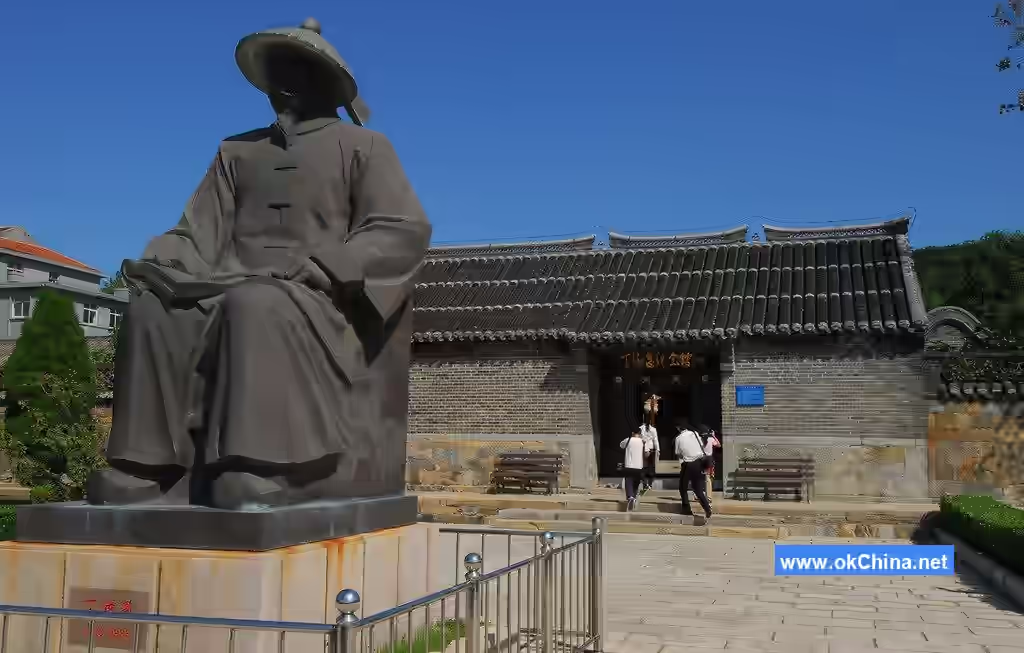
Originally built in 1889 (the 15th year of Guangxu), it is located at the western end of Liugong Island, about 200 meters east of the Beiyang Fleet Admiralty Office. Facing south, it is a brick-and-wood structure with a post-and-lintel frame. The residence covers 7,000 square meters. Its layout is similar to Ding Ruchang's former residence in Wanglangzhong Village, Chaoxian County, Anhui Province. It is divided into three sections: left, middle, and right courtyards. The west courtyard was the private residence, the east courtyard housed attendants, and the middle courtyard served as Ding Ruchang's office, living quarters, and reception area. Gatekeeper's rooms and a study flanked the main gate. In the courtyard grows a century-old wisteria planted by Ding Ruchang himself, which blooms profusely every May, filling the air with fragrance. After the formation of the Beiyang Navy, Ding Ruchang lived here with his family for over six years, hence it is also called the "Little Ding Gong Mansion."
4.8 Weihai Naval Academy
Located 150 meters west of Ding Ruchang's Residence, the Weihai Naval Academy was established on land purchased from civilians at the western end of Liugong Island under the order of Beiyang Minister Li Hongzhang by Fleet Admiral Ding Ruchang. Construction began in 1889 (the 15th year of Guangxu) and was completed the following year. It comprised 63 buildings covering an area of 18,000 square meters. In its inaugural year, it enrolled 36 navigation students. When the First Sino-Japanese War broke out in 1894 (the 20th year of Guangxu), the first class of students graduated and were assigned to various warships to participate in the war. In February of the following year, after the fall of Liugong Island, many of the academy's buildings were destroyed by war, and the academy ceased operations. This academy was the fourth naval academy established in the late Qing Dynasty, following the Fuzhou Naval Academy, the Tianjin Naval Academy, and the Guangdong Naval and Land Forces Academy. Because it was located on Liugong Island, it was also known as the "Liugong Island Naval Academy." It is currently the only traceable site of a modern naval academy in China.
4.9 Liugong Island Expo Garden
Covering an area of 50,000 square meters, the Liugong Island Expo Garden is divided into six exhibition zones with nineteen exhibition halls. Utilizing a combination of high-tech and traditional craftsmanship display techniques, it comprehensively and multi-dimensionally presents the three major cultural themes of Liugong Island: the Liu Gong Culture, the Sino-Japanese War of 1894-1895, and the British Lease Period. It is known as the encyclopedia for understanding Liugong Island.
4.10 Liugong Island Whale Museum
This is a marine science exhibition hall primarily displaying physical specimens. The museum houses the skin, skeleton, and specimens of important organs of the world's largest sperm whale ever brought ashore (approximately 19.6 meters long, weighing 50.1 tons).
4.11 Diaoyu Islands Sovereignty Museum
Co-organized by the State Oceanic Administration and the Liugong Island Management Committee, this is the first professional venue in China to systematically display the history and sovereignty of the Diaoyu Islands. Through authentic historical photographs, precious historical materials, and detailed texts, it elaborates on the vicissitudes of China's inherent territory, the Diaoyu Islands, from three perspectives: possessing sovereignty, proclaiming sovereignty, and defending sovereignty.
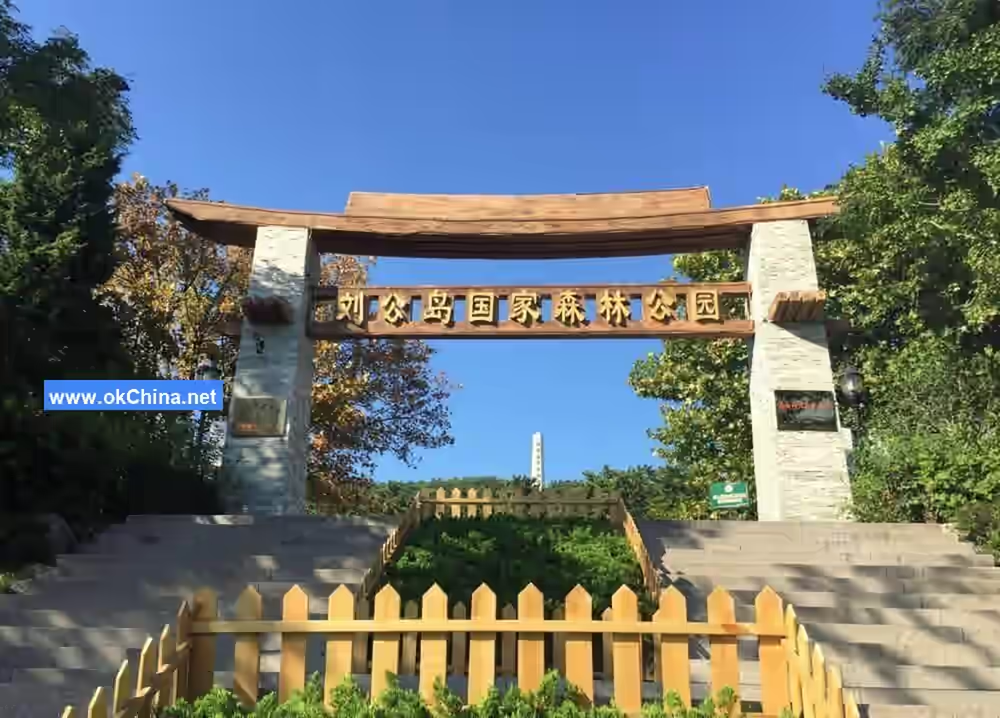
4.12 Liugong Island National Forest Park
Liugong Island National Forest Park is the first national maritime forest park named by the Ministry of Forestry. It contains approximately 19 families and over 80 species of trees, more than 50 species of wild flowers and plants, and over 50 species of birds.### 4.13 Qiding Mountain Qiding Mountain is the highest peak on Liugong Island, with an elevation of 153.5 meters. The Qiding Mountain Fort is one of the larger among the six forts built by the Qing garrison on the island. Its design is ingenious, robust, and practical, overseen by the German military advisor Constantin von Hanneken, who served as the chief military instructor for the Beiyang Navy at the time. The fort consists of two parts: underground shelters and above-ground gun emplacements. It was equipped with four 240mm flat-trajectory guns manufactured by the German Krupp armaments factory. These large-caliber guns had formidable destructive power and, in coordination with the coastal forts to the north and south, could effectively blockade the northern and southern entrances of Weihai Bay. The barracks, shelters, and ammunition depots were located at the southern base of the fort, built against the cliff, making them highly concealed. The area is surrounded by lush greenery and beautiful scenery, with mulberry trees, locust trees, wild apricots, bamboo, and other vegetation creating a verdant landscape.
4.14 Dong Village
Dong Village is currently the only village on the island, offering a very tranquil environment where villagers work from sunrise to sunset. The architectural style here blends British influences with the characteristics of Jiaodong folk dwellings. The sounds of birds and cicadas, along with the curling smoke from kitchen chimneys, slowly unfold a serene picture of rural life.
4.15 Liugong Spring
Legend has it that Liugong Spring was named after a man named Liu who dug the spring to fetch water here. The spring water is soft, smooth, and has a sweet, mellow taste.
4.16 Colorful Stones
Along the Huanshan Road in the Liugong Island Scenic Area of Weihai City, which runs close to the cliffs, several colored stone lines extend from the cliffs down to the seabed. Soaked and splashed by water and waves, these stones display colors such as red, yellow, blue, and white. This spot is known as the "Colorful Stones."
4.17 Tingtao Cliff
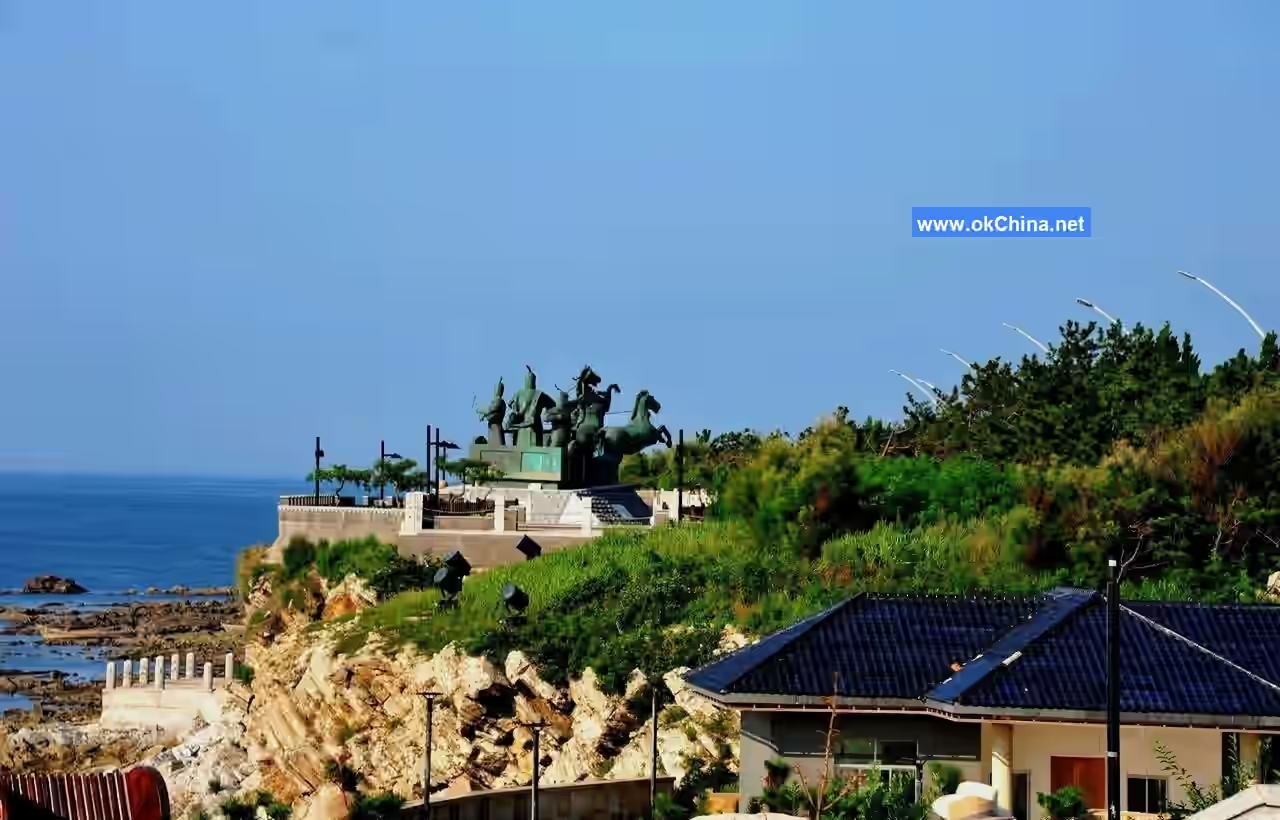
Tingtao Cliff is located on the northern slope of the Liugong Island Scenic Area in Weihai City. The area features lush green pines and cypresses on the mountain, with steep cliffs and precipices below. When the sea breeze blows, roaring waves crash against the shore, and the sound of the wind through the pines resembles the thunderous gallop of ten thousand horses.
5. History and Culture
5.1 The First Sino-Japanese War
Liugong Island served as the birthplace of the Qing Dynasty's Beiyang Fleet and an ancient battlefield of the First Sino-Japanese War. Following the defeat in the Second Opium War, the Qing court was profoundly shaken and began establishing a modern navy to defend against foreign maritime aggression. In the 14th year of the Guangxu reign (1888), the Beiyang Navy was formally established on Liugong Island in Weihai. Initially, it comprised 25 vessels with a total displacement of over 40,000 tons, ranking fourth in the world and first in Asia. This included nine battleships organized into three squadrons—left wing, center, and right wing—each with three ships. Each ship was structured as a battalion, commanded by officers with titles such as Zongbing, Fujiang, and Canjiang. Additionally, there were six gunboats, seven torpedo boats, three training ships, and two transport ships, collectively known as "Seven Zhen, Eight Yuan, One Dakang, with Chaoyong, Yangwei, and Caogiang." From then on, Liugong Island became the fleet's berthing and supply base and the headquarters of Ding Ruchang, the commander-in-chief of the Beiyang Navy. Facilities such as the Engineering Bureau, Machinery Bureau, Coal Depot, Telegraph Office, and Lighthouse were established. The island also featured the Navy Office, Iron Wharf, Majingzi Dockyard, a naval hospital, and a naval academy. Six forts were constructed at Huangdao, behind the Navy Office, Qiding Mountain, Yingmen Cave, Nanzui, and Donghong, and two battalions of the Beiyang Guard Army were stationed there, making it a heavily fortified military port.
At its peak, the Beiyang Fleet visited places such as Taiwan, Vladivostok in Russia, Nagasaki and Sasebo in Japan, Busan and Incheon in Korea, the Philippines in Southeast Asia, Java in Indonesia, Penang in Malaysia, and even reached the fringes of the Indian Ocean. Its presence in these locations greatly inspired local Chinese communities. However, this modern naval fleet suffered a devastating defeat in the First Sino-Japanese War. On February 16, 1895 (the 21st year of the Guangxu reign), Qing forces signed the surrender agreement. The following day, Japanese troops landed on Liugong Island, taking over all military installations and a large quantity of military supplies. They captured ten remaining warships of the Beiyang Fleet in the harbor: Zhenyuan, Jiyuan, Pingyuan, Guangbing, Zhendong, Zhenxi, Zhennan, Zhenbei, Zhenzhong, and Zhenbian, leaving only the Kangji ship to be returned to China. In April of the same year, the Treaty of Shimonoseki, which humiliated the nation and forfeited its sovereignty, was signed, marking the end of the First Sino-Japanese War. The fierce struggle between the Beiyang naval and land forces and the Japanese army ultimately concluded with a heroic yet tragic outcome. The once-flourishing Beiyang Fleet came to an end. This site, which encapsulates the rise and fall of the Beiyang Navy and bears witness to the humiliation and lessons of the Chinese nation, was designated as a National Key Cultural Relics Protection Unit by the State Council on January 13, 1988.
5.2 Related Figures
5.2.1 Ding Ruchang
Ding Ruchang (November 18, 1836 – February 12, 1895) was the commander-in-chief of the late Qing Beiyang Navy. His courtesy name was Yuting, and he was a native of Lujiang, Anhui. He initially joined the Taiping Rebellion forces in his early years, later defected to the Xiang Army, and soon transferred to the Huai Army, participating in campaigns against the Taiping and Nian rebels, eventually rising to the rank of Jiming Tidu (provisional commander). In 1879 (the 5th year of the Guangxu reign), he was transferred by Li Hongzhang to serve in Beiyang coastal defense. In January 1881, he led over 200 officers and sailors of the Beiyang Navy to England to take delivery of the cruisers Chaoyong and Yangwei, which the Qing government had ordered, and bring them back to China. In 1888, when the Beiyang Navy was formally established, he was appointed its commander-in-chief. During his tenure, he made significant contributions to the development of the Beiyang Navy and coastal defense.
After the Beiyang Fleet suffered heavy losses in the Battle of the Yalu River, he was dismissed from his post but allowed to remain in his position. From January 30 to February 11, 1895, during the Battle of Weihaiwei, he commanded the Beiyang Fleet in resisting the Japanese siege. However, the fleet remained passive in the harbor awaiting reinforcements, ultimately leading the Beiyang Navy into a desperate situation. Adhering to his stance of resisting the enemy and serving his country, he sternly refused the surrender advice from Japanese Combined Fleet Commander Itō Sukeyuki and the pressure to surrender from foreign advisors within the Beiyang Navy, such as William Ferdinand Tyler. Facing the crisis without fear, he steadfastly remained at his command post. With no hope of reinforcements, he took opium to end his life as an apology to the nation. After Ding Ruchang's death, officers under his command forged his name to sign the "Weihai Surrender Treaty" with the Japanese. The Beiyang Navy, which Li Hongzhang had painstakingly built over many years, was completely annihilated.
5.3 Historical Legends
The original site of Weihai City was called Shiluo Village during the Han Dynasty. By the end of the Eastern Han Dynasty, this area belonged to Donglai Commandery at the eastern tip of the Shandong Peninsula and was part of the fiefdom of the imperial Liu family. Liu Min, the son of Emperor Shao of Han, Liu Bian, fled to the remote and desolate Shiluo Village to escape Cao Cao's pursuit. He made a living by fishing at sea and often went to the opposite island to reclaim land for farming and to escape the summer heat. At that time, Liugong Island was referred to as the "Liu Family Estate," also known as Liu Family Island or Liu Island. In 238 AD, a merchant ship traveling north from the south encountered a storm near Liugong Island. For several days, no land was in sight, and the crew ran out of food and water. One night, a sailor suddenly saw a flickering light ahead in the darkness. The crew rowed vigorously and finally saw an island with statues of an elderly couple, Liu Gong and Liu Mu. An old man stood on the cliff shore, holding a lantern to guide the ship. Later, the elderly couple provided the ship with food and fresh water. The crew was immensely grateful and asked for the old man's surname. He replied, "Liu," and then disappeared. Convinced that they had received divine assistance, the crew bowed in reverence before departing. People, moved by Liu Gong's kindness and virtue, built a Liu Gong Temple on the island, housing statues of Liu Gong and Liu Mu, and held sacrifices throughout the year. From then on, the island came to be known as Liugong Island.
Comments
Post a Comment