
Liu Bowen's Hometown
1. Introduction
The Liu Bowen's Hometown Scenic Area in Wenzhou City, abbreviated as Liu Bowen's Hometown, is located in Wencheng County, Wenzhou City, Zhejiang Province. It covers a total area of 4.81 square kilometers and consists of two core scenic areas: the Liu Ji Temple and the Baizhangji Waterfall. With its beautiful ecological environment, profound cultural heritage, rich folk customs, and distinctive regional characteristics, it is a comprehensive tourism and leisure resort destination where cultural and natural landscapes complement each other, integrating diverse cultures.
2. Geographical Location
Baizhangji Town, Wencheng County, Wenzhou City, Zhejiang Province
Main Attractions
3.1. Liu Bowen's Hometown Scenic Area
3.1.1 Liu Ji Temple
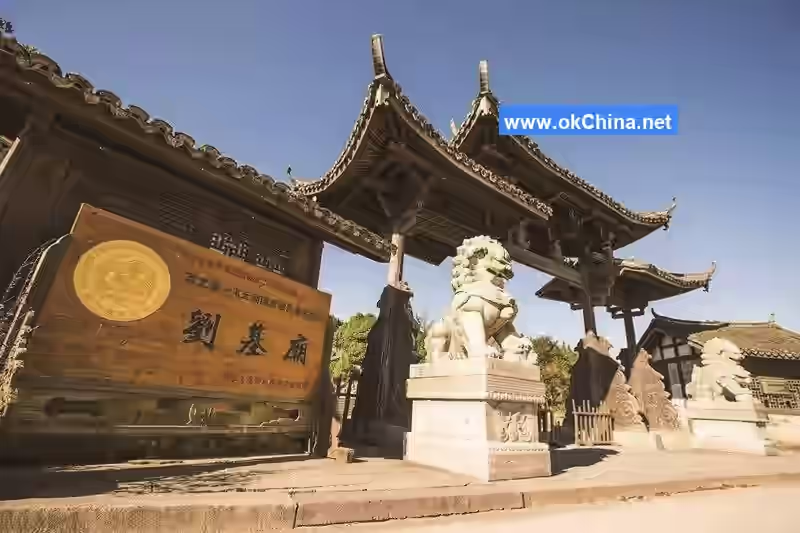
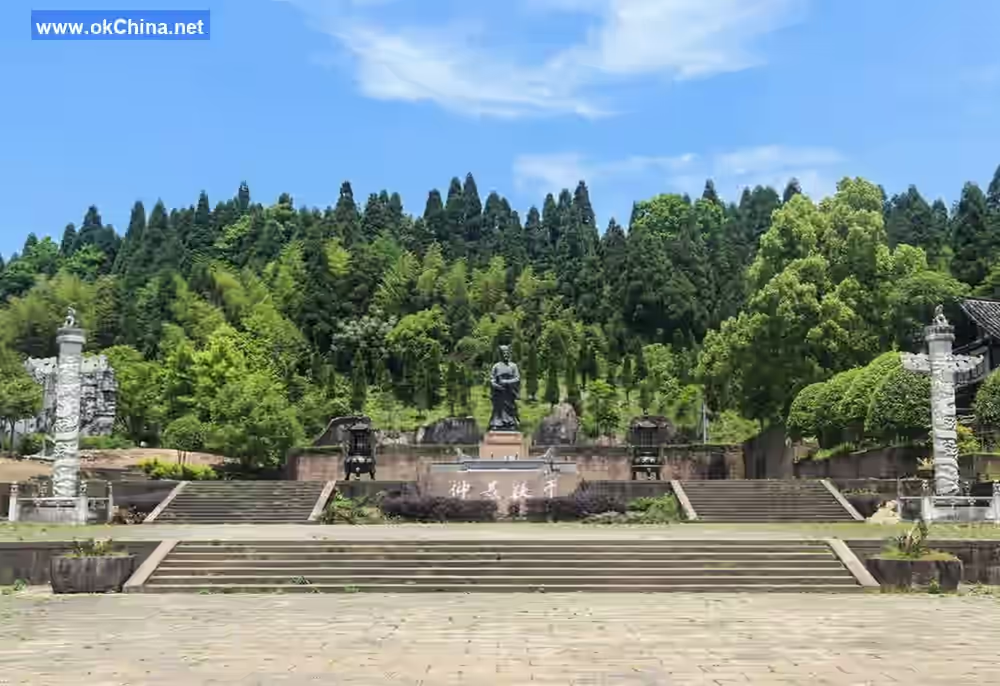
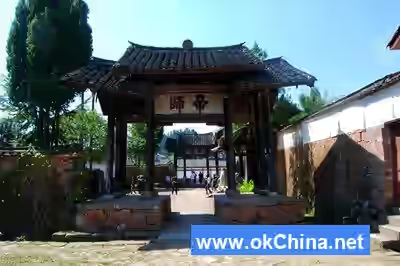
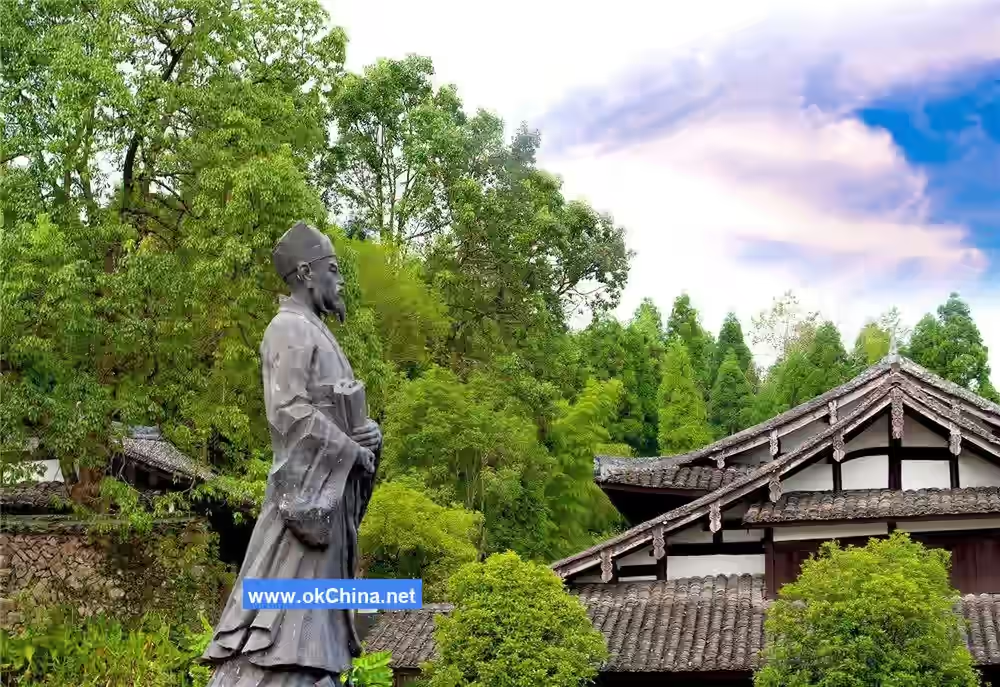
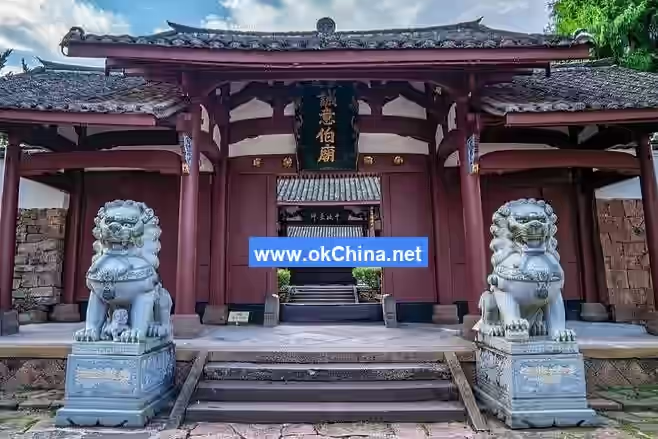
The Liu Ji Temple faces south and consists of a screen wall, memorial archways, the main gate, the ceremonial gate, wing rooms, the main hall, and the Zhuiyuan Ancestral Hall, covering an area of 3,024 square meters. The temple is surrounded by a wall built with stone blocks. The screen wall is integrated with the stone block wall, with four pairs of flagpole stones standing in front of it. The two wooden memorial archways, "Imperial Tutor" and "Royal Assistant," share the same structural design and are located on the east and west sides outside the main gate of the Liu Ji Temple. The archways are horizontally rectangular in plan, with eight pillars, three bays, and three stories. The main gate is a wooden structure with a three-gable Xieshan roof, three bays wide, and three columns deep with five purlins. The gable walls on both sides are embedded with three stone tablets, recording the temple's renovations during the Ming Dynasty's Tianshun era and the Republic of China period. The ceremonial gate features a three-gable Xieshan roof with nine bays. The beam frames of the central and side bays are five-beam structures with single-step extensions at the front and back, all shaped like crescent beams. Horizontal plaques inscribed with "通天地人" (Master of Heaven, Earth, and Man) and "千秋景仲" (Eternal Admiration) hang on the front and back golden pillar architraves of the central bay. The main hall, the principal structure of the temple, has a double-eave hip-and-gable roof, seven bays wide with two corridors, and a beam frame depth of sixteen purlins. The architraves and pillar couplets bear numerous horizontal plaques and couplets inscribed by famous figures from the Ming Dynasty and modern times. The Zhuiyuan Ancestral Hall, added in the 16th year of the Republic of China (1927), enshrines Liu Ji's ancestors from seven generations above. It is a three-bay building with a Xieshan roof.
3.1.2 Liu Ji's Tomb
Liu Ji's Tomb faces east and covers an area of 816.5 square meters. It is surrounded by a wall built with stone blocks and features two levels of worship platforms. The grave mound is semicircular, shaped like an armchair, commonly known as a "chair tomb." Notably, there are no symbolic markers indicating the tomb owner's status, such as stone statues, stone figures, or memorial archways, making it extremely simple and unadorned.
3.1.3 Liu Ji's Former Residence
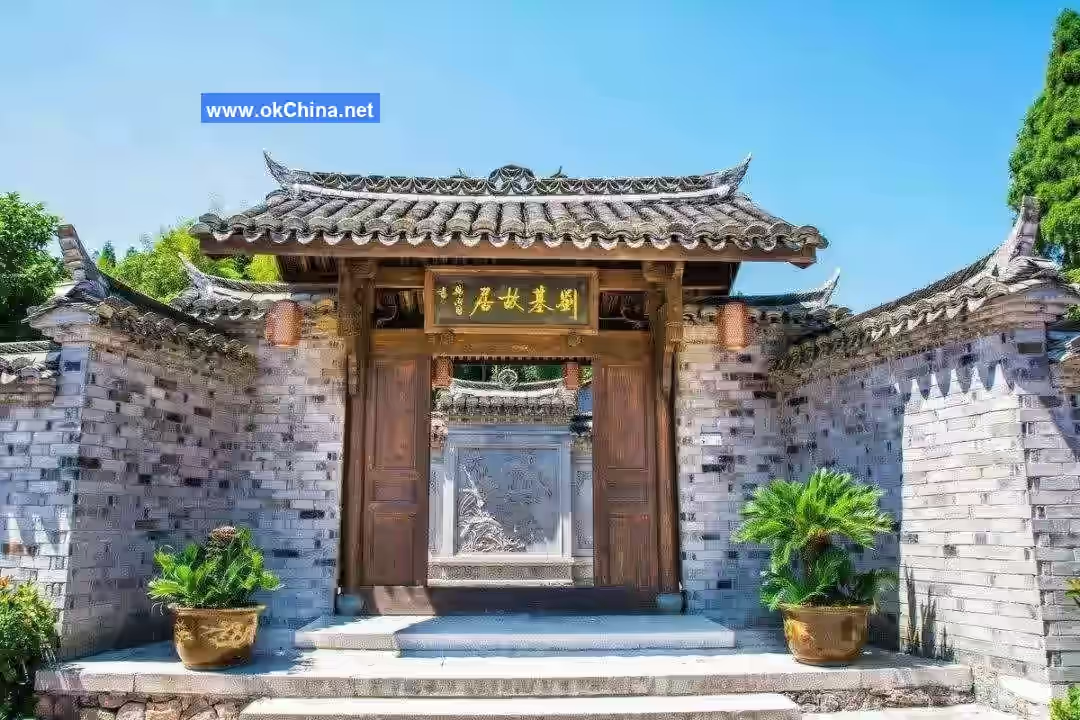
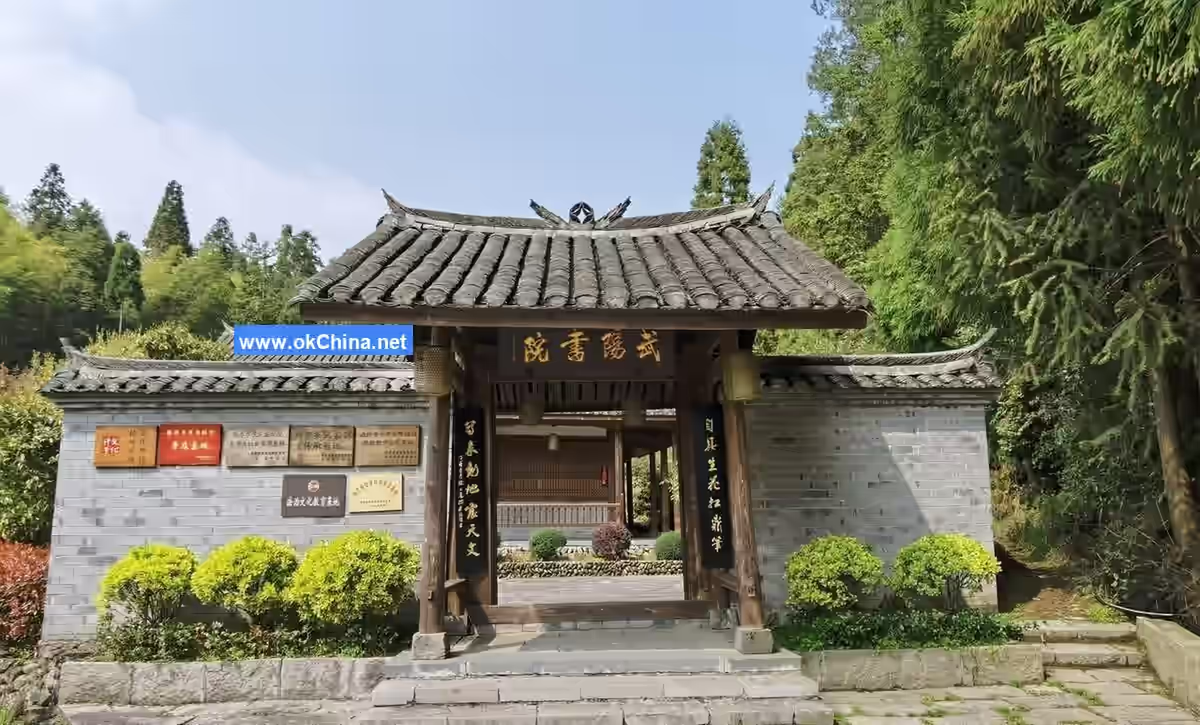
Liu Ji's Former Residence is located in Wuyang Village, Nantian Town, 5 kilometers from Nantian Town. The village lies in a small valley surrounded by five peaks, commonly known as the Five Horn Immortal Peaks, which resemble slightly curved fingers, with the palm being Wuyang Village, hence also called the Five Finger Peaks. The central peak is the highest, with an elevation of 982 meters, offering panoramic views of Qingtian and Jingning counties from its summit. The site of Liu Ji's Former Residence is at the foot of the central peak and is a county-level key cultural relics protection unit. Remaining artifacts include the stele recording the construction of his house after Liu Ji resigned from office and retired at the age of 48, as well as a stone mortar. According to The History of Ming·Biography of Liu Ji: "In the first month of the fourth year of Hongwu, he was granted retirement. He only drank wine and played chess, never speaking of his merits. The county magistrate sought an audience but could not obtain it, so he disguised himself as a commoner to visit. Liu Ji was washing his feet and had his nephew lead the magistrate into the thatched cottage." This illustrates the simplicity of Liu Ji's dwelling and the nobility of his character.
3.1.4 Liu Bowen's Reading Path
Liu Bowen's Reading Path is located on the eastern edge of Wuyang Village. It is a rugged, narrow trail leading directly to the Shimen Cave in Qingtian, approximately 20 kilometers long. The Liu Family Genealogy records: "In the Dingmao year of the Yuan Dynasty's Taiding era (1327), the master studied at Shimen Cave under Mr. Zheng Yuanshan, styled Fuchu." Based on calculations, Liu Ji was 17 years old at that time. Descendants of the Liu family recount: "Our ancestor took the narrow trail to Shimen Cave to study, rarely taking a boat from Linggen via Qingtian to Shimen."
3.2 Baizhang Flying Waterfall Scenic Area
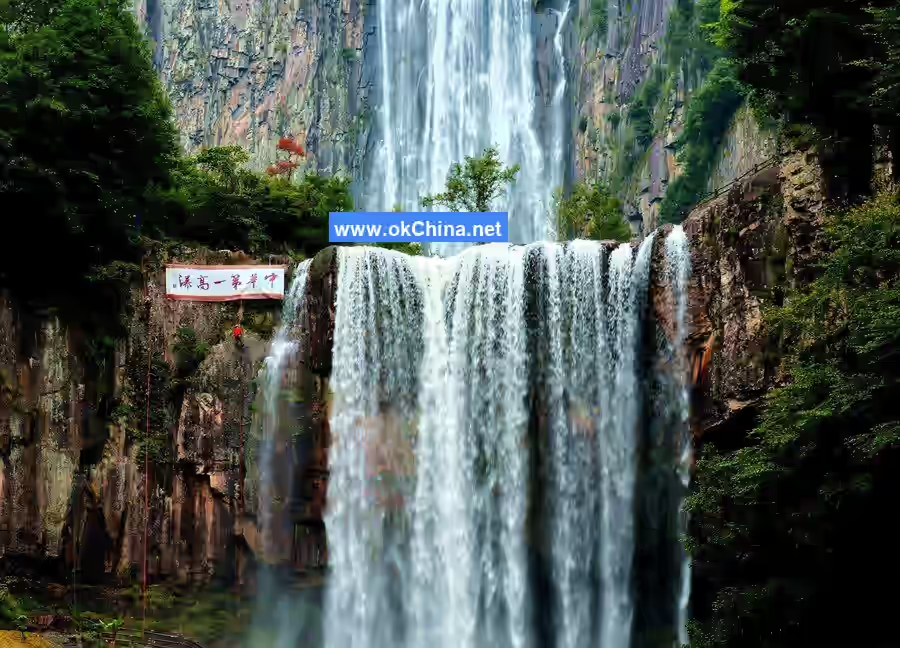
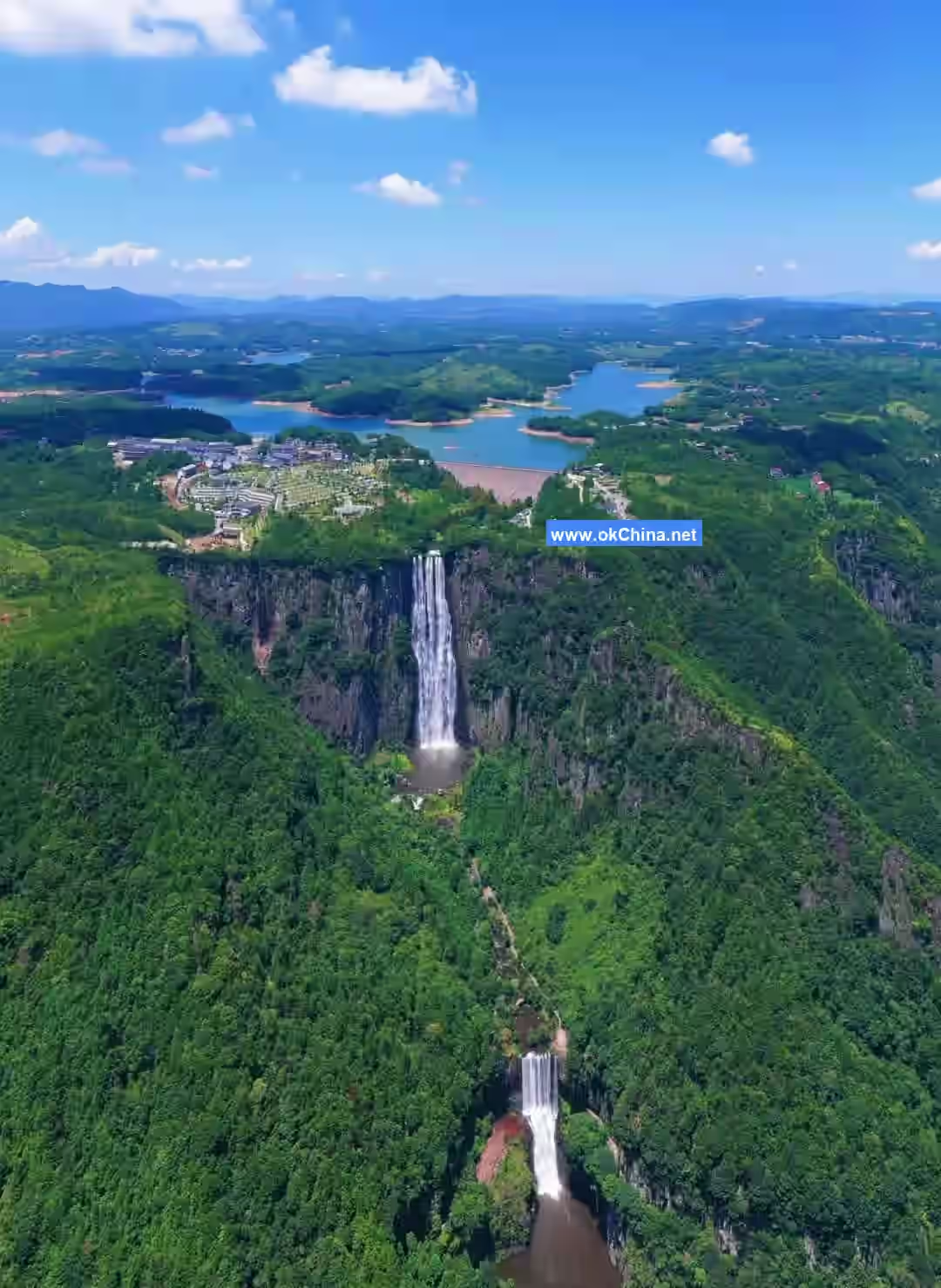
The Baizhang Flying Waterfall Scenic Area, anciently called Baizhangji, is a V-shaped deep ravine and giant stream located at the summit of high mountains with elevations ranging from 300 to 638 meters. The stream is 1,200 meters long, approximately 3 kilometers deep, with a drop of 353 meters, covering a total area of 2.95 square kilometers. The upstream of the waterfall collects rainwater from an area of over 200 square kilometers. The converging torrent rushes into the hundred-zhang deep valley, forming a cascading waterfall group: the first cascade is a hundred zhang high, the second a hundred zhang deep, and the third a hundred zhang wide. Among them, Baizhang First Cascade is the highest single waterfall in China, with a height of 207 meters and a width of over 30 meters. The waterfall's mouth is surrounded by sheer cliffs on three sides, forming a deep gorge in the middle.
3.2.1 Jitoukou (Waterfall Head Mouth)
Jitoukou is located about 100 meters outside the Tianding Lake. It is a natural giant trap with steep cliffs and massive rock faces. The mouth is about 20 meters wide and 192 meters high vertically. The Baizhangji Head Cascade waterfall plunges down from here.
3.2.2 First Cascade
Reached by descending about 1.5 kilometers from Jitoukou around Huangzhuang Village. The cascade is 192 meters high, with rushing, swirling currents sounding like furious thunder, reportedly audible from 15 kilometers away. Below is a pool, as wide as 1.6 mu.
3.2.3 Second Cascade
Located about 1 kilometer downstream from the First Cascade along the stream. The cascade is 68 meters high and over 50 meters wide, divided into upper and lower sections. The upper section is 25 meters high, with a natural crescent-shaped passage behind the waterfall. The passage entrance is 2.6 meters high, the concave part is about 8 meters deep, extending over 40 meters, and the far end stretches another 80+ meters. To the front right is a flat rock, covering 570 square meters, with a Dragon Well in the center containing clear, green water. The lower section protrudes slightly over a meter, with a vertical height of 43 meters. Below is the Dragon Pool, covering over 3 mu, with lotus grass and wild flowers growing along its banks. In front of the pool is the Fairy Dressing Cliff, square in shape resembling a seal.
3.2.4 Third Cascade
Located below the Second Cascade. It is 12 meters high, with a waterfall mouth over 80 meters wide. A local saying goes: "The first cascade is a hundred zhang high, the second a hundred zhang deep, the third a hundred zhang wide." Below is a shallow pool, covering about 2 mu. Downstream along the deep ravine are landscapes like the Sun and Moon Pond, Green Stone Beach, and Bat Mountain.
3.2.5 Canyon Scenic Corridor
The Canyon Scenic Corridor is located in the Zhuxi stream below the Third Cascade of Baizhangji. It is a deep ravine canyon, with the widest part over 100 meters and the narrowest only about 10 meters.
3.2.6 Shankeng Three-Step Waterfall
The Shankeng Three-Step Waterfall is located on the left at the entrance of the Canyon Scenic Corridor, commonly called Shankeng. The waterfall is divided into three steps, with a total height of about 80 meters. The first step, commonly called Taiping Waterfall, is 56 meters high. The waterfall plunges down from sheer cliffs and massive rock faces, about 4 meters wide. There is a lawn by the pool where one can sit, but the entrance and exit are narrow, with sheer cliffs above and below. The second step, commonly called Rage Waterfall, is over 20 meters high, sounding like thunder with mist soaring skyward. Below is a pool shaped like a stone trough, with a stone path leading to its edge. The third step, commonly called Sisters Waterfall, is about 10 meters high. There is a protruding cliff at the waterfall mouth, splitting the waterfall into two streams plunging down directly. The left stream, with more water, is the elder sister; the right stream, with less water, is the younger sister.
3.2.7 Stone Forest Dragon Pool
The Stone Forest Dragon Pool is located on the mountain to the right of the scenic corridor entrance. Stone cliffs stand like a forest, densely layered, with a total height of about 300 meters. A waterfall winds down like a swimming dragon until it reaches the bottom pool, hence the name. To the left is a stream, 66 meters long, 2 meters wide, and 3 meters deep, covered with moss inside and perpetually dripping with water droplets.
3.2.8 Three Immortals Cliff
The Three Immortals Cliff is located on the mountain to the left of the scenic corridor entrance, opposite the Stone Forest Dragon Pool on the right. At the summit are three giant cliffs, resembling three immortals standing under the vast sky. To the right of the Three Immortals Cliff, there is another cliff shaped like a human face with a turtle body, associated with many legends.
3.2.9 Maple Forest Stone Ridge
About 100 meters from the Stone Forest Dragon Pool is the Maple Forest Stone Ridge, a winding stone path leading up to Liyang Township. Maple trees are planted all along the ridge. In autumn and winter, the maple leaves at the ridge's peak turn deep orange, light orange halfway down, while the lower part remains lush green. Beside the ridge are landscapes with mythical legends, such as the Flowing Rice Rock and Stone Bamboo Shoot Rock.
3.2.10 White Dragon Pool
The White Dragon Pool is located in a stream about 200 meters from the Maple Forest Stone Ridge. The entrance is flanked by stone walls, only 4 meters wide, commonly called the Dragon Gate. Upon entering the Dragon Gate, it opens up, revealing a pool with a white stone beam resembling a dragon playing in the water. At the dragon's head, there is a round, reddish giant stone, said to represent a white dragon snatching a pearl, giving the pool its name. On the mountain to the left, a giant cliff resembles a monk, so lifelike it is commonly called the Welcoming Monk. Surrounding areas include attractions like the Maitreya Cliff, Arhat Cliff, Horse Drinking Gorge, Rice Bucket Cliff, and Golden Lion Pool.
3.2.11 Three-Step Cascade
The Three-Step Cascade is located in the deep stream of the middle reaches of Zhuxi. The first cascade is 20 meters high, the middle 30 meters, and the last 5 meters, featuring steep cliffs and perilous terrain. Below is a pond with a flat giant rock beside it where one can lie back and watch the waterfall. Nearby are landscapes like the Sky-Scraping Wall.
3.2.12 Yin-Yang Waterfall
The Yin-Yang Waterfall is located opposite the Tongtian Gorge. The waterfall is divided into upper and lower sections. The upper section is confined within a stone trough, 20 meters high, 5 meters deep, and 1 meter wide. From a distance, only the stone wall is visible, not the waterfall, hence called the Yin (hidden) Waterfall. The lower section is the Yang (visible) Waterfall, about 15 meters high. Nearby are other landscapes like the Peacock Cliff and Sky-Supporting Wall.
3.2.13 Sun and Moon Peaks
The Sun and Moon Peaks are two prominent peaks rising straight up, the western one taller, the eastern one shorter. The taller one is often shrouded in white clouds, while the shorter one has a cave below, commonly called the Sun and Moon Peaks. Nearby is the Sky-Piercing Pillar Cliff, shaped like a golden mace, over 80 meters high.
3.2.14 Golden Ox Pool
The Golden Ox Pool is located above the Sun and Moon Peaks. Beside the pool is a giant cliff shaped like an ox head, commonly called the Ox Slaughtering Pool. Its depth is unfathomable, and the water is emerald green. Beside the pool are scenic spots like "One Leaf Touching the Sky Mountain."
3.2.15 Azure Dragon Pool
The Azure Dragon Pool is located upstream from the Golden Ox Pool. It is named for its dragon-like shape and clear, green water. Both banks are stone walls, creating a deep and tranquil environment.
3.2.16 Windmill Pool
The Windmill Pool is located in the deep stream below Tianlaizao. The stream water forms a large whirlpool here, resembling a revolving windmill.
4. Historical Background### 4.1 Liu Ji
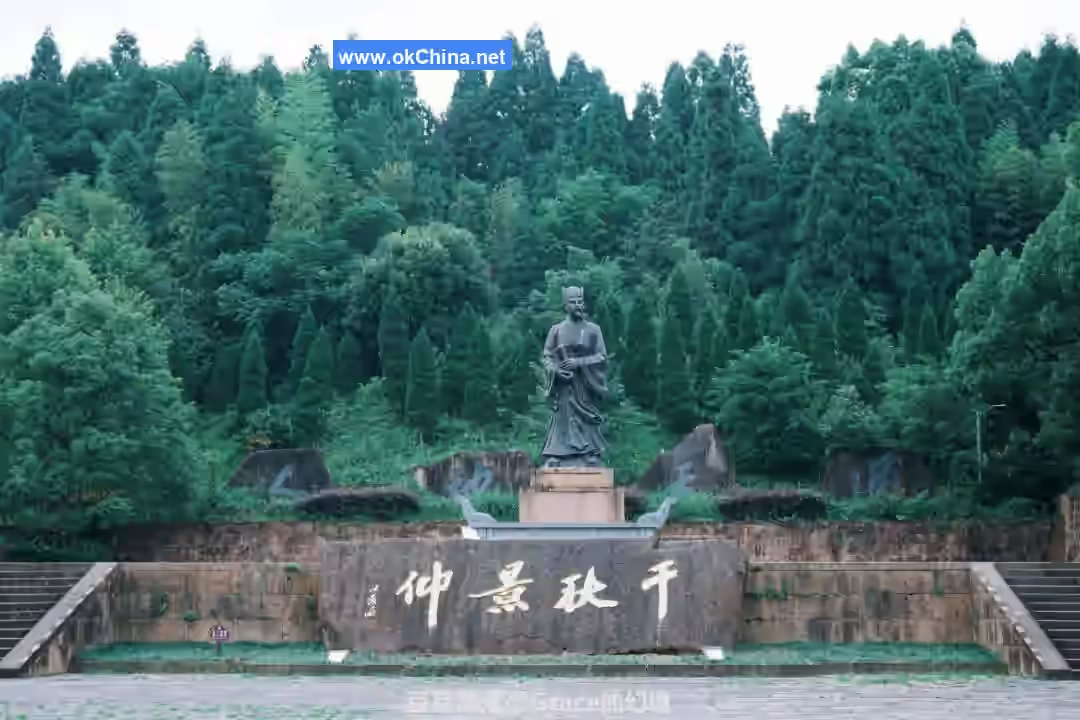
(July 1, 1311 – May 16, 1375), courtesy name Bowen, also known by his epithets "Liu Qingtian," "Liu Chengyi," and "Liu Wencheng," was a native of Nantian, Qingtian County, Chuzhou Circuit (present-day Wencheng County, Wenzhou City, Zhejiang Province). He was a statesman, writer, and military strategist during the late Yuan and early Ming dynasties, a founding hero of the Ming Dynasty, and one of the "Three Great Masters of Poetry and Prose in the Early Ming." From a young age, he extensively studied the classics, history, astronomy, calendrical science, military strategy, and philosophical texts, with particular expertise in astrological and divinatory studies. In the fourth year of the Zhishun era (1333), he passed the imperial examination and was appointed as the Assistant Magistrate of Gao'an County in Jiangxi. He later served in various roles, including Clerk in the Jiangxi Provincial Administration, Deputy Education Commissioner of the Jiangzhe Provincial Confucian School, Military Affairs Officer of the Eastern Zhejiang Military Command, Administrative Officer of the Jiangzhe Provincial Administration, and Director of a Ministry. Due to political marginalization, he resigned in frustration and returned to his hometown to live in seclusion and write. In the twentieth year of the Zhizheng era (1360), at the invitation of Zhu Yuanzhang, he went to Yingtian (present-day Nanjing) to serve as a strategic advisor, participating in confidential decision-making. In response to the contemporary situation, he proposed the "Eighteen Strategies for Current Affairs," which were adopted, and he subsequently offered further advice. After Zhu Yuanzhang ascended the throne, Liu Ji served as the Censor-in-Chief and concurrently as the Director of the Astrological Commission, participating in the formulation of the calendar and the establishment of military garrison laws. In the fourth year of the Hongwu era (1371), due to conflicts with Left Chancellor Hu Weiyong and false accusations by Hu, he was ordered to return to his hometown. In the eighth year of the Hongwu era, he died of grief and indignation. Liu Ji assisted Zhu Yuanzhang in establishing the imperial enterprise, founding the Ming Dynasty, and striving to maintain national stability. He is often compared by later generations to Zhuge Liang, the Martial Marquis. Zhu Yuanzhang referred to Liu Ji as "my Zhang Liang." A popular saying in Chinese folklore goes: "Zhuge Liang divided the realm into three, Liu Bowen unified the empire; Zhuge Liang was the military strategist of the former dynasty, Liu Bowen of the later." Liu Ji possessed a relatively systematic literary philosophy and held an important position in the literary circles of the early Ming Dynasty. Starting from the Confucian concept of "poetry as moral instruction," he emphasized the didactic role of literary works, which could both transform customs among the common people and offer remonstrance to rulers. Furthermore, he criticized the ornate and delicate literary style that had prevailed since the Yuan Dynasty, advocating for "emulating the ancients" and striving to restore the literary traditions of the Han and Tang dynasties. This played a significant role in shifting the literary style of the early Ming from ornate elegance to simplicity and substance. He left behind a rich body of works, including Fubuji, Xieqingji, and Limeigongji, which have been passed down through the ages.
4.2 Legends and Anecdotes
There is a legend in Wencheng folklore that Liu Ji had 36 tombs. It is said that while teaching the crown prince, Liu Ji once heard a squealing sound. When the prince asked what it was, Liu Ji told him it was the sound of a pig being slaughtered. Because the word for "pig" (猪, zhu) is homophonous with the emperor's surname "Zhu," Zhu Yuanzhang suspected that Liu Ji intended to kill him and thus sought to eliminate Liu Ji. Empress Ma secretly sent Liu Ji a plate of dates (枣, zao) and a plate of peaches (桃, tao), implying that he should "flee early" (早逃, zao tao). To escape the pursuing soldiers, Liu Ji ultimately swallowed gold and died. The pursuers then brought Liu Ji's head to Jinling and presented it to Zhu Yuanzhang. Later, when Zhu Yuanzhang realized he had wronged Liu Ji, he compensated by giving Liu Ji a golden head. During the burial, the Liu family, fearing theft of the golden head, constructed 36 tombs. On the day of the funeral, 36 coffins were moved around to confuse outsiders before being buried in batches.
Comments
Post a Comment