Forest Sea and Strange Rocks Scenic Area
1. Introduction
The Forest Sea and Strange Rocks Scenic Area is located 120 kilometers from the central district of Yichun City, requiring about a 2-hour drive, and 100 kilometers from Jiayin, a national Class I port to Russia. The stone forest has an average altitude of 436.6 meters, a total area of 163.57 square kilometers, and is divided into the Stone Forest Landscape Area and the Mountain and Water Scenery Tour Area.
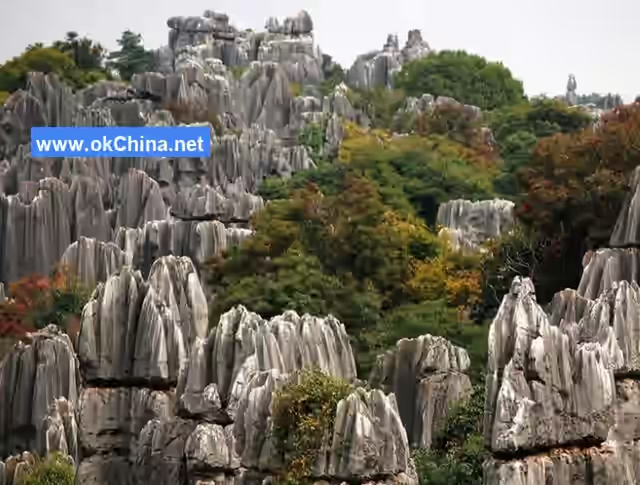
It is characterized by various mimetic strange rocks formed by geological relics and lush vegetation within the Lesser Khingan Range Strange Rocks Landscape Area, showcasing the unique charm of a National Geopark and National Forest Park. The entire scenic area features dense vegetation, verdant mountains, and a coverage rate of over 99.8%. It is home to more than 1,240 species of flora, fauna, insects, and birds from the Lesser Khingan Range. The park is distinguished by its rare granite stone forest landform and natural, pristine forest vegetation landscapes, displaying the distinctive allure of a National Geopark and National Forest Park. It preserves intact granite geological relics formed 200 million years ago, with landform features of miraculous shapes that are incredibly lifelike, as if crafted by divine skill. The area experiences four distinct seasons within a primitive and pristine natural ecological environment. The forest sea scenery is picturesque and breathtakingly beautiful. Strolling along the secluded paths among ancient trees and white birches, one can hear the joyful songs of hundreds of birds, admire the gentle dance of pines and cypresses, smell the faint fragrance of azaleas, and observe the strange rocks of Xing'an, complemented by cascading waterfalls, streams, and a natural oxygen bar, making it an excellent paradise away from the world.
The scenic area was approved as an AA-level tourist attraction in June 2003, designated as the "Lesser Khingan Range Stone Forest National Forest Park" in December 2003, approved as the Yichun Granite National Geopark in January 2004, and recognized as the China Youth Scientific Investigation and Exploration Base in May 2004. In 2013, the Tangwang River Forest Sea and Strange Rocks Scenic Area was promoted to a 5A-level scenic area.
2. Main Attractions
2.1 Scenic Area Division
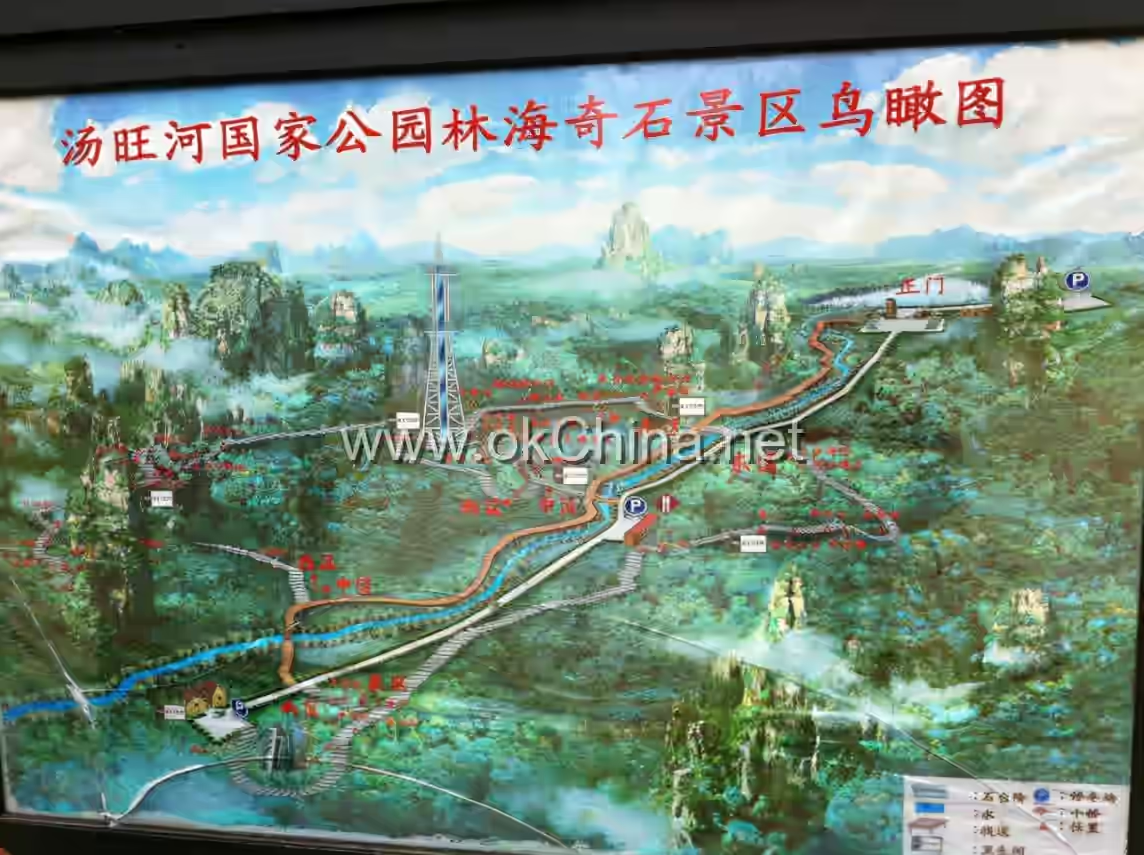
The Forest Sea and Strange Rocks Scenic Area has developed parts of the Strange Rocks Landscape Area and the Mountain and Water Scenery Tour Area. The Strange Rocks Landscape Area is divided into five major zones, consisting of the Structural Peak Forest Landscape Area, Mimetic Strange Rocks Landscape Area, Fortress Mountain Landscape Area, Periglacial Stone Sea Landscape Area, and Holy Water Stream "Gorge" Landscape Area.
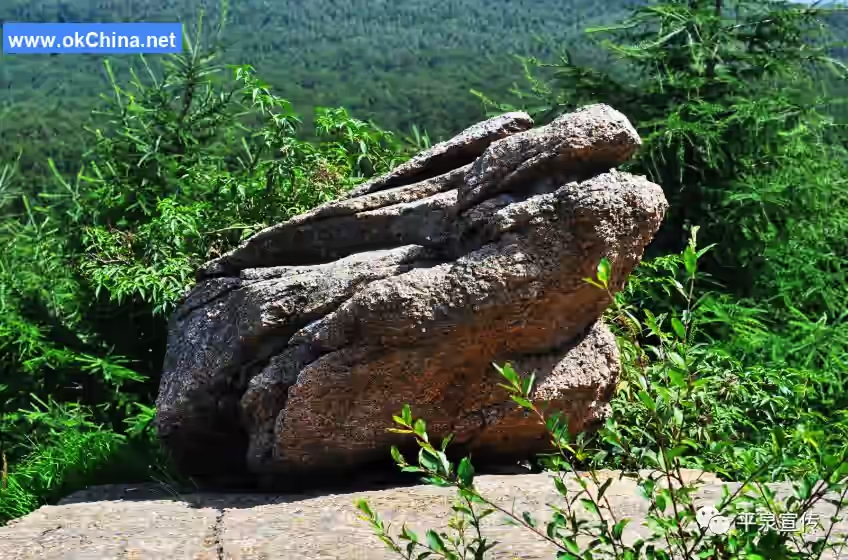
The Eastern Area features collapse relics, peak clusters, peak forest cliff structural profiles, as well as geological relics such as talus slopes formed by collapsed rock blocks, dikes, and spherical weathered stones. Main attractions include: "Oracle Bone Wall," "Jigong Escaping the Mountain," "Manjusri Chanting Sutras," "Maitreya Summit," etc. The Southern Area's main attractions include "One-Line Sky" formed by structural fissures, the collapsed rock block "Lucky Stone," the fortress-like "Arhat Turtle," granite stone pillars, Tangwang River Stone Forest, structural caves, "Majestic Peak," and "Hidden Love Cave," among others. These features rise abruptly from flat ground, appearing tall, perilous, majestic, grand, and extremely rare, representing the finest examples of granite stone forest landform landscapes. The Western Area has relatively flat terrain, with well-preserved primitive forest vegetation, suitable for leisure tours and forest exploration. Main landscapes include: "Heavenly Beast Rock," "Cloud Boot Summit," "Mountain Split by Sword," "Drunken Turtle Stone," etc. The Northern Area is a popular science route for geological knowledge, featuring very typical and easily understandable geological phenomena, combining education with entertainment. Main landscapes include "Jade Rabbit Mountain," "Golden Toad Playing with Pine," "Golden Rooster Crows at Dawn," "Peacock Screen Mountain," "Multi-Faceted Wall," "Zhong Kui Rock," etc.
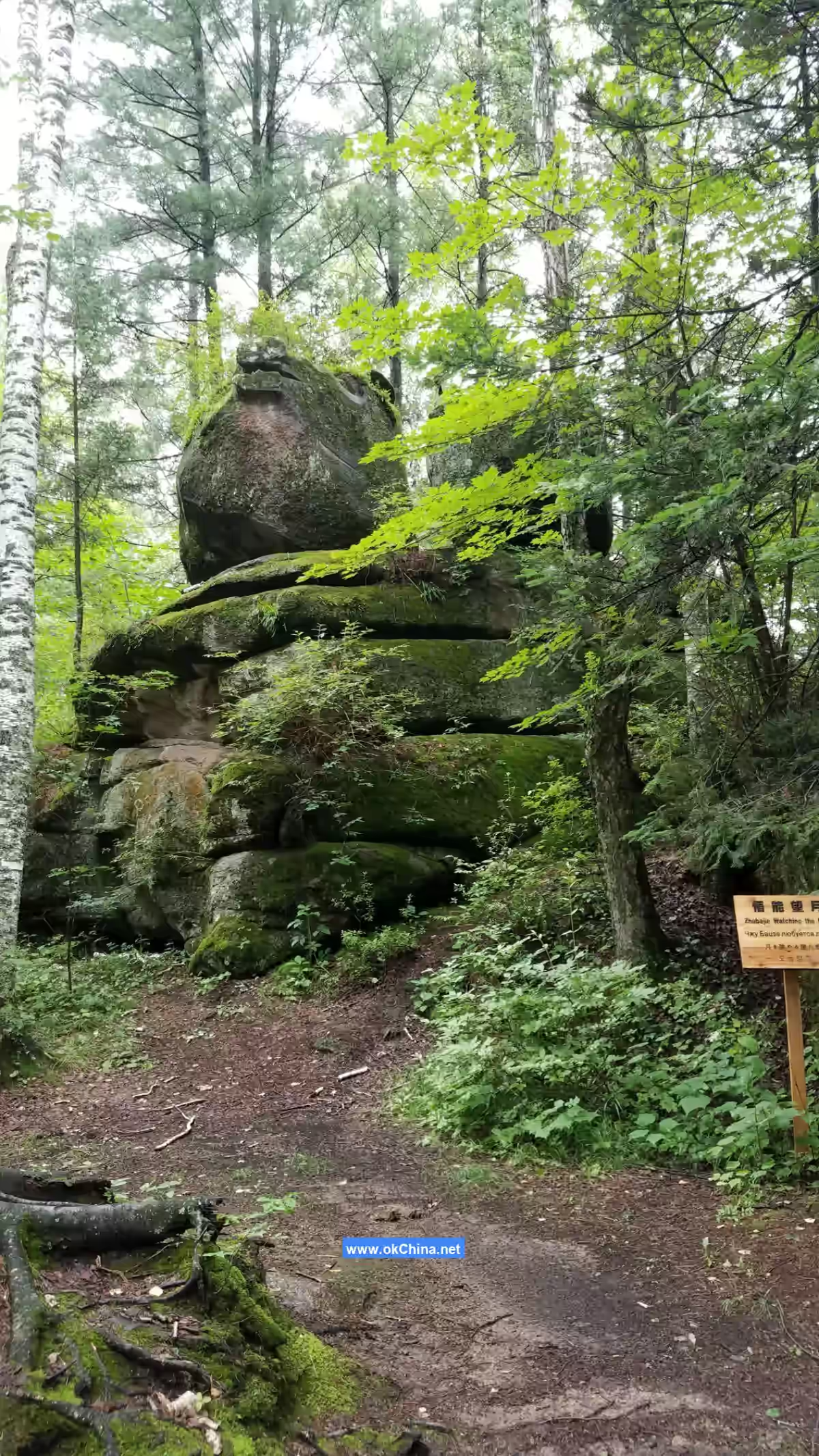
The Central Area is dotted with numerous stone pillars, stone peaks, and rock walls rising abruptly from flat ground. Main attractions include mimetic and pictographic strange rocks composed of collapsed rock blocks and granite, such as "Heavenly Toad Welcoming Guests," "Forest Sea Guanyin," "Wuneng Gazing at the Moon," "Longevity Turtle," "Reclining Heavenly Ox," etc.
Within the area, strange peaks and startling rocks jut into the sky, while century-old ancient pines and trees tower majestically. The peculiar trees and strange rocks are vividly lifelike, with profound and extensive symbolism. The Southern Area is the "Lesser Khingan Range Stone Forest," famous for attractions like "One-Line Sky," "Arhat Turtle," "Majestic Peak," "Mountain Guardian General," etc. The Western Area consists of unique landscapes filled with mythological stories, formed by "Mountain Split by Sword," "Heavenly Dog Rock," "Cloud Boot Summit," and "Drunken Turtle Stone." The Northern Area primarily reflects folk legends and customs through landscapes centered around "Zhong Kui Cliff," "Secluded Valley," and "Peach Ridge."
2.2 Langxiang Stone Forest
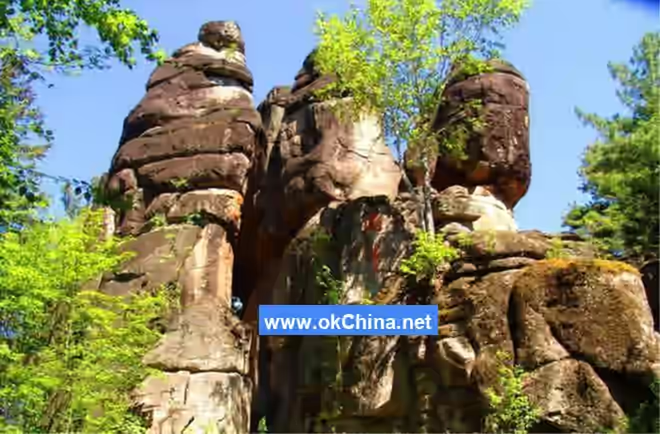
The Langxiang Stone Forest is hidden deep within dense woods. To visit from Yichun tourism, one must travel over 200 meters west from the Zhifu Farm of the Langxiang Forestry Bureau and then turn north to see a large expanse of stone forest protruding from the mountain forest like a screen. Viewed from afar, it appears imposing, majestic, and magnificent.
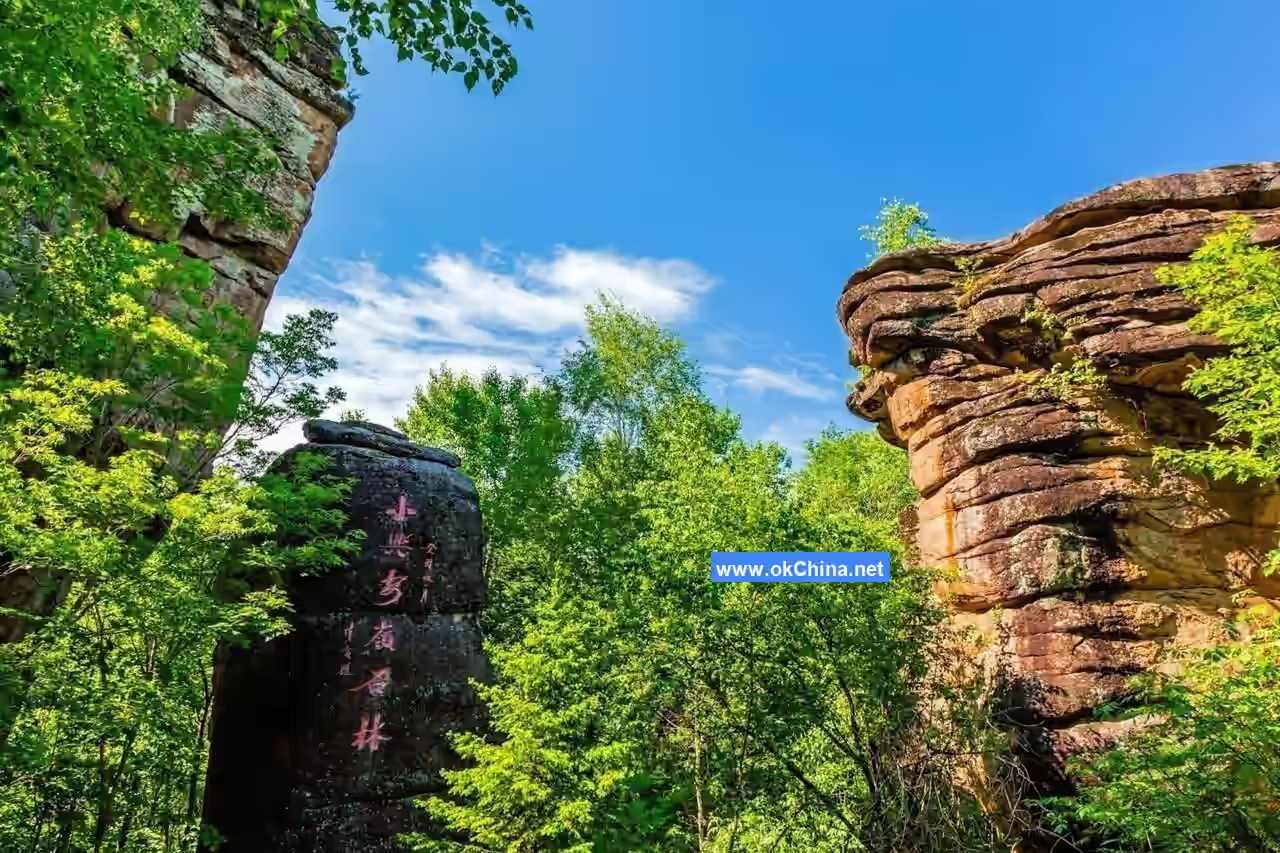
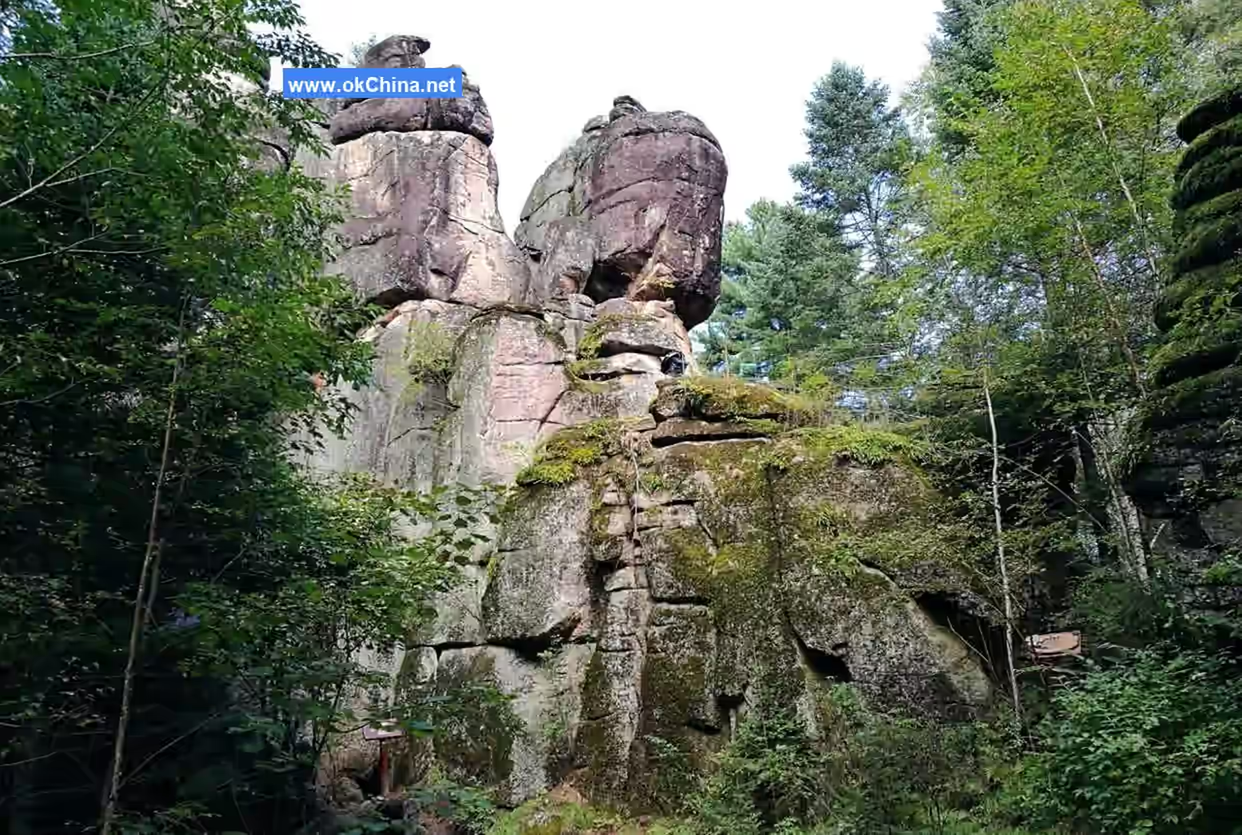
The stone peaks of the stone forest are all granite structures. Eroded by time, some have developed deep and long cracks, appearing extremely precarious. Yet, they have maintained this state for at least several hundred years. Some resilient small pine trees have even taken root in the crevices, coiling on the rocks, absorbing the essence of the sun and moon. For people, these variously shaped and remarkably lifelike stone forests provide space for imagination. Thus, poetic individuals have written countless beautiful verses and bestowed new names upon these rocks. However, with sufficient associative power, it is also acceptable to create new names for these vigorous, ancient stones. Starting from the foot of the stone forest mountain in Yichun tourism and ascending not far, at the mountain pass, one can see the "Divine Turtle Carrying a Stele." This is actually a giant rock resembling a turtle, with its head facing north as if welcoming guests. The so-called stele body is a strip-shaped long stone, no more than 6 meters tall. Heading east and gradually entering the depths of the stone forest, one sees two towering giant rocks jointly holding up a round stone about 1 meter in diameter, resembling a large clam playing with a pearl in the sea. This spot is named "Two Clams Presenting a Pearl." The "World's First Fortress" has an even more interesting shape, resembling a stone fortress in a battle formation. Remarkably, the fortress wall has a natural stone cave, with an opening size just right for a machine gun embrasure.
Going further down, a slender, brush-like stone peak soars into the sky, as if intending to use the blue sky as paper for wielding a brush and splashing ink. From here west, then north, lies the "World's First Seal." This giant rock has a broad lower part, a relatively slender middle, and a top that appears square and slightly thick. Upon careful appreciation, it indeed resembles a modern official seal, echoing from afar and seemingly metaphorically alluding to the traditional path of Chinese literati entering officialdom since ancient times.
2.3 Tangwang River Stone Forest
The Tangwang River Stone Forest Tourist Scenic Area belongs to the Lesser Khingan Range mountains, formed during the late Paleozoic era within the Hercynian fold mountain system. The rocks are mainly granite, diorite, etc. Due to prolonged geological movements and influenced by various crustal stresses, multiple fractures formed, resulting in unique peak and rock landscapes in the topography and landforms. Main attractions include geological relics such as One-Line Sky, Stone Forest Peak, Majestic Peak, Lonely Peak, Reclining Lion Ridge, Maitreya Summit, Manjusri Chanting Sutras, and Jigong Escaping the Mountain. Among these, One-Line Sky is the most famous. These geological relics were formed when rock layers in the earth's crust were subjected to tectonic forces underground, causing the hard rocks themselves to be filled with many structural fissures (joints). When the rock layers rose to the surface, especially after forming independent mountain bodies, the fissures in the rocks were in a relaxed and free space state. Coupled with daily and seasonal temperature variations, physical and chemical weathering processes such as thermal expansion and contraction, freezing and thawing, and rainwater dissolution occurred, continuously peeling and expanding along the fissures in the rocks, forming rock walls and peak bodies. This area is a typical representative of Indosinian period granite.
2.4 One-Line Sky
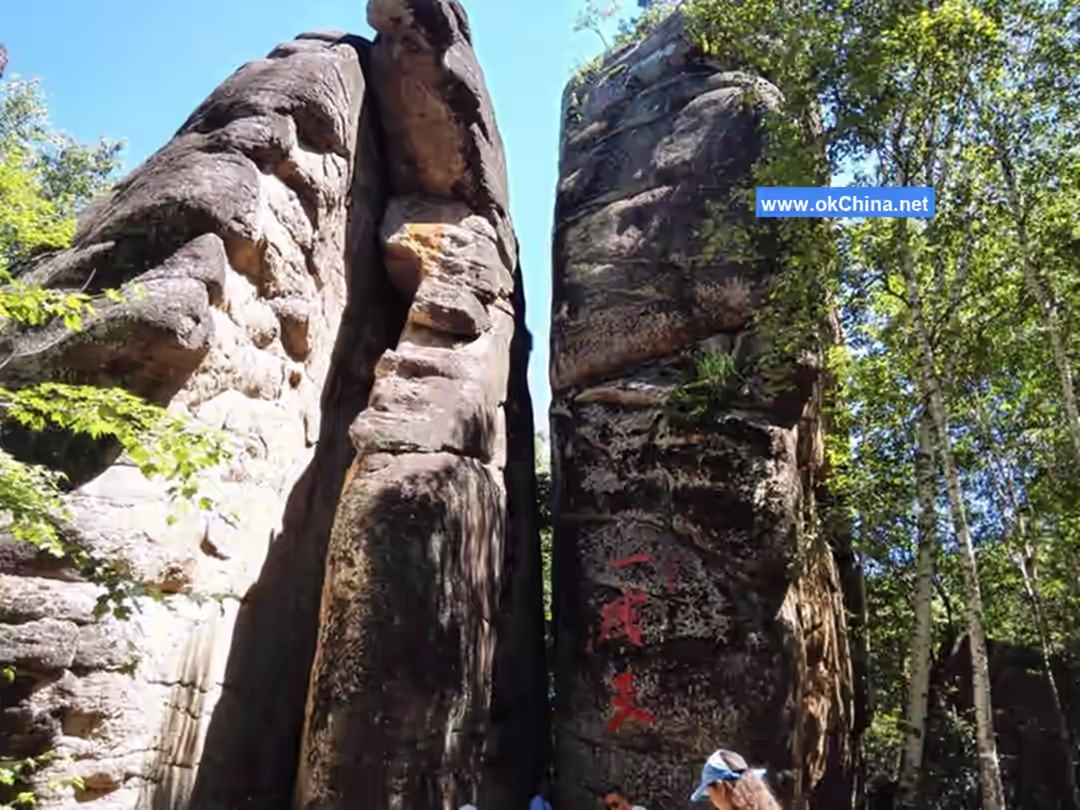
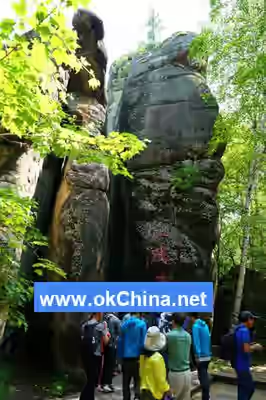
One-Line Sky: Two stone peaks, 26.13 meters and 17.97 meters tall respectively, are only about 35–45 centimeters apart, forming a straight vertical gap that can only accommodate one person passing through, hence the name "One-Line Sky." One-Line Sky was formed by geological movement tensional fissures (joints) and weathering. It is a peak forest-type granite landform landscape in a gently sloping terrain area, distinct from peak forests and clusters on mountain tops and ridges. It rises abruptly from flat ground, standing tall and upright, exuding boldness, grandeur, and magnificence, representing the finest example of granite stone forest landform landscapes.
2.5 Life in Desperation
This birch tree growing north of "Heavenly Horse Rock," despite being only as thick as a cup's mouth, is also forty to fifty years old. This tree grows on a steep cliff face and is named "Life in Desperation," symbolizing tenacious vitality in harsh environments and embodying the excellent ecological environment of "trees on rocks, rocks in forests."
2.6 Doujin Stone
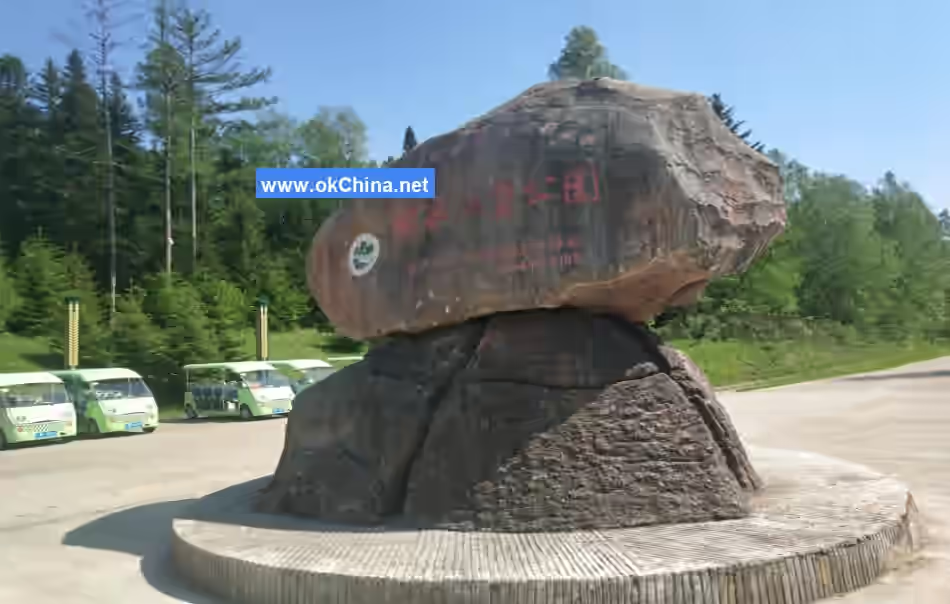
The Doujin Stone was formed by exfoliation after independent mountain body movement, shaped like a rice measuring dou (a unit), hence its name.
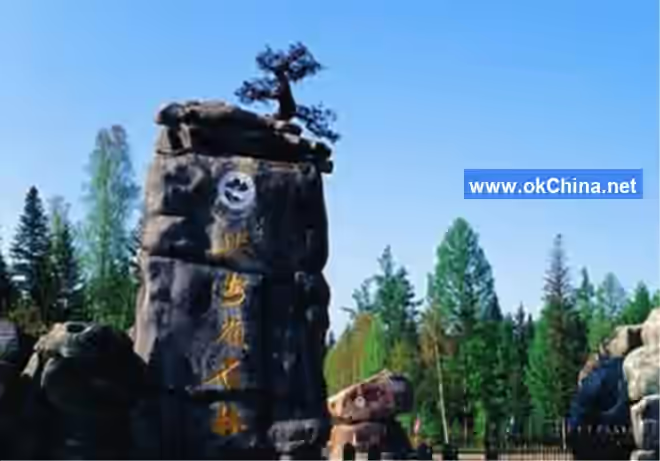
The main landmark rock of the scenic area: The stone peak is 15.31 meters high, inscribed with the six large characters "Lesser Khingan Range Stone Forest" personally written by Comrade Chen Lei, former Governor of Heilongjiang Province and Chairman of the Provincial Calligraphers Association.
2.7 Lucky Stone
The rock atop the main landmark rock of the Lesser Khingan Range Stone Forest is called the "Lucky Stone." Like the "Doujin Stone," it was also formed by exfoliation after independent mountain body movement. This stone is considered very spiritual. In 1964, when Comrade Deng Xiaoping inspected the Dongfeng District (Bureau), i.e., the Tangwang River District (Bureau), he stood on this rock and gave full affirmation to the bureau's "Simultaneous Logging and Cultivation Contract" experience at the time, demanding its vigorous promotion across the national forestry front. Those accompanying Comrade Deng Xiaoping during the inspection of this bureau also included Bo Yibo, Li Fuchun, Yang Shangkun, Zhuo Lin, and others.
2.8 Arhat Turtle
This stone peak, located 5 meters from the previous stone peak, is called the "Arhat Turtle." Legend has it that anyone who climbs onto the turtle's back will surely enjoy fortune as vast as the East Sea and longevity as enduring as the South Mountain. Locals often say: "Heaven-made, earth-set Arhat Turtle, increasing lifespan and extending years for reincarnation. Climb onto the turtle's back and sit on the dragon's spine, the turtle tours the nine heavens and returns with splendid views."
2.9 Xing'an Stacked Rocks
Regarding this stone peak, there is also a流传着一段顺口溜流传的一段顺口溜流传的一段顺口溜流传的一段顺口溜流传的一段顺口溜流传的一段顺口溜流传的一段顺口溜流传的一段顺口溜流传的一段顺口溜流传的一段顺口溜流传的一段顺口溜流传的一段顺口溜流传的一段顺口溜流传的一段顺口溜流传的一段顺口溜流传的一段顺口溜流传的一段顺口溜流传的一段顺口溜流传的一段顺口溜流传的一段顺口溜流传的一段顺口溜流传的一段顺口溜流传的一段顺口溜流传的一段顺口溜流传的一段顺口溜流传的一段顺口溜流传的一段顺口溜流传的一段顺口溜流传的一段顺口溜流传的一段顺口溜流传的一段顺口溜流传的一段顺口溜流传的一段顺口溜流传的一段顺口溜流传的一段顺口溜流传的一段顺口溜流传的一段顺口溜流传的一段顺口溜流传的一段顺口溜流传的一段顺口溜流传的一段顺口溜流传的一段顺口溜流传的一段顺口溜流传的一段顺口溜流传的一段顺口溜流传的一段顺口溜流传的一段顺口溜流传的一段顺口溜流传的一段顺口溜流传的一段顺口溜流传的一段顺口溜流传的一段顺口溜流传的一段顺口溜流传的一段顺口溜流传的一段顺口溜流传的一段顺口溜流传的一段顺口溜流传的一段顺口溜流传的一段顺口溜流传的一段顺口溜流传的一段顺口溜流传的一段顺口溜流传的一段顺口溜流传的一段顺口溜流传的一段顺口溜流传的一段顺口溜流传的一段顺口溜流传的一段顺口溜流传的一段顺口溜流传的一段顺口溜流传的一段顺口溜流传的一段顺口溜流传的一段顺口溜流传的一段顺口溜流传的一段顺口溜流传的一段顺口溜流传的一段顺口溜流传的一段顺口溜流传的一段顺口溜流传的一段顺口溜流传的一段顺口溜流传的一段顺口溜流传的一段顺口溜流传的一段顺口溜流传的一段顺口溜流传的一段顺口溜流传的一段顺口溜流传的一段顺口溜流传的一段顺口溜流传的一段顺口溜流传的一段顺口溜流传的一段顺口溜流传的一段顺口溜流传的一段顺口溜流传的一段顺口溜流传的一段顺口溜流传的一段顺口溜流传的一段顺口溜流传的一段顺口溜流传的一段顺口溜流传的一段顺口溜流传的一段顺口溜流传的一段顺口溜流传的一段顺口溜流传的一段顺口溜流传的一段顺口溜流传的一段顺口溜流传的一段顺口溜流传的一段顺口溜流传的一段顺口溜流传的一段顺口溜流传的一段顺口溜流传的一段顺口溜流传的一段顺口溜流传的一段顺口溜流传的一段顺口溜流传的一段顺口溜流传的一段顺口溜流传的一段顺口溜流传的一段顺口溜流传的一段顺口溜流传的一段顺口溜流传的一段顺口溜流传的一段顺口溜流传的一段顺口溜流传的一段顺口溜流传的一段顺口溜流传的一段顺口溜流传的一段顺口溜流传的一段顺口溜流传的一段顺口溜流传的一段顺口溜流传的一段顺口溜流传的一段顺口溜流传的一段顺口溜流传的一段顺口溜流传的一段顺口溜流传的一段顺口溜流传的一段顺口溜流传的一段顺口溜流传的一段顺口溜流传的一段顺口溜流传的一段顺口溜流传的一段顺口溜流传的一段顺口溜流传的一段顺口溜流传的一段顺口溜流传的一段顺口溜流传的一段顺口溜流传的一段顺口溜流传的一段顺口溜流传的一段顺口溜流传的一段顺口溜流传的一段顺口溜流传的一段顺口溜流传的一段顺口溜流传的一段顺口溜流传的一段顺口溜流传的一段顺口溜流传的一段顺口溜流传的一段顺口溜流传的一段顺口溜流传的一段顺口溜流传的一段顺口溜流传的一段顺口溜流传的一段顺口溜流传的一段顺口溜流传的一段顺口溜流传的一段顺口溜流传的一段顺口溜流传的一段顺口溜流传的一段顺口溜流传的一段顺口溜流传的一段顺口溜流传的一段顺口溜流传的一段顺口溜流传的一段顺口溜流传的一段顺口溜流传的一段顺口溜流传的一段顺口溜流传的一段顺口溜流传的一段顺口溜流传的一段顺口溜流传的一段顺口溜流传的一段顺口溜流传的一段顺口溜流传的一段顺口溜流传的一段顺口溜流传的一段顺口溜流传的一段顺口溜流传的一段顺口溜流传的一段顺口溜流传的一段顺口溜流传的一段顺口溜流传的一段顺口溜流传的一段顺口溜流传的一段顺口溜流传的一段顺口溜流传的一段顺口溜流传的一段顺口溜流传的一段顺口溜流传的一段顺口溜流传的一段顺口溜流传的一段顺口溜流传的一段顺口溜流传的一段顺口溜流传的一段顺口溜流传的一段顺口溜流传的一段顺口溜流传的一段顺口溜流传的一段顺口溜流传的一段顺口溜流传的一段顺口溜流传的一段顺口溜流传的一段顺口溜流传的一段顺口溜流传的一段顺口溜流传的一段顺口溜流传的一段顺口溜流传的一段顺口溜流传的一段顺口溜流传的一段顺口溜流传的一段顺口溜流传的一段顺口溜流传的一段顺口溜流传的一段顺口溜流传的一段顺口溜流传的一段顺口溜流传的一段顺口溜流传的一段顺口溜流传的一段顺口溜流传的一段顺口溜流传的一段顺口溜流传的一段顺口溜流传的一段顺口溜流传的一段顺口溜流传的一段顺口溜流传的一段顺口溜流传的一段顺口溜流传的一段顺口溜流传的一段顺口溜流传的一段顺口溜流传的一段顺口溜流传的一段顺口溜流传的一段顺口溜流传的一段顺口溜流传的一段顺口溜流传的一段顺口溜流传的一段顺口溜流传的一段顺口溜流传的一段顺口溜流传的一段顺口溜流传的一段顺口溜流传的一段顺口溜流传的一段顺口溜流传的一段顺口溜流传的一段顺口溜流传的一段顺口溜流传的一段顺口溜流传的一段顺口溜流传的一段顺口溜流传的一段顺口溜流传的一段顺口溜流传的一段顺口溜流传的一段顺口溜流传的一段顺口溜流传的一段顺口溜流传的一段顺口溜流传的一段顺口溜流传的一段顺口溜流传的一段顺口溜流传的一段顺口溜流传的一段顺口溜流传的一段顺口溜流传的一段顺口溜流传的一段顺口溜流传的一段顺口溜流传的一段顺口溜流传的一段顺口溜流传的一段顺口溜流传的一段顺口溜流传的一段顺口溜流传的一段顺口溜流传的一段顺口溜流传的一段顺口溜流传的一段顺口溜流传的一段顺口溜流传的一段顺口溜流传的一段顺口溜流传的一段顺口溜流传的一段顺口溜流传的一段顺口溜流传的一段顺口溜流传的一段顺口溜流传的一段顺口溜流传的一段顺口溜流传的一段顺口溜流传的一段顺口溜流传的一段顺口溜流传的一段顺口溜流传的一段顺口溜流传的一段顺口溜流传的一段顺口溜流传的一段顺口溜流传的一段顺口溜流传的一段顺口溜流传的一段顺口溜流传的一段## 3. Scientific Significance The over one hundred granite rock peaks within the scenic area constitute a unique geological and geomorphological landscape, known as the granite stone forest. It originated from a massive granite batholith formed by the Indosinian movement 250 million years ago. Over hundreds of millions of years, through plate compression, crustal uplift and subsidence, coupled with water erosion, weathering and denudation, and chemical processes, the distinctive Tangwang River granite structural peak forest was formed. These peak forests either rise abruptly from the ground, tall and precipitous with steep, sheer walls; or distribute along mountain ranges, varying in height, resembling birds and beasts in diverse forms; or scatter among the forests, as if carved by supernatural craftsmanship, composing a myriad of strange rocks and wondrous scenes that inspire awe and admiration. The Xiaoxing'anling Strange Stone Geological Heritage is a comprehensive geological and geomorphological complex represented by Indosinian granite structural peak forest landforms, Quaternary periglacial landforms, and neotectonic collapse landforms. It is the only discovered geological heritage site in China with the most complete types, the most typical development, and the richest forms of granite stone forests. It also serves as a typical representative of structural peak forest geological heritage formed from Indosinian granite, holding significant scientific value for researching Indosinian granite structural denudation, Quaternary periglacial processes, neotectonic movements, and regional geological environment evolution. Its discovery fills a gap in the developmental history of structural peak forest geological heritage formed from Indosinian granite in China.
Comments
Post a Comment