Wuxi Lingshan Grand Buddha Scenic Area
1. Introduction
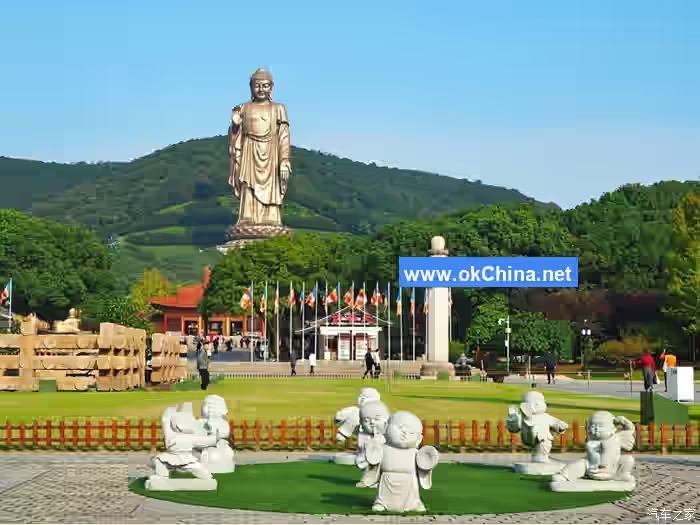
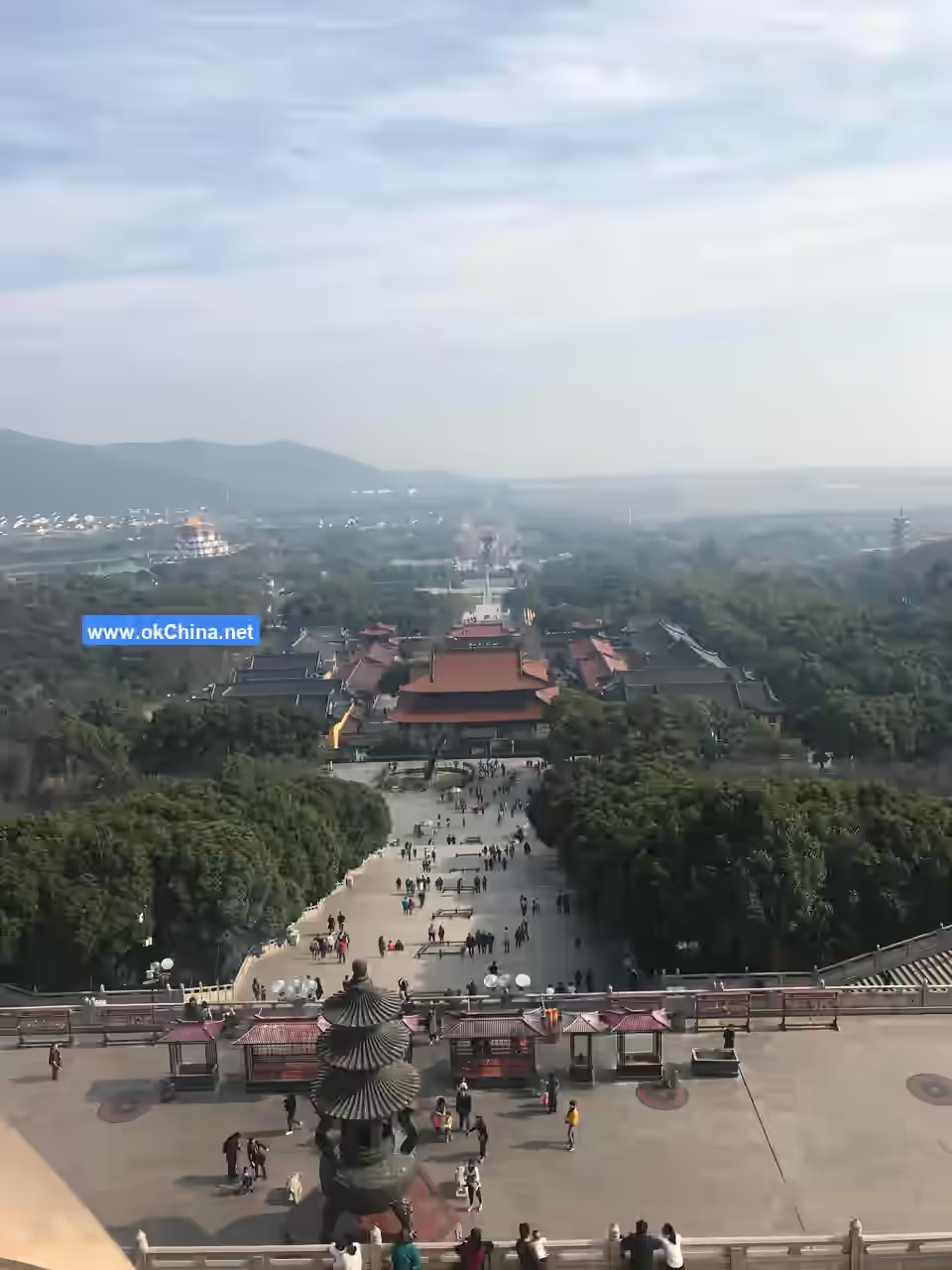
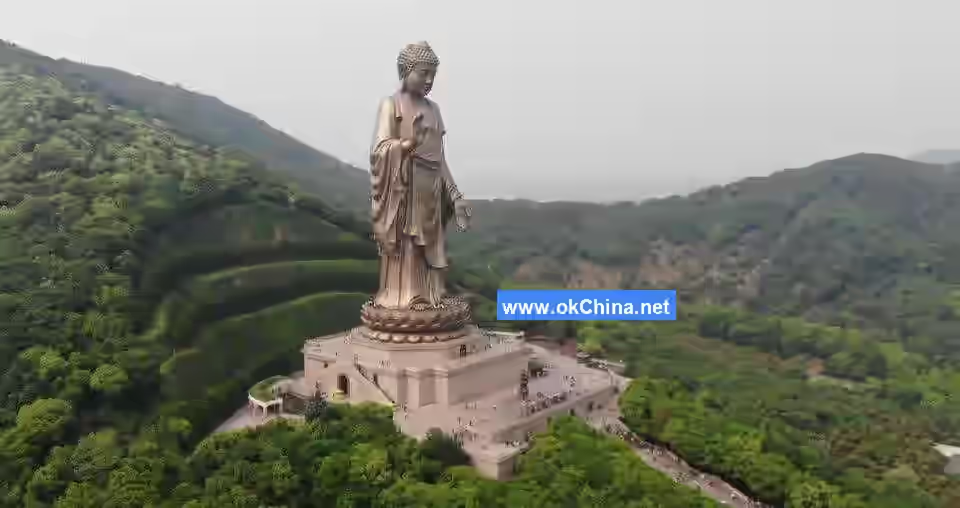
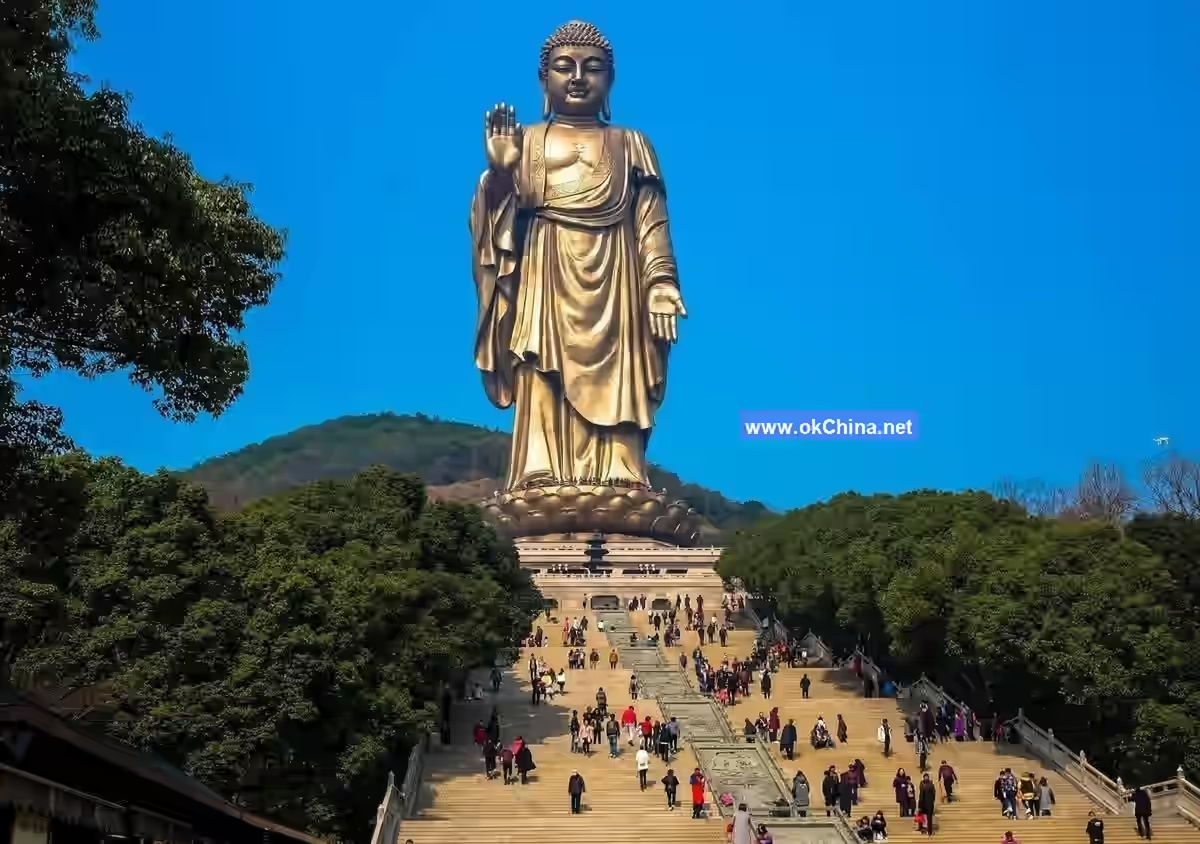
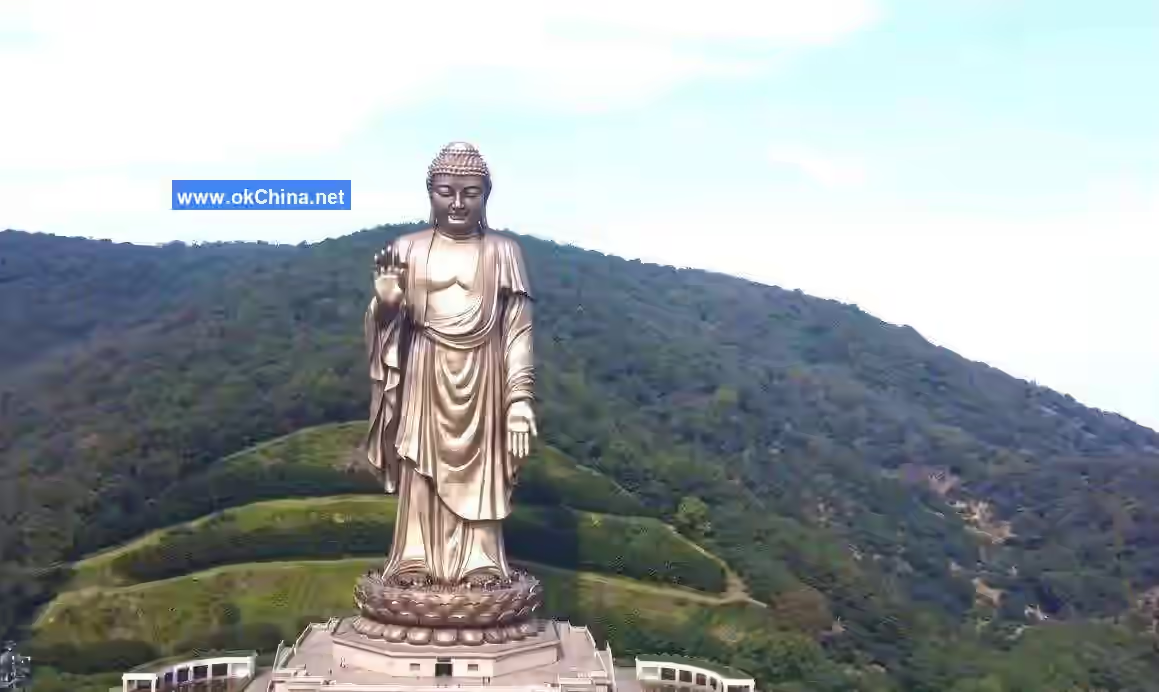
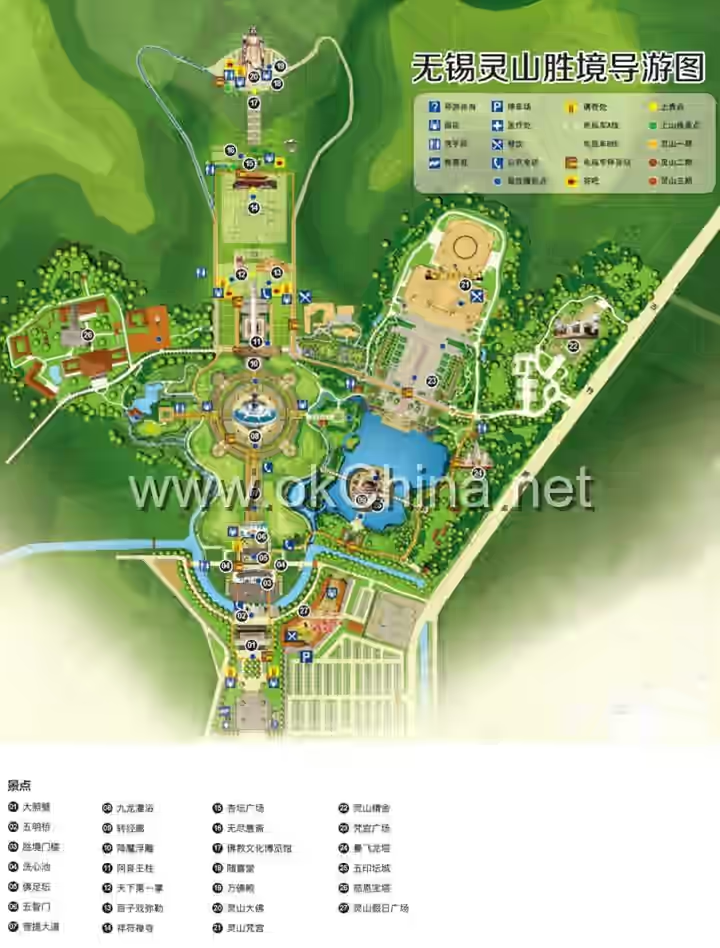
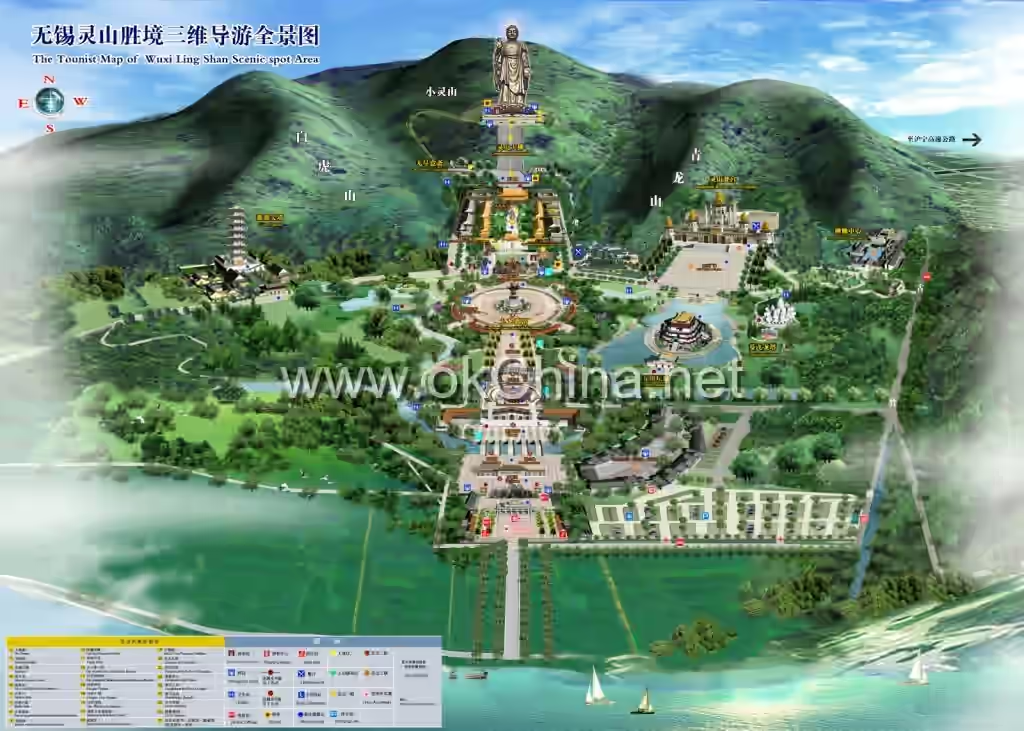
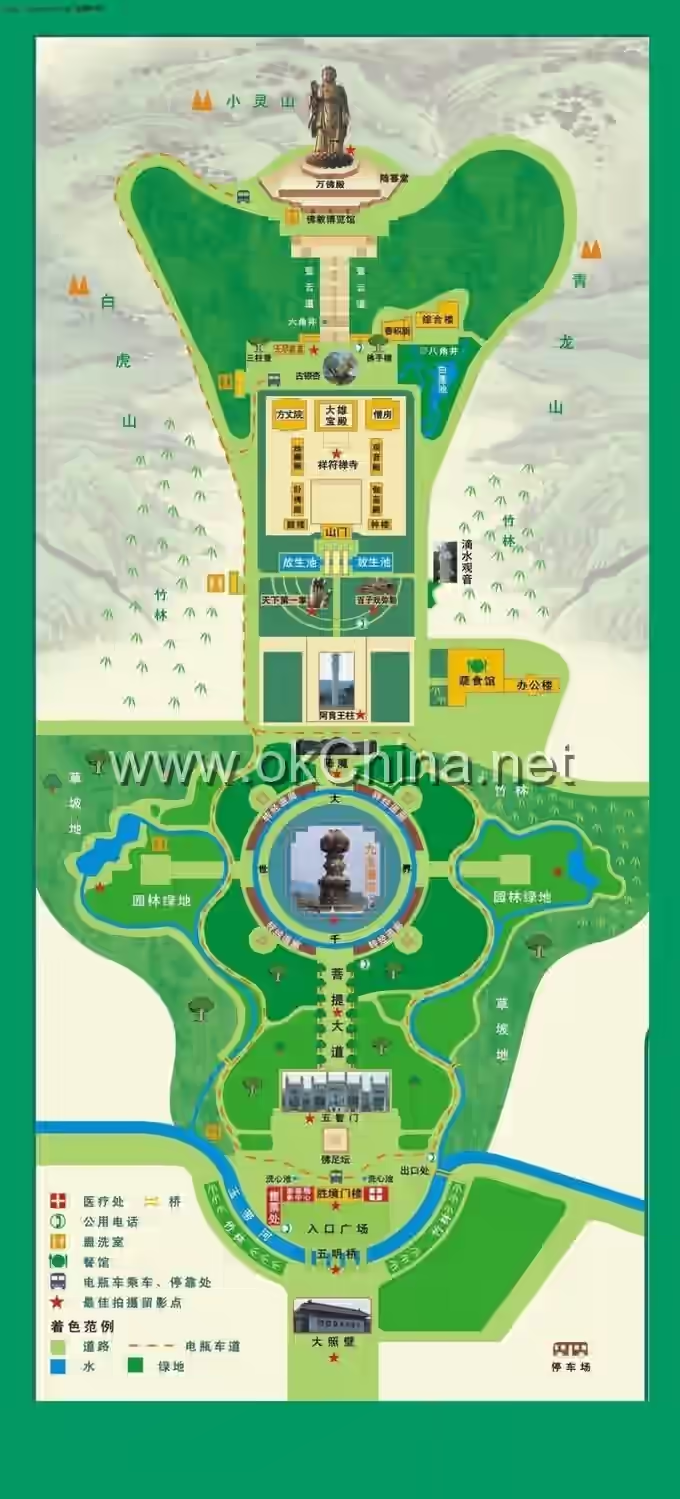
The Wuxi Lingshan Grand Buddha Scenic Area is located within the Mashan Taihu National Tourism Resort in the western suburbs of Wuxi City, Jiangsu Province. It is situated close to the Ring Taihu Expressway and the Xiyi Expressway, backed by Mashan Mountain and facing Taihu Lake, with Qinglong Mountain (Green Dragon Mountain) and Baihu Mountain (White Tiger Mountain) flanking its left and right sides respectively. Completed in 1997, it covers an area of approximately 300,000 square meters. The architectural complex of the scenic area is centered on the north-south axis running from the southern mountain gate to the Lingshan Grand Buddha, extending outwards on both sides. The area features a subtropical maritime climate with distinct seasons, abundant sunshine, and plentiful rainfall. The Grand Buddha statue itself is situated on the southern side of Qinlü Peak on Mashan Mountain in Wuxi. Together with the Nine Dragons Bathing the Buddha, the Lingshan Brahma Palace, and the Five-Print Mandala City, it constitutes the four main scenic spots of the Lingshan Buddhist Sanctuary, and it is located at the northernmost end of the scenic area's central axis. The Lingshan Grand Buddha stands 88 meters tall, with a total height of 101.5 meters including its pedestal. The statue is made of tin bronze, using over 700 tons of copper in total. The Buddha's right hand forms the "Abhaya Mudra" (gesture of fearlessness), representing the dispelling of suffering, while the left hand forms the "Varada Mudra" (gesture of granting wishes), representing the granting of happiness; both are gestures of blessing. Furthermore, the Lingshan Brahma Palace is an immense structure with a total floor area exceeding 70,000 square meters. Its spatial layout integrates the artistic traditions of traditional Buddhist cave art with modern architectural design concepts.
In January 2001, the Wuxi Lingshan Grand Buddha Scenic Area was awarded the title of "National AAAA Tourist Attraction" by the China National Tourism Administration. In February 2007, it was rated as one of Jiangsu Province's Top Ten Tourist Attractions. In 2009, it was assessed as a National AAAAA Tourist Attraction by the former China National Tourism Administration. In May 2012, it was granted the title of "Permanent Site of the World Buddhist Forum" by the State Administration for Religious Affairs. In July 2014, it was selected as a designated reception site for the Youth Olympic Games Journey. In November 2022, the Wuxi Lingshan Grand Buddha Scenic Area was included in the Jiangsu Province Smart Tourism Scenic Area List for 2022.
2. Main Attractions
2.1 Lingshan Grand Buddha
The Lingshan Grand Buddha is built on the former site of the Xiangfu Temple, a famous temple from the Tang and Song dynasties. Its location is the "Little Lingshan Mountain" named by the Tang Dynasty monk Xuanzang, hence the name "Lingshan Grand Buddha." On April 10, 1994, Zhao Puchu, then Vice Chairman of the National Committee of the Chinese People's Political Consultative Conference and former President of the Buddhist Association of China, personally visited Little Lingshan Mountain on Mashan. After consulting historical records such as the Maji Mountain Chronicles, the Hang Family Genealogy, and the Tianning Temple Chronicles, and learning about Xuanzang's visit and the origin of Little Lingshan, he spontaneously composed a lyric poem to the tune of "Yi Jiangnan": "Longtouzhu, scenery surpasses paradise. Seventy-two peaks vie in offering, on Little Lingshan a meditation ground is built, the great Buddha, king within the Dharma." He gave his approval for building a temple and Buddha statue on Little Lingshan and later named the great statue "Lingshan Grand Buddha."
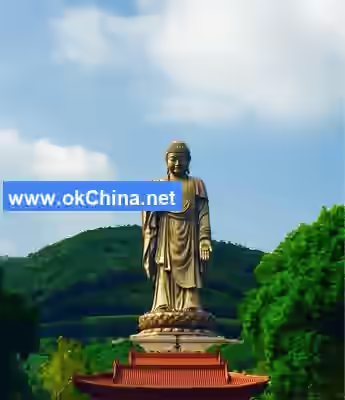
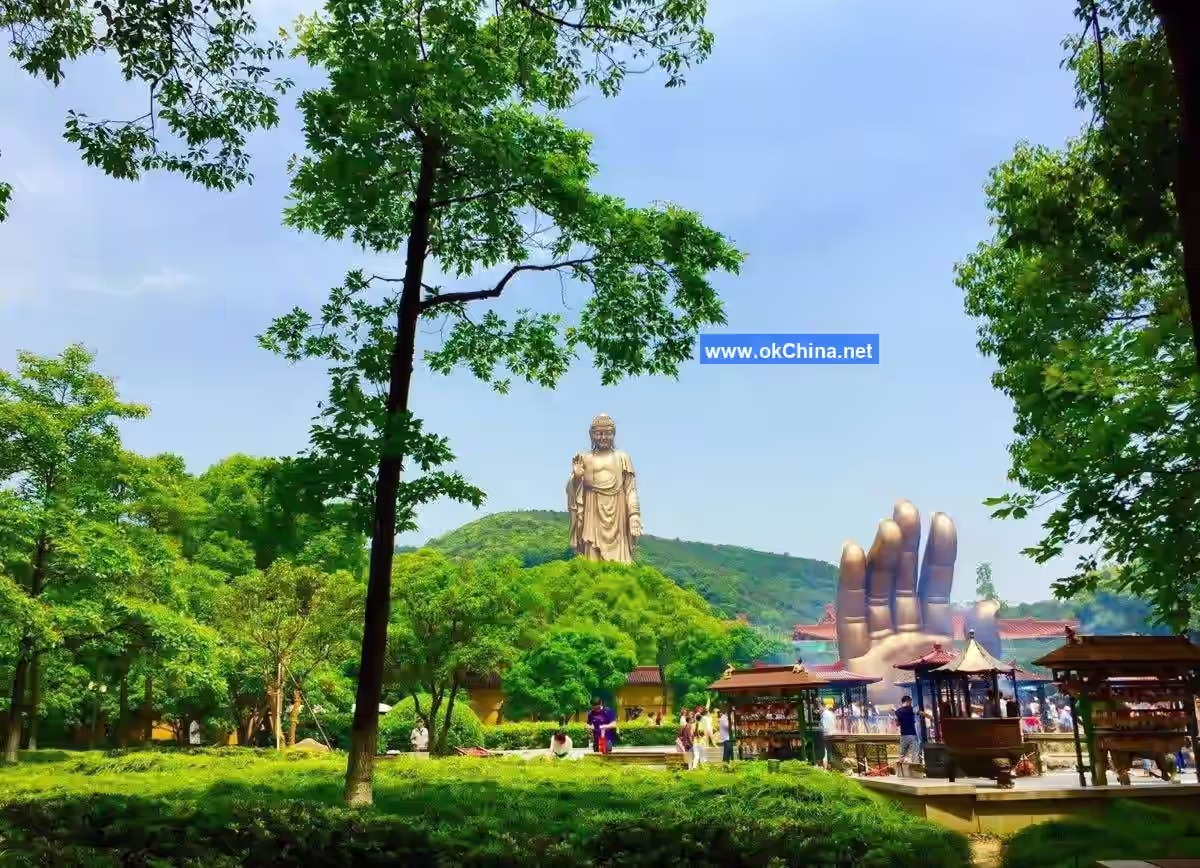
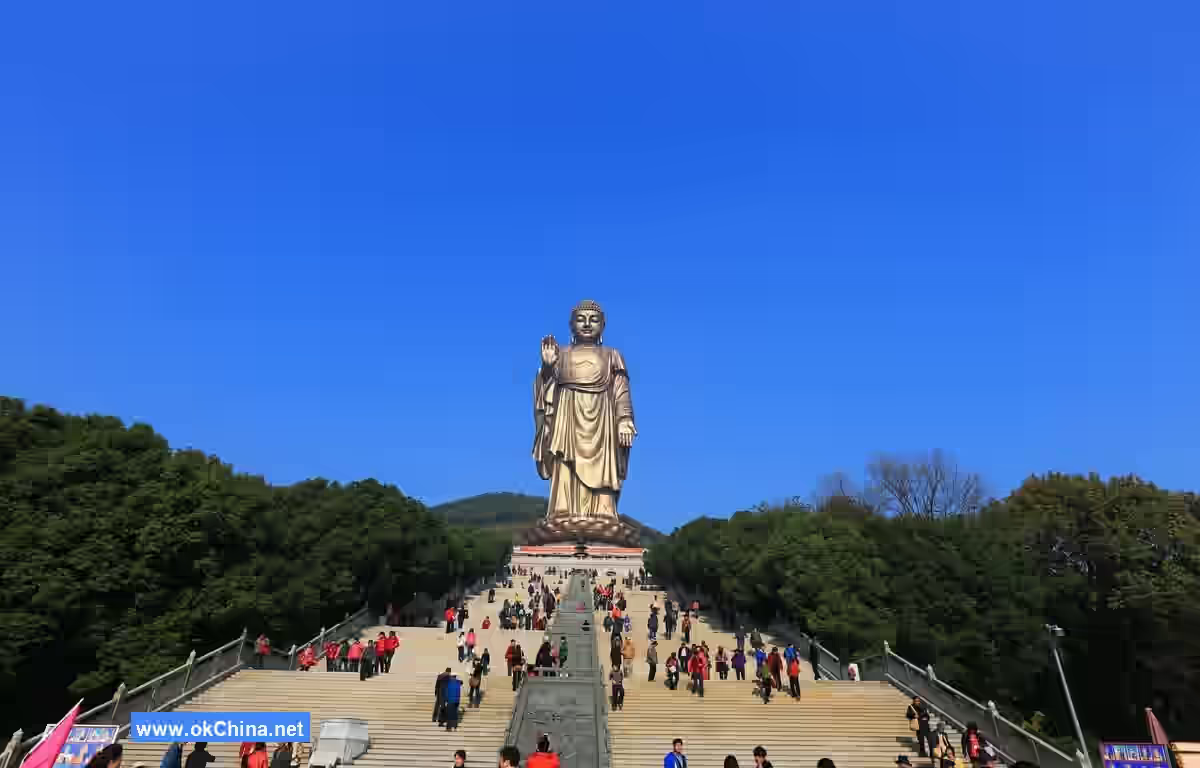
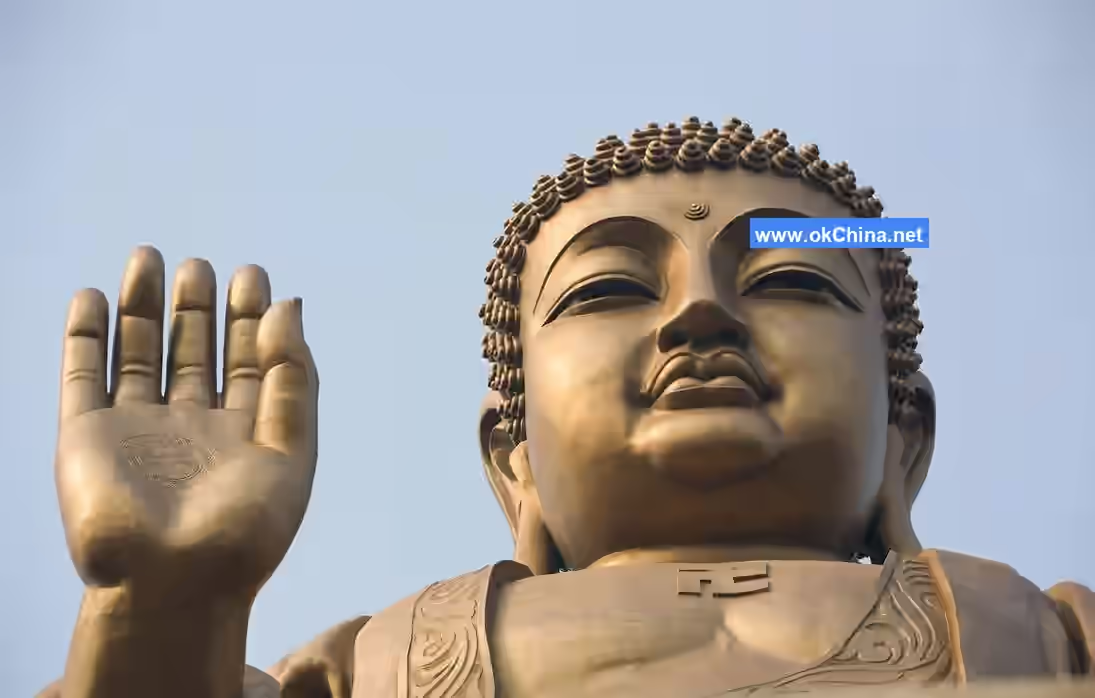
The Lingshan Grand Buddha is the world's tallest outdoor bronze standing statue of Sakyamuni. Its total height is 88 meters: the Buddha's body is 79 meters, and the lotus petals are 9 meters high. It was constructed by welding together 1,560 copper plates, each 6-8 mm thick, with a total weld length of 35 kilometers. The total surface area of the copper plates is over 9,000 square meters, equivalent to one and a half football fields, using approximately 700 tons of copper. Modern high-tech methods were employed during construction, including measures for wind resistance, earthquake resistance, and lightning protection, with the lightning rod concealed within the Buddha's topknot. The Buddha's right hand forms the "Abhaya Mudra," and the left hand forms the "Varada Mudra." The Lingshan Grand Buddha is an artistic treasure integrating culture, art, and religion.
The staircase leading to the foot of the Grand Buddha is called the "Ascending Cloud Path." It consists of 216 steps divided across seven platforms, symbolizing the Buddhist saying, "Saving one life surpasses building a seven-story pagoda." In the middle of the path are seven giant stone carvings depicting the history of Lingshan. Buddhism holds that human life has 108 afflictions and desires. Climbing all 216 steps symbolizes the complete elimination of afflictions and the perfect fulfillment of wishes. To the left of the Ascending Cloud Path is an ancient well named the "Hexagonal Well." Historical records indicate it was dug by monks of the Xiangfu Temple during the Tang Dynasty for cooking and drinking. Tea sage Lu Yu once appraised the water from this well, praising it as one of the ten famous springs south of the Yangtze River.
2.2 Lingshan Brahma Palace
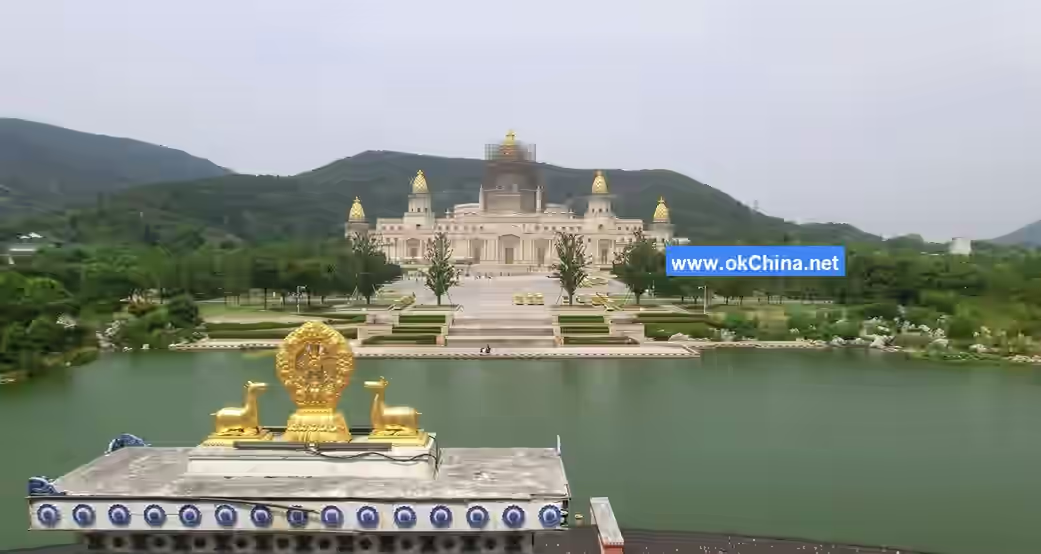
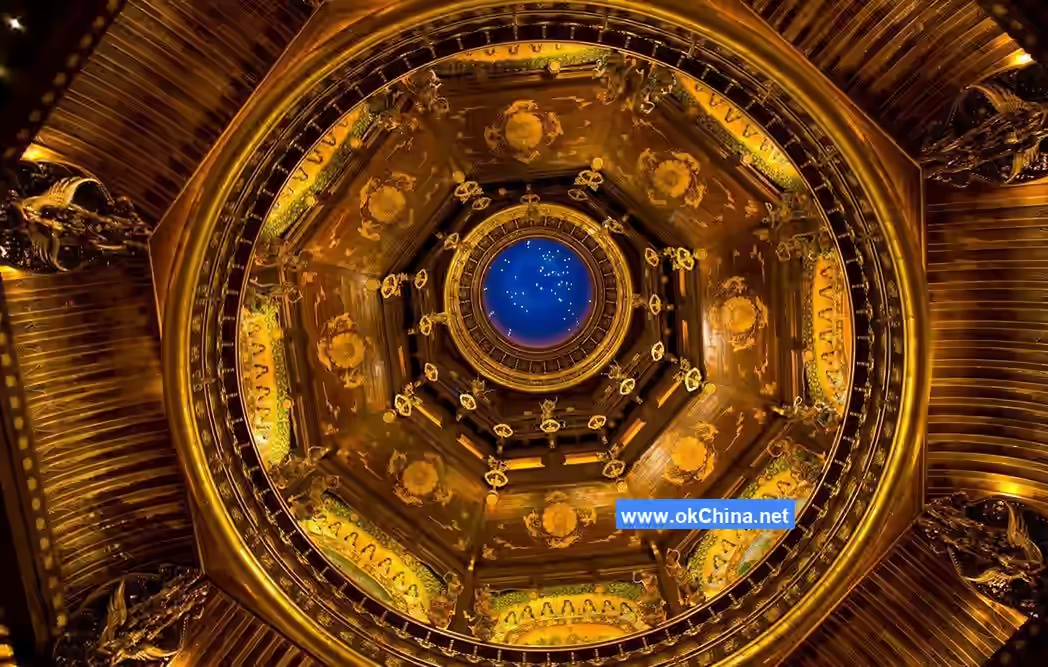
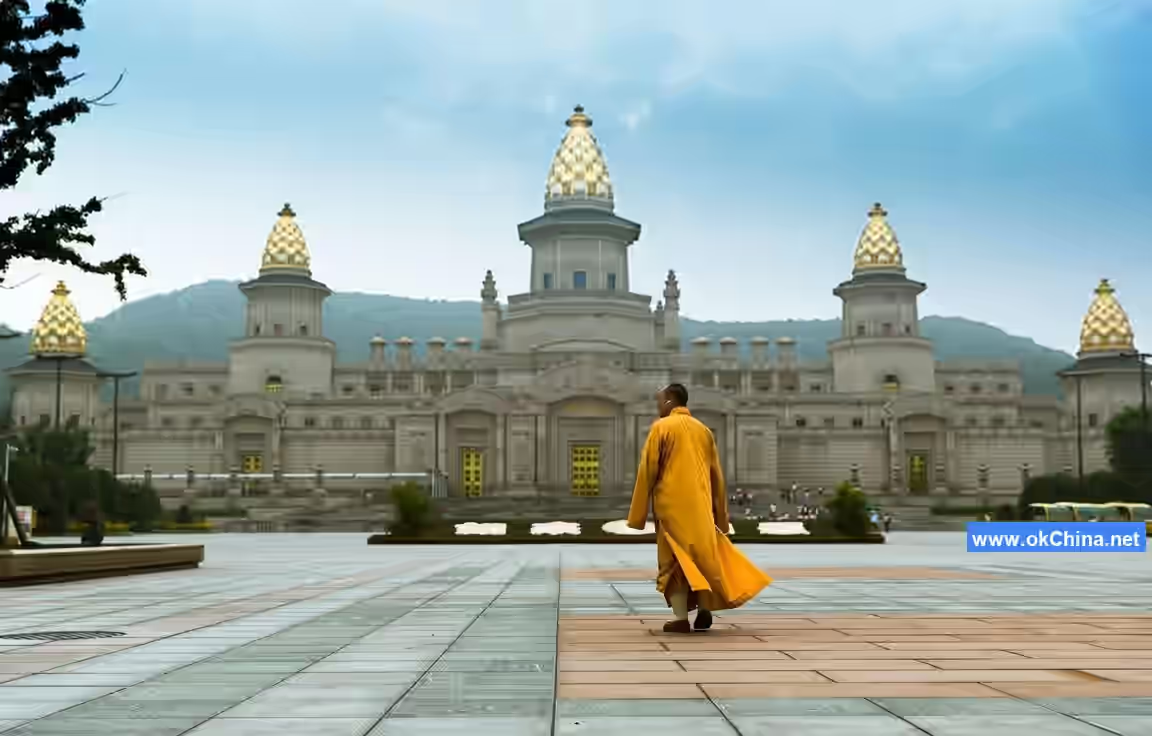
The Lingshan Brahma Palace is a multi-functional cultural building integrating tourism, conferences, exhibitions, and cultural experiences. The entire structure is built against the mountain, blending Chinese Buddhist cave art with traditional Buddhist architectural elements. It is 150 meters wide, 180 meters deep, with a total area of 50,000 square meters. The main building is divided into southern and northern sections. The five external pagoda roofs are designed and decorated based on the "Hua Pagoda" prototypes found in Dunhuang murals. The interior features tall columns, large-span beams, soaring domes, and expansive halls. The various spaces are independent yet interconnected, comprising an entrance hall, corridor hall, pagoda hall, sacred altar, Triyana Conference Halls (Chinese Buddhism, Tibetan Buddhism, Theravada Buddhism), a banquet hall for a thousand people, and more. The Brahma Palace Sacred Altar served as the main venue for the Second World Buddhist Forum. It has multiple functions for conferences and performances and can host large international conferences for up to 2,000 people. The daily scheduled performance of "Lingshan Auspicious Ode" in the Sacred Altar utilizes advanced multimedia technology, offering audiences a brand-new visual feast. Together with the Five-Print Mandala City and the Manfeilong Pagoda, the Brahma Palace represents the three major language traditions of Buddhism.
2.3 Ashoka Pillar
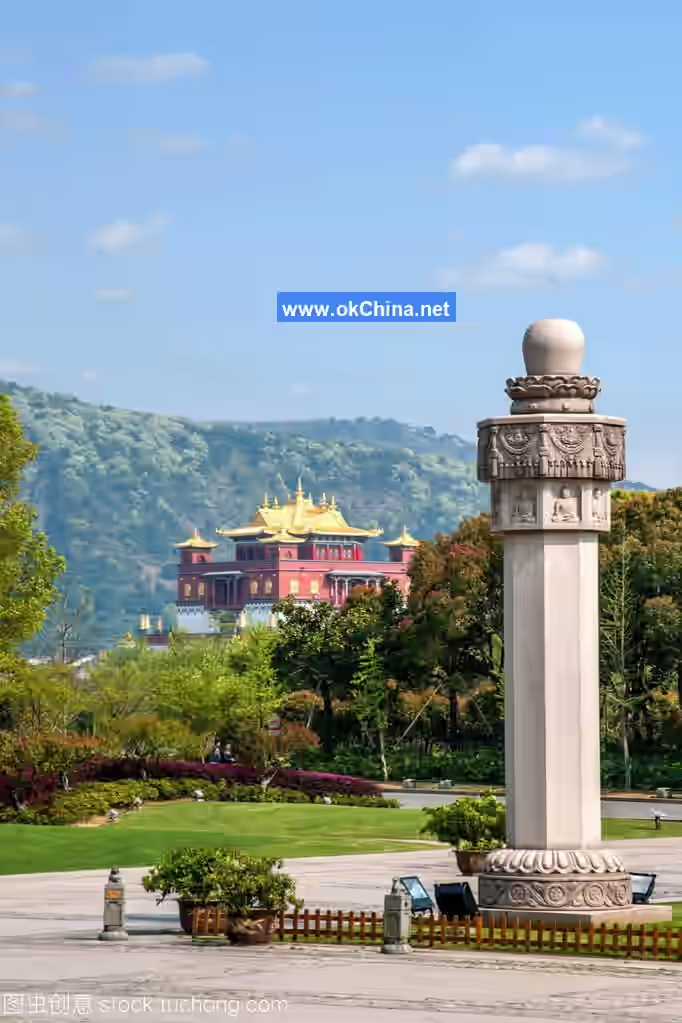
The Lingshan "Ashoka Pillar" has a total height of 16.9 meters, a diameter of 1.8 meters, and weighs over 200 tons. It is a rare example in China of a stone pillar hand-carved from a single piece of granite. The "Ashoka Pillar" originates from ancient India. Legend has it that Ashoka, the ruler of the Maurya Dynasty in ancient India around the same time as China's Qin Shi Huang, waged many wars in his life. In his later years, feeling burdened by his sins, he was enlightened by a monk, converted to Buddhism, and began to educate his people with Buddhist teachings. To promote Buddhism, he erected stone pillars inscribed with scriptures for people to learn from and dispatched envoys to neighboring countries, spreading Buddhism far and wide. Due to Ashoka's vigorous promotion, Buddhism was able to develop into a world religion. The granite for the Lingshan "Ashoka Pillar" was sourced from the mountainous regions of Fujian Province, known for producing granite. The inscription of the four characters for "Ashoka Pillar" in both Chinese and Sanskrit on the pillar was penned by the contemporary master of Chinese studies, Ji Xianlin.
2.4 Five-Print Mandala City
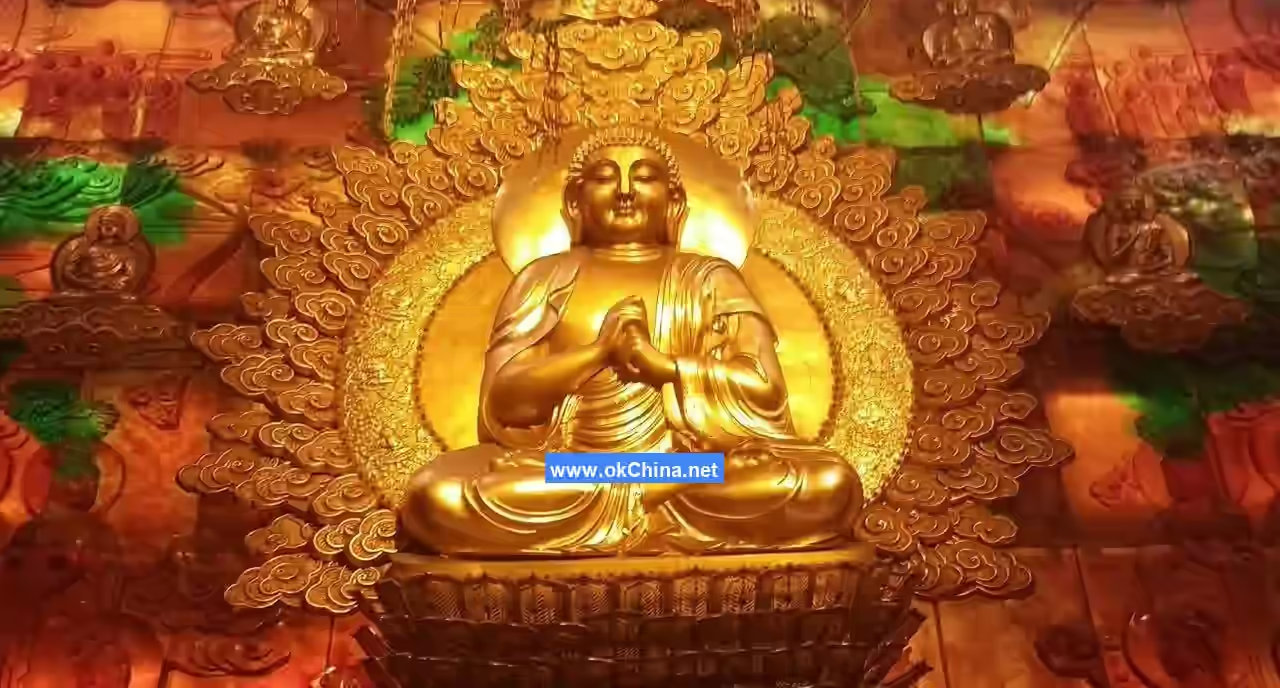
The Five-Print Mandala City covers an area of 8,000 square meters and stands 31.55 meters high with six floors. It enshrines the Five Dhyani Buddhas: Ratnasambhava (South), Amitabha (West), Amoghasiddhi (North), Akshobhya (East), and Vairocana (Center). Its exterior is solemn and magnificent, with dazzling golden roofs, huge gilded precious vases, striking prayer pillars, and prayer flags complementing each other, highlighting the captivating charm of ancient Tibetan architecture. Its interior is sacred and resplendent, fully integrating Tibetan decorative arts such as color painting, murals, wood carving, thangka, wall ornaments, and gilding, showcasing unique mandala art. Visitors can participate in interactive folk activities here, such as lighting butter lamps and turning prayer wheels.
2.5 Xiangfu Chan Temple
The Xiangfu Chan Temple was first built during the Zhenguan era of the Tang Dynasty. Historically, it enjoyed thriving incense offerings and produced many eminent monks, earning the reputation "mountains connecting to Vulture Peak, Dharma succeeding Cien Temple." According to legend, the Tang Dynasty monk Xuanzang once visited here. Seeing that the main peak behind the temple resembled the Vulture Peak he encountered on his journey to the Western Regions to obtain scriptures, he bestowed the name "Little Lingshan Mountain." General Hang Yun, seeing how much Master Xuanzang liked this "geomantic treasure land," funded the construction of the "Little Lingshan Temple" at the mountain's foot, with Xuanzang's chief disciple Kuiji serving as its first abbot. This historical anecdote has been widely circulated locally since the Tang Dynasty. During the Xiangfu era of the Northern Song Dynasty, the temple was renamed "Xiangfu Chan Temple." However, through the vicissitudes of time, Xiangfu Temple was destroyed by war in the 1930s. After China's reform and opening-up, this ancient temple with over 1,300 years of history was rebuilt. With eminent monks presiding, its incense offerings have grown increasingly prosperous, making it an important Buddhist sanctuary along the Taihu Lake coast. The surviving ancient well, lotus pond, ginkgo trees, and plum tree stumps within the temple serve as remnants of historical culture and witnesses to the temple's thousand-year history, evoking a sense of nostalgia in visitors.
2.6 Subduing Demons Relief Sculpture
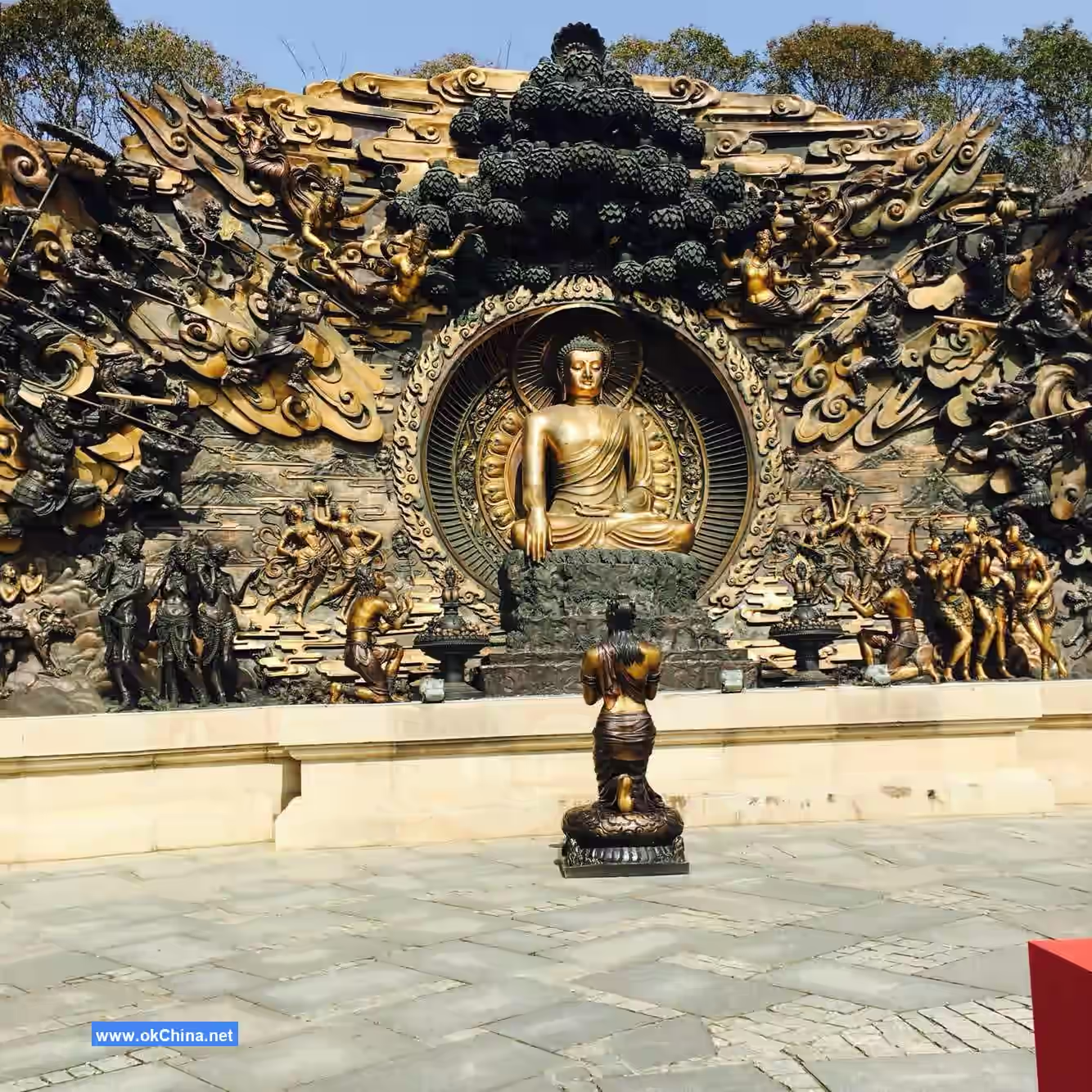
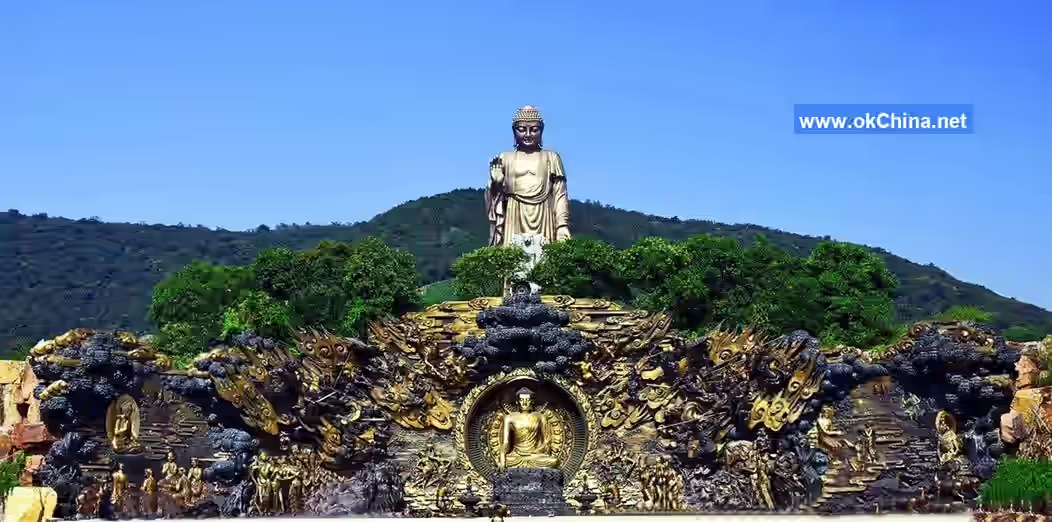
The Subduing Demons Relief Sculpture depicts the story of the Buddha subduing demons and attaining enlightenment. The entire wall is forged from purple copper, measuring 26 meters wide and 8 meters high. According to legend, after six years of asceticism, Sakyamuni sat in meditation under the Bodhi tree, vowing, "If I cannot comprehend the truth of all things in the universe, I will never leave this seat." In the center of the sculpture, the Buddha sits serenely, with one hand touching the earth in the "Bhumisparsha Mudra" (earth-touching gesture, also called the Subduing Demons gesture). On either side of the Buddha, scenes are shown where Mara, the demon king, tries to tempt the Buddha with power, wealth, and sensual pleasures, slanders and defames the Buddha, and frightens him with demon soldiers and generals. The Buddha remains majestic and unmoved, defeating each of Mara's attacks one by one. After seven days and seven nights, he finally overcame obstacles such as wealth, power, lust, fear, and slander, achieved great enlightenment, and became a truly awakened one, causing heaven and earth to tremble. In front and below the Buddha, the earth deity kneels before him, recounting the story of Sakyamuni's enlightenment to local hunters.
2.7 The World's First Palm
The World's First Palm is a replica of the Lingshan Grand Buddha's right hand. It is an exact 1:1 scale replica, identical in shape and size to the original. The palm is 11.7 meters high (equivalent to a three-story building), 5.5 meters wide, with fingers having a diameter of 1 meter, and a total weight of 13 tons. The mudra of the Buddha's palm is the "Abhaya Mudra," symbolizing the dispelling of suffering and granting fearlessness to all beings.
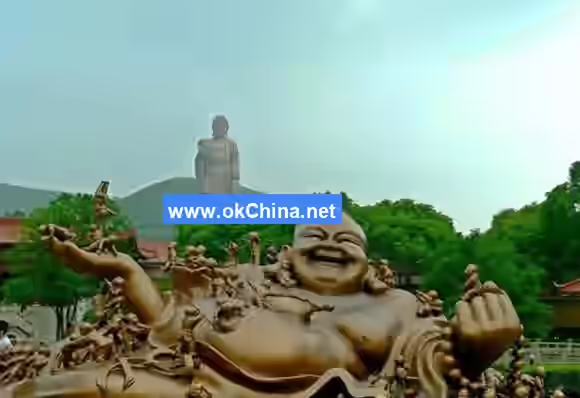
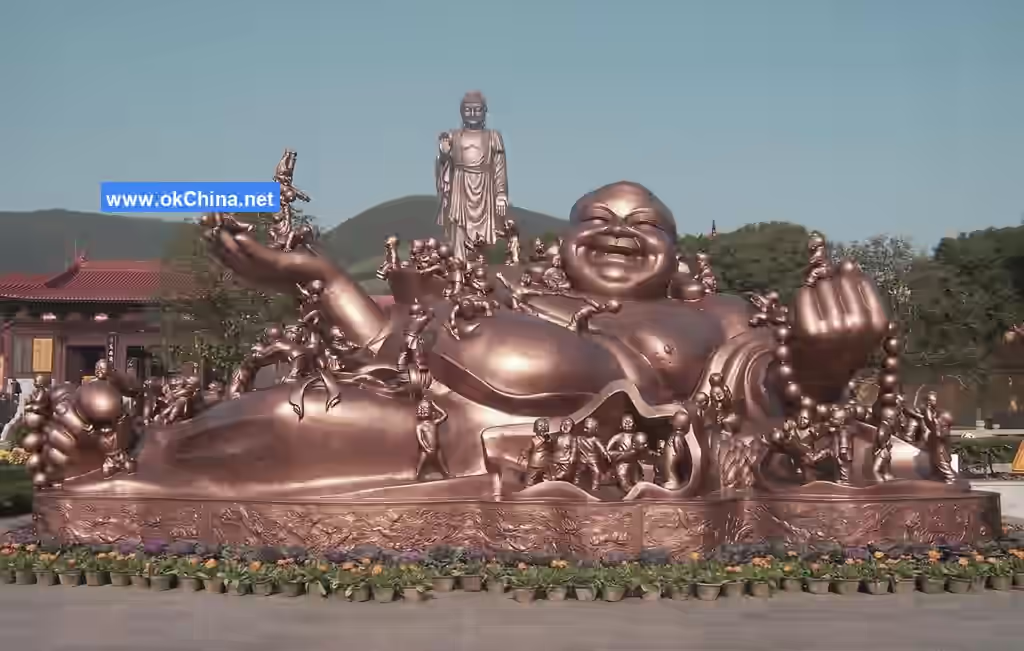
2.8 Hundred Children Playing with Maitreya"One Hundred Children Playing with Maitreya" is a large-scale bronze art treasure that depicts the image of Maitreya Buddha. Maitreya reclines in a leisurely pose, with a kind expression and a beaming smile. On his massive body, a total of one hundred lively and vividly sculpted little rascals are frolicking and playing. These children are engaged in various activities, such as forming human pyramids, tug-of-war, poking Maitreya's navel with small twigs, and some even urinating on Maitreya to test his tolerance. However, Maitreya remains unmoved, still smiling broadly, showcasing his characteristic of "a great belly that can tolerate all things difficult to tolerate in the world; a compassionate face that always smiles, laughing at all the laughable people in the world."
2.9 Buddhist Expo Museum
The Buddhist Expo Museum is located within the base of the Lingshan Giant Buddha. The Buddhist Culture Expo Museum displays rich Buddhist cultural content, including the Five Directional Buddhas of China, and the three major Buddhist traditions: Tibetan, Southern, and Han Chinese, collectively reflecting the profound and long-standing nature of Buddhist culture. The entire exhibition hall covers a total area of 10,000 square meters, with an elegant style. It comprehensively showcases the historical origins, spread, evolution, and profound impact of Buddhism on Chinese culture and art through detailed textual introductions, pictures, artifacts, multimedia, and other forms. The museum is divided into three floors, gathering all the essence of Buddhist culture. It houses the museum's "treasure of the town"—the Five Hundred Arhats Hall of Beijing's Wanshou Mountain, carved from Han Dynasty golden nanmu wood. The museum's exhibition themes include the Five Directional Buddhas of China, the Four Great Buddhist Mountains of China, the three major Buddhist traditions (Tibetan, Southern, and Han Chinese), Buddhist culture and art, and Sino-foreign exchanges. It is divided into several major sections, including an entrance hall, a preface hall, the Five Directional Buddhas Hall, eight exhibition halls, and a multifunctional hall.
2.10 Five Wisdom Gate
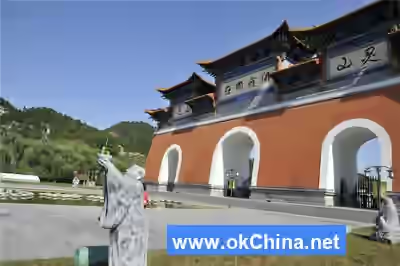
The Lingshan Five Wisdom Gate is a large stone archway with profound Buddhist cultural connotations, constructed using over 1,000 tons of granite. Its north and south faces are inscribed with the six major characters of the Buddhist "Six Perfections": "Dāna (giving)," "Śīla (precepts)," "Kṣānti (patience)," "Vīrya (diligence)," "Dhyāna (meditation)," and "Prajñā (wisdom)." In simple terms, the "Six Perfections" are the six behavioral guidelines for Buddhists to attain great wisdom. The gate pillars of the Five Wisdom Gate are carved from whole pieces of granite, each topped with a majestic stone lion. In Buddhism, the lion's roar symbolizes the spread of the Dharma in all directions. Both sides of the gate pillars also feature couplets by famous scholars and calligraphers.
2.11 Nine Dragons Bathing the Buddha
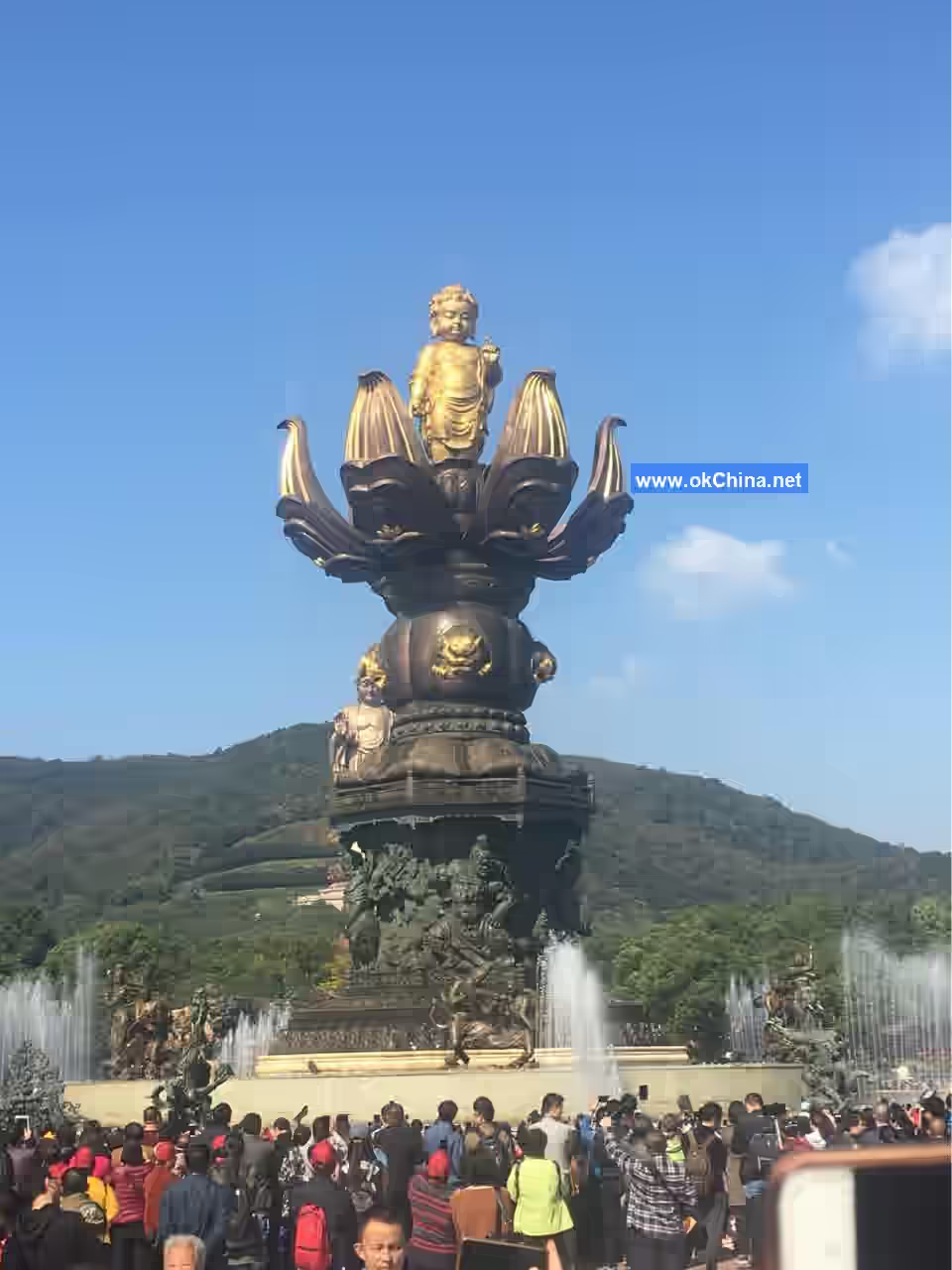
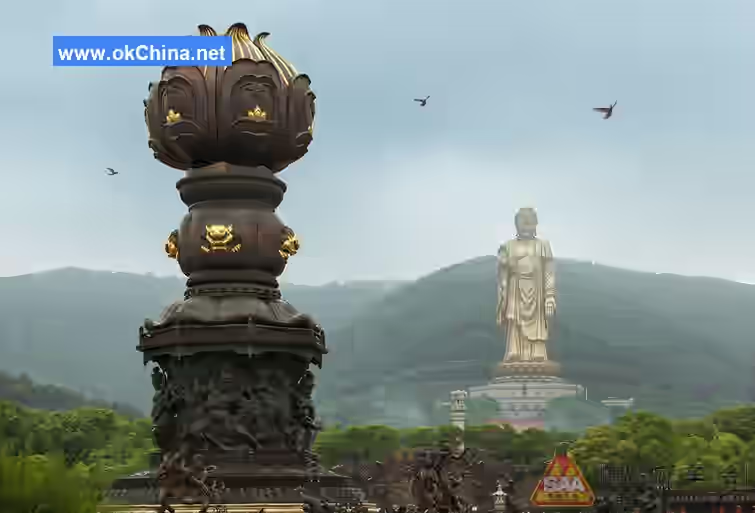
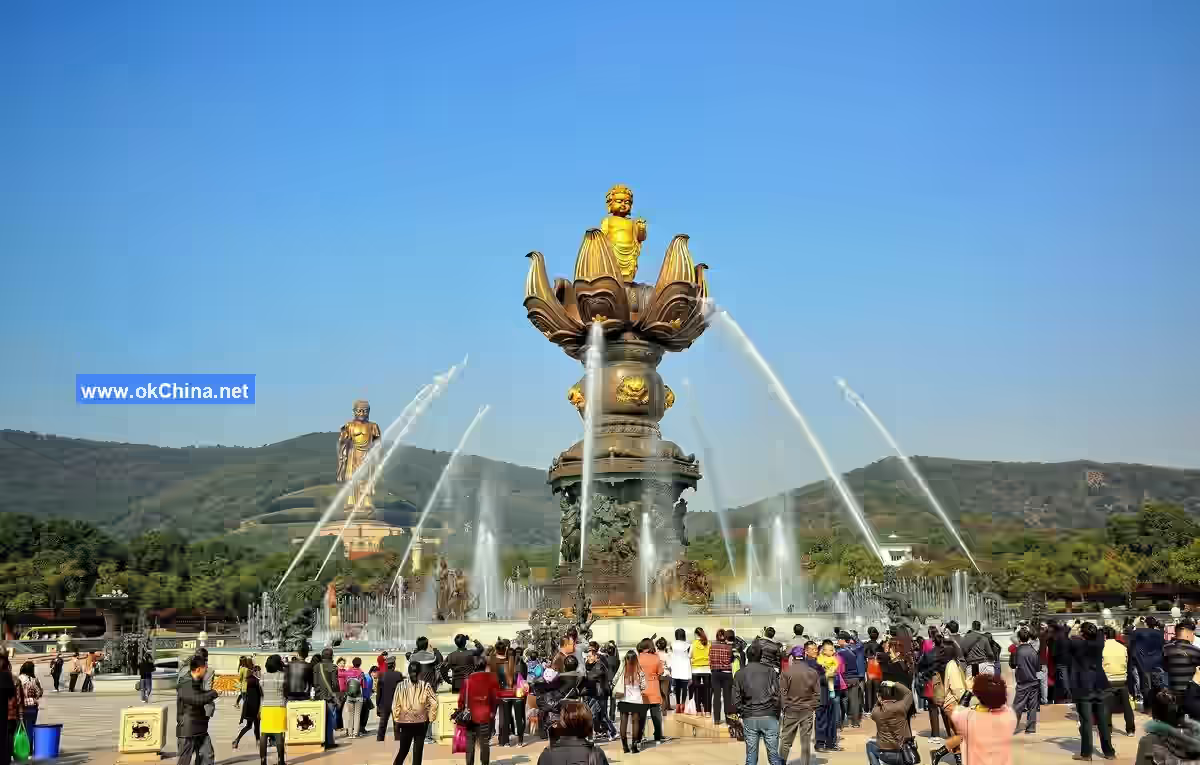
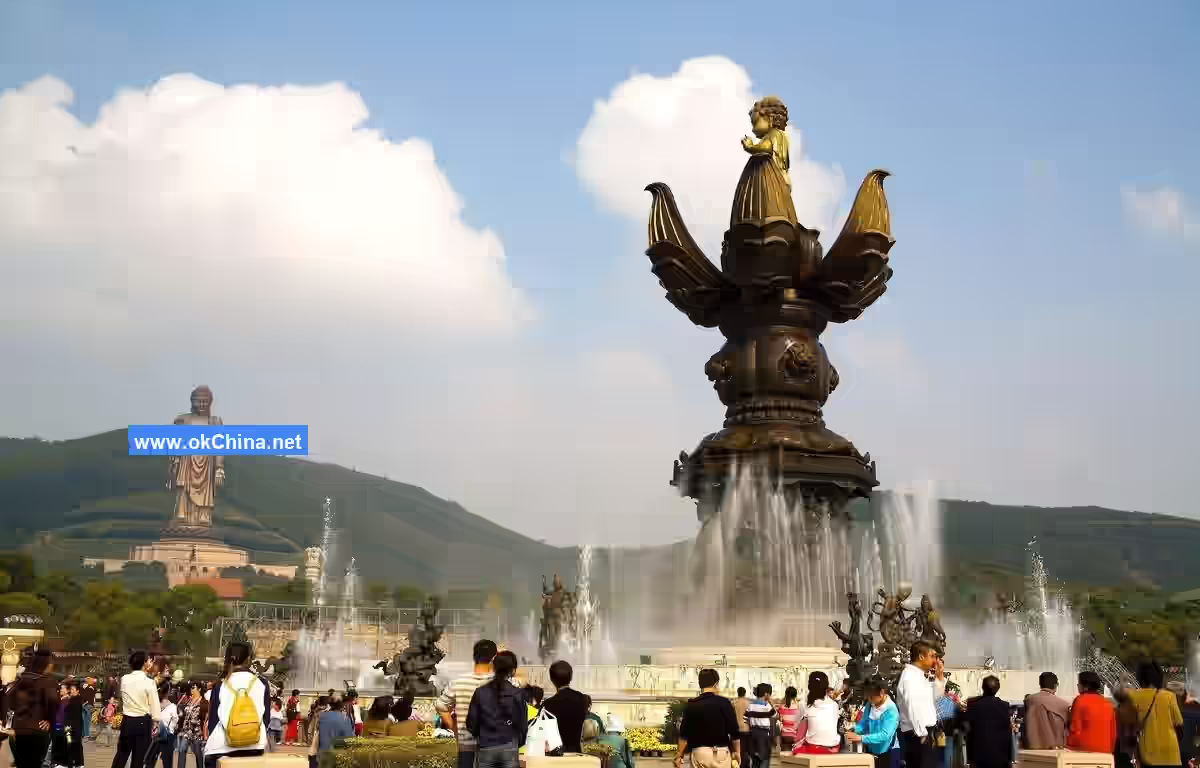
In the Nine Dragons Bathing the Buddha Square stands a huge bronze sculpture of a budding lotus flower, supported by four strongmen, with a white circular marble pool at its base. Nine flying dragons and eight attendants surround the pool. This sculpture group, named "Nine Dragons Bathing the Buddha, the Flower Blooms to Reveal the Buddha," recreates the story of the birth of Buddha Shakyamuni. According to the "Buddhacarita," when Shakyamuni was born, he could speak and walk. He took seven steps in each of the four directions, with a lotus blooming at each step, and declared, "In the heavens above and the earth below, I alone am the honored one." At that moment, a pool appeared in the garden, and nine great dragons sprayed water to bathe him. When the music "Birth of the Buddha" plays, the six lotus petals open, and a 7.2-meter-tall golden statue of the Prince Buddha rises from the lotus, with the nine dragons spraying water to bathe him. The Prince Buddha statue rotates clockwise for one full circle, symbolizing "the flower blooms to reveal the Buddha" and "the Buddha's light shines everywhere." As the music fades, the lotus petals close. Around the fountain, eight groups of phoenixes pour out pure water for visitors to drink, known in Buddhism as the "Eight Meritorious Waters." The square is surrounded by a prayer wheel corridor with 108 prayer wheels. Each full rotation is equivalent to reciting the scriptures once, symbolizing immeasurable merit.
3. Cultural Activities
3.1 Hosted Events
In 1996, the Wuxi Lingshan Giant Buddha Scenic Area began hosting the annual New Year's Eve Bell Ringing Ceremony. On November 15, 1997, the grand consecration ceremony of the Lingshan Giant Buddha was presided over by eminent monks from the three major Buddhist traditions in the world today. From June 6 to 8, 2008, the "12th Sino-Japanese Buddhist Academic Exchange Conference" was held at the Wuxi Hubin Hotel. On March 28, 2009, the second World Buddhist Forum, themed "A Harmonious World, A Symphony of Conditions," opened at Wuxi Lingshan. On July 11, 2009, the "International Symposium on Religion and Multiculturalism in the Era of Globalization" was held at the Lingshan Brahma Palace. On the morning of November 10, 2009, the "Second China-Korea Buddhist Academic Forum," themed "National Development and Progress and Buddhism," opened at the Lingshan Brahma Palace. On June 15, 2010, the 13th World Conference on the Book of Changes was grandly held at the Miaoyin Hall of the Lingshan Brahma Palace. On October 19, 2010, the 13th China-Korea-Japan Buddhist Friendly Exchange Conference was held at the Lingshan Brahma Palace. On June 10, 2015, Lingshan became a cross-strait exchange base. On October 24, 2015, the sub-forum "Responsibility and Duty—Buddhist Youth Forum" of the fourth World Buddhist Forum was held at the Wuxi Lingshan Brahma Palace. On November 8, 2016, a fire broke out at the Lingshan Brahma Palace, affecting an area of over 600 square meters. Some venues were subsequently closed. After more than a year of restoration, it fully reopened on November 15, 2017.
3.2 Legends and Stories
3.2.1 Tea Sage Lu Yu's Connection with the Hexagonal Well
In the western valley of Xiangfu Temple, there is a half-acre tea garden, said to have been planted by monks of the Little Lingshan Temple during the Tang Dynasty. Next to the tea garden, there was originally a tea hut and a hexagonal well; today, the well remains, but the tea hut is gone. This tea garden is considered the ancestor of Wuxi tea and a must-visit spot for pilgrims and literati. Brewing tea with water from the hexagonal well results in a fragrant tea and sweet spring, highly praised. The Tang Dynasty Tea Sage, Lu Yu, heard that there were famous springs and good tea on the western part of Mashan Island and went there to search. He brewed tea with a small mountain spring in the west and found it so satisfying that he stayed to write the "Classic of Tea." One day, passing by Xiangfu Temple, he smelled the aroma of new tea and immediately went to request some. Although he brought his own famous spring water, it had deteriorated. The temple monks gave him water from the spring beside the temple. After brewing the tea, Lu Yu found the water exceptionally sweet and clear, perfectly complementing the fine tea. After Lu Yu's endorsement, the tea and spring of Xiangfu Temple gained great fame, becoming a must-try for visitors. During the Ming Dynasty, to accommodate visitors, a fine spring was specially excavated in the temple, which is today's hexagonal well.
3.2.2 Monk Xuanzang Bestows Zen on Little Lingshan
During the Zhenguan period of the Tang Dynasty, Buddhism flourished. Hang Yun, a native of Majishan, served as a Right General and was friends with Master Xuanzang. General Hang retired to his hometown at the age of sixty, while Xuanzang journeyed west to obtain scriptures. After returning, Xuanzang became a national teacher, promoting Buddhism everywhere. Once, while in Suzhou, he remembered General Hang and went to visit him in Mashan. General Hang warmly received him and accompanied him on a tour of Mashan. Xuanzang found the scenery of Mashan excellent but noticed there was no temple, which gave him an idea. Understanding this, General Hang generously promised to donate land to build a temple. Together, they selected a site, eventually choosing a plot between the family-owned Green Dragon Mountain, White Tiger Mountain, and the backing mountain. Xuanzang remarked that the place resembled a "Little Lingshan." General Hang donated the mountain to build the temple, offering several hundred acres of mountainous land to construct the Lingshan Nunnery, the predecessor of Xiangfu Temple, which became the first Buddhist temple in Majishan. Xuanzang later returned as promised to promote Buddhism.
3.2.3 Green Dragon Soars from the Octagonal Well
The Octagonal Well is a well in the temple, named for its octagonal rim. It is ten zhang deep and eight chi in diameter, and legend says it connects to Taihu Lake, with a stable water supply. During the Tianqi period of the Ming Dynasty, a Yellow Dragon disturbed Taihu Lake, and fishermen sought help from Xiangfu Temple. The Green Dragon, who resided in the Octagonal Well, heard the news and angrily emerged from the well. After eighty-one fierce rounds of battle with the Yellow Dragon, it finally defeated the Yellow Dragon and restored peace to Taihu Lake. The next day, a piece of the well curb was found knocked over by the Green Dragon, known as the "Dragon's Belt Stone." The Octagonal Well thus became known as the Dragon Well, and Emperor Qianlong once used its water to brew tea.
3.2.4 Emperor Qin's Horse Leaves Divine Traces
In his later years, Emperor Qin Shi Huang feared his throne would be usurped. Believing the astrologer's prophecy that "a general would emerge from Jiangnan," he rode his divine horse to inspect the region. Upon reaching Dragon Mountain by Taihu Lake, he was captivated by the beautiful scenery and decided to head to the East Sea. The divine horse left four hoofprints on a giant rock in the southwest of Dragon Mountain before soaring away. This rock became known as "Horse Trace Rock," and Dragon Mountain was renamed "Horse Trace Mountain" (Majishan). The second highest peak in Mashan, Qin Lü Peak, is said to be named either because Emperor Qin Shi Huang lost a shoe there while riding or because he left a shoe print while personally inspecting the feng shui. The peak is uniquely shaped, and its excellent feng shui is widely acknowledged.
4. Philosophical Culture
"Five Directional Buddhas" is a Buddhist concept referring to Vairocana Buddha in the center, Akshobhya Buddha in the east, Ratnasambhava Buddha in the south, Amitabha Buddha in the west, and Amoghasiddhi Buddha in the north. Chairman Zhao Puchu, considering the actual situation of Chinese Buddhism, corresponded the Five Directional Buddhas to five great Chinese Buddha statues: the Lingshan Giant Buddha in the east, the Tian Tan Buddha in the south, the Leshan Giant Buddha in the west, the Yungang Giant Buddha in the north, and the Longmen Giant Buddha in the center. He believed that this belief system helps Buddhist followers form a stable faith foundation and enhances the cohesion of the Buddhist community. Zhao emphasized the importance of maintaining this belief system and praised the construction of the Lingshan Giant Buddha as a significant event in the history of Chinese Buddhism. His philosophy laid the theoretical foundation for the Lingshan Giant Buddha Scenic Area to become a representative Buddhist cultural forest in the Jiangnan region.
Comments
Post a Comment