Ancient Town Attractions
Wenchang Palace
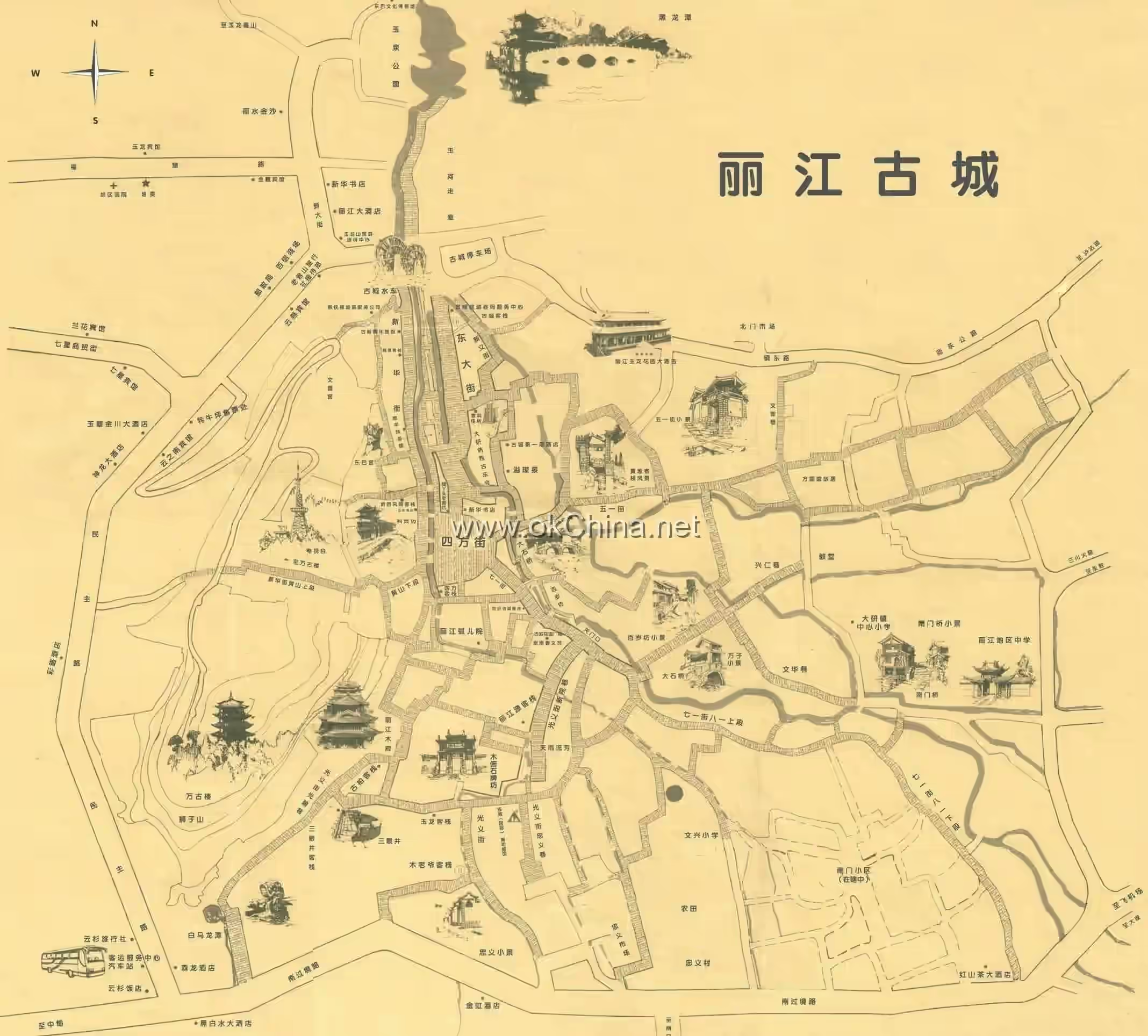
Wenchang Palace is located at No. 29 Shizi Road in the ancient town (west of Lion Mountain) and is a key cultural relic protection unit in the ancient town area. It was first built in the first year of the Yongzheng reign of the Qing Dynasty (1723) by Yang Bi, the first prefect of Lijiang, who relocated and constructed it. After restoration and reconstruction in 2013, it opened to the public on January 1, 2017. Historically, on the third day of the second lunar month each year, local officials, gentry, celebrities, and scholars would hold grand sacrificial ceremonies in the palace, praying for prosperous local culture, abundant talents, financial prosperity, and favorable weather.
In 2017, the Lijiang Ancient Town Protection Administration and the property rights user jointly established the Wenchang Palace • Rock Impression Museum. While preserving its original appearance, the two-story building within Wenchang Palace was repurposed as the Rock Impression Museum, displaying pictures, books, and exhibition panels related to the life of Joseph Rock, an Austrian-American botanist and ethnologist, during his time in Lijiang.
The viewing platform of Wenchang Palace is lush with ancient trees, filled with birdsong and fragrant flowers, and offers beautiful scenery. It is an excellent spot for viewing the snow-capped mountains and overlooking the ancient town.
Opening Hours: 10:00-17:30
Naxi Wedding Courtyard
This is a centralized exhibition site for Naxi wedding customs, showcasing the entire process of a Naxi wedding. The courtyard is a typical Naxi residential compound with front and rear yards. The main courtyard features a "four buildings and five courtyards" layout, with the main house facing south and all four wings being two stories high. The courtyard is patterned with "Four Bats Paying Homage to Longevity," and at its center is a large fire pit used for dancing and celebrations. The front yard follows a "three wings and one screen wall" design, with the main gate facing south, symbolizing the auspicious meaning of "Colorful Clouds Appearing in the South." The corridor connecting the two courtyards is a distinctive wooden walkway leading directly to the rear yard. The walkway is covered with a red carpet, adorned with many Lijiang-style wishing bells above, and reflects a pool of clear water below, creating a harmonious blend of water and sky. The entire courtyard is decorated with lanterns and colorful banners, filled with festive and unique charm!
Copper Smith Family
Copper Smith Family is located at No. 76 Wenzhi Lane, Wuyi Street in the ancient town, where the skilled Naxi copper smith family, led by the son of the elder He Jikuan, practices their craft. Here, a dazzling array of Lijiang copperware series and traditional copper forging processes are displayed. Lijiang is rich in copper resources, and during the Yuan and Ming dynasties under the rule of the Mu chieftains, Lijiang's copper industry was already renowned far and wide, with a long-standing reputation for copperware production. Lijiang copperware is highly popular in surrounding regions and among various ethnic groups due to its good quality, sufficient weight, variety, durability, and sturdiness. At the end of World War II, there were nearly 300 copper smith households in Lijiang Ancient Town, and the town was filled with the constant clanging of copper forging. Today, only a handful of artisans in the ancient town are engaged in copperware production, with Copper Smith Family being the most famous.
He Zhigang Study
This is the He Zhigang Study, listed as a youth education base in Lijiang City. He Zhigang is a famous Naxi mouth-calligrapher in China, born in 1968 in Baisha, Lijiang, Yunnan. At the age of 11, he unfortunately lost both arms due to a high-voltage electric shock. However, He Zhigang did not succumb to fate. Despite losing his arms, he did not lose his determination. Through relentless struggle in adversity, he created an inspiring life as a strong individual. To strengthen his will and physique, he practiced running tirelessly, relying entirely on his waist for balance, rain or shine, and eventually achieved success. He won 32 gold medals in track and field, swimming, and other sports competitions at national, provincial, and municipal Paralympic Games. He maintained a confident and resilient mindset, practicing calligraphy with extraordinary perseverance, using his mouth instead of hands, and became a renowned mouth-calligrapher both domestically and internationally. He has held calligraphy exhibitions in Shanghai, Japan, Singapore, and other places, with his works featured in the China International Calligraphy and Painting Expo and the National Award-Winning Artists Fine Arts Expo. His calligraphy works have been collected by many national leaders and the Palace Museum. He is also actively involved in charitable causes, donating over 300,000 yuan to help students from impoverished mountainous areas complete their studies. He Zhigang is the recipient of the 14th "China's Top Ten Outstanding Youth" award in 2003 and the "National May Day Labor Medal," as well as the chairman of the Lijiang Disabled Persons' Federation Limb Disability Association in Yunnan Province. He Zhigang's fighting spirit and resilient life inspire everyone and serve as a role model worth emulating.
Dongba Paper Workshop
You are now entering the Dongba Paper Workshop, where the traditional Naxi Dongba papermaking process is showcased. This is one of the few remaining ancient handmade papermaking techniques and a primary carrier of Naxi Dongba culture that has been passed down for thousands of years. The Dongba ancient texts were listed as a World Memory Heritage on August 30, 2003. Dongba paper is made from a local plant called "paper mulberry" (Rao flower) in Lijiang, through processes such as steaming, sun-drying, rinsing, and pounding. The paper has an ivory hue, is insect-resistant, wear-resistant, fragrant, highly ink-absorbent, suitable for writing on both sides, and resistant to discoloration. The longer it is preserved, the richer its antique fragrance becomes, earning it the reputation of "paper that lasts a thousand years." While inheriting tradition and producing high-quality Dongba paper, the Dongba Paper Workshop also incorporates innovative design concepts, offering over 100 types of Dongba paper products across seven series, such as "Naxi Paper Books," "Tea Horse Paper Books," "Dongba Paper Classics," as well as lamps, notebooks, postcards, and paper sheets. This revitalizes the fading folk traditional craft, infusing it with new vitality.
Ayicuan Ancient Well
Ayicuan Ancient Well is located north of the Big Stone Bridge, just thirty steps away, and is one of the main wells used for drinking water in Lijiang Ancient Town. What distinguishes Ayicuan Ancient Well from other wells in Lijiang Ancient Town is its naturally formed "stone cover plate," which protects the well water from roadside dust pollution and direct sunlight. The well water is cool and refreshing, flowing year-round without interruption. This is believed to be due to the protection of the "Shu" deity, the highest authority in Dongba religion, which ensures the well water's sweetness and purity. It is said to have beautifying and longevity-enhancing effects. Cups and bowls are placed beside the well for the convenience of passersby to drink. This reflects the simplicity of Lijiang's folk customs. Taking a sip of the water will sweeten your heart and soothe your entire body. If you happen to find the water bowls empty and ready to drink, be sure to have a few more bowls!
Small Stone Bridge
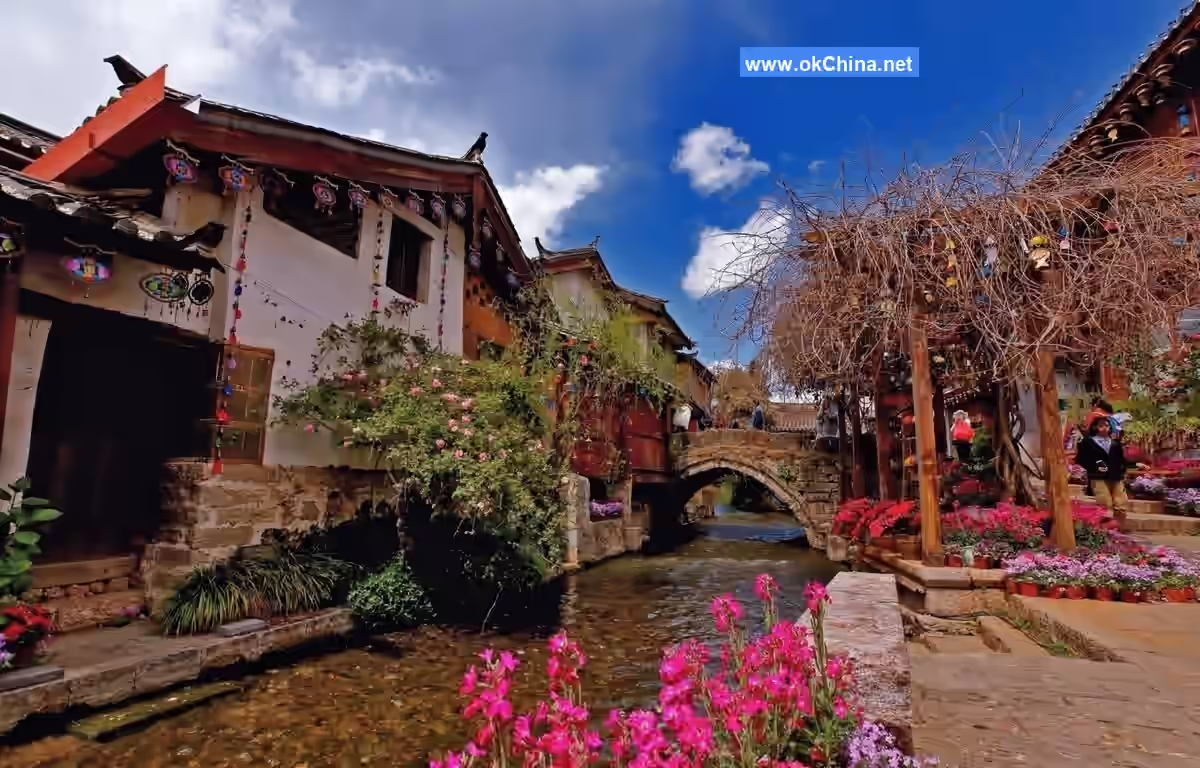
The Small Stone Bridge is located over the East River on Wuyi Street and was built during the Qing Dynasty. It is a single-arch stone bridge, 3.6 meters long and 3.5 meters wide. The bridge deck is level with the road, and both sides are equipped with low guardrails made of thick stone slabs with seating.
Jade Belt Bridge
The bridge facing the Zhongyi Archway is Jade Belt Bridge. It was built by the local prefect in the early Ming Dynasty and is a single-arch stone bridge. The bridge deck is 3 meters long and 9.18 meters wide, with a horizontal length greater than its longitudinal length, corresponding to the width of the Zhongyi Archway at the entrance of the government office. Historically, people regarded the moat surrounding the government office as a jade belt and praised this bridge as the buckle ornament on the belt, hence the name Jade Belt Bridge. Additionally, because the middle of the bridge deck is arched, with both ends lower than the center, roughly parallel to the road, it resembles a large saddle, earning it the alternative names Golden Saddle Bridge and Saddle Bridge. After renovation in 1998, Jade Belt Bridge is now 4 meters long, 12 meters wide, with an aperture of 1.2 meters. Both sides of the bridge are equipped with 50-centimeter-high guardrails made of variegated stone with seating. The center of the north guardrail is inscribed with the three characters "Jade Belt Bridge." The renovated Jade Belt Bridge has taken on a new appearance, welcoming domestic and international tourists from all directions every day.
Double Stone Bridge
The bridge you are now on is Double Stone Bridge, also known as Jade Dragon Bridge. It is located at the entrance of the Jade Water River in the north of the ancient town, where the river splits into eastern, central, and western branches. Double Stone Bridge connects Xinhua Street to the west and leads to Xinyi Street to the east. It was originally built by the local prefect during the Ming Dynasty and is a double-arch stone bridge. The bridge is over 10 meters long and about 4 meters wide, with seating-style stone slab guardrails on both sides. In 1959, Double Stone Bridge was demolished, and a concrete-structured Jade Dragon Bridge was built to the north, measuring 12 meters long and 14 meters wide. In 1987, it was expanded, with 5-meter-wide sidewalks added on both sides, increasing the total width to 24 meters. As the connecting point between Lijiang's old and new towns, Jade Dragon Bridge continues its ancient mission of dividing the Jade Water River into three branches. Coupled with the rotating waterwheels that operate day and night, it adds an elegant and dynamic beauty to the ancient town.
Duck Egg Selling Bridge
Duck Egg Selling Bridge is located over the West River southwest of Sifang Street, corresponding north-south with the Chicken Pea Selling Bridge, about 10 meters apart. It connects Sifang Street and Huangshan Lane. Built during the Ming Dynasty, it is a single-arch stone bridge, 2.8 meters long and 3.1 meters wide. In ancient times, the bridge was a marketplace for selling duck eggs in Sifang Street, hence its name. Duck eggs are an indispensable dish in Naxi weddings and funerals, and the Naxi people have a high demand for them. Where there is demand, there is a market, so duck egg trading on this bridge continued until the early years of the founding of the People's Republic of China. In 1993, the old Duck Egg Selling Bridge was demolished, and a new bridge was built, measuring 7 meters long, 3 meters wide, with an aperture of 1.1 meters. The bridge deck is paved with variegated stones, and low guardrails made of variegated stone strips are installed on both sides for tourists to sit and enjoy the view.
Chicken Pea Selling Bridge
Chicken Pea Selling Bridge is located over the West River at Sifang Street and is a single-arch stone bridge. Due to its proximity to Sifang Street, the bridge's name carries a strong market flavor. Lijiang's specialty, chicken peas, are ground into chicken pea jelly, a favorite food among ancient town residents, readily available in Sifang Street, which is how Chicken Pea Selling Bridge got its name. This bridge was built by the Mu chieftains during the Ming Dynasty. Just from the names, one can see that they reflect the thriving commerce of Lijiang: Sifang Street has long been an important post on the Tea Horse Road, where merchants from all directions gathered and goods from everywhere converged.
Centenarian Bridge
You have arrived at Centenarian Bridge, which stands over the Central River and is an exquisite single-arch stone bridge. Centenarian Bridge is also called "Benevolence and Longevity Bridge." It refers to an elder born in the third year of the Qianlong reign (1738), who lived through the Qianlong, Jiaqing, and Daoguang reigns, reaching the age of 108, which became a celebrated story at the time. Consequently, the local government and community donated funds to build this Centenarian Bridge and erected a wooden Centenarian Archway about fifty or sixty meters to the east. The lane was then named Centenarian Archway Lane.## Zhao Family Courtyard
The Zhao Family Courtyard was built by Zhao Ziheng, a famous merchant in Lijiang in the early 20th century. The complex consists of two parallel courtyards with a garden, forming a one-entry, two-courtyard layout, with the outer courtyard constructed before the inner one. The outer courtyard follows the "Siheyuan with Five Skylights" style, with the main house facing southeast. The inner courtyard follows the "Three Wings with One Screen Wall" style, but the screen wall faces the flower hall instead of the main house. The two courtyards are connected by the flower hall, and both have gardens. This represents a multiple combination of residential architecture. Most notably, an important component in Naxi residential architecture is the bracket, also known as "qianjin" or "queti." It not only decorates the building but also functions as a "corbel" or forced support, bearing pressure at critical points. During the magnitude 7.0 earthquake in Lijiang in 1996, the interconnected houses of the two courtyards, with six wings in total, benefited from the seismic resistance provided by these brackets, preventing significant damage to the structures.
Li Family Courtyard
The Li Family Courtyard was initially built during the late Ming and early Qing dynasties, with a history of over 300 years. It is a key protected residential building and exhibition courtyard in the ancient town, and one of the more completely preserved examples of the Naxi "Siheyuan with Five Skylights" architecture. This layout is another common form in Lijiang Ancient Town, consisting of four wings—the main house, the opposite house, and left and right side houses—forming a closed quadrangle. Besides a large central courtyard, there are four smaller corner courtyards or "loujiao," one of which is always used as the main entrance, featuring a gate tower. The main gate usually faces east or south. This architectural form was suitable for families with more members and relatively affluent economic status in the past.
Yang Shouqi's Former Residence
The owner, Yang Shouqi, was an overseas Chinese from India. The house structure follows the "Three Wings with One Screen Wall" style. The gate of the former residence is a three-tiered arched structure, carved with a pattern of "Two Phoenixes Facing the Sun." All three wings are built in the "Manlou" style. The north-facing wing is the main house, with side rooms on both sides, and its six-panel doors feature "Four Seasons Flowers" patterns. The east-facing wing is a two-sided room, with a small garden at the back. The walkway is paved with hexagonal bricks, the courtyard with strip stones, and the pillars in the courtyard are drum-shaped. Influenced by factors such as family size, land availability, materials, economic conditions, and customs, this type of architecture is highly flexible in terms of measurements, decorations, and structure. Such layouts are suitable for medium-sized families (about 7-8 people per household) in terms of living needs and affordability, making them quite common in Lijiang Ancient Town.
Bar Street
The ancient town's Bar Street is a paradise for bar-goers. Here, colorful wine banners flutter in the wind, while drums, keyboards, guitars, and bass blend into music that flows with the babbling stream. Names like "One Meter of Sunshine," "Little Paris," and "Sakura House"—each romantic enough to capture a wandering heart. Here, the ancient town and bars, history and modernity, merge into one. Imagine yourself on this vibrant bar street, holding a cool, crisp beer, with pop or rock music filling your ears, sitting on antique wooden or rattan chairs, swaying to the rhythm or watching the passersby—what a delightful experience! Lijiang's Bar Street is the most distinctive alley in the ancient town, attracting visitors from all over. It has become synonymous with romance and unexpected encounters.
Fang Guoyu's Former Residence
Fang Guoyu's Former Residence is located at No. 32 Wenzhi Lane, Wuyi Street. It was initially built during the Jiaqing period of the Qing Dynasty and opened to the public on May 13, 2007. It serves as a Yunnan Provincial Patriotic Education Base and a Provincial-Level Cultural Relics Protection Unit.
Fang Guoyu (1903-1983) was a renowned Chinese historian, a native of Lijiang, Yunnan, and of Naxi ethnicity. He studied at Beijing Normal University and Peking University in his early years. After graduation, he worked as an editor at the Beijing Normal University Research Institute and later as a professor at Beiping National University. He returned to Yunnan in 1936 to teach at Yunnan University.
The residence covers an area of 1.98 mu and consists of two interconnected Siheyuan courtyards with over 70 rooms in total. There are ten exhibition halls: "The Path of Learning," "The Diligent Study Room," "The Fang Family," "Residential Architecture," "Academic Achievements," "Teaching Accomplishments," "Social Activities," "Condolences and Remembrance," "The Fang Family School," and "Opening Commemoration." The exhibits include over 200 photographs from various periods of Mr. Fang Guoyu's life and more than 120 relics such as manuscripts, monographs, calligraphy works, and furniture.
Opening Hours: 9:00-17:00
Reservation Phone: 0888-5353877
Maicaochang (Hay Market)
Lijiang was a historically important town on the Ancient Tea Horse Road, and Lijiang Ancient Town was a crucial commodity distribution center and transit point on this route. In the past, many horse caravans stopped here to rest, naturally forming a market to supply fodder for the horses. The place where you are now standing—Maicaochang—was where these caravans stopped to feed their horses.
Bailong Cultural Square
Bailong Cultural Park is located south of the ancient town and was completed in 2008. It serves as the southern entrance to the ancient town, covering an area of 53 mu. It includes a tourist center, an ancient town museum, an ecological parking lot, and functions as a comprehensive tourism service center providing dining, shopping, and touring facilities. To the north is the Ancient Town Tourist Center, covering 1,332 square meters. It is a traditional Naxi residential courtyard with a one-entry, two-courtyard layout, housing over ten functional areas including a front desk reception, consultation services, a video screening room, a children's play area, a specialty goods section, a business area, a medical room, and a complaint handling area. Adjacent to the tourist center is the World Cultural Heritage Lijiang Ancient Town Museum, covering 722 square meters. It is a traditional Naxi courtyard of the "Three Wings with One Screen Wall" style, jointly established by the Lijiang Ancient Town Protection and Administration Bureau and The Nature Conservancy (TNC). It serves as an educational window systematically showcasing the history, culture, and nature of Lijiang Ancient Town to visitors. The ecological parking lot within the verdant Bailong Cultural Park covers 9,271.56 square meters, accommodating 40 large vehicles and 60 small cars, meeting parking demands during peak tourist seasons. The park is planted with 744 valuable trees and 82,614 small shrubs and yellow azaleas. With greenery covering 70% of the area, the park is filled with birdsong and fragrant flowers, offering a charming environment. It also serves as a leisure and recreational space for the ancient town's residents.
Wanzi Bridge
Wanzi Bridge spans the Zhonghe River at Guanmenkou on Qiyi Street. It is a single-arch stone bridge, 4 meters wide and 8 meters long. Despite its unassuming appearance, the bridge holds profound meaning. Legend has it that the donor was a family named Yang, who longed for a son after years of childlessness. They funded the bridge construction to accumulate merit and pray for a child. Sensing the donor's wish, the builders intentionally used sandstone slabs instead of ordinary stones for construction, symbolizing "thousands of sons and grandsons." This bridge, formed from countless sand grains, reflects the craftsmen's unique imagination and their heartfelt wishes for the donor.
Snow Mountain Academy
Snow Mountain Academy is located at No. 37 Public House, Wangjiazhuang Lane, Wuyi Street. It was an important venue for the Naxi people to receive Han Chinese cultural education in the late Qing Dynasty. It opened to the public on November 7, 2012.
The academy was jointly founded in 1725 (the third year of the Yongzheng reign of the Qing Dynasty) by Yang Bi, the first appointed magistrate after the "Gaitu Guiliu" policy in Lijiang, and Wan Xianyan, the Confucian instructor of Lijiang Prefecture. It underwent multiple renovations, expansions, and reconstructions until the Guangxu period. Its mission ended in 1905 with the abolition of the imperial examination system and the promotion of modern schools, marking a 180-year history of education. During this time, it produced 2 Hanlin scholars, 7 Jinshi (imperial scholars), 61 Juren (provincial graduates), 12 Fubang (associate graduates), 154 Gongsheng (tribute students), and countless others such as Linsheng, Zengsheng, and Fusheng. These talents from the frontier region promoted the development of cultural and educational undertakings in the Naxi areas and symbolized the widespread access to Han Chinese education for commoners in ancient Lijiang.
Since 2012, Snow Mountain Academy has initiated the "Lijiang Lecture Series," held every Saturday afternoon. The lectures cover humanities, history, folk customs, astronomy, geography, and social sciences. The series aims to root itself in Lijiang, focus on culture, explore history, inspire wisdom, and promote Lijiang. The Lijiang Lecture Series has become an important window and brand for disseminating the ancient town's history and culture.
Opening Hours: 9:00-17:00
Puxian Temple
Puxian Temple is located in Chongren Lane, Qiyi Street, Dayan Ancient Town. It was initially built during the Guangxu period of the Qing Dynasty, damaged during the Cultural Revolution, and rebuilt in 1987 with funds raised by nearby residents. It later became a public activity space. On the first and fifteenth days of the lunar month and during major festivals, Buddhist residents and tourists come to burn incense and pray. The architectural style is a typical "Siheyuan with Five Skylights" temple. The main hall is a single-story building facing east, with a single-eave, nine-ridge overhanging gable roof and a post-and-lintel structure. There are three side rooms on the north and south sides, and a two-story double-eave overhanging gable roof gate tower on the east side. To the left of the main gate stands a stone stele inscribed with "Forever Observe" from 1886 (the twelfth year of the Guangxu reign).
Big Stone Bridge
The largest stone arch bridge in the ancient town—Big Stone Bridge—is a vital traffic link between the eastern and western parts of the town. Built by the local chieftain Mu during the Ming Dynasty, it has a history of over 600 years. True to its name, it also served as an extension of the Sifang Street market and was once a specialized market for linen cloth, earning it the nickname "Sell Linen Cloth Bridge." Located 100 meters east of the bustling Sifang Street, it was also called Yingxue Bridge (Reflecting Snow Bridge) because the reflection of the Jade Dragon Snow Mountain could once be seen in the Zhonghe River beneath it. The bridge is a double-arch stone structure, with arches built from slate stones. It is over 10 meters long and nearly 4 meters wide. The bridge deck is paved with traditional multicolored stones, with a gentle slope for easy passage between the two banks. Situated at the heart of the ancient town, where Mishi Lane, Wuyi Street, and Sifang Street converge, Big Stone Bridge has borne centuries of commercial travel and social exchange, making it the foremost among the ancient town's bridges. Today, linen sellers are naturally hard to find on the bridge, but one might still see Naxi men walking with falcons perched on their arms.## Sifang Street
Sifang Street, known as "Zhīlǜgǔ" in the Naxi language, means the center of the market or the heart of the city. Despite its name suggesting a square, it is actually a standard rectangle, measuring 68 meters from east to west and 22 meters from north to south, maintaining a precise 3:1 ratio. It is said that the Mu chieftain of the Ming Dynasty built it in the shape of his official seal, symbolizing "authority reigning over all directions." Originating in the Ming Dynasty, Sifang Street was the product of the Mu chieftain's political and economic needs combined with public demand. With transportation extending in all directions, four main streets radiate from its four corners, and two side streets branch out from its midsection. These four main streets are intersected by over 30 major lanes and hundreds of smaller alleys, connecting directly to the eastern, southern, western, and northern suburbs like a spider's web, facilitating smooth traffic and giving birth to the city's initial form. This layout created a dense yet open pattern centered around Sifang Street, with shops and inns encircling it and extending outward layer by layer along the streets. Sifang Street became a central marketplace throughout the ages, bustling with thousands of people daily. It was once the most important hub on the Ancient Tea Horse Road and has long been the largest trade market in northwestern Yunnan. Since the Ming and Qing dynasties, merchants from all directions have gathered here, and various ethnic cultures have converged and thrived, making it the economic and cultural exchange center of Lijiang. Today, the rows of shops still seem to narrate the ancient town's former prosperity and the vicissitudes it has weathered. Through the veil of time, one can faintly hear the clip-clop of horse hooves.
Perhaps you have already noticed that Sifang Street is a trapezoidal square, slightly raised in the middle and concave on both sides, resembling a giant tile. A river channel lies to the west of the square; a sluice gate is installed on the river. Every evening when the market closes, residents close the sluice gate, causing the river's water level to rise immediately. The water then flows along the tile-shaped slope, flooding the entire square and draining into the concealed sewage gutters surrounding it. Each of these gutters connects to the sewers in the backyards of the shops around the square. Thus, from the ground to underground, a complete sewage system is formed, washing Sifang Street clean. Consequently, Sifang Street might be the only square in the world with an automatic street-cleaning system.
East Street
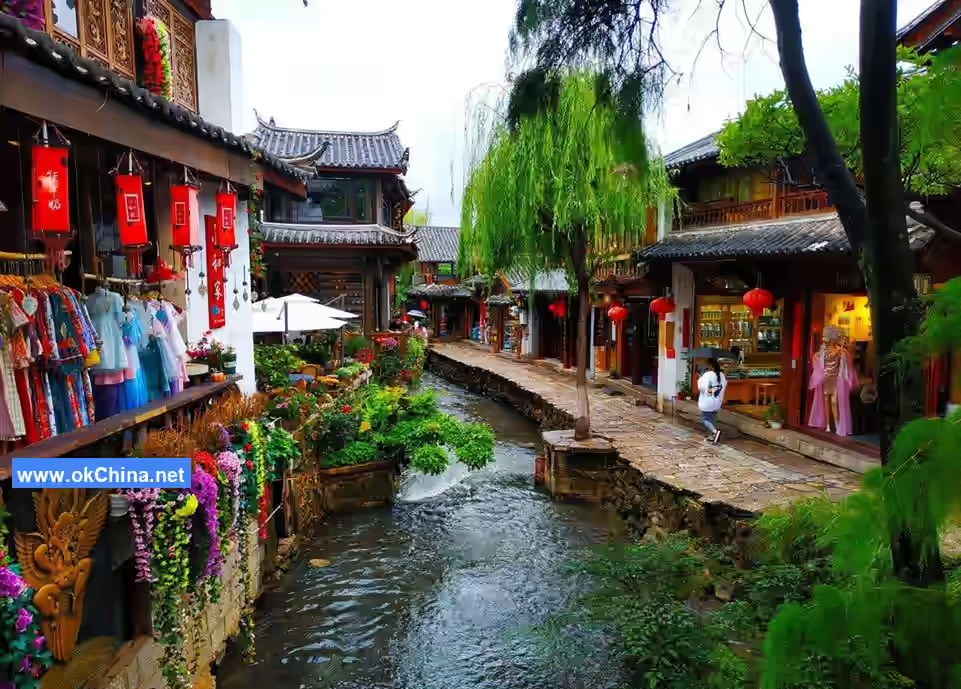
East Street is located north of Sifang Street in the ancient town, stretching over 450 meters in length. It is paved with multicolored flagstones, and the upper section of the Yushui River embankment was constructed along it. Willows were planted along the riverbanks, and over ten chestnut wood plank bridges were newly built across the river. East Street has become an ancient-style avenue featuring "small bridges over flowing water, drooping willows with green shade, multicolored stone paths, and Naxi courtyards." It serves as the main passage into the ancient town and the new urban area, making it a must-visit spot for both domestic and international tourists exploring Lijiang Ancient Town.
Wang Pizhen Memorial Hall
The Wang Pizhen Memorial Hall is located at No. 71 Public Housing on Cuiwen Section of Xinhua Street, built in memory of the renowned Naxi writer Wang Pizhen. After Mr. Wang passed away in 2003, with the active support of his relatives, the courtyard was fully restored on its original site and opened to the public on December 27, 2012.
The memorial hall consists of three exhibition rooms. Exhibition Room One primarily displays Mr. Wang Pizhen's creative achievements, including books published by different publishers, manuscripts, and some of his certificates. Exhibition Room Two is Mr. Wang's study as it was before his passing, preserved in its original state during the restoration, recreating the scene of his creative work. Exhibition Room Three mainly displays the complete works of Wang Pizhen and works by some local writers.
Opening Hours: 9:00-17:00
Reservation Phone: 0888-5353877
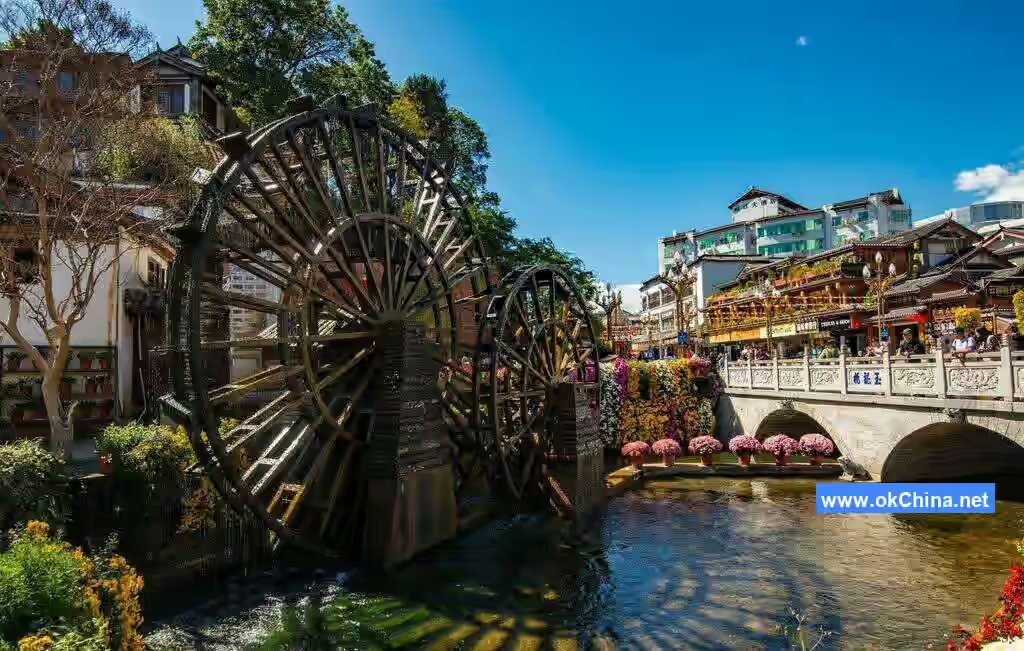
The Large Waterwheel
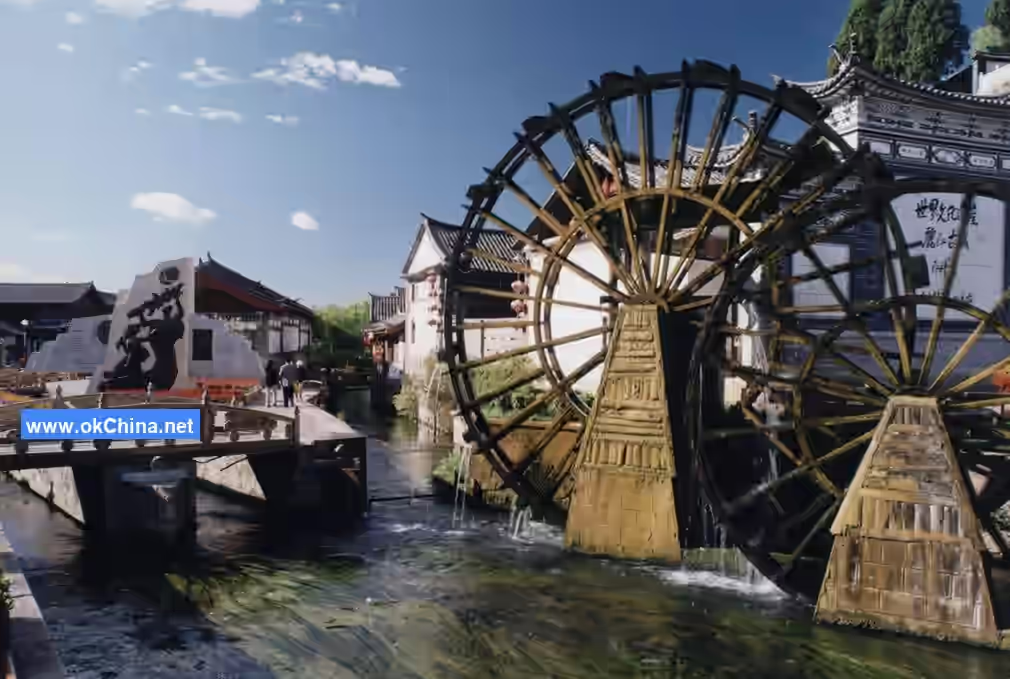
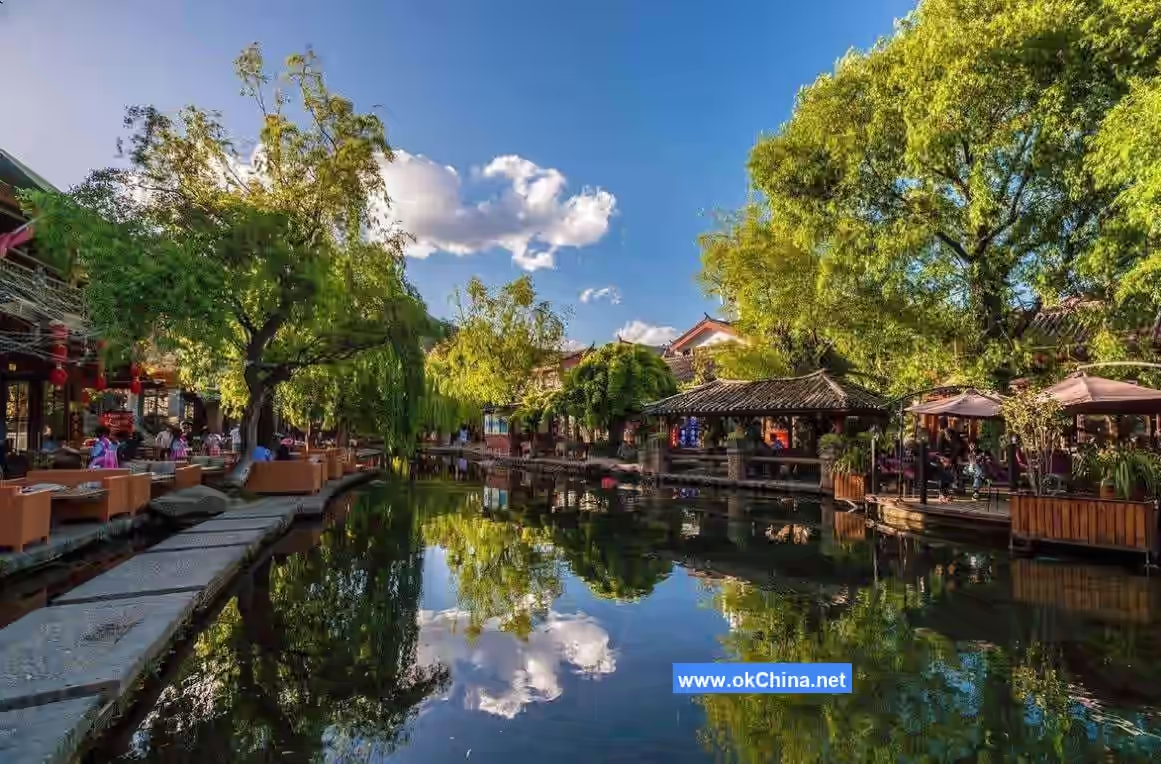
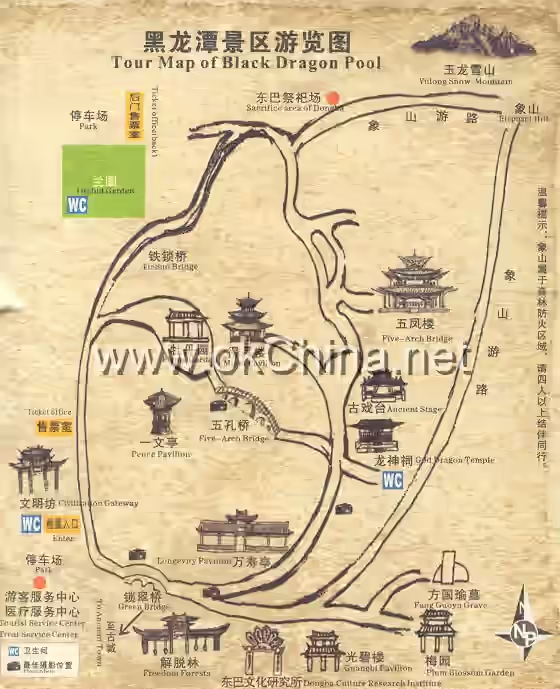
The Large Waterwheel is an iconic structure at the main northern entrance of Lijiang Ancient Town. Some say it is a mother-child waterwheel, while others call it a lovers' waterwheel. The waterwheel is an important tool in Naxi daily life, and in some remote areas, such waterwheels are still in use today. Hardworking Naxi people use them for hulling rice and grinding flour, as well as for lifting water from low-lying areas to irrigate fields at higher elevations. The Black Dragon Pool north of the town is the main water source for Dayan Ancient Town. The pool water meanders from north to south, dividing into eastern, central, and western tributaries near the Yulong Bridge beside the waterwheel. These tributaries further split into countless smaller streams, winding through walls, around households, across squares, and along alleys, creating a scene where main streets run alongside rivers, small lanes border canals, and buildings are constructed over water.
Next to the waterwheel is a screen wall inscribed by President Jiang Zemin. In May 1999, then Chinese President Jiang Zemin visited Lijiang and personally inscribed "World Cultural Heritage Lijiang Ancient Town." The screen wall is an important component of the "three-bay courtyard with a screen wall" architectural style typical of Lijiang ancient town residences. The screen wall's presence relates to residential lighting, as most Lijiang houses face south to fully enjoy sunlight. At sunrise, the screen wall blocks some of the light to prevent glare; at sunset, the white screen wall reflects light, increasing indoor illumination. The screen walls are painted with various patterns of flowers, birds, insects, grass, musical instruments, chess, calligraphy, and paintings, and inscribed with auspicious phrases like "purple air comes from the east," used by homeowners for blessings or to express aspirations. It serves as a lighting reflector, decorative wall, and cultural wall in Lijiang ancient town residential architecture.
The Dongba Culture Wall is a rich depiction of Naxi customs, hailed as Lijiang's "Along the River During the Qingming Festival." It is a terracotta-red relief wall, 9 meters high and 55 meters long, named "Prosperous Scenes of the Ancient Town," showcasing scenes of daily life in ancient Lijiang. Representative relief scenes include the Ancient Tea Horse Road, performances of Naxi ancient music, Naxi folk customs, Naxi religion, Naxi wedding customs, Lijiang farming culture, ancient town residences, and ancient town commerce, vividly condensing and reflecting the prosperity and cultural essence accumulated over centuries in Lijiang.
Kegong Archway
The Kegong Archway was originally built to honor the Yang family in the alley for achieving "three provincial graduates in one family." In the first year of the Yongzheng reign of the Qing Dynasty, 1723 AD, Lijiang implemented the "bureaucratization of native officers" policy, shifting from hereditary rule by local chieftains to administration by centrally appointed, term-limited officials. This transition moved Lijiang from a feudal lord society to a feudal society. The change in social system greatly inspired local youth to pursue education. From the implementation of "bureaucratization of native officers" to the abolition of the imperial examination system at the end of the Qing Dynasty—a span of 180 years—Lijiang produced over sixty provincial graduates and seven imperial scholars. While "three provincial graduates in one family" was not uncommon in the culturally advanced central plains, in Lijiang, a border ethnic minority region long under chieftain rule, it was a sensational and joyous event. Consequently, officials and locals donated funds to build a two-story Kegong Archway here. In the late Qing Dynasty, this alley produced Lijiang's last imperial scholar, He Gengji. Thus, the villagers rebuilt the Kegong Archway on the original site after a fire, elevating it to three stories. The Kegong Archway has been passed down to this day, becoming another testament to the Naxi people's reverence for culture and aptitude for learning.
Mu Residence
Lijiang Ancient Town is a famous historical and cultural city in China, and the Mu Residence can be considered the "Grand View Garden" of Lijiang ancient town culture. Located in the southwestern corner of Lijiang Ancient Town, the Mu Residence covers 46 mu (about 3.07 hectares), with a central axis stretching 369 meters. The entire architectural complex faces east, "welcoming the rising sun to receive the wood element." It has the Green Dragon (Jade Dragon Snow Mountain) to the left, the White Tiger (Tiger Mountain) to the right, and rests against the Black Tortoise (Lion Mountain). To the southeast, Turtle Mountain and Snake Mountain stand opposite each other, guarding the pass. From a feng shui perspective, the Mu Residence derives masculine energy from leaning against Lion Mountain and possesses Tai Chi energy from being surrounded by the Yushui River. The Mu Residence is a witness to Lijiang's history and a symbol of the ancient town's culture. Its architecture is magnificent, with grand buildings, splendid palaces, exquisite carvings, delicate components, and brilliant paintings—truly beautiful and unparalleled. The great Ming Dynasty geographer and traveler Xu Xiake once marveled that the Mu Residence's "palatial beauty rivals that of royalty." Along the central axis of the Mu Residence are halls such as the Assembly Hall, Ten-Thousand-Volume Tower, and Dharma Protection Hall, with numerous buildings, pavilions, and towers arranged on both sides; the garden corridors are uniquely styled. Its overall architectural style is "modeled after the Forbidden City," not inferior to any mansion of nobility. The Mu Residence is a splendid garden of architectural art, fully embodying the elegance of central plains architecture from the Ming Dynasty while preserving the simple, robust remnants of Tang and Song dynasty central plains architecture. Its eastward orientation and the layout of crisscrossing canals with flowing water within the residence also reflect the essence of traditional Naxi architectural culture.
Lion Mountain
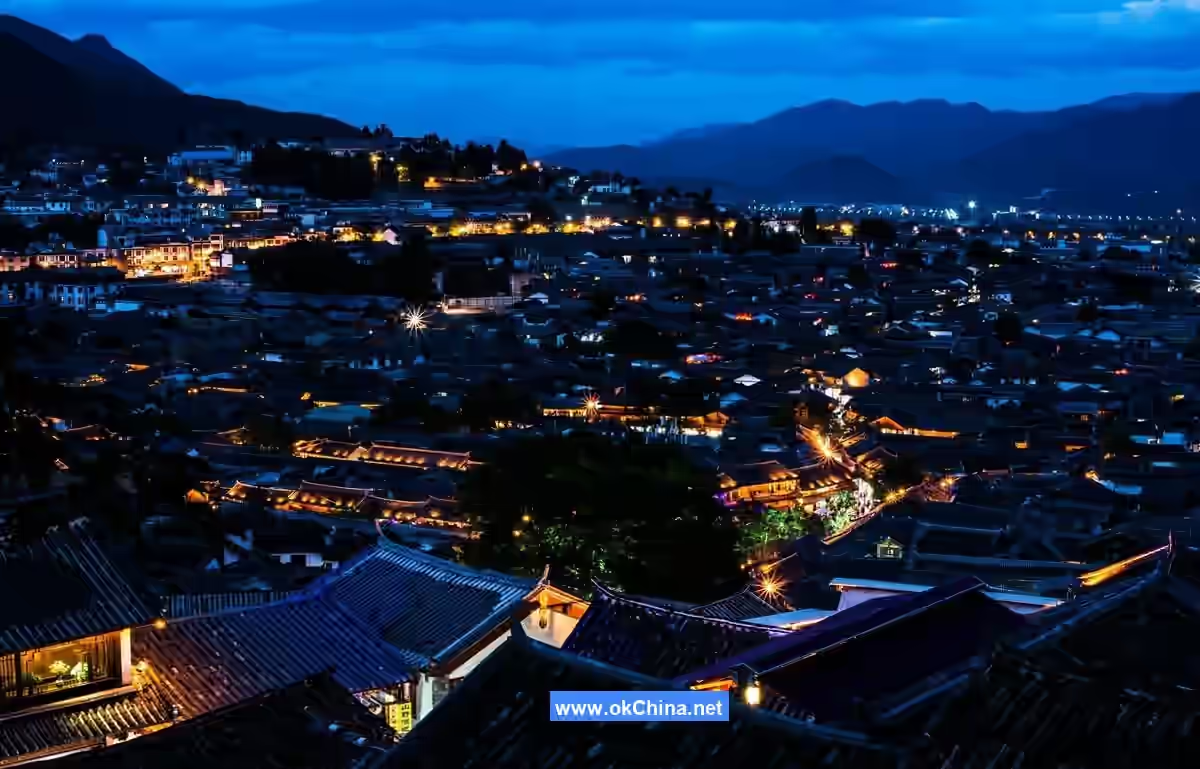
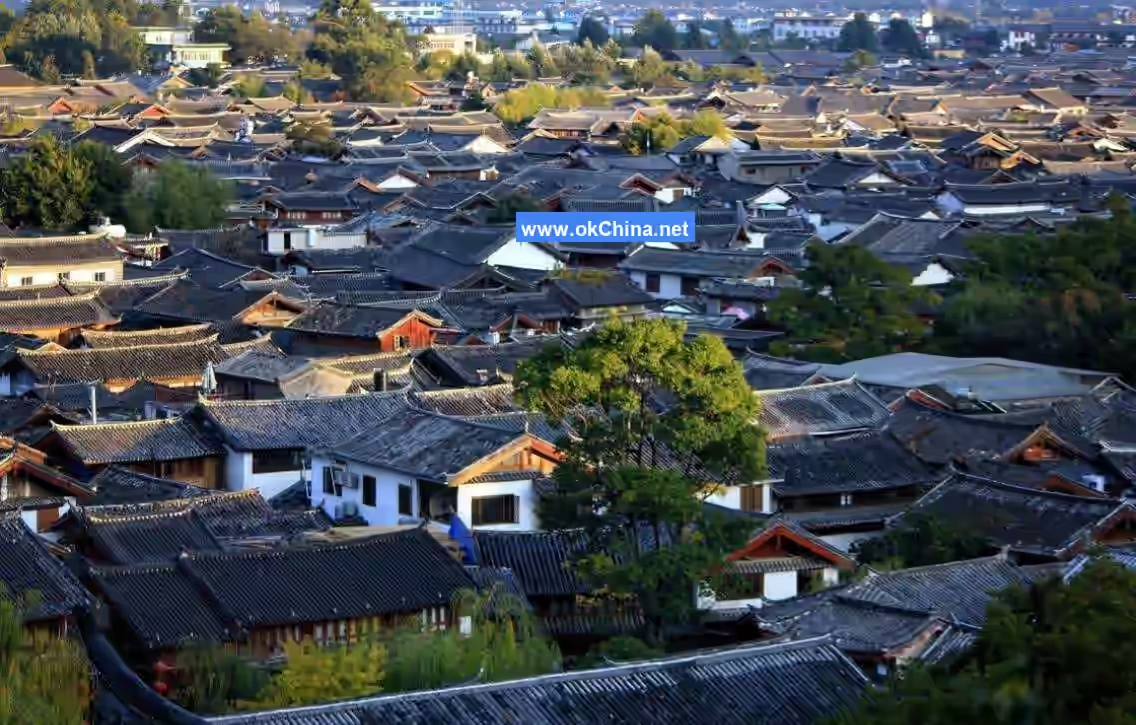
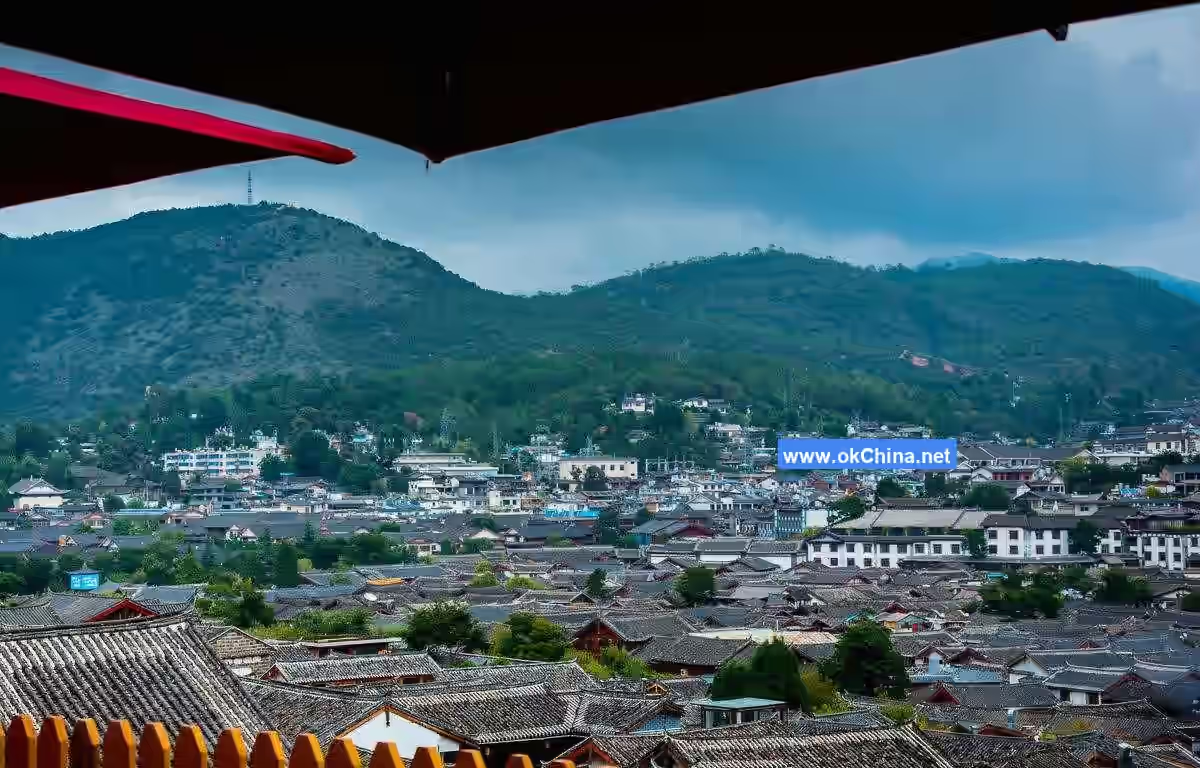
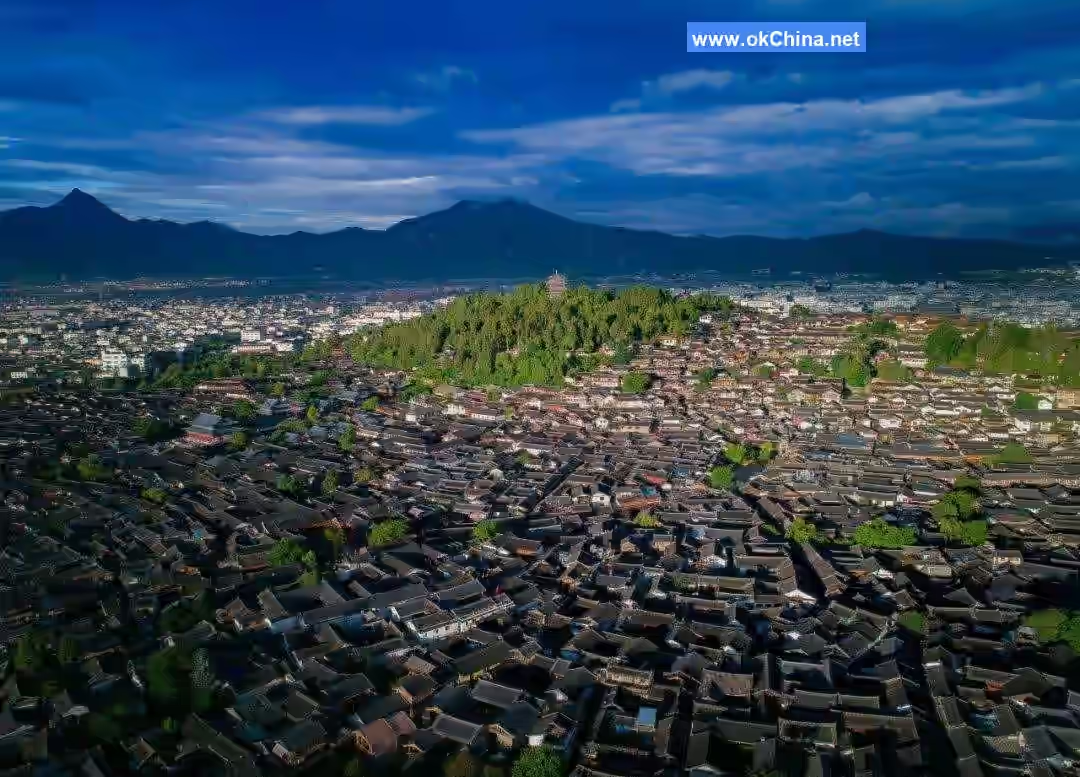
Lion Mountain Ecological Park is located in the core area of Lijiang Ancient Town and is an important component of it, named for its mountain shape resembling a sleeping lion. The park covers 18 hectares, with an altitude of about 2,500 meters and a relative height difference of only 80 meters from the ancient town. The residential buildings of Lijiang Ancient Town are arranged around the southeastern foothills of Lion Mountain, following the mountain's contours, making it the best place to view the ancient town's全景 (panorama).
From Sifang Street in the ancient town, ascending the stone steps along the upper section of Huangshan Road leads into Lion Mountain Park, where ancient cypress trees tower into the sky, creating a lush, shaded atmosphere. The mountain is home to over 40 ancient cypress trees more than 800 years old, as well as extensive cypress forests around 50 years old. The park's forest coverage reaches 90%, serving as a green natural barrier for Lijiang Ancient Town. Among them, two trees have crowns and branches shaped remarkably like the characters for "righteousness" (义) and "learning" (学), earning them the title "Huangshan Ancient Cypresses," one of Lijiang's twelve scenic spots. Every morning, elderly bird enthusiasts from the town bring their birdcages to the forest to walk their birds and engage in singing contests, with the constant chirping of thrushes and mynas making one keenly feel the harmonious coexistence of humans and nature.
On the eastern side of Lion Mountain, there is a viewing platform surrounded by white marble railings. From here, through the ancient cypress trees, one can overlook the entire panorama of Lijiang Ancient Town. The renowned Chinese couplet artist Mr. Ye Zitong inscribed a couplet here: "Arch bridges dyed with morning glow, listening to ripples gently swaying, the entire city of草木 (plants and trees) hangs with the sound of water, especially encountering, people coming and going crossing the multicolored stone paths; winding paths hold light rain, looking at the参差 (uneven)庐井 (houses and wells), steps and terraces gazing in all directions enveloped in mist, even more lingering,上下 (up and down) shadows swaying the Wan'gu Tower." The ancient cypresses and the ancient town complement each other, as if recounting eight hundred years of vicissitudes.The iconic structure of Lijiang—Wanggu Tower. Historical records indicate that during the late Ming and early Qing dynasties, a structure named Danfeng Tower once stood here, serving as a gathering place for literati and artists to compose poetry and create paintings. It was later destroyed in a fire. After the Lijiang earthquake on February 3, 1996, the people of Lijiang, to demonstrate their unyielding spirit and enduring will, broke ground on the construction of a grander tower than the ancient Danfeng Tower in May 1996. The tower was completed on December 26, 1997—coincidentally, the birthday of the great leader Mao Zedong. Wanggu Tower embodies rich Naxi culture. Its name originates from the Naxi language homophone "Mugulu," meaning "looking down from the sky." Another interpretation of "Wanggu" is to perpetuate the enduring spirit of the self-reliant Naxi people for generations to come. The entire tower is constructed using traditional wooden dougong (bracket) architecture, making it the largest wooden structure in China. Standing 33 meters tall with five floors, Wanggu Tower symbolizes the optimistic spirit of Lijiang's 330,000 residents. Viewed from the front, its thirteen upturned eaves represent the eternally standing Jade Dragon Snow Mountain. The plaque above the thirteen-peak tower gate is inscribed with Dongba pictographic script, meaning "Tower of a Thousand Generations," pronounced "Duche Bare Cuo" in Naxi. Dongba pictographic script is the only living pictographic writing system in the world today, and the ancient Dongba texts written in this script were inscribed on the UNESCO Memory of the World Register in August 2003.
Inside Wanggu Tower, a total of 10,000 dragons and 9,999 phoenixes are intricately carved and painted. The eaves of each floor are adorned with dragon and phoenix heads, creating a magnificent scene of "ten thousand dragons for eternity." The tower's roof features a caisson ceiling in a circular dome shape, while the ground floor is square, symbolizing the ancient Chinese concept of "round heaven and square earth." This design also aligns with the central meaning of Dongba characters. Within the caisson ceiling, a majestic coiled dragon is depicted with its head facing downward as if spouting water, serving as a reminder to visitors not to smoke inside this entirely wooden structure or in the surrounding forest, to prevent fire hazards caused by carelessly discarded cigarette butts.
Standing on the fifth floor, visitors can enjoy a panoramic view of the World Cultural Heritage site—the ancient town of Dayan in Lijiang, with its well-preserved Ming and Qing dynasty architecture fully visible. Looking west from Wanggu Tower, one can see the vibrant and prosperous new town of Lijiang, showcasing the new life of the Naxi people in the modern era. To the southwest, the sharp, pen-like peak of "Wenbi Peak" pierces the sky, accompanied by the "Penholder Mountain" beside it, which resembles a stand for this pen. At the foot of the mountain lies Wenbi Lake, symbolizing ink, together with the ancient town of Dayan in Lijiang, which resembles an inkstone, as if collectively writing the timeless beauty of Lijiang's landscape. From here, one can also overlook the Naxi villages and pastoral scenery of the Lijiang Basin. Additionally, visitors can observe an authentic "Hundred Beasts Paying Homage to the Sacred" scene: Snake Mountain and Turtle Mountain to the south, Elephant Mountain to the northeast, Saddle Mountain to the west, and the Lion Mountain where we stand—all facing the majestic Jade Dragon Snow Mountain to the north.
Comments
Post a Comment