Lianyungang Liandao Scenic Area
1. Overview
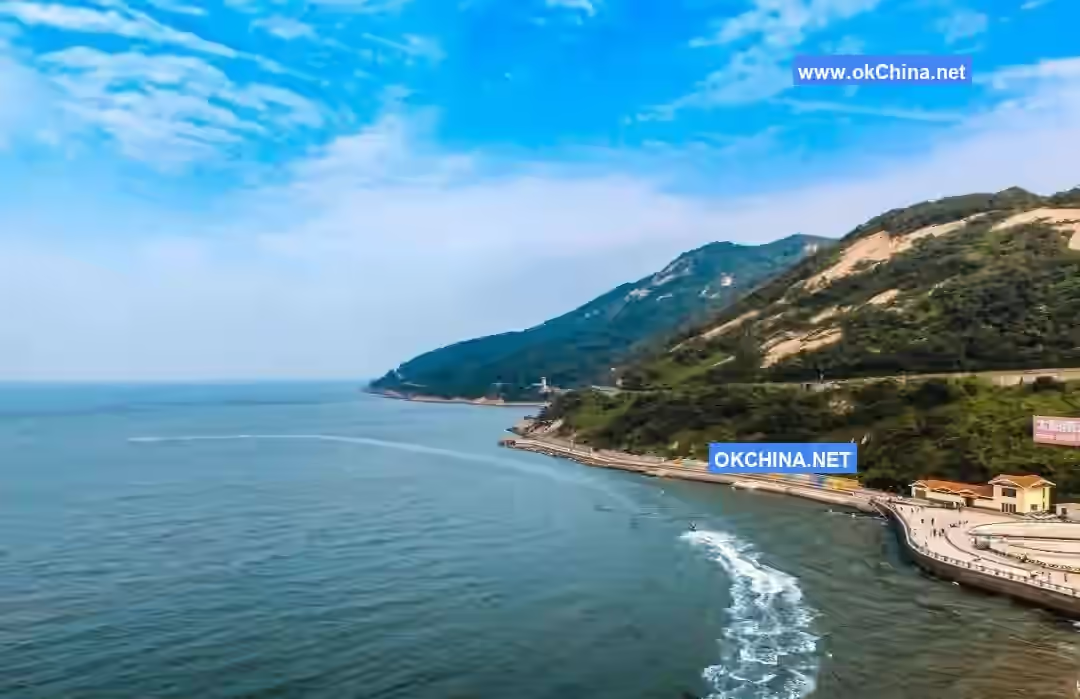
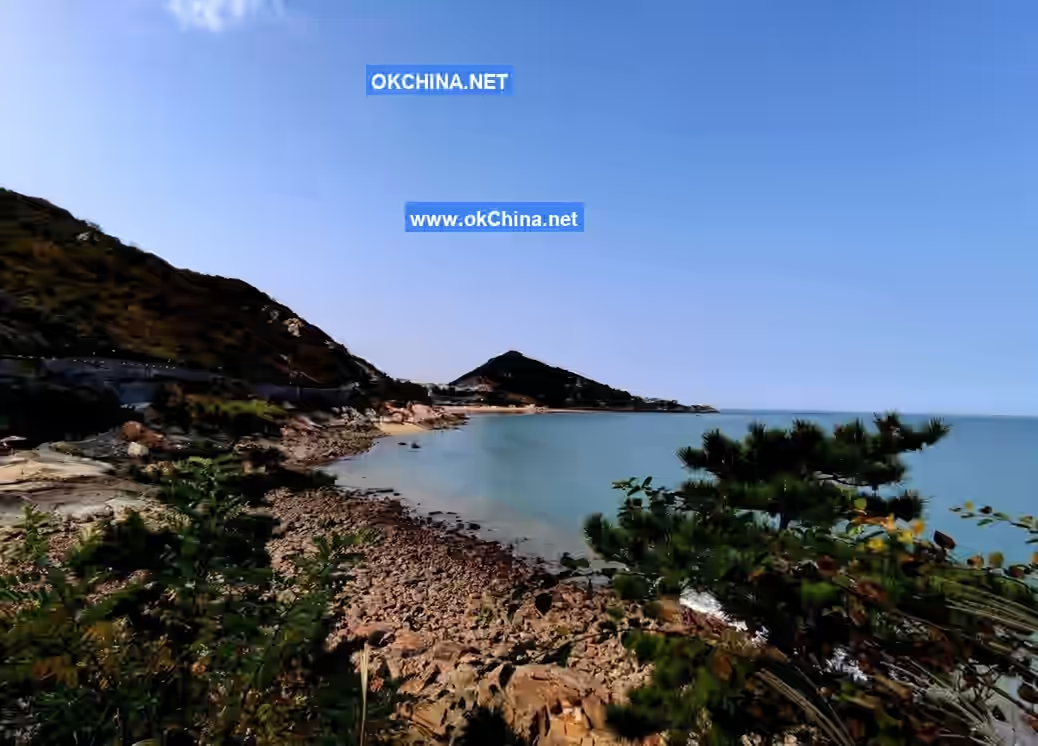
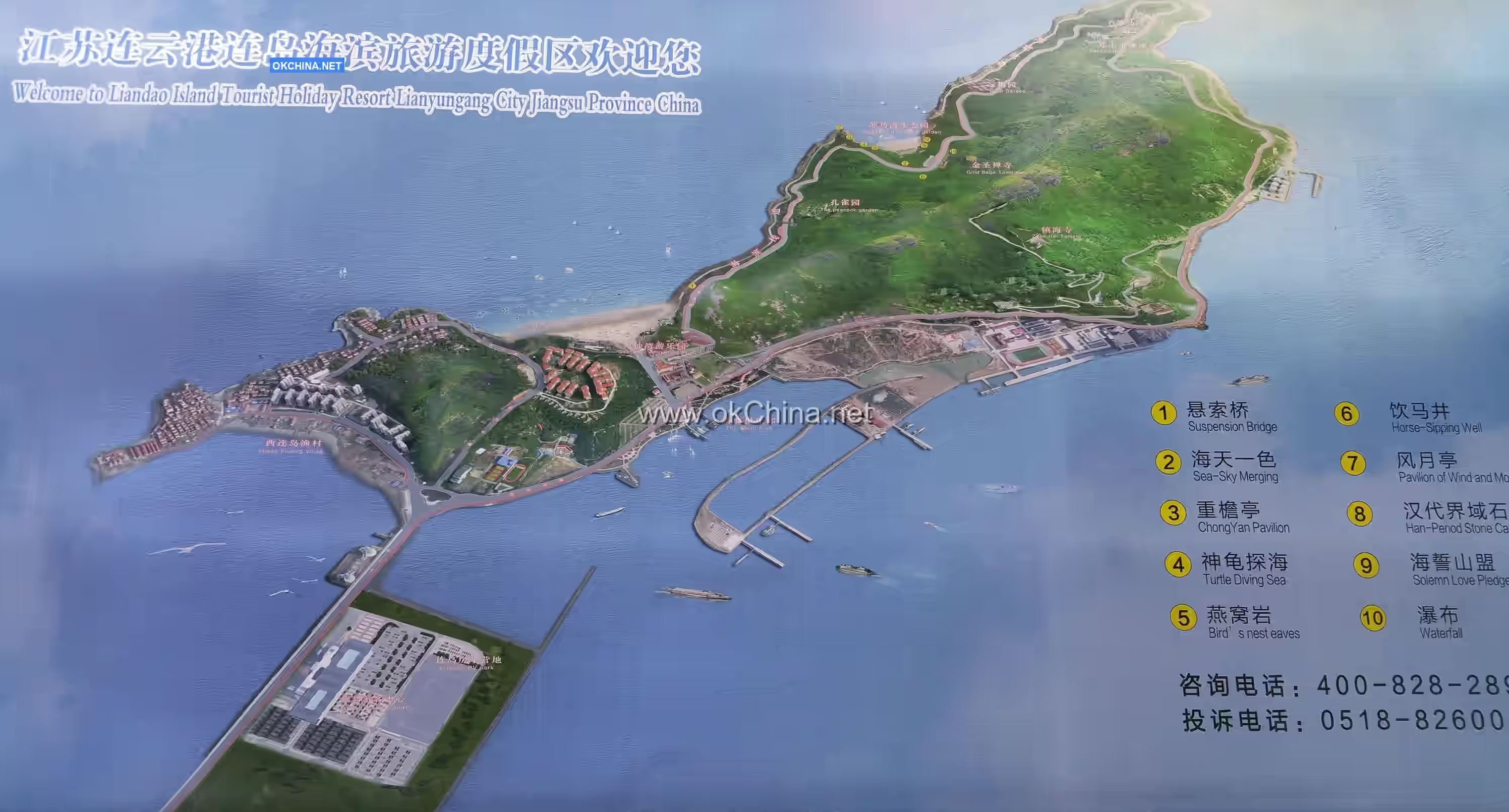
The Liandao Scenic Area is located on Liandao Island by Haizhou Bay on the coast of the Yellow Sea. It is the largest bedrock sea island in Jiangsu Province, with a coastline of 18 kilometers and a rocky shoreline of 8 kilometers. The scenic area covers 8.85 square kilometers, including 5.13 square kilometers of land and 3.72 square kilometers of sea area. It was rated as a National AAAA Scenic Area in 2002 and upgraded to a National AAAAA Scenic Area in 2024. Standing majestically in the sea and facing the Lianyungang Port across the water, it boasts Jiangsu Province's only national-level healthy seawater bathing areas—Dashawan and Sumawan—as well as a yacht club for maritime sightseeing.
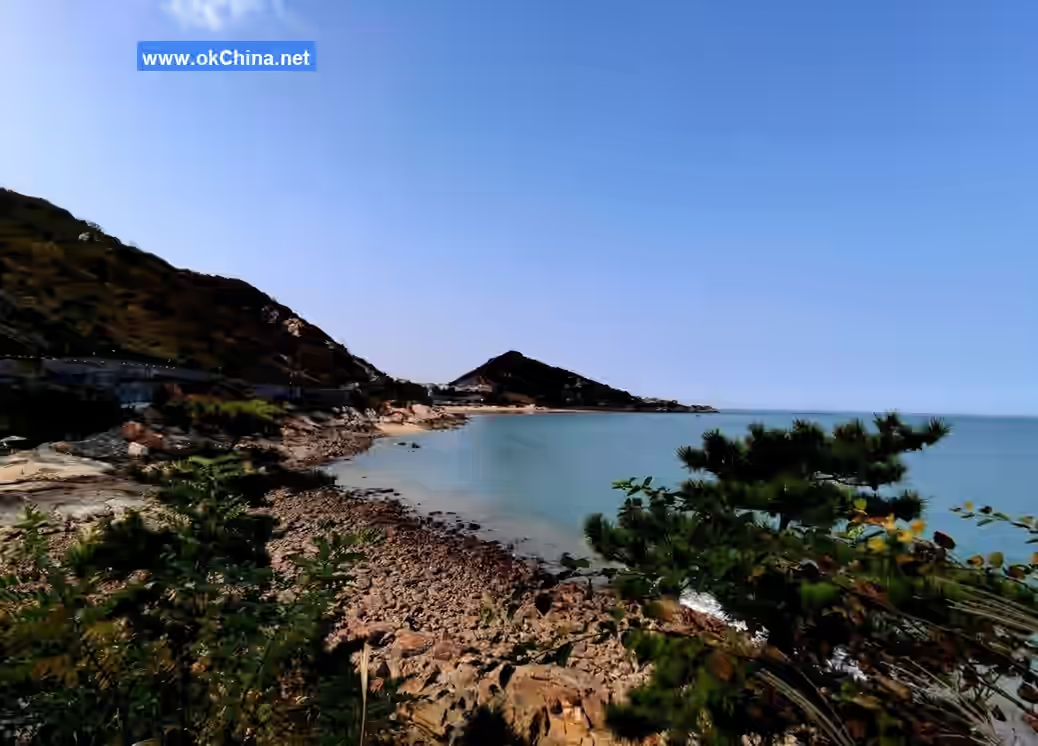
Liandao features charming and beautiful natural scenery, integrating green mountains, blue seas, lush forests, sea-eroded rocks, natural beaches, and the cultural landscape of island fishing villages. The climate is mild, with no severe cold in winter nor intense heat in summer, making it pleasant all year round. The air is fresh and pure, rich in negative ions, with forest coverage reaching 80%. According to national standards, the water temperature is suitable for swimming for 108 days a year. Liandao has a maritime monsoon climate transitioning from warm temperate to subtropical, bordering the Haizhou Bay fishing ground. It boasts rich plant species, abundant seafood resources, and unique sea-eroded geological features.
In the past, Liandao was known for its turbulent waves and skies filled with birds, historically called Yingyou Mountain. A 6.7-kilometer-long sea embankment, completed in 1992, connected the island to the mainland. The island stretches 9 kilometers from east to west, with forest coverage reaching 80%. The island's natural scenery is enchanting, rich in cultural heritage and historical significance, resembling a beautiful seascape painting!
2. Geographical Environment
2.1 Location and Territory
The Liandao Scenic Area is located in the Lianyun District of Lianyungang City, Jiangsu Province, situated on the coast of the Yellow Sea by Haizhou Bay, facing the Lianyungang Port across the sea. Its central geographic coordinates are 34°45′ north latitude and 119°28′ east longitude. The coastline is 17.66 kilometers long, and the area covers 7.6 square kilometers.
2.2 Topography and Landforms
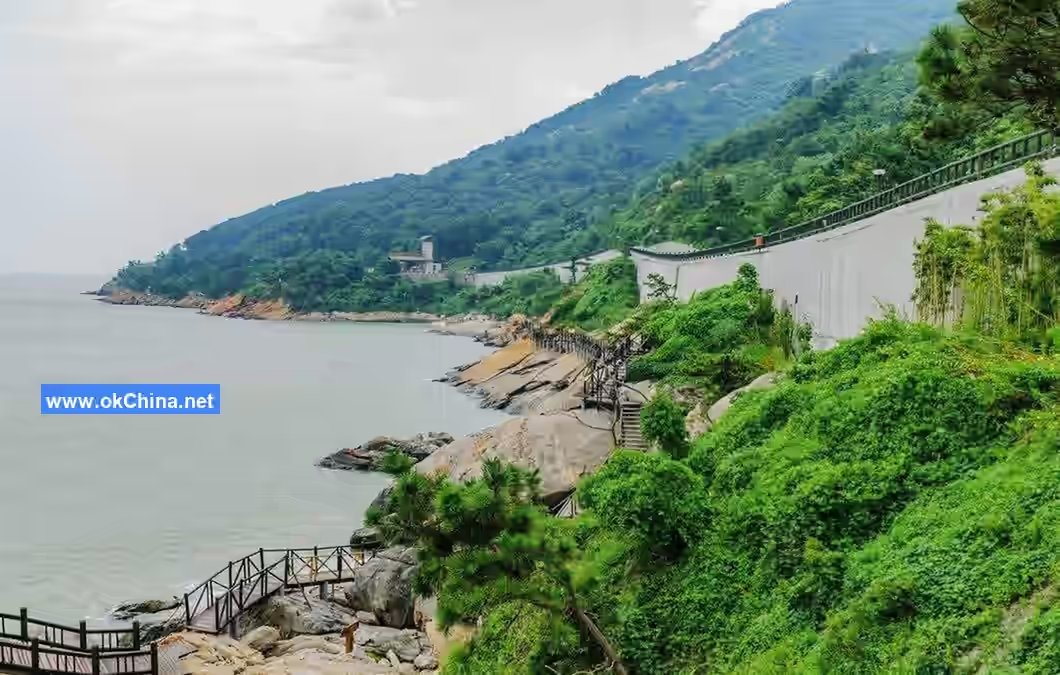
The topography of Liandao is primarily low hills, composed of various Proterozoic metamorphic rocks. Sea-eroded cliffs are common around the island but generally low in height. In bays with relatively weaker dynamic forces, beaches have formed through sedimentation.
2.3 Climate Characteristics
Liandao has a maritime monsoon climate transitioning from warm temperate to subtropical, bordering the Haizhou Bay fishing ground. It boasts rich plant species, abundant seafood resources, and unique sea-eroded geological features.
3. Main Attractions
3.1 Dashawan
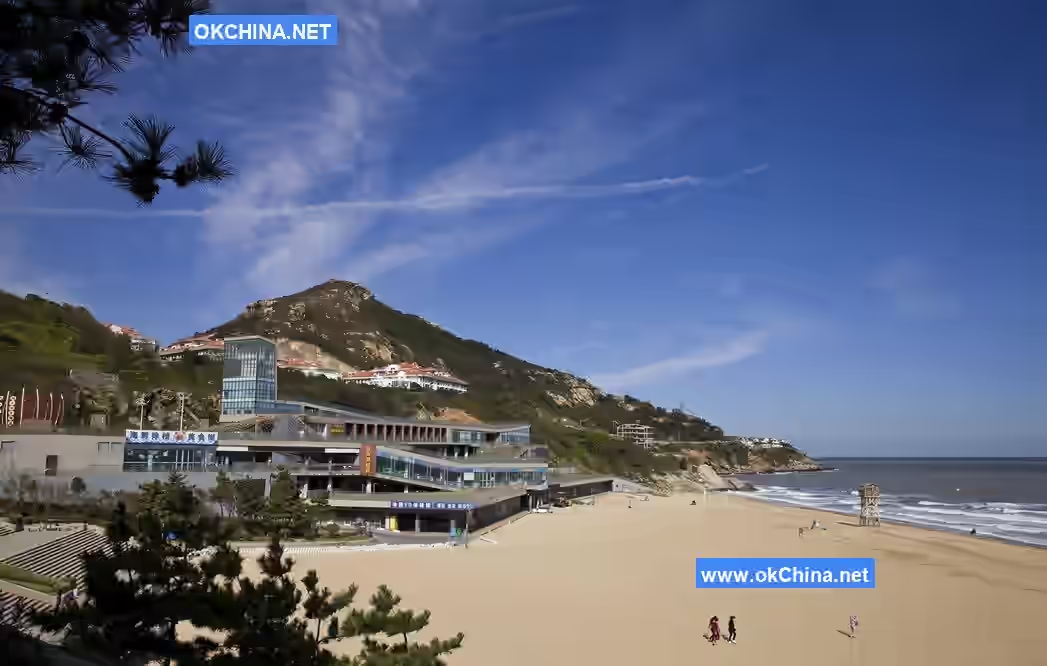
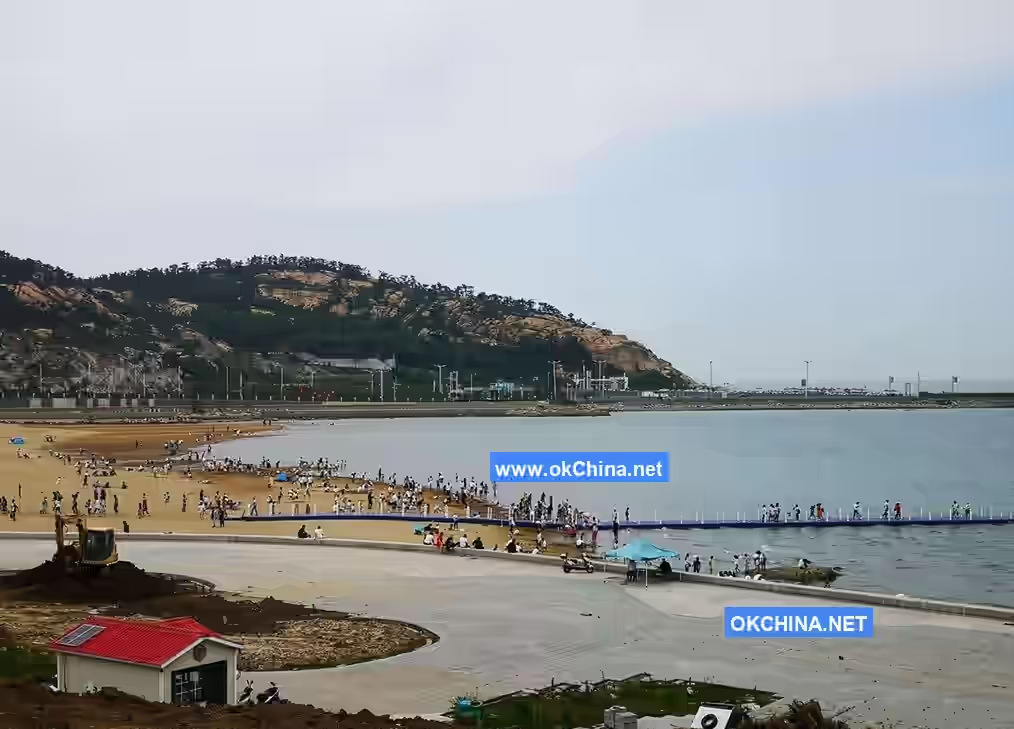
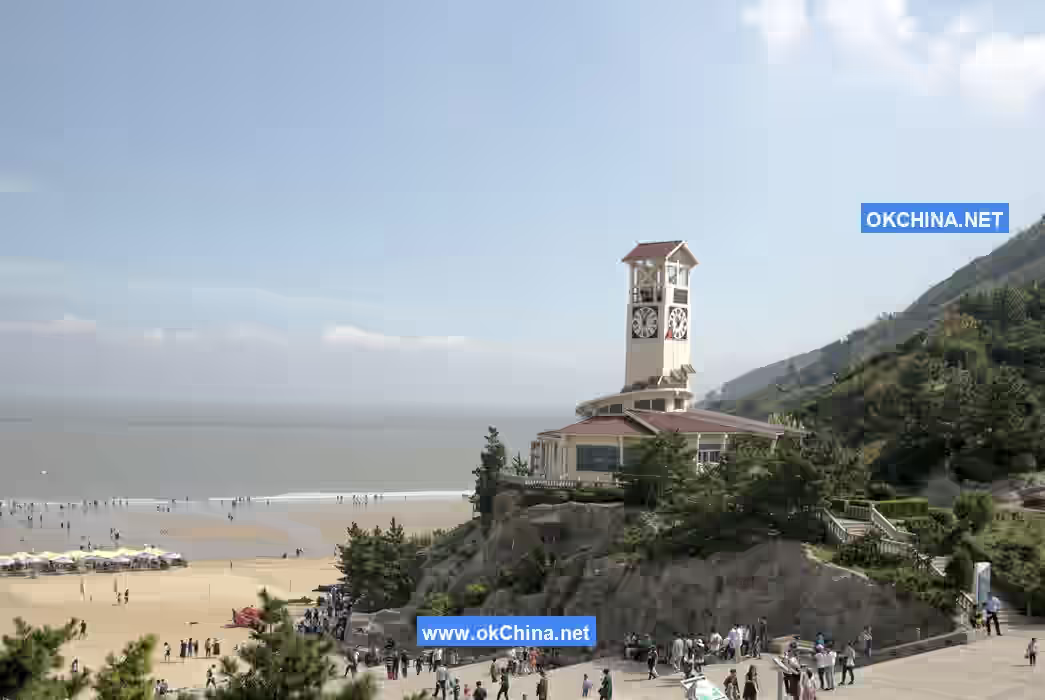
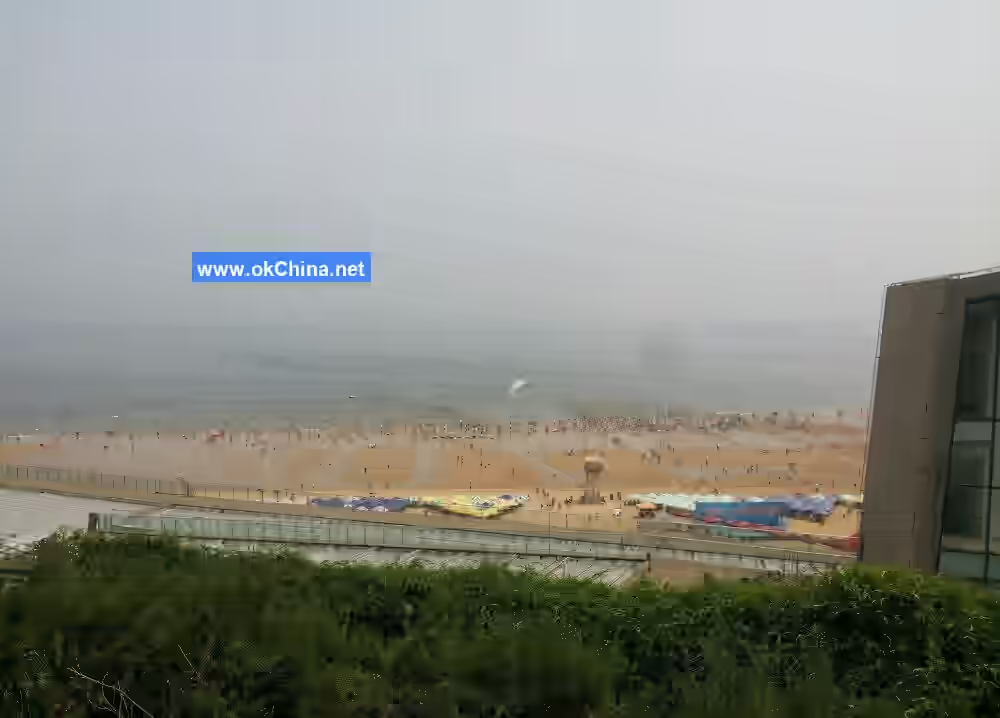
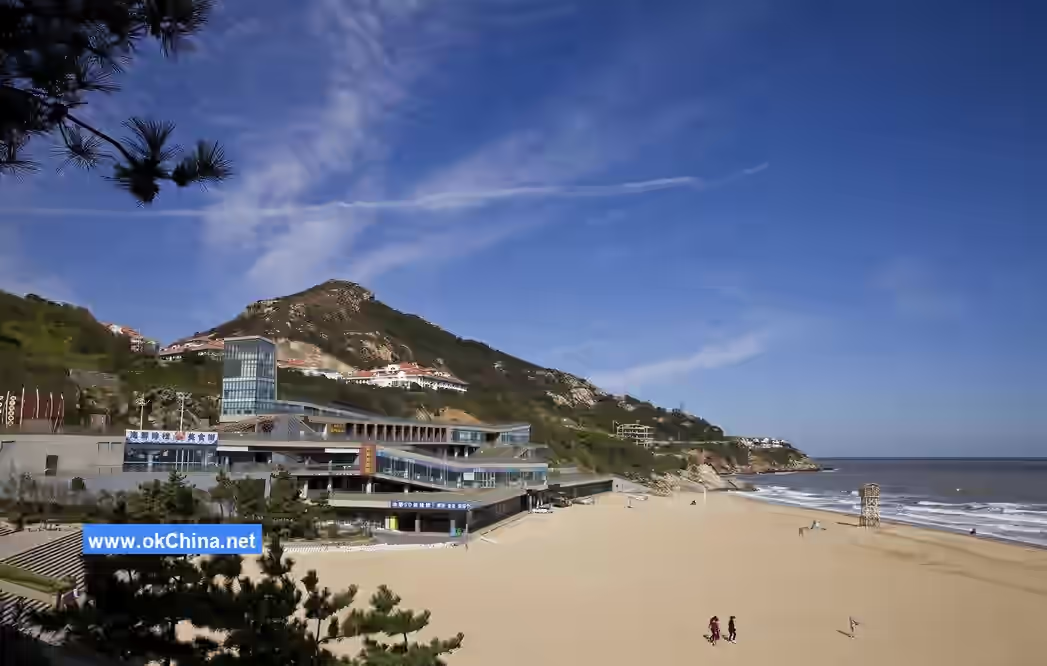
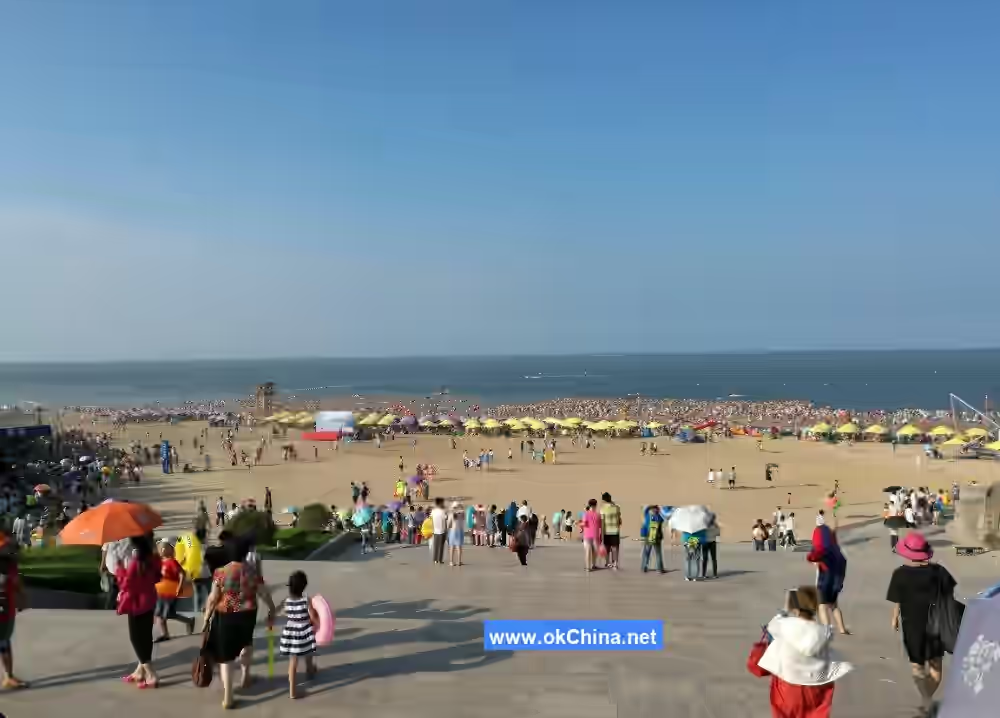
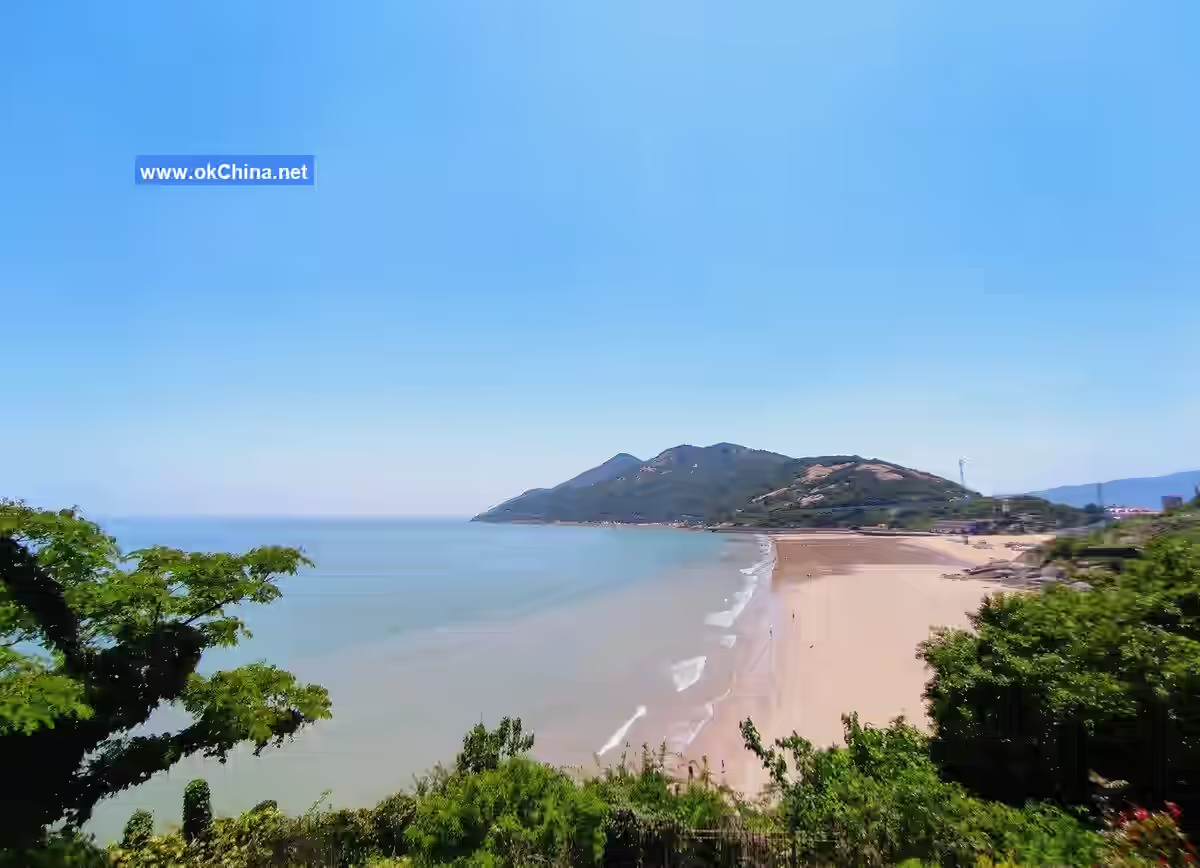
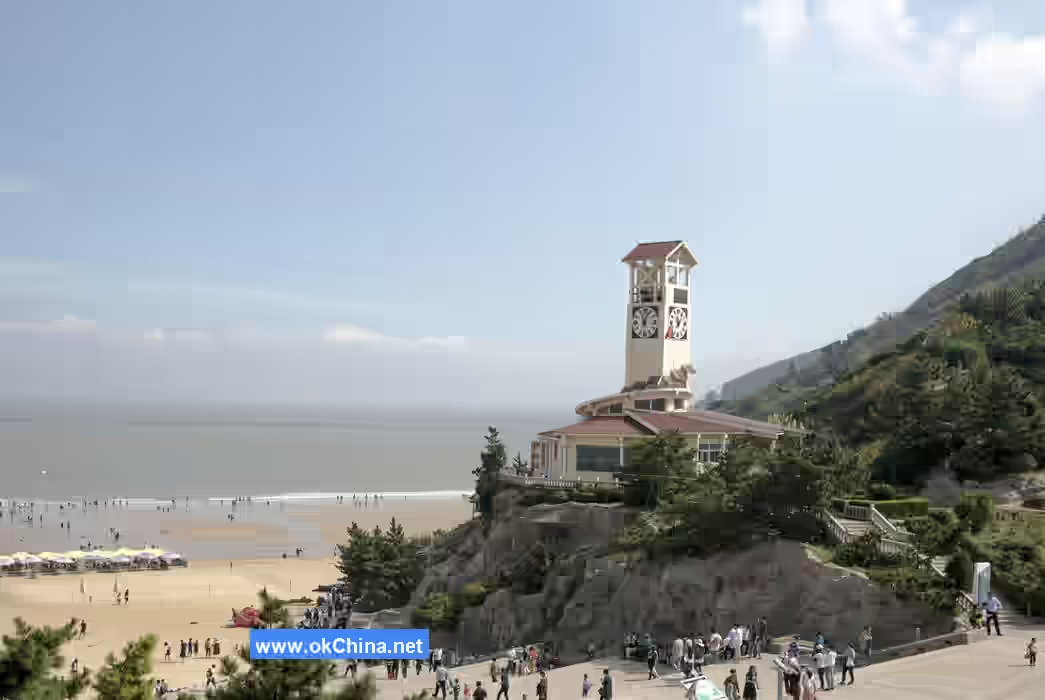
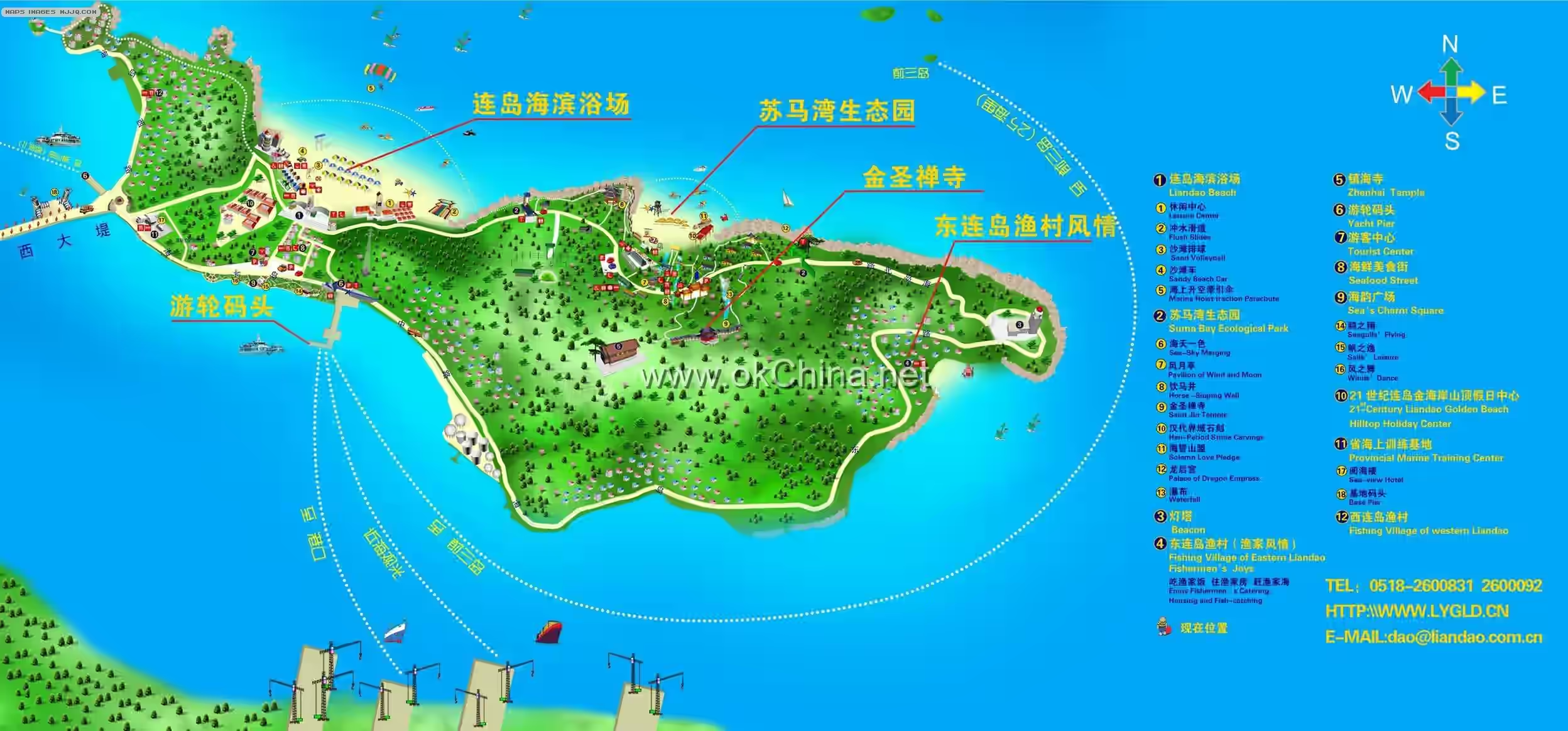
Dashawan is an important part of the Liandao Seaside Resort. With a beach area of 170,000 square meters, visitors can either chase waves or relax on the sand, enjoying the infinite tenderness of the sea. They can also experience water activities such as water bicycles, bungee trampolines, and jet skis.
Located in the central part of Liandao, Dashawan is the only natural seawater bathing area in Jiangsu Province with high-quality sand. The sandy coastline is about 1,800 meters long, with a maximum width of about 220 meters and an area of approximately 170,000 square meters. The beach has a gentle slope, with fine, uniform, and soft sand. At low tide, under the sunlight, the fine sand reflects like a giant mirror. Dashawan features a wide sea surface, clear water, and moderate temperatures, making it one of the 16 national healthy seawater bathing areas in China. With abundant recreational facilities and comprehensive supporting amenities, it is the main seaside entertainment and leisure venue in the scenic area. Strolling under the blue sky, by the blue sea, on the sandy beach, and in the sunshine, free from the hustle and bustle of the city, visitors can fully enjoy comfort and relaxation.
3.2 Seaside Boardwalk
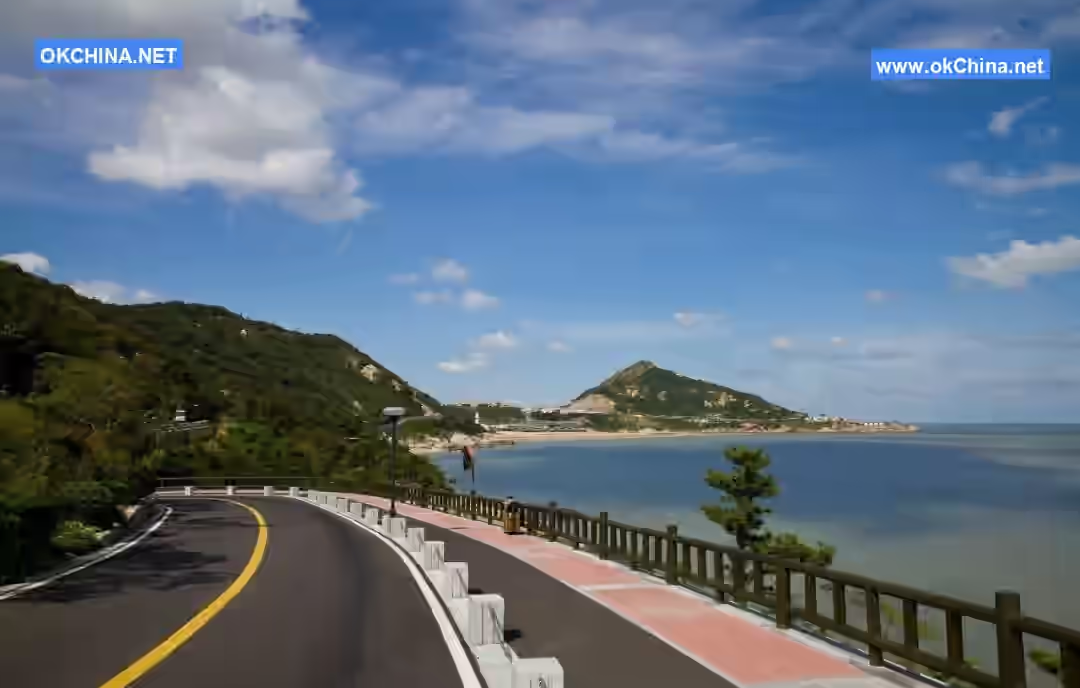
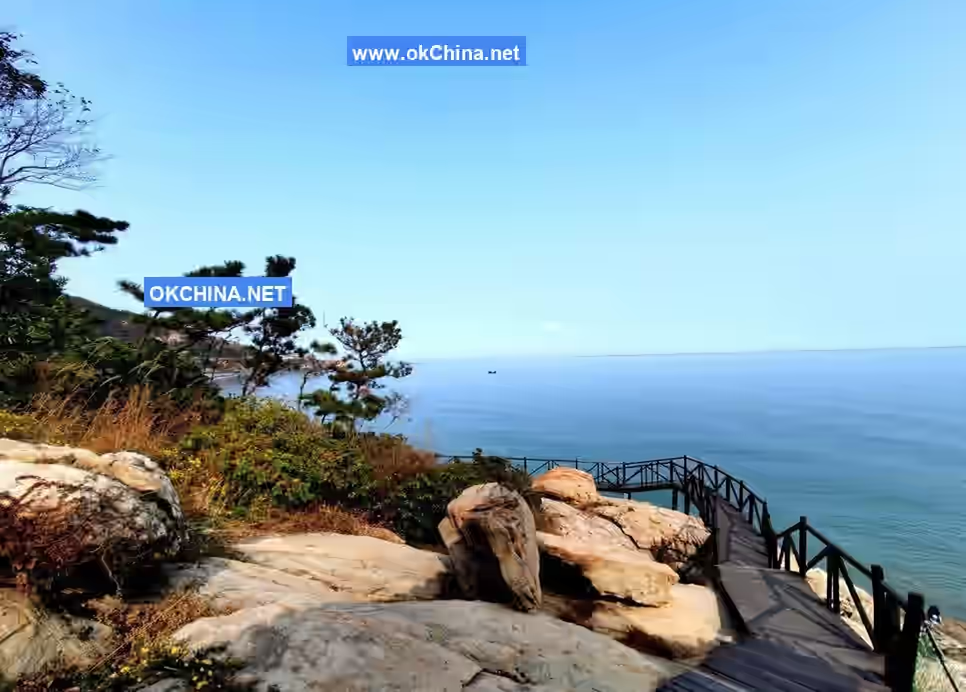
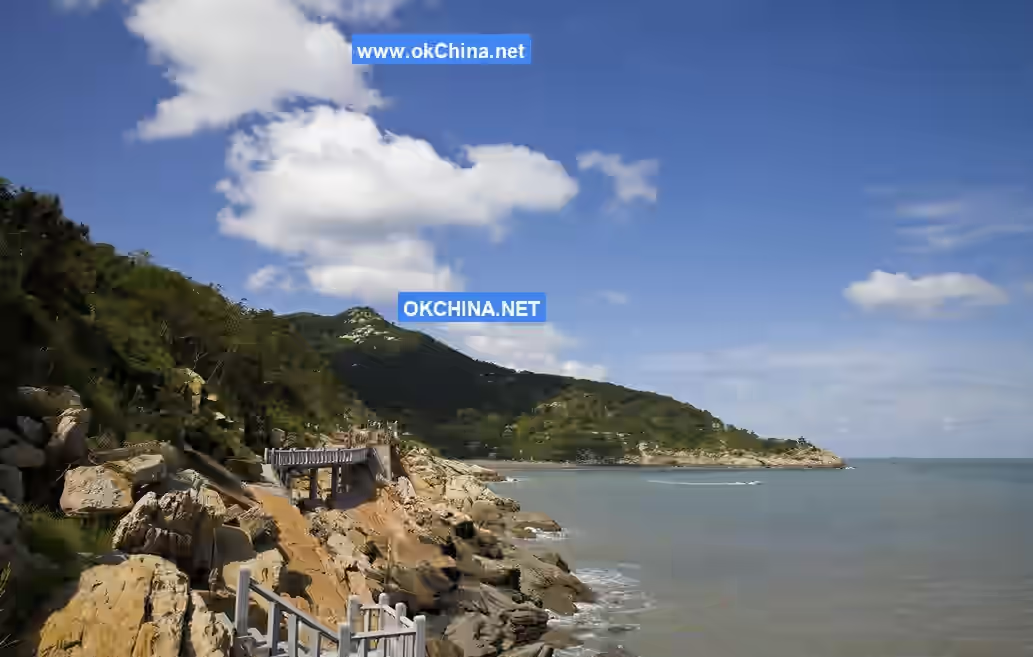
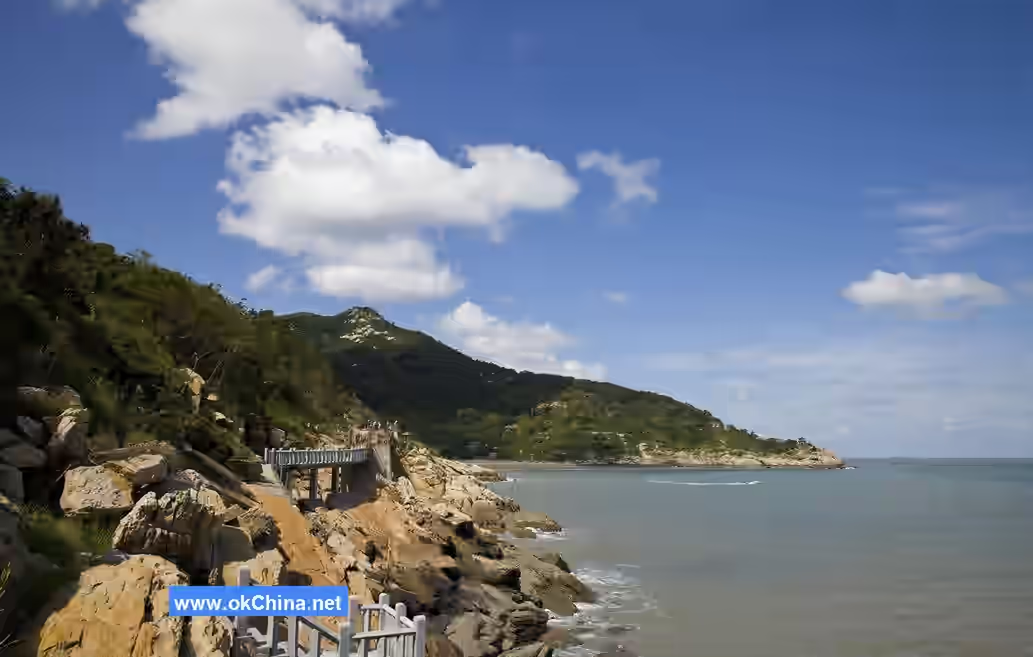
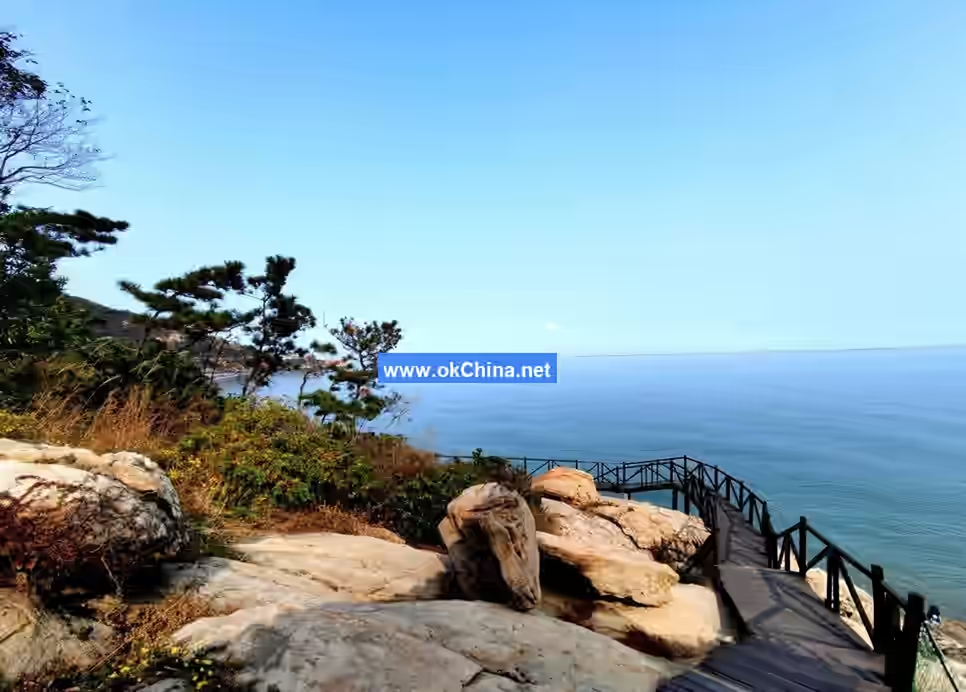
The Seaside Boardwalk is located along the eastern coast of the scenic area, stretching 2.5 kilometers and connecting Dashawan and Sumawan. It is primarily paved with corrosion-resistant merbau wood planks. Along the way, there are wooden walkways, sea-viewing pavilions, suspension bridges, forts, a peacock garden, and fishing platforms. The boardwind follows the natural terrain, staying close to the sea, winding and stretching over sea-eroded rocks and through lush coastal forests. Walking along the Seaside Boardwalk, visitors can fully appreciate the beauty of nature and deeply experience the poetic charm of the mountains and sea.
3.3 Sumawan
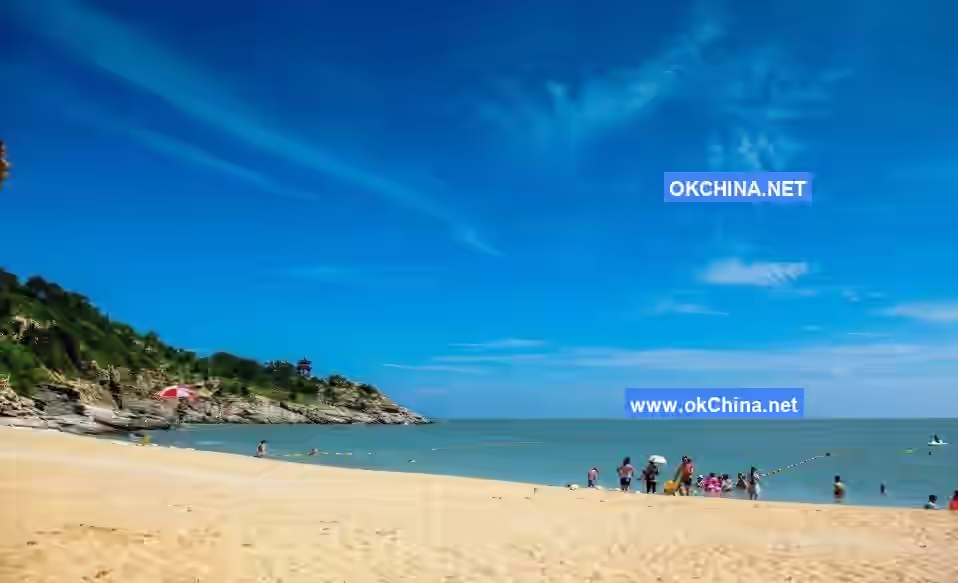
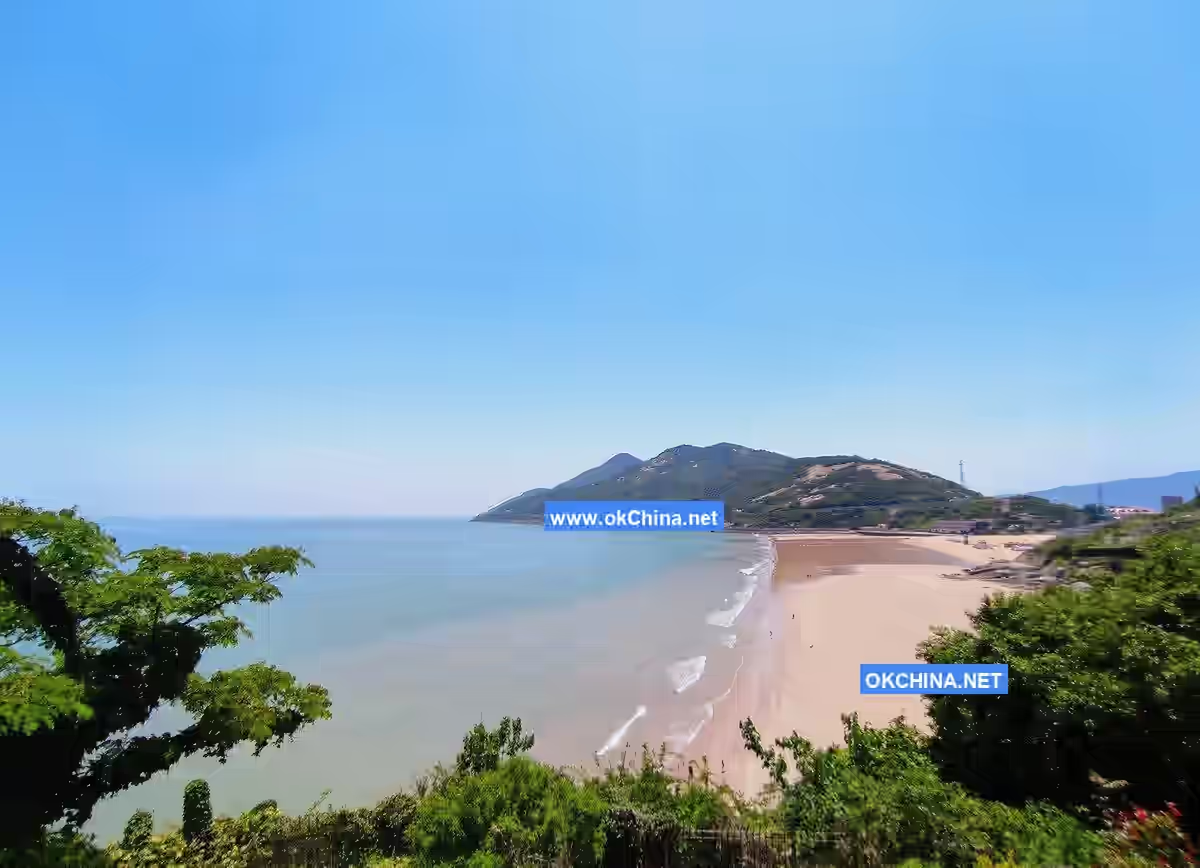
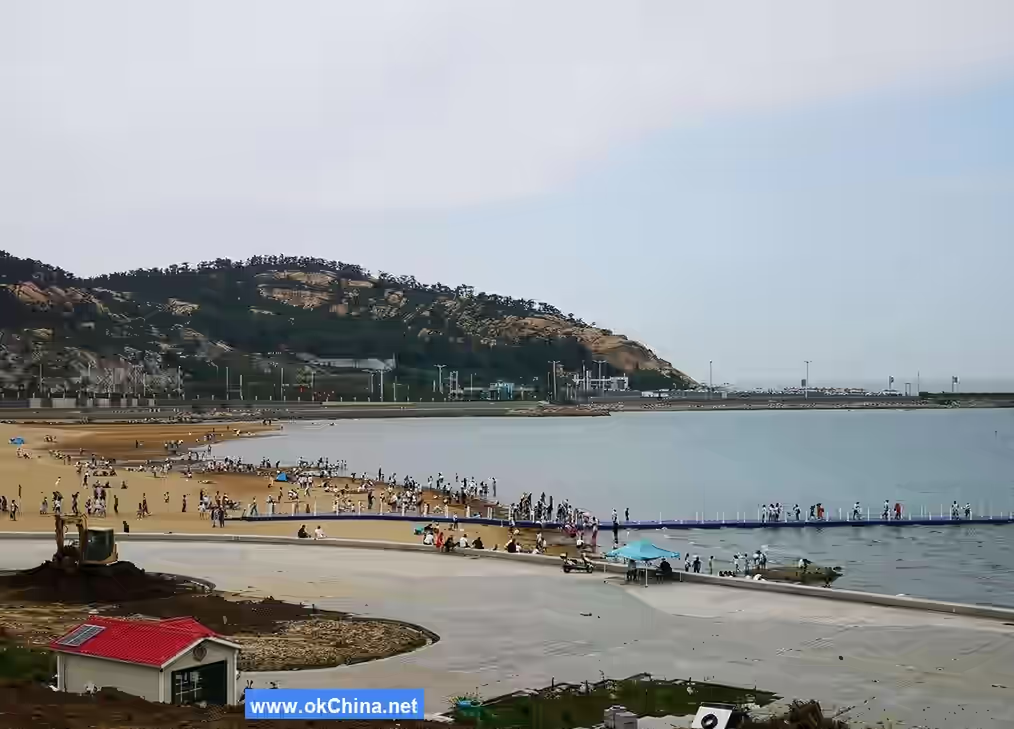
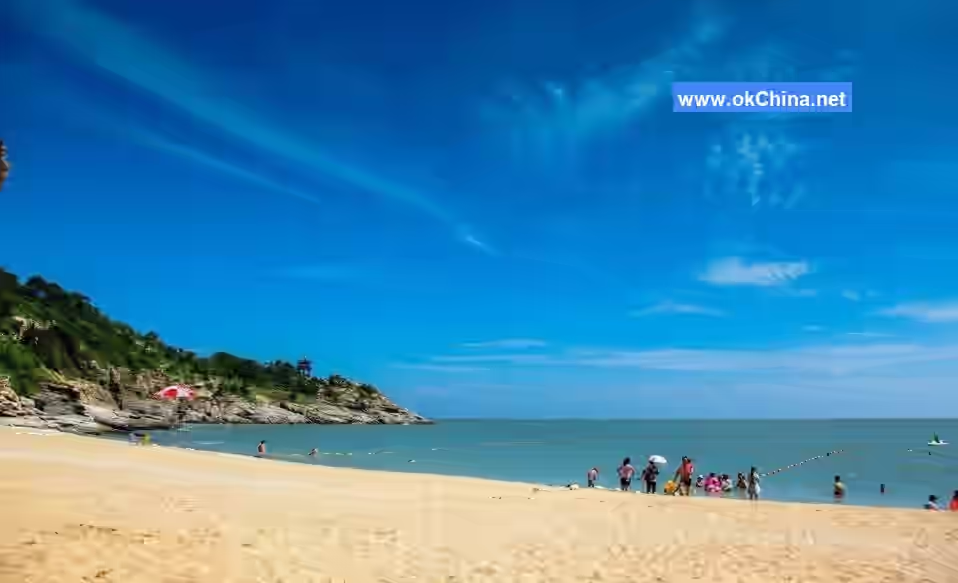
Sumawan, named after Su Ziheng, a censor in the late Ming Dynasty who trained troops and horses on the island, is located in the eastern part of Liandao, nestled between two mountain headlands. The environment is tranquil, and the bay scenery is delightful, featuring a typical crescent-shaped beach. The beach area covers 50,000 square meters, with excellent, fine, and soft sand, making it a high-quality natural seawater bathing area. It integrates green mountains, blue seas, golden beaches, and unique rocks, making it an ideal seaside resort for vacation and leisure. The air here is fresh, far from the hustle and bustle of the world. It features ancient sea boundary stone carvings weathered by time, traces of Han Dynasty civilization from over 2,000 years ago, sea-eroded landforms shaped by centuries of wave action, lifelike swallow nest rocks, and even a rock resembling an old turtle eagerly awaiting the Dragon King's recall.
At Sumawan, visitors can rest under the pine trees or stroll along the pebble-paved paths to the beach, clamming and crabbing among the rocks to experience the life of fishermen. Walking on the beach of Sumawan, one can see couples taking wedding photos as a symbol of happiness under the witness of the sea, pledging eternal love. Hence, Sumawan is also known as Lovers' Bay. During the day, visitors can play in the sea and stroll under the pine trees; at night, they can rest in small wooden cabins, watching the sunrise and sunset while admiring the beautiful sea view. Attractions such as "Sea and Mountain Pledge," "Horse Watering Well," and "Dragon Queen Palace," each with ancient and touching love legends, make visiting couples reluctant to leave. In short, coming here is like entering a "Shangri-La."
3.4 Peacock Garden
The Peacock Garden is located within the Sumawan Scenic Area. In 2016, the garden underwent a comprehensive renovation, with the overall structure primarily made of wood, emphasizing a style close to and in harmony with nature. The garden is home to over 600 peacocks, mainly blue peacocks, which roam freely in the coastal mountains and forests. Peacocks are regarded as the "King of Birds," beautiful ornamental birds symbolizing auspiciousness, kindness, beauty, and nobility. They have special ornamental value, and their feathers can be used to make various handicrafts. The garden is lush with trees, fresh air, and filled with birdsong and floral fragrance, making it an ideal place for peacocks to inhabit and reproduce and for visitors to explore leisurely. In spring, visitors can witness the beautiful spectacle of many male peacocks displaying their feathers in a "beauty contest." Daily performances of "Peacocks Flying Southeast" are also held, providing guests with spectacular and magnificent shows.
3.5 Deng Xiaoping and the People Together Sculpture Park
To commemorate Comrade Deng Xiaoping, whose ashes were scattered in the sea beyond Boluo Mountain on Liandao, the "Deng Xiaoping and the People Together" Sculpture Park was built in 2007 on Boluo Mountain within the Liandao Scenic Area, offering a panoramic view of the mountains and sea. The sculpture was designed by Professor Li Xiangqun from Tsinghua University. The group sculpture stands against green mountains and is surrounded by the sea on three sides, creating a majestic atmosphere. It has now become an important national base for red education, including party spirit education, patriotism education, and integrity education, such as the "Remaining True to Our Original Aspiration and Keeping Our Mission Firmly in Mind" series.
3.6 Seaside Boardwalk
A 2.5-kilometer-long seaside boardwalk connects Dashawan and Sumawan. It winds gently like a lying dragon, integrating the two attractions. Walking on it, visitors can enjoy unobstructed views of the sea along the way. Of course, the scenic area also provides sightseeing vehicles for more diverse options. Sun umbrellas, sun loungers, and swimming rings at both attractions are free to use, offering more considerate services.
3.7 Yacht Club
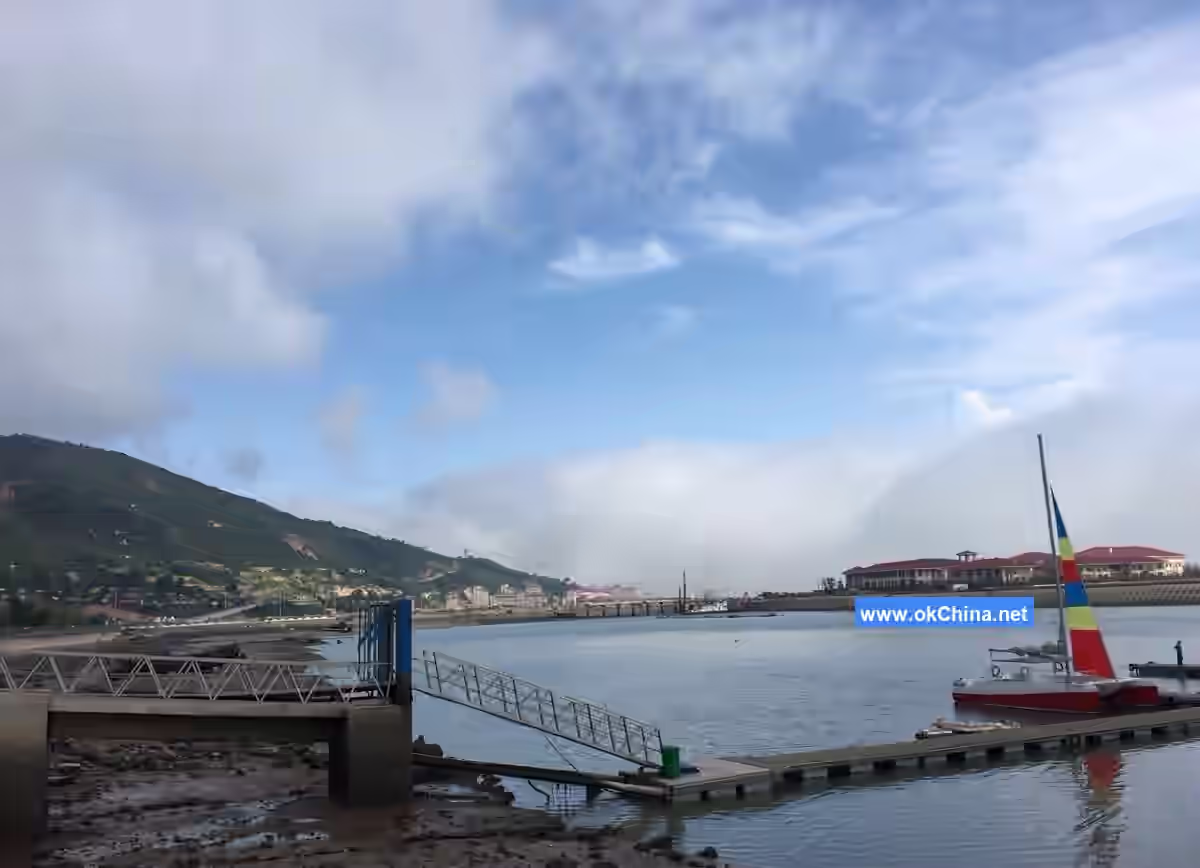
The Yacht Club is a state-owned enterprise in Jiangsu Province with relatively large scale and complete facilities, specializing in maritime tourism. The company mainly operates sea sightseeing, sea weddings, sea fishing, and sightseeing tours to the Qian San Islands, among other unique tourism projects. It focuses on developing a modern tourism service industry centered on island sightseeing and leisure tourism.
3.8 Houhongya (Rear Red Cliff)
Houhongya is characterized by its "red" color, featuring winding and majestic red sea-eroded cliffs. At high tide, the waves surge and splash, with the red cliffs, white spray, blue sea, and green vegetation complementing each other, creating an intoxicating scene.
3.9 Sea Erosion Wonders
The coastline of Liandao is winding, with headlands protruding into the sea and bays connected inward. Metamorphic rock sea-eroded landforms are随处可见, making it the largest bedrock island in Jiangsu Province. Through the vicissitudes of time, millions of years of wave erosion and tidal movements have formed Liandao's highly distinctive sea-eroded landforms. Sea erosion wonders such as "Yangwotou" (Sheep's Head) and "Longhougong" (Dragon Queen Palace) make Liandao a unique "Sea Erosion Museum" and a "natural seaside sculpture park."
3.10 Sea and Sky Merge into One
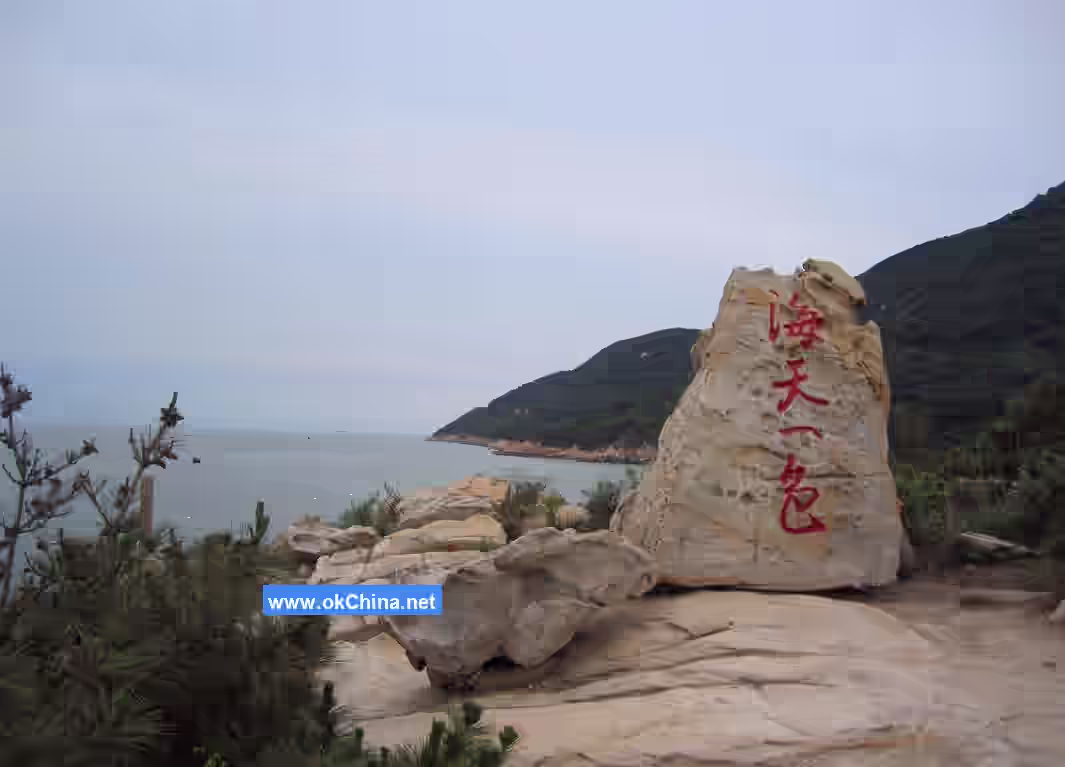
The "Sea and Sky Merge into One" Sunrise Viewing Pavilion is a giant rock platform extending into the sea on three sides, serving as the first viewing point upon entering Sumawan. Here, visitors can appreciate Liandao's unique beauty of "green mountains, blue seas, lush forests, and rocks." The "Sea and Sky Merge into One" area east of the pavilion is the best place to observe the edge of the sky and the corner of the sea. Gazing into the distance where the sea meets the sky, one can truly experience "the vast sea and sky stretching thousands of miles of blue, with green mountains surrounding the blue sea on three sides."
3.11 Marine Culture Wall
The Dashawan Marine Culture Wall is approximately 200 meters long and features nearly 200 types of marine fish, shellfish, birds, and other marine organisms. Thirty bas-relief panels showcase the origin of marine life, species evolution, marine development, and the progress of human civilization, highlighting the importance of understanding, protecting, developing, and harnessing the ocean.### 3.12 Divine Turtles Exploring the Sea Through the vicissitudes of time, the sea has eroded the folded metamorphic rocks, creating various sea erosion phenomena with distinct expressions. Along the folds, sea erosion pillars of varying lengths and thicknesses have formed. On the bedrock coast of Suma Bay, a group of turtles raises their heads, gazing into the distance towards the Yellow Sea, vividly depicted as they meet the waves and tread upon the anchorage. During high tide, seawater surges towards the turtle formation, with roaring waves crashing against the shore and churning up layers of snowy foam. The "Divine Turtles" cleave through the waves, appearing and disappearing intermittently, constituting a marvelous natural spectacle.
3.13 Horse-Watering Well
The Horse-Watering Well is located west of the Suma Bay parking lot. Legend has it that the spring was discovered when the steed of General Su Ziheng from the late Ming Dynasty sought water to drink. The spring water is cool, sweet, and never dries up throughout the year. On an island once surrounded by seawater on all sides, this was considered a rare wonder. Local folks often say, "As high as the mountain is, so is the water," expressing awe at the power of nature and its inherent laws.
3.14 Pledge of Love by Sea and Mountain
At the northeastern corner of Suma Bay's beach stand two massive rocks, each inscribed with the characters for "Pledge of Love by Sea and Mountain." This is a world of romance, a hall of love. The scenic area combines its romantic seascape with high-quality forest and beach resources to develop wedding photography-themed products. Couples take photos here to express their faithful love, encapsulated in the phrase: "A Qin-Jin covenant at Suma Bay, a pledge by sea and mountain for a lifetime bond." With its green hills, azure sea, dense and serene forests, and beautiful scenery, Suma Bay, along with the "Pledge of Love by Sea and Mountain" rocks, has become the premier choice for many newlyweds seeking a perfect photo spot.
3.15 Sunrise Viewing Pavilion
The Sunrise Viewing Pavilion, built in the northern architectural style of the Ming and Qing dynasties, stands 12 meters high and covers an area of 80 square meters. A local saying about Suma Bay goes: "The seamless blend of sea and sky remains today, amidst the azure sea, blue sky, and landscape." Ascending the Sunrise Viewing Pavilion and gazing into the distance, one can take in the clear, cloudless blue sky, the vast sea, and the majestic green mountains, instantly feeling the expansiveness of the sea and sky, refreshed and delighted, reluctant to leave.
3.16 Yangwotou
Yangwotou is the best location for viewing the sunrise. Though not large in area, it is the easternmost tip of Yingyou Mountain, where a large number of sea-eroded reef rocks gather. From a distance, they resemble a flock of sheep congregating there, hence the name Yangwotou (Sheep's Nest Head). Here lies a nationally protected cultural relic unit—the Donghai Langya Jun Boundary Stone Inscription. Besides the one by the beach within our Suma Bay scenic area, the other is located here. The inscribed stone faces the sea, standing at an average tidal level of 8 meters above sea level. It is the only relatively complete, clearly content-defined, and precisely dated Han Dynasty boundary stone inscription discovered in China to date, making it extremely precious. It holds significant value for research on Han Dynasty administrative divisions, historical geography, and ancient calligraphy history. Now, Yangwotou has also become a great place to admire the sunrise in the morning and watch the Martian tide at night. Witnessing the sun leap from the East China Sea and rise slowly is truly spectacular!
3.17 Sea-Blocking Embankment
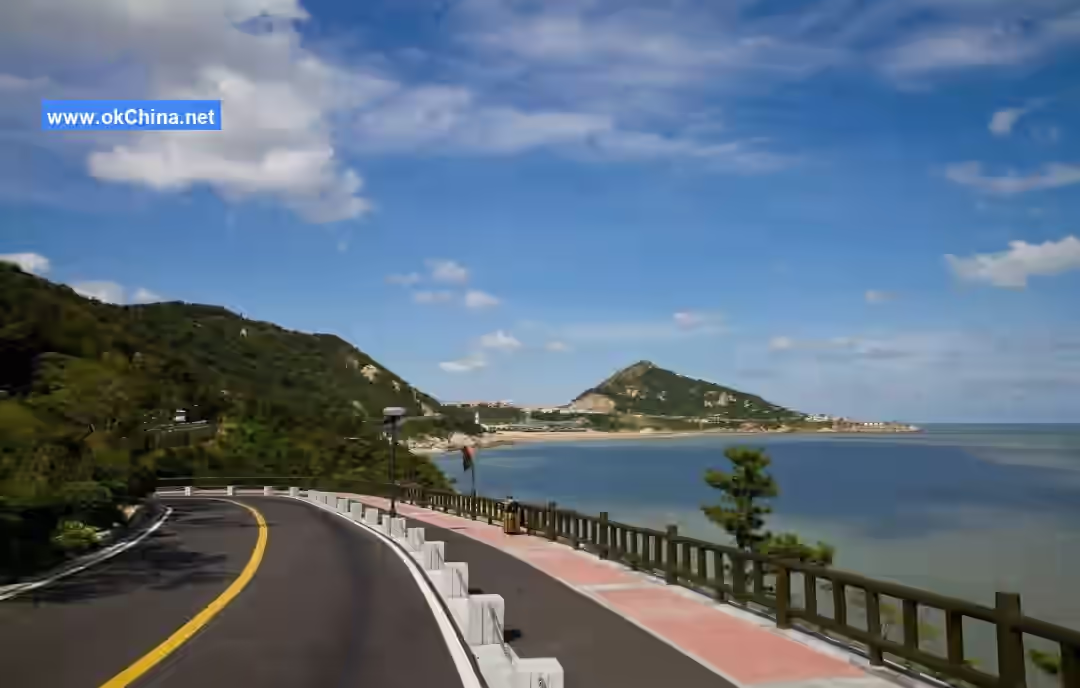
The Sea-Blocking Embankment, hailed as the "First Embankment in China," commenced construction in March 1985. After eight years of arduous effort, it was closed in December 1993. With a total length of 6,687.6 meters, a base width of 60 meters, a top width of 12 meters, and a height of 15 meters, it is the longest riprap sea embankment in the country. Driving across it allows one to fully appreciate the coastal scenery along the way, offering a rare travel experience. It also adds a unique maritime landscape to the Lianyungang coastline and fundamentally improves the accessibility of Liandao Island tourism. Driving onto the embankment or strolling along its pedestrian walkway, one can marvel at the grandeur of the great port and the vastness of the sea. Inside the embankment, the waters are calm, while outside, waves surge skyward. The procession of vehicles and flocks of seagulls compose a dynamic picture.
4. Cultural Resources
4.1 Legends and Stories
Lianyungang's folk tales present a local version of the "Jingwei Fills the Sea" myth. The famous scenic area in Lianyungang, East and West Liandao, was originally named Yingyou Mountain (Eagle Roaming Mountain). In the 1990s, the author participated in excavating local revolutionary historical sites and heard local fishermen recount a folk legend: Originally, there were no mountains or islands in this sea. A large eagle would fly from afar every day, carrying stones, ceaselessly circling and crying mournfully over the sea, as if searching for a companion in distress. This went on day after day, year after year, undeterred by wind or rain. After an unknown number of years, one day, the heavens and earth shook violently. Following a tsunami, two mountains—one large, one small—embracing each other, suddenly emerged from the sea. People say the eagle's perseverance moved the heavens, and the two islands rising from the sea were arranged by the heavens for the lovers' reunion. These two mountains came into being because of the eagle's circling, hence they were called Yingyou Mountain (Eagle Roaming Mountain). Since these two mountains suddenly appeared from the sea, people never saw that large eagle fly again. However, on the Eryaojian peak of the Cangwu Mountain across the shore, an eagle-shaped rock suddenly appeared. Locals believe it is the petrified statue of the great eagle.
4.2 Major Events
4.2.1 2020 Lianyungang Summer Tourism Festival
On July 25, 2020, the 2020 Lianyungang Summer Tourism Festival, Lianyungang Silk Road Music Festival, and Liandao Beach Music Carnival grandly commenced at the Liandao Scenic Area.
4.2.2 2024 Around Lianyungang Cycling Rally
On April 21, 2024, the "Mountain and Sea Cycling Bond · 2024 'Liandao Cup' 10th Around Lianyungang Cycling Rally" passionately kicked off at the Liandao Scenic Area Tourist Center.
4.2.3 2024 Lianyungang Triathlon Asian Cup
On May 18, 2024, the "Liandao Cup" 2024 Lianyungang Triathlon Asian Cup will officially commence at the Liandao Scenic Area in Lianyun District.
Comments
Post a Comment