Leshan Giant Buddha Scenic Area
1. Introduction
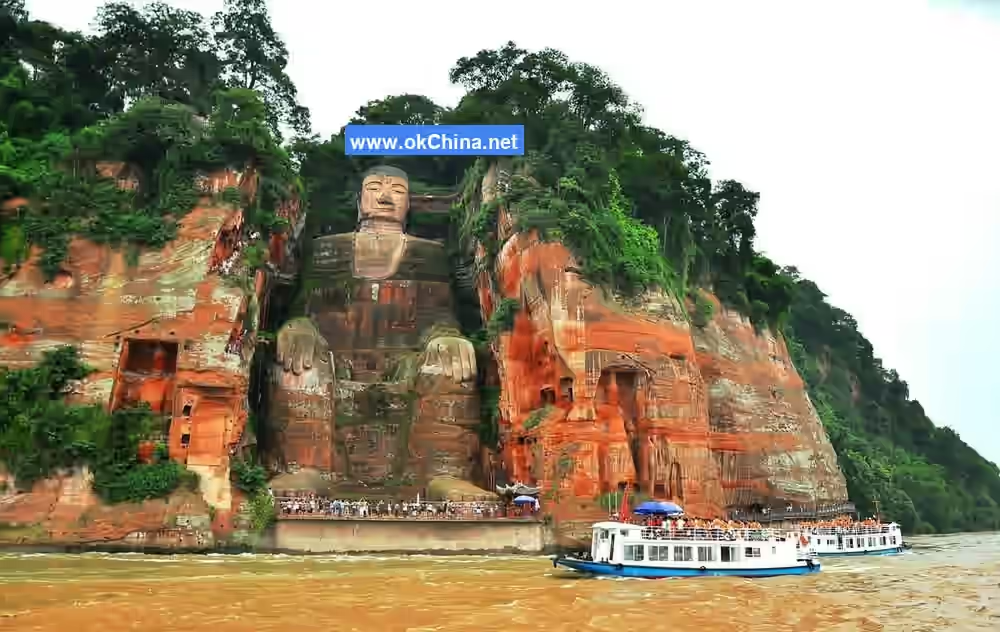
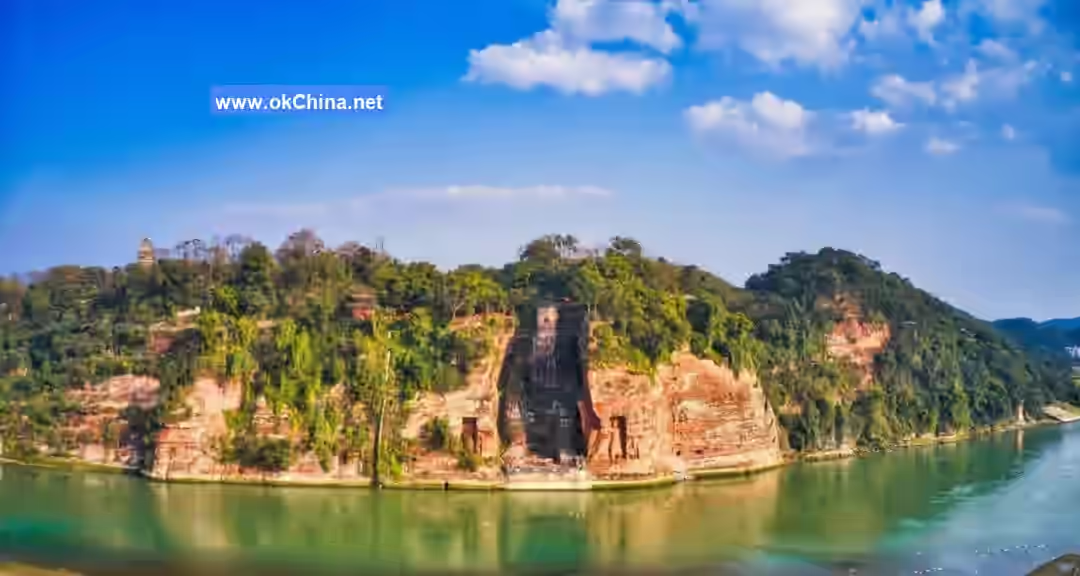
The Leshan Giant Buddha Scenic Area is located in the suburbs of Leshan City, at the confluence of the Minjiang, Dadu, and Qingyi Rivers. Covering an area of 17.88 square kilometers, it faces Leshan City across the river and is situated in the middle of Mount Lingyun. Mount Lingyun has an elevation of 448 meters, a circumference of approximately 3.5 kilometers, and an area of about 0.6 square kilometers. The mountain is lush with dense forests and bamboo groves all year round, while the three rivers converge at its base. It enjoys the reputation as the crown of southwestern landscapes and has been praised by literati and artists throughout history.
The carving of the Leshan Giant Buddha began in the first year of the Kaiyuan era of the Tang Dynasty (713 AD) and was completed in the 19th year of the Zhenyuan era (803 AD), taking about ninety years. In the 1980s, the Leshan Sleeping Buddha was discovered. Astonishingly, the Leshan Giant Buddha is precisely located at the heart of the Leshan Sleeping Buddha, forming the timeless wonder of "the heart is the Buddha."
2. Historical Development
2.1 Ancient Construction
Ancient Leshan was located at the confluence of three rivers—the Minjiang, Qingyi, and Dadu—which converged at the foot of Mount Lingyun. The water currents were extremely fierce, often capsizing boats that reached this point. During summer floods, the river water would crash directly against the mountain cliffs, frequently causing tragic shipwrecks and loss of life. Monk Haitong initiated the carving project to reduce the water's force and save all living beings, gathering manpower and resources for the task.
The construction of the Buddha statue began in the early Kaiyuan era of Emperor Xuanzong of Tang (713 AD). When the statue reached the shoulders, Monk Haitong passed away. After his death, the project was temporarily halted. Years later, Zhang Chou Jianqiong, the military governor of Jiannan West Circuit, donated his salary. Haitong's disciples led the craftsmen to continue the construction. Due to the project's massive scale, the imperial court ordered the allocation of salt tax revenues, accelerating the progress. When the statue reached the knees, Zhang Chou Jianqiong was transferred to the capital to serve as the Minister of Revenue, causing another work stoppage. Forty years later, Wei Gao, the military governor of Jiannan West Circuit, donated his salary to resume the construction. Through the efforts of three generations of craftsmen, the project was finally completed in the 19th year of the Zhenyuan era of Emperor Dezong of Tang (803 AD), spanning a total of 90 years.
2.2 Modern Maintenance
On October 8, 2018, the Nine-Bend Plank Path in the Leshan Giant Buddha Scenic Area was closed off for construction. On April 1, 2019, after nearly half a year of preliminary research and surveying for the emergency protection of the damaged areas of the Leshan Giant Buddha, the Giant Buddha officially "emerged from seclusion," and the scenic area's Nine-Bend Plank Path and Buddha's Foot Viewing Platform reopened.
On January 8, 2022, a symposium on grotto protection was organized by the Sichuan Provincial Cultural Heritage Bureau, attended by several nationally renowned experts. Experts from institutions such as the Chinese Academy of Cultural Heritage, the Dunhuang Academy, and the Sichuan Provincial Cultural Relics and Archaeology Research Institute unanimously agreed that the Leshan Giant Buddha suffers from multiple issues, with the primary "root cause" being water damage.
3. Geographical Environment
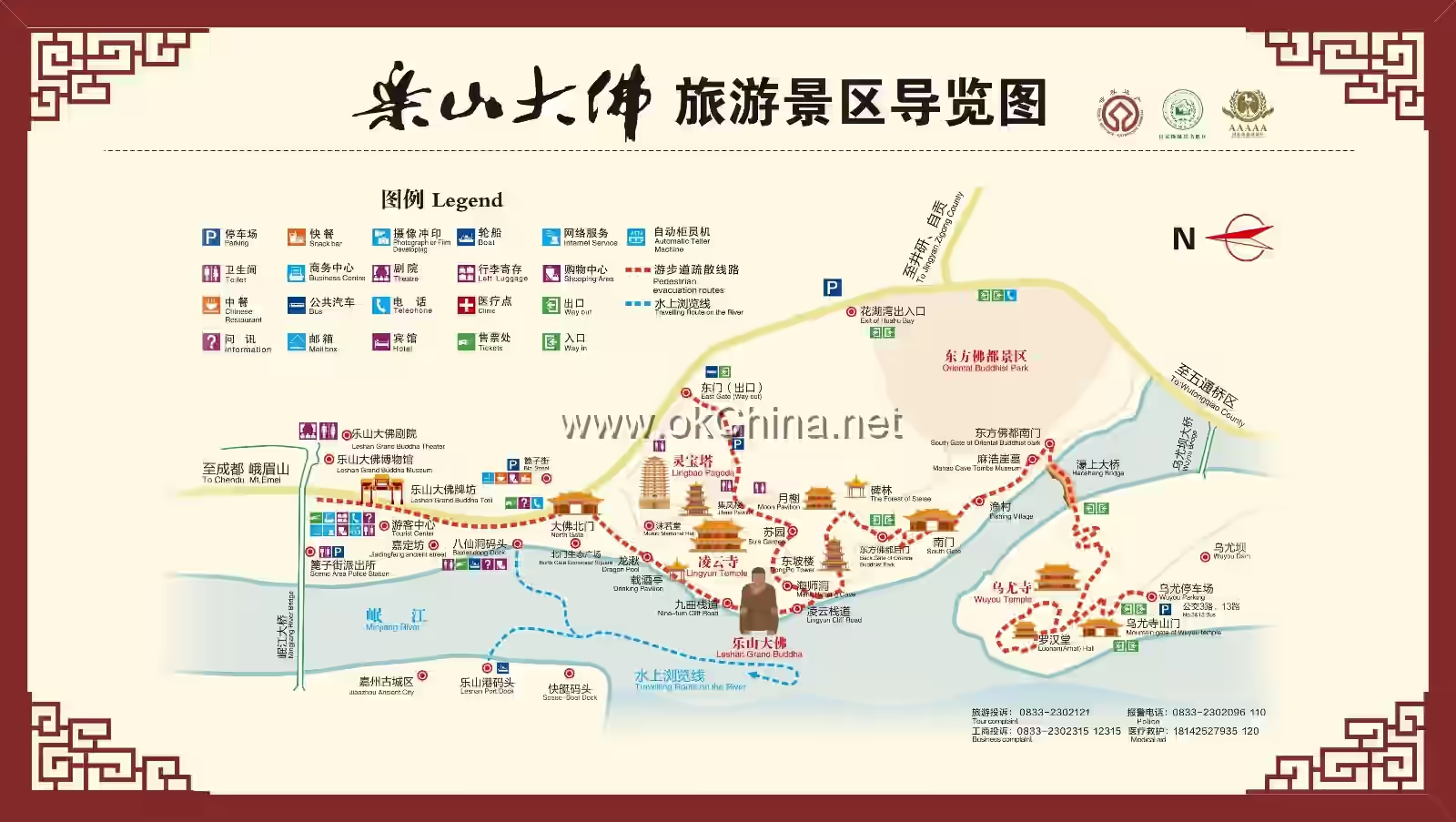
The Leshan Giant Buddha Scenic Area is located in the suburbs of Leshan City, at the confluence of the Minjiang, Qingyi, and Dadu Rivers, facing Leshan City across the river. The scenic area comprises Mount Lingyun, Mahao Rock Tombs, Mount Wuyou, and the Giant Reclining Buddha.
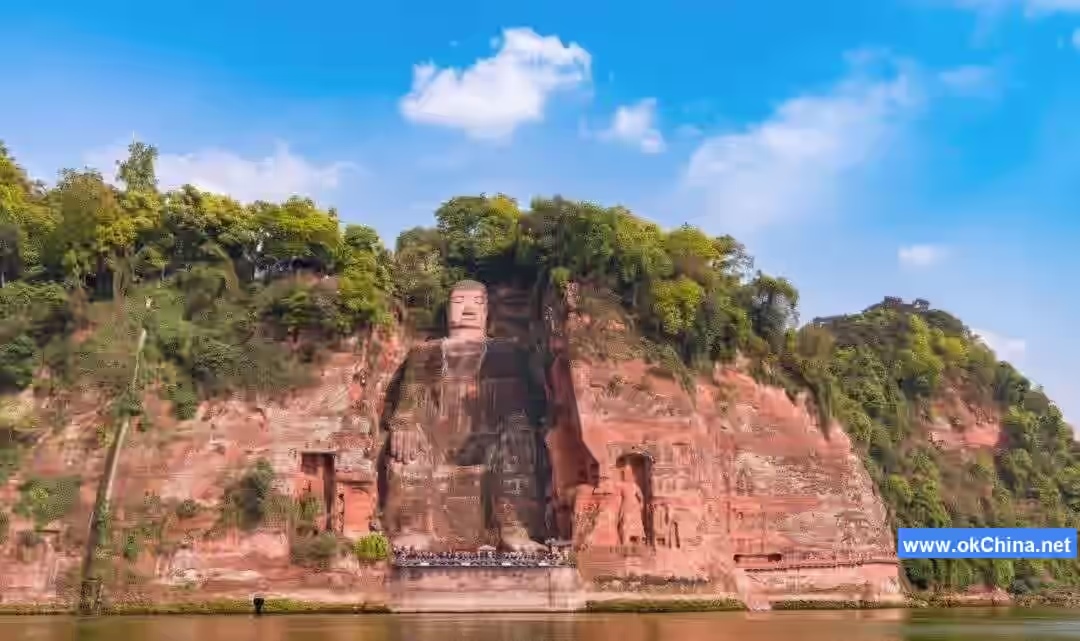
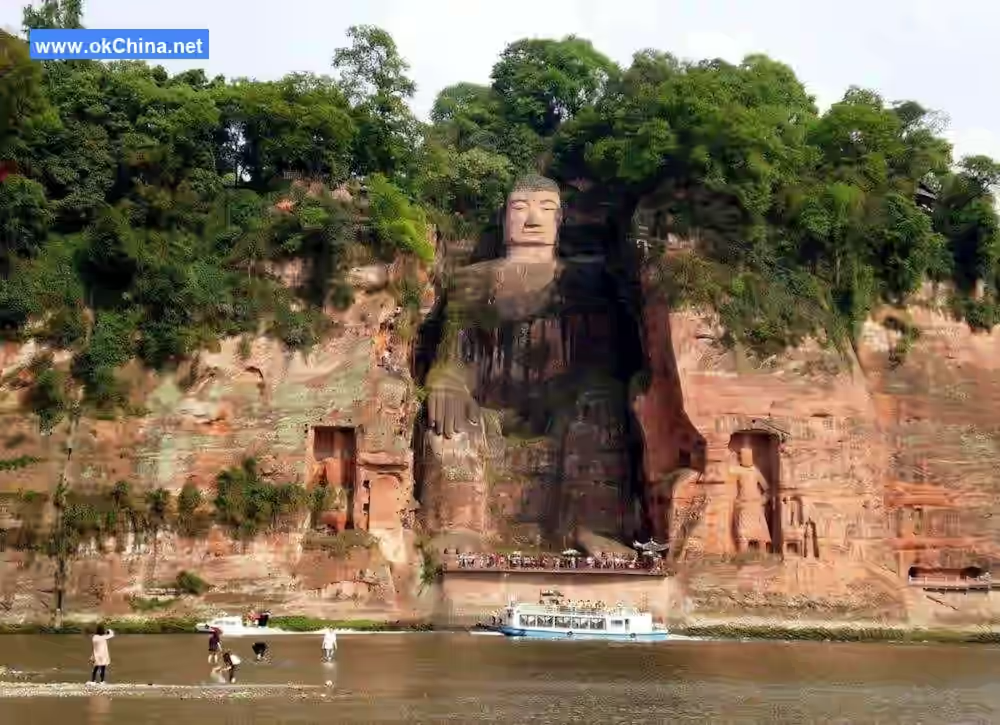
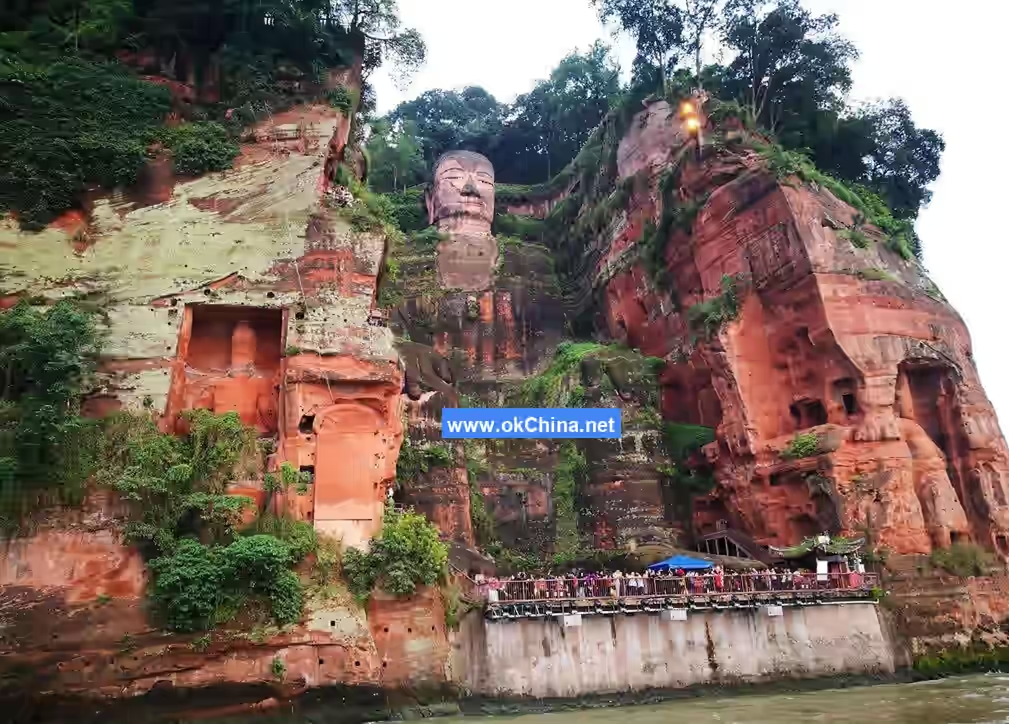
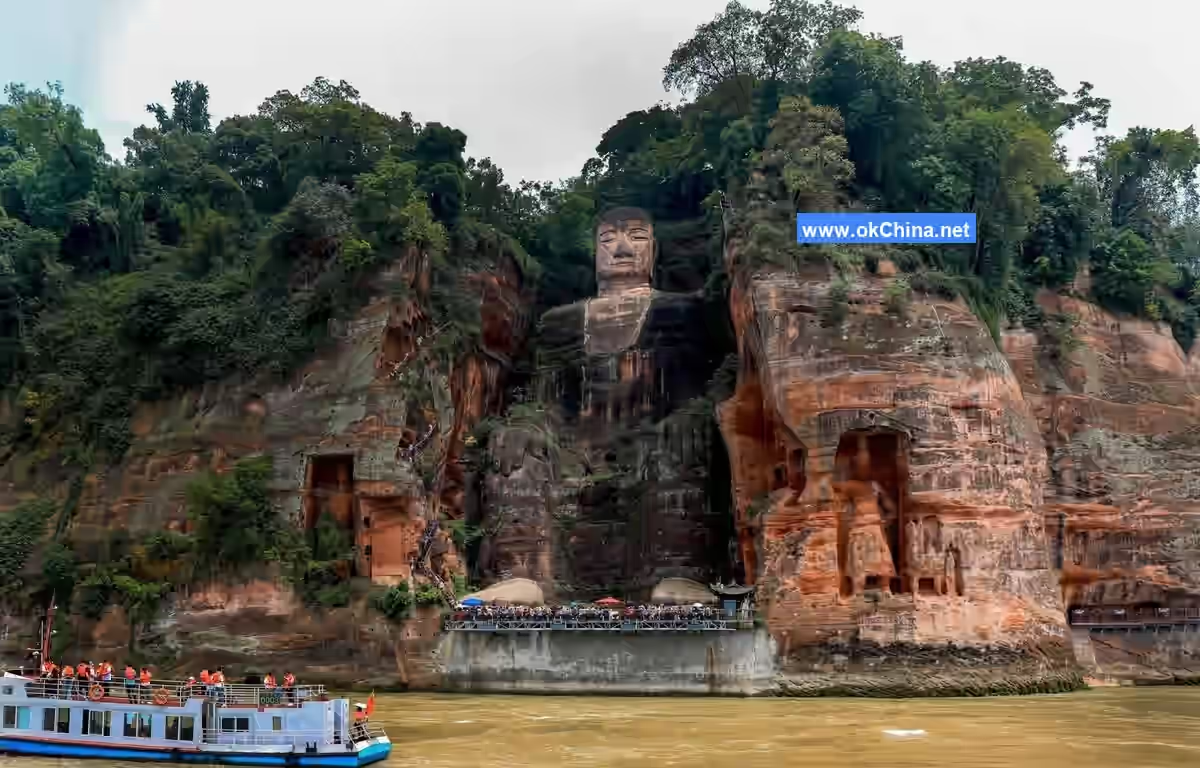
Mount Lingyun lies close to the Minjiang River and is home to Lingyun Temple, built during the Tang Dynasty. Carved into the mountain is a giant Buddha statue, standing 71 meters tall with an 8.5-meter-wide instep, making it the world's largest Buddha statue. The statue was initiated by the renowned Tang Dynasty monk Haitong and took 90 years to complete. The statue is a seated Maitreya Buddha, dignified and majestic, praised by poets as "the mountain is a Buddha, the Buddha is a mountain."
The Mahao Rock Tombs are Han Dynasty tombs, concentrated in the Mahao area and designated as a national key cultural relic protection unit. The currently open tomb is a large-scale "front hall with three chambers" structure. The tomb doors are exquisitely carved with eaves, roof tiles, brackets, and decorative patterns, each unique. The tomb walls also feature many historical stories and animal reliefs, providing extremely valuable material for studying ancient architectural carvings, folk customs, and religion.
Mount Wuyou stands alongside Mount Lingyun on the banks of the Minjiang River, surrounded by water on all sides like a piece of jade floating in the river. On the mountain is Wuyou Temple, built during the prosperous Tang Dynasty. The temple currently houses seven halls and is surrounded by lush forests, creating an elegant and tranquil atmosphere. Within the temple, the Erya Terrace is where the Han Dynasty scholar Guo Sheren annotated the "Erya."
3.1 Scenic Area Boundaries
3.1.1 Scenic Zone
The scenic zone extends 100 meters west of Provincial Highway 305 (the bypass road) to the east, reaches the Minjiang River Bridge to the north, follows the western bank of the Minjiang River to the outer side of Xiaogongzui, then proceeds westward along the northern bank of the Dadu River to the Xiaoba Dadu River Bridge. It continues along the southern red line of the Binhe Road in the Leshan High-Tech Industrial Development Zone and the eastern boundary of the development zone to Guanying Highway. Following the northern red line of Guanying Highway, it crosses the Laojiangba Bridge over the river and connects to the eastern section of the Leshan Outer Ring Road to close the loop. The geographical coordinates are 103°43′12″E to 103°47′06″E and 29°31′12″N to 29°35′17″N, with a total area of 17.88 square kilometers.
3.1.2 Core Zone
The core zone corresponds to the World Heritage protection area. It starts from the Leshan to Wutongqiao Road in the east, reaches Mount Sangui in the north, crosses the river westward to Hanchunmen, follows the western bank of the Minjiang River to Xiaogongzui, then proceeds westward along the northern bank of the Dadu River to Tieniu Gate. It crosses the Dadu River over Fengzhou Island to the southern bank of the Dadu River, follows the shoreline southward to the opposite bank of Mount Wuyou, crosses the river along the foot of Mount Wuyou to the Wuyou Bridge over the canal, and follows the canal northward to close the loop with the Leshan to Wutongqiao Road. The total area is 2.81 square kilometers.
4. Buddha Statue Structure
4.1 Basic Appearance
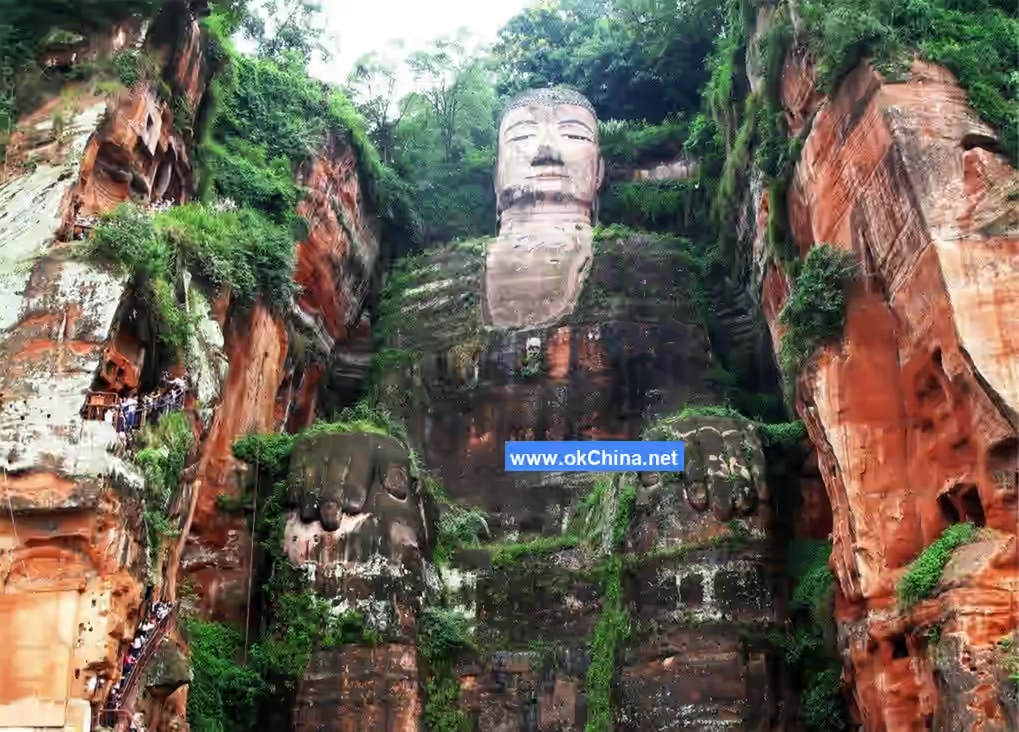
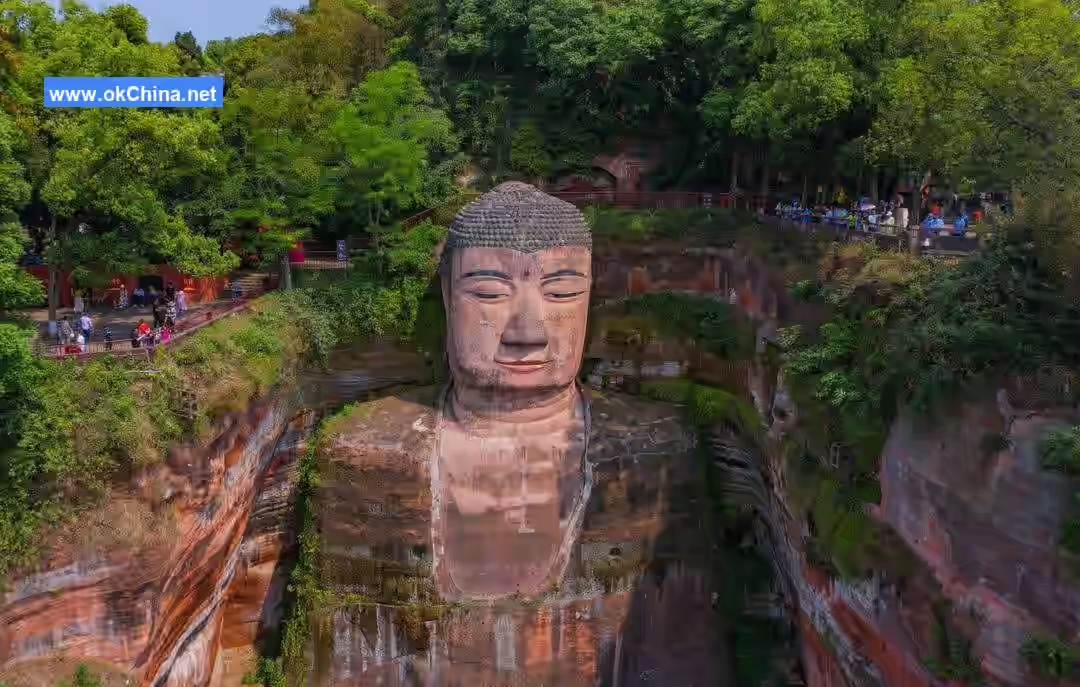
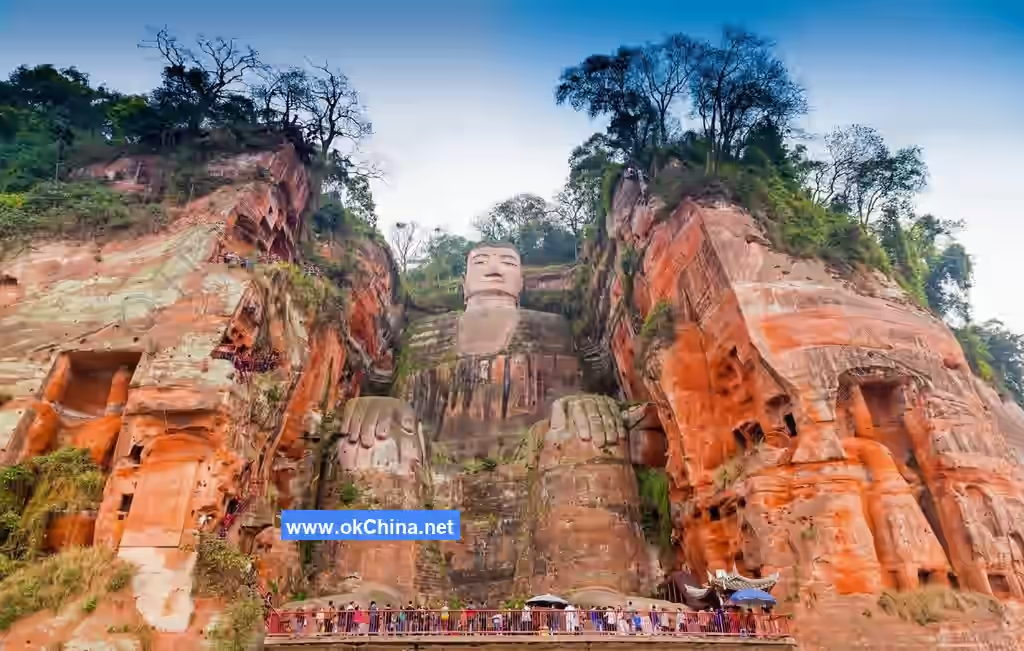
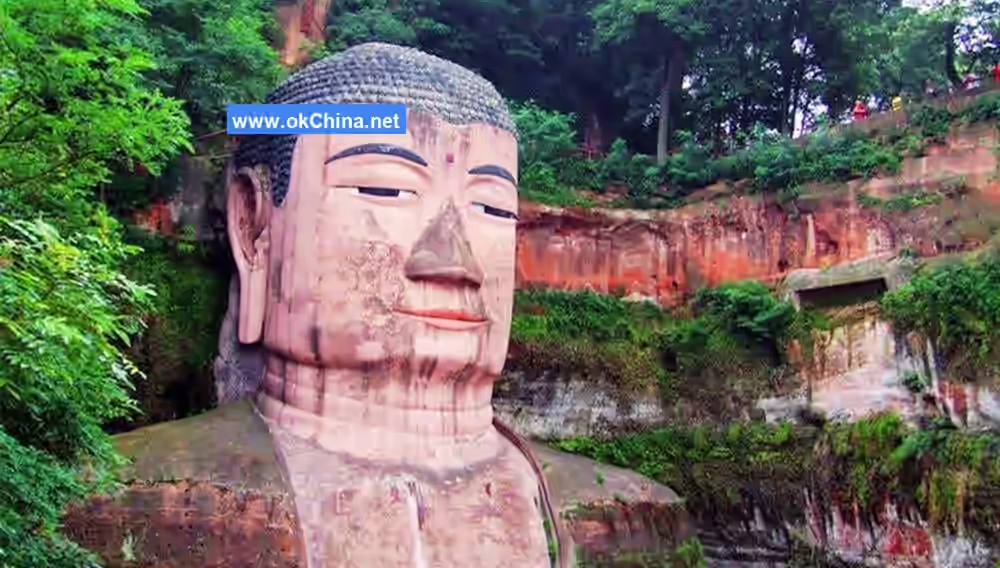
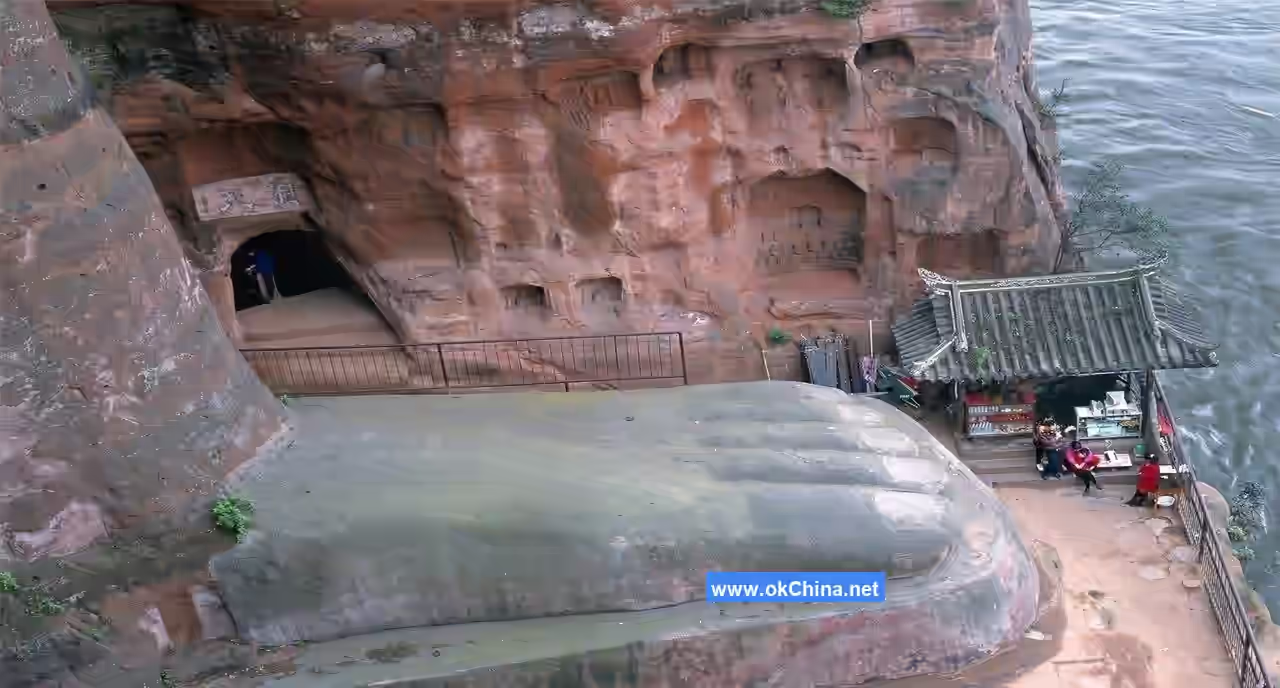
The Leshan Giant Buddha's head is level with the mountain, its feet tread the great river, and its hands rest on its knees. The statue is well-proportioned and solemn, carved into the cliff facing the river. The statue stands 71 meters tall, with a head height of 14.7 meters, head width of 10 meters, 1,051 hair coils, ear length of 7 meters, nose length of 5.6 meters, eyebrow length of 5.6 meters, mouth and eye length of 3.3 meters, neck height of 3 meters, shoulder width of 24 meters, finger length of 8.3 meters, distance from knee to instep of 28 meters, and instep width of 8.5 meters—large enough for over a hundred people to sit on.
On the cliff walls along the river on either side of the Giant Buddha, there are two guardian deity stone carvings, each over 16 meters tall, forming a layout of one Buddha flanked by two guardians. Alongside these guardians are hundreds of niches containing thousands of stone carvings, collectively forming a vast Buddhist stone carving art complex. To the left of the Giant Buddha, descending through the "Cavern Heaven" leads to the starting point of the modern Lingyun Plank Path, which is nearly 500 meters long. To the right is the Nine-Bend Plank Path, a construction and worship passage left from the Tang Dynasty carving of the Buddha. After the statue was carved, a seven-story pavilion (some say nine or thirteen stories) was built to cover it, known as the "Great Buddha Pavilion" or "Great Statue Pavilion." This pavilion was repeatedly built and destroyed. During the Song Dynasty, it was rebuilt as the "Lingyun Pavilion" and "Tianning Pavilion." In the Yuan Dynasty, the "Baohong Pavilion" was built. During the Ming Dynasty's Chongzhen era, a "Buddha Shed" was constructed, and in the Qing Dynasty, a "Buddha Pavilion" was built, all of which eventually fell into ruin.
4.2 Stone Hair Coils
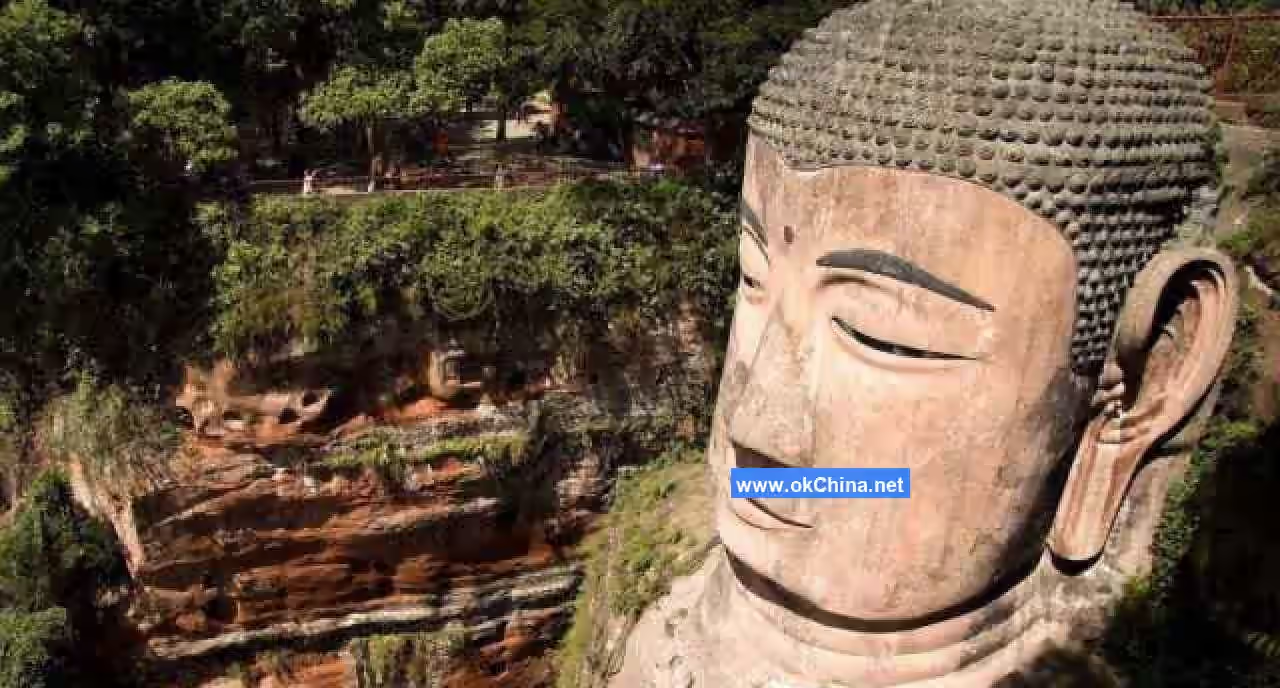
There are a total of 1,051 snail-shaped hair coils on the Giant Buddha's head, counted and numbered with chalk during the 1962 restoration. From a distance, the hair coils appear integrated with the head, but they are actually made by embedding individual stone blocks. At the exposed roots of individual snail coils, clear joint gaps are visible, with no mortar bonding. The surface of the snail coils has two layers of plaster: an inner layer of lime, each 5-15 mm thick. During the 1991 restoration, three remaining snail coil stones were found in a concave area of the Buddha's right leg. Two of them were relatively intact, measuring 78 cm in length, 31.5×31.5 cm at the top, and 24×24 cm at the root.
4.3 Wooden Ears
Inside the root of the Buddha's right earlobe, there is a hole about 25 cm deep. Maintenance workers extracted many fragments from it, which upon closer inspection turned out to be decayed wood and mud. This confirms the record in Fan Chengda's Southern Song Dynasty work Wu Chuan Lu: "The largest Buddha statue in the world still has its two ears made of wood." From this, it is known that the interior reveals three sections of wood arranged in a triangular pattern. This indicates that the raised bridge of the nose was also supported by wood and finished with hammered plaster on the exterior. However, it is unclear whether this was the original construction upon completion in the 19th year of the Zhenyuan era of the Tang Dynasty or a later repair using this technique.
4.4 Drainage System
The Leshan Giant Buddha has a very ingenious drainage system. Behind the Buddha's ears and head, there is a cleverly designed, hidden drainage system that plays an important role in protecting the statue from rainwater erosion. The Qing Dynasty poet Wang Shizhen wrote a poem about the Leshan Giant Buddha: "Spring water flows from the ancient Buddha's hair coils." Among the 18 layers of snail coils on the Buddha's head, the 4th, 9th, and 18th layers each have a horizontal drainage channel, constructed and decorated with hammered plaster, invisible from a distance. The collar and folds of the robe also have drainage channels. The center of the chest has a channel diverting water to the left, connected to the channel behind the right arm. Behind the ears, against the cliff, there are left and right interconnected caves, each 9.15 meters long, 1.26 meters wide, and 3.38 meters high. On the back side of the chest, there are two caves, one on each side, not connected to each other. The right cave is 16.5 meters deep, 0.95 meters wide, and 1.35 meters high; the left cave is 8.1 meters deep, 0.95 meters wide, and 1.1 meters high. These ingenious channels and caves form a scientific drainage, moisture isolation, and ventilation system that has played a crucial role in protecting the Buddha from erosive weathering for thousands of years. The two interconnected caves can collect mountain spring water, and the inner cliff walls have accumulated a 5-10 cm thick layer of calcareous deposits, while the cliff wall on the Buddha's side remains the original red sandstone and is relatively dry. The two unconnected caves have moist walls, accumulated water at the bottom, and constant water flow at the openings, resulting in a water-soaked band about 2 meters wide on the Buddha's chest. Clearly, this is due to the caves not being connected. It is unknown why the original builders did not connect them.
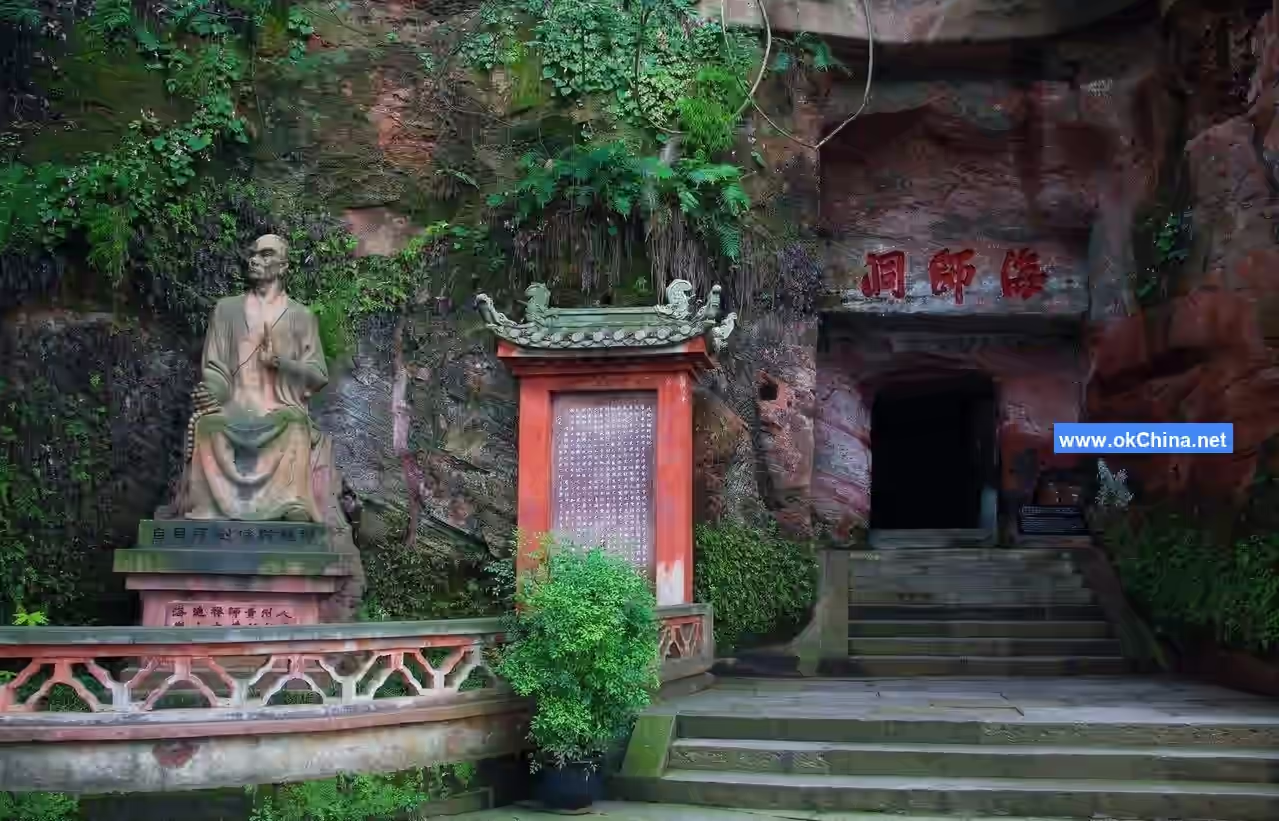
4.5 Chest Fragment SteleAccording to Huang Gaobin and Luo Boheng, who were in charge of the 1962 restoration, a sealed cavity containing relics was discovered in the chest of the Great Buddha. Upon opening it, they found scrap iron, old lead sheets, bricks, and other debris inside, while the stone sealing the entrance turned out to be a fragmented stele recording the reconstruction of the Tianning Pavilion during the Song Dynasty. After the completion of the Great Buddha in the Tang Dynasty, a wooden pavilion was built to protect it from sun and rain. The many remaining column bases and post holes on the Buddha's knees, legs, arms, chest, and insteps confirm that there was indeed a Great Buddha Pavilion. It was rebuilt during the Song Dynasty and named the "Tianning Pavilion," but was later destroyed. It remains unknown in which year and for what reason this fragmented stele from the Tianning Pavilion ended up embedded in the chest of the Great Buddha. The restorers moved this stele to the Haitong Cave for preservation, but unfortunately, it was destroyed in 1966.
5. Main Attractions
5.1 Leshan Giant Buddha
The Leshan Giant Buddha is carved into the cliff face at the confluence of the Minjiang, Qingyi, and Dadu Rivers, depicting a seated Maitreya Buddha. The carving of the statue began in the early Kaiyuan era of Emperor Xuanzong of Tang (713 AD), initiated by the monk Haitong to subdue the turbulent waters and save all living beings. It was completed in the 19th year of the Zhenyuan era of Emperor Dezong (803 AD), taking 90 years in total.
On December 6, 1996, the Leshan Giant Buddha was approved by UNESCO as a "World Cultural and Natural Heritage Site" and officially inscribed on the World Heritage List.
The Buddha has a well-proportioned figure and a solemn expression, carved into the mountain and seated majestically facing the river. The statue stands 71 meters tall, with a head width of 10 meters, 1,021 hair buns, ears 7 meters long, a nose 5.6 meters long, eyebrows 5.6 meters long, eyes 3.3 meters long, shoulders 28 meters wide, fingers 8.3 meters long, and insteps 8.5 meters wide, capable of seating over a hundred people. Praised by poets as "the mountain is a Buddha, and the Buddha is a mountain," it is the largest stone-carved seated Maitreya Buddha in the world. To the left of the Buddha, descending through the "Cavern Heaven," is the starting point of the Lingyun Plank Road, which stretches nearly 500 meters in total. To the right is the Nine-Bend Plank Road.
5.2 Giant Sleeping Buddha
The "Giant Sleeping Buddha," also known as the "Hidden Sleeping Buddha," is located at the confluence of the three rivers (Minjiang, Qingyi, and Dadu) beside Leshan City. The lifelike Buddha's head, body, and feet are formed by the connected Wuyou Mountain, Lingyun Mountain, and Dongyan, stretching about 1,300 meters from north to south, lying on its back with its head to the south and feet to the north along the riverbanks. The "Buddha's head" of the Giant Sleeping Buddha is particularly vivid: Wuyou Mountain forms the "head," Jingyun Pavilion resembles "eyelashes," and the treetops on the mountain peak represent the "forehead, nose, lips, and chin," full of spirit. The Qiluan and Jifeng peaks of Lingyun Mountain form the "Buddha's chest," Lingbao Peak is its "abdomen and thigh," Jiuri Peak is its "calf," and the southern slope of Dongyan forms its "leg."
5.3 Oriental Buddha Capital
The Oriental Buddha Capital was completed and opened to the public in Leshan, China, in May 1994. Located just half a kilometer from the Leshan Giant Buddha, it covers an area of 200,000 square meters and features over 3,000 replicas of Buddhist statues from China and abroad. Utilizing the natural mountain terrain, it forms a spectacular Buddhist art gallery with winding paths. The sculptures employ techniques such as cliff round carving, relief carving, engraving, and murals, using various materials like stone, bronze, colored clay, and black jade, fully reflecting the styles of Chinese and Southeast Asian Buddhist art. The site also includes an 800-square-meter exhibition hall showcasing fine Buddhist artworks.
5.4 Lingyun Monastery
A massive golden plaque hangs at the center of the main gate of Lingyun Monastery, inscribed with the four characters "Lingyun Chan Yuan" (Lingyun Zen Monastery) in Su Dongpo's calligraphy. The couplet on either side reads: "The great river flows eastward; the Dharma comes from the west."
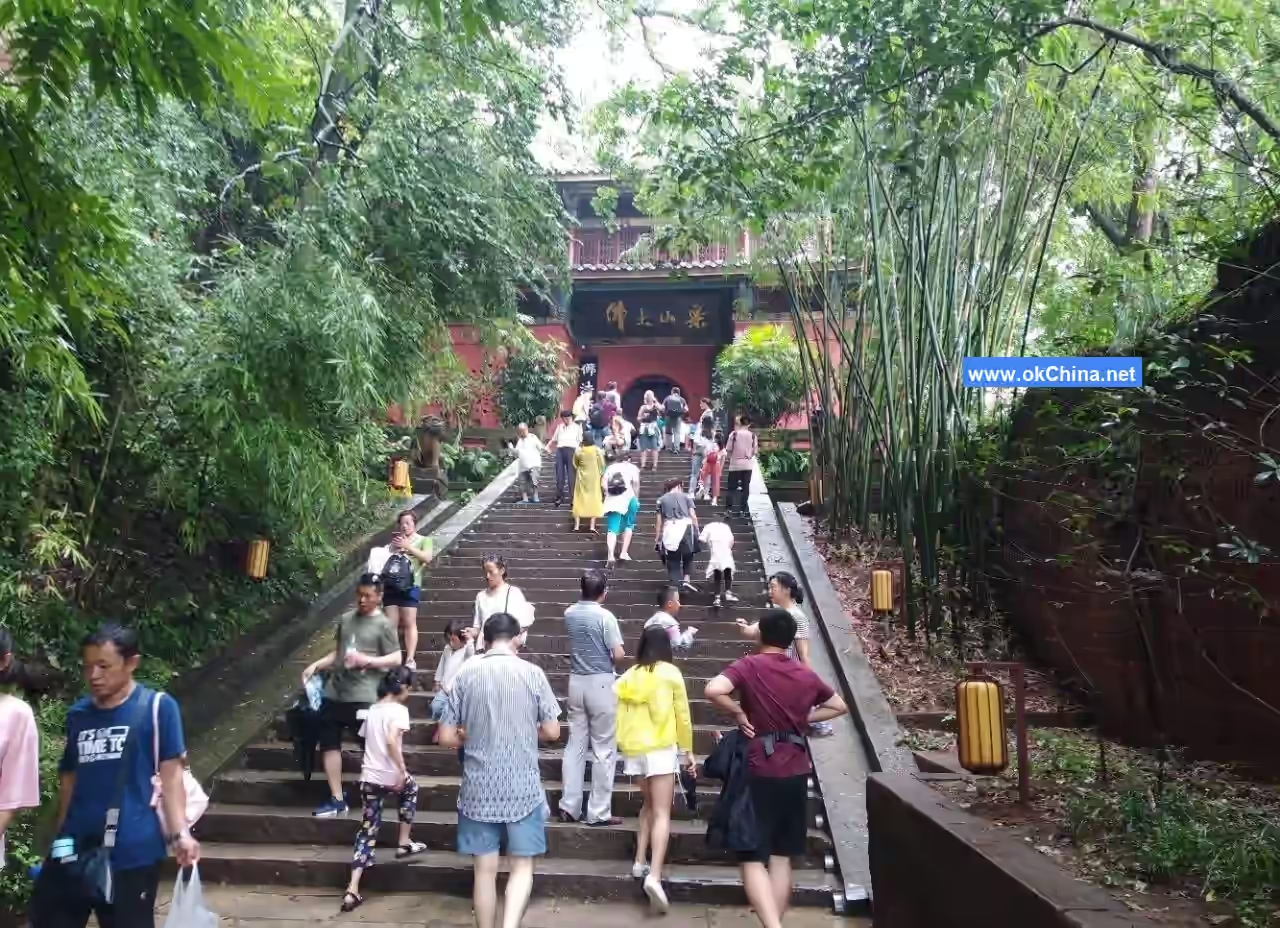
Lingyun Monastery is a triple quadrangle architectural complex consisting of the Heavenly King Hall, the Great Buddha Hall, and the Scripture Repository. It features red walls, green tiles, and is shaded by lush trees. In front of the Heavenly King Hall stand towering ancient nanmu trees, while four steles recording the reconstruction of the monastery during the Ming and Qing dynasties flank the hall. Inside the hall, a seated Maitreya statue, with a bulging belly and joyful expression, is enshrined in the center, commonly known as the "Big-Bellied Arhat." On either side are statues of the Four Heavenly Kings, with knitted brows and fierce eyes, exuding majesty and strength. Behind the Heavenly King Hall is the Weituo Hall, housing a gilded wooden statue of the guardian deity Weituo. Passing through the Heavenly King Hall, one reaches the Great Buddha Hall, a Ming Dynasty structure that serves as the main venue for religious activities. In the center sits a statue of Shakyamuni Buddha in three forms (Dharmakaya, Sambhogakaya, and Nirmanakaya), beautifully crafted and solemn in demeanor. On the back of the Great Buddha Hall is a newly sculpted statue of Guanyin holding a pure vase, flanked by statues of Manjushri, Samantabhadra, Ksitigarbha, and Mahasthamaprapta, which are works from before the Ming Dynasty.
The innermost hall of the monastery is the Scripture Repository, originally built in 1930 to store Buddhist scriptures. Its structure and appearance reflect modern architectural styles.
5.5 Buddhist Paradise
Buddhist Paradise integrates ancient architecture, cliff carvings, sculptures, murals, and colored paintings into a beautiful landscape. The Tang-style ancient buildings include 12 structures such as the Heavenly Bridge, Heavenly Gate, Heavenly Stairway, Cloud Platform, Cloud Ladder, and three main halls. A golden Maitreya Buddha sits serenely, while a big-bellied Buddha greets visitors with a smile. Celestial maidens fly through the air, dragons coil around, and the halls are adorned with carved beams and painted rafters, resplendent in gold. A 1,000-meter-long stone carving gallery depicts the life of Maitreya and stories from Buddhist sutras, based on the "Three Maitreya Sutras" and Dunhuang murals. The carvings are exquisite and full of charm, echoing the grandeur of the Leshan Giant Buddha.
5.6 Lingbao Pagoda
Lingbao Pagoda, also known as Lingyun Pagoda, is named after Lingbao Peak, on which it stands behind Lingyun Monastery. Built during the Tang Dynasty, the pagoda is a multi-eaved, square, pyramidal brick structure facing west. It stands 38 meters tall with 13 stories. The interior of the pagoda is hollow, with stone steps spiraling around the central axis to the top. The roof is a four-corner pyramidal spire. The structure and style of Lingbao Pagoda resemble those of the Small Wild Goose Pagoda in Xi'an.
Each story of Lingbao Pagoda has windows that provide light and allow visitors to look out in all directions. To the south, one can see the Scripture Repository and Dongpo Pavilion; to the west, the river seems to flow from beyond the horizon, and the three Emei Mountains appear like boats floating on a sea of clouds; to the north, one can overlook the entire city of Leshan.
According to the geographical features, the pagoda was built primarily as a landmark at the confluence of the three rivers. While the 71-meter-tall Great Buddha was intended to calm the waters and ensure safety, Lingbao Pagoda served as a navigation marker, helping boatmen stay alert to safely navigate the rapids and dangerous shoals.
Lingbao Pagoda has become a landmark of the ancient city of Jiazhou and has been designated as a cultural relic protection unit by the Sichuan Provincial People's Government.
5.7 Haitong Cave
The initiator of the Leshan Giant Buddha project was the monk Haitong. Haitong, originally from Guizhou, built a thatched hut on Lingyun Mountain. Seeing the confluence of the Minjiang, Qingyi, and Dadu Rivers at the foot of Lingyun Mountain, and how the summer floods would crash against the cliffs like ten thousand galloping horses, often capsizing boats and causing tragedies, he resolved to carve a giant Maitreya Buddha into the cliff. He hoped to rely on the Buddha's boundless power to subdue the waters and calm the storms forever. Thus, Haitong traveled extensively across the Yangtze River region, the Huai River area, and the lakes regions to raise funds and gather workers for the project. After the carving began, local officials attempted to extort construction funds, which infuriated Haitong. He sternly refused, saying, "You may gouge out my eyes, but you shall not take the Buddha's wealth." The officials, abusing their power, retorted, "Then try it." Haitong, with great righteousness and composure, "gouged out his own eyes and presented them on a plate." The officials were shocked and fled in repentance. Haitong's unwavering dedication and self-sacrifice not only made the corrupt officials repent but also inspired everyone to persevere in their mission.
5.8 Moruo Hall
Moro Hall is located in the northwest corner of Lingbao Peak, converted from a Sino-Western style house with gray bricks and tiles, simple yet elegant. It was built to commemorate Guo Moruo, who was born in Shawan, Leshan. The inscription "Moro Hall" on the lintel was written by Chu Tunan, and the couplets on either side of the door were composed by the famous writer Ma Shitu.
About 10 meters in front of the hall stands a full-body bronze statue of Guo Moruo, approximately 3 meters tall. Beside the statue stands a 6.5-meter-tall granite pen, engraved with images of goddesses, Qu Yuan, and the phoenix rising from ashes. The giant pen points toward the blue sky, symbolizing Guo Moruo's everlasting achievements.
Moro Hall serves as the Sichuan Provincial Guo Moruo Research Center and Archives, displaying photographs of Guo Moruo's life, various editions of his works, and exhibitions of research findings related to him.
5.9 Lingyun Plank Road
On the cliff to the right of the Leshan Giant Buddha, there is a steep plank road winding down in nine bends, known as the "Nine-Bend Plank Road." It was carved simultaneously with the construction of the Buddha. At the top of the plank road is a pavilion with a long corridor. The first bend of the plank road features finely carved Buddhist transformation scenes and depictions of towers, pavilions, and pagodas, providing valuable material for studying Tang Dynasty architecture and stone carving art.
The plank road is 1.45 meters at its widest and 0.6 meters at its narrowest, with 217 stone steps winding down along the cliff to the base of the Buddha.
The plank road was carved from early 1983 to 1984 and opened in October of the same year. It stretches about 500 meters in total, connecting to the Giant Buddha at its northern end and to Bijin Tower at its southern end. Together with the Nine-Bend Plank Road on the right side of the Buddha, it forms a winding tourist route.
5.10 Mahao Cliff Tombs
The Mahao Cliff Tombs are located on the east bank of the flood channel between Lingyun and Wuyou Mountains, with "Mahao" being the local name. Cliff tombs are a distinctive burial form in Sichuan, characterized by artificially carved square caves in sandy rock layers along low hills and valleys, where the deceased and burial objects were placed. From the outside, they appear as mysterious caves. This burial style was popular over 1,800 years ago, from the Eastern Han Dynasty to the Northern and Southern Dynasties, hence the name "Eastern Han Cliff Tombs."
The Eastern Han cliff tombs in Leshan are distributed along the banks of the Minjiang, Qingyi, and Dadu Rivers and on the cliffs of shallow valleys, numbering in the tens of thousands. Their quantity, scale, and richness of stone carvings rank first in Sichuan. The Mahao Cliff Tombs are the most concentrated and representative group among the Leshan cliff tombs. Within an area about 200 meters long and 25 meters wide, there are 544 cliff tombs, with entrances densely packed like honeycombs, creating a spectacular sight. This Han Dynasty tomb group was designated as a national key cultural relic protection unit by the State Council in 1988.
5.11 Bijin TowerBijin Tower is a major scenic spot on Mount Lingyun, majestically situated on the mountain path halfway up the slope. When viewed from the mountaintop, it appears like a sudden paradise emerging amidst the green hills and clear waters. From the foot of the mountain, however, it exudes an imposing aura of being "impenetrable by ten thousand men." Originally located south of Leshan City and built during the Song Dynasty, Bijin Tower derived its name from the local geography: "Bi" refers to the jade-like quality of the Qingyi River, while "jin" means ferry crossing, as recorded in the Commentary on the Waterways Classic and Wei Liaoweng’s Record of Bijin Tower from the Song Dynasty. The original tower has been destroyed. The current site of Bijin Tower was originally the Hongchuan Temple, where the statue of the Sichuan Deity was worshipped.
5.12 Mount Wuyou
Opposite Mount Lingyun lies Mount Wuyou, surrounded by water on all sides, standing as a solitary peak with lush foliage and deep, shaded bamboo groves. The Wuyou Temple on the mountain was built during the mid-Tang Dynasty. Its main hall, the Mahavira Hall, is meticulously structured and splendidly adorned. Adjacent to the Buddha Hall is the Arhat Hall, which houses over 500 colorfully decorated clay statues of Buddhas, each with a unique and vivid expression. This collection is both magnificent and holds significant artistic value.
The Erya Terrace is located on the sheer cliffs of the western side of Mount Wuyou, where the Han Dynasty scholar Guo Sheren annotated the Erya. Originally situated at the Kuangqia Pavilion, the terrace was relocated to its current site during its reconstruction in 1921. The original structure consisted of three interconnected levels, designed with intriguing twists and turns. After the liberation, the second level was dismantled during renovations, leaving only the top and bottom levels intact. The top level was later renamed the Tingtao Pavilion, leaving the Erya Terrace with only one remaining level.
5.13 The Zen Rhythm of Jiazhou
Synopsis of "The Zen Rhythm of Jiazhou" Water Dance Show: During the prosperous Tang Dynasty 1,300 years ago, ancient Jiazhou was a land of peace and prosperity, filled with song and dance. One day, a demon dragon emerged at the confluence of three rivers at the foot of Mount Lingyun, wreaking havoc by stirring up the waters. As the people suffered, Maitreya, moved by compassion, dispatched the Vajra Guardian, one of the Twenty-Four Heavenly Generals, to subdue the demon in Jiazhou. After a fierce battle, the demon dragon was defeated and sealed beneath the waves of the three rivers by the Vajra Guardian’s sacred instrument. The Buddha then manifested in his majestic form, transforming into the Great Buddha to personally suppress the dragon. Since then, Jiazhou has enjoyed lasting peace and prosperity.
The water dance show draws inspiration from the historical and cultural heritage of Leshan, showcasing the city’s character of "the benevolent find joy in mountains, the wise find joy in waters," as well as the resilience, diligence, and indomitable spirit of the people of Leshan. According to the official introduction by the Leshan Giant Buddha Tourism Investment Group, the 268-meter-high "Zen Rhythm of Jiazhou" water dance show is the tallest of its kind in Asia. It premiered on July 1, 2021.
6. Religious Significance
The Leshan Giant Buddha is a statue of Maitreya. Maitreya was widely worshipped during the Tang Dynasty. Buddhist scriptures state that the advent of Maitreya would bring "peace to the world." During the reign of Empress Wu Zetian in the Wu Zhou period, she ordered the compilation of the Great Cloud Sutra to prove that she was an incarnation of Maitreya. The popular worship of Maitreya helped her ascend to the throne in an era dominated by patriarchal values. Due to Wu Zetian’s vigorous promotion, the practice of sculpting Maitreya statues spread throughout the country. The construction of the Leshan Giant Buddha began only about two decades after Wu Zetian’s reign, so when Hai Tong initiated the project, it was natural to choose Maitreya as the subject. Moreover, Maitreya, as the future Buddha who brings light and happiness, aligns with the role of a guardian Buddha capable of calming floods.
In the Buddhist culture of Han China, the iconography of Maitreya has undergone significant changes. The first stage featured the cross-ankled Maitreya, introduced from India. The second stage saw the development of the "ancient Buddha Maitreya" with Chinese characteristics. The third stage gave rise to the "Cloth Bag Maitreya." The Leshan Giant Buddha belongs to the "ancient Buddha Maitreya" style with Chinese characteristics. According to the Maitreya Sutra, Maitreya is described as possessing the "thirty-two major marks and eighty minor characteristics," which require his facial features, head, hands, feet, and body to exhibit extraordinary traits distinct from ordinary people. The overall form of the Leshan Giant Buddha transcends the mundane. The hair bun on his head, broad shoulders, high and elongated eyebrows, and straight, rounded nostrils were all constructed in accordance with Buddhist scriptures. However, the Indian Buddhist statue’s characteristic "broad shoulders and slender waist" is absent in the Giant Buddha. Instead, it features robust shoulders and a full chest, reflecting the Tang Dynasty’s aesthetic preference for plumpness. The seated posture of the Leshan Giant Buddha, with feet naturally hanging down, also differs from the Indian "lotus position" (padmasana). Since the Giant Buddha was built to calm waters, this stable and serene seated posture is believed to instill courage and determination in sailors navigating turbulent waters.
The Cloth Bag Maitreya is modeled after the image of a monk named Qici from the Five Dynasties period in China. Qici, a native of Fenghua County in Zhejiang Province, was known for his kindness, generosity, and ability to predict weather and fortunes. He often carried a cloth bag while begging for alms. Before his death, he recited, "Maitreya is truly Maitreya, manifesting in countless forms, constantly revealing himself to the world, yet the world remains unaware." Thus, he came to be regarded as an incarnation of Maitreya, and temples began sculpting Maitreya in his likeness—a smiling, big-bellied Cloth Bag Monk.
Comments
Post a Comment