
Langzhong Ancient City
1. Introduction
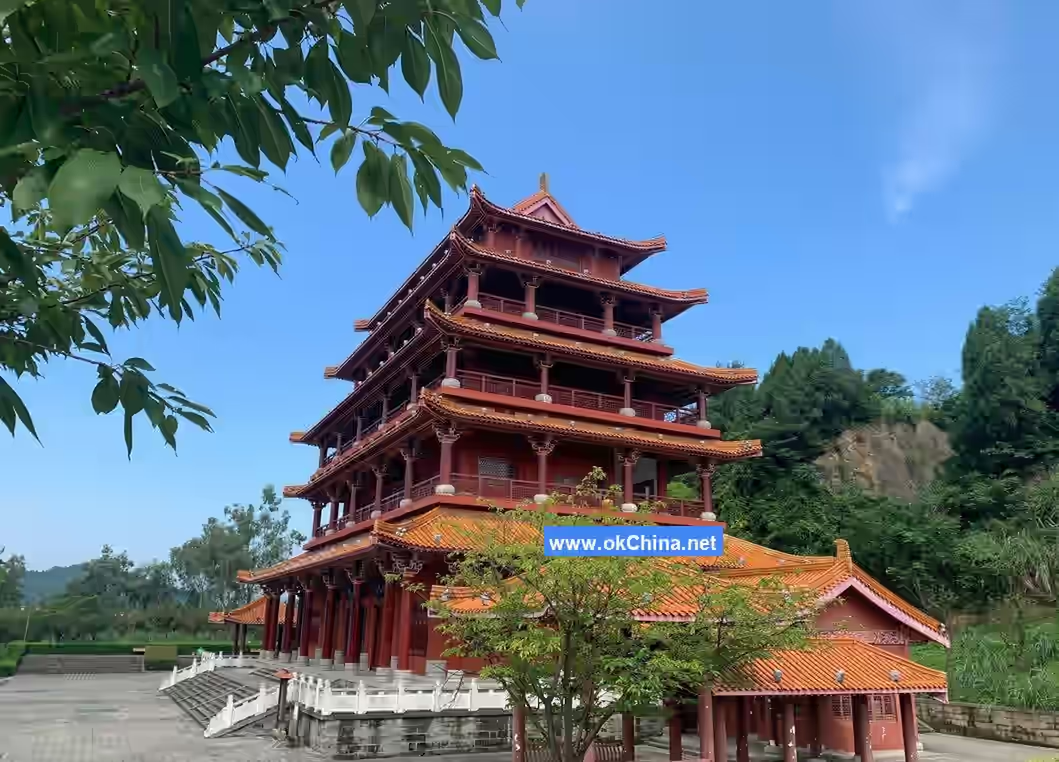
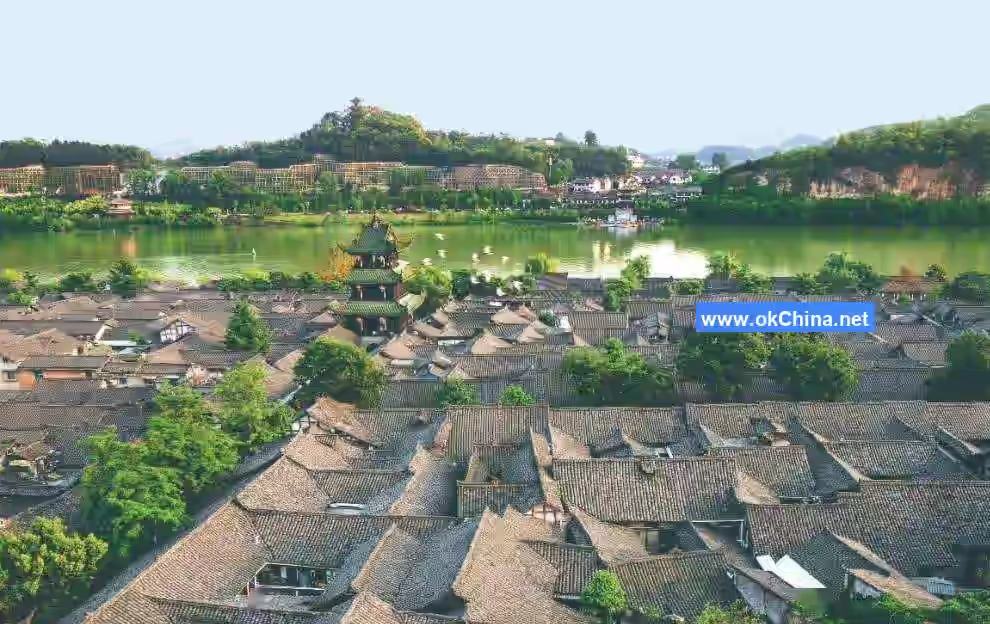
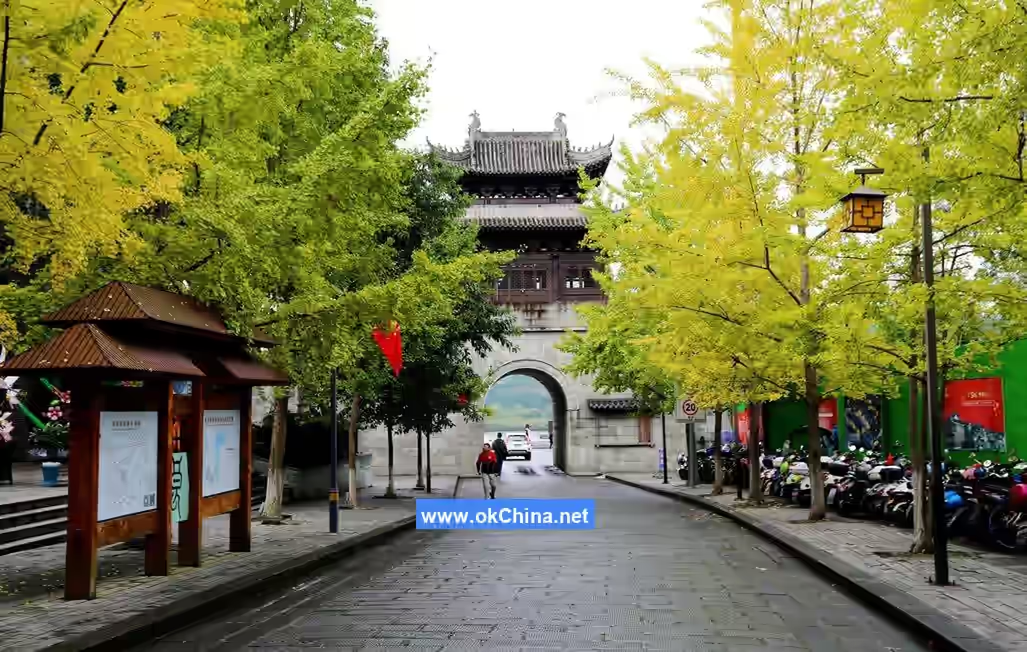
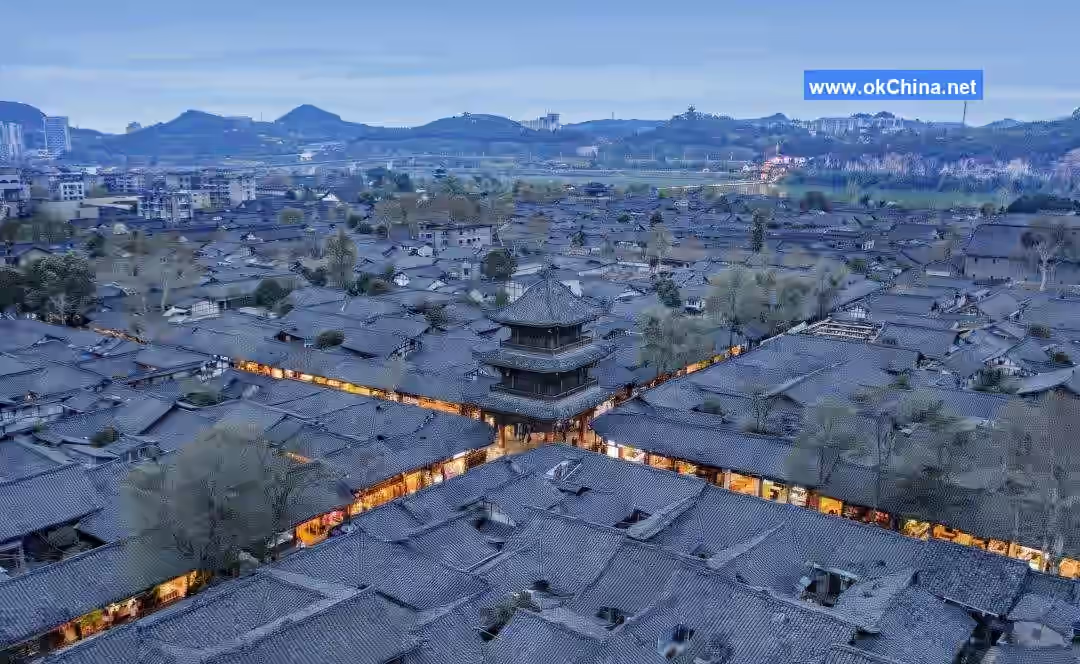
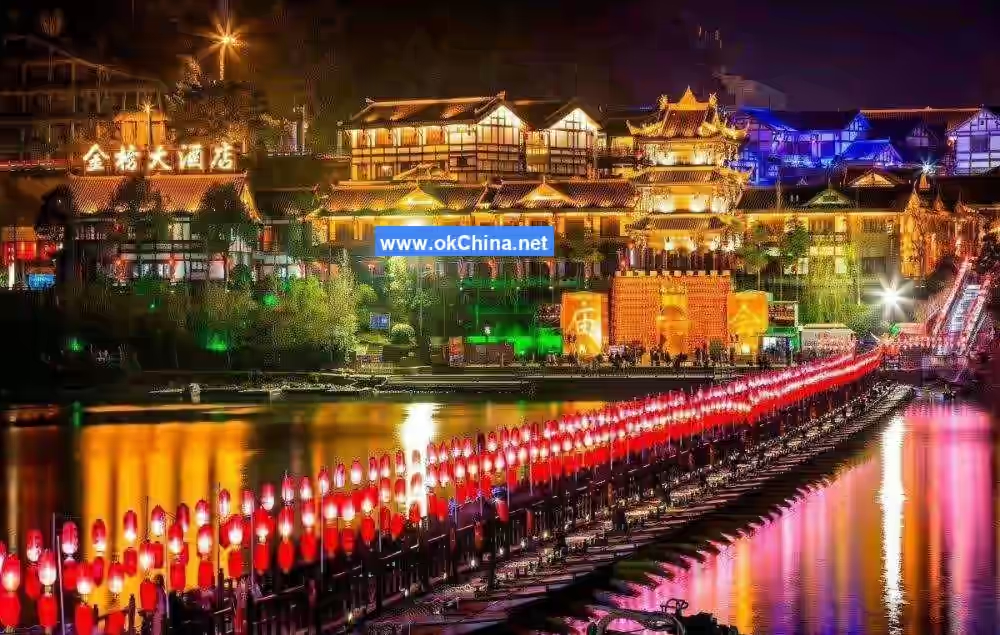
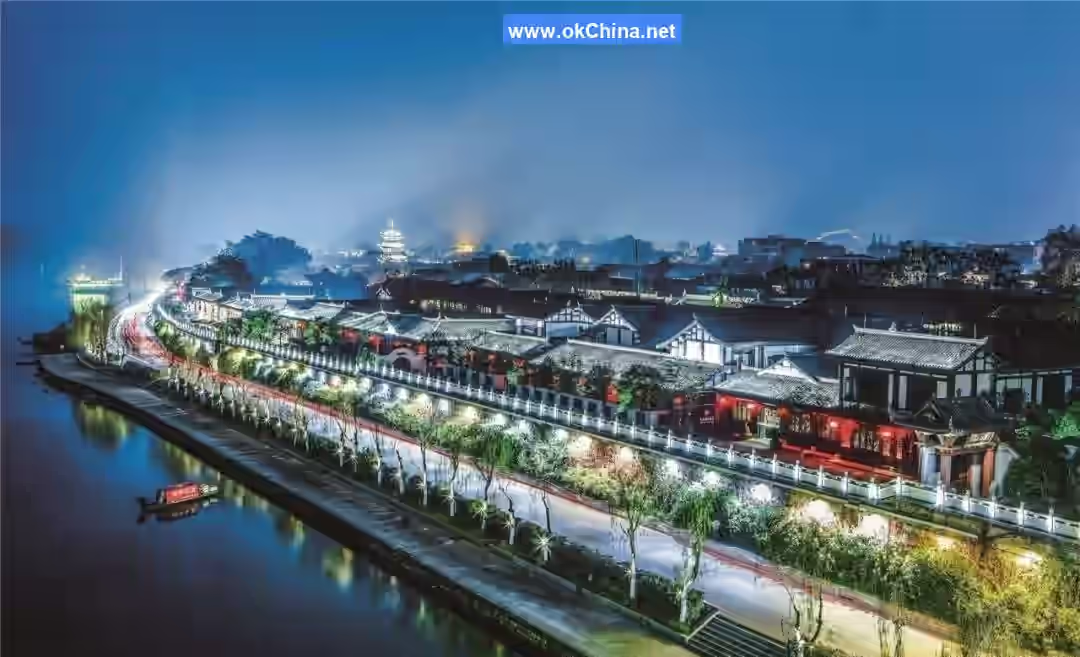
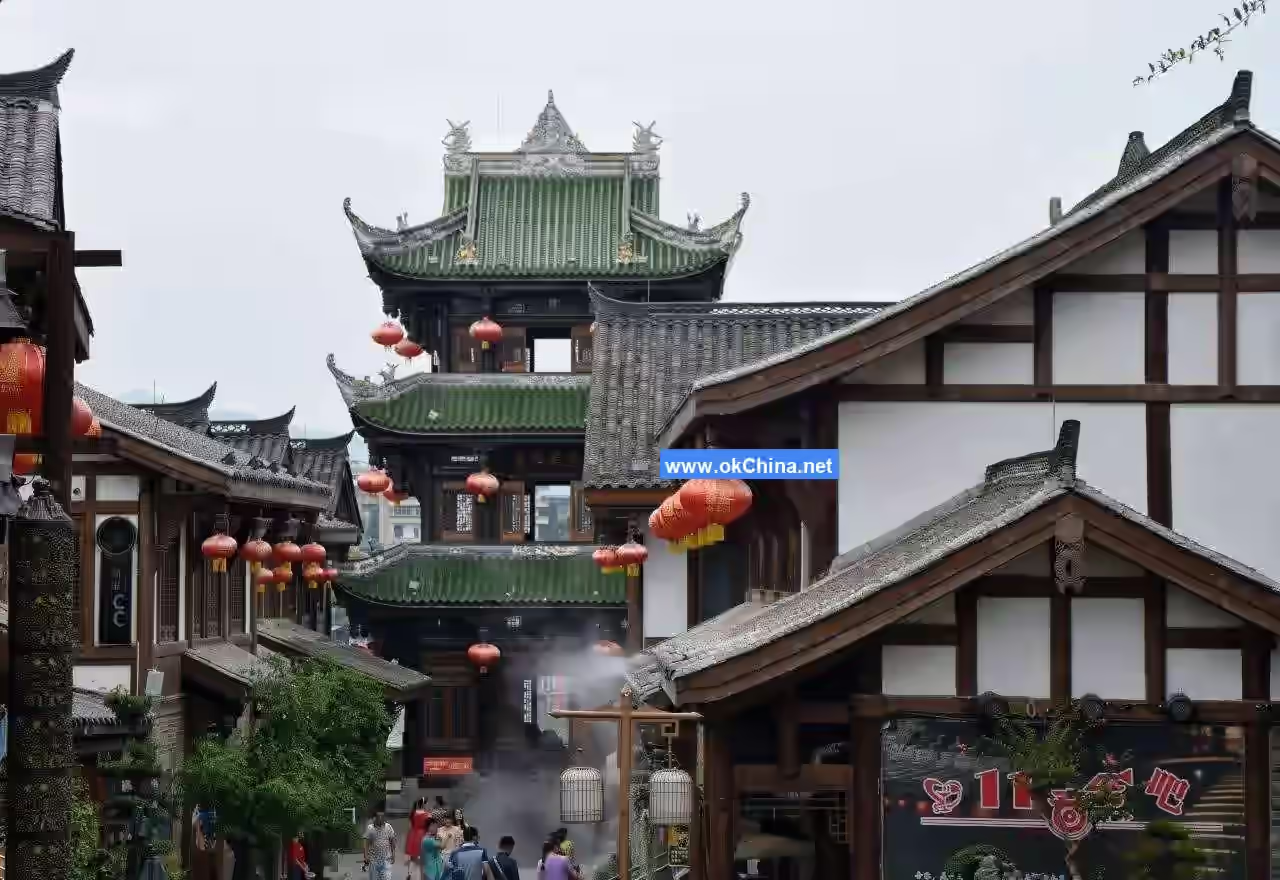
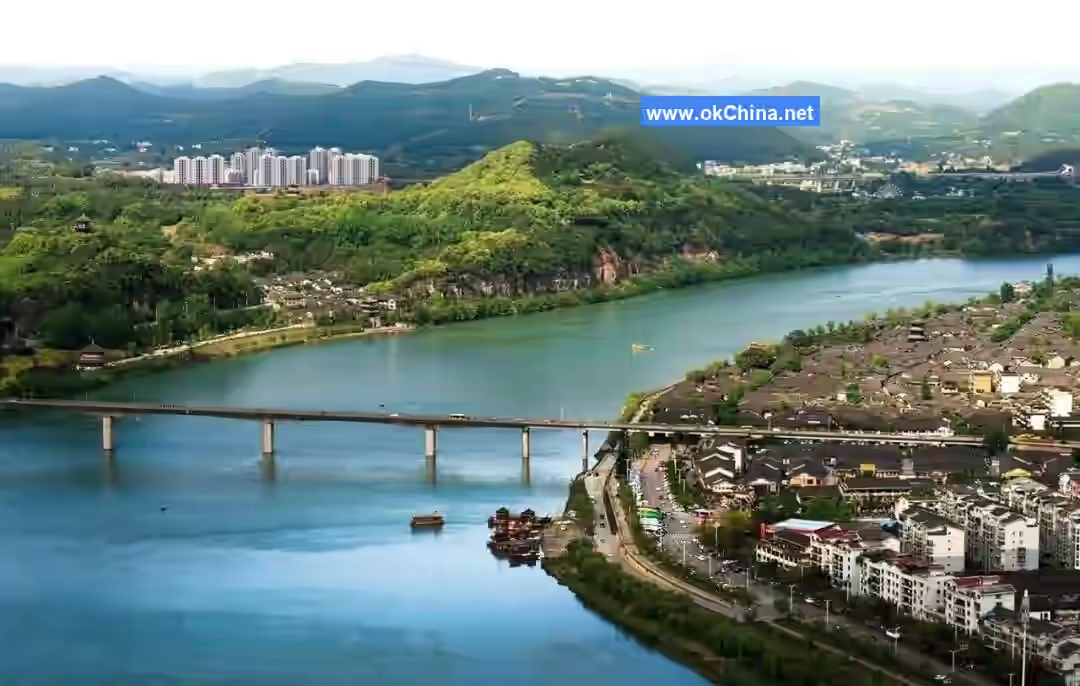
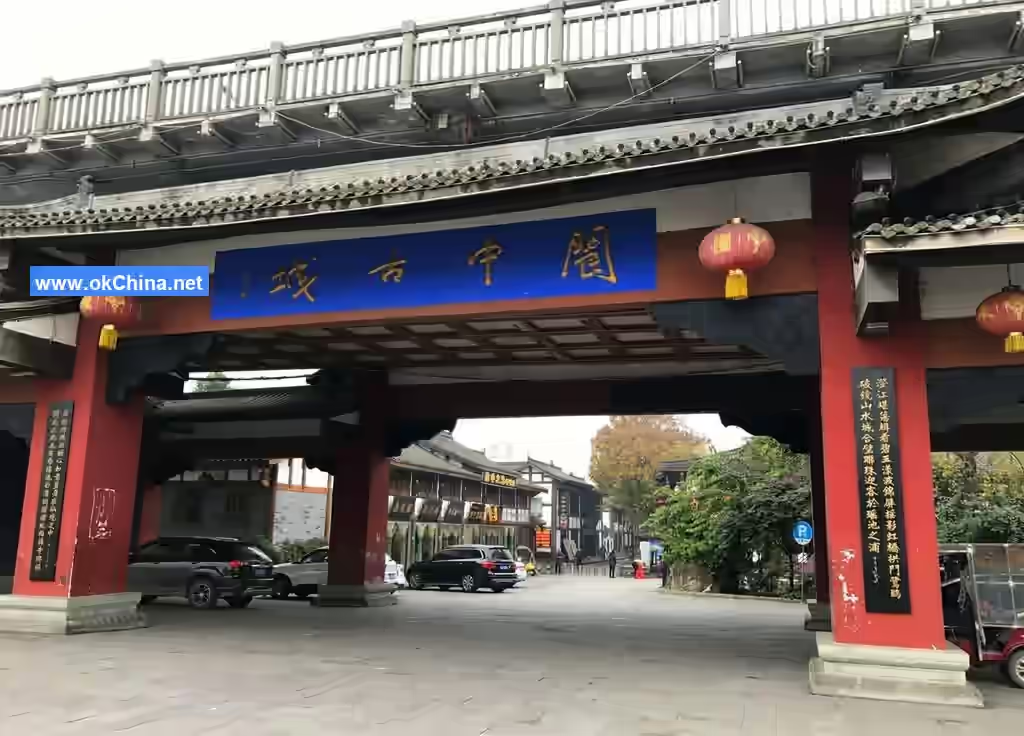
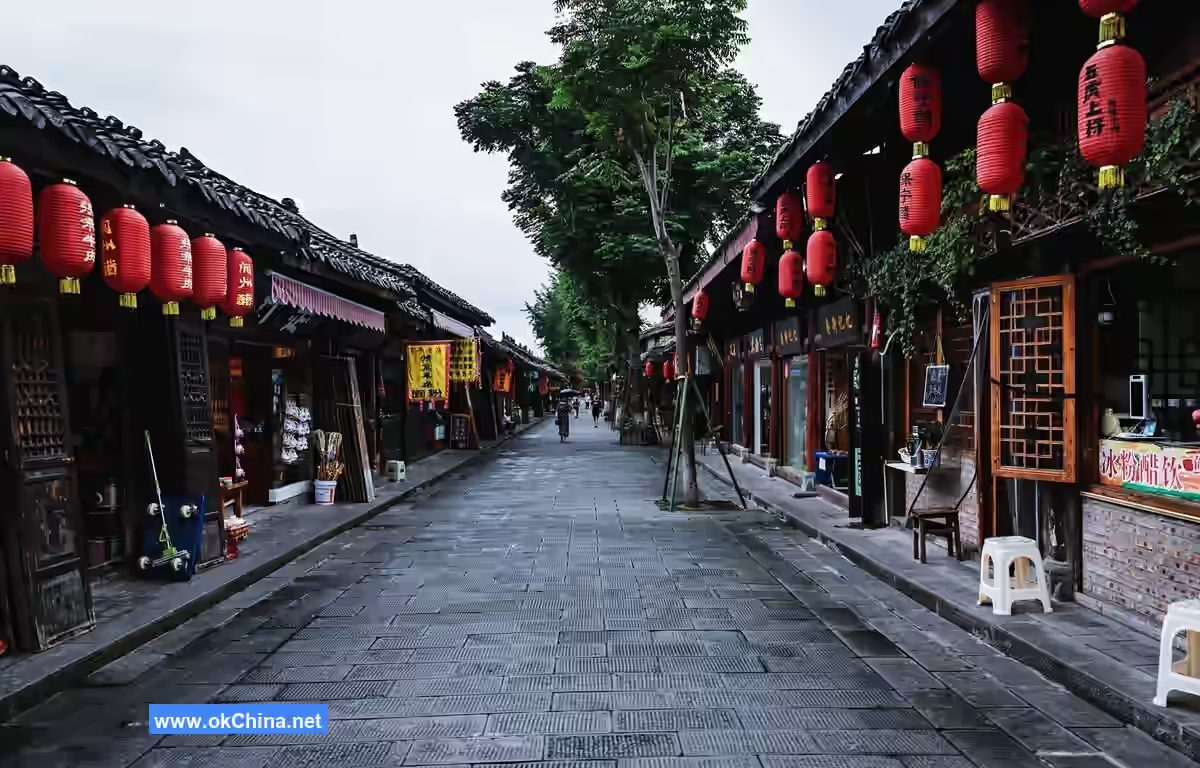
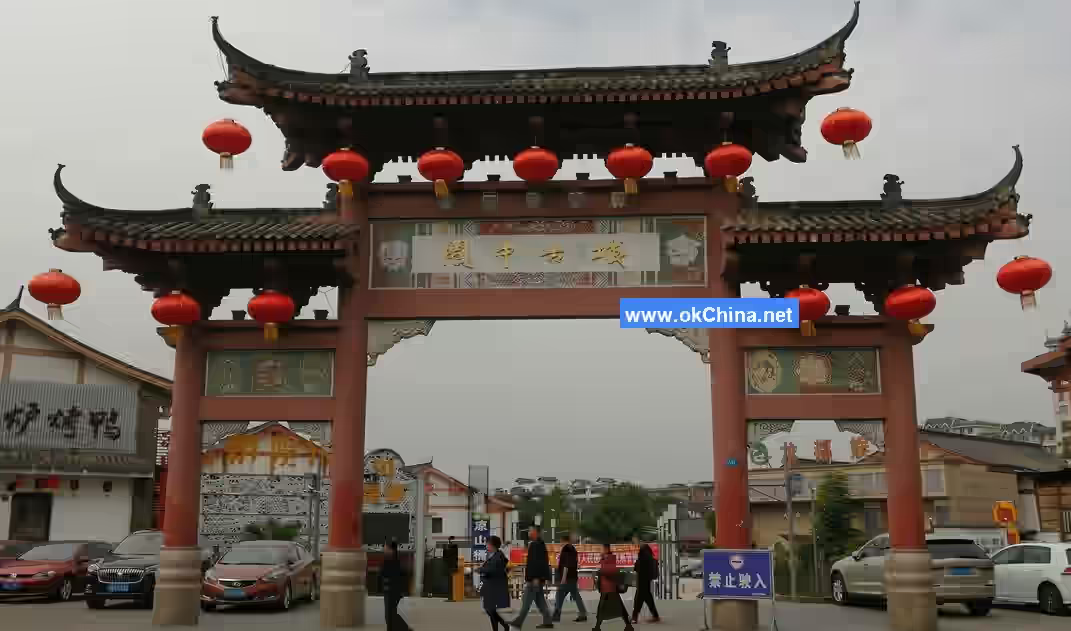
Langzhong Ancient City is located at No. 33 Langshui Middle Road, Langzhong City, Nanchong City, Sichuan Province. Situated on the northeastern edge of the Sichuan Basin and in the middle reaches of the Jialing River, it was a military stronghold of the ancient Ba and Shu states. With a history of over 2,300 years, it is hailed as one of the "Four Great Ancient Cities of China." The ancient city is nestled against mountains and surrounded by the Jialing River, forming a unique landscape of hills and waters. Langzhong Ancient City is renowned for its well-preserved ancient architectural complexes from the Ming and Qing dynasties, profound cultural heritage, and distinctive feng shui layout. Its crisscrossing streets and lanes, along with orderly arranged ancient courtyards, showcase the essence of ancient Ba-Shu culture. It once served as the capital of the ancient Ba state and is also an important birthplace of Three Kingdoms culture. Famous attractions within the ancient city include Zhang Fei Temple, the Imperial Examination Hall, Huaguang Tower, etc., attracting a large number of tourists every year to experience the weight of history and the charm of culture.
2. Geographical Environment
2.1 Location and Territory
Langzhong Ancient City is located at No. 33 Langshui Middle Road, Langzhong City, Nanchong City, Sichuan Province. It lies in the northern part of the Sichuan Basin, in the middle reaches of the Jialing River. It borders Yilong and Bazhong to the east, Nanbu to the south, Jiange to the west, and Cangxi to the north. It is approximately 300 kilometers from the provincial capital, Chengdu. The total area of the Langzhong Ancient City scenic area is 4.59 square kilometers, with the core ancient city area covering 2 square kilometers.
2.2 Climate Characteristics
Langzhong Ancient City belongs to the subtropical humid monsoon climate zone, characterized by a mild climate, abundant rainfall, and moderate sunlight. The annual average temperature is 17°C. The extreme maximum temperature is 39°C, and the extreme minimum temperature is -4.6°C. The average annual frost-free period is 290 days, with an average annual sunshine duration of 1,379.8 hours and an average annual precipitation of 1,033.9 millimeters.
3. Main Attractions
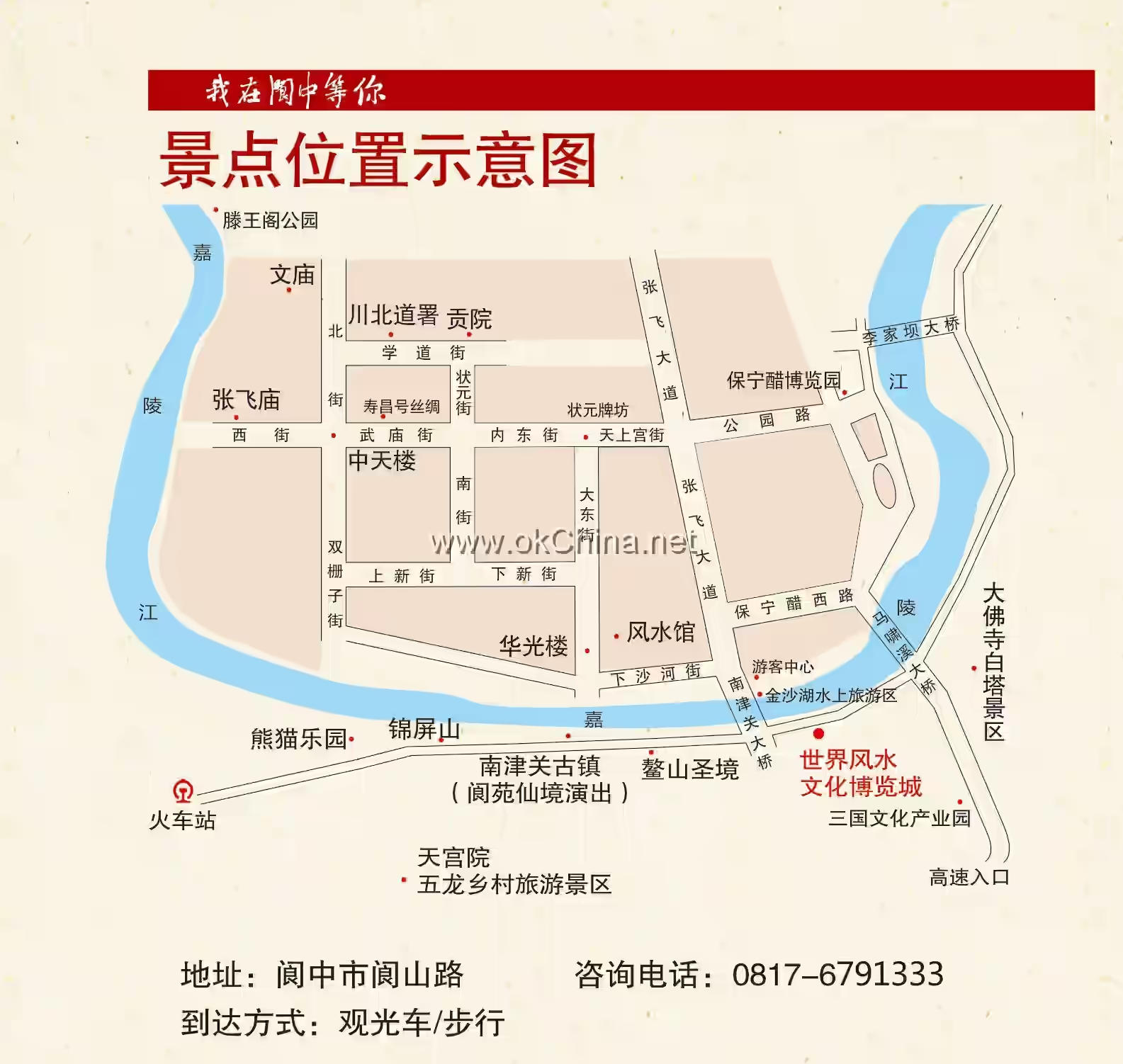
The architectural style of Langzhong Ancient City embodies the ancient Chinese residential feng shui philosophy. Its chessboard-like urban layout integrates northern and southern styles, forming architectural groups with distinct styles such as "half-bead," "品" (pin) character, and "多" (duo) character shapes. It is a classic example of the complete "harmony between man and nature" concept in ancient Chinese city site selection. Langzhong Ancient City boasts eight national key cultural relics protection units, including Zhang Fei Temple, Yong'an Temple, Wulong Temple, Tengwang Pavilion, Guanyin Temple, Baba Temple, Dafo Temple, and the Northern Sichuan Circuit Imperial Examination Hall.
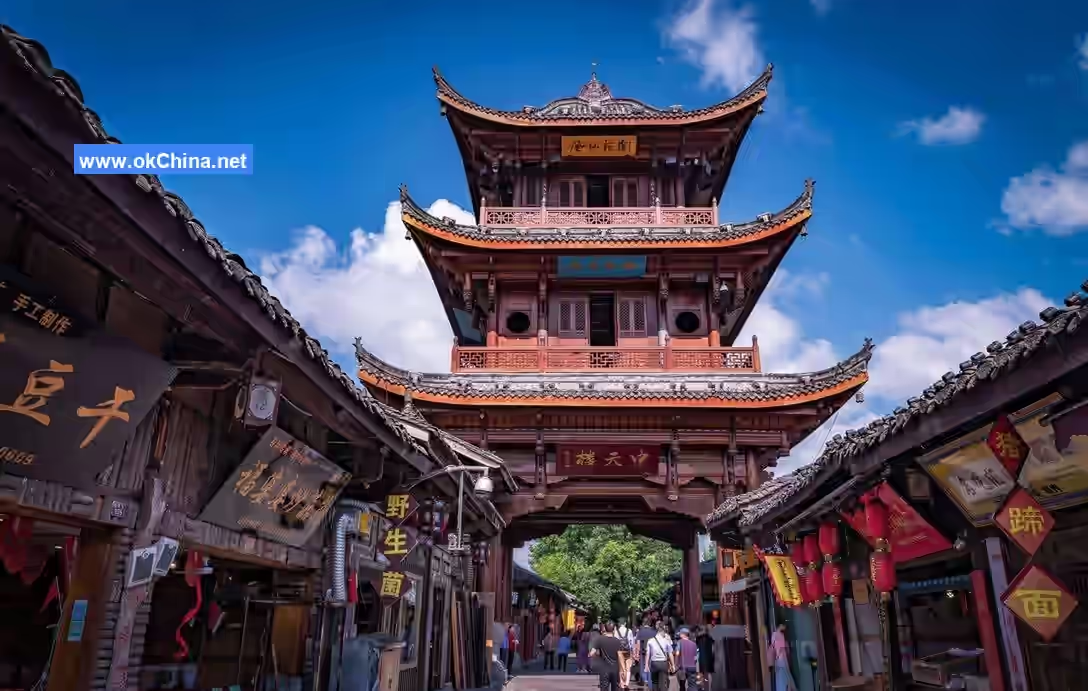
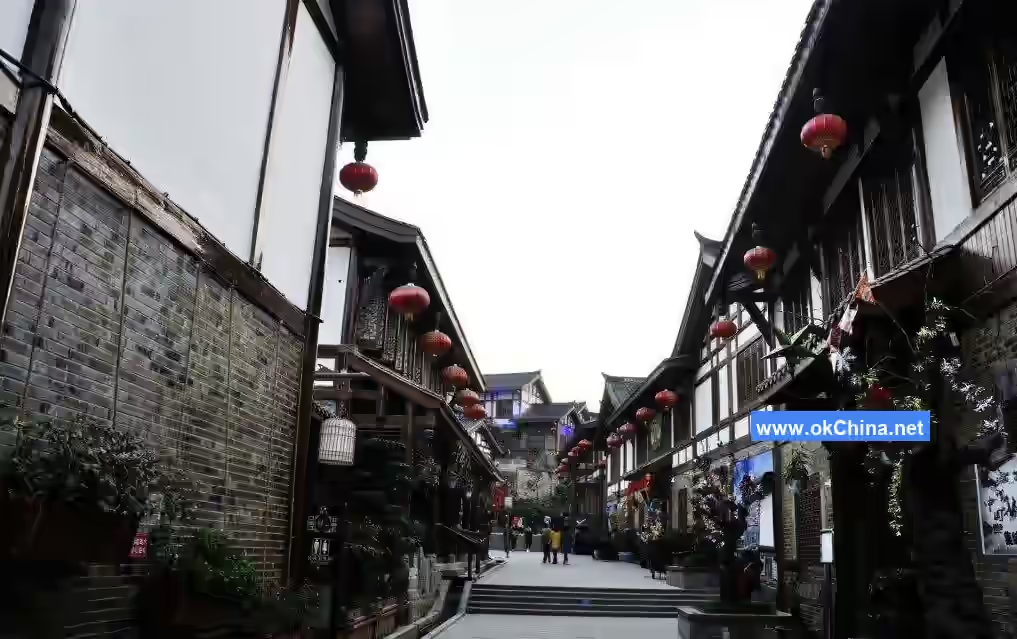
Langzhong Ancient City stands on an auspicious site encircled by mountains and waters. Its architectural layout strictly follows feng shui principles. The streets and lanes within the ancient city all radiate from the Zhongtian Tower as the core, with the cross-shaped main street as the backbone, unfolding layer by layer like a chessboard. The orientations of the streets and lanes often face distant mountains. The thousands of residential courtyards within the ancient city are primarily Ming and Qing dynasty structures, featuring single-eave hip-and-gable wooden frame-through structures, arranged in orderly rows with blue tiles and whitewashed walls, and carved doors and windows. The courtyards generally face south or west to capture sunlight and avoid cold.
3.1 Marquis Huan of Han Temple
Marquis Huan of Han Temple, commonly known as Zhang Fei Temple, was also called Xiongwei Temple during the Ming dynasty. Marquis Huan Temple is a quadrangle courtyard-style ancient architectural complex rebuilt during the Ming and Qing dynasties. Covering an area of over 5,000 square meters, it is large in scale and exquisitely built. It consists of a mountain gate, Diwan Tower, left and right memorial archways, east and west wing rooms, a main hall, a rear hall, a tomb pavilion, and a tomb mound, with a total construction area of 2,200 square meters. It is a major historical site of Three Kingdoms culture.
3.2 Wulong Temple
Wulong Temple is located at the foot of Wulong Mountain in Baihu Village, Helou Township, Langzhong. It was first built during the Tang dynasty and rebuilt in the third year of the Zhizheng era of the Yuan dynasty (1343 AD). It covers an area of 4 mu, with a construction area of 100 square meters. Originally, it had a mountain gate, an opera tower, left and right wing rooms, and a Wenchang Pavilion, which were destroyed during the Cultural Revolution. Currently, only the Yuan dynasty cultural site, the Wulong Temple, remains. It is a fully wooden structure with a single-eave hip-and-gable roof covered with barrel tiles. It has a three-bay width, with noticeable inward inclination of the eave columns. Under the front eave, there are six-step bracket sets (dougong) projecting two tiers: the first tier features melon-seed arches carved in a wing shape, and the second tier features central arches with oblique arches extending left and right, making it quite unique.
3.3 Yong'an Temple
Yong'an Temple is located on Huangni Hill, surrounded by mountains, 5 kilometers northeast of Shuiguan Town, approximately 40 kilometers from Langzhong City. It was built during the Tang dynasty and underwent repairs during the Zhiping era of the Song dynasty, the Zhizheng era of the Yuan dynasty, and the Jiajing era of the Ming dynasty. It covers an area of 4,000 square meters (Note: text says 10,000 sqm later, likely discrepancy), with a construction area of 1,700 square meters. The existing complex is composed of Yuan and Qing dynasty buildings, featuring a double-eave overhanging gable roof structure. All aspects of the temple—architecture, decorative ceiling work (zaoshi), stone carvings, wood carvings, clay sculptures, and paintings—are of the highest quality, forming a cohesive whole.
3.4 Northern Sichuan Circuit Imperial Examination Hall
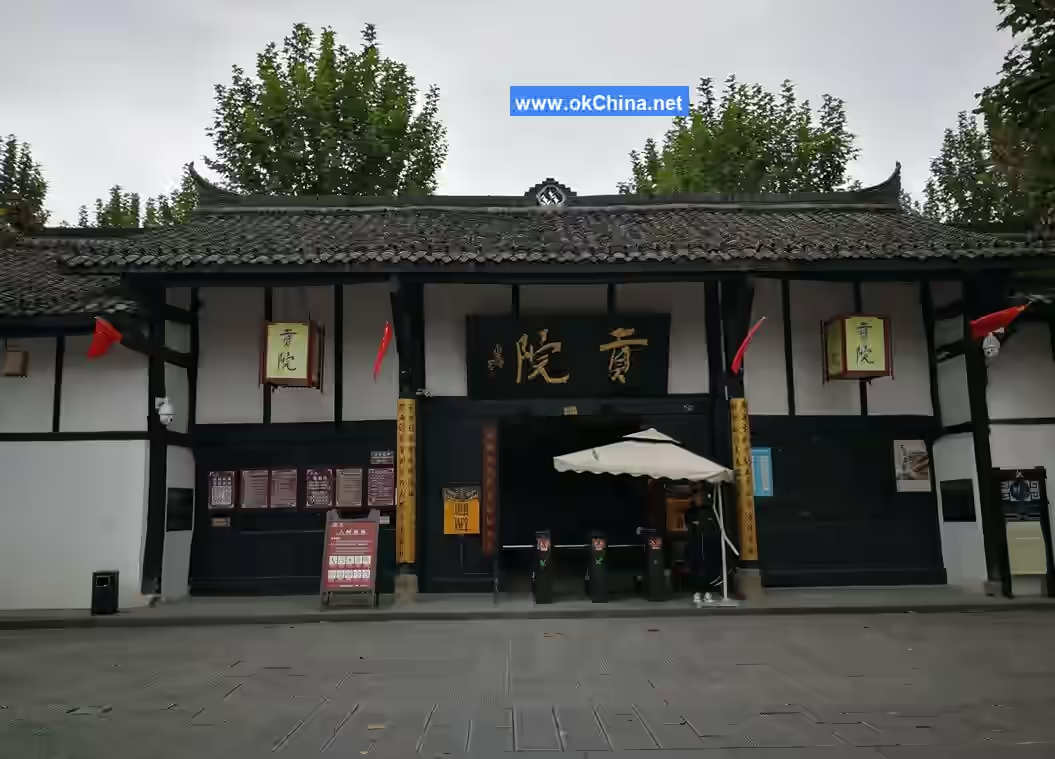
The Northern Sichuan Circuit Imperial Examination Hall is located on Xuedao Street within the city. It was rebuilt during the Jiaqing era of the Qing dynasty. Originally, it consisted of a mountain gate, corridors, examination cells, a main hall, a second hall, a rear hall, and examinee dormitories. The existing structure includes a barrel-vaulted corridor over 50 meters long in total, with flying immortal chairs (feixianyi) on the wooden railings along both sides. There are two rows of examination cells on the left and right, each cell separated and decorated with carvings. It is well-preserved and is one of only two remaining examination sheds in China. The Qing dynasty examination shed is the common name for the Northern Sichuan Circuit Imperial Examination Hall. The imperial examination system was a system used by feudal dynasties to select civil and military officials through subject-based exams. In the early Qing dynasty, Langzhong served as the temporary provincial capital of Sichuan for 17 years, hosting four provincial-level examinations here.
3.5 Tengwang Pavilion
Tengwang Pavilion is located on Yutai Mountain north of Langzhong City. Like the Tengwang Pavilion in Nanchang, it was built by Li Yuanying, the 22nd son of Tang Gaozu Li Yuan. In 679 AD, Prince Teng was transferred from Shouzhou to Longzhou (Langzhong). Finding the government office humble and crude, he built "Long Garden" (changed to "Lang Garden" during Emperor Xuanzong's reign) within the city and also built Yutai Taoist Temple and Tengwang Pavilion on Yutai Mountain for his amusement. Du Fu wrote two poems titled "Tengwang Pavilion." Below the pavilion's platform base stands a Tang dynasty pagoda. The pagoda body is an elongated sphere, larger at the top and smaller at the bottom, with a niche carved in the center containing a Buddha seated in lotus position on a lotus pedestal. The top is adorned with a pagoda finial (shacha), with eight stone-carved strongmen supporting the finial body. The finial body is a hexagonal column, each side featuring a Buddha statue.
3.6 Jinping Mountain
Jinping Mountain is a national AAAA-level scenic area located in the southern suburbs of Langzhong Ancient City. It is commonly called Jinping Mountain because "the flowers and trees are interwoven like brocade, and the two peaks stand connected like a screen." Wu Daozi once used Jinping Mountain as the axis to depict the "Three Hundred Li Painting of the Jialing River and Mountains." Du Fu praised it in his poem: "South of Langzhou city is a rarity under heaven." After over a thousand years of embellishment, Jinping Mountain has become even more magnificent and colorful, earning the reputation of "Langyuan Fairyland" and "The Premier Landscape along the Jialing River." It has an altitude of 480 meters and covers an area of over 20 square kilometers. To the east lies Zhuangyuan Mountain, to the west Majia Mountain, and to the north Niujia Mountain. These mountains connect to form a natural barrier for Langzhong Ancient City.
3.7 Baba Temple
Baba Temple is a holy site for Muslims of the Qadiriyya order, located at the southern foot of Panlong Mountain in the northeastern suburbs of Langzhong City. Baba Temple, also known as "Jiuzhao Pavilion," derives its name from "Baba," meaning "ancestor" in Arabic. During the Kangxi era of the Qing dynasty, the Muslim Huazhe Abdullah from Mecca, Saudi Arabia, came to Langzhong to preach Islam. After his death, he was buried here and the temple was built. It has a history of over 300 years. Baba Temple consists of a mountain gate, a screen wall, a memorial archway, a main hall, a flower hall, a well pavilion, and gardens, forming a rare Islamic architectural complex in China.
3.8 Dongshan Garden
Dongshan Garden is located in the Qili Economic Development Zone of Langzhong, separated from the main urban area of Langzhong only by a river. The scenic area covers more than 200 mu. It currently houses one national-level cultural relics protection unit (the Tang Dynasty Giant Buddha) and two provincial-level cultural relics protection units (the Northern Song Zhuangyuan Cave and the Ming Dynasty White Pagoda).
3.9 Luo Xiahong's Former Residence (Constellation Garden)
Luo Xiahong's Former Residence (Constellation Garden) is located within the core protected area of Langzhong Ancient City. It is a rebuilt two-courtyard string-of-pearls style residential compound commemorating the world-renowned ancient astronomer and calendar expert, Luo Xiahong, also known as the "Chinese Spring Festival Elder." Facing south, it covers an area of approximately 400 square meters with 16 rooms. It features a wooden frame-through structure, carved doors and windows, and blue tile roofing. It officially opened to the public on January 29, 2006 (the first day of the first lunar month in the Bingxu year), for visitors to pay their respects.
3.10 Langzhong Dafo Temple
Langzhong Dafo Temple is located southeast of Langzhong, at the foot of Daxiang Mountain on the opposite bank of the Jialing River. Initially named Daxiang Temple, it was bestowed the name Yong'an Chan Temple during the Song dynasty. The old name was restored during the Ming dynasty, and it is commonly called Dafo Temple (Giant Buddha Temple). The temple complex covers 6 hectares, with the main attraction being the giant Buddha statue, a statue of Sakyamuni. According to the inscription "Record of the Dongshan Giant Buddha Retreat by Layman He" carved on the inner wall of the cliff niche in the fourth year of the Yuanhe era of the Tang dynasty (809 AD), this Buddha was carved by Layman He. It has a history of 1,100 years and is one of the ten great seated Buddhas in Sichuan. It was again called Daxiang Temple during the Ming dynasty, also known as Dafo Temple.
3.11 Guanyin Temple
Guanyin Temple was originally the famous Tang dynasty Kaiyuan Temple, built in the early Tang dynasty, named after the founding era's reign title. It mainly consists of four parts: the Heavenly King Hall, the Arhat Hall, the Mahavira Hall, and Songhua Well. Historical records indicate that until the Yuan and Ming dynasties, it remained the largest temple in Langzhong. Later, over time, Kaiyuan Temple fell into ruin. In 1496, Prince Shou Zhu Youhou was enfeoffed in Baoning. When building his princely mansion in the west city, he relocated the early Ming Guanyin Temple to the original site of Kaiyuan Temple and rebuilt it. Thus, Guanyin Temple replaced Kaiyuan Temple as the largest temple in Baxi (the region).
3.12 Laoguan Town
Laoguan Town is located in the northeastern part of Langzhong City, 45 kilometers from the urban area of Langzhong. Provincial Highway 302 passes through it, making it a central town in northeastern Langzhong. The built-up area of Laoguan Town currently covers 5.5 square kilometers, with a permanent population of 30,000. In 2012, it was jointly rated as "Sichuan's Most Valuable Ancient Town for Protection" by the Provincial Department of Housing and Urban-Rural Development and the Department of Culture. Laoguan Town is commonly known as the "Dry Port of Northern Sichuan" and was the first town exiting Sichuan on the ancient Micang Road. It has a long history and profound cultural heritage, with an administrative history of over 1,500 years (including over 732 years as Fengguo County). It boasts a well-preserved 4-hectare ancient architectural complex and 48 ancient sites. It is the birthplace of "Spring Festival culture and Northern Sichuan Lantern Opera."
4. Cultural Activities
4.1 Historical Culture
4.1.1 Origin CultureLangzhong Ancient City is one of the birthplaces of the primordial culture of the Chinese nation. As early as the Neolithic Age, humans thrived here. According to the Lushi annotation: "The capital of the state had the abyss of Huaxu, named after Huaxu's residence, which is the land of Yushui (the ancient name of the Jialing River) in Langzhong." Huaxu was the mother of Fuxi. Since Fuxi's mother lived in Langzhong, Langzhong, together with Chengji in Gansu and Chenzhou in Henan, forms the chain of Fuxi culture.
4.1.2 Ba People Culture
Langzhong Ancient City was one of the central areas of Ba people's activities in ancient times, forming a rich and diverse Ba culture. In the fifth year of King Shenjing of Zhou (316 BC), the last capital of the Ba Kingdom was established in Lang. The distinctive legacy of the Ba people can also be seen in folk arts passed down in Langzhong, such as the "living fossil of Ba culture"—Ba people's dance, as well as Northern Sichuan lantern opera, Nuo opera, and ox lantern bamboo horse performances.
4.1.3 Feng Shui Culture
Langzhong Ancient City has a unique Feng Shui culture. Located on the northern edge of the Sichuan Basin and in the middle reaches of the Jialing River, Langzhong is a strategically advantageous land formed by the convergence of the Daba Mountains, Jianmen Mountains, and the Jialing River water system, tightly encircling and protecting the area. "Three sides embrace the city with river light, four directions lock mist and rosy clouds with mountain momentum." Its landscape is unique, integrating mountains, water, and the city into one. The city's site selection was guided by the theories of ancient Chinese Feng Shui, conforming to the imagery of the "Four Disciplines of Geography," namely "Dragon," "Sand," "Cave," and "Water."
4.1.4 Three Kingdoms Culture
Langzhong Ancient City is an important component of the Three Kingdoms cultural tourism route. During the Three Kingdoms period, the Shu Han general Zhang Fei served as the prefect of Baxi and was stationed in Langzhong for seven years (214–221 AD). Here, he led ten thousand elite soldiers to defeat an attack by Cao Cao's general Zhang He, who commanded thirty thousand troops, achieving a victory to "protect the territory and bring peace to the people." On the eve of Zhang Fei's expedition against Wu, he was killed by his subordinates Fan Qiang and Zhang Da and was buried in Langzhong. Later generations built the "Marquis Huan Temple" for him, which is now a national-level cultural relic protection unit. Additionally, notable Shu Han figures such as Zhou Qun, Qiao Zhou, Cheng Ji, General of the Northern Pacification Huang Quan, and General of the Southern Pacification Ma Zhong were all from Langzhong.
4.1.5 Imperial Examination Culture
Langzhong Ancient City has a profound imperial examination culture. During the Tang Dynasty, Langzhong produced two top scholars (zhuangyuan), Yin Shu and Yin Ji. In the Song Dynasty, it produced two more top scholars, Chen Yaosou and Chen Yaozi, making it the place in Sichuan with the most top scholars. The Imperial Examination Hall, built during the Qing Dynasty, is located on Xuedao Street in Langzhong Ancient City. In the ninth year of the Shunzhi reign (1652), when Sichuan was not yet pacified, the temporary provincial capital was set in Langzhong, where four provincial-level imperial examinations were held. According to the Baoning Prefecture Records and Langzhong County Records, Langzhong produced 116 jinshi (advanced scholars) and 404 juren (provincial graduates), earning it the reputation as the hometown of top scholars and provincial graduates in Sichuan.
4.1.6 Astronomical Culture
Langzhong Ancient City was a research center for folk astronomy in ancient China. The famous Western Han calendar mathematician and astronomer Luo Xiahong was from Langzhong. His creation, the Taichu Calendar, was China's first complete written calendar. Luo Xiahong was one of the founders of the Hun Tian theory, an advanced cosmological structure theory in ancient China. The equatorial armillary sphere he improved was used in China for two thousand years. During the late Eastern Han Dynasty, three generations of astronomers—Zhou Qun, Zhou Shu, and Zhou Ju—were also from Langzhong. Zhang Daoling of the Eastern Han Dynasty observed celestial phenomena at the "Yuantai" on "Yuntai Mountain" and "Wencheng Mountain" in Langzhong and later "ascended to immortality" there. During the Tang Dynasty, the Feng Shui masters Yuan Tiangang and Li Chunfeng observed celestial phenomena in Langzhong and were later buried together in the Tiangang Temple in Langzhong, leaving behind many local legends.
4.1.7 Religious Culture
Langzhong Ancient City has a long-standing religious culture. Since the Han and Tang dynasties, Taoism, Buddhism, and Islam were introduced to Langzhong successively. Later, Christianity and Catholicism also arrived. Followers built temples and churches here, forming a distinctive feature of Langzhong's multicultural landscape. Islamic holy sites such as the Mosque and Baba Temple, Catholic relics like the Catholic Church, the largest Christian church in Southwest China—Langzhong Gospel Church, as well as Taoist sites like Yuntai Temple, Lüzu Temple, and Baxian Cave, and Buddhist temples such as Dafo Temple, Guanyin Temple, Yong'an Temple, Wulong Temple, Yuanjue Temple, Qianfo Temple, Changqing Temple, and Jingsheng Nunnery, all possess rich cultural connotations.
4.1.8 Folk Culture
Langzhong Ancient City boasts a colorful folk culture. This includes the thrilling "money stick dance," the simple and hearty lantern opera and Taiping ox lantern performances, the charming paper-cutting and Northern Sichuan shadow puppetry, the Langzhong Nuo opera hailed as a living fossil of drama, the deeply moving folk songs and ramming songs, the thought-provoking Sichuan opera seated singing, and the rhythmic storytelling in teahouses.
4.1.9 Red Culture
Langzhong Ancient City was an important part of the Sichuan-Shaanxi Soviet Area during the Second Chinese Revolutionary Civil War. From 1933 to 1935, the Fourth Red Army, under the command of veteran proletarian revolutionaries such as Xu Xiangqian, Li Xiannian, Xu Shiyou, and Liao Chengzhi, fought in Langzhong for three years. Over 19,000 people from the county joined the Red Army and local armed organizations. When the Red Army withdrew from the Sichuan-Shaanxi Soviet Area, more than 11,000 people embarked on the Long March, including over 500 female Red Army soldiers. According to statistics, more than 7,500 Red Army soldiers from Langzhong sacrificed their lives in various revolutionary wars, including over 200 female Red Army soldiers. Numerous red relics remain, such as the former site of the Langnan County Committee of the Communist Party of China, the former site of the Langnan County Soviet Government, the Baoning Town Red Army stone inscription slogans, and the Langzhong Red Army Memorial Hall.
4.2 Historical Development
The early inhabitants of Langzhong were the Cong people. Ying Shao of the Eastern Han Dynasty clearly recorded in the Fengsu Tong (Annotations to the Wenxuan·Shudu Fu): "In Langzhong, there is the Yu River. The Cong people lived on its banks, known for their sharp spirit and love of dance. Emperor Gaozu admired their fierceness and often watched their dances, ordering the Music Bureau to learn them."
During the Shang and Zhou dynasties, Langzhong belonged to Liangzhou. In the Spring and Autumn period, it was part of the Chong State. In the late Warring States period, the Ba State conquered the Chong State and moved its capital from Jiangzhou to Langzhong.
During the Qin Dynasty, Langzhong County was established, belonging to Ba Commandery. In the Han Dynasty, Langzhong was the seat of Baxi Commandery, where Zhang Fei was stationed for seven years.
During the Eastern Jin Dynasty, Langzhong was the seat of North Baxi Commandery. In the Western Wei Dynasty, it was the seat of Longzhou and Panlong Commandery.
In the Sui Dynasty, Langzhong was renamed Langnei and served as the seat of Longzhou. In the third year of the Daye reign, Longzhou was renamed Baxi Commandery.
In the Tang Dynasty, it was again named Langzhong and served as the seat of Longzhou. During the Five Dynasties, Northern Song, and Southern Song, Langzhong was the seat of Langzhou.
In the late Ming and early Qing dynasties, Sichuan had a temporary provincial capital for 17 years. During the Shunzhi period, the temporary provincial capital of Sichuan was located in Langzhong for over ten years.
In the first year of the Republic of China (1912), the Northern Sichuan Pacification Commissioner's Office was established in Langzhong.
In the second year of the Republic of China (1913), it was renamed the Northern Sichuan Observation Commissioner's Office.
In the third year of the Republic of China (1914), it was renamed the Northern Sichuan Circuit Office, soon changed to the Jialing Circuit Office, and the seat was moved to Nanchong.
On December 29, 1949, the Chinese People's Liberation Army took over Langzhong.
On January 8, 1950, the Langzhong County People's Government was established.
4.3 Local Specialties
4.3.1 Baoning White Sugar Steamed Buns
Langzhong White Sugar Steamed Buns are a famous snack created by the Hui Muslim Ha Gongkui during the Qianlong period of the Qing Dynasty. In 1912, they won a silver medal at the Panama International Exposition. In 1990, they were recognized as a famous Sichuan snack. Baoning White Sugar Steamed Buns use naturally cultivated yeast at suitable temperatures, preserving the fragrance of the flour while generating a pure fermented aroma through fermentation. The resulting steamed buns are as white as silver, fluffy, soft, and sweet with a fresh fragrance. In the past, osmanthus was added, giving them a faint osmanthus aroma. When eaten hot: sweet, soft, and chewy without stickiness; when eaten cold: crispy, sweet, and refreshing.
Baoning White Sugar Steamed Buns are durable for storage and transportation, remaining fresh for a long time.
4.3.2 Baoning Pressed Wine
Langzhong Baoning Pressed Wine, also known as Aged Pressed Wine, has been exclusively passed down by the Lan family in Shaxi Village on the outskirts of the city and is said to have a history of over three hundred years. "Holding back the traveler's robe to brush off the dust, Langzhong's brewed wine is exceptionally fragrant." — Two Poems on Langzhong, this is the praise for Langzhong's fine wine by the famous Southern Song poet Lu You.
4.3.3 Baoning Vinegar
Baoning Vinegar began in 936 AD and is the medicinal vinegar among China's four famous vinegars, as well as the originator of Sichuan bran vinegar. Baoning Vinegar uses pure grains as ingredients, precious Chinese herbs as fermentation starters, and "Songhua" well water as the base. It is brewed through 42 processes using classic bran vinegar techniques and modern technology. In 1985, Baoning Vinegar entered Zhongnanhai and became a condiment for state banquets. With the widespread use by Sichuan cuisine chefs, it has helped spread Sichuan cuisine worldwide.
4.3.4 Zhang Fei Beef
Zhang Fei Beef is produced in Langzhong City, Sichuan Province, and is a specialty with strong Hui Muslim characteristics. The surface of Zhang Fei Beef is brown-red, and when cut open, the meat texture is tight, neither dry, hard, soft, nor tough. It has a savory and mild taste, suitable for banquets, as a side dish, or as an accompaniment to alcohol. During the Republic of China period, it was rated as a "superior food" at the Chengdu "Exhibition for Encouraging Industry" and also won a silver award for high-quality products from the Chengdu Industrial Association in the 1940s. Because its appearance—"black surface with bright red inside"—resembles the image of the fierce general Zhang Fei, it is called "Zhang Fei Beef." In 1998, it won the Ministry of Commerce's High-Quality Product Award and a bronze medal at the First China Food Expo.
Comments
Post a Comment