Langya Mountain Scenic Area in Chuzhou City
1. Introduction
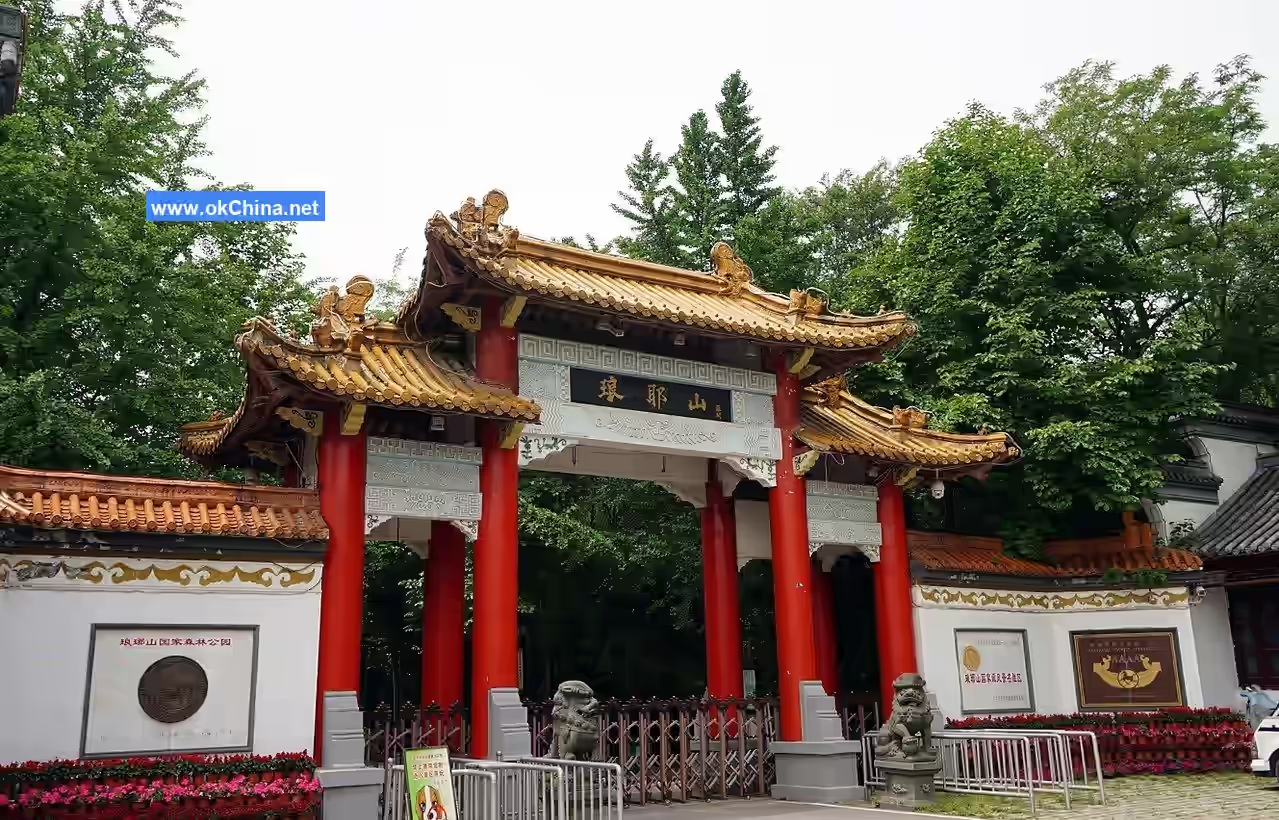
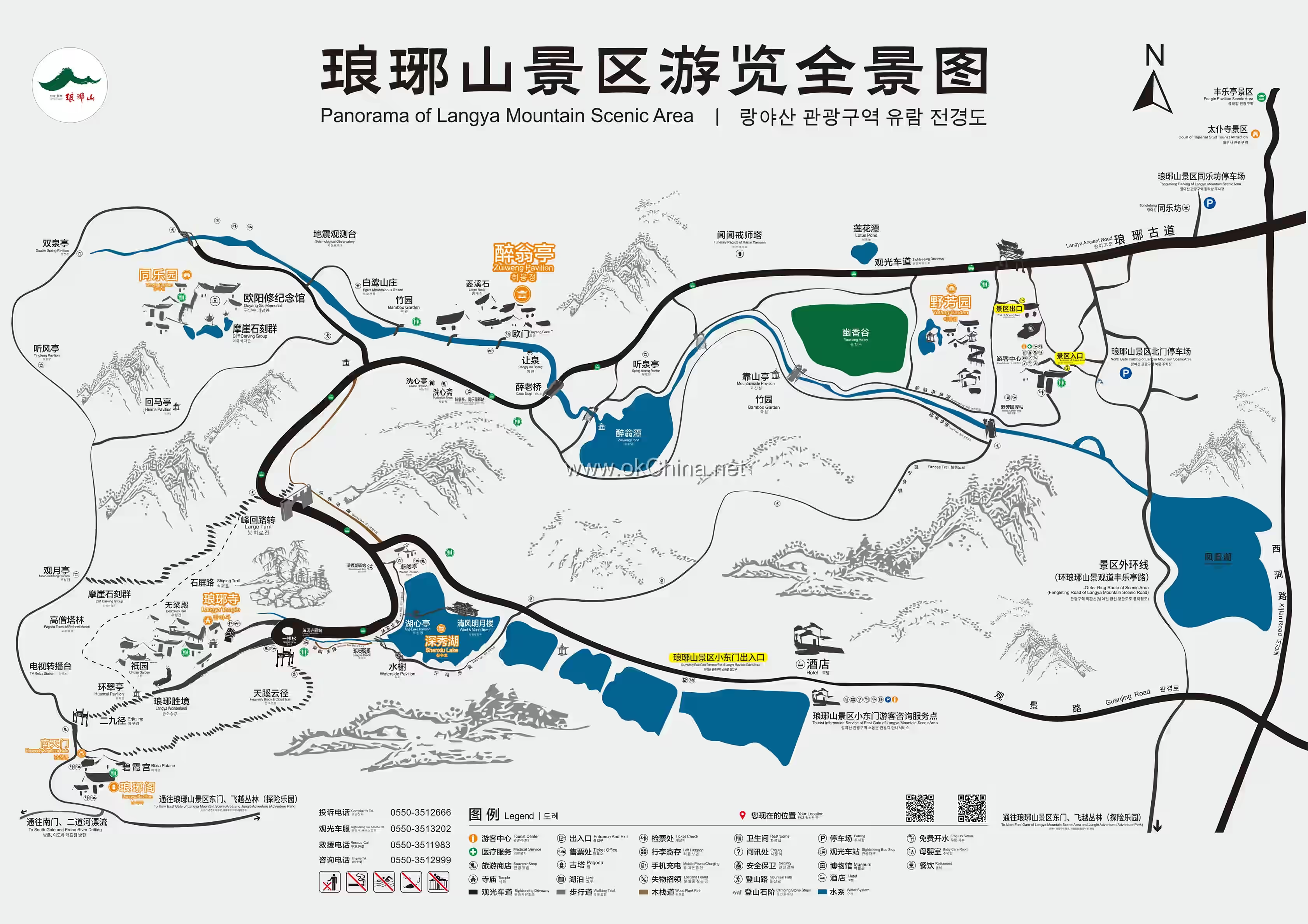
The Langya Mountain Scenic Area in Chuzhou City, abbreviated as Langya Mountain Scenic Area, is a tourist attraction located within the Zuiweng Pavilion section of the Langya Mountain National Scenic Area in Chuzhou City, Anhui Province. The scenic area covers 4.98 square kilometers. Langya Mountain is a culturally renowned mountain, and the scenic area is a rich concentration of Langya Mountain's historical, cultural, and ecological landscape resources. It includes six core attractions: Zuiweng Pavilion, South Heavenly Gate, Shenxiu Lake, Yefang Garden, Tongle Garden, and the Ancient Langya Temple. Langya Mountain experiences distinct four seasons, with a forest coverage rate exceeding 85%. It boasts abundant flora and fauna resources, including plants from 153 families and 803 species of precious Chinese medicinal herbs from 140 families. There are 162 species of birds, including the nationally protected first-class animal, the Eastern Imperial Eagle. Langya Mountain preserves over 300 national key cultural relics known as the "Langya Mountain Cliff Carvings and Stone Inscriptions," dating from the Tang Dynasty to the Republic of China period. The Langya Mountain Scenic Area is a comprehensive scenic area integrating rich natural and cultural landscapes.
On February 6, 2024, the Langya Mountain Scenic Area in Chuzhou City, Anhui Province, was designated by the Ministry of Culture and Tourism of the People's Republic of China as a National AAAAA Tourist Attraction. It became the first such attraction in Chuzhou City and the 13th in Anhui Province.
2. Geographical Environment
2.1 Location and Area
The Langya Mountain Scenic Area is located within the Zuiweng Pavilion section of the Langya Mountain National Scenic Area in Chuzhou City, Anhui Province, covering an area of 4.98 square kilometers. The Langya Mountain Scenic Area is primarily composed of the main areas of two sub-scenic areas within the Langya Mountain National Scenic Area: the Zuiweng Pavilion Scenic Area (2.54 sq km) and the Langya Scenic Area (3.62 sq km), but they are not entirely equivalent.
2.2 Topography and Geomorphology
The entire Langya Mountain range extends in a NE 50~60 degree direction. The main peaks include Motuoling, Dafeng Mountain, Xiaofeng Mountain, Zhaojia Mountain, Fenghuang Mountain, etc., with Xiaofeng Mountain being the highest at an altitude of 321 meters. The surrounding mountains have a relative height of 150~200 meters, belonging to a low mountainous and hilly region. The maximum incision depth of valleys within the area is nearly 100 meters. The exposed area of karst rock forming the main body of Langya Mountain is relatively large, featuring various exposed forms such as karst grooves, stone teeth, small karst depressions, and hidden karst caves, cavities, and pores. Examples include the Xuehong Cave behind Langya Temple and the Heilong Cave in Heiwa. The overall terrain is higher in the southwest and lower in the northeast. The groundwater level generally ranges between 15.33 meters and 37.55 meters, with springs often emerging in gullies. There are over 60 springs of various sizes on Langya Mountain, most of which are intermittent springs.
2.3 Climate Characteristics
Langya Mountain is situated on the northern edge of the northern subtropical zone, belonging to a humid subtropical monsoon climate region. It has abundant rainfall and distinct four seasons. The annual average temperature is approximately 15.2°C. The average temperature in January is 1.6~1.9°C, and in July it is 28.2~28.5°C. The extreme minimum temperature is -10°C, and the extreme maximum temperature is 41.2°C. The annual frost-free period is about 210~230 days. The average annual precipitation is 1100 mm. The average annual sunshine duration is approximately 2079~2269 hours.
3. Main Attractions
3.1 Zuiweng Pavilion
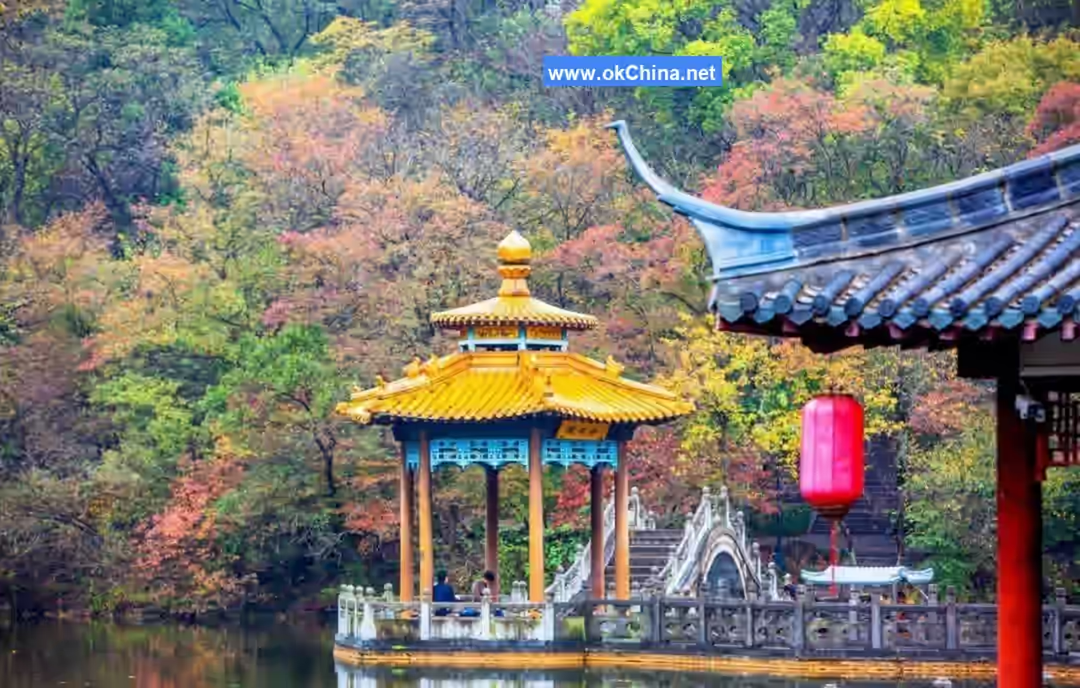
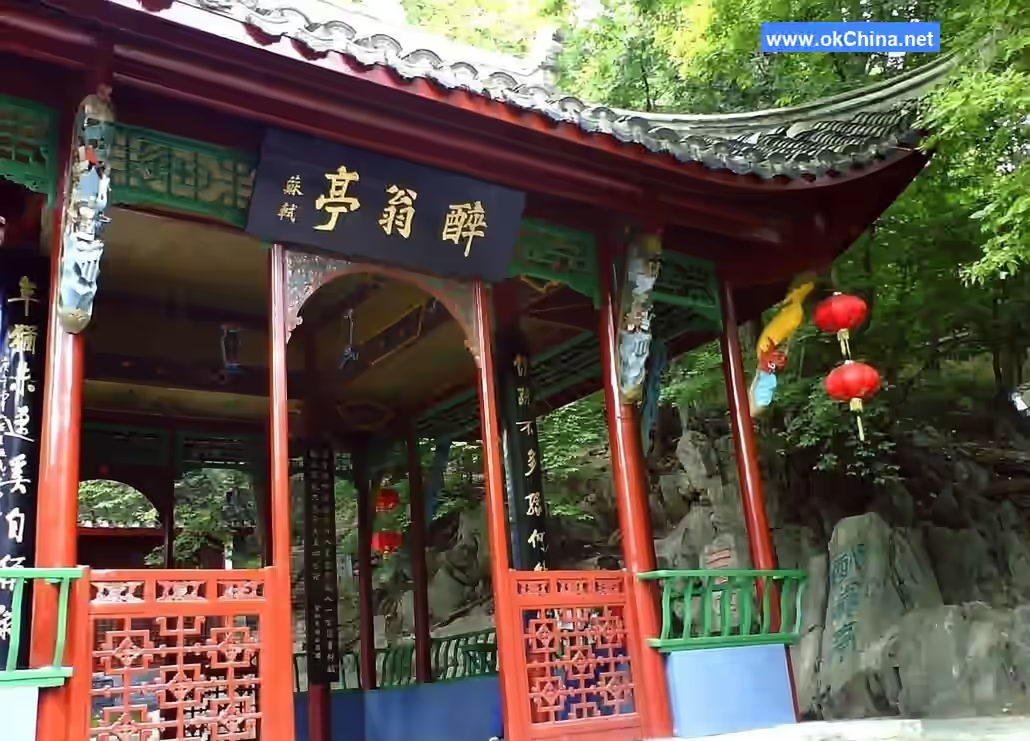
Zuiweng Pavilion was first built in the sixth year of the Qingli era of the Northern Song Dynasty (1046 AD). It was constructed by Monk Zhixian, the abbot of the Langya Secret Realm and a new friend of Ouyang Xiu after he arrived in Chuzhou. The pavilion was named by Ouyang Xiu, who used his alternative name "Zuiweng" (Old Drunkard) as its name. Zuiweng Pavilion is a Su-style pavilion with upturned eaves, carved beams, and painted pillars. It features an all-wood mortise and tenon structure, with sixteen pillars supporting the pavilion roof. It has upturned eaves and corners, a hip-and-gable roof style, grey tile roofing, ridge ornaments, southern and northern framed doors, and grey brick flooring. In the middle, four pillars hang a couplet: "If the drink is not much, how can one get drunk? If the years are not yet advanced, why call oneself an old man?" There is also another couplet by Xue Shiyu, calligraphed by the local calligrapher Wu Bochu. Initially, Zuiweng Pavilion was just a solitary pavilion. Later generations, admiring Ouyang Xiu, successively added structures such as Jiecheng Pavilion, Jixin Studio, Feng Gong Shrine, Baofeng Hall, Erxian Hall, Baosong Studio, and Tumixuan, forming the Zuiweng Pavilion architectural complex, which is the core landscape of Langya Mountain known as the "Eight Pavilions and Nine Courtyards."
3.2 South Heavenly Gate
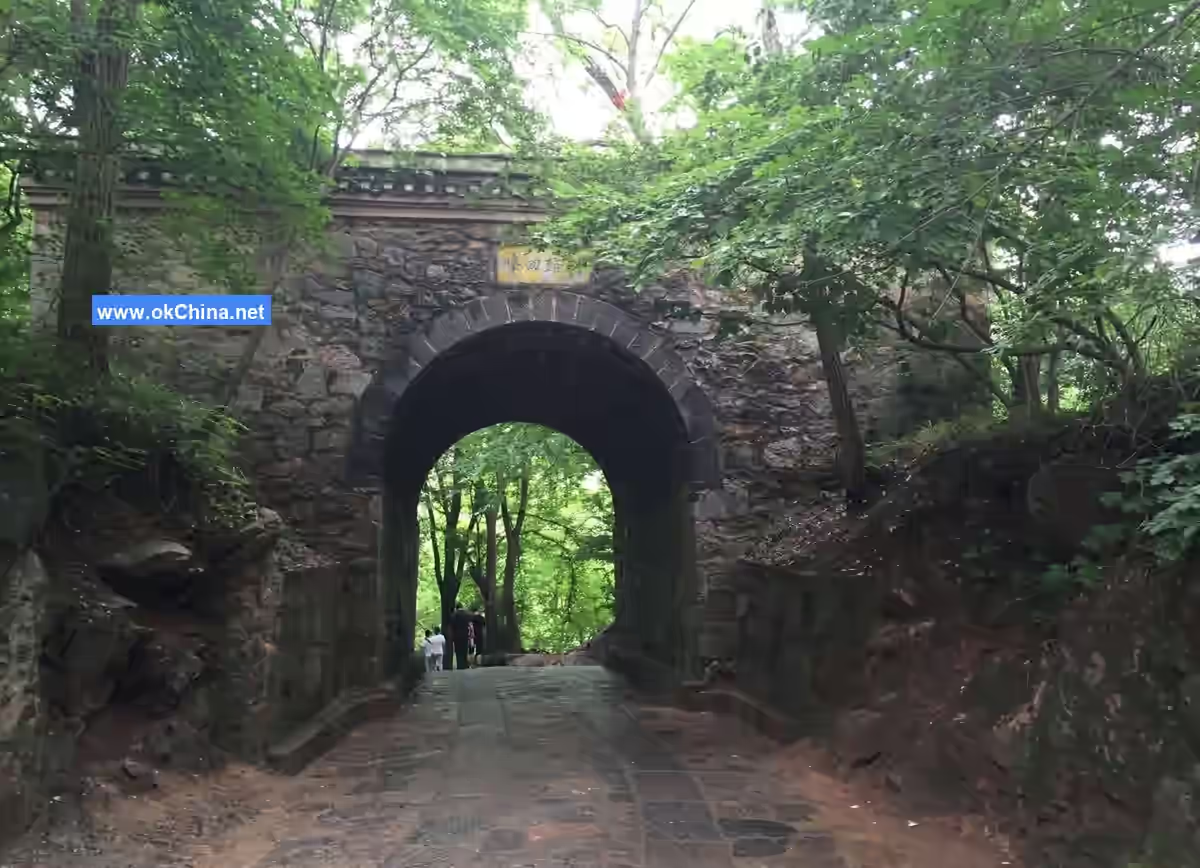
South Heavenly Gate is the commanding high point in the southeast of Langya Mountain, featuring ancient architectural complexes such as "Langya Pavilion" and "Huifeng Pavilion." Langya Pavilion is 24 meters high with seven stories in total—two underground and five above ground. Built according to the mountain's topography, Langya Pavilion appears different in height and shape when viewed from all four sides. From the east, it appears to have three stories; from the south, five stories. Each floor of the pavilion is hexagonal and octagonal, adopting the classical architectural style of upturned eaves and corners. The pavilion roof is covered with glazed tiles, and it features carved beams and painted pillars. Copper bells are installed at the corner beams of the pavilion.
3.3 Shenxiu Lake
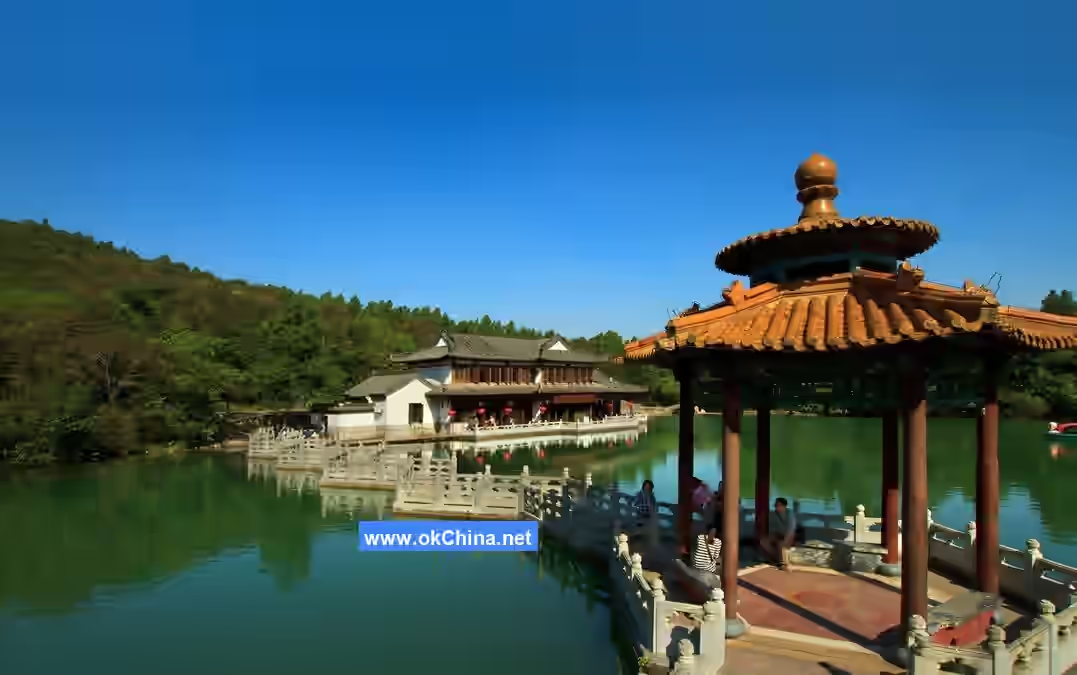
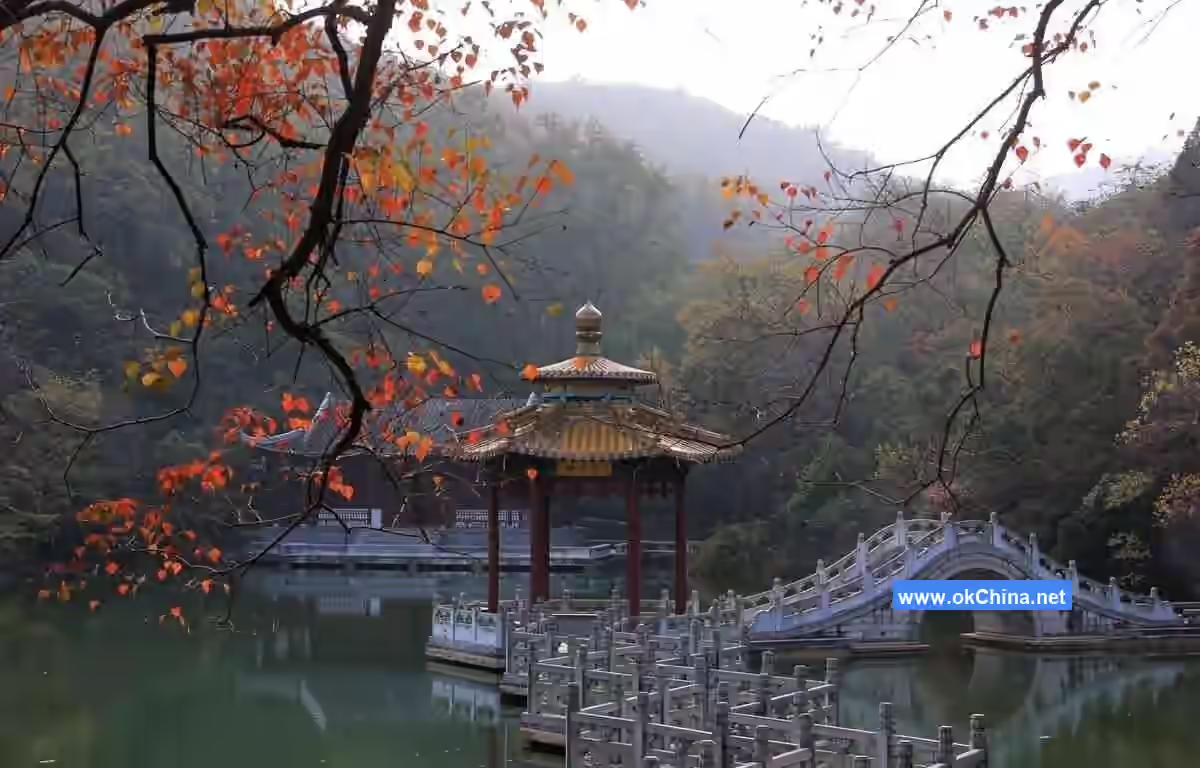
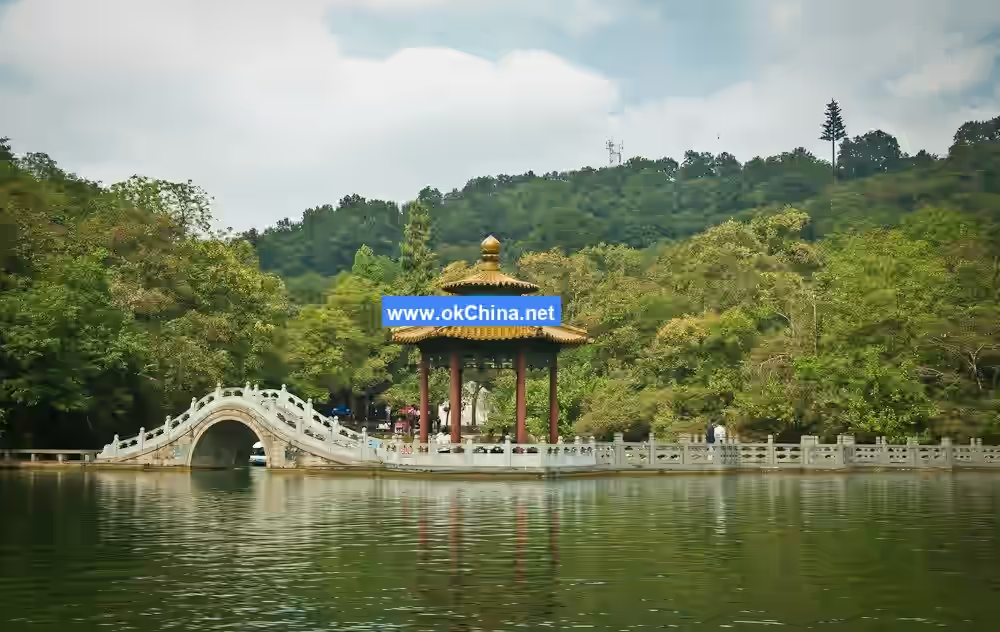
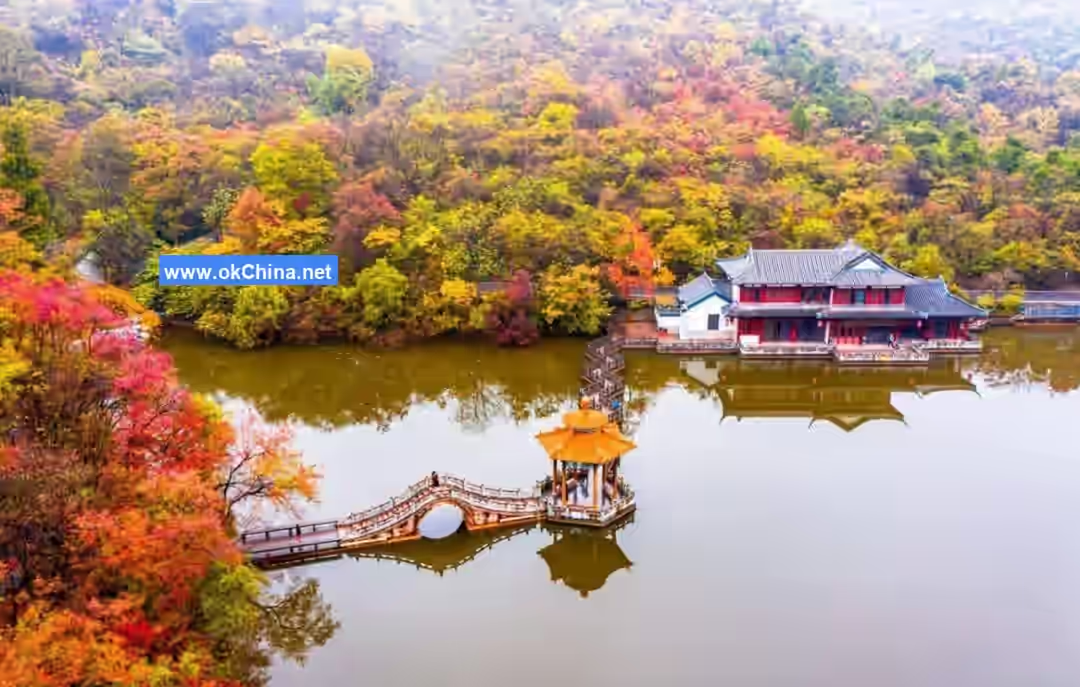
Shenxiu Lake was first constructed in the early 1960s. The Shenxiu Lake area consists of Shenxiu Lake, Qingfeng Mingyue Tower, and Weiran Pavilion. The names "Shenxiu Lake" and "Weiran Pavilion" both originate from "The Record of the Zuiweng Pavilion": "The district of Chu is completely surrounded by hills, and the peaks to the southwest are clothed with a dense and beautiful growth of trees and vegetation, over which the eye wanders in rapture away to the confines of the sky. The verdure of Langya..." "Shenxiu" (deeply beautiful) and "Weiran" (luxuriantly) are found within this description. The pavilion and lake are located beside the ancient Langya path. The lake water comes from Langya Stream, with a surface area of about 6000 square meters. The water is clear and transparent. The lake features a Nine-Bend Bridge and a Mid-Lake Pavilion. Visitors can boat on the lake, looking up at the green mountains and down at the clear water. The lakeshore has waterside pavilions, terraces, verandas, and stone banks, with the green mountains resembling dark eyebrows.
3.4 Yefang Garden
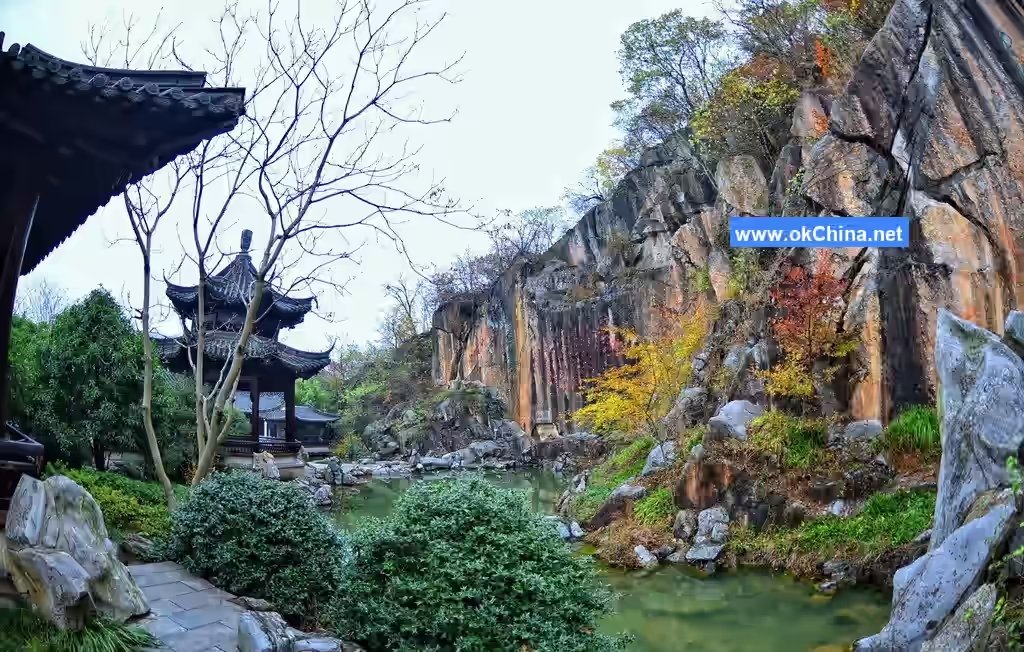
Yefang Garden was built in August 1985, drawing inspiration from the line "Wild flowers bloom with a hidden fragrance" from Ouyang Xiu's Northern Song Dynasty work "The Record of the Zuiweng Pavilion." It features Suzhou-style garden architecture. Within the garden, pavilions, halls, terraces, studios, corridors, arched bridges, rockeries, winding paths, and lawns are set against the backdrop of green mountains, creating pleasant scenery. Inside are Shangxin Studio, Chenxi Hall, and a Stele Corridor. During his tenure as prefect, Ouyang Xiu found solace in the landscapes of Langya, leaving behind 115 poems and essays. Since the Tang Dynasty, literati such as Li Youqing, Huangfu Zeng, Wei Yingwu, Zeng Gong, Wang Anshi, and Lu You have left over 1400 poems and essays praising the area, preserved within the scenic area through stone carvings, stele inscriptions, calligraphy, and paintings. The Langya Mountain Scenic Area has collected, organized, and gathered over 200 precious poems and essays related to Langya Mountain and Zuiweng Pavilion culture, as well as calligraphy works by famous figures, which are inlaid here. These include works by Qiao Shi (former Chairman of the Standing Committee of the National People's Congress), Li Tieying (Vice Chairman of the Standing Committee of the National People's Congress), famous calligraphers Shen Peng, Xiao Xian, Chen Dayu, Lai Shaoqi, Fan Zeng, overseas Chinese painter Li Shan, and famous educator Cai Yuanpei.
3.5 Tongle Garden
The name Tongle Garden derives from the meaning "When drunk, he can rejoice with them" in Ouyang Xiu's "The Record of the Zuiweng Pavilion." It is divided into eastern and western courtyards, separated by pavilions and corridors, balancing movement and tranquility. "Ouyang Gongguan" (Ouyang Residence) is the main building in the Ouyang Xiu Memorial Hall. The plaque inside reading "A Literary Master of His Generation" was inscribed by Ouyang Zhongshi, a contemporary famous calligraphy educator and descendant of Ouyang Xiu. In the center stands a statue of Ouyang Xiu, nearly 3 meters high. The walls are hung with murals comprehensively introducing Ouyang Xiu's life, fully showcasing the highlights of his character, governance, scholarship, and literary achievements, presenting his image to the world once more. Here are displayed stele inscriptions of "The Record of the Zuiweng Pavilion" in regular, cursive, clerical, and seal scripts, calligraphed by历代书法大家 (various calligraphy masters through the ages) such as Su Tangqing, Su Shi, Zhao Mengfu, Dong Qichang, Zhu Zhishan, Wen Zhengming, and Zhang Ruitu. Additionally, there are inscription steles by famous figures like Zhu Muzhi, Xiao Xian, Shen Peng, and Fan Zeng. This is also China's most comprehensive stele corridor themed on "The Record of the Zuiweng Pavilion" culture.
3.6 Ancient Langya Temple
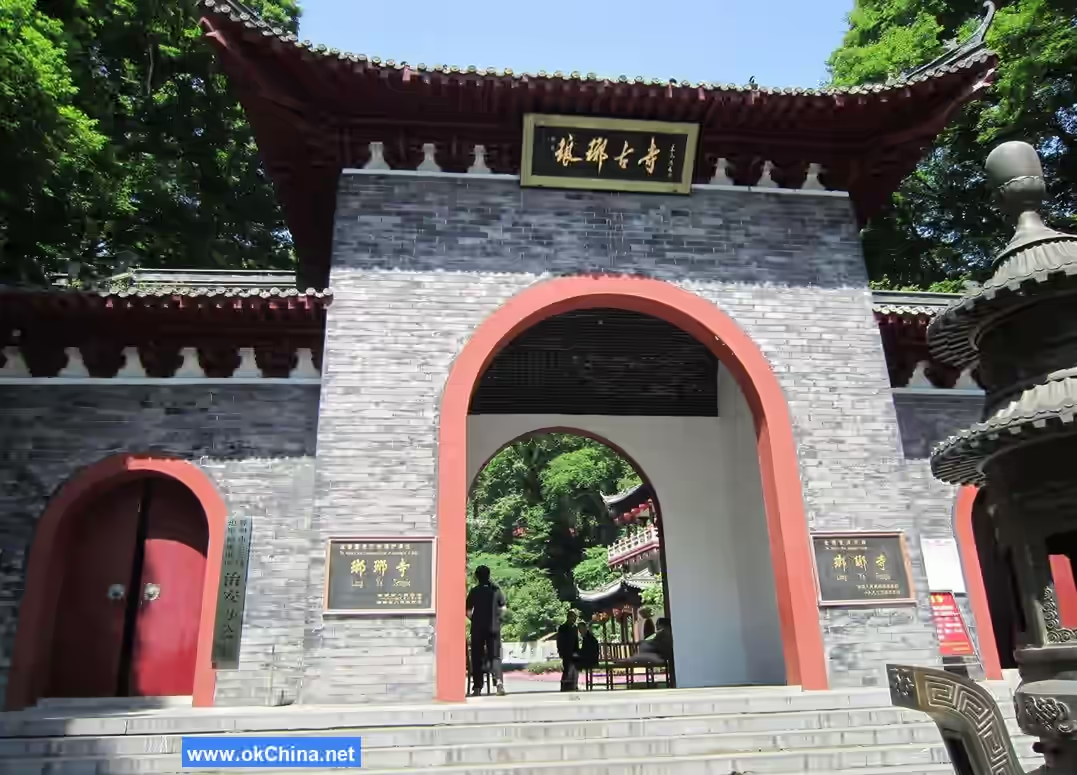
The Ancient Langya Temple is one of China's national key temples and monasteries. It was built in the sixth year of the Dali era of the Tang Dynasty (771 AD) by Li Youqing, the Prefect of Chuzhou, and the mountain monk Fa Chen. At that time, the night before Li Youqing and Monk Fa Chen presented the temple sketch to Emperor Daizong, the emperor dreamed of worshipping Buddha in a temple. The next day, upon seeing the drawings, the emperor was greatly pleased, saying it matched the temple in his dream. Therefore, he immediately bestowed the name "Baoying Temple," meaning "the emperor's dream came true." "Baoying" was also the era name of Emperor Daizong of Tang, so from its founding, Langya Temple was an imperial temple. Later, Baoying Temple was renamed "Chici Langyashan Kaihua Chan Temple" (Imperially Bestowed Langya Mountain Kaihua Chan Temple). During the Jiaqing period of the Qing Dynasty, Master Haoqing, a Vinaya master, changed the temple name to "Chici Langyashan Kaihua Lü Temple" (Imperially Bestowed Langya Mountain Kaihua Vinaya Temple). In Buddhism, there is a school specifically dedicated to studying, practicing, and transmitting precepts called the "Vinaya School," also known as the Nanshan School. A "lüshi" (Vinaya master) is a Dharma master proficient in the precepts. Starting from Master Haoqing, Langya Temple has had Vinaya masters in successive generations. In the fourth year of the Republic of China (1915), Vinaya Master Daxiu rebuilt the Kaihua Lü Temple. Later, it came to be called "Langya Temple" due to the mountain's name.
3.7 Ancient Plum Pavilion
The Ancient Plum Pavilion was originally named Meirui Hall, built in the 14th year of the Jiajing era of the Ming Dynasty (1535 AD) by Zhang Mingdao, a Judge of Chuzhou, for appreciating plum blossoms. From different positions within the pavilion, one can see various postures of the ancient plum tree. The three characters "Gu Mei Ting" (Ancient Plum Pavilion) on the pavilion plaque are pictographic characters.
3.8 Erxian Hall
Erxian Hall was built in the second year of the Shaosheng era of the Northern Song Dynasty (1095 AD) by the people of Chuzhou to commemorate two prefects who had governed Chuzhou: Wang Yucheng and Ouyang Xiu. Wang Yucheng, style name "Yuanzhi," was a literary figure of the early Song Dynasty, from Juye (now part of Shandong). He was a Jinshi during Emperor Taizong's reign, rising to the position of Hanlin Academician, renowned for his uprightness and outspokenness. Like Ouyang Xiu, he served in Chuzhou and brought benefits to its people. His character, personality, literary works, and experiences share similarities with Ouyang Xiu. The hall currently contains statues of the two worthies. A glass cabinet holds photographs of Ouyang Xiu's original handwriting and his works. Wooden scrolls of "The Record of the Zuiweng Pavilion" and "On Factions" hang on the side walls.### 3.9 Baosong New Studio The Baosong New Studio was built to house treasures from the Song Dynasty. It was constructed in 1622 (the second year of the Tianqi era in the Ming Dynasty) by Feng Ruoyu, the Junior Minister of the Court of the Imperial Stud in Nanjing. Two large stone steles are embedded in the interior walls, inscribed with the full text of Ouyang Xiu's "Record of the Old Drunkard's Pavilion" in regular script calligraphy by Su Shi. The steles are 2.36 meters high and 90 centimeters wide, with each character approximately 10 centimeters square. Because Ouyang Xiu's prose and Su Dongpo's calligraphy are combined on a single stele, it has been praised by later generations as the "Stele of Dual Excellence: Ouyang's Prose and Su's Calligraphy." Next to the "Baosong Studio" are three tile-roofed brick-and-wood houses built by the people of Chuzhou to commemorate and thank Feng Ruoyu and his son Feng Yuanbiao for protecting the "Ouyang's Prose and Su's Calligraphy." These houses are named the "Feng Gong Shrine."
3.10 Lingxi Stone
The Lingxi Stone in Langya Mountain was excavated, authenticated, named, and protected by the great Northern Song literary figure Ouyang Xiu. Song Dynasty literati such as Ouyang Xiu, Mi Fu, and Su Shunqin successively composed poems and essays about it. It is an extremely rare surviving stone from the late Tang Dynasty in China with precise historical records and physical evidence. In September 2019, it was honored with the title "Demonstration Heritage Site for the National Intangible Cultural Heritage Protection Project of Stone Appreciation Art."
4. Cultural Activities
4.1 Historical Culture
4.1.1 Cultural Relics and Remains
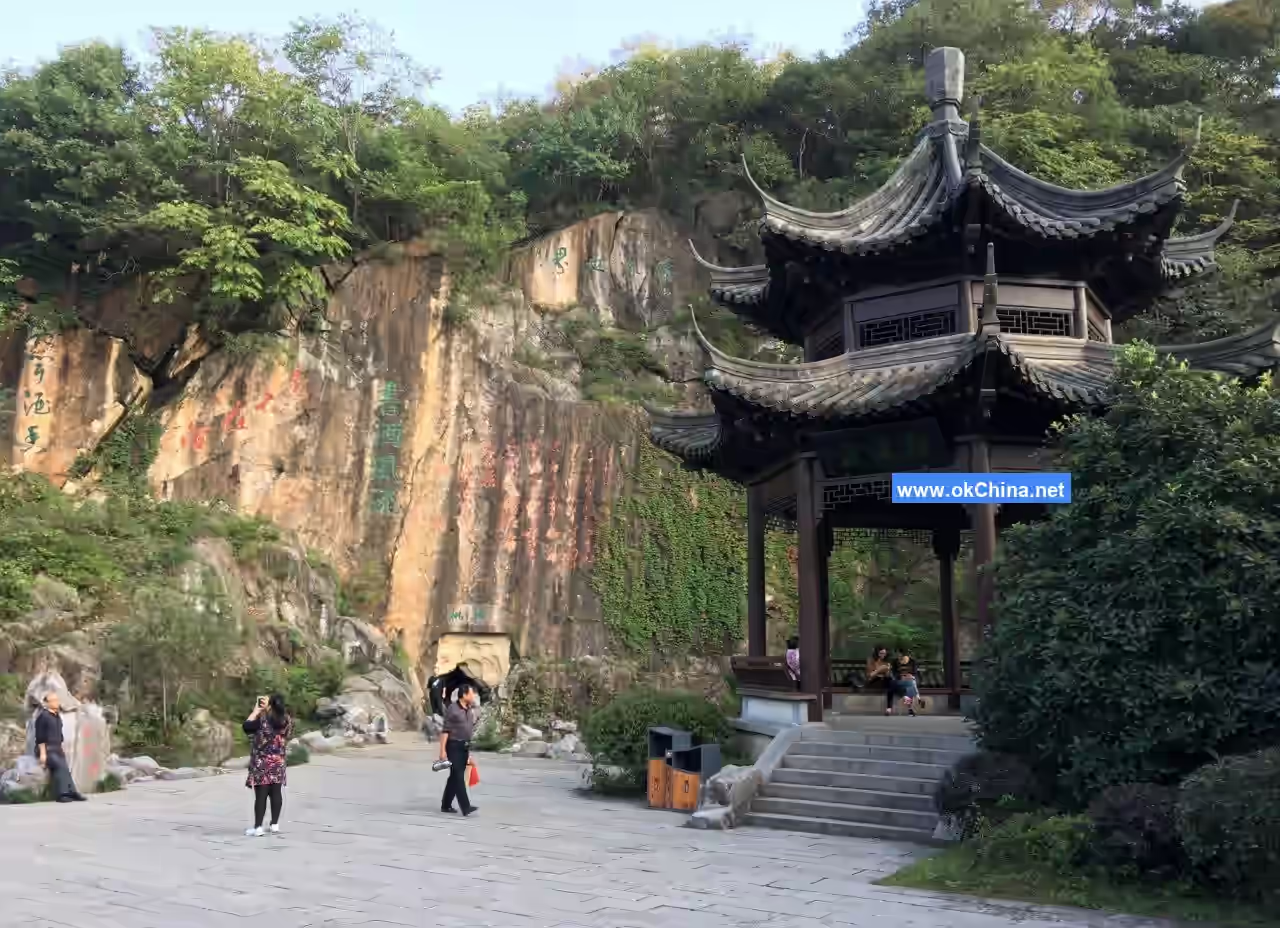
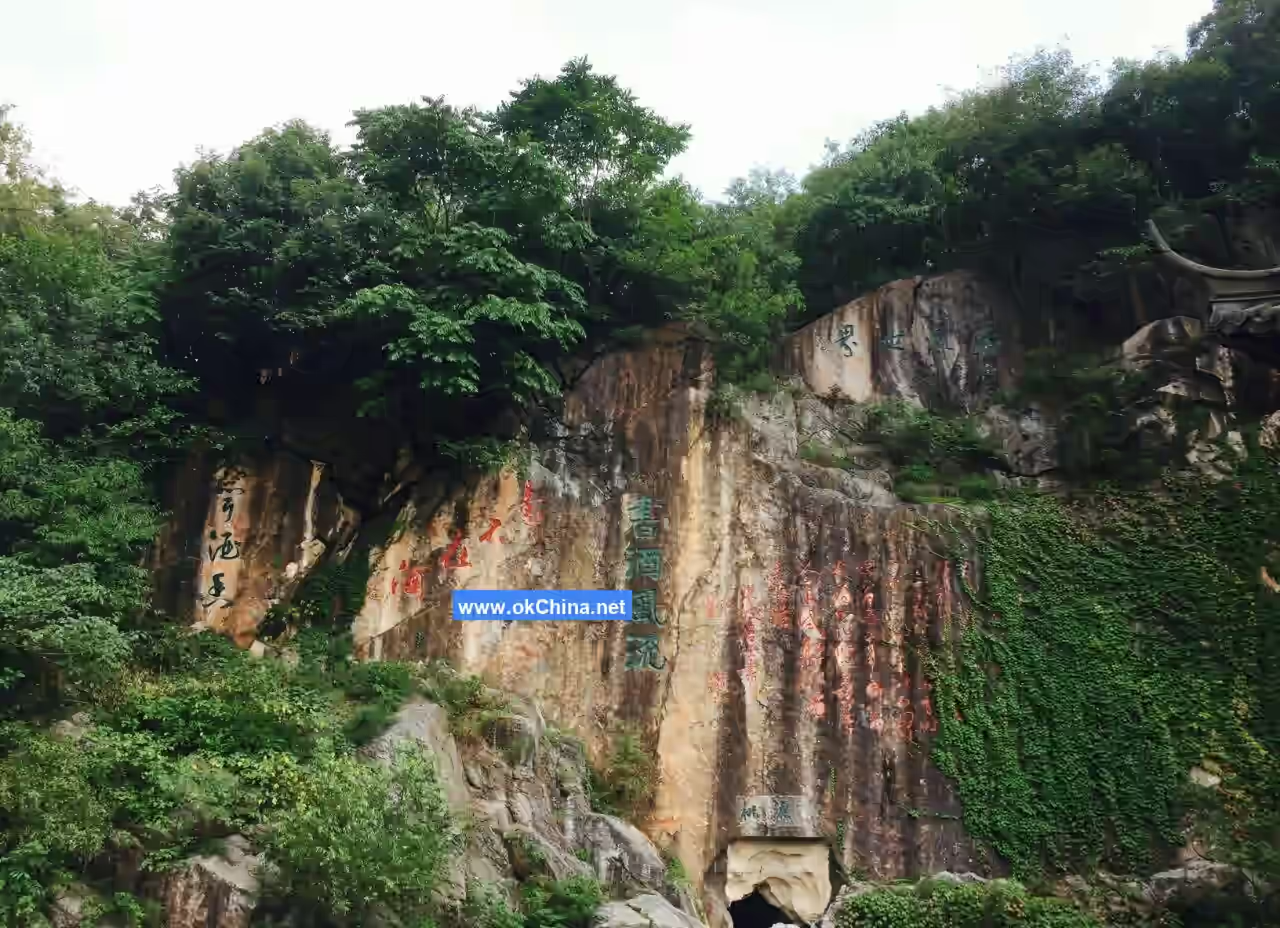
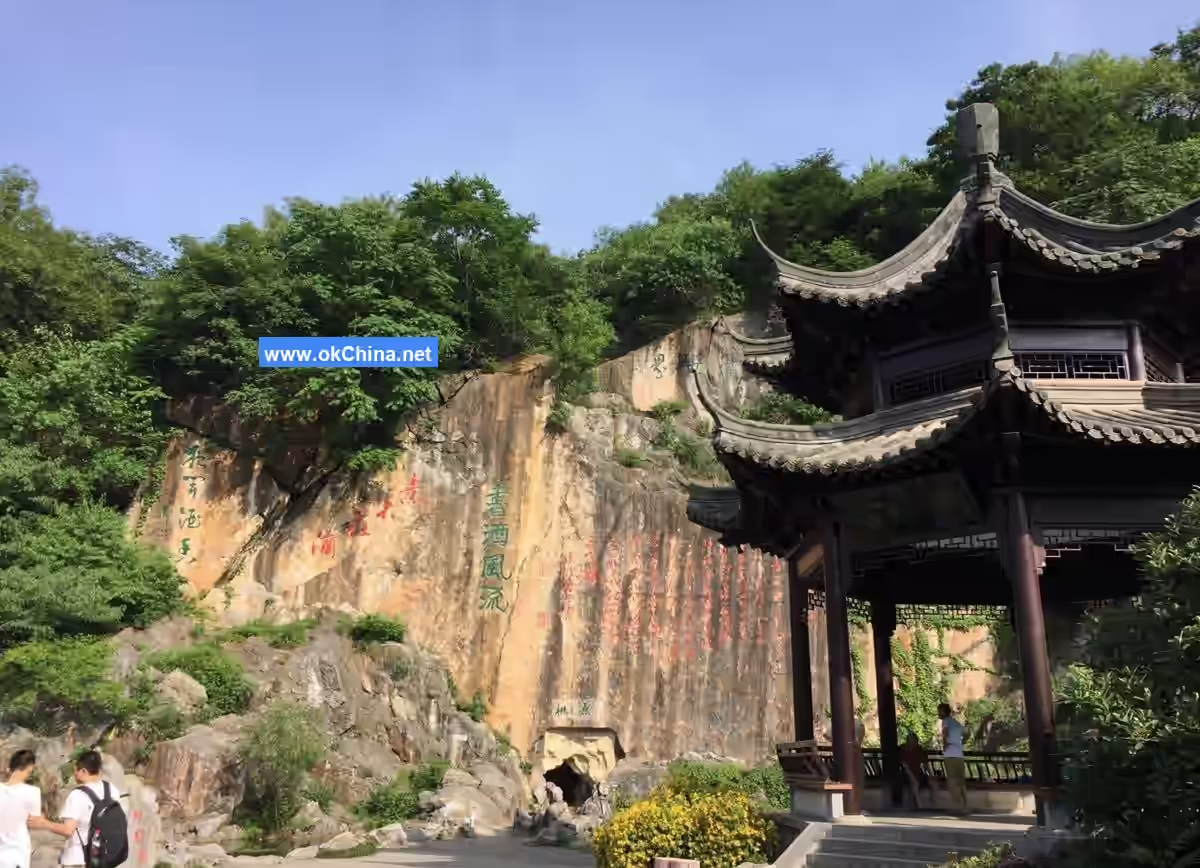
There are over 300 cliff inscriptions and stone steles on Langya Mountain, spanning from the Tang Dynasty to the Republic of China era. Many were inscribed by famous calligraphers, with content ranging from recording merits and virtues to documenting events, travels, and poetic expressions. The scripts include regular, cursive, clerical, and seal styles, created by renowned officials, scholars, literary giants, monks, and Taoists. Calligraphic steles by figures such as Li Huanqing, Liu Sui, and Huangfu Zeng from the Tang Dynasty; Su Shi and Xin Qiji from the Song Dynasty; Su Maoxiang and Yin Mengbi from the Ming Dynasty; Zhang Penghe and Xue Shiyu from the Qing Dynasty; and Dai Jitao from the Republic of China era are all treasures of Chinese calligraphy. In terms of content, Su Shi's handwritten "Record of the Old Drunkard's Pavilion" is regarded as a treasure of the Song Dynasty. The "Record of Tree Planting on Langya Mountain," composed by Shi Xi, the former prefect of Kaifeng, and inscribed in 1583 (the 11th year of the Wanli era in the Ming Dynasty), is celebrated as China's earliest stele record of afforestation. These steles, with their orderly transmission and rich stylistic variety, serve as valuable materials for studying the culture, history, and evolution of Langya Mountain.
4.1.2 Buddhist Culture
The spread of Buddhism in Langya Mountain has a history of approximately 1,200 years, flourishing and declining alongside the fortunes of society. The temple's name underwent three changes: "Baoying Temple," "Kaihua Chan Temple," and "Kaihua Vinaya Temple." In terms of Buddhist sects, it initially belonged to the Chan (Zen) school, shifted to the Vinaya school during the Jiaqing period of the Qing Dynasty, and continues to this day. The temple was first built in 771 AD (the 6th year of the Dali era in the Tang Dynasty), with mountains leveled and stones piled to construct meditation halls. It was managed and presided over by masters such as Fa Chen, Dao Biao, and Dao Yi. During the Qiande era of the Song Dynasty (963–968 AD), the temple was expanded and renovated, achieving a larger scale than before. The magnificent temple attracted a continuous stream of Buddhist disciples making pilgrimages, with itinerant, temporary, and resident monks numbering over 500 daily. In 1053 AD (the 5th year of the Huangyou era of the Song Dynasty), structures such as the "Imperial Library Pavilion" were added within the temple. Forty-nine stupas were erected along the ancient stone path up the mountain, enhancing the temple's grandeur. Buddhist activities were conducted in conjunction with temples like Longpan, Longxing, and Guangxiao. In 1383 (the 16th year of the Hongwu era in the Ming Dynasty), a Buddhist management institution called the "Sengzheng Si" was established in Chuzhou. Master Dexiao served as the Sengzheng, residing at Longxing Temple as abbot and managing Buddhist affairs at Langya Temple and surrounding temples. During this period, a monk from the Western Regions came to Langya Mountain and practiced wall-gazing meditation at the temple for six years. During the Jiaqing era of the Qing Dynasty, Master Haoqing came to Langya Mountain to preside over the temple. He rebuilt the Kaihua Hall, established a platform to propagate the Nanshan Vinaya school, and revitalized Langya Temple. Monks from temples across the Jianghuai region gathered, with daily attendance reaching over 800 monks, sharing meals from communal cauldrons. His disciples went on to preside over temples such as Guanyin Temple in Liu'an, Changlu Temple in Liuhe, Jinghai Temple in Baixia, and Wofo Temple in Jinling. The influence of the mountain temple's Buddhism extended to several provinces across China, marking a "peak period." Major Buddhist activities at the time included ordination ceremonies. In 1904 (the 30th year of the Guangxu era in the Qing Dynasty), Master Daxiu came to Chuzhou to serve as the abbot of Langya Temple. He rebuilt the temple, revitalized Buddhist activities, and renovated temples such as Longpan, Longhua, and Huju, as well as Buddhist temples and nunneries in Qingliuguan and Bengbu, managing significant Buddhist affairs within these temples. After Daxiu, Masters Genru and Chaoran successively served as abbots, maintaining the temple's Buddhist activities.
4.1.3 Historical Evolution
771 AD (6th year of the Dali era, Tang Dynasty): Li Youqing, the Prefect of Chuzhou, ordered the mountain monk Fa Chen to begin constructing Langya Temple. 964 AD (2nd year of the Qiande era, Northern Song Dynasty): Construction of the Scripture Repository at Langya Temple began. 1046 AD (6th year of the Qingli era, Northern Song Dynasty): The mountain monk Zhi Xian built the Old Drunkard's Pavilion for Ouyang Xiu, the Prefect of Chuzhou. As Ouyang Xiu styled himself "Old Drunkard," the pavilion was named accordingly. 1897 AD (23rd year of the Guangxu era, Qing Dynasty): The Weituo Hall of Langya Temple was renovated. 1916 AD (5th year of the Republic of China): Master Daxiu renovated the Main Hall of Langya Temple; Chen Wenquan, the County Magistrate of Chuxian, established Xing Garden. 1944 AD (33rd year of the Republic of China): Monk Genru of Langya Temple rebuilt the Su-style Pavilion.
4.2 Origin of the Name
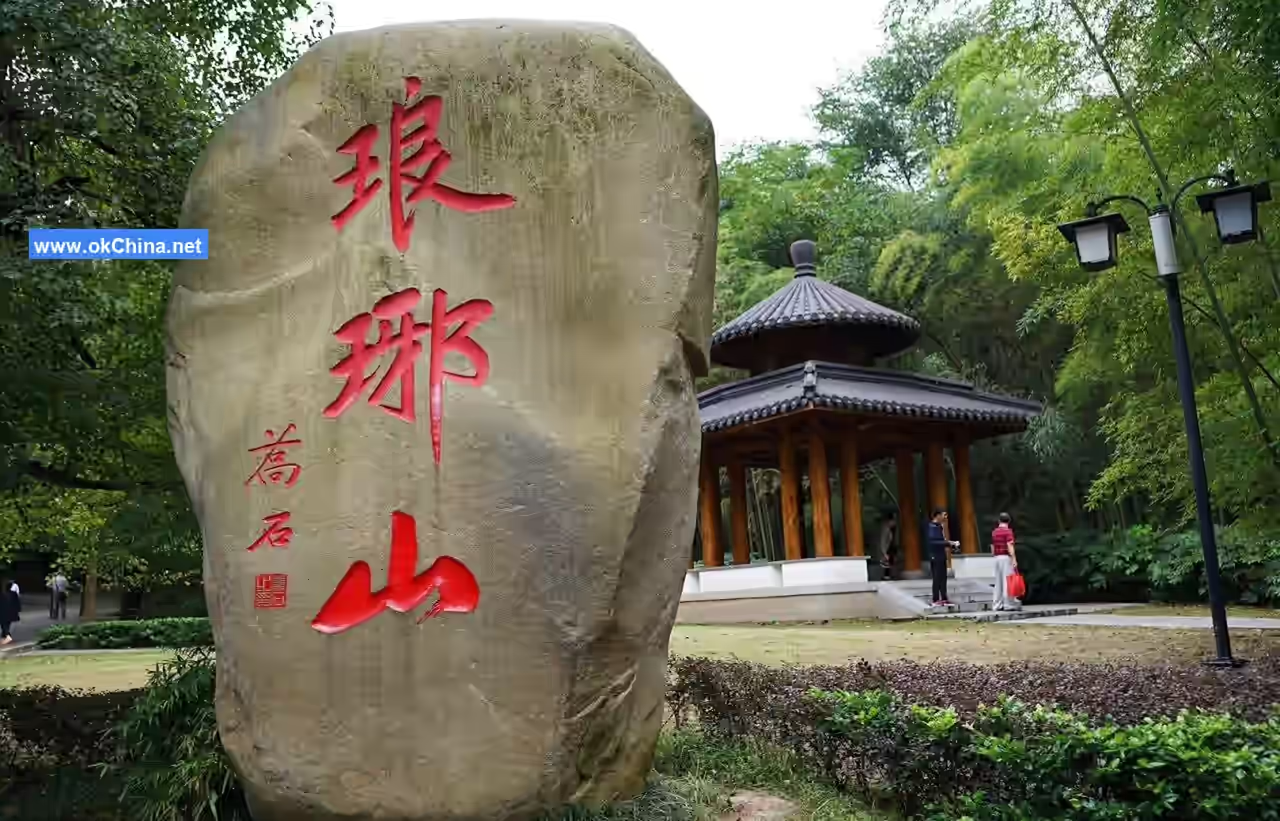
The place name "Langya" originates from Langya County in Shandong, originally written as "Langya" (琅邪), with "琊" being a variant character for "邪." In the late Western Jin Dynasty, Sima Rui, the Prince of Langya, following the advice of Wang Dao, moved away from the political vortex in the north and crossed south. He once trained troops in Langya Mountain to build up strength before moving his base to Jianye (present-day Nanjing). After the fall of the Western Jin, he ascended the throne in 318 AD (the first year of the Taixing era of the Eastern Jin Dynasty), historically known as Emperor Yuan of the Eastern Jin. Because of this deep connection between Sima Rui and Langya Mountain, after he became emperor, the characters "Langya" from his former princely title were bestowed upon the mountain. This is recorded in the Song Dynasty text "Taiping Huanyu Ji": "Langya Mountain is located twelve li southwest of the county. The mountain was named because Emperor Yuan of the Eastern Jin, as the Prince of Langya, took refuge here." Therefore, the mountain's name derives from the princely title of Emperor Yuan of the Eastern Jin, and the characters "Langya" indeed come from the county name "Langya" in Shandong.
4.3 Traditional Activities
Langya Mountain hosts the traditional "Langya Mountain Temple Fair," one of the longest-standing, largest-scale, and most influential folk traditional custom activities in eastern Anhui. The number of attendees on the fair day remains around 100,000 annually, held on the ninth day of the first lunar month each year. As a folk gathering spontaneously organized and formed by the masses, the Langya Mountain Temple Fair has perpetuated folk arts such as song and dance, lantern displays, and acrobatics since ancient times, in various forms. Since 1992, to enrich the cultural life of the people, successive governments of Chuzhou have highly valued the "Temple Fair" activity, listing it as an important component of Chuzhou's New Year cultural and entertainment activities. Each year, a temple fair activity command headquarters is established, with festive decorations and meticulous arrangements. Professional and amateur art troupes and teams from various regions and cities are invited and scheduled to perform traditional local cultural and entertainment programs such as festive lanterns, decorated boats, dragon lanterns, acrobatics, magic, stilt walking, and yangko dance around Langya Mountain during the fair. As a brand of folk culture in eastern Anhui, in July 2006, the Langya Mountain Temple Fair was recommended by the Chuzhou Municipal People's Government for inclusion in the "First Batch of Anhui Provincial Intangible Cultural Heritage."
4.4 Literary and Artistic Works
Tang Dynasty Wei Yingwu: "Autumn Scenery at Langya Hermitage," "Visiting Langya Temple," "West Stream in Chuzhou," "Thinking of the Two Monks Chen and Biao of Langya," "Inscribed with Yuan Xi at Langya Temple," "Planting Willows by the West Stream."
Song Dynasty Ouyang Xiu: "Record of the Old Drunkard's Pavilion," "Six Poems on Langya Mountain." Su Shi: "In Response to Wang Chuzhou's Poem," "Melody of the Old Drunkard (with Preface)."
Ming Dynasty Wang Yangming: "In Langya Mountain," "Seeing Off Cai Xiyan in Langya Mountain (Two Poems with Preface)," "Instructing the Students in the Mountain." Wen Zhengming: "Visiting Langya on the Double Ninth Festival," "Revisiting Langya Mountain on the Twentieth Day of the Ninth Month."
Qing Dynasty Wang Cikui: "Visiting the Old Drunkard's Pavilion (Two Poems)," "Visiting Langya Temple," "Inscribed on the Stone Wall of the Old Drunkard's Pavilion."
Comments
Post a Comment