Kunming World Horticultural Expo Garden
1. Introduction
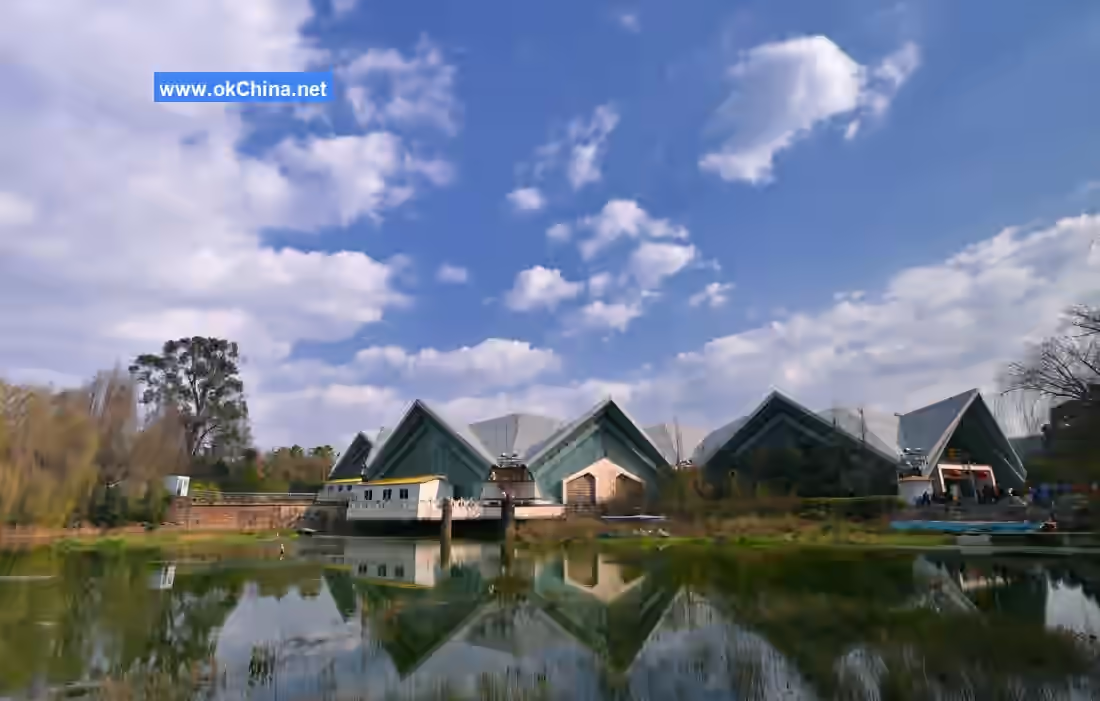
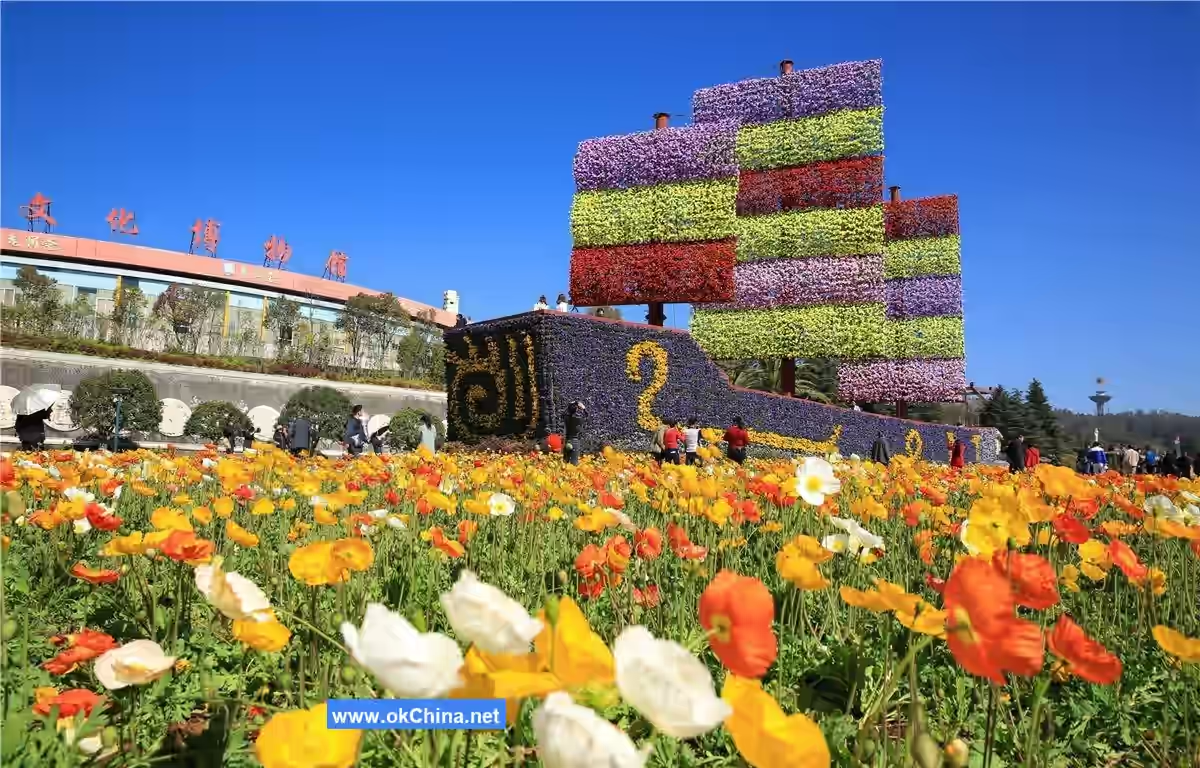
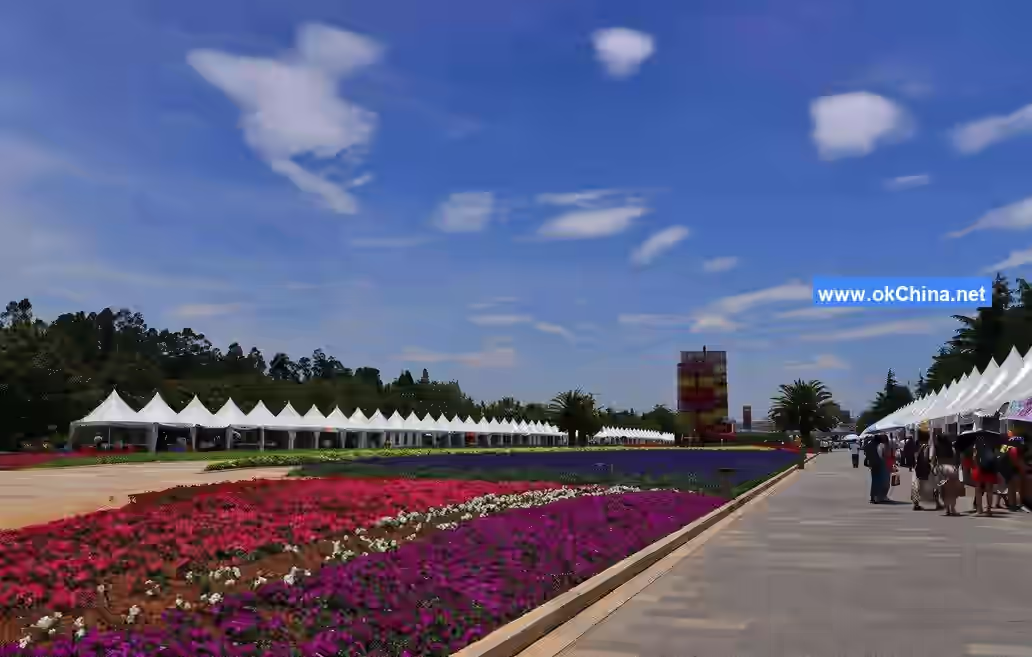
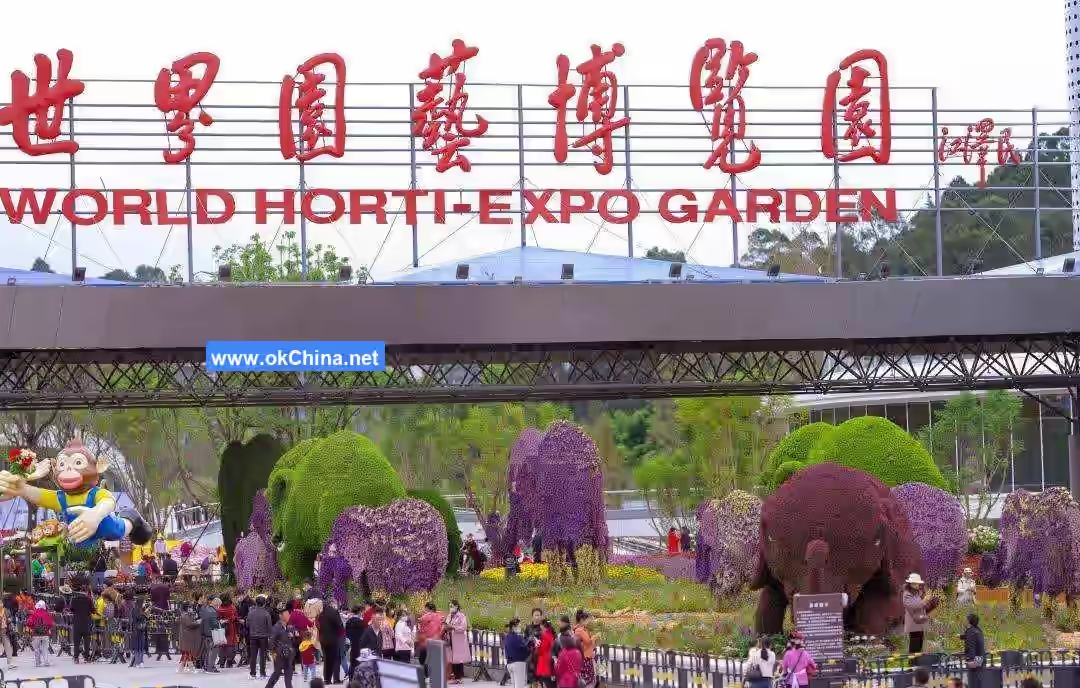
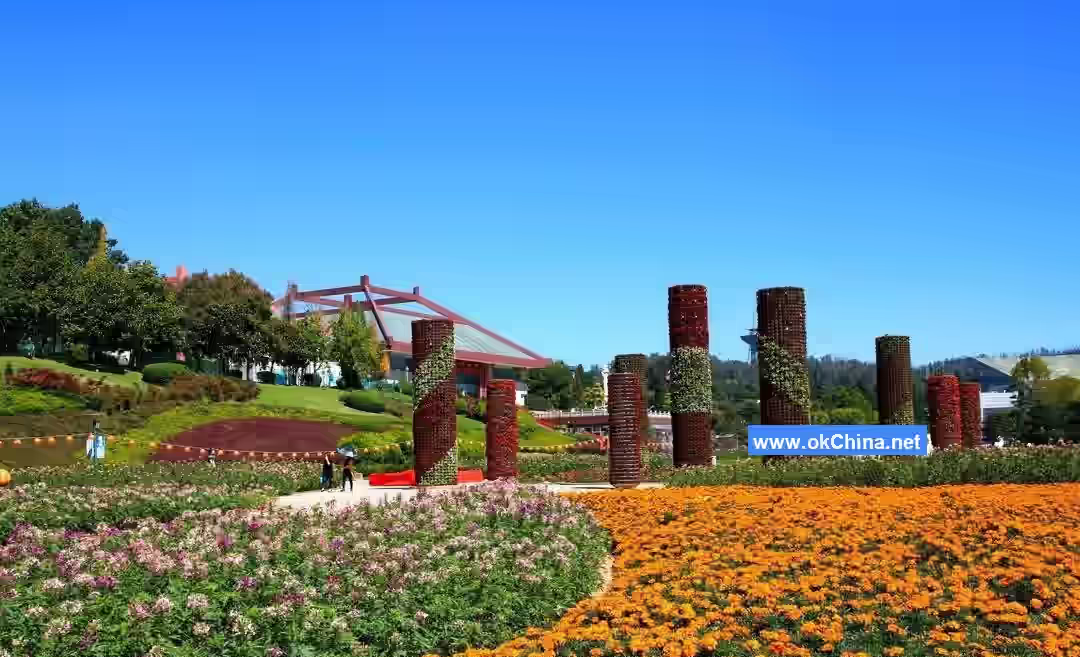
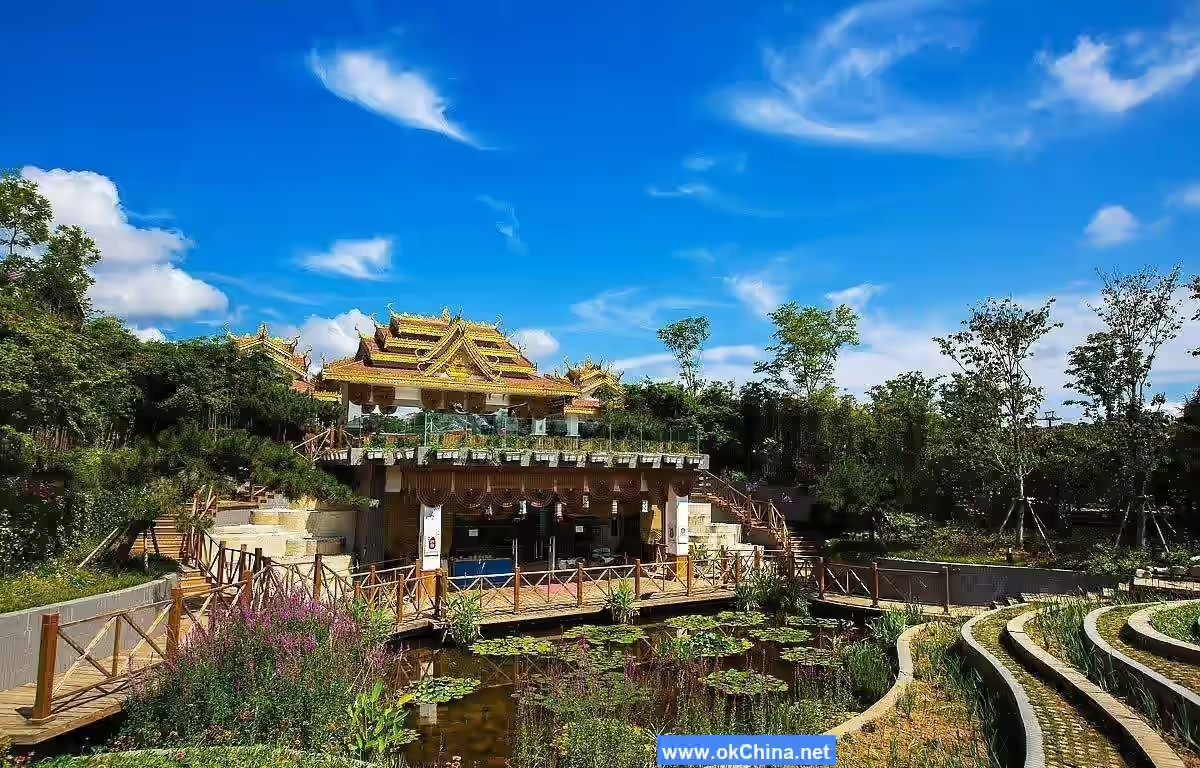
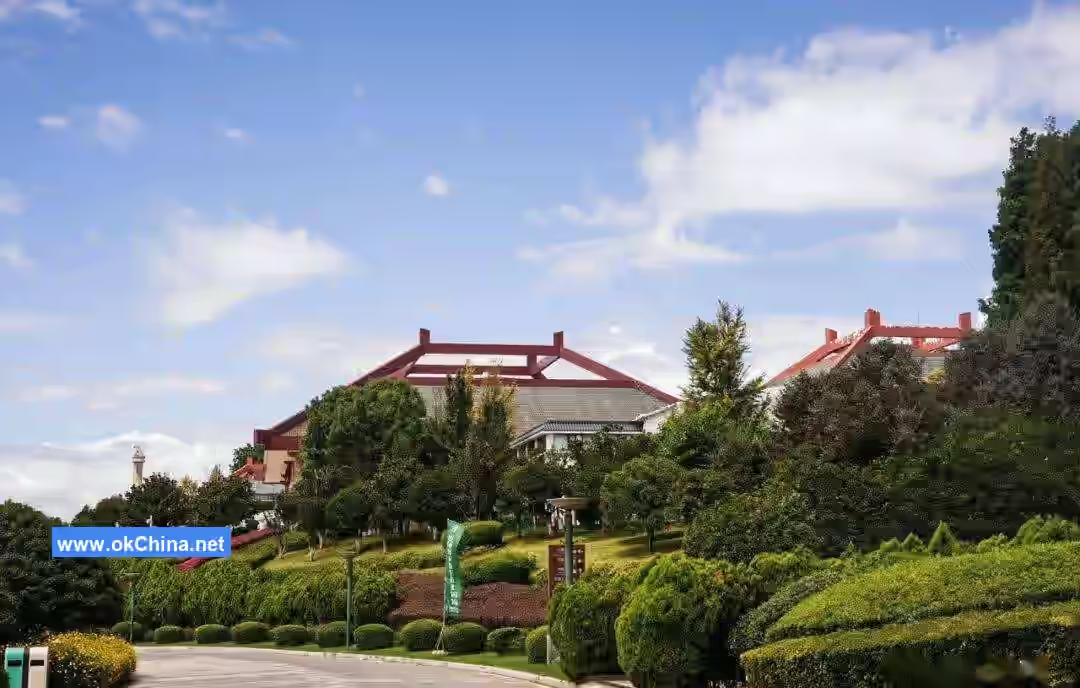
The Kunming World Horticultural Expo Garden, abbreviated as Kunming World Horticultural Expo Garden, is the site of the 1999 Kunming World Horticultural Exposition. It is located in the Golden Temple Scenic Area in the northeastern suburbs of Kunming, approximately 4 kilometers from downtown Kunming.
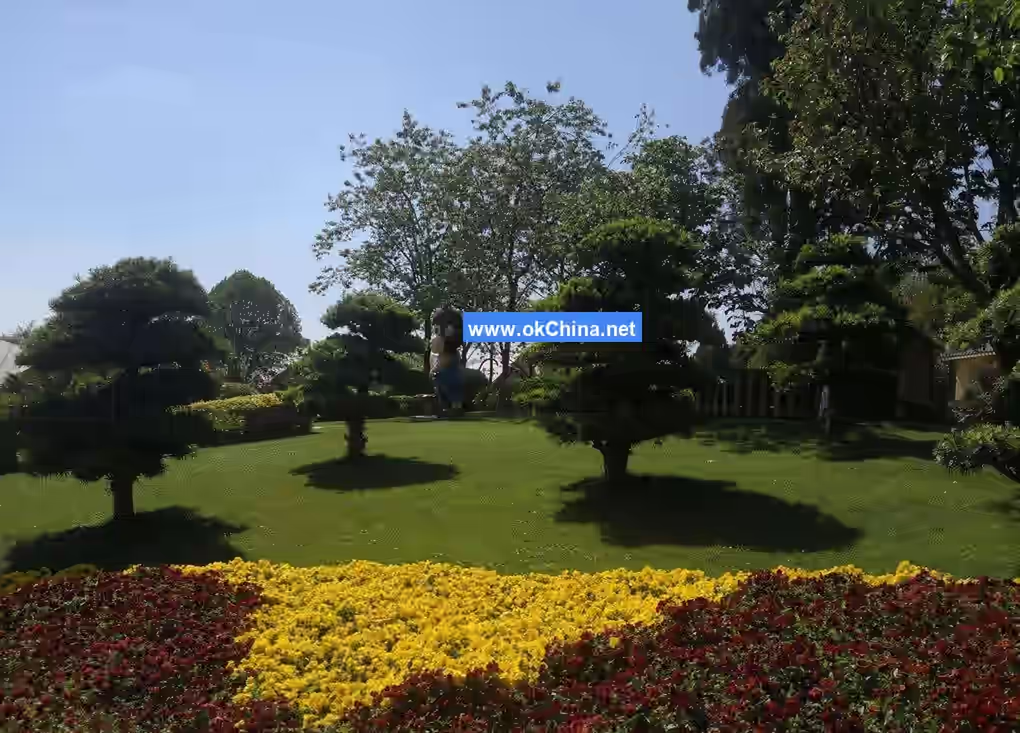
The Expo Garden covers an area of about 218 hectares, with a vegetation coverage rate of 76.7%. This includes 120 hectares of gentle slopes covered in dense shrubs, with water bodies accounting for 10% to 15%.
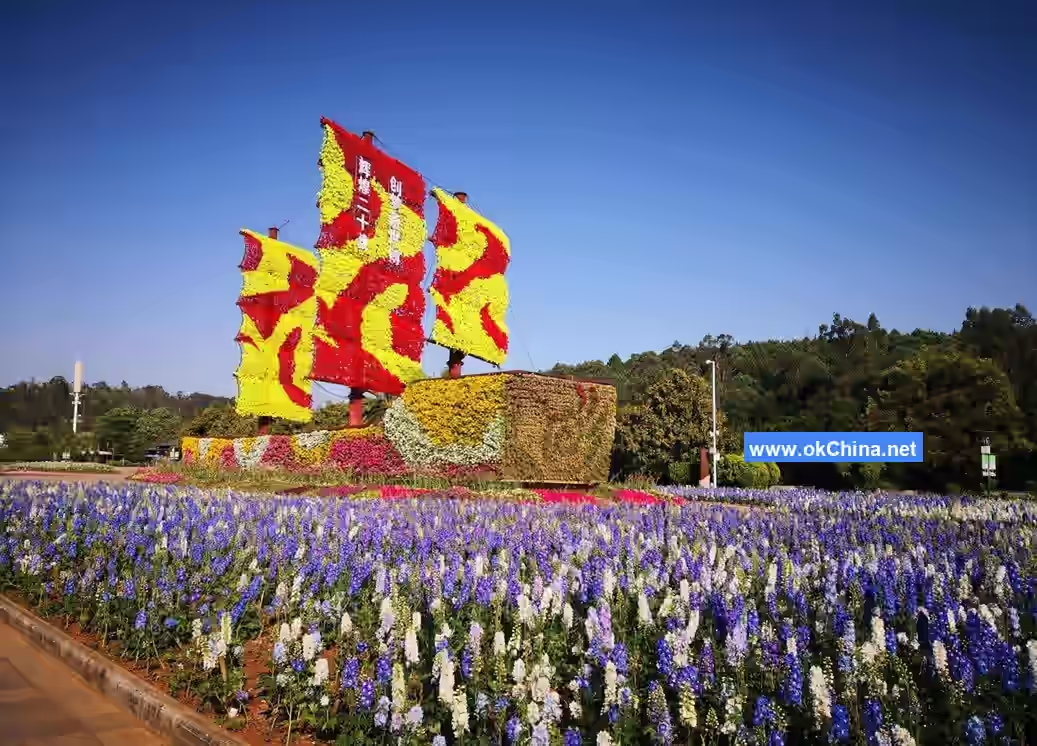
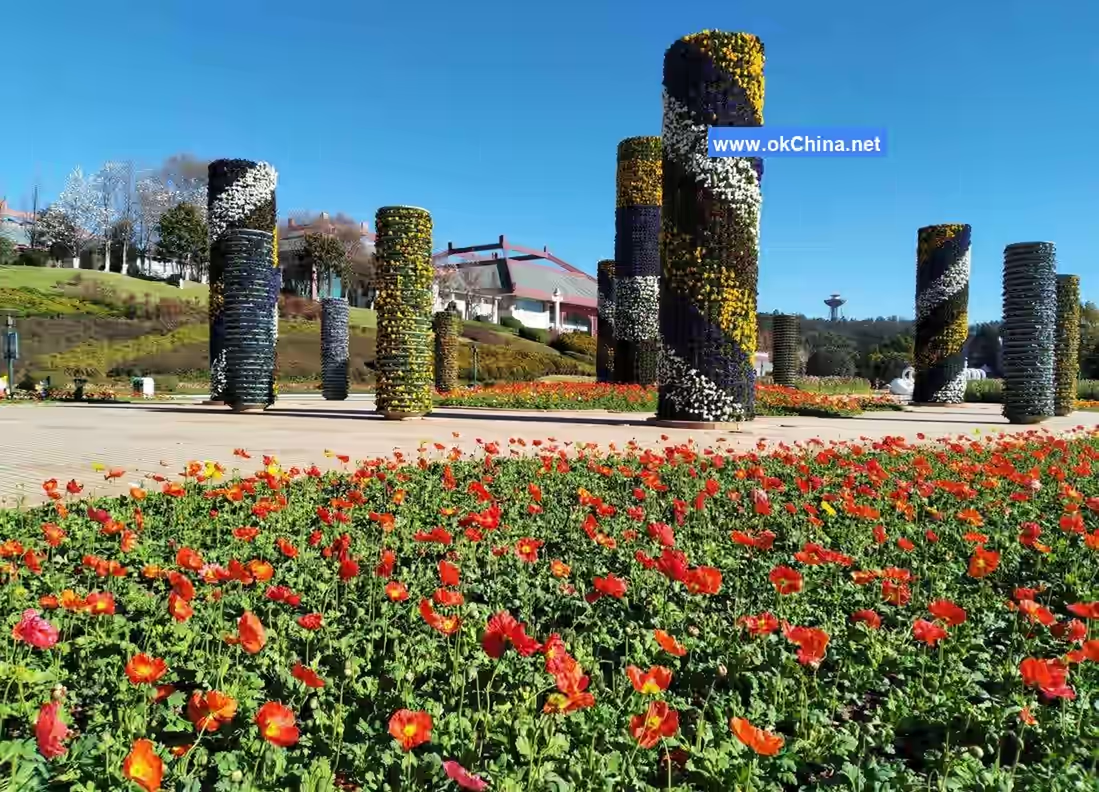
The overall planning of the garden follows the natural terrain, integrating the local characteristics of various provinces, autonomous regions, and municipalities across China, along with the horticultural styles and technological achievements of 95 countries into one garden. It embodies the contemporary theme of "Man and Nature, Harmonious Development" and is a grand horticultural garden showcasing "Yunnan characteristics, Chinese grandeur, and world-class excellence."
2. Geographical Location
No. 439 Bailong Road, Panlong District, Kunming City
3. Main Attractions
3.1 International Pavilion
Total floor area: 11,000 square meters; Site area: 13,250 square meters; Road and plaza area: 4,300 square meters; Greening area: 3,050 square meters; Indoor floor elevation: 1953 meters.
The International Pavilion is located at the easternmost end of the Expo Garden, at the terminus of the main tourist route, about 2 kilometers from the main entrance.
The main building is set against a backdrop of lush, verdant mountains, creating a beautiful environment. The architectural form consists of a circular main body and a curved wall over 100 meters long, presenting visitors with a large-volume exhibition space.
The architectural structure forms several complete and fluid spaces through several concentric cylindrical grids. Exhibition halls from various countries are arranged around the atrium, fully embodying the equal and harmonious relationship of the international community. The sloping curved building in the background conveys a sense of upward and forward momentum, symbolizing the determination of humanity and nature to stride together into the 21st century.
Most of the International Pavilion is two stories high at 8.5 meters, with some sections being three to four stories high at 19.2 meters. The overall plan dimensions are approximately 66 meters by 78 meters. The circular roof of the atrium has a diameter of 18 meters, with the central circular part using a steel grid structure and glass skylight for lighting.
The plaza in front of the International Pavilion incorporates gardens that blend with the terrain. In front, there are landscape water features, green grass, and flowers. The outdoor and indoor greenery complement each other, integrating the exhibition hall layout into the natural environment.
3.2 Man and Nature Pavilion
Total floor area: 4,953 square meters; Site area: 19,148 square meters; Paved area: 1,800 square meters; Greening area: 6,290 square meters; Landscape pool area: 6,100 square meters.
The Man and Nature Pavilion is the thematic pavilion of this exposition. Its construction integrates with the mountainous terrain, utilizing two terraces with a 2.4-meter height difference and water surfaces to fully express the artistic conception of mountains, forests, water, and architecture merging into one.
The plan layout of the Man and Nature Pavilion is based on the triangular shape derived from the regularized deformation of the ancient ecological plant, the clover (trefoil), as a basic unit, combined to form three hexagons. The building structure uses a stainless steel grid system, characterized by strong regularity and free spatial division. The roof employs decorative composite aluminum panels, and the top of the building reaches a height of 15 meters.
The distribution and rest plaza at the main entrance of the Man and Nature Pavilion is adjacent to the main tourist route and the landscape pool. Expansive lawns gently slope towards the water, giving visitors a feeling of closeness to nature. The water surface is divided into two parts, one larger and one smaller. The front part has a larger water area, primarily featuring natural landscapes, while the rear part focuses more on artificial landscapes, connected to the front water area by a waterfall.
3.3 Science and Technology Pavilion
Total floor area: 3,064 square meters; Site area: 6,650 square meters; Paved area: 1,080 square meters; Greening area: 2,800 square meters; Floor elevation: 1938.95 meters. The Science and Technology Pavilion is located in the middle section of the International Outdoor Exhibition Area, bordered by a hillside to the north, facing the 12-meter-wide main tourist route to the south, and adjacent to the Tea Garden and the International Outdoor Exhibition Area on the east and west sides respectively.
Considering the site conditions, the Science and Technology Pavilion is generally divided into two parts: the exhibition hall and the circular-screen cinema. The exhibition hall is set back 40 meters from the main tourist route in a rectangular layout, with a small plaza designed in front. The plaza is surrounded by greenery, landscape features, and flagpoles to enhance the atmosphere. The circular-screen cinema is designed in a spherical shape, located to the right front of the exhibition hall, metaphorically representing a fruit.
The Science and Technology Pavilion takes "Horticulture and Technology" as its theme. The exhibition content is mainly divided into five parts: Preface, Gifts of Nature, Glimpses of History, Oasis Created by Wisdom, and Wings of Life.
The main exhibition hall is a reinforced concrete frame structure with a floor height of 7.5 meters. The exhibition hall extensively uses clear glass floor-to-ceiling doors and windows. A conical glass skylight with a diameter of 12 meters is installed at the top, allowing sunlight to penetrate and illuminate the central greening area. The circular-screen cinema has two floors: the ground floor houses a café and rest area, while the second floor is the circular-screen theater. The exterior contour of the circular-screen theater uses a steel grid structure with a silver-gray composite aluminum panel surface. The spherical theater has a diameter of 24 meters and can accommodate 230 viewers.
3.4 China Pavilion
Total floor area: 19,927 square meters; Site area: 33,000 square meters; Reviewing stand area: 3,600 square meters; Road and paved area: 4,340 square meters.
The China Pavilion is the largest indoor exhibition hall of the '99 World Expo. Together with the Man and Nature Pavilion and the main plaza of the Large Greenhouse (New Century Plaza), it forms the main pavilion area of the Expo.
The China Pavilion is situated on higher ground north of the plaza, with a floor elevation of 1937 meters, 9 meters higher than the central plaza. It faces the central plaza directly and features a reviewing stand for use during opening, closing ceremonies, and other event activities.
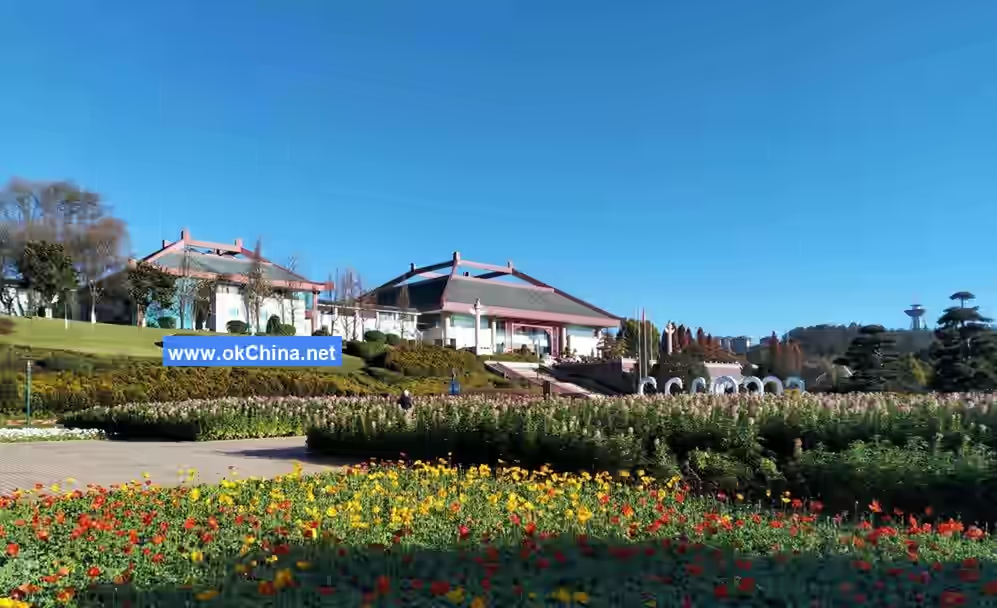
The architectural layout of the China Pavilion adopts traditional Chinese garden techniques, forming a courtyard-style architectural complex. Corridors organically connect the various functional exhibition halls. The entire building has two floors, with the top reaching a height of 18 meters. The basic unit plan is 24x24 meters, totaling 7 units.
The architectural style of the China Pavilion combines Han Dynasty palace architecture with southern residential architecture. It features green tiles and white walls: green represents life and is a symbol of horticulture, while white represents peace and harmony.
The central inner courtyard is divided into the Jiangnan Garden, the Northern Garden, and the Dali Garden. It not only centrally showcases the elegance of Chinese gardens and horticulture but also serves as an ideal place for sightseeing and rest.
3.5 Large Greenhouse
The Large Greenhouse has a total floor area of 3,630 square meters, a site area of 2,400 square meters, and a floor elevation of 1932 meters. The main body of the Large Greenhouse aligns with the central axis of the Expo Garden entrance, forming a straight line with the Expo Garden gate, the Garden Avenue, and the Century Plaza, giving it significant landmark and scenic importance.
The design of the Large Greenhouse reflects a distinct contemporary spirit. It is divided into four exhibition areas: the Tropical Plant Zone, the Temperate Plant Zone, the Alpine Plant Zone (plants above 3,000 meters altitude), and the Picture Exhibition Hall. The three plant zones increase in size and height progressively, with the roof slopes also increasing accordingly, forming a spiral ascending trend, metaphorically representing the dialectical law of harmonious coexistence between man and nature. The facade is treated with varying height differences and segmented layout: the Alpine Zone is 8-12 meters high, the Temperate Zone is 10-16 meters high, and the Tropical Zone is 10-20 meters high, breaking the monotony of the building's shape. Based on the growth environments and ecological requirements of plants from the three climatic zones, the varying heights and sloped roofs of each exhibition zone and their internal spaces are suitable for the rational layout of plants and the needs of their ecological spaces. Visitors can view the plants from outside through the glass or enter indoors to fully immerse themselves in the exhibition environment, enjoying the ingeniously crafted natural scenery from different perspectives.
3.6 Melon, Fruit and Vegetable Garden
The Melon, Fruit and Vegetable Garden covers an area of 4,200 square meters. Its theme is "Melons, fruits, and vegetables are important food sources for human survival." It primarily aims to showcase China's agricultural development, promote the rich variety of Chinese vegetables, melons, and fruits, and advocate for wild, side-effect-free vegetables, melons, and fruits grown without chemical fertilizers or pesticides.
With the development of science and technology, especially bioengineering, vegetables, melons, and fruits have gained an additional function beyond their traditional edible value—ornamental value.
Upon entering the Melon, Fruit and Vegetable Garden, you will find this statement to be true. The exhibition method primarily focuses on outdoor live cultivation, supplemented by displays of actual products, specimens, and models.
Treasure Trove of Resources – Live Courtyard Cultivation Display. Specific types on display include: Vegetables (approximately 85 varieties), Fruit Trees (approximately 99 varieties), Melons (approximately 20 varieties). Recapturing Glory – Exhibition Display.
Through the display and promotion of actual vegetable, melon, and fruit products, specimen models, pictures, and textual materials, it aims to help people better understand the historical origins of human culture related to vegetable, melon, and fruit horticulture, advocate for green food, pollution-free food, and promote the development of famous, special, and high-quality products.
Oasis of Wisdom – Prototype of Specialized, Intensive Production. Focusing mainly on the "models" of intensive production of celery and dwarf apples, it centrally showcases the scientific and technological level of China's vegetable and fruit production.
3.7 Bamboo Garden
The Bamboo Garden is located southeast of the Yantang Reservoir within the Expo Garden, covering an area of 17,000 square meters. The terrain is long and narrow, following the mountains and accompanying the water. The Bamboo Garden has collected over 4,000 clumps of bamboo plants from 28 genera and 222 species.
It includes over 30 species with high ornamental value, such as Qiongzhuea tumidinoda, Bambusa vulgaris 'Vittata' (Golden Bamboo), Bambusa vulgaris 'Wamin' (Buddha Belly Bamboo), Yunnan Bamboo, Pleioblastus amarus, and Indocalamus wilsonii. It also houses over 50 rare and endangered species, such as Ferrocalamus strictus, Acidosasa chienouensis, Gaoligongshania megalothyrsa, Melocalamus compactiflorus, Dendrocalamus giganteus, and Fargesia fungosa. This creates an environmental atmosphere where "there is clear shade under the sun, clear shadows under the moon, clear sounds when the wind blows, and clear charm when the rain comes."
The Bamboo Garden also features: bamboo rafts, red sandstone benches, sensor-activated giant pandas, bamboo palace lanterns, and the Butterfly Spring.### 3.8 Bonsai Garden
The Bonsai Garden is located on the south side of the Garden Avenue in the Expo Park, covering an area of 5,880 square meters. The main structure within the garden consists of three exhibition halls and a set of connecting corridors forming the background, while the combined stone pavilions create the garden's defining facade with a dignified and elegant image.
The external appearance features a combination of three square pavilions with four-slope trapezoidal roofs and connecting corridors. The slopes are covered with magnolia-colored ceramic tiles, complemented by red walls and white jade cornices, giving the architectural image an Eastern style.
3.9 Tea Garden
The Tea Garden is situated on a slope between the main tourist road and Road No. 2 in the central part of the Expo Park, facing the cliff landscape across the water to the south, covering an area of 11,000 square meters.
Due to its location between two main tourist roads and its elevated terrain, it not only showcases the characteristics of tea culture but also serves as an excellent spot for visitors to stop, enjoy tea, and admire the scenery. A "Boutique Garden" has been established on the northwest side to collectively display premium tea varieties from China and abroad. The construction of the Tea Garden mainly includes a Tea Culture Exhibition Hall, a Tea Art Performance Room, and a Tea Tasting Pavilion. The Tea Culture Exhibition Hall
displays content such as the origin and development of tea, tea and culture, tea and ethnic unity, tea and human health, and the comprehensive utilization of tea.
Tea Art Performance and Tea Tasting Pavilion. A specially trained tea art performance team can present rich and vivid tea art performances to visitors. They will also choreograph several sets of easy-to-master and distinctive brewing methods, allowing visitors to observe, learn, practice, and taste alongside the performers.
Alternatively, several sets of different types of tea samples or tea sets will be provided in a "self-service tea" format, allowing visitors to choose and brew according to their preferences, guiding people into a tea-tasting world that appeals to both refined and popular tastes.
The Tea Tasting Pavilion is equipped with a TV playback and audio system. While tasting tea, videos related to tea can be played,
or some elegant music with high taste, such as classical music, light music, or guzheng performances, can be played to fully reflect the unique cultural atmosphere of tea culture.
3.10 Medicinal Herb Garden
The Medicinal Herb Garden covers an area of 8,700 square meters. The garden's design reflects the traditional Jiangnan garden style of China, presenting a three-dimensional landscape painting model, primarily featuring the cultivation of precious, rare, and commonly used Chinese medicinal herbs. The layout is mainly naturalistic, supplemented by formal patterns, striving to embody the garden's founding purpose: "every plant is a medicinal herb, every株 can cure diseases, flowers bloom every month, and every step is a scenic view."
3.11 Arboretum
The Arboretum covers an area of 25,400 square meters and is located in the central part of the Expo Park. It contains approximately over 40,000 first and second-class rare tree species. Yunnan is one of the regions richest in forest tree germplasm resources in China and even the world. Through the Arboretum, the effectiveness of China's conservation of rare and endangered plants can be demonstrated, as well as Yunnan's important position and role in global Magnoliaceae research.
The Arboretum has transplanted and cultivated about 83 families and over 300 species of various plants, totaling more than 20,000 individual plants, including 50 species of rare and endangered plants and over 1,000 trees. It is divided into four areas: the Magnoliaceae Planting Area, the Rare and Endangered Plant Cultivation Area, the Economic Forest Area, and the Forest Plant Germplasm Resource Area.
Yunnan is the distribution center for Magnoliaceae species. There are 15 genera and over 150 species worldwide, while Yunnan has 11 genera and over 120 species.
The Arboretum has collected and planted over 50 species of Magnoliaceae plants, primarily the Manglietiastrum sinicum, many of which are large trees, which is truly rare. The Arboretum has collected and cultivated over 50 species and more than 14,000 individual rare and endangered plants, including over 10 species of national first-class protected plants such as Davidia involucrata, Taxus yunnanensis, Bretschneidera sinensis, Taiwania cryptomerioides, and cycads, as well as over 30 species of second-class protected plants.
A giant Calocedrus macrolepis, nearly 300 years old, with a diameter at breast height of 1.1 meters, a height of 13.8 meters, and a crown spread of 8×8 meters, was transplanted into the garden from over 70 kilometers away, setting a world record for transplanting Cupressaceae plants. The successful transplantation of this large tree leaves visitors in awe.
3.12 Rose Garden
The Rose Garden was built because the rose is the city flower of Shenyang. Covering an area of 10,000 square meters, it brings together more than 3,000 rose varieties from around the world, making it the rose garden with the richest variety globally. The Rose Garden was the first in China to adopt ground-source heat pump heating technology, which is both energy-saving and environmentally friendly. Even when it is icy and snowy outside, the Rose Garden remains as warm as spring, allowing roses to bloom all year round.
The rose is a symbol of love, so the garden will provide a venue for rose weddings, creating a romantic and warm atmosphere. The "Rose Date," featuring sipping rose tea and enjoying a couple's meal, is even more alluring for lovers.
3.13 Wings of the Phoenix
The Wings of the Phoenix is located at the main entrance square of the International Horticultural Exposition and serves as the park's gate. With a building area of 4,168 square meters, the main tower is 72 meters high, and the "phoenix wings" span 210 meters, intersected by 10斜拉 steel cables. The overall architectural shape resembles a phoenix spreading its wings, symbolizing Shenyang's revitalization and soaring momentum.
Below the main tower is a 1,000-square-meter large musical fountain. The lower part of the phoenix wings consists of functional buildings used for ticket sales, services, retail, etc. The sloped roof is covered with lawn, connecting with the surrounding grassy environment. The Wings of the Phoenix architecture fills the Expo Park landscape with a dynamic sense of the times and vibrant vitality.
3.14 Hanhai Jinmen
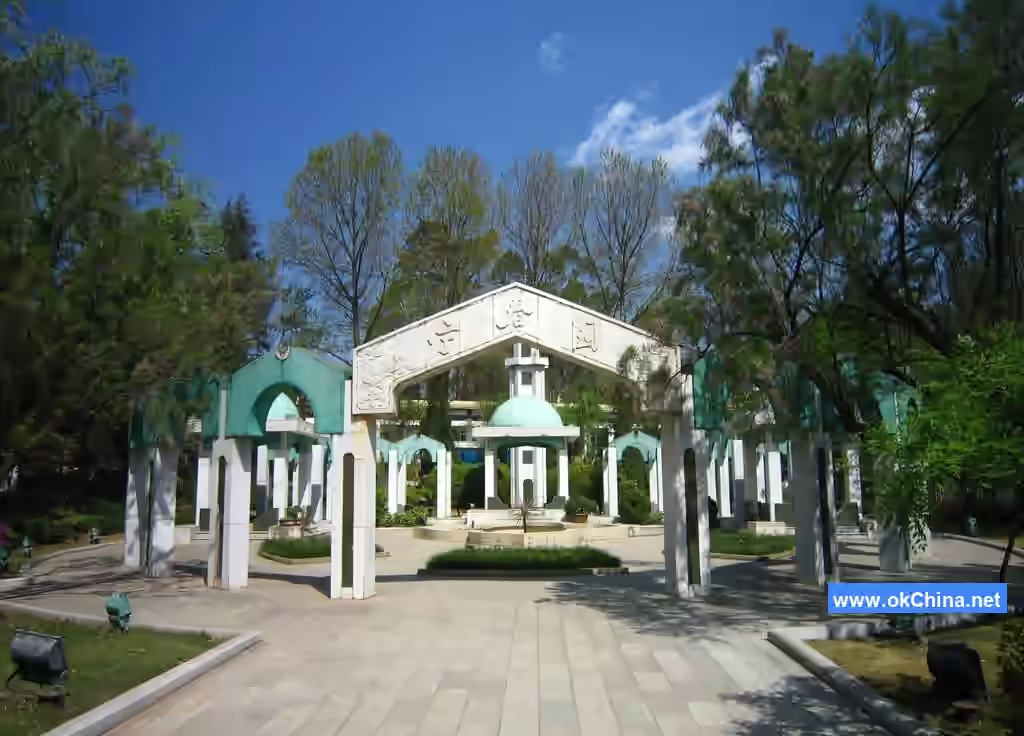
The Nankai Archway, the main scenic feature at the garden entrance, serves as the theme of this garden, based on the facade of the central section of Boling Building at Nankai University. Through the archway, one can see the bronze statue of Mr. Zhang Boling, the founder of Nankai University.
Behind the statue is a浮雕 wall standing by the water, highlighting Nankai's glorious achievements of nurturing 2 Premiers, 1 Vice Premier, and 56 academicians of the Chinese Academy of Sciences and Chinese Academy of Engineering.
A waterfall located on one side of the garden cascades from natural rocks into the pool, bringing震撼 and charm to the landscape while creating a dynamic contrast with the浮雕 wall. The planting design of the garden emphasizes层次变化 and the enclosure of greenery. The front area is mainly planted with low cannas, while the back uses large规格 evergreen plants to form a good background.
3.15 Singapore Garden
The Singapore Garden takes advantage of the terrain, using a forest belt as the background, the Merlion sculpture as the center, and the concept of "Lion City" civilization to突出体现 the Merlion's热情的迎宾象征, vividly showcasing Singapore's风情 and its horticultural characteristics. The entire garden is divided into three areas: the central area rises step by step from the entrance square and水池 up to the Merlion sculpture, which is the highest point, followed by an弧形景墙. The service area has a two-story长廊; the first floor displays Singapore souvenirs, and the second floor is a景观平台 and square pavilion. The flower area features flower beds and slopes, displaying Singapore's national flower and other characteristic plants.
3.16 Western Xia Garden
The exhibition garden uses Helan Mountain as its原型,烘托 and点缀 with白石 to present the壮观美景 of "Helan晴雪." The center of the garden is a lake, surrounded by a环形 path forming a "回" shape to convey the meaning of "Hui族" (Hui ethnicity). Double pavilions are built by the lake, complemented by aquatic plants in the water. Ascending the steps of the凤凰台 made of white marble, a phoenix sculpture stands in the center, symbolizing this as a place of富贵吉祥. At the entrance, there are依次 gilded copper oxen and盘龙 carved pillars, showcasing the厚重 of Western Xia culture.
Within the garden, there are分别 goji berry gardens,沙枣 gardens, and rose gardens, interspersed with large trees for点缀 and部分灌木组合 forming color blocks, reflecting Ningxia's富饶奇特的物产. Snow appears in the vast sky, fish glide in the shallow water; sitting in the pavilion to观景, one feels怡然自得.
4. Historical Background
The 1999 Kunming International Horticultural Exposition (referred to as "Kunming Expo") was China's first world-class horticultural exposition. Its successful hosting not only reflected the提升 of China's comprehensive national strength since the reform and opening-up but also served as an important milestone for China's active participation in international affairs and展示国家形象. The Kunming Expo was held from May 1 to October 31, 1999, in Kunming, Yunnan Province, with the theme "Man and Nature – Marching into the 21st Century." This theme aligned with the growing global awareness of ecological environmental protection and also reflected China's emphasis on sustainable development during its economic growth. The bidding and preparation process for the Kunming Expo spanned several years, receiving high attention from the Chinese government and broad support from the international community. In 1996, the International Association of Horticultural Producers (AIPH) officially approved Kunming as the host city for the 1999 Expo. Subsequently, the Chinese government invested significant resources in venue construction and environmental improvement, leading to a comprehensive upgrade of Kunming's urban infrastructure. During the Expo, 95 countries and international organizations participated, with over 9.4 million visitors, making it one of the largest and most influential international horticultural events of the late 20th century. The Kunming Expo Park covers an area of 218 hectares, divided into international exhibition areas, Chinese exhibition areas, corporate exhibition areas, and thematic gardens, showcasing horticultural art, garden culture, and ecological environmental concepts from around the world. Particularly, Yunnan's rich biodiversity and ethnic culture became highlights of the event. During the Expo, thousands of cultural activities, academic forums, and exhibitions were held, promoting global exchange and cooperation in horticultural technology and raising public awareness of ecological environmental protection. The successful hosting of the Kunming Expo not only showcased China's achievements in horticulture and ecology but also promoted the economic development and urban image enhancement of Kunming City and even Yunnan Province. The Expo Park remains an important tourist attraction and ecological education base in Kunming to this day. The background of this grand event was closely related to the international trend of increasingly prominent global environmental issues and the gradual rise of the sustainable development concept in the late 20th century, as well as the domestic context of China's rapid economic development and rising international status after the reform and opening-up. The Kunming Expo accumulated valuable experience for China's subsequent hosting of large-scale international events (such as the 2010 Shanghai Expo) and also made significant contributions to global horticulture and sustainable development, becoming an important platform for dialogue between China and the world.
Comments
Post a Comment