Kumbum Monastery Scenic Area in Xining
I. Introduction
Kumbum Monastery, also known as Ta'er Temple, is located in the urban area of Huangzhong District, Xining City, the capital of Qinghai Province. It was founded in the 12th year of the Hongwu era of the Ming Dynasty (1379). The monastery is named after the Great Silver Pagoda built within the Great Golden Tile Hall in memory of Tsongkhapa, the founder of the Gelug school. In Tibetan, it is called "Gönpawönchémpaling," meaning "The Monastery of the Maitreya Buddha with the Ten Thousand Roaring Lions." It is a national AAAAA-level tourist attraction.
Kumbum Monastery is a center of Tibetan Buddhist activities in northwest China and enjoys high prestige both in China and Southeast Asia. Successive central governments have held its religious status in high regard. The Ming Dynasty conferred titles multiple times upon the monastery's high-ranking religious figures. Emperor Kangxi of the Qing Dynasty bestowed a plaque inscribed with "Pure Ferry Bridge," and Emperor Qianlong granted it the title "Monastery of the Buddhist Sect," along with a plaque for the Great Golden Tile Hall reading "Banner of the Buddhist Dharma." The 3rd, 4th, 5th, 7th, 13th, and 14th Dalai Lamas, as well as the 6th, 9th, and 10th Panchen Lamas, have all conducted religious activities at Kumbum Monastery.
Butter sculptures, murals, and appliqué thangkas are renowned as the "Three Unique Arts of Kumbum Monastery." Additionally, the monastery houses a rich collection of Buddhist scriptures and academic works on history, literature, philosophy, medicine, and calendar studies. The annual "Four Great Prayer Festivals" are particularly grand and lively events. The monastery's butter sculpture art is also famous far and wide for its vivid and lifelike figures.
Kumbum Monastery is one of the six great monasteries of the Gelug school (Yellow Hat sect) of Tibetan Buddhism in China. It is also a premier historical and cultural site in Qinghai Province and a National Key Cultural Relics Protection Unit. On April 13, 2018, it was listed among the "100 Amazing Scenes of the Magical Northwest."
II. Historical Development
Kumbum Monastery is the birthplace of Master Tsongkhapa (born Losang Drakpa, 1357-1419). Master Tsongkhapa studied scriptures at Sharchong Monastery in his early years and went to Tibet for further studies at the age of 16. He reformed Tibetan Buddhism and founded the Gelug school (Yellow Hat sect), becoming a great master of his generation. Legend has it that after his birth, a white sandalwood tree grew from the spot where his umbilical cord blood dripped. This tree had one hundred thousand leaves, each naturally displaying an image of the Lion's Roar Buddha (a form of Shakyamuni). The name "Gönpo" (meaning "One Hundred Thousand Images") originates from this.
Since its establishment, Kumbum Monastery gradually developed a systematic structure encompassing its religious organization, political structure, economic foundations, and cultural life. The monastery's temple fairs best exemplify the maturity of its various organizations. These fairs served as excellent opportunities for monks to study scriptures and also as times for recreation.
Six years after Tsongkhapa left for Tibet, his mother, Shingsa Aché, longing for her son, sent him a lock of her white hair and a letter, urging him to return home for a visit. Upon receiving the letter, Tsongkhapa, determined to pursue Buddhist studies, decided not to return. Instead, he sent self-portraits and images of the Lion's Roar Buddha to his mother and sister, writing in a letter: "If you can build a stupa at my birthplace using one hundred thousand Lion's Roar Buddha images and the Bodhi tree (referring to the white sandalwood tree at his birthplace) as its core, it will be just like seeing me." The following year, in the 12th year of the Hongwu era (1379), with the support of devotees, Shingsa Aché built a stupa named "Lotus Accumulation Stupa." Over the next 180 years, although this stupa was renovated and repaired several times, it did not develop into a full-fledged monastery.
In the 39th year of the Jiajing era (1560), the meditation master Rinchen Tsöndrü Gyaltsen advocated building a meditation hut next to the stupa. Seventeen years later, in the 5th year of the Wanli era (1577), a Maitreya Hall was constructed south of the stupa. By this time, Kumbum Monastery began to take shape.
In the 10th year of the Wanli era (1582), the 3rd Dalai Lama, Sonam Gyatso, came to Qinghai for the second time. In the spring of the following year, he was invited to Kumbum Monastery from Tsokha by the local Shenzhong Nangso. The 3rd Dalai Lama instructed Rinchen Tsöndrü Gyaltsen and the local Tibetan tribal leaders (Nangso) of Shenzhong, Siné, Chija, Lungbön, and Minak to expand Kumbum Monastery. He bestowed statues for worship and conducted various monastery construction ceremonies. From then on, Kumbum Monastery developed rapidly, successively constructing the Dalai Lama's Palace, the 3rd Dalai Lama's Stupa Hall, the Nine-Bay Hall, the Protector Chapel, the Shakyamuni Hall, and others. Following the instructions of the 4th Dalai Lama, in the first month of the 40th year of the Wanli era (1612), the Exoteric College (Sutra College) was formally established, marking Kumbum Monastery's status as a formal monastery of the Gelug school.
Since the Kangxi era of the Qing Dynasty, the imperial court bestowed numerous gifts upon Kumbum Monastery, including plaques, ritual objects, Buddha statues, scriptures, and stupas. The monastery's reincarnation lineages, such as Akyé, Serkri, Lhakor, Seto, Shingsa, Siné, and Chöshe, were granted the titles of Khutughtu or Nomun Khan during the Qing Dynasty. Among them, Akyé, Serkri, and Lhakor were Beijing-based Khutughtus, with some even serving as seal-holding lamas at the Yonghe Temple in Beijing and Wutai Mountain in Shanxi. Precisely because of these special circumstances, Kumbum Monastery developed rapidly, growing in scale to become one of the six great monasteries of the Gelug school renowned both domestically and internationally. The existing monastery complex comprises over 9,300 structures, covering more than 600 acres, with 25 main halls, including the Great Golden Tile Hall, the Great Assembly Hall (Tsokchen), the Nine-Bay Hall, the Small Golden Tile Hall, the Flower Hall (Maitreya Temple), the Great Labrang, the Maitreya Buddha Hall, the Shakyamuni Buddha Hall, and the Protector Chapel. At its peak, it housed over 3,600 monks, with 1,983 still present in the early years after liberation.
Due to historical accumulation, the monastery possesses an extremely rich collection of cultural relics. Its architecture, ritual objects, Buddha statues, and literary collections make it a treasure trove of art. The monastery houses four major colleges—Exoteric (Sutra), Esoteric (Tantra), Kalachakra, and Medical—as well as the Chamra Datsang (Dance College), for studying Buddhism and various aspects of Tibetan language, literature, astronomy, calendar calculation, medicine, dance, sculpture, painting, and architecture. In the 7th year of the Daoguang era (1827), the monastery established its own printing house, producing Tibetan scriptures and various works that were sold widely throughout Tibetan regions. The monastery holds four major monastery-wide prayer festivals each year during the first, fourth, sixth, and ninth months of the lunar calendar, known as the "Four Great Observance Ceremonies." On these occasions, people gather from all over, making the events grand in scale. Additionally, there is the "Butter Lamp Offering Festival" in late October of the lunar calendar, commemorating the parinirvana of Tsongkhapa, and the year-end ceremony to expel epidemic spirits.
In August 1949, the enthronement ceremony of the 10th Panchen Lama, Choekyi Gyaltsen, was grandly held at Kumbum Monastery. In October of the same year, the 10th Panchen Lama sent a congratulatory telegram from Kumbum Monastery to Chairman Mao Zedong, celebrating the founding of the People's Republic of China. Subsequently, Kumbum Monastery received state protection and was designated as a National Key Cultural Relics Protection Unit by the State Council.
In April 1951, representatives of the Central People's Government and the local government of Tibet held negotiations in Beijing for the peaceful liberation of Tibet. The central government specially invited the 10th Panchen Lama to Beijing. Upon his arrival, the 10th Panchen Lama was received by Chairman Mao Zedong and Premier Zhou Enlai.
III. Architectural Features
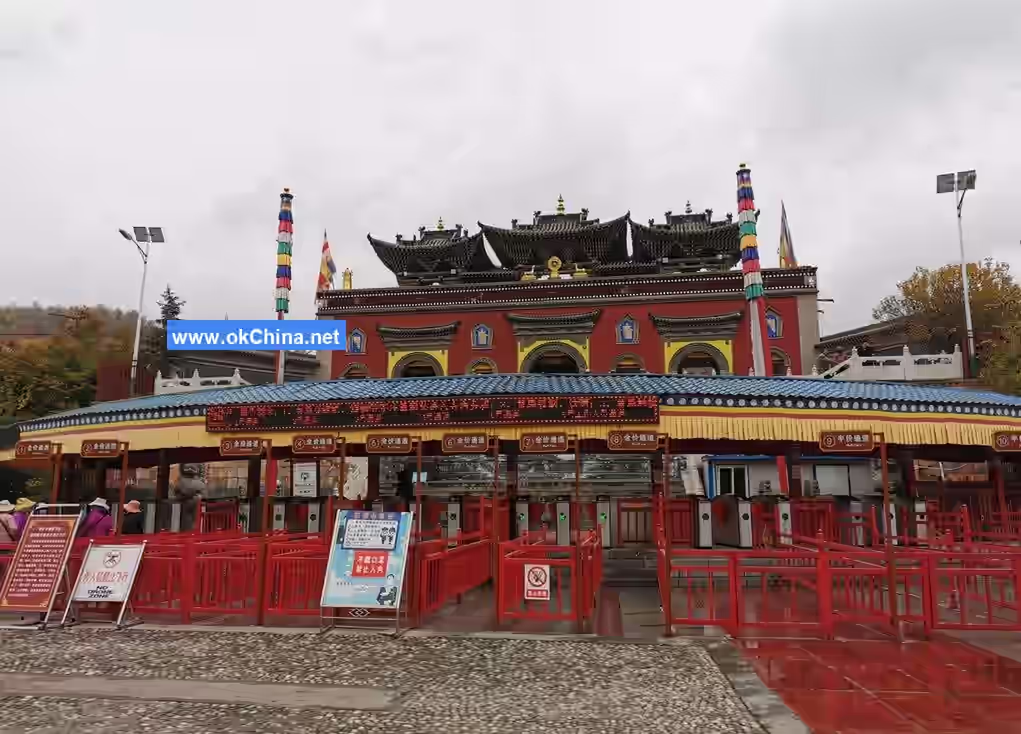
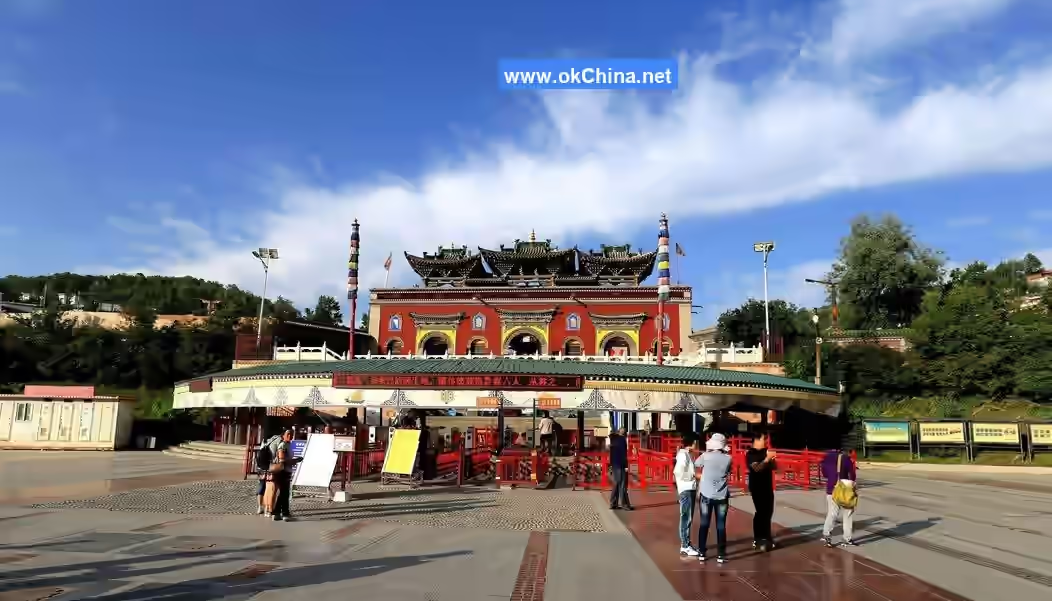
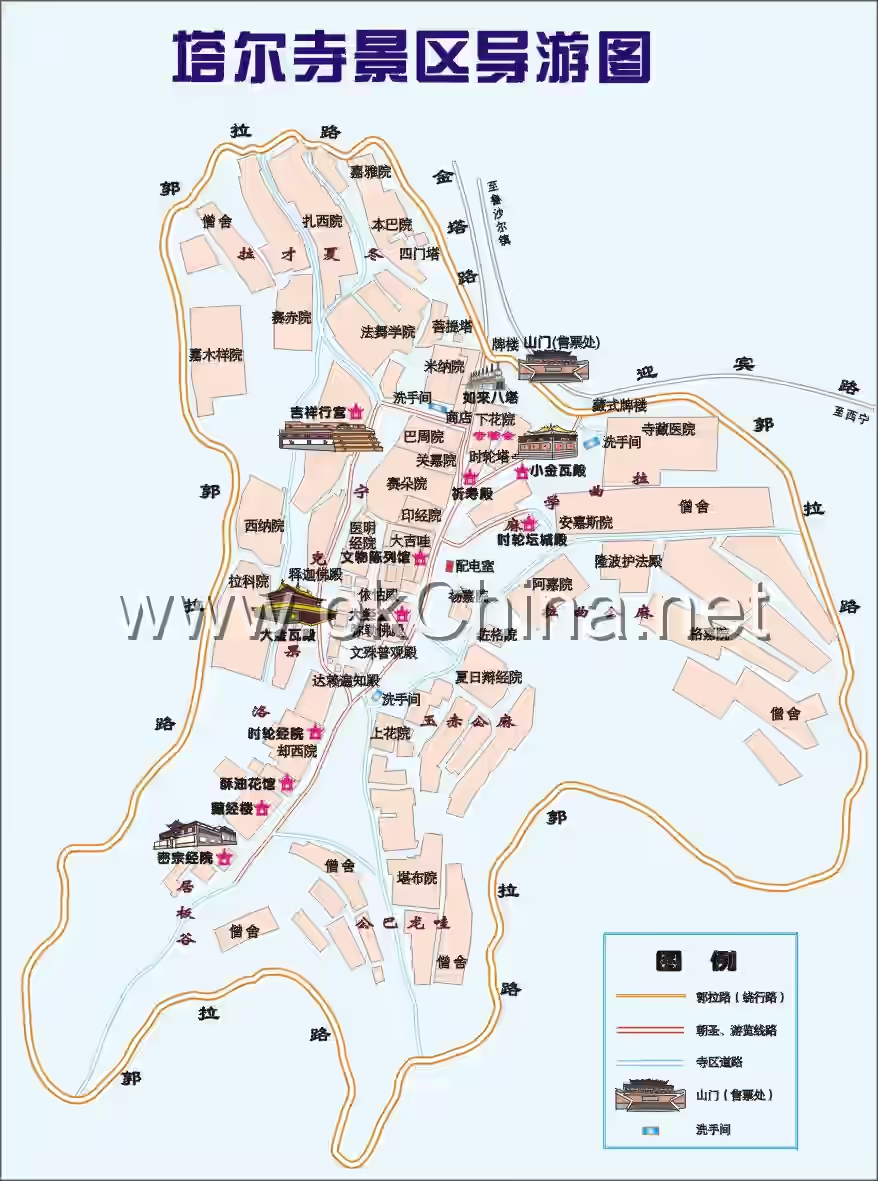
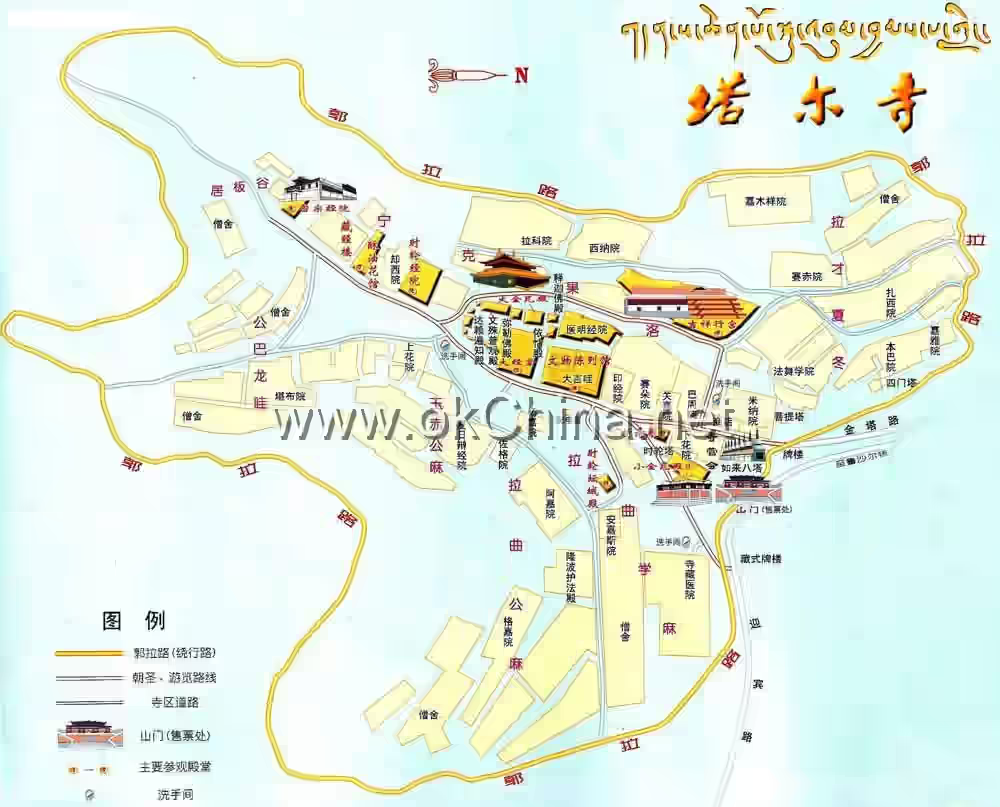
Kumbum Monastery got its name because the stupa (Ta'er) was built first, followed by the monastery (Si). It is the Buddhist center and holy site of the Gelug school in Qinghai Province and northwest China. The main buildings are nestled against mountains and plateaus, distributed along the slopes of a valley on Lotus Mountain. They include the Great Golden Tile Hall, the Great Assembly Hall, the Maitreya Hall, the Nine-Bay Hall, the Flower Hall, the Small Golden Tile Hall, the Gyüpa Datsang (Tantric College), the Dükhang Datsang (Astrology College), the Menpa Datsang (Medical College), the Great Labrang, the Great Kitchen, the Wish-Fulfilling Stupa, and over 9,300 other structures, forming a vast architectural complex that blends Tibetan and Han styles, covering an area of 450,000 square meters.
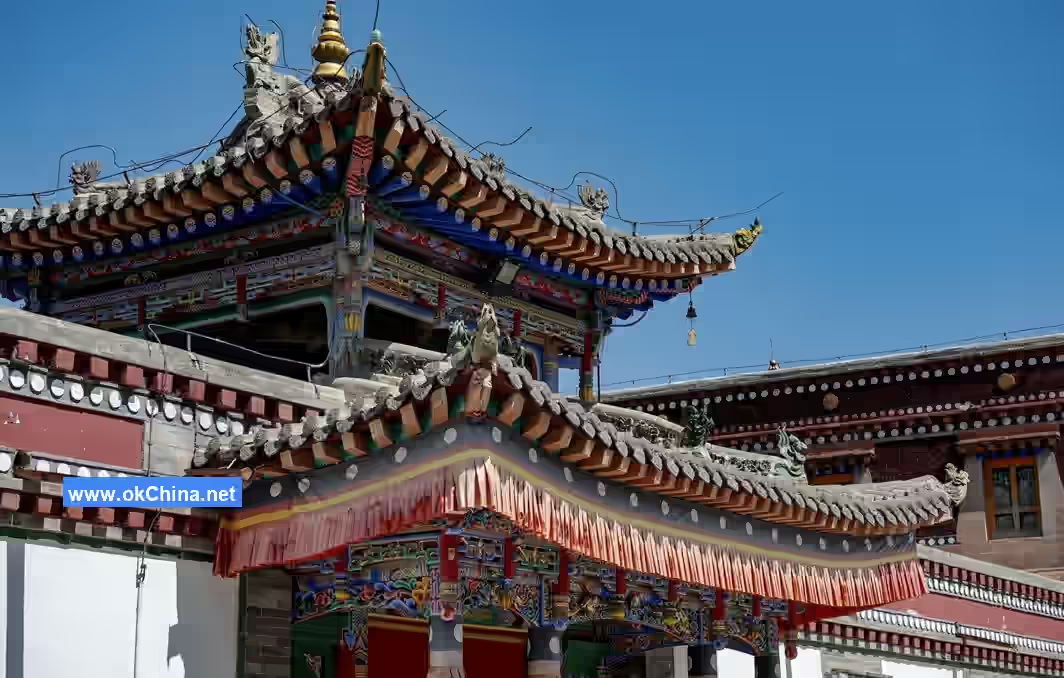
Kumbum Monastery consists of more than 1,000 courtyards and over 4,500 halls and monk quarters, including the Great Golden Tile Hall, Small Golden Tile Hall, Flower Hall, Great Assembly Hall, Nine-Bay Hall, Great Labrang, Wish-Fulfilling Stupa, Peace Stupa, Bodhi Stupa, and Gateway Stupa. The complex is grand in scale, with palaces, Buddha halls, scripture study halls, living quarters, lamas' residences (Tratsang), and courtyards complementing each other and forming an integrated whole. It has been a center of the Gelug school and a Buddhist holy site since ancient times. The monastery's architecture incorporates elements of Han palace style and Tibetan flat-roofed style, ingeniously blending the Han-style three-eave hip-and-gable roof with Tibetan features like the "bema" wall (made of bundled tamarisk branches) beneath the eaves, often inlaid with Kalachakra Sanskrit mantras and copper mirrors, and brickwork on the lower levels. This creates a harmonious and perfect architectural complex combining Han and Tibetan artistic styles. Kumbum Monastery is not only a holy site of Tibetan Buddhism in China but also one of the advanced institutions that have nurtured a large number of Tibetan intellectuals. It houses four major colleges: Exoteric, Esoteric, Astronomy, and Medicine.
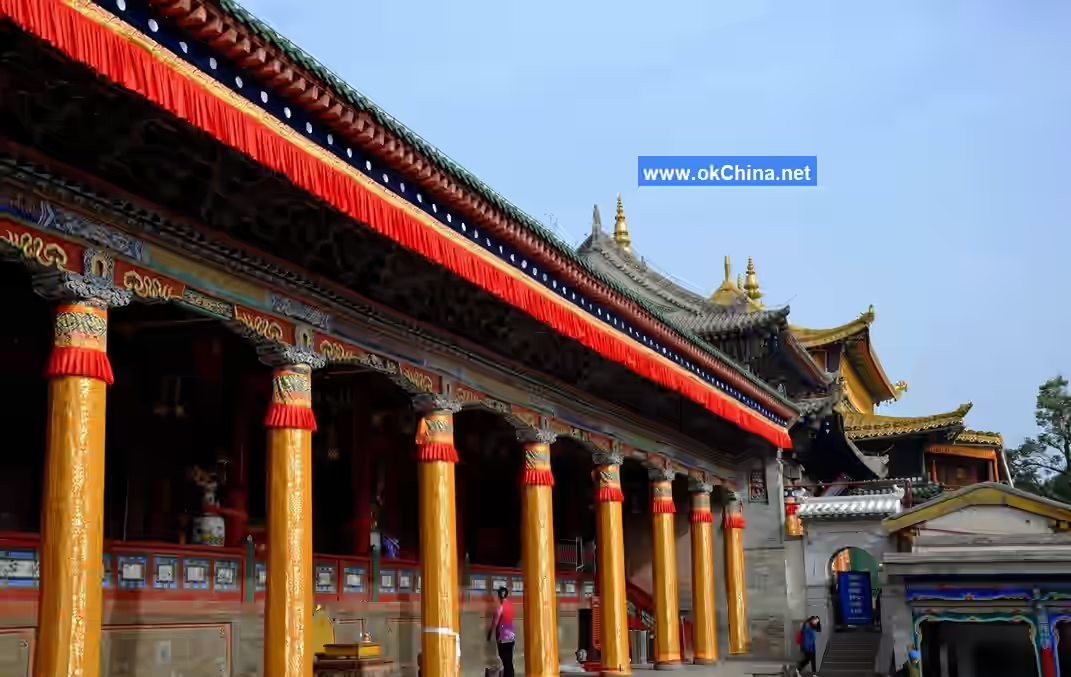
The halls of Kumbum Monastery are arranged at varying heights, complementing each other and presenting a magnificent spectacle. The Great Golden Tile Hall at the center of the monastery, with its green walls and golden tiles, is resplendent and glorious, serving as the main structure. Together with the Small Golden Tile Hall (Protector Chapel), the Great Assembly Hall, the Maitreya Hall, the Shakyamuni Hall, the Protector Chapel, the Manjushri Chapel, the Great Labrang Palace (Auspicious Palace), the four major colleges (Exoteric, Esoteric, Medical, Kalachakra), the Butter Sculpture Workshop, the Cham Dance Courtyard, the Living Buddha's Residence, the Eight Tathagata Stupas, the Bodhi Stupa, the Gateway Stupa, the Kalachakra Stupa, monk quarters, and other structures, it forms an architectural complex that is well-proportioned, meticulously laid out, uniquely styled, and integrates Han and Tibetan architectural techniques.
IV. Main Structures
Eight Auspicious Stupas (Wish-Fulfilling Stupas)
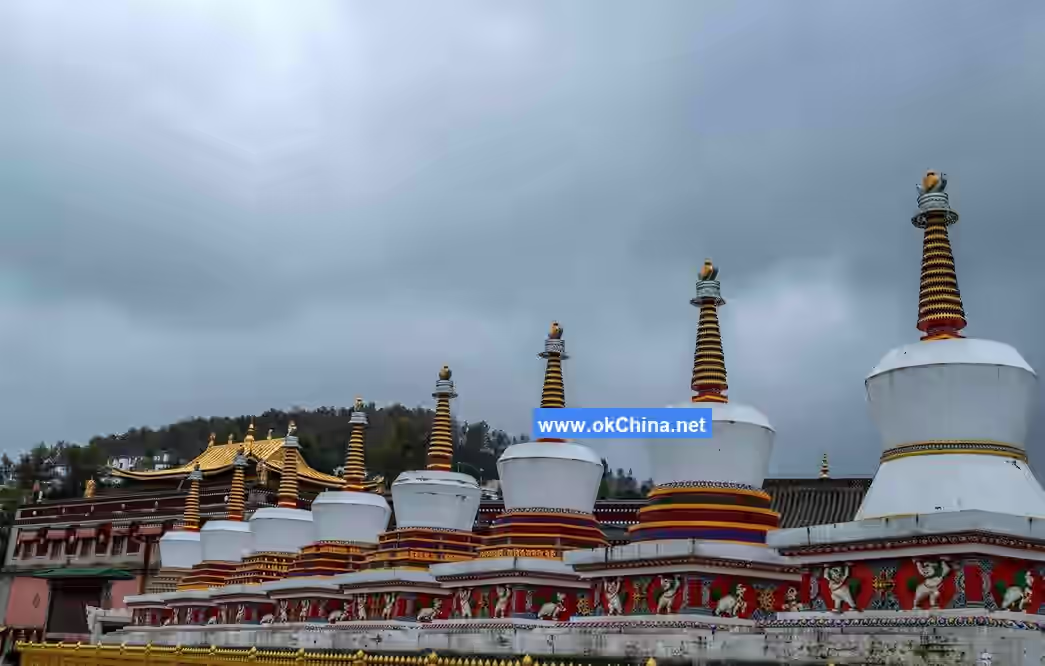
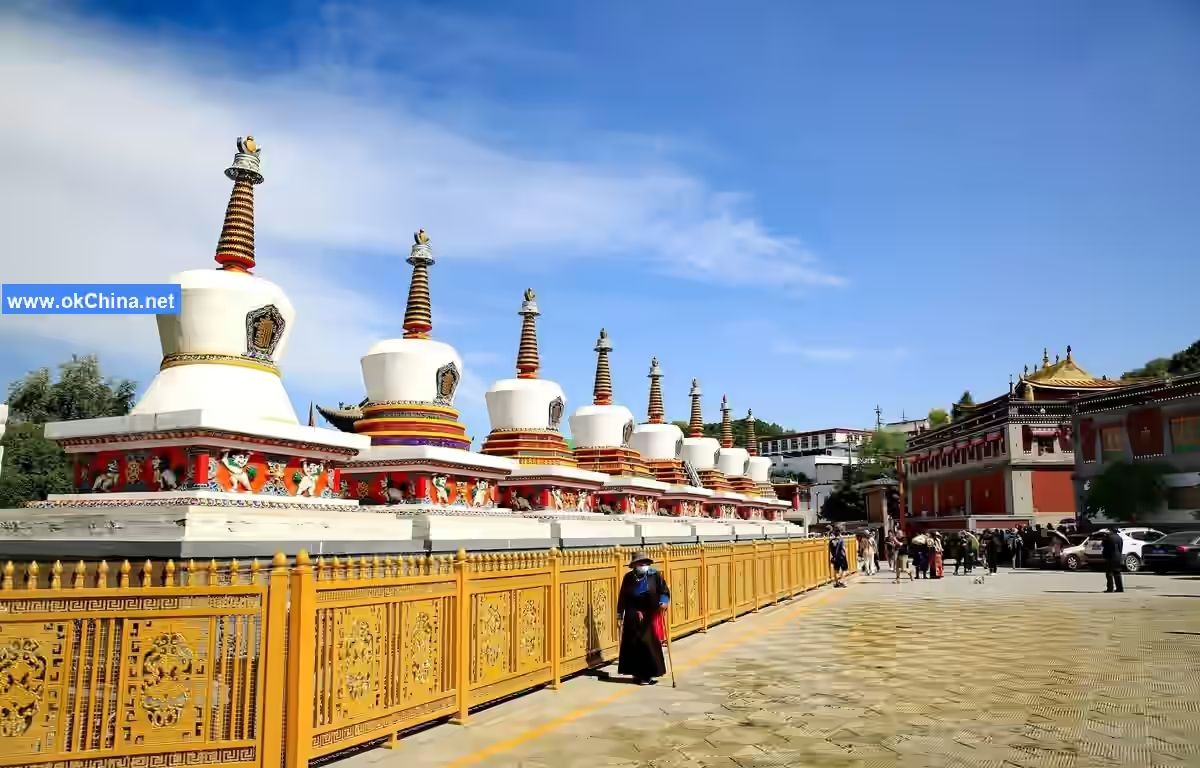
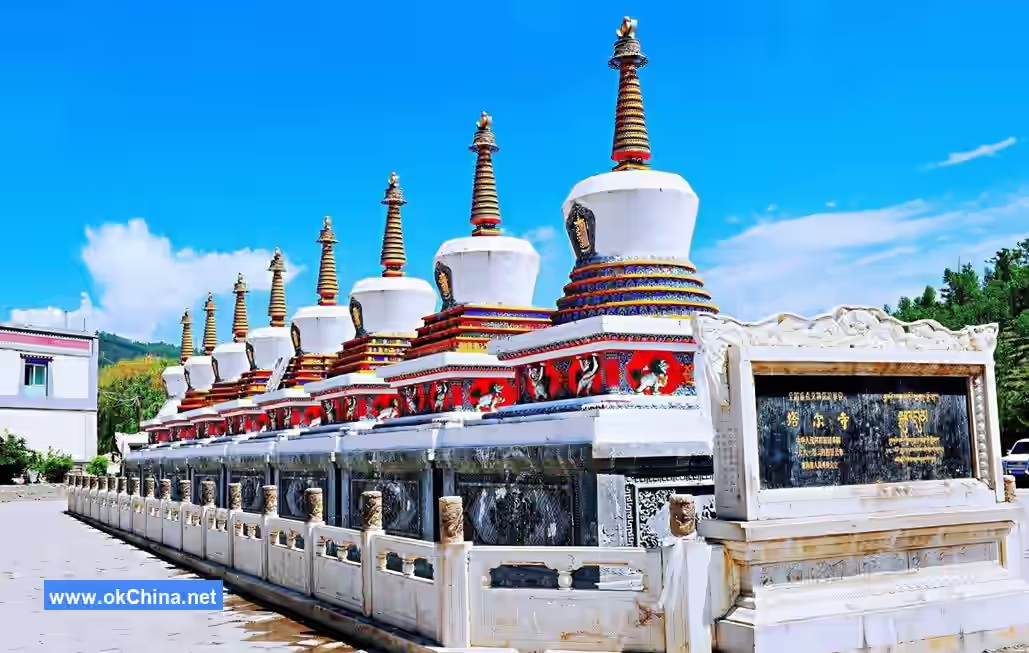
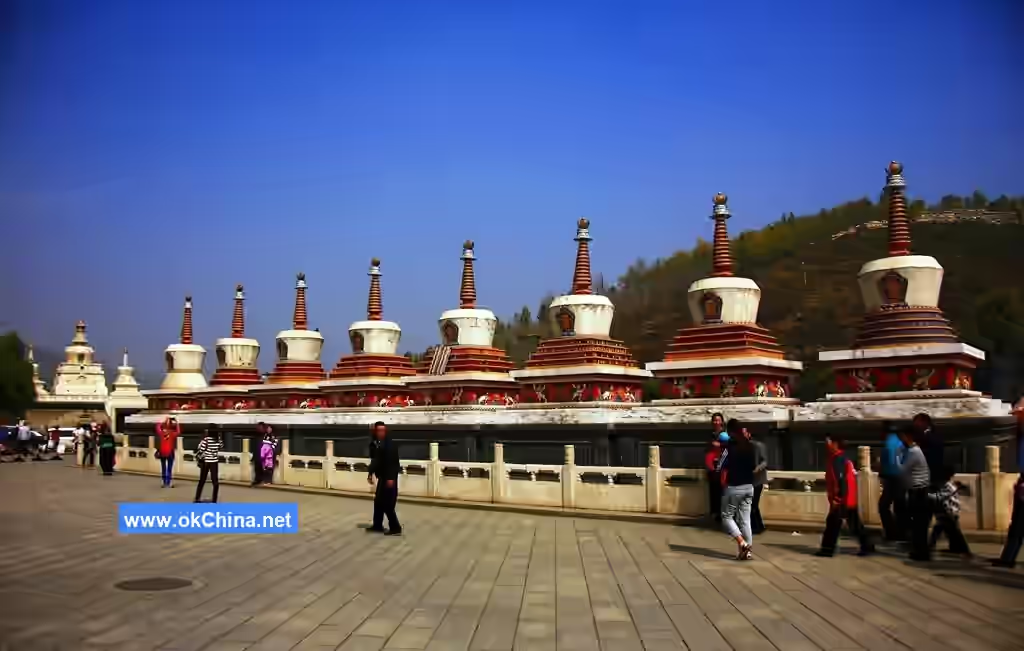
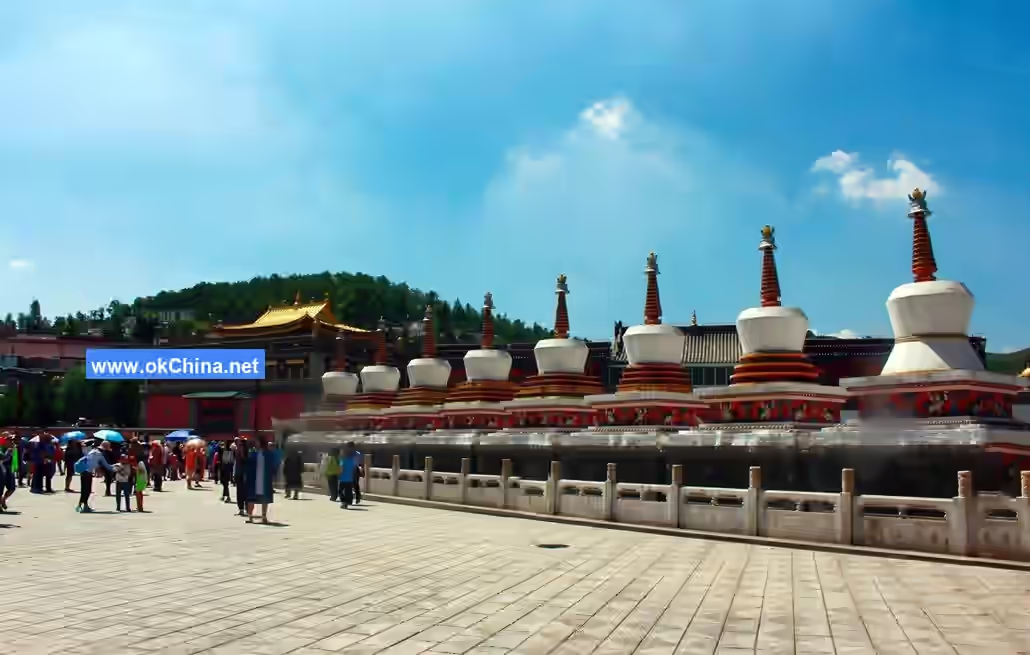
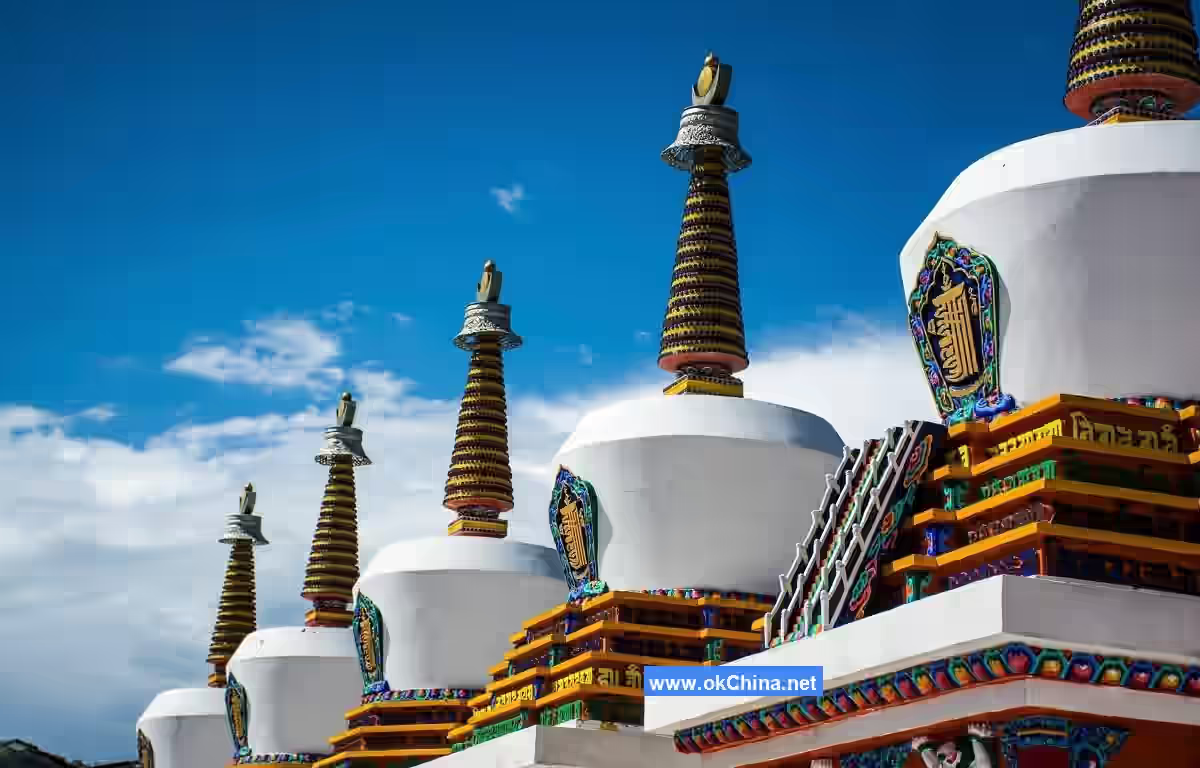
Located in the square in front of the monastery. It is said that these eight stupas were built in 1776 to commemorate the eight great deeds of Shakyamuni Buddha. Their shapes are largely similar, with each stupa standing 6.4 meters tall, having a base circumference of 9.4 meters, and covering a base area of 5.7 square meters. The stupa bodies are plastered with white lime, the bases are built with blue bricks, and the midsections are decorated with scriptures. Each stupa also has a niche on its south side containing Sanskrit texts.
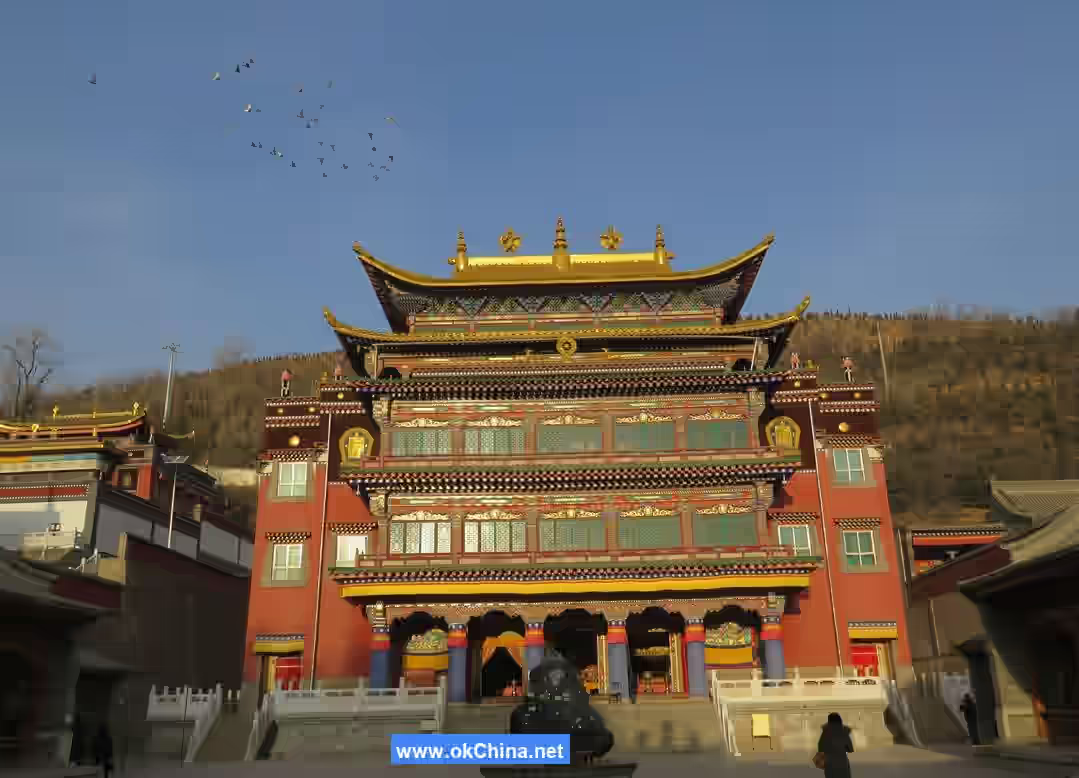
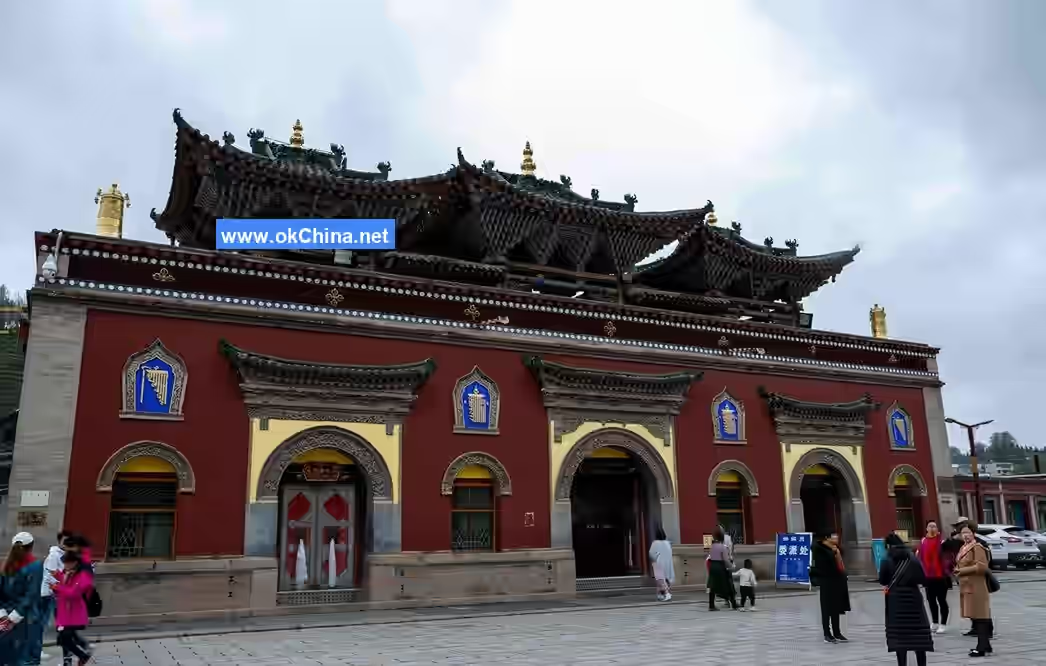
Great Golden Tile HallLocated at the center of the entire monastery, it is called "Serdun Qingmo" in Tibetan, meaning "Golden Tile." Its floor area is 450 square meters. The Grand Golden Tile Hall was initially built in 1560 AD. Later, in 1711 AD, the roof was renovated into a golden one using 1,300 taels of gold and over 10,000 taels of silver, forming a three-tiered, double-eaved, gabled golden roof. Subsequently, gilded cloud patterns and lotus-petal drip tiles were added to the eaves. The flying ridges are adorned with pagodas and a pair of "flame palms." The four corners are equipped with Vajra beast ornaments and bronze bells. The ground floor features glazed brick walls, while the second floor has Tibetan-style windows with "bianma" walls, highlighting golden Sanskrit treasure mirrors. The front colonnade is wrapped in Tibetan carpets, and inside the hall hangs a golden plaque bestowed by Emperor Qianlong, inscribed with the words "Buddhist Dharma Banner." Upon entering the Grand Golden Tile Hall, a 12.5-meter-high silver stupa stands prominently—this is the birthplace of Tsongkhapa. The silver stupa has a pure silver base, plated with gold and inlaid with various jewels, wrapped in dozens of layers of white "khatas" to signify nobility. There is a niche on the stupa containing a statue of Tsongkhapa. In front of the stupa are placed various butter lamps, silver drums, horns, jade censers, and golden banners. The beams and lintels are adorned with curtains, banners, embroidered Buddhas, canopies, and intricately decorated caisson ceilings, with layers of khatas creating a dazzling display. The entire structure is solemn, dignified, majestic, and spectacular.
Little Golden Tile Monastery
Also known as the Dharma Protector Hall, it was initially built in the fourth year of the Chongzhen era of the Ming Dynasty (1631 AD). The corridors of the monastery display specimens of wild cattle, sheep, bears, monkeys, and other animals. It is said that these animal specimens symbolize the conquest of all demons and evil spirits by the deities. On the left side of the hall, there is a specimen of a white horse, said to have been ridden by the Third Dalai Lama from Lhasa, Tibet, to Kumbum Monastery in Qinghai. After the Third Dalai Lama paid homage to Kumbum Monastery and intended to travel to Mongolia to preach, the white horse refused to leave and remained behind. Soon after, the horse died without eating. Later generations regarded it as a divine horse and enshrined it alongside household deities.
Grand Sutra Hall
This is a Tibetan-style flat-roofed structure built with earth and wood, the largest among the buildings of Kumbum Monastery. Its floor area is nearly 2,000 square meters, featuring a large sutra hall with 168 pillars. It was initially built in the thirty-fourth year of the Wanli era of the Ming Dynasty, i.e., 1606 AD. It is where the monastery's lamas gather to chant sutras. Inside the hall, there are meditation cushions for over a thousand lamas to sit and chant collectively. The interior decorations are exquisite, adorned with banners, curtains, and various caisson ceilings in yellow, red, green, blue, and white, filling the hall. There are also precious large-scale appliqué thangkas and embroidered Buddhas. The beams and eaves are painted with Tibetan-style patterns and motifs, with delicate and vivid colored paintings. The large pillars inside the hall are wrapped in Tibetan carpets featuring dragons, phoenixes, and clouds, making the entire sutra hall colorful and magnificent. On the roof covering over 1,000 square meters, in accordance with religious laws and traditional Tibetan art, gilded copper dharma wheels with golden deer, various golden banners, treasure vases, pagodas, parasols, and inverted bells are installed, transforming the plain mud-and-grass flat roof into a vibrant display. Viewed from afar, the roof appears resplendent and majestic.
Little Flower Monastery
Also known as the Longevity Buddha Hall, it was built for the Seventh Dalai Lama to recite longevity sutras, hence the name. It has formed a small courtyard. The front features a small gate protruding from a glazed brick wall, delicate and unique. The courtyard is planted with bodhi trees, with lush leaves providing dense shade, creating a clean and elegant atmosphere. Inside the hall, there are over thirty statues of Shakyamuni and other Buddhas. Wooden relief carvings are layered and overlapping, with the backgrounds of the niches carved and painted in gold. The exquisite hand-carved decorations represent the pinnacle of Kumbum Monastery's woodcarving art. Its exterior features a two-story, double-eaved, gabled roof with upturned corners, and intricately crafted bracket sets, resembling a beautiful wooden carving painting.
Nine-Bay Hall
Also known as the Manjushri Hall, it is a Chinese-style hard-gable roof building with nine bays in width and three bays in depth, covering an area of 592 square meters. It was initially built in the twentieth year of the Wanli era of the Ming Dynasty (1592 AD) and expanded in the twelfth year of the Yongzheng era of the Qing Dynasty (1734 AD). The corridor pillars are Tibetan-style octagonal red pillars. The entire hall is divided into units of three bays each, from north to south: the Lion's Roar Buddha Hall, the Manjushri Hall, and the Tsongkhapa Hall. The Flower Monastery, also known as the Prayer for Longevity Hall, was built in the fifty-sixth year of the Kangxi era of the Qing Dynasty (1717 AD). It is an independent small courtyard, with the hall being a two-story, double-eaved, gabled roof building. The pillar heads, beams, and lintels are decorated with birds, beasts, flowers, and patterns, and the courtyard walls are adorned with glazed brick carvings. Inside the hall, statues of Shakyamuni, the Sixteen Arhats, and the Four Heavenly Kings are enshrined.
Grand Lakhang
Composed of a sutra hall, a decorative gate, and a memorial archway, this is a Sino-Tibetan architectural complex serving as the residence of the monastery's abbot. The Dalai Lama and Panchen Lama have stayed here. The Gyupa Dratsang (Tantric College) is a Tibetan-style flat-roofed building. The Manpa Dratsang and Dingkor Dratsang are Sino-Tibetan hybrid structures. There are dozens of stupas, including the eight auspicious stupas lined up in front of the monastery, with square bases, vase-shaped bodies, and pointed tops, built based on important events and legends from Shakyamuni's life.
V. Cultural Resources
【Three Unique Arts】
Murals
Murals are paintings on the walls of various halls. Most are painted on cloth hangings, while some are directly painted on walls, beams, and pillars. The pigments used are mineral-based, ensuring vibrant and long-lasting colors. The style of the murals belongs to the Lamaist religious painting tradition, differing somewhat from Han Chinese paintings and possessing a strong Indo-Tibetan flavor. The content of the murals is mostly derived from the tantric scriptures of the Gelug school, with scenes and characters primarily reflecting Gelug teachings.
Butter Sculptures
Butter sculptures involve using butter (handmade from yak milk) to create various forms such as Buddhas, figures, landscapes, birds, animals, trees, flowers, pavilions, and towers. These butter artworks are collectively called "butter flowers."
Appliqué Thangkas
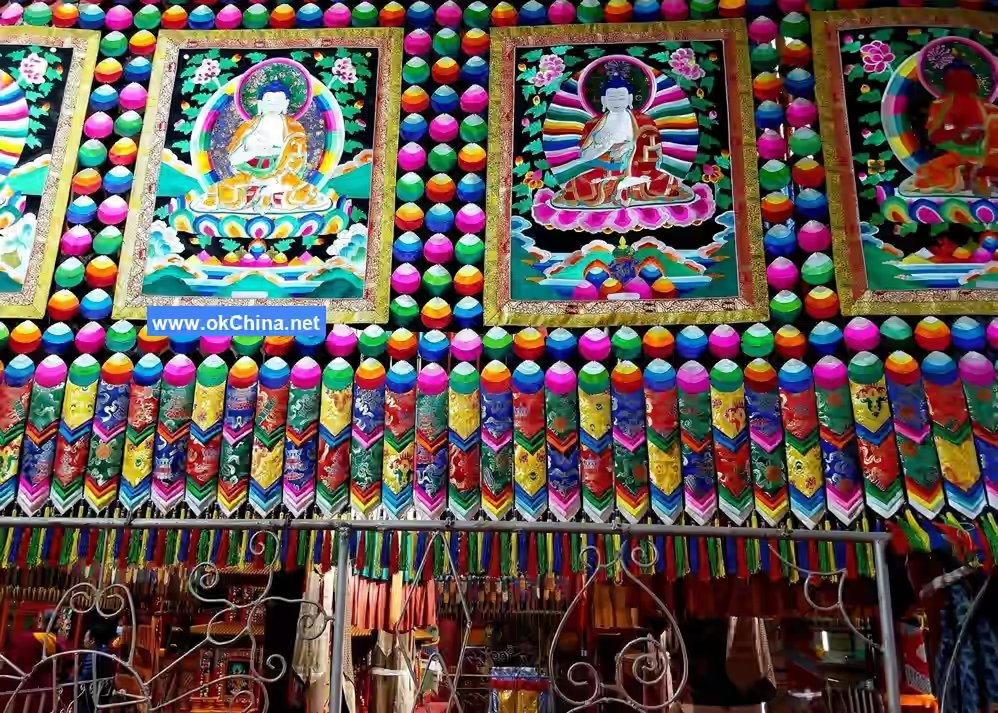
Appliqué thangka is one of the unique Tibetan art forms created at Kumbum Monastery. It involves cutting colored silk into desired shapes, such as Buddhas, figures, flowers, birds, and animals, stuffing them with wool or cotton, and then embroidering them onto cloth hangings. The raised center gives them a distinct three-dimensional effect. The Grand Sutra Hall of the monastery hangs appliqué artworks like the "Eighteen Arhats." Appliqué includes both embroidery and cut-and-paste techniques, with themes mostly drawn from Buddhist stories and religious life. It is a traditional art unique to the monastery and a masterpiece of monastic art.
【Major Festivals】
Kumbum Monastery is a very famous temple in Tibetan regions, with the most attractive event being the annual "Sunning of the Buddha" or "Sunning of the Great Thangka," also known as the "Buddha Unveiling Festival."
"Unveiling the Buddha" involves displaying a giant Buddha image that has been stored for a year in the open air. This serves to protect it from mold and insect damage and, more importantly, is a special way for the monastery's monks and devotees to pay homage and make offerings to the Buddha. The Buddha image is actually a specially made large thangka, an extremely rare treasure among scroll paintings. On the day of the unveiling, the best time to unfurl the image is at the first light of dawn, hence it is also called "sunning the Buddha." The Sunning of the Buddha takes place during the two annual Dharma assemblies in the fourth and sixth months of the lunar calendar, commemorating the birth, enlightenment, and nirvana of Shakyamuni, as well as the birth and nirvana of Tsongkhapa. Through sunning the Buddha, devotees can behold the image, receive the Buddha's grace, and protect the image from insects. Kumbum Monastery has four giant appliqué Buddha images: "Lion's Roar," "Shakyamuni," "Tsongkhapa," and "Vajrasattva." Only one is displayed each time, unfurled on the monastery's hillside. The ceremony is grand, attracting large crowds and creating a spectacular sight.
On the morning of the "Sunning of the Buddha," before dawn, the lamas of Kumbum Monastery gather to prepare for the event. They then carry the giant Buddha image along the mountain path beside the monastery to the hilltop, unfurling the large thangka from the hillside down to the foot of the mountain. At this moment, the giant Buddha image is revealed to the thousands of spectators.
After the "Sunning of the Buddha," a cham dance performance is held in the monastery's square. Lamas wear various masks and perform religious dances. During the dance, lamas also chant sutras, pray, and perform Tibetan opera, making it an annual stage for the monastery's religious art performances.
【Monastery Management】
Kumbum Monastery originally had a complete administrative and religious organizational system. The highest administrative authority was the assembly of all monks in the sutra hall, presided over by the abbot. Below this were the Garkor Council and the Great Jowa. The Garkor Council served as the standing committee of the assembly, composed of the abbot, the chief steward, the chief disciplinarian, the senior administrator, and representatives from the six clans. The Great Jowa was the executive body of the Garkor Council and the assembly, consisting of three Jowo Depa (the senior administrator in charge of internal affairs, the second administrator responsible for external relations, and the third administrator in charge of finances), a fourth administrator managing miscellaneous affairs, and one secretary each for Tibetan and Chinese. Under the Great Jowa were the "Zhekhang" managing the monastery's grain, the "Barkhang" responsible for printing scriptures, and the management of the monastery's office in Xining, the Golden Pagoda Temple. The overall head of the religious organization remained the abbot, assisted by a chief chant master and a chief disciplinarian, overseeing the four major colleges. Each college had its own abbot, below whom were disciplinarians and chant leaders. Currently, the monastery affairs are managed by the Monastery Management Committee. There are over 800 monks in the monastery (including 11 living Buddhas, mainly from the Aja, Chuzang, Seto, Chushi, Jaya, Mina, Tashi, Benbur, Yangjia lineages, and 63 novices).
【Collection of Cultural Relics】
Kumbum Monastery houses a vast collection of cultural relics, including gilded copper Buddha statues, copper Buddha statues, gold and silver lamps, gold-leaf Tibetan scriptures, woodblock-printed Tibetan scriptures, ritual objects, reliquary stupas, imperial plaques, murals, and appliqué thangkas. Among these, murals, appliqué thangkas, and butter sculptures are renowned as the "Three Unique Arts" of Kumbum Monastery. Murals are mostly painted on cloth hangings using mineral pigments, with themes primarily focusing on sutra illustrations, kalachakra, and Buddhas. Appliqué thangkas involve using colored silk, sheepskin, cotton, and other materials to create patterns of Buddhas, bodhisattvas, heavenly kings, arhats, venerable figures, flowers, birds, and animals on cloth hangings.
Comments
Post a Comment