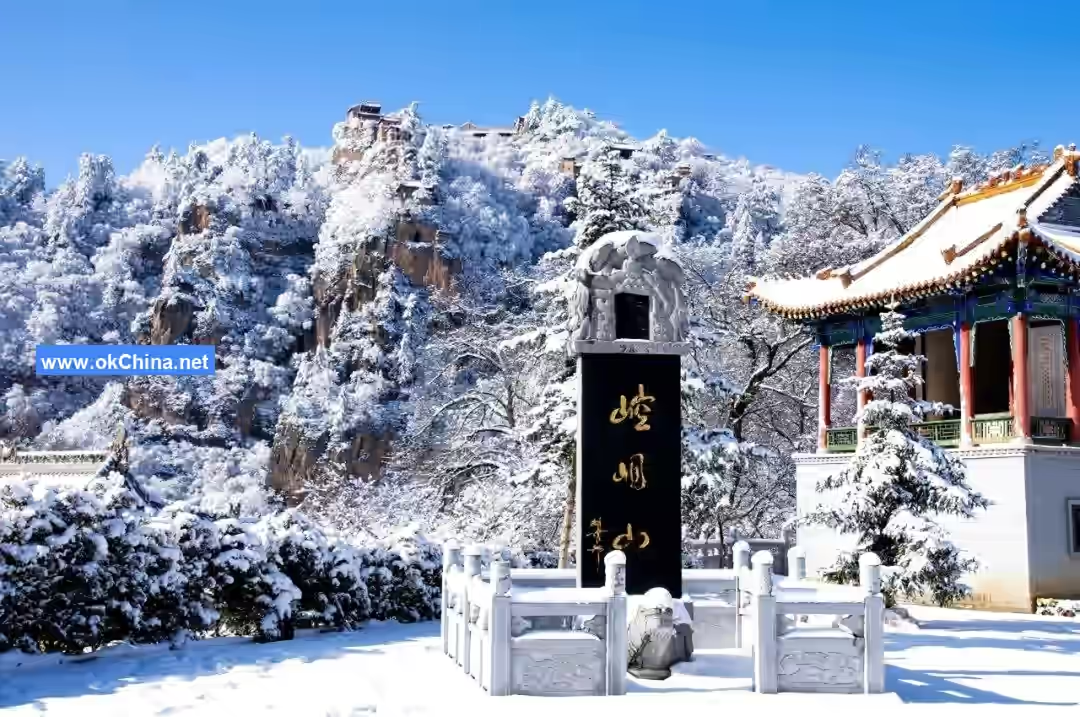
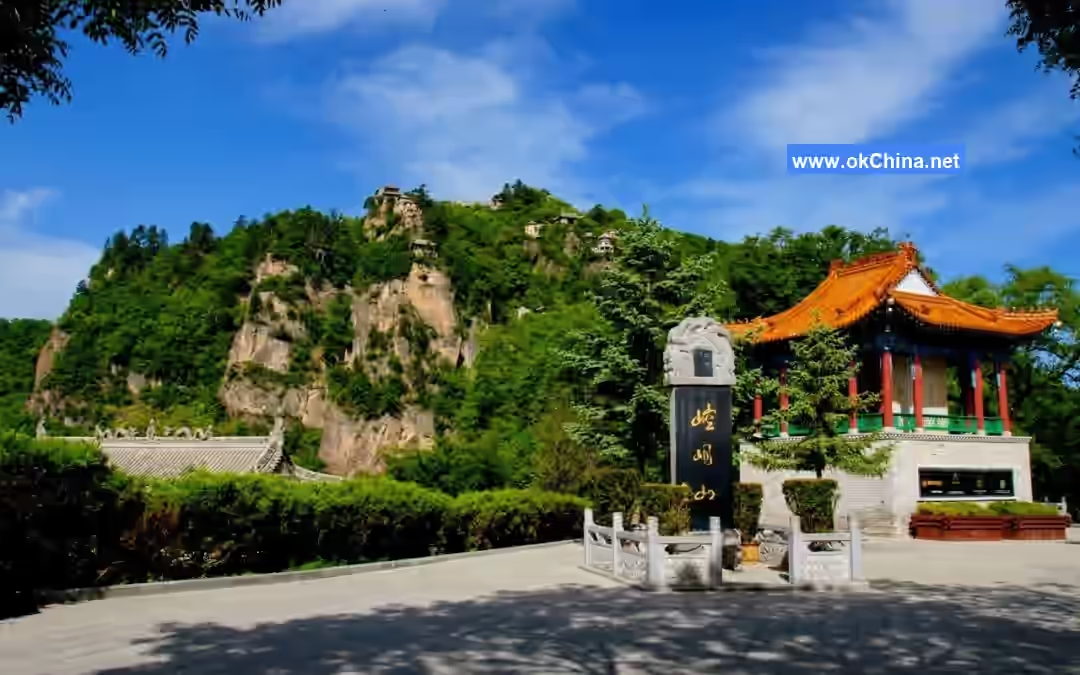
Kongtong Mountain Scenic Area in Pingliang City
I. Introduction
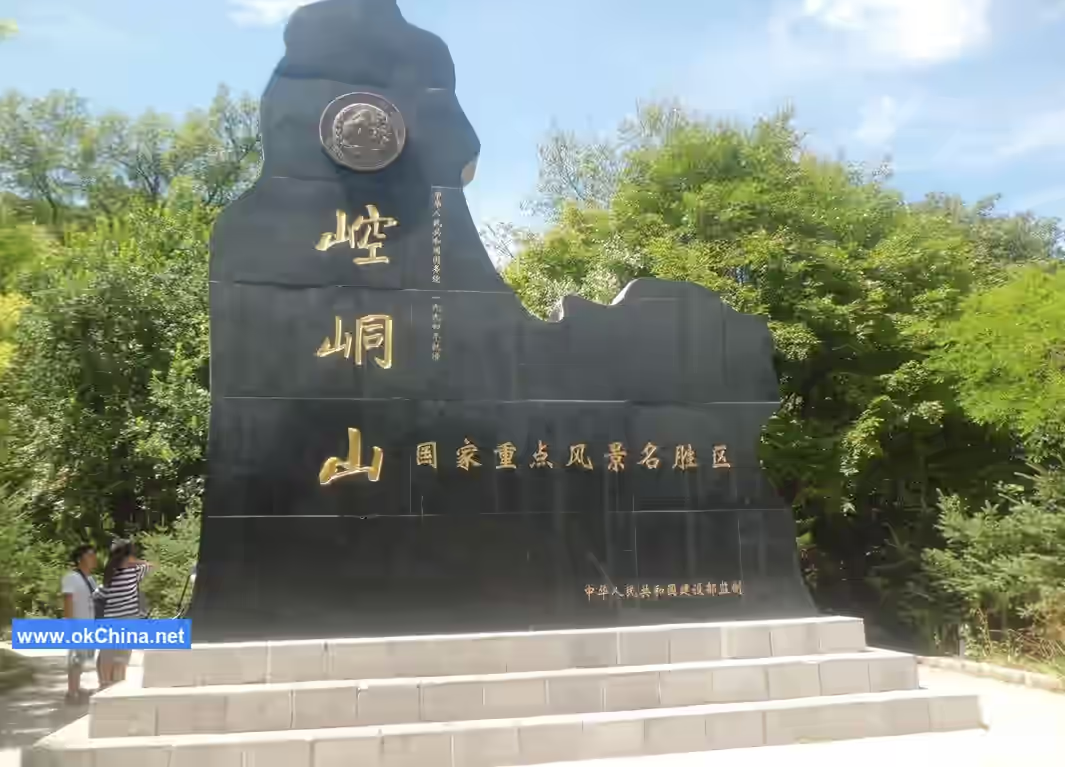
Kongtong Mountain Scenic Area is located 12 kilometers west of Pingliang City, Gansu Province. It overlooks Xi'an to the east, connects to Lanzhou in the west, borders Baoji to the south, and reaches Yinchuan to the north. With its main peak standing at an elevation of 2,123 meters, it served as a strategic fortress on the ancient Silk Road leading west out of the Guanzhong region. It is currently a National AAAAA Tourist Attraction. Kongtong Mountain has long been honored with titles such as "The First Mountain from the West," "Marvel of the Western Garrison," "Kongtong's Scenery is the Finest Under Heaven," "Preeminent in Majesty and Beauty Among Frontier Passes," and "The Source of Taoism."
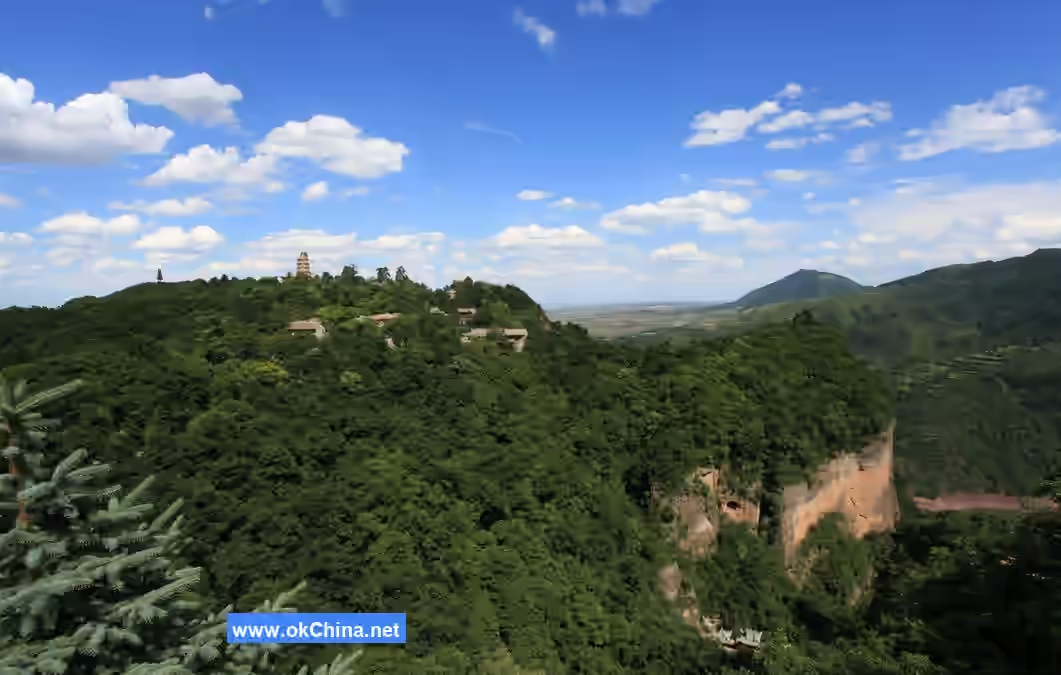
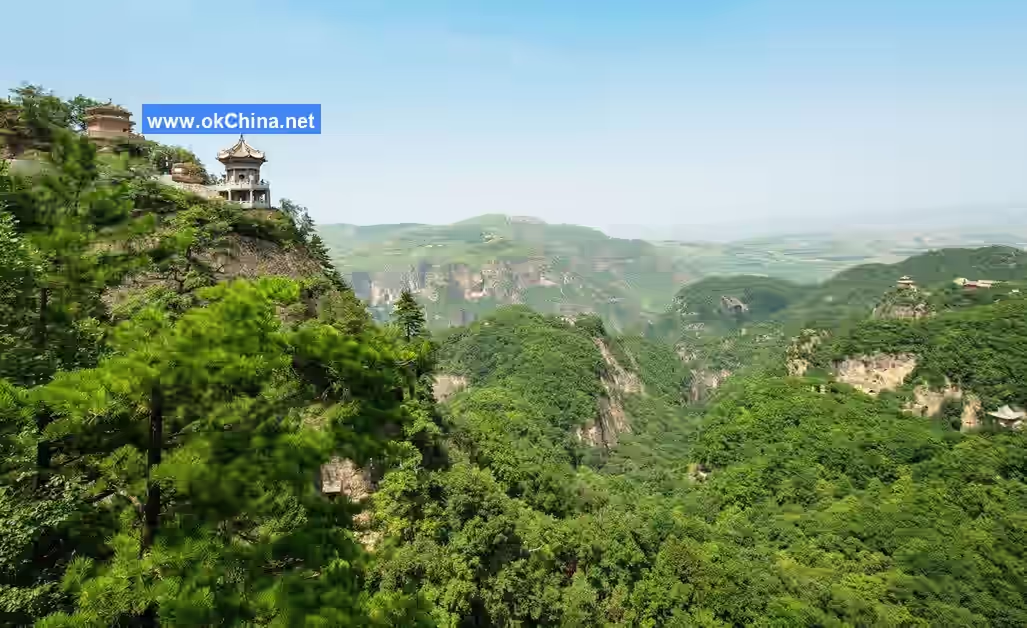
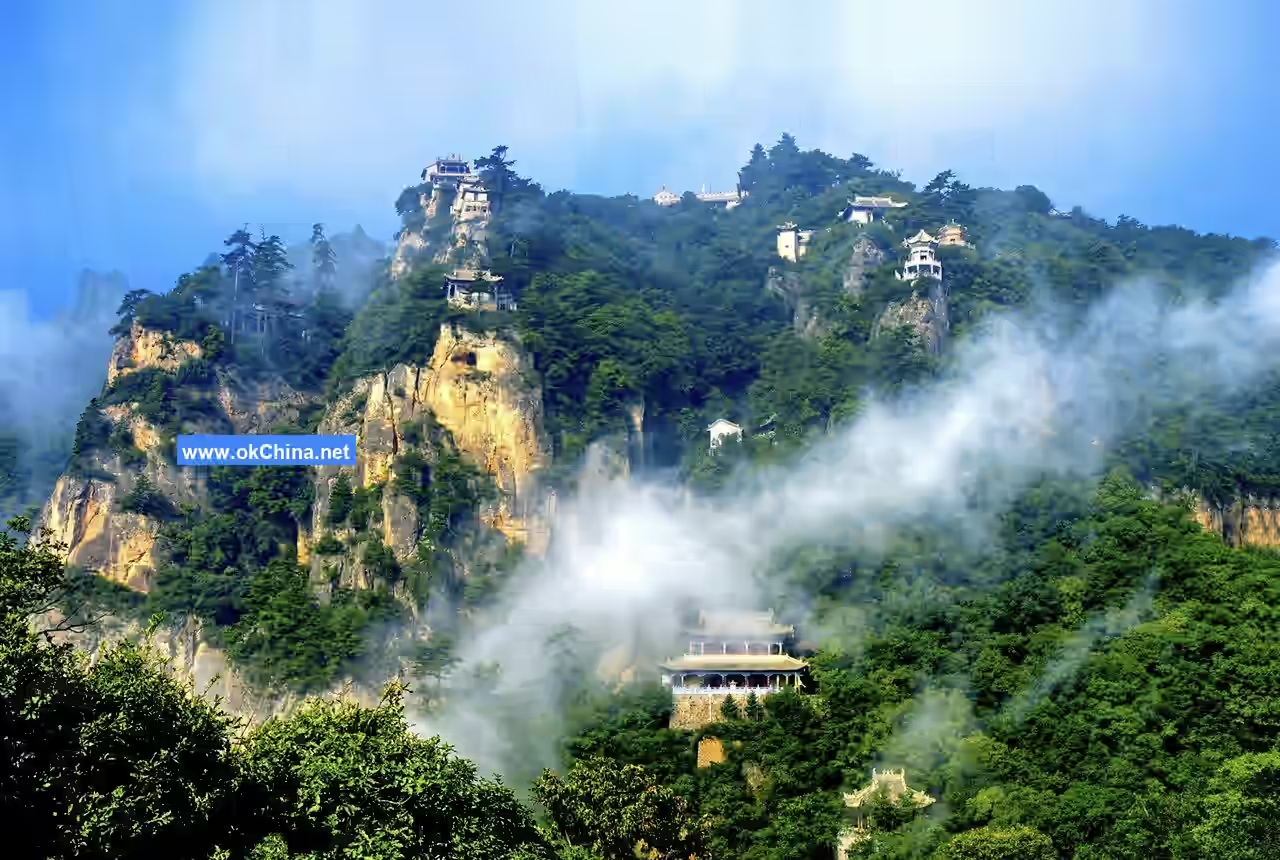
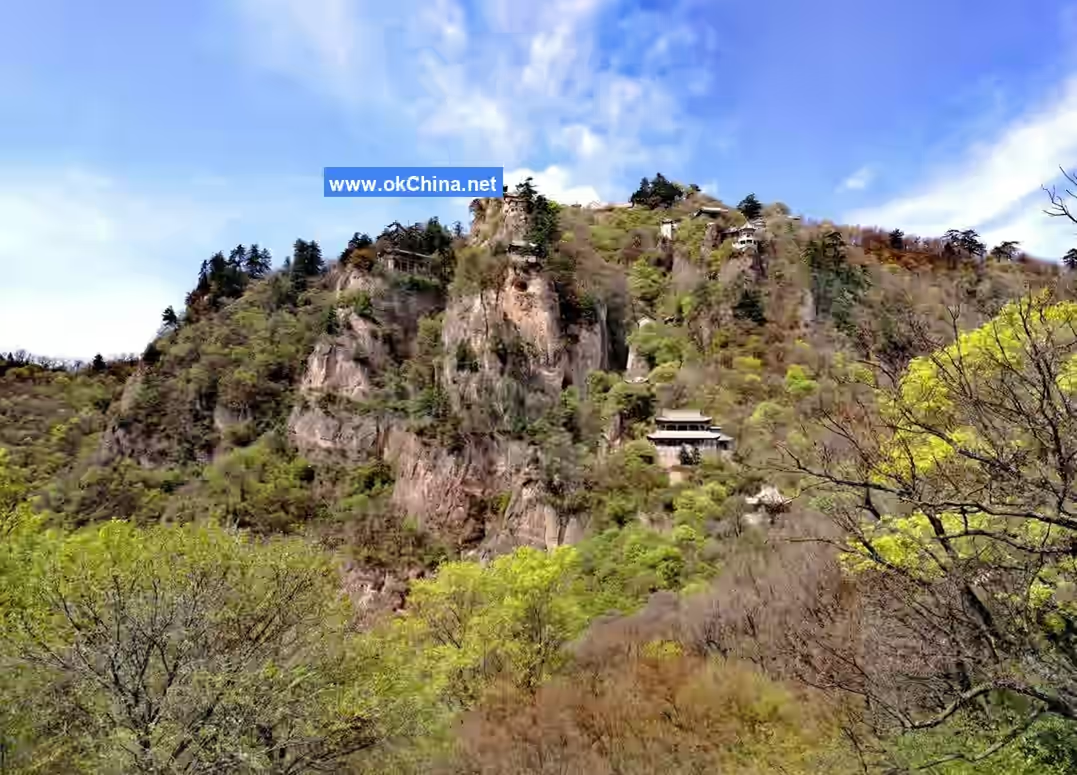
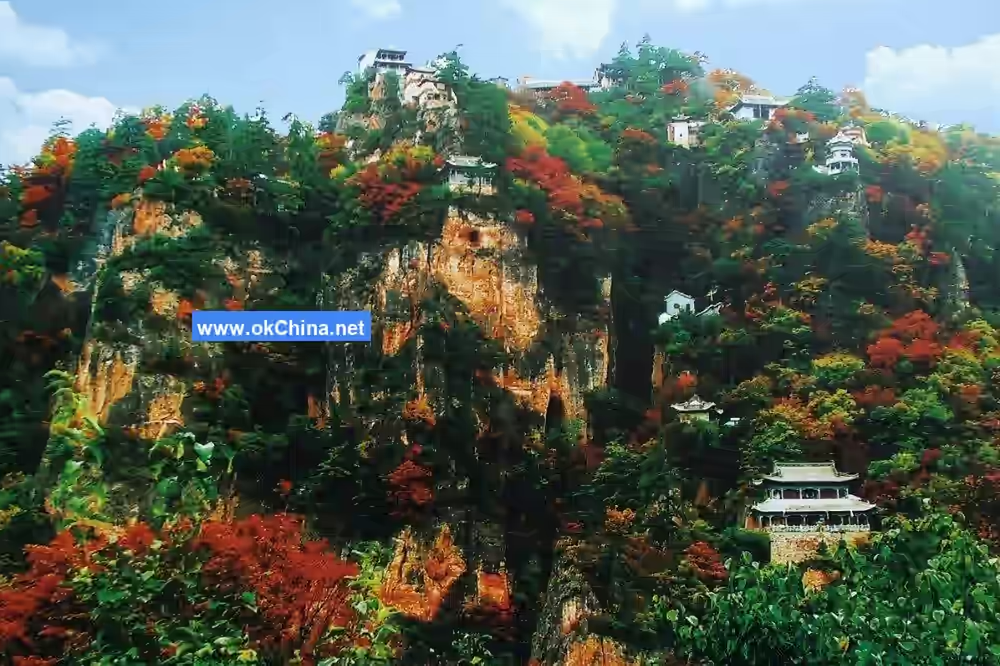
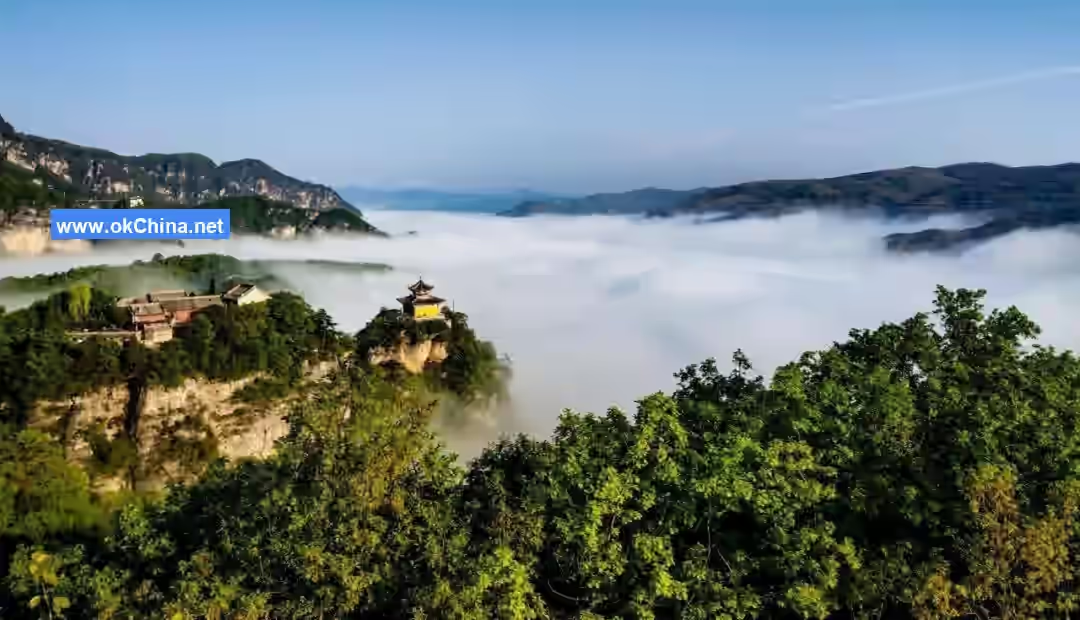
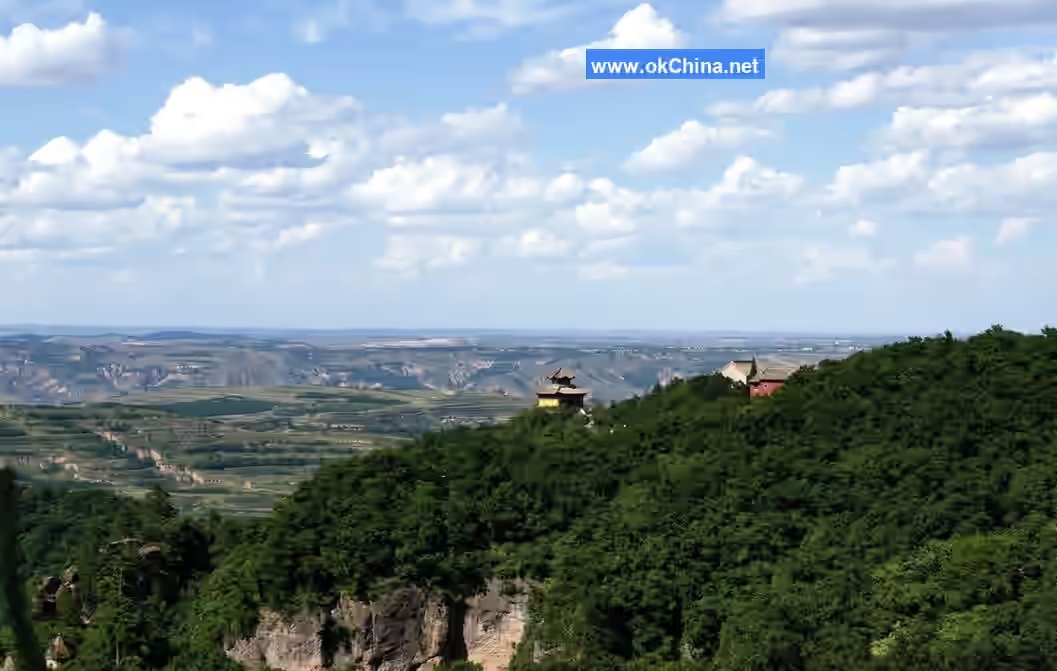
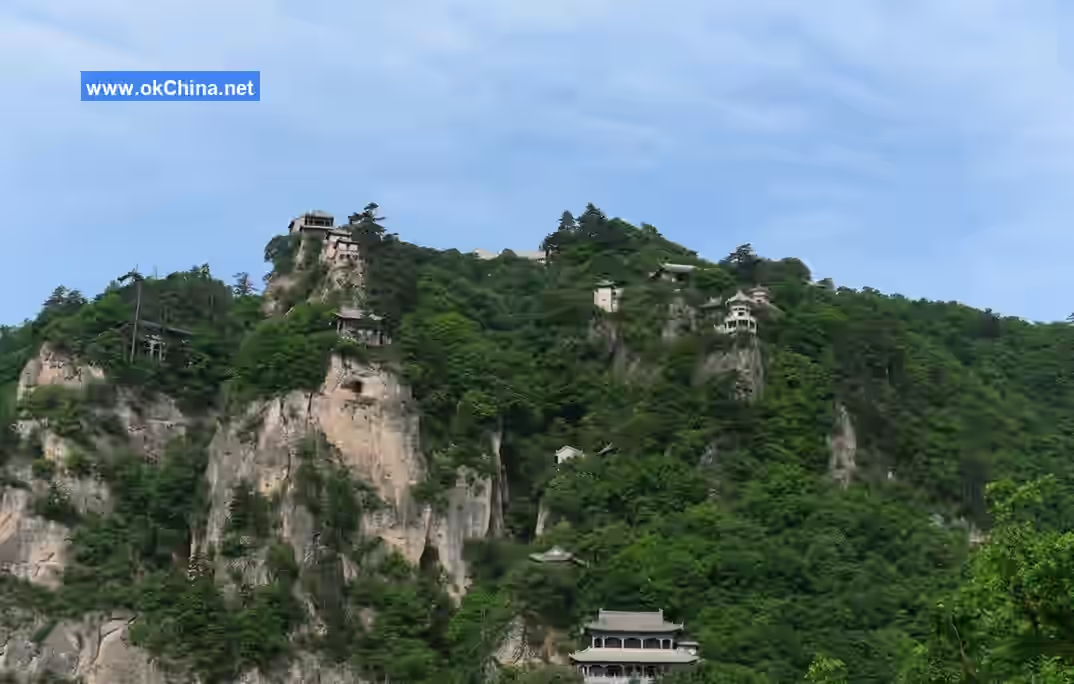
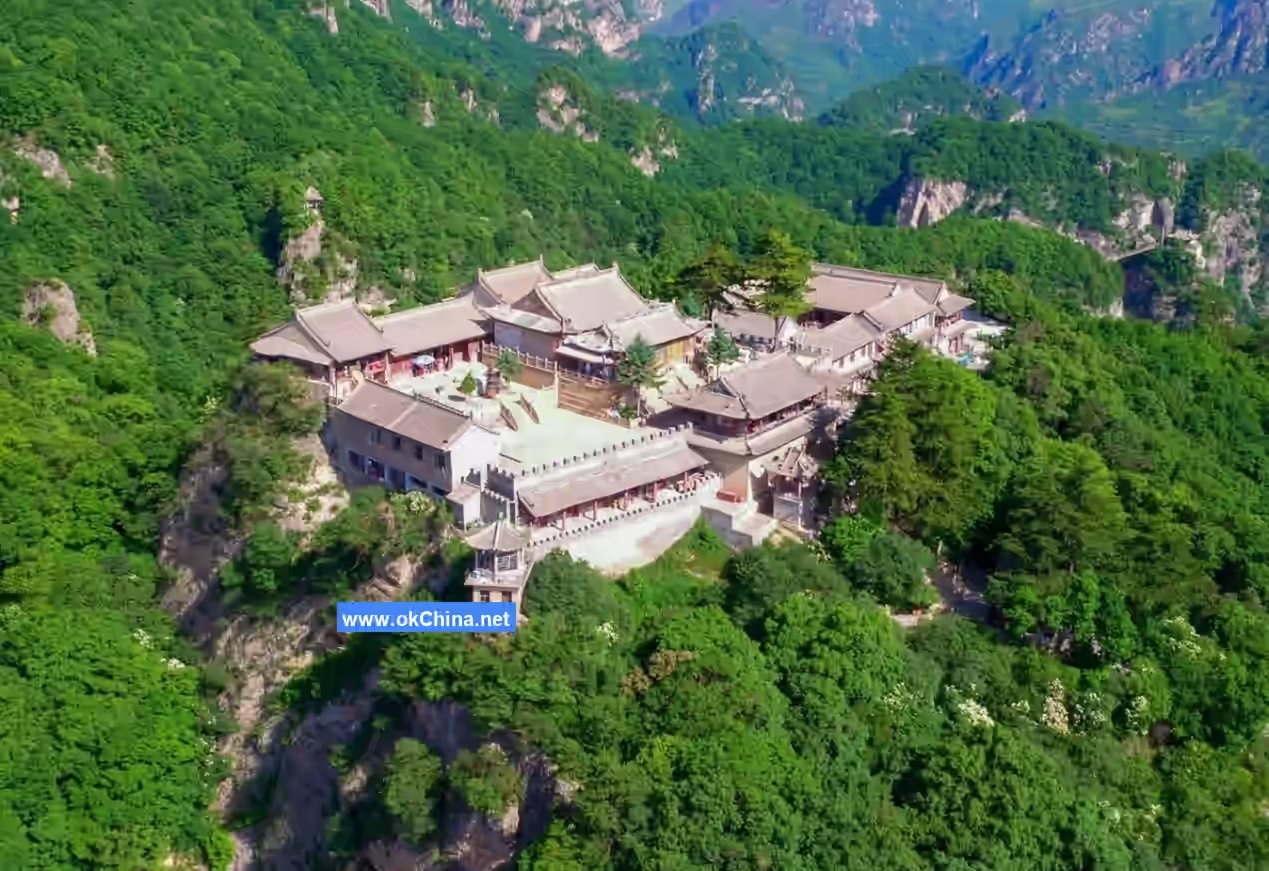
Kongtong Mountain was a key fortress on the ancient Silk Road exiting the Guanzhong region to the west. The scenic area covers 84 square kilometers, with the main peak reaching 2,123 meters and forest coverage exceeding 95%. Kongtong Mountain features majestic, towering peaks and perilous cliffs, as if carved by divine artistry; vast forests shrouded in mist and clouds create an ethereal fairyland; high gorges and placid lakes merge water and sky into one, reminiscent of the charm of the Li River. It possesses both the grandeur of northern mountains and the elegance of southern landscapes. The solemn and elegant architectural complex, comprising eight platforms, nine palaces, twelve courtyards, and forty-two building clusters, along with seventy-two stone grottoes, is magnificent in scale and rich in heritage. It combines strangely perilous yet exquisite natural scenery with simple, ancient, and exquisite cultural landscapes, holding extremely high value for sightseeing, culture, and scientific research. It has been renowned since ancient times as "The First Taoist Mountain of China." Kongtong Mountain connects to the Liupan Mountains in the west, gazes upon the vast 800-li Qinchuan Plain to the east, leans against Guan Mountain to the south, and faces Xiaoguan Pass to the north. The Jing River and the Yanchi River embrace it from north and south, converging in front of Wangjia Mountain. The elevation ranges between 1,456 and 2,123.5 meters, with a vertical relief of 667.5 meters. The overall planned area is 83.6 square kilometers.
II. Geographical Location
Geographical Location
Located 12 kilometers west of Pingliang City, Gansu Province, it connects to the Liupan Mountains in the west, overlooks the vast 800-li Qinchuan Plain to the east, leans against Guan Mountain to the south, and faces Xiaoguan Pass to the north. The Jing River and the Yanchi River embrace it from north and south, converging in front of Wangjia Mountain. It was a strategic fortress on the ancient Silk Road leading west out of the Guanzhong region.
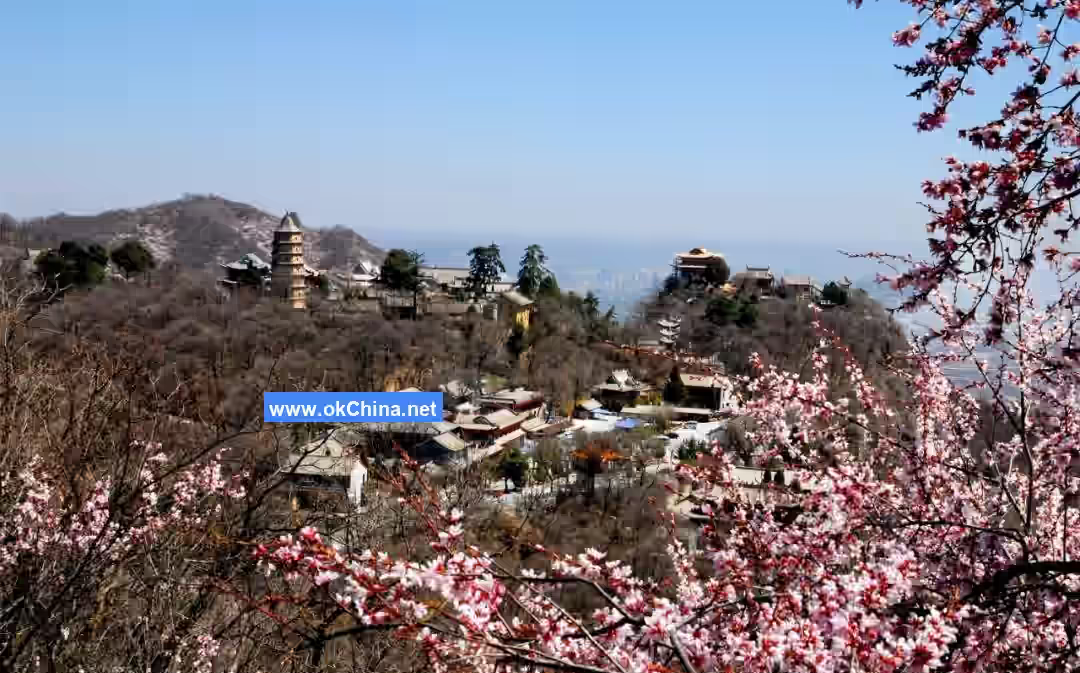
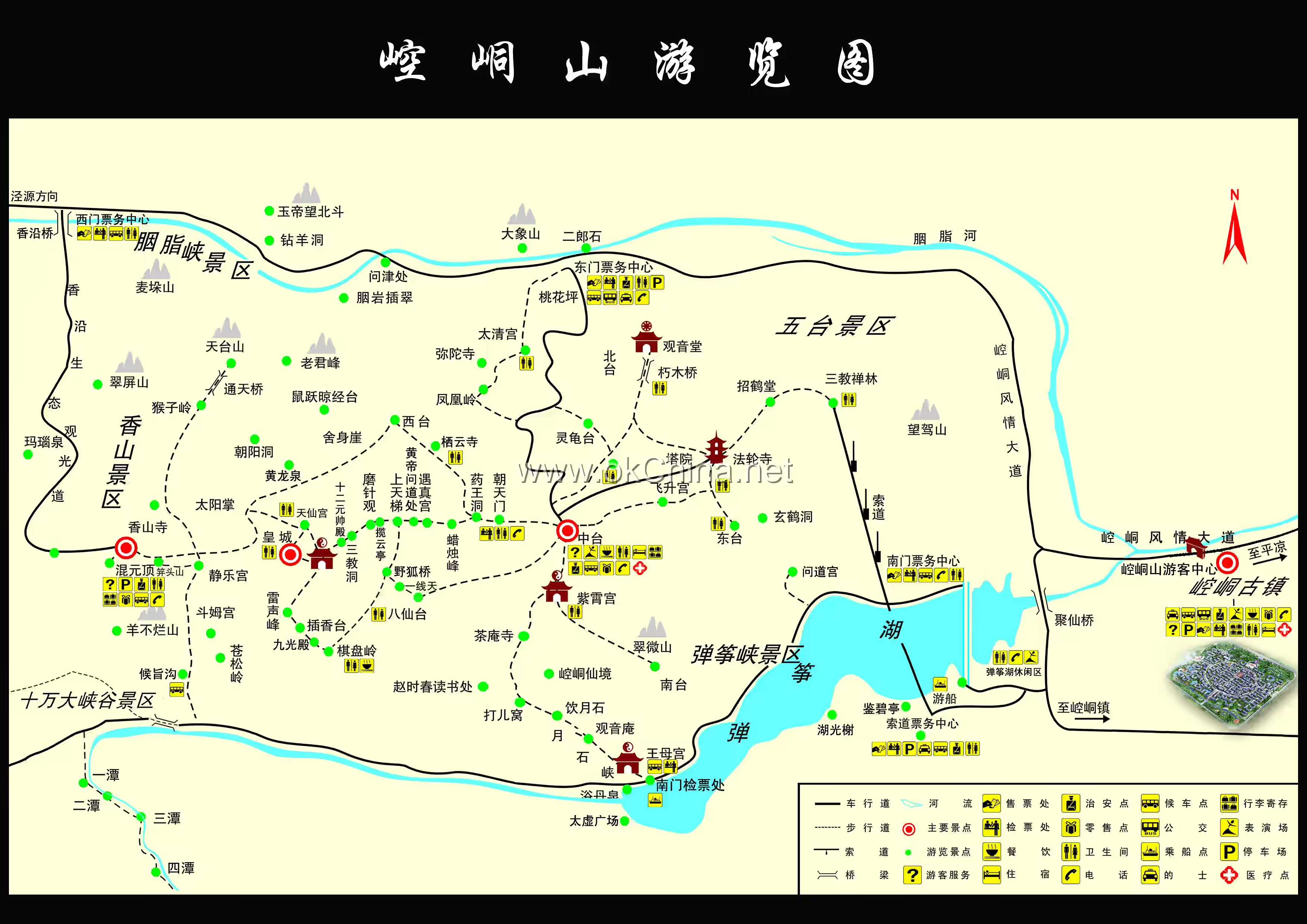
Kongtong Mountain has numerous peaks, ranging from large to small, totaling several dozen. The highest peak is Xiangshan (Incense Mountain), with an elevation of 2,123 meters; the main peak is Mazongshan (Horse Mane Mountain), at 2,025 meters, superimposed above the Five Terraces. The East, West, South, North, and Central Terraces encircle the prominent Central Terrace, resembling a lotus flower. The Central Terrace is the center of Kongtong Mountain, with an elevation of 1,894 meters, featuring flat, broad terrain and open vistas. To the south, Kongtong Mountain faces Yangjia Mountain, with the valley between them known as the Front Gorge, from which the Jing River flows, its sound resembling a zither, hence also called Tanzheng Gorge (Zither Gorge). To the north, it confronts Matun Mountain, with the valley between them known as the Rear Gorge, from which the Yanchi River flows, forming the Yanchi Plain upon exiting the mountains before joining the Jing River in front of Kongtong Mountain.
Topography and Landforms
Kongtong Mountain Scenic Area belongs to the Danxia landform. As a branch of the Liupan Mountains, Kongtong Mountain has been shaped by external forces such as differential weathering, water erosion, and collapse, resulting in isolated peaks and ridges, widespread peak clusters, developed square mountain caves,突兀怪石 (jutting strange rocks), steep and perilous mountain slopes, and a majestic, uniquely spectacular Danxia landscape. The topography of Kongtong Mountain represents an earlier formation type within China's Danxia landforms, a unique natural wonder on the vast Loess Plateau.
Climate Characteristics
Kongtong Mountain Scenic Area is located in Pingliang City, thus belonging to a temperate semi-humid climate zone. It features mild temperatures, distinct four seasons, and relatively abundant precipitation. The climate exhibits significant vertical variation, with precipitation decreasing from southwest to northwest. Additionally, influenced by perennial high-altitude westerly circulation, wind and sand are relatively strong. Main characteristics include cold, dry winters; windy and sandy springs; hot summers with concentrated rainfall; and clear, cool autumn weather.
The annual average temperature at Kongtong Mountain is 6.5°C, with ample sunshine. The frost-free period lasts 160 days, with the first frost typically appearing in early October and the last frost ending by late April the following year. The climate of Kongtong Mountain is characterized by long winters with little snow, and cool, mild summers.
Natural Resources
Plant Resources
As of 2010, over 1,000 plant species are known on Kongtong Mountain. These include 30 species from 18 genera in 21 families of pteridophytes; 15 species from 9 genera in 6 families of gymnosperms; and 703 species from 397 genera in 97 families of angiosperms. Notable ancient and famous trees include nearly 60 specimens such as Picea purpurea, Pinus tabuliformis, Sabina chinensis, Acer mono, Quercus wutaishanica, Ulmus macrocarpa, and Euonymus maackii. The "Peacock Cypress" at Zhaohuetang and the "Millennial Canopy" at Fenghuangling are both over a thousand years old.
Animal Resources
As of 2010, Kongtong Mountain is home to over 300 species of various animals, including more than 70 species of wild rare animals. Those listed under national wildlife protection include the Cinereous Vulture, Golden Eagle, Eurasian Sparrowhawk, owls, Long-eared Owl, Siberian Crane, and Leopard.
III. Historical Development
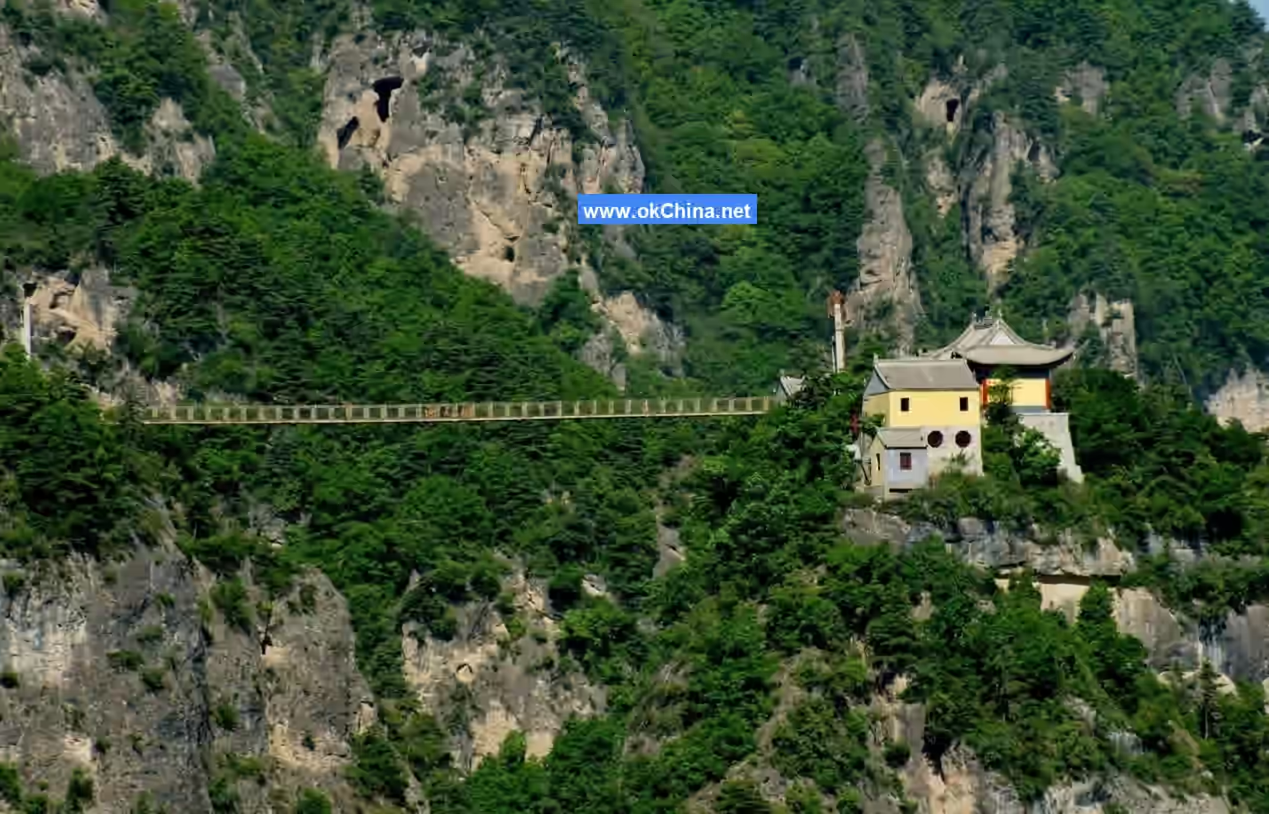
During the Qin and Han dynasties, cultural landscapes already existed on Kongtong Mountain. Successive generations continued construction, with pavilions, towers, precious temples, Buddhist palaces, temple halls, ancient pagodas, and bell towers spread across the peaks. During the Ming and Qing dynasties, people referred to the mountain's famous scenic spots as the "Twelve Scenes of Kongtong": Xiangfeng Dou Lian (Incense Peak Rivaling Peaks), Xianqiao Hong Kua (Immortal Bridge Spanning a Rainbow), Jitou Die Cui (Hairpin Head Layered Green), Yueshi Han Zhu (Moon Rock Holding a Pearl), Chunrong Lazhu (Spring Melting Candles), Yu Pen Liuli (Jade Gushing Glaze), Hedong Yuan Yun (Crane Cave Primordial Clouds), Fengshan Cai Wu (Phoenix Mountain Colored Mist), Guangcheng Dan Xue (Guangcheng's Cinnabar Cave), Yuanwu Zhen Ya (Mysterious Warrior's Needle Cliff), Tianmen Tie Zhu (Heavenly Gate Iron Pillar), and Zhongtai Bao Ta (Central Terrace Precious Pagoda). This essentially restored the forty-two architectural clusters historically referred to as the "Nine Palaces, Eight Platforms, and Twelve Courtyards."
Kongtong Mountain has long been known for its eight platforms, nine palaces, twelve courtyards, forty-two architectural clusters, and seventy-two stone grottoes, revered as a sacred site for Taoism and Buddhism in Northwest China. Historical records indicate that Kongtong Mountain entered a period of stability after the unification of the Sui dynasty, leading monks and Taoist priests to successively establish temples and monasteries during the Tang dynasty. Subsequently, through the Song, Yuan, Ming, Qing dynasties, and into the Republic of China era, construction or reconstruction continued in every period. Records show that at its peak, there were 42 exquisite temples and monasteries with over 650 rooms. The most significant among these are the "Eight Platforms, Nine Palaces, and Twelve Courtyards." The Eight Platforms refer to the East, West, South, North, and Central Terraces, along with Baxian Tai (Eight Immortals Platform), Linggui Tai (Spiritual Turtle Platform), and Zhao Shichun's Reading Platform. The Nine Palaces include Wendao Gong (Inquiry Palace), Wangmu Gong (Queen Mother Palace), Zixiao Gong (Purple Empyrean Palace), Feisheng Gong (Ascension Palace), Nanya Gong (South Cliff Palace), Jingle Gong (Pure Joy Palace), Taiqing Gong (Great Clarity Palace), Yuzhen Gong (Encounter with the Perfected Palace), and Zisun Gong (Offspring Palace). The Twelve Courtyards refer to Shuhua Si (Shu Hua Temple), Falun Si (Dharma Wheel Temple), Baoqing Si (Baoqing Temple), Zhencheng Si (True Vehicle Temple), Cha'an Si (Tea Hut Temple), Sheli Si (Relic Temple), Qiyun Si (Cloud Perching Temple), Xiangshan Si (Incense Mountain Temple), Lianhua Si (Lotus Temple), Haijue Si (Ocean Enlightenment Temple), Wenshu An (Manjushri Nunnery), and Mituo An (Amitabha Nunnery). The Seventy-two Stone Grottoes include Xuanhe Dong (Mysterious Crane Cave), Guangcheng Dong (Guangcheng Cave), Zuanyang Dong (Drill-Goat Cave), Chaoyang Dong (Sun-facing Cave), Laojun Dong (Laojun Cave), Jinyin Dong (Gold-Silver Cave), Guiyun Dong (Cloud-Returning Cave), Yunü Dong (Jade Maiden Cave), Lingguan Dong (Spirit Official Cave), and Sanjiao Dong (Three Teachings Cave), among others.
IV. Main Scenic Areas
Chaoyang Cave (Sun-facing Cave)
Kongtong Mountain has many stone caves, large and small, deep and shallow. Preliminary statistics count 32 caves in total. The mountain's name is closely related to these caves, deriving from the meaning of "hollow and cavernous." Each cave has its own characteristics and legends. Chaoyang Cave is one of the more famous ones.
Located on the sheer cliff on the east side of Shizi Ling (Lion Ridge), Chaoyang Cave faces a valley filled with dense forest and looks across the valley towards the West Terrace. The cave is not very large, with an entrance 8 meters wide, 5 meters high, and 5 meters deep. There is no accessible path here, so few tourists visit, making it exceptionally quiet and elegant. It is said that the rays of the morning sun first shine into this cave, hence its name, Chaoyang Cave (Sun-facing Cave).
Leisheng Feng (Thunder Peak)
The perilous and peculiar nature of Leisheng Feng is considered a unique wonder of Kongtong. It is not a "flown-in peak" but rather a southern extension of the main peak, Mazongshan, resembling the mountain's right arm stretching down towards the surging waters of the Front Gorge. This ridge is 200 meters long, with its highest point no more than 5 meters. The entire mountain body consists of reddish Danxia stone. Its eastern and western sides drop off into sheer ravines, while the southern cliff face has man-made stone steps leading to Qipan Ling (Chessboard Ridge). As Leisheng Feng runs from north to south, the mountain's elevation gradually decreases. Therefore, the Taoist palaces on the peak are built following the mountain's contours, arranged in picturesque disorder, forming a beautiful scene. The cliffs of Leisheng Feng are steep, overlooking deep abysses. During thunderstorms, the sound of thunder echoes through the empty valleys; viewed from the railings, the scene is tumultuous, like mountains collapsing and earth cracking, awe-inspiring and startling, hence the name "Thunder Peak."
Lianhua Si (Lotus Temple)
One of the Five Terrace Temples on Kongtong Mountain. According to stele records, it was initially built during the Zhenguan period of the Tang dynasty. The temple was originally surrounded by many ancient pine trees. It collapsed after being damaged by war in the late Qing dynasty. In the 4th year of the Republic of China (1915), funds were raised by Zhu Jincai and others. Over 18 years, they restored a 3-bay main hall facing south, a 1-bay Earth God shrine, one mountain gate, and 16 wing-rooms. In the 25th year of the Republic of China, Abbot Zheng Jun oversaw the construction of a two-story brick-and-timber structure facing east, the Western Three Saints Hall, with 5 bays. Later, monks Pu Shan and Pu Hua oversaw the renovation of the mountain gate and the construction of a 3-bay stable. It fell into disuse after 1958. In 1983, monk Shi Changhui raised funds to rebuild 6 west-facing wing-rooms. In 1985, the 3-bay south-facing main hall was repaired, and artist Dai Guohua re-sculpted the gilded statues of Sakyamuni Buddha, Manjushri, Samantabhadra Bodhisattvas, and the 18 Arhats. In 1990, under the direction of the Buddhist Association, the east-facing Three Saints Hall was restored as a three-story, five-bay structure, with the first two floors serving as monks' quarters.
Cangjing Lou (Scripture Repository Tower)
Also known as Cangjing Si (Scripture Repository Temple) or Cangjing Ge (Scripture Repository Pavilion), it is located east of the original Zhencheng Si (True Vehicle Temple). It originally served as the scripture storage house for Zhencheng Si. In the 31st year of the Wanli era of the Ming dynasty (1603), it was rebuilt with funds from the Han Princely Family, specifically to house the Tripitaka scriptures bestowed by the Empress Dowager. During renovations in the 11th year of the Jiaqing era of the Qing dynasty (1811), 12 additional rooms of east-west facing buildings were added. During the Xianfeng period, Wan Bingxiong, a commoner from Jingning County, provided funds and supervised work to refurbish it entirely. After damage from war in the 2nd year of the Tongzhi era (1863), the buildings collapsed, and some of the stored books were lost. In the 24th year of the Guangxu era (1898), Wang Yuanming from Sangquan contributed over 400 taels of silver for its restoration.
Zhenwu Dian (Zhenwu Hall)Also known as the Hall of the Infinite Patriarch, it serves as the main hall of the Imperial City. Constructed during the Qiande era of the Northern Song Dynasty (963–967), it was converted into the Chongfo Pavilion during the Yuan Dynasty to enshrine Sakyamuni Buddha. In the Jiajing era of the Ming Dynasty, Lady Guo, the wife of Prince Han, donated funds and ordered the court official Ma Ying to oversee the expansion of the hall into a five-bay structure, covering an area of approximately 200 square meters, with an iron-tiled roof. At the center of the hall stands a 1.5-meter-high, 6-meter-long and 6-meter-wide shrine, housing a gilded polychrome seated statue of the True Martial Emperor. In the middle of the shrine platform, a bronze statue of Xuanwu is placed, flanked by polychrome standing statues of Duke Zhou and Taohua on either side. Below the left and right sides of the shrine platform, standing statues of the turtle and snake incarnations are sculpted. On the left and right sides of the hall, polychrome statues of the Four Great Divine Officials stand guard. In the early years of the Kangxi era of the Qing Dynasty, Wang Fuchen, responding to Wu Sangui’s rebellion, occupied Pingliang and Kongtong, causing severe damage to the hall and its annexes. In the fifteenth year (1677), the Taoist priest Miao Qingyang from Longmen Cave came to preside over fundraising and restoration efforts. In 1982, it was designated as a county-level cultural relic protection unit.
V. Cultural Resources
Religious Culture
Kongtong Mountain is the birthplace of the Three Sovereigns of antiquity, as well as the birthplace of Nüwa and Kuafu, reflecting its profound and ancient cultural heritage. As a result, the Yellow Emperor, revered by the Chinese nation as the progenitor of civilization, journeyed westward to the borders after achieving his great accomplishments and personally ascended Kongtong Mountain to seek advice from Guangchengzi, who lived in seclusion there, on governance and the art of longevity.
Taoism as a religion originated during the Eastern Han Dynasty. However, its ideological and theoretical foundations lie in the Huang-Lao teachings that flourished from the Spring and Autumn period onward. Both the Yellow Emperor and Laozi are regarded as patriarchs of Taoism. According to Taoist texts, Laozi’s predecessor was Guangchengzi, who cultivated himself on Kongtong Mountain, and Guangchengzi was also the teacher of the Yellow Emperor. Tracing its origins, Kongtong Mountain is thus honored as the "First Taoist Mountain in the World."
Buddhism also has a long history on Kongtong Mountain. By the Tang Dynasty, Buddhist activities on the mountain had already reached a significant scale. According to inscriptions on an iron bell cast in the second year of the Da’an era of the Jin Dynasty (1210 AD), the stone steps of the "Stairway to Heaven" from the Central Terrace to the Imperial City were carved by the Chan master Renzhi during the Zhenguan era of the Tang Dynasty. There are also records of Emperor Taizong of Tang granting land to the Minghui Temple on the mountain. By the early Qing Dynasty, the number of Buddhist temples on Kongtong Mountain had reached 19.
Development Status
In 1994, the construction of the front and rear mountain gates of Kongtong Mountain was completed. Roads on the front mountain, rear mountain, and Xiangshan were paved, along with the Central Terrace parking lot and Taohuaping parking lot. Fifteen scenic area and attraction roads were built, water and power supply pipelines were upgraded and installed, eco-friendly toilets were purchased and installed, and a tourist information center, medical emergency center, and antique-style individual business premises at the Central Terrace were established. Additional tourist safety facilities and bilingual (Chinese-English) signage were added. Both Taoism and Buddhism contributed to the construction of 35 new attractions, including the Falun Temple, Guanyin Hall, Tongtian Bridge, Feisheng Palace, Wangmu Palace, and Wendao Palace.
Through development and construction, the scenic area has largely restored the original appearance of the Nine Palaces, Eight Terraces, Twelve Courtyards, and Forty-Two Architectural Complexes. Annual visitor capacity increased by 90,000 person-times. Roads, water supply, communications, environmental sanitation, and public service facilities within the scenic area were renovated, laying a solid foundation for the comprehensive development of tourism resources and the growth of the city’s tourism industry. Scenic area management and environmental protection have gradually become more professional, standardized, and scientific. Visitor numbers and economic revenue have grown by an average of over 16% annually, with increasing recognition, making it a popular tourist destination on the ancient Silk Road and a golden brand tourist attraction in Gansu Province.
Following the strategy of creating "premium tourism products" and the development framework of "big tourism, big market, big industry," the scenic area has focused on the construction of "two zones" and "one network." The "two zones" involve expanding from the national key scenic area of Kongtong Mountain as the center, extending eastward, westward, and southward to connect Kongtong Mountain with Longyin Temple, Taitong Mountain, Shiwangou, Tanzheng Lake, and Kongtong Mountain’s rear gorge, forming the Kongtong Mountain Taoist Holy Land Tourism Zone. The "one network" uses Kongtong Mountain and Wangmu Palace as bases, connecting northeast to the Mausoleum of the Yellow Emperor (Huangling County), southeast to the Mausoleum of the Yan Emperor (Baoji City), southwest to tourist sites such as Fuxi and Nüwa (Tianshui, Jingning), eastward to the Terracotta Army and Famen Temple in Xi’an, westward to the Hexi Corridor attractions along the Silk Road, and northwest to the Western Xia Imperial Tombs, Sand Lake, and Xumi Mountain, forming an extensive tourism network centered on ancient Chinese culture and Han-Tang culture.
Specialty Cuisine
Braised Pork Knuckle in Brown Sauce
Braised Pork Knuckle in Brown Sauce is a renowned dish in Pingliang. The preparation process involves first simmering the selected pork knuckle until tender. When serving, the knuckle is placed on a plate and drizzled with seasoning sauce.
Pingliang Crispy Cake
Pingliang Crispy Cake, also known as Crispy Bun, is famous across the three provinces (regions) of Shaanxi, Gansu, and Ningxia. Pingliang Crispy Cakes are divided into three main categories: the Han-style "Hidden Crisp" cake, and the Hui-style "Visible Crisp" and "Stretched Crisp" cakes. The Hidden Crisp cake has no visible crisp layers on the surface, but the crispness is felt upon eating. It comes in two varieties: savory with five-spice flavor and sweet with sugar filling. The Visible Crisp cake has a shiny, crispy surface and a soft, flaky texture, also available in sweet and savory versions. The patterns of the crispy cakes include over ten varieties such as "Ox Tongue," "Straw Sandal Sole," "Single Eyebrow," and square shapes. Over the decades, through continuous innovation by chefs, Pingliang Crispy Cakes have developed the characteristics of diverse patterns, crisp texture upon biting, lingering fragrance, and ease of carrying.
Comments
Post a Comment