Kashgar Ancient City Scenic Area in Kashgar Prefecture
I. Introduction
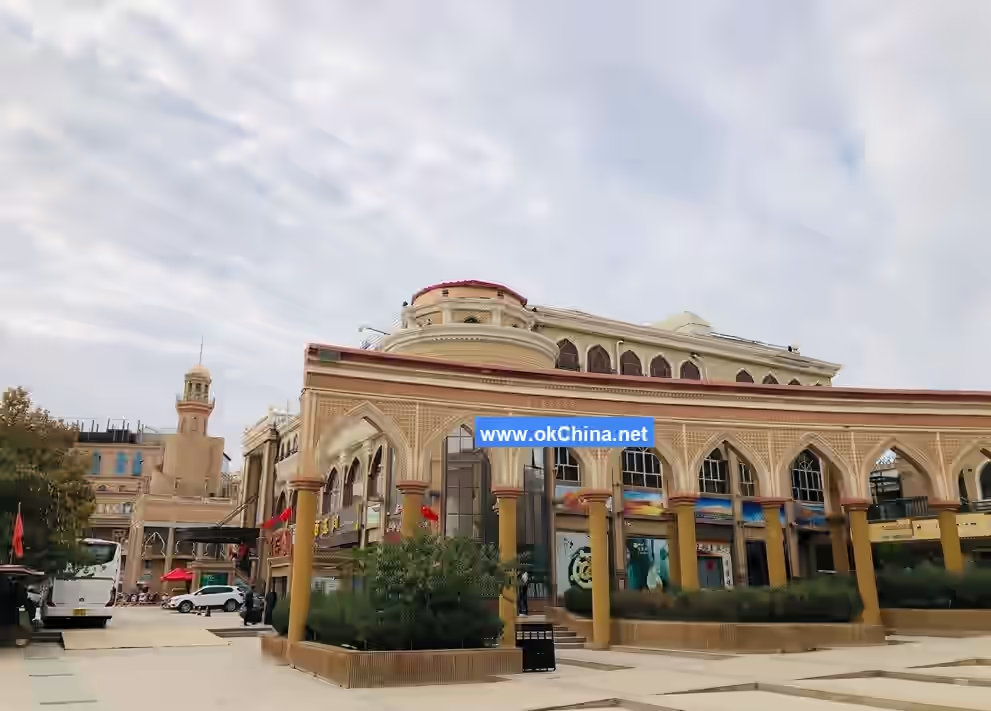
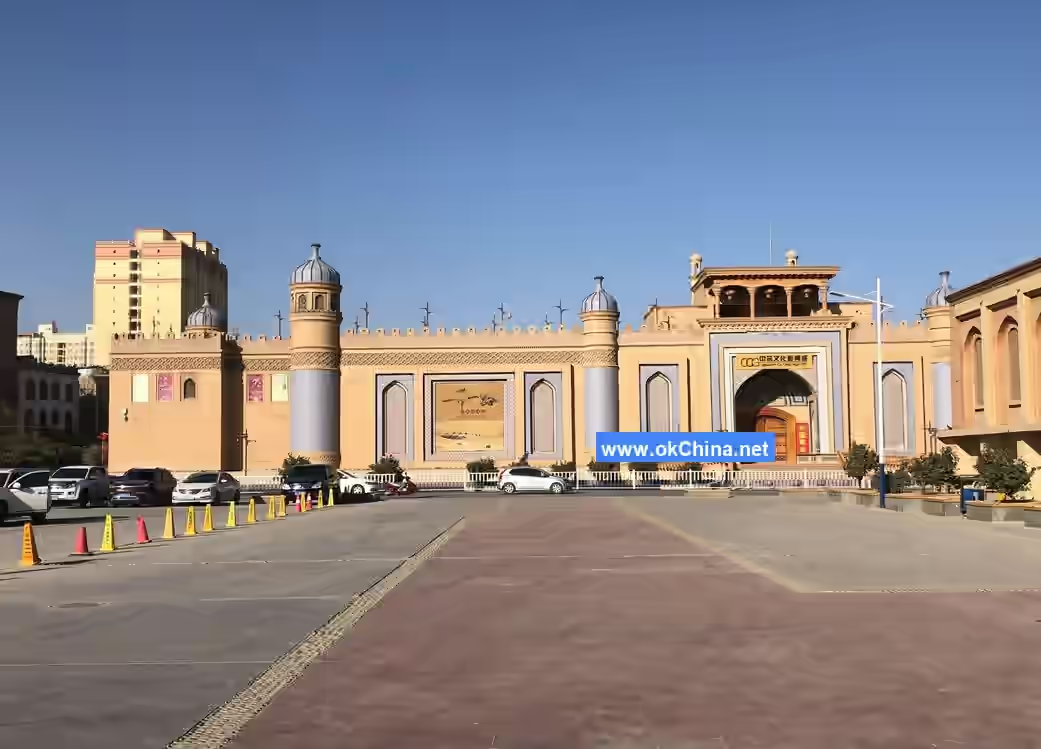
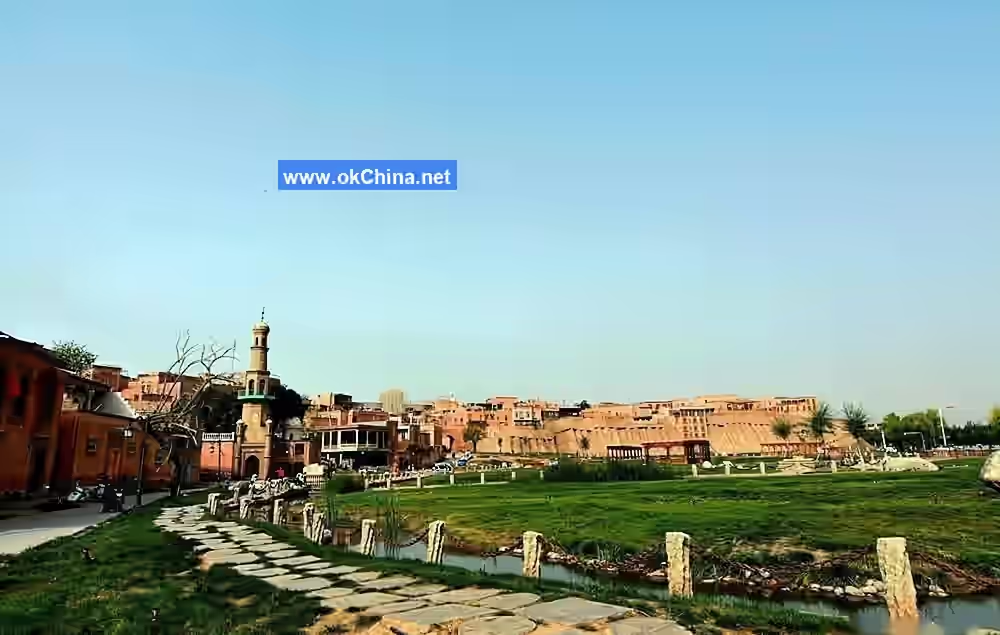
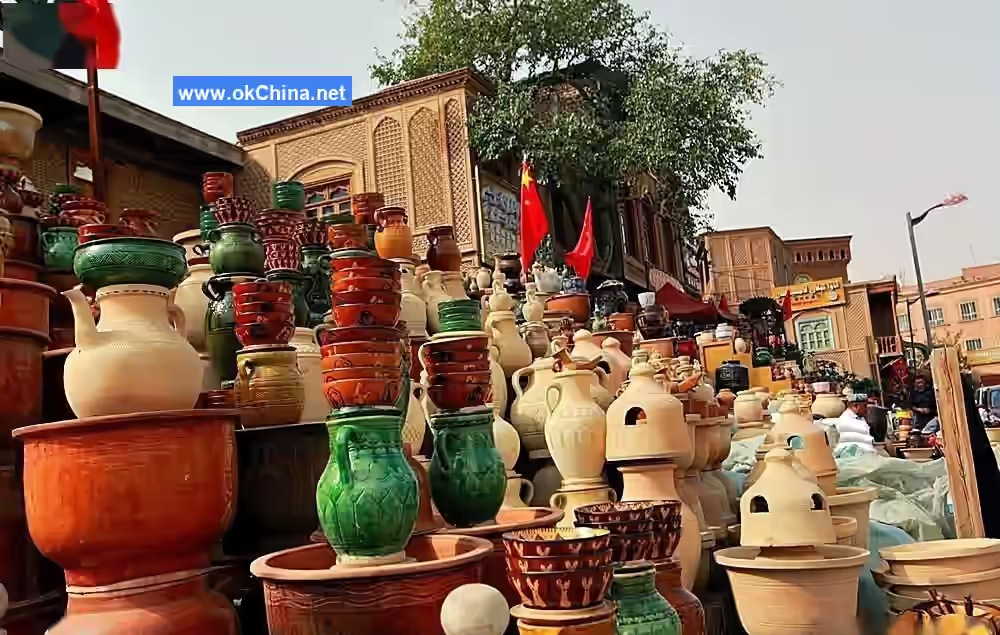
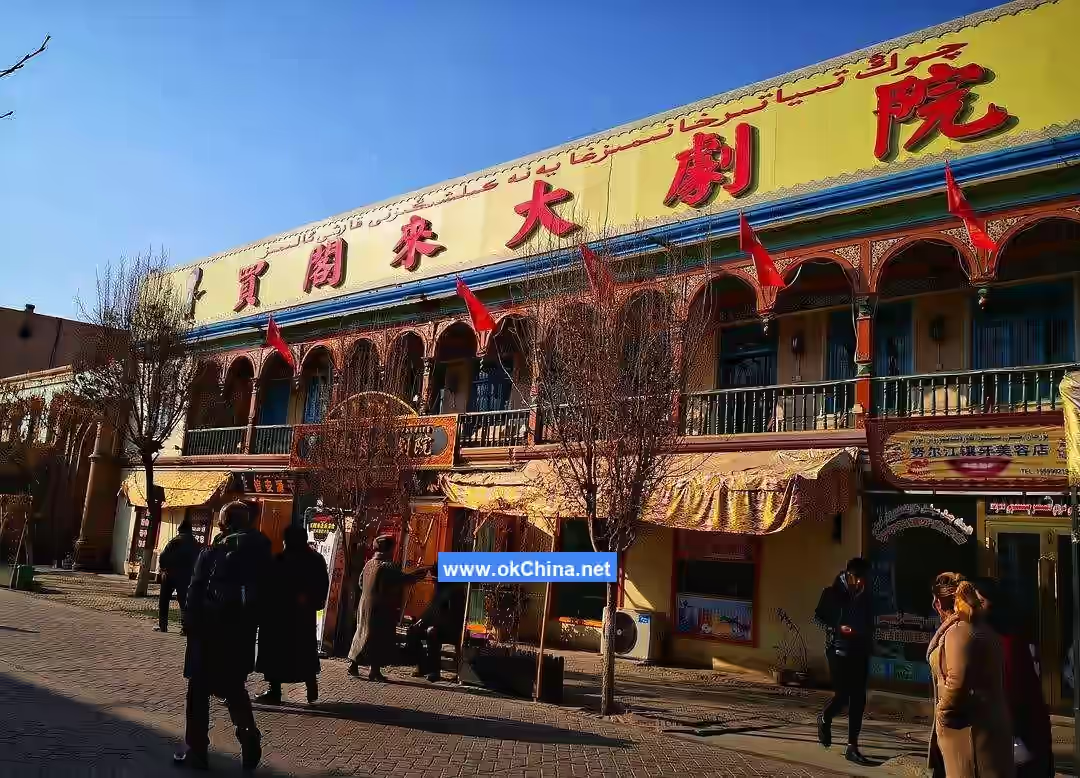
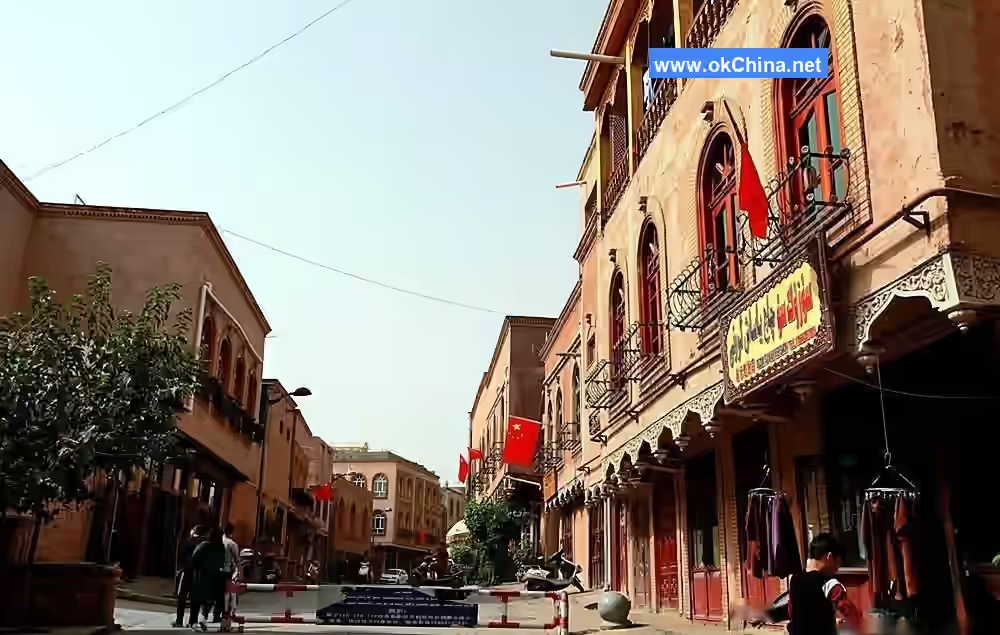
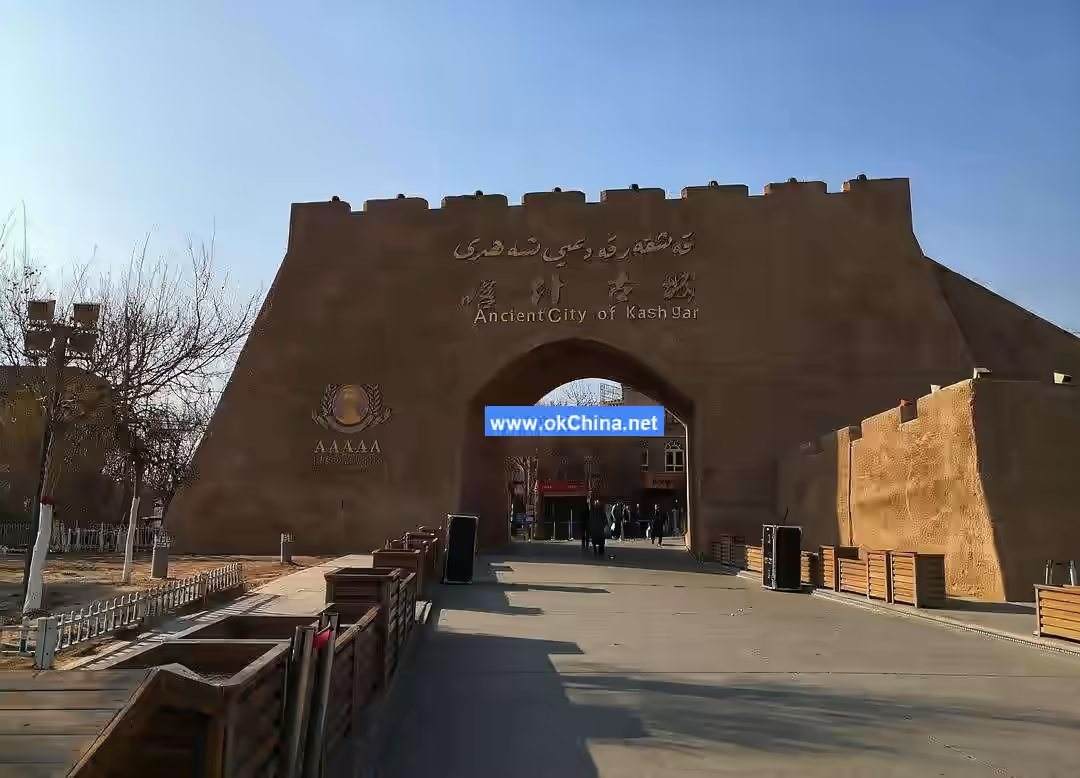
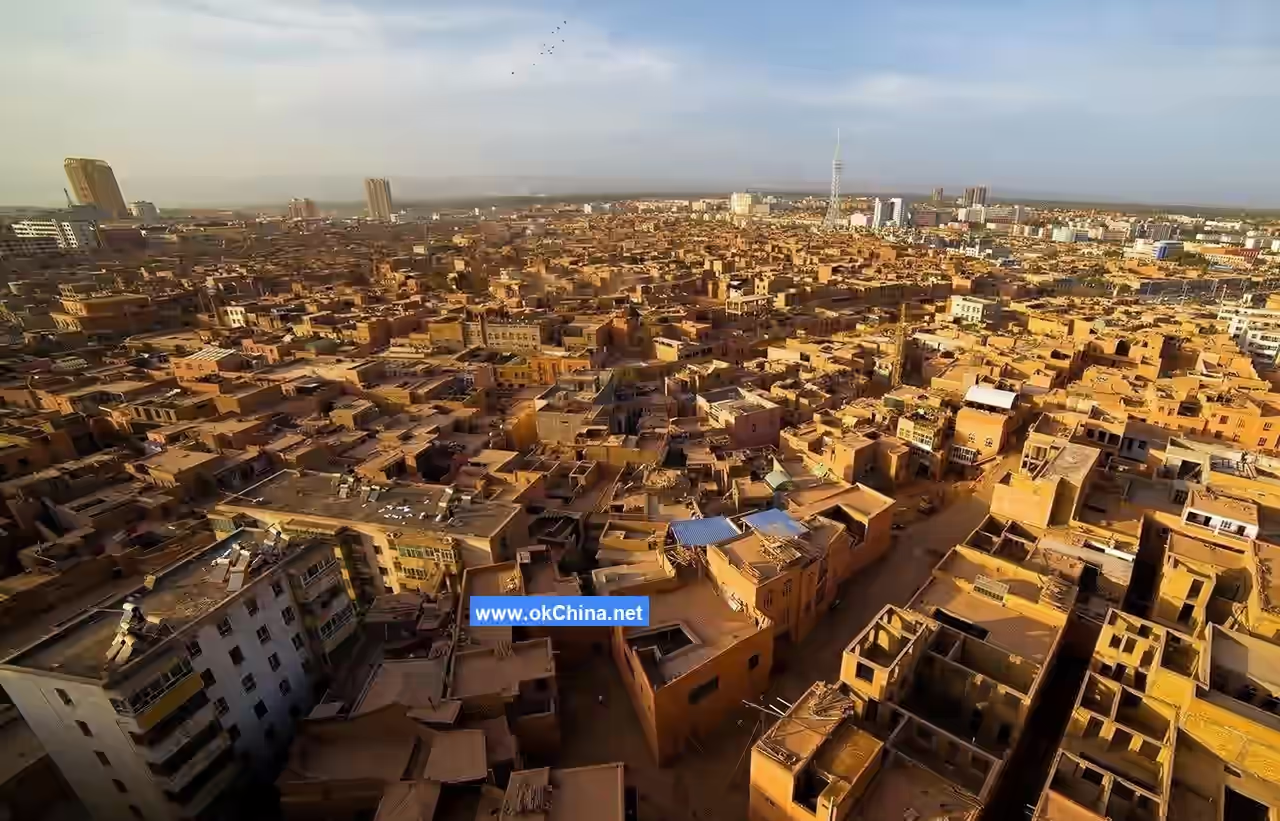
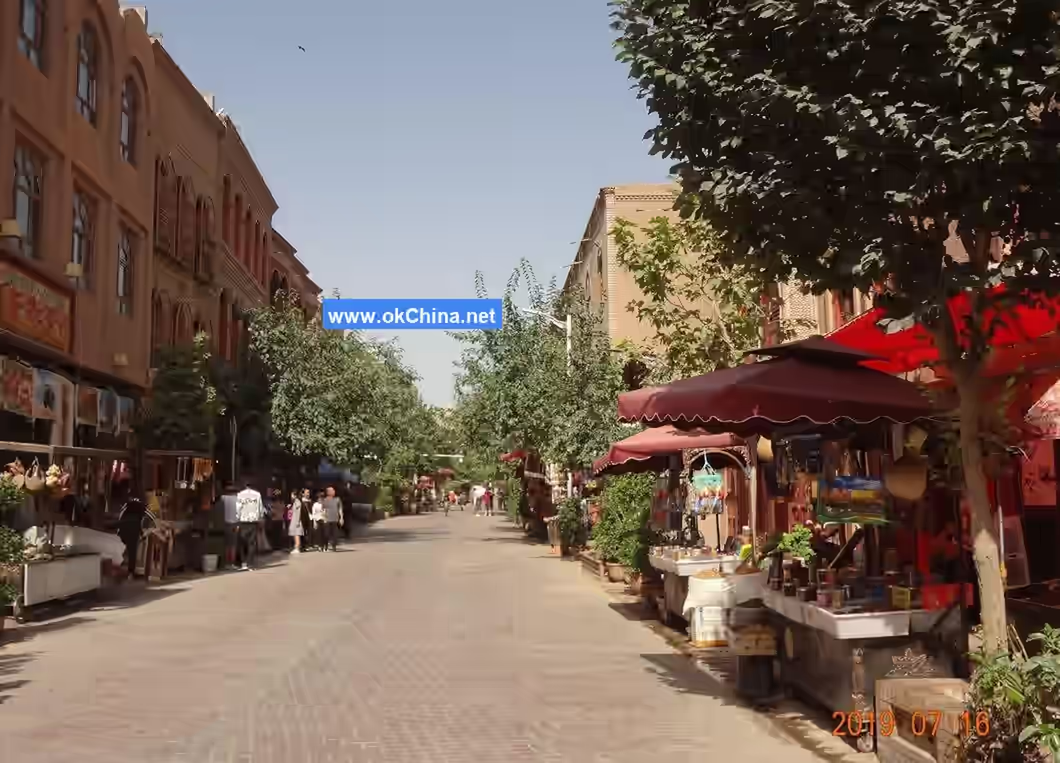
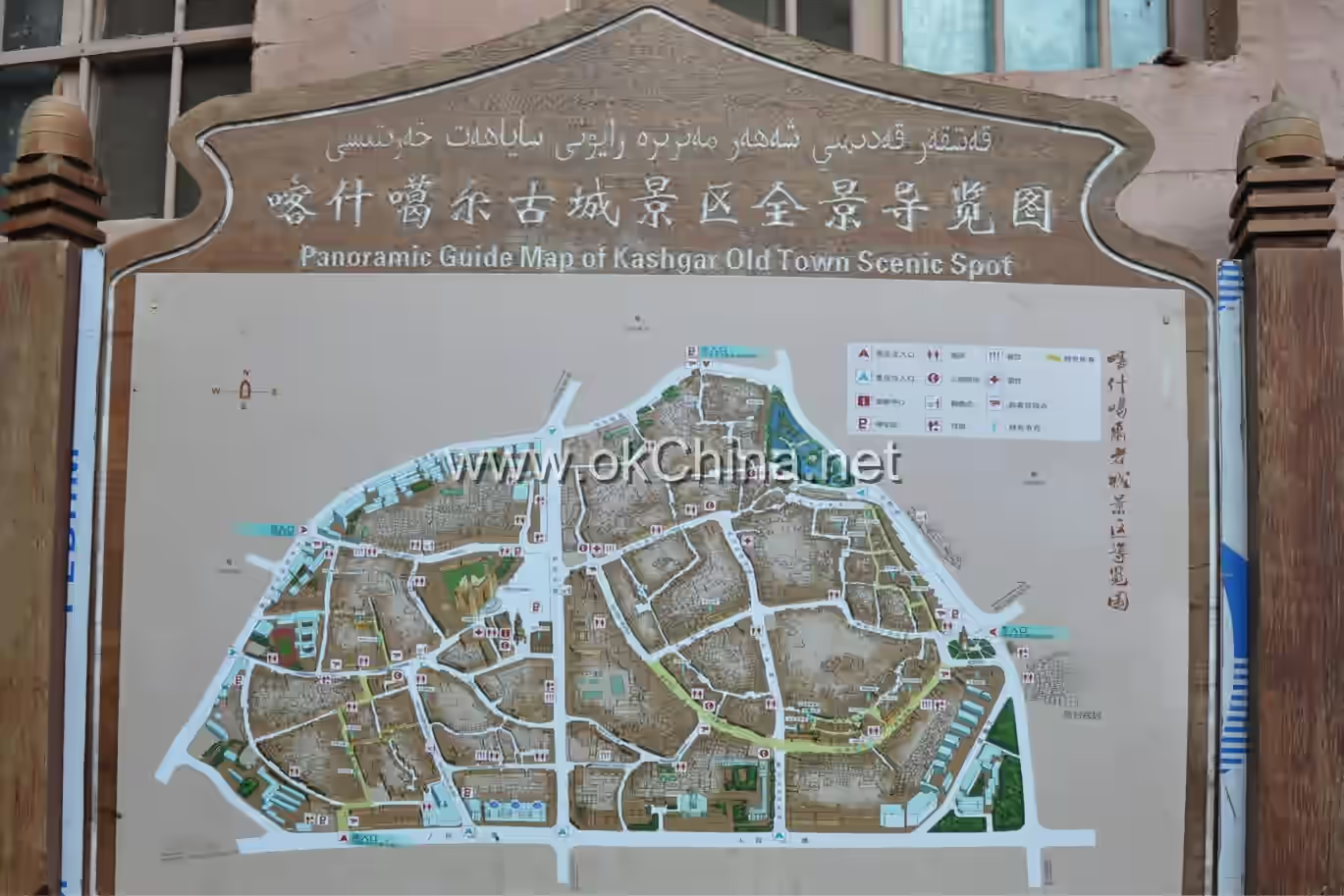
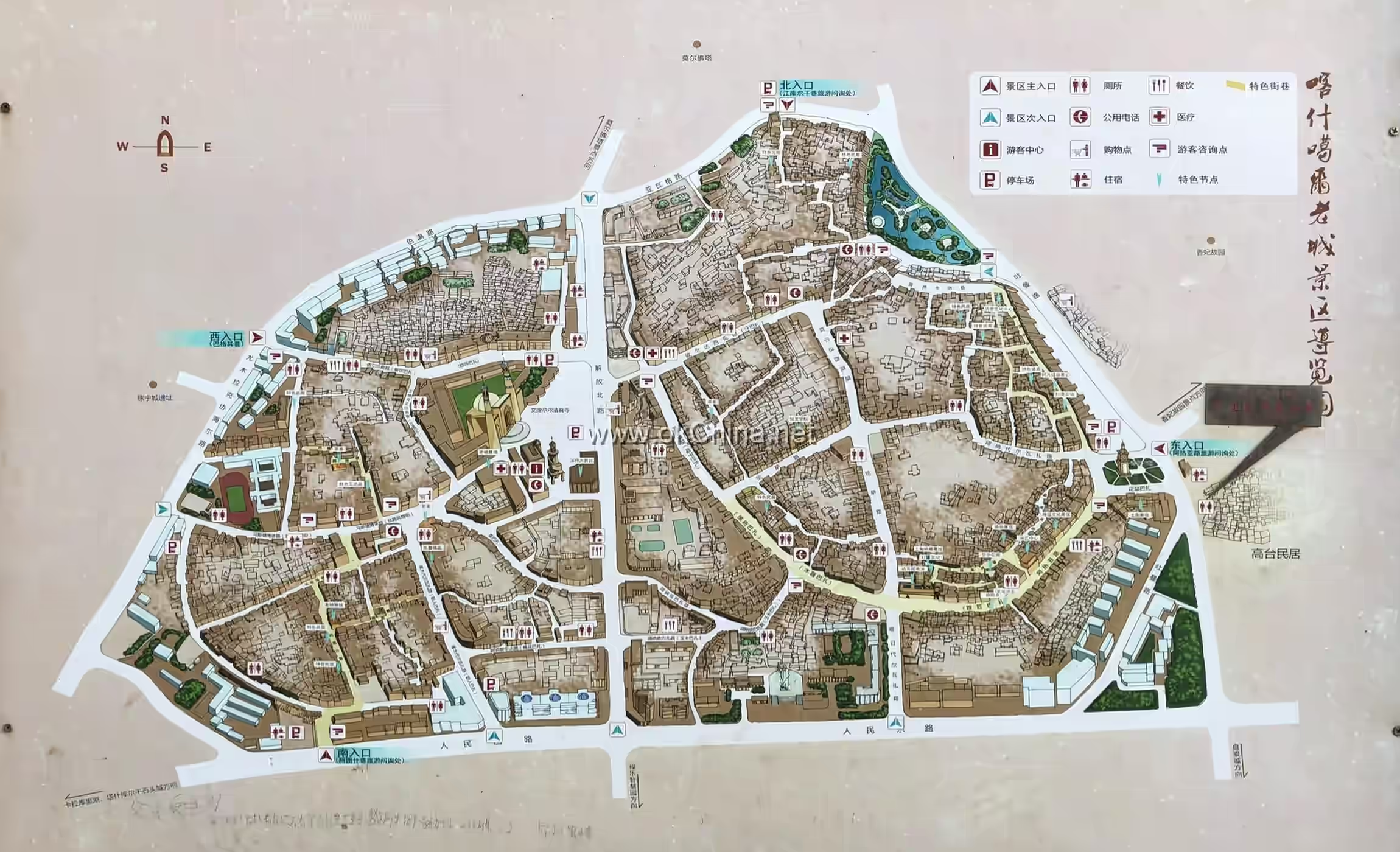
Kashgar Ancient City Scenic Area in Kashgar Prefecture, abbreviated as Kashgar Ancient City Scenic Area, is a tourist attraction located in Kashgar City, Kashgar Prefecture, Xinjiang Uygur Autonomous Region. The scenic area covers 3.6 square kilometers, bounded by Renmin Road to the south, Seman Road and Yawag Road to the north, Youmulakexiehaier Road to the west, and the Tuman River sightseeing belt to the east. Having endured over 2,000 years of wind, frost, snow, and rain, Kashgar Ancient City has become a specimen and slice of different historical periods. It is hailed as a living fossil for studying ancient Western Regions cities and is also a historical and cultural city of the highest value, influence, and representativeness for researching the culture of the ancient Silk Road. The ancient city is an open tourist attraction and a residential area for Uygur people, collectively showcasing Uygur family life, ethnic customs, traditional handicrafts, and local cuisine.
II. Orientation and Layout
Location and Territory
Kashgar Ancient City Scenic Area is located in Kashgar City, Kashgar Prefecture, Xinjiang Uygur Autonomous Region, situated at the northeastern foothills of the Pamir Plateau, the western edge of the Tarim Basin, and the middle reaches of the Kizil River. It is 1,473 kilometers away from Urumqi City. The total area is 1,056.8 square kilometers, bordering Shufu County to the east and west, adjacent to Artux City of the Kizilsu Kirgiz Autonomous Prefecture to the north against the Gumata Mountain, and facing Shule County across the Kizilsu River to the south.
Topography and Landforms
Kashgar City, where the scenic area is located, features higher terrain in the north and lower in the south, with the highest elevation at 1,502 meters, the lowest at 1,264 meters, and an average elevation of 1,289.5 meters. It belongs to the alluvial plain of the Kashgar River basin.
Climate Characteristics
Kashgar City, where the scenic area is located, has a warm temperate continental arid climate, with distinct seasons, no extreme heat in summer, no severe cold in winter, long summers and short winters, long sunshine hours, and low precipitation. The multi-year average temperature in Kashgar is 11.7°C, with the highest recorded in 1956 at 13.1°C and the lowest in 1974 at 10.5°C. The average annual precipitation in Kashgar is 61.5 millimeters, with the highest recorded in 1974 at 146.2 millimeters and the lowest in 1979 at only 17.3 millimeters.
III. Key Scenic Spots
Id Kah Mosque
Id Kah Mosque was first built in the seventh year of the Zhengtong era of the Ming Dynasty (1442 AD). It is located in the center of Kashgar City, on the west side of Id Kah Square, and is an ancient architectural complex with strong ethnic and religious characteristics. In 1962, Id Kah Mosque was designated as a key cultural relic protection unit at the autonomous region level by the People's Government of the Autonomous Region. On June 25, 2001, it was announced by the State Council as part of the fifth batch of national key cultural relic protection units.
Id Kah Mosque mainly consists of the gate tower, prayer hall, call-to-prayer tower, courtyard, ablution rooms, and other auxiliary buildings. It covers a total area of 16,800 square meters. The mosque's architecture is exquisite and magnificent. The prayer hall is composed of inner and outer halls and a long corridor, with 140 carved wooden pillars arranged in a network pattern in the inner and outer halls. The layout of the entire mosque is reasonable, the construction craftsmanship is fine, the decorations are simple and elegant, and the style is unique. It also incorporates Buddhist elements such as the Ruyi symbol, swastika, and lotus.
Gaotai Folk Houses
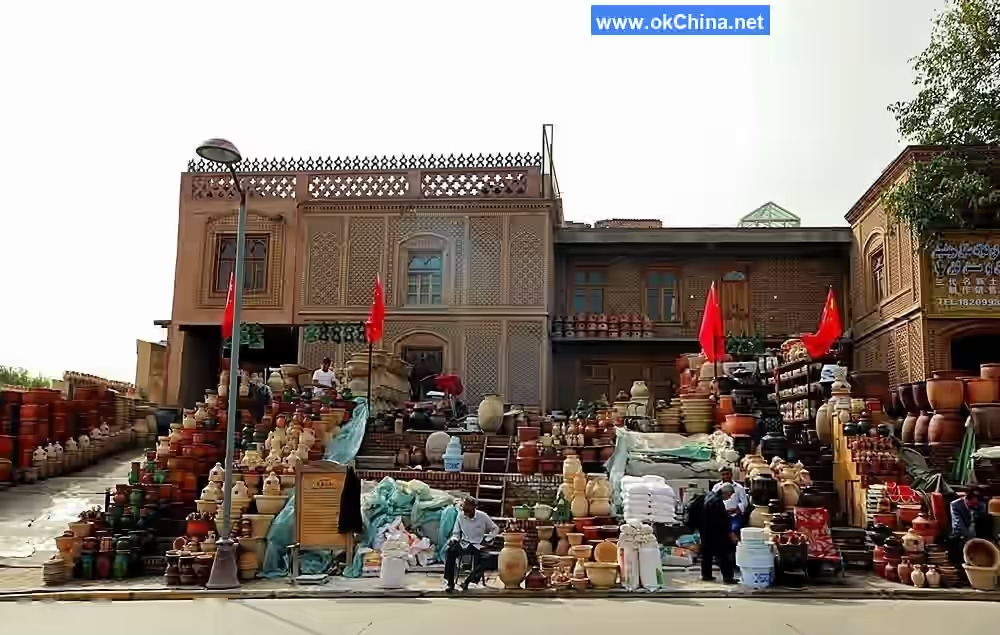
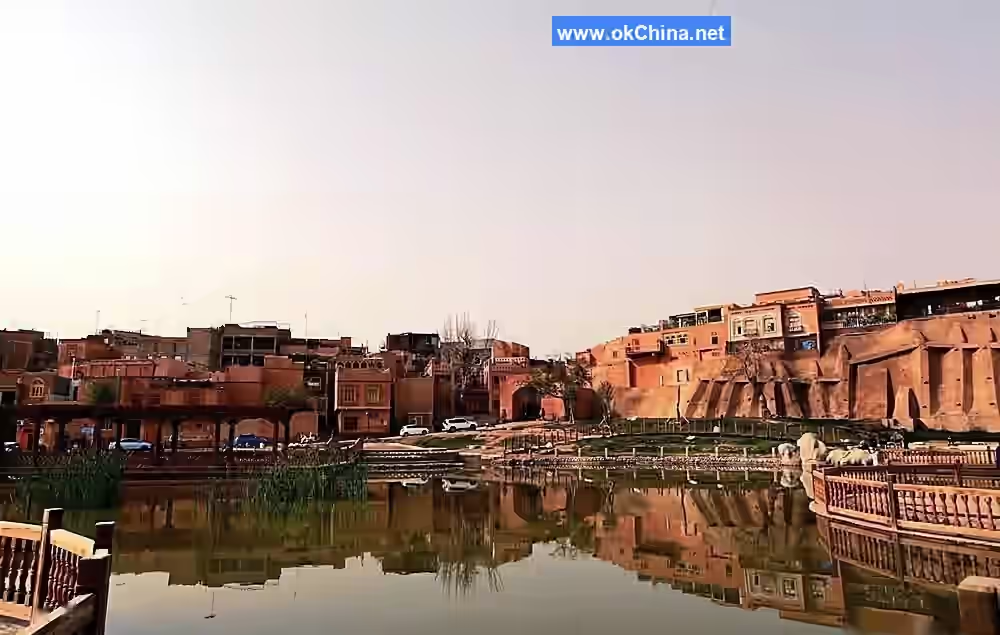
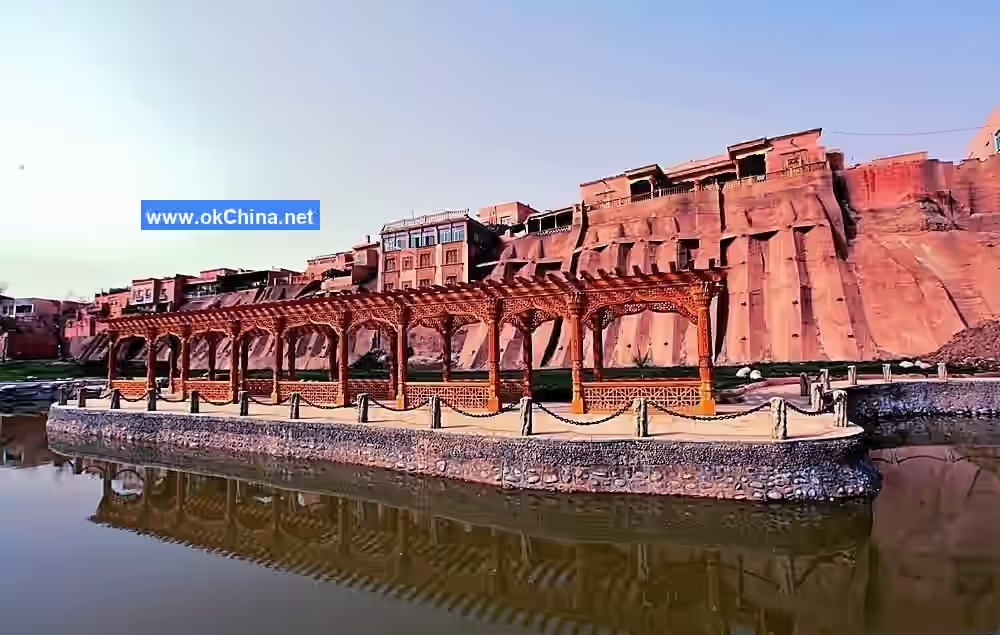
The Gaotai Folk Houses are located at the northeastern end of Kashgar Ancient City, with towering yellow high-platform slopes standing majestically on all sides. The skyline formed by the integration of the original architectural complex with the topography is well-proportioned and natural, making it a landmark landscape of Kashgar. The Gaotai Folk Houses, known in Uygur as "Kozichyabexi Lane," meaning "pottery on the high cliff," originated over 800 years ago during the Karakhanid period. More than 600 households once lived here, and after generations of settlement and reproduction, a unique original historical district was formed.
Geng Gong Temple
According to the Book of the Later Han, during the Eastern Han Dynasty, Geng Gong, the garrison commander of the Western Regions, was besieged by the Xiongnu army in Shule City. The water source outside the city was cut off, and a well dug inside the city to a depth of fifteen zhang (about 50 meters) yielded no water. In the crisis, Geng Gong straightened his clothes and hat, knelt to worship the heavens, drew his long sword, and dug three chi (about 1 meter) into the ground, after which spring water gushed out. Geng Gong then ordered his soldiers to pour the spring water from the city walls. The Xiongnu, realizing the city had water and thinking the defenders had divine assistance, immediately retreated and fled. This is the famous historical story of "Geng Gong's Prayer for Spring Repels the Xiongnu." This clear spring has since been known as Geng Gong Well, and a temple by the spring is also called Geng Gong Temple.
Ancient City Wall
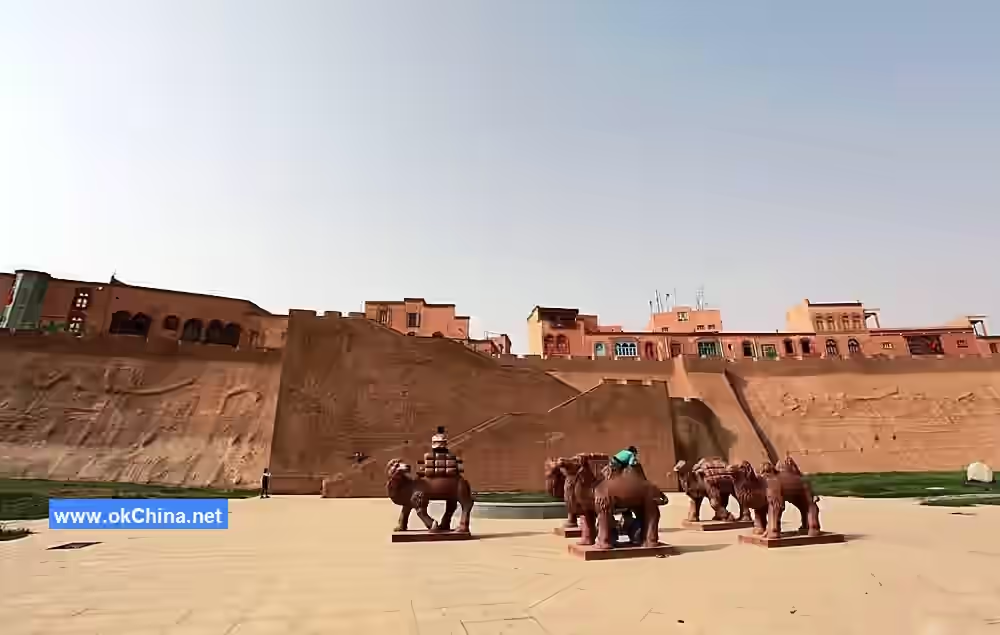
In the 18th year of the Daoguang era of the Qing Dynasty (1838 AD), the area between Laining City and Hui City (the Muslim quarter) had already been fully developed into residential areas. Zuhuerdin, the Hakim Beg of Kashgar, presided over the expansion of Hui City, incorporating the area west of Id Kah Mosque to the eastern wall of Laining City into the new city. The western city wall was moved westward to the present-day Youmulakexiehaier Road, connecting with Laining City. A new southern gate was opened at the site of the old post office. Because it was built on an old river channel with accumulated sand, it was called Kumdarvaza (meaning "Sand Gate" in Uygur). The area around the southern gate became a bustling handicraft district. The northern gate was moved to the site of the present-day Victory Cinema, and the western gate was moved to the customs office, called "Yingdarvaza" (meaning "New Gate").
IV. Cultural Resources
Specialty Snacks
- Grilled Eggs: Chicken eggs and pigeon eggs are grilled whole, then sprinkled with a bit of salt and cumin, preserving their original flavor. The most popular goose eggs are made by opening a small hole in a fresh egg, pouring out some of the egg white, adding 18 kinds of seasonings, and then grilling them. They taste somewhat like glutinous rice, with a faint roasted aroma mixed with sweetness.
- Rice Sausage & Lung Noodles: Rice sausage is made by stuffing rice into sheep intestines; lung noodles are made by pouring water used to wash gluten into sheep lungs and steaming them. Rice sausage + lung noodles + gluten + cilantro, chili, and vinegar is one of the favorite snacks of Xinjiang people.
- Pomegranate Juice: With a sweetness level of 14–17%, the amber-colored pomegranate juice is very popular at night markets.
- Yogurt Zongzi: Unwrap a zongzi (sticky rice dumpling) and place it on a small plate, gently flatten it with a small wooden spatula, spread half a cup of yogurt over the zongzi, and then drizzle with a special syrup made from red dates. This is yogurt zongzi.
- Spicy Lamb Trotters: When you grab a fatty, smooth, fragrant, and soft spicy lamb trotter with both hands and take a bite, the aroma of the lamb trotter instantly fills your entire mouth, with fresh, fragrant, spicy, and delicious flavors rushing straight to your heart and lungs.
Honors and Awards
- On July 13, 2015, Kashgar Ancient City Scenic Area was approved as a National AAAAA Tourist Attraction by the National Tourism Resources Planning and Development Quality Assessment Committee.
- In January 2022, Kashgar Ancient City Scenic Area was rated as an "Xinjiang Intangible Cultural Heritage Bazaar" by the Culture and Tourism Department of Xinjiang Uygur Autonomous Region.
- In June 2023, Kashgar Ancient City Scenic Area was awarded the title of "Autonomous Region-Level Intangible Cultural Heritage Market."
Comments
Post a Comment