Karakoram Scenic Area in Ili Kazakh Autonomous Prefecture
I. Introduction (General Overview, including bilingual names, location, and significance)
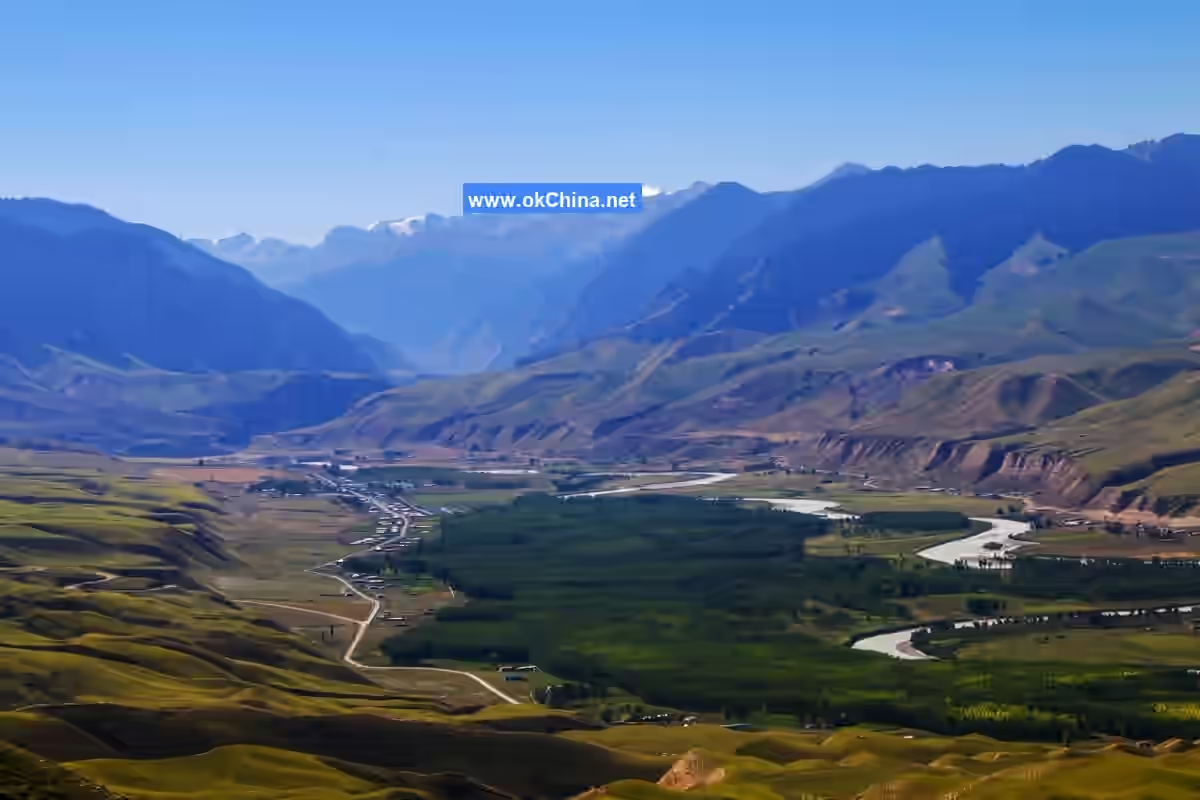
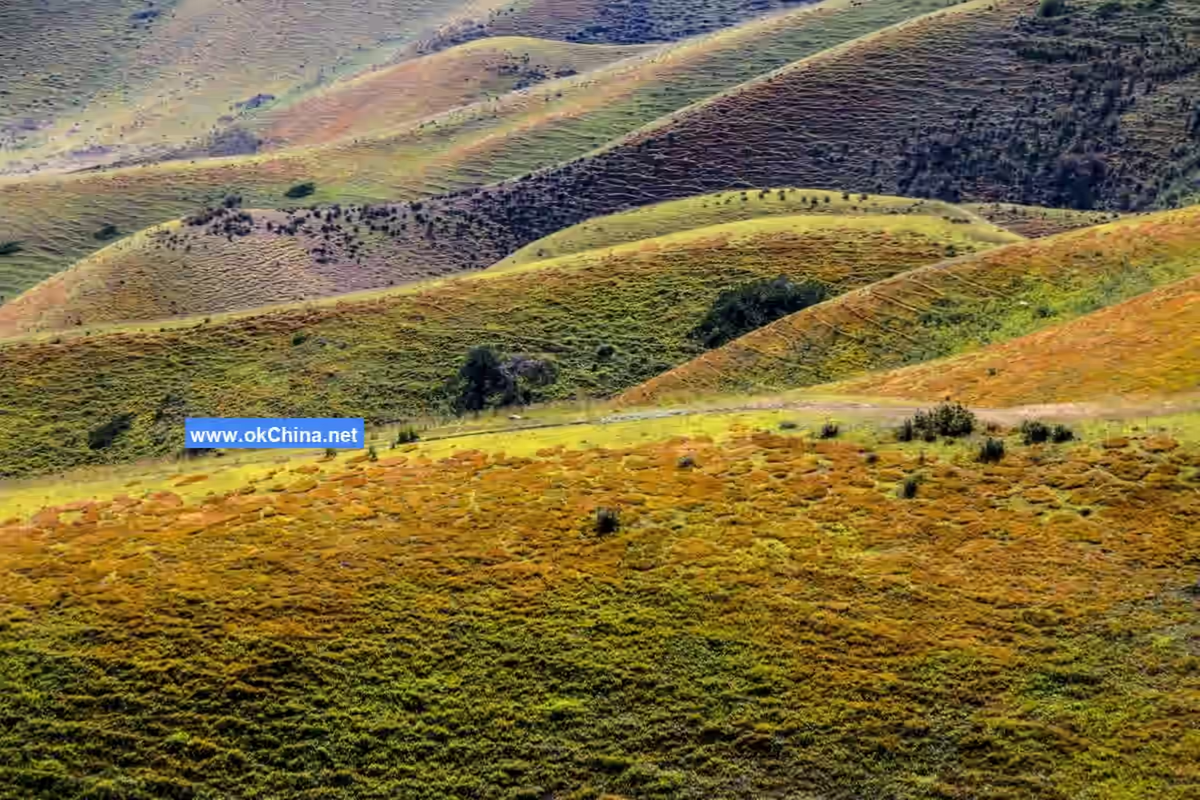
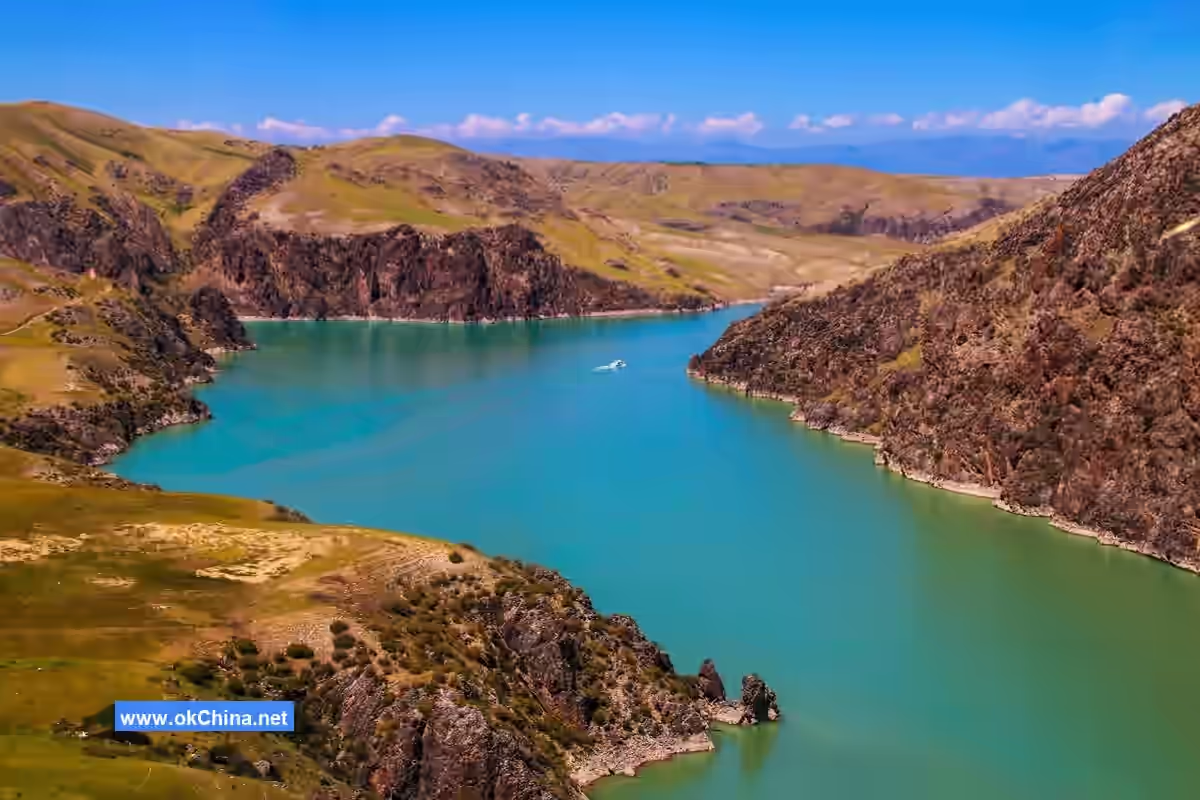
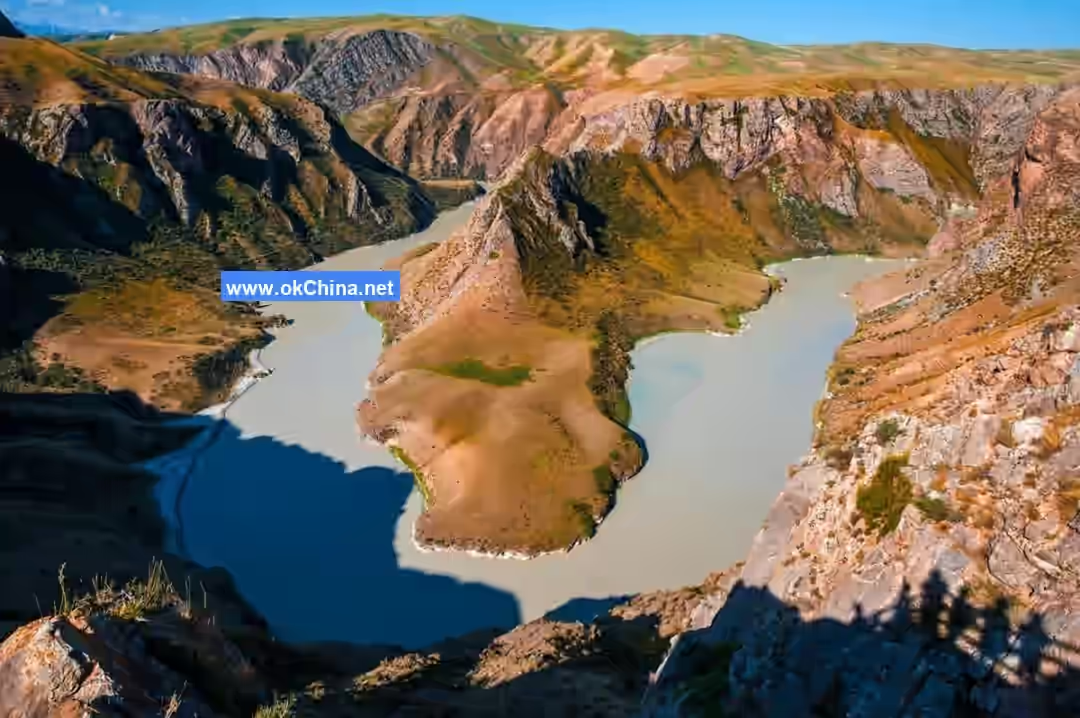
The Karakoram Scenic Area in Ili Kazakh Autonomous Prefecture, abbreviated as Karakoram Scenic Area, is located in Tekes County, Ili Kazakh Autonomous Prefecture, Xinjiang Uygur Autonomous Region. "Karakoram" is a Kazakh word meaning "wild plain on the mountain ridge." The Karakoram Mountain is an east-west stretching ridge, with densely forested, ravine-covered mountainous terrain on both sides, featuring undulating highlands and lush primitive spruce forests. Everything here remains in its pristine state, with no tourist facilities. Within the scenic area, snow-capped peaks and canyons complement each other, forests and grasslands are intricately interwoven, and in spring and summer, a variety of flowers bloom in vibrant colors. Under the soft light of dawn and dusk, the landscape presents gentle lines and distinct layers, forming artistic vistas. As an important component of the "Xinjiang Tianshan" UNESCO World Natural Heritage site, the Karakoram Scenic Area is a region of rich biodiversity and high aesthetic value within the Xinjiang Tianshan Mountains.
II. Location and Layout (Introduction to the scenic area's geographical location, climate, hydrology, flora, and fauna)
Geographical Resources
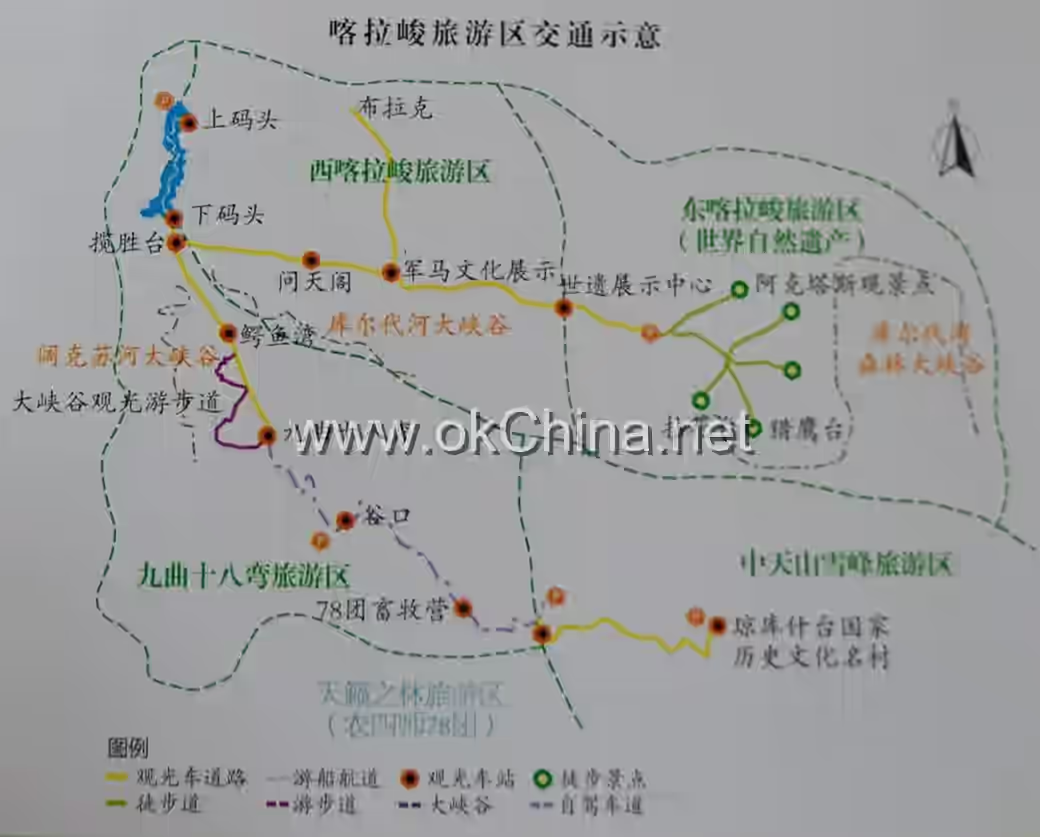
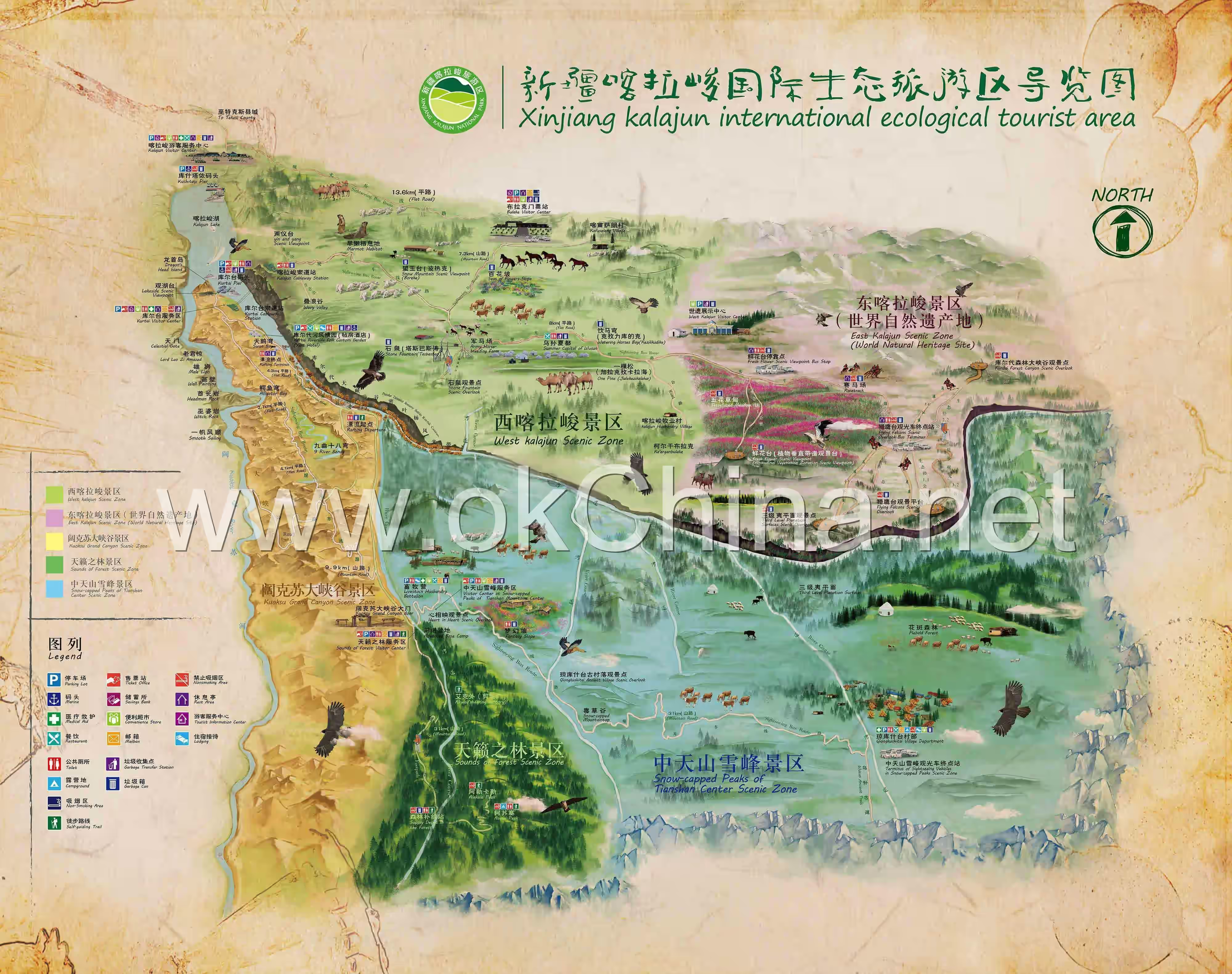
The Karakoram-Koksu Scenic Area is located in the southern Tianshan Mountains of Tekes County, in the northwest of Xinjiang Uygur Autonomous Region. The Karakoram Grassland lies at an altitude of 2,000–3,600 meters, covering a high-altitude meadow pasture approximately 25 kilometers wide from north to south and over 40 kilometers long from east to west, with a total area exceeding 1,000 square kilometers.
Natural Resources
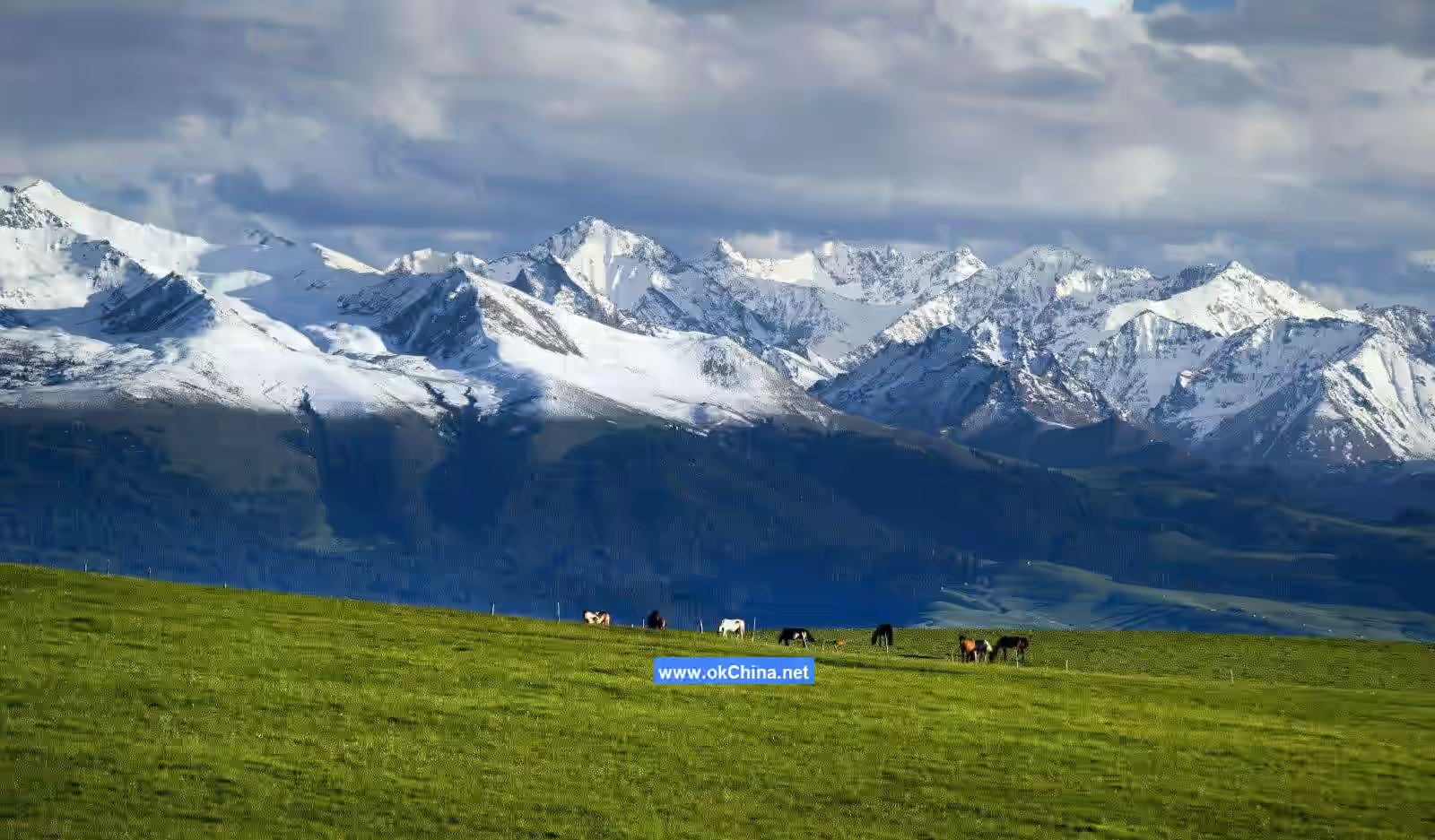
The Karakoram Grassland is a typical "five-flower meadow" grassland, home to over a hundred species of high-quality forage grass. "Karakoram" is a Kazakh word meaning "wild plain on the mountain ridge." The Karakoram Mountain is an east-west stretching ridge, with densely forested, ravine-covered mountainous terrain on both sides, featuring undulating highlands and lush primitive spruce forests. The mountaintop of Karakoram is a unified, southward-sloping plateau landscape, covered with lush grass and vibrant flowers, resembling an expansive green carpet stretching all the way to the foot of the snow-capped mountains. Experts from the United Nations Food and Agriculture Organization (FAO) once visited specifically for an inspection and were captivated, considering the Karakoram Grassland to be one of the world's rare natural pastures. From mid-June to mid-September each year is the golden season for the Karakoram Grassland. During this time, approximately 200,000 livestock from Tekes, Gongliu, and other counties are moved here to escape the summer heat and fatten up. Even the prized breeding sheep from the Gongnaisi Breeding Sheep Farm use this area as a summer retreat.
III. Key Scenic Spots (Introduction to the characteristics, topography, and activities of the attractions)
Karakoram Grassland
The Karakoram Mountain stretches across the Karakoram Grassland, running east-west for 42 kilometers. It connects to the Kapusalang Valley in the north and Qiongkushitai in the south, spanning 25 kilometers in width. The altitude ranges from 2,000 to 2,800 meters, with a total area of 1,050 square kilometers, including 230,000 mu of grassland. It is a high-altitude mountain meadow pasture capable of supporting 150,000 livestock. The main mountain is flanked by densely forested, ravine-covered terrain. Here, you can find the best alpine landscapes, meadows, and grasslands in Ili, along with the charm of hot springs, the beauty of waterfalls and stone forests, and the wonder of glaciers. Experts from the United Nations Food and Agriculture Organization (FAO) once visited specifically for an inspection and were captivated, considering it one of the world's rare natural pastures. Approximately 200,000 livestock from Tekes, Gongliu, and other counties are moved here from June to September each year to escape the summer heat and fatten up. Even the prized breeding sheep from the Gongnaisi Breeding Sheep Farm use this area as a summer retreat. The Karakoram Grassland is truly an enchanting place.
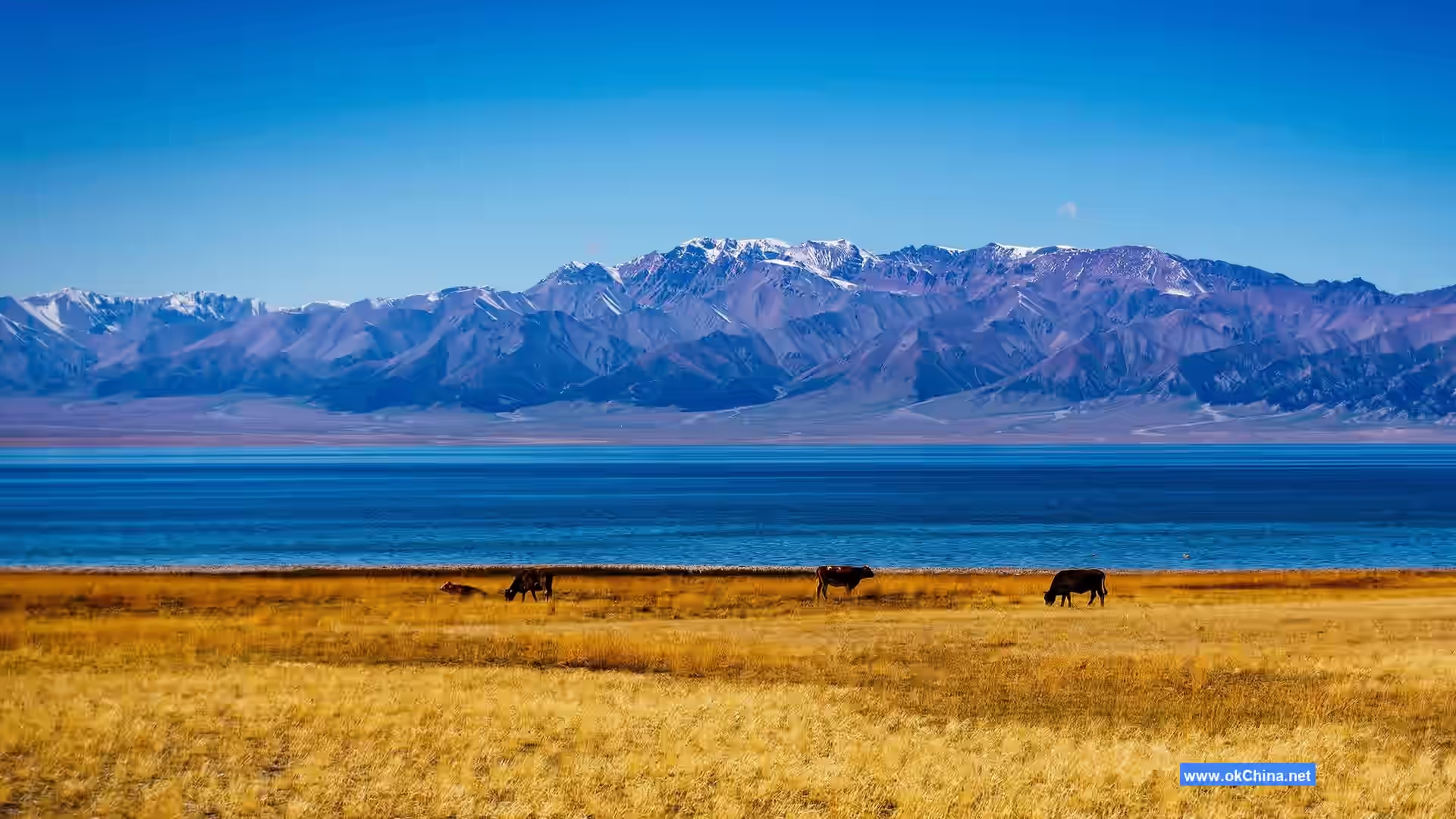
Stepping onto the Karakoram Grassland, one is first struck by its vast, boundless expanse of green. The undulating terrain resembles a turbulent green ocean stretching to the horizon. The meadows here are as soft and thick as velvet carpets, with various types of forage grass swaying gently in the breeze, as if dancing joyfully. Wildflowers of all colors bloom freely—red like fire, pink like rosy clouds, white like snow—scattered across the grassland like stars, adorning this green land with a vibrant palette, as if nature had meticulously painted a brilliant masterpiece. On this grassland, horses gallop freely, and herds of cattle and sheep graze and play leisurely, adding infinite vitality and energy to the landscape. In the distance, towering snow-capped mountains stand majestically against the blue sky and white clouds, forming a breathtaking picture of Tianshan scenery. Meltwater from the snow-capped mountains flows gently, forming numerous clear streams that meander through the grassland like silver ribbons. Walking along these streams, you can hear the crisp sound of flowing water, as if nature is playing a beautiful symphony. When the first rays of morning sunlight fall on the Karakoram Grassland, the entire area is bathed in a golden glow. Morning mist lingers like a light veil, creating a dreamlike, fairy-tale atmosphere. In the evening, as the sun sets, the afterglow dyes the grassland orange-red, and everything is edged with gold, creating a scene of breathtaking beauty. Here, visitors can ride horses freely, feeling the exhilaration of the wind rushing past their ears, or simply lie on the grass, gazing at the sky, and enjoying the tranquility and comfort. Whether you are a photography enthusiast, an outdoor sports lover, or a traveler seeking relaxation, the Karakoram Grassland can meet your needs, making you linger and lose yourself in this green paradise.
Passenger Cableway
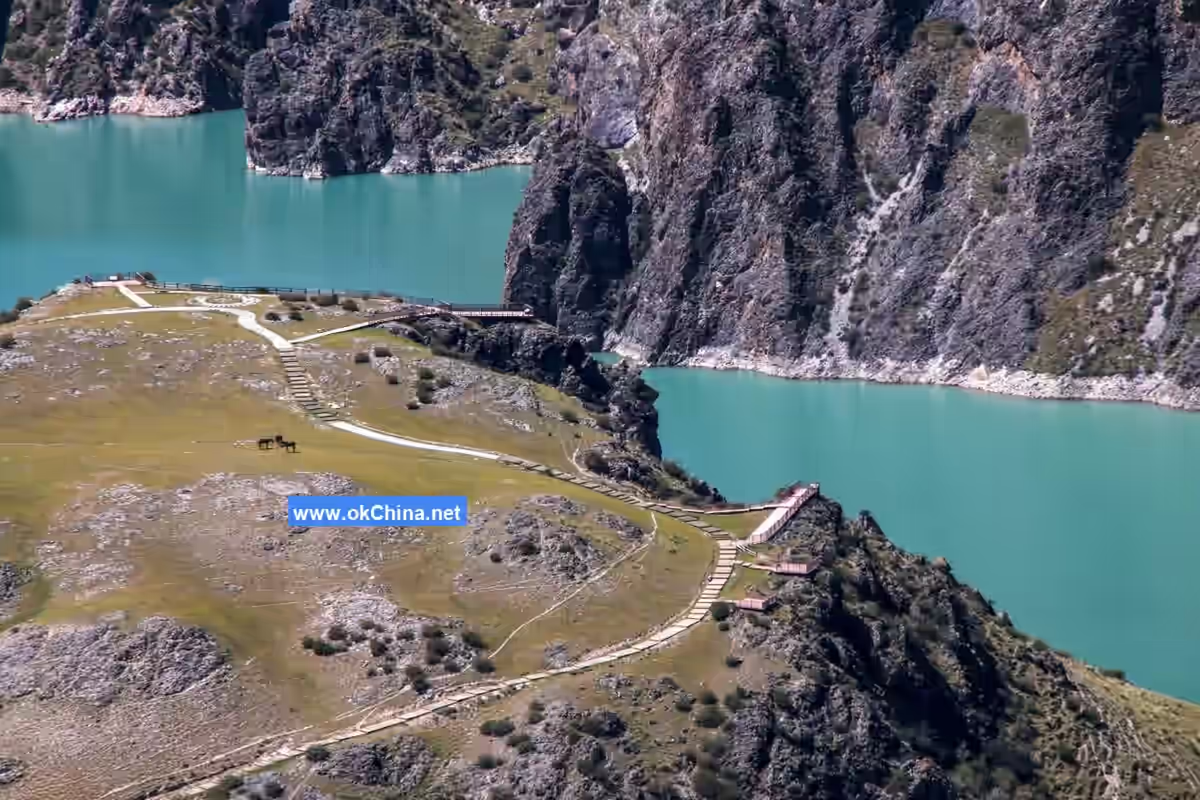
The Karakoram Passenger Cableway is located in the Koksu Canyon of the Karakoram Scenic Area in Tekes County, Ili, Xinjiang, approximately 23 kilometers from the county town. The cableway station is a steel-frame structure, with a total length of 680 meters between the upper and lower stations and a vertical drop of 380 meters. The total investment is 42.78 million yuan, covering an area of 5,557.53 square meters, with a building area of 4,546.28 square meters. The construction project includes the upper and lower cableway station buildings, parking lots, green belts, and ancillary facilities. The cableway station operators have completed pre-job training and obtained relevant qualifications for driving, maintenance, welding, and other tasks.
The Karakoram Scenic Area Passenger Cableway will officially begin operations in 2016, offering a new aerial viewing experience and laying a solid foundation for the development and construction of tourism in Karakoram.
Hutongsala Waterfall
The Boziadeer (also known as Baozhadun) Grassland in the upper reaches of the Koksu River is a high-altitude mountain basin surrounded by ice-capped peaks, famous as a winter pasture. Here lies the renowned alpine waterfall—Hutongsala Waterfall, the largest waterfall deep in the Tianshan Mountains. The term "Hutong" is derived from the Mongolian word for "alley," and "Hutongsala" means "a canyon like an alley" in Mongolian. The canyon where the waterfall is located features steep cliffs on both sides and rugged rocks. Hutongsala Waterfall stands at an altitude of over 3,200 meters, with a width of 6–7 meters and a drop of over 30 meters, creating a majestic and spectacular sight.
The journey to the waterfall is filled with mystery and surprises. Following the winding mountain path, you are surrounded by dense forests, with tall spruce and pine trees blocking the sky. Sunlight filters through the gaps in the leaves, casting golden rays. Birds sing joyfully in the branches, as if guiding visitors on their way. As the roar of the waterfall gradually reaches your ears, anticipation grows stronger. Finally, Hutongsala Waterfall comes into view: a massive flow of water cascades down from the towering cliff, like the Milky Way falling from the sky, with magnificent momentum. The waterfall has an immense drop, and the rushing water crashes against the rocks, creating layers of mist that refract sunlight to form a brilliant rainbow spanning the front of the waterfall, like a colorful bridge connecting heaven and earth. The waterfall's flow gathers into a clear, deep pool below, as green and serene as a giant piece of jade. The surrounding rocks, shaped by long-term water erosion, vary in form—some smooth and rounded, others sharp and angular—complementing the waterfall and pool to create a dynamic and powerful landscape painting. Standing at the foot of the waterfall, feeling the mist on your face, it feels as if your entire body and mind are being cleansed. The deafening sound of the waterfall fills your ears, making you marvel at the greatness and wonder of nature. Here, visitors can experience the waterfall's majestic power up close or stroll along the poolside to admire its beauty from different angles. Whether in the heat of summer or the cold of winter, Hutongsala Waterfall has its unique charm. In summer, the cool mist from the waterfall dispels the heat, refreshing visitors; in winter, parts of the waterfall freeze into icicles, creating a stunning ice-sculpted landscape that feels like entering a snowy fairy-tale world.
Stone Forest
Another remarkable sight is the Stone Forest at the source of the Koksu River, located at an altitude of approximately 3,500 meters, stretching about 9 kilometers long and 5 kilometers wide. Here, the rocks have been sculpted by nature into a myriad of fantastical and wondrous shapes. Some resemble ancient castles, others look like pedestrians or animals, and still others resemble towering, ancient trees. The Stone Forest landscape is extraordinary and, due to its remoteness, remains a mysterious realm. The Stone Forest of Karakoram is like a natural geological museum, showcasing the奇妙 traces left by the passage of time, making one marvel at the craftsmanship of nature.
This Stone Forest is spread across a vast area, with rocks of various shapes standing tall. Some rocks tower into the clouds, like giants standing firm and solemn; others are small and delicate, resembling exquisite works of art that invite visitors to pause and admire. The rocks in the Stone Forest take on bizarre forms: some look like lifelike animals, such as galloping horses or soaring eagles, as if they might leap out at any moment; others resemble human figures in various poses, deep in thought or laughing heartily, as if telling ancient tales. Under the sunlight, they cast mottled shadows, adding to the mysterious atmosphere. Wandering through the Stone Forest feels like entering a maze, where every turn may bring a new surprise. The rocks here are hard and have withstood erosion by wind and rain, remaining well-preserved. Time has left deep marks on them, recording the long process of geological evolution.Some stones are covered with peculiar textures, resembling patterns meticulously carved by nature. Some textures flow as smoothly as drifting clouds and flowing water, while others are intricate and complex, inspiring endless speculation about their formation. In the crevices of the stone forest, rare plants grow tenaciously, thriving and reproducing in this unique environment with their resilient vitality, adding a touch of life and greenery to the stone forest. Climbing to the higher points of the stone forest offers a panoramic view of distant grasslands and forests, blending seamlessly with the stone landscape to form a unique natural canvas. Here, visitors can unleash their imagination, attributing various stories and meanings to these extraordinary stones, experiencing the boundless creativity and artistic charm bestowed by nature. At the same time, they can gain a deeper understanding of geological knowledge and appreciate the grandeur and wonder of Earth's billions of years of evolution.
IV. Cultural Resources (Including Myths, Poetry, and Notable Figures)
The Kalajun Scenic Area not only boasts captivating natural landscapes but also encompasses a rich variety of distinctive cultural and folk activities, showcasing the vibrant ethnic customs and profound cultural heritage for visitors.
Within the scenic area, traditional folk performances of the Kazakh ethnic group are often seen. The Kazakh people are skilled in singing and dancing, dressed in bright ethnic attire, moving to the melodious sounds of the horsehead fiddle as they perform lively traditional dances. The dancers' movements are powerful yet graceful—men's dances embody the boldness and unrestrained spirit of the grassland, while women's dances are as delicate and beautiful as flowers on the prairie. Visitors can personally participate in these dances, guided by the hospitable Kazakh people, learning traditional steps and feeling the joy and energy brought by the dance. Additionally, traditional Kazakh sports activities are a highlight of the cultural offerings in the scenic area. For example, horse racing sees riders galloping across the grasslands, their horses' manes flowing in the wind and hooves kicking up dust, while the cheers and encouragement of the audience create a spectacular scene. There are also wrestling matches, where competitors face off in pairs, using clever techniques and strength to try to bring each other down, with every thrilling moment earning applause from the crowd. Beyond performances and sports, visitors can also experience traditional Kazakh handicrafts. In dedicated handicraft display areas, Kazakh artisans showcase their exquisite skills, such as creating intricate Kazakh embroidery. Under the guidance of these artisans, visitors can try their hand at embroidery, stitching their own grassland memories with needle and thread. Moreover, the scenic area hosts grand celebrations during specific festivals and seasons. For instance, during the traditional Kazakh festival of Nauryz, a grand ceremony is held within the scenic area. People dress in their most splendid attire, gather together, and pray for a year of favorable weather, happiness, and well-being. Traditional foods, such as sweet Nauryz porridge, are shared, and visitors can also taste these ethnic delicacies, immersing themselves in the festive atmosphere. These distinctive cultural and folk activities allow visitors to gain a deeper understanding of Kazakh culture and life while admiring the beauty of Kalajun, making their journey more enriching and colorful. They also establish the Kalajun Scenic Area as a tourist destination that combines natural landscapes with cultural charm.
Comments
Post a Comment