Kanas Scenic Area in Altay Prefecture
I. Introduction
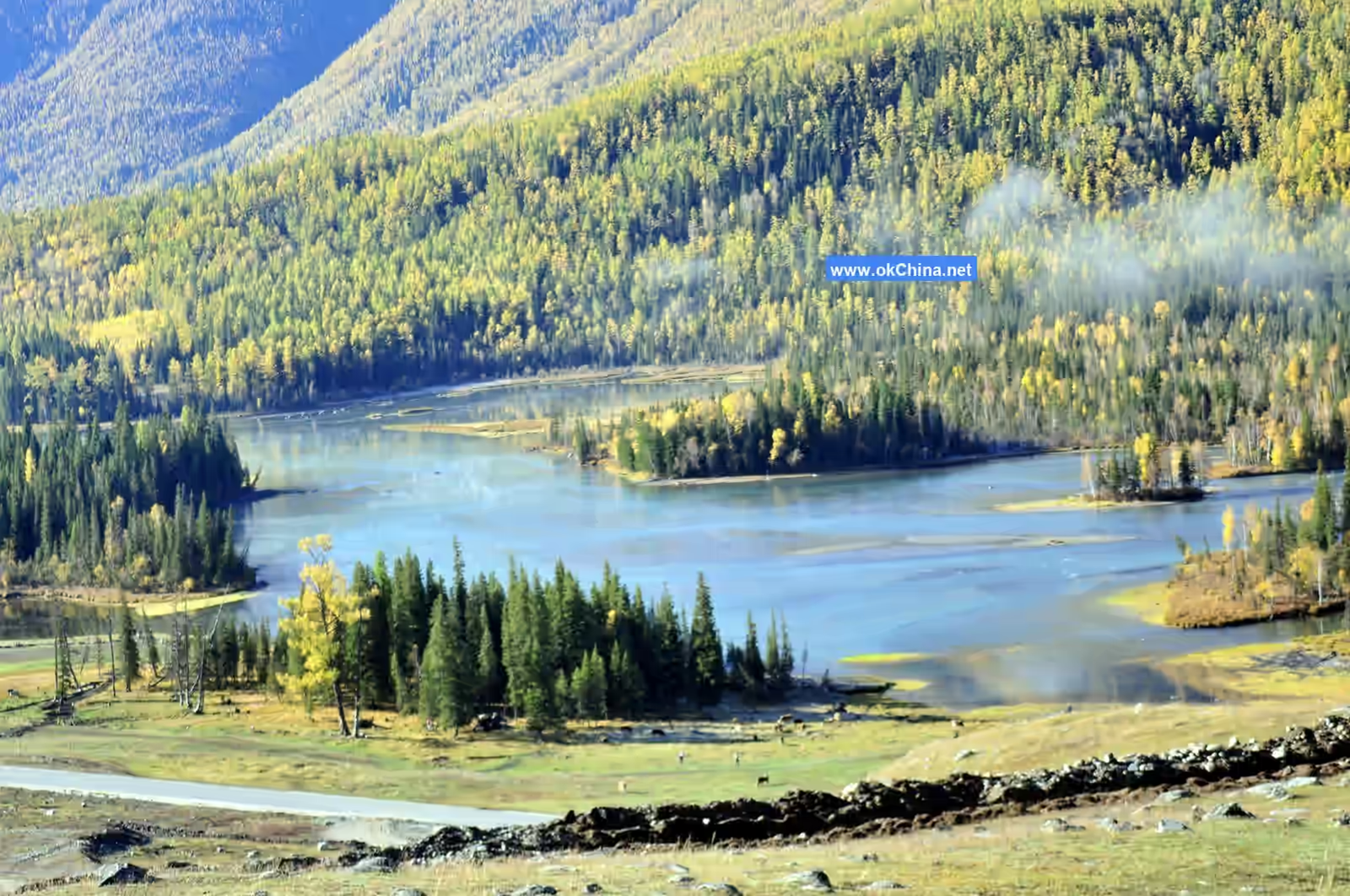
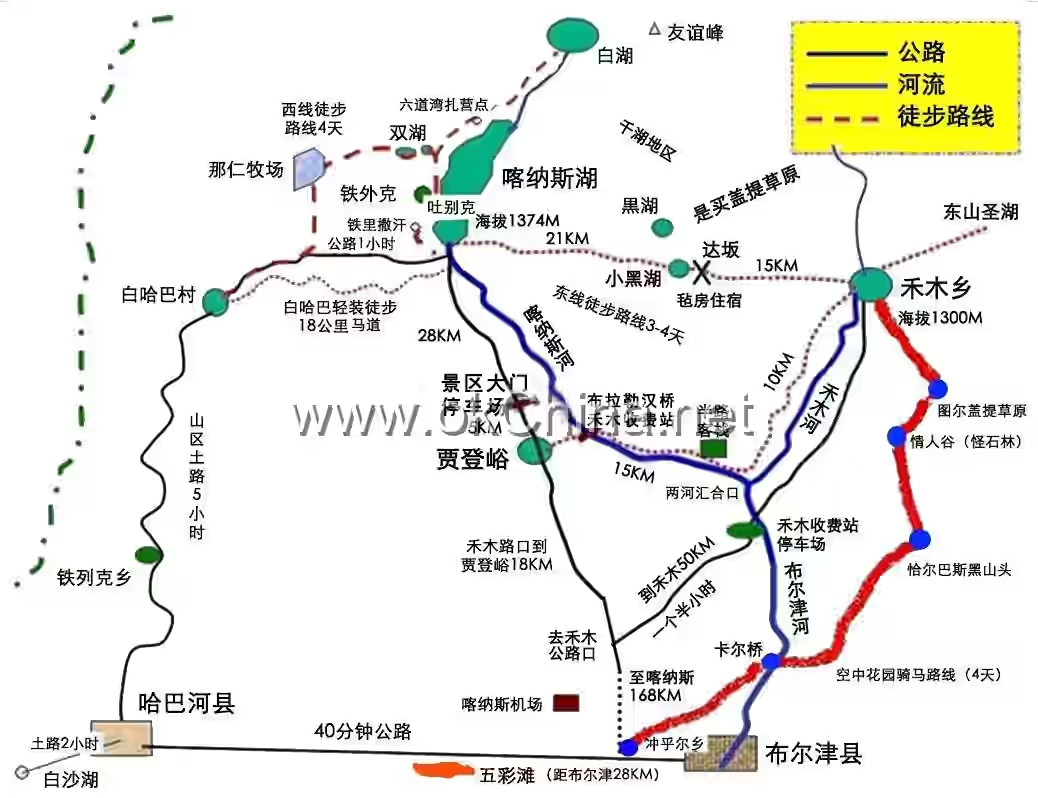
The Kanas Scenic Area is located in the middle section of the Altai Mountains in Xinjiang, at the border region where China meets Kazakhstan, Russia, and Mongolia. The scenic area covers 10,030 square kilometers. The core essence of the Kanas National Scenic Area is a lake formed by intense glacial plucking and the damming of a valley by glacial moraine, creating a terminal moraine lake. The lake surface sits at an elevation of 1,375 meters. Shaped like a crescent moon, the lake is 24.5 km long, with an average width of 1.9 km, an average depth of 90 meters, a maximum depth of 188.4 meters, an area of 69,000 mu (approximately 46 square kilometers), and a water storage capacity of 4 billion cubic meters. Within the Kanas Scenic Area, there are 55 attractions of various sizes, belonging to 33 basic types. These mainly include eight renowned natural landscape areas and three cultural landscape areas, both domestically and internationally famous, such as the Kanas National Nature Reserve, Kanas National Geopark, Baihaba National Forest Park, Jiadengyu National Forest Park, Kanas River Valley, Hemu River Valley, Naren Grassland, Hemu Grassland, Hemu Village, Baihaba Village, and Kanas Village.
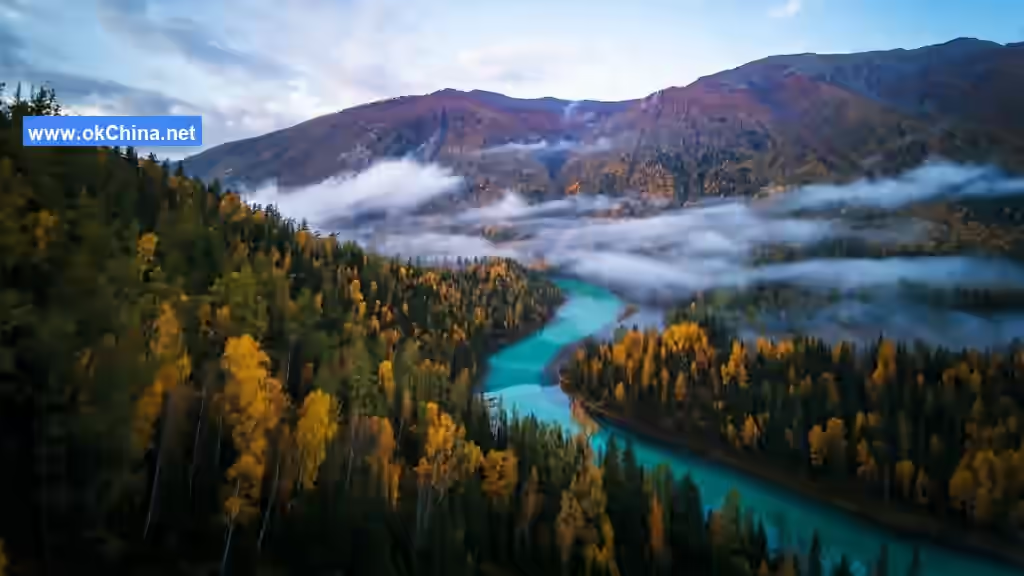
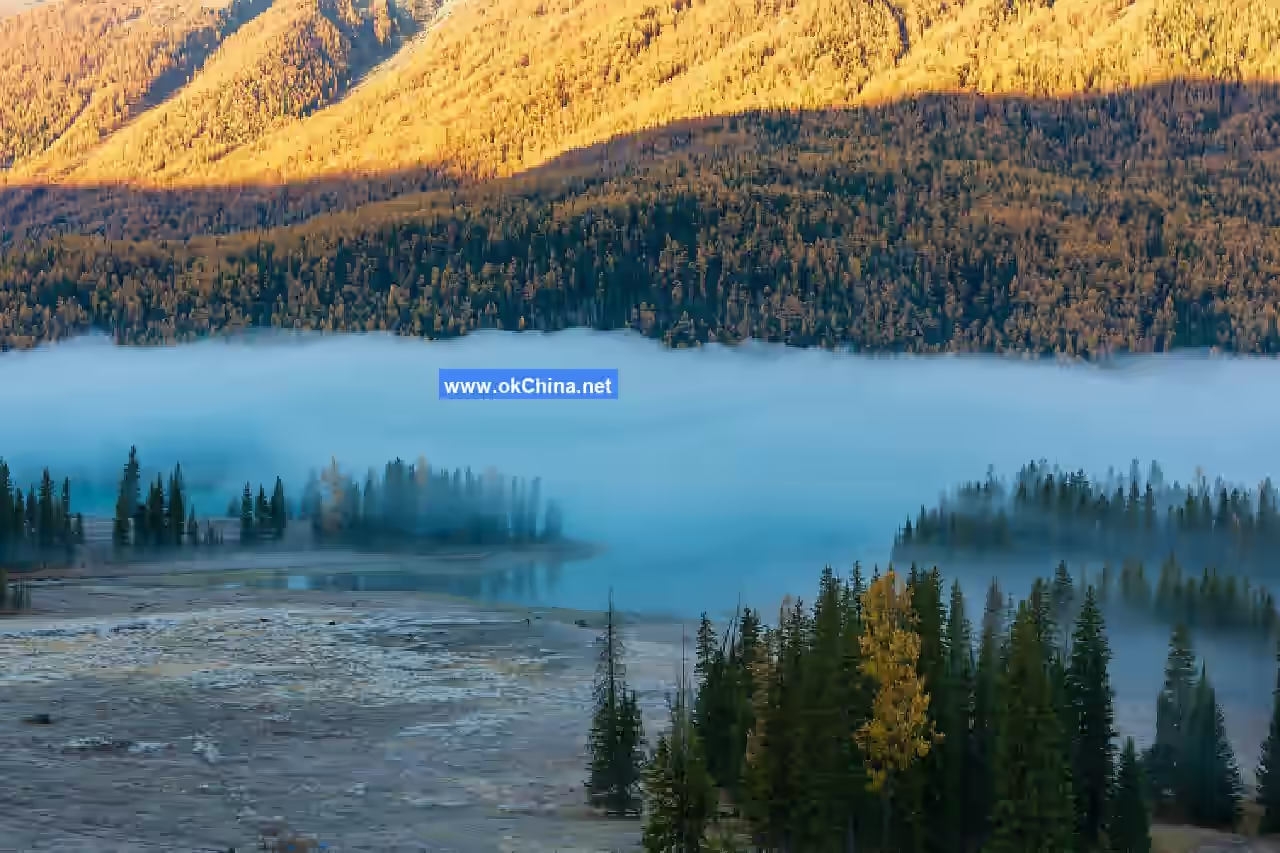
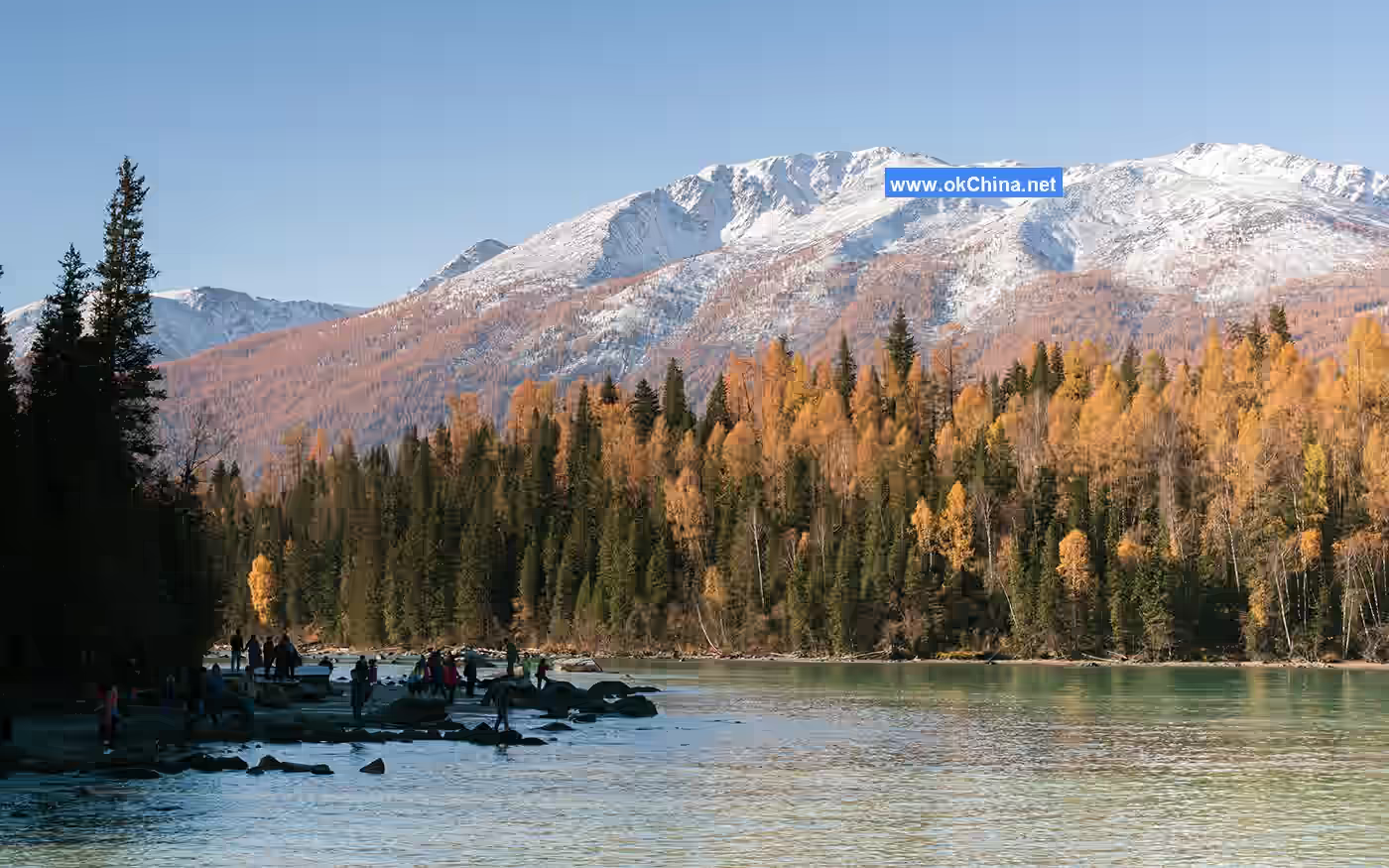
"Kanas" is a Mongolian word meaning "beautiful and mysterious lake." It is a National AAAAA Tourist Attraction, National Geopark, National Forest Park, Chinese Nature Reserve, National Natural Heritage site, National Low-Carbon Tourism Experimental Zone, and is considered one of China's most beautiful lakes. With its snow-capped peaks, green slopes, dark forests, and stunning lake and mountain scenery, Kanas Lake is hailed as a "fairyland on earth, the garden of the gods."
II. Location and Layout
Geographical Environment
The Kanas Scenic Area in Altay Prefecture is situated in the middle section of the Altai Mountains in the Xinjiang Uygur Autonomous Region, at the border where China meets Kazakhstan, Russia, and Mongolia. It is China's only protected distribution area for flora and fauna of the Siberian biogeographic region. Centered around Kanas Lake, the Kanas Lake Natural Landscape Reserve has been established here. The total protected area reaches 5,588 square kilometers, featuring vertical zonation from top to bottom including the glacial permanent snow zone, mountain permafrost snow zone, alpine meadow zone, and mountain steppe zone.
Hydrology
The Kanas Scenic Area in Altay Prefecture belongs to the Arctic Ocean drainage system. The area around the lake is densely covered with pristine forests, with sunny slopes blanketed by thick grasses. The lake water originates from glacial meltwater of mountains like Kuitun and Friendship Peak, as well as local precipitation, flowing into Kanas Lake either overland or underground.
Climatic Features
The Kanas Scenic Area in Altay Prefecture lies within a cold temperate zone, with winters lasting up to seven months. Its unique geographical environment means the area receives its first snowfall from late September to early October. Precipitation is concentrated in the mountainous areas, while the plains receive less rainfall and experience high evaporation. The average annual precipitation is 177.4 mm. Kanas Lake, located in Altay Prefecture, Xinjiang Uygur Autonomous Region, has an annual precipitation of about 1,000 mm, with the maximum precipitation zone at an altitude of 2,100 meters. Winters are long with abundant snowfall; frost generally begins in early August. Above 1,400 meters, snowfall starts in late August; above 3,000 meters, snowfall begins in early August and lasts until late May or early June of the following year, resulting in a snow period of up to eight months.
Natural Resources
Fauna
The Kanas Nature Reserve is home to fauna typical of the Siberian taiga habitat, featuring a unique ecosystem. It includes 39 species of mammals, 117 species of birds, 4 species of amphibians and reptiles, 7 species of fish in the lake, and over 300 species of insects. Among these are many rare wildlife species, including 68 species under national key protection. There are 12 species of Class I nationally protected animals, such as wolverine, snow leopard, sable, brown bear, Siberian ibex, and capercaillie, and 56 species of Class II nationally protected animals.
Flora
The Kanas Reserve boasts diverse vegetation types, including seven categories: forest, meadow, steppe, shrubland, alpine vegetation, lithophytic vegetation, and swamp/aquatic vegetation. Currently, 172 species of lower plants, such as macrofungi, have been identified in the scenic area, belonging to 2 phyla, 10 orders, 32 families, and 77 genera. There are 103 species of lichens from 20 families and 40 genera. Higher plants total 1,026 species from 119 families and 403 genera, including 177 species of bryophytes from 45 families and 96 genera, 21 species of pteridophytes from 7 families and 9 genera, and 828 species of seed plants from 67 families and 298 genera.
III. Major Attractions
Kanas Lake
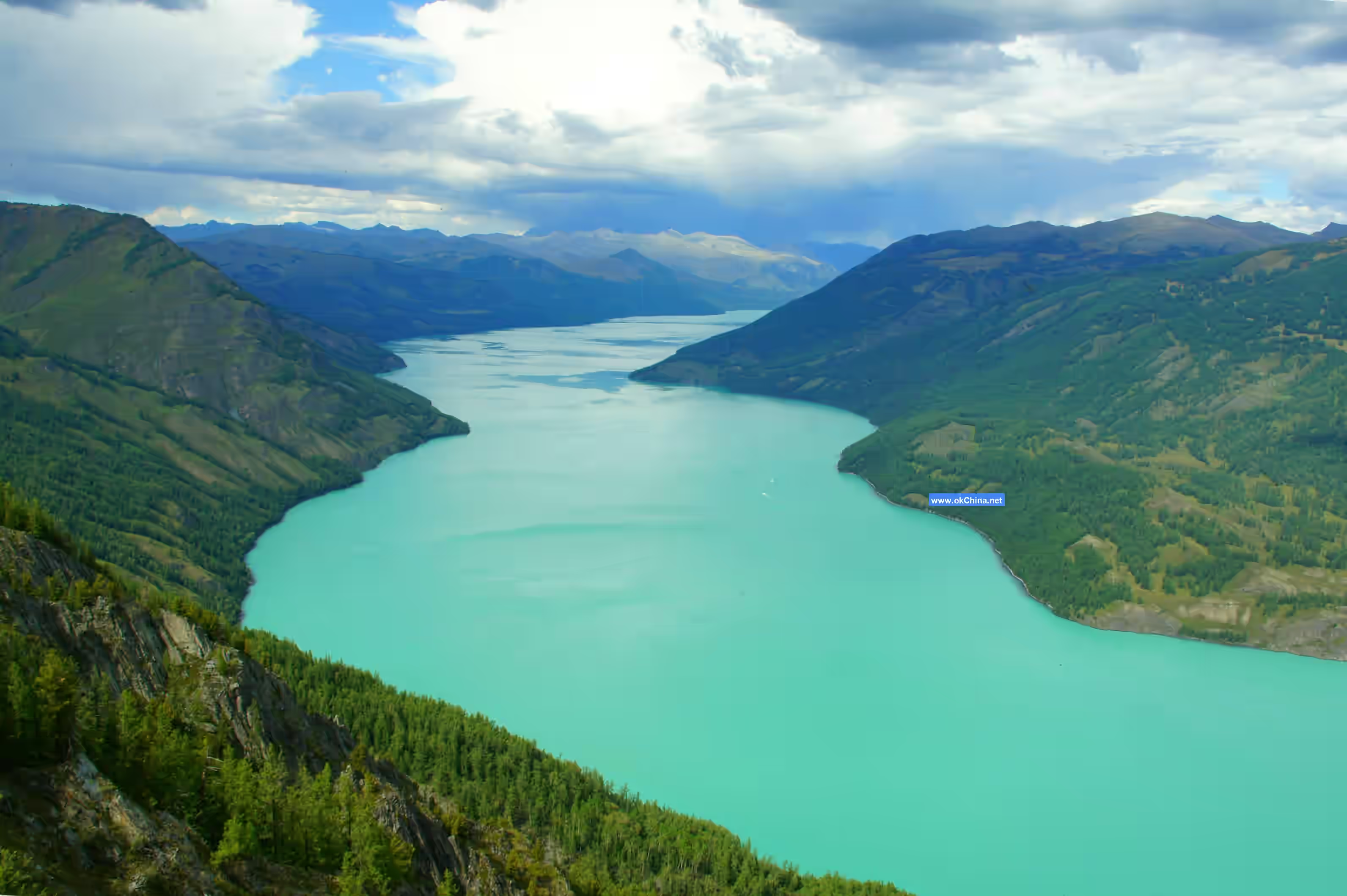
Kanas Lake is the core essence of the Kanas National Nature Reserve. Formed by intense glacial plucking and the damming of a valley by glacial moraine, it is a terminal moraine lake. The lake surface sits at an elevation of 1,375 meters. Shaped like a crescent moon, it is 24.5 km long, with an average width of 1.9 km, an average depth of 90 meters, a maximum depth of 188.4 meters, an area of 69,000 mu, and a water storage capacity of 4 billion cubic meters, making it one of China's deep-water lakes. The lake is surrounded by lush mixed coniferous and broad-leaved forests, seamlessly connecting with the vast mountain grasslands.
Wolong Bay (Crouching Dragon Bay)
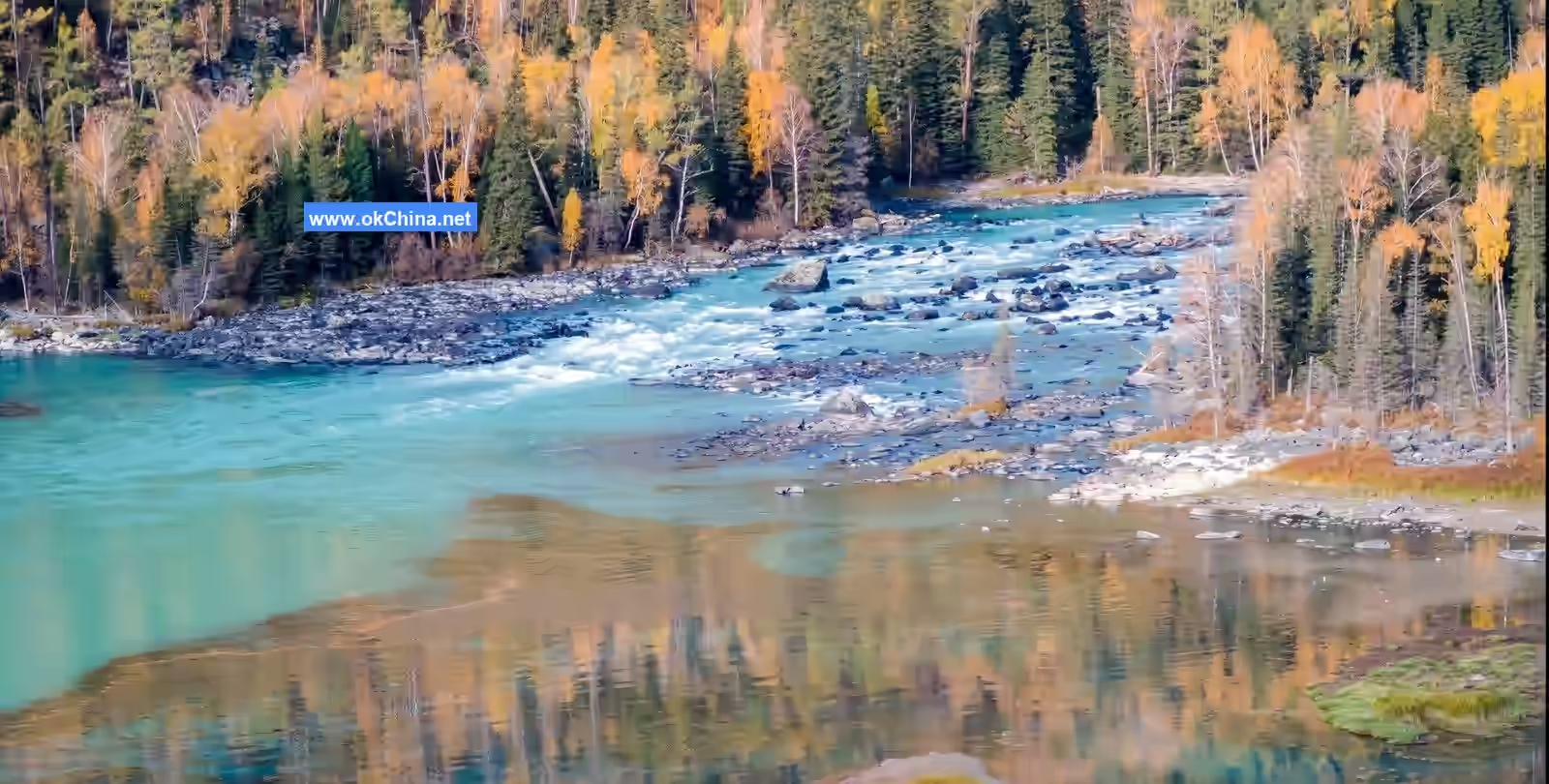
Wolong Bay is located on the route from Burqin County to Kanas, 140 km from the county town and 10 km from Kanas. Dense forests, vibrant flowers, and lush green grass encircle the lake. The small island in the lake offers beautiful scenery, and at the lake's inlet, a massive rock stands midstream, with waves crashing against it, sending jade-like spray flying. A wooden bridge spans the lake's outlet. Standing on the bridge, one sees the mirror-like Wolong Bay to the north and the roaring Kanas River to the south. Traveling north along the Kanas River from Wolong Bay for about 1 km, one can see a blue crescent-shaped bay in the canyon—that is Moon Bay.
Color-Changing Lake
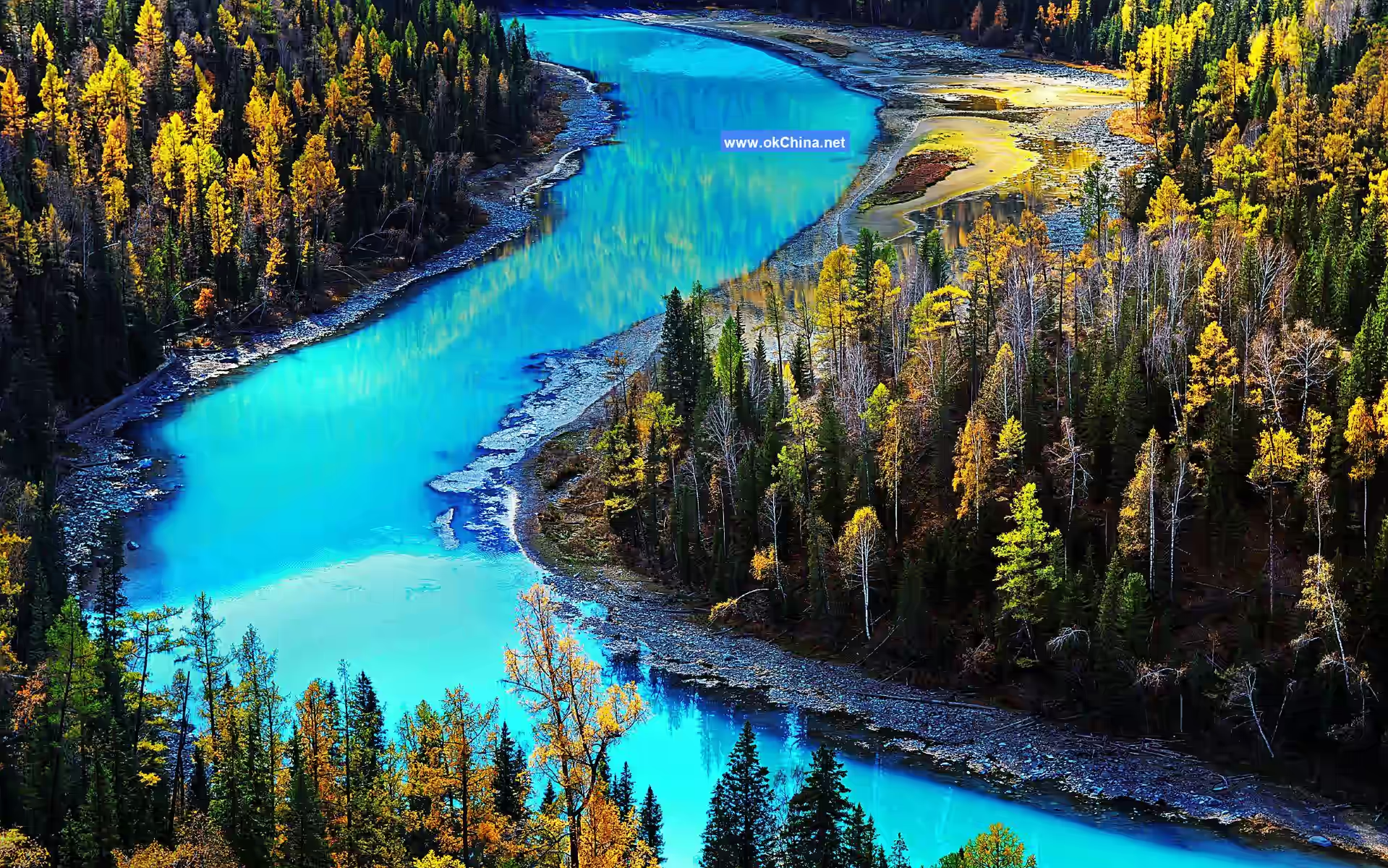
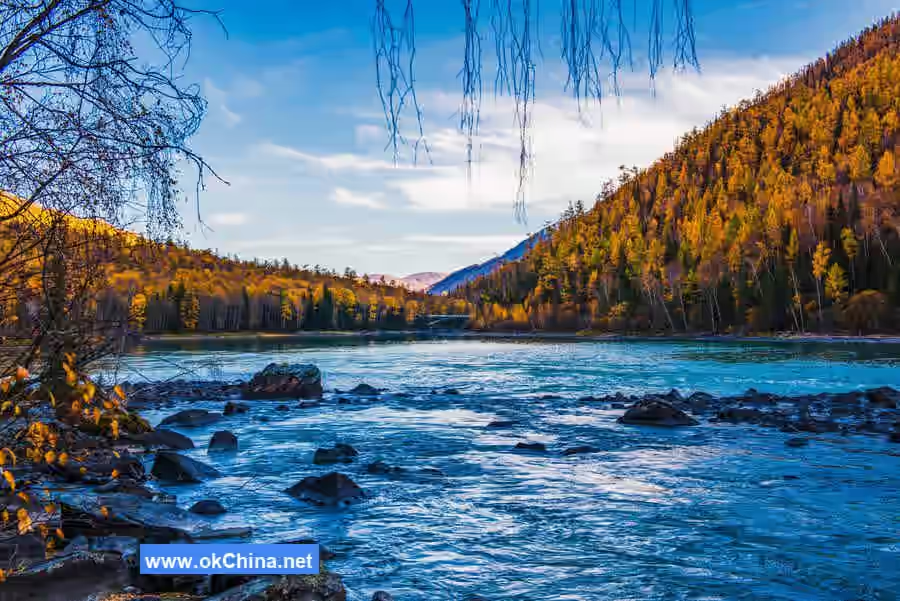
The Color-Changing Lake is located in the center of Kanas Lake. In spring and summer, the lake water changes color with the seasons and weather. From the thaw in April-May each year until the lake freezes in November, the water displays different hues in different seasons. In May, with the ice and snow melted, the water appears dark and bluish-gray. By June, as the surrounding mountain vegetation turns green, the lake takes on a light green or azure blue color. After July, during the flood season, substantial inflows of white water from the upstream White Lake turn the water a milky white tinged with bluish-green. In August, influenced by rainfall, the lake appears dark green. Entering September and October, with significantly reduced water inflow and the surrounding vegetation becoming colorful, the lake water gleams like a pool of emerald.
Tuojing Bay (Camel Neck Bay)
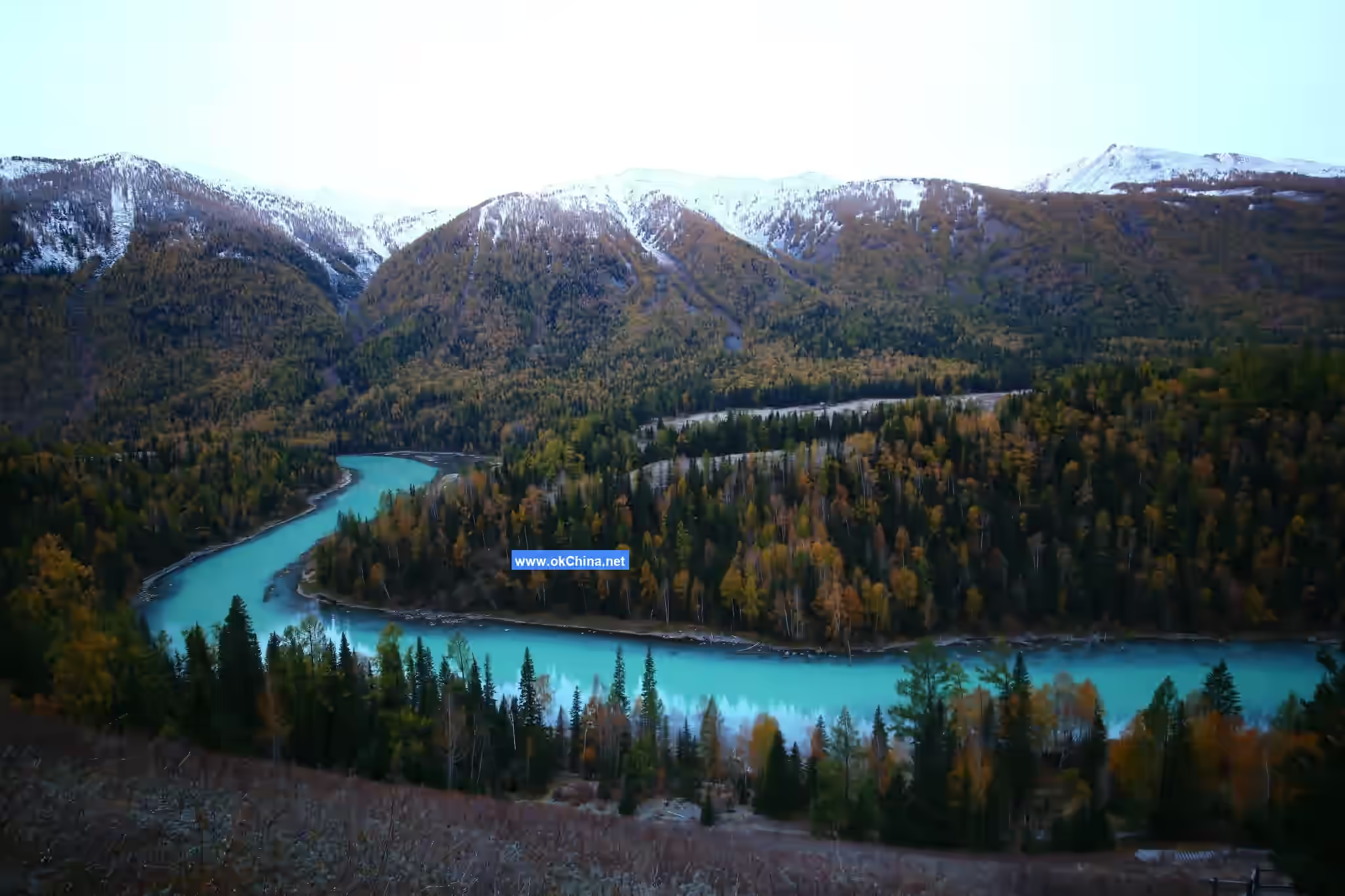
Tuojing Bay is located about one kilometer south of Kanas Lake, at the lake's inlet and the source of the Kanas River. Here, the Kanas River forms a large bend resembling a camel's neck. The river makes a zigzag turn, shifting from southeast to southwest, then turning east again. The river bends sharply within a deep valley, with rapid currents. At the start of the first bend, there is a spindle-shaped midstream island; the second bend forms a rapid shoal. The east bank is meadowland, while the west bank is pristine forest.
Bilberry Island
Though not large in area, Bilberry Island is full of vitality and charm. The island's vegetation is lush, with bilberries being particularly eye-catching. Every autumn, when the bilberries ripen, plump, round fruits hang from the branches like amethyst-black gems set amidst the emerald green. These bilberries are not only a beautiful sight on the island but also attract many birds and small animals to forage, filling the entire island with a lively atmosphere.
The water surrounding Bilberry Island is clear and azure blue, like a giant mirror reflecting the island's scenery. The sky, water, and island complement each other, creating a dreamlike beauty. When a gentle breeze passes, ripples form on the lake surface, and the island's reflection sways gracefully in the water, like a natural ink-wash painting unfolding before one's eyes.
As visitors approach Bilberry Island by boat, they are first captivated by its tranquil and mysterious atmosphere. Stepping onto the island feels like entering a secluded little world. Strolling on the island, with soft soil and fallen leaves underfoot, dense vegetation beside, and the songs of birds and whispers of the breeze in the ears, brings immense relaxation. Here, people can observe the growth of bilberries up close and feel the wonder and bounty of nature. Simultaneously, Bilberry Island is a paradise for photography enthusiasts. Whether at dawn or in the glow of sunset, the changing light and shadows on the island add endless charm and poetry to photographs, capturing unique moments on this magical land of Kanas Lake. It leaves a lasting impression on all who visit, immersing them in the beauty woven from nature and tranquility.
Taiga Corridor
The term "taiga" originally comes from Russian, referring to the coniferous forest zone near the polar regions bordering the southern edge of the tundra. This term generally denotes the boreal forests of the cold temperate zone. In the cold temperate regions of the Northern Hemisphere, taiga forests spread across North America and northern Eurasia, forming vast, boundless forest seas that constitute the world's largest forest ecosystem.
The Taiga Corridor is 4.5 km long, incorporating the essence of the West Siberian taiga. Bordered by the sparkling Kanas Lake to the west and towering mountains to the east, the winding path along the corridor offers views of typical taiga swamps, the "King of the Taiga," a giant root carving wall, and several other attractions.
Fish-Watching PavilionFish Watching Tower, round-trip shuttle 20 yuan/person, is a must-visit spot in Kanas. Originally built in 1987, it was renamed Fish Watching Tower after its recent renovation. I believe there are three reasons for calling it a "tower" rather than a "pavilion." First, a pavilion typically has a roof larger than its base, but this reconstruction features a base larger than the roof—making it more fitting to call it a tower. Moreover, a pavilion can seem somewhat enclosed, while a tower conveys an open and expansive spirit, aligning with the progressive demands of our times. Second, when comparing the words "pavilion" and "tower," their homophones carry significant meaning. For ordinary people, "pavilion" (亭, tíng) sounds like "stop" (停, tíng), while "tower" (台, tái) sounds like "lift" (抬, tái). People spend money on travel to seek joy and good fortune—why would they want to "stop" rather than "rise"? Everyone hopes to return from a trip to Kanas with personal growth and career achievements. Third, when viewed from the lake at the mountain's base, Fish Watching Tower resembles an incense altar solemnly seated atop the western mountain. When shrouded in clouds or bathed in the glow of sunset, the altar seems enveloped in auspicious clouds and an ethereal aura. These three reasons explain why "tower" is preferable to "pavilion."
Ascending Fish Watching Tower is the exclamation point at the end of a trip to Kanas. Without climbing it, one cannot fully appreciate the ultimate beauty of Kanas’s scenery; without climbing it, one cannot truly grasp the essence of life.
Activities
Twin Lakes Cruise
The Kanas Twin Lakes cruise began ticket sales on June 1, 2015. The fleet consists of six boats: two with 75 seats, one with 58 seats, two with 38 seats, and one 12-seat speedboat.
The exploratory route for the Twin Lakes cruise is: Twin Lakes Pier → Three Bays (disembark for sightseeing) → Return. The Twin Lakes Pier is located at the third pier on the east side of Kanas Lake, with a round-trip duration of approximately one hour. Tickets can be purchased at the Twin Lakes Pier ticket office or the Kanas Transfer Center ticket office. Price: 120 yuan/person.
Hemu Rafting
Hemu Rafting spans 9 kilometers and takes about an hour to complete. The rafting team operates 20 rafts with 40 rafting guides. Immersed in the clear and pristine Hemu River, visitors can quietly admire the beautiful natural scenery while fully enjoying the古朴 and tranquility of Hemu Tuva Village, renowned as one of China's six most beautiful ancient towns and one of China's top ten leisure villages.
Hemu Ice and Snow Park
First developed in the winter of 2016, Hemu Ice and Snow Park integrates all elements of ice and snow fun amidst the majestic snowy mountains. The park offers 36 winter ice and snow activities, including folk performances in the viewing area, ice and snow experiences, nomadic cultural activities, snowmobile skiing and other winter sports, Hemu snowfield crossing and sightseeing routes, folk home visits, snowcat sightseeing tours, and more.
IV. Cultural Resources
Ice and Snow Cultural Activities
"Passionate Ice and Snow, Meet in Hemu" Folk Sports Events: Every winter, Hemu Kanas Mongolian Township hosts this event, attracting numerous tourists. Activities include spectacular song and dance performances, such as the song "Hometown" and dances like "Twelve Zodiac Animals" and "Beautiful Hemu," as well as performances of traditional instruments like throat singing and the suur, showcasing the charm of traditional culture. Additionally, traditional winter sports such as snow horse racing, ancient fur skiing competitions, archery contests, and snow tug-of-war are held. Visitors can also participate in fun activities like snow tubing races, back-to-back ball games, snow football, and snow tire rolling, experiencing the joy of ice and snow sports.
Bonfire Party: On winter nights, Hemu Kanas Mongolian Township organizes bonfire parties. Tourists and local villagers gather around the bonfire to laugh, sing, and dance, enjoying a festive atmosphere and fostering mutual communication and connection.
Folk Festival Activities
"Celebrating Mid-Autumn Festival・Full Moon Over Kanas" Themed Event: During the Mid-Autumn Festival, the Kanas Scenic Area, Hemu Scenic Area, and Jiadenyu area light bonfires, host performances, and showcase folk customs. Visitors can experience romance under the moonlight and appreciate the profound heritage of traditional Mid-Autumn culture.
Kanas Harvest Festival: During the autumn harvest season, the scenic area holds a harvest festival where local residents and tourists celebrate together. The event features various traditional folk performances, such as Kazakh dances and music, as well as specialty food stalls. Visitors can taste fresh fruits, roasted lamb, dairy products, and other delicacies, savoring the joy of the harvest and the local folk customs.
Sports Events
Kanas Multi-Day Off-Road Race: Every summer, sports events like the 2024 Xinjiang Burqin・Kanas Multi-Day Off-Road Race kick off, attracting hundreds of participants from within and outside Xinjiang. Competitors journey alongside mountains and rivers, accompanied by the sun and moon, appreciating Kanas’s stunning natural scenery while experiencing the excitement and challenge of off-road sports.
"Travel with the Events" Series: Burqin County has developed this series of events around Kanas’s cultural and sports tourism resources. It includes the "Burqin — Chonghuer — Hemu — Kanas Four-Stage Cross-Country Run" in June, the "Square Dance Competition" in July, the "Crossing the Irtysh Bicycle Off-Road Race" in August, and the "Fishing Competition" in September. These events allow tourists to deeply experience the local natural landscapes and cultural charm while participating.
Cultural Exhibitions and Performances
Intangible Cultural Heritage Exhibitions and Performances: The scenic area periodically hosts intangible cultural heritage exhibitions and performances, showcasing the traditional skills and cultures of ethnic minorities such as the Kazakh and Mongolian peoples. These include displays of intangible heritage skills like Kazakh embroidery and Mongolian costume making, as well as song and dance performances of regional intangible cultural heritage like the "Wol Tiek," allowing visitors to experience the unique charm of minority cultures up close.
Sino-Russian Old Pier Cultural Street Performances: On the Sino-Russian Old Pier Cultural Street in Burqin County, art troupes bring song and dance performances to the streets, creating a joyful atmosphere for tourists. Visitors can enjoy ethnic-themed song and dance performances while sampling local cuisine and experiencing a rich exotic ambiance.
Comments
Post a Comment