Kaiping Diaolou Cultural Tourism Area in Kaiping City
1. Introduction
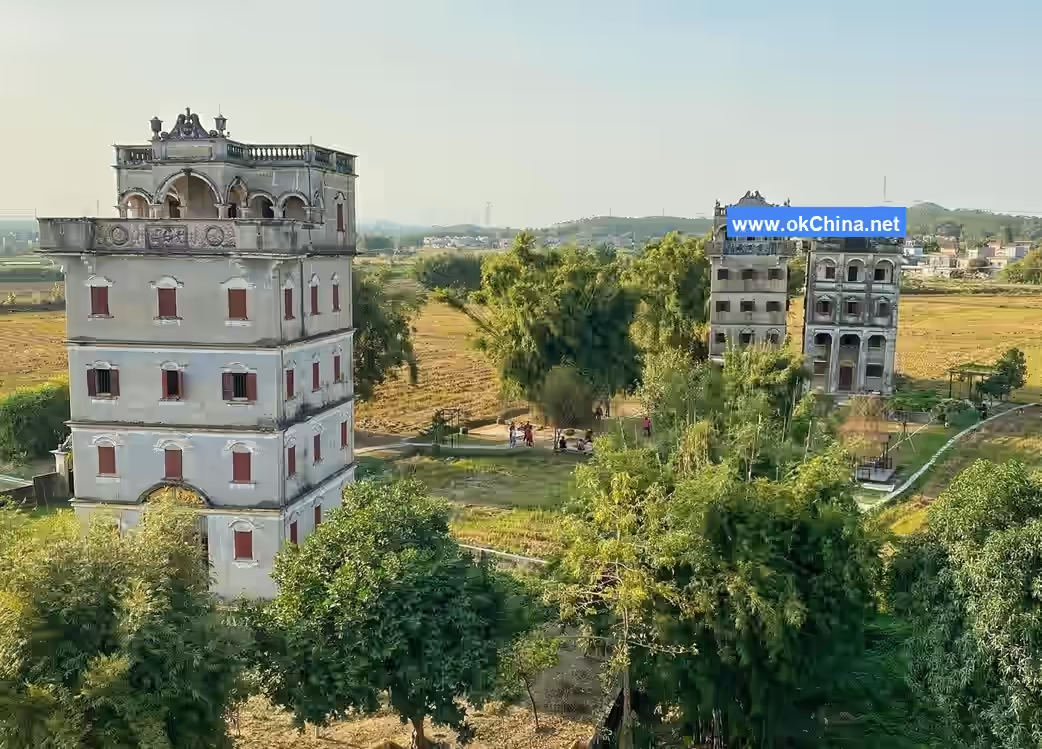
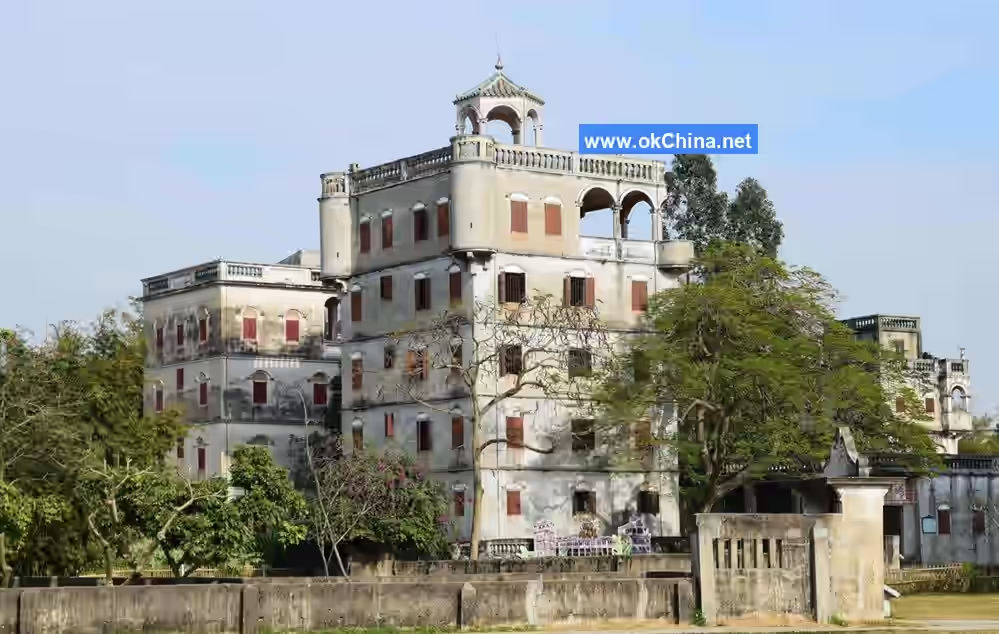
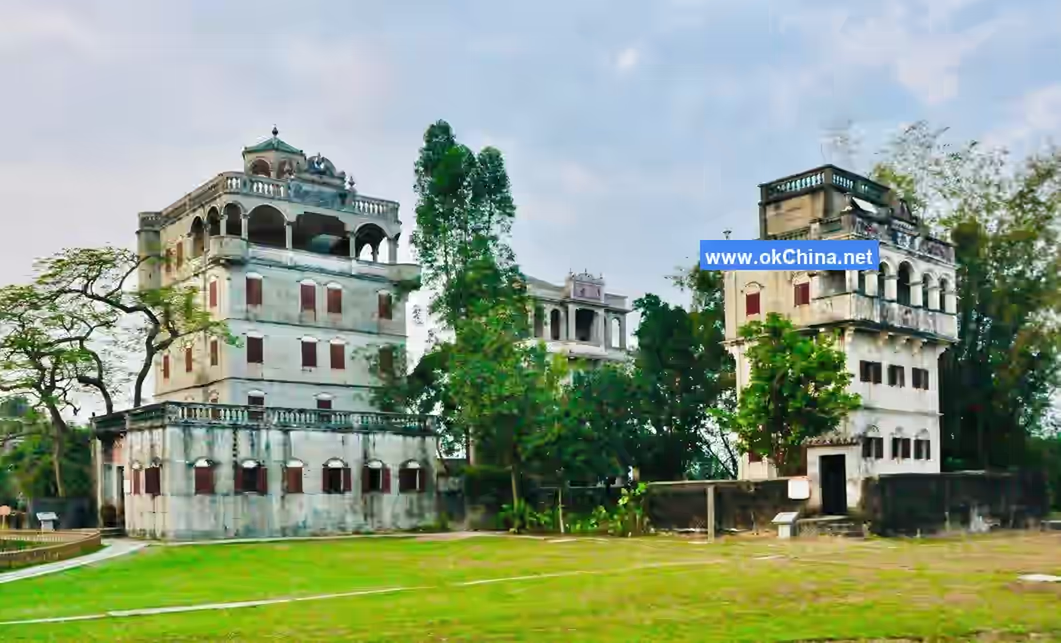
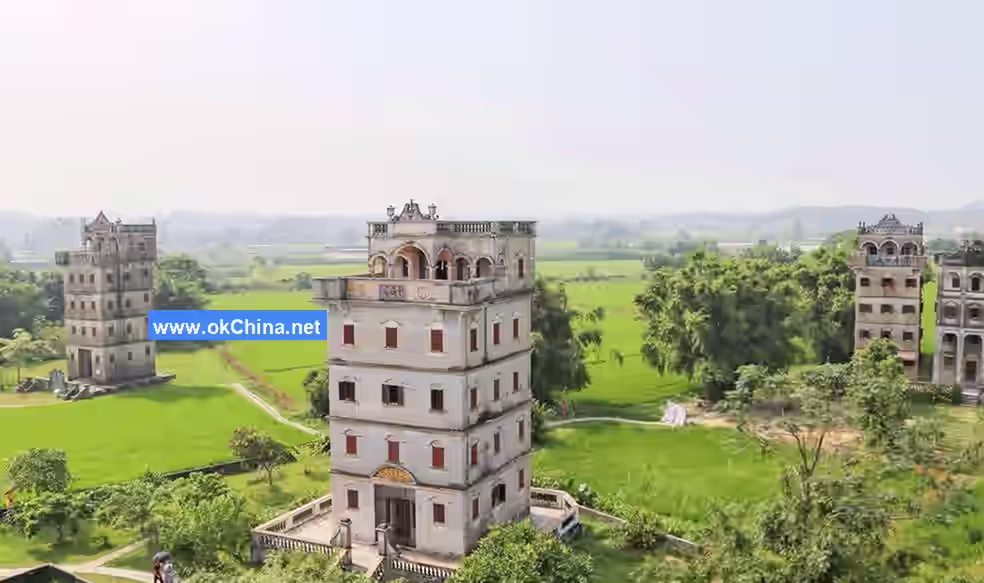
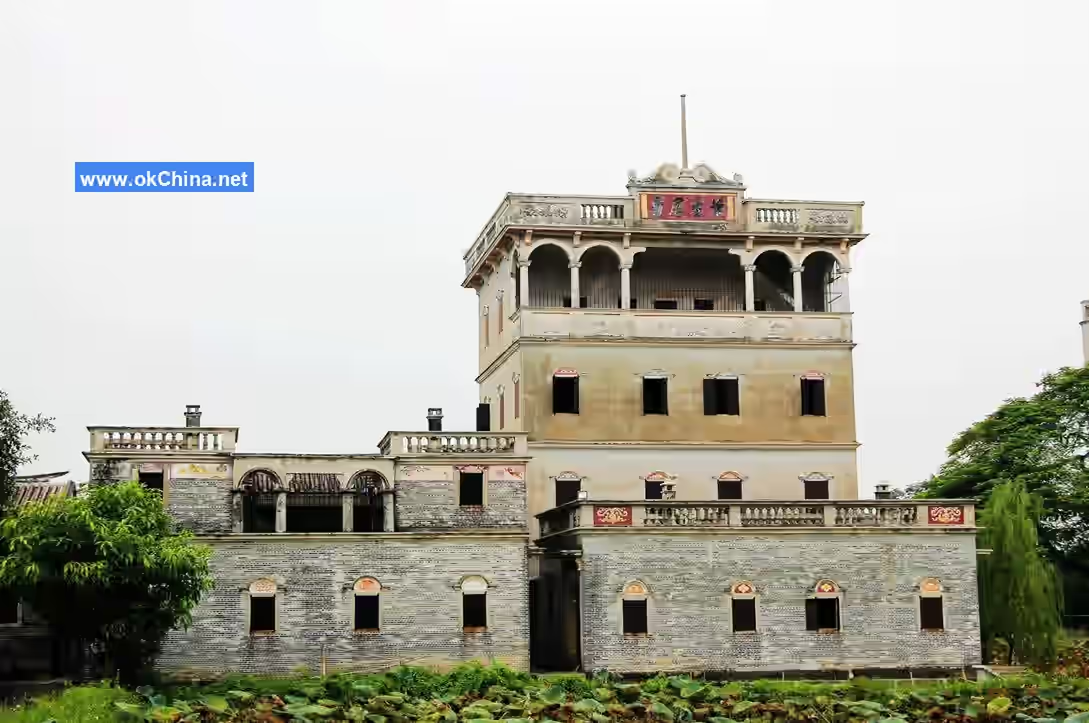
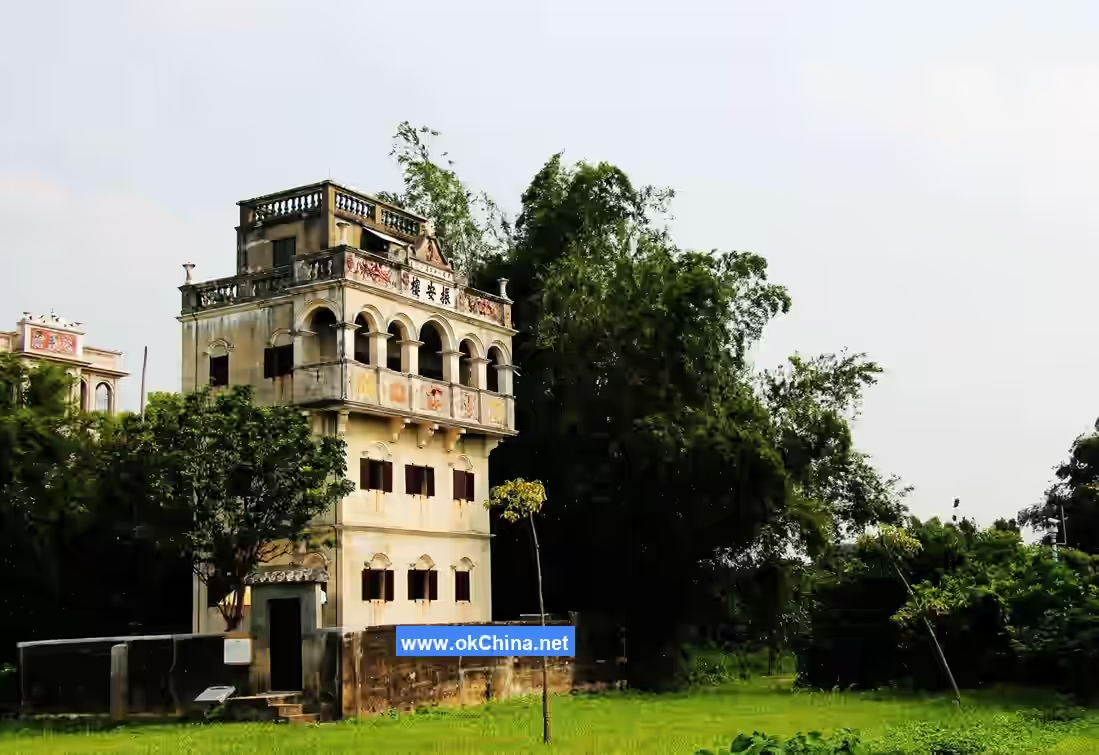
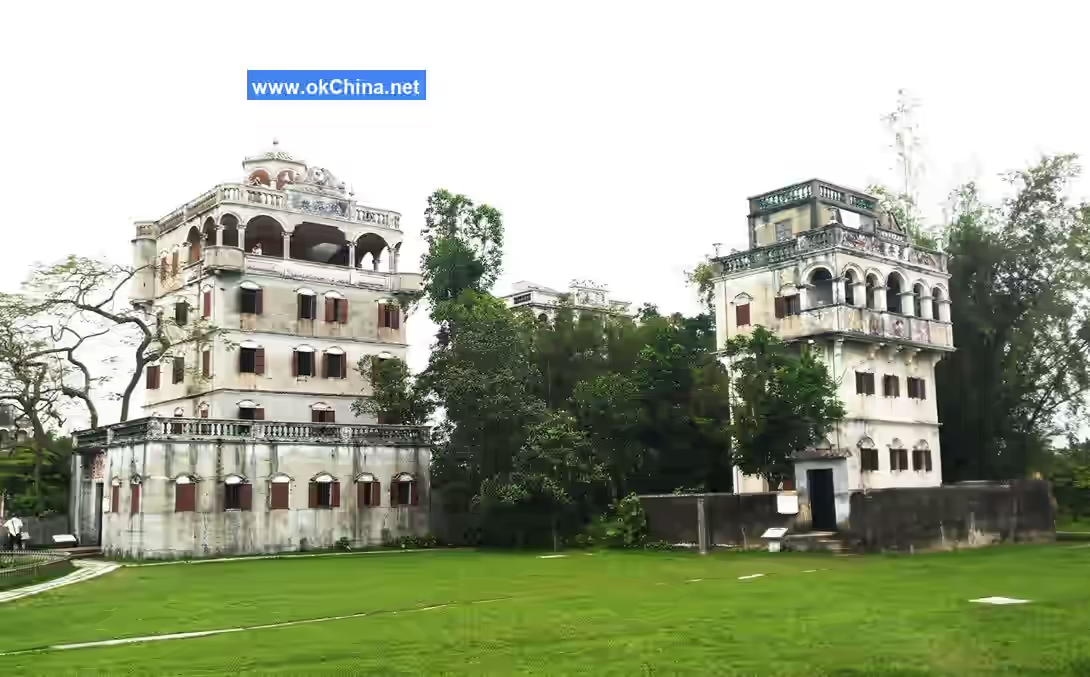
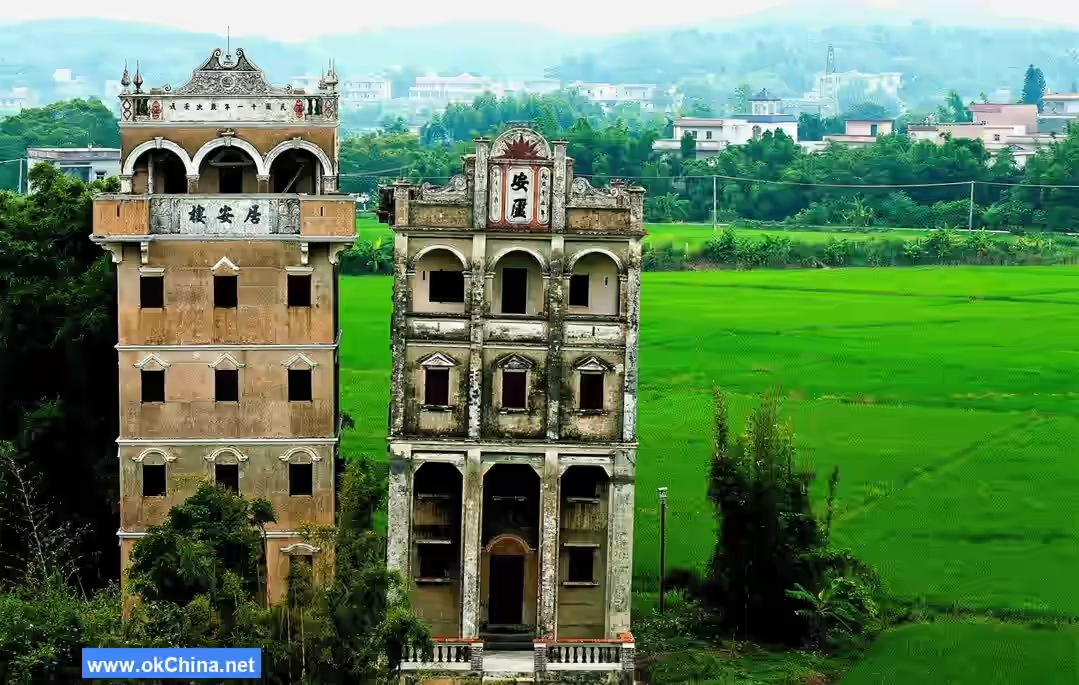
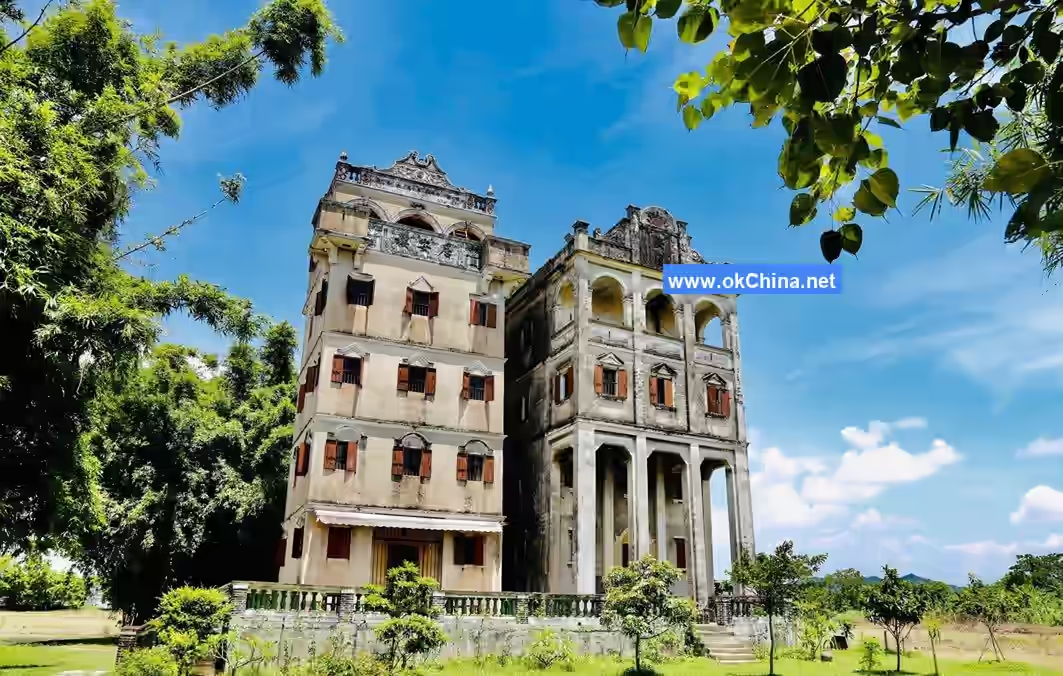
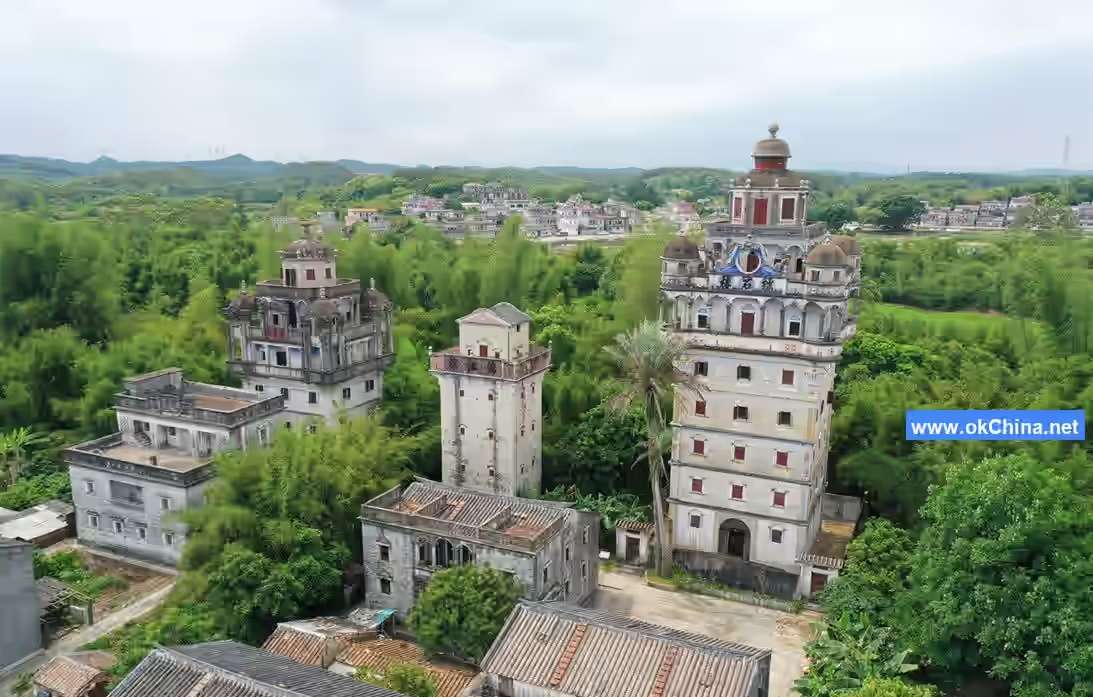
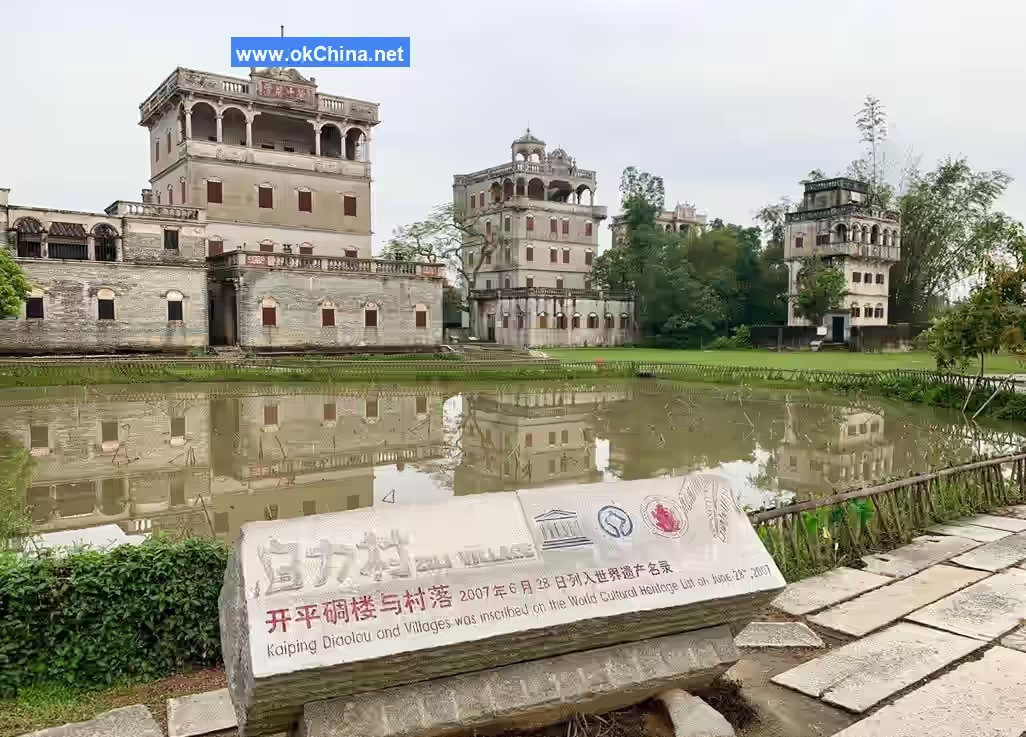
Kaiping Diaolou, located within Kaiping City under the jurisdiction of Jiangmen City, Guangdong Province, is one of the Cantonese architectural styles and a representative of Cantonese culture. Kaiping Diaolou is a special type of Chinese vernacular architecture, a multi-story tower-like building that integrates defense, residence, and Chinese-Western architectural art. Its characteristic is the fusion of Chinese and Western residential styles, incorporating elements from ancient Greek, ancient Roman, Islamic, and other styles.
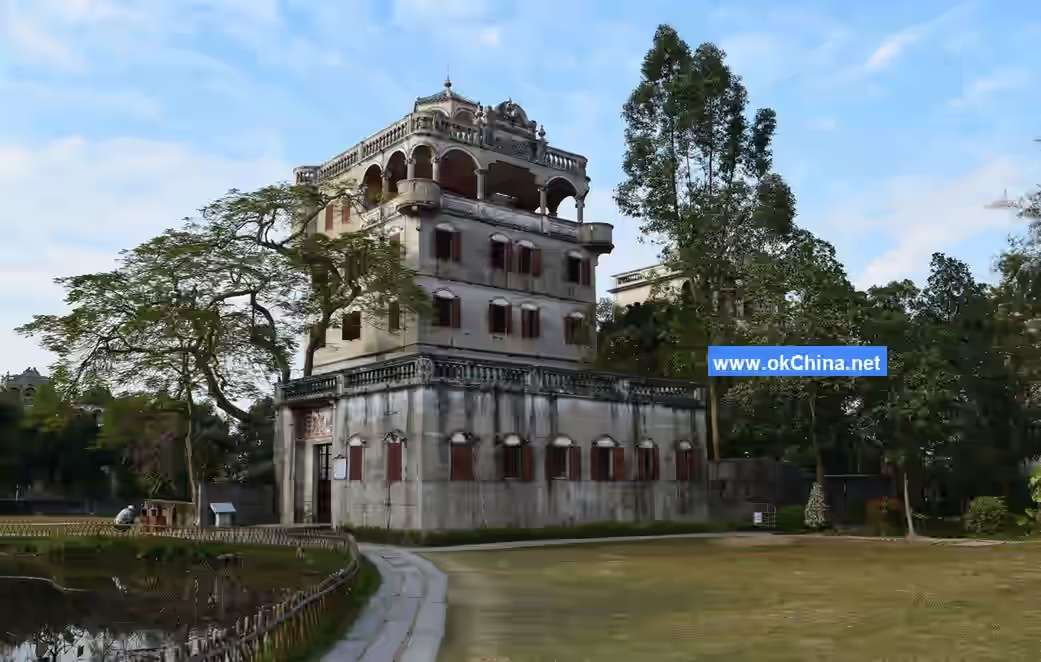
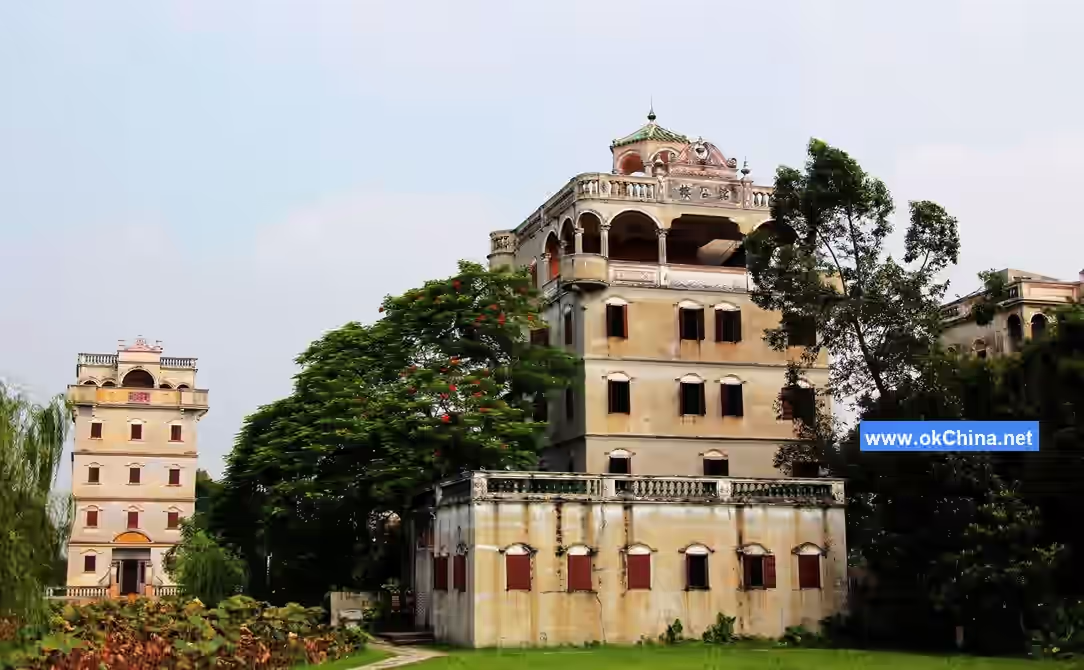
Kaiping Diaolou are multi-story structures, significantly taller than ordinary residences, facilitating defense from an elevated position. The walls of Kaiping Diaolou are thicker and more robust than those of typical homes, resistant to burglars attempting to breach them or fire attacks. The windows are smaller than those in ordinary houses, all fitted with iron bars and shutters, and externally equipped with iron sheet window doors. At the four upper corners of the diaolou, fully enclosed or semi-enclosed projecting corner bastions (commonly known as "swallow nests") are typically built. These bastions have forward and downward firing ports, allowing occupants to retaliate against invading enemies from a commanding height. Additionally, firing ports are opened on the walls of each floor of the diaolou, increasing the attack points for residents inside, stretching continuously for tens of kilometers.
The variation in the form of Kaiping Diaolou mainly lies in the top of the tower. From the over 1,400 existing diaolou in Kaiping, the architectural styles of the rooftops can be categorized into about one hundred types, with the more aesthetically pleasing ones including Chinese-style roofs, Chinese-Western hybrid roofs, ancient Roman pediment roofs, domes, American castle-style roofs, European and American villa-style roofs, courtyard-style balcony roofs, and other forms. The upper part of Kaiping Diaolou can be classified into colonnade style, platform style, setback style, cantilever style, castle style, and mixed style. The lower parts of Kaiping Diaolou are generally similar, differing only in size and height. Larger diaolou have each floor equivalent to three bays or more; smaller diaolou have each floor equivalent to only half a bay. The tallest diaolou is the Nanlou in Chikan Township, standing seven stories high, while shorter ones have only three stories, not much taller than ordinary buildings.
2. Historical Development
Since the Ming Dynasty (1368–1644), Kaiping, situated between the four counties of Xinhui, Taishan, Enping, and Xinxing, was a "no-man's-land" with rampant banditry and chaotic social order. Coupled with numerous rivers, frequent floods occurred during typhoons and heavy rains, forcing local residents to build diaolou in their villages for self-protection.
- In the 17th year of the Chongzhen era of the late Ming Dynasty (1644 AD), social unrest and frequent bandit attacks led Guan Zirui, the fourth son of Lu'an Gong, to build Ruiyun Lou in Jingtouli Village to protect the villagers. This building was very sturdy, serving both flood control and anti-theft functions. Whenever floods or bandit disturbances occurred, villagers from Jingtouli and the neighboring Sanmenli Village would take refuge in Ruiyun Lou.
- In 1884, a major flood hit the Tanjiang River, submerging many houses in nearby areas. Villagers from Sanmenli in Chikan, Kaiping, all survived by promptly ascending the diaolou.
- In 1912, the Situ clan built Nanlou to guard against thieves. The building is 7 stories and 19 meters high, covering an area of 29 square meters, constructed with reinforced concrete. Each floor has rectangular gun ports, with the sixth floor serving as an observation post equipped with machine guns and searchlights. During the War of Resistance against Japan, the headquarters of the Situ Clan Four Township Self-Defense Force was stationed here. In the same year, Mr. Xie Yongheng, father of Comrade Xie Chuang, built "Zhongshan Lou," named in commemoration of Sun Yat-sen.
- From the first year of the Republic of China (1912) to the fifteenth year (1926), over these 14 years, schools were robbed by bandits eight times, with over a hundred teachers and students kidnapped. Among these incidents, in December of the eleventh year of the Republic of China (1922), when a group of bandits robbed Kaiping Middle School in the Chikan area, the searchlight from the diaolou in Ying Village illuminated them, allowing local militia to intercept in time and rescue the principal and 17 students. This incident shocked the entire county, and overseas Chinese were also pleasantly surprised upon hearing the news, feeling that diaolou played a role in preventing banditry. Therefore, they lived frugally abroad, commissioned designs for diaolou blueprints in their host countries, brought them back to their hometowns for construction, and pooled funds to send back home to build diaolou. Later, some overseas Chinese, to ensure the safety of their families and protect their property, built various diaolou-style buildings when returning home to construct new houses, reaching a peak of over 3,000, with 1,833 remaining (as of 2007).
2.1 Classification by Building Materials
2.1.1 Reinforced Concrete Buildings
Reinforced concrete diaolou were mostly built in the 1920s and 1930s, designed by overseas Chinese incorporating different architectural features from around the world. The entire diaolou was constructed using cement, sand, gravel, and steel reinforcement, making it extremely sturdy and durable. However, as building materials were imported from abroad at the time, the cost was high. To save materials, some had internal floors made of wooden lofts.
2.1.2 Blue Brick Buildings
Blue brick diaolou include three types: inner mud outer blue brick, inner cement outer blue brick, and entirely blue brick construction. Inner mud outer blue brick: This type is essentially the mud brick diaolou mentioned earlier, but with a layer of blue bricks covering the outer mud walls, enhancing both aesthetics and longevity. Inner cement outer blue brick: The walls of this type appear to be blue brick construction on the surface but are actually faced with blue bricks inside and out, with a small amount of steel reinforcement and cement in the middle, making the building relatively sturdy yet more economical than full reinforced concrete while maintaining aesthetic appeal. Blue brick buildings: Entirely constructed with blue bricks, they are relatively economical, beautiful, and durable, suitable for the rainy climate of southern China.
2.1.3 Mud Buildings
Mud buildings include mud brick diaolou and rammed earth diaolou. Mud brick diaolou use sun-dried mud bricks as building materials. To extend the lifespan of mud bricks, craftsmen often apply a layer of lime mortar or cement on the exterior of mud brick walls to protect against rainwater erosion, thus providing protection and reinforcement. Rammed earth diaolou are constructed using a mixture of yellow earth, lime, sand, and brown sugar in specific proportions as raw material, then rammed into walls using two large wooden planks. Such rammed earth walls are generally over one foot thick, with strength comparable to reinforced concrete walls.
2.1.4 Stone Buildings
Stone diaolou use mountain stones or cobblestones as building materials. They have a rough appearance, are short and small, yet sturdy and durable. This type of diaolou is extremely rare, mainly distributed in mountainous areas like Dasha.
2.2 Classification by Function
2.2.1 Communal Towers (Zhonglou)
Communal towers are built at the rear of villages, funded collectively by all or several households in the village, with each household allocated a room for temporary refuge from bandits or floods. Their design is enclosed and simple, with minimal external decoration and strong defensive features. Among the three types of diaolou, communal towers appeared earliest, with 473 existing, accounting for about 26% of Kaiping Diaolou.
2.2.2 Residential Towers (Julou)
Residential towers are also mostly built at the rear of villages, funded by wealthy families. They effectively combine the two major functions of defense and residence. The structures are tall, with relatively open spaces, well-equipped living facilities, and convenient daily living. Residential towers have more diverse and aesthetically pleasing designs, with strong external decorative elements. While meeting defensive needs, they pursue architectural beauty and often become landmarks of villages. Residential towers are the most numerous, with 1,149 existing, accounting for about 62% of Kaiping Diaolou.
2.2.3 Watch Towers (Genglou)
Watch towers are mainly built at village entrances or on hillsides and riverbanks outside villages. They stand tall and erect with broad视野, often equipped with searchlights and alarms to detect bandit activities early and warn surrounding villages. They are products of the need for联防 among neighboring villages. Watch towers appeared latest, with 221 existing, accounting for about 12% of Kaiping Diaolou.
2.3 Cultural Relic Characteristics
Kaiping Diaolou are multi-story structures, significantly taller than ordinary residences, facilitating defense from an elevated position. The walls of Kaiping Diaolou are thicker and more robust than those of typical homes, resistant to burglars attempting to breach them or fire attacks. The windows are smaller than those in ordinary houses, all fitted with iron bars and shutters, and externally equipped with iron sheet window doors. At the four upper corners of the diaolou, fully enclosed or semi-enclosed projecting corner bastions (commonly known as "swallow nests") are typically built. These bastions have forward and downward firing ports, allowing occupants to retaliate against invading enemies from a commanding height. Additionally, firing ports are opened on the walls of each floor of the diaolou, increasing the attack points for residents inside, stretching continuously for tens of kilometers.
The variation in the form of Kaiping Diaolou mainly lies in the top of the tower. From the over 1,400 existing diaolou in Kaiping, the architectural styles of the rooftops can be categorized into about one hundred types, with the more aesthetically pleasing ones including Chinese-style roofs, Chinese-Western hybrid roofs, ancient Roman pediment roofs, domes, American castle-style roofs, European and American villa-style roofs, courtyard-style balcony roofs, and other forms. The upper part of Kaiping Diaolou can be classified into colonnade style, platform style, setback style, cantilever style, castle style, and mixed style. The lower parts of Kaiping Diaolou are generally similar, differing only in size and height. Larger diaolou have each floor equivalent to three bays or more; smaller diaolou have each floor equivalent to only half a bay. The tallest diaolou is the Nanlou in Chikan Township, standing seven stories high, while shorter ones have only three stories, not much taller than ordinary buildings.
3. Cultural Value
3.1 Historical ValueThe Kaiping Diaolou is a rare and significant historical and cultural landscape from China's period of social transformation, representing a proactive acceptance of foreign culture. The era of their large-scale construction coincided with the transition from traditional to modern Chinese society, a time when foreign cultures impacted traditional culture in various ways. While Western-style buildings in some major coastal and riverside cities in China were largely passively accepted imports, the clusters of diaolou centered in Kaiping were the product of the rural populace actively embracing Western architectural art and integrating it with local architectural traditions. Different sojourn locations and varying aesthetic sensibilities contributed to the diverse forms of the Kaiping Diaolou. Historically, their primary function was "to avoid banditry," playing a significant role in protecting the lives and property of overseas Chinese families and villagers. In the later stages of the War of Resistance Against Japan, they helped obstruct the Japanese invaders' attempt to establish a shortcut from Siyi directly to Liangyang—connecting from Xinhui and Jiangmen to Guangzhou to form a retreat route from the southern route to Guangzhou.
3.2 Artistic Value
The Kaiping Diaolou uniquely blend traditional Chinese rural architectural culture with Western architectural culture, becoming a monumental symbol of Chinese overseas Chinese culture and reflecting the proactive process of Chinese overseas Chinese and the populace accepting Western culture. Kaiping's architecture incorporates various foreign architectural styles from different periods, including the colonnades of ancient Greece, the column styles, arches, and domes of ancient Rome, the Gothic pointed arches and Islamic-style arches of medieval Europe, components of European castles, the arcades (qilou) of Portuguese architecture, and buildings from the Renaissance and 17th-century European Baroque styles.
3.3 Cultural Value
The Kaiping Diaolou most typically represent the characteristics of Chinese overseas Chinese culture. Overseas Chinese are cultural disseminators, and the blending and collision of multiple Chinese and foreign cultures are inevitable products of its development. The resulting cultural conflicts inevitably touch upon all aspects and strata of traditional Chinese society, which is also a common pattern in global migration cultures. This cultural conflict and integration are particularly externalized in Kaiping. Rural architecture that still maintains its own traditions while integrating Chinese and Western architectural cultures is rare in the countryside, primarily appearing in county towns and market towns.
The Kaiping Diaolou embody the traditional environmental awareness and feng shui concepts of the overseas Chinese hometown people, representing an elegant integration of planning, architecture, the natural environment, and humanistic ideals. As standalone structures, the diaolou are mainly distributed behind villages, forming a harmonious environment with the surrounding bamboo groves, the ponds in front of the villages, and the banyan trees at the village entrances, symbolizing deep roots, flourishing prosperity, safety, wealth accumulation, and cultural prosperity. The combination of point-like diaolou with clusters of residential buildings, resembling a backing mountain for the entire village in plain areas, satisfies the villagers' psychological need for security. The transition from low residential buildings to high diaolou expresses the villagers' wish for "steady advancement and rising status."
3.4 Scientific Value
The Kaiping Diaolou were pioneers in the extensive introduction of world-advanced construction technologies into rural folk architecture in China. Modern urban architecture in China had already widely adopted foreign building materials and techniques. As a form of vernacular architecture, the Kaiping Diaolou also made extensive use of imported materials such as cement, timber, steel bars, and glass. The reinforced concrete structure transformed traditional construction techniques primarily based on "Qin bricks and Han tiles," creating conditions for better fulfilling their functional purposes while also paying attention to formal variation and aesthetic appeal.
4. Development and Protection
- 1983: A city-wide cultural relics survey was organized, with a focus on the Kaiping Diaolou. The County Overseas Chinese Museum compiled and published the book "Kaiping County Cultural Relics Records" through Guangdong People's Publishing House, which included a dedicated section introducing the Kaiping Diaolou.
- March 1983: The Kaiping County People's Government designated Nanlou as a county-level protected cultural relic unit.
- December 1994: The Kaiping City People's Government designated Zhongshanlou as a city-level protected cultural relic unit.
- March 1999: The Kaiping City People's Government raised over 3 million yuan to construct the Nanlou Memorial Park. Following the principle of "repairing the old as it was," Nanlou was restored, and additional features such as a memorial hall, statues, and a memorial archway were added.
- November 2000: The Kaiping City People's Government designated all diaolou registered with the city's cultural administrative department as Kaiping City protected cultural relic units.
- March 2001: Kaiping City established a Leading Group for the Application of Kaiping Diaolou as a UNESCO World Heritage Site, with top city leaders personally heading the group. Key personnel were drawn from various departments to work exclusively on diaolou protection and the application process. On June 25, the Kaiping Diaolou were approved by the State Council to be included in the fifth batch of National Key Protected Cultural Relic Units.
- July 16, 2002: The "Guangdong Province Kaiping Diaolou Protection Management Regulations" were passed at the 96th Executive Meeting of the 9th Guangdong Provincial People's Government and came into effect on September 1, 2002.
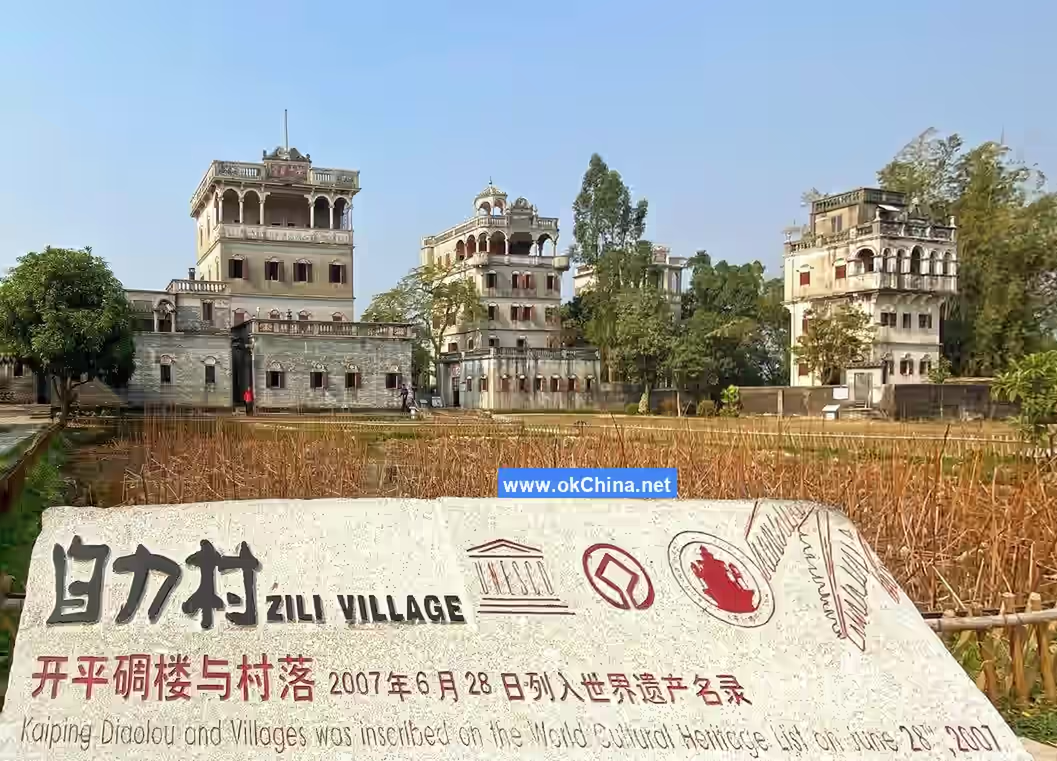
- June 28, 2007: The "Kaiping Diaolou and Villages" application for World Cultural Heritage status was approved at the 31st UNESCO World Heritage Committee session in New Zealand and officially inscribed on the World Heritage List, becoming China's 35th World Heritage site. This marked the birth of China's first World Heritage project related to overseas Chinese culture.
Comments
Post a Comment