Jokhang Temple
1. Introduction
The Jokhang Temple, also known as "Tsuglhakhang" or "Jokhang" (meaning "House of the Buddha" in Tibetan), is located in the center of the old town of Lhasa. It is a Tibetan Buddhist monastery built by King Songtsen Gampo. The reason Lhasa is reputed as a "holy land" is related to this temple. The temple was initially called "Rasa," which later became the name of the city and evolved into the present-day "Lhasa." After its construction, the Jokhang Temple underwent numerous renovations and expansions during the Yuan, Ming, and Qing dynasties, eventually forming its current scale.
With a history of over 1,300 years, the Jokhang Temple holds a supreme position in Tibetan Buddhism. It is the most splendid surviving building from the Tubo period in Tibet and the earliest timber-and-earth structure in the region. It also pioneered the Tibetan-style flatland temple layout. The innermost circumambulation path around the central Shakyamuni Buddha Hall is called the "Nangkhor," while the path around the outer walls of the temple is known as the "Barkhor." The streets radiating outward from the Jokhang Temple form the "Barkhor Street," also known as the "Octagonal Street." The outermost circumambulation path, which includes the Potala Palace, Chakpori Hill, and Ramoche Temple, is called the "Lingkhor." These three concentric circles, from innermost to outermost, constitute the routes for Tibetan pilgrims performing the kora ritual.
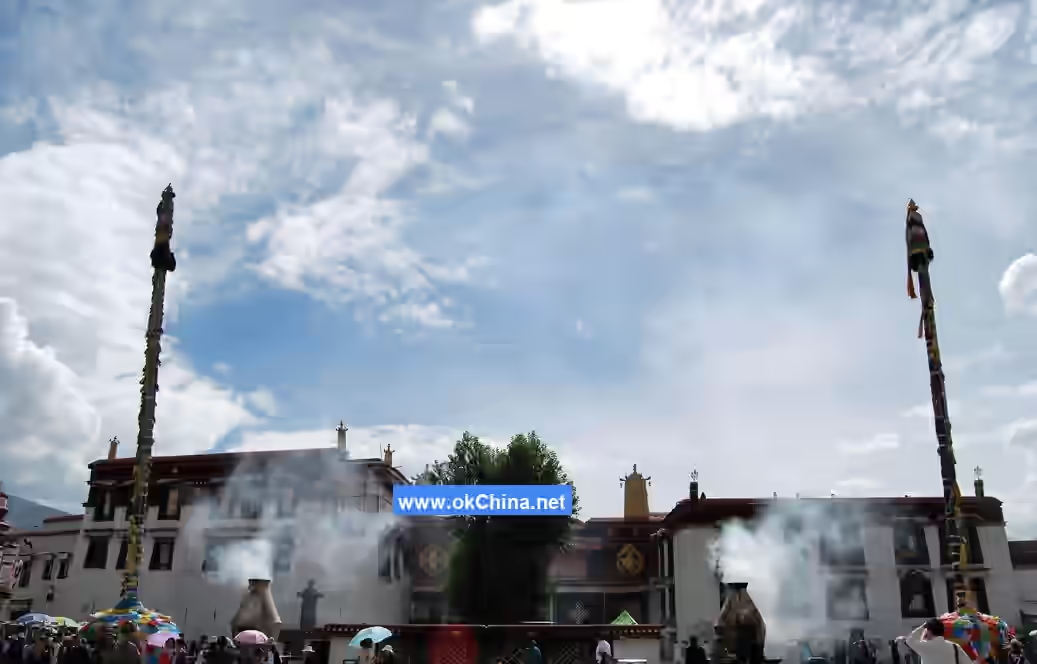
The Jokhang Temple combines architectural styles from Tibet, Tang China, Nepal, and India, making it a timeless model of Tibetan religious architecture. Incense smoke perpetually rises in front of the temple, and the devout prostrations of believers have left deep, body-length imprints on the bluestone floor at the entrance. Thousands of butter lamps remain perpetually lit, bearing witness to the passage of time and the devotion of pilgrims.
2. Orientation and Layout
2.1 Geographical Location
Lhasa City, Tibet Autonomous Region
2.2 Architectural Layout
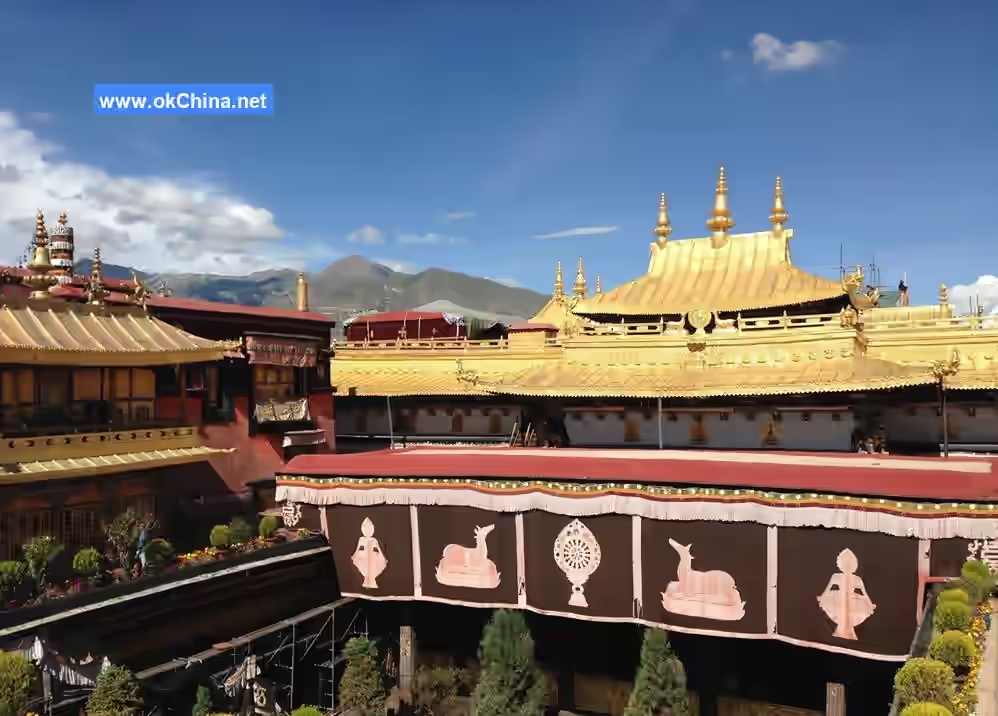
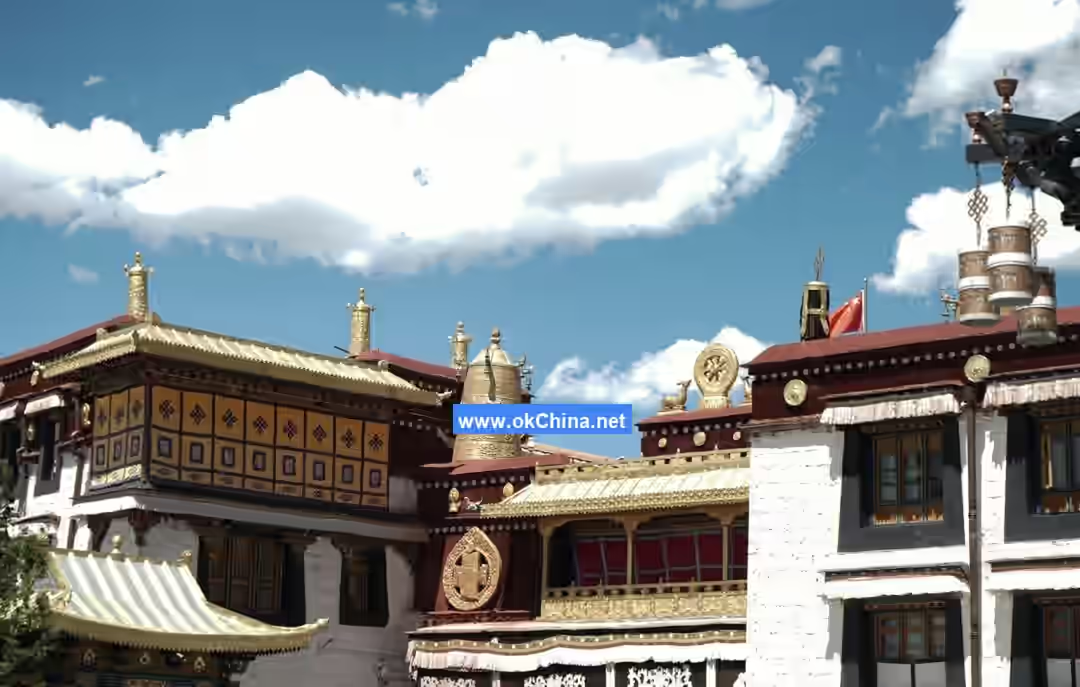
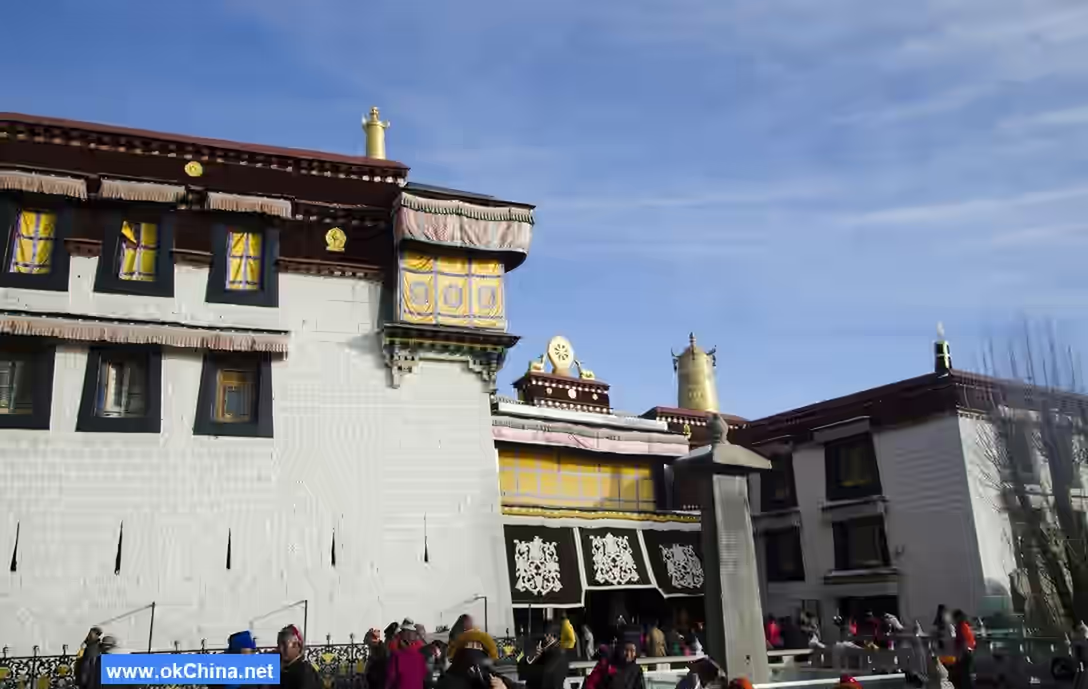
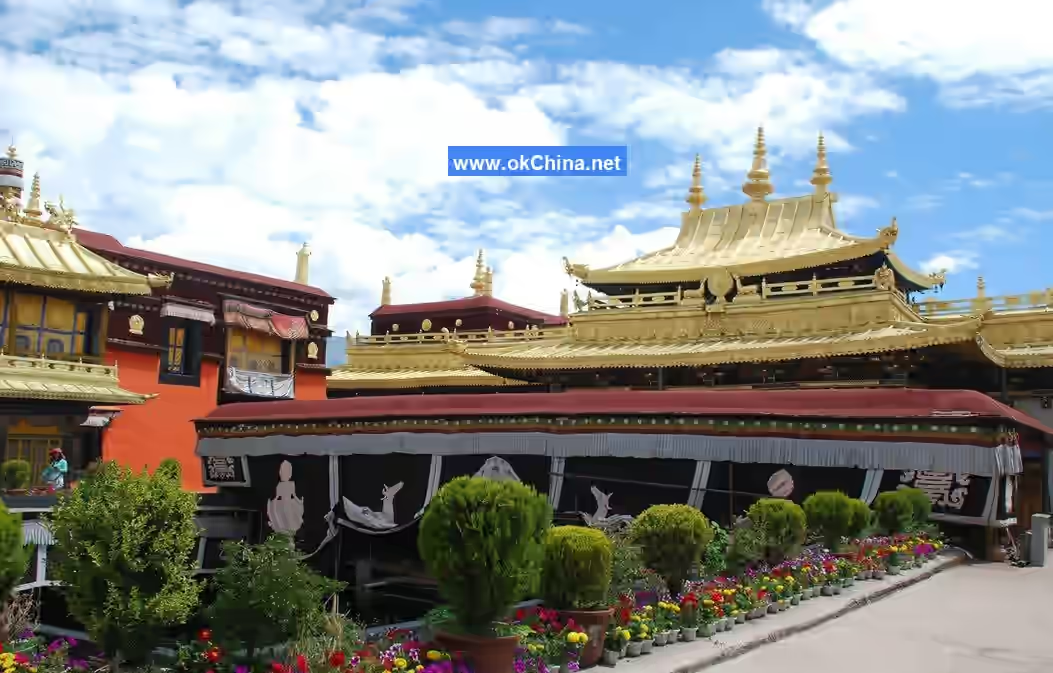
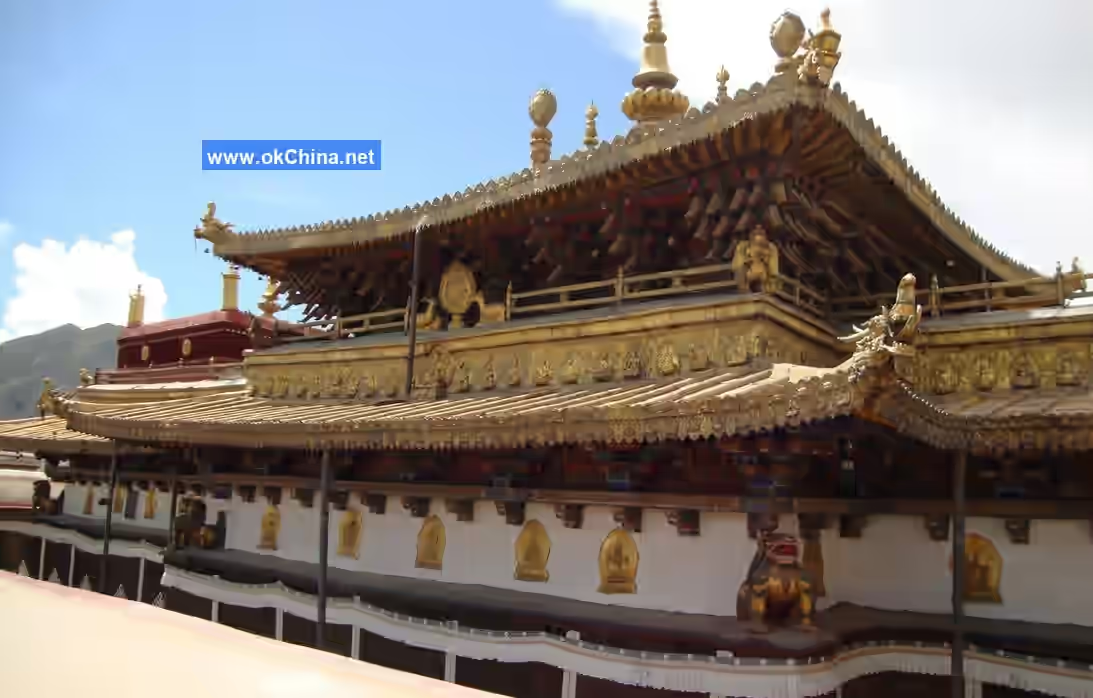
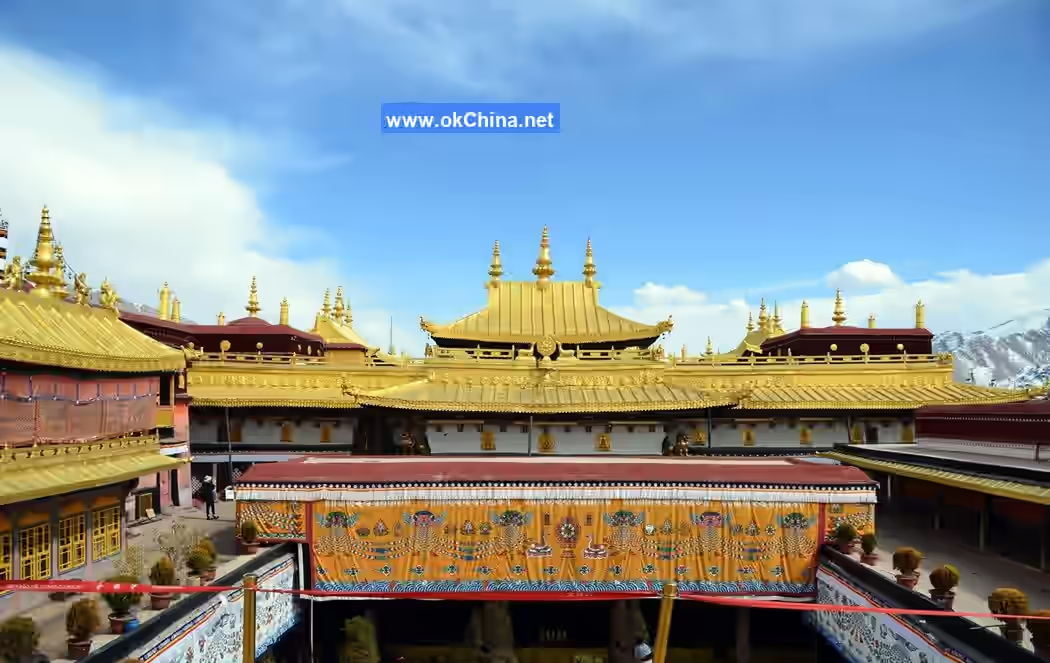
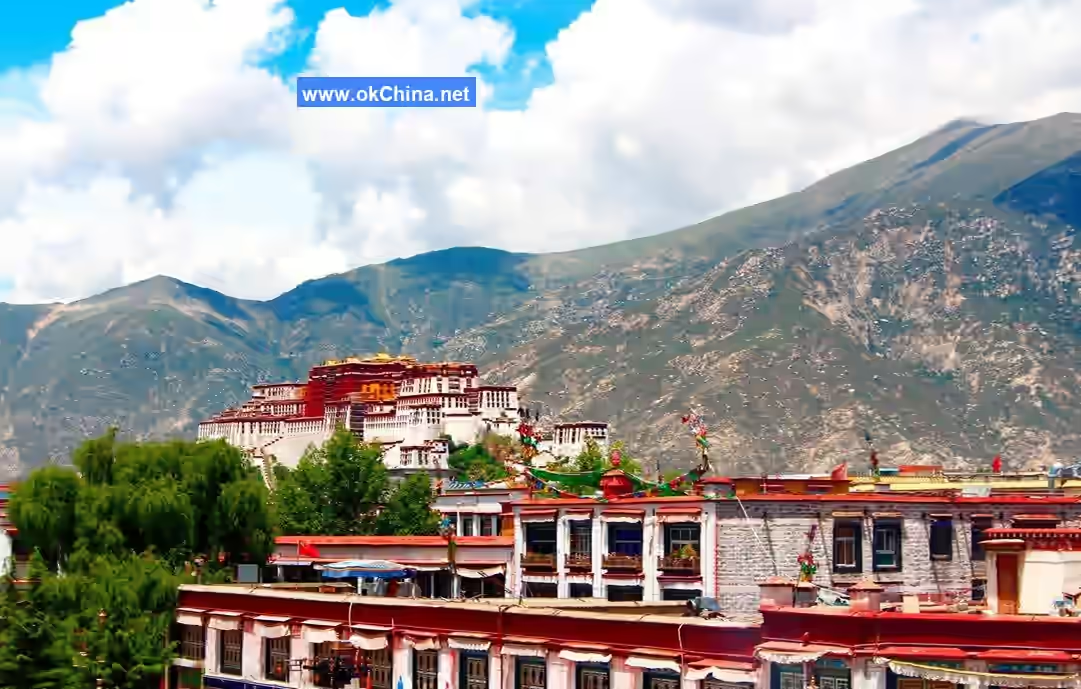
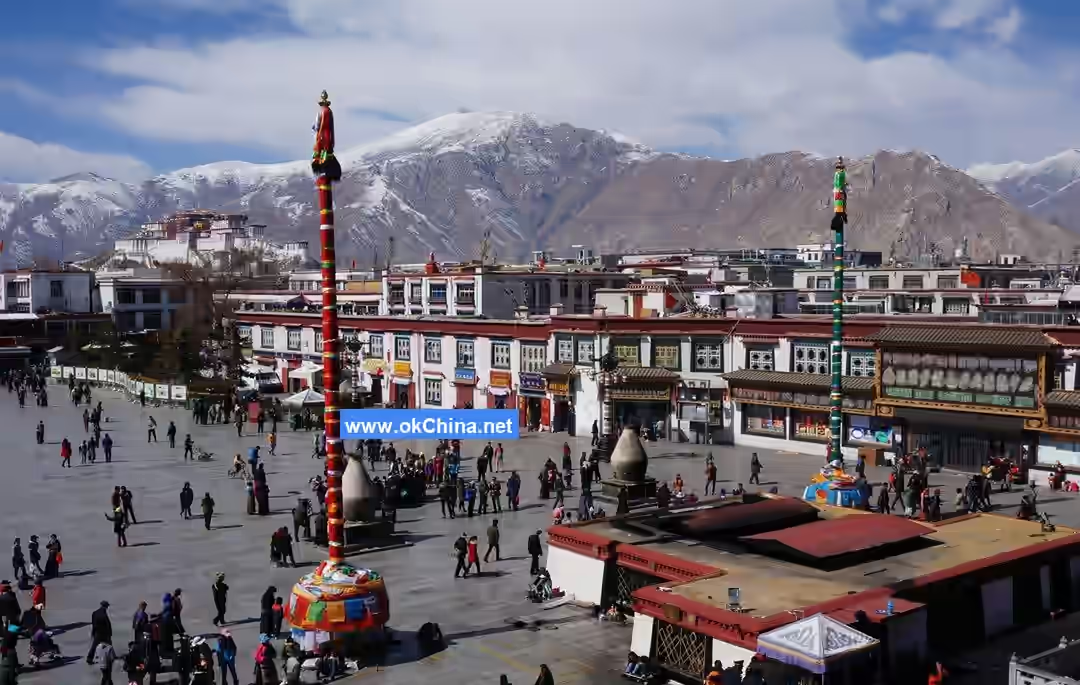
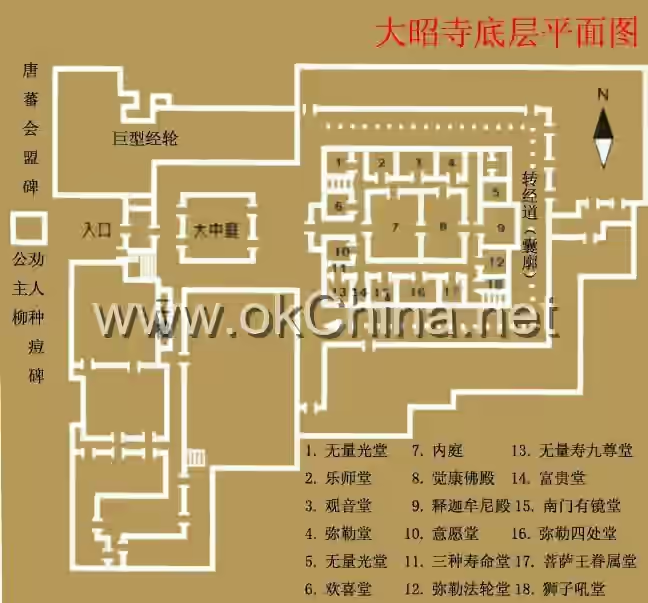
From the golden roof of the Jokhang Temple, one can see the Jokhang Square. In the distance to the right, the Potala Palace stands on the mountain, while nearby willow trees, known as the "Princess Willow," are said to have been planted by Princess Wencheng. The layout and orientation of the Jokhang Temple differ from those of Han Chinese Buddhist monasteries, as its main hall faces west. The main hall is four stories high, with side halls flanking it, recreating the cosmic ideal of the mandala in Buddhist architecture. The temple's main halls include the Shakyamuni Hall, the Tsongkhapa Hall, the Songtsen Gampo Hall, the Palden Lhamo Hall (the protector deity of the Gelug school), the Sheldrag Hall, and the Tibetan King Hall, among others. The temple is adorned with various wood carvings and murals.
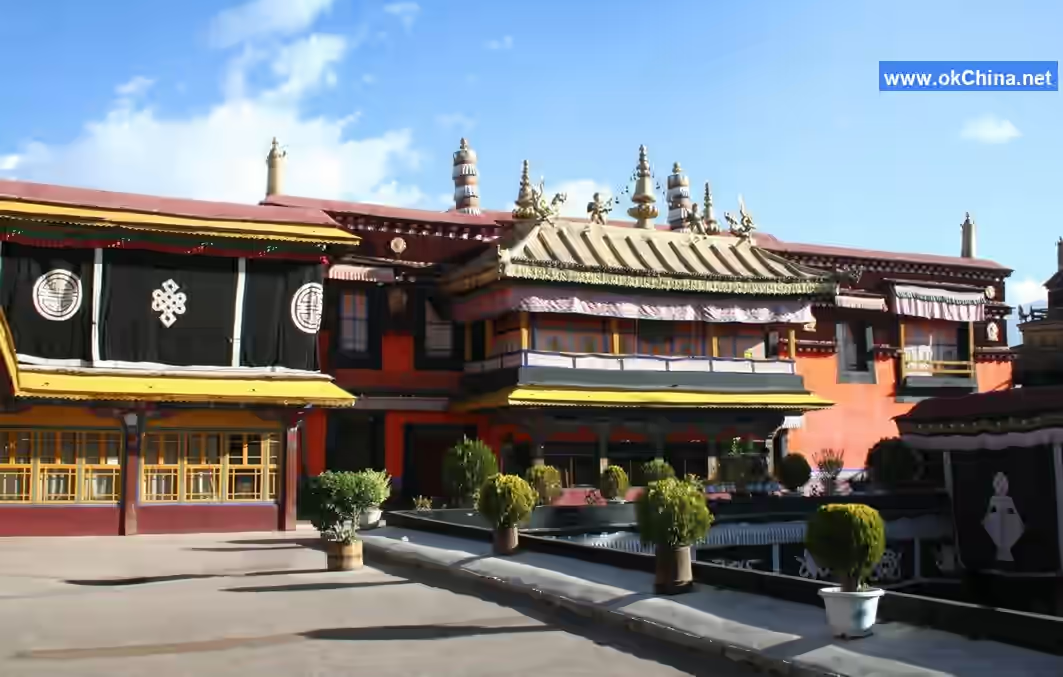
Passing through the main gate of the Jokhang Temple leads to a courtyard, which is the birthplace of the "Geshe" (a high academic degree in Tibetan Buddhism, equivalent to a doctorate) in Tibetan Buddhism. In 1409, Tsongkhapa, the founder of the Gelug school, established the Great Prayer Festival at the Jokhang Temple, making it the largest religious event in Tibetan Buddhism. Since then, the Gelug school has gained widespread fame. During the festival, monks from major monasteries gather in this courtyard to witness intense debates among outstanding monks selected by their respective monasteries. Rows of butter lamps on the eastern side of the courtyard remain lit even during the day, tended to by families responsible for adding butter.
Behind the butter lamps is the main entrance to the Jokhang Temple's central hall. The earliest structures of the temple begin from this entrance; the outer courtyard was added later, while the main hall dates back over 1,400 years. Due to years of friction from pilgrims, the stone floor at the entrance is polished to a mirror-like shine. Two giant statues flank the entrance: on the left is Padmasambhava, the founder of the Nyingma school and a tantric master originally from India who introduced tantric Buddhism to Tibet in the 8th century; on the right is Maitreya, the Future Buddha.
On the right side of the entrance to the main hall corridor is a mural depicting the story of the temple's construction, including the early appearance of the Potala Palace in the 7th century and the scene of filling the lake to build the Jokhang Temple. Moving clockwise from the left, the first small chapel houses statues of Tsongkhapa and his eight principal disciples, all of whom made significant contributions to the spread of the Gelug school. The First Dalai Lama and the First Panchen Lama are among these eight disciples. Among the six major monasteries of the Gelug school, Ganden Monastery was built by Tsongkhapa himself, while Drepung Monastery, Sera Monastery, and Tashilhunpo Monastery were built by his disciples.
At the corner of the western and northern walls stands a white stupa, said to have emerged from the Wotang Lake before the construction of the Jokhang Temple. In the first small chapel on the southern side sits the Medicine Buddha, the master of the Eastern Pure Lapis Lazuli World. Adjacent to this chapel is a statue of Milarepa, one of the founders of the Kagyu school, with his hand placed near his ear. The small chapel houses statues of the Buddhas of the Three Times. The second chapel is dedicated to Avalokiteshvara. Locals worship the Buddha with great devotion, often applying gold powder to the face of Avalokiteshvara. To the right of this chapel are statues of Songtsen Gampo, Princess Bhrikuti, and Princess Wencheng.
In the hearts of Tibetans, Songtsen Gampo and Princess Wencheng are believed to be bodhisattvas who transformed into a king and queen to educate the Tibetan people. The two princesses are depicted with dignified appearances, with the one with a high bun, typical of Tang Dynasty women, being Princess Wencheng. At the corner of the southern and eastern walls are statues of Tsongkhapa and other masters from various schools. The first chapel on the eastern wall is dedicated to Amitabha Buddha.
Turning the corner, a mural depicts a celebration organized by Songtsen Gampo and the princesses to mark the completion and consecration of the Jokhang Temple in the 7th century. It essentially portrays a traditional sports event of the time, including wrestling, yak dances, mask dances, archery, and more. The mountain on the left side of the mural is Chakpori Hill, topped with a television tower. The painting also shows the original Tibetan Medical College, with the white stupa in front of the Potala Palace's square, which originally served as the western gate of Lhasa. To the right of the mural is the earliest Potala Palace, consisting of only two main buildings, built as the royal palace by Songtsen Gampo.
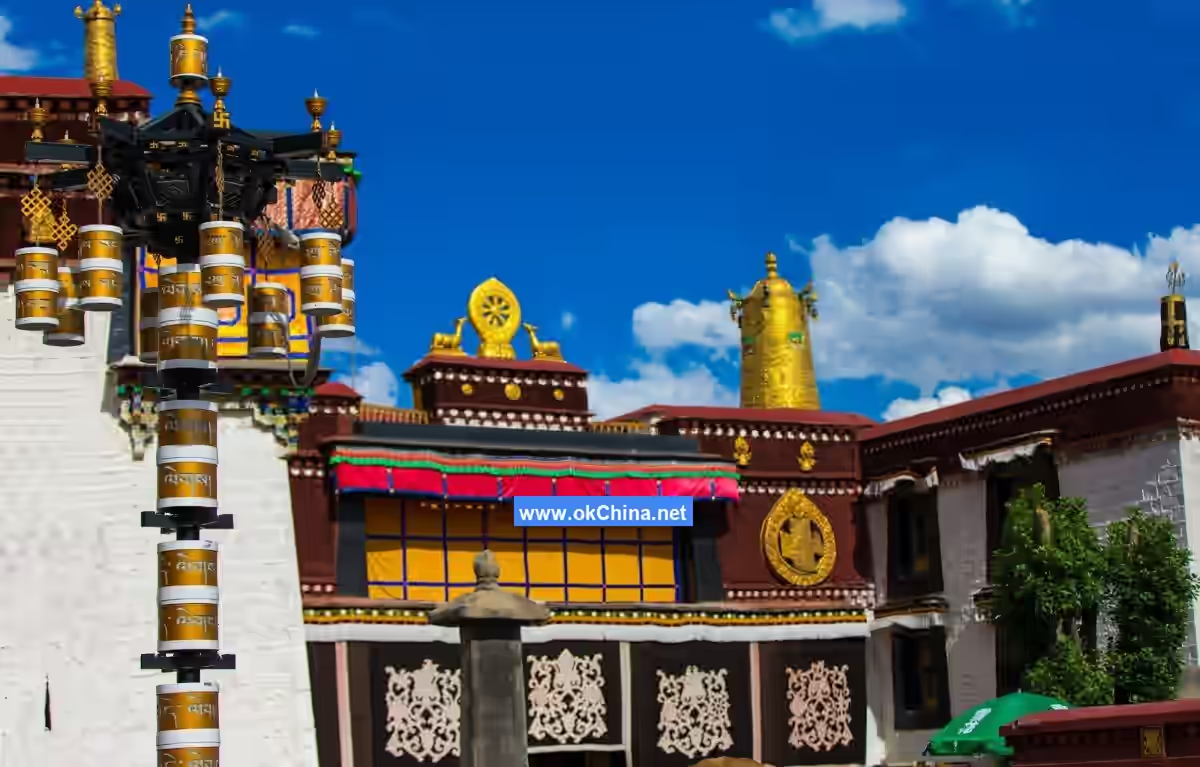
Around the main hall, there are 380 prayer wheels placed closely together. Walking and turning the prayer wheels is a daily practice for many devout believers.
Entering the Jokhang Temple through the main gate and proceeding clockwise leads to a spacious open courtyard, which was once the venue for the grand Lhasa Monlam Prayer Festival. During this event, tens of thousands of monks from Lhasa's three major monasteries gather here to pray for the happiness of all beings and social stability, while also engaging in debates, exorcisms, and welcoming Maitreya Buddha. The Monlam Prayer Festival began in 1409 when Tsongkhapa, to commemorate Shakyamuni Buddha's miraculous defeat of six non-Buddhist schools, gathered monks from various monasteries and schools to hold a blessing ceremony at the Jokhang Temple during the Tibetan New Year. The murals on the walls of the courtyard's colonnades and the circumambulation corridor, filled with thousands of Buddha images, are known as the Thousand Buddha Gallery. The total area of murals in the Jokhang Temple exceeds 4,400 square meters.
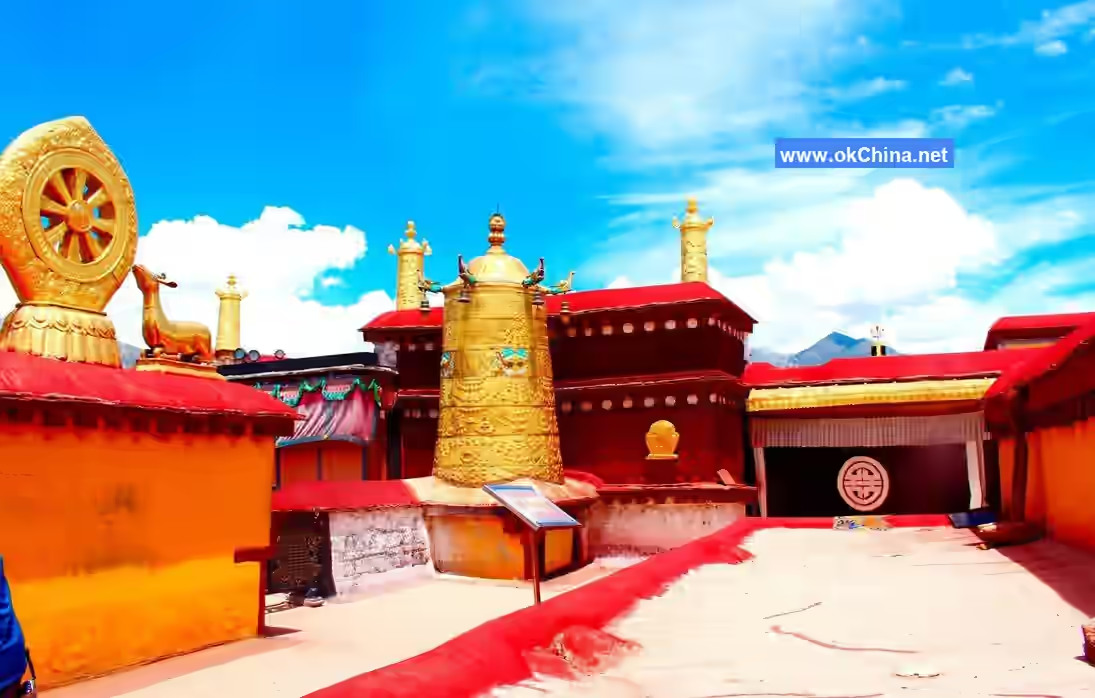
Exiting the courtyard and heading to the side gate ticket office, stairs lead directly to the second and third-floor platforms. The second floor is only open in the morning. Songtsen Gampo's Dharma King Hall is also located in the southwest corner of the second floor, housing statues of King Songtsen Gampo, Princess Wencheng, Princess Bhrikuti of Nepal, and Minister Gar Tongtsen, which are also early works. Between the second and third floors is the Palden Lhamo Chapel, the protector goddess of the Jokhang Temple and the entire city of Lhasa. In the northeast corner of the second-floor courtyard, a ladder leads to a small door on the third floor, which is the entrance to the golden roof. The third floor of the main hall is usually closed to the public, as monks meditate and practice there. The four massive golden roofs on the top level were built in the mid-14th and 17th centuries.
Continuing clockwise, passing through the Yasha Hall and the Dragon King Hall on either side, behind hundreds of lit butter lamps is the famous "Jokhang" Buddha Hall. This is not only the main structure of the Jokhang Temple but also its spiritual core. The hall is designed as an enclosed courtyard, four stories high, with a central assembly hall. Tibetan Buddhist believers regard Lhasa as the center of the world, and the core of the universe lies here. This is where the monks of the Jokhang Temple chant sutras and practice. From the assembly hall, one can see the exquisitely crafted statue of Thousand-Armed and Thousand-Eyed Avalokiteshvara, flanked by two Buddha statues: Padmasambhava on the left and Maitreya Buddha on the right. The assembly hall is surrounded by smaller chapels, all modest in size but simply arranged, except for the central Shakyamuni Buddha Hall. The Shakyamuni Buddha Hall is the heart of the Jokhang Temple and the ultimate destination for pilgrims. The statue of Shakyamuni enshrined here is the one brought by Princess Wencheng.
Completing a circumambulation of the "Jokhang" Buddha Hall along the Thousand Buddha Gallery constitutes the "Nangkhor." The main kora activities in Lhasa revolve around the Shakyamuni Buddha statue in the Jokhang Temple. Besides the "inner circle," the "middle circle" around the Jokhang Temple is the "Barkhor," which is the ancient and bustling commercial street—Barkhor Street. The "outer circle," or "Lingkhor," encompasses the Jokhang Temple, Chakpori Hill, the Potala Palace, and Ramoche Temple, covering most of Lhasa.
In Lhasa, Tibetans often refer to the area around the Jokhang Temple and Barkhor Street as "Lhasa," which in Tibetan means "land of the Buddha." One can also see pilgrims performing full-body prostrations at the entrance of the Jokhang Temple, a moving sight that reflects the temple's high status in the hearts of Lhasa's residents. Many more people circumambulate the Jokhang Temple daily, and numerous monks set up near the temple to chant sutras and seek alms from passersby.
3. Main Structures
3.1 Maitreya Buddha Hall
The main deity in this hall is a small yet exquisite statue of Maitreya Buddha. In the past, this statue was carried around Barkhor Street during the annual Great Prayer Festival. Statues of Manjushri Bodhisattva and Avalokiteshvara Bodhisattva stand on either side of the Maitreya statue, with seated Tara statues beside each bodhisattva. Additionally, four wrathful protector deities guard the hall along the walls. To the right of the door is Vaishravana (one of the Four Heavenly Kings), and to the left is the wealth deity Jambhala. On the altar is a seated statue of Lama Jebum, who built a dam in Lhasa to protect the city from floods. Upon entering, if one looks carefully at the lower left corner of the hall, a small stone goat can be seen. This is the legendary holy goat that carried soil to fill the Wotang Lake.### 3.2 Avalokiteshvara Chapel The main statue in this chapel is a small statue of Avalokiteshvara riding a lion (the first statue on the left), not the large statue of Amitabha Buddha. The other five statues are all different manifestations of Avalokiteshvara. On the wall between this chapel and the staircase leading upstairs is a section of a pillar with a hole at the top. Many pilgrims press their ears closely against this hole, hoping to hear the sound of a duck flapping its wings. Legend has it that this duck is preserved at the bottom of the Wotang Lake in the Jokhang Temple.
3.3 Chapel of the Three Dharma Kings
The main statue in this chapel is Tibetan King Songtsen Gampo, with King Trisong Detsen on the left and King Tri Ralpachen on the right. The reigns of these three Tibetan kings marked the peak of the Tibetan Empire. With their strong support, Buddhism was introduced to Tibet and flourished there. They are the three Dharma Kings in Tibetan history, traditionally referred to as the "Three Ancestral Dharma Kings."
3.4 Tara Chapel
The Tara Chapel enshrines Tara. The large statue in the center of the chapel is Tara, and in the glass cabinet behind her are statues of her main manifestations, the "Twenty-One Taras." To the right of the shrine are six statues. The first three are a group known as the "Three Masters," namely Abbot Shantarakshita, Master Padmasambhava, and Dharma King Trisong Detsen. The other three are the "Three Masters and Disciples," namely Master Tsongkhapa and his two main disciples, Khedrup Je and Gyaltsab Je.
3.5 Tang-Tibet Peace Alliance Stele
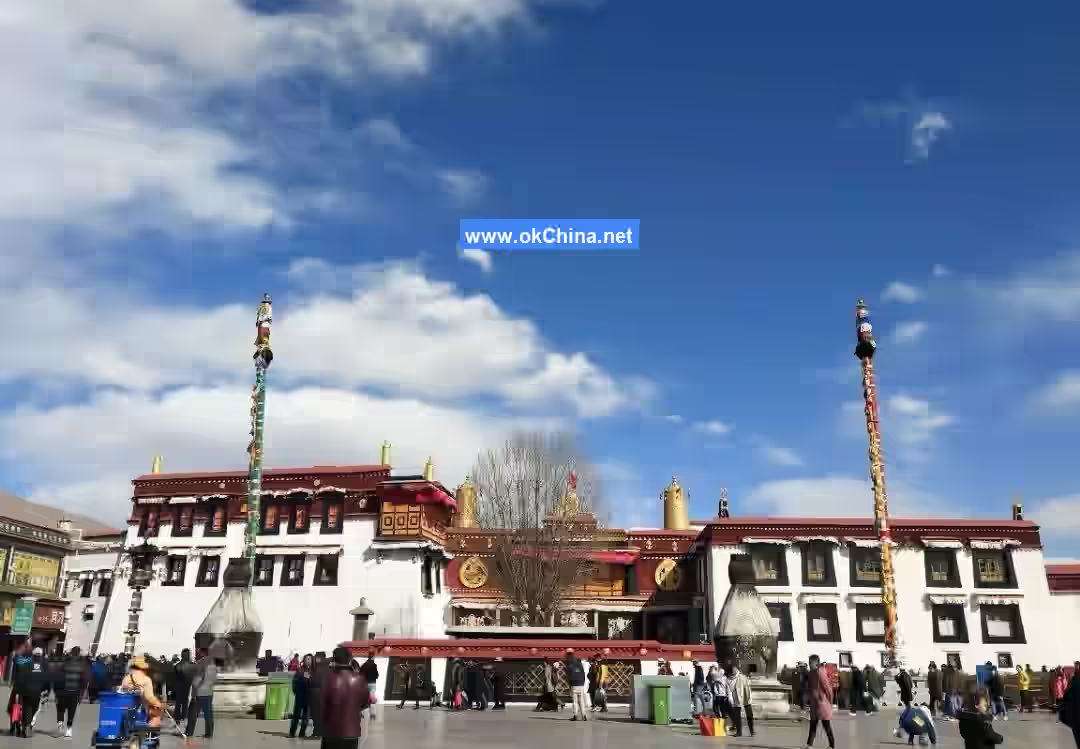
Entering the small square in front of the Jokhang Temple, one can see the full view of the temple. The first things that catch the eye are two steles enclosed by a wall. The one to the south is the famous Tang-Tibet Peace Alliance Stele. It is 3.42 meters high, 0.82 meters wide, and 0.35 meters thick, inscribed in both Tibetan and Chinese in the 3rd year of the Changqing era of the Tang Dynasty (823 AD).
In the 9th century AD, the Tang Dynasty and the Tibetan Empire reached a peace agreement to achieve the goals of "not being enemies or raising armies against each other," "ensuring the peace and prosperity of the people with unified thoughts," and "eternally honoring the bond between uncle and nephew." To express the sincere desire for everlasting friendship between the two peoples, the then Tibetan King Tridé Tsuktsen erected this stele in front of the Jokhang Temple. The inscription is simple, unadorned, and earnest. Although the stele has weathered over time, most of the text remains clearly legible. Next to the stele stands a willow tree, said to have been planted personally by Princess Wencheng, locally known as the "Princess Willow."
The Tang-Tibet Peace Alliance Stele is also called the "Uncle-Nephew Alliance Stele" because Tibetan King Tridé Tsuktsen married a princess of the Tang emperor, so naturally his children would address subsequent Tang emperors as uncles.
3.6 Chapel of Tsongkhapa and His Eight Disciples
This chapel was built to commemorate Tsongkhapa, the founder of the Gelug school. The main statue in the center is Tsongkhapa, and the other eight statues are his eight main disciples. His two most famous disciples, Khedrup Je and Gyaltsab Je, are positioned to the left and right of Tsongkhapa's statue, respectively. When Tsongkhapa grew older and retired to a remote cave for meditation, these eight disciples accompanied and served him. During Tsongkhapa's lifetime, several statues of him were commissioned by his disciples. It is said that when Tsongkhapa saw this particular statue, he commented that it looked very much like him. Another account says this statue was miraculously created by the protector deity Yama. Yet another version holds that it was commissioned by a later Mongol emperor. To the left behind Tsongkhapa's statue is a row of statues of his Sakya teachers. Under the stairs of this chapel is a trapdoor leading to the lake below. The Hall of the Wheel of the Law in the Yonghe Temple in Beijing also enshrines this master.
3.7 Miraculous Stupa
In the 7th century, Songtsen Gampo threw his ring into the air to determine the location for the Jokhang Temple. The ring fell into the Wotang Lake, and from the lake arose a miraculous white stupa, indicating the suitable site had been found. In the 13th century, Sakya Pandita built a white stupa modeled after the miraculous one. This stupa was later destroyed, and the current main stupa was rebuilt to replace the one built by Sakya Pandita.
3.8 Chapel of the Eight Medicine Buddhas
The small main chapel enshrines the Eight Medicine Buddhas, revered as gods of medicine. When ill or praying for good health, devotees believe that worshipping in this chapel can help them recover from illness and strengthen their bodies.
3.9 Amitabha Chapel
The entrance to this chapel is guarded by two wrathful protector deities. On the left is the blue Vajrapani, and on the right is the red Hayagriva in one of his forms, Trolmé Watsé Karpa. Inside, the main statue of Amitabha is flanked by two small wrathful protector deities. Along the side walls are four seated Buddha statues each. This chapel is sometimes called the "Chapel of Obstacles." As it is located just before the Shakyamuni Chapel, devotees pray here to remove obstacles before paying homage to Shakyamuni.
3.10 Padmasambhava Chapel
In a corner under the stairs are two statues of Padmasambhava, with a statue of King Tri Ralpachen on the right. When leaving this chapel, one sees on the left wall a statue of Shakyamuni enclosed by an iron grille. It is said that this is the place where the Nine Great Bodhisattvas manifested visibly.
3.11 Chapel of Palden Lhamo
The Chapel of Palden Lhamo is located between the second and third floors. The statue of Palden Lhamo on the altar is a fierce, blue-black goddess. She is the protective deity of the Jokhang Temple and the entire city of Lhasa.
3.12 Golden Roof of the Jokhang Temple
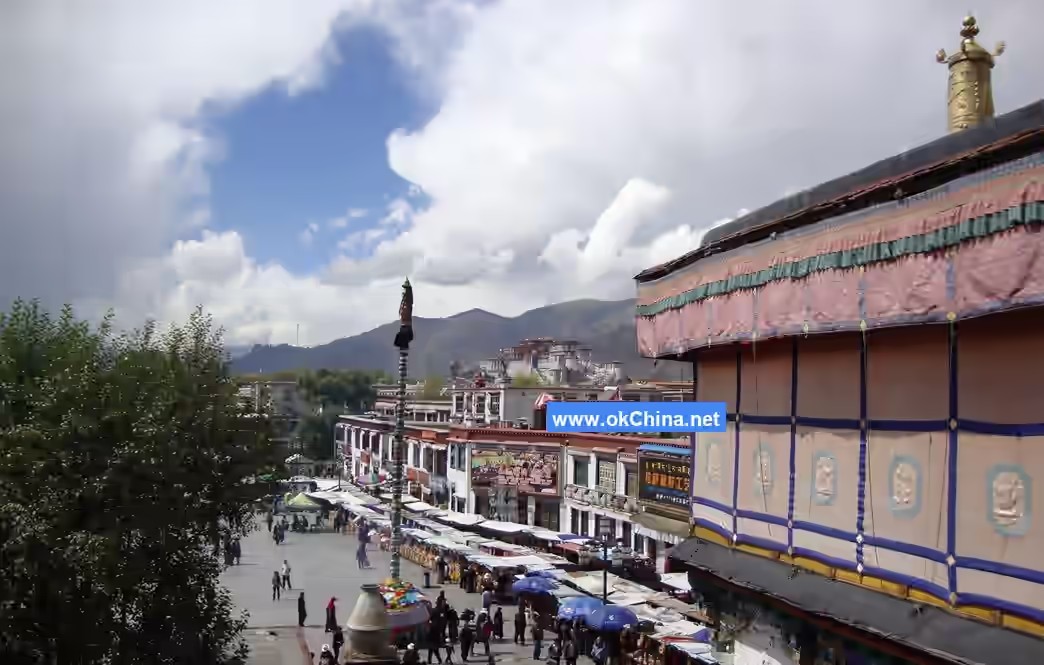
From the ticket office on the ground floor, stairs lead directly to the platforms on the second and third floors. From the platforms, one can gaze into the distance: the Potala Palace shines brilliantly in the dazzling sunlight. Looking down, one can see the bustling crowd in the Jokhang Temple Square and get a full view of the Barkhor Street, brimming with Tibetan life. In summer, there are also tea seats here where one can rest.
4. Collection of Cultural Relics
4.1 Carvings
The Jokhang Temple has sandalwood door frames and carvings from the 7th century AD. Additionally, in front of the Shakyamuni Chapel, there are eight wooden pillars from the same 7th-century period. The Jokhang Temple was listed as a UNESCO World Heritage Site in 2000. Among the many criteria, the most crucial were these wood carvings, as they cannot be seen in any other monastery in Tibet—only in the Jokhang Temple. Having endured for 1400 years, these wood carvings have become as hard as iron and produce a metallic sound when struck.
4.2 Buddha Statues
In the Buddha chapel, there is a very famous statue of Maitreya Buddha in Lhasa. It is said to control the favorable weather and timely rain in Tibet. At the end of the Tibetan New Year celebrations each year, it is carried out and circumambulated around the Jokhang Temple.
4.3 Life-Size Statue of Shakyamuni at Age 12
This statue was crafted during Shakyamuni Buddha's lifetime, modeled after his own appearance. After the statue was completed, his disciples were fortunate enough to invite Buddha Shakyamuni himself to consecrate and bless his own image. The statue's preciousness lies not only in its historical and cultural relic value but, most importantly, in the belief that seeing this statue is no different from seeing the Buddha himself from 2500 years ago.
There are only three life-size statues of Shakyamuni in the world. The founder of Buddhism, Shakyamuni, opposed idol worship during his lifetime and did not establish temples or enshrine images. On his deathbed, Shakyamuni only agreed to have statues made of himself at three different ages and personally drew sketches for them. Among these three statues, the gilded bronze statue of Shakyamuni as a 12-year-old prince is the most exquisite and revered. This statue later flowed from ancient India into China and was brought to Tibet by Princess Wencheng of the Tang Dynasty. The life-size statue of Shakyamuni at age 12 has been enshrined in the Jokhang Temple ever since.
4.4 Nangkor (Inner Circuit)
Completing a circuit around the "Jokhang" chapel along the Thousand-Buddha Gallery constitutes the "Nangkor." This is the "inner circuit" among the three circumambulation paths in Lhasa: inner, middle, and outer. The main circumambulation activities in Lhasa center around the Shakyamuni Buddha statue in the Jokhang Temple. Besides the "inner circuit," the path around the Jokhang Temple is the "middle circuit," or "Barkhor," which is the ancient and lively commercial street—Barkhor Street. The circuit around the Jokhang Temple, Chakpori Hill, the Potala Palace, and the Ramoche Temple is the "outer circuit," or "Lingkor," which covers more than half of Lhasa city.
5. Historical Development
The Jokhang Temple was initially built during the peak period of the Tibetan Empire in the 7th century. According to legend, it was constructed to enshrine a statue of Mingyur Dorje, the life-size statue of Shakyamuni at age 8. This statue was brought from Kathmandu by the Nepalese princess Bhrikuti, who was married to the Tibetan King Songtsen Gampo. The construction of the Jokhang Temple took over three years. In Tibetan, "goat" is called "Ra," and "earth" is called "Sa." To commemorate the contribution of the white goats, the temple was initially named "Rasa." It was later renamed "Tsuklakang" (House of Scripture) and also called "Jokhang" (House of the Buddha). Its full name is "Rasa Trulnang Tsuklakang," meaning "the house of scripture built by goats carrying earth." The name "Jokhang" is said to be related to the "Great Prayer Festival" that began in the 15th century.
The Jokhang Temple is an extant building from the Tibetan Empire period and the earliest timber-earth structure in Tibet. It pioneered the Tibetan-style flatland temple layout. After multiple renovations and expansions over successive dynasties, it has grown to cover an area of over 25,100 square meters. It is worth mentioning that the Jokhang Temple enshrines the life-size statue of Shakyamuni at age 12, brought from Chang'an of the Great Tang by Princess Wencheng.
During its construction, goats were used to carry earth, so the original temple was named the "Goat-Earth Miraculous Temple." In 1409, Master Tsongkhapa, founder of the Gelug school, convened monks from various Tibetan Buddhist schools to hold the Great Prayer Festival at the temple to extol the virtues of Shakyamuni. Subsequently, the temple was renamed "Jokhang Temple." Some believe it was renamed as early as the 9th century. During the Qing Dynasty, the Jokhang Temple was also called the "Yikezhao Temple."The Jokhang Temple has suffered two disasters in history. In the late 7th century AD, the first anti-Buddhist movement, initiated by aristocratic ministers who followed the primitive Bon religion, and the second anti-Buddhist movement launched by Langdarma in the mid-9th century, caused the Jokhang Temple to be either turned into a slaughterhouse or sealed off, with the statue of Sakyamuni buried underground twice.
The Jokhang Temple is not only a hall enshrining numerous Buddha statues and sacred relics for worshippers to pay homage to, but also a three-dimensional and realistic representation of the esoteric Buddhist doctrine of the mandala, the ideal model of the universe in Buddhism. In front of the main entrance of the Jokhang Temple, there are three stone pillars. One of them is inscribed with the Tang-Tibetan Alliance Treaty signed in 823 AD in both Chinese and Tibetan languages.
Most monasteries in Tibet belong to a specific sect of Tibetan Buddhism, but the Jokhang Temple is a sacred monastery revered by all sects. After the integration of politics and religion in Tibet, the government institution of the "Kashag" was also established within the Jokhang Temple. The "Golden Urn" ceremony for the reincarnation of living Buddhas has always been held at the Jokhang Temple.
In 1995, the Golden Urn ceremony to determine the reincarnated soul child of the 11th Panchen Lama was also held here.
In 1961, it was announced by the State Council as one of the first batch of national key cultural relics protection units. In November 2000, UNESCO listed the Jokhang Temple as an extension project of the Potala Palace in the "World Heritage List," making it a World Cultural Heritage site (the Norbulingka was also listed in 2001). "Going to Lhasa without visiting the Jokhang Temple is like not having been to Lhasa at all," as famously said by the renowned lama of the Jokhang Temple, Nyima Tsering.
6. Temple Legends
6.1 Legend One
Legend has it that the site of the Jokhang Temple was originally a lake. Songtsen Gampo once promised Princess Bhrikuti by this lake that he would build a Buddhist hall wherever her ring fell. Unexpectedly, the ring fell into the lake, and the lake surface was instantly covered with a network of light, within which a nine-story white pagoda appeared. Thus, a grand project began, involving a thousand white goats carrying soil to build the temple.
6.2 Legend Two
The two princesses each brought a precious statue of Sakyamuni. As the most valuable dowry, Princess Bhrikuti of Nepal brought an eight-year-old life-size statue of Sakyamuni, while Princess Wencheng brought another twelve-year-old life-size statue of Sakyamuni from Chang'an in the heartland. Tibetans recognize these two statues as the earliest Buddha images to enter the snowy plateau. To enshrine such sacred statues, Songtsen Gampo began constructing the earliest Buddhist buildings in Tibetan Buddhist history, which are the Jokhang Temple and the Ramoche Temple.
6.3 Legend Three
According to legend, during the construction of the Jokhang Temple, it was flooded several times. Princess Wencheng explained that the entire Qinghai-Tibet Plateau is a supine female demon (rakshasa). This demoness is in human form, lying on her back with her head to the east and legs to the west. The lake where the Jokhang Temple is located originally happened to be the heart of the demoness, and the lake water was her blood. Therefore, Princess Wencheng said that the Jokhang Temple must be built by filling the lake to suppress the demoness's heart first. Then, Princess Wencheng also recommended building twelve other small monasteries in remote areas to suppress the demoness's limbs and joints, totaling thirteen monasteries.
According to the location chosen by Princess Wencheng, building the temple required filling the lake first. At that time, the main means of transportation relied on goats carrying bags of sand and soil. In this way, the lake was filled, laying the foundation for the Jokhang Temple. In fact, the name "Lhasa" evolved from the Jokhang Temple. Originally, Lhasa was not called "Lhasa"; ancient documents referred to it as "Rasa" (i.e., "Rasa"), where "Ra" means goat and "Sa" means land, signifying a place built by goats. Later, because such a sacred Buddhist hall was built here, enshrining statues of the Buddha, Buddhist scriptures, stupas, and attracting pilgrims from all directions, everyone considered this place a Buddhist land, so it was renamed "Lhasa"—"La" means Buddha in Tibetan, and "Sa" means land.
Comments
Post a Comment