Jiuzhaigou Valley Scenic Area, Aba Prefecture
1. Introduction
Jiuzhaigou Valley National Nature Reserve is located in Zhangzha Town, Jiuzhaigou County, Aba Tibetan and Qiang Autonomous Prefecture, in the southern section of the Min Mountains in northwestern Sichuan Province. It lies on the northeastern side of Gonggan Ridge in the southern Min Mountains, over 400 kilometers from Chengdu. It is a major tributary valley at the source of the Baishui River, an upper tributary of the Jialing River in the Yangtze River system, covering a total area of 65,074.7 hectares.
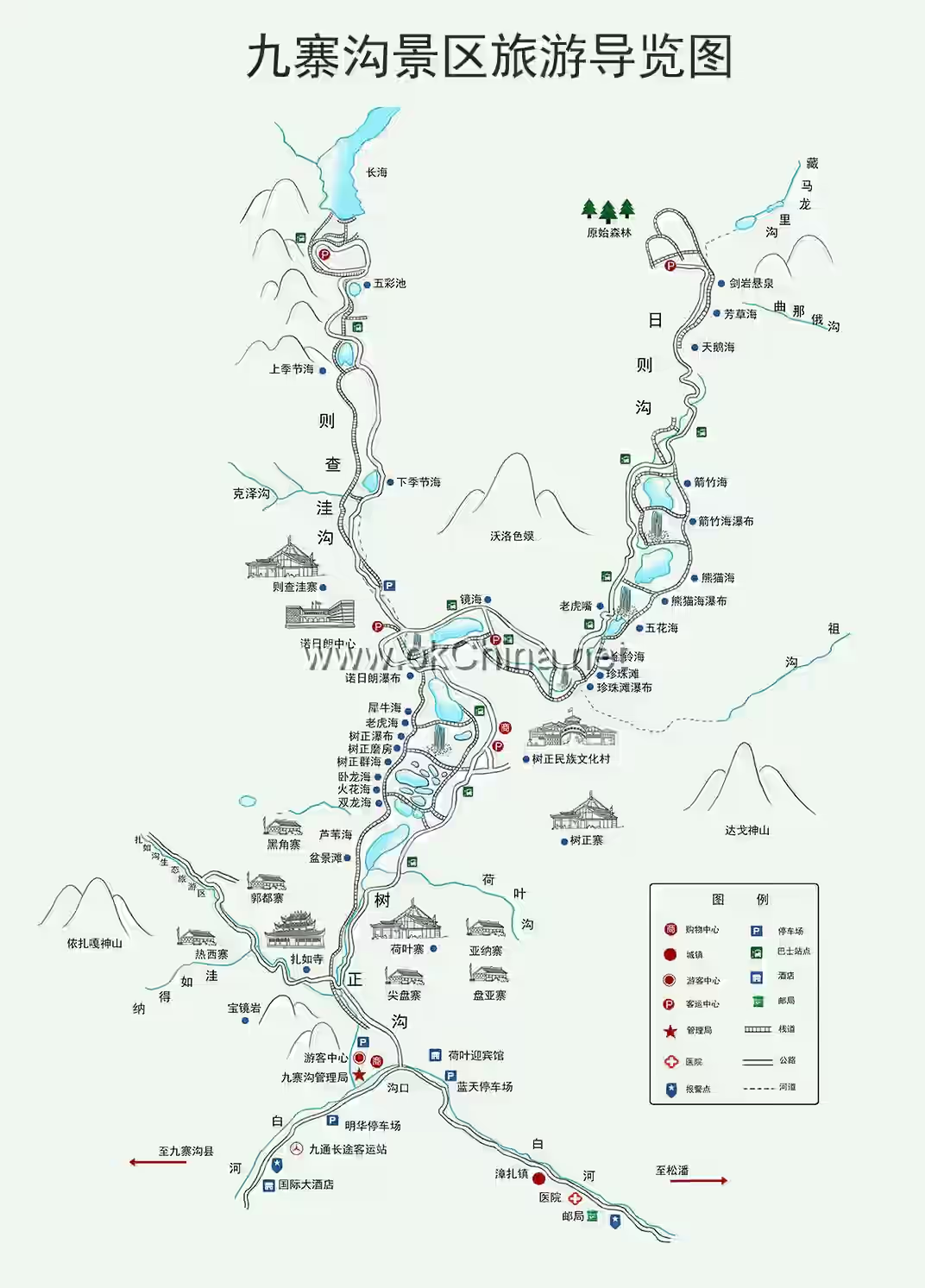
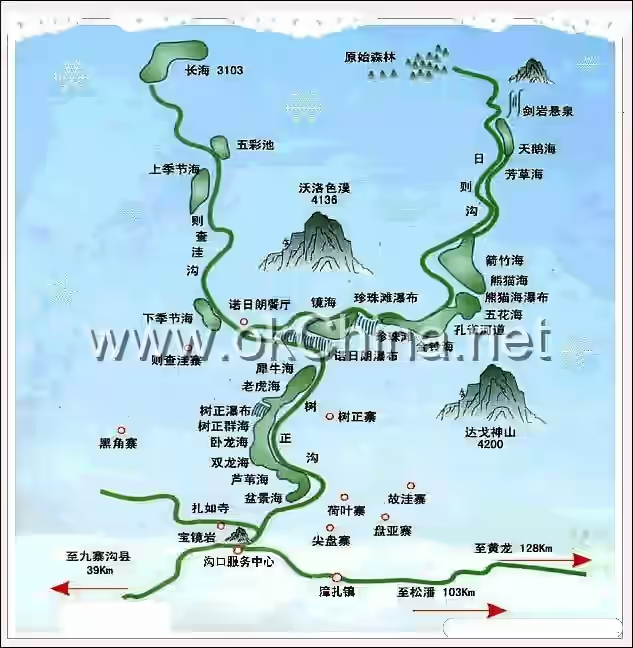
The Jiuzhaigou Valley National Nature Reserve features four main scenic valleys: Shuzheng Valley, Zechawa Valley, Rize Valley, and Zaru Valley, which are further divided into numerous large and small scenic spots. The landscape is dominated by water features, including large-scale travertine lake groups, travertine waterfall groups, and travertine shoals. These water scenes are renowned for their grand scale, diverse types, large numbers, beautiful forms, exquisite layouts, and excellent environments. The forest coverage rate within the reserve exceeds 80%. There are 38 species of liana plants and 74 species of nationally protected rare plants. The area is home to 122 species of terrestrial vertebrates, including 21 species of mammals, 93 species of birds, 4 species of reptiles, and 4 species of amphibians.
2. Geographical Environment
2.1 Topography
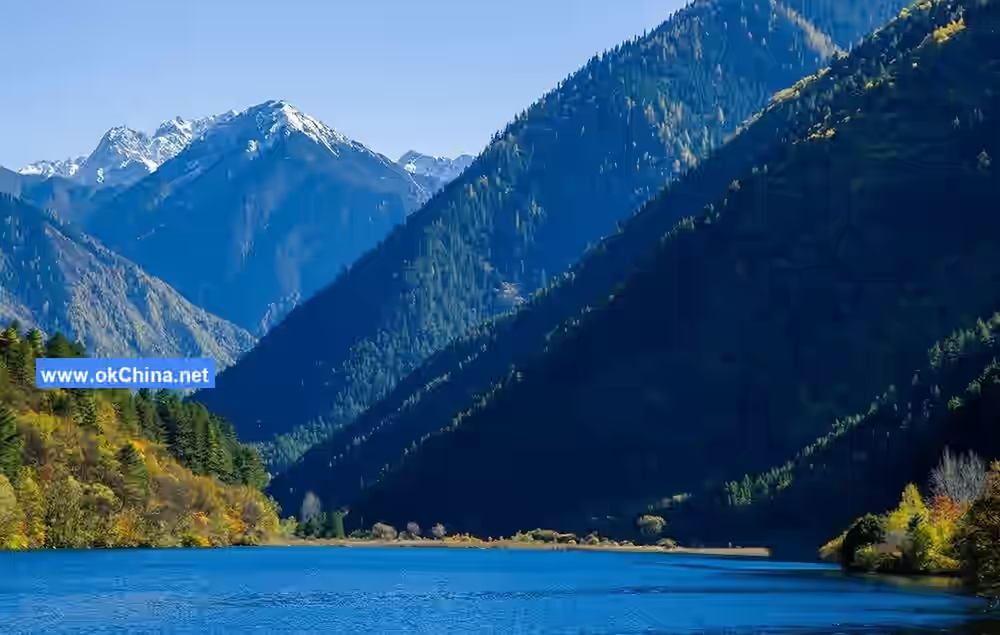
The Jiuzhaigou Valley National Nature Reserve features higher terrain in the south and lower in the north, with deeply incised valleys and significant elevation differences. The valley entrance in the north has an altitude of only 2,000 meters, while the central peaks generally exceed 4,000 meters, and the southern edge reaches above 4,500 meters. The main valley stretches over 30 kilometers. The peaks and ridges are mostly snow-capped year-round. Jiuzhaigou is situated in the transition zone from the Qinghai-Tibet Plateau to the Sichuan Basin. Its complex geological background, widespread carbonate rock distribution, developed folds and faults, intense neotectonic movements, significant crustal uplift, and the interplay of various forces have created diverse landforms. Large-scale karstification and travertine deposition, primarily driven by plant-induced calcite precipitation, have formed Jiuzhaigou's resplendent and elegant lake groups, rushing torrents, pearl-splashing waterfalls, ancient and serene forests, and rolling snow-capped peaks.
2.2 Climate
The Jiuzhaigou Valley National Nature Reserve has a plateau humid climate. Spring temperatures are relatively low and variable, with average temperatures mostly between 9–18°C. Early April often sees frozen ground and residual snow. Summer temperatures rise quickly and stabilize, with averages between 19–22°C. Nights are cooler, requiring light sweaters. Autumn is characterized by clear, crisp, and pleasant weather, with temperatures mostly between 7–18°C and significant diurnal temperature variations, especially in late autumn after October. Frozen ground appears after late October. Winters are relatively cold, with temperatures mostly around 0°C. At Nuorilang in the central area, the annual average temperature is 7.3°C. Jiuzhaigou receives little rainfall (annual precipitation less than 600 mm) concentrated mainly during the typical rainy season in July and August.
2.3 Hydrology
Within the Jiuzhaigou Valley National Nature Reserve, there are 108 alpine lakes, mostly clustered in groups, varying in size from half a mu to over a thousand mu. Jiuzhaigou has many tianchi (heavenly pools), the largest of which stretches 7 kilometers, surrounded by lush primitive forests. There are 17 major waterfalls in Jiuzhaigou, including the Nuorilang Waterfall. The largest lake in the reserve is Long Lake (Changhaizi), which extends 7 kilometers from north to south.
2.4 Plant Resources
The forest coverage rate within the Jiuzhaigou Valley National Nature Reserve exceeds 80%. There are 38 species of liana plants. Precious medicinal herbs include Chinese caterpillar fungus (Ophiocordyceps sinensis), snow lotus (Saussurea), snow tea, Sichuan fritillary bulb (Fritillaria cirrhosa), and gastrodia tuber (Gastrodia elata). There are 74 species of nationally protected rare plants. The area hosts 2,576 species of higher plants, including 24 nationally protected species, and over 400 species of lower plants, including 212 species of algae, with more than 40 species first discovered in Jiuzhaigou.
2.5 Animal Resources
The Jiuzhaigou Valley National Nature Reserve is home to 122 species of terrestrial vertebrates, including 21 species of mammals, 93 species of birds, 4 species of reptiles, and 4 species of amphibians. Nationally protected animals include Class I species such as the giant panda, golden snub-nosed monkey, leopard, white-lipped deer, takin, and Chinese monal; and Class II species such as the rhesus macaque, red panda, forest musk deer, Chinese goral, blue eared pheasant, golden pheasant, Temminck's tragopan, Chinese grouse, Chinese hazel grouse, and golden eagle.
2.6 Scenery of the Four Seasons
2.6.1 Gentle Spring, Romantic Blossoms
With the caress of the spring breeze, the slumbering Jiuzhaigou awakens. Ice and snow melt, new greenery sprouts, and the color of the spring water reflects the mountains, so tender it seems one could make it vanish with a gentle breath. Along the water's edge and paths, vibrant, unnamed mountain flowers bloom riotously—peach red, crimson purple, bright blue, goose yellow—creating a splendid, romantic tapestry. The gentle, lazy spring sun kisses the lake surface, caresses the new buds, and stirs your long-closed heart...
Tender buds quietly emerge, patches of fresh green growing increasingly lush with renewed vitality. The spring breeze awakens the frozen lakes, rippling the expanse of emerald water, which displays hues of serene blue, fresh green, and pale yellow. On windless sunny days, the colors of the mountain forests are perfectly mirrored in the water, presenting a symmetrical beauty.
In spring, Jiuzhaigou shows the hurried scene of seasonal transition. While the mountain forests still bear traces of lingering winter and Long Lake remains frozen, the foothills already paint a picture of early spring. Wild peach blossoms bloom in fiery profusion, swaying their laden branches in the spring sun, proclaiming the intense arrival of spring. The sky, azure and pure, sets off the delicate loveliness of the blossoms, clustered together, vying to breathe in the spring air.
2.6.2 Verdant Summer Jiuzhaigou, Unrestrained Coolness
In the scorching heat of summer, when blazing sun and sticky sweat envelop the land, Jiuzhaigou presents a截然不同 scene. She is veiled within vast expanses of lush, verdant shade. Thriving forests guard the lakes, while cheerful flowing water combs through branches and aquatic plants—everything exudes freshness.
The crisp scent of forest resin, the lakes'恰到好处 makeup, silver-curtain waterfalls expressing the most unrestrained passion of the seasons, and the cool summer breeze fluttering prayer flags. At this moment, the sky is blue, the trees are green, the lakes are indescribably colorful, and the mood is free...
Under the流金 sun, with蝉鸣 singing and萤火森森, such a Jiuzhaigou always makes one feel as if置身 in the fairyland of the Peach Blossom Spring,不禁感叹: "Ten li of gentle breeze不如你, seven meters of warm sun不及卿."
2.6.3 Vast Colorful Forests, Gorgeous and Enchanting
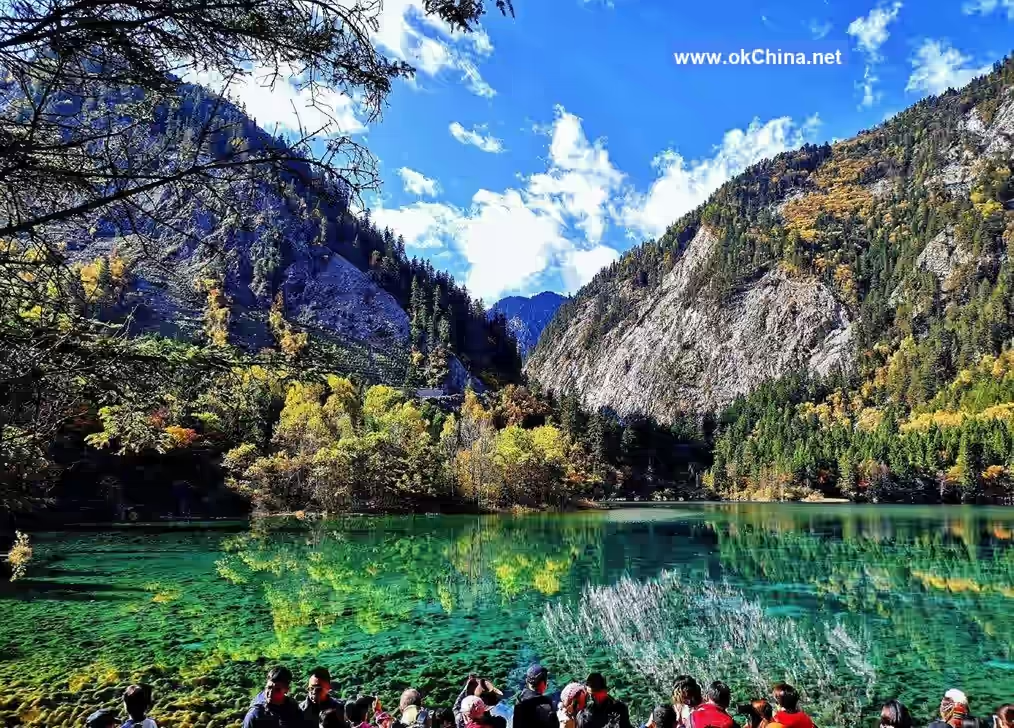
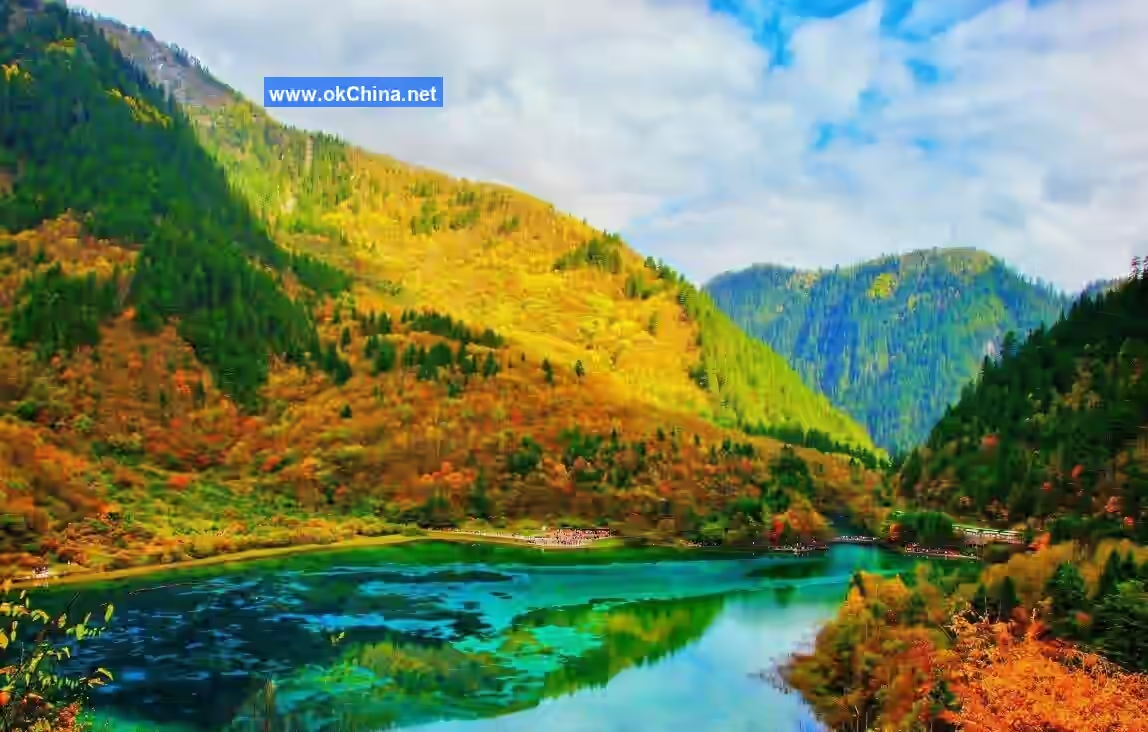
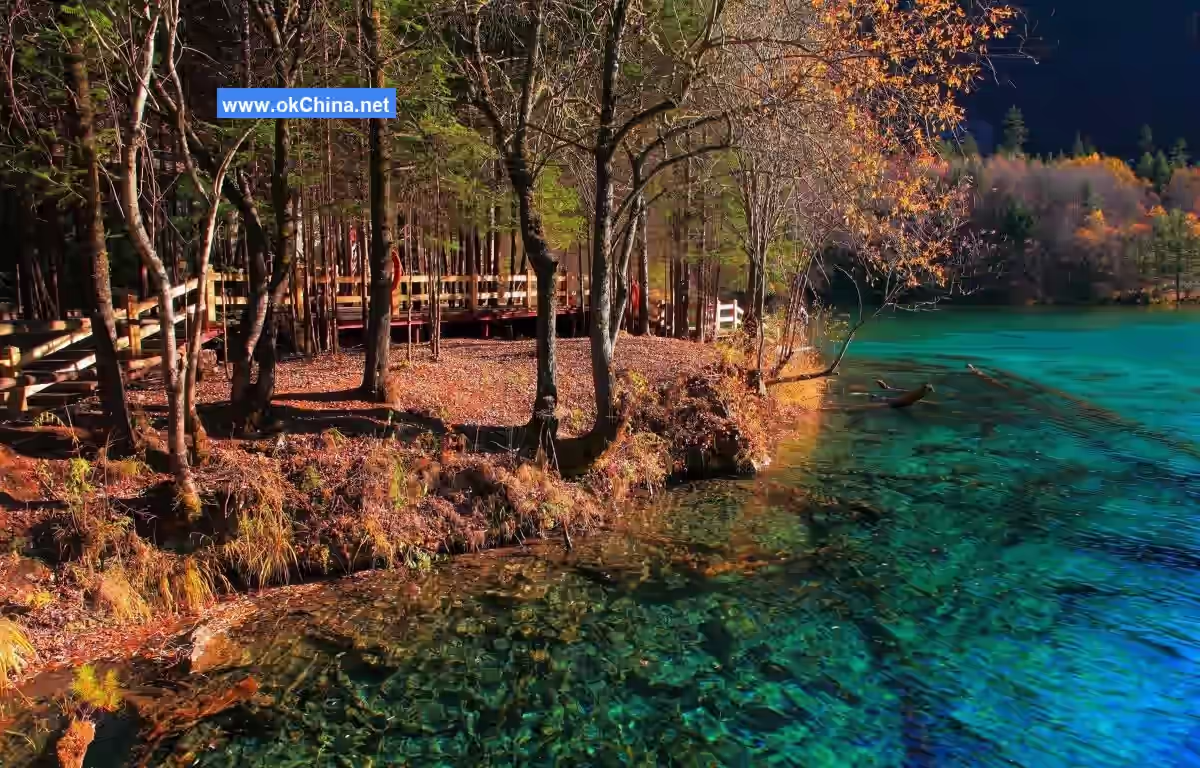
The romantic autumn wind also ushers in Jiuzhaigou's most splendid season. The mountains and forests are tinged with color, displaying not only green but also golden yellow, fiery red, and other hues—a riot of colors reflected in the bright lake water. Mountains and lakes share the same palette, and the water itself becomes brocade-like. For a moment, it's hard to distinguish where the mountains end and the water begins—utterly enchanting.
The五彩斑斓 world is deep and厚重. Colored lakes, colored skies, a colored world—she is like a maiden harboring五彩斑斓 thoughts. She is秀美婉约,灵动优雅. The autumn sun dapples the tranquil valleys; every tree holds autumn's charm, every mountain is piled with sunset glow.
Colorful fallen leaves float upon the shimmering lake waters. The distant clear sky is pure and azure blue. Autumn in Jiuzhaigou is so beautiful it seems unreal, constantly演绎着 a梦幻组合 of red, orange, yellow, green, cyan, blue, and violet. The ancient saying, "Nature concentrates divine beauty," could not be more apt.
2.6.4 Icy Fairy Tale, Ethereal Winter Hues
In the silent winter, Jiuzhaigou becomes尤其宁静 and even more poetic. Mountains and forests are clad in silver, waterfalls transform into enormous natural ice sculptures, lakes are pure as ice and jade, and the blue ice layers on the lake surface change奇妙冰纹 with the temperature differences between sunrise and sunset.
Apart from Long Lake and Panda Lake, which freeze up to 60 cm thick, other lakes do not completely freeze over. Ice blocks and frost flowers resemble silk brocade, ceremonial scarves (hada), flowing clouds, and青纱...
The captivating flying snow swirls and drifts down, endlessly dancing like willow catkins in spring,放肆地亲吻着 the mountains, the lakes, and your face. Such a pure white and高雅 world can truly make you forget the无畏纷争 and烦恼 of the mundane world.
3. Main Scenic Spots
3.1 Shuzheng Valley
3.1.1 Shuzheng Lakes
The Shuzheng Lakes are located at an altitude of 2,187–2,280 meters. The地形 formed on the basis of valley迭加 debris flow deposits, further shaped by travertine deposition, creating 19 lakes of varying sizes layered along the valley. Here, forests, lakes, and small waterfalls interweave, presenting the奇特景观 of "trees growing in water, water flowing through forests, people wandering in a painting."
3.1.2 Shuzheng Waterfall
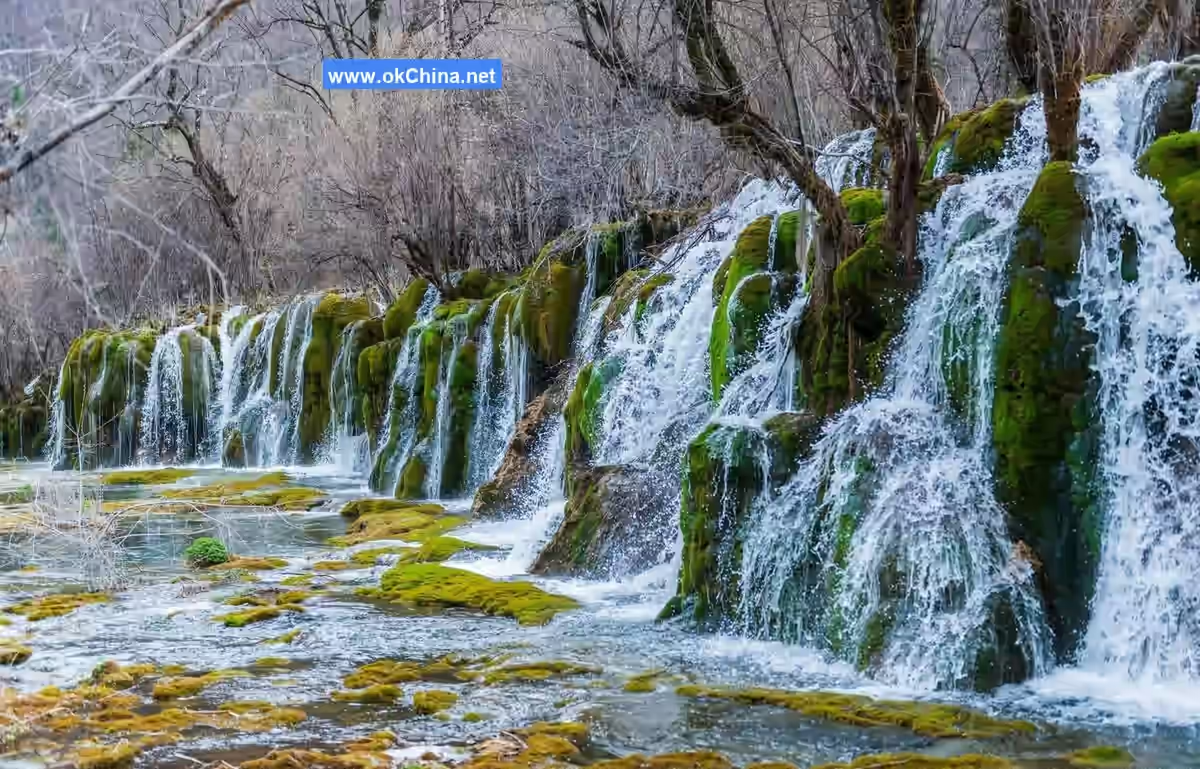
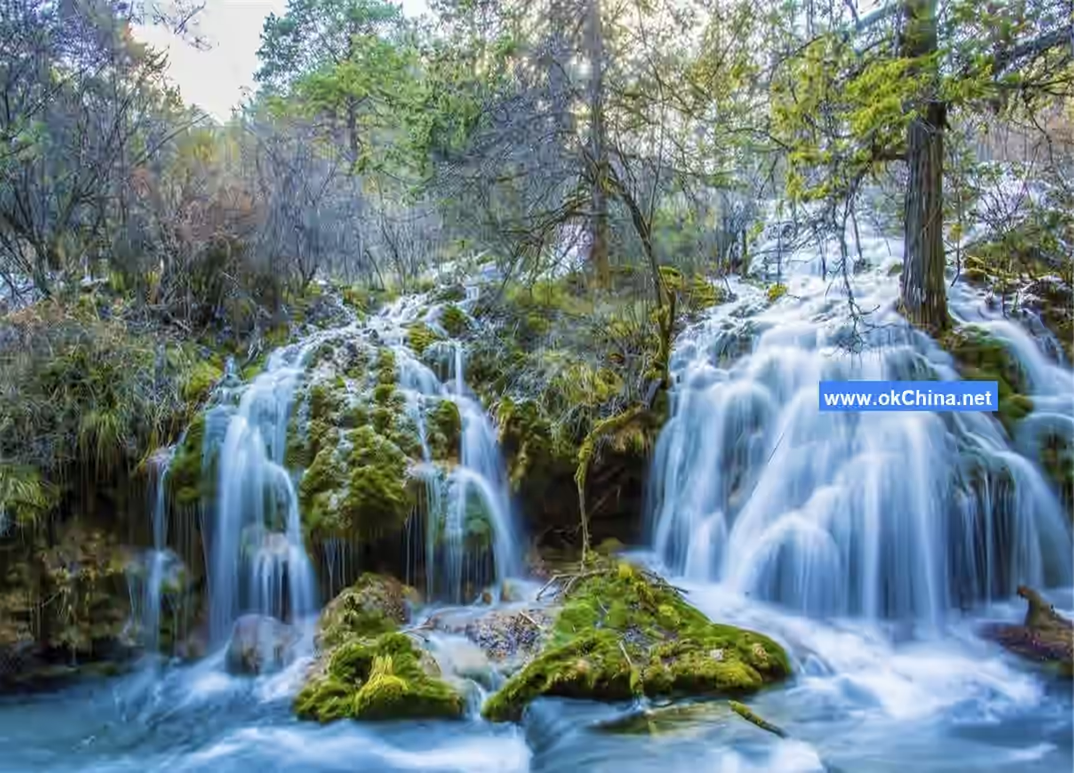
Shuzheng Waterfall is situated at 2,295 meters above sea level, with a height of 11 meters and a width of 62 meters. The waterfall呈向前凸起的圆弧状, with water cascading down in multiple tiers. Composed of numerous connecting cascades, the shrubs on the堰堤, enduring year-round water冲击, form特殊植物群落 and a世间罕见的自然奇观.
3.1.3 Shuzheng Village
Shuzheng Village is a Tibetan and Qiang settlement located within Shuzheng Valley. Behind the village stands the 4,200-meter-high Dago Mountain (Male Deity Mountain), facing the Shuzheng Lakes. The village houses the Nine-Treasure Lotus Bodhi Pagoda, symbolizing the unity, harmony, and happiness of the nine Tibetan villages. A民族文化村 was once established here, where visitors can欣赏九寨沟藏式的 architectural styles, paintings, and Tibetan clothing, experience daily Tibetan life, and感受藏民的衣、食、住、行.
3.1.4 Sparkling Lake (Huohua Hai)Sparkling Lake sits at an elevation of 2,211 meters, with a length of 294 meters, a width of 232 meters, a depth of 16 meters, and a storage capacity of 450,000 cubic meters. It earned its name because sunlight slanting across the lake's surface creates sparkling ripples that resemble flickering sparks. The 2017 magnitude 7.0 earthquake in Jiuzhaigou caused the dam at the lake's outlet to collapse, forming a breach 40 meters long, 12 meters wide, and 15 meters deep. The lake's landscape vanished, and over 100 fissures developed, with the longest measuring 50 meters in length, 1 meter in width, and 6.9 meters in depth. After repeated evaluations, researchers used ecological materials such as earthquake-damaged tufa, fallen rocks, and glutinous rice lime mortar to repair the dam body and fissures, prevent secondary disasters, and restore the lake's landscape.
3.1.5 Reed Lake
Reed Lake is located at an elevation of 2,192 meters. On the limestone cliff face opposite the east side of Reed Lake, approximately 15 meters high and 10 meters wide, natural weathering patterns and plant adornments have formed the image of a dignified and elegant young woman's face. Legend says it is the goddess Wolosemo of Jiuzhaigou.
3.1.6 Bonsai Shoal
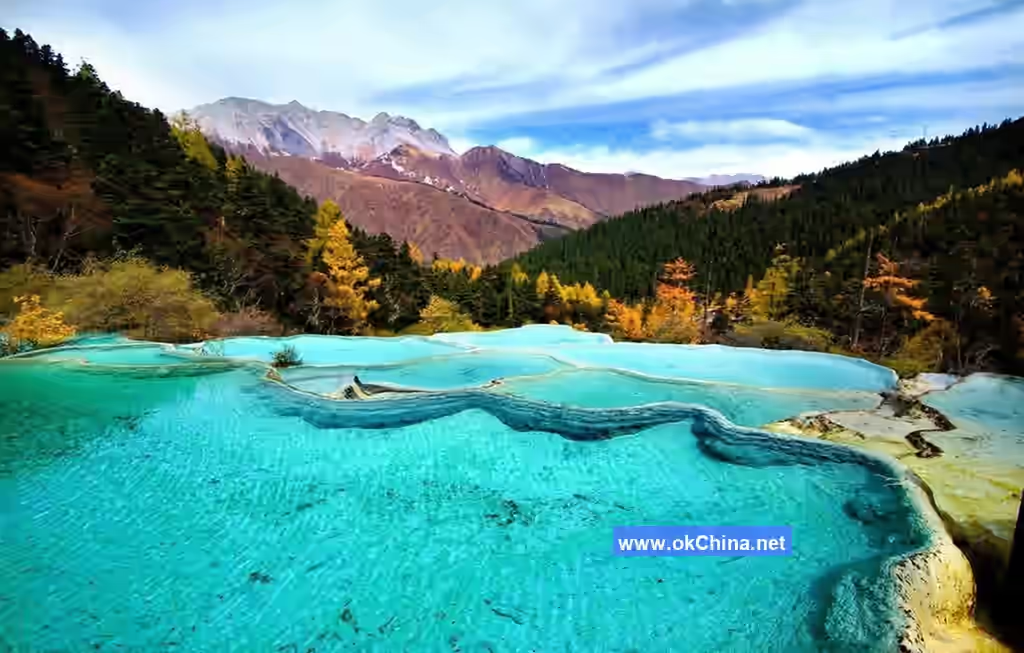
Bonsai Shoal, at an elevation of 2,190 meters, is 218 meters long, 98 meters wide, and 0.8 meters deep. It is the first shoal landscape encountered upon entering Jiuzhaigou. On the shallow shoal, clusters of willows, cypresses, poplars, pines, azaleas, and other plants grow, interspersed with flowers, grasses, and stones. Tufa deposits around the tree trunks have formed natural basin-like embankments slightly above the water surface, resembling groups of bonsai arrangements.
3.1.7 Sleeping Dragon Lake
Sleeping Dragon Lake is situated at an elevation of 2,220 meters. It is about 253 meters long, 225 meters wide, and 24 meters deep. A milky-yellow tufa ridge lies on the lakebed, shaped like a giant dragon resting in the water. When the lake surface is calm, the clear water reveals the dragon seemingly asleep at the bottom. When a breeze ripples the surface, the dragon's body appears to writhe. With stronger winds causing waves, the dragon seems startled, shaking its head and tail. In strong winds, the lake surface shatters instantly, and the dragon appears to soar away, vanishing without a trace.
3.1.8 Tiger Lake
Tiger Lake is located at an elevation of 2,298 meters, measuring 310 meters in length, 194 meters in width, and 23 meters in depth. In late autumn, the reflections of the colorful forest in the clear lake water create a mottled, dazzling pattern resembling the stripes of a tiger. During this season, the mountainsides around the lake are ablaze with color, and the reflections of the vibrant, multicolored trees in the clear water look like the brilliant stripes on a tiger's coat.
3.1.9 Rhinoceros Lake
Rhinoceros Lake, located at an elevation of 2,301 meters, is 2,000 meters long, 225 meters wide, and 17 meters deep, making it the second-largest lake in Jiuzhaigou. Legend tells of a seriously ill, enlightened monk who rode a rhinoceros to this spot. After drinking from a sacred spring by the lake, he miraculously recovered and left his beloved rhinoceros here, hence the name. In spring and summer, the lake water is emerald green. In the clear, crisp autumn, the mountain's autumn colors reflected in the lake surpass the actual scenery.
3.1.10 Double Dragon Lake
Double Dragon Lake sits at an elevation of 2,200 meters, measuring 290 meters in length, 247 meters in width, and 9 meters in depth. Through the crystal-clear water, two ribbon-like biogenic tufa ridges can be seen hidden on the lakebed. The upper part of these ridges is tufa, and the lower part is glacial till, resembling two dragons, seemingly in motion yet still.
3.2 Zechawa Gully
3.2.1 Seasonal Lakes
Upper Seasonal Lake is a unique lake in Jiuzhaigou, located at an elevation of 2,910 meters. It is 680 meters long, 200 meters wide, and 3 meters deep, formed as a glacial barrier lake. Its water level fluctuates with the seasons, filling and drying up, hence its name. For most of the year, it is dry, only filling with water during the rainy season. During other times, the lakebed dries up and becomes covered with lush green grass. Lower Seasonal Lake is nestled in a mountain col at 2,627 meters above sea level. It is a seasonal lake formed by valley blockage from landslide and debris flow deposits. In October during autumn, with ample rainfall, the lake is full, and the water is a deep blue. In early summer, the water level gradually drops, and the color turns emerald green.
3.2.2 Five-Color Pond
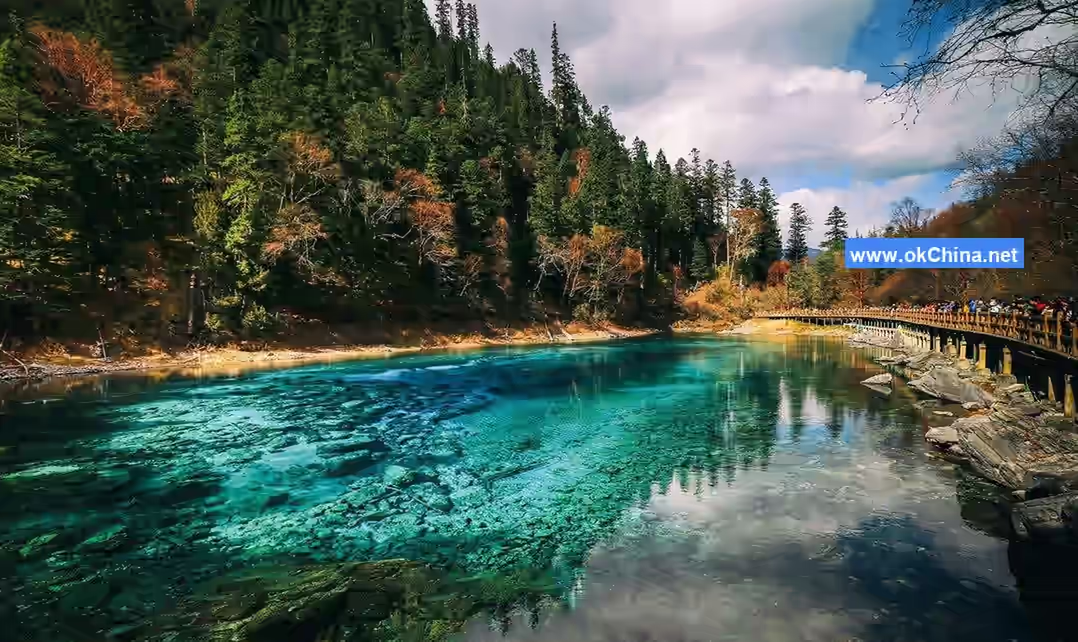
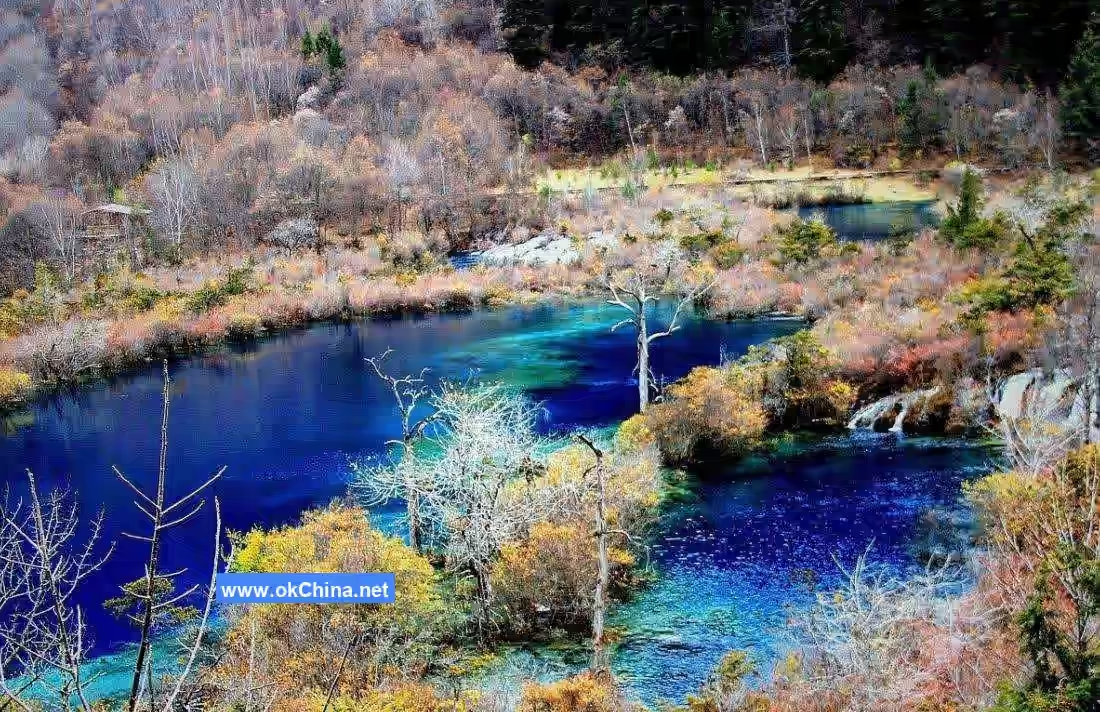
Five-Color Pond is located at an elevation of 3,010 meters, approximately 100 meters long, 60 meters wide, and 6.6 meters deep. It is the smallest yet most colorful lake in Jiuzhaigou, often called the "Eye of Jiuzhaigou." The lake is fed by groundwater and does not freeze over in winter. Due to sunlight, algae, tufa, and other factors, the lake water displays a dazzling array of colors.
3.2.3 Long Lake
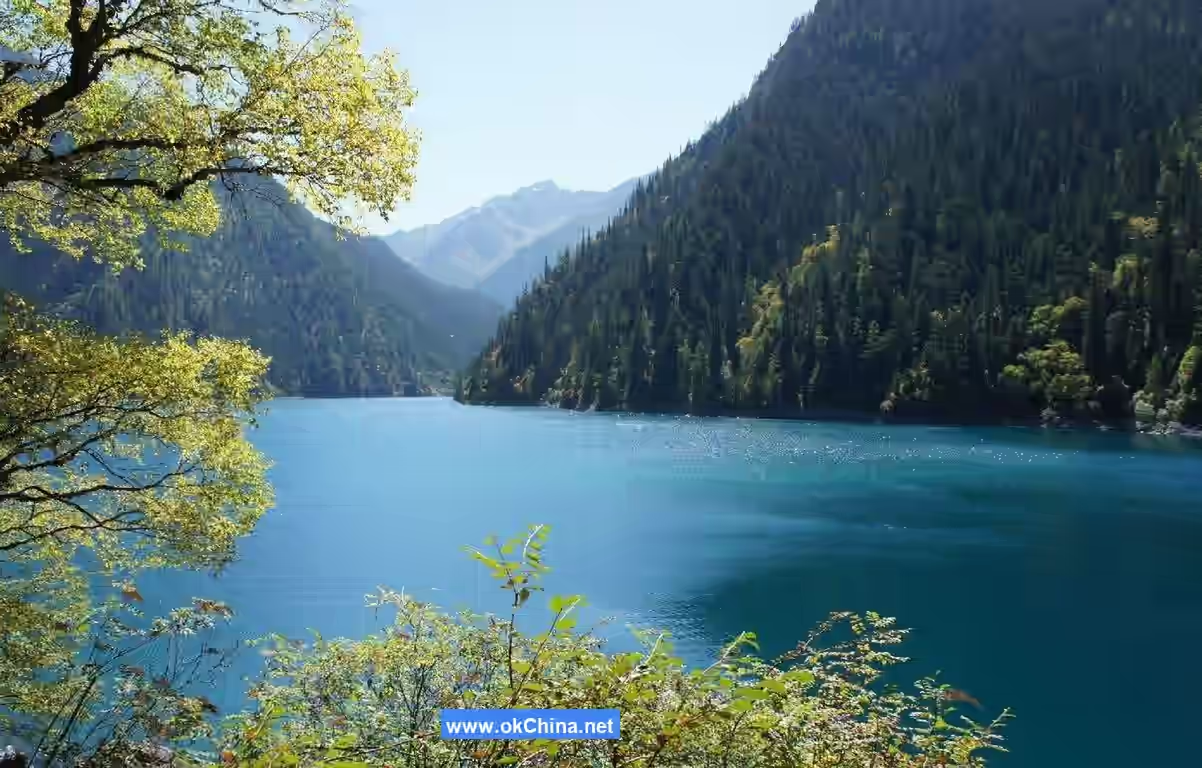
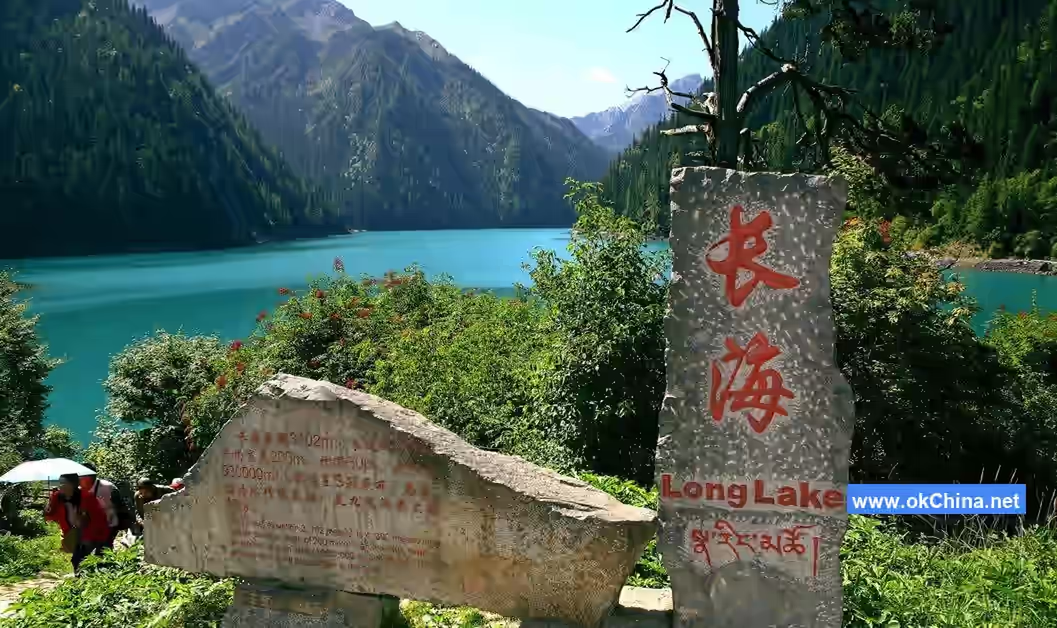
Long Lake sits at an elevation of 3,101 meters. It is about 4,350 meters long, 300 meters wide, 90 meters deep, with a storage capacity of 45 million cubic meters. Its shape is roughly an "S," and it is a glacial barrier lake and freshwater lake. It is the highest elevation, deepest, largest in area, and has the greatest storage capacity of all lakes in Jiuzhaigou. It has no surface outlet. Besides direct evaporation, water seeps through underground fissures to downstream scenic spots like Five-Color Pond and Five-Flower Lake, making it a regulating reservoir for the core scenic area. It does not overflow during the summer and autumn rainy seasons and does not dry up during the winter and spring dry seasons, leading locals to call it the "magic gourd" that never fills nor empties.
3.3 Rize Gully
3.3.1 Pearl Shoal Waterfall
Pearl Shoal Waterfall is located at an elevation of 2,433 meters, with an average height of 21 meters and a width of 270 meters. Formed from a Quaternary glacial moraine platform further solidified by calcification, the waterfall's slope is tall and sturdy, with a concave, crescent-shaped curtain. The waterfall plunges into the valley floor with a deafening roar. This area is extremely rich in negative oxygen ions, earning it the title "natural oxygen bar."
3.3.2 Pearl Shoal
Pearl Shoal sits at an elevation of 2,450 meters. The shoal surface is 112.3 meters wide and 189 meters long, with an average slope of 20 degrees and a relative height difference of 15 meters. It is the widest shoal in Jiuzhaigou, a large tufa deposition platform formed by calcium carbonate deposits. Under sunlight, rushing water cascades over the uneven shoal surface, splashing countless water droplets that resemble pure white pearls, sparkling and dazzling, hence the name.
3.3.3 Nuorilang Waterfall
Nuorilang Waterfall is located at an elevation of 2,343 meters, 24.5 meters high and 320 meters wide, making it the widest high-altitude tufa waterfall in China. Torrents of water from the Nuorilang Lakes pour down from the treetops at the waterfall's crest like several white ceremonial scarves (hada), with tremendous force and a sound that echoes through the valley. In the cold winter, the waterfall transforms into a giant ice curtain, with countless icicles hanging from the steep cliff, creating a rare world of ice crystals. The ice sculptures, in various shapes, glow with an enchanting blue light when illuminated, forming one of Jiuzhaigou's "Six Wonders" – the Blue Ice.
3.3.4 Nuorilang Lakes
The Nuorilang Lakes consist of about 20 tufa lakes of varying sizes, exhibiting tufa dissolution features. They are distributed between elevations of 2,353 and 2,365 meters, covering a total area of approximately 0.03628 square kilometers. Their formation is similar to rimstone dams and colorful pools. The Nuorilang Lakes are generally closely spaced, stretching over 400 meters. They vary in size, shape, and depth. The largest lake is 185 meters long and 45 meters wide; the smallest is only 20 meters long and 15 meters wide. Lake depths mostly range from 7 to 20 meters, with the deepest reaching 23 meters.
3.3.5 Panda Lake Waterfall
Panda Lake Waterfall is located at an elevation of 2,574 meters. It is 65 meters high and 75 meters wide, also known as High Waterfall. The waterfall features a three-tiered cascade and has the greatest drop in Jiuzhaigou. During the high-water season, inflow exceeds seepage, filling the lake and causing water to overflow the dam, forming the waterfall. In the dry season, the waterfall ceases, and natural ice sculptures form below it.
3.3.6 Panda Lake
Panda Lake sits at an elevation of 2,574 meters. It is 670 meters long, 109–237 meters wide, with an average depth of 15.6 meters, an area of 108,000 square meters, and a water volume of 1.8 million cubic meters. It is a glacial barrier lake, named for pandas that were once active here. The water level changes seasonally, with a variation of 5–7 meters. During the high-water season, the lake overflows, forming the High Waterfall. In the dry season, large stretches of golden-yellow tufa sandbanks are exposed along the shore. A remarkable sight is the schools of Gymnocypris przewalskii fish playfully gathering in the lake.
3.3.7 Five-Flower Lake
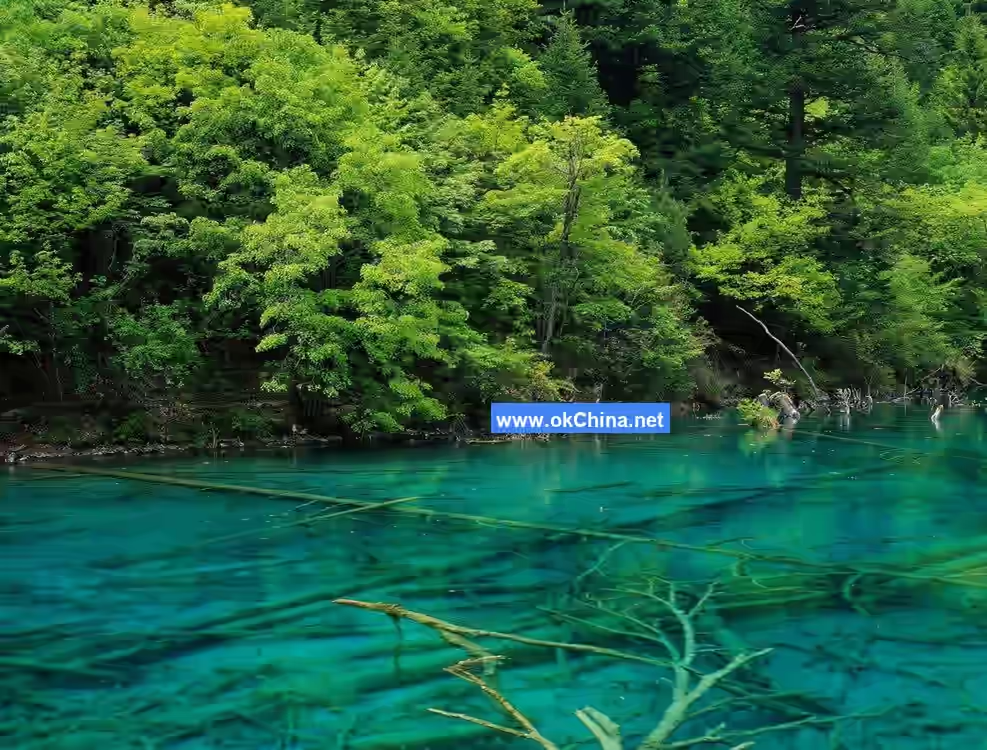
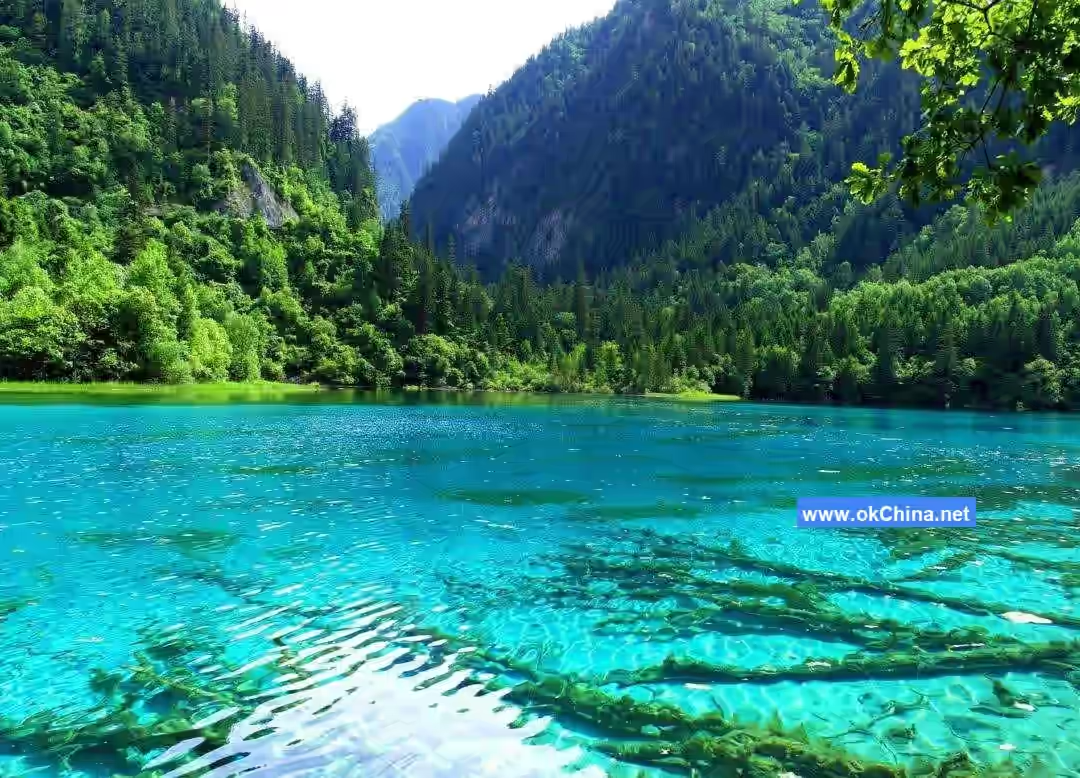
Five-Flower Lake is located at an elevation of 2,462 meters, measuring 450 meters in length, 313 meters in width, and 9 meters in depth. It is a barrier lake formed by landslides and debris flows blocking an original glacial valley. Five-Flower Lake is the most colorfully rich lake in Jiuzhaigou. The tufa, algae, aquatic plants, and fallen trees on the lakebed, under different reflections and refractions of light, combined with the reflections of the blue sky, white clouds, green grass, and emerald forests in the water, create a lake with hues interwoven and blended—yellowish, emerald green, dark green, sky blue, deep blue, navy blue—like a giant piece of jewelry inlaid with countless gems. Viewed from above, its full appearance resembles a peacock spreading its tail.
3.3.8 Peacock Riverway
Peacock Riverway is a watercourse flowing from the outlet of Five-Flower Lake through a deep valley. Walking along the Peacock Riverway is like being inside a painting created with the most intense colors, or like a peacock feather merging the most beautiful blues and greens of the earthly world.
3.3.9 Arrow Bamboo Lake
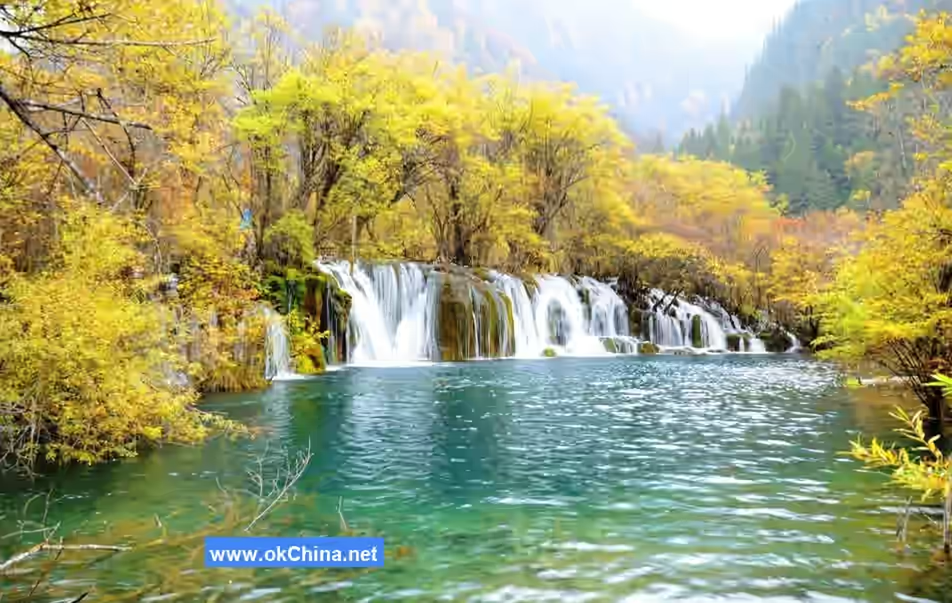
Arrow Bamboo Lake sits at an elevation of 2,629 meters. It is 1,184 meters long, 144–268 meters wide, 5–10 meters deep, covers an area of 151,000 square meters, and has a water volume of 930,000 cubic meters. It has a stable groundwater supply, so its water level changes little throughout the year and it does not freeze in winter. Arrow bamboo flourishes along its shores. When the wind is calm, the lake's reflections are captivating.
3.3.10 Swan Lake
Swan Lake is located at an elevation of 2,905 meters. It is a marshy lake, 720 meters long, 50–100 meters wide, 2–6 meters deep, covering an area of 43,000 square meters with a water volume of 200,000 cubic meters. Swans often stop here briefly. It connects downstream to Fangcao Lake. The shallow shoals are carpeted with green grass, and a clear stream meanders through the greenery, nourishing the aquatic plants.
3.3.11 Fangcao LakeFangcao Lake is at an altitude of 2,910 meters. It is a swampy lake, measuring 540 meters in length, 4–20 meters in width, and 2–4 meters in depth, covering an area of 50,000 square meters with a water volume of 10,000 cubic meters. It is primarily fed by upstream streams and precipitation, with calcareous tufa funnels distributed across the lakebed. The scenery varies with the seasons, each offering its own charm: lush green grass in spring, blooming flowers in summer, a golden hue in late autumn, and pristine white crystals in winter.
3.3.12 Primeval Forest
The Primeval Forest is at an altitude of 2,930 meters. The vegetation is dominated by various species of fir and spruce, some of which are hundreds or even thousands of years old. The undergrowth includes shrubs such as honeysuckle, azalea, arrow bamboo, and rowan, with moss reaching depths of several tens of centimeters. The negative oxygen ion concentration reaches 3,000 per square centimeter. The forest's soft, green ground is covered with lichen, which serves as a natural environmental indicator. Lichen cannot survive if there is even a trace of harmful substances in the air, so its presence indicates that the air quality in Jiuzhaigou is exceptionally pure.
3.3.13 Mirror Lake
Mirror Lake is at an altitude of 2,367 meters, measuring 1,155 meters in length, 241 meters in width, and 31 meters in depth. It is the third-largest lake in Jiuzhaigou and is named for its mirror-like calm surface.
3.4 Zharu Valley
3.4.1 Zhayizhaga Sacred Mountain
Zhayizhaga Sacred Mountain stands at an altitude of 4,528 meters, towering at the end of the Zharu Horse Trail. It is a sacred site for local residents and is said to be the master of all mountains. Pilgrimages around the mountain on the 15th day of each lunar month and the Mazhi Festival on the 15th day of the third lunar month are held here. Devotees gather in groups, some on horseback and others on foot, circumambulating the sacred mountain counterclockwise to pray for blessings from the deities.
3.4.2 Black Lake
Black Lake, known as "Tsola" in Tibetan, covers an area of approximately 5 mu and is 8 meters deep. It is a relatively deep and typical remnant of a cirque lake. According to historical records, local Tibetans used to come to this lake to pray for rain during droughts. Low clouds often hover over the lake, and it is said that shouting loudly below could cause the clouds to release raindrops. In summer, the area around Black Lake is a grassland, while in winter, it transforms into a snowy landscape.
3.4.3 Treasure Mirror Rock
Treasure Mirror Rock was formed by differential movements in the Earth's crust and landslides after earthquakes, resulting in fractured and uplifted rock formations with a maximum height difference of 500 meters. The rock surface is large and flat, displaying rich patterns resembling human and object figures, hence its name, which means "treasure mirror."
3.4.4 Zharu Temple
Zharu Temple, at an altitude of 2,026 meters, is known as "Ranwu Gongba" in Tibetan. It was originally built in the late Ming Dynasty and has undergone two renovations. It is the only religious temple within the Jiuzhaigou scenic area and a sacred site for followers of Bon religion. Surrounded by mountains and facing Treasure Mirror Rock, the temple features golden roofs and red eaves, with colorful prayer flags fluttering in the wind, showcasing a strong Bon cultural atmosphere. Four major religious events are held here annually, with the most grand being the "Mazhi Festival" on the 15th day of the fourth lunar month.
Comments
Post a Comment