
Jinyun Xiandu Scenic Area in Lishui City
1. Introduction
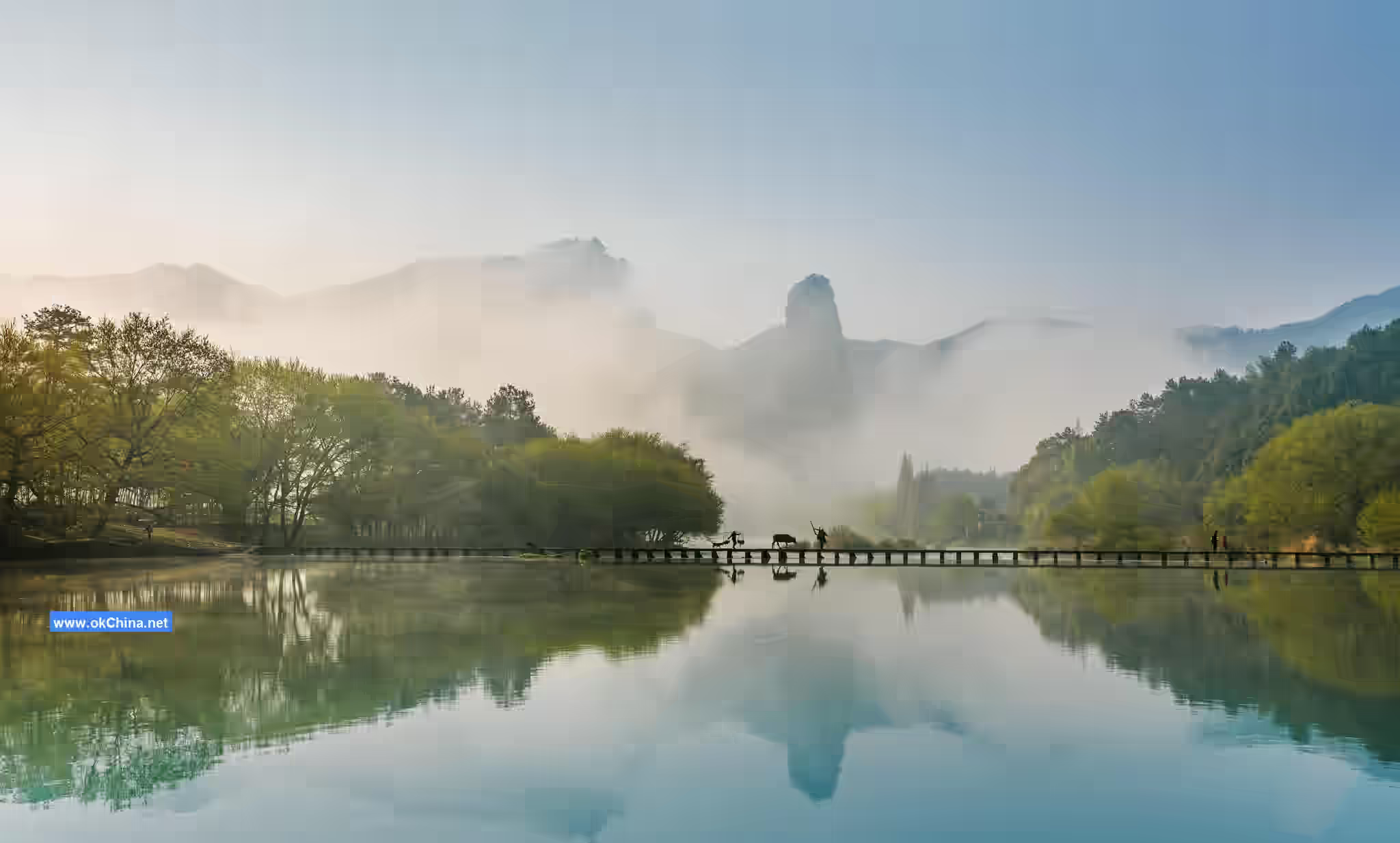
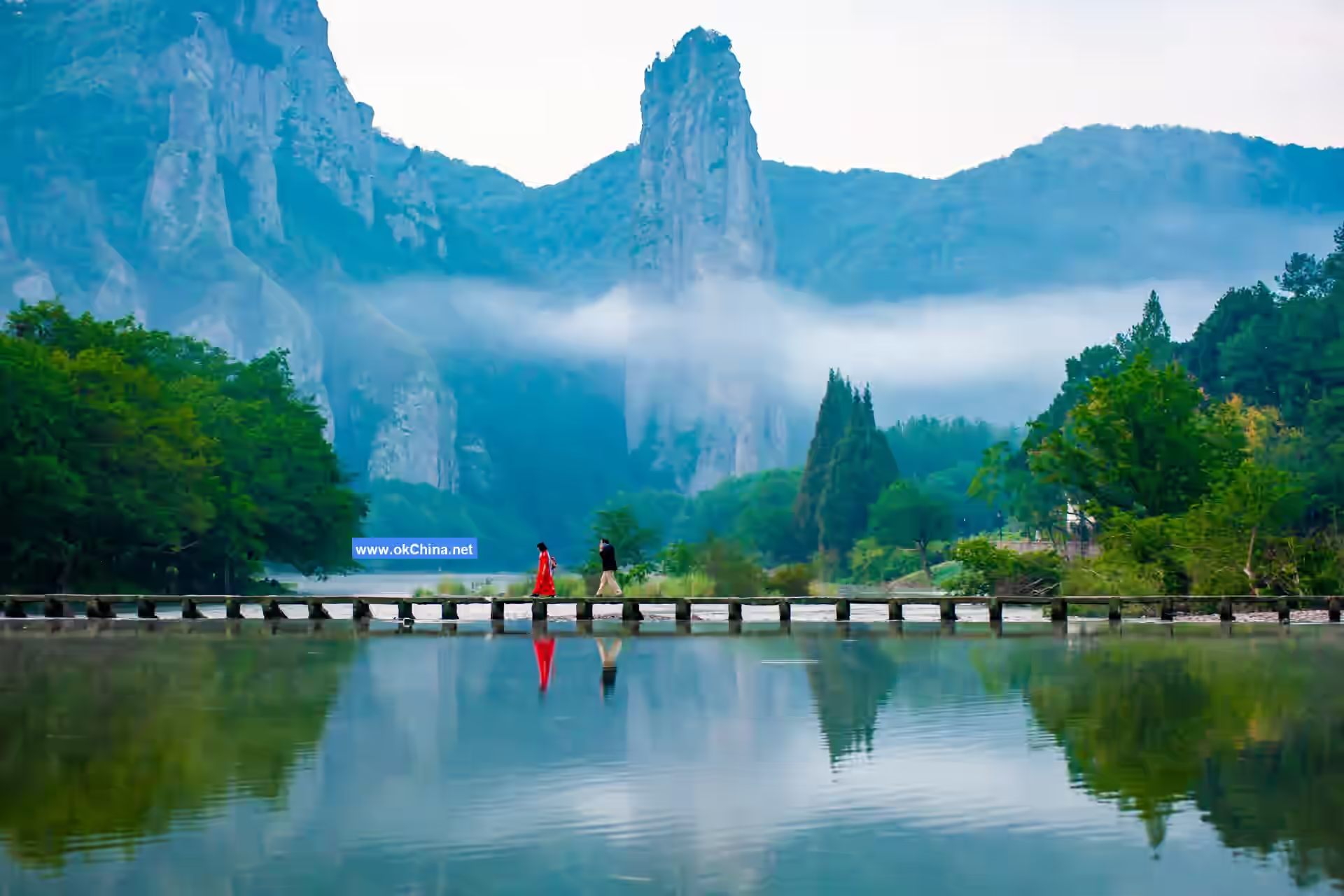
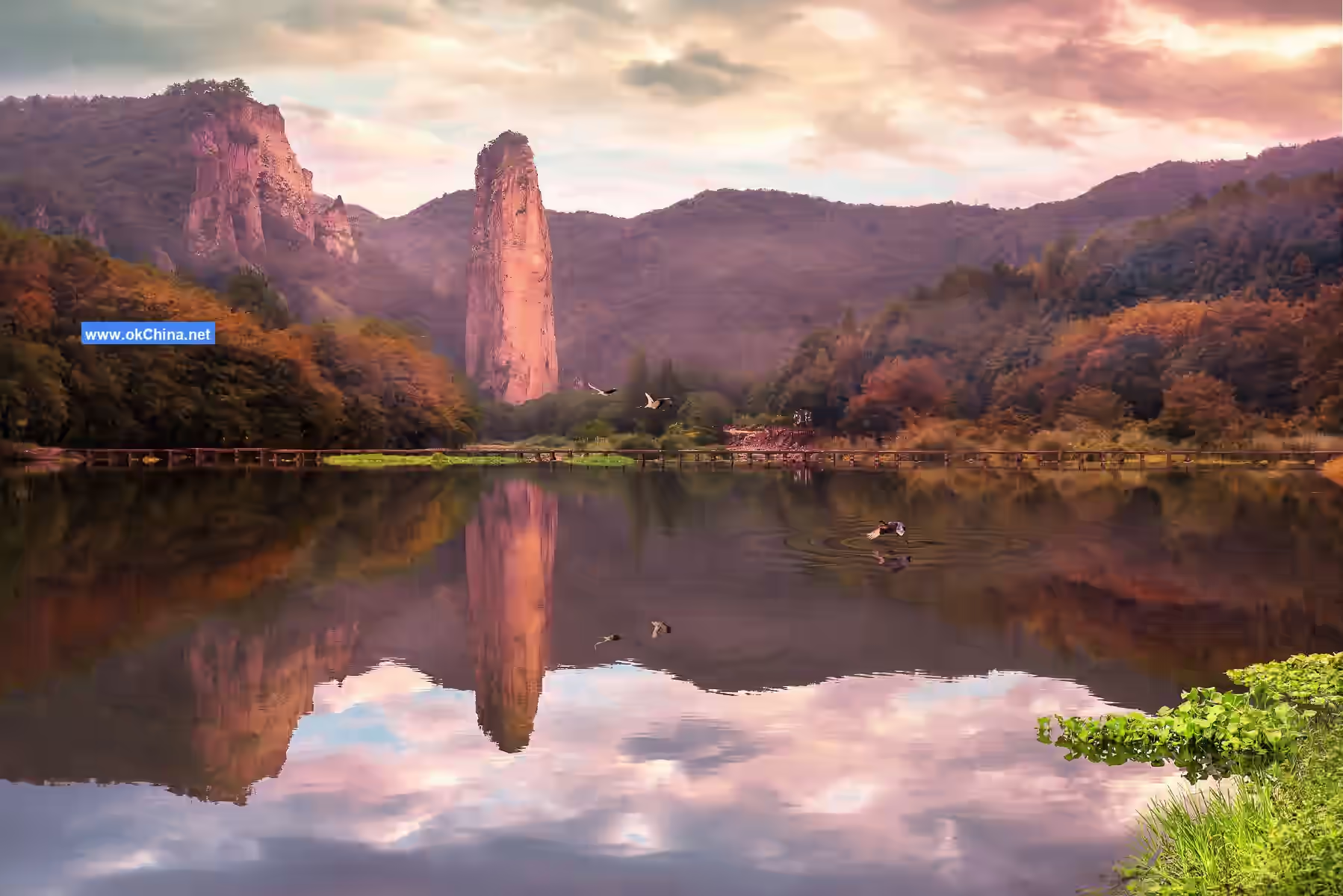
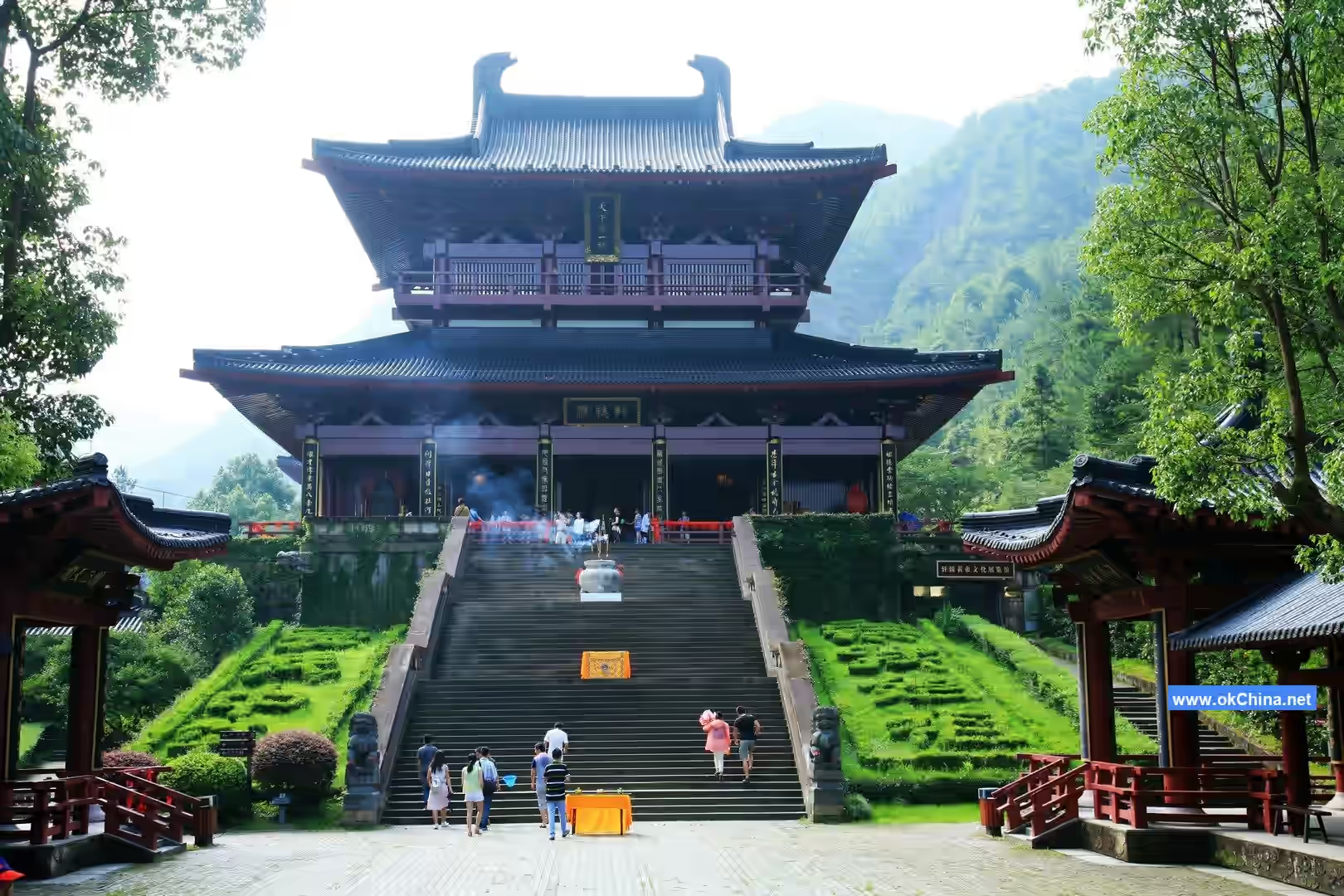
Jinyun Xiandu Scenic Area in Lishui City, abbreviated as Jinyun Xiandu Scenic Area, is located on Xiandu Street, Jinyun County, Lishui City, Zhejiang Province. It earned its name when Emperor Xuanzong of Tang, Li Longji, exclaimed, "This truly is a capital where immortals gather!" and, in high spirits, inscribed the two characters "仙都" (Xiandu, meaning "Immortal Capital"). The scenic area covers a total area of 5.23 square kilometers and comprises five major attractions: Dinghu Peak, Little Red Wall, Xiandu Taoist Temple, Niweng Cave, and Zhutan Mountain.
Jinyun Xiandu Scenic Area in Lishui City has long been praised as possessing "the elegance of Guilin, the wonder of Huangshan, and the precipitousness of Huashan." The area features the singular stone pillar "Dinghu Peak," known as the "World's First Bamboo Shoot"; the "Lingxu Cave," a volcanic eruption channel site; the "Yellow Emperor Temple," hailed as the "World's First Ancestral Temple" and a center for Yellow Emperor worship in southern China; the national-level intangible cultural heritage "Jinyun Xuanyuan Sacrificial Ceremony"; the nationally protected key cultural relic site "Xiandu Cliff Inscriptions"; and the nationally designated filming location "China's Natural Film and Television City."
In 2019, Jinyun Xiandu Scenic Area in Lishui City was designated as a National AAAAA Tourist Attraction by the Ministry of Culture and Tourism of the People's Republic of China.
2. Geographical Environment
2.1 Location and Territory
Jinyun Xiandu Scenic Area in Lishui City is situated within Jinyun County, Lishui City, Zhejiang Province. It is 38 kilometers from Lishui City and covers a total area of 5.23 square kilometers.
2.2 Climatic Characteristics
Jinyun Xiandu Scenic Area in Lishui City falls within the mid-subtropical monsoon climate zone. Overall, it enjoys ample heat, abundant precipitation, and a warm, humid climate. Winters and summers are slightly longer, while spring and autumn are somewhat shorter, resulting in four distinct seasons. Due to significant topographical variations within the area, temperature differences are pronounced, creating a vertical three-dimensional climate characterized by "four seasons on one mountain, different weather on opposite sides of a hill."
3. Main Attractions
3.1 Dinghu Peak
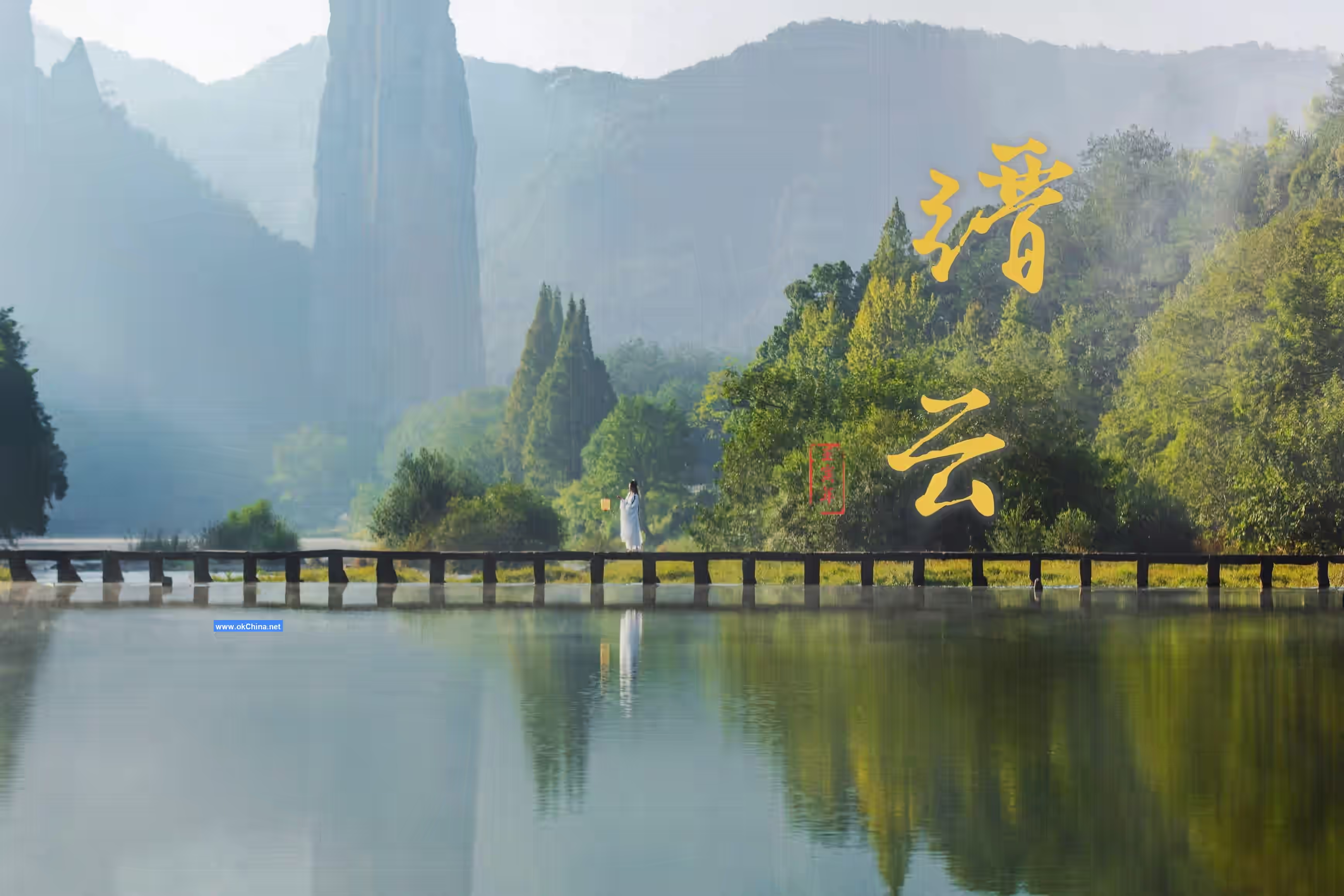
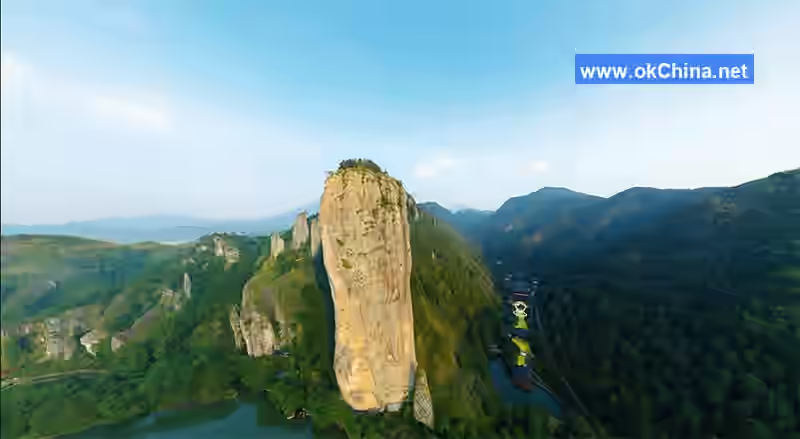
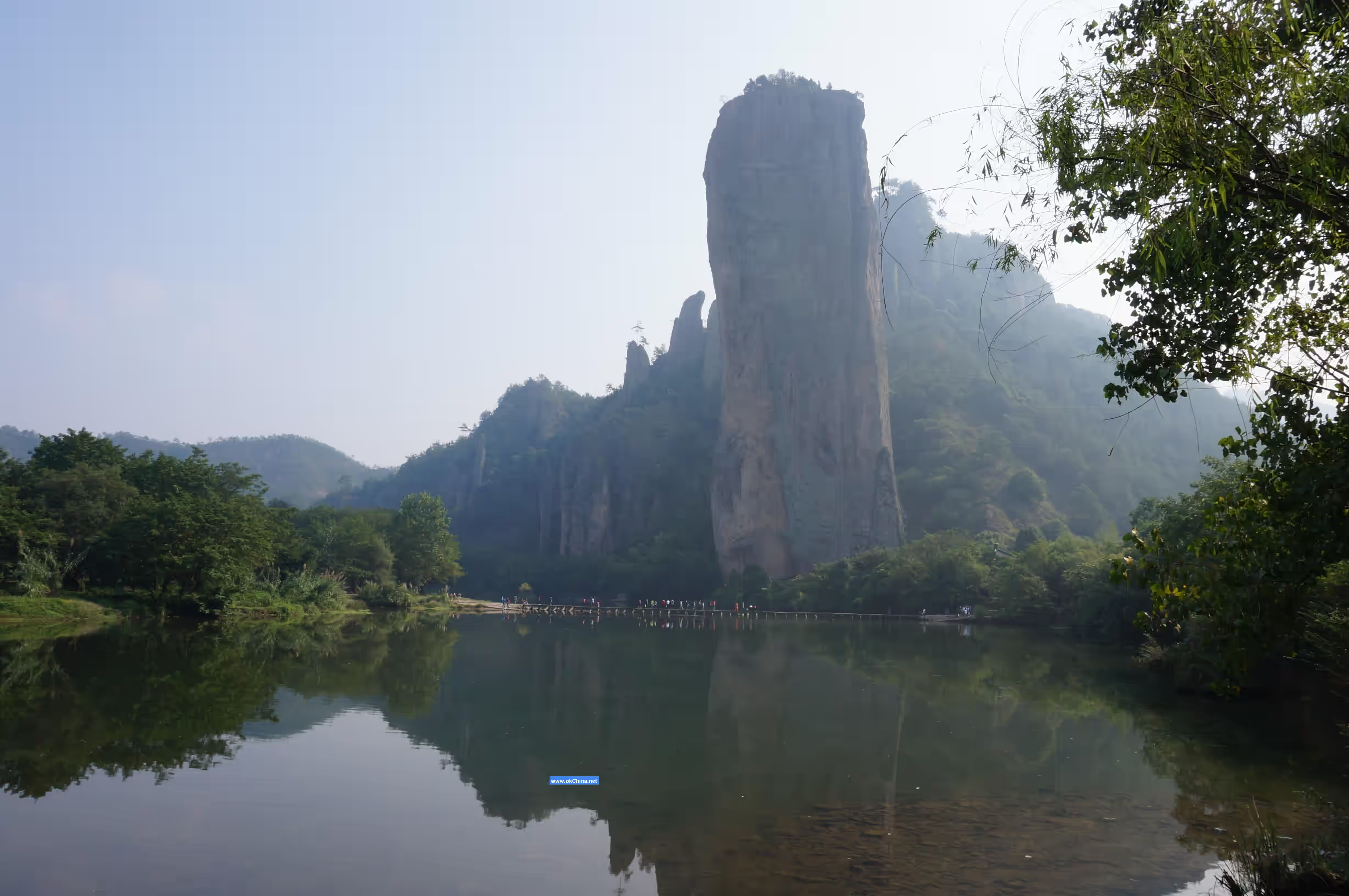
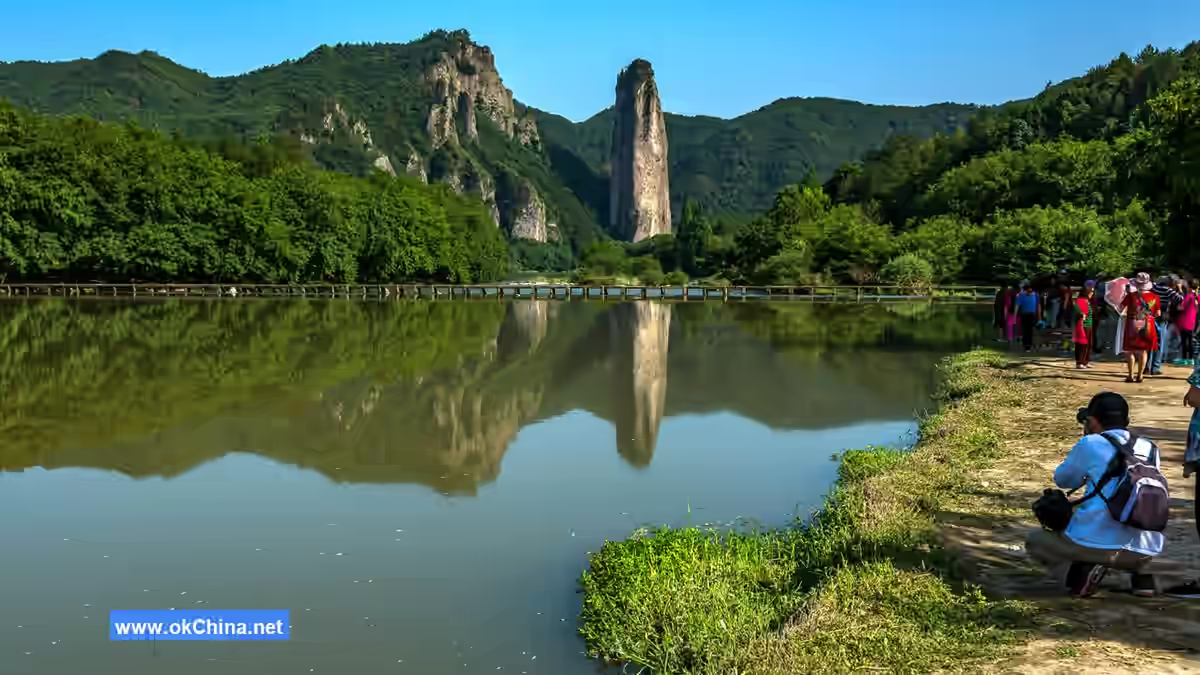
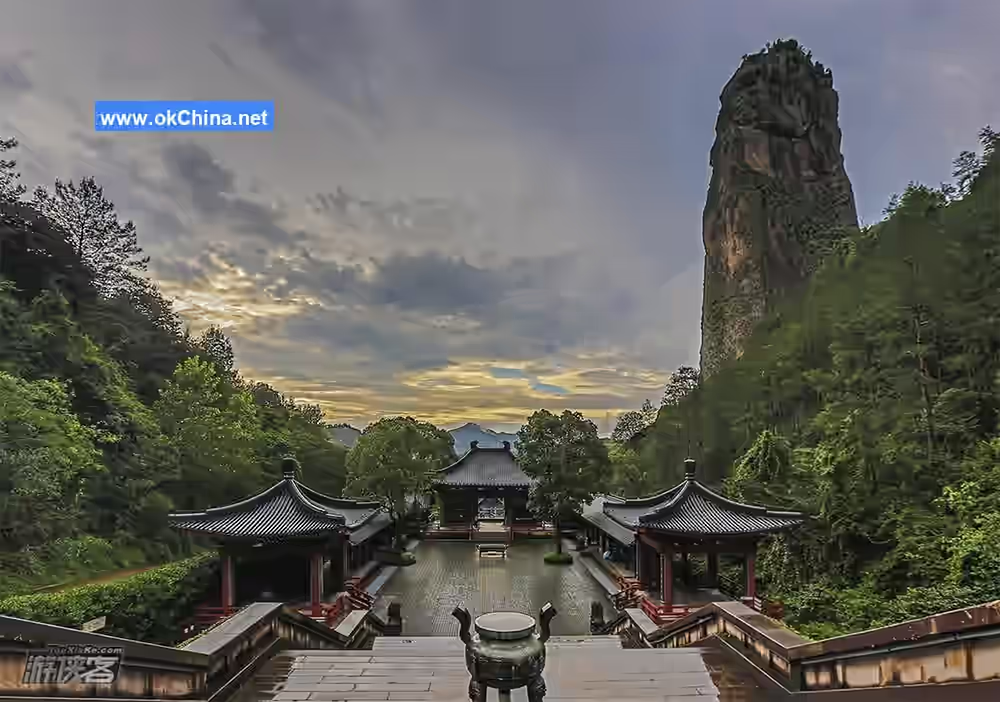
The Dinghu Peak attraction is the core of the entire scenic area. Dinghu Peak, also known as "Heavenly Pillar Peak," stands east of Buxu Mountain and west of Lianxi Stream. Shaped like a bamboo shoot emerging from the earth, it rises approximately 160 meters and is often called the "World's First Peak." At its summit lies a small lake surrounded by verdant pines and cypresses. Legend has it that the Yellow Emperor, Xuanyuan, once set up a furnace atop the peak to refine elixirs. When the elixir was complete and the Yellow Emperor ascended to heaven astride a red dragon, the alchemical cauldron fell, forming a lake—hence the name Dinghu (Cauldron Lake). There is no path to climb Dinghu Peak; only herb gatherers have scaled its summit using ropes to collect medicinal herbs. The poet Bai Juyi wrote: "The Yellow Emperor's banners departed, never to return, / Leaving lone clouds and towering solitary rock. / Sometimes the wind whips up Dinghu's waves, / Scattering into raindrops under a clear sky." Nestled beside Dinghu Peak is a smaller stone peak, commonly called "Little Stone Bamboo Shoot." It resembles a loving mother cradling her child and is also known as "Child Peak," creating a supremely artistic conception. Adjacent to Dinghu Peak is Buxu Mountain, renowned for its many strange rocks and caves along its waist. Following the winding mountain path through the valley, visitors can reach the mountaintop, where a pavilion offers a close-up view of Dinghu Peak and a distant panorama of Xiandu's landscapes. Traveling north from Dinghu Peak along Lianxi Stream for about 2.5 kilometers leads to Furong Gorge at Xiandu's end. Entering the gorge, one encounters the cliff inscription "Iron City," with each character measuring about three square meters, exuding majestic grandeur. As the gorge rocks are iron-colored, it is also called "Iron Gate Gorge." Stretching several tens of meters, its steep cliffs on both sides resemble a narrow passage to the sky. Within the gorge lie the ruins of the "Iron City Academy." Furong Gorge also includes scenic spots such as Purple Fungus Slope, Dancing Beast Rock, Huihui Rock, Furong Screen, Immortal Palm Rock, and Zhuoxi Peak.
3.2 Little Red Wall
Little Red Wall is located east of Niweng Cave across the stream. Its sheer cliffs stretch for several miles east-west. The lower part of the rock wall is ochre-red, as if scorched by flames, hence the name Little Red Wall. Within the cliff face lies a natural plank road hundreds of meters long, called Dragon-Plowed Path. Opposite Lianxi Stream stands Little Red Wall, a screen-like mountain of reddish ochre. Along the cliff face on the mountainside runs a natural stone corridor about sixty to seventy meters long, commonly known as "White Snake Path." Legend says that when Liu Xiu was in peril and pursuers were closing in, a shimmering flood dragon suddenly sped through the rock wall, carving out a path for his escape. Therefore, it is also called "Dragon-Plowed Rock." Scenic spots here include Tiger Track Rock, Eight Immortals Pavilion, "Morning Cooking with Jade Steamer," and Immortal Tablet Rock. In front, numerous rugged grotesque rocks are scattered in Lianxi Stream, forming islets within the stream and water within the islets—a small Penglai that is neither quite island nor lake.
3.3 Xiandu Taoist Temple
Xiandu Taoist Temple, formerly known as Marquis Zhao's Shrine, also called Zhao Hou Temple or Wushang Hou Temple, is dedicated to Zhao Bing. It is the oldest documented temple structure in Jinyun. Zhao Bing, styled Gong'a, was a native of Dongyang and a skilled physician and alchemist during the Eastern Han Dynasty. While traveling through Xiandu during wartime and a rampant plague, he used his medical arts to treat people, saving countless lives. The grateful populace built a shrine to honor him. At that time, the Xiandu area belonged to Wushang County, so the imperial court conferred upon him the titles of Grand General and Marquis of Wushang. Films and TV series such as Monk Comes Down the Mountain, Flying Dagger, Flying Dagger Again, and The Legend of the Condor Heroes have been filmed here.
3.4 Furong Gorge
Traveling three to four kilometers upstream along Haoxi Stream from Dinghu Peak and crossing the stream into a valley, one encounters cliffs of pitch-black rock on both sides, the entire mountain resembling a stone castle forged of iron. Further in, the cliffs grow taller and the valley narrower. At its narrowest point, it splits like a gate, allowing only one person to pass through—truly a "one man can hold the pass against ten thousand" situation—hence the name Iron Gate Gorge. The scene in the movie Ashima where Ahei shoots an arrow through the cliff was filmed here. Inside lies another world: high cliffs encircle a central grassy meadow called Purple Fungus Slope, said to be where the Eight Immortals of the East Sea drank mountain spring water and tasted purple fungus. Within the slope stands the foundation of a house, the site of a hermitage built by four eminent scholars during the Ming Dynasty.
3.5 Aunt-Niece Rocks
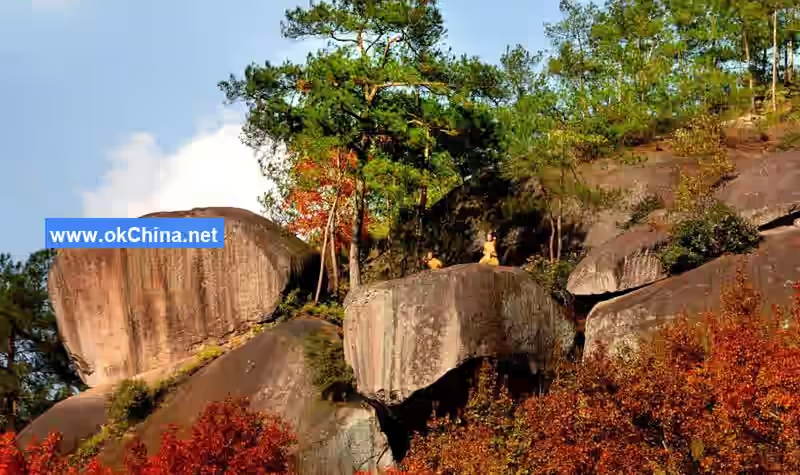
Three kilometers east of Jinyun County town, amidst rolling hills, two rocks of different heights stand atop a mountain. This is the famous Xiandu vista "Aunt-Niece Rocks," also called "Mother-in-Law and Daughter-in-Law Rocks." The slightly lower Aunt Rock faces north, resembling a hunched, rigidly seated old woman, while the Niece Rock stands opposite. Simultaneously, from the mountaintop across the water from Aunt-Niece Rocks, one can see another pair of rocks leaning together, named "Immortal and Monk Rocks," commonly known as "Uncle's Sedan Chair Rocks." Folk tales circulate about these rocks. The stone bridge in Xiayang Village offers the most lifelike view of Aunt-Niece Rocks. East of Aunt-Niece Rocks, across Lianxi Stream, lies Little Red Wall. Along the cliff face on the mountainside runs a natural stone corridor about sixty to seventy meters long, commonly known as "White Snake Path." Legend says that when Liu Xiu was in peril and pursuers were closing in, a shimmering flood dragon suddenly sped through the rock wall, carving out a path for his escape. Therefore, it is also called "Dragon-Plowed Rock." Scenic spots here include Tiger Track Rock, Eight Immortals Pavilion, "Morning Cooking with Jade Steamer," and Immortal Tablet Rock. In front, numerous rugged grotesque rocks are scattered in Lianxi Stream, forming islets within the stream and water within the islets—a small Penglai that is neither quite island nor lake. North of Little Red Wall across the stream is Niweng Cave, featuring three interconnected stone caves of exquisite workmanship. At the cave entrance stands a uniquely shaped single-horned pavilion. Nearby, on a large lotus-petal-shaped rock surrounded by water on all sides, stands a double-eaved octagonal pavilion decorated with fish—the Ask-the-Fisherman Pavilion. To its west lies Dufeng Academy, where the Song Dynasty Neo-Confucian scholar Zhu Xi lectured. The existing courtyard was rebuilt in the 12th year of the Tongzhi reign of the Qing Dynasty (1873).
3.6 Niweng Cave
Niweng Cave, also known as Chuyang Valley, is located on Chuyang Mountain beside Lianxi Stream west of Dinghu Peak. It is named after Ji Ni, a student of Laozi and teacher of Fan Li, the minister of the Yue State, who, disenchanted with the world, retreated here as a hermit. The cave preserves over 60 cliff inscriptions from the Tang, Song, Yuan, Ming, Qing, Republic of China, and modern periods, making it the most concentrated site of cliff inscriptions in the Xiandu scenic area. It is now listed as a national key cultural relic protection unit. Among them, the three seal-script characters "倪翁洞" (Niweng Cave) were inscribed by Li Yangbing, then magistrate of Jinyun County and a renowned master of small seal script calligraphy. Other attractions include Mi Sieve Cave, Ask-the-Fisherman Pavilion, Fairy Mirror, Mouse Stealing Oil, and Dufeng Academy.
3.7 Dufeng Academy
Dufeng Academy is within the Niweng Cave scenic area, situated at the foot of Hao Mountain and facing Hao Stream. It is a memorial site where the Song Dynasty Neo-Confucian scholar Zhu Xi lectured. According to historical records like the Yuan Dynasty Xiandu Zhi: Dufeng Academy is west of Lianjin Stream, directly facing Dufeng (Solitary Peak). In the ninth year of the Chunxi reign of the Song Dynasty (1182), Master Zhu Xi (Zhu Hui'an), while serving as an official, submitted a memorial impeaching the prefect of Taizhou (Tang Zhongyou). Awaiting the imperial response, he traveled to Jinyun County on the 22nd day of the eighth month, wandering through Xiandu Mountain. He expressed a desire to "retire and study here." He also composed a quatrain, Matching the Rhyme of Xu's Mountain Dwelling: "The lone cloud emerging from the peak holds its own ease, / Unhindered by royal affairs, linked one after another. / Dismounting, I linger, forgetting to return; / The green stream and tall bamboo seem like my old mountain." After Zhu Xi's departure, his students built a study hall at Xiandu Rock. In the third year of the Baoqing reign of the Southern Song (1228), at the suggestion of Ye Suchang, a jinshi from Qingtian, people established a ceremonial hall below Fuhu Rock opposite Dinghu Peak as a lecture hall in commemoration. In the third year of the Xianchun reign of the Southern Song (1267), the jinshi and Minister of Revenue Qian Shuoyou of Jinyun funded its expansion, naming it Dufeng Academy. In the 12th year of the Tongzhi reign of the Qing Dynasty (1873), He Nairong, the magistrate of Jinyun, relocated and rebuilt it at the site "where Master Hui'an sojourned" at the foot of Hao Mountain. Dufeng Academy's architectural style belongs to the late Qing period, covering an area of 1,200 square meters. Its core consists of three bays and three courtyards, with twenty wing rooms on the left and right, symmetrically arranged north-south, connected by arched round doors and small gates. Gardens, courtyards, and surrounding corridors integrate seamlessly. The academy grounds feature famous trees and flowers such as Photinia serrulata, ginkgo, osmanthus, camellia, golden larch, and banana. The exhibition inside focuses on commemorating Zhu Xi, displaying Xiandu's natural scenery, cultural history, literary and artistic works, as well as pictures of Xiandu dinosaur fossils for visitors to appreciate and savor.### 3.8 Chuyang Mountain Chuyang Mountain, also known as Xu Mountain, is named as such because it is the first to be illuminated by the morning sun. It lies before Hao Mountain and east of Qingtang. On the mountain stands a pavilion named "Chuyang," which bears a couplet: "Seven beauties ascend the emerald ridge, parting clouds to apply makeup before the mirror; Elder Wang bathes in the morning sun, forgetting the sea and dawn, intoxicated in Penglai." Within the mountain are Chuyang Valley and Doushan Cavern, while at its base lie the Gentleman Stone, Qinglian Stone, Half-Wall Pond, Winding Spring, Huilai Bridge, Xuexia Ridge, Ask-the-Fisherman Pavilion, Unicorn Pavilion, and Triangle Pavilion. Ming Dynasty scholar Wen Sihan wrote a poem: "Chuyang Cave is a fairy grotto; why did Xuanyuan leave never to return? It is said the solitary peak will transform into a cauldron, yet one suspects the Five Elders wish to climb by their beards. Xu Xun sought seclusion to find Zhi Dun; Han Yu explored wonders entering Huashan. Brushing the stone, I inscribe my name to record the journey—Peach Blossom Spring is nowhere but in the mortal realm."
3.9 Yunying Valley
Yunying Valley lies at the intersection of Hao Mountain, Qunyu Mountain, and Chuyang Mountain. With steep cliffs on all sides and numerous secluded valleys within, legend holds that in ancient times, a fairy named Yunying resided here for cultivation, hence the name Yunying Valley. Yunying is a famous female immortal in ancient Chinese lore. According to the Song Dynasty work Taiping Guangji, Pei Hang from Wenxi, Shanxi, achieved the rank of Xiucai during the Tang Dynasty's Changqing era. While traveling in Ezhou (Wuchang), he met Lady Fan (wife of Fan Gang, the magistrate of Shangyu in Han) on the same boat. She responded with a poem containing the lines: "One sip of jade nectar stirs a hundred emotions; when the Mystic Frost is pounded fully, Yunying appears." Later, when Pei Hang passed by Lan Bridge in Shaanxi, he saw an old woman weaving hemp by the roadside. Thirsty, he asked for a drink. The woman called for Yunying, who came out holding a bowl of liquid. Hang drank it—it was truly jade nectar. Seeing Yunying's peerless beauty, Hang wished to marry her. The old woman said that a deity had given her a dose of divine medicine the previous day, but it required a jade mortar and pestle and a hundred days of pounding before he could marry Yunying. Afterwards, both husband and wife ascended to immortality. Yunying is the younger sister of Yunqiao. The jade mortar and pestle are tools for pounding medicine made of jade. Mystic Frost is the name of an elixir. The Biography of Emperor Wu of Han states: "The supreme medicine of immortals is Mystic Frost and Crimson Snow." Ming Dynasty dramatist Long Yong used this as subject matter for his romance The Tale of Lan Bridge. Long Yong, courtesy name Junyu, also known as Yisuo, was from Wuling, Gusu. A Jinshi of the Wanli era, he served as Minister of the Court of Imperial Sacrifices and authored Jiugai Collection. In the sixteenth year of the Wanli era (1588), Long Yong served as Prefectural School Professor in Wenzhou. On the seventh day of the eighth month, he traveled to Xiandu with his second son Delin and stayed at the home of Cheng Shifang in Qianhu. Later, Yang Zhijiong combined the stories of Pei Hang and Cui Hu to create The Tale of the Jade Pestle. Regarding the surname Yun, Surname Records notes: "Descendants of the Jinyun clan." The Jinyun clan served as Summer Officials during the time of the Yellow Emperor. Qing Dynasty poet Wang Gao wrote: "Where now is the Taoist Yunying? Only the green stone mushrooms remain. Crying birds harmonize into celestial music; fallen flowers embroider the cavern heaven's stele. Ascending from the Cangling's thousand-ren gate, surely facing the southern ritual of Xuandu. I shamefully lack the bones of Commandant Yang; waking from dreams after seven days, I sit lost in thought." The mountain ridge within the valley is also known as Xie Gong Ridge, named after Duke Kangle Xie Lingyun of the Eastern Jin Dynasty, who passed this way in the third year of the Yongchu era (422) while traveling to assume his post as Prefect of Yongjia.
3.10 Zhutan Mountain
Zhutan Mountain faces Ban Yan Village across the stream. In the seventh year of the Chunxi era of the Southern Song Dynasty (1180), the renowned Neo-Confucian scholar Zhu Xi lectured in Xiandu. In his leisure time, he often relaxed here, boating on the emerald pool and wandering in the mountain wilderness. Later generations thus named the pool Zhu Tan and the mountain beside it Zhutan Mountain.
4. Historical Culture
Yellow Emperor (2717 BC – 2599 BC): Leader of the ancient Huaxia tribal alliance, the common sovereign of the Huaxia people in China's remote antiquity. Foremost among the Five Emperors. Revered as the "Primordial Ancestor of Chinese Civilization." He is said to be the son of Shaodian and Fubao, originally surnamed Gongsun, later changed to Ji, hence known as Ji Xuanyuan. He resided at Xuanyuan Hill, was titled Xuanyuan, established his capital at Youxiong, and was also called Youxiong. Some also refer to him as "Dihong." Historical records state that because he had the auspicious sign of the virtue of earth, he was called the Yellow Emperor. The Yellow Emperor is recorded in history for his great achievements in unifying the Huaxia tribes and conquering the Dongyi and Jiuli tribes to unify China. During his reign, he sowed the hundred grains and plants, vigorously developed production, initiated clothing and headgear, built boats and carts, established musical scales, and founded medicine.
In Records of the Grand Historian: The Treatise on the Feng and Shan Sacrifices, it is written: "The Yellow Emperor mined copper from Shoushan and cast a cauldron at the foot of Jing Mountain. When the cauldron was completed, a dragon descended with drooping whiskers to welcome the Yellow Emperor. The Yellow Emperor mounted it, and over seventy of his ministers and consorts followed him from behind. The dragon then ascended. The remaining minor officials could not get on, so they all grabbed the dragon's whiskers. The whiskers were pulled out, and they fell, dropping the Yellow Emperor's bow. The people, looking up and seeing the Yellow Emperor had ascended to heaven, then embraced his bow and the whiskers and wailed. Hence, later generations named that place Dinghu, and his bow Wuhao."
In his later years, the Yellow Emperor invented the cauldron. When the first cauldron was cast, a dragon suddenly descended from the sky. The dragon had majestic eyes and long, silvery whiskers, its entire body gleaming with golden light. Its arrival seemed to bring ten thousand bolts of golden brocade, enveloping the entire sky. The Yellow Emperor and his ministers were astonished. The dragon slowly approached the Yellow Emperor, its gaze becoming very gentle, and suddenly spoke to him: "The Heavenly Emperor is extremely pleased to see you advancing Chinese civilization another step forward, so he has specially dispatched me to take you to heaven for an audience." Upon hearing this, the Yellow Emperor nodded, mounted the dragon's back, and said to his ministers: "The Heavenly Emperor summons me. Take good care of yourselves; farewell." "Please let us follow you!" the ministers exclaimed, surging forward, hoping to climb onto the dragon's back and accompany the Yellow Emperor. But the dragon twisted its body, throwing them all off. The golden dragon carried the Yellow Emperor swiftly into the sky, disappearing into the clouds in an instant. The ministers could do nothing but watch helplessly as the Yellow Emperor ascended. One minister, gazing at the sky, said thoughtfully: "Not everyone can ascend! Only someone as great as the Yellow Emperor is worthy!" Later generations, to commemorate this emperor, named the place where the Yellow Emperor ascended to heaven "Dinghu." Subsequently, "the dragon departed from Dinghu" came to refer to the passing of an emperor. Jinyun Xiandu is historically recorded as the place where Xuanyuan, the Yellow Emperor, cast his cauldron, feasted the hundred deities, and ascended to heaven on a dragon. Starting from the Eastern Jin Dynasty, people built Jinyun Hall beside Dinghu Peak in Jinyun Xiandu as a site for worshipping the Yellow Emperor. In the seventh year of the Tianbao era of the Tang Dynasty (748), Emperor Xuanzong Li Longji decreed to change Jinyun Mountain to Xiandu Mountain and Jinyun Hall to the Yellow Emperor Temple, elevating the folk clan-based sacrifices to the Yellow Emperor to an official state ritual. Thus, together with the Yellow Emperor Mausoleum in Shaanxi, it formed the pattern of "Northern Mausoleum, Southern Temple." The Xiandu Yellow Emperor Temple became an important site in the south for sacrificing and paying homage to Xuanyuan, the Yellow Emperor, and expressing shared roots and origins. Jinyun thus became the radiating center of Yellow Emperor culture in the south.
Comments
Post a Comment