Jinsi Gorge Scenic Area in Shangluo City
I. Introduction
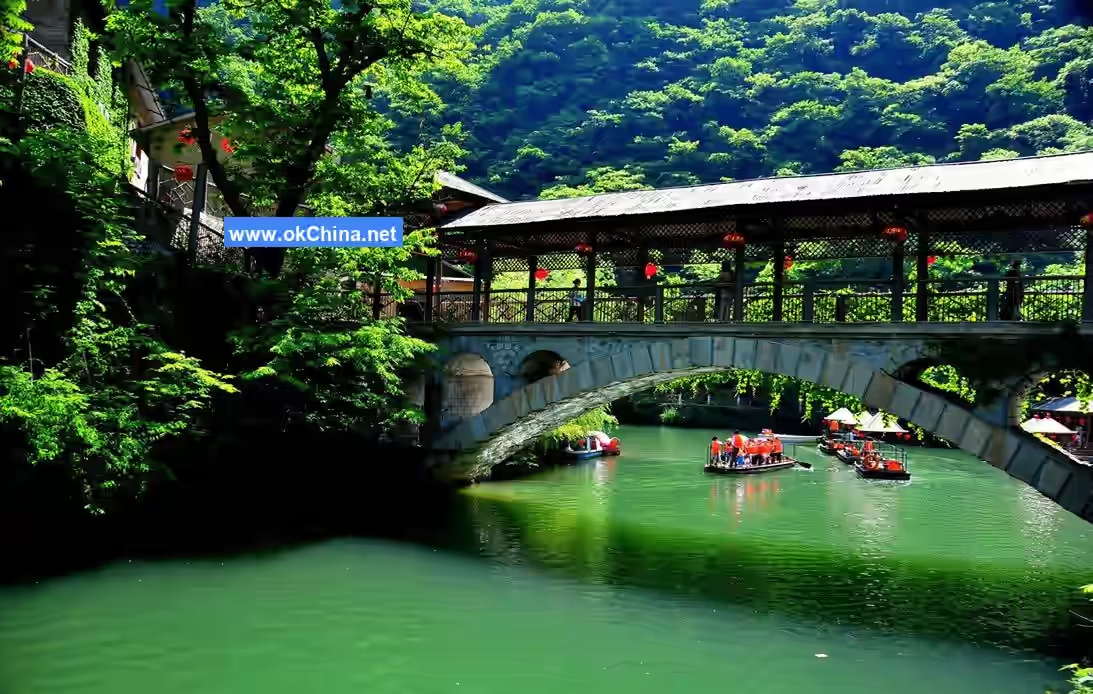
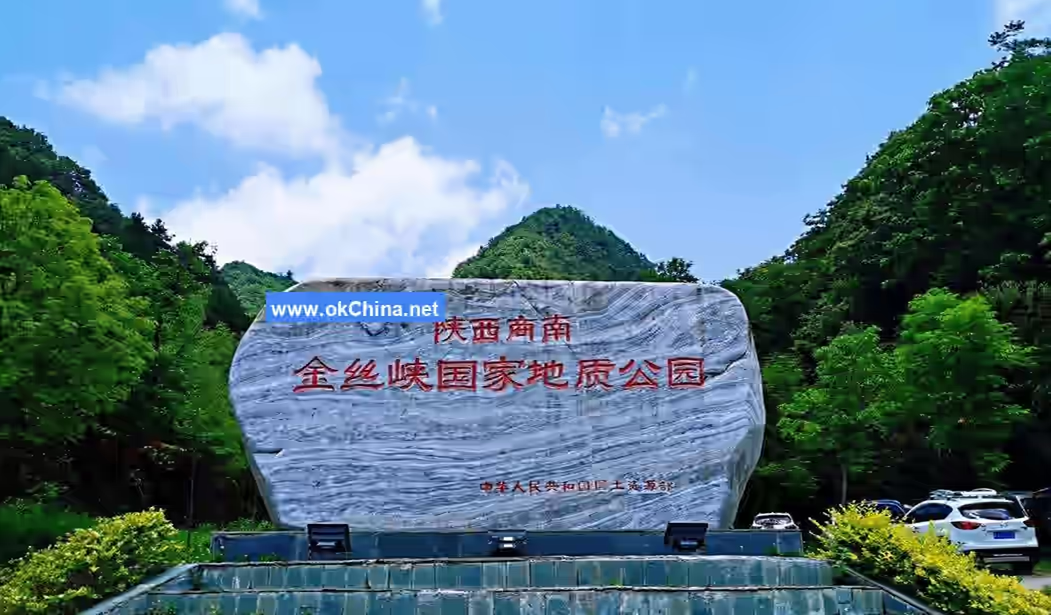
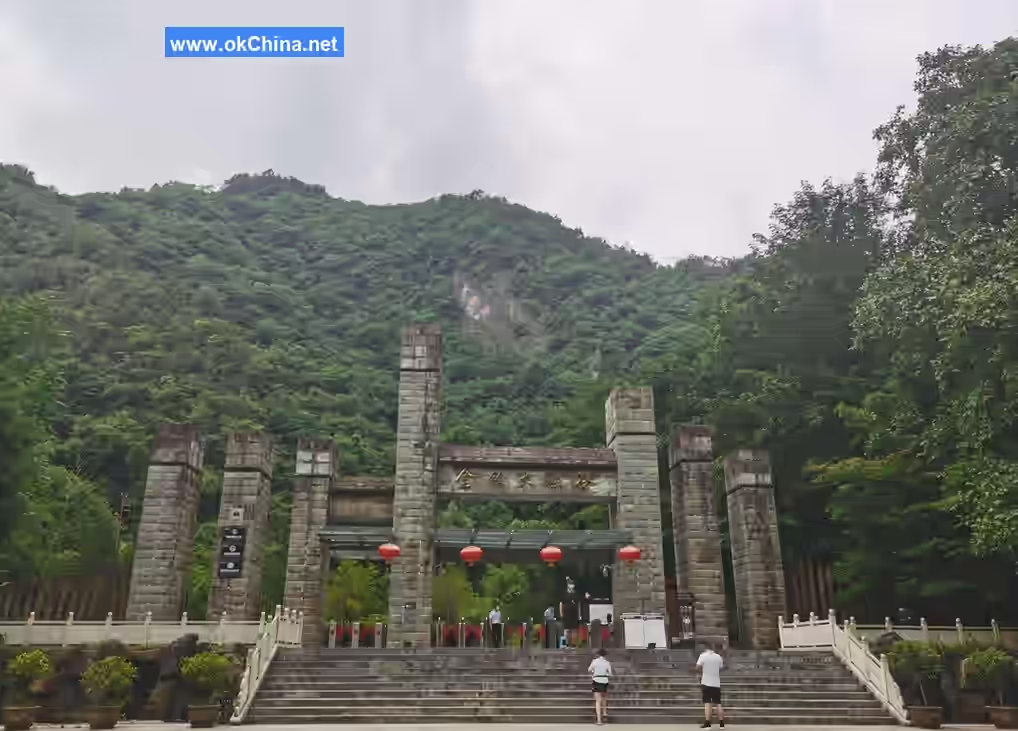
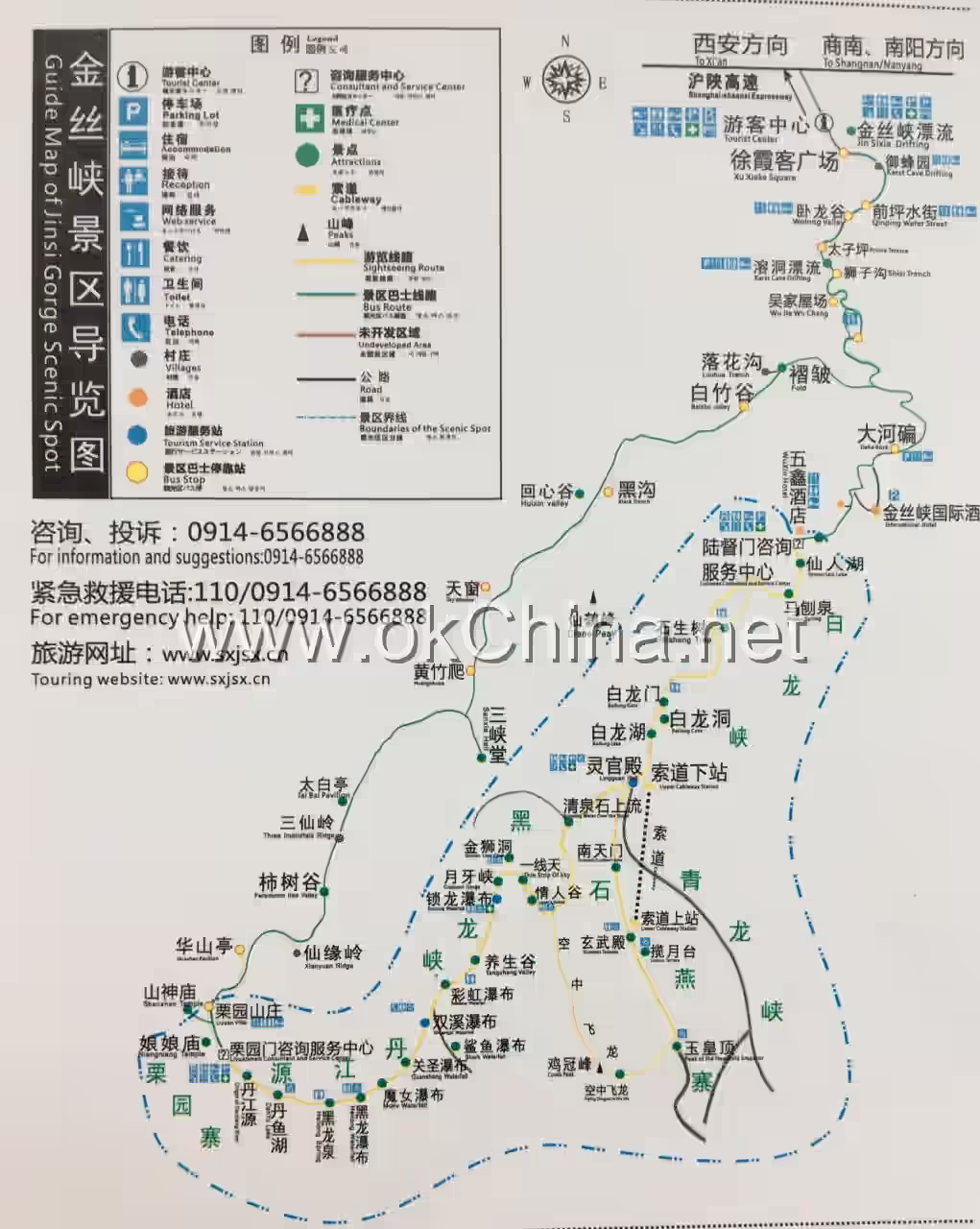
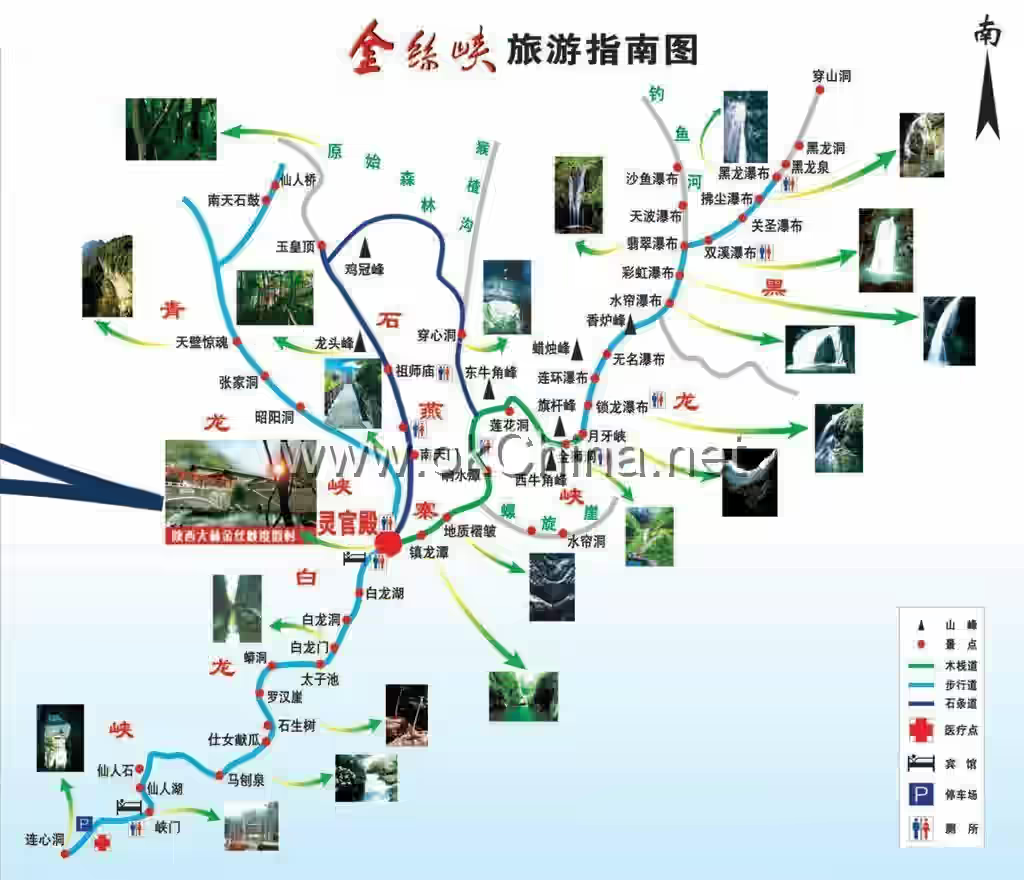
The Jinsi Gorge Scenic Area in Shangluo City, commonly referred to as Jinsi Gorge Scenic Area, is located deep within the Xinkailing area in the southeast of Shangnan County, Shangluo City. It is 40 kilometers from Shangnan County town and 18 kilometers from Jinsi Gorge Town. The scenic area comprises five main sections: Bailong Gorge, Heilong Gorge, Qinglong Gorge, Shiyanzhai, and Danjiang Source, featuring over a hundred scenic spots. The total length of the gorge is 20.5 kilometers, with a depth exceeding 10 kilometers. In October 2015, it was designated as a National AAAAA Tourist Attraction and a National Geopark. It represents a rare and the most complete example of a barrier-valley geological structure in the Qinling region.
II. Location and Layout
The Jinsi Gorge Scenic Area is situated deep within the Xinkailing area in the southwest of Shangnan County, Shaanxi Province. It is 60 kilometers from the county town and 18 kilometers from Taijihe Town. The park boasts beautiful, unique, and picturesque landscapes characterized by narrowness, length, elegance, peculiarity, steepness, and seclusion. It integrates natural landscapes such as peaks, rocks, caves, forests, birds, beasts, springs, pools, and waterfalls, offering ever-changing scenery with every step. It is acclaimed as the "Wonder of Gorges, Kingdom of Ecology." On July 1, 2002, it became a provincial forest park, and in December 2002, it was elevated to the status of a national forest park.
The Gorge Landscape is Peculiar and Majestic
The park contains over a hundred scenic spots within four main sections: Bailong Gorge, Heilong Gorge, Qinglong Gorge, and Shiyanzhai. The total length of the gorge is 20.5 kilometers, with a depth of over 10 kilometers, and its deepest parts remain inaccessible to this day. Features include Bailongmen, Yuya Gorge, and Yixiantian (A Thread of Sky). Mountains connect to mountains, gorges link to gorges, forming nine bends and eighteen turns, with countless twists and winding paths like a slithering snake. Particularly at Qinglongmen and Heilongmen, the width is less than a meter, the sky is invisible when looking up, and walking through in daytime feels like night. The layered cliff walls on both sides of the gorge have a near-vertical height of about 600 meters, are barren of vegetation, and appear eerie and terrifying.
Natural Resources
Diverse and Colorful Forest Resources
Located in a transitional zone of northern and southern flora, the area hosts both temperate and warm-temperate deciduous broad-leaved tree species, as well as subtropical evergreen and deciduous broad-leaved tree species. Ancient trees reach for the sky, the forest is dense, and the forest coverage rate reaches 89%. Around Shiyanzhai, over 300 mu (about 20 hectares) of primeval Quercus serrata var. brevipetiolata forest is preserved, which is the largest, oldest, and most densely closed primeval forest of this species in the Qinling region. Orchids are随处可见, and lower plants like mosses and ferns in the forest are abundant, forming a unique gorge ecosystem. The park is home to 1,696 species of forest plants; over 30 rare plant species have been confirmed, including Chinese yew (Taxus chinensis), Cyclocarya paliurus, Emmenopterys henryi, Zanthoxylum molle, and various orchids. One can even observe the rare subtropical plant phenomenon of "strangler" figs. It is truly a natural oxygen bar; visiting here offers an experience of traversing three climatic zones in a single day.
Peaks and Karst Caves Offer Unique Scenes
There are peaks shaped like beasts or objects with myriad postures, such as Dragon Head Peak, Lion Peak, Candle Peak, Ox Horn Peak, Sancai Peak, Camel Peak, and Flagpole Peak. Some resemble turtles, some rabbits, some melons. Within the gorge lie numerous large and small, overlapping, naturally amusing rocks, like the Flying Stone, Connected Hearts Stone, Maiden Offering Melon, Precious Tree Stone, Gorge-Blocking Stone, Southern Sky Stone Drum, Immortal Bridge, Immortal Stone, Horse Hoof Stone, and Two Immortals Stone, all exquisitely lifelike. On different parts of the mountain peaks, over twenty perilous cliffs and precipices rise abruptly, as if sliced by a knife or split by an axe, such as Ink-Splashed Mountain, Spiral Cliff, Arhat Cliff, Seven Stars Cliff, Cat's Ear Cliff, Cockscomb Cliff, and Ear-Touching Cliff. They are majestic and exceptionally steep, with vertical heights all over a thousand meters and slopes between 80-120 degrees. They are so perilous that "on the sheer cliffs, there is no path for snakes or rats, and even mountain sparrows dare not fly into the gorge." Between the sheer cliffs and peaks, there are over twenty various karst caves. Those with higher观赏游览 value include Lotus Heart Cave, Mountain-Piercing Cave, Heart-Piercing Cave, Lotus Flower Cave, Golden Lion Cave, Python Cave, Zhaoyang Cave, and Hanging Pot Cave.
Among them, in the Golden Lion Cave, a calcite stone lion lies sleeping, vividly lifelike. The main cave is 50 meters wide, about 30 meters high, with a total area of over 10 mu (about 0.67 hectares). Over thirty wooden houses were built here during the Qing Dynasty, and their remnants still exist.
Graceful Flowing Springs and Waterfalls
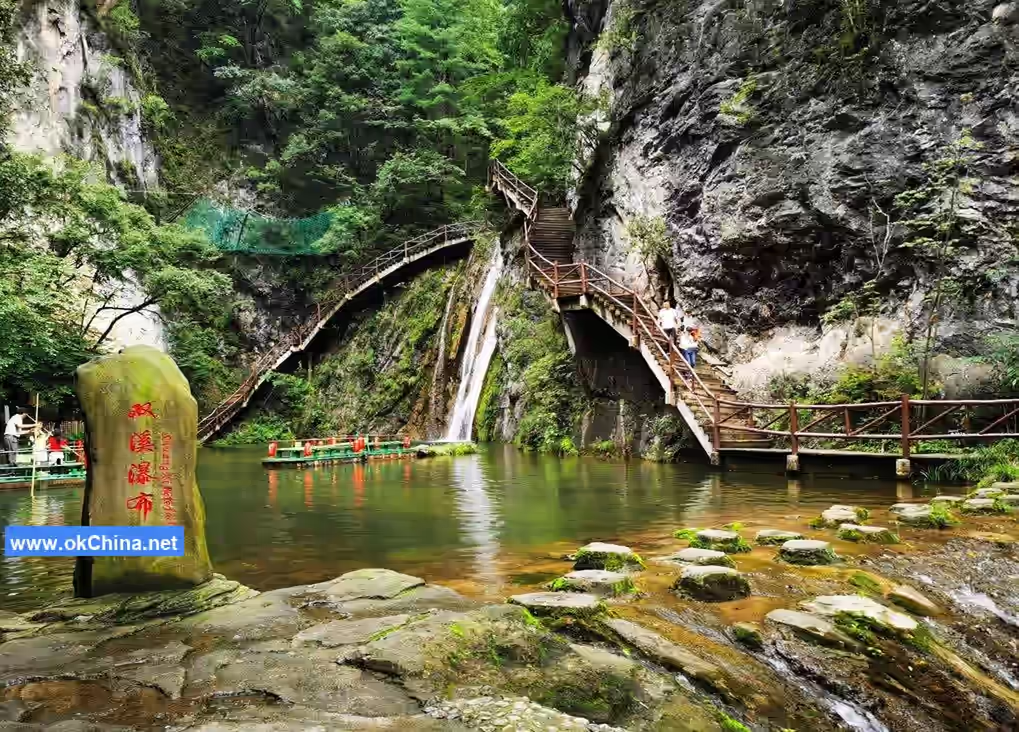
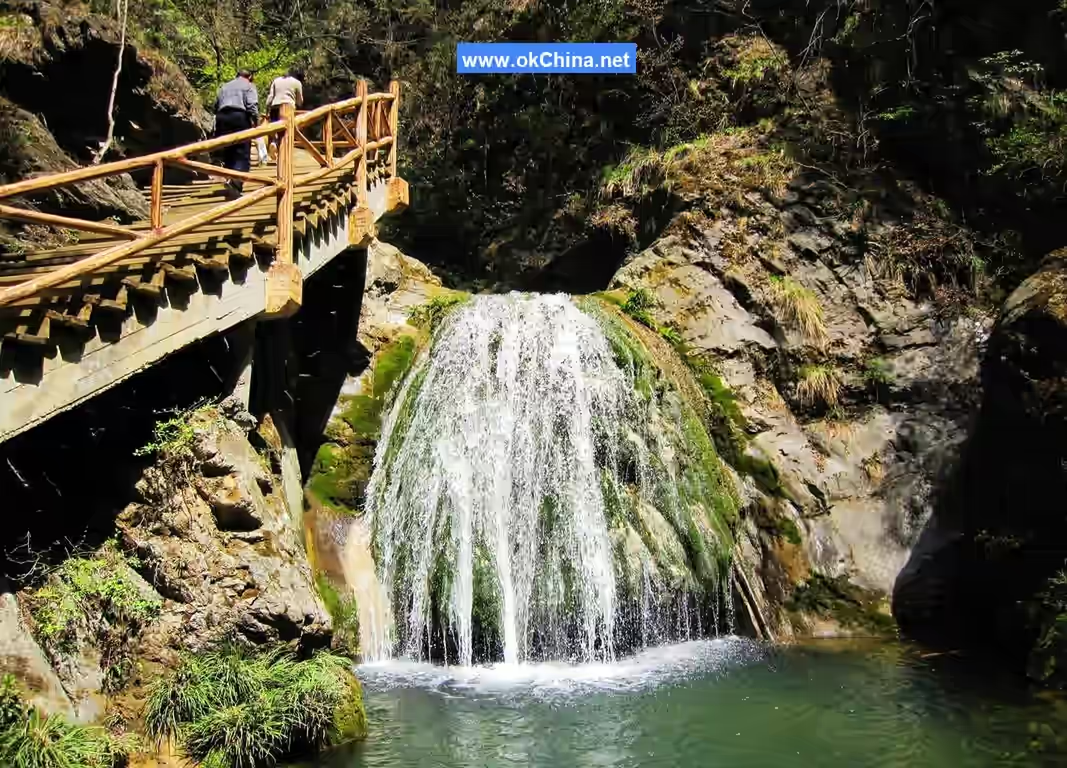
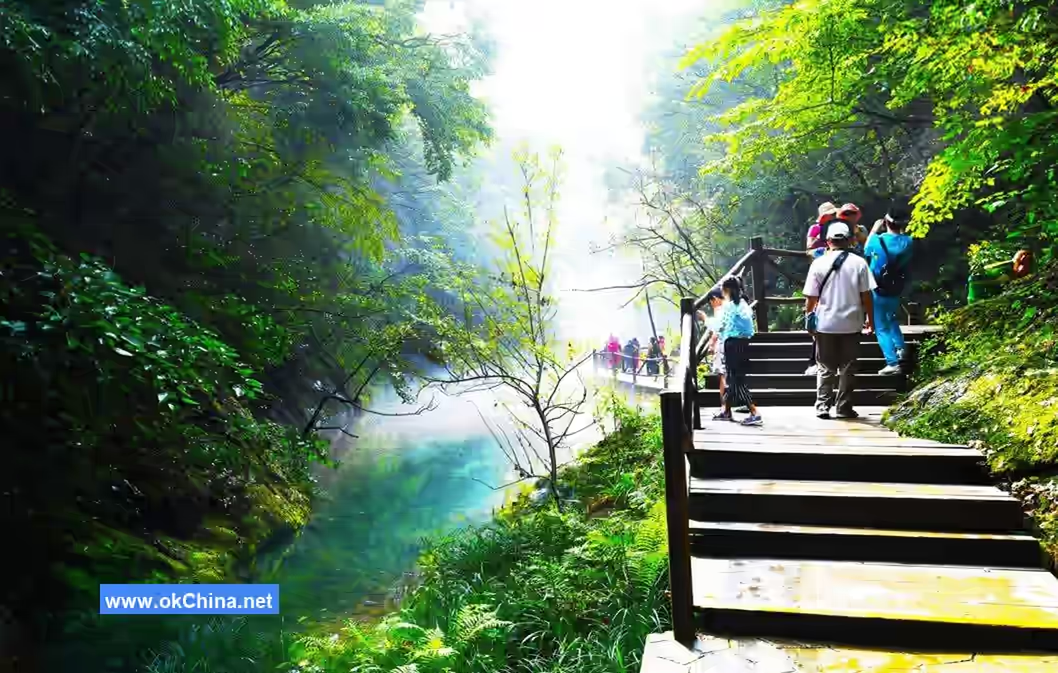
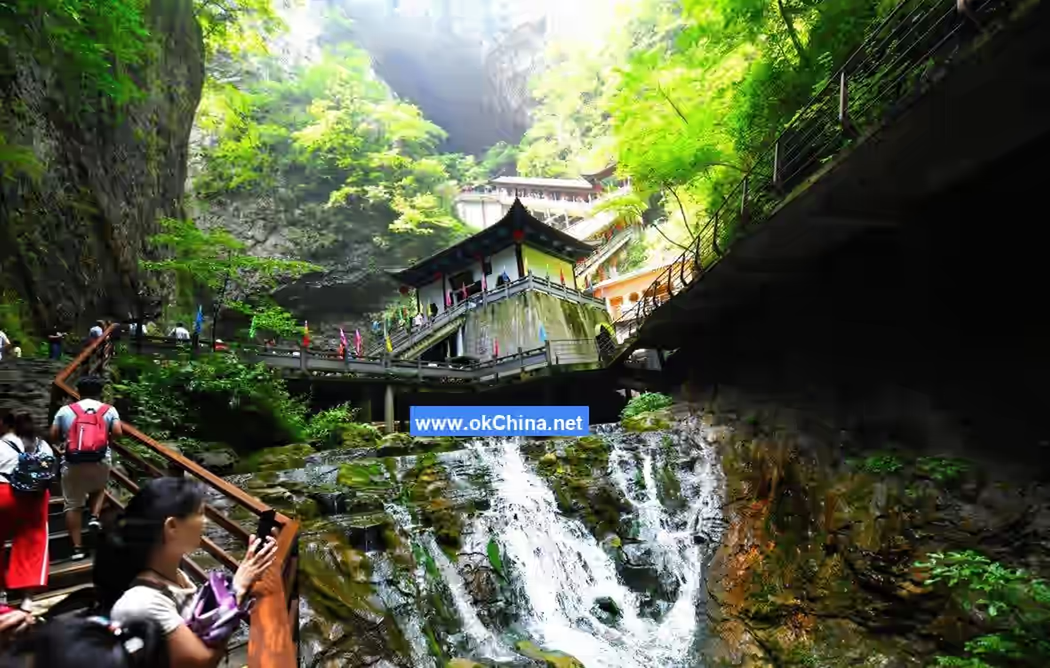
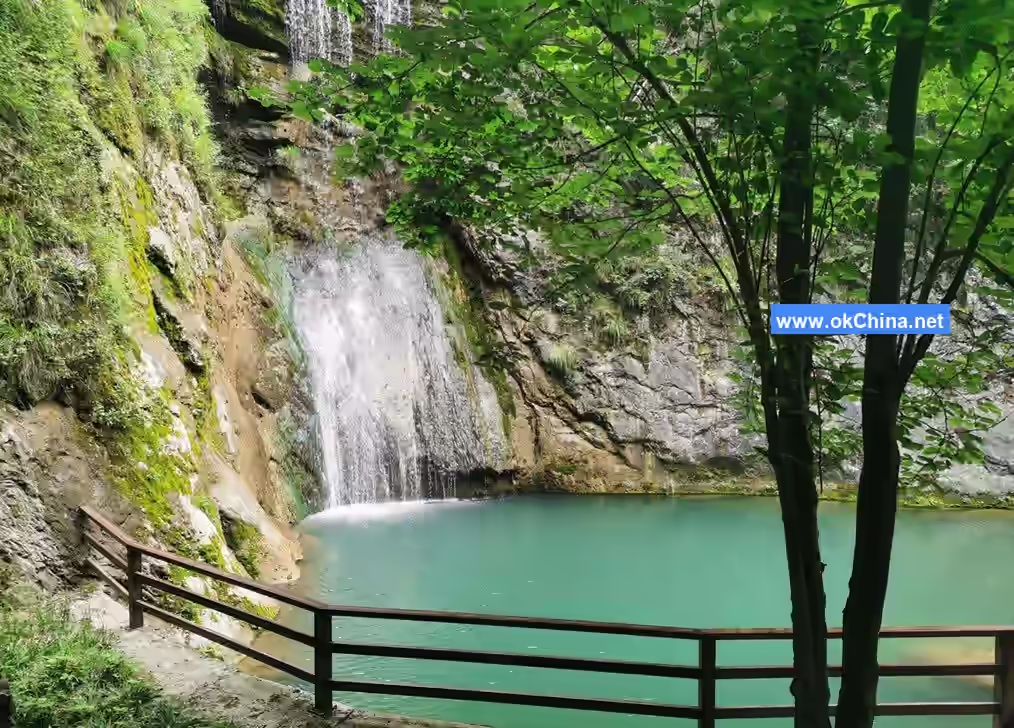
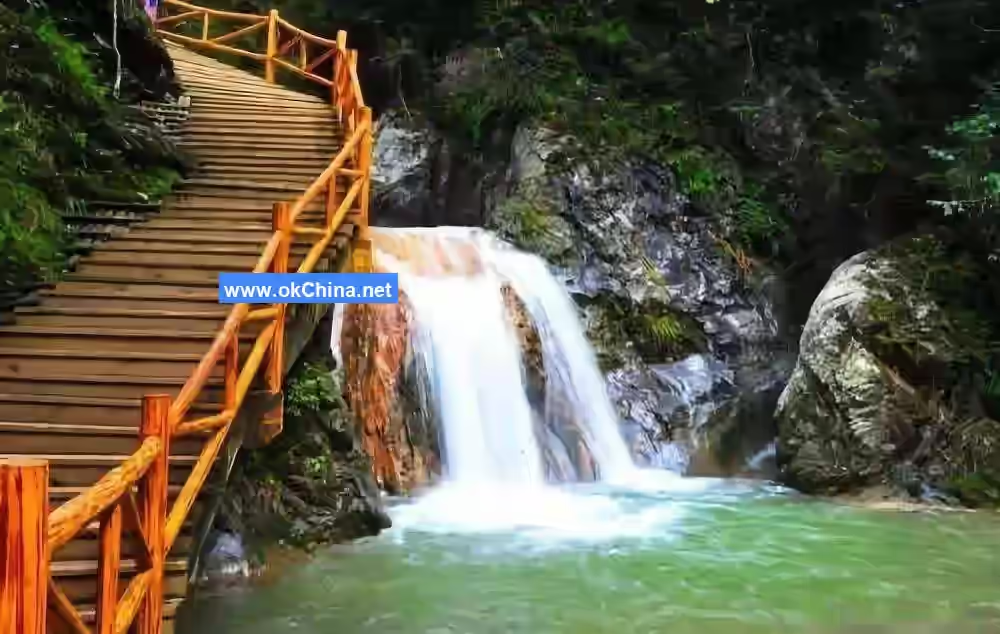
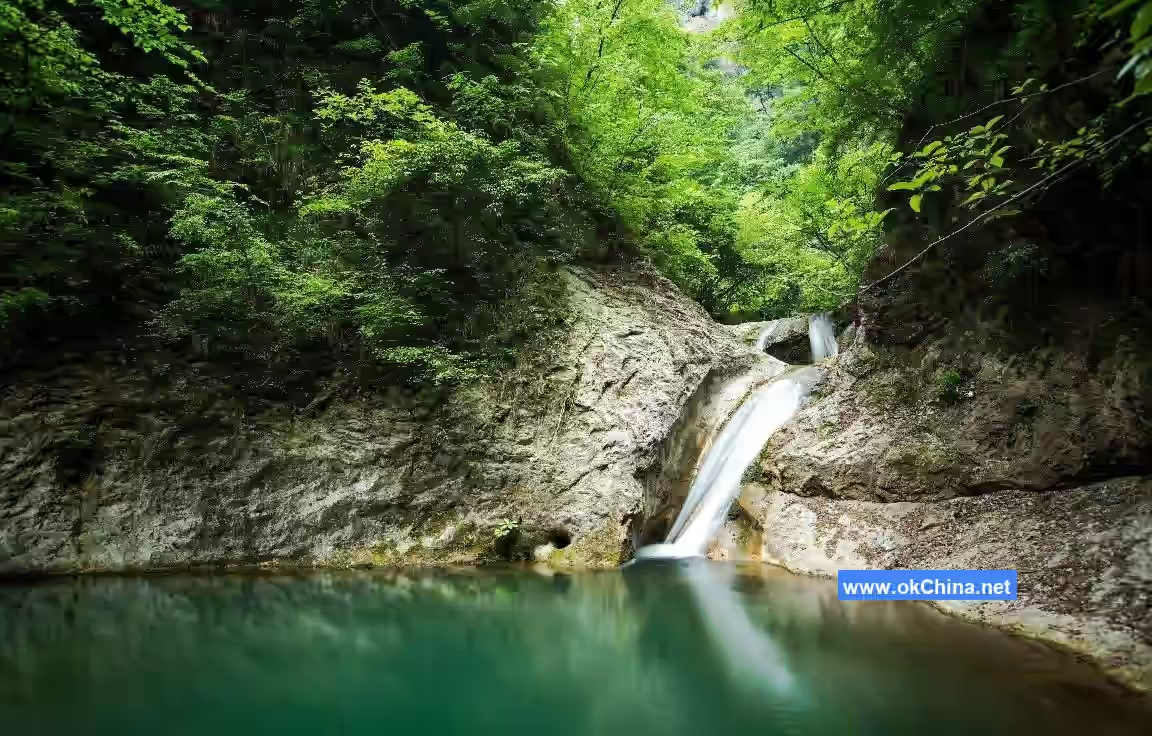
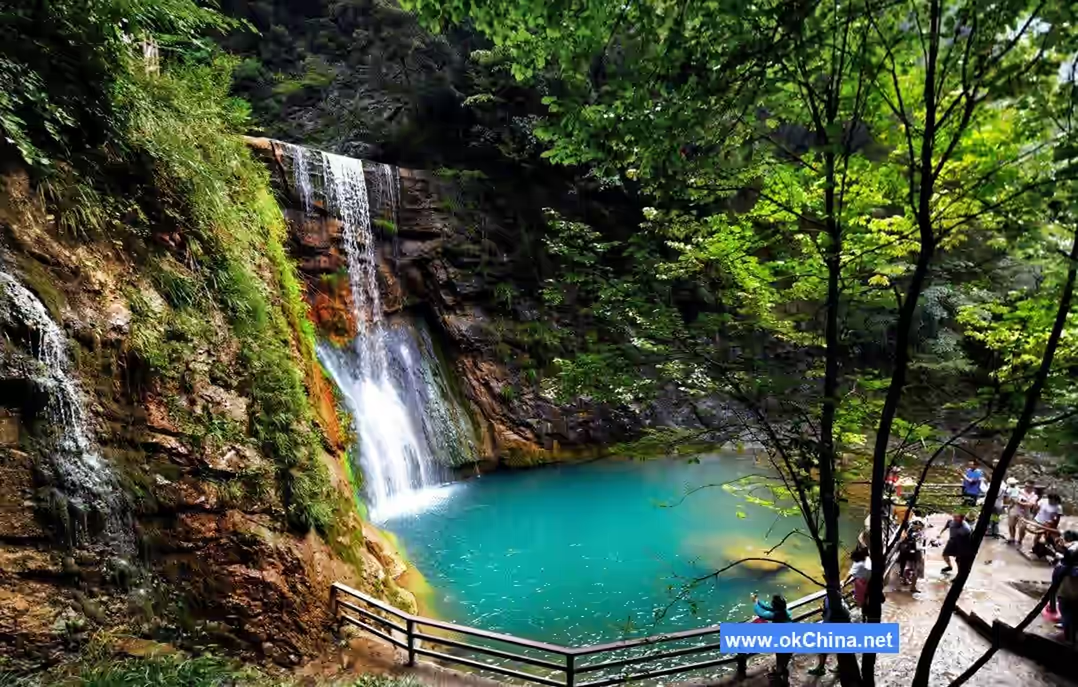
There are five springs with relatively large flow rates, including Heilong Spring, Water Curtain Spring, and Horse-Hoof Spring, which constitute the main water sources of the gorge. These spring waters flow into the gorge, forming 14 waterfalls such as Heilong Waterfall, Witch Waterfall, Twin Streams Waterfall, Whisk Waterfall, Locking Dragon Waterfall, Chain Waterfall, and Rainbow Waterfall. They either cascade down like silver ribbons or spread across like silver silk, majestic and thunderous. Between the waterfalls, over thirty deep and shallow, variously shaped emerald pools have formed, like silver plates or jade mirrors, resembling emeralds and pearls inlaid in the long, narrow gorge channel. Some pools are as deep as the sea and calm as a mirror; others shimmer with scales of light, teeming with fish. The deep pools and waterfall clusters constitute a world of water, dazzling and refreshing.
Climate
The climate is mild, cool, and pleasant. The natural climate is transitional between subtropical semi-humid monsoon climate and warm-temperate semi-humid climate. The annual average temperature is 14°C, with a summer average of 22°C. The frost-free period lasts 217 days, with annual precipitation of 803 mm. Evaporation is low, the climate is humid, and the four seasons are distinct. Located deep in secluded mountains and valleys, the park in spring features mountain slopes covered with blooming wildflowers vying in beauty, trees sprouting tender leaves full of vitality, with magnolias, forsythias, orchids, and azaleas displaying a riot of colors, ideal for spring outings. In the hot summer, the air is moist, greenery is lush and verdant; the maximum temperature does not exceed 28°C, making it refreshing and pleasant, ideal for escaping the heat. In late autumn, cool breezes blow, frost dyes the leaves red, creating a myriad of colors across the layered forests, with wild fruits emitting intoxicating fragrances, suitable for sightseeing and scientific research. In deep winter, it is wrapped in silver, with ice sculptures and jade-like carvings; the gorge bottom remains embraced by greenery,亲切可人, suitable for游玩观景.
III. Key Scenic Areas
【Bailong Gorge Scenic Area】
Bailong Gorge, commonly known as Qili Gorge or North Gorge, is 2.5 kilometers long. The area stretches from the current park entrance in the north to Lingguan Hall in the south. The gorge extends in a hard "S" shape, higher in the south and lower in the north. The landforms within the gorge are rich in type, but due to human activity, secondary plant communities are prevalent.
Main Natural Landscapes
These are river geological landform relics formed by river冲刷, erosion, and other geological processes, including barrier-valley and gorge landforms, lateral erosion caves, and steep cliff waterfalls. The peak on the left side of the gorge mouth is called Phoenix Mountain, resembling a phoenix spreading its wings; the peak on the right is called Monkey Mountain, with a stone monkey on its summit, giving rise to the legend of the "Immortal Monkey Playing with the Phoenix." On the left slope, there is also a奇石 rising abruptly from the ground called Immortal Stone, also known as Immortal Peak. The slope is rugged with strange rocks and hanging green vines, offering妙趣横生的 natural landscapes. A small river within the gorge winds like a white dragon from north to south, with perilous peaks towering to the sky on both sides of the gorge,连绵起伏.
Horse-Hoof Spring
Horse-Hoof Spring is one of the famous sights of Bailong Gorge, also known as White Snow Spring. This spring emerges from Cambrian dolomite strata dating back over 600 million years and is a descending spring. White Snow Spring is natural mineral water, rich in over ten trace elements needed by the human body, such as calcium, iron, zinc, and selenium, and is called the "Divine Spring" by locals.
The formation of Horse-Hoof Spring benefits from a fault north of the spring eye. The fault blocks the normal flow of underground karst spring water, which here follows a rock layer fissure to the surface, forming White Snow Spring. This spring water does not become turbid during heavy rain nor dry up during severe drought, flowing continuously year-round. Its average daily flow is about 0.39 cubic meters per second, reaching up to 1 cubic meter per second during the flood season. The spring eye is about the size of a fist, surrounded by countless smaller spring eyes. The water争先恐后地垂直往上冒, producing bubbles of various sizes. Every year during the height of summer, with ample rainfall, the spring gushes forth, with water columns reaching over a meter high, presenting a spectacular sight.
Stone-Born Trees
Three kilometers from the gorge mouth, two trees grow on two boulders each weighing about five tons. The thicker tree is a precious plant, the money maple (Dipteronia sinensis), a nationally protected species; the thinner one is called crape myrtle (Lagerstroemia indica). Both trees have roots firmly anchored in the solid rock, standing proudly.
Bailong Lake
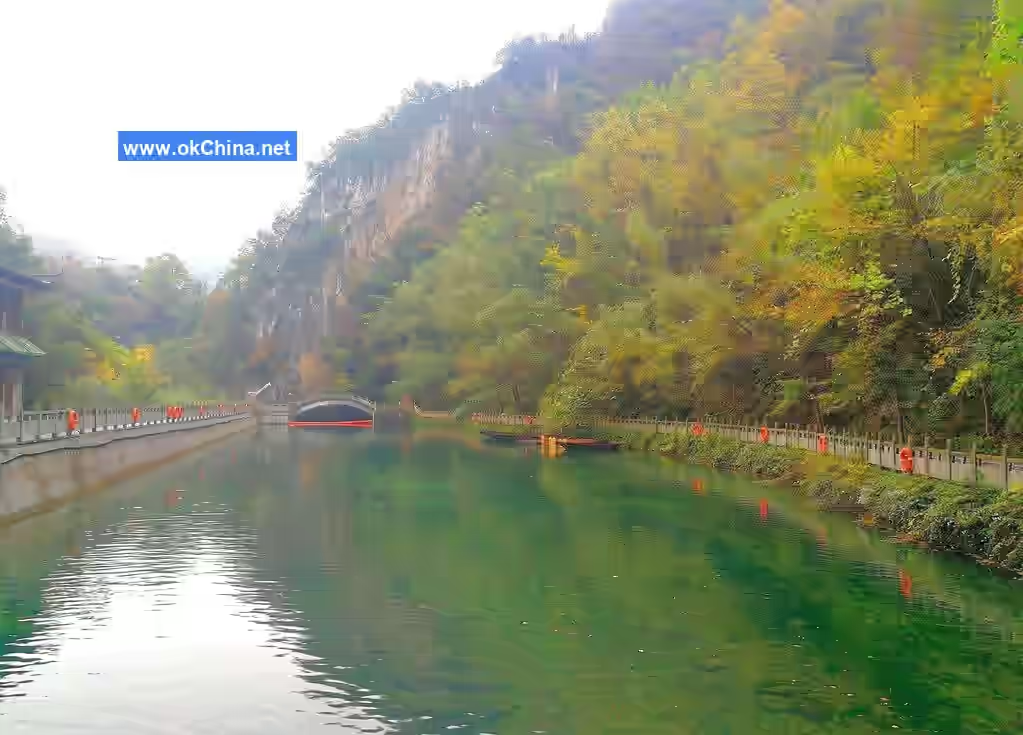
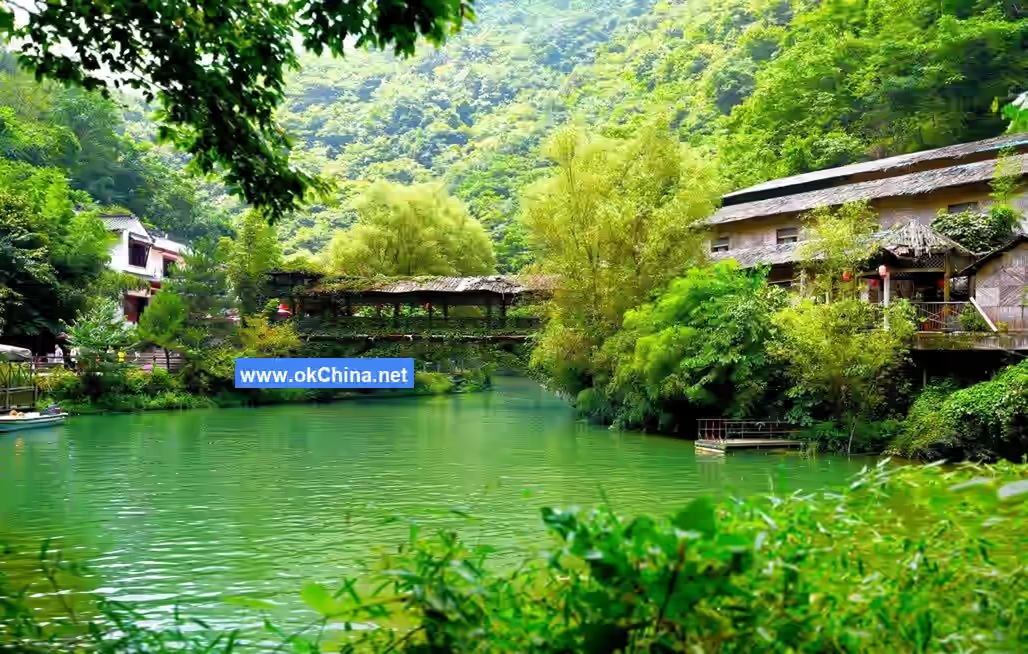
Bailong Lake is located to the right of Daoyuan Immortal Mountain. It was created by heightening the original natural stone pillar-formed heavenly pool, resulting in a high-gorge flat lake. Bailong Lake is 600 meters long, with a maximum depth of 20 meters, a water area of over 600 square meters, and a storage capacity of 4 million cubic meters. The entire Bailong Lake is like a bright mirror镶嵌 in the green丛 of ten thousand mountains, making it an ideal place for water recreation, fishing, and tea tasting.
Maiden Offering Melon
On the cliff face opposite Bailong Lake hangs a stubborn rock shaped like a "golden melon," upon which one can faintly see yellow and green melon纹. Around it are奇石 of various shapes and graceful postures, resembling a group of maidens standing or reclining, singing and dancing, hence the name "Maiden Offering Melon." About 5 meters above the water surface on the lower right side, hidden within a rock crevice, is a huge rock shaped like a pig's head. Resembling Zhu Bajie (Pigsy) and with many maiden-like奇石 nearby, and being close to Bailong Lake, it is named "Bajie Peeping at the Bath." In fact, these lifelike stone figures are a geological phenomenon. The geology here is primarily limestone. After the formation of the Qinling Mountains, the peaks here were gradually subjected to river冲刷 and years of weathering, ultimately forming various奇观.
Bailongmen and Bailong Waterfall
Bailongmen is the narrowest point of Bailong Gorge, with悬崖绝壁 on both sides,壁立千仞. The distance between the cliff walls is only a few meters, and the谷底 is less than a meter apart. It is a typical barrier-valley landform. Bailongmen is about 260 meters high, with a bottom width of 3-5 meters. Gorges develop through stages: wide valley — barrier valley — gorge — river valley. Barrier valleys develop further from gorges, characterized by steep walls, a wide top, and a narrow bottom,呈 "V" shape. Bailongmen is a national geological heritage site within Jinsi Gorge.
Due to inconvenient passage, ancient people凿出 small holes in the cliff walls and built log plank roads leading to the mountaintop. Looking up from the foot of the mountain, it resembled a "ladder to heaven." For safety reasons, the scenic area has replaced the old "ladder to heaven" with a double-row凌空栈道.The scenic area also features the following attractions: Hanmo Cliff, Ancient Vine, Bat Cliff, Hanging Coffin, White Dragon Gate, etc. It integrates exotic flowers, peculiar stones, and unique lakes, characterized by narrowness, length, elegance, peculiarity, and seclusion. With its mid-mountain landforms and open valleys, numerous orchids are scattered throughout, earning it the title "The First Orchid Valley of the Qinling Mountains."
【Qinglong Gorge Scenic Area】
Qinglong Gorge, commonly known as East Gorge. To the left of Lingguan Hall lies the Qinglong Gorge Scenic Area, covering an area of 3.37 square kilometers. It snakes in an L-shaped curve, extending first southwest and then southeast, formed by flowing water following fault fracture zones and joints in these directions. The gorge stretches for 10 km. The gorge has a high degree of enclosure, creating a distinct microclimate that forms a well-defined ecosystem with rich forest vegetation.
Qinglong Gorge
It is the narrowest of the four gorges, exceptionally steep, with a cross-section resembling a tight "V" shape or "H" type canyon landform. On both sides of the gorge, sheer cliffs rise thousands of feet, draped with hanging vines. More remarkably, the cliffs on both sides are densely covered with precious evergreen trees such as pittosporum, camphor trees, and hemlock, spreading their green canopies. In summer, moss thrives, and ferns grow in clusters, creating an ideal retreat for visitors seeking leisure and summer escape.
Shoufeng Pavilion
To the east of Qinglong Gorge, a peak rises abruptly, smooth and bright, overlooking the entire gorge, named "Shoufeng." This pavilion derives its name from its location on Shoufeng Peak.
Couple Tree
Named for its resemblance to an embracing couple. The sturdier tree resembles the pillar of the household, a manly figure, while the one nestled beside it clings like a delicate wife. In fact, this couple tree is actually a Pterocarya stenoptera, a large deciduous tree reaching over 20 meters in height, often found in damp areas near streams and rivers. Its winged fruits hang in clusters, swaying in the breeze. The bark and branches of the Pterocarya are rich in fiber, making them excellent raw materials for papermaking and artificial cotton; the bark and root bark can be used medicinally; the leaves are toxic and can be processed into insecticides.
The area also includes the following attractions: Dragon Gate, Qinglong Valley, Jade Emperor Wall, Zhaoyang Cave, Zhangjia Cave, Nantian Stone Drum, Immortal Bridge, Upright Inclined Fold, etc.
【Heilong Gorge Scenic Area】
From Lingguan Hall to Suolong Waterfall is the Heilong Gorge Scenic Area, located at the western end of the Grand Canyon. It extends in an S-L shape, stretching 7 km and covering an area of 4.33 square kilometers. The area is renowned for its "deep and narrow valleys, sheer cliffs and perilous peaks, connected pools like strings of pearls, and pristine seclusion." There's a saying: "If you don't visit Heilong Gorge, your trip to Jinsi Gorge is in vain." Heilong Gorge is the core scenic area of Jinsi Gorge, featuring ninety-nine bends and ninety-nine pools. The most captivating narrow section is about 170 meters long, with a valley floor width of 0.8 to 3.5 meters and a vertical cliff face height of 512 meters. It winds and twists, flanked by steep cliffs, primarily characterized by slot canyon landforms. The main natural landscapes include well-developed fold structures and geological relics like synclinal mountains and anticlinal valleys. The northwestern cliff is steep and towering. Within the area, the gorge is deep, perilous, and secluded, with prominent rock walls, featuring gorges and karst caves as its main highlights.
Golden Lion Cave
Located in Heilong Gorge, about 5 km from the entrance of Jinsi Gorge, Golden Lion Cave is a well-developed natural surface karst cave. The cave entrance is over 50 meters above the valley floor. The main cave is 97 meters wide, 78 meters high, and 55 meters deep, with a total area of 5,000 square meters, capable of accommodating over a thousand people. It formed within the calcareous breccia belt of the Ordovician Diaochanggou Formation. It is named for a lifelike stone lion made of calcite sleeping inside the cave. Viewed from afar, the entrance resembles a cat's ear, hence also called Cat's Ear Cave; viewed up close, the main cave connects to a vertical shaft leading upwards and a horizontal cave to the southwest. These three interconnected caves form a relatively complete karst cave system. A clear stream also flows down from above.
Inside Golden Lion Cave, there are lifelike formations of stone lions, turtles, crocodiles, Buddha statues, stone peanuts, stone suns, lotus pedestals, and other cultural landscapes naturally formed from calcite, as well as a variety of stalactites, stalagmites, stone columns, stone flowers, stone curtains, and other geological relics in all shapes and sizes, sparkling and translucent. It is a natural geological treasure trove. It holds significant scientific research value for studying the geological movements, crustal uplift, and gorge formation of Jinsi Gorge, demonstrating the complex, multi-phase effects of different geological tectonic movements in the Qinling orogenic belt.
On the stone wall beside the deep pool at the bottom of the valley outside Golden Lion Cave, there is a statue of Maitreya Buddha hidden among dense vegetation.
Suolong Waterfall
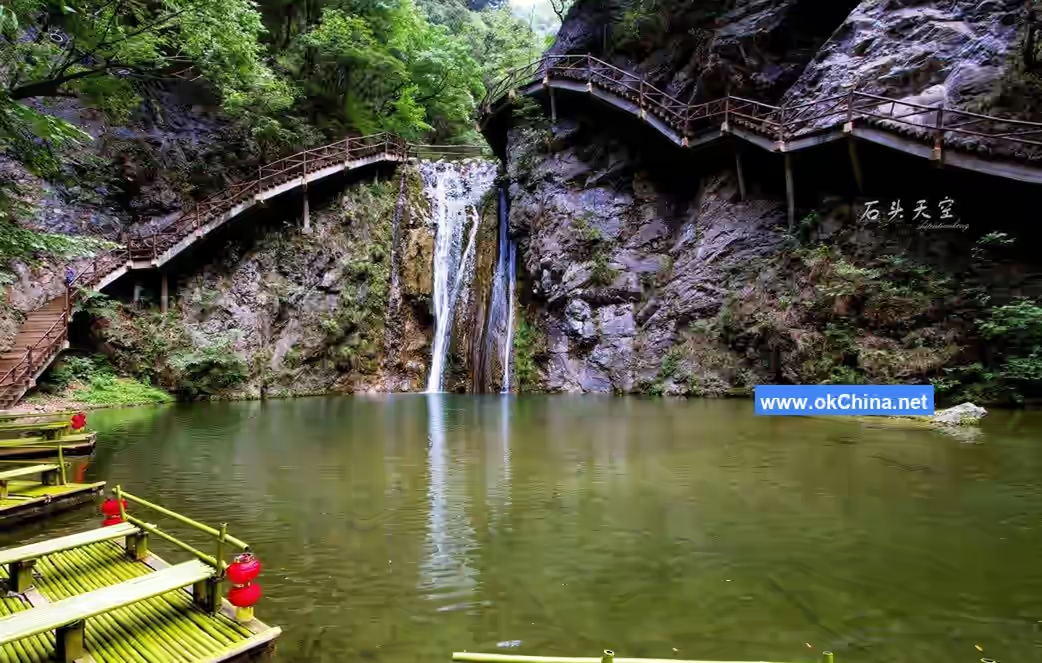
Suolong Waterfall is named for the cliffs on either side resembling two thick doors blocking the way. Renting a bamboo raft and ferrying close to the waterfall, one looks up to see the waterfall cascading down in three steps. The deep pool beneath the waterfall is as smooth as a mirror, with crystal-clear water.
Crescent Gorge
Located in the middle of Jinsi Gorge, 3,800 meters from the gorge entrance, it is the narrowest point of Heilong Gorge. One side is Shenbian Peak, the other is Mao'er Cliff, with the two mountains overlapping to form a precipitous, sheer-walled gorge. Looking up from the valley floor, light shines through the crevice like a curved crescent moon, hence the name Crescent Gorge, also known as "Heavenly Pit and Earthly Crevice" or "A Slit of Sky." Crescent Gorge is the best place to view the slot canyon landforms in this scenic area.
The area also includes the following attractions: Heilong Gorge, Nine Dragon Pools, Lovers' Valley, Candle Peak, Wanfo Cave, Ear Cave, Recumbent Anticline, Horizontal Fold, etc.
【Danjiang Source Scenic Area】
From Suolong Waterfall to Danyu Lake Square is the Danjiang Source Scenic Area, primarily a sightseeing and scientific investigation tour zone focused on the Danjiang River water body, covering an area of 8.05 square kilometers. The Danjiang Source stretches for 3 km. The water flow landscapes in this area are distributed in a stepped manner, featuring thirteen levels of waterfalls,碧潭 (bì tán - emerald pools) of various shapes, and karst springs with substantial flow. The涓涓 (juān juān - trickling) streams converge into the Danjiang River, which is one of the water sources for the South-to-North Water Diversion Project.
Main Natural Landscapes
Include river meandering地貌 (dì mào - landforms), water erosion凹痕 (āo hén - hollows), lateral erosion caves, steep壁跌水 (bì diē shuǐ - cliff waterfalls), waterfalls, etc., formed by river冲刷 (chōng shuā - scouring), erosion, and other geological processes.
Twin Streams Waterfall
A waterfall cascades down a cliff over ten meters high and splits into two strands midway by a rock, hence the name Twin Streams Waterfall. Although the two瀑布 (pù bù - waterfalls) are separated by trees, they are less than a hundred meters apart. Their waters meet within the forest, and their sounds harmonize in the air, blending into one.
Danyu Lake
Danyu Lake is an artificial lake with a storage capacity of 10,000 cubic meters. It serves both recreational functions like fishing and sightseeing, as well as functional roles such as intercepting debris flows and regulating the flow of downstream waterfalls.
【Shiyan Village Scenic Area】
Wuji Mountain is located at the center of Jinsi Grand Gorge, dividing it into North Gorge, West Gorge, and East Gorge. On the mountain, there is a village called "Shiyan Village." Shiyan Village is said to be as perilous as Mount Hua. It trends north-south, with sheer cliffs on the east, west, and south sides, and only one narrow path on the northern slope. The mountain village consists of five large terraces. The first terrace features high cliffs and steep walls, exposed on two sides, acting as a pass on the ascent. The main village on the second terrace, known as Nantianmen, is a Taoist sacred site housing the Xuanwu Temple. The fifth terrace is Yuhuangding (Jade Emperor Summit). From the summit, one can gaze far into the vast Chu sky and the charming豫水 (Yù shuǐ - Yu River, likely referring to a local river), with the山水风骚 (shān shuǐ fēng sāo - landscape charm) of the gorge area varying over dozens of miles. Hundreds of species of wild flowers bloom here, filling the air with fragrance.
Lotus Cave
Named for its resemblance to lotus petals. Inside the cave, stalactites take on myriad forms. An ancient pine tree stretches across the cave entrance, and the stalactites inside are diverse in shape, with the cave floor resembling lotus petals. The terrain is strategically important, accessible only by a single plank road. Guarding the cave entrance would make it impregnable even to thousands of troops. Since ancient times, during wars or social upheavals, nearby mountain villagers have sought refuge here. Inside the cave, there is a spring with clear water that never runs dry throughout the year.
Python Cave
Python Cave is a cave within a又细又窄 (yòu xì yòu zhǎi - thin and narrow) gorge crevice. Standing inside the cave and looking up, one sees a long, narrow slit of sky, as if split by lightning. Inside the cave lies a stalactite resembling a giant python lying on its side, hence the name Python Cave.
Jinsi Gorge Rafting Area
The Jinsi Gorge Rafting Area is 12 km long, requiring about 2 hours for rafting. The upper reaches of the Danjiang River are a water source protection area. Here, there are rapids and险滩 (xiǎn tān - dangerous shoals), lake-like deep pools, sunny沙滩 (shā tān - beaches), waves challenging the speeding boats, and layers of green mountains. The Danjiang River gains volume after entering Shangnan County, especially the section downstream from Guofenglou, which is very suitable for rafting.
Comments
Post a Comment